ProPublica estimated the number of children who will die–of starvation or lack of medical care–because DOGE closed down USAID. The deaths of hundreds of thousands of children, in addition to their families, are the direct result of the shuttering foreign aid. These lives don’t matter to Trump and Musk; they are not white. Musk is a well-known pro-catalyst; he thinks women must have more babies. He himself now has 14 children, by different mothers. But he seems to care only about white babies.
Here is a portion of their report:
For weeks, some of the federal government’s foremost authorities on global health have repeatedly warned Secretary of State Marco Rubio and other leaders about the coming death toll if they carried out the Trump administration’s plan to end nearly all U.S. foreign aid around the world.
In their clearest accounting yet, top officials have estimated the casualties: One million children will not be treated for severe acute malnutrition. Up to 166,000 people will die from malaria. New cases of tuberculosis will go up by 30%. Two hundred thousand more children will be paralyzed by polio over the next decade.
Instead of acting on the repeated warnings, top administration officials, including the State Department’s director of foreign assistance, Peter Marocco, thwarted their own experts’ efforts to keep the U.S. Agency for International Development’s most vital programs up and running, according to internal memos and estimates compiled by global health leaders at the agency and obtained by ProPublica.
President Donald Trump’s political appointees, along with billionaire Elon Musk’s Department of Government Efficiency, pressed ahead with their plan to dismantle USAID by ignoring and impeding staff who tried to protect lifesaving operations — even as the administration publicly insisted that those programs remained online — according to the memos and interviews with government officials.
During exchanges outlined in one of the memos, a DOGE engineer emailed staff and said they were not allowed to review the programs they were canceling. At another point, USAID’s then-deputy chief of staff, Joel Borkert, told agency personnel to take a “draconian” approach to approving waivers.
The explosive memos — which include summaries of email exchanges and top-level meetings inside USAID, as well as internal agency research — were sent by Nicholas Enrich, acting assistant administrator for global health. ProPublica also obtained detailed breakdowns of lifesaving programs managed by the bureau and the projected impact of cutting them. Enrich was placed on leave Sunday.
Enrich told The New York Times he released the memos, which multiple other officials contributed to, after learning he was being placed on leave, as thousands of others at the agency have been. The memos were circulated to the staff and obtained by ProPublica.
The documents identify several key senior policymakers behind the scenes while also puncturing the administration’s claims of a careful, deliberative review of USAID programming. The records also represent the government’s most explicit concerns to date memorialized by a senior official from inside Trump’s administration.
The State Department, USAID and Elon Musk did not respond to questions about this story. Rubio and Marocco did not respond to a request for an interview.
Since the inauguration, Rubio, Musk and Marocco have taken dramatic steps to incapacitate USAID, the largest foreign aid donor in the world, by firing its employees and halting operations. The global health bureau was one of the first parts of the agency targeted for mass layoffs.
Then, last week, they abruptly cancelled 10,000 foreign aid projects, which account for 90% of USAID’s humanitarian operations and about half of the State Department’s. Lifesaving programs that were still operating around the world were forced to close down immediately.
How do you sleep at night, when you know that your actions were responsible for the deaths of hundreds of thousands of children? And their parents?
The New York Times story that was linked in the story gave more details:
The Trump administration’s decision to withdraw foreign aid and dismantle the U.S. Agency for International Development is likely to cause enormous human suffering, according to estimates by the agency itself. Among them:
up to 18 million additional cases of malaria per year, and as many as 166,000 additional deaths;
200,000 children paralyzed with polio annually, and hundreds of millions of infections;
one million children not treated for severe acute malnutrition, which is often fatal, each year;
more than 28,000 new cases of such infectious diseases as Ebola and Marburg every year.
Those stark projections were laid out in a series of memos by Nicholas Enrich, acting assistant administrator for global health at U.S.A.I.D., which were obtained by The New York Times. Mr. Enrich was placed on administrative leave on Sunday.
This was the opening of Enrich’s bold memo, as reprinted in the New York Times:
Takeaway: The temporary pause on foreign aid and delays in approving lifesaving humanitarian assistance (LHA) for global health will lead to increased death and disability, accelerate global disease spread, contribute to destabilizing fragile regions, and heightened security risks-directly endangering American national security, economic stability, and public health. If the pause leads to permanent contract terminations, the $7.7B in resources appropriated by Congress are no longer be used to support these lifesaving global health programs, which could potentially result in wasted resources. The impacts on mortality and morbidity are summarized in the tables below. While the Foreign Assistance Review is set to take place in the coming weeks, it is important to recognize that a mechanism-by-mechanism approach may overlook the broader impact of these programs across global health program areas. This includes missed opportunities to enhance efficiency and cost-effectiveness within LHA program areas.
Marco Rubio, how do you feel about the deaths of so many people? Does it trouble you? Can you look in the mirror in the morning without seeing a murderer reflected back to you?
We know that Trump and Musk don’t care. What about you, Mr. Rubio?
Julian Vasquez Heilig is a scholar of diversity, equity and inclusion. His blog is called Cloaking Inequity. He was Provost at Western Michigan State University. He recently stepped down to further his scholarship and advocacy as a professor. Julian is a founding member of the board of the Network for Public Education.
In yet another attempt to weaponize the federal government against diversity, equity, and inclusion (DEI) efforts in education, the U.S. Department of Education—at the urging of Moms for Liberty and other far-right extremist groups—has launched the “Stop DEI Portal” (https://enddei.ed.gov).
This taxpayer-funded snitch line is designed to invite anonymous complaints against public schools, colleges, and universities that are actively working to create inclusive and equitable environments for all students. Their goal? To stoke fear, intimidate educators, and dismantle efforts to address racial, gender, and socioeconomic inequities in education.
Let’s be clear: this is not about stopping discrimination—it’s about silencing efforts to eliminate it.
But here’s the thing: if this portal is truly meant to address discrimination, then let’s make sure it serves that purpose.
Let’s Turn the Tables: Report REAL Discrimination
If the Department of Education wants reports of discrimination, let’s give them exactly that. But let’s report real, documented cases of discrimination—the kind that actually harms students and families every single day, especially in underregulated charter and voucher-funded schools.
Here’s what they don’t want reported, but what we should be flooding their portal with:
1. Discrimination Against Students with Disabilities
• Many charter and voucher schools systematically exclude students with disabilities, either by refusing to provide necessary accommodations or pushing them out with discriminatory discipline policies.
• Special education students in voucher programs often lose their federal protections under the Individuals with Disabilities Education Act (IDEA) when they transfer to private schools.
• Some schools refuse to admit students who require additional supports, effectively segregating students with disabilities from their peers.
📌 If you or someone you know has experienced this, report it here: https://enddei.ed.gov
2. Discrimination Against LGBTQ+ Students
• In some states, charter and private schools receiving taxpayer-funded vouchers have explicit policies that allow them to deny admission to LGBTQ+ students or expel them for their identity.
• LGBTQ+ students often face harassment, deadnaming, misgendering, and bullying—sometimes by school officials—without intervention.
• Books and curriculum that acknowledge LGBTQ+ history and experiences are being banned, erasing the existence of LGBTQ+ students and families from the classroom.
📌 If you’ve seen LGBTQ+ students being targeted or erased, report it here: https://enddei.ed.gov
3. Racial Discrimination and Segregation in Schools
• Many charter and private schools resegregate students by race and income, creating de facto segregation that mirrors the Jim Crow era.
• Black and Brown students face harsher disciplinary actions than their white peers for the same behaviors.
• AP African American Studies, ethnic studies courses, and other curriculum that acknowledges systemic racism are being banned or watered down, denying students an accurate understanding of history.
📌 If you have evidence of racial discrimination in schools, report it here: https://enddei.ed.gov
4. Discrimination Against Low-Income Students
• Voucher programs siphon public dollars away from neighborhood schools, making it harder for low-income students to access well-funded, high-quality education.
• Private voucher schools are not required to provide free or reduced-price lunch programs, effectively shutting out students who rely on school meals.
• School choice programs increase economic segregation, allowing affluent families to access better resources while leaving lower-income students in underfunded public schools.
📌 If you know of schools pushing out or underfunding low-income students, report it here: https://enddei.ed.gov
Weaponizing the Portal Against Its Own Purpose
The Stop DEI Portal is not about protecting students—it’s about political theater and furthering a radical agenda to dismantle public education.
Conservative groups like Moms for Liberty, the Heritage Foundation, and other well-funded organizations have pushed for Project 2025, a policy plan designed to eliminate federal civil rights protections, dismantle DEI initiatives, and privatize public education.
They want to create a parallel education system where only privileged, wealthy families benefit—while marginalized students are left behind.
What You Can Do Right Now
✅ Step 1: Submit REAL complaints to the Stop DEI Portal
Visit https://enddei.ed.gov and report discrimination against students with disabilities, LGBTQ+ students, students of color, and low-income students.
✅ Step 2: Share this far and wide
Encourage educators, parents, and students to flood the portal with real discrimination complaints.
✅ Step 3: Support organizations fighting back
Groups like Our Schools Our Democracy (OSOD) and the Network for Public Education (NPE) are exposing the harms of privatization and the discriminatory practices of charter and voucher schools.
✅ Step 4: Stay engaged in the fight to protect public education
The NPE/NPE Action Conference on April 5-6 in Columbus, Ohio is bringing together educators, advocates, and policymakers to discuss how to defend public schools and stop the Project 2025 playbook. I’ll be there.
There’s no time to sit on the sidelines. The Stop DEI Portal is just the beginning of a much larger battle. If we don’t fight back now, the next generation will inherit an education system built on exclusion, discrimination, and privatization.
Let’s make sure the truth is louder than deception.
Tonight, at 9 pm Eastern Time—which is to say, 5 am Wednesday Moscow Time—Co-President Trump will deliver the first State of the Union Address of the Redux. Congressional Democrats must protest this speech like the fate of the nation depends on it—because it does.
The time for traditional party politics has passed. No more “norms.” No more butter knives to gunfights. No more tone-deaf tweets. No more pathetic capitulation. No more infuriating appeals for donations from what’s left of Kamala Harris’s team. We cannot allow Chuck Schumer, Hakeem Jeffries, the anonymous new DNC chair, and the husk of Joe Biden to Merrick Garland our democracy into oblivion.
The Dems must become a true opposition party. Now. Today. A true opposition party recognizes that the real enemy of the people is sitting in the Oval Office, watching a little kid wipe boogers on the Resolute Desk. Since January 20th, Trump and Co-President Elon Musk have quickly consolidated power, causing all sorts of chaos and pain. This will continue until they have transformed this country into the Russian-style oligarchy of their despotic dreams.
They. Want. To. Hurt. Us. And we must stop them. All of us.
The nation is in urgent need of Washington generals—and not the kind who get beat up every night by the Harlem Globetrotters. Kamala Harris must snap out of her post-election funk and reboot the Joyous Warrior. Barack Obama must step away from his Hollywood party circuit and get his manicured hands dirty; Michelle Obama hates this crap, and I don’t blame her, but we need her help now. George W. Bush needs to put down the paintbrush and take up the mantle. Bill and Hillary need to come to the front. Mitt Romney? This ain’t the moment for dressage. Step away from your Dutch warmblood, mount the Warhorse, and ride in with the cavalry.
Since Election Day, the Democrats as a party have been rudderless, weak, and frustratingly out of touch. Chuck Schumer, Hakeem Jeffries, and the party leadership have been slow to recognize the threat. Hint: look at what Alexandria Ocasio-Cortez and Jasmine Crockett have been doing, and do that! Or better yet, step down and put them in charge! If the Dems can’t sort this out, and fast, to hell with them. If we have to galvanize behind Liz Cheney, fine, great, let’s do it. We can bicker about policy positions and party planks after the dragon is slain. Right now, we need a leader who isn’t a pusillanimous piece of shit.
On Monday, AOC asked:
Alexandria Ocasio-Cortez @aoc.bsky.social
If you were in Congress, what would you do for the State of the Union? What do you think Dems should do?
All members of Congress who oppose Trump—Democrats, Independents, and whatever Republicans haven’t capitulated—should come to the Capitol at the appointed time. They should have with them a laminated print of that infamous photo from Helsinki, where Trump follows behind Putin subserviently. They should tape the photo to the back of the chair. And as soon as Trump begins to speak, they should all walk noisily out, so that the cameras pan to empty chairs and scores of copies of that embarrassing photo. I wouldn’t object to a crisp “Pu-tin sucks!” chant.
Then, every member of Congress who opposes Trump should repair to his or her office and do a livestream, giving the same speech: a real State of the Union (or State of the Oblast, as it were). This way, every single opposition leader is doing must-see counter-programming simultaneously, to drown out Donald’s hateful lies.
This is what I think they should say:
My fellow Americans, good evening.
What is the state of the Union? Co-President Donald Trump will tell you the state of the Union is strong, but he’s lying, as usual.
Unlike Trump, I’m not going to lie to you. The state of the Union is precarious. It’s precarious and it’s perilous. We are hanging on by a thread. Our democracy is on life support—and Co-President Elon Musk wants to pull the plug and call it “efficiency.”
The Trump/Musk agenda represents a clear and present danger to the people of this country. This threat transcends party politics—like 9/11, like the JFK assassination, like Pearl Harbor. I am speaking to you now not as a Democrat, but as a member of the opposition.
I oppose cuts to Medicare, Medicaid, and Social Security.
I oppose the suicidal tariff war Donald has begun with our neighbors, Canada and Mexico.
I oppose the country descending into dictatorship.
I oppose an unelected, unconfirmed South African weirdo—who can’t be bothered to take off his baseball cap while presiding at their first Cabinet meeting—being granted godlike powers to cut funding, kill programs, and fire hardworking Americans—all at the whim of some half-ass algorithm slapped together by the teenage boys who comprise the workforce at the illegal shadow operation he calls DOGE.
I oppose rudeness, cruelty, and lack of respect.
Above all, I oppose the new world order Donald and Elon have created, where they do whatever they can to help that butcher and war criminal, Vladimir Putin.
My fellow Americans, this is the greatest country on earth—the greatest country that ever existed. And I refuse to allow the United States of America to turn into a vassal state of the Russian Empire. The occupant of the White House should be the Leader of the Free World, not some third-rate tyrant’s sidekick.
Donald has consistently denied his long ties to the Kremlin. “Russia Russia Russia,” he says mockingly, whenever some new revelation comes out about something involving him and Moscow. He has ridiculed anyone who suggests he is Putin’s puppet—as Hillary Clinton did, you may recall, in that debate back in 2016, right around the time the U.S. Intelligence Community warned that the Kremlin was attempting to interfere in the election on Trump’s behalf. Later, in Helsinki, Trump would side with Putin over our intelligence professionals!
He claims the Mueller investigation was a “witch hunt.” Same with Volume 5 of the Senate Intelligence Committee’s Report on Russian Interference in the 2016 Presidential Election. Even Marco Rubio, Trump’s groveling Secretary of State, signed off on that, admitting the Trump/Russia relationship. It wasn’t a witch hunt, you see. Donald doeshave lots of ties to the Kremlin. And, as he made abundantly clear in Friday’s Oval Office debacle, he is indeed Putin’s puppet.
Putin’s puppet: That sounds like the sort of insult Donald likes to hurl as his opponents, but I don’t mean it as an insult. I mean it as a statement of fact. Trump has thrown in with Putin. He has taken up Moscow’s position regarding the invasion of Ukraine. He has parroted Kremlin talking points about President Zelenskyy.
You don’t have to believe me; you can look it up yourself. This is why so many people were so upset about the abhorrent way Donald and JD behaved at that meeting. People know: that’s not how American leaders are supposed to act!
On Friday, Donald told President Zelenskyy that he didn’t have the cards to play. When he said that, he put his own cards on the table. And now, incredibly, the United States of America is overtly, eagerly sucking up to Moscow. Why? So Co-President Elon Musk and the other new American oligarchs can make even more money—by stealing it from you and me.
Putin regards the United States as an enemy of Russia—as he should. Because he’s certainly our enemy—even if a lot of Americans haven’t quite realized it.
We are now finding out what it means when the President and Co-President are Putin’s puppets. Donald and Elon are charting the course the Kremlin wants for America. They want us broke. They want us sick. They want us stupid. They want us fighting each other. And they want us to leave the rest of the world alone.
Over the first two months of his second term, Donald and Co-President Musk have worked hard to give their whoremaster Vladimir Putin what he wants. So has Speaker Johnson, most of the Republicans in Congress, and the entire Trump Cabinet.
Let me explain what that means, in real terms.
They want us broke. That means they want a recession, a depression, economic tumult. They want mass unemployment. They want the stock market to collapse. They want us to go broke struggling to pay our bills. Have you read the contents of the austerity budget Speaker Johnson wants to pass? Trump and Musk will cut $2 trillion from things like Medicare, Medicaid, SNAP, and other social welfare programs that Americans of allpolitical persuasions depend on. This will be to pay for tax cuts—which aren’t really tax cuts, because the American oligarch class doesn’t pay taxes like you and me. This is going to be mass theft on the grandest possible scale. This is stealing. You’ve heard of robbing Peter to pay Paul? This is robbing Grandma to pay Elon. The result of this will be financial hardship for most Americans—just what Putin wants.
They want us sick. There is a measles epidemic now in Texas. It’s spreading. This is the result of a massive, decades-old Kremlin disinformation campaign around vaccines. RFK, Jr., who has done more to push this Kremlin lie than any other person on earth, is now in charge of our national health systems. He’s antivax. You know who isn’t antivax? Putin. Putin and Rupert Murdoch, who owns Fox News and the New York Post and the Wall Street Journal, love their vaccines. Rupert was one of the first people on earth to get the covid vaccine. They know vaccines work—but they want you to think they don’t. RFK also wants to cut funding for cancer research and pandemic preparedness. He wants to get rid of SSRIs, which are incredible drugs that help millions of Americans who struggle with their mental health. Why? Because RFK’s job is to make us all sick—which is what Putin wants.
They want us stupid. Donald put the Department of Education in the hands of the head of a professional wrestling organization. Let me say that again: Donald put the Department of Education in the hands of the head of a professional wrestling organization. And she’s going to cut funding, if not kill the department entirely. They say they want to empower the states to decide how our children are being educated, but that’s just the cover story. All this will do is make our schools exponentially worse. Which is what Putin wants—it doesn’t help Russia if Americans are inventing things, and bringing new technology to the world.
They want us fighting each other, and they want us isolated from the rest of the world. Pete Hegseth, the drunken Fox News host who is somehow our Secretary of Defense, ordered Cyber Command to stand down its defenses against Russia. Why would he do that, if not to please Putin? Tulsi Gabbard ordered mass firings at the NSA, our largest and most important intelligence gathering agency. Why would she do that, if not to please Putin? JD Vance, the pompous imbecile who is a heartbeat away from the presidency, is on an anti-diplomacy tour, insulting all of our longtime allies—the leaders of Western democracies. Why would he do that, if not to please Putin?
This is what it looks like when a Kremlin puppet dictator is in the White House. This is why Hillary Clinton, and James Comey, and James Clapper, and Christopher Steele, and Pete Strzok, and Adam Schiff, and Nancy Pelosi, and Bob Mueller, and Jack Smith worked so hard to expose Donald Trump for what he is.
The message failed. The warning was ignored. And what is happening now, right now, is the result. The chaos, the cruelty, the ignorance, the rudeness, the lack of fundamental human decency, the fear and dread—that is the result.
We have Putin puppets in charge of our country. We are being led by full-on traitors: Donald Trump and Elon Musk, JD Vance and Mike Johnson.
None of those people care about you or your family; if they did, they would occasionally do something to help you. None of them care about what’s good for the United States; if they did, they wouldn’t be trying to burn it down. And none of them care about democracy; if they did, they would not be establishing a Trump/Musk dictatorship, modeled on the philosophy of the Unabomber. I’m not kidding—read the Unabomber Manifesto!
Maybe you think I’m crazy. Maybe you don’t believe me. Maybe you think I’m just trying to score cheap political points. Sooner or later—sooner, probably—it will become obvious to even the most zealous Trump supporter: Change is coming, my friends, and unless you’re one of the new oligarchs, you’re not going to like it.
Ignore me at your peril. Peril. Peril.
The state of the Union is perilous. And we must recognize the threat, and oppose it with every fiber of our beings, and with every means at our disposal. If we don’t, we will dishonor the memory of Abraham Lincoln. If we don’t, a government of the people, by the people, and for the people shall indeed perish from the earth.
God bless you, and God save America.
…or something to that effect. These motherfuckers have all but announced their plans to steal our Social Security. If you can’t message on that, hang up the spikes.
Or, if the Dems can’t manage something so sophisticated, offer an alternate broadcast—Manning Cam, but for the State of the Union. Have AOC and Jasmine live-stream themselves watching the SOTU, so they can fact-check and mock Donald while he’s speaking. I would certainly watch that.
And as for the rest of us? The course is clear: DON’T WATCH THE SOTU. Deny Donald the ratings he desperately craves.
If the Dems don’t offer suitable counter-programming, I’ve set my State of the Oblast speech to run tonight at 9 pm ET:
Or, if you prefer to ignore the whole shit-show—I don’t blame you!—turn on the telly and flip to TNT, where there’s an NBA doubleheader beginning at 7:30: First, Steph Curry and the Golden State Warriors are at Madison Square Garden to take on Jalen Brunson and the New York Knicks. (Go, New York, go, New York, go!) And then, the L.A. Clippers are in Phoenix to play Kevin Durant and the Suns. Remember: keeping the television tuned to a different station hurts Donald’s precious ratings.
There it is. Those are my proposals.
And if we see clips of Jeffries and Schumer and the others just sitting there as Trump rants and raves, looking solemn, clapping softly, normalizing the fascist takeover, we know damned well what that means: craven, cowardly, poltroonish surrender, of the most shameful kind, before the fight has even really begun.
Then we’ll know for sure the Democrats, like the Republicans, are dead as a political party.
During his Senate confirmation hearings, Robert F. Kennedy Jr. tried to downplay his decades-long reputation as an opponent of vaccines. He even persuaded a Republican physician, Senator Bill Cassidy of Louisiana, that he would be guided by science, not his ideology. Why Senators believe nominees who try to disown their past is a mystery.
Dr. Paul Offit is a pediatrician who specializes in communicable diseases, vaccine research, and immunology. He teaches at the University of Pennsylvania. In this piece, he chastises RFK Jr. for his indifference to the death of a child because of his failure to get vaccinated.
On February 26, 2025, a school-aged child in West Texas died from measles. This marked the first child death in the US from the disease since 2003. The death was part of a larger outbreak in this Mennonite community that included 146 people, 20 of whom were hospitalized. The outbreak wasn’t an isolated event. Additional cases of measles had been reported in Alaska, California, Georgia, Kentucky, New Jersey, New Mexico, New York City, and Rhode Island. Measles is a winter-spring disease. We still have at least three months to go before the end of a typical measles season.
At a White House meeting on February 27th, the newly installed Secretary of Health and Human Services, Robert F. Kennedy Jr., responded to the events in Texas. Failing to immediately acknowledge the tragedy of a preventable death, he said that “measles outbreaks are not unusual” and that they happen every year. In truth, measles had been eliminated from the United States by 2000. At that time, due to a high level of population immunity, the virus wasn’t transmitted from one American child to another even after people with measles from other countries entered the United States. Unfortunately, owing to unfounded fears about measles vaccine safety, a critical percentage of parents have now chosen not to vaccinate their children, dropping immunization rates below the level required for herd immunity.
RFK Jr. also tried to dismiss the nearly two dozen hospitalizations in West Texas by claiming that they were “mainly for quarantine,” when in fact children were hospitalized for severe measles pneumonia. RFK Jr. apparently doesn’t understand that children exposed to measles are quarantined at home, not in the hospital. Indeed, the last place you would want to quarantine a child would be in a hospital filled with a vulnerable population of children, many of whom are particularly susceptible to the disease.
RFK Jr.’s dismissal of the Texas outbreak as “nothing to see here” was even more disheartening in that perhaps no one has contributed more to the perception that the measles-mumps-rubella (MMR) vaccine is dangerous than him. For 20 years, he and his organization, Children’s Health Defense, has claimed that the MMR vaccine causes autismdespite studies showing that it doesn’t.
The West Texas measles outbreak wasn’t RFK Jr.’s first experience with a Mennonite community. On July 31, 2021, in the middle of the Covid pandemic, RFK Jr. stood in front of 1,500 people in Lancaster County, Pennsylvania, home to one of the largest Mennonite communities in the United States, and talked about his experiences with measles as a child. The transcript from his talk later surfaced:
He said that “the cure for measles is chicken soup and vitamin A.” In other words, measles is no big deal. Two years earlier, RFK Jr. had traveled to Samoa before an outbreak of measles that had caused 5,600 cases and 83 deaths, mostly in children less than four years old. Despite this experience, he was still capable of dismissing the disease as a trivial, harmless infection of children.
RFK Jr.’s comments at the White House the day after the measles death were most remarkable for what he didn’t say. He didn’t say that the death was especially tragic because it was entirely preventable. And he didn’t say loudly and clearly that under-vaccinated communities in the United States needed to get vaccinated to avoid a similar tragedy. And that they needed to do it soon. This wasn’t surprising. For RFK Jr. to have spoken forcefully about the importance of vaccines in the face of a growing epidemic would have gone against everything that he had said and done for the last 20 years.
Anti-vaccine activists don’t change their stripes. Even when they’re given the enormous responsibility of protecting the nation’s children.
This article appeared in The New York Review of Books. As daily newspapers have shrunk or abandoned their book reviewing, the NYRB stands out as the nation’s leading journal of literature, the arts, and politics. It takes books seriously. This is an essay-review about the history of vouchers. I reviewed Josh Cowen’s outstanding book The Privateers, about the cabal that engineered the expansion of vouchers. I hope you will consider subscribing to the New York Review of Books and reading Josh Cowen’s important book.
For decades, the term “school choice”—and the programs it signifies, which divert public money to private schools—was widely and rightly dismissed as racist. Now it’s the law in thirty-three states.
Minnijean Brown, Thelma Mothershed, and Melba Pattillo, three of the first Black students to attend Little Rock Central High School, with Arkansas NAACP president Daisy Bates (third from left), 1957
Donald Trump promised that he will make public funds available to private as well as religious schools in every state, and this is what his party wants, too. Over the past quarter-century, Republicans have assailed America’s public schools by supporting vouchers, which divert money from public education systems to subsidize tuition at private and religious schools.
But most voters today do not favor vouchers. In fact, since 1967 no state referendum on vouchers has ever passed. In 2024 three states had referenda on the ballot, and vouchers were again defeated. Voters in two of those three states, Kentucky and Nebraska, cast ballots overwhelmingly for Trump—and in both states public funding for private schools was decisively rejected. The story of how Republican politicians have twisted this widespread popular opposition to vouchers into pervasive education policy across the country is one that requires a deeper historical view.
This opposition to public funding for private schools changed on May 17, 1954, when the Supreme Court ruled, in the Brown v. Board of Education decision, that de jure racial segregation in public schools was unconstitutional. The Court’s decision had little to do with school funding, but it set off a frantic search among white elected officials in the South to find, or create, a legal mechanism through which to protect racial segregation. The overwhelming majority of southern whites considered the prospect of racial integration repugnant, and their elected officials were determined to block it.
Until the mid-1950s most Americans believed that the government should not underwrite the cost of private and religious schooling. Catholic organizations had periodically sought public subsidies for their schools on grounds of fairness; as taxpayers, they said their schools were entitled to receive the same funds as public schools. But they were repeatedly rebuffed by Congress, the courts, and state legislatures; most state constitutions explicitly prohibited the use of public funds for religious school tuition.
Southern governors and legislators found the rationale and language they sought in the writings of Milton Friedman, a prominent libertarian economist at the University of Chicago, who in 1955 published an essay called “The Role of Government in Education.” The paper argued in favor of parents’ rights to choose any school they wanted, as well as educational freedom, the right for a child not to attend a neighborhood school—music to the ears of segregationists. Friedman said that the government should finance schools but should not be expected to administer them. He recommended that government distribute money—in the form of what he called vouchers—to parents for each of their school-age children, and that parents should be free to spend this allotment at any institution, whether its operations were for-profit or nonprofit, religious or secular, so long as the school met certain minimum educational standards defined by the local government.
If Black parents wanted their children to attend a segregated Black school, Friedman said, or if white parents wanted their children to attend a segregated white school, or if parents wanted their children to attend an integrated school—all should be equally free to do so. Competitive private enterprise and parental choice, he asserted, would promote a “healthy variety of schools” while making teachers’ salaries “responsive to market forces.” He predicted that private schools would “spring up to meet the demand.”
Southern governors used Friedman’s rhetoric and arguments to fight the implementation of the Brown decision. They adopted his endorsement of “freedom of choice” as well as his belief that private schools would provide a better education than “government schools”; indeed, advocates of vouchers began to refer to “public schools” as “government schools,” a term of derision that continues to appear in our ongoing debates about “school choice” today. As the historian Nancy MacLean demonstrated in “How Milton Friedman Exploited White Supremacy to Privatize Education,” a 2021 paper posted by the Institute for New Economic Thinking, Friedman taught southern leaders that the best way to protect Jim Crow schools was to use “race-neutral arguments” and to “embrace both an anti-government stance and a positive rubric of liberty, competition, and market choice.” As a result, seven states—Alabama, Mississippi, Louisiana, Virginia, North Carolina, South Carolina, and Georgia—enacted laws to subsidize the private school tuition of families fleeing the prospect of desegregated public schools.
In the following decades, existing private schools for white students expanded, and new private schools opened—“white flight academies” or “segregation academies”—to enroll students whose parents opposed racial integration. Often the enrollment of a single Black student in a previously all-white public school was enough to spur an exodus of white families. This happened in New Orleans in 1960 when six-year-old Ruby Bridges enrolled at the William Frantz Elementary School. She had to be escorted into the school each day by federal marshals, on the direct orders of the federal judge J. Skelly Wright. Each day Ruby withstood the screaming of angry white parents at the schoolhouse doors. And Ruby was the only child in her classroom; only a handful of white students remained in the school.
As late as 1965, less than 3 percent of Black children in the South attended schools with white children. Until then southern states engaged in a strategy of “massive resistance” to school integration, blocking the implementation of the Brown decision by providing “tuition tax credits” (a form of vouchers) so that white students could go to all-white private schools, by intimidating Black students so that they would not apply to attend white public schools, or by closing public schools altogether.
Virginia was at the forefront of this “massive resistance.” In 1959 its general assembly repealed the compulsory school attendance law and allowed localities to close their public schools. Prince Edward County was ordered by two courts to integrate its schools but chose instead to shutter its entire public school system. Officials provided tuition grants (vouchers) for white students to attend all-white private schools but made no such arrangements for Black children. Some Black families organized makeshift schools, but for five years there were no public schools for Black students in Prince Edward County. It wasn’t until 1968 that the Supreme Court outlawed Virginia’s tuition grants to private all-white schools.
After the passage of the Civil Rights Act in 1964 and the Elementary and Secondary Education Act in 1965, which made federal funding available to public schools, the federal government had the legal and financial tools to end resistance to integration. Federal courts across the South struck down laws authorizing public funding for vouchers and private schools, as well as any other state laws intended to block racial desegregation. The US Office of Education informed school districts across the South that they would not receive federal funding unless they desegregated promptly. Because of this well-known history, the term “school choice” was so closely associated with resistance to the Brown decision that it was widely and rightly dismissed as racist. It fell into disrepute for decades.
Now, seventy years after Brown, vouchers have not only been rehabilitated, since the 1990s they have been enacted in various forms in thirty-three states and the District of Columbia. Some of these programs are euphemistically called “education scholarships” or “tuition tax credits” or “education savings accounts,” but the fundamental principle is the same in all of them: public money pays for private school, even—in fact, most often—for religious schools. Republican-controlled legislatures in states such as Florida and Arizona enacted voucher programs that started small (in 1999 and 2011, respectively), intending to “save poor kids trapped in failing public schools” or supposedly only for children with disabilities. Over time these programs expanded, increasing the number of eligible students. Now both states have removed all limits, and every student, regardless of family income, is eligible for a tuition subsidy, at a cost to taxpayers that is expected to rise to $1 billion a year in Arizona and $4 billion in Florida.
Josh Cowen, a professor of education policy at Michigan State University, explains this remarkable turnaround of voucher policy in his superb book The Privateers: How Billiionaires Created a Culture War and Sold School Vouchers. Cowen has researched vouchers for most of his career. He worked with teams of academics who received millions of dollars in federal and philanthropic funds to study the results of voucher programs in different cities and states. Like many of his fellow researchers, he hoped that vouchers would provide better education for low-income students. But three years ago he published an article in The Hechinger Report, a nonpartisan education journal, in which he bluntly declared that vouchers were a failure.
Cowen explained that his initial enthusiasm for vouchers cooled as the evaluations were released. He participated in a study of Milwaukee’s vouchers from 2005 to 2010 that concluded that “there was very little difference on test scores” between students in public schools and carefully matched students in voucher schools. Furthermore, when low-income and Black students left voucher schools and returned to public schools, their academic performance in reading and math improved. At the same time that the Milwaukee study ended, a new report showed “shockingly bad early test score results for students in the Louisiana voucher program in the years following Hurricane Katrina.” Those poor results persisted and were replicated by studies in Ohio and Indiana.
The Privateers tells the story of how and why public policy on funding private and religious schools changed. As the consistent failure of state referenda shows, vouchers were never a popular idea; it was the politicians’ dependence on big campaign donors that made school choice a staple of Republican rhetoric. The widespread adoption of vouchers, Cowen explains, was basically a policy coup staged by billionaires who were libertarians or religious zealots or both. Cowen explains
how a small band of interconnected and insular groups of conservative advocates, tightly networked to some of the wealthiest and most influential players in right-wing US politics, invented a rationale for school privatization largely from nothing and out of nowhere.
He describes the agenda of that “network of scholars, lawyers, donors, and activists” as religious nationalism.
The main organizations in this movement to break down the wall of separation between church and state were two right-wing philanthropies, the John M. Olin Foundation and the Lynde and Harry Bradley Foundation, which funded both the Harvard professor of government Paul Peterson and the libertarian lawyer Clint Bolick. The Bradley Foundation, based in Milwaukee, supported the creation of the nation’s first publicly funded voucher program in that city in 1990 and played a crucial part in funding the three pillars of the voucher movement: research, policy advocacy, and litigation. Peterson became the point person for voucher research and advocacy; he also mentored a cohort of graduate students at Harvard who became the nation’s most prominent evaluators of voucher projects.
Bolick, who ran the libertarian Institute for Justice (funded by the billionaire Koch brothers), oversaw litigation and appeared on behalf of the Milwaukee and Cleveland voucher programs in state and federal courts. When more money was needed for research or litigation, members of a secretive right-wing group called the Council for National Policy were available to help; the CNPincluded the Koch brothers and the DeVos family, who used their fortune from the multilevel marketing company Amway to fund conservative candidates and think tanks and deployed their philanthropy to advance public funding of religious schools. Reviewing the players and their strategy, Cowen concludes that “there is nothing in education policymaking today that comes close to the conservative political apparatus accessed by and…even driving, at times, the creation of evidence on behalf of school vouchers.”
In 1990 the political scientists John Chubb and Terry Moe published Politics, Markets, and America’s Schools, in which they asserted that school choice would heal American education; the book was funded by the Olin and Bradley Foundations. Many seemed to have forgotten the racist origins of school choice. Chubb and Moe argued that small-d democratic politics was a handicap for public schools because it kept them in the grip of vested interests, like teachers’ unions and associations of school superintendents. The result of this stasis, they claimed, was poor academic performance. They maintained that “reformers would do well to entertain the notion that choice is a panacea.” School choice “all by itself,” they claimed, could transform American education. The book was a sensation in the education world because it offered a simple solution to complex problems and, of course, gave ideological and scholarly weight to the growing movement for charter schools and vouchers.
That same year, the Milwaukee voucher program started at the behest of the local Black leaders Howard Fuller, a militant social worker who became Milwaukee’s school superintendent, and Polly Williams, a state legislator. Fuller and Williams were disappointed by the academic performance of Black students in public schools. The Bradley Foundation, which was eager to see a demonstration of the success of vouchers in its hometown, quickly provided funding. The Milwaukee Parental Choice Program began as a project that enrolled 341 low-income students in seven private schools. By 1994 it had increased to 830 students in twelve schools.
The legislation authorizing the voucher program required that the students take a state test and that the results be evaluated by an independent researcher. The state superintendent, who opposed vouchers, appointed John Witte, a professor from the University of Wisconsin, to conduct the evaluation. When Witte eventually concluded that the program had minimal impact on students’ academic outcomes or attendance and that voucher recipients returned to public schools at high rates, voucher advocates denounced him as biased. Cowen says that Witte was fair and that his study was accurate.
The loudest voice deploring the negative evaluation of the Milwaukee voucher program was that of Peterson, who wrote a letter to TheNew York Times eviscerating the Witte study for minimizing the academic gains of the students and the importance of parental satisfaction. Cowen points out that Peterson was a political scientist with minimal experience in statistical evaluation. Peterson worked with his then graduate student Jay P. Greene on a study, funded by the Bradley and Olin Foundations, of the Milwaukee program. They concluded that, contrary to the state evaluation, vouchers produced significant academic benefits. The voucher system produced these positive results, they wrote, despite legislative burdens such as income limitations and the exclusion of religious schools.
Peterson and Greene’s favorable review persuaded the Republican-controlled Wisconsin legislature to renew and expand the voucher program in 1995 by including religious schools and increasing the number of participants to 15,000. The inclusion of religious schools led to a court battle that voucher advocates eventually won, litigated by Bolick and the high-powered lawyer Kenneth Starr, who later became famous for his part in the investigation of President Bill Clinton. The Bradley Foundation underwrote his firm’s fee of $300,000 for one month of work, Cowen writes.
Meanwhile the voucher push shifted to Ohio, where the Republican governor wanted Cleveland to be a model for the nation. The program was designed for low-income students, but—unlike in Milwaukee—it did not exclude religious schools; nearly all of the fifty-two participating schools were Catholic. The official evaluator, the Indiana University professor Kim Metcalf, found “few overall differences in student achievement,” but once again Peterson and Greene dismissed the official evaluation and produced their own report—this time funded by the Walton Family Foundation in addition to the Olin Foundation—which showed “large gains” for voucher students. Cowen notes that Peterson’s work was typically reported in newspaper editorials (usually the pro-voucher Wall Street Journal), not in peer-reviewed scholarly journals.
Cowen points out that Peterson’s research findings were more clearly directed toward the Supreme Court than toward other scholars: he filed an affidavit on behalf of the Cleveland program in the crucial 2002 case Zelman v. Simmons-Harris, which concerned the legality of public funding of religious schools. The Court decided 5–4 in favor of including religious schools in the voucher program—a significant reversal of numerous decisions upholding the separation of church and state. Justice Sandra Day O’Connor cited Peterson and Greene’s work in her concurring opinion.
Since that Supreme Court decision, vouchers have been sold to the public as a way to “save poor kids from failing schools.” School choice has been described as “the civil rights issue of our time” by Betsy DeVos, Ted Cruz, and Donald Trump. Republican elected officials adopted school choice as party dogma, and state after state enacted laws authorizing vouchers, despite a distinct lack of public support. Voters in Utah rejected vouchers in 2007, voters in Florida rejected vouchers in 2012, and voters in Arizona rejected vouchers in 2018, but the Republican leaders in all three states ignored the referenda and continued to expand voucher programs. Republican legislatures and state courts have also ignored explicit provisions in state constitutions that forbid the public funding of religious schools, claiming that the voucher goes to the parents, not to the religious schools where they pay for tuition. Where there’s a will, partisans find a way.
Voucher advocates continually promised academic gains, especially for the poorest students, but after 2010, as the voucher programs grew in scale, the academic results turned sharply negative. Cowen realized that poor kids were actually harmed by using them. Low-income students did not use vouchers to enroll in elite private schools, which mostly did not accept these students—either because they were behind academically or because the voucher was worth far less than the school’s tuition—but to enroll in religious schools whose teachers were uncertified or in pop-up private schools created to capture the government money. When the outcomes were disappointing, the right-wing foundations and Republican officials promoting vouchers moved the goalposts: test scores didn’t matter, they said, but graduation rates and parental satisfaction did. When the test scores and the graduation rates were surpassed by local public schools, the pro-voucher foundations, elected officials, and researchers shifted to a different rationale, one that was “always the underlying goal,” Cowen argues: to satisfy the “values” of parents. Just as segregationists in the 1950s invoked “the right of parents” to avoid integration, voucher advocates in the twenty-first century believe that parents “have the express right to use public dollars to self-segregate.”And these advocates claim that parents have the right to receive taxpayer support for their children to attend religious schools; denying them that “right,” they argue, infringes on religious freedom.
Cowen describes how he came to this understanding. From 2013 to 2016 two teams of researchers—one from MIT and another from the Walton-funded Department of Educational Reform at the University of Arkansas—reached the same dire conclusions about vouchers in Louisiana: they “caused unprecedented large, negative impacts on student achievement.” The Louisiana voucher students were mostly Black and low-income. They entered voucher schools at the fiftieth percentile in math; after a year in private school, they dropped to the twenty-sixth percentile. They improved in the second year but remained behind their peers in public schools. This was solid evidence from two separate groups of researchers “that voucher interventions actually caused damage” to the poor students they were supposed to help. Voucher advocates insisted that the experiment needed more time and that it was overregulated by the state.
The bad results kept rolling in: from Indiana, where independent evaluators documented negative outcomes in 2015; from Ohio in 2016, in a study funded by a conservative think tank; and from Washington, D.C., where evaluators found poor results in 2017 and 2018. Cowen concludes that
no explanation then or now has fully explained the learning loss displayed in locations so different as Louisiana, Indiana, Washington, and Ohio as does the simplest one: that for all of Milton Friedman’s purported brilliance, and for all the millions of dollars pumped into the effort by Betsy DeVos, Charles Koch, and the Bradley Foundation, the idea simply did not work. The bigger and more recent the voucher program is, the worse the results have been.
Republican-led states simply ignored the evidence that low-income students who used vouchers fell behind their peers in public schools, and they continued to enact the policies, thanks to large contributions from right-wing billionaires to the campaigns of like-minded state officials. Furthermore, several of the Republican-dominated states removed income restrictions and other limitations, thus abandoning the rhetoric of “saving poor kids from failing schools.” A dozen states currently have “universal” voucher programs, meaning that any family may apply for a voucher, without regard to their income. Tennessee enacted universal vouchers only weeks ago. Other states are likely to follow their lead.
Cowen reports that, with or without income restrictions, the majority of applicants to voucher programs were not trying to leave public schools; they were already attending private schools. This is the case in every state with vouchers. Right now between 65 and 80 percent of students who claim vouchers are using them to pay the tuition of private schools where they were already enrolled. Vouchers are also used in many states to pay the expenses of parents who teach their children at home. In Arizona, according to reports in The Arizona Republic and ProPublica, parents have used their “education savings accounts” to buy trampolines, swing sets, expensive Lego sets, horseback riding lessons, kayaks, trips to Disney World, chicken coops, skiing trips, cowboy roping lessons, and ice-skating lessons. Republican governor Doug Ducey led the campaign to make public funds available to all students in the state. His successor, Katie Hobbs, a Democrat, predicted in 2023 that the state’s voucher program could cost nearly $1 billion, with over 53 percent of all new funding paying for 8 percent of Arizona’s students.
Just as troubling to Cowen as the academic results of the voucher project is the publicly funded discrimination that these schools make possible. Right-wing rage in response to the pandemic enabled the eruption of the so-called culture wars over masking, vaccines, and teaching about race and sexuality in schools, as well as the presence of these topics in library books. In 2022 Christopher Rufo, the right-wing provocateur who first raised an alarm about “critical race theory” in public schools (few public school teachers had ever heard of the term; it refers to a course usually taught in law schools, if at all), called on conservatives in a speech at Hillsdale College to promote universal distrust in public schools in order to arrive at “universal school choice.” This distrust was fueled by right-wing groups, which made wild accusations about teachers allegedly “grooming” their students to be gay or Marxist, and about the curriculum allegedly turning students against their own country.
Vouchers appeal to those who want to escape lessons about racism, diversity, or gender equality. Religious and private schools that receive publicly funded vouchers are not bound by civil rights laws, and many openly bar the admission of LGBTQ+ students and the hiring of LGBTQ+ staff. Some bar students with disabilities. Some religious schools accept only students who are members of their own religion.
Trump issued an executive order on January 29 titled “Expanding Educational Freedom and Opportunities for Families,” which called for the diversion of federal funds to underwrite tuition at private and religious schools. He claimed that “rigorous research demonstrates that well-designed education-freedom programs improve student achievement and cause nearby public schools to improve their performance,” which according to Josh Cowen’s book The Privateers is not true. Trump issued the order on the same day as the release of the latest national test scores by the National Assessment of Educational Progress. Florida, which has a robust voucher program, experienced a sharp decline in its scores, the state’s lowest in twenty years on this test.
Cowen considers the manipulation of culture-war issues like race and gender to be a feature of vouchers, not a bug. Groups like Moms for Liberty and Parents Defending Freedom use the clarion call of “parents’ rights” to condemn the discussion of race and LGBTQ+ issues, as well as access to books about these subjects, in public schools. Such groups want to censor what is taught to all children, even those whose parents disagree with them and want their children to learn about race, gender, and sexuality. Imagine teachers in a segregated Black school being told by the state that they cannot teach accurate Black history. Why should those parents have no rights?
Cowen writes that the learning loss of poor children who used vouchers was larger than the learning loss caused by the pandemic, and at this point the evidence against their efficacy is overwhelming. Yet more states adopted vouchers in 2022 and 2023 than in any previous legislative sessions. Texas is the only large Republican-controlled state that has not enacted legislation to implement them, owing to the combined opposition of parent groups, Democrats, religious leaders who believe in the separation of church and state, and rural Republicans defending their district’s only public school. Yet Governor Greg Abbott has said that vouchers are his highest priority. He received millions of dollars from billionaires to defeat many of the rural Republicans who opposed vouchers. The issue will soon come to a vote in the legislature.
The reality is that when states offer charter schools and vouchers, public schools lose. Each time students leave for private alternatives, public schools must reduce their teaching staff, increase class sizes, and cut back on curricular offerings. States cannot afford to pay for three different school systems. Is the goal to eliminate public schools? That argument seems inherent to some who share Friedman-style thinking.
What does Cowen recommend?
Fund public schools. It really is that simple…. The more money we spend on schools, the better off children are, not simply academically, but in later-life outcomes like higher wages and fewer encounters with the criminal justice system.
Wealthy parents spend amply to educate their children—to make sure that they have certified teachers, small classes, a well-supplied library, and a curriculum that includes the arts and sciences as well as physical education and time for play. And, of course, wealthy children never go without food or medical care. We should give the same to all children.
Erin Reed is a transgender activist who tracks the attacks on people like her on her blog “Erin in the Morning.” Erin has a lot of ground to cover, as Trump launches a firestorm of hate towards transgender people, joined by extremist state legislatures, occasionally slowed down by court rulings. Do trans people have any rights? As American citizens, shouldn’t they be able to live the life they choose? Why does Trump try to erase their existence? Why are Republicans so fearful of this tiny minority of people?
Trans people are a perfect scapegoat.
As long as Republicans can keep their base focused on the nonexistent danger of trans people, they won’t notice that Trump is undermining healthcare and chopping up social programs that benefit his base, while cutting the taxes of billionaires and corporations.
Nazi Book-Burning
Erin Reed writes:
Nearly a century ago, Nazis raided the Institut für Sexualwissenschaft—the Institute of Sexology—a pioneering research institution and clinic founded by Magnus Hirschfeld, a forefather of transgender research. The institute housed tens of thousands of books, research notes, and data documenting the first decades of scientific study on transgender and queer people. Long before the labor camps and mass killings, the Nazis identified Hirschfeld as a primary enemy, targeting his work in the early rise of fascism. That night, in Berlin’s Bebelplatz Square, they burned his institute’s collection in a now-infamous spectacle, immortalized in history books yet often stripped of the context of who, exactly, was targeted. Now, President Trump is doing the same—digitally burning records of transgender people and pressuring nonprofits to follow suit.
And those digital fires have spread. Within days of Trump’s anti-trans executive orders, the word “transgender” was erased from nearly every government website where it once appeared. CDC data on transgender health was stripped from its pages. The Stonewall National Monument—dedicated to the LGBTQ+ people who fought back against oppression, led by transgender activists—was purged of any mention of transgender people online. Even institutions and nonprofits serving LGBTQ+ communities, particularly those receiving federal funding, have been pressured into scrubbing “transgender” and “gender identity” from their materials. The Nazis would envy the speed and efficiency with which it was done.
As a transgender journalist dedicated to documenting these events and helping people grasp the broader context of attacks on queer and trans communities, I feel the weight of this moment. The sacking of the institute was not met with uproar; there was little popular resistance. At the time, no journalists spoke with sympathy about those who sought care there—much less transgender journalists who might have needed that care themselves. If only alarm had spread then, or even earlier, when the very people receiving treatment at the institute were first being demonized.
And like today’s digital fires, those flames were not lit without years of prior hate. Four years before the book burnings, one of the earliest editions of Der Stürmer—the Nazi propaganda publication that fueled fascism’s rise—accused Hirschfeld of “grooming” youth, echoing today’s attacks on LGBTQ+ people. Hitler notoriously called Hirschfeld “the world’s most dangerous Jew.” Trans and queer people were the canaries in the coalmine of atrocity. Similarly, just a few years ago, the “groomer” slur ignited online, feeding a growing trans panic that has only escalated since.
Early edition of Der Stürmer accusing Hirschfeld of grooming youth.
I don’t know where we are heading as a country, or what future you see when you stare into today’s fires. But I do know that the transgender and queer readers I write for every day see the signs—and fear the worst. Trans people, in mass numbers, have rushed to secure passports—some too late, as the administration has tightened restrictions on gender marker changes, in some cases even confiscating documents. Anyone active in this space knows people who have already left. And yet, despite this fear, so many cisgender people I speak to—including journalists covering stories that implicate our rights—seem unaware of the full scope of what is happening. I even had one reporter recently express surprise and dismay at hearing trans people were removed from Stonewall, something widely reported on in recent weeks.
People should pay attention. Court battles are already raging, with rulings blocking the administration from stripping funding from hospitals that provide transgender care. In another case, a judge appears poised to halt Trump’s attempt to expel trans service members from the military. As Trump and his allies openly float the idea of ignoring court rulings, the risk of a brazen defiance of judicial authority looms, and transgender rights could be an early test case. The way this administration treats transgender people may foreshadow how it treats all those it seeks to silence—a potential step toward consolidating totalitarian power.
Trump’s digital erasure of transgender people is more than policy—it is a declaration that the very existence of certain human beings is unwelcome in the official record. This is not a hallmark of a democratic leader respecting courts and laws; it is the move of someone intent on atrocity. When you eliminate all traces of a people’s identity, it surpasses mere ideology and becomes an act of “salting the earth,” ensuring their name and their history cannot be seen. Such an action must be recognized and resisted by every voice capable of protest. We are witnessing the dark echo of “first they came for…” in our own time, and we must understand that after they come for us transgender people, they will not simply stop with us.
Bear in mind that highly segregated private schools are subsidized by taxpayers in states that have enacted universal vouchers. The politicians today are fulfilling the fever dreams of segregationist governors in the South in the 1950s.
ProPublica reports:
Private schools in the United States are, on the whole, whiter than public schools, with fewer Black, Hispanic or Latino students. This may not be a surprising statistic because private schools can often be expensive and exclusionary, but it’s not a simple one to pin down. There is no central list of private schools in the country, and the only demographic data about them comes from a little-known voluntary survey administered by the federal government.
While reporting our project on Segregation Academies in the South last year, we relied on that survey to find private schools founded during desegregation and analyzed their demographics compared to local public school districts. Our analysis of that survey revealed, among other things, Amite County, Mississippi, where about 900 children attend the local public schools — which, as of 2021, were 16% white. By comparison, the two private schools in the county, with more than 600 children, were 96% white.
In the course of our reporting, we realized that this data and analysis were illuminating and useful — even outside the South. We decided to create a database to allow anyone to look up a school and view years worth of data.
Today, we are releasing the Private School Demographics database. This is the first time anyone has taken past surveys and made them this easy to explore. Moreover, we’ve matched these schools to the surrounding public school districts, enabling parents, researchers and journalists to directly compare the makeup of private schools to local public systems.
Until now, much of this data was difficult to analyze: While the National Center for Education Statistics, which collects the data, provides a tool to view the most recent year of Private School Universe Survey data, there was no easy way to examine historical trends without wrangling large, unwieldy text files.
As debates over school choice, vouchers and privatization of education intensify, making this repository of private school data accessible is more important than ever. The information is self-reported, but we have attempted to flag or correct some obvious inaccuracies wherever possible.
For schools, you can filter results by state, religious affiliation, school type and enrollment range. For some schools, you can also filter by founding year. By default, we only show results for schools that have responded to the survey at least once in the last few years, but you can turn off this filter to also include older data in your search results.
For public school districts, users can filter by state and sort results to see where the most students are attending private schools, as well as the gap between the district’s largest racial group and the school’s share of those same students. Because private schools can draw students from different districts, comparing their racial composition to a single district’s public schools is imperfect. Still, these comparisons can offer valuable insights into broader patterns of segregation and access.
Thom Hartmann, independent journalist, finds it curious that the Republican Party so frequently displays Nazi symbolism. And why does the major media ignore usually overlook the fondness for Nazi iconography by Trump, Musk, and their allies? Is it their youth? Their historical ignorance? Their caution?
He writes:
Is it a shout-out to the hardcore racists and haters that make up the GOP’s base, all just a performance to get enough votes to win elections? Or a proclamation that the end-goal of Republican governance is the destruction of American democracy, perhaps in deference to Vladimir Putin? How about it’s being a bizarre attempt at trolling people old or well-educated enough to remember or know what Nazism inevitably leads to?
One of the enduring mysteries in today’s American political life is why so many Republican politicians and their friends are adopting or promoting openly Nazi symbols, iconography, and slogans.
And why are America’s mainstream media so unwilling to even report on, much less discuss, all the Nazi and neo-Nazi references surrounding Trump and today’s captive Republicans?
Elon Musk, Trump’s #1 campaign donor and co-president, threw two Nazi “Sieg Heil” salutes following Trump’s inauguration, causing the media to fall all over itself trying to make excuses for his behavior. Actual, declared Nazis and white supremacists were thrown into an ecstatic tizzy, however, with the Ohio Proud Boys posting the clip with the words, “Heil Trump!”
The neo-Nazi group Blood Tribe posted the Musk clip with the Waffen SS lightning-bolt emoji; their leader, Christopher Pohlhaus, wrote: “I don’t care if this was a mistake. I’m going to enjoy the tears over it.” Other neo-Nazi, Nazi, and white supremacist groups across the web jumped in to celebrate the salute, as Rolling Stone extensively documented.
It all seems to have really picked up steam after young neo-Nazis marched in Charlottesville in 2017, chanting Nazi slogans, murdering a young woman protestor, and giving Hitler salutes.
Our media completely failed to identify them as Nazis, even though they were proclaiming that themselves.
Since Trump’s endorsement of their behavior with his “good people on both sides” comment, which he continues to defend, such behavior has been emulated across the nation.
Poke anything associated with Trump and odds are Nazi memes will pop out.
The “America First” slogan was the name of an openly pro-Nazi movement in America in the 1930s, a fact that seems to have been lost down the memory hole. And Trump told his former Chief of Staff, Marine General John Kelly, that “Hitler did some good things…” along with referring to American soldiers as “suckers” and “losers.”
And then there are Trump’s attacks on the media, echoing Joe Stalin and Adolf Hitler with their “enemy of the people” rhetoric. He’s suing media outlets left and right, just like Putin and Orbán did in their early years to intimidate reporters and bankrupt opposition publications and websites.
Elon Musk just called for reporters for CBS’s 60 Minutes program — “the biggest liars in the world” — to receive “a long prison sentence.”
In an echo of Hitler’s “denunciations,” his “border czar” is even calling for the police at the Department of Justice to investigate Alexandria Ocasio-Cortez for telling immigrants about their constitutional rights.
After pointing out at a rally that Hitler said that Jews were “poisoning the blood” of Germany (yes, he pointed it out himself), Trump then said of nonwhites in America:
“It’s true. They’re destroying the blood of the country, they’re destroying the fabric of our country, and we’re going to have to get them out.”
The 2021 CPAC meeting featured a stage resembling the Odal Rune, a potent Nazi symbol, that drew a rebuke from the hotel hosting the conference.
In 2022, Trump dined with Nick Fuentes, a prominent and out Holocaust denier. Trump later posted a 30-second video that twice references a “unified Reich.” Trump’s buddy Steve Bannon has repeatedly endorsed the notoriously antisemitic and racist novel The Camp of the Saints” which characterizes Black Americans, “dirty Arabs,” and “feces-eating Hindu rapists” as engaging in a conspiracy to destroy white people and civilization.
His son, Don Jr., retweeted a message by a white supremacist who attacks interracial dating and queer people, “liked” tweets by another account that postspictures of Jews with exaggerated noses, made a “joke” about gas chambers and our media, and participated in an interview with a talk show host who said slavery was the best thing to have ever happened to Black people.
When Vice President Vance visited Germany this past week, instead of meeting with that nation’s chancellor or his peer, he hung out with the leader of the Nazi-adjacent AfD party, while giving a speech in which he extensively quoted Putin’s sentiments. Proud to be known by the company he keeps…
And then there’s DOGE, the official title of the iron-fisted, massively rich oligarchs who ruled Venice for ten centuries that’s been reclaimed by billionaire Musk for himself and his work. The logo is arguably explicit, as Jim Stewartson points out at his excellent mind-war.com newsletter/website:
“On the DOGE logo there are 8 stars above the cartoon, and 8 stars on the flag inside the gear. This is another National Socialist signal. It means Heil Hitler. Musk has used this signal numerous times, in addition to quite literally doing two Hitler salutes at the inauguration.”
There are also 14 teeth on the gear that makes up the O in DOGE in the logo, a direct rip-off from Hitler’s Nazi labor movement of the 1930s, reflecting the famous “14 words” memorized by every white supremacist: “We must secure the existence of our people and a future for white children….”
Following that theme, Trump, Vance, and multiple Republican politicians and media figures have, for years, promoted the Naziesque “Great Replacement Theory” that posits American Jews are paying their agents in business, government, and society to hire Black, brown, and queer people and women to replace white men.
Additionally, when Trump tweeted out his Anders Breivik quote about saving the country and thus violating no laws, Musk retweeted it with 14 American flag emojis. These guys aren’t subtle because they don’t have to be; they know any American media that calls them out will either be attacked as paranoid or they’ll simply say it was a joke or misunderstanding.
But their followers know exactly what they’re saying, and why. Just like they understood that Trump’s birther crap was really his way of saying, “Hey, white people, have you noticed that guy in the White House is Black? We can’t tolerate that!”
And they also clearly heard the dog whistle when he came down the escalator and attacked brown-skinned immigrants. Or when he claimed the Potomac crash was because the helicopter pilot was a woman hired “because of DEI.”
Or when Trump offered refugee status to white South Africans, but not to Black or Indian South Africans.
There’s so much evidence of Trump’s and Musk’s apartheid leanings, it’s pretty much impossible to deny any longer. Which raises the question: Is our media in with the Nazis, or just committed to Not-Seeing them?
The New York Times reported on Elon Musk’s takeover of the federal government. Trump has given Musk the power to close down agencies authorized by Congress, like the USAID and the Consumer Financial Control Board. Not a peep from the Republican-dominated Congress, as the world’s richest man flaunts his power to redesign the government and Trump meekly accedes to his every demand.
Who ever dreamed that the election of Trump would lead to Elon Musk terrorizing every agency, a Cabinet whose members are dedicated to the destruction of the agencies they lead (possible exception: Rubio), and a foreign policy aligned with Russia against Europe? A domestic team determined to stamp out civil rights, defend bigotry, take away access to Medicaid, and privatize as much of the government as they can?
The DOGE plan is a coup. The richest man in the world has taken ownership of the federal government, with the consent of an eccentric, ignorant dotard in the Oval Office who was probably elected thanks to rigging and suppressing of votes by Musk and Putin.
Here are excerpts from the article in The New York Times about Elon Musk’s biggest acquisition. The federal government. His motive: he was angry about being regulated by the federal government. This is the government that funded Musk’s empire; he has received some $38 billion in federal subsidies since 2008, when he took charge of a near-bankrupt Tesla company. He loved the subsidies but hated the regulatuon. How could he stop the oversight of his business empire by the feds? Give almost $300 million to Trump and get the promise that Trump would give him free reign to wipe out the bureaucracy and replace it with AI.
From The New York Times:
It started as Elon Musk’s musings at a 2023 dinner party about how he would gut the federal bureaucracy. It evolved into an operation that has given him a singular position of influence over the government.
The plan for his Department of Government Efficiency was mapped out in a series of closely held meetings in Palm Beach, Fla., and through early intelligence-gathering efforts in Washingto
Without ceding control of his companies, the richest man in the world has embedded his engineers and aides inside the government’s critical digital infrastructure, moving with a swiftness that has stunned civil servants.
The story begins:
On the last Friday of September 2023, Elon Musk dropped in about an hour late to a dinner party at the Silicon Valley mansion of the technology investor Chamath Palihapitiya.
Mr. Musk’s visit was meant to be discreet. Still skittish about getting involved publicly in politics, he told the guests he had to be careful about supporting anyone in the Republican nomination fight. And yet here he was — joined by Claire Boucher, the singer known as Grimes and the mother of three of his children — at a $50,000-a-head dinner in honor of the presidential candidate Vivek Ramaswamy, who was running as an entrepreneur who would shake up the status quo.
As the night wore on, Mr. Musk held forth on the patio on a variety of topics, according to four people with knowledge of the conversation: his visit that week to the U.S.-Mexico border; the war in Ukraine; his frustrations with government regulations hindering his rocket company, SpaceX; and Mr. Ramaswamy’s highest priority, the dismantling of the federal bureaucracy.
Mr. Musk made clear that he saw the gutting of that bureaucracy as primarily a technology challenge. He told the party of around 20 that when he overhauled Twitter, the social media company that he bought in 2022 and later renamed X, the key was gaining access to the company’s servers.
Wouldn’t it be great, Mr. Musk offered, if he could have access to the computers of the federal government?
Just give him the passwords, he said jocularly, and he would make the government fit and trim.
What started as musings at a dinner party evolved into a radical takeover of the federal bureaucracy. It was driven with a frenetic focus by Mr. Musk, who channeled his libertarian impulses and resentment of regulatory oversight of his vast business holdings into a singular position of influence.
Without ceding control of his companies, the richest man in the world has embedded his engineers and aides inside the government’s critical digital infrastructure. Already, his Department of Government Efficiency, or DOGE, has inserted itself into more than 20 agencies, The New York Times has found.
Mr. Musk’s strategy has been twofold. His team grabbed control of the government’s human resources agency, the Office of Personnel Management, commandeering email systems to pressure civil servants to quit so he could cull the work force. And it burrowed into computer systems across the bureaucracy, tracing how money was flowing so the administration could choke it off. So far, Musk staff members have sought accessto at least seven sensitive government databases, including internal systems of the Social Security Administration and the Internal Revenue Service.
Mr. Musk’s transformation of DOGE from a casual notion into a powerful weapon is something possible only in the Trump era. It involves wild experimentation and an embrace of severe cost-cutting that Mr. Musk previously used to upend Twitter — as well as an appetite for political risk and impulsive decision-making that he shares with President Trump and makes others in the administration deeply uncomfortable.
In reporting how Mr. Musk and his allies executed their plan, The New York Times interviewed more than 60 people, including DOGE workers, friends of Mr. Musk’s, White House aides and administration officials who are dealing with the operation from the inside. Speaking on the condition of anonymity, many described a culture of secrecy that has made them afraid to speak publicly because of potential retaliation.
Mr. Musk’s stealth approach stunned both Democrats and civil servants. Failing to imagine an incursion from inside the bureaucracy, they were caught essentially defenseless.
The Times has learned new details about how the operation came together after the election, mapped out in a series of closely held meetings in Palm Beach, Fla., and through early intelligence-gathering efforts in Washington.
Seasoned conservative operatives like Stephen Miller and Russell Vought helped educate Mr. Musk about the workings of the bureaucracy. Soon, he stumbled on an opening. It was a little-known unit with reach across the government: the U.S. Digital Service, which President Barack Obama created in 2014 after the botched rollout of healthcare.gov.
Mr. Musk and his advisers — including Steve Davis, a cost cutter who worked with him at X and other companies — did not want to create a commission, as past budget hawks had done. They wanted direct, insider access to government systems. They realized they could use the digital office, whose staff had been focused on helping agencies fix technology problems, to quickly penetrate the federal government — and then decipher how to break it apart.
Since this is a gift article, please open the link and read the rest of it.
Never before in American history has there been subversion of the U.S. government that was so well planned and executed.
What will be left? How many agencies will Musk close down? How many highly skilled and knowledgeable civil servants will be fired? Which agencies will be irredeemably crippled by the loss of their best leaders?
Trump’s MAGA base was happy with his beatdown of Zelensky, and Russia too was thrilled. His Cabinet members each dutifully thanked him for offending Zelensky and “putting America First.” ((I doubt they realized that the “America First” crowd in the 1930s was opposed to helping Europe fight Hitler.)
With the exception of the Fascist leader of Hungary, who consolidated power by undermining the press and the judiciary and demonizing LGBT people, our allies cheered on Zelensky.
One hopes that Europe will unify to protect their border from Putin. Maybe the U.S. will be ejected from NATO.
European leaders quickly pledged their continued support for Ukraine on Friday after President Trump’s blistering criticism of Ukraine’s president, Volodymyr Zelensky, in a meeting at the White House.
Leaders lined up behind Ukraine and praised its embattled president, the statements coming one after the other: from France, Germany, Poland, Spain, Denmark, the Netherlands, Portugal, the Czech Republic, Norway, Finland, Croatia, Estonia, Latvia, Slovenia, Belgium, Lithuania, Luxembourg and Ireland. Canadian, Australian and New Zealand leaders added their voices to the Europeans’.
Even as Western leaders generally shied away from explicitly criticizing Mr. Trump, who had told Mr. Zelensky he was “not in a good position” and angrily threatened to pull American support for Ukraine unless he agreed to a cease-fire deal with Russia, many in Europe addressed their statements of encouragement directly to Mr. Zelensky.
“Your dignity honors the bravery of the Ukrainian people,” Ursula von der Leyen, the president of the European Commission, said on social media, referring to Mr. Zelensky. “Be strong, be brave, be fearless. You are never alone, dear President.”
President Emmanuel Macron of France, who had put on a display of friendship with Mr. Trump during a chummy visit to the White House on Monday, said the United States and Europe had been justified in aiding Ukraine and imposing sanctions on Russia after its full-scale invasion of Ukraine three years ago.
In a statement, Mr. Macron urged America to remain on the side of the Ukrainians, who he said were “fighting for their dignity, their independence, their children, and the security of Europe.”
Friedrich Merz, who is on track to become Germany’s next chancellor after the country’s election this week, said in a statement addressed to “Dear Volodymyr” that his country would stand behind Ukraine “in good and in testing times.”
“We must never confuse aggressor and victim in this terrible war,” Mr. Merz added, apparently referring to Mr. Trump, who has called Mr. Zelensky a dictator and blamed him for the invasion. The departing German leader, Chancellor Olaf Scholz, said that Ukraine could rely on Germany and the rest of Europe.
Daniel Fried, a career diplomat under American presidents of both parties who had just returned from a trip to Brussels, said the Oval Office clash had jolted Europe’s capitals, generated a wave of sympathy for Mr. Zelensky and upended a peace process that appeared to be gaining traction.
“The Europeans are horrified and dismayed,” Mr. Fried said, adding that Europeans see the United States shifting to a great-power strategy in which large countries carve up the world. “They’re watching the America they know and respect change in a matter of a couple of weeks.”
Prime Minister Keir Starmer of Britain, a center-left leader who carefully avoided any major disagreements with Mr. Trump during a visit to the White House on Thursday, spoke with Mr. Trump and Mr. Zelensky on Friday, according to the prime minister’s office. Mr. Starmer “retains his unwavering support for Ukraine and is playing his part to find a path forward to a lasting peace,” the office said in a statement.
Mr. Starmer is scheduled to host in London an international meeting on Ukraine on Sunday with Mr. Zelensky and other leaders from across Europe.
Prime Minister Viktor Orban of Hungary, a right-wing nationalist who has long been at odds with much of Europe, appeared to side with Mr. Trump, saying on social media, “Strong men make peace, weak men make war.” He did not mention Ukraine or Mr. Zelensky in his post.
Mr. Trump’s upbraiding of Mr. Zelensky also predictably won praise in Russia. Dmitri Medvedev, a former Russian president who is deputy chairman of Russia’s Security Council, said on Telegram that Mr. Trump had told “the truth.”
The Canadian foreign minister, Mélanie Joly, joined the European leaders in offering words of support for Ukraine, telling reporters that Ukrainians were “fighting for their own freedoms, but also fighting for ours.”
Ms. Joly, whose country’s relationship with Mr. Trump has been deeply strained by the American president’s threats to annex Canada and plans to impose tariffs, stressed the importance of maintaining Western unity over the war in Ukraine. She said that the Russians were watching.
On Saturday morning in Australia, Prime Minister Anthony Albanese echoed the messages of support from Europe. Mr. Albanese said his country was proud to help Ukraine defend itself against “the brutality of Russian aggression.”
Mr. Zelensky responded to each European leader on social media, writing, “Thank you for your support.”
But he offered his most ample statement of gratitude to Mr. Trump, who had said in the Oval Office earlier on Friday that Mr. Zelensky was not “acting at all thankful” for American aid.
“Thank you America, thank you for your support, thank you for this visit,” wrote Mr. Zelensky, also thanking Mr. Trump, and adding, “Ukraine needs just and lasting peace, and we are working exactly for that.”
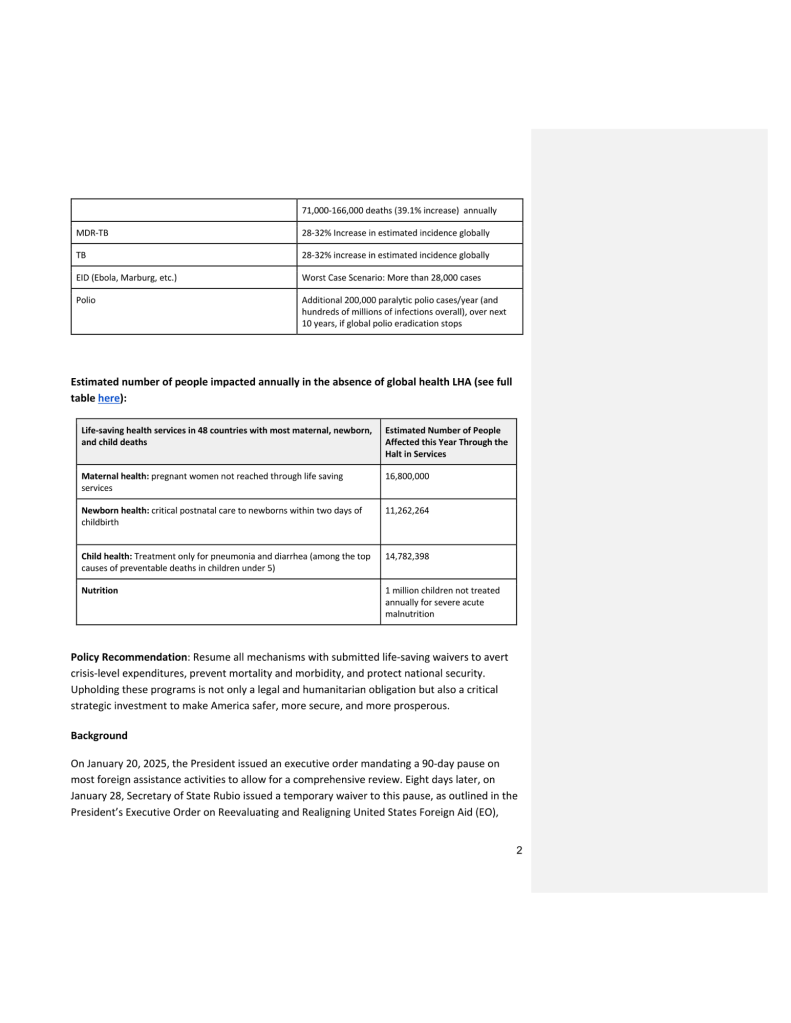


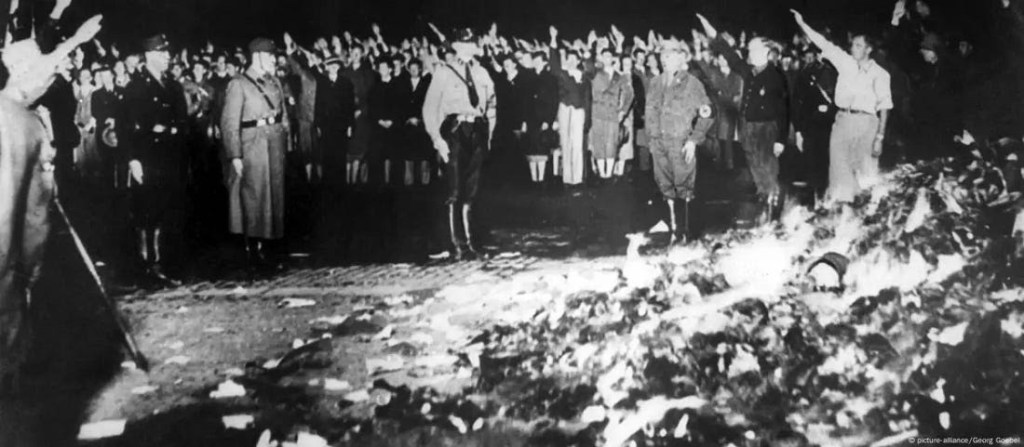


 Diane Ravitch's blog