Archives for category: Disruption

President-elect Trump appointed a man who has actively sabotaged global health to be in charge of our nation’s public health system. Robert F. Kennedy Jr. is a dangerous quack, whose conspiracy theories put millions of lives at risk.

Why did Trump choose a man to lead HHS whose ideology subverts public health? Well, he promised RFK Jr. the job in exchange for his endorsement. Why does Trump fill key positions at HHS with others whose views or experience are derided by mainstream scientists? Clearly, he is being advised by RFK Jr., so he can surround himself with like-minded people.

The effect of these appointments on the career scientists and physicians at HHS will be devastating. There is sure to be a brain drain. Trump could cripple our nation’s public health system for years to come.

The New York Times reported:

Robert F. Kennedy Jr., who is in line to lead the Department of Health and Human Services in the next Trump administration, is well-known for promoting conspiracy theories and vaccine skepticism in the United States.

But Mr. Kennedy, an environmental lawyer, has also spent years working abroad to undermine policies that have been pillars of global health policy for a half-century, records show.

He has done this by lending his celebrity, and the name of his nonprofit group, Children’s Health Defense, to a network of overseas chapters that sow distrust in vaccine safety and spread misinformation far and wide.

He, his organizations and their officials have interfered with vaccination efforts, undermined sex education campaigns meant to stem the spread of AIDS in Africa, and railed against global organizations like the World Health Organization that are in charge of health initiatives.

Along the way, Mr. Kennedy has partnered with, financed or promoted fringe figures — people who claim that 5G cellphone towers cause cancer, that homosexuality and contraceptive education are part of a global conspiracy to reduce African fertility and that the World Health Organization is trying to steal countries’ sovereignty.

One of his group’s advisers, in Uganda, suggested using “supernatural insight” and a man she calls Prophet Elvis to guide policymaking. “We do well to embrace ethereal means to get ahead as a nation,” she wrote on a Ugandan news site this year.

These people, more than leading scientists and experienced public health professionals, have existed in Mr. Kennedy’s orbit for years. The ideas spread by him and his associates abroad highlight the unorthodox, sometimes conspiratorial nature of the world occupied by a man who stands to lead America’s health department, its 80,000 employees and its $1.8 trillion budget.

Please open the link to continue reading.

Jeff Bryant is a veteran journalist who covers education issues. He is the chief correspondent for Our Schools, a project of the Independent Media Institute. He shared the following article with this blog.

What a Podcast Killed by Houston Public Media Reveals About the State Takeover of the City’s Schools

A podcast about the state takeover of the Houston Independent School District (HISD), which Houston Public Media (HPM) produced, promoted, and then quietly killed before it debuted, has been shared with Our Schools. “The Takeover,” hosted by Dominic Walsh, an award-winning public education journalist, examines the takeover, the state’s installation of a new board and a controversial superintendent Mike Miles, and the subsequent series of reforms Miles rolled out that have frustrated and angered teachers, parents, and students.

Our Schools has thoroughly examined the recordings to ensure their authenticity and is reporting on the contents of each episode so that readers are better informed about the consequences of the state takeover of Texas’s largest school district—the eighth-largest district in the nation. We have decided not to make the podcast public for legal reasons.

In four episodes of what was meant to be Season One of the podcast, Walsh covers events that took place in the school year 2023-2024, beginning with the secret ceremony in which Miles was sworn in to serve as superintendent in June 2023. Episode four culminates in March 2024 when public outrage forced Miles to back down on an evaluation plan that could have potentially resulted in half of the district’s principals losing their jobs, including some who lead the district’s top-rated schools.

Walsh ended the Season by questioning whether widespread public anger at policies implemented by Miles could endanger a school bond referendum that voters eventually decided on during the November 2024 election. That bond referendum was defeated, and the Houston Landing reported that Texas voters had never before rejected a proposed school bond measure “totaling $1 billion or more.” HPM called the defeat “an unofficial referendum of state takeover.”

Much of the airtime in “The Takeover” is taken up by interviews that are critical of what Miles has implemented, including those with parents, teachers, librarians, and students, many of whom bitterly complain about the new reforms. Walsh points out that state takeovers of local school districts almost never produce positive results, as numerous studies have shown.

Walsh has given ample time to takeover supporters on the podcast as well, including Miles; Texas Commissioner of Education Mike Morath, who appointed Miles; state-appointed Houston School Board President Audrey Momanaee; and Texas lawmakers, both Democratic and Republican, who support the takeover. He also speaks about positive developments since the takeover began, including improved test scores in math and science.

Yet, while Walsh’s reporting can be described as balanced, he largely frames the takeover and the new reforms Miles has imposed as the latest iteration of the decades-long education reform movement that Walsh negatively characterizes as being “top-down.” He further points out that the reforms are overly reliant on standardized testing with punitive accountability measures that often lead to schools being closed, teachers and school principals being fired, and parents feeling alienated.

A request for comment was sent to HPM station manager Joshua Adams, but Our Schools is yet to receive a response.

Episode one of “The Takeover” is titled “School Reform, the Musical,” a reference to a musical skit Miles staged, and played the leading role in, to ease the district about his massive disruption efforts and to counter any criticisms. But the episode could easily have been called “Winners and Losers,” which is the theme Walsh keeps returning to while describing who gains in Miles’s new education system and who loses out.

The winners tend to be those school staff members who benefit from a tiered salary system Miles implemented and teachers who are comfortable with a centrally created and scripted curriculum. The losers? Parents who see their children’s favorite teachers being fired or leaving in frustration. Students who find the scripted curriculum less engaging. Librarians whose libraries are shuttered. Teachers who lament about losing their freedom to tailor instruction to students and miss the curriculum they felt most passionate about, like teaching the entire book in English Language Arts class.

A contrast Walsh repeatedly draws throughout the episode is Miles’s claims of knowing “the best way” to improve schools versus what Walsh observes as the “painful reality” on the ground when the reforms were rolled out.

Episode one, “School Reform, the Musical” states:“State installed superintendent Mike Miles says his plan will make schools better, raise test scores, and career readiness, especially in high poverty neighborhoods that need it the most. And who could argue with those goals. Everyone wants that. Right? But it’s complicated.”
—Dominic Walsh

In episode two, “The Law,” Walsh begins by examining the law that made the state takeover possible and delves into the “conflicting philosophies” over public education and the rampant inequity in the education system. His reporting reveals that the law, House Bill 1842, was mostly based on the low academic performance of just one school, which had started to improve just before the announcement of the takeover. Walsh questions whether the low performance in Houston schools might be due to a lack of resources and the rigid system Texas uses to assess its schools.

Another state law the episode considers—passed in 2017—was an attempt to incentivize school districts to partner with charter school management groups to operate their lowest-performing schools. This law kept the HISD and other districts with low-performing schools under constant pressure of being privatized. Walsh explains that Houston’s reform movement is based on strict accountability measures of schools, which were exported to the entire nation later on.

Episode two, “The Law” states:“This is a story about conflicting philosophies—deep-seated disagreements over the possibilities, potentials, and purpose of public education in a deeply unequal society.”
—Dominic Walsh

Episode three, “The Texas Miracle,” goes back to the 1990s to explore the origin of top-down education reform in Texas under then-Governor George W. Bush and the so-called Texas miracle that became the inspiration for the No Child Left Behind Act, enacted in 2002 by then-President George W Bush. These policies were furthered under the Barack Obama presidential administration, and, in Houston, under the leadership of former superintendent Terry Grier from 2009 to 2016. He was rewarded with school improvement grant money by Obama, which he used to force changes in some of the very same schools Miles is focused on today.

However, Walsh speaks with education researcher Julian Vasquez Heilig, who was an employee of HISD’s Office of Research and Accountability from 1999-2001. He explains that the acclaimed progress resulting from the Texas miracle was a “mirage.” In another interview, education historian Jack Schneider says that the positive results, of what he calls the “bipartisan, neoliberal” policy of NCLB and similar laws, have never really been achieved.

Nevertheless, Walsh explains that the reform agenda spawned a host of reforms, to which Miles is devoted. In fact, as Walsh reports, the charter school network that Miles created and led, called the Third Future Schools, uses an education approach almost identical to what Miles is trying to implement for Houston’s public schools system. Walsh notes that Third Future Schools struggled to meet all the progress measures in another Texas school district when the company was contracted to transform a school. Walsh concludes, “If Miles can pull this off in Houston, it will be a first.”

Episode three, “The Texas Miracle” states:

“In the eyes of some researchers, if we have learned anything from the past two decades of education policy, it’s that this type of top-down, test-based school reform does not work, largely because of what it misses. But others think Mike Miles may have finally cracked the code.”

—Dominic Walsh 

The Takeover’s final episode, “Reconciliation,” largely focuses on the behind-the-scenes players that will determine the fate of Houston schools. These include the state-appointed board that Miles answers to—it mostly functions as a rubber stamp for Miles’s reform agenda, according to critics—the Texas Education Agency that initiated the takeover, and Texas state lawmakers, including the legislature and Governor Gregg Abbott, who determine state education policy. In reporting on each of these entities, Walsh finds various “contradictions” that are hard to reconcile.

Walsh interviews Audrey Momanaee about the takeover board and questions how the effort can align with the “visions and values of community,” as she claims while delivering  “results,” like higher test scores and a narrowed curriculum, which don’t seem to be in line with the values of the local community. Walsh returns to this same contradiction in his interview with Morath in which Walsh notices how Morath’s emphasis on raising test scores clashes with his goal to raise “educated citizens.” Texas state lawmakers present an even starker contradiction, Walsh notes, as they pass laws that hold public schools to increasingly harsher accountability measures while attempting to pass a new voucher system that would redirect more education funding to private schools, which have no public accountability at all.

In the face of these contradictions, Walsh accuses leaders of the Houston takeover of “kind of operating as if they have blinders on” as they choose to ignore what education should be, instead, going for scripted curriculum, command and control managerial practices, and ever higher test scores. Walsh notes that Miles seems to waver from his agenda only when wealthier parents and representatives of the business community voice their dissatisfaction.

Episode four, “Reconciliation” states:

“How the state measures success, how it decides when to intervene, and when this takeover will end, is actually up in the air. In fact, the whole public education system in Texas is in flux.”

—Dominic Walsh

Why HPM decided to kill “The Takeover” before it had a chance to air is not immediately clear based on the content of the podcast.

According to a September 2024 article in the Texas Monthly, which called the decision to kill the podcast “head-scratching,” executives at the news organization pulled “The Takeover” the day before it was scheduled to debut when they learned that Walsh’s “long-term romantic relationship with an HISD teacher” presented, what they believed, was a “conflict of interest.” Through a series of public records requests, Texas Monthly reporters Michael Hardy and Forrest Wilder obtained copies of the podcast episodes and internal communications related to its cancellation.

In their investigation, Hardy and Wilder found “no evidence that HPM canceled the podcast because of external pressure, as some community members have speculated. No inaccuracies in Walsh’s reporting are identified in the internal communications we reviewed, and HPM executives did not respond to a question about whether they had identified any.”

Hardy and Wilder also note that “What constitutes a conflict of interest is a disputed subject among journalists.” They have interviewed experts on ethics in journalism who question HPM executives’ decision to cancel the podcast.

HPM still archives Walsh’s education reporting on its website, with no disclaimer. Walsh, however, no longer covers education and seems to be reporting on other beats for HPM.

But it’s hard not to sense the irony as Walsh signs off his reporting in “The Takeover” saying, “Whatever happens we will be here. Stay tuned.”
Trump is continuing to ignore the fact that some appointees serve for a set term, to insulate them from politics. Trump does not want his appointees to be insulated from his control. The current IRS commissioner’s term expires in 2027 but Trump announced his replacement today.

The same thing happened with the FBI. The incumbent, Christopher Wray, was appointed by Trump in 2017 to replace James Comey, who was fired by Trump. Wray is supposed to serve ten years but Trump has announced his choice, which suggests that he intends to fire Wray.

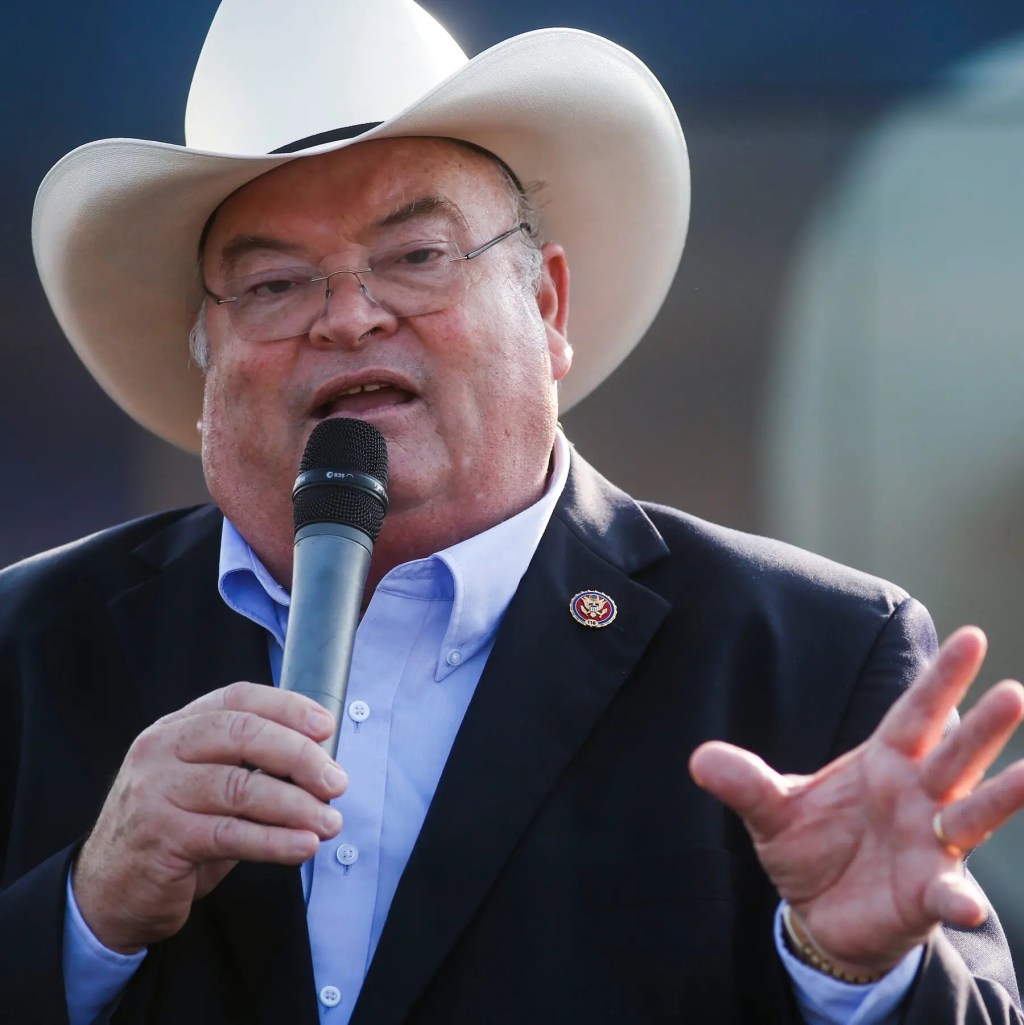
Trump’s choice for IRS Commissioner is Billy Long, a former Congressman from Missouri who never served on the tax-writing committee.

The New York Times reported:

President-elect Donald J. Trump said on Wednesday that he would nominate Billy Long, formerly a Republican congressman representing Missouri, to lead the Internal Revenue Service, effectively pledging to fire the tax collector’s current leader, a Biden appointee.

Mr. Trump’s choice, announced on his social media website, would shake up the I.R.S. at a pivotal moment. The Biden administration has poured billions of dollars into modernizing the agency and beefing up its tax collection efforts in an effort to improve customer service and crack down on tax cheats.

In 2022, President Biden chose Daniel Werfel, a former management consultant and civil servant who had worked in both Democratic and Republican administrations, to lead the overhaul of the I.R.S. His term was set to last until 2027.

Republicans have deeply opposed the Biden administration’s vision for the tax agency, which included providing roughly $80 billion in supplemental funding to the I.R.S. over a decade. G.O.P. lawmakers successfully pushed to cancel $20 billion of that money, and are eyeing further cuts. The I.R.S. is unpopular with the public, and Republicans have long attacked it as invasive and inept.

Additional funding for the I.R.S. helps raise the money for the government by more effectively enforcing tax laws and requiring Americans to pay the taxes they owe, according to budget experts.

Mr. Long, a former auctioneer, did not serve on the House tax-writing committee during his time in Congress. But he did put his auctioneering skills to use while in Washington….

Presidents do not typically select new I.R.S. commissioners when they come into office, and the Senate will have to confirm Mr. Long. President Biden waited for the term of Mr. Trump’s first choice to lead the tax agency, Charles P. Rettig, to end before selecting Mr. Werfel.

Robert F. Kennedy Jr. is a nonconformist. Also an oddball and a crackpot. He has fought against vaccines for years. Donald Trump chose him to oversee the federal department of Health and Human Services. There he will have the power to stop research on vaccines, to ban vaccines–to use his power to kills hundreds of thousands of people, mainly children and the elderly.

He was a heroin addict for many years. Watch the video from a few months ago where he explained how heroin improved his academic performance.

The Senate should not put this man in charge of the nation’s health.

Jane Mayer, superstar writer for The New Yorker, has scored a major scoop with her detailed account of Pete Hegseth’s secret life. She has details that have thus far eluded the major daily newspapers.

Hegseth, of course, is Trump’s nominee to be Secretary of Defense. This is one of the most crucial and demanding jobs in government. The Defense Department has a budget of more than $800 billion and almost three million employees. The Secretary must be prepared to make consequential decisions of life and depth with in-depth knowledge and experience.

Pete Hegseth is not that man.

Mayer writes:

A trail of documents, corroborated by the accounts of former colleagues, indicates that Hegseth was forced to step down by both of the two nonprofit advocacy groups that he ran—Veterans for Freedom and Concerned Veterans for America—in the face of serious allegations of financial mismanagement, sexual impropriety, and personal misconduct.

A previously undisclosed whistle-blower report on Hegseth’s tenure as the president of Concerned Veterans for America, from 2013 until 2016, describes him as being repeatedly intoxicated while acting in his official capacity—to the point of needing to be carried out of the organization’s events. The detailed seven-page report—which was compiled by multiple former C.V.A. employees and sent to the organization’s senior management in February, 2015—states that, at one point, Hegseth had to be restrained while drunk from joining the dancers on the stage of a Louisiana strip club, where he had brought his team. The report also says that Hegseth, who was married at the time, and other members of his management team sexually pursued the organization’s female staffers, whom they divided into two groups—the “party girls” and the “not party girls.” In addition, the report asserts that, under Hegseth’s leadership, the organization became a hostile workplace that ignored serious accusations of impropriety, including an allegation made by a female employee that another employee on Hegseth’s staff had attempted to sexually assault her at the Louisiana strip club. In a separate letter of complaint, which was sent to the organization in late 2015, a different former employee described Hegseth being at a bar in the early-morning hours of May 29, 2015, while on an official tour through Cuyahoga Falls, Ohio, drunkenly chanting “Kill All Muslims! Kill All Muslims!”

In response to questions from this magazine, Tim Parlatore, a lawyer for Hegseth, replied with the following statement, which he said came from “an advisor” to Hegseth: “We’re not going to comment on outlandish claims laundered through The New Yorker by a petty and jealous disgruntled former associate of Mr. Hegseth’s. Get back to us when you try your first attempt at actual journalism….”

The whistle-blower report makes extensive allegations. It describes several top managers being involved in drunken episodes, including an altercation at a casino and a hotel Christmas party at which food was thrown from the balcony. Hegseth, it says, was “seen drunk at multiple CVA events” between 2013 and 2015, a time when the organization was engaged in an ambitious nationwide effort to mobilize veterans to vote for conservative candidates and causes…

In October, 2014, C.V.A. instituted a “no alcohol” policy at its events. But the next month, according to the report, Hegseth and another manager lifted the policy while overseeing a get-out-the-vote field operation to boost Republican candidates in North Carolina. According to the report, on the evening before the election, Hegseth, who had been out with three young female staff members, was so inebriated by 1 a.m. that a staffer who had driven him to his hotel, in a van full of other drunken staffers, asked for assistance to get Hegseth to his room. “Pete was completely passed out in the middle seat, slumped over” a young female staff member, the report says. It took two male staff members to get Hegseth into the hotel; after one young woman vomited in some bushes, another helped him into bed. In the morning, a team member had to wake Hegseth so that he didn’t miss his flight. “All of this happened in public,” according to the report, while C.V.A. was “embedded” in the Republican get-out-the-vote effort. It went on, “Everyone who saw this was disgusted and in shock that the head of the team was that intoxicated….”

In December, 2014, the group held an office Christmas party at the Grand Hyatt in Washington. Once again, according to the report, Hegseth was “noticeably intoxicated and had to be carried up to his room.” The report stated, “His behavior was embarrassing in front of the team, but not surprising; people have simply come to expect Pete to get drunk at social events.”

Earlier in his career, in 2007, Hegseth was hired to lead a small veterans’ group called Vets for Freedom, which advocated for expanding the war in Iraq. By 2009, VFF was virtually bankrupt, with $1,000 in the bank, and nearly $500,000 in debts. The billionaire backers lost confidence in him and merged VFF with another vets’ group to minimize his role.

Mayer quotes Margaret Hoover, an advisor to VFF during Hegseth’s tenure, who said to CNN:

 “I watched him run an organization very poorly, lose the confidence of donors. The organization ultimately folded and was forced to merge with another organization who individuals felt could run and manage funds on behalf of donors more responsibly than he could. That was my experience with him.” Hoover stressed that V.F.F. was an exceedingly small organization, with fewer than ten employees, and a budget of between five million and ten million dollars. She told CNN, “And he couldn’t do that properly—I don’t know how he’s going to run an organization with an eight-hundred-and-fifty-seven-billion-dollar budget and three million individuals.”

Timothy Snyder is an expert on European history and on tyranny (the title of one of his books is On Tyranny). He writes here about the creeping authoritarianism of the coming Trump regime.

Snyder writes:

We should be wary of shock, which excuses inaction. Who could have known? What could I have done? If there is a plan, shock is part of the plan. We have to get through the surprise and the shock to see the design and the risk. We don’t have much time. Nor is outrage the point.

Of course we are outraged. But our own reactions can distract is from the larger pattern.
The newspapers address the surprise and the shock by investigating each proposed appointment individually. And we need this. With detail comes leverage and power. But clarity must also come, and quickly. Each appointment is part of a larger picture. Taken together, Trump’s candidates constitute an attempt to wreck the American government.

In historical context we can see this. There is a history of the modern democratic state. There is also a history of engineered regime change and deliberate state destruction. In both histories, five key zones are health, law, administration, defense, and intelligence. These people, with power over these areas of life, can make America impossible to sustain.

The foundation of the modern democratic state is a healthy, long-lived population. We lived longer in the twentieth century because of hygiene and vaccinations, pioneered by scientists and physicians and then institutionalized by governments. We treat one another better when we know we have longer lives to lose. Health is not only the central human good; it enables the peaceful interactions we associate with the rule of law and democracy. Robert F. Kennedy, Jr., the proposed secretary of the Department of Health and Human Services, would undo all of this. On his watch, were his ideas implemented, millions of us would die. Knowing that our lives will be shorter, we become nasty and brutish.

A modern democratic state depends upon the rule of law. Before anything else is possible, we have to endorse the principle that we are all governed by law, and that our institutions are grounded in law. This enables a functional government of a specific sort, in which leaders can be regularly replaced by elections. It allows us to live as free individuals, within a set of rules that we can alter together. The rule of law depends on people who believe in the spirit of law. Matt Gaetz, Trump’s first proposed attorney general, is the opposite of such a person. It is not just that he flouts law himself, spectacularly and disgustingly. It is that he embodies lawlessness, and can be counted upon to abuse law to pursue Trump’s political opponents. The end of the rule of law is an essential component of a regime change. He has been replaced by Pam Bondi, who will evade the sex-crime allegations that seem to have brought Gaetz down. But Bondi is someone who dropped an investigation against Trump when he made an illegal donation to one of her foundations. She also led “lock her up” chants against Hillary Clinton, who had committed no crime. And she participated in a central injustice of contemporary American history, Donald Trump’s Big Lie that he won the election of 2020. She can be expected to lead prosecutions based upon alternative reality.

In a class by himself is Kash Patel, whom Trump would like to see as director of the FBI. This, of course, requires Trump to fire Christopher Wray, whom he himself appointed, and who has three years left to serve. Firing Wray for no reason would be unprecedented and would itself have been an outrage in a more sane time. Giving Patel authority over the national police force is nothing less than a promise of authoritarian rule.

Patel is a narcissitic zealot with zero qualification for such a post, as even hard-right Trump insiders such as Bill Barr have said (“over my dead body” were his words when Trump proposed Patel for a lesser position of authority in 2020). Patel got Trump’s attention for his efforts to denounce the entirely correct proposition that Trump was supported by Russia in 2016. Patel was then one of the most active and outspoken participants in Trump’s coup attempt of 2020-2021. Patel has since become a pitchman for a clothing line as well as pills that, he claims, will detox your body from the harmful effects of vaccinations. Patel said both that he would shut down the FBI and that he would use it to prosecute journalists and people who deny the untrue conspiracy theories in which he believes, and to prosecute people who say true things, such as that Russia supports Donald Trump when he runs for office. Russian trolls have been, understandably, very excited in their support of Patel.

A pattern is emerging: the federal government is to be used only as an instrument of revenge, which means that the law will be subverted as such. Laws that were passed to improve the lives of citizens, meanwhile, will simply not be implemented.

The United States of America exists not only because laws are passed, but because we can expect that these laws will be implemented by civil servants. We might find bureaucracy annoying; its absence, though, is deadly. We cannot take the pollution out of the air ourselves, or build the highways ourselves, or write our Social Security checks ourselves. Without a civil service, the law becomes mere paper, and all that works is the personal connection to the government, which the oligarchs will have, and which the rest of us will not. This is the engineered helplessness promised by Elon Musk and Vivek Ramaswamy, who are to head a black hole named after a cryptocurrency. There are already oversight instruments in government. DOGE is something entirely different: an agency of destruction, run by people who believe that government should exist for the wealthy or not at all.

The understandable jokes are that DOGE just adds unelected bureaucrats when it is supposed to replace them, and that DOGE is itself a model of inefficiency, since it has two incompetent directors. But the humor distracts from the basic truth: DOGE is there to make the government fail, and then to divide the profitable bits among regime-proximate oligarchs.

DOGE = Den of Oligarchs Gets Everything.

In a modern democratic state, the armed forces are meant to preserve a healthy, long-lived people from external threats. This principal has been much abused in American practice. But never before Donald Trump have we had a president who has presented the purpose of the armed forces as the oppression of Americans. Trump says that Russia and China are less of a threat than “internal enemies.” In American tradition, members of the armed forces swear an oath to the Constitution. Trump has indicated that he would prefer “Hitler’s generals,” which means a personal oath to himself. Pete Hegseth, Trump’s proposed secretary of defense, defends war criminals and displays tattoos associated with white nationalism and Christian nationalism. He is a fundraiser and television personality, with a complicated sexual past and zero experience running an organization. Like Trump, he has no coherent account of how foreign powers might threaten America; if anything, he praises them for sharing his misogyny. His own obsessions with gender lead him to believe that American high officers should be politically purged — a proposition that America’s actual enemies would of course welcome. Hegseth makes perfect sense as the person who would direct American armed forces against American citizens.

In a world of hostile powers, an intelligence service is indispensable. Intelligence can be abused, and certainly has been abused. Yet it is necessary to consider military threats: consider the Biden administration’s correct call the Russia was about to invade Ukraine. It is also necessary to counter the attempts by foreign intelligence agencies, which are constant, to harm American society. This often involves disinformation. Tulsi Gabbard, insofar as she is known at all, is known as a spreader of Syrian and Russian disinformation. She visited Syria, where her remarks could only be understood as an endorsement of the atrocities of Assad. She suggested to burn victims that they had not suffered because of Assad and his ally Russia, which was in fact the case. Gabbard has no relevant experience. Were she to become director of national intelligence, as Trump proposes, we would lose the trust of our allies, and lose contact with much of what is happening in the world — just for starters. We would be vulnerable to all of those who wish to cause us harm. Unsurprisingly, Gabbard is regarded in Russia as “girlfriend,” “superwoman” and a “Putin’s agent.”

In the Soviet theory of regime change, one crucial aspect was control of the power ministries: those associated with defense, the police, and intelligence. Patel, Gabbard, and Hegseth are such shocking suggestions as custodians of American power and law that it is easy to overlook Kristi Noem as Trump’s proposed director of Homeland Security. Noem is regarded positively in Trump’s circles because of a publicity stunt in which she, as governor of South Dakota, effectively privatized her states’s National Guard by accepting a big private donation to send a few of its members to the border with Mexico. The border is, of course, a serious matter, Noem’s combination of spectacle, privatization, and incompetence is more than concerning.

Imagine that you are a foreign leader who wishes to destroy the United States. How could you do so? The easiest way would be to get Americans to do the work themselves, to somehow induce Americans to undo their own health, law, administration, defense, and intelligence. From this perspective, Trump’s proposed appointments — Kennedy, Jr.; Bondi; Musk; Ramaswamy; Hegseth; Gabbard; Noem — are perfect instruments. They combine narcissism, incompetence, corruption, sexual incontinence, personal vulnerability, dangerous convictions, and foreign influence as no group before them has done. These proposed appointments look like a decapitation strike: destroying the American government from the top, leaving the body politic to rot, and the rest of us to suffer.

I do not defend the status quo. I have no doubt whatsoever that the Department of Defense and the Food and Drug Administration require reform. But such a reform, of these or other agencies, would have to be guided by people with knowledge and experience, who cared about their country, and who had a vision of improvement. That is simply not what is happening here. We are confronted instead with a group of people who, were they to hold the positions they have been assigned, could bring an end to the United States of America.

It is a mistake to think of these people as flawed. It is not they will do a bad job in their assigned posts. It is that they will do a good job using those assigned posts to destroy our country.

However and by whomever this was organized, the intention of these appointments is clear: to create American horror. Elected officials should see this for what it is. Senators, regardless of party, should understand that the United States Senate will not outlast the United States, insist on voting, and vote accordingly. The Supreme Court of the United States will likely be called upon. Although it is a faint hope, one must venture it anyway: that its justices will understand that the Constitution was not in fact written as the cover story for state destruction. The Supreme Court will also not outlast the United States.

And citizens, regardless of how they voted, need now to check their attitudes. This is no longer a post-electoral moment. It is a pre-catastrophic moment. Trump voters are caught in the notion that Trump must be doing the right thing if Harris voters are upset. But Harris voters are upset now because they love their country. And Harris voters will have to get past the idea that Trump voters should reap what they have sown. Yes, some of them did vote to burn it all down. But if it all burns down, we burn too. It is not easy to speak right now; but if some Republicans wish to, please listen

Both inside and outside Congress, there will have to be simple defiance, joined with a rhetoric of a better America. And, at moments at least, there will also have to be alliances among Americans who, though they differ on other matters, would like to see their country endure.

Jan Resseger read the proposals of the Heritage Foundation’s Project 2025 and the America First Policy Institute to divine the likely shape of Linda McMahon’s plans if she is confirmed as Secretary of Education. McMahon was chair of the board of the America First Policy Institute so its goals are inportant.

It’s not as if these two groups are far apart: they are both closely aligned with Trump and his determination to expand public funding of private schools and sow chaos.

Please open the link, as I am posting only the first half of Jan’s post.

She writes:

Linda McMahon formerly served as an executive of World Wrestling Entertainment; led the Small Business Administration during Trump’s first term; and took a job in 2919 leading the America First Action PAC to support Trump’s candidacy for President. Beginning in 2009, McMahon served part of a term on Connecticut’s state board of education, and once upon a time, after majoring in French in college, the now 76-year-old McMahon secured a teaching certificate in her home state of North Carolina. Currently she chairs the board of the America First Policy Institute, a think tank competitor to the Heritage Foundation and its Project 2025. Both think tanks have been drawing up a policy agenda to drive Trump’s second term.

There is some agreement that McMahon is not as likely to shut down the U.S. Department of Education as many feared Trump’s appointment would be charged to do. The National Education Policy Center’s Kevin Welner believes the complexity of the history and needs served by that federal department would make its closure unlikely: “By the time Congress established the department in 1979, the federal government was already an established player in education policy and funding. For instance, the Higher Education Act of 1965 began the federal student loan program. In 1972, Congress created the basic Educational Opportunity Grant, the predecessor program to today’s Pell Grants. The G.I Bill of 1944, which, among other things, funded higher education for World War II veterans, preceded them both. At the K-12 level, federal involvement in vocational education began with the Smith-Hughes Act of 1917. Federal attention to math, science and foreign language education began in 1958 with the National Defense Education Act. Two laws passed during the Lyndon Johnson administration then gave the federal government its modern foothold in education: the Civil Rights Act of 1964 and the Elementary and Secondary Education Act of 1965. The 1964 law provided antidiscrimination protections enforced by the Education Department’s Office for Civil Rights. The 1965 law… includes Title I, which sends extra funding to schools with high populations of low-income students. In 1975, Congress added the law currently known as the Individuals with Disabilities in Education Act, or IDEA… To dissolve the Education department, both houses of Congress would have to agree, which is unlikely.”

Assuming the U.S. Department of Education will survive a second Trump administration, it is worth comparing the policy agendas both think tanks—the Heritage Foundation with its Project 2025, and the America First Policy Institute (AFPI) where Linda McMahon has been chair of the board—have prepared for the incoming Trump administration’s Department of Education.

The Heritage Foundation’s Project 2025 suggests systematically dismantling or relocating to other departments the institutions that were originally pulled together in 1979 to be managed by one federal agency. According to a concise report in August from the Brookings Brown Center on Education Policy, the Heritage Foundation’s Project 2025 prescribes tearing apart the Department’s structure and functions: “dismantle the U.S. Department of Education; eliminate the Head Start program for young children in poverty; discontinue the Title I program that provides federal funding to schools serving low-income children; rescind federal civil rights protections for LGBTQ+ students; undercut federal capacity to enforce civil rights law; reduce federal funding for students with disabilities and remove guardrails designed to ensure these children are adequately served by schools; promote universal private school choice; and privatize the federal student loan portfolio.”  Project 2025 would, first, end or reduce specific federal funding streams enacted by Congress to serve vulnerable groups of students, and second, disrupt or undermine the specific agency prepared to enforce laws and regulations that protect the civil rights of groups which have experienced discrimination and unequal access to opportunity in the past.

The America First Policy Institute’s agenda is far more focused on what have been called culture war issues, while both think tanks do make universal school choice—the diversion of public dollars for school privatization—a priority.  The agenda of the America First Policy Institute (AFPI) features four pillars, each one described in a two page brief:

First — “Give Parents Control by Allowing Them to Select the School Their Child Attends.” AFPI’s brief on school privatization is piece of classic pro-privatization ideology. Ignoring the fact that two weeks ago in three states, voters rejected ballot measures which would have expanded tuition vouchers for private schools and further, that every single time voters have been presented with voucher initiatives in previous years, voters have flatly rejected school vouchers, the America First Policy Institute (AFPI) tells a lie: “Just 18% of Americans are opposed to school choice. Support for school choice in America has increased from 64% to 72% since April 2020.” And despite Josh Cowen’s research that demonstrates lower academic achievement when students use vouchers at private schools, AFPI declares: “Standardized test scores significantly improve for students who exercised school choice.”  AFPI endorses charter schools and criticizes the Biden administration’s efforts to strengthen regulation of the federal Charter Schools Program, which the Network for Public Education has repeatedly shown suffers from poor oversight.  AFPI writes: “(R)egulations would severely limit the types of schools that could apply for funding and would restrict any potential expansion of charter school programs.”  AFPI concludes mistakenly: “Educational freedom is a tool that has a proven record of putting students and families first, and parents need to be given the power to choose the best educational opportunities for their children.”

Education Week‘s Brooke Shultz directly quotes Linda McMahon in 2016 strongly supporting charter schools : “One of the issues most important to me is the question of school choice.” Shultz also quotes McMahon in 2015: “I don’t believe charter schools take anything away from traditional public schools; rather I think they can be centers for innovation and models for best practices.”

Second —“Give Every Parent the Right to See All Curriculum Materials in Every Class their Child Attends.”  AFPI endorses parents’ individualist right to insulate and shield their children from programs and ideas that the parents consider offensive. However dangerous it may be for a school district to privilege individual parents with the power to set the curriculum according to the biases of the most powerful parents, and however impractical it may be for parents to review and debate each classroom’s lessons in advance, that is the policy AFPI endorses: “The formal authority to approve curriculum for public schools rests with states and local school boards. However, the authority for educating children rests with parents. As such, they should be involved early in the approval process in determining what qualifies as appropriate content for curriculum and lesson plans.”  The bias here is clear: “Many children are being taught to see white supremacy everywhere, indoctrinated to believe America’s foundation was built on racism, talked to about sex and gender identity in developmentally inappropriate ways, and presented with other questionable curriculum…  Officials that have the authority to make and approve curriculum do so as stewards of the public’s trust. The taxpayers and parents who schools ultimately answer to deserve to know what schools are teaching and how tax dollars are being spent.”

Again, please open the link to read this excellent post in full.

Justin Parmentier, an NBCT-certified high school teacher in North Carolina, has been scrutinizing the nonpublic schools that receive voucher money from the state. he found that nearly 90% are religious schools where discrimination and indoctrination are commonplace.

Parmenter remembers when now-disgraced Lt. Governor Mark Robinson opened a search for public schools that indoctrinate and came up with nothing.

Public funds in NC support religious schools that openly and egregiously indoctrinate students. Not a peep from the culture warriors. It wasn’t indoctrination they objected to; it was public schools.

Parmenter wrote the following in March 2024, before Robinson was disgraced by the CNN report on his history of posting on pornography websites. To call Robinson a hypocrite would be an understatement:

With billions of dollars now on tap for North Carolina’s private schools, and 88.2% of those dollars going to religious schools, scrutiny is rising over exactly what our taxes are supporting.

Private schools are legally able to discriminate against children, and many of North Carolina’s Christian schools deny admissions to students based on religious beliefs, sexual orientation, or learning disabilities.

For example, Fayetteville Christian School, which pocketed nearly $2 million in voucher dollars this school year, expressly bans students who practice specific religions like Islam and Buddhism, and they also bar LGBTQ+ students–whom they brand “perverted”–from attending.

North Raleigh Christian Academy won’t accept children with IQs below 90 and will not serve students who require IEPs (a document which outlines how a school will provide support to children with disabilities).

If this public funding of widespread discriminatory school practices rubs you the wrong way, I have bad news for you.

It gets worse.

That harmful indoctrination Mark Robinson was howling about a couple years ago in his disingenuous attempt to generate political momentum?  Turns out it’s real.  It just isn’t happening in the traditional public schools Robinson was targeting.

The Daniel Christian Academy is a private school in Concord, NC.  This school has received public dollars through school vouchers every year since Republicans launched the controversial Opportunity Scholarship voucher program in 2014-15 for a grand total of $585,776.

Daniel Academy’s mission is to “raise the next generation of leaders who will transform the heart of our nation” by equipping students “to enter the Seven Mountains of Influence.”

The Seven Mountains of Influence (also referred to as the Seven Mountains of Dominion or the Seven Mountains Mandate) refers to seven areas of society:  religion, family, education, government, media, arts & entertainment, and business.  Dominionists who follow this doctrine believe that they are mandated by God to control all seven of society’s “mountains,” and that doing so will trigger the end times.

The Seven Mountains philosophy has been around since the 70s, but it came to prominence about ten years ago with the publication of Lance Wallnau’s book Invading Babylon:  The Seven Mountains Mandate.  Wallnau touts himself as a consultant who “inspires visions of tomorrow with the clarity of today—connecting ideas to action,” and his book teaches that dominionists must “understand [their] role in society” and “release God’s will in [their] sphere of influence.”

Wallnau does caution his followers that messaging about taking control over all seven areas of society on behalf of God might freak out non dominionists, saying in 2011 that “If you’re talking to a secular audience, you don’t talk about having dominion over them. This … language of takeover, it doesn’t actually help…”

So why should North Carolinians care that their tax dollars are subsidizing this sort of indoctrination of children through private school vouchers?

I posed that question to Frederick Clarkson, a research analyst who has studied the confluence of politics and religion for more than three decades and lately has been focusing on the violent underbelly of Christian nationalists who want to achieve Christian dominion of the United States at all costs.  Here’s what Clarkson said:

North Carolina taxpayers should be concerned that they are helping to underwrite an academy for training children to become  warriors against not only the rights of others, but against democracy and its institutions.  The idea of the Seven Mountain Mandate is for Christians of the right sort to take dominion — which is to say power and influence — over the most important sectors of society. It is theocratic in orientation and its vision is forever. 

This is not something that is about liberals and conservatives . Most Christians including most evangelicals, Catholics, and mainline Protestants are deemed not just insufficiently Christian, but may be viewed as infested with demons, and standing in the way of the advancement of the Kingdom of God on Earth. And they will need to be dealt with.

Jeff Tiedrich posted this illuminating explanation of Trump’s latest nominations.

Is Charles Kushner qualified to hold one of the most prestigious ambassadorships? No. But what qualifies him is that he is the father of Jared Kushner, Trump’s son-in-law. The French will be polite but they will laugh at Kushner, at Trump, and at us, for electing the Insurrectionist. From The NY Times: “Mr. Kushner, 70, pleaded guilty in 2004 to 16 counts of tax evasion, a single count of retaliating against a federal witness and one of lying to the Federal Election Commission”

Is Kash Patel qualified to lead the FBI? A thousand times no. The Republicans who worked for Trump hated him. In the post, you will see that Patel said that if he ran the FBI, he would close down its headquarters on Day 1 and disperse the 7,000 people who work there to be cops and catch bad guys. He would then turn the FBI headquarters into “a museum of the deep state.” A total Trump lackey. A typical Trumpian view of government service.

Trump is rapidly creating a true kakistocracy. The definition is in the post.

Trump is demonstrating his intention to purge the FBI by naming his close associate Kash Patel as FBI Director. Patel has said repeatedly that the FBI is loaded with “Deep State” enemies, and he plans to fire them.

The FBI is supposed to be an independent agency, not a vengeance weapon belonging to the President. Patel has made clear that he will find and punish Trump’s enemies. He will run the FBI, if confirmed, as Trump’s man, serving Trump, not justice and not the American people. He will be Trump’s avenger, as he destroys the reputation of the FBI.

Politico described him:

President Donald Trump announced Saturday night that he has picked staunch Trump loyalist Kash Patel as the next director of the Federal Bureau of Investigation.

Patel, a Trump transition insider, has been one of Trump’s most visible and vocal allies, showing up at his criminal trial in Manhattan, perpetuating conspiracy theories about the 2020 election. He worked as chief of staff to the secretary of Defense during the first Trump administration, and has been outspoken about calling for a purge of Trump’s enemies from the Justice Department, FBI and other intelligence agencies.

The New York Times wrote:

President-elect Donald J. Trump said on Saturday that he wants to replace Christopher A. Wray, the F.B.I. director, with Kash Patel, a hard-line critic of the bureau who has called for shutting down the agency’s Washington headquarters, firing its leadership and bringing the nation’s law enforcement agencies “to heel.”

Mr. Trump’s planned nomination of Mr. Patel has echoes of his failed attempt to place another partisan firebrand, Matt Gaetz, atop the Justice Department as attorney general. It could run into hurdles in the Senate, which will be called on to confirm him, and is sure to send shock waves through the F.B.I., which Mr. Trump and his allies have come to view as part of a “deep state” conspiracy against him.

Mr. Patel has been closely aligned with Mr. Trump’s belief that much of the nation’s law enforcement and national security establishment needs to be purged of bias and held accountable for what they see as unjustified investigations and prosecutions of Mr. Trump and his allies.

Mr. Patel “played a pivotal role in uncovering the Russia, Russia, Russia Hoax, standing as an advocate for truth, accountability and the Constitution,” Mr. Trump said in announcing his choice in a social media post….

Mr. Patel, a favorite of Mr. Trump’s political base, has worked as a federal prosecutor and a public defender, but has little of the law enforcement and management experience typical of F.B.I. directors.

He served in a series of administration positions at the tail end of Mr. Trump’s first term, including posts on the National Security Council and in the Pentagon. Before leaving office in early 2021, Mr. Trump floated the idea of making Mr. Patel deputy director of either the C.I.A. or the F.B.I. William P. Barr, the attorney general at the time, wrote in his memoir that Mr. Patel would have become deputy F.B.I. director only “over my dead body.”

FBI directors are appointed for a 10-year term, so their tenure is allegedly nonpolitical. Although Trump appointed Christopher Wray as FBI Director, Trump soured on him after the FBI raid on Mar-a-Lago to recover hundreds of top/secret documents. Trump made clear to Director Wray that he should resign or be fired.

Current and former law enforcement officials have worried that a second Trump term would feature an assault on the independence and authority of the F.B.I. and the Justice Department, and for many of them, Mr. Patel’s ascension to the director’s role would confirm the worst of those fears.

Mr. Patel laid out his vision for wreaking vengeance on the F.B.I. and Justice Department in a book, “Government Gangsters,” calling for clearing out the top ranks of the bureau, which he called “a threat to the people.” He also wrote a children’s book, “The Plot Against the King,” telling through fantasy the story of the investigations into Mr. Trump’s 2016 campaign’s possible ties to Russians.

He has vowed to investigate and possibly prosecute journalists once he is back in government, adding that he would “follow the facts and the law.”

“Yes, we’re going to come after the people in the media who lied about American citizens, who helped Joe Biden rig presidential elections — we’re going to come after you,” he said last year. “Whether it’s criminally or civilly, we’ll figure that out.”

An article in the New York Times in October described how deeply hated Patel was by other high-level members of the Trump administration. He was considered a boastful self-promoter.

After Mr. Trump lost the 2020 election and staff members began an exodus from the White House, Mr. Patel’s upward trajectory continued. Mr. Trump named him to one of the most important jobs at the Pentagon: chief of staff to Christopher Miller, the acting defense secretary.

Gen. Mark A. Milley, then chairman of the Joint Chiefs of Staff, was shocked when Mr. Patel presented him a document signed in Sharpie by the outgoing Mr. Trump ordering a full withdrawal of all American troops from Afghanistan by Jan. 15. General Milley, the top military adviser to the president, had never even seen the order, and neither had several other senior advisers. It turned out it was drafted by Douglas Macgregor, a retired colonel named as an adviser to the Pentagon after he impressed Mr. Trump with his appearances on Fox News, according to an account in “The Divider,” a book by Peter Baker and Susan Glasser.

Mr. Trump backed away from the Afghanistan plan, but soon sought to again elevate Mr. Patel by making him deputy director of either the C.I.A. or the F.B.I. Only after Gina Haspel, the C.I.A. director, and William P. Barr, the attorney general, both threatened to quit — Mr. Barr vowed that Mr. Patel would become F.B.I. deputy only “over my dead body”— did Mr. Trump abandon the idea.

Mr. Patel stayed at the Pentagon for three months, crediting himself in his book with leading “the biggest transition’’ of the Defense Department “in U.S. history.”