Paul Krugman, Nobel-Prize winning economist, writes about shady speculation in the oil futures market. He says it’s not just insider trading, it’s treason.
Over the weekend Donald Trump threatened dire vengeance on Iran unless its government opened the Strait of Hormuz within 48 hours, a deadline that would expire Monday evening in Washington. Specifically, he announced that the U.S. would begin bombing power plants — plants that supply electricity to Iran’s civilian population — unless the Strait was cleared.
But at 7:05 AM Monday Trump called the whole thing off — for five days, he said, but many people are assuming that the threatened action, which would have been a massive war crime, is now off the table.
The reason for the about-face, he claimed, was that the U.S. was engaged in productive negotiations with Iranian officials — although this seems to have come as news to the Iranians, who denied that any such negotiations are taking place. Sad to say, in this case, as I tried to explain yesterday, the fanatical, brutal Iranian regime is more credible than the president of the United States. Is he lying or living in a fantasy world? Neither possibility is comforting.
But in any case, Trump’s sudden climb-down was startling. Who could have seen this coming? The answer is, the person or people who bought large quantities of stock market futures and sold large quantities of oil futures around 15 minutes before Trump’s announcement. As CNBC reports,
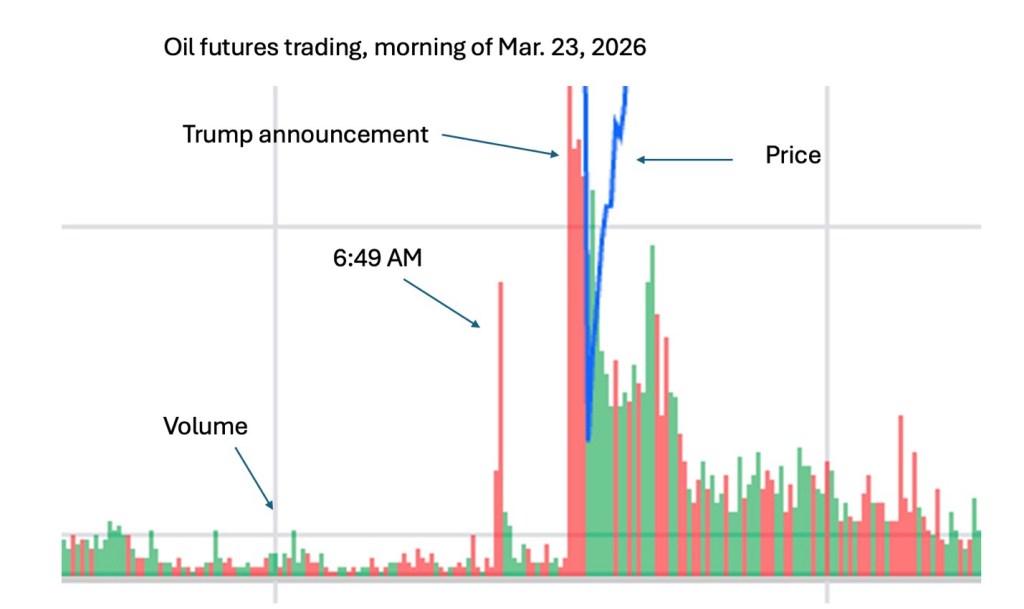
At around 6:50 a.m. in New York, S&P 500 e-Mini futures trading on the CME recorded a sharp and isolated jump in volume, breaking from an otherwise subdued premarket backdrop. With thin liquidity typical of early trading hours, the sudden burst stood out as one of the largest volume moments of the session up to that point. A similar pattern was observed in oil markets. West Texas Intermediate May futures also saw a noticeable pickup in trading activity at roughly the same time, with a distinct volume spike interrupting otherwise quiet conditions.
This “sharp and isolated jump in volume” — which you can see for the oil futures market in the chart at the top of this post — was especially bizarre because there were no major news items — no major publicly available news items — to drive sudden big market transactions. The story would be baffling, except that there’s an obvious explanation: Somebody close to Trump knew what he was about to do, and exploited that inside information to make huge, instant profits.
This wasn’t the first time something like this has happened under Trump. There were large, suspicious moves in the prediction market Polymarket before previous attacks on Iran and Venezuela. But this front-running of U.S. policy was really large: the Financial Times estimates the sales of oil futures in that magic minute Monday morning at about $580 million, and that doesn’t count the purchases of stock futures.
When officers of a company or people close to them exploit confidential information for personal financial gain, that’s insider trading — which is illegal. But we have another word for situations in which people with access to confidential information regarding national security — such as plans to bomb or not to bomb another country — exploit that information for profit. That word is “treason.”
Why is profiting from insider information about national security decisions effectively a form of treason? First, it’s hard to think of a more fundamental principle for officials we entrust with important decisions, especially those that involve national security, that they or people they know should not be allowed to exploit their positions for personal gain.
Second, financial trading based on what should be closely held secrets reveals information to current or potential foreign adversaries. To exaggerate a bit, but only a bit, who needs to bribe agents within the government, or recruit them with honey traps, when you can infer the same information by keeping track of transactions on futures markets?
Finally, there isn’t that big a gap between using knowledge of national secrets to make lucrative financial trades and simply selling those secrets to the highest bidder. Once you’re breached the line that says you shouldn’t profit personally from access to information that is or should be highly classified, the line between trading based on state secrets and selling those secrets directly is a blurry one.
In fact, I’d very much like to know exactly who was making those trades yesterday morning. Were they people directly in the know, or billionaires/traders who paid people in the know for tips?
I’m sure we’ll find out once Kash Patel’s FBI carries out its careful, no-holds-barred investigation.
For the humor-impaired, that was a joke. However, I do believe that the culprits will be easy to determine once Democrats are back in power, and they must apply the full force of law to the people responsible.
One question that may be harder to resolve is the extent to which the possibility of insider trading may actually have influenced policy. Are decisions about war and peace in part serving the cause of market manipulation rather than the national interest? If you dismiss this as unthinkable, you just haven’t been paying attention.
There’s a broader lesson here: You can’t trust a corrupt government to protect national security. And our government is now utterly corrupt: It’s hard to find a single senior official, from the president on down, who treats public office as a grave responsibility rather than an opportunity for personal self-aggrandizement and profit.
Among other things, deeply corrupt governments tend to be very bad at waging war, no matter how much they may exalt “warrior ethos” and “lethality.” When we do a post-mortem on how the Iran debacle happened, arrogant ignorance may still get top billing. But grotesque venality will come a close second.
The Republican-sponsored SAVES act has been passed by the House but not the Senate. It would cancel online registration. It requires voters to present a birth certificate or a passport. Millions of American citizens do not have either. Women, in particular, would be disadvantaged because the name on their birth certificates do not match their married names. .
Like me, you probably read that the FBI raided the office of the Fulton County voting headquarters in an effort to prove that the 2020 election was rigged. Just another evidence of Trump’s paranoia.
No, say the authors. That’s a cover story. The truth, they say, is that the raid was intended to rig the elections of 2026 and 2028. It was part of the GOP’s long-running effort to cancel the votes of Blacks and students, groups that favor Democrats.
Palast and Hartmann write:
For god’s sake, let’s get to the REAL agenda behind Wednesday’s-FBI raid on the Fulton County elections office. IT’S NOT ABOUT THE 2020 ELECTION. The warrant says the FBI wants the envelopes from the 2020 election to hunt for crimes. But that’s just the legal excuse for the storm trooping.
This is NOT, as the media seems to think, about Trump’s attempt to prove he won the 2020 race, as if he’s some political Captain Ahab was trying to chase the Moby Dick of 2020 revenge.
This is all about 2026 and 2028. Look at a map. Fulton County is the heart of “Blacklanta.” And Atlanta is the electoral heart of Georgia. And Georgia is the swingiest of swing states. If Republicans don’t cut down the Black vote in Atlanta, they lose the crucial seat now held by Democratic Sen. Jon Ossoff. And in 2028, the GOP, if they don’t suppress the vote in Fulton, they lose the White House. Fulton was the fulcrum of Trump’s loss in 2020 and could spell doomsday for Republicans in 2028.
So, how exactly do you stop Fulton County Black folk (and the LGBTQ community and the hipsters who left rural Georgia because they hate their parents) from voting? The answer is in one word: DROP-BOX.
Surveillance footage of a drop box in Atlanta, used in the film 2000 Mules as evidence of a “mule” whom filmmaker Dinesh D’Souza claimed was paid to stuff this and 26 other ballot boxes. According to D’Souza, this was “the smoking gun! O.J. Simpson…leaving the scene of a crime!” But it doesn’t show anything more than a Black man voting.
Follow me on this.
First, let me explain to my White readers a fact about African-Americans: In the majority, they vote early, having suffered the cruel absurdity of six-hour lines on Election Day. (And remember, it’s a FELONY crime in Georgia to give an elderly voter standing in line, thirsty a bottle of water). From long, sad experience, Black voters have learned to use early voting opportunities, especially mail-in ballots that can be placed in a drop-box.
For example, in the election run-off following the 2020 vote, which put two Georgia Democrats into the US Senate, over a million mail-in ballots (1,084,021) were cast, mainly in drop-boxes, mostly in Fulton/Atlanta.
Republicans took note. So, in a bill signed by GOP Governor Brian Kemp, the infamous SB202, the state declared all-out war on early voting, especially early votes placed in secure drop-boxes.
Early voting days, when you can use the drop box, were cut from 60 to just seven (!). And drop boxes — meant to serve voters who can only vote when they get off work at night — were sealed up at night in state office buildings.
The result, not reported by a single US outlet (except, God bless him, Thom Hartmann) was that the number of mail-in ballots cast dropped by 83% — 83%! — from over a million to 0.2 million (191,286) by the run-off of 2022.
Why? It goes back to what Donald Trump calls, correctly, one of the most influential documentaries of all time: 2000 Mules. The film, premiered by Trump at Mar-a-Lago, accused 2000 Black men of taking $10 from George Soros, Mark Zuckerberg and Stacey Abrams to stuff drop-boxes with tens of thousands of fraudulent ballots, especially in Fulton County. It was the perfect Sturm for the right, a stimulating concoction of racism and anti-Semitism.
There wasn’t a bit of evidence, of course, but it looked convincing to MAGA-nauts. Every single drop-box in Georgia has a video camera over it to prevent fraud, and the videos are public. So, the Trump front called True the Vote, showed videos of Black men “stuffing” the drop boxes with extra ballots.
Except it wasn’t true. The “star” criminal was a Black man accused of “running from the scene of crime like OJ Simpson.” In fact, the Georgia Bureau of Investigation, which is Republican controlled, ran all over the state to arrest each Black alleged ballot stuffer (a felony crime) — but found that every one, EVERY ONE, was a legal voter. The man accused of thievery was Mark Andrews, who is a Verizon executive who legally dropped his family’s ballots in the drop box. But, as LaTosha Brown, co-founder of Black Voters Matter says, “He was seen guilty of a crime because he was Black.” That, literally, was the only “evidence” of the crime.
Note: I want you to see Mark Andrews, supposed Black “criminal” supposedly caught in the act of VWB, Voting While Black. Next Thursday, February 5, at 6:30pm Central time (4:30pm Pacific), chapters of Indivisible will host a special online showing of my film, Vigilantes Inc., America’s New Vote Suppression Hitmen, which rips Trump’s True the Vote a new one. If you’re in the Chicago area, you can attend the live showing with Q&A to follow.
Early voting, mail-in voting and casting an early vote in a drop were the keys to Joe Biden’s victory in 2020, key to a huge surge in minority and student votes nationwide.
And massive suppression of early, mail-in and drop-box votes were key to Trump’s triumphant return. (Did anyone note that, seen from the Oval, the demolition of the East Wing only leaves the Right Wing.)
Following the 2020 election, over 20 Red States passed laws eliminating or restricting drop-boxes. And in every single case, legislators cited the bullshit “evidence” of 2000 Mules. Fact check: The state of Georgia recounted and reviewed every single Fulton County drop-box and mail in ballot and didn’t find one single forged ballot. Every vote had an identified, verified vote. Not ONE ballot.
White Democrats don’t seem to understand how important early drop-off votes mean to Black and student communities. But the Republicans understand it completely. In fact, GOP Texas Attorney General Ken Paxton said that, had he not gone to court and stopped Houston from mailing out absentee ballots to all voter, “Donald Trump would have lost Texas.” Texas! (Note: Houston has the largest number of Black voters of any city in America.
By seeking every envelope from drop-box and absentee voters, Attorney General Pam Blondi is saving her job by saving the GOP from the voters’ wrath. The game is to force a state (i.e. Republican) takeover of Fulton County voting (possible under SB 202). And you can’t separate the invasion of Atlanta voting offices from the Purge’n General Blondi’s demand that Minnesota hand over its voter rolls.
The underlying purpose of Blondi’s seizure of Minnesota’s voter files is the restoration of two other racially poisonous vote suppression tricks. One is the return of the “Interstate Crosscheck” purge program and its sister, the purge of “aliens” from the rolls. Interstate Crosscheck cost nearly one million voters their registrations in 2016, key to Trump’s first election. Crosscheck was ruled illegal through a grassroots campaign led by the Rev. Jesse Jackson, Sen. Bernie Sanders and litigation brought by PUSH, the NAACP and the ACLU based, I’m proud to say, on the evidence presented to the courts by the Palast Investigative Fund. But. now, Crosscheck is BAAAACK! Want to know about Crosscheck. Read my investigation for Rolling Stone.
And there’s the canard of allegedly MILLIONS of alien voters swimming the Rio Grande just to vote for Democrats. When Florida used the ICE lists to purge 187,000 (!) voters from the rolls, mostly Hispanics, it turns out only ONE was an illegal alien: A Republican from Austria.
But that’s a story for another day — and for our film, Vigilantes Inc.Grab some popcorn and save America.
The Palast team is preparing to launch a full-scale, national investigation of vote suppression in coordination with PUSH, Black Voters Matter Fund, the NAACP and the Transformative Justice Coalition. But dammit, we can’t do it without funding. We don’t need a lot, but if you don’t stand up and help, who will?
Greg Palast Investigates is a reader-supported publication. To receive new posts and support our work, consider becoming a free or paid subscriber.
Investigative journalist and author of the NY Times bestsellers Armed Madhouse + The Best Democracy Money Can Buy. See my latest film at: https://WatchVigilantesInc.com
Several reporters at The New York Times worked together for months unraveling the secrets of Jeffrey Epstein’s financial success. How did he go from being a high school math teacher to a multimillionaire? His greatest trick, it appears, was cultivating and leveraging friendships among people who were wealthy and powerful. Name-dropping was a tactic. So were lying and boasting, as he rose in elite circles, cultivating contacts, references, women, and friends.
Jennifer Berkshire sums up the malicious goals that are embedded in Trump’s One Big Ugly Budget Bill. It will widen the distance between those at the bottom and those at the top. It will reduce the number of students who can pay for graduate degrees. All to assure that the very rich get a a tax break.
While the media may have moved on from the big awful bill that is now the law of the land, I continue to mull over its mess and malice. The single best description I’ve come across of the legislation’s logic comes from the ACLU’s Stefan Smith, who reminds us that the endless culture warring is all a big distraction. The real agenda when you add up all of the elements is “creating more friction for those climbing up the economic ladder in order to ease competition for those already there.” In the future that this legislation entrenches, rich kids will have an even greater advantage over their poor peers, of whom there will be now be many more. Smith calls this “reordering pipelines;” moving the rungs on the ladder further apart or kicking the ladder away works too. However you phrase it, our ugly class chasm just got wider by design.
This is why, for instance, the legislation includes seemingly arbitrary caps on how much aspiring lawyers and doctors can borrow in order to pay for school. By lowering that amount, the GOP just narrowed the pipeline of who can, say, go to med school. As Virginia Caine, president of the National Medical Association, bluntly put it: “Only rich students will survive.” Indeed, college just got more expensive and a lot less accessible for anyone who isn’t a rich student. Meanwhile, cuts to federal Medicaid funding will lead to further cuts in spending on higher education—the sitting ducks of state budgets—meaning higher tuition and fewer faculty and programs at the state schools and community colleges that the vast majority of American students attend. All so that the wealthiest among us can enjoy a tax cut.
This is also the story of the federal school voucher program that has now been foisted upon us. While the final version was an improvement over the egregious tax-shelter-for-wealthy-donors that the school choice lobby wanted, the logic remains the same, as Citizen Stewart pointedly points out:
It’s a redistribution of public dollars upward. And it’s happening at the exact moment many of the same politicians championing school choice are cutting food assistance, slashing Medicaid, gutting student loan relief, and questioning whether children deserve meals at school.
In their coverage of the new program, the education reporters at the New York Times, who’ve been pretty awful on this beat of late, cite a highly-questionable study finding that students who avail themselves a voucher are more likely to go to college. In other words, maybe vouchers aren’t so bad! Except that this sunny view misses the fast-darkening bigger picture: as states divest from the schools that the vast majority of students still attend, the odds of many of those students attending college just got steeper. That’s because as voucher programs balloon in cost, states confront a math problem with no easy answer, namely that there isn’t enough money to fund two parallel education systems. (For the latest on where the money is and isn’t going, check out this eye-opening report from FutureEd.)
Add in the Trump Administration’s decision to withhold some $7 billion from school districts and you can see where this is headed. In fact, when the folks at New America crunched the numbers, they turned up the somewhat surprising finding that the schools that stand to lose the most due to the Trump hatchet are concentrated in red states. Take West Virginia, for example, which is home to 15 of the hardest-hit districts in the land. The state’s public schools must 1) reckon with $30 + million in federal cuts even as 2) a universal voucher program is hoovering up a growing portion of state resources while 3) said resources are shrinking dramatically due to repeated rounds of tax cuts for the wealthiest West Virginians. That same dynamic is playing out in other red states too. Florida, which is increasingly straining to pay for vouchers and public schools, just lost $398 million. Texas, where voucher costs are estimated to reach $5 billion by 2030, just lost $738 million. While 28 states are now suing the administration over the funding freeze, no red state has spoken up.
Shrinking chances
On paper, budget cuts can seem bloodless. Part of the Trump Administration’s strategy is to bury the true cost of what’s being lost in acronyms and edu-lingo, trusting that pundits will shrug at the damage. But as states struggle with a rising tide of red ink, what’s lost are the very things that inspire kids to go to school and graduate: extra curriculars, special classes, a favorite teacher, the individualized attention that comes from not being in a class with 35 other kids. That’s why I’ve been heartened to see that even some long-time critics of traditional public schools are now voicing concern over what their destabilization is going to mean for students. Here’s Paul Hill, founder of the Center for Reinventing Public Education, warning that the explosion of vouchers in red states is going to have dire consequences, not just for students in public schools but for the states themselves:
Enrollment loss will likely reduce the quality of schools that will continue to educate most children in the state. States will be left with large numbers of students who are unprepared for college and career success.
David Osborne, who has been banging the drum for charter schools since the Clinton era, sounds even more worried.
Over time, as more and more people use vouchers, the education market in Republican states will stratify by income far more than it does today. It will come to resemble any other market: for housing, automobiles or anything else. The affluent will buy schools that are the equivalent of BMWs and Mercedes; the merely comfortable will choose Toyotas and Acuras; the scraping-by middle class will buy Fords and Chevrolets; and the majority, lacking spare cash, will settle for the equivalent of used cars — mostly public schools.
Meanwhile, the billions spent on vouchers will be subtracted from public school budgets, and the political constituency for public education will atrophy, leading to further cuts.
We’ve seen this movie before
Well, maybe not the exact same movie but a similar one. Anybody recall Kansas’ radical experiment in tax cutting? Roughly a decade ago, GOP pols slashed taxes on the wealthiest Kansans and cut the tax rate on some business profits to zero. Alas, the cuts failed to deliver the promised “trickle-down” economic renaissance. What they did bring was savage cuts in spending on public schools. As school funds dried up, programs were cut, teachers were pink slipped, and class sizes soared, all of which led to a dramatic increase in the number of students who dropped out. Meanwhile, the percentage of high schoolers going to college plunged.
Young people in the state “became cannon fodder in the fight to redistribute wealth upward,” argues Jonathan Metzl, a scholar and medical doctor, who chronicled the impact of Kansas’s tax-cutting experiment in Dying of Whiteness. Just four years of school budget cuts was enough to narrow the possibilities for a generation of young Kansans.
But by taking a chainsaw to the public schools, the GOP also gave rise to a bipartisan parent uprising. And not only were lawmakers forced to reverse the tax cuts and restore funding for schools, but voters, who could see with their own eyes what the cuts had meant for their own kids and kids in their communities, threw the bums out the next time they had a chance. Today we’re watching as a growing number of states, with the aid of the federal government and the ‘big beautiful bill,’ embark on their own version of the Kansas experiment—slashing spending, destabilizing public schools, and limiting what’s possible for kids. They’re betting that red state voters will fall in line, sacrificing their own schools, and even their own kids, to ‘own the libs.’ That’s what the ideologues in Kansas thought too.
As I’ve been arguing in these pages, Trump’s education ‘action items’ represent the least popular parts of his agenda. Eliminating the Department of Education is a loser with voters, while cutting funds to schools fares even worse. The idea of cutting funds in order to further enrich the already rich has exactly one constituency: the rich. As the MAGA coalition begins to fragment and fall apart, we should keep reminding voters of all colors and stripes of this fact.
Michelle H. Davis writes a thoughtful blog on Substack called “Lone Star Left,” where she reports incisively on politics in Texas. This column explains how white supremacists keep Blacks and Hispanic unrepresented and disenfranchised: gerrymandering voting district. What’s happening in Texas is happening in other states, especially the South.
It’s hard to remember that Congress passed the Voting Rights Act in 1965.
Davis writes:
In the early 1960s, Black residents in Leflore County, Mississippi, comprised two-thirds of the population. Despite that, they had no political representation. In 1962, when voter registration of Black voters increased, the all-white Board of Supervisors (similar to a Commissioners’ Court in Texas) cut off federal surplus food aid, a lifeline for over 20,000 poor Black sharecroppers and farmworkers. This move came to be known as the Greenwood Food Blockade.
This move by the white Board of Supervisors exacerbated widespread poverty-induced hunger and malnutrition among Mississippi Delta sharecroppers. This laid the groundwork for long-term food insecurity, economic marginalization, and ongoing inequality in Mississippi that persists to this day.
This pattern is not new. Every time Black Americans have taken even a step toward political power, white supremacy has moved to snatch it back. In Greenwood, it meant starving families to stop them from voting. In Tarrant County today, it means redrawing district lines to erase Black representation, again, by a white-majority governing body.
What happened in Mississippi in 1962 wasn’t just about food. It was about control. And what happened in Tarrant County today isn’t just about maps. It’s about the same thing.
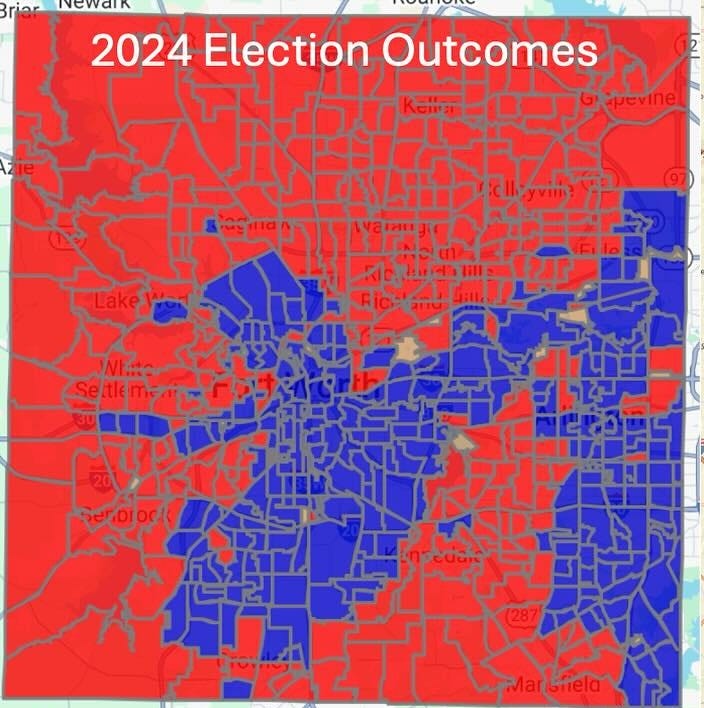
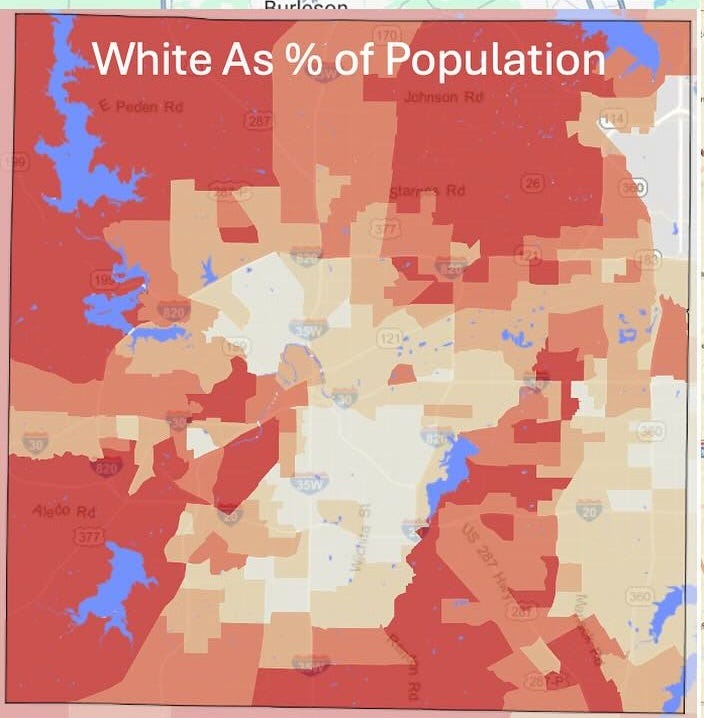
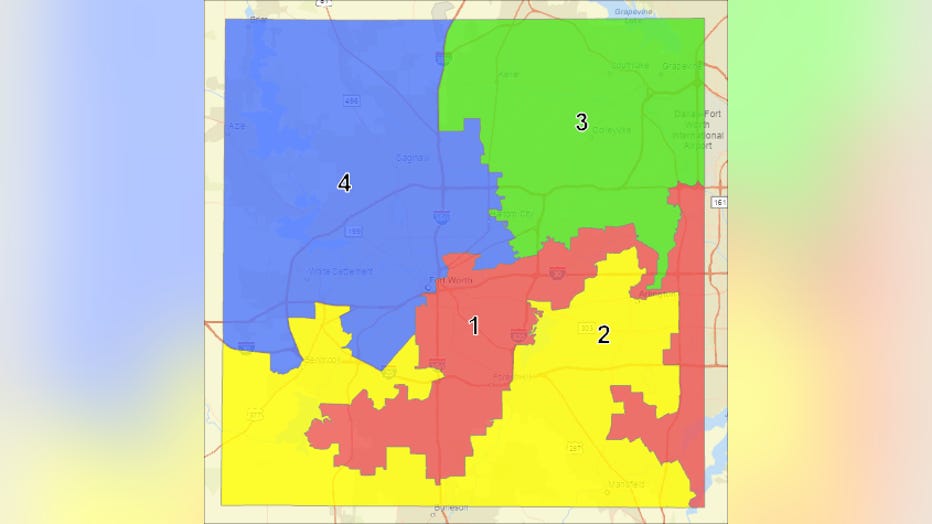
Today, the Tarrant County Commissioners Court voted to approve a redistricting map that effectively eliminates the seat of Commissioner Alisa Simmons, the only Black woman on the court.
It’s not a coincidence. It’s not neutral. It’s not “routine.” It is the calculated removal of a voice that dared to speak up for all of us.
Commissioner Simmons has stood firmly against the racist agenda pushed by Judge Tim O’Hare and the Republican Commissioners on the court. She spoke out against the rise in jail deaths under their watch. She called out the cruelty of defunding Girls Inc., a nonprofit that empowers young women of color. She opposed the elimination of free rides to the polls, which made it harder for working-class people, especially Black and brown voters, to cast a ballot.
And now, she’s being punished for it.
Commissioner Simmons wasn’t just a name on a ballot. She is my commissioner. I voted for her. I campaigned for her. And like thousands of others in Precinct 2, I saw her as a voice for the voiceless, a woman unafraid to shine a light on white supremacy, even when it came dressed in a suit and tie.
That light scared them. So they tried to snuff it out.
What we witnessed today was retaliation. It was white supremacy striking back at a Black woman who told the truth. And just like in Greenwood in 1962, they’re using the tools of power, maps, votes, and bureaucratic language, to do what they couldn’t do in public: silence her.
But we see it. We name it. And we will fight it.
The new map that the County Commissioners voted on today.
The Republican Commissioners and their defenders kept repeating the same excuse over and over again, “This wasn’t about race. It was just about politics.”
They said the map was designed to secure a Republican majority, not to silence Black voters. As if those two things aren’t deeply intertwined.
It’s the same argument Greg Abbott’s lawyers made in Shannon Perez v. Abbott, when Texas was caught racially gerrymandering districts. Their defense?
“It is not our intent to discriminate against minorities. It is our intent to discriminate against Democrats. If minorities happen to vote Democrat, that is their fault, not ours.”
That’s not a denial. That’s a confession….
Let’s stop pretending this distinction between race and party means anything in Texas. In Tarrant County, in Harris County, across the South, voter suppression by “party” is voter suppression by race. When you target the communities who dare to elect Black women, working-class progressives, young organizers, and civil rights leaders, you are targeting those communities on purpose.
They can say it’s about partisanship all they want. But we know what it’s really about.
Because when Conservatives talk about “conserving” something, they mean it.
They want to conserve white supremacy.
They want to conserve inequality, corporate power, and police brutality.
They want to conserve a system where jails are full, books are banned, teachers are silenced, and women don’t have autonomy.
They want to conserve a Texas where your zip code decides your worth, and where Black and brown voices are only welcome if they stay quiet.
And when people like Alisa Simmons refuse to stay quiet, they get erased.
But erasing her seat won’t erase her power, or ours….
And just when we thought we might get a win, it vanished as quickly as it came.
Yesterday, far-right extremist Tony Tinderholt (R-HD94) announced he would not seek reelection to the Texas House. For a brief moment, there was celebration across Arlington. A man who built his career on cruelty, censorship, and conspiracy was finally stepping aside. But the celebration didn’t last.
Because today, just minutes after the Tarrant County Commissioners voted to dismantle Precinct 2, Tinderholt announced he would run for that very seat, Alisa Simmons’ newly gutted district.
And he didn’t come alone.
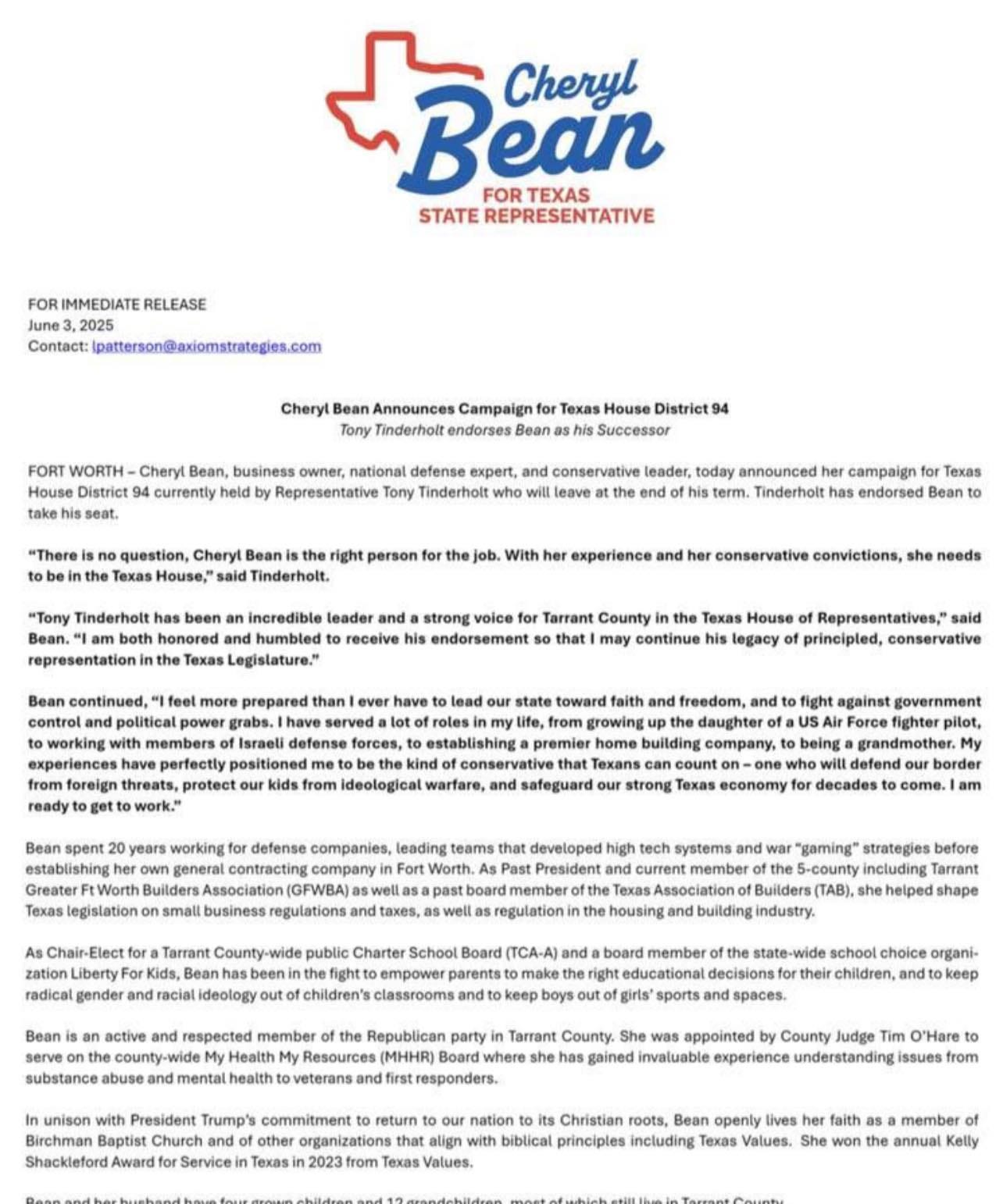
Cheryl Bean, another far-right extremist and ally of Tinderholt, announced her run for the now-open HD94 seat. A seat that was, conveniently, made safer for someone like her under the new maps.
Bean doesn’t even live in the district. She changed her voter registration to a new address inside it—an address she doesn’t own, according to the Tarrant Appraisal District. Her real home? Still outside the district lines. But facts don’t matter when the plan is to bulldoze through communities with precision and arrogance.
This wasn’t a coincidence. It was a coordinated political hit job, plain and simple.
A rigged map. A choreographed retirement. A handoff. A handpicked replacement. All timed to disempower the voices of Black and brown voters in Tarrant County. All orchestrated by Tim O’Hare and the extremist wing of the Republican Party.
They knew Simmons couldn’t be beaten fairly.
So they changed the lines.
They cleared the field.
And then they tried to rewrite the future.
But we see them.
We know the playbook.
And we’re not going to let this go unanswered.
This is part of a broader, coordinated strategy across Texas to suppress the political power of Black and brown communities under the guise of partisan politics…..
I have always thought there was something fishy about Trump’s win last November. When Elon Musk broke up with Trump, he said boldly that Trump would have not won the election without his help, and the Democrats would now control the House. What kind of help did he refer to? I wondered if this was an unintended admission. Of course, he can’t say more because it’s illegal to interfere to change the outcome of an election.
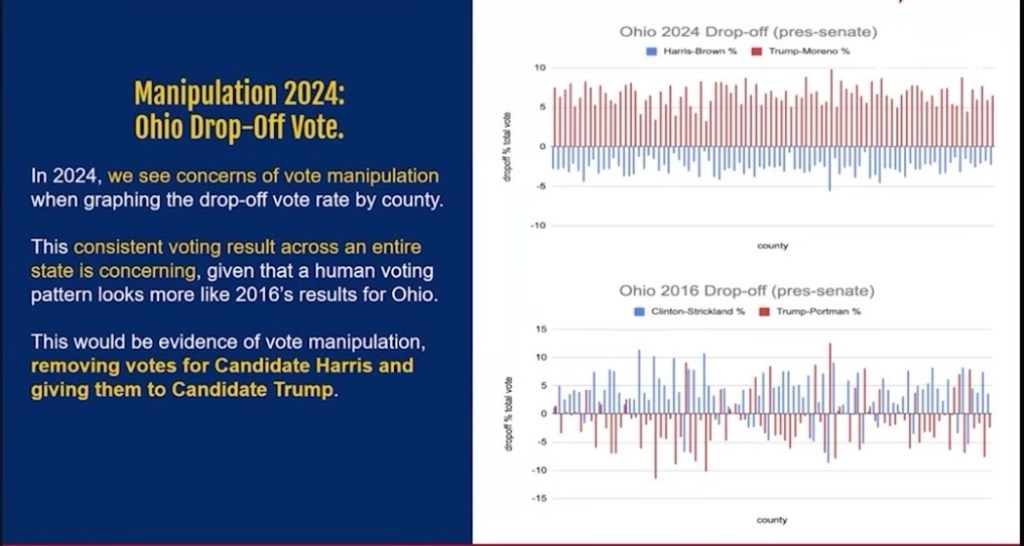
Snopes reviewed the case and came down on the side of more evidence is needed. Maybe there were districts where no one voted for Harris, because they were orthodox Jewish districts and everyone followed their rabbi’s endorsement. Maybe not, because there were districts that were not Hasidic where she got zero votes.
Please open the link to read additional stories tied to this one. Also, look up the meaning of the term “Dark Enlightenment.” It refers to the reactionary ideology of Curtis Yarvin, whose admirers include billionaire Peter Thiel and his protege JD Vance.
The Dark Enlightenment Coup
The missing votes uncovered in Smart Elections’ legal case in Rockland County, New York, are just the tip of the iceberg—an iceberg that extends across the swing states and into Texas.
On Monday, an investigator’s story finally hit the news cycle: Pro V&V, one of only two federally accredited testing labs, approved sweeping last-minute updates to ES&S voting machines in the months leading up to the 2024 election—without independent testing, public disclosure, or full certification review.
These changes were labeled “de minimis”—a term meant for trivial tweaks. But they touched ballot scanners, altered reporting software, and modified audit files—yet were all rubber-stamped with no oversight.
That revelation is a shock to the public. But for those who’ve been digging into the bizarre election data since November, this isn’t the headline—it’s the final piece to the puzzle. While Pro V&V was quietly updating equipment in plain sight, a parallel operation was unfolding behind the curtain—between tech giants and Donald Trump.
And it started with a long forgotten sale.
A Power Cord Becomes a Backdoor
In March 2021, Leonard Leo—the judicial kingmaker behind the modern conservative legal machine—sold a quiet Chicago company by the name of Tripp Lite for $1.65 billion. The buyer: Eaton Corporation, a global power infrastructure conglomerate that just happened to have a partnership with Peter Thiel’s Palantir.
To most, Tripp Lite was just a hardware brand—battery backups, surge protectors, power strips. But in America’s elections, Tripp Lite devices were something else entirely.
They are physically connected to ES&S central tabulators and Electionware servers, and Dominion tabulators and central servers across the country. And they aren’t dumb devices. They are smart UPS units—programmable, updatable, and capable of communicating directly with the election system via USB, serial port, or Ethernet.
ES&S systems, including central tabulators and Electionware servers, rely on Tripp Lite UPS devices. ES&S’s Electionware suite runs on Windows OS, which automatically trusts connected UPS hardware.
If Eaton pushed an update to those UPS units, it could have gained root-level access to the host tabulation environment—without ever modifying certified election software.
In Dominion’s Democracy Suite 5.17, the drivers for these UPS units are listed as “optional”—meaning they can be updated remotely without triggering certification requirements or oversight. Optional means unregulated. Unregulated means invisible. And invisible means perfect for infiltration.
A New Purpose for the Partnership
After the Tripp Lite acquisition, Eaton stayed under the radar. But in May 2024, it resurfaced with an announcement that escaped most headlines: Eaton was deepening its partnership with Palantir Technologies.
Let’s be clear, Palantir wasn’t brought in for customer service. It was brought in to do what it does best: manage, shape, and secure vast streams of data—quietly. According to Eaton’s own release, Palantir’s role would include:
AI-driven oversight of connected infrastructure
Automated analysis of large datasets
And—most critically—“secure erasure of digital footprints”
The Digital Janitor: also known as forensic sanitization, it was now being embedded into Eaton-managed hardware connected directly to voting systems. Palantir didn’t change the votes. It helped ensure you’d never prove it if someone else did.
BallotProof: The Front-End for Scrubbing Democracy
Enter the ballot scrubbing platform BallotProof. Co-created by Ethan Shaotran, a longtime employee of Elon Musk and current DOGE employee, BallotProof was pitched as a transparency solution—an app to “verify” scanned ballot images and support election integrity.
With Palantir’s AI controlling the backend, and BallotProof cleaning the front, only one thing was missing: the signal to go live.
September 2024: Eaton and Musk Make It Official
Then came the final public breadcrumb: In September 2024, Eaton formally partnered with Elon Musk.
The stated purpose? A vague, forward-looking collaboration focused on “grid resilience” and “next-generation communications.”
But buried in the partnership documents was this line:
“Exploring integration with Starlink’s emerging low-orbit DTC infrastructure for secure operational continuity.”
The Activation: Starlink Goes Direct-to-Cell
That signal came on October 30, 2024—just days before the election, Musk activated 265 brand new low Earth orbit (LEO) V2 Mini satellites, each equipped with Direct-to-Cell (DTC) technology capable of processing, routing, and manipulating real-time data, including voting data, through his satellite network.
DTC doesn’t require routers, towers, or a traditional SIM. It connects directly from satellite to any compatible device—including embedded modems in “air-gapped” voting systems, smart UPS units, or unsecured auxiliary hardware.
From that moment on:
Commands could be sent from orbit
Patch delivery became invisible to domestic monitors
Compromised devices could be triggered remotely
This groundbreaking project that should have taken two-plus years to build, was completed in just under ten months. Elon Musk boasts endlessly about everything he’s launching, building, buying—or even just thinking about—whether it’s real or not. But he pulls off one of the largest and fastest technological feats in modern day history… and says nothing? One might think that was kind of… “weird.”
Lasers From Space
According to New York Times reporting, on October 5—just before Starlink’s DTC activation—Musk texted a confidant:
“I’m feeling more optimistic after tonight. Tomorrow we unleash the anomaly in the matrix.” Then, an hour later:
“This isn’t something on the chessboard, so they’ll be quite surprised. ‘Lasers’ from space.”
It read like a riddle. In hindsight, it was a blueprint.
Let’s review what was in place:
This wasn’t a theory. It was a full-scale operation. A systemic digital occupation—clean, credentialed, and remote-controlled.
The Outcome
Data that makes no statistical sense. A clean sweep in all seven swing states.
The fall of the Blue Wall. Eighty-eight counties flipped red—not one flipped blue.
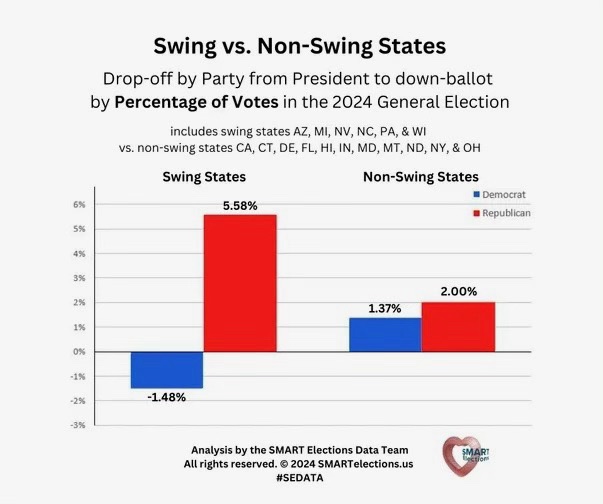
Every victory landed just under the threshold that would trigger an automatic recount. Donald Trump outperformed expectations in down-ballot races with margins never before seen—while Kamala Harris simultaneously underperformed in those exact same areas.
If one were to accept these results at face value—Donald Trump, a 34-count convicted felon, supposedly outperformed Ronald Reagan. According to the co-founder of the Election Truth Alliance:
“These anomalies didn’t happen nationwide. They didn’t even happen across all voting methods—this just doesn’t reflect human voting behavior.”
They were concentrated.
Targeted.
Specific to swing states and Texas—and specific to Election Day voting.
And the supposed explanation? “Her policies were unpopular.”
Let’s think this through logically. We’re supposed to believe that in all the battleground states, Democratic voters were so disillusioned by Vice President Harris’s platform that they voted blue down ballot—but flipped to Trump at the top of the ticket?
Not in early voting.
Not by mail.
With exception to Nevada, only on Election Day.
And only after a certain threshold of ballots had been cast—where VP Harris’s numbers begin to diverge from her own party, and Trump’s suddenly begin to surge. As President Biden would say, “C’mon, man.”
In the world of election data analysis, there’s a term for that: vote-flipping algorithm.
Billionaires and Tech Giants Pulled Off the Crime of the Century
Why? There wasn’t just one reason—there were many.
Elon Musk himself hinted at the stakes: he faced the real possibility of a prison sentence if Trump lost. He launched his bid for Twitter—at $20 billion over market value—just 49 days after Putin invaded Ukraine. That alone should have raised every red flag. But when the ROI is $15 trillion in mineral rights tied to Ukraine losing the war and geopolitical deals Trump could green light, it wasn’t a loss—it was leverage.
It’s no secret Musk was in communication with Putin for over two years. He even granted Starlink access to Russian forces. That’s not just profiteering. That’s treason.
Then there’s Peter Thiel and the so-called “broligarchs”—tech billionaires who worship at the altar of shower-avoidant blogger Curtis Yarvin. They casually joke about “humane genocide for non-producers” and have long viewed democracy as a nuisance—an obstacle to their vision of hypercapitalism and themselves as the permanent ruling elite.
Well, what is the elimination of Medicaid if not “humane genocide”—and does anyone really wonder why his 40-year-old protégé and political rookie, JD Vance, is Vice President? With this technology in place, if the third-term legislation were to pass, it would hand Vance a minimum of twelve years at the helm of Thiel’s regime.
And of course, Donald Trump himself: He spent a year telling his followers he didn’t need their votes—at one point stating,
“…in four years, you don’t have to vote again. We’ll have it fixed so good, you’re not gonna have to vote.”
Trump was facing eighty-eight felony indictments—he was desperate to avoid conviction and locked in a decades-long alliance with Vladimir Putin. An alliance that’s now impossible to ignore—look no further than his policy trail.
He froze aid to Ukraine and has threatened to place sanctions on them, while planning to lift sanctions off Russia. He openly campaigned for anti-EU candidates, and sided with Russia in multiple key United Nations votes related to the Ukraine conflict.
Let’s be clear:
Donald Trump pledges allegiance to a red, white, and blue flag— It’s just not the American one.
What Happens Now?
We don’t need permission to enforce the Constitution. We need courage. While state attorneys general begin their investigations, it only takes one U.S. senator to initiate the disqualification proceedings against the unelected and unfit occupant of the Oval Office. State Attorneys General and Investigators:
Conduct independent audits of UPS firmware on Dominion and ES&S machines
Subpoena communications between Eaton, Palantir, Starlink employees, and Pro V&V
Audit Starlink satellite logs for the week of the election
Freeze uncertified infrastructure updates
Recount physical ballots—by hand Now they’re rolling out the same technological toolkit abroad—forcing countries into Starlink contracts in exchange for tariff relief. The U.S. election wasn’t their endgame. It was their litmus test.
Want the truth they’re not telling you? For fearless reporting and expert-backed research, read The Common Coalition Report. And if you believe in funding real, independent work—support our all volunteer team here.
It was no secret that Governor Abbott was intent on passing voucher legislation by any means necessary. In 2024, he called four special sessions to demand a voucher law, offering a big increase in public school funding as a sweetener. A coalition of rural Republicans and Democrats voted them down again and again. Rural Republicans know that their schools are the most important institution in their community. They know the teachers and the principal. They and everyone else in the community support the school and its activities. In rural areas, the public school is not only the hub of community life, but the largest contributor to the economy.
With the help of out-of-state billionaires and home-grown evangelical billionaires, Abbott succeeded in defeating most of the Republicans who opposed vouchers. He blatantly lied about them, claiming they opposed his tough tactics at the border (they didn’t), he claimed they didn’t support increased funding for their local schools because they voted against his bribe. He blanketed their districts with lies.
The Houston Chronicle tells a straightforward account of how the voucher vote went down, based on Abbott’s strong arm tactics. Fear won.
Pearland Republican Jeff Barry has long been skeptical of school vouchers, but on Thursday morning he voted to create what could become the largest voucher program in the nation.
Barry, a freshman House lawmaker, said it felt like he had no choice.
“If I voted against it I would have had every statewide and national political…figure against me – not to mention all of my bills vetoed,” Barry wrote in a post responding to one user who called his support for the measure a “betrayal.”
He added: “The consequences were dire with no upside at all.”
Barry wasn’t the only Republican House member who felt cornered after an unprecedented, years-long pressure campaign by Gov. Greg Abbott to bend the chamber to his will.
Only two GOP members joined Democrats in opposing the measure on Thursday, a remarkable turnaround from their widespread opposition to vouchers just a few years ago. It was a major vindication of Abbott’s governing approach of strong-arming lawmakers into submission.
Where his predecessors, including Gov. Rick Perry, often cozied up to members of the Legislature, Abbott has looked to exploit their weaknesses. His success on what was once seen as an impossible issue marks a potentially major power shift in state leadership, where lieutenant governors have long been seen to hold as much or more power than the governor, because of their control over the Senate.
“What Perry got by finesse, Abbott gets by force — and that definitely matters for the power structure,” said Brandon Rottinghaus, a political scientist at the University of Houston. “He, through expending a tremendous amount of political capital and money, was able to reshape the Republican party in his image. That’s something very few governors have been able to do.”
Abbott spent months on the road advocating for vouchers and poured nearly $12 million into unseating fellow Republicans who opposed the same legislation in 2023. Ahead of the vote this month, he met privately with GOP lawmakers on the fence, and on Wednesday morning he gathered the caucus for a call from President Donald Trump, who not-so-subtly reminded them of his success rate in Texas GOP primaries.
Just four years ago, before Abbott began seriously campaigning for vouchers, four out of five House members publicly opposed the thought of using taxpayer dollars for private education. That included House Speaker Dustin Burrows and state Rep. Brad Buckley, the education committee chairman who carried the bill this year in the House.
Just one of the remaining Republican holdouts voted the same way early Thursday morningas they did in 2021: state Rep. Gary VanDeaver of New Boston, who narrowly survived a primary runoff election last year against an Abbott-backed challenger.
State Rep. Drew Darby, R-San Angelo, also defeated one of Abbott’s primary challengers last year. He voted for vouchers this time, calling it a pragmatic move to retain at least some modicum of leverage.
“We made this decision with a clear understanding: the bill would pass with or without our support,” Darby wrote on social media shortly after the vote. “Rather than stand by, we chose to stay in the fight, negotiating critical amendments to reduce the impact on our communities.”
Those concessions included annual public audits of the voucher program and its contractors, clarified residency requirements for participants, a requirement that private schools be accredited for at least two years before participating and a permanent one-fifth cap of slots going to students from families that make more than 500% of the federal poverty line — or $160,750 for a family of four.
One of the aims, Darby and others said, was to block unproven private schools from popping up in areas with few other options, just to access the new state dollars. And critics hoped to prevent existing private school students with wealthy families from taking up a bulk of the voucher slots, as has happened in other states.
Darby’s wife, Clarisa Darby, also posted online that not backing vouchers would have jeopardized billions of dollars in new public school funding for teacher raises and special education.
“School funding would be cut by the Senate in retribution and bills affecting our west Texas economy had a high chance of being vetoed if they voted against the bill,” she wrote. “Bills affecting school funding, oil, gas, water, jobs, ASU, Howard College, are too important to be vetoed.”
Ahead of the vote Wednesday night, state Rep. James Talarico, an Austin Democrat, accused Abbott of intimidating Republican colleagues with the threat of a primary “bloodbath.”
“No one including the governor should ever threaten a lawmaker,” Talarico said. “We do not serve the governor, we serve our constituents.”
Abbott’s office denied the claim. But whether threats were real or implied, House Republicans were clearly feeling the heat after Abbott’s all-out offensive in last year’s primaries.
“He’s working behind the scenes to make sure he’s got the vote. There’s no question about that,” state Rep. Sam Harless, a Spring Republican, said Wednesday as the voucher debate was beginning.
Trump’s call Wednesday morning helped quash any lingering doubts among Republicans.
“Many of you I’ve endorsed, and I’ll be endorsing,” Trump told the members. “I won Texas in a landslide. Everybody who was with me got carried.”
State Rep. Wes Virdell, who campaigned on supporting school vouchers, said earlier this week it was “no secret that the governor is pressuring a lot of people” to support the proposal.
Steve Allison, a former Republican state lawmaker from San Antonio who lost his seat to an Abbott-backed challenger after opposing vouchers last session, said he liked the changes fought for by Darby and others but would have still voted against the bill.
“I think that members need to prioritize their districts… and I think that was interfered with here, not just in (my) district but elsewhere,” he said, adding that he’d spoken with several current lawmakers who’d been threatened by Abbott. He declined to say who. “It’s just unfortunate what the governor did,” Allison said.
The House GOP shift on vouchers stretched all the way to its top leadership. Even as he has helped block voucher legislation in the past, newly-elected Speaker Dustin Burrows was a vocal champion of the bill this year, appearing at multiple events with Abbott.
“Speaker Burrows was the real X factor in the debate,” said John Colyandro, a former Abbott adviser who lobbied for the legislation.
Burrows took the gavel from state Rep. Dade Phelan, one of only two Republicans to vote against the bill.
As speaker, Phelan had not openly opposed the legislation. And heading into the speaker’s race he said he would prioritize it.
But before the vote, he explained he was planning to vote against it because he felt voters in his Beaumont district did not support vouchers. He wanted to put it on the ballot in November, a failed proposal offered by Talarico.
Phelan, who narrowly fended off a Trump-backed primary challenger last year, shrugged off the fear of political threats — real or implied. He brought up the Trump call in an interview ahead of the vote, saying he wasn’t in the room but heard audio of it.
Trump noted only one of his endorsed candidates lost, apparently referencing David Covey’s failed bid to unseat Phelan, though the president did not name either candidate.
“He said he went 42 and 0,” Phelan said. “And then he remembers he lost one.”
Investigative reporters at the New York Times–Eric Lipton, Theodore Schleifer, and Zoltan-Youngs, with assistance from Maggie Haberman– were watching the busy scene at Mar-a-Lago during the brief period when Trump announced draconian tariffs on other economies (but not Russia, North Korea, Belarus or Cuba), but before his decision to postpone the tariffs for 90 days. Trump demonstrated that he could rattle the global economy with a statement, then shift gears a few days later. What fun he must have had! He knew he could crater the stock markets and he knew that he could make it soar.
The financial market meltdown was underway when President Trump boarded Air Force One on his way to Florida on Thursday for a doubleheader of sorts: a Saudi-backed golf tournament at his family’s Miami resort and a weekend of fund-raisers attracting hundreds of donors to his Palm Beach club.
It was a fresh reminder that in his second term, Mr. Trump has continued to find ways to drive business to his family-owned real-estate ventures, a practice he has sustained even when his work in Washington has caused worldwide financial turmoil.
The Trump family monetization weekend started Thursday night, as crowds began to form at both the Trump National Doral resort near Miami International Airport, and separately at his Mar-a-Lago resort 70 miles up the coast.
Mr. Trump landed on the edge of one of the golf courses in a military helicopter — just in time for a dinner at Doral. The next day, LIV Golf, the breakaway professional league backed by Saudi Arabia’s sovereign wealth fund, was scheduled to hold a tournament at the course for the fourth time.
On Thursday at Mar-a-Lago, hundreds of guests gathered for the American Patriots Gala, a conservative fund-raiser that featured Homeland Security Secretary Kristi Noem and President Javier Milei of Argentina, who told his supporters back home that he was hoping to catch up with Mr. Trump while there, seemingly unaware that Mr. Trump was double-booked at two of his family properties that night.
And that was just the weekend’s lead-up.
Mr. Trump ordered a new set of global tariffson Wednesday from the White House using his trademark Sharpie pen, a version of which is on sale at Mar-a-Lago for $3.
The announcement set off one of the largest market crashes in American history, erasing $5 trillion in market value from companies in the S&P 500 in just two days. Mr. Trump has said his policy would reverse what he calls unfair trade practices, and that eventually the “markets are going to boom.”
On Friday, as markets continued to tumble, thousands of golf fans visited Doral, as did Eric Trump, Mr. Trump’s son, and Yasir Al-Rumayyan, the governor of Saudi Arabia’s $925 billion sovereign wealth fund. Mr. Al-Rumayyan is also the chairman of LIV Golf, and was there to see its stars compete.
“It is a nice club,” Mr. Al-Rumayyan said as he walked around the golf course watching the players tee off.
LIV Golf — a venture intended to lift the Saudi profile worldwide even as it has burned through hundreds of millions of dollars of state funds — is styled as a daylong party, with club music pumping out of speakers lining tournament courses and machines dispensing wine and large beers. On Friday, fans watched a bit of golf and danced on the edges of the course. Others in MAGA hats walked around smoking cigars.
In short, the economic turbulence seemed far away.
“You are all looking a little too stiff!” said Matt Rogers, a LIV Golf announcer, as he yelled into a microphone, blasting his message across the greens as the first group of golfers on Friday prepared to play with dance music blaring in the background. “You need to turn this up! This is LIV Golf.”
Every room at the 643-room Trump Doral, including the $13,000-a-night presidential suite, was sold out through the weekend. Not a seat could be found at the BLT Prime steakhouse bar, where a porterhouse steak cost $130.
“This is the perfect venue,” Eric Trump said as he strolled the golf course Friday.
He had driven his father in a golf cart from the military helicopter to the resort dinner the day before, as the festivities over the big moneymaking weekend were getting underway.
The president spent much of Friday at yet another Trump family venue, Trump International Golf Club, not far from Mar-a-Lago, sending out social media messages during the day, including, “THIS IS A GREAT TIME TO GET RICH, RICHER THAN EVER BEFORE.” [Had he already decided to pause the tariffs?]
By Friday night, the center of attention had shifted back to Mar-a-Lago, as Mr. Trump held another in a series of $1 million-a-head dinners at his private club in Palm Beach.
Since he was elected in November, Mr. Trump has hosted at least four of the fund-raisers, including one in December, two in March and the one Friday night, with a fifth planned for April 24.
The fund-raisers unfold in similar ways, according to people who have attended them.
Roughly 20 people gather around a candlelit table with big white flowers in the club’s “White and Gold Room” after a photo session. Mr. Trump speaks, then listens to the guests discuss their businesses, one by one. In just an hour or two, he can raise as much as $20 million — a great return on his time investment, associates say.
Attendees at some of the post-election dinners at Mar-a-Lago hosted by MAGA Inc., one of Mr. Trump’s fund-raising political action committees, have included the casino owner Miriam Adelson, the sugar magnate Pepe Fanjul and James Taiclet, the chief executive of Lockheed Martin, the world’s largest military contractor, along with representatives from the cryptocurrency and energy industries.
On Friday, Ronald S. Lauder, the cosmetics heir, and Steve Wynn, the former casino executive, both billionaires, were among the guests at the Mar-a-Lago fund-raiser, according to two people briefed on the matter. They spoke on condition of anonymity because they were not authorized to discuss the event.
The dinners have been just the start. Mar-a-Lago remains a popular site for Republicancandidates to host their own fund-raisers, Federal Election Commission records show. It is not clear to some Republicans why Mr. Trump has been raising money so aggressively, according to eight people involved in conservative fund-raising who have kept track of his efforts. Never before has a president ineligible for re-election vacuumed up so much money for a super PAC.
Some of Mr. Trump’s associates believe it is prudent to fund-raise when the money is available, as corporate interests and others seek to get access to the president or make amends for perceived slights, people close to him acknowledge.
The packed agendas at the two Trump venues recalled the constant buzz and spending by lobbyists, members of Congress and foreign leaders at Trump International Hotel in Washington before the Trump family sold its lease after Mr. Trump’s first term.
In addition to the Saudi sovereign wealth fund, top sponsors of the Doral golf tournament included Aramco, the Saudi oil company; Riyadh Air, the airline owned by the sovereign wealth fund; and TikTok, the Chinese-owned social media company whose fate Mr. Trump is helping to decide, according to a large billboard outside one of the event’s party tents.
Mr. Trump’s merchandise shops — there are at least three of them at Doral — were also doing swift business, selling everything from a $550 Trump-branded crystal-studded purse to $18 Doral-branded paperweights made in China. The store clerk said that he did not know if new tariffs on imported products would mean price increases.
Fans in the crowd said that they had traveled from as far as South Africa to attend the event. Some purchased special tickets that cost as much as $1,400 to enter exclusive party areas with free drinks and food — tickets that were sold out as of Saturday.
In interviews, tournament attendees and others said that they did not mind the disconnect between the Wall Street meltdown and the events at the Trump properties.
“The sky is falling every day,” said Mike Atwell, a Key Largo, Fla., restaurant owner who was attending the LIV event with his wife enjoying lunch and drinks. “When you are happy, you drink. When you are sad, you drink. It all works out.”
Tyrell Davis, a 39-year-old entrepreneur spending Saturday afternoon in Palm Beach, said that he admired Mr. Trump for focusing on his own businesses while also implementing tariffs that he believed would benefit Americans.
Mr. Davis said that the United States had given away money to other countries for years while not investing in American cities, and that it only made sense Mr. Trump would continue to bolster his own businesses while in office.
“It’s all about business and money,” Mr. Davis said. “That’s what it’s all about. America is a business. It’s a corporation.”
On Saturday, as the tournament continued at Doral, Mr. Trump showed up at yet another family golf course, in Jupiter, Fla., which is holding its own, more modest tournament.
Good news was announced by the White House staff: “The president won his second round matchup of the senior club championship today in Jupiter, Fla., and advances to the championship round on Sunday.” Reporters and photographers were prohibited from watching him play, and were held down the street at a coffee shop.
As Mr. Trump returned to Mar-a-Lago, one of his political committees sent out an offer to his followers: They could buy a signed replica of his executive order changing the name of the Gulf of Mexico to the Gulf of America. The minimum contribution was $50. “I want you to have a PIECE OF HISTORY in your home,” Mr. Trump said in the solicitation.
The White House then announced that there would be no more public events on Saturday.
Heather Cox Richardson wrote the following brilliant article about the machinations of the Republican Party in North Carolina. Since winning control of the General Assembly (legislature) in 2010, the state GOP has gerrymandered Congressional districts and state districts to hold onto power. Democrats win statewide races, as they did in 2024, but the legislature strips the powers of the Governor and the state Attorney General.
It’s a shocking story .
She writes:
Almost ten weeks after the 2024 election, North Carolina remains in turmoil from it. Voters in the state elected Donald Trump to the presidency, but they elected Democrat Josh Stein for governor and current Democratic representative Jeff Jackson as attorney general, and they broke the Republicans’ legislative supermajority that permitted them to pass laws over the veto of the current governor, Democrat Roy Cooper. They also reelected Justice Allison Riggs, a Democrat, to the state supreme court.
Republicans refuse to accept the voters’ choice.
In the last days of their supermajority, under the guise of relieving the western part of the state still reeling from the effects of late September’s Hurricane Helene, Republican legislators stripped power from Stein and Jackson. They passed a law, SB 382, to take authority over public safety and the public utilities away from the governor and prohibited the attorney general from taking any position that the legislature, which is still dominated by Republicans, does not support.
The law also radically changes the way the state conducts elections, giving a newly elected Republican state auditor power over the state’s election board and shortening the amount of time available for the counting of votes and for voters to fix issues on flagged ballots.
Outgoing governor Cooper vetoed the bill when it came to his desk, calling it a “sham” and “playing politics,” but the legislature repassed it over his veto. Now he and incoming governor Stein are suing over the law, saying it violates the separation of powers written into North Carolina’s constitution.
There is an important backstory to this power grab. North Carolina is pretty evenly split between Democrats and Republicans. In 2010, Republican operatives nationwide launched what they called Operation REDMAP, which stood for Redistricting Majority Project. The plan was to take control of state legislatures across the country so that Republicans would control the redistricting maps put in place after the 2010 census.
It worked. In North Carolina, Republicans took control of the legislature for the first time in more than 100 years. They promptly redrew the map of North Carolina’s districts so that the state’s congressional delegation went from a split of 7 Democrats and 6 Republicans in 2010 to a 9–4 split in favor of Republicans in 2012 despite the fact that Democrats won over 80,000 more votes than their Republican opponents. By 2015 that split had increased to 10–3.
The same change showed in the state legislature. North Carolina’s House of Representatives has 120 seats; its Senate has 50 seats. In 2008, Democrats won the House with 55.14% of the vote to the Republicans’ 43.95%. And yet in 2012, with the new maps in place, Republicans won 77 seats to the Democrats’ 43. The North Carolina Senate saw a similar shift. In 2008, Democrats won 51.5% of the vote to the Republicans’ 47.4%, but in 2012, Republicans held 33 seats to the Democrats’ 17.
When they held majorities in both chambers, Democrats passed laws that made it easier to vote, and voter turnout had been increasing with more Black voters than white voters turning out in 2008 and 2012. But in 2012, Republicans used their new power to pass a sweeping new law that made it harder to vote.
When courts found those maps unconstitutional because of racial bias, the state legislature wrote a different map divided, members said, not according to race but according to political partisanship, despite the overlap between the two.
“I’m making clear that our intent is to use the political data we have to our partisan advantage,” said state representative David Lewis, who chaired the redistricting committee. “I propose that we draw the maps to give a partisan advantage of 10 Republicans and three Democrats because I do not believe it’s possible to draw a map with 11 Republicans and two Democrats.” Lewis declared: “I think electing Republicans is better than electing Democrats. So I drew this map to help foster what I think is better for the country.”
That map, too, skewed representation. Although Democrats won a majority of votes for both the state House and the state Senate in 2018, Republicans held 66 out of 120 seats in the House and 29 of 50 seats in the Senate. Although they had lost the majority of the popular vote, Republican leaders claimed “a clear mandate” to advance their policies.
The fight over those maps went all the way to the Supreme Court, which said in Rucho v. Common Cause that the federal courts could not address partisan gerrymandering. Plaintiffs then sued under the state constitution, and in late 2019 a state appeals court agreed that the maps violated the constitution’s guarantee of free elections. A majority on the state supreme court agreed.
The court drew a new map that resulted in an even split again in the congressional delegation in 2022 (North Carolina picked up an additional representative after the 2020 census). But Republicans in that election won two seats on the North Carolina Supreme Court. In late spring 2022 the new right-wing majority said the state courts had no role in policing gerrymandering. The state legislature drew a new congressional map that snapped back to the old Republican advantage: in 2024, North Carolina sent to Congress 10 Republicans and 4 Democrats.
But they also reelected Justice Allison Riggs, a Democrat, to the North Carolina Supreme Court, by 734 votes. Her challenger, Republican Jefferson Griffin, has refused to concede, even after the two recounts he requested confirmed her win. He is now focusing on getting election officials to throw out the ballots of 60,000 voters, retroactively changing who can vote in North Carolina.
There has been a fight over whether the case should be heard in federal or state court; Griffin wants it in front of the state supreme court, which has a 5–2 majority of Republicans. Last Tuesday the state supreme court temporarily blocked the state elections board from certifying Riggs’s win while it hears arguments in the case.
As Will Doran of WRAL News explains, Republicans currently have a court majority, but three of the seats currently held by Republicans are on the ballot in 2028. Taking a seat away from Riggs would ensure Democrats could not flip the court, leaving a Republican majority in place for redistricting after the 2030 census.
The Princeton Gerrymandering Project gives North Carolina an “F” for its maps. In states that are severely gerrymandered for the Republicans, politicians worry not about attracting general election voters, but rather about avoiding primaries from their right, pushing the state party to extremes. In December, Molly Hennessy-Fiske of the Washington Post noted that Republican leaders in such states are eager to push right-wing policies, with lawmakers in Oklahoma pushing further restrictions on abortion and requiring public schools to post the Ten Commandments, and those in Arkansas calling for making “vaccine harm” a crime, while Texas is considering a slew of antimigrant laws.
This rightward lurch in Republican-dominated states has national repercussions, as Texas attorney general Ken Paxton in December sued New York doctor Margaret Daly Carpenter for violating Texas law by mailing abortion pills into the state. Law professor Mary Ziegler explains that if the case goes forward, Texas will likely win in its own state courts. Ultimately, the question will almost certainly end up before the U.S. Supreme Court.
In the United States today, a political minority has used the mechanics of government to take power and is now using that power to impose its will on the majority. The pattern is exactly that of the elite southern enslavers who in the 1850s first took over the Democratic Party and then, through it, captured the Senate, the Supreme Court, and the White House and tried to take over the country.
The story of the 1850s centered around the determination of southern planters to preserve the institution of human enslavement underpinning the economy that had made them rich and powerful, and today we tend to focus on the racial dominance at the heart of that system. But the political machinations that supported their efforts came from the work of New York politician Martin van Buren, whose time in the White House from 1837 to 1841 ultimately had less effect on the country’s politics than his time as a political leader in New York.
In the early 1800s, van Buren recognized that creating a closed system in the state of New York would preserve the power of his own political machine and that from there he could command the heavy weight of New York’s 36 electoral votes—the next closest state, Pennsylvania, had 28, after which electoral vote counts fell rapidly—to swing national politics in the direction he wanted. Van Buren’s focus was less on reinforcing enslavement for racial dominance—although he came from a family that enslaved its Black neighbors—but on money and power.
Van Buren set up a political machine known as the Albany Regency, building his power by taking over all the state offices and judgeships and by insisting on party unity. He opposed federal funding of internal improvements in the state, recognizing that such improvements would disrupt the existing power structure by opening up new avenues for wealth. Elected to the U.S. Senate in 1820, he used his machine to elect Andrew Jackson to the White House on a platform promising “reform” of the federal government calling for economic development, a government the Democrats claimed had fallen into the hands of the elite. Once in power, Jackson used the federal government to benefit the enslavers who dominated the southern states.
That focus on preserving power in the states to keep political and economic power in the hands of a minority is a key element of our current moment. After the 1950s, as federal courts upheld the power of the federal government to regulate business and promote infrastructure projects that took open bids for contracts, they threatened to disrupt the economic power of traditional leaders. While state power reinforces social dominance as a few white men make laws for the majority of women and racial, gender, and religious minorities, it also concentrates economic power in the states, which in turn affects the nation.
When a Republican in charge of state redistricting constructs a map based on his idea that “electing Republicans is better than electing Democrats,” and when a Republican candidate calls for throwing out the votes of 60,000 voters to declare victory in an election he lost, they have abandoned the principles of democracy in favor of a one-party state that will operate in their favor alone.





 Diane Ravitch's blog