Archives for category: Charter Schools

Peter Greene asks and answers a curious question: Why would anyone spend more half a million dollars to win a race for the State Board of Education in Colorado? The money is not coming from the candidate’s bank account. It is coming from unnamed people in the powerful charter school lobby. Right now, the state board has a 5-4 pro-charter majority. One of the five charter supporters is stepping down due to term limits. The charter industry can’t take the risk that someone they don’t control might flip the majority out of their hands.

More than 15% of students in Colorado attend charter schools, one of the highest ratios in the nation. For some reason, the lobbyists representing that small minority of students think they should control the state school board, not people who want to represent the interests of 100% of the state’s students.

As background, be aware that the charter industry fights any effort to require accountability and transparency. They say that any law that requires them to be more accountable or transparent is “an attack” on their right to exist. There used to be a saying that was universally accepted: with public money, there must be public accountability and transparency. But not for the charter industry.

In Colorado, the charter industry has the support of Democratic Governor Jared Polis. He is good on many issues, but not on charter schools. Many years ago, when charter schools presented themselves as “innovative” alternatives to stodgy public schools, Polis sponsored two charters himself and became a charter zealot. Even when it became clear that the charter idea was a Trojan Horse for vouchers and that its backers were right wingers like the Walton family and Betsy DeVos, Polis remained loyal to the original hoax.

Greene writes about the Colorado race in Forbes, where he is a regular columnist:

An ordinarily quiet primary in Colorado finds a Democrat challenged by a candidate with an extraordinary influx of money apparently from charter school backers.

Marisol Rodriguez is in many ways a conventional Democratic candidate. Her website expresses support for LGBTQIA+ students. She’s endorsed by Moms Demand Action For Gun Sense In America, and the Colorado Blueflower Fund, a fund that supports pro-choice women as candidates. Kathy Gebhardt, the other Democratic candidate, is also endorsed by the Blueflower Fund and Moms Demand Action, as well as the Colorado Education Association, Colorado Working Families, Boulder Progressives, and over 65 elected officials.

Rodriguez is running against Gebhardt for a seat on the state board of education, a race she entered at the last minute. The race will be decisive; the GOP candidate has disappeared from the race, so the Democratic primary winner will run unopposed in the general election.

Gebhardt has served on a local school board as well as the state and national association of school board directors, rising to leadership positions in each. She’s an education attorney (the lead education attorney on Colorado’s school finance litigation) whose five children all attended public schools. Asked for her relevant experience by Boulder Weekly, Rodriguez listed parent of two current students and education consultant.

Besides a major difference in experience, one other difference separates the two. Gebhardt was generally accepting of charter schools while she was a board member, but she drew a hard line against a proposed classical charter, linked to Hillsdale College’s charter program, that would not include non-discrimination protections for gender identity and expression. She told me “charters don’t play well with others.” While Rodriguez has stayed quiet on the subject of charter schools, her allegiance is not hard to discern.

Rodriguez’s consulting firm is Insignia Partners. She has previously worked for the Walton Family Foundation, a major booster of charter schools. Her clients include Chiefs for Change, a group created by former Presidential aspirant Jeb Bush to help promote his school choice policies; the National Alliance for Public Charter Schools, an advocacy group for charter schools and charter school policy; and the Public Innovators in Education (PIE) Network, a national network of education reform organizations.

Some of that consulting work appears to have been with the Colorado League of Charter Schools. A February meeting of that board shows her discussing some aspects of CLCS strategic planning.

There’s plenty for CLCS to deal with. Colorado spent the spring debating HB 1363, a bill that would have required more transparency and accountability from charter schools. Critics call it “a blatant attack on charter schools.” Heavy duty lobbying efforts have been unleashed to battle this bill, including work by the Betsy DeVos-backed American Federation for Children, as reported by Mike DeGuire for Colorado Newsline.

It is no surprise to find Republicans in Colorado supporting charter schools; this is, after all, the state where the GOP issued a “call to action” that “all Colorado parents should be aiming to remove their kids from public education.”

But Democratic Governor Jared Polis, a former member of the state board of education, has also been a vocal supporter of charter schools. And now he is also a vocal supporter of Rodriguez and features in many of her campaign images.

Support from CLCS is more than vocal. The Rodriguez campaign has received at least $569,594 from Progressives Supporting Teachers and Students. PSTS filed with the state as a non-profit on May 21, 2024; on May 23 CLCS donated $125,000 to the group according to Tracer (Colorado’s campaign finance tracker).

The registered and filing agents of PSTS are Kyle DeBeer and Noah Stout. DeBeer is VP of Civic Affairs for CLCS and head of CLCS Action, the CLCS partner 501(c)(4). Noah Stout is a member of the Montbello Organizing Committee, a group that receives money through various foundations that support charter schools, including the Gates Foundation and RootEd, and previously served as attorney for the DSST charter school network in Denver. The address for PSTS is the address for 178 other organizations.

It appears that CLCS created and funded Progressives Supporting Teachers and Students for this election.

The $569,594 are listed on Tracer as PSTS’s only expenditures as of the beginning of June. They consistent entirely of payments for Rodriguez-supporting consultant and professional services to 40 North Advocacy and The Tyson Organization (Tracer shows that CLCS has employed both before). The money has paid for video advertising, digital advertising, phone calling, newspaper advertising, and multiple direct mailings.

When he wrote the article, Greene could not discern who put up the money. No doubt, the usual anti-public school rightwingers with a few pseudo-liberals like Bill Gates or their front groups.

It is typical of the charter industry to name its lobbying group with a deceptive name, so of course they name themselves “Progressives Supporting Parents and Teachers,” when in reality they are “Highly Paid Consultants Advancing the Charter Industry.” Or, HPCACI.

There is nothing “progressive” about the charter industry. They are not more successful, on average, than public schools. They are a foot in the door for vouchers. They are beloved by rightwingers who see them as the first nail in the coffin for public schools. They claim to be “public schools,” but resist the accountability and transparency required of real public schools. Their lobbyists in Washington and in the states are funded by billionaires who want to privatize everything. They swamp state and local school board races with out-of-state dark money, making it hard for regular people to compete.

Will the charter lobby buy that crucial seat on the Colorado State board of Education? The Democratic primary for the State Board of Education is June 25.

Tom Ultican, retired teacher of physics and mathematics, writes here about the recent decision by local officials to open a PUBLIC SCHOOL in New Orleans. This is a symptom of the failure of the “all-charter” idea.

He writes:

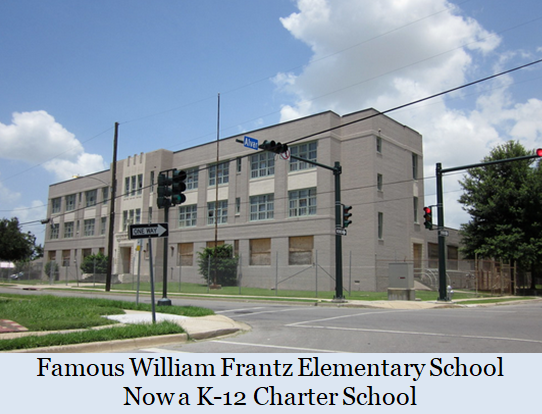
New Orleans Public Schools, aka Orleans Parish School District (OPSD), became America’s first and only all charter school district in 2017. After hurricane Katrina, the state took over all but five schools in the city. When management was transferred to charter organizations in 2017, OPSD officially became an all charter district. This August, the city will open district-operated Leah Chase K-8 School, ending the all charter legacy.

According to Superintendent Avis Williams, the infrastructure required for the district to run Leah Chase will make it easier to open future district-run schools. OPSD will become both a charter school authorizer and regular school district. There is hope that New Orleans, Louisiana (NOLA) is pulling out of an abyss and tending towards a healthy public school system….

All-Charter NOLA Doomed from the Beginning

Public investment in education is widely viewed as the key to America’s success. Since the 19thcentury, communities have developed around local public schools. This opportunity was taken from NOLA neighborhoods…

Louisiana’s state takeover law required schools scoring below average to be closed. If this were real, half of the schools in the state would be closed every year. Instead, arbitrary state performance scores based on testing data, attendance, dropout rates and graduation rates were established. Similar ratings are used to evaluate NOLA charter schools. The nature of privatized schools and testing results led to almost half of the charter schools created being closed.

The NOLA school enrollment system allows parents to research the 100 schools and apply for up to eight of them. The algorithm selects the school from one of the eight if space is available. It is not uncommon for students to ride a bus past schools within walking distance of their homes. This complicated system is driving segregation.

For many education professionals, this system looked like a sure failure from the beginning. Communities could not develop around their schools and the schools would not be stable; important aspects of quality public education….

The All Charter District is a Failure

In 2021, Secretary of Education Miguel Cardona visited OPSD. He heard first-hand the growing disillusionment with the all charter system. Four of the six parents told him they wanted to go back to neighborhood schools. Parents complained about Teach for America, placing unqualified teachers in schools and the One App process for not offering school choice.

Senator Bouie wrote a two-page paper, A Moral Imperative and Case For Action”, stating: After spending 6 Billion dollars of tax payers’ money to become the only all-Charter system in the State, a staggering 73% of our children are not functioning at grade level, compared to 63% in 2005, when the State took control of over 100 of our schools.”

He also shared:

“In other words, fellow citizens, this 15-year flawed experiment has yielded no best practices identified to improve student and school performance, no State protocol for Charter Law Compliance, and no student performance improvement. It has, however, yielded other devastating consequences for our children and our community.”

He mentioned the 26,000 students between the ages of 16 and 24 who went missing. The privatized charter school system was unable to account for them which is expected and natural for a public school district.

Bouieu They are transported past a neighborhood school to attend a failing school across town” and eliminating the ineffective One App central enrollment system claiming,It has created inequities by Race and Class and admissions by chance (lottery) and not choice.”

Raynard Sanders who has over forty years of experience in teaching, education administration and community development, said the charter experiment has “been a total disaster in every area.”He asserted NOLA had “the worst test scores since 2006, the lowest ACT scores, and the lowest NAEP (National Assessment of Educational Progress) scores.”

Based on a 2015 study by the Center for Popular Democracy, Sanders declared, “Charter schools have no accountability and, fiscally, charter schools in New Orleans have more fraud than existed in the OPSD (Orleans Parish School District).” The fraud claim was used by the state in 2003 against OPSD to begin taking schools.

Loyola University Law Professor Bill Quigley stated“NOLA reforms have created a set of schools that are highly stratified by race, class, and educational advantage; this impacts the assignment to schools and discipline in the schools to which students are assigned.”

He contended, “There is also growing evidence that the reforms have come at the expense of the city’s most disadvantaged children, who often disappear from school entirely and, thus, are no longer included in the data.”

Professor of Economics, Doug Harris, and his team at Tulane University are contracted to study school performance in New Orleans. Harris claims schools have improved since Hurricane Katrina. However Professor Bruce Baker of Rutgers University disagrees. He noted that the school system is not only smaller but less impoverished. Many of the poorest families left and never returned. So the slightly improved testing results are not real evidence of school improvement.

The latest testing data from 2023 saw NOLA public schools receive failing grades but based on Louisiana’s new progress indicator, the district received a C, meaning an F for assessments and an A in growth.

In a letter to the editor, former OPSD superintendent, Barbara Ferguson, stated:

“The state took over 107 of New Orleans’ 120 public schools and turned them into charter schools. Last year, 56 of New Orleans’ 68 public schools had scores below the state average. Thus, after nearly 20 years, over 80% of New Orleans schools remain below the state average. This charter school experiment has been a failure.”

Final Words

In 2006, with the school board out of the road and RSD in charge, philanthropists Bill Gates, Eli Broad and others were ready to help.

Naomi Klein’s 2007 book, The Shock Doctrine, labeled these school reforms, a prime example of “disaster capitalism”, which she described as “orchestrated raids on the public sphere in the wake of catastrophic events, combined with the treatment of disasters as exciting market opportunities.” She also observed, “In sharp contrast to the glacial pace with which the levees were repaired and the electricity grid brought back online, the auctioning-off of New Orleans’ school system took place with military speed and precision.”

Desires of New Orleans residents were ignored. Neoliberal billionaires were in charge. In all the excitement, few noticed that these oligarchs had no understanding of how public education functions. They threw away 200 years of public school development and replaced it with an experiment. The mostly black residents in the city were stripped of their rights.

Thousands of experienced black educators were fired and replaced by mostly white Teach For America teachers with 5 weeks of training. Instead of stable public schools, people were forced into unstable charter schools. Instead of professional administration, market forces drove the bus!

Clearly, the all charter school system is a failure.

Researcher Beth Zirbes, a teacher of advanced mathematics, used her skills to dissect a charter school study produced at Harvard. The study was reported by Paul Peterson in The Journal of School Choice; Peterson, like the Journal, is an outspoken advocate for charters and vouchers. The study claimed that charter schools outperform public schools, and that the charter schools in Alaska were best among all states.

The governor of Alaska cited the study as a reason to increase the number of charter schools.

Zirbes doubted that this was true and decided to do her own analysis. What she found, amazingly, was that the Harvard study ignored vital demographic factors.

She wrote:

When I first saw the results of the Harvard study concerning charter schools I was simultaneously unsurprised and skeptical. I was unsurprised as I have seen many very bright young students in my AP classes come from charter schools. I was skeptical as I suspected much of this performance could be attributed to the type of student who attends Alaska’s charter schools. As a comparative analysis of Alaska’s charter schools and neighborhood schools had not been done, I set out to do one myself.

To determine whether charter schools outperform neighborhood schools I looked at the performance of all schools on the 2018-2019 PEAKS ELA (English Language Arts) assessment from the Alaska Department of Early Childhood Education and Development’s (DEED) report card to the public, as this year was within the same time frame as the data from the Harvard study. The performance of each school is given under the “2018-2019 Performance Evaluation for Alaska’s Schools (PEAKS)” tab. I used the data on this page for every school in the state which allowed me to analyze test scores and demographic characteristics such as the proportion of the school who are economically disadvantaged, English language learners (ELL), and special education (SPED). Demographic characteristics are only given for the set of test-takers and thus all summaries and analyses are for students in grades 3-9 during the 2018-2019 school year. I also removed all correspondence schools from my dataset as these students were not included in the Harvard study, do not take NAEPs tests, and have very low participation rates on state tests. For my analysis on performance, I also restricted my dataset to include schools only in districts where charters are an option to ensure that the student populations were as similar as possible.

At first glance, it appears that charter schools are more successful than neighborhood schools. At charter schools 52.5% (1,866 out of 3,554) of students were proficient on the ELA assessment versus 40.1% (18,655 out of 46,574) of students at neighborhood schools. However, these differences could be explained by the differences in demographics of the student bodies at these schools. To rule this out as a potential issue, statisticians control for these variables in their mathematical models. We can then ask, do the charter schools outperform neighborhood schools that have similar characteristics? Or do charter schools do any better than we would expect, given their student populations? In short, the answer is no, they do not. When I fit a model which controlled for socioeconomic status alone, the type of school (charter versus neighborhood) was not significant. (For anyone who knows statistics, the p-value associated with type of school was 0.57. It wasn’t even close.) In summary, there is no evidence that charter schools outperform neighborhood schools in terms of ELA proficiency once we consider their socioeconomic make-up.

During my data exploration, I discovered that charter schools, on average, have very different student bodies than neighborhood schools. Charter schools have far fewer economically disadvantaged students, far fewer ELL students, and are comparable to neighborhood schools in terms of SPED populations. Here is a summary of how these populations differ for all Alaskan students in the relevant grades in all of Alaska’s brick and mortar schools for the 2018-2019 school year:

  •  Neighborhood schools were 52.2% economically disadvantaged (30,780 out of 58,929 students) compared to 31.3% in charter schools (1,219 out of 3895 students).
  • Neighborhood schools were 15.5% ELL (9,150 out of 58,929 students) compared to 9.3% in charter schools (363 out of 3895 students).
  • Neighborhood schools were 16.3% SPED (9,162 out of 58,929 students) compared to 13.7% in charter schools (532 out of 3895 students).

However, these summaries are highly influenced by a few outliers and obscure some large discrepancies, especially in terms of the economically disadvantaged and ELL students.

  • Of the charter schools, 46.4% (13 out of 28) have economically disadvantaged rates below 20%, compared to just 3.5% of neighborhood schools (15 out of 426).
  • Only 10.7% of charter schools (3 out of 28) have ELL percentages above 10%, compared to 36.9% of neighborhood schools (157 out of 426).

Even if we did a comparison of charter schools and neighborhood schools and found that charter schools did better, we still cannot conclude charter schools are causing the performance difference we observe. A comparative study like this is an example of an observational study and because it is impossible to control for all confounding factors, such as parental involvement, we can’t conclude success is caused by the school type. To definitively conclude that charter schools were causing the observed difference in success compared to neighborhood schools we would have to randomly assign some students to go to a charter school and some students to go to neighborhood schools. After some time, we would then compare the results. Obviously, this is impractical as many charter schools do not have busing, require volunteer hours, can remove students for poor attendance, and some do not even have lunch services.

Before the state uses the results of the Harvard study to change the approval process for charter schools we need to understand if charters are better and, if so, why. So far, I have not seen convincing evidence that charter schools outperform neighborhood schools when we control for various student characteristics. I have an idea for further study which I believe should be completed before any changes to policy are made. We can examine the performance of students who got admitted to charter schools via the lottery to those who applied but did not get in and attended their neighborhood schools instead. The group who was admitted is likely similar to those who applied but were not. This would be as close to a randomized experiment as one could hope to have. From this one could determine whether various factors were causing differences in performance, such as class size and teaching methodology. Additionally, we could use results of such a study to determine which factors correlate with success and apply these strategies in all our schools. As more than 90% of the students at our in-person schools are in neighborhood schools, such reforms will be more wide-reaching than simply adding a few more charter schools.

 2018-2019 PEAKS ELABeth Zirbeseconomically disadvantagedELLGuest ColumnHarvard Charter School StudyNAEPSPED

Stephen Dyer, former state legislator in Ohio, wrote in his blog “Tenth Period” that the 85% of Ohio’s children who attend public schools are being shortchanged by the state. First the state went overboard for charter schools, including for-profit charters and virtual charters and experienced a long list of money-wasting scandals. Then the state Republicans began expanding vouchers, despite a major evaluation showing that low-income students lost ground academically by using vouchers. As the state lowered the restrictions on access to vouchers, they turned into a subsidy for private school tuition.

He writes:

Since 1975, the percentage of the state budget going to Ohio’s public school students has dropped from 40% to barely 20% this year — a record low.

This is stunning, stunning data. But the Ohio General Assembly and Gov. Mike DeWine today are committing the smallest share of the state’s budget to educate Ohio’s public school kids in the last 50 years. And it’s not really close.

What’s going on here?

Simple: Ohio’s leaders have spent the last 3+ decades investing more and more money into privately run charter schools and, especially recently, have exploded their commitment to subsidize wealthy Ohioans’ private school tuitions. This has come at the expense of the 85% of Ohio students who attend the state’s public school districts. 

Look at this school year, for example. In the budget, the state commits a little more than $11 billion to primary and secondary education. That represents 26.6% of the state’s $41.5 billion annual expenditure. However, this year, charter schools are expected to be paid $1.3 billion and private school tuition subsidies will soar to $1.02 billion (to give you an idea of what kind of explosion this has been, when I left the Ohio House in 2010, Ohio spent about $75 million on these tuition subsidies). So if you subtract that combined $2.32 billion that’s no longer going to kids in public school districts, now Ohio’s committing $8.7 billion to educate the 1.6 million kids in Ohio’s public school districts. That’s a 21.1% commitment of the state’s budget. 

Some perspective:

  • That $8.7 billion is about what the state was sending to kids in public school districts in 1997, adjusted for inflation.
  • The 21.1% commitment currently being sent to kids in public school districts is by far the lowest commitment the state has ever made to its public school students — about 7% lower than the previous record (last year’s 22.2%) and 20% lower than the previous record for low spending in the pre-privatization era. 
  • The voucher expenditure alone now drops state commitment to public school kids by nearly 10%.
  • The commitment to all students, including vouchers and charters, represents the fifth-lowest commitment since 1975. Only four years surrounding the initial filing of the state’s school funding lawsuit in 1991 were lower. The lowest commitment ever on record was 1992 at 25.2% of the state budget. Don’t worry, though. Next year, the projected commitment to all Ohio students will be 25.3% of the state budget.
  • What is clear now is that every single new dollar (plus a few more) that’s been spent on K-12 education since 1997 has gone to fund privately run charter schools and subsidize private school tuitions mostly for parents whose kids already attend private school. 

What’s even more amazing is that even if charters and vouchers never existed and all that revenue was going to fund the educations of only Ohio’s public school students, the state is still spending a smaller percentage of its budget on K-12 education than at any but 4 out of the last 50 years. And next year it’s less than all but 1 of those last 50 years.

Ohio’s current leaders have essentially divested from Ohio’s greatest resource — its children and future — for the last 30 years.

Please open the link and finish reading the post. Ohio has also slashed funding for public higher education.

Does this disinvestment in children and higher education make any sense? Who benefits?

In Ohio, as in every other state, most children go to public schools. You would think that their elected officials would work hard to ensure that their district’s public schools are well-funded. In red states like Ohio, you would be wrong. Safe in their gerrymandered districts, Republicans are shoveling money to charters and vouchers, not public schools. Their generosity to nonpublic schools ignores the long list of scandals associated with charters, as well as their poor performance. Nor are Republicans concerned by the lack of accountability of voucher schools, not to mention their discriminatory practices.

Jan Resseger wonders whether Republicans care about the education of the state’s children. Answer: No. They have higher priorities, religious and political.

She writes:

On Tuesday, the Ohio Capital Journal’Susan Tebben reported: “Ohio House Democrats have laid out a plethora of bills targeting the education system in the state, impacting everything from teacher pay to oversight of private school vouchers and the overall funding of the public school system…’Our principles are pretty clear on that front,’ said House Minority Whip Dani Isaacsohn, D-Cincinnati. ‘There is no better investment we can make in the future of our state than investing in the education of our students, and that every kid, no matter which corner of the state they grow up in, deserves a world class education.’

There is a problem, however, blocking most pro-public school legislation. Only 32 of 99 Ohio House members are Democrats, and in the Ohio Senate, only 7 Democrats serve in a body of 33 members. Due to gerrymandering, the Ohio Supreme Court rejected the district maps that are being used today, but the Court did not enforce its ruling. This means that, except in the state budget where compromises sometimes are demanded, most of the Democratic priorities languish.  In the recent budget, the legislature enacted a second stage of the three-budget, phase-in of a new public school funding formula, but it was accompanied by a universal private school tuition voucher expansion.

Here, according to Tebben, is what has happened to a bill to prioritize and protect the new public school funding formula:

“At the top of the (Democrats’) list is House Bill 10, which seeks to hold legislators to the six year phase-in plan that was assigned to the Fair School Funding Plan, legislation that funds public schools based less on property values and more on the needs of individual school districts.  HB 10 is a bipartisan bill which simply ‘expresses the intent of the General Assembly to continue phasing in the school financing system,’ which was inserted in the 2021 budget bill, ‘until that system is fully implemented and funded,’ according to the language of the bill.  The bill was introduced in February 2023 and quickly referred to the House Finance Committee, but has not seen activity since.”

Ohio’s gerrymandered Republican supermajority won’t commit to the eventual full funding of the state’s public school system because, they say, revenue projections are unsure in the context of growing privatization and years of cutting taxes in budget after budget.

Ohio’s gerrymandered Republican legislators instead operate ideologically and far to the right.  After Governor Mike DeWine vetoed a bill to deny medical care for transgender youths last winter, legislators immediately overrode the veto.  Far-right bills from the American Legislative Exchange Council and other bill mills, and bills endorsed by the extremist but powerful Columbus lobby, the Center for Christian Virtue, now housed in the building it purchased across the street from the Statehouse, dominate legislative deliberation and get lots of press.

Please open the rest of this important post.

One person who takes credit for the rapid advance of vouchers, which send public dollars to private and religious schools, is named Corey De Angelis. You probably never heard of him. He works for Betsy DeVos. He hates public schools, although he is a product of public schools. The taxpayers paid for his free education, but now he wants to divert money from public schools to private ones. We now know that most vouchers are claimed by families whose children are already enrolled in private schools. The voucher is a subsidy for them. Frequently, the school hikes its tuition by the amount of the voucher. Why does Corey hate public schools? It’s a puzzlement.

Carol Burris, executive director of the Network for Public Education, wrote this post:

Corey De Angelis works for Betsy De Vos’s American Federation for Children, which pays him to travel the country hawking ESA vouchers. He directs its PAC to destroy candidates who oppose vouchers.


De Angelis obsessively hates teacher unions, calls public schools “government schools,” believes that telling the truth is, at best, a suggestion, and has dubbed himself the “school choice evangelist.”


During a recent interview at the Heritage Foundation, De Angelis defined public schools like this: “failing unionized indoctrination centers that we call schools.” His contempt for public education was apparent from beginning to end. Here is a clip from that interview and NPE’s response on his mission to destroy our public schools.

The board of the Pasadena Unified School District debated whether charter schools should share in the receipts of a new tax. The board voted 4-3 not to include the charters. The three members who voted in favor of including the charters said that the votes of the parents of 2,000 charter students would help meet the 2/3 majority needed to pass the tax. The four who voted “no” held that charters are independent of the district and should not benefit from its taxes. The members opposing the sharing said that the charters could affiliate with the district but they choose not to.

The Pasadena school board considered a resolution to approve an education parcel tax for the ballot in the November 2024 election. The resolution was moved for approval and seconded. The board discussed and voted down an amendment in the ballot language to add charters as beneficiaries of the measure.

Board President Kim Kenne and Members Patrick Cahalan and Tina Fredericks voted to add charter schools as beneficiaries of the parcel tax on the November ballot.

Member Cahalan appreciated the public comments from charter supporters whose families have students in both regular PUSD schools and charter schools. The district’s survey about the November measures showed the potential support for passing this measure and the facilities bond is very close to the ⅔ needed for passage. He wanted the support of the approximately 2000 charter school parents to get it over the threshold. He proposed a board resolution to spell out the sharing of monies…

Those voting against the amendment were Michelle Richardson-Bailey, Patrice Marshall McKenzie, Yarma Velazquez and Jennifer Hall Lee.

Vice President Hall Lee spoke about having charters in the district authorized by other entities, not PUSD, like the L.A. County Board of Education. She spoke of the history of charters. While initially founded to help the public schools, they have become competitors and have become anti-union. She said she is a union-supporter, and she believes there is competition between charters and PUSD schools, like in Altadena. She spoke against the argument that charters are needed to be cutting edge options. PUSD is recognized in state education circles as a cutting edge district of excellence. Later in the meeting she mentioned that members of the California Charter Schools Association (CCSA) were present earlier. She found that CCSSA is funded by the Walton family, and a director of CCSA is also an employee of Walton Enterprises. The wealth of the Walton family is problematic when the CCSA threatens legal action against the district.

Member Marshall McKenzie introduced herself to the charter supporters in attendance, who had referred to her by a shorter version of her name not used by her. She spoke about her deep roots in the community and in PUSD public schools; her parents attended PUSD schools. She spoke of her university training in state public universities, her full commitment to public education as democratic, a creator of society, a lever of economic mobility, and a center of community. These things are really important to her and are why she ran to be on the board of education. She was not prepared to entertain or accept any amendments tonight, as those are longer conversations.

Member McKenzie said that she was clear on the nature of charters as separate Local Education Agencies (LEAs), which have the ability to raise money from their parents, and which get their own Average Daily Attendance (ADA) money from the State. These funds do not go to PUSD. She pushed back on the charter supporters’ comments about inclusion and building community, saying, “If you are willing to convert your charters to be affiliated charters or dependent charters, let’s have that conversation about how we build community and how we serve all of the students in the area of the Pasadena Unified School District because now we’re all public schools.” She said she has been consistent on this point.

Member McKenzie made the same argument back in 2019 at the joint meeting of the City Council and the PUSD Board, when charters wanted some of the Measure J sales tax monies. At the time she said, “Since charters are their own LEA, that would be like PUSD giving Measure J money to Glendale Unified. We would not do that. So why would we give these dollars away as well?  I just don’t understand the logic in that.  So right or wrong, I’m going to be consistent in my position on that.” She struggles with the situational alliance with PUSD. “When it’s convenient for you, you want to be PUSD kids, you want to be public school kids, and when it’s not convenient for you, you’re very happy to divest… I feel like right now you’re not with us; it’s for your personal benefit and not for the greater good of the community.”

Like Vice-President Hall Lee, she referred to the origin of charter schools as being the center of innovation and providing flexibility for educators in curriculum development and with staffing, but charters have gone far away from those principles in the current charter and school landscape. “We simply just cannot afford to fund two systems out of one pot of money, and what you’re asking us to do is to dilute this one small pot of money even smaller.” She referred to the parcel tax amount being small compared to PUSD’s state funding and budget challenges. Yet she said she was very supportive of the bond and the parcel tax as a voter and a property owner who is happy to make the investment in public education. She reiterated that charters could have the same flexibility in curriculum development and staffing and special programs if they were PUSD-affiliated charters, but if they aren’t willing to have that conversation, she stated that she’s  not willing to go down this road of sharing funding. Member McKenzie ended by saying she can’t support the amendment without a longer dialogue and a building of community with those in charters.

Regarding the argument about losing the votes of many parents with children at both a charter and a PUSD high school, Member Velazquez said, “They have the choice to support our public high schools. I support our PUSD teachers; I support our PUSD staff. I am a proud CFA (California Faculty Association, the faculty union for the CSU system) member. I am a proud educator in the public education system in this beautiful state of California. I am a ‘NO’ on the amendment.”

Ron DeSantis has been determined as governor of Florida to privatize the funding of schools, and he has had a compliant legislature to help him achieve his goal of destroying public schools.

Andrew Atterbury of Politico wrote about the fiscal crisis of many public school districts as they lose students to private schools, charter schools, religious schools, and home schools.

Most vouchers are claimed by students already enrolled in private schools—a subsidy for the rich and upper-middle-class—but the public funds are causing serious enrollment declines in some districts. Those districts are now considering closing public schools as tax money flows to unaccountable private schools.

Atterbury writes:

Gov. Ron DeSantis and Florida Republicans have spent years aggressively turning the state into a haven for school choice. They have been wildly successful, with tens of thousands more children enrolling in private or charter schools or homeschooling.

Now as those programs balloon, some of Florida’s largest school districts are facing staggering enrollment declines — and grappling with the possibility of campus closures — as dollars follow the increasing number of parents opting out of traditional public schools.

The emphasis on these programs has been central to DeSantis’ goals of remaking the Florida education system, and they are poised for another year of growth. DeSantis’ school policies are already influencing other GOP-leaning states, many of which have pursued similar voucher programs. But Florida has served as a conservative laboratory for a suite of other policies, ranging from attacking public- and private-sector diversity programs to fighting the Biden administration on immigration.

“We need some big changes throughout the country,” DeSantis said Thursday evening at the Florida Homeschool Convention in Kissimmee. “Florida has shown a blueprint, and we really can be an engine for that as other states work to adopt a lot of the policies that we’ve done.”

Education officials in some of the state’s largest counties are looking to scale back costs by repurposing or outright closing campuses — including in Broward, Duval and Miami-Dade counties. Even as some communities rally to try to save their local public schools, traditional public schools are left with empty seats and budget crunches.

Since 2019-20, when the pandemic upended education, some 53,000 students have left traditional public schools in these counties, a sizable total that is forcing school leaders to consider closing campuses that have been entrenched in local communities for years.

In Broward County, Florida’s second-largest school district, officials have floated plans to close up to 42 campuses over the next few years, moves that would have a ripple effect across Fort Lauderdale and Hollywood.

The district has lost more than 20,000 students over the last five years, a decline that comes as charter schools in particular experienced sizable growth in the area. Enrollment in charters, which are public schools operating under performance contracts freeing them of many state regulations, increased by nearly 27,000 students since 2010, according to Broward school officials.

Broward County Public Schools claims to have more than 49,000 classroom seats sitting empty this year, a number that “closely matches” the 49,833 students attending charter schools in the area, officials noted in an enrollment overview.

These enrollment swings are pressing Broward leaders to combine and condense dozens of schools, efforts that would save the district on major operating costs. So far, some of the ideas are meeting heavy resistance…

Enrollment among charters has increased by more than 68,000 students statewide from 2019-20 to this school year, according to data from the Florida Department of Education. More than a third of that rise happened in Broward, Duval and Miami counties alone.

Private school enrollment across Florida rose by 47,000 students to 445,000 students from 2019-20 to 2022-23, according to the latest data available from the state. Much of that growth is from newly enrolled kindergartners, with only a small fraction of these students having been previously enrolled in public schools, according to Step Up for Students, the preeminent administrator of state-sponsored scholarships in Florida.

A growing number of families also chose to homeschool their children during this span, as this population grew by nearly 50,000 students between 2019-20 and 2022-23, totaling 154,000 students in the latest Florida Department of Education data.

As all of these choice options ascend, enrollment in traditional public schools across the state decreased by 55,000 students from 2019-20 to this year, state data shows. But enrollment isn’t down everywhere. While Duval County has lost thousands of students, enrollment is up by more than 7,700 students at neighboring St. John’s County, the state’s top-ranked school district…

The state’s scholarship program is expected to grow, which could lead to more students leaving traditional public schools. While most new scholarship recipients previously attended private schools already, there is space for 82,000 more statewide — nearly 217,000 total — to attend private school or find a different schooling option on the state’s dime next school year.

Across the state, public schools are facing budget cuts, layoffs. and school closures, all to satisfy Gov. DeSantis’ love of school choice. Over time, billions of public dollars will flow every year to unaccountable private schools that are allowed to discriminate. And the outcomes will be worse, not better, as students flock to low-cost schools whose teachers and principals are uncertified.

It the main win for DeSantis is to subsidize the cost of private schools for parents whose children were already enrolled in private schools.

Alexandra Berzon and Michael C. Bender report in The New York Times that Donald Trump now relies on Florida Congressman Byron Donalds for advice on education. Think of Byron Donalds as a 2024 version of Betsy DeVos, except that he’s Black, he’s a Congressman, and he’s not a billionaire. In all other respects, there’s not a dime’s worth of difference between them. Byron Donalds is viewed as a future governor or even Trump’s running mate.

In early 2021, Representative Byron Donalds, Republican of Florida, and his wife, Erika, took the stage at an event hosted by the Truth & Liberty Coalition, a group that pushes to inject Christianity into public schools and other institutions and whose leader has described homosexuality as Satan’s work.

The couple was warmly welcomed as allies in the cause. Mrs. Donalds was singled out for opening a charter school in Florida. As a state legislator, Mr. Donalds had created a school voucher program that, in the words of one speaker, let children “get a biblical worldview education….”

Mr. and Mrs. Donalds were early activists in an increasingly influential network seeking to transform traditional public education — in Florida and beyond. Long before the recent battles over book bans and critical race theory, the effort cast public schools as failing laboratories for liberal ideas and pushed to funnel public education funds into charter or private schools.

Mr. Donalds backed legislation that gave outside groups a bigger say in school curriculums, years before Gov. Ron DeSantis of Florida set off a national debate by making it easier for groups to remove books from school libraries and limiting teaching about sexuality and gender.

The couple has deep ties to leading forces in those debates, including Moms for Liberty, Hillsdale College and the Florida Citizens Alliance, which has pushed to remove books that it deems inappropriate from schools. Both Mr. and Mrs. Donalds have made remarks disparaging homosexuality.

Speaking at the Conservative Political Action Conference in February, Mr. Donalds described heterosexual relationships as “the natural order that keeps society progressing.” In a tweet in 2017, Mrs. Donalds wrote, “Homosexuality is a sin just like any other sexual sin, and all of us sinners need forgiveness & mercy for our shortcomings.”

The couple’s work has been both advocacy and income. As Mr. Donalds pushed legislation expanding access to charter schools and voucher programs, Mrs. Donalds began to build a company and a nonprofit that took advantage of that expansion.

“Byron and Erika have been known for years in Florida as warriors in the fight for all children to have a quality education,” said Tina Descovich, a co-founder of Moms for Liberty, a conservative education group that began in Florida but has emerged as a political power broker. “That reputation is spreading nationally.”As Mr. Trump campaigns, he has embraced the new education politics, suggesting that public schools have been overrun by “pink-haired communists” and promising to close the Department of Education if re-elected. And he has surrounded himself with like-minded supporters, such as the Donaldses….

It was Mrs. Donalds, whom he met in college, who drew him into evangelical Christianity. His full conversion came when he was 22, waiting tables at Cracker Barrel. He felt the call and “gave my life to Christ,” he said….

In 2017, Mr. Donalds was sworn in to the Florida House of Representatives, serving a Naples-area district. That same year, Mrs. Donalds started OptimaEd, a charter school management operation.

The couple’s work often intersected. Mr. Donalds was a co-sponsor for a bill that, among many other things, allowed charter schools to secure additional funding from local tax initiatives. He backed term limits for school board members, a proposal that Mrs. Donalds had long sought as a way to force turnover and potentially open up seats for charter school advocates…

In 2022, Mrs. Donalds was managing several charter schools in Florida. According to contracts, her company was paid a share — around 10 percent — of the schools’ public funding to provide human resources, marketing and other services. That year, the company collected about $4 million in public money and put around $2.6 million back into the schools, public records show, while Mrs. Donalds was paid a salary of about $180,000.

Those figures became a source of tension with the schools. Since then, three charter schools managed by OptimaEd ended their contracts with the company amid complaints that it was putting too little money back into the schools, according to public records and three people involved in the schools who asked for anonymity to discuss private negotiations.

Mrs. Donalds did not respond to a request for comment.

She has increasingly focused her business on an online academy and virtual classes that accept vouchers. In 2017, her husband led a successful effort to offer the private school tuition reimbursements to students who said they were bullied. Last year, Florida went much further, expanding its voucher programs to all students, regardless of circumstances or income, and opening a new flow of public money to private schools.

Seeding the ‘parents’ rights’ debate

Advocates described how the couple had helped lay the groundwork for pandemic-era policies that put Florida at the center of the education debate.

In 2015, Mrs. Donalds started a network of conservative school board members with women who went on to lead Moms for Liberty. (Mrs. Donalds is a Moms for Liberty adviser.)

The Donaldses were some of the first members of the Florida Citizens Alliance, according to the group’s founder, Keith Flaugh. The alliance has pushed to remove books from schools that it claims indoctrinate children with liberal ideas, including Toni Morrison’s “Beloved” and other classics from African American authors.

Seventy years ago, in 1954, the U.S. Supreme Court issued a decision that overturned state laws that required racially separate schools. That decision, the Brown vs. Board of Education decision, is generally considered the accelerant that launched the Civil Rights movement and led to sweeping changes in American law and society.

A few days ago, Justice Clarence Thomas attacked the Brown decision, echoing views of segregationists who always opposed it. In the early decades after the decision, the Supreme Court took an expansive view of Brown. States and school districts not only had to dismantle laws that required racial segregation, they had to demonstrate to the courts that their actions had actually produced racial integration of students and staff.

Over time, the replacement of liberal judges by conservative judges caused the Court to moderate its stand on segregation. It increasingly abandoned its stringent guidelines and withdrew its orders to districts. Districts that were under supervision by the courts are no longer monitored. School segregation has been on the rise.

At long last, a senior justice on the Court said what conservative critics had long espoused: the Court exceeded its authority by striking down state laws that enforced racial segregation. Appointed by President George H.W. Bush, Clarence Thomas has long been a critic of civil rights laws, despite the fact that he is African-American.

Axios reported:

Supreme Court Justice Clarence Thomas issued a strong rebuke of the Brown v. Board of Education ruling on Thursday, suggesting the court overreached its authority in the landmark decision that banned separating schoolchildren by race.

Why it matters: Thomas attacked the Brown decision in a concurrence opinion that allowed South Carolina to keep using a congressional map that critics say discriminated against Black voters.

Driving the news: The court “took a boundless view of equitable remedies” in the Brown ruling, wrote Thomas, who in 1991 replaced Supreme Court Justice Thurgood Marshall — the first Black Supreme Court Justice and the lead lawyer in the Brown case.

  • Those remedies came through “extravagant uses of judicial power” to end racial segregation in the 1950s and 60s, Thomas wrote. 
  • Federal courts have limited power to grant equitable relief, “not the flexible power to invent whatever new remedies may seem useful at the time,” he said, justifying his opinion to keep a predominantly white congressional district in South Carolina.

Zoom out: The U.S. marked the 70th anniversary of the landmark Brown v. Board of Education ruling last week.

  • The 9-0 decision declared the “separate but equal” doctrine unconstitutional and helped usher in the Civil Rights Movement, though it took two decades to dismantle some school segregation policies.

State of play: An Axios review found American public schools are growing more separate and unequal even though the country is more racially and ethnically diverse than ever.

  • Racial segregation in schools across the country has increased dramatically over the last three decades, according to two new reports and an Axios review of federal data.
  • The resegregation of America’s public schools coincides with the rise of charter schools and school choice options and as civil rights groups have turned away from desegregation battles.