When I started the new blog format, I said I would repost blogs from others only in rare instances. This is one of those rare instances. Peter Greene has written a devastating analysis of the oligarchs’ plans to attack public school teachers and defund public schools in Arizona. You need to read this story. The privatizers’ game plan is on full display, in all its ugliness. It’s a reverse Robin Hood scheme, which will steal from everyone so as to reward the rich.
Here are a few excerpts from the exceptionally vicious legislation that has been filed:
Arizona has lost its damn mind, this week passing some of the stupidest, most aggressively anti-public ed laws anywhere, including an absolutely insane law requiring teachers to file lesson plans a year in advance.
Arizona has always been a strong contender for most anti-public education state in the county. They’ve had trouble convincing teachers to work there for years (at one point they were recruiting in the Phillipines), using the one two punch of low salaries along with rock-bottom spending on classrooms (this is the state wherethe house GOP leader contended that teachers were just working second jobs so they could buy boats). In the meantime, they have done their best to foster charter profiteering and set up vouchers at the expense of public ed. Did I mention that Arizona is the Koch home base?
This week Ducey issued an executive order requiring all schools to return o in-person learning by March 15, with exceptions only for the counties (there are three) with high transmission–there, the middle and high schools can stay remote. No other exceptions, no consideration for local concerns, issues, situations, etc.
But now for the legal highlights of the week.
SB1058 is the one I mentioned above. In this bill, every school (charters get hit with this foolishness, too) must, by July 1 of each year, post, where parents can see it, all lesson plans, materials, activities, textbooks, videos, online stuff. Parents in Arizona already have the right to review all materials, so nthis is just a next step. “It should be reasonably easy to access the information.” This bill passed the Senate on Tuesday.
This is more than just an unnecessary burden on teachers. It’s more than just a way to legislate bad teaching (if you already know what you’re doing in class on a particular Tuesday five months from now, you are not doing a great job teaching). It also makes each teacher’s lesson planning–their professional intellectual property–open to the public. Starting a charter school but you don’t know a damn thing about teaching? Just log on and lift your curriculum, scope, sequence, plans, etc from any actual teacher…
All of this comes on the heels of a massive voucher expansion in Arizona, worth noting because it was one more example of the state’s GOP working in direct defiance of Arizona voters, who decisively rejected voucher expansion just two years ago. It’s an ugly frustrating mess. What exactly is your next move if you’re in a state where the reaction to “If you keep this up, you’ll destroy public schools” is “Good.”Jeb Bush is a big fan of Arizona’s work, mostly because it so closely follows his own playbook in Florida. It all points to an ugly future in which the wealthy can buy the education they want and not have to pay taxes to educate Those People’s Children.
Seriously, if you want to place bets on which state will be first to destroy its public schools, you wouldn’t be wrong to bet on Arizona. It is a wholly-owned Koch franchise.
Curt Cardine of the Grand Canyon Institute has calculated the cost of the proposed Arizona voucher proposal, which would give public money for private choices to the overwhelming majority of students in the state. If the proposal passes, even if relatively few students take vouchers, it will defund every school district in the state. The public schools of Arizona, already underfunded, will take yet another hit from a state that refuses to pay to educate its children.
The Education Law Center has developed an excellent presentation on the shortchanging of public education in the years since 20008. The great majority of states did not keep up with the costs of educating their children. Only a handful did: Wyoming, Alaska, Illinois, Connecticut. The rest saw a sharp drop in their effort to fund the education of their children.
The two absolutely worst states, as judged by their failed effort to fund their schools, were Arizona and Florida, followed by Michigan. It is not coincidence that these are states that have put their efforts into choice, as a substitute for funding.
The report from ELC begins:
In the decade following the Great Recession, students across the U.S. lost nearly $600 billion from the states’ disinvestment in their public schools. Data from 2008-2018 show that, if states had simply maintained their fiscal effort in PK-12 education at pre-Recession levels, public schools would have had over half a trillion dollars more in state and local revenue to provide teachers, support staff and other resources essential for student achievement. Further, that lost revenue could have significantly improved opportunity and outcomes for students, especially in the nation’s poorest districts.
The states dramatically reduced their investment in public education in response to the 2007 Great Recession. Yet as economies rebounded, states failed to restore those investments. As our analysis shows, while states’ economic activity — measured as Gross Domestic Product (GDP) — recovered, state and local revenues for public schools lagged far behind in many states.
This “lost decade” of state disinvestment has put public schools in an extremely vulnerable position as the nation confronts the coronavirus pandemic. Once again, state budgets are strained by declining revenues. And once again, school districts across the country are bracing for state aid cuts and the potential for reduced local support.
This report builds on our Making the Grade analysis of the condition of public school funding in the 50 states and the District of Columbia. Instead of a one-year snapshot, this report provides a longitudinal analysis of the effort made by states from 2008 to 2018 to fund their public education systems. We measure that effort using an index that calculates elementary and secondary education revenue as a percentage of each state’s economic activity or GDP.
A key goal of this report is to give advocates data and information to use in their efforts to press governors and state legislatures not to make another round of devastating “pandemic cuts” to already underfunded public schools.
Open the report to see where YOUR state ranks in its effort to educate its students.
Arizona and Florida are the two most shameful states in their neglect of the future of their children.
Jim Swanson and John Graham, both CEOs in Arizona, wrote a stern warning against the legislature’s proposed voucher expansion, which would make almost all students in the state eligible for public funding to spend in a private or religious school. One of the authors is on the Arizona State Board for Charter Schools. Arizona is a state that likes low taxes; it does not fund its public schools adequately or equitably. Under the leadership of Governor Doug Ducey (who promised the Koch brothers a few years ago that he would drive taxes down as low as he could), the state is offering choice instead of adequate funding to its schools. Arizona has consistently underfunded its public schools and pretends to “reform” them by offering charters and vouchers.
They wrote:
The current, aggressive push to expand Empowerment Scholarship Accounts (ESAs) does nothing to address the systemic education challenges we face in Arizona.
It is a dangerous attack on our public education systems and our state’s economic future. As a business community, our priority is to ensure that all students have access to a top-quality school that meets students’ needs and interests.
Arizona leaders should focus on effectively funding public education and supporting innovative programs that improve academic outcomes.
The time is now. Public education is the single most powerful economic development tool we have as a state.
ESAs were originally designed to serve a small population of students – they were never meant to replace public education or to serve all students.
A full expansion of ESAs is nothing more than a boutique scheme to address a non-existent need for private school subsidies.
While being marketed as a solution for low-income students and students of color – the students whom data tells us need the most wide-scale, institutional support – SB1452 is the most offensive of the private school voucher bills proposed this session. The bill would make roughly 700,000 Arizona students eligible for ESAs – a 280% increase in a single move. This is nothing more than a bold attempt to privatize education.
There’s a lot wrong with this bill, but the worst is the fact that rather than focus on supporting low-income students of color, many of whom are already eligible, SB1452 will make many more middle- and high-income white students eligible for taxpayer-subsidized vouchers, exploiting the impoverished communities in favor of further subsidizing the tiny fraction (as few as approximately 5%) of Arizona families choosing to home-school, private and parochial schools.
Greater Phoenix Leadership, Southern Arizona Leadership Council and Northern Arizona Leadership Alliance, representing more than 200 CEOs across Arizona, have made it clear that they are against the expansion of vouchers in Arizona and have voiced support for our public education systems, from early childhood to higher education. Business leaders and voters are like-minded – we have consistently come together for public education with a focus on equity and access. Instead of proposing unsustainable ways to make 70% of students eligible for private school vouchers, we need to make the public schools better, stronger and more successful.
What our state needs is crystal clear – an equitable, fully funded, high-quality public education system that serves all students across Arizona, no matter the zip code or income level. We have fallen too far behind and the only way we catch up – the only way we move the needle and bring Arizona to a competitive, robust and morally conscionable state – is to focus on the public education funding formula. Programs like private school vouchers have a long history of excluding and segregating our communities rather than including and supporting them. ESAs don’t get us where we need to be.
We need to put our heads together – across the business, education and political realms – and finally execute big changes to the funding formula and other mechanisms that have proven inefficient and worse, inequitable. Now is the time to focus on what moves all our students forward – working together to properly fund the schools serving 95% of Arizona students.
Question: Will the legislature listen to Arizona business leaders or to Charles Koch and Betsy DeVos?
Two years ago, the voters of Arizona overwhelmingly rejected an expansion of vouchers, by 65% to 35%. The pro-voucher side was funded by Charles Koch, Betsy DeVos, and other enemies of public schools. The voters said a resounding NO to voucher expansion!
The Arizona Senate approved a massive expansion of Arizona’s school voucher program Monday, just two years after voters decisively repealed a similar expansion of school vouchers to all students.
The Senate passed the bill on a 16-14 party-line vote, with all 16 Republicans voting for the measure. It will now be sent to the House of Representatives.
Empowerment Scholarship Accounts allow parents eligible to take funds from public schools and spend them on private school. The bill would expand the program, which currently serves only 9,700 students, making it available to an exponentially larger group.
Bill sponsors contend the voucher expansion will benefit only low-income students from so-called Title I schools, which receive funding for disadvantaged students to close educational gaps.
But SB 1452 would also allow any student who lives in the boundary of a Title I school to be eligible for an empowerment scholarship account. The students would merely have to attend the school and would not need to be low-income themselves to qualify.
More than 1,300 of the 2,000 district schools in Arizona — about 65% — are Title I schools, and even wealthy districts include some Title I schools.
The proposal from Glendale Republican Sen. Paul Boyer, SB1452, would make all children attending schools with a high percentage of low-income families or who qualify for free or reduced-price lunches eligible for the state’s voucher program. The program allows parents to take state funding and pay for religious or other private education and education costs.
If the Republican-controlled House also approves the measure and it is signed by Gov. Doug Ducey, a school choice supporter, about 800,000 of Arizona’s 1.1 million K-12 students would qualify to use state money to attend private schools, up from about 256,000 currently. Despite the current eligibility, only about 9,700 children currently use state vouchers to pay for private or home schooling costs.
So, of the 256,000 students eligible for vouchers, only 9,700 use them. That’s less than 4% who want vouchers.
Dare I mention yet again that there is a sizable body of evidence showing that kids who leave public schools to use vouchers are set back in their academic achievement?
AZ lawmakers think they can pull a fast one on AZ voters: They’re trying to force through Senate Bill 1452, a gigantic expansion of ESA vouchers that robs funds from public education in ways even more harmful and wide-ranging than any of their previous attempts. SB1452, sponsored by Senate Education Committee Chair and *charter school teacher* Paul Boyer (Republican, Legislative District 20), is a “kitchen-sink” voucher expansion bill that would gut public schools hurting low-income areas the most. Bottom line: This will drain hundreds of millions more dollars out of Arizona public schools every year, and will drain Prop 208 funds out as fast as voters can put them in. Public school teachers are frantically cleaning classrooms, simultaneously teaching online and in-person, reusing PPE, and putting buckets under leaks — while these lawmakers try to siphon away tax dollars that voters intend for our neighborhood schools. THIS IS WRONG. We need you to GET LOUD.Call bill sponsor Paul Boyer at 602-926-4173 and email pboyer@azleg.gov and ask him to withdraw SB1452Tell Senator Boyer to respect Arizona voters—we want MORE public school funding, not LESS. Call Senate President Karen Fann (602-926-5874, kfann@azleg.gov) and ask her to hold SB1452In 2018, AZ voters said #NoNewVouchers and we meant it. 95% of Arizona families choose public schools, and we want those schools funded. Call and email today. Then call again tomorrow, and again on Sunday, Monday and Tuesday. The education committee will consider this bill on Tuesday, February 2, at 2 p.m. This is a bill that dark-money special interests and greedy profiteers want, not Arizona voters. #WeSaidNoNewVouchersIt’s in our name: Save Our Schools Arizona
The federal CARES Act included the Paycheck Protection Program to help struggling small businesses and nonprofits survive the pandemic. Lobbyists for the charter industry slipped in a provision enabling charter schools to apply for PPP funding, even though they experienced no financial losses. Charter schools got a share of the $13.2 billion allotted to the nation’s early 100,000 public schools. The average public school received about $135,000 to meet the expenses of the pandemic. On the advice of their lobbyists, some 1200 charters also sought and won PPP funding. Thus charters drew funding from two sources; public schools were not eligible for PPP funding. Charters that applied for PPP funding won six times as much federal money as public schools.
Primavera online charter school, like many businesses this spring, sought help from the federal Paycheck Protection Program to weather the economic disruption of the COVID-19 pandemic.
The Chandler-based school received a PPP loan of nearly $2.2 million, the largest forgivable loan among the 132 Arizona charter schools that obtained them.
But Primavera’s loan appears to have been more of a bonus than a lifeline.
The school, which like all Arizona public schools didn’t lose state funding because of the pandemic, ended its fiscal year on June 30 with $8.8 million in the bank — almost double the annual payroll costs for its 85 teachers, records show.
The school also shipped $10 million to its lone shareholder: StrongMind, an affiliated company owned by Primavera’s founder and former CEO Damian Creamer.
The school’s annual audit indicates Creamer controls both Primavera and StrongMind, noting he has “the ability to influence the school’s operations for the benefit of StrongMind.” Primavera paid StrongMind nearly $23 million this past fiscal year for software and curriculum services, records show.
Creamer declined to comment.
An Arizona Republic review of more than 100 charter school financial records, audits and federal Small Business Administration documents found the overwhelming majority of the Arizona charter schools that obtained PPP loans didn’t need the money.
John Todd, a longtime auditor of Arizona charter schools, said there are numerous problems with fully funded charter schools getting PPP loans intended to help struggling businesses.
“The PPP loans are taxpayer dollars intended to help the needy, not the greedy,” Todd said.
A few charters, including Legacy Traditional Schools, repaid several million dollars worth of PPP loans after The Republic reported in August that Legacy and other operators had millions of dollars in the bank when they received loans.
Most charters that got loans didn’t need them
The Republic found that most of the charter schools getting PPP funds padded their cash balances (savings accounts), and a few for-profit charter operations, like Primavera, gave money away to shareholders that matched or exceeded their PPP loan amounts.
Further, The Republic found that PPP loans didn’t significantly enhance teacher pay at schools that received them. The 132 Arizona charter school loan recipients, on average, paid their teachers several thousands dollars less than the statewide average.The 132 charter schools receiving PPP loans increased teacher pay by an average of 5% — an amount similar to all 555 charter operations and 263 school districts.
Arizona public schools saw no major job losses or layoffs this year because the state Legislature fully funded schools and gave them additional money to raise teacher pay.
Creamer is among the prominent figures who’ve made millions of dollars operating Arizona charter schools. His online alternative school boasts more than 20,000 full- and part-time students. Primavera paid Creamer $10.1 million in 2017 and 2018.
A spokesman for StrongMind declined to say how much the company paid Creamer.
Ian Kidd, superintendent of Pima Prevention Partnership, said financially strong charter schools that took PPP loans open themselves to criticism and scrutiny.
“I don’t subscribe to making money off of students. It’s not appropriate,” Kidd said.
Kidd said he obtained PPP loans for his three charter schools, but the money was used to cover social and behavioral services for low-income, at-risk kids. His three charters had a combined negative $7,031 in cash balances, even after getting PPP loans.
The SBA, under pressure from news outlets, recently released specific figures for all PPP loan recipients. Previously, it released only the names of the borrowers and loan ranges above $150,000.
The earlier SBA records had indicated about 100 Arizona charter schools had received up to $100 million in PPP loans. The new data shows about 30 more charter schools got loans.
Several watchdog groups, including Accountable.Us, have panned the loan program for enriching companies that didn’t need the money while shutting out many minority- and women-owned businesses.
Kyle Herrig, president of Accountable.Us, which compiled a database of all PPP recipients, said there has been widespread fraud and abuse of the program, including celebrities and wealthy companies getting loans.
“The Trump administration’s faulty design and mismanagement of the Paycheck Protection Program let thousands of mom-and-pop businesses slip through the cracks without adequate aid while charter schools cashed in,” Herrig said…
Arizona Schools Superintendent Kathy Hoffman, who also is a member of the Charter Board, said she was astonished by The Republic’s findings.
“It saddens me those dollars are not going to students,” she said. “It’s very excessive. These dollars should be going where they are needed most, and that’s the students and instructional needs.”
Hoffman, a Democrat, said Republican Gov. Doug Ducey and the GOP-controlled Legislature should consider reducing state funding for full-time virtual charter schools like Primavera, which receives nearly the same per-student funding as brick-and-mortar schools that have more costs.
Ducey, at a news conference Wednesday, declined to answer questions regarding Hoffman’s proposal. He also declined to answer whether charter schools that received the PPP loans should return the money or have their state funding reduced by an amount equal to the loans.
Ducey said the PPP loans were a federal issue, but added: “I want to make sure all public schools have available funding.”
Creamer has been a major political donor to Ducey, records show.
Creamer spent at least $137,650 during the past two elections to mostly help conservative Republicans retain control of the Legislature. Among his political giving was $50,000 in December 2019 to the Republican Legislative Victory Fund, state campaign finance records show.
There has been no significant effort by Republicans in the Legislature to change the funding formula for online charter schools. A few of those lawmakers have financial interests in charter schools…
Paying shareholders, boosting reserves
In addition to Primavera, at least three other charter school operators that received PPP loans paid distributions to shareholders. Most of the rest put large sums in savings.
• The year-end cash balance for the 132 Arizona charter schools that received $51.8 million in PPP loans in April and May, increased by $62.6 million. Individually, cash balances increased for 87% of the loan recipients.
• Twenty-one charter schools that received PPP loans increased their cash reserves by at least $1 million, with Primavera seeing a $3.3 million increase.
Educational Options Foundation of Peoria, which got a $278,292 loan, saw its cash balance increase by $2 million to $13.7 million. The school has enough money to operate for four years without additional money. The state Charter Board only requires schools to have one month of cash liquidity. A call to the school was not returned.
• For-profit charters Humanities and Sciences Academy in Tempe and Accelerated Learning Center in Phoenix made shareholder distributions of $388,770 and $230,000 this past fiscal year, respectively. Both amounts exceed the charters’ PPP loans.
The Montessori Schoolhouse of Tucson gave a shareholder distribution of $92,372, equal to about 72% of its PPP loan.
Calls to the three schools were not returned.
Jim Hall, a former public school administrator who runs Arizonans for Charter School Accountability, compiled financial records from charter schools that received PPP loans and said he concluded that they didn’t need the money.
Hall said those loans should have gone to small businesses that have struggled to make payroll or mortgage payments. He said several of the charter operators engaged in “unmitigated greed.”
But attorneys representing the election officials being sued convinced the judge to reject the request after arguing the public “has a right to know how flimsy Plaintiffs’ evidence actually is.”
The Trump campaign filed the lawsuit on Saturday alongside the Republican National Committee and the Arizona Republican Party, claiming Maricopa County poll workers had disregarded procedures designed to give voters a chance to correct ballot mistakes on Election Day.
Voters approved a measure to raise the taxes of the wealthiest by 3.5% for the benefit of public schools.
Proposition 208 passed with 52% of the vote. It will produce nearly $1 billion annually for public schools. Fifty percent will be used to raise teachers’ salaries.
The “YES” vote on Prop. 208 will impose a 3.5% income tax surcharge on taxable annual income over $250,000 for single persons or $500,000 for married persons filing jointly.
Jennifer Berkshire writes in this post about the educational awakening in Arizona, the result of #red4ed and the teachers’ revolt of 2018.
Proposition 208 is on the ballot. It calls for a 3.5% tax increase on people earning over $250,000 a year, to be used to raise teachers’ salaries and hire more teachers. Surprisingly, 60% of voters appear to favor the measure, including a sizable number of Republicans.
She writes:
That taxing the rich to pay for schools would emerge as a cause with bipartisan support in 2020 is not a complete surprise. More Arizonans now identify education, not immigration, as the top priority facing the state, reflecting mounting concern with schools that are notoriously underfunded, teachers who are poorly paid, and a teacher shortage crisis so severe that 28 percent of the state’s classrooms lack a permanent teacher.
Education has become a potent political issue since #RedforEd protests shone a harsh light on the condition of Arizona’s schools in 2018. After a historic teacher strike, educators doubled down on electoral organizing. Democrats gained four seats in the state House of Representatives that year. Now they’re poised to tip the House and possibly the Senate in their favor. If they succeed, voter dissatisfaction with the GOP’s embrace of controversial policies aimed at dismantling, defunding, and privatizing education will be a major reason.
A similar pattern is playing out in other key battleground states, including Michigan and Texas. In these states and others, the gulf between voters who believe in taxpayer-funded public education and GOP candidates who are hostile to it has created an opening for Democrats.
For decades, Arizona has been a petri dish for free market education experiments. Charter schools, publicly funded private schools, education savings accounts that allow parents to spend taxpayer funds on a dizzying array of education “options” with little state oversight or accountability—the Grand Canyon State has them all...
As school choice offerings in the state have ballooned, they have increasingly competed for funding with traditional public schools. “It all comes out of the same funding bucket, and the bucket wasn’t that big to begin with,” said Sharon Kirsch, research director for the grassroots public education advocacy group Save Our Schools Arizona...
That hands-off, regulation-free vision is precisely what an array of deep-pocketed interest groups in Arizona are pushing. Organizations like the Americans for Prosperity, funded by Charles Koch and the American Federation for Children, founded by Education Secretary Betsy DeVos, are a major presence in the state. More recent arrivals to the school choice lobbying space include Yes Every Kid, which is another Koch project, and Love Your School, an offshoot of the right-wing Center for Arizona Policy.
Said Kirsch: “I’m not sure most people have any idea that these groups are essentially running education policy in Arizona...”
Berkshire points out that teachers are running for office, and their prospects look good. Arizona may be about to throw off the shackles of one-party rule that has crippled the state’s public schools and turned it into a free-market for privatizers, religious zealots, rightwing nuts, libertarians, and profiteers.

 SB1452, sponsored by Senate Education Committee Chair and *charter school teacher* Paul Boyer (Republican, Legislative District 20), is a “kitchen-sink” voucher expansion bill that would gut public schools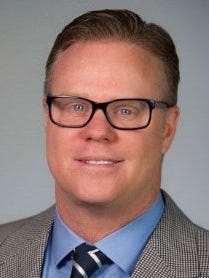

 Diane Ravitch's blog