Archives for category: Accountability

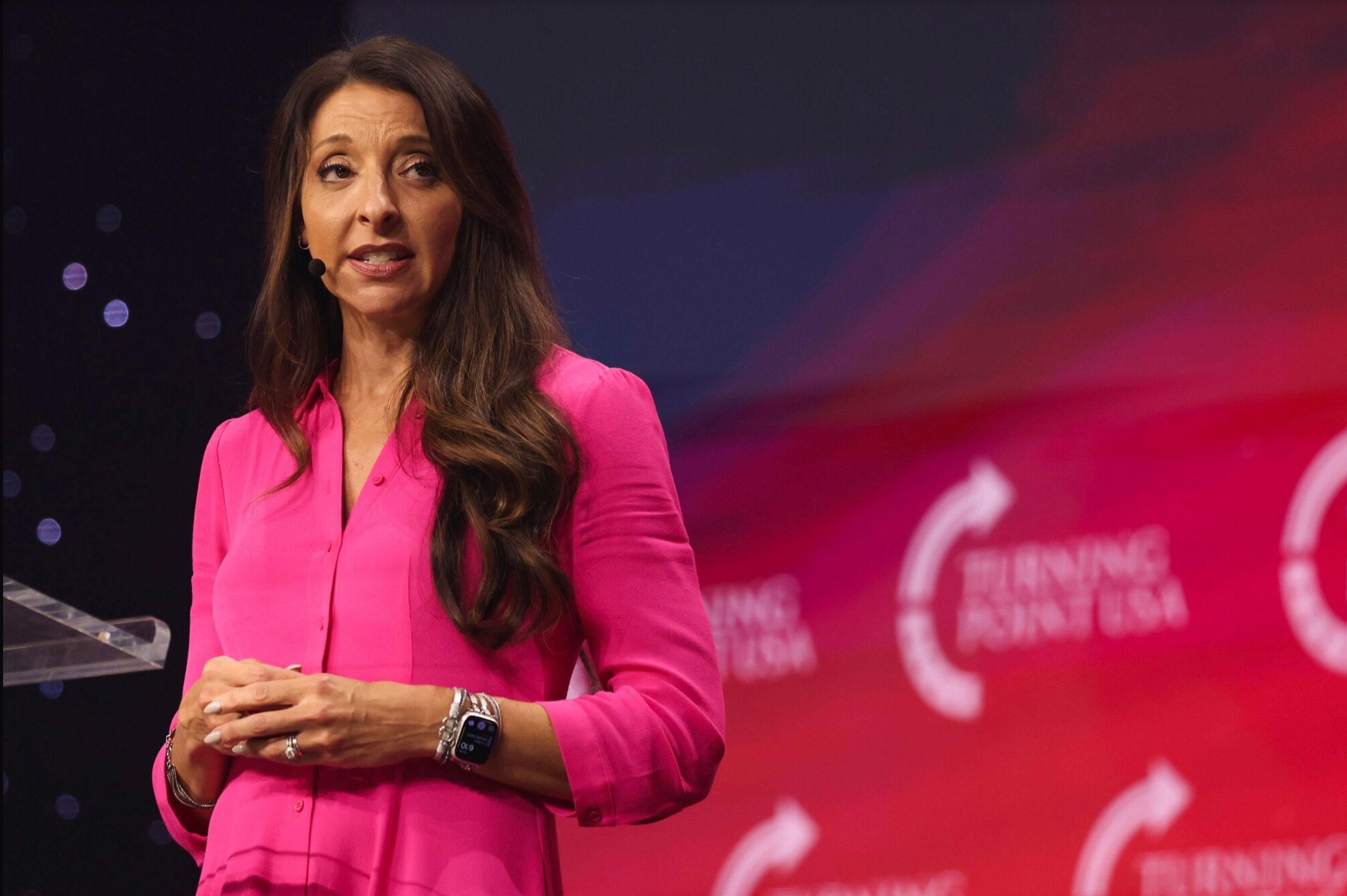
John Thompson, historian and retired teacher in Oklahoma, wrote this thoughtful review of my memoirs, An Education: How I Changed My Mind About Schools and Almost Everything Else.

He writes:

Diane Ravitch’s An Education: How I Changed My Mind About Schools and Almost Everything Else is dedicated to her wife Mary; her sons, Joe, Michael, and Steven; her grandsons Nico, Aidan, Elijah, and Asher; and her ex-husband Richard. An Education intertwines deeply emotional personal and family experiences with the history of how she became such a transformative education leader. Although Diane denies it, I believe she’s the most influential education advocate of the last century.

I’ve been reading Diane Ravitch’s work for decades, but An Education is my favorite book. And my favorite passage started with Diane’s citation of Robert Hutchins who said, “We have to learn to live with those whose opinions differ from our own. After all, they may turn out to be right.”

Then she wrote about Hutchins statement, “for three decades I didn’t realize that it was intended for me.”

Being from Oklahoma, I was captured by the first part of her book, about growing up in Texas. I especially loved her story about meeting Roy Rogers at the Rodeo when she was 9 years old. After Rogers slapped her hand, Diane said, “I determined on the spot that I would never wash that hand again!”

Diane was a tomboy who loved horses and dogs. But she experienced sexism and trauma. She said she “did not have an idyllic adolescence. No one ever does.”  But her teenage years were “destroyed by my father abusing me.” 

During the middle of her book, she recalled her complicated marriage to Richard Ravitch and, then, her wonderful wife, Mary. Mary worked with the progressive educator Deborah Meier and opened a progressive small school in New York City. 

I was especially impressed by Diane’s communication with Al Shanker. He sought to allow teachers to start schools within schools to turnaround kids “in the back of the classroom with their heads on their desks.” Back in the late 1980s, it seemed like he might be able to bring diverse factions together. But, by 1994, charters had been high-jacked by corporate reformers and their winners and losers ideology.

In the middle of An Education. Diane revealed in so much detail the inside stories of her years as a conservative.  Back then, when I was an academic historian, I learned the most about Diane when reading her 1983 book, “The Troubled Crusade: American Education, 1945 – 1980.” Although I couldn’t yet read her work through the eyes of a teacher, I was exceptionally taken by her calls for teaching background knowledge so students could develop reading comprehension skills so they could “read to learn,” and her placing education pedagogies in a broad historical context.

Diane recalls her support for meritocratic, standardized testing, and color-blind policies, when she questioned bilingual education, and even the benefit of the Equal Rights Amendment. This was the time when she made friends with Bill Bennett, President Reagan’s Secretary of Education, and Chester Finn, and Tennessee Governor Lamar Alexander. I knew she had ties to Daniel Patrick Moynihan, but I too thought that progressives’ criticism of him was too politically correct. And, until I read An Education, I knew little about the two sides of James Coleman’s research, whose earlier research had seemed persuasive to me.

Neither would I have thought that Chester Finn was like a “sibling” to Diane.

When explaining her then-conservative beliefs, I sometimes felt that Diane was too hard on herself. For instance, she was far, far from alone in failing to understand the wisdom of Gov. Ann Richards, who said, “If there ever is school choice in Texas, the hard-right Christians will get the money to indoctrinate children.”

Moreover, as An Education schooled me on the propaganda behind the so-called “Texas Miracle” it did more than foreshadow the “New York City Miracle,” the “Harlem Miracle,” and the “Mississippi Miracle.”  It brought me back to the decades-long Oklahoma reality when our curriculum and policies were based on Texas’ accountability systems.  During most of my career, our policies were informed by one Texas trick after another to jack up accountability metrics.

Diane served as member of the National Assessment Governing Board from 1997 to 2004, and she would dig deeply into the numbers and the methodologies behind NAEP. But, as she explained, few journalists read the fine print of the research and they wrote “breathlessly” about supposedly dismal results in traditional public schools. They certainly didn’t report properly about the way that students’ outcomes were linked to family income.

When serving in the Education Department, Diane took a lead in establishing national standards for every school subject. Drawing upon excellent historians, multicultural History standards were set. She hoped standards like those would remain voluntary and “unify their respective fields and establish a common ground for a curriculum without telling teachers how to teach.” 

But the conservative Lynne Cheney “published a scathing denunciation of them.” Cheney said the History standards focused too much on people like Joe McCarthy and the Ku Klux Klan, and not enough on Ulysses S. Grant, and Robert E. Lee. This launched the modern wars over curriculum that have become especially destructive under President Trump. 

Even so, in 2002, Diane hoped that Mayor Mike Bloomberg and Joel Klein (who knew nothing about education) would succeed in improving New York City Schools. Klein reorganized schools from top to bottom, with multiple schools per building drawing on funding by the Gates Foundation. (By the way, I saw the chaos Klein created when visiting dozens of hurriedly opened school, especially in Bedford–Stuyvesant. Usually, leaders of the new schools didn’t even know how many new schools were being opened in their building.)

And, even worse, Jack Welch CEO of General Electric pushed 20-70-10 “stack ranking,” meaning 70% of teachers would be in the middle in terms of effectiveness, and 10% should be “removed,” even if it took the use of invalid and unreliable metrics to evaluate all teachers.

Especially after Diane engaged in a seven-year debate with Deborah Meier, which further “broadened her perspectives,” she became an invaluable leader of the grass-roots opposition to corporate school reforms. She objected to top-down mandates on teaching reading. Diane was among the first to explicitly link in a detailed manner the reforms to the wider privatization movement. And she nailed it when identifying them as the “Billionaires Boys Club.”

Diane analyzed the public relations campaigns which sold “reforms” as the “New York City Miracle.” Drawing upon her insights from serving on the National Assessment Governing Board, she clearly explained why NYC schools flipped back and forth between A and F grades.  Then, she linked President Obama’s flawed $5 billion RTTT experiment with the problems with Common Core curriculum and tests that were years above students’ reading levels.

Diane then quotes John Maynard Keynes who said, “When the facts change, I change my mind. What do you do, sir?”

Today, Diane changes minds by clearly explaining the interconnections between Free Market ideology, and profits, and the mindsets of elites that push privatization. She also reports daily on the interconnected attacks on schools throughout the nation. And now she’s sharing the same wisdom when spreading the word about Trumpism and today’s attacks on democracy.

I always read Diane’s daily blog posts. And I so very much appreciate An Education, even if it briefly pulled me away from reading everything in the Diane Ravitch Blog.

Steve Schmidt is a veteran political strategist who worked for Republicans, most recently for John McCain in 2008. When Trump was elected, Schmidt was a co-founder of the anti-Trump Lincoln Project. In 2020, he registered as a Democrat. He currently writes a blog at Substack.

This one is brilliant. Pete Hegseth is the embodiment of the moral and spiritual and intellectual rot at the core of the Republican Party today.

Schmidt writes:

There is no “Secretary of War” or “War Department” in the United States of America under US law.

Each time a news organization uses Pete Hegseth’s concocted title, and submits to his “War Department” fantasy, it is an act of corruption.

It is a direct and specific choice that immolates journalistic ethics by embracing fantasy at the demand of power.

Journalism confronts power.

Journalism doesn’t obey it, heed it, submit to it, appease it, or accept the premise that make-believe is real if the leader believes it so, regardless of reality.

This was posted by a man in the chain of command for the release of nuclear weapons after the commission of a war crime on his orders, which was followed by evasions, deflections of responsibility, and an attempt to stab a US Navy admiral in the back:

[Diane’s note: This is juvenile and not funny.]

When General of the Army George Marshall, Chief of Staff of the US Army Secretary of State and Defense died, President Harry Truman said the following in remembrance of his titanic life. He made an unfortunate reference to the traitorous Robert E. Lee, who was exceeded in every way by Ulysses Grant, a man who bested him, yet was smeared into oblivion over 100 years time by the the same type of white nationalists and Christian Taliban who slither around Mar-a-Lago. That is, until one day, the truth escaped its dungeon and a foremost savior of the Union was seen clearly again.

[Truman said:]

General Marshall was an honorable man, a truthful man, a man of ability.

Honor has no modifying adjectives — a man has it, or he hasn’t. General Marshall had it.

Truth has no qualifying words to be attached to it. A man either tells the truth, or he doesn’t. General Marshall was the exemplification of the man of truth.

Ability can be qualified. Some of us have little of it, some may have moderate ability, and some men have it to the extreme.

General Marshall was a man of the greatest ability.

He was the greatest general since Robert E. Lee.

He was the greatest administrator since Thomas Jefferson.

He was the man of honor, the man of truth, the man of greatest ability.

He was the greatest of the great in our time.

I sincerely hope that when it comes my time to cross the great river that General Marshall will place me on his staff, so that I may try to do for him what he did for me.

*******************

Perhaps one reason that Pete Hegseth fetishizes the “War Department” is that, when it existed, it commanded a segregated force. The Defense Department has always commanded a desegregated force.

Before the US Army was desegregated a young Army Lieutenant named Jackie Robinson faced trumped up charges at a kangaroo court martial.
Here is Jackie Robinson’s legacy perfectly preserved for all time in the magnificent eulogy he received from Reverend Jesse Jackson, to whom I hope we can all send good wishes and prayers this holiday season, as he struggles through the ravages of the burdens handed him with dignity and grace: 

[Jackie Robinson’s eulogy by Reverend Jesse Jackson.]

Powerful men have a long tradition of sending powerless young men to die in unworthy causes in far away lands.

There should be an extremely low tolerance for such men in 2025 America, but they are not only tolerated, but indulged.  

The hypocrisy of the US Congress on the matter of Pete “Kill them all!” Hegseth is bottomless and dangerous. Their faithlessness to the American soldier, sailor, airmen and marine is obscene.

The man who jumped up on a table screaming, “Kill all Muslims!” was exactly who the Congress was warned about. Yet, the warnings were unheeded because the Congress cared more about pleasing Trump than the institutions of the US Army, Navy, and Marine Corps that predate the independence of the United States. They cared more about sating a stirred-up Fox News mob than a 19-year-old private.

Shameful doesn’t begin to describe it.

It is a dereliction of duty, and the most profound type of moral betrayal.

The 119th MAGA Congress is an abomination, led by a religious nutter and weakling who is neither bright, decent, funny, nor wise.

In other words, he is a perfect MAGA puppet who thinks he is a ventriloquist. In truth, the hand inserted into his most sacred space, the one he hides his bespectacled head within, is smeared with orange hand paint.

Faithless, treacherous and disloyal are the Hegseth ethos. They are a perfect mirror of the only reflection of equal rottenness in America: the crazed MAGA Congress, filled from bottom to top with corrupt loons, belligerent liars, sexual deviants, conspiracists, fraudsters, women beaters, and insider traders, who worship Trump together.

Pete Hegseth is the leader of a military that is unready and unprepared to fight a necessary war. He is a performance artist, a late-stage mid-tier Fox News star who is a herald of disaster to a population filled with indifference. It is about to find out the hard way how much damage a small group of evil men and women can do to a nation.

ProPublica posted a bombshell story about Trump’s history of mortgages. It is a must-read.

In a late-night tweet that probably was supposed to be a private text message, Trump urged Attorney General Pam Bondi to pursue criminal charges against his political enemies–James Comey, Letitia James, and Adam Schiff–for various alleged crimes.

New York State Attorney General James was accused of mortgage fraud, of getting a mortgage on a home used as an investment property while claiming it would be her secondary residence, in order to lower the cost of borrowing. Trump wants Senator Schiff and Congressman Eric Swalwell prosecuted on the same charge of mortgage fraud; charges have not yet been brought against them.

Letitia James denies the charges. A grand jury indicted her but the case was tossed out by a judge because of errors made by Trump’s inexperienced, hand-picked prosecutor, Lindsey Halligan. Halligan was an insurance lawyer who had never prosecuted a case before. Trump had previously engaged her to review the holdings of the Smithsonian and identify exhibits that disparaged America or promoted DEI (diversity, equity, and inclusion).

Attorney General Bondi plans to reindict James.

Now, ProPublica carefully documents, Trump did exactly the same mortgage gambit that he calls criminal.

He bought Mar-a-Lago in 1985. In 1993, he purchased two neighboring homes. He took out a mortgage on both houses and declared at the time that each house would be his primary residence.

But he never lived in either house. They were advertised for rent or leasing, by the week or by the month.

“Given Trump’s position on situations like this, he’s going to either need to fire himself or refer himself to the Department of Justice,” said Kathleen Engel, a Suffolk University law professor and leading expert on mortgage finance. “Trump has deemed that this type of misrepresentation is sufficient to preclude someone from serving the country.”

Mortgages for a person’s main home tend to receive more favorable terms, like lower interest rates, than mortgages for a second home or an investment rental property. Legal experts said that having more than one primary-residence mortgage can sometimes be legitimate, like when someone has to move for a new job, and other times can be caused by clerical error. Determining ill intent on the part of the borrower is key to proving fraud, and the experts said lenders have significant discretion in what loans they offer clients. (In this case, Trump used the same lender to buy the two Florida homes.) 

But in recent months, the Trump administration has asserted that merely having two primary-residence mortgages is evidence of criminality. 

Bill Pulte, the Federal Housing Finance Agency director who has led the charge, said earlier this year: “If somebody is claiming two primary residences, that is not appropriate, and we will refer it for criminal investigation.”

Trump hung up on a ProPublica reporter after being asked whether his Florida mortgages were similar to those of others he had accused of fraud.

In response to questions, a White House spokesperson told ProPublica: “President Trump’s two mortgages you are referencing are from the same lender. There was no defraudation. It is illogical to believe that the same lender would agree to defraud itself.”

The spokesperson added, “this is yet another desperate attempt by the Left wing media to disparage President Trump with false allegations,” and said, “President Trump has never, or will ever, break the law…”

Each of the mortgage documents signed by Trump contain the standard occupancy requirement — that he must make the property his principal residence within 60 days and live there for at least a year, unless the lender agreed otherwise or there were extenuating circumstances.

But ProPublica could not find evidence Trump ever lived in either of the properties. Legal documents and federal election records from the period give his address as Trump Tower in Manhattan. (Trump would officially change his permanent residence to Florida only decades later, in 2019.) A Vanity Fair profile published in March 1994 describes Trump spending time in Manhattan and at Mar-a-Lago itself.

Trump is no longer at risk for mortgage fraud because the statute of limitations has rendered the issue moot.

Democrats suspect that the claims about mortgage fraud were based on confidential information acquired by Bill Pulte, who was appointed by Trump to lead the Federal Housing Finance Agency. Pulte denies it. Pulte, a wealthy private equity investor, contributed generously to Trump’s campaign.

ProPublica points out that Trump tried to fire Federal Reserve Board Governor Lisa Cook on a charge of mortgage fraud, so he could appoint his own choice and gain control of the Board. Cook denied the charges and sued in federal court, where the matter is still pending.

In September, ProPublica reported that three of Trump’s Cabinet members have called multiple homes their primary residences in mortgage agreements. Bloomberg also reported that Secretary of the Treasury Scott Bessent did something similar. (The Cabinet members have all denied wrongdoing.)

Pulte, the Federal Housing Finance Agency head, has denied his investigations are politically motivated. “If it’s a Republican who’s committing mortgage fraud, we’re going to look at it,” he has said. “If it’s a Democrat, we’re going to look at it.”

Thus far, Pulte has not made any publicly known criminal referrals against Republicans. He did not respond to questions from ProPublica about Trump’s Florida mortgages.

After reading this article, I wondered about Trump’s financing of Mar-a-Lago. It cost $7-10 million. He paid $300,000. He got a mortgage from Chase Manhattan for $8.5 million. At the time, his residence was New York City.

Did he claim Mar-a-Lago as his primary residence?

I was present in the very beginnings of the charter school movement. I advocated on their behalf. I and many others said that charter schools would be better than public schools because they would be more successful (because they would be free of bureaucracy), they would be more accountable (because their charter would be revoked if they weren’t successful), they would “save” the neediest students, and they would save money (because they wouldn’t have all that administrative bloat).

That was the mid-1980s. Now, more than 35 years later, we know that none of those promises were kept. The charter lobby has fought to avoid accountability; charters pay their administrators more than public schools; charters demand the same funding as public schools; the most successful charters avoid the neediest students; and–aside from charters that choose their students with care–charters are not more successful than public schools, and many are far worse. Charters open and close like day lilies.

This week, the National Center of Charter School Accountability, a project of NPE, published Charter School Reckoning: Part II Disillusionment, written by Carol Burris. This is the second part in a three-part comprehensive report on charter schools entitled Charter School Reckoning: Decline, Dissolution, and Cost.

Its central argument is that a once-promising idea—charter schools as laboratories of innovation—has been steadily weakened by state laws that prioritize rapid expansion and less regulation over school quality and necessary oversight. Those policy and legislative shifts have produced predictable results: fraud, mismanagement, profiteering, abrupt closures, and significant charter churn. The report connects the above instances with the weaknesses in state charter laws and regulations that enable both bad practices and criminal activity. 

As part of the investigation, the NPE team scanned news reports and government investigative audits published between September 2023 and September 2025 and identified $858,000,000 in tax dollars lost due to theft, fraud, and/or gross mismanagement.

The report contrasts the original aspirations of the charter movement with today’s reality, shaped in large part by the intense lobbying of powerful corporate charter chains and trade organizations. It also examines areas that have received far too little attention, including the role of authorizers and the structure and accountability of charter-school governing boards.

It concludes with ten recommendations that, taken together, would bring democratic governance to the schools, open schools based on need and community input, and restore the founding vision of charter schools as nimble, community-driven, teacher-led laboratories grounded in equity and public purpose.

This new report can be found here.

Part I of Charter Reckoning: Decline can be found here.


When Trump allowed his buddy Elon Musk to run a so-called Department of Governmental Efficiency, Musk sent his mentees into every department with a license to terrorize civil servants and destroy their work. Agencies were literally ransacked, employees with deep experience were peremptorily fired by young men in their late teens and early 20s. Foreign aid programs were shuttered, and their employees given orders to return home.

The only certain result of the DOGE incursion was that the kids vacuumed up the personal data of every person, purpose unknown.

One casualty of DOGE in those early days was the Institute of Peace. The Institute was established by Congress and signed into law by President Reagan in 1984. Its goal was to train peacemakers and be the equivalent of military academies. It had a bipartisan board. It trained thousands of professionals in conflict resolution.

In February 2025, Trump signed an executive order to begin dissolving the IP. He fired most of its Board of Directors. The brazen DOGE pests forced their way into the building and took it over. The IP went to court to fight for survival.

The issue is still in court but Trump realized he had a use for the attractive building that previously housed the IP. He invited representatives of Rwanda and the Congo to come to Washington to accept a peace agreement for their decades-long war. This was intended to add luster to Trump’s ongoing campaign for a Nobel Peace Prize. President Obama got one, and that really bothers Trump, who is obsessively jealous of both Obama and Biden.

Days before the big meeting, workmen attached Trump’s name to two sides of the building. It is now officially the Donald J. Trump Institute of Peace. The words “Institute of Peace” are chiselled into the stone. The Trump name was attached in large silver letters. When he’s gone, they can easily be removed.

Foreign leaders now understand well that the key to Trump’s heart is his ego. So they compete to give him a gold crown, a solid bar of gold, and whatever extravagant symbols of royalty they can dream up.

FIFA, the governing body of world soccer, awarded its first gold “peace prize” to Trump to compensate for his loss of the Nobel peace prize. Trump said, “This is truly one of the great honors of my life.” The event was held at the Kennedy Center for the Performing Arts, where Trump fired the entire board, packed the board with his lackeys, and named himself president of the board. He has been thinking of naming the concert hall of the Kennedy Center for Melania. Don’t be surprised if sometime in the next four years, the facility is renamed the Trump Center for the Performing Arts.

And why shouldn’t the Washington Monument be retitled the Trump Monument?

Nothing is too small to be overlooked. Until now, visitors to national parks got free entry on Martin Luther King Jr. Day and Juneteenth, both of which are national holidays. However, the Trump administration has removed those two days. The only free day will be the birthday of Donald J. Trump. Will it soon be declared a national holiday?

Republicans have discussed placing his name and face on a coin–nickel, dime, or quarter–but they better act quickly before the 2026 midterm elections.

Governor Gavin Newsom was quick to respond:

Shortly after Trump won the first FIFA Peace Prize (FIFA is the world soccer federation), retail giant Kohl’s bestowed its first Kohl’s Peace Prize on Governor Gavin Newsom! Governor Newsom said he was honored.

https://www.sun-sentinel.com/2025/12/04/florida-education-commissioner-booed-at-tampa-school-board-conference/

Florida Education Commissioner Anastasios Kamoutsas told school board members and superintendents from around the state on Thursday to get over their complaints about Schools of Hope seeking to co-locate in underused district buildings.

Then he suggested the state could look at shutting down “failing” school districts.

That’s when the boos started flying.

Kamoutsas’ lunchtime remarks riled attendees of the Florida School Boards Association’s winter conference in Tampa, the latest escalation of tension between the state’s top education official and local district leaders.

Kamoutsas — who had been invited to the conference but not confirmed as a speaker until Thursday — touted the strong student results of New York-based Success Academy, Florida’s latest Schools of Hope-approved charter school operator, and argued that local districts should want the same kind of outcome.

“That proven success is why Florida has committed to expanding the Schools of Hope model,” Kamoutsas said. “Let’s not forget Schools of Hope are subject to the same assessment program and grading system as the traditional public school. But these schools operate under a performance-based agreement with their sponsor, so if they fail to meet standards, they will be closed.”

Then came the boo line: “There’s not a school district in this state that could be shut down for failing to meet performance standards, though maybe we can talk about that with the Legislature this session.”

The crowd — who had previously heard the commissioner say some of them lacked leadership and conviction — erupted in anger, leaving the commissioner to repeatedly ask them to let him finish. A couple of attendees walked out of the Grand Hyatt Tampa Bay ballroom where the meal was taking place.

After about 20 seconds, the group quieted down. Then Kamoutsas doubled down, telling them that he was not asking, but rather expecting them to innovate in any way possible to make the model succeed. Florida’s students don’t deserve failing public schools, he said.

“This is not the moment to protect the way things work,” Kamoutsas said. “This is the moment to put students first. We have a responsibility, a moral obligation to ensure that every child in Florida has access to a world-class education, not someday, not when it’s convenient, not after the funding gets negotiated. Now.”

I was interviewed by Brian Lehrer of WNYC, public radio about my latest book, probably my last. He is a great interviewer. He asks good questions, followed by people who called in to disagree with me.

It’s an excellent interview.

I apologize if I’m browbeating you with stuff about my book, but the book is really good; I worked on it for two years; the mainstream media has ignored it; and I think you will enjoy reading it.

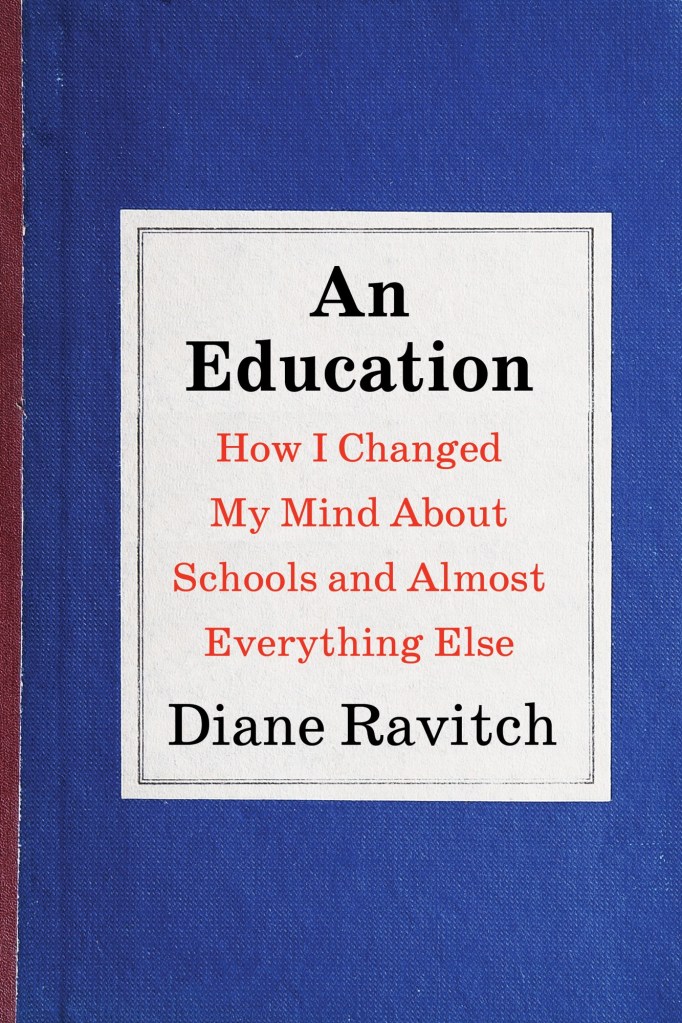
In case you haven’t noticed, the title is:

An Education: How I Changed My Mind About Schools And Almost Everything Else (Columbia University Press). You can buy it from Columbia University Press, your local independent bookstore, or Amazon.

The mainstream media typically ignores charter school scandals, but CBS picked up on this one. Erika Donalds is building a for-profit charter school chain. She is the wife of Byron Donalds, who is running for Governor of Florida with Donald Trump’s blessing.

Byron Donalds has been a staunch supporter of Trump. Donalds is African American. Frankly, I don’t understand how he can be part of a political movement that seeks to eliminate Black history, dismantle studies of race and gender, and disparage any efforts to rectify historic racial injustices. I hope reporters ask him about these questions on the campaign trail.

Peter Greene saw the segment on CBS and posted the video. In his piece, he refers to Erika Donalds as “Florida’s leading school choice grifter.”

CBS reporters wrote:

Kathleen Cetola believed she had found the perfect fit for her 9-year-old grandson Landon when Optima Classical Academy broke ground in 2023 near her home in Fort Myers, Florida. As the primary caregiver for Landon, Cetola was drawn to the smaller class sizes and more traditional curriculum, which she felt would be “less woke” than the public school he was currently attending.

“Regarding gender and race, I want him to be able to make up his own mind,” Cetola told CBS News. “They were selling the fact that they were focused on the education and the classical type of teaching. I thought that was going to be a great opportunity for Landon.”

The Optima school in Fort Myers was founded by Erika Donalds, a leading voice in the school choice movement and the wife of Congressman Byron Donalds, the Republican frontrunner in next year’s Florida governor’s race. It was poised to be Erika Donalds’ fifth classical charter school and part of a flourishing trend.

Photo of Erika Donalds.
Erika Donalds speaks on stage during day one of the Turning Point USA Student Action Summit on Friday, July 11, 2025, in Tampa. Luis Santana / Tampa Bay Times via AP

Classical charter schools offer a curriculum with a Eurocentric focus that stresses traditional values and introduces primary source documents like the U.S. Constitution at an early age. In the last five years, more than 250 classical schools have opened across the country. Many conservative politicians argue these schools are needed to reject what they see as a pervasive woke agenda in American public education.

Donalds has been a face of the classical charter movement, touring the country to tout their value. In an October speech to a group of conservative college women, she spoke about her decision to start her own schools. She said it was born out of her own experience trying to educate her children.

“I knew there were so many families out there that were desperate for this option,” she said.

Yet, after enrolling hundreds of students and hiring teachers, the Fort Myers school failed to open, leaving parents scrambling to find a school for their children.

“I feel cheated,” said Cetola, who was one of a half dozen parents who told CBS News they had signed up their kids to attend. “These kids were cheated, and it’s heartbreaking….”

The confusion the parents faced, according to experts, is not unique within a charter school industry that often operates with less transparency than traditional public schools.

Donalds declined to be interviewed for this story. In a statement, her spokesperson said she is “an accomplished businesswoman with a strong record of starting successful charter schools and providing thousands of students with an excellent education.”

Taxpayer-funded charter schools paid outside firms

Classical schools are one slice of a charter industry that GOP leaders have tapped to remake America’s public education system. Recent moves by both the federal government and local officials in Florida have freed up hundreds of millions of dollars in new funding. In September, the Trump administration announced it was investing half a billion dollars in grant programs that support charter schools.

The announcement came as Florida passed a law — at the urging of hedge fund manager and Republican megadonor Ken Griffin — to allow charter schools to operate inside traditional public school buildings.

CBS News reviewed state education data, financial documents, independent audits and faculty comments at four schools Donalds had helped launch. State data shows when it came to academic performance, one of the schools quickly excelled. But the records also raise questions about how public money was being spent by the schools.

Tax filings reviewed by CBS News show, between 2020 and 2023, the schools spent roughly 30% of the government funding they received — totaling about $35 million — on outside firms with ties to Erika Donalds. A source familiar with these arrangements said they landed the schools a good price on payroll expenses, IT and other back-office services.

In August, Byron Donalds filed an amended House financial disclosure for 2023, reporting that Erika Donalds held a stake in two of those firms each worth between $1 million and $5 million. His most recent disclosure, for 2024, again listed her stakes in those companies.

The amended disclosure was first reported by the Florida Bulldog…

Of course, parents in Fort Meyers who signed up for Donalds’ school were disappointed when it didn’t open as promised.

They had been promised that the school would open in the fall of 2024. Erika Donalds told them that financial challenges and the lingering effects of Hurricane Ian required her to delay the opening. Parents eagerly anticipated the opening in the fall of 2025, but it was again announced that the opening would be delayed, this time to 2026.

Prior to the school in Fort Myers, Donalds helped launch four other classical charter schools operated by Optima across Florida: two in Jacksonville, one in Stuart and one in Naples.https://datawrapper.dwcdn.net/y9D5j/

Baker, the charter school expert at the University of Miami, said the practice reflected in Optima’s tax filings — of non-profit schools paying money to for-profit companies with overlapping stakeholders — occurs across the charter school industry. He said in the absence of meaningful governmental regulation, accountability comes from “how well they do for students.”

On that measure, students at those four Optima schools performed below average, according to Baker, who looked at math and reading test scores.

“Florida’s charter sector is not strong, and Optima schools, at least the four schools that seem to be in that affiliated mix, perform even less well,” Baker said.

The learning curve when it comes to implementing the classical curriculum can be steep, according to Janine Swearingin, who served as Treasure Coast Classical’s first principal from 2019 to 2022 and would later go on to work directly with Donalds at Optima. She praised Donalds and the company’s role in launching the school, which she said consistently earned top marks from the state when it came to academic performance when she was there.

In January 2023, after Swearingin left the school, the board of Treasure Coast Classical Academy commissioned an independent “performance audit” which was intended to draw attention to areas of concern. The resulting report said that while there were “commendable” aspects of the school’s performance, it also raised questions. Class sizes were so large, it said, that they appeared to violate state law and it noted a lack of structure in the classroom, all findings that Optima disputed.

The auditor praised Treasure Coast Classical’s “outstanding” financial health. But, some faculty complained Optima operated more like a “franchising corporation” and was “dedicated to profit sometimes to the detriment of the school itself.”

“It’s quite an undertaking since teachers don’t generally receive an education in teaching a classical curriculum,” said Swearingin, who noted that in a classical curriculum, first graders are studying the American Revolution at a time when their public school counterparts are learning about community helpers and basic geography. “The training is vastly different.”

As part of its response, Optima said it was working with the auditor “to build trust, address remaining concerns, and correct misinformation or misunderstandings.” A month later, the school’s board moved to terminate its contract with Optima. Treasure Coast Classical later sued Optima, alleging numerous instances of breach of its contract with the school. A county judge dismissed the lawsuit ruling because it had been filed in the wrong venue, and Treasure Coast Classical has appealed.

According to meeting minutes of the schools’ boards as well as county officials and school administrators contacted by CBS News, all four schools that had opened have since cut ties with Optima. The schools still offer a classical curriculum, but under different management. A source close to Donalds told CBS News that Optima’s plan all along was to assist with the start-up and then move on, once the schools reached “full stability.”

Donalds’ spokesperson noted that the schools’ academic performance eventually improved. “These schools show how a supportive environment, committed teachers, and high expectations can help children thrive,” she said.

The school in Fort Myers that had planned to open as Optima Academy is no longer associated with Donalds or her company. According to county records obtained by CBS News, Donalds in August sought to transfer ownership of the building to another charter operator. In October, the county school board approved the transfer and the new operator plans to open the school next fall.

“They just dropped the ball and ran,” Cetola said. “How can you do something like this and sell this to parents who really want to stay involved with their children and then just walk away?”

This story has been updated.

Credits

Reporting by Michael Kaplan, Mark Strassman and Emma Nicholson. Production by Michael Kaplan, Emma Nicholson and Alyssa Spady. Photos and videography by Ryan Jackson. Video editing by Greg Hotsenpiller. Graphics, design and development by Taylor Johnston. Editing by Ellen Uchimiya and Matthew Mosk.

When Harry S Truman was President, he had a sign on his desk: “The buck stops here.” It meant that he took responsibility for all decisions and their consequences. With Trump, he accepts “bucks” (money) from many directions, but never takes responsibility when anything goes wrong. His desk plaque should read: “The buck stops somewhere else.”

Jennifer Rubin, the journalist who quit The Washington Post and started a blog called The Contrarian, asserts that Trump bears ultimate responsibility for the vicious attack on two members of the National Guard in DC. They never should have been sent to patrol the city’s streets, a mission for which they were not trained. Now they are patrolling alongside DC police, who are pulled away from their jobs to protect the National Guard.

She writes:

The killing of one national guardsman and severe wounding of another in D.C. was a tragedy and an outrage. The killer, of course, should be punished to the full extent of the law. But to ignore Trump’s egregious decision-making that brought us to this point of reckless political violence is to invite further tragedies and condone grievous incompetence.

No matter how furiously Trump and his minions try to spin the narrative, Biden cannot be blamed for this one. Trump’s crew granted asylum to the suspected killer this April. Most importantly, Trump and MAGA governors who comply with the president’s whims and who send national guardsmen around the country willy-nilly for tasks they are not trained to perform are responsible for their safety. The guardsmen who were attacked should never have been there….

After the shooting, Trump and Hegseth added 500 guardsmen to the D.C. deployment, thereby increasing the risk to them. Trump predictably scapegoated all Afghan refugees.

As the New York Times reported, guardsmen had warned about just such a calamity months ago. “According to internal directives distributed to National Guard troops in Washington, D.C., in August, commanders warned that troops were in a ‘heightened threat environment’ and that ‘nefarious threat actors engaging in grievance based violence, and those inspired by foreign terrorist organizations’ might view the mission ‘as a target of opportunity.’”

In belated recognition that the national guard are sitting ducks, the Trump regime now has D.C. police patrolling with guardsmen. So, who is getting protection?

Surely, Americans would be safer if guardsmen stayed home to perform normal duties and D.C. police were assigned to do their crime-fighting jobs. “Diverting local police to accompany Guard members would … [mean] siphoning them from other tasks in D.C. neighborhoods,” The Washington Post reports.

Trump (again in the name of immigration enforcement), has pulled federal personnel away from critical tasks including anti-terrorism. In September, the Cato Institute, a libertarian think tank, found over 28,000 federal law enforcement officials had been diverted from critical tasks. “This diversion has significantly curtailed the government’s capacity to address criminal activity in the United States,” the report found. The personnel (mis)directed to immigration included 1 in 5 U.S. marshals, 1 in 5 FBI agents, half of all Drug Enforcement Agency agents, and two thirds of the Bureau of Alcohol, Tobacco, Firearms, and Explosives workforce. How many crimes could have been prevented and how many dangerous characters could have been arrested had this horde of federal agents not been dragooned for counterproductive, violent, and (in many instances) illegal invasions of cities?

In November, the New York Times reported on this phenomenon:

Homeland security agents investigating sexual crimes against children, for instance, have been redeployed to the immigrant crackdown for weeks at a time, hampering their pursuit of child predators.

A national security probe into the black market for Iranian oil sold to finance terrorism has been slowed down for months because of the shift to immigration work, allowing tanker ships and money to disappear.

And federal efforts to combat human smuggling and sex trafficking have languished with investigators reassigned to help staff deportation efforts.

The vast majority of those seized during immigration raids are not criminals, let alone violent. Only about 8 percent of those alleged undocumented immigrants seized had a conviction for a violent crime; 60 percent had no criminal record at all.

Trump insists he is responsible for…none of the consequences of his own decisions. But the misuse of national guard, as we found out in D.C. last week, can have disastrous results. Beyond this tragedy, Trump’s actions have killed or put at risk hundreds of thousands more.  The elimination of USAID has resulted in over 600,000 deaths; his $1 trillion cut in Medicare is likely to lead to an avoidable 51,000 deaths per year; and his idiotic cuts in NIH grants will result in untold number of deaths from discontinuing potentially life-saving medical trials.

Forget “buck stopping” in Trump’s regime. It’s an outmoded concept for a president who will not shoulder responsibility for his own directives. (Perhaps he could direct us to the person who is in charge.)

Americans surely know that Trump and his inert lackeys in Congress are responsible for innumerable errors and colossal misdeeds over the last 11 months. If they won’t take blame, then we need people in the executive and legislative branches willing to say the buck stops with them. That, after all, is the essence of democracy—and of adult leadership.

Dr. Edward Johnson is a brilliant systems analyst in Atlanta. He has been a close observer of the Atlanta public schools and their misgovernment as the Board of Education has latched onto the latest reform fad.

He points out that the public school system of the past no longer exists. Some people think that’s a food thing. He does not.

He wrote this observation.

By leading with his “One District …” slogan, and with Atlanta Board of Education meekly following along, APS Superintendent Dr. Johnson contends it is in the best interests of APS to be fragmented, to lack full transparency, to lack efficient and effective accountability, and to disparage the democratic principle that public education should be a public good.


In Georgia, we often hear the terms “school district” and “school system” used interchangeably.


But in the age of charter schools, this linguistic shortcut obscures a deeper truth: the public school system as a public good is no longer a unified system at all.


Before the proliferation of charter schools, an entity like Atlanta Public Schools (APS) governed all public-serving schools within its geographic boundaries.  The terms “APS district” and “APS system” used interchangeably made sense—each described the same coherent, interrelated network of schools sharing the same governance, policy, administration, and purpose.  Today, that coherence does not exist—it has been fragmented.


For example, by choice of Atlanta Board of Education, APS is now a “Charter System,” operating under a performance contract with the state that explicitly excludes independent charter schools.  These schools, though publicly funded, are governed separately and are not subject to APS’s policies, leadership, administration, or community-based governance structures.  They are public in funding, but private in autonomy.


This shift has compressed the expanse of APS as a public school system and as a public good.  APS no longer encompasses all public-serving schools in Atlanta.  And yet, we continue to refer to APS as both a “district” and a “system,” as if nothing has changed.  Well, something has changed.


A system, by definition, implies interrelated parts.  For public school systems, it implies shared accountability, common purpose, and public stewardship.  When schools within a geographic area operate independently—without shared governance or policy—they are not part of the same system.  They may be public-serving, but they are not part of the public school system.


This distinction matters. It matters for transparency, for accountability, and for the democratic principle that public education should be a public good—not a fragmented marketplace of loosely affiliated or wholly independent entities.


Yet, by going along with APS Superintendent Dr. Bryan Johnson’s “One District, with One Goal, for All Students,” board members violate the Oath of Office each of them swore—”In all things pertaining to my said office, I will be governed by the public good and the interests of said [APS] school system.”


By leading with his “One District …” slogan, and with Atlanta Board of Education meekly following along, APS Superintendent Dr. Johnson contends it is in the best interests of APS to be fragmented, to lack full transparency, to lack efficient and effective accountability, and to disparage the democratic principle that public education should be a public good.


Certainly, clearly, it is reasonable to recognize it is not in APS’s best interests that Dr. Bryan Johnson should be its Superintendent.


The Superintendent’s Comprehensive Long Range Facilities Master Plan, given the glossy name APS Forward 2040, Reshaping the Future of Education, will, short-range, compress the expanse of APS even more so, from its current 68 percent being a public school system to about 60 percent.


Then, compounding that long-range, the Superintendent’s Strategic Plan will efficiently and effectively turn APS into a workforce development entity to the exclusion of virtually all possibilities of APS ever becoming a high-quality public school system, where high-quality teaching and learning that readies children for professions and careers from A to Z happens, especially for “Black” children.


Georgia’s legal framework treats each local- and state-authorized charter school as its own “school system.” This semantic sleight of hand allows policymakers to claim that public education is expanding, even as its coherence erodes. But the public deserves clarity. We must stop conflating geographic proximity with systemic unity.


If we are to preserve the integrity of public education, we must reclaim the meaning of “system.” A public school system should be more than a collection of facilities—it should be a community of schools, governed together, accountable together, and committed together to the public good.


Ed Johnson

Advocate for Quality in Public Education

Atlanta GA | (404) 505-8176 | edwjohnson@aol.com