Archives For author

Margaret Sullivan, the last public ombudsman for The New York Times, wrote on her blog that ABC News was wrong to settle with Trump for $15 million for “defaming” him. On television, ABC’s George Stefanopolous said that Trump had been found liable for raping E. Jean Carroll. Trump said that was wrong and malicious because he had been found guilty of “sexual assault,” not rape.

She points out that when she was chief editor of The Buffalo News, the paper had a longstanding policy of fighting every claim of defamation or libel. They did so to discourage future lawsuits and send a message: we will vigorously oppose lawsuits. If you sue, prepare for a long battle.

Trump’s lawyers claimed that Stephanopoulos was wrong to say that Trump was found guilty of rape and that he had defamed Trump. ABC settled before trial and agreed to pay $15 million for the future Trump Presidential Library and $1 million for Trump’s legal fees.

Media experts were stunned. Not only did ABC abandon its First Amendment defense, but it abandoned a viable claim that Stephanopooulos was right to use the language he did.

Judge Lewis Kaplan, who presided over the Carroll defamation case, said:

“The finding Ms. Carroll failed to prove she was ‘raped’ within the meaning of the N.Y. Penal Law does not mean she failed to prove Mr. Trump ‘raped’ her as many people commonly understand the word ‘rape’. Indeed, as the evidence at trial… makes clear, the jury found Mr. Trump in fact did exactly that.”

By settling–and at such a hefty price–ABC has encouraged Trump and other politicians to continue to sue journalists and their employers.

Sullivan believes ABC might well have won if they continued to fight:

ABC News should never have caved. They might well have prevailed if they had hung in there. The legal bar is very high for libeling a public figure, and Trump is the ultimate public figure. Instead, this outcome encourages Trump in his attacks on the press — and he needs no encouragement. 

As one law professor told the Times, what ABC News did was very unusual. News organizations generally don’t settle “because they fear the dangerous pattern of doing so and because they have the full weight of the First Amendment on their side.”

Why did ABC News throw in the towel? It‘s hard to know for sure, but gets easier if you are aware that the news organizations is owned by Disney, a huge corporation with a lot of turf to protect. As the Times reported, the Disney executive who oversees ABC News had dinner with Trump’s top aide, Susan Wiles, just days before the settlement, as “part of a visit by several ABC News executives to Florida to meet with Mr. Trump’s transition team.”

Was this settlement, which includes ABC’s public expressions of regret, a simple case of kissing the ring? It sure looks that way. Trump has sworn to get revenge on his enemies and he values, above all, loyalty and kowtowing. 

But loyalty and kowtowing isn’t the job of the press, which is supposed to represent the public in holding powerful people and institutions accountable.

After his victory, Trump threatened to sue the Des Moines Register for posting a poll before the election that showed Biden beating him in Iowa. He also threatened to sue Bob Woodward, “60 minutes,” and the Pulitzer Prizes. This is the mischief that ABC News unleashed.

Last night Trump’s lawyers sued the Des Moines Register for publishing Ann Seltzer’s poll. The implications are frightening. The media publishes polls frequently during campaigns. They may be right, they may be wrong. If they are wrong, will candidates sue them for “election interference”? How did Trump suffer any damages by publication of that poll? He won Iowa by 13 points.

Win or lose, Trump has a strategy: to strike fear in the hearts of every journalist who dares to write critically about him.

Be sure to read Jeff Tiedrich’s condemnation of ABC’s capitulation. He attributes the deal to Disney’s overriding principle: “Protect the mouse.”
We know that Trump chose RFK Jr. to run the federal public health system as head of the Department of Health and Human Services. we know that Kennedy opposes vaccines. He has said that he would not ban vaccines outright but suggested that he might leave the decision about vaxxing to parents. We also know that senior Republican Mitch McConnell had polio as a child and does not like the idea of making the polio vaccine a matter of personal choice.

But we didn’t know much about what Trump believes or wants when it comes to vaccines.

Politico reports that he wants to keep vaccines, at least for adults. But he is doubtful about vaccine mandates for attending school. Public schools in every state require students to be vaccinated. If these mandates are reversed, we can expect to see a spread of the highly infectious diseases that were nearly eradicated.

Your child or grandchild might get measles or mumps or rubella or tetanus. These are deadly diseases.

This is a Politico report on a Trump press conference today:

Politico: •Vaccines: Trump said he’s a “big believer” in the polio vaccine, but he doesn’t like school mandates of vaccines (most states require vaccination from measles, mumps and rubella to attend public schools).

Here is the later, longer version.

If Kennedy, with Trump’s blessings, wipes out vaccination mandates for school attendance, deadly diseases will surge and children will die.

A study of the crime rates of immigrants–both the documented and the undocumented–was released in September 2024. It found that undocumented immigrants had the lowest crime rates, compared to native-born citizens and documented immigrants.

This is directly counter to the current claim by Republicans that undocumented immigrants are responsible for vicious crimes.

The study was funded by the National Institute of Justice, which is part of the U.S. Department of Justice.

September 12, 2024

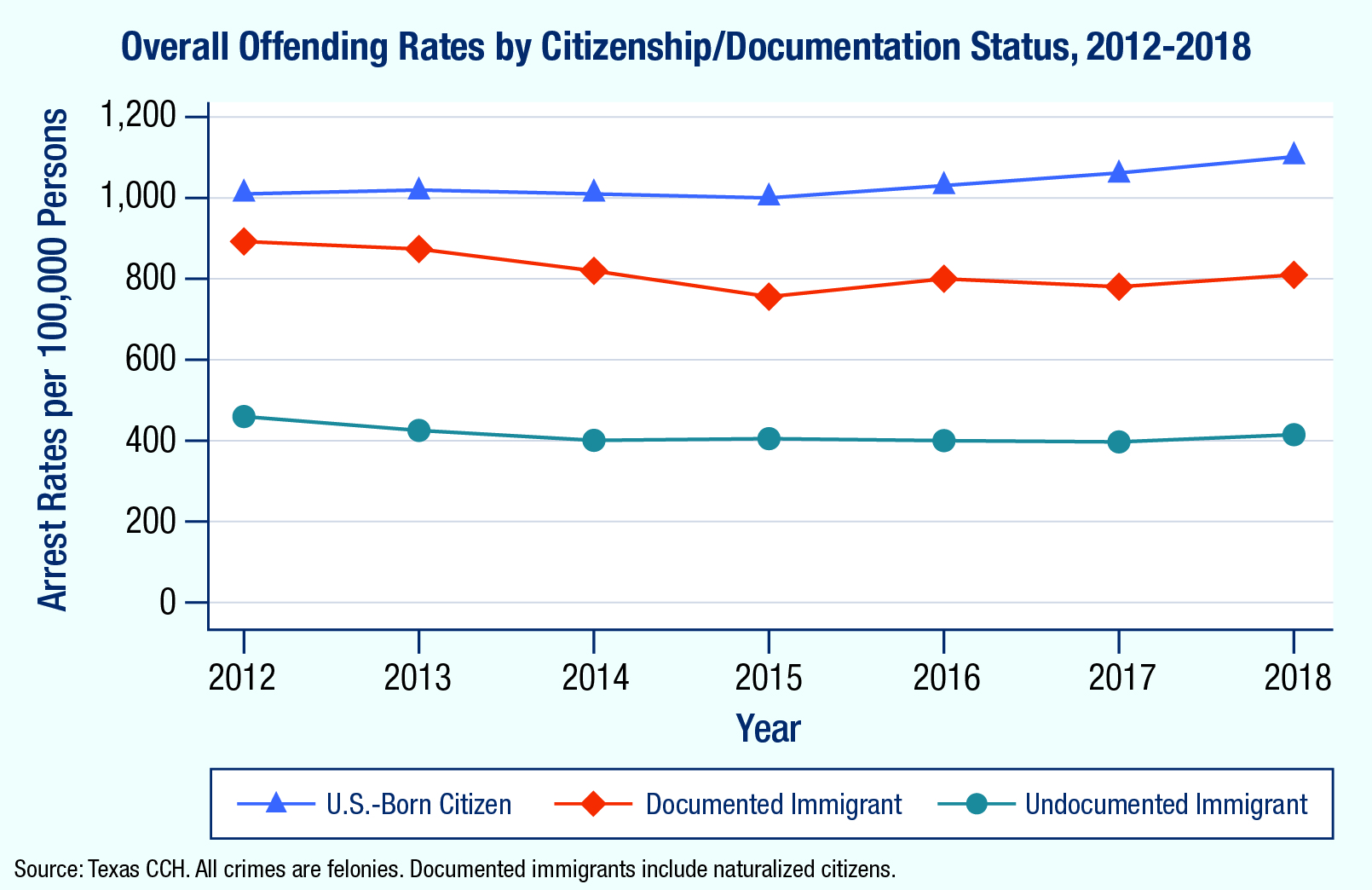
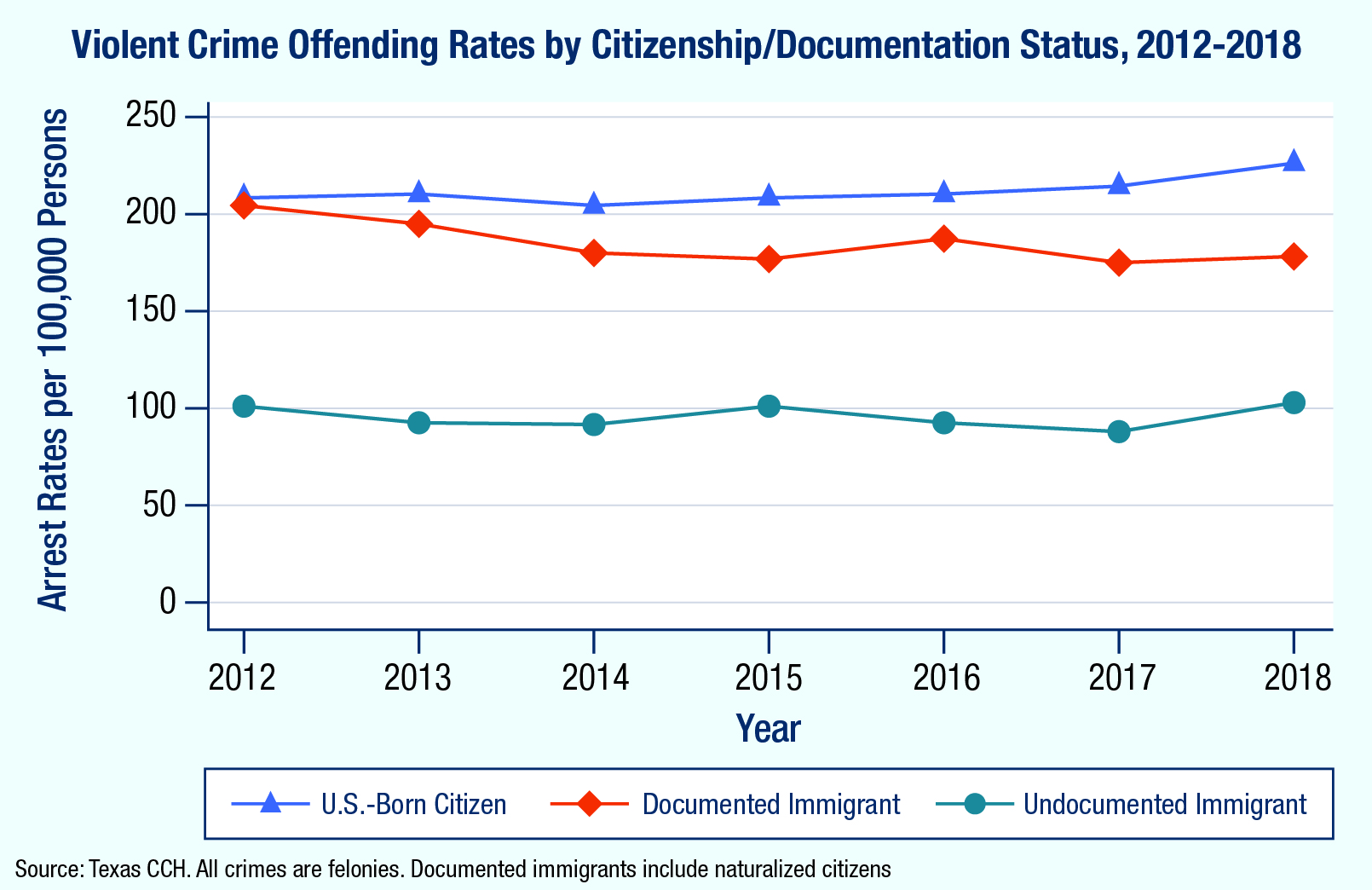
An NIJ-funded study examining data from the Texas Department of Public Safety estimated the rate at which undocumented immigrants are arrested for committing crimes. The study found that undocumented immigrants are arrested at less than half the rate of native-born U.S. citizens for violent and drug crimes and a quarter the rate of native-born citizens for property crimes.[1]

The question of how often undocumented immigrants commit crimes is not easy to answer. Most previous research on crime commission by immigrant populations has been unable to differentiate undocumented immigrants from documented immigrants. As a result, most studies treat all immigrants as a uniform group, regardless of whether they are in the country legally.

The estimates in this study come from Texas criminal records that include the immigration status of everyone arrested in the state from 2012 to 2018. These data enabled researchers to separate arrests for crimes committed by undocumented immigrants from those committed by documented immigrants and native-born U.S. citizens. (For more detail on the study’s data sources and methodology, see the sidebar “What Makes the Texas Data Unique?”)

The researchers tracked these three groups’ arrest rates across seven years (2012-2018) and examined specific types of crime, including homicides and other violent crimes.[2] They used these arrest rates as proxies for the rates of crime commission for the three groups. It should be noted that arrest is a commonly used, but imperfect measure of crime that in part reflects law enforcement activity rather than actual offending rates.

During this time, undocumented immigrants had the lowest offending rates overall for both total felony crime (see exhibit 1) and violent felony crime (see exhibit 2) compared to other groups. U.S.-born citizens had the highest offending rates overall for most crime types, with documented immigrants generally falling between the other two groups.

Exhibit 1.Total felony crime offending rates in Texas for U.S.-born citizens, documented immigrants, and undocumented immigrants

Total felony crime offending rates in Texas for U.S.-born citizens, documented immigrants, and undocumented immigrants

(View larger image.)

Exhibit 2.Violent felony crime offending rates in Texas for U.S.-born citizens, documented immigrants, and undocumented immigrants

Exhibit 2. Violent felony crime offending rates in Texas for U.S.-born citizens, documented immigrants, and undocumented immigrants

(View larger image.)

Researchers also looked specifically at homicide arrest trends. These rates tend to fluctuate more than the overall violent crime arrest rates because murders are relatively rare compared to other crimes. In addition, a large share of homicides go unsolved. Still, undocumented immigrants had the lowest homicide arrest rates throughout the entire study period, averaging less than half the rate at which U.S.-born citizens were arrested for homicide.[3] (The homicide rate for documented immigrants fluctuated. Sometimes it was higher than the rate for U.S.-born citizens and sometimes it was lower.)

Every other violent and property crime type the researchers examined followed the same general pattern. The offending rates of undocumented immigrants were consistently lower than both U.S.-born citizens and documented immigrants for assault, sexual assault, robbery, burglary, theft, and arson.

For drug offenses, too, undocumented immigrants were less than half as likely to be arrested as native-born U.S. citizens.[4] Moreover, the drug crime arrest rate for the undocumented population held steady throughout the seven years of data, while the rate for native-born citizens increased almost 30% during that time. As a result, undocumented immigrants had a smaller share of arrests for drug crimes in 2018 than they had in 2012.

Finally, the researchers conducted statistical tests to determine whether the share of crimes committed by undocumented immigrants had increased for any offense types between 2012 and 2018. They concluded, “There is no evidence that the prevalence of undocumented immigrant crime has grown for any category.”[5] As with drug offenses, evidence suggests the share of property and traffic crimes committed by undocumented immigrants decreased or remained close to constant throughout the period.

About This Article

The work described in this article was supported by NIJ award number 2019-R2-CX-0058, awarded to the University of Wisconsin.

This article is based on the grantee report, “Unauthorized Immigration, Crime, and Recidivism: Evidence From Texas” (pdf, 78 pages), by Michael T. Light.

Jan Resseger lives in Ohio. Before retiring, Jan staffed advocacy and programming to support public education justice in the national setting of the United Church of Christ—working to improve the public schools that serve 50 million of our children; reduce standardized testing; ensure attention to vast opportunity gaps; advocate for schools that welcome all children; and speak for the public role of public education.  Jan chaired the National Council of Churches Committee on Public Education for a dozen of those years.

Jan recently wrote this post for the National Center on Education Policy at the University of Colorado.

She writes:

I suppose many of us think about the classes we wish we had signed up for in college.  Right now, as somebody who believes public schools are among our nation’s most important and most threatened public institutions, I wish that in addition to enrolling in The Philosophy of Education, I had also taken a class in political philosophy—or at least Political Science 101. How have groups like the Heritage Foundation, the Lynde and Harry Bradley Foundation, Betsy DeVos’s American Federation of Children and their proxies like Moms for Liberty managed to discredit public schooling and at the same time spawn an explosion of vouchers, which, according to the editors of last year’s excellent analysis, The School Voucher Illusion: Exposing the Pretense of Equity, are failing to serve our society’s poorest children even as they are destroying the institution of public schooling?

Here are that book’s conclusions: “As currently structured, voucher policies in the United States are unlikely to help the students they claim to support. Instead, these policies have often served as a facade for the far less popular reality of funding relatively advantaged (and largely White) families, many of whom already attended—or would attend—private schools without subsidies. Although vouchers are presented as helping parents choose schools, often the arrangements permit the private schools to do the choosing… Advocacy that began with a focus on equity must not become a justification for increasing inequity. Today’s voucher policies have, by design, created growing financial commitments of taxpayer money to serve a constituency of the relatively advantaged that is redefining their subsidies as rights—often in jurisdictions where neighborhood public schools do not have the resources they need.” (The School Voucher Illusion: Exposing the Pretense of Equity, p. 290)

As I watch the wave of school privatization washing across conservative states and read about universal school choice as one of the priorities of presidential candidate Donald Trump as well as a goal of the Heritage Foundation’s Project 2025, I find myself wishing I had a better grasp of how our society has gone off the rails.  I wonder what I would have learned about the difference between democracy and extreme individualism in that political theory class I missed, and I find myself trying to catch up by reading—for example—on the difference between a society defined by individualist consumerism and a society defined by citizenship.

Back in 1984, the late political theorist Benjamin Barber published Strong Democracy, a book defining the principles our federal and state constitutions and laws are presumed to protect:  “Strong democracy … rests on the idea of a self-governing community of citizens who are united less by homogeneous interests than by civic education and who are made capable of common purpose and mutual action by virtue of their civic attitudes and participatory institutions rather than their altruism or their good nature. Strong democracy is consonant with—indeed depends upon—the politics of conflict, the sociology of pluralism, and the separation of private and public realms of action… The theory of strong democracy… envisions… politics as… the way that human beings with variable but malleable natures and with competing but overlapping interests can contrive to live together communally not only to their mutual advantage but also to the advantage of their mutuality…  It seeks to create a public language that will help reformulate private interests in terms susceptible to public accommodation… and it aims at understanding individuals not as abstract persons but as citizens, so that commonality and equality rather than separateness are the defining traits of human society.” (Strong Democracy, pp 117-119)

In that same book, Barber describes the consumer as a representative of extreme individualism—the opposite of the public citizen: “The modern consumer is the… last in a long train of models that depict man as a greedy, self-interested, acquisitive survivor who is capable nonetheless of the most self-denying deferrals of gratification for the sake of ultimate material satisfaction. The consumer is a creature of great reason devoted to small ends… He uses the gift of choice to multiply his options in and to transform the material conditions of the world, but never to transform himself or to create a world of mutuality with his fellow humans.” (Strong Democracy, p. 22)

Two decades later, Barber published Consumed, in which he explores in far more detail the danger of a society defined by consumerism rather than strong democracy. As his case study he contrasts parent-consumers who prioritize personal choice to shape their children’s education and parent-citizens: “Through vouchers we are able as individuals, through private choosing, to shape institutions and policies that are useful to our own interests but corrupting to the public goods that give private choosing its meaning.  I want a school system where my kid gets the very best; you want a school system where your kid is not slowed down by those less gifted or less adequately prepared; she wants a school system where children whose ‘disadvantaged backgrounds’ (often kids of color) won’t stand in the way of her daughter’s learning; he (a person of color) wants a school system where he has the maximum choice to move his kid out of ‘failing schools’ and into successful ones. What do we get?  The incomplete satisfaction of those private wants through a fragmented system in which individuals secede from the public realm, undermining the public system to which we can subscribe in common. Of course no one really wants a country defined by deep educational injustice and the surrender of a public and civic pedagogy whose absence will ultimately impact even our own private choices… Yet aggregating our private choices as educational consumers in fact yields an inegalitarian and highly segmented society in which the least advantaged are further disadvantaged as the wealthy retreat ever further from the public sector.  As citizens, we would never consciously select such an outcome, but in practice what is good for ‘me,’ the educational consumer, turns out to be a disaster for ‘us’ as citizens and civic educators—and thus for me the denizen of an American commons (or what’s left of it).” (Consumed, p. 132)

Barber concludes: “It is the peculiar toxicity of privatization ideology that it rationalizes corrosive private choosing as a surrogate for the public good.  It enthuses about consumers as the new citizens who can do more with their dollars… than they ever did with their votes. It associates the privileged market sector with liberty as private choice while it condemns democratic government as coercive.” (Consumed, p. 143)  “The consumer’s republic is quite simply an oxymoron… Public liberty demands public institutions that permit citizens to address the public consequences of private market choices… Asking what “I want’ and asking what ‘we as a community to which I belong need’ are two different questions, though neither is altruistic and both involve ‘my’ interests: the first is ideally answered by the market; the second must be answered by democratic politics.” “Citizens cannot be understood as mere consumers because individual desire is not the same thing as common ground and public goods are always something more than an aggregation of private wants…. (W)hat is public cannot be determined by consulting or aggregating private desires.” (Consumed, p. 126)

So that is today’s lesson from the political philosophy class I was never able to fit into my schedule in college: “Freedom is not just about standing alone and saying no. As a usable ideal, it turns out to be a public rather than a private notion… (N)owadays, the idea that only private persons are free, and that only personal choices of the kind consumers make count as autonomous, turns out to be an assault not on tyranny but on democracy. It challenges not the illegitimate power by which tyrants once ruled us but the legitimate power by which we try to rule ourselves in common. Where once this notion of liberty challenged corrupt power, today it undermines legitimate power… It forgets the very meaning of the social contract, a covenant in which individuals agree to give up unsecured private liberty in exchange for the blessings of public liberty and common security.” (Consumed, pp.119-123)

Houston’s public schools were taken over in 2023 by the state because one (1) high school was persistently getting low scores. One! That school happened to have a disproportionate number of students with disabilities, students who were English learners, students who were impoverished, as compared to other high schools in the district .

The Texas Education Agency engaged in a hostile takeover. Governor Abbott may have wanted to teach the blue district of Houston a lesson, and he did. His hand-picked State Commissioner imposed a new superintendent, Mike Miles, and replaced the elected school board. Houston lost democratic control of its schools.

Miles was a military man and a graduate of the Broad Superintendents Academy, whose graduates were steeped in top-down methods and taught to ignore constituents. Miles was superintendent in Dallas, where he had a rocky three-year tenure. He then led a charter chain in Colorado.

Miles proceeded to impose a new lockstep curriculum and to fire administrators and principals who did not please him.

Members of the public complained bitterly about being disregarded, ignored, belittled. Miles plowed ahead.

New test scores came out, and the scores went up. Miles felt triumphant. See, he said, I was right! The Houston schools needed a leader who didn’t listen to the public.

But when Miles and the state’s puppet board put a $4.4 billion bond issue on the ballot last month, parents urged others not to vote for it. In the only place where parents had a say, they organized against the bond issue. It went down to a defeat.

On November 5, Houston voters rejected a proposed $4.4 billion bond that would pay for critical school construction, renovation and infrastructure projects, as well as safety and security improvements, by a wide margin, 58% to 42%. It appears most of those voting against the measure did so not in opposition to the bond itself, but out of deep distrust for Miles and the district’s leaders. For weeks the rallying cry repeated publicly by opponents, including the Texas Federation of Teachers, was simply “no trust, no bond.” 

Miles said it had nothing to do with him. But he was wrong. It was a referendum on his leadership. He lost.

Public education requires community engagement. It requires parent involvement. Committed parents will fight for their schools. They want to know who’s leading their schools, they want to be heard. Miles still doesn’t understand the importance of listening. He thinks that the goal of schooling is higher scores, regardless of how many people are alienated. He doesn’t understand the importance of building community. And without it, he failed.

It’s time to consign the Broad Academy philosophy of leadership to the dust bin of history. Districts don’t need military command and control. They need educators who have a clear vision of what education should be, who care about ALL students, and who understand how to build community.

Good news in Wisconsin! A local court overturned a notorious piece of anti-union legislation that was passed in 2011, at the instance of then-Governor Scott Walker. At the time, union protestors encircled the Statehouse to protest. Walker was unmoved. He celebrated the defeat of the state’s unions (excluding police and firefighters).

The Guardian writes:

As the labor movement braces for a second Trump term, union members and their leaders are celebrating a major victory over a controversial law that stripped public sector unions of collective bargaining rights.

In response to a lawsuit alleging that a notorious law passed by the former Republican governor of Wisconsin Scott Walker in 2011 is unconstitutional, a county judge ruled on Monday that more than 60 sections of the law and several sections of a follow-up law in 2015, Act 55, are unconstitutional.

Walker called the decision “brazen political activism at its worst” and Republicans plan an appeal.

Thousands protested the introduction of the law, which crippled unions’ funding and powers. Following the passage of Act 10, several Republican-dominated states pushed to pass similar legislation, including Florida which passed a similar law in May 2023 targeting public sector unions, and Iowa, which passed legislation that took away collective bargaining rights from many state employees in 2017.

Act 10 stripped collective bargaining rights from thousands of state employees in Wisconsin, limiting their ability to bargain solely on wage increases that cannot exceed inflation. It also forced public sector labor unions to annually vote, with a majority of members participating and voting, to maintain certification.

“We were kind of just demonized, not just teachers, but public sector workers in general,” said John Havlicek, a high school Spanish teacher in La Crosse, Wisconsin and former president of the La Crosse Education Association which represents teachers in the school district. “Teachers don’t go into it for the money but I also have groceries to buy and bills to pay and stuff like that. A lot of public sector workers, in my experience teachers, really felt like we were being scapegoated. It was really bad.”

The act has had a significant impact on union membership, pay and benefits. In 2010 Wisconsin had a union density rate of 15.1%. That number dropped to 8.4% in 2023.

The law also forced public sector workers to pay more for healthcare and retirement benefits, resulting in around an 8.5% decrease in their pay for workers making $50,000 a year.

An April 2024 report by the Wisconsin department of public instruction found teacher pay had declined from 2010 to 2022 by nearly 20% and about four out of every 10 first year teachers either leave the state or the profession after six years.

Public school funding also drastically declined in Wisconsin after Act 10 was enacted. Per pupil spending in Wisconsin out paced the national average by around $1,100 per student in 2011 and was $327 per pupil lower than the national average in 2021.

The verdict could be overturned on appeal. Stay tuned.

It is absolutely appropriate to study about religion in history classes in public schools. History has been deeply influenced by religious groups, for good and ill.

But it is not okay to promote religion in public schools. That’s indoctrination.

State leaders in red states want to restore religious practice into the schools, despite the fact that students come from many different faith traditions, or none at all.

This movement is led by evangelical Christians.

Chalkbeat reports:

The Texas State Board of Education gave its approval to a Bible-infused curriculum for elementary students in the latest test of the line between church and state in public school classrooms. Proponents of the new curriculum say they’re not looking to proselytize or convert students. The Bible is a foundational text of western civilization, and understanding it is key to understanding everything from common phrases in the English language to major developments in history and society, they argue.

“Scrubbing biblical references from school curriculum may seem like a step toward inclusivity, but given how deeply such phrases and allusion are embedded in the language, such an effort would more likely impose a form of illiteracy on students,” American Enterprise Institute senior fellow Robert Pondiscio wrote earlier this year in The 74.

But opponents say the curriculum goes much further than simply helping students understand Biblical references. Jewish Texans and other religious minorities say the curriculum treats Christianity as a default truth. Writing in The Forward, Caryn Tamber-Rosenau, a Jewish Biblical scholar based in Houston, argues that the curriculum imposes 21st century American sensibilities on a challenging, ancient textwhile ignoring “the actual biblical material in favor of grafting onto biblical Israel what Protestant Christians do in churches today — what a coincidence.”

The Bluebonnet Learning curriculum is optional, but school districts will get a financial incentive for adopting it. 

Meanwhile, a federal judge found that Louisiana’s law requiring that schools display the Ten Commandments is unconstitutional, but an appeals court said the law will be on hold only in the school districts that sued. Most schools in the state will have to display the Biblical mandates while the court case works its way through the system. 

And Oklahomans are suing over a requirement that schools in that state teach the Bible — and not just any Bible. The state’s request for proposals was so narrow that one of the few Bibles that fit the requirement was a $60 edition endorsed by president-elect Donald Trump.

Just think: Trump will get a cut on every Bible sold to the state of Oklahoma!

Rick Wilson was one of the founders of The Lincoln Project and one of the leaders of the fallen-away Republicans. He posted this remarkable comparison of Trumpworld to hell in Milton’s Paradise Lost. I didn’t post it all. To finish reading, open the link.

Yesterday, Simon Heffer’s piece in The Telegraph nailed it: Milton’s Paradise Lost reads like a grim prophecy for our current era of authoritarianism and right-wing spectacle. 

I promise, this isn’t too much of a classics rabbit hole. 

Inspired, I dusted off my old, heavily annotated copy and dove back in. The pages hadn’t seen the light of day in 3 decades. It’s a bit of a slog for modern readers—Milton wasn’t writing for a TikTok audience—but the timeless truths cut through like a knife.

The opening act of Paradise Lost is a strategy meeting in Hell, led by Satan himself and attended by a rogues’ gallery of fallen angels. It’s a masterclass in manipulation, sycophancy, and passive-aggressive ambition—all wrapped in enough rhetorical flourish to choke a camel. Sound familiar? 


If you’ve ever suffered through a senior-level government meeting, you’d feel right at home. Except this one is in Pandemonium, the capital of Hell—a place I imagine would look like the worst Trump Transition meeting, complete with gilded tackiness and the faint stench of sulfur. (Or mildew, if you’re at Mar-a-Lago.)

The debate? Oh, it’s a lively one. Some fallen angels suggest making Hell a bit more livable—think “evil gentrification.” Others want to launch a full-frontal assault on Heaven, declaring war on an unbeatable opponent. 

Then comes the actual meeting: targeting God’s shiny new creation—us. The idea of corrupting humanity, God’s most beloved project, becomes the chosen strategy. And who volunteers for the job? Satan himself, of course. It was always his plan. When a direct assault on Heaven fails, attacking mankind becomes the ultimate revenge. As Satan puts it:

“To waste his whole creation, or possess
All as our own, and drive, as we were driven,
The puny habitants, or if not drive,
Seduce them to our party, that their God
May prove their foe, and with repenting hand
Abolish his own works.
This would surpass common revenge, and interrupt his joy.”

Does this sound a little… familiar? 

It should. The parallels to today’s politics are as subtle as a sledgehammer. The fallen angels in this story aren’t just characters—they’re prototypes. Swap out Beelzebub and Belial for the MAGA brain trust, and you get the same toxic mix of ambition, incompetence, and amorality.

The MAGA operatives, family sycophants, billionaire bootlickers, scamfluencers, and D.C. operatives dreaming of internment camps and deadly revenge which are lining up for Trump’s Cabinet will make Milton’s Hell look like a model of compassion and efficiency. 

These are people whose qualifications are as dubious as their morals and whose plans are as dangerous as they are chaotic. Their guidebook for wrecking the American system? 

The infamous Project 2025. Remember that? They denied it, of course—counting on the credulous to buy their lies—but it’s as real as Satan’s envy in Paradise Lost.

And speaking of Satan, let’s not tiptoe around it: Trump is the Prince of Darkness in this particular drama. He wants nothing more than to destroy everything in his path. It’s not always coherent, but it’s always him.

His advisors inside and outside his transition —Susie Wiles, Stephen Miller, Steve Bannon, Stephen Cheung, and the rest of his court—mimic the infernal chatter of Moloch, Belial, and Beelzebub. Like their hellish counterparts, their rhetoric is a corruption of America, their plans for an endless era of cruel spectacle, and their motives are rooted in hatred for the good. Just as Satan hated God and Heaven, Trump despises the institutions, norms, and values that have long preserved this country.

He’s backed by a parliament of Cabinet members and advisors dreaming of a post-American, post-republican, and post-democratic world. (Yes, the lowercase “r” in Republican and “d” in Democratic was deliberate.) Trump’s attention span may be short, but their ability to execute the commander’s intent will be boundless. They, and he, hate this country as it exists today. 

What does he love? 

Power. Obedience. Subjugation. Wealth. Immunity from consequences. These are the dark desires of every dictator, tyrant, and abuser in history. And Trump revels in them. His demonic minions—think Elon Musk as Moloch—are already busy concocting spectacles of suffering and chaos across America.

Meanwhile, we’re stuck debating the quality (or lack thereof) of Trump’s Cabinet picks and whether Joe Biden’s pardon of Hunter makes him Worse Than Trump. (Spoiler: it’ doesn’t.)

Almost none of them would survive scrutiny in a rational world. But here’s the thing: their very terribleness is the point. Trump’s goal isn’t just to govern badly—it’s to corrupt every institution they touch. By forcing Americans to accept criminals, incompetents, and lunatics as leaders, he’s marking this country indelibly. This is his revenge, his legacy: a nation bent to his will and broken beyond repair.

There’s online speculation that the Senate is warning to Robert F. Kennedy Jr., despite his reputation as an opponent of vaccines. RFK thinks he knows more than scientists and physicians, but he is a crank and a crackpot with no medical or scientific training.

He is well established in the world of phony cures for COVID.

If this kook is confirmed as Secretary of Health and Human Services, many people will die.

Jeff Tiedrich proposes in his blog that President Biden should operate a “pardon factory” to protect everyone who has been threatened by Trump or Kash Patel.

One of the features of democracy is an assumption that parties will contend for power, accept their win or loss graciously, then prepare for next time. There will always be the next election to try again.

The threats by Trump and his toadies to prosecute his critics disrupts the comity on which a democratic system depends.

Trump thinks of his critics as “enemies,” not critics. He has made clear repeatedly that he will use his power as President to prosecute, imprison, and crush his enemies.

He said recently that the members of the January 6 Commission “should be in jail.” Why? Is it normal or acceptable that a mob summoned by the President descends on the U.S. Capitol as they meet to certify the election, smash through the windows and doors, beat up police officers, and rampage through the building? What was criminal? The summoning of the mob? The actions of the mob? Or the investigation of the events of the day?

Biden, writes Tiedrich, should issue pre-emptive pardons to all those whose lives and freedom might be endangered by Trump, Kash Patel, or Pam Bondi.

The next four years will be a trial for our democracy. Will the norms and institutions survive the reign of this bitter, vindictive old man?