In response to a lawsuit filed by more than 300 public school districts, a state appeals court ruled vouchers unconstitutional. The vote was unanimous.
Article VI, Section 2 of the Ohio State constitution says:
The General Assembly shall make such provisions, by taxation, or otherwise, as, with the income arising from the school trust fund, will secure a thorough and efficient system of common schools throughout the state; but no religious or other sect, or sects, shall ever have any exclusive right to, or control of, any part of the school funds of this state.
An Ohio appellate court has ruled that the state’s “EdChoice” private school voucher program is unconstitutional. The program uses public taxpayer dollars to fund private school tuition.
The program will still be able to exist, as the judges expect the state to appeal. An appeal will go to the 6-1 Republican-controlled Ohio Supreme Court. Ohio Republican state lawmakers made Ohio Supreme Court races overtly partisan by adding party labels in 2021.
The state Attorney General will appeal. He responded that parents should send their children to the school of their choice, and the state wants to help them.
A panel of Democratic judges on the 10th District Court of Appeals in Franklin County unanimously sided with the more than 300 public school districts that sued, alleging that the EdChoice private school voucher program was violating the Ohio Constitution by funding a separate school system, one with a lack of oversight that isn’t available to rural students.
“EdChoice, as presently structured and funded, secures with taxpayer funds a competing system of uncommon schools that is not subject to the same obligations imposed on Ohio’s system of common schools,” Judge Dave Leland wrote.
The voucher program is also illegal because it draws taxpayer money away from schools and cherry-picks the students it wants, which harms public schools.
Former Attorney General Dave Yost appealed Judge Jaiza Page’s 2025 ruling that the EdChoice universal school voucher program was unconstitutional. Less than a year later, Yost resigned as Ohio Attorney General to work for the Christian conservative legal group Alliance Defending Freedom, which actively defends and promotes universal school vouchers and public funding access for faith-based and religious schools. Alliance Defending Freedom is one of the most outspoken defenders of vouchers in the nation.
It’s not clear how the highest court of the state will rule, given its domination 6-1 by Republicans.
After almost two years of Trump’s second term, we know he is not wiser or more efficient than a democratically elected leader. Indeed, he is most assuredly less wise and less efficient than any democratically elected leader.
He repeatedly makes decisions that drive up prices and impoverish American citizens, while cutting taxes for the richest Americans.
He launches vendettas to pursue and punish anyone he dislikes.
He has built tributes to himself and hung giant flags on government buildings to celebrate his face.
He has virtually destroyed the John F. Kennedy Center for the Performing Arts.
He has gilded the austere and elegant Oval Office by covering it with gold doodads.
He speaks at public events with crude and vulgar language that demeans the Presidency.
He has alienated our allies and honored our adversaries with his fawning friendship and obsequious admiration.
He has attacked and insulted the free press.
We do not need a king or a dictator.
We need leaders who honor the Constitution and uphold the rule of law.
This Saturday is “No Kings” day across the nation.
Find a group standing up for democracy and the rule of law and stand with them. March with them. Honor the best in our ideals.
Tom Ultican, retired teacher of physics and advanced mathematics, writes powerful columns about the value of public schools and the misguided efforts of those who vilify public schools.
In this post, he wonders why Ohio adopted an expansive voucher program without bothering to get the consent of the public. He writes, “Even though vouchers are very unpopular, residents in Ohio will never have the opportunity to vote against them. “
He writes:
At NPE Houston, a woman from Ohio gave me the book Right Down the Drain. It is a product of the Department of Education graduate school at Miami University Oxford, Ohio. In 2023, the state created the EdChoice Expansion Voucher Program which takes more than $1 billion a year away from public education with no audits. I have visited Ohio a few times and really liked what I saw but do not believe it is immune to corruption. Having no oversight for a billion dollars of taxpayer money is bizarre. As Education Professor Thomas Poetter wrote, “… the EdChoice Expansion Voucher Program feels to us like throwing Public money right down the drain?” (Right Down the Drain [RDTD] page 13)
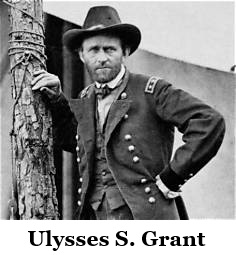
President Ulysses S. Grant saw the Common Schools as a tool to enhance democracy. In his 1875 address to the Army of Tennessee, He stated, “Encourage free schools, and resolve that not one dollar of money appropriated for their support, no matter how raised, shall be appropriated to the support of any sectarian school.” He concluded:
“Leave the matter of religion to the family circle, the church, and the private school, supported entirely by private contribution. Keep the Church and State forever separate. With these safeguards I believe that battles which create us ‘The Army of Tennessee,’ will not have been fought in vain.”
Grant Ignored in Ohio
Curiously, Grant was a Republican born in Ohio. Strikingly, the Ohio GOP of today completely rejects Grant’s admonition. In 1995, Republicans in Ohio’s legislature passed the Cleveland Scholarship and Tutoring Program. A coalition of parents and teachers sued to stop the program because among other reasons it allowed for taxpayer money going to religious institutions. This turned into a protracted legal struggle that saw victories for both sides. Finally, on June 27, 2002, the United States Supreme Court in a 5-4 decision declared that vouchers were constitutional. This opened the door for sectarian institutions to receive taxpayer money.
2023 saw Matt Huffman, one of the most powerful politician in Ohio, push through the billion dollar a year EdChoice Expansion Voucher Program. Huffman comes from the small isolated and shrinking old city of Lima, Ohio. An illustration of his political power is for the first time since the 19th century this politician was able to serve first as president of the Ohio senate and then became speaker of the house with no interruption between positions. The change was forced on him by term limits.
EdChoice’s adoption is an example of authoritarian government in action. Ohio is deeply gerrymandered and even though vouchers are very unpopular, residents will never be given the opportunity to vote against them.
The top 100 schools receiving the most cash for vouchers in Ohio are religious institutions. (RDTD page 51) In fact, 90% of Ohio voucher money is going to religious schools. (RDTD page 75) Even if Ohioans are not Catholic or Hindu, they are sending tax dollars to those institutions. So, the modern Ohio GOP supports sectarian schools and is unconcerned with the separation of church and state.
Maybe we should send taxpayer funds to religious schools but shouldn’t the public have some say in this?
What is the GOP Motive?
In 1955, economist Milton Friedman wrote an essay calling for the creation of a voucher system in America. The political establishment including President Eisenhower, the GOP and Democrats ignored what they perceived as a crackpot. It was Ronald Reagan who gave Friedman credibility in the 1980s which for the first time gave the voucher movement legs. In the early 2000’s, Friedman told the American Legislative Exchange Council that parents should pay for educating of their own children. Today, voucher zealots following Friedman’s lead are working to end taxpayer supported public education. (RDTD page 67) This appears to be the Ohio GOP motive.
Vouchers are a state-designed mechanism for channeling public dollars to private education providers. For the GOP, it is important that this money is provided without state oversight. For example, in June, Democrats put forward the Take the Dough, We Gotta Know Act that calls for state audits and monitoring enrollment, capacity, student demographics, tuition, services offered, and accreditation. This bill is probably already dead because House Speaker Huffman has contended that the fact parents enroll their kids in private schools constitutes accountability, and he is concerned that the bill might infringe on a private business. (RDTD page 77)
A Privatization Outcome
In their essay, Elijah L. Fenwick-Sanders and Anthony W. Rose state:
“When large amounts of public money are permitted to flow through private systems with limited transparency, the risk of corruption increases.”
“Public trust requires more than good intentions. It requires rules, records, audits, transparency and consequences.” (RDTD pages 84 and 85)
If a school does not want public audits, public reporting, nondiscrimination requirements, academic transparency or fiscal oversight it can opt not to accept public funds. That is a reasonable choice.
Support or opposition to vouchers is not a Left-Right situation. Many conservatives support public schools and some liberals support privatization. Emma Errang, who grew up in traditionally conservative Kentucky, bolstered this point in her essay when writing about the 2024 constitutional amendment vote that would have allowed school privatization in her state:
“The coalition against Amendment 2 was not liberal or conservative, nor was it Democrat or Republican. It included progressive voters like me and conservative voters like my father, who believe that choosing private education is a right but not something that should be funded at the expense of public education.” ( page 128)
Conclusion
I side with President Grant when he advised, “Encourage free schools, and resolve that not one dollar of money appropriated for their support, no matter how raised, shall be appropriated to the support of any sectarian school.” I would go a step farther and say that all private schools, not just those from religious institutions, be on their own and receive no taxpayer funding. Of course, the public has the right to support private schools if it desires, but that choice has the potential to undermine public schools and that would be a tragedy.
Reagan’s fraudulent A Nation at Risk report claimed, “We report to the American people that while we can take justifiable pride in what our schools and colleges have historically accomplished and contributed to the United States and the well-being of its people, the educational foundations of our society are presently being eroded by a rising tide of mediocrity that threatens our very future as a Nation and a people.” SAT scores were cited to defend this statement. Seven years later, the Sandia Laboratories in New Mexico found that using proper statistical techniques all groups disaggregated by race and gender showed improved scores in 1983. This is where the ongoing attack on public schools began in earnest and it was based on a fraud.
In America, public education has been a great bulwark for democracy. It is a shared democratic obligation that must be defended from greedy entrepreneurs and misguided social theorists.
It’s easy to get overwhelmed by the daily news if you care about the scandals of the Trump administration. There’s so much happening, so many news stories about corruption. Who can keep count?
Heather Cox Richardson today gives us an account of current corruption scandals. Any one of us could add scandals that she didn’t have room for, like conflicts of interest and profiteering. My example, Presidential pardons. Is it mere coincidence that wealthy donors get pardoned quickly? Is it coincidence that they are relieved of their obligation to repay the people they defrauded?
One thing is sure. The Trump administration is a stark illustration of kakistocracy, corruption, and greed.
There is an old saying about rats and sinking ships. There’s also an old saying about how a democratic system taken over by a single party quickly becomes corrupt because the ruling party lacks oversight. Then, as corruption becomes the party’s driving force, the only people willing to work for it are either corrupt themselves or so unqualified they support the corrupt leadership to gain power, knowing that in a merit-based system it would be entirely out of their reach.
OK, that second old saying is shared mostly among political scientists, but it’s accurate, and it’s right up there with the rats and the ships to describe what’s happening in Trump’s orbit now.
The saga of Kimberly Guilfoyle, who was recently forced to resign from her post as U.S. Ambassador to Greece, continues to expand. Guilfoyle left her post after news broke that she had tried to get a donor, Eric Deters, to pay down her credit card debt. She and her lawyers countered the story by claiming Deters was withholding money she had earned, and said the text messages he shared with news outlets were false.
Guilfoyle dated Don Jr. from 2018 to 2024 and was engaged to him the last four years of that time. Now there are rumors that during her time inside the family as a trusted loyalist, she kept a “burn book” about the family.
While that may or may not be true, the fact that there’s such a threat out there reflects the cracking loyalties of Trump insiders. More to the point might be the video released today by Deters himself, saying that he had launched a lawsuit against Guilfoyle for defamation and that he would depose her and Don Jr. and demand subpoenas to clear his name. He also vowed to play a 16-minute phone conversation tomorrow that he claims has information which “might just bring down the entire Trump administration, an administration which I have supported from Day One.”
Note that the story of Guilfoyle’s alleged shakedown is breaking now, although it happened more than a year ago.
Also in the category of old stories coming to the surface is one reported yesterday by Marc Caputo of Axios. He wrote that Trump’s former lawyer Alina Habba is saying that another one of Trump’s advisors, Ric Grenell, did not deposit her billionaire husband’s $5.6 million donation to the Kennedy Center. According to Habba, Grenell asked that the donation be routed through a $17.6 million payment for a business deal, an accusation Grenell called “absurd.”
Trump appointed Grenell to be U.S. ambassador to Germany and then acting director of national intelligence during his first term. After retaking office, he named Grenell as a special envoy to Venezuela before putting him in charge of the Kennedy Center.
A fight that has been going on for more than a year in the administration broke into the open this morning in a Politico story by Daniel Lippman. He explained that Trump named Italian Paolo Zampolli, a former modeling agent who introduced Trump to First Lady Melania Trump at a party in New York City, as a special envoy at the State Department with a portfolio of cultural diplomacy. But Zampolli apparently ignored that assignment and struck out on his own on a wide range of issues, infuriating Deputy Secretary of State Christopher Landau.
“My number-one boss is the president of America,” Zampolli told James Fontanella-Khan of the Financial Times in April. “I get my instructions from the White House, Commerce and the Department of War…anything to advance the America First agenda.” More than 16 administration officials have been included in the angry email chains Zampolli and Landau have exchanged, which at one point led to communications about the fight with a top-level foreign official.
At one point Zampolli accused Landau of leaking to reporters what appeared to be the story that Zampolli had tried to get custody of his son by asking Immigrations and Customs Enforcement to deport Amanda Ungaro, the boy’s mother. That story created its own scandal when Ungaro, a former model, threatened to expose information about the president and first lady. Landau responded to Zampolli’s accusation, which he sent to more than a dozen other officials, saying: “Your threats and accusations are getting more and more bizarre, defamatory, and inappropriate for broad dissemination on email.”
An administration official told Lippman that the State Department was “generally squeaky clean and professional and above it all.” In contrast, these exchanges were “cartoonish and embarrassing.”
By this afternoon, Lippman had a follow-up story: Zampolli had been fired.
It is not just the current associates of the president who are problematic. Today, news broke that two women have named former Republican representative Matt Gaetz (R-FL), along with his friend former Seminole County tax collector Joel Greenberg and others, in a civil lawsuit, alleging that from 2017 through January 2019, “Gaetz and Greenberg coordinated recruitment, payments, drugs, and travel to obtain commercial sexual acts….”
In 2024, the House Ethics Committee reported that Gaetz “regularly” paid women, as well as a 17-year-old girl, for sex, and bought and used illicit drugs while a member of Congress. Those accusations helped to sink Trump’s nomination of Gaetz for U.S. attorney general in 2025.
Gaetz’s response was hardly a denial: “I look forward to taking the plaintiffs’ depositions because much of the conduct alleged against me is false,” he wrote. “The lawsuit relies almost exclusively on a Congressional Committee Report that didn’t allow me to confront my accusers. Now I will finally have that chance.”
One has to wonder why anyone would want to be part of such a mess, but Trump’s new White House press secretary provides an answer: in a normal administration she would never make it through the door. Trump has described Katie Zacharia as an “attorney,” and she has identified herself as a “general counsel” and seemed to claim she worked as an attorney in China.
But after Judd Legum of Popular Information noted there was no sign she had ever passed the bar exam or been admitted to a state bar, Philip Wegmann and Alexandra Bruell of the Wall Street Journal reported today that, in fact, she failed the California bar exam when she took it. That, itself, is not unusual—the California bar exam is notoriously difficult—but it does mean she is not qualified to call herself an attorney.
Democracy Defenders Fund, a nonpartisan team defending democracy led by attorney Norm Eisen, has asked the State Bar of California and California Attorney General Rob Bonta to investigate whether Zacharia practiced law without a license in California, where doing so is a crime.
Tonight, on his show, Fox News Channel personality Sean Hannity seemed to undercut Zacharia, asking her why she had chosen to describe herself as an attorney when she could just have said she “went to Pepperdine Law School and then took a different career path.” Josh Marshall of Talking Points Memo noted that Hannity’s stance likely reflected that Trump is turning on her.
Rhein Amacher, the man who started a right-wing media frenzy when he claimed to have proof that Democratic Texas Senate candidate James Talarico had sought mental health treatment in Ohio, backed away from that claim today…sort of. Amid suggestions that he might well have run afoul of HIPAA penalties for trying to obtain health information duplicitously, he posted that “this entire situation has been blown completely out of proportion,” and wrote, “As far as I’m concerned, this matter is closed.” Later, in response to a post saying he had lied, he added: “Never lied, I just doubled down on wrong information.”
A blockbuster story by Jonathan O’Connell, Sarah Blaskey, and Aaron Schaffer of the Washington Post today explained that the administration has been able to keep donations for Trump’s ballroom largely secret by using a nonprofit to collect the donations and then channeling that money “into a White House account the president directly controls.”
The reporters gained access to a list of the 57 donors who have committed to giving $100,000 or more to the project. They found that “the vast majority of the funds raised came from companies and wealthy individuals with interests before the federal government.” Large technology companies Nvidia and Apple committed $25 million each. Microsoft, Palantir, and Lockheed Martin pledged $10 million each.
Individuals on the list who are associated with Trump include Commerce Secretary Howard Lutnick’s son Brandon, chair of investment bank Cantor Fitzgerald, who contributed stock worth more than $2.5 million, and the U.S. ambassador to the Netherlands, Republican donor Joseph Popolo Jr., and his wife, who gave $1 million. Missing from the list is Trump himself, who claimed he would be helping to pay for the project.
Sarah Longwell of The Bulwark was right when she called the ballroom being constructed where the East Wing of the White House used to be “a monument to corruption” built by “a corrupt American president.”
On Tuesday, Charles Gorrivan, Lydia Beyoud, and Nicola M. White of Bloomberg reported that on March 23, a few traders placed billions of dollars of contracts predicting that the price of oil would fall just 15 minutes before Trump posted on his social media platform that he had changed his mind about striking Iranian power plants. The deals were worth billions, and analysts from the U.S. Commodity Futures Trading Commission (CFTC) flagged the traders and the deals and sent a referral to the Division of Enforcement to decide whether to open an investigation into insider trading. But in a virtually unheard-of move, the administration asked the CFTC to withdraw the referral.
The journalists note both that there have been many trades apparently tied to Trump’s announcements and that between a 20% cut to CFTC staff during Trump’s second term and the agency chair’s vow to curb “over-zealous regulation,” enforcement actions have dropped dramatically from the numbers during the Biden administration.
Steven Portnoy and Katherine Faulders of ABC News reported today that the White House is claiming that all Trump’s conversations about plans to renovate the Kennedy Center are covered by executive privilege and therefore can be kept secret. This is a dramatic expansion of the concept of executive privilege, which enables the president to shield conversations with key advisors from public scrutiny, extending it to consider virtually all conversations private.
Apparently in anticipation of Democratic investigations, Attorney General Todd Blanche issued a memo as soon as he took office, claiming presidents can shield “presidential communications with private advisers so long as the communications relate to official presidential decisionmaking.”
A new Fox News poll released today showed that voters’ top concern is “corruption in government,” with 88% worried about it compared to 12% who are not. Corruption tops even “inflation and high prices,” which comes in at 85%, and “gas prices,” which concern 83% of voters.
In a conversation with Rob Finnerty of Newsmax, aired tonight, Trump suggested he would pardon everyone in the administration, including himself, to make sure none of the people around him have to “go through years of nonsense, hire lawyers and everything else, all for nothing.”
It is no wonder that Republicans eager to stop Trump are backing Democratic candidates for the midterms. Today 58 Republicans and Independents in New Hampshire declared their support for the Democratic Senate candidate, Representative Chris Pappas, over Republican candidate John Sununu. Those supporters include Don Bolduc, who was Trump’s pick for the Senate in 2022 but who lost to Democrat Maggie Hassan by 9 points after he embraced Trump’s claim to have won the 2020 election.
One of the Republicans supporting Pappas told Kevin Landrigan of the New Hampshire Union Leader: “Donald Trump has turned the Republican Party into something I no longer recognize.”
Amanda Ungaro, the Brazilian model and former U.N. ambassador who roiled First Lady Melania Trump in April by threatening to expose unspecified information she has on President Trump and the First Lady, is apparently talking to the House Oversight Committee…
Trump has demonstrated again and again that laws mean nothing to him; alliances mean nothing to him. All that matters is his inflated ego and the chance to get richer.
A few days ago, he brazenly abandoned the brave Ukrainians who have battled the powerful Russian nation to a standstill.
Since Russia’s invasion of Ukraine in 2022, the U.S. has passed stern laws sanctioning any country that does business with Russia. The first sanctions law passed in 2022, not long after Russia’s launching of the first ground was in Europecsince 1945.
The second law imposing sanctions on trade with Russia was passed only a month ago to honor the late Senator Lindsey Graham, who despised Putin and supported Ukraine. Trump now dishonors his good friend Lindsey Graham.
Trump ignored those laws when he announced his intention to buy diesel fuel from Russia. Ukraine and out European allies were shocked by Trump’s brazen reversal of U.S. policy. It’s no secret that Russia will receive billions of dollars from the US, which will help pay for its war against Ukraine. It will also help pay for Russian shipment of weapons to Iran.
Most puzzling is that Trump is getting only enough diesel fuel for a few weeks at most. The first shipment, “300,000 tons,” will satisfy our diesel needs for half a day. The shipment amounts to 2.5 million gallons. American consumption of diesel fuel is 4 million gallons daily.
He assumes he can hoodwink American farmers with his deal with Putin. This might help him in the midterm elections.
Victoria Deineko holds her daughter Mia while standing in front of a multi-story residential building damaged in a Russian missile strike in Kyiv, Ukraine, Tuesday, Oct. 13, 2026. Evgeniy Maloletka/AP Photo
It is rare to see a country switch sides so dramatically during a war, but here we are, watching Trump abandon Ukraine as it fights for its survival and instead assist Russia. And as Russia continues bombing Ukrainian cities, homes, and hospitals, killing civilians, Ukrainian officials say they went two nights in a row without the advance warnings they normally receive from the United States before Russian ballistic missile attacks. During the latest wave of Russian attacks, six people were killed and approximately 600,000 Ukrainians were left without electricity.
As if that weren’t bad enough, reports began coming out of Ukraine overnight that Elon Musk’s SpaceX had suddenly restricted Ukraine’s military StarShield satellite service, leaving Ukrainian officials blindsided. StarShield operates under a contract with the U.S. Department of Defense, and the sudden 100-mile-per-hour speed limit imposed on military terminals disrupted Ukraine’s ability to intercept Russian drones, carry out reconnaissance, and maintain communications.
Ukrainian troops were also having problems staying connected even when moving below the new speed limit. Drone operators were losing live video feeds or having to slow their drones down, leaving them more vulnerable to Russian attacks. Ukraine’s 7th Air Assault Corps said several missions had to be canceled because of this. Ukrainian presidential adviser Serhii Beskrestnov confirmed the restrictions and said that he did not believe the timing was a coincidence, considering Trump’s recent threats against Ukraine. Musk later posted on X that StarShield is controlled by the U.S. government and that decisions about restrictions are made by the military and ultimately Trump. By Wednesday evening, Ukraine’s Defense Ministry reported that the connection was working better, although the speed limit had not been lifted.
Polish Foreign Minister Radosław Sikorski was among the first to react as reports came out about the restrictions, taking aim at Musk. “Hey, big man, are you playing politics with your products again? As your European customers, we are watching you,” he wrote on X. Poland continues to help pay for Starlink services used by Ukraine since the full-scale invasion.
Sikorski is right to call this out publicly. Why would any country want to spend billions buying American weapons or depend on American technology if the U.S. can decide when and how it can be used? And this is yet another reason America’s allies are paying close attention to what is happening in Ukraine, wondering whether they could be next.
The restrictions come just days after Trump announced a deal with war criminal Putin to ease sanctions on Russian diesel and allow the U.S. to buy Russian fuel, giving Moscow another source of revenue to fund its brutal invasion. As Ukrainians were dealing with the sudden SpaceX restrictions, Putin’s bagman Kirill Dmitriev announced earlier today that the first contracts for Russian diesel sales to the U.S. could be signed within days. Speaking at Russian Energy Week, Dmitriev said that the U.S. and Russia were communicating almost every hour to work out the logistics of resuming shipments.
Trump’s decision to reopen Russian diesel sales has drawn opposition from some in Congress. Twelve U.S. senators, including six Republicans (just six), warned that the deal would provide Putin with more money to finance his invasion. Some lawmakers also questioned whether this deal violates U.S. sanctions laws.
And while Trump is making deals with Putin, he has also lashed out at Zelenskyy, demanded elections in Ukraine, and threatened to cut off intelligence and military assistance unless Kyiv stops striking Russian oil refineries. After two nights without the usual missile warnings and the sudden StarShield restrictions, Ukrainian officials have every reason to question whether they can still trust the United States.
It’s also interesting how Trump keeps demanding elections from Ukraine but has no such demands for Putin, who has ruled Russia for more than 25 years, while jailing and assassinating opponents. And the double standard doesn’t end there, because Russia continues bombing Ukraine’s power plants and other energy infrastructure, while Trump demands that Ukraine stop attacking Russian oil refineries.
This is all happening as Russia helps Iran target American forces and interests in the Middle East. According to recent U.S. intelligence assessments, Russia and China have been supplying Iran with satellite imagery for targeting and components for weapons. But Trump dismissed the reports, even though they came from his own intelligence agencies. In a Truth Social post, he called people raising concerns “Radical Left Morons and Lunatics,” claimed that any Russian or Chinese assistance was minimal, and added, “I don’t believe they are at all.” So Trump is dismissing his own intelligence agencies’ findings about Russia helping Iran while easing sanctions on Russian diesel and threatening to cut off intel sharing to Ukraine.
And the blame for what is happening does not stop with Trump. Republicans in Congress who have remained silent or defended his decisions bear full responsibility. There are a handful of Republicans who have objected to Trump’s fealty to Putin, but far too many others have either supported his treatment of Ukraine and his attacks on European allies or refused to challenge him. One man could not carry out such a dramatic reversal of American policy without the backing of his party, which has allowed him to continue making concessions to Russia even as Moscow threatens the security of European allies.
None of us should be surprised, of course. We have watched Trump worship Putin and defend Russia for more than a decade, even siding with Moscow over American intelligence agencies. But watching him ease sanctions on Russia, threaten to cut off military and intelligence assistance to Ukraine, and oversee new restrictions on StarShield while Russia continues bombing Ukrainian cities is infuriating. This is no longer just about Trump abandoning Ukraine or pressuring Zelenskyy into a peace deal. He has put the U.S. in the position of assisting and funding Russia’s genocidal war while actively undermining Ukraine’s ability to defend itself. Trump has picked a side, and it’s Russia.
Voter suppression is active in Texas. In Tarrant County, where the city of Fort Worth is located, the Republican members of the county election commission voted to close 92 polling places. Many are located in districts that are black, Hispanic, or low-income. The vote of the commission was 3-2 to cut the number of polling places, with three Republicans outvoting two Democrats.
Tarrant County will not be required to restore nearly 100 polling places that county officials cut, a judge ruled Tuesday, dealing a setback to voting rights advocates and minority groups weeks before a high-stakes midterm election.
District Judge Patrick Gallagher did not provide a reason in his one-page decision, handed down after a day of testimony from voters and county officials.
The ruling was in response to a lawsuit filed earlier this month that argued the cuts disenfranchise Tarrant County voters, with the heaviest burden falling on Black and Hispanic communities.
Four women — city councilwoman Deborah Peoples, former city councilwoman Kathleen Hicks, and retired judge Maryellen Hicks, who are all Black, and Fort Worth ISD trustee Camille Rodriguez, who is Hispanic — filed the suit.
“Tarrant County is eroding the right to vote,” Susan Hutchison, an attorney for the plaintiffs, told the judge Tuesday.
After the ruling, attorneys for the plaintiffs noted the judge denied the request but did not dismiss the lawsuit outright as requested by the county. That means the case could return to court, albeit after the election. The judge also did not weigh in on whether the cuts were discriminatory.
“We have to redouble our efforts to make sure everybody votes,” they said in a statement.
Tarrant County officials did not immediately respond to requests for comment from The Dallas Morning News.
The four women told the judge Tuesday they worried the cuts would mean longer commutes and waits to cast a ballot and lower voter turnout on Election Day, particularly in low-income and minority neighborhoods.
For example, in 2022, the 76103 ZIP Code, a predominantly Black and Hispanic neighborhood in East Fort Worth, had three polling places. All three were cut this November. [Emphasis added]
In the 76115 ZIP Code, which is largely Black and Hispanic in south Fort Worth, four of the five polling places were cut. [Emphasis added.]
Maryellen Hicks, 77, said she has mobility issues and worries she will be unable to stand in a long line. Her longtime voting site was among those cuts. Asked where she planned to vote, Hicks replied, “I have no earthly idea, quite seriously.”
Tarrant County Election Administrator Clint Ludwig, who drafted the list of polling placesto cut, acknowledged that he did not assess how the reductions would affect Black and Hispanic or low-income voters, who are less likely to have reliable transportation. He also testified that he did not seek input from Black or Hispanic organizations about the reduction.
Ludwig said he considered several factors, such as site availability, previous voter turnout, distance from other polling places and handicap accessibility.
The elections official repeatedly said it would be impossible to add polling places at this point, although he did say the county keeps five to 10 back-up options that could be added if necessary.
Early voting starts Oct. 19, and Election Day is Nov. 3.
County commissioners voted last month 3-2 over the objections of dozens of residents to cut 92 Election Day voting sites, from 316 in 2022 to 224 on Nov. 3. It also cut early voting sites from 50 to 47.
Yet Ludwig said he expects roughly 40% more voters this year than in 2022.
Tarrant County Judge Tim O’Hare and commissioners Matt Krause and Manny Ramirez, all Republicans, voted for the proposal. Democratic commissioners Alisa Simmons and Roderick Miles voted against the proposal. O’Hare and Simmons are both running for county judge.
Republicans said the move saves money and improves efficiency. O’Hare called the plan sensible and said that “no Tarrant County voter should feel they don’t have enough time to vote.”
I have written about the devastating consequences of vouchers for years and the fact that they are promoted by billionaires and rejected whenever they are put to a statewide vote. So it is very satisfying that The New York Times, the newspaper of record, published this sharp opinion piece by Jessica Grose, a regular contributor. No both sides here; vouchers are a scam that billionaires love and that most public school parents loathe.
Jessica Grose wrote:
“I’ve been voting Republican my whole life. I’m superconservative,” the Pine Tree superintendent, Steve Clugston, tells the camera in an Instagram reel. “I’m going to tell you what: When Greg Abbott sold us out to the billionaires and sold out our schools, I’m done with his leadership.” In the Texas governor’s race, Clugston is voting for Abbott’s Democratic opponent, State Representative Gina Hinojosa.
The Pine Tree public school district is in the bright red small city of Longview in East Texas, between the big cities of Dallas and Shreveport, La. A majority of its 4,400 students are economically disadvantaged. When I caught up with Clugston on Friday, hours before the Pine Tree football team trounced its opponents under the lights, he was at his farm. “My wife’s a teacher. My daughter’s a teacher. My son-in-law’s a teacher. Both my sisters are teachers. My brother-in-law’s a retired superintendent. So I’d say education’s kind of in our blood,” he told me over the phone.
Clugston told me he’s sick of his fellow Texas conservatives straying from their principles of fiscal common sense and straight talk; he even attempted a run for the Texas State Senate as an independent conservative. He is particularly appalled by Texas’ voucher program, known as Texas Education Freedom Accounts, which went into effect this year. This program puts state money in accounts for Texas families to use outside the public school system: up to nearly $10,500 for children enrolling in private school, up to $30,000 for children with disabilities and up to $2,000 for those who are home-schooled.
The State of Texas has no say over the curriculum taught at the institutions that accept vouchers, and participating schools can discriminate against applicants for any number of reasons, including religion and disability status. Texas’ vouchers are universal, which means anyone can apply for them, regardless of financial means, though poorer students have been prioritized.
Around 70 percent of this year’s voucher recipients already were enrolled in private schools or were home-schooled. Vouchers are costing the state about a billion dollars this year alone and could ultimately cost $4.4 billion annually. While funding for vouchers comes from a budget that is separate from the public school pot, the state’s funding for public schools has not kept up with inflation.
Texas public schools are projected to lose $227 million just this year as they shed head count, according to The Houston Chronicle. More public schools may close as a result of vouchers siphoning that money away from them. In Clugston’s opinion, vouchers are “abillion-dollar giveaway program for the rich, and we’re going to have no accountability in it. Zero.”
Hinojosa has made saving public education central to her campaign for governor, and it is what got her started in politics. Her child’s school was on the brink of closure, and she describes her political trajectory as concerned parent to local school board member to Texas House member. If elected, Hinojosa has vowed to “end the voucher scam.”
I have long been frustrated at the way both parties barely talk about K-12 public education, despite plunging test scores and post-Covid woes. But the reason politicians don’t talk more about education is that votersdon’t care about it. What makes Hinojosa’s message on schools effective beyond irate public school parents and educators is that she ties the passage of vouchers to larger themes plaguing Republicans in the age of President Trump: corruption and the outsize power of billionaires.
Vouchers failed in the Texas Legislature multiple times, with rural Republicans tending to side with Democrats to block the measures. In rural areas “school choice,” even with vouchers, tends to be a mirage. There are few private schools, and public schools are often the biggest local employers and the heart of small-town life; nearly every Texan I spoke to for this newsletter said the reverence for “Friday Night Lights” is real.
When Abbott couldn’t get vouchers passed the honorable way, he decided to primary Republican state legislators who opposed the policy. He took $12 million from Jeff Yass, a pro-voucher Pennsylvania billionaire, got most of his preferred candidates into office and got vouchers passed in 2025, as The Washington Post noted.
The outcomes for students participating in voucher programs in other states have been decidedly mixed, but Yass doesn’t give a rip. “If the mother or the parent wants the kid to go from one school to another, who the hell is anyone to tell them not to?” he told The Post. “I don’t care what the studies say.”
Some voucher proponents claim that Texas offers more choice to underprivileged children in underperforming schools. But the data we have on other states with universal voucher programs, like Arizona, suggest that they are redistributing money to the highest income and most educated ZIP codes in cities and suburbs. An Arizona ABC station found that parents were spending their voucher money on everything from trampoline parks to ski tickets.
In Iowa, which has a universal voucher program for private schools that’s similar to Texas’, the Democratic candidate for governor and the current auditor, Rob Sand, has made a similar connection among vouchers, special interests and corruption. “The current school voucher program is an open invitation to waste, fraud and abuse of taxpayer dollars,” he explains on his campaign website.
Sand lists his voucher stance under the headline Accountability for All, where he also talks about protections for whistle-blowers and banning stock trading by politicians. By doing so, he is saying that you don’t have to care about what’s going on in the classroom to be outraged that a New York-based company called Odyssey, which manages his state’s voucher program, allegedly got a sweetheart deal for the work. As auditor, Sand found that the company “more than doubled its rate less than a month after signing their no-bid contract, costing taxpayers an additional $2.7 million.” (Odyssey, which has ties to Yass, also administers the voucher system in Texas.)
Whatever you think about public schools, it is difficult not to seethe at the fundamental unfairness of voucher programs that give money to schools that don’t have to educate all students. The Texas Observerfound that of 291 private schools approved for voucher funds from the state, over 90 percent were religious or faith-based schools, “more than 100 of those schools require or prioritize for admission students of the same faith and more than 60 have a written policy that discriminates against L.G.B.T.Q.+ students, the schools’ own data shows.”
Though the Texas vouchers prioritize students with disabilities, The Observer also noted that most of the private Texas schools they analyzed lack special education services. A Dallas Morning News analysis found that thousands of students with disabilities returned state money, in part because private schools rejected them or didn’t even respond to their applications.
Some educators I spoke to in Texas and Iowa told me that they’d already seen students ricocheting back to public schools because their private or home-school experience wasn’t all it was chalked up to be. Another outrageous part of this legislation is that Texas public schools are still required to do the disability testing for families that choose vouchers, and it’s straining their limited resources.
When put to a public vote, school vouchers have been unpopular; they’re perennial losers on the ballot. It’s maddening that ideologically motivated billionaires, who probably never sent their own children to public schools, have been able to push this policy through.
According to the latest New York Times/Siena University polling, Hinojosa was up by four points, and Sand was up by 11. Texas is obviously the tougher battle, but after spending the week talking to parents there, I’m cautiously optimistic. Rebekah Baus, who described herself as a conservative Christian and lives in the Dallas-Fort Worth area with her husband and two kids, told me she is so upset about the state of public school policy that she doesn’t know which way she is voting.
The State of Texas, Baus said, is trying to pretend “our public school system is failing, but in the reality, we’re failing our public school system by not funding them properly.”
The blogger known as “JoJo from Jerz” has an incredible, frightening story to tell. She has a large following on social media, and she uses it to say what she thinks about Donald and Melania Trump. She doesn’t like them.
Not long ago, she got a letter from a government attorney threatening to sue her for defamation. This is, of course, an outrage because the First Amendment protects her right to criticize the President, his policies, and his very public wife.
But the threat was clear. A lawsuit would bankrupt her, cause her to lose her home, and ruin her life. The federal government has unlimited resources; it can destroy your life simply by engaging in litigation. At some point, the ordinary citizen runs out of money.
I learned about the situation while reading Dean Obeidallah’s post, where he gave the background and explained that JoJo is Joanne Carducci, a single mother of two children.
Dean wrote:
I wasn’t surprised to hear that Donald and Melania have been threatening lawsuits against Joanne Carducci—better known as JoJoFromJerz—in an effort to silence her criticism. Carducci has millions of followers between X, Facebook, Threads,Substack and more. But what the Trump crime family didn’t count on is the type of fighter JoJo is and how people would rally to support her!
I spoke to JoJo about her ordeal that she only went public with in her Substack post on September 26, 2026, titled, “Be Best. Be Quiet. Or Be Bankrupted.” It was jaw-dropping to read how the Trumps—apparently led by Melania—had their lawyers send letters to JoJo threatening to sue her for criticizing Donald and the so-called “First Lady.” (In Trump’s case, Melania is far from the first lady—she’s more like the 100th!)
Having read Dean’s introduction, I then opened JoJo’s September 26, 2026, post, where she described the nightmare of being threatened by the Trumps, but most especially by Melania.
Jojo wrote:
For the first half of this year, Melania Trump was doing everything in her power to get me to shut up.
I wasn’t sure I wanted to talk about this. I didn’t know how to talk about it. And if I’m being fucking honest, I’m scared to talk about it right now.
But I’m sick and tired of carrying it around, and I need to put it down.
And watching my fucking feed turn into a propaganda pageant for that self-anointed patron saint of women has exhausted whatever restraint I had left.
If you’ve followed me for a while, you know something was happening earlier this year. I was trying to keep doing my work while worrying about my children, our home, my livelihood, and whether telling you what was happening could cost us everything.
Here’s what I didn’t tell you.
The president and the first lady of the United States of America were threatening to sue me.
Me. A single mother of two in New Jersey.
At first, the letters were about things I’d said about both of them, although mostly her, but over the next several months it became entirely about Melania. She wanted me to retract what I’d said and apologize, and when I wouldn’t, another letter would come, another accusation of defamation, another demand for money I didn’t have, until this woman’s wounded feelings had become something I had to consider every time I thought about my family’s future.
A prominent attorney who wasn’t able to help me told me I should do everything they asked because otherwise they would ruin me.
They would take my home.
And I don’t know how to explain what those words do to you when you’ve already had to rebuild your life from scratch, when the home somebody is telling you to be afraid of losing is the place you made out of everything you managed to save of yourself. There wasn’t some other fortune underneath us. There was this house, my work, and two children who depended on me to make it enough.
I cried every day for months, but I kept going because I had to keep going, because I didn’t have a choice, because my kids need me and their lives don’t stop to indulge two petulant narcissists who can’t stomach being criticized. There’s still dinner and soccer and baseball and laundry and life—the life I’ve worked so hard to make ordinary for them. They get to have that. They get to need things and forget things and go on being children without having to make room for whatever the first lady thinks she’s entitled to take out of their mother.
And I never told them. They still don’t know.
I didn’t want to scare them, didn’t want to give them a reason to look around their own home and wonder whether they would get to keep it, so I kept it from them, even as this constant background noise ran underneath everything else: two of the most powerful people in the world, with all their money and lawyers and access to the levers of power, had targeted me.
My livelihood. My family. The life I was right there in the middle of trying to live. And I couldn’t make the enormity of that fit with how ordinary we were, how little we had to spare, how much damage they could do without it costing them anything they would miss.
She was swinging a fucking wrecking ball at a mosquito, and my children lived in the building.
For months, I told only the people closest to me and some incredible, heroic human beings—elected officials, people you might recognize from television—who showed up when I needed help. I sat on the rest because I was scared, and I hate that for me, but I fucking hate it for my country, too. I was afraid to tell you what the president and first lady were doing because I didn’t know what telling you might make them do next.
She never had to set foot in our house to make her presence felt in every room.
That’s the brutal, grotesque, fucking disgraceful truth.
And let’s be clear about what I do: I have never intentionally lied about her. When I’m talking about what these people say and do, I’m working from my understanding of the truth, what I can see with my own eyes and hear with my own ears. But a hell of a lot of my work is mockery and ridicule, because I’m a satirist and they’re public figures, and I have a right to point at the ridiculous fucking spectacle they’re making of this country and laugh.
They don’t have to like it. That couture-clad, cash-cushioned control freak was trying to turn free speech into a luxury item and price me out of my own fucking voice.
I don’t need to make shit up. With these two, the problem has never been a shortage of material.
Matt Platkin, New Jersey’s former attorney general, helped me for free, spending hours on the phone with me, giving his time and expertise at considerable personal cost, shepherding me through something I could never have begun to navigate alone. And he listened to me. He advised, explained, helped me understand what I was facing, but the decisions stayed mine. I still cry when I think about the sheer luck of somebody that good showing up in the middle of something that ugly, when I needed help I couldn’t afford and didn’t know how to find.
He’s an extraordinary fucking human being, and I owe him in ways I’ll never be able to adequately express, let alone repay.
Having him beside me felt like somebody putting a hand beneath a box I’d been holding so long my arms had started to shake. I still had to decide where to go with it, but I could finally take a breath without being afraid I’d drop everything. I kept returning to Timothy Snyder’s first lesson in On Tyranny: “Do not obey in advance.”
This is the beginning of her post. Please open and read it all.
It shows how thin-skinned the Trumps are, how ruthless they are, and what true courage looks like.
Donald Trump is busy setting the world on fire, but his real concerns are remodeling the White Hiuse and the District of Columbia. He likes to defy environmental reviews and yo make irreversible changes.
One of his plans involves turning a public golf course in D.C. into a championship course. A federal judge ordered him not to make any changes without getting it cleared by her.
A “furious” federal judge excoriated the Trump administration Monday morning for cutting down hundreds of trees at East Potomac Golf Links, the historic course eyed for redevelopment by President Donald Trump, telling government lawyers they had cost their credibility by ignoring her repeated warnings to give notice before work continued.
Over the weekend, his team cut down 430 trees. Another 300 will be cut down. The judge is furious.
Trump thinks he is a king and doesn’t need permission. Fortunately for him, he’s surrounded by sycophants who do whatever he tells them.
Government lawyers told U.S. District Judge Ana C. Reyes at an emergency hearing that approximately 430 trees were removed Saturday and that another 299 are still targeted for removal. Reyes ordered the government to stop cutting down trees until at least 2 p.m. Tuesday, by when she hopes to hear testimony from another administration official involved in the tree removal.
Reyes says she had been reluctant to issue a temporary restraining order in the case. But, she added, “I have no faith that the government isn’t going to cut them down unless there’s an order in place not to do so.”
Violating her order “by two seconds” would prompt contempt proceedings, the judge said. “I am thoroughly unamused right now,” Reyes said as the hearing began. “I do not know how I could have made it any plainer. I did not want what happened to happen.”
At one point, Justice Department attorney Marissa Ann Piropato told Reyes that government lawyers “did our best” to keep the court apprised of any construction work at the course.
“No, you did not do your best,” Reyes responded, her voice rising. “You did your absolute worst.” The hearing followed an emergency request filed late Sunday by preservationists seeking to stop the National Park Service from removing additional trees at the historic public golf course.
The D.C. Preservation League and two golfers allege that the administration is racing ahead with irreversible work while avoiding the environmental and historic-preservation reviews required for the president’s proposed transformation of East Potomac into a championship-level course.
John Thompson, historian and retired teachers in Oklahoma, questions the outbreak of bigotry towards Muslims, starting at the tip.
He writes:
Gov. Kevin Stitt recently ordered the Oklahoma Department of Public Safety and the Oklahoma Office of Homeland Security to determine whether the Council on American-Islamic Relations (CAIR) or any of their members, or the Muslim Brotherhood are a terrorism or public-safety threat. His order also directed state public safety leaders to advocate for federal action to designate the Muslim Brotherhood and CAIR as Foreign Terrorist Organizations under federal law.
The Tulsa World reported that CAIR responded by saying it and the Muslim Brotherhood do not share any organizational ties. And, CAIR is an “American civil rights and advocacy organization unaffiliated with any ‘offshoot, chapter, or agent of any foreign movement, organization, political party or government.’”
And, the Oklahoma Voice reported that Pauline Jones, a political science professor at University of Michigan added, “There’s a paper trail of trying to undermine CAIR,” but no evidence tying CAIR to terrorists. Such anti-Muslim efforts create “fear that’s nonsensical.”
Moreover, Oklahoma State University’s Stephen Nemeth, an expert on international relations and terrorism, “said while ordering an investigation ‘sounds menacing,’ it’s more of a ‘convenient bogeyman.’” And, “It’s probably just a way to kind of gin up maybe some activism or voter interest.”
Throughout CAIR’s long history in Oklahoma, our civil rights organization has worked to protect the Constitution’s guarantees of free speech, religious freedom and equality under the law. We have also pursued justice for all people, including Oklahoma Muslims impacted by hate. … Our successful civil rights work in Oklahoma is exactly why Gov. Stitt is targeting our organization with debunked conspiracy theories. We look forward to continuing our civil rights work in Oklahoma and proving once again that the Constitution is stronger than any politician’s bigotry.
Moreover, the Oklahoman responded to Stitt’s call for “both the Oklahoma Legislature and the federal government to declare CAIR a terrorist organization” by reminding him of the “Oklahoma Standard,’” that calls for “kindness and inclusion.”
Yes, what we are seeing is a battle between the best and the worst of our state.
The Oklahoman also explained how the Interfaith Alliance of Oklahoma weighed in:
“The Interfaith Alliance of Oklahoma is deeply concerned about Governor Stitt’s executive order regarding Muslim organizations,” the organization said in a statement. “The executive order was issued without any evidence of what is being accused, and such unfounded claims are harmful to our Muslim neighbors.”
And it recalled how Gov. Kevin Stitt “showed commendable leadership when, in 2021, he welcomed nearly 2,000 refugees from Afghanistan after the city of Kabul was taken over by the Taliban.”
As the Oklahoman also reported, when “Imad Enchassi, senior imam of the Islamic Society of Greater Oklahoma City” learned of Stitt’s order, he said, “I could feel a chill going from the tip of my head to the bottom of my toes,” and “Our governor has a good relationship with us — he knows us and we know him. It was a slap in the face.”
In 2019, Stitt’s visited with Muslims during CAIR-OK-sponsored Muslim Day at the Capitol. In 2023, Stitt pulled out of CAIR-OK sponsored Ramadan Iftar “due to wildfires raging in multiple areas of the state,” but a “CAIR-OK leader read Stitt’s planned remarks that the governor’s office sent to be shared with Oklahoma Muslims and others who attended the event at the Oklahoma History Center.”
And, the Oklahoman has reported about the ways that anti-Muslim bigotry has a long history, and how it’s exploding.
Former state Sen. Mike Mazzei [R] who is running for governor, had previously run against so-called “Sharia Law” and so-called Muslim terrorists. And he has been endorsed by Donald Trump. On the day when Mazzei and Trump spoke in Durant, Mazzei doubled down on his promise to prosecute CAIR.
Granted, such racism predates today’s Trumpists, but there is a long history of many Oklahomans standing by their neighbors, while others commit to cruelty.
For instance, my former neighbor Mauree Turner was the nation’s first Black, non-binary, Muslim to be elected to a state legislature. But, as National Public Radio explained, Rep. Turner:
Was censured and removed from legislative committees. There had been a demonstration in the capitol against anti-trans measures with some scuffling between protesters and police. Afterwards, a protester went to Turner’s office to rest. Republican legislators accused them of “harboring a fugitive.”
In 2017, I wrote about Ramadan Iftar with Our Elected Officials which “was a wonderful antidote to the worries that go along with life in our Red state. As usual, the diverse audience shared laughter and an opportunity to discuss where we go from here. In attendance were a dozen current or former state legislators, two school board members, a city councilman, and two candidates for governor.”
As always in these interfaith gatherings, “the most humorous exchanges occurred when Iman Imad S. Enchassi and reform and conservative rabbies shared the stage and engaged in delightful banter.” This time, however, a Christian pastor was equally hilarious “when riffing off a classic CAIR/OK punch line.” When Executive Director Adam Soltani is told to “go back to where you come from,” he responds No!, he is not going back to Kansas.”
During its “2017 Legislative Wrap-Up,” CAIR led a discussion, which addressed the “surrealistic behavior” of so many members of the party that controls two branches of the Oklahoma government, and led to the conclusion, “We have to laugh together to protect our sanity – as we work together to save our public institutions.”
But, then, CAIR recognized the session’s “first disgrace,” a bill which passed out of a House committee which would “require a woman to get the written consent of the fetus’s father before obtaining an abortion.” The second was the effort to shrink the budget deficit by turning students who are identified as English Language Learners over to ICE for possible deportation.
Then, its public affairs coordinator said:
During the interim session, we will be planning community meetings on issue areas and helping you stay connected with your elected officials, even when they are not at the Capitol. We will continue to support and promote policies that maximize religious freedoms, Constitutional protections, and work towards eliminating inequality in Oklahoma. We look forward to your help making a more equal Oklahoma for all.
So, why are Gov. Stitt and Sen. Mazzei attacking an organization which they must know is an exemplar of the Oklahoma Standard? And, why are so many Republicans still making vicious attacks on their neighbors?
We know that a diverse range of Oklahomans will defend CAIR. But, will we be able to defeat the fear mongering of the state’s super majority of legislators?