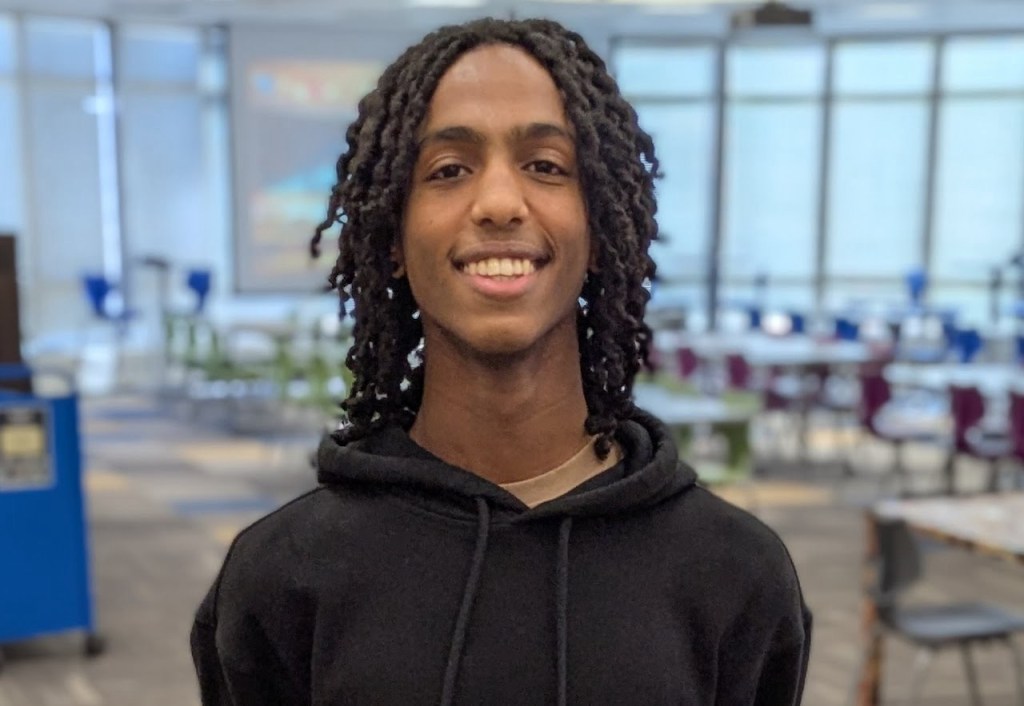
Annie Andrews is a pediatrician in South Carolina. She is running against Senator Lindsey Graham in the November election.

She wrote:

I’ve been a pediatrician for 20 years. When I learned how to take a pediatric patient’s history, I was taught to ask parents: “Are your child’s immunizations up to date?” At the beginning of my career I’d already be writing down the answer “yes,” without hesitation or uncertainty. Now when I ask that question, I brace myself.

Right now, a measles outbreak is surging in my home state of South Carolina, where there are already more than 900 confirmed cases, most of them unvaccinated children, with hundreds in quarantine and more exposures being reported daily.

That’s hundreds of parents missing work. Kids missing weeks of school. Newborns, seniors and the immunocompromised being forced to gamble their health on their neighbors’ choices. Hospitals and health centers bracing for what comes next.

This was all preventable, and we need to be honest about how we got here.

We have an incredibly safe and effective vaccine for measles. One of the reasons scientists worked with urgency to develop the measles vaccine was because of how contagious the virus is, far more contagious than the flu or Covid-19. Every person with measles infects 20 other people, on average. Someone with measles can walk into a room, cough and leave, and the virus can still be alive in that room for hours. This is why measles doesn’t “fade out” on its own. It spreads like wildfire when community immunity drops.

So no, measles doesn’t spread like this just because a virus is good at its job. It spreads when the systems meant to protect families get replaced with noise, doubt, lies and deliberate confusion.

At the highest levels of our federal government, we have watched medical expertise get shoved aside while conspiracy theories get promoted. The message Americans keep getting is that expertise is suspect, that doubt is bravery and that your Facebook feed is just as good as your doctor’s advice. When the people at the top signal that science is subjective, confusion becomes contagious.

That message has consequences. It becomes the air people breathe. It shapes what a parent believes about vaccinations as they scroll their social media feed in the preschool pickup line. It erodes trust in medicine and threatens the fabric of our nation’s public health system.

The outbreak isn’t the fault of Health and Human Services Secretary Robert F. Kennedy  Jr. alone, but we’re kidding ourselves if we pretend leadership doesn’t matter. 

Kennedy has been a leading voice in the anti-vaccine movement for decades, which has led communities across the country to slip below the herd immunity threshold for the prevention of outbreaks of infections like measles. Even if you replaced the name on the door at HHS tomorrow (which a responsible Congress would do), trust doesn’t snap back like a rubber band. It takes years to build and minutes to burn.

And the burn is not theoretical. Just this month, the United States withdrew from the World Health Organization, stepping away from the very kind of coordination that helps countries spot outbreaks early and stop them before they spread. Meanwhile, the world is looking back at us: a nation on the brink of losing elimination status for measles, a disease we fully eliminated in 2000.

We are flirting with the return of an old killer, not because the science changed, not because the virus itself changed, but because our politics did.

I didn’t set out to become a politician. I’m a pediatrician and mom of three, which means I understand deeply what it feels like to be responsible for a tiny human you’d do anything to protect. I know how heavy it is to make decisions in a world that feels more chaotic and less trustworthy by the day. And I understand that when politics is injected into public health, parents’ jobs get harder and children suffer. That is why I stepped up to fight on behalf of America’s children and the families who love them.

So here’s my plea, doctor to country, mother to community.

Stop letting politicians play games with public health. Put scientific expertise back where it belongs: in government, in policy and in the language we use when the stakes are life and death.

If you want to stop measles, you should get vaccinated.

If you want to stop the next iteration of this, you stop rewarding people who profit from confusion. You stop letting unserious leaders turn public health into a culture war. You put serious, qualified people back in the rooms where decisions are made.

Measles doesn’t care who you voted for. It cares whether we protect each other. And we still can.

Annie Andrews

Scientific American reviewed Robert F. Kennedy Jr.’s record since he became Secretary of Health and Human Services a year ago. Contrary to his explicit promises at his confirmation hearing, he has cast doubt on the efficacy of vaccines. Not coincidentally, South Carolina is experiencing an outbreak of measles, with nearly 1,000 people, mostly children, affected.

Dan Vergano of Scientific American began with a summary of RFK’s promises:

“At his confirmation hearing weeks earlier, Kennedy made a number of pledges under oath to those U.S. senators:

“I will commit to not firing anybody who’s doing their job.”

“I support vaccines. I support the childhood schedule.”

“My approach to HHS, as I said before…, is radical transparency.”

“I’m pro-good science.”

Health experts say Kennedy has made sweeping reversals on these statements. His HHS tenure has seen the U.S. childhood vaccine program reduce the number of recommended shots to protect against 11 diseases instead of 17, thousands of public servants (many of them scientists) have been fired, standard-setting scientific practices at the Centers for Disease Control and Prevention, Food and Drug Administration and National Institutes of Health have been replaced with “gold-standard” dictates that scientists call dishonest, and judges have blocked funding cuts as illegal. Kennedy and HHS officials did not respond to requests for comment.…”

The secretary has spoken broadly about his goals this year to Congress and the public. In September, before a Senate panel, he described his “big-picture” mission as “enacting a once-in-a-generation shift from a sick care system to a true health care system that tackles the root causes of chronic disease.” His “Make America Healthy Again” (MAHA) agenda, now wedded to President Donald Trump’s “Make America Great Again” movement, puts Kennedy atop a new, unorthodox American political coalition. It unites a partisan distrust of science with a deep-rooted skepticism of medicine and the food industry. Roughly four in 10 parents are supporters of the MAHA movement, according to a KFF survey.

“Who can argue with the foundational goal of ‘Making America Healthier Again’? We want parents to want healthier lives for their children,” says Washington University in St. Louis School of Public Health dean Sandro Galea, author of the book Within Reason: A Liberal Public Health for an Illiberal Time. Many of the goals of the MAHA movement—including increasing stalled U.S. life expectancies, bettering childhood health and addressing overmedicalization—are shared by public health experts.

“It would be great to see MAHA be a force for good,” Galea says. “But some of its ideas, frankly, will end up hurting people.” Notably, Kennedy’s decisions on vaccines will inevitably lead to outbreaks, Galea says, and the return of preventable infectious diseases such as measles. “We really haven’t seen an HHS tenure like this in our lifetimes.”

HHS is largely the national social insurance arm of the U.S., with a sideline in medical research and public health. It oversees the massive Social Security, Medicare and Medicaid programs, as well as the FDA, CDC and NIH. In many ways, the colossal agency today continues to function as normal: Social Security checks, Supplemental Security Income or both still lands in nearly 75 million mailboxes every month, one in five Americans receives Medicaid coverage, and the Affordable Care Act that the department administers still covers more than 24 million people nationwide despite Trump administration cuts to health insurance and food assistance. On February 2 Kennedy announced a $100 million pilot program to fund outreach, medical treatment and other support for homeless people and those with substance use disorders in eight cities—in the kind of bipartisan response to the overdose crisis long sought in the public health world.

Graphic shows a series of monthly calendar grids from January 2025 to February 2026 with turquoise squares highlighting vaccine-related statements, policy changes and associated events and purple squares highlighting statements or actions related to autism. Each square is labeled with the date and annotated with a description of the associated event.
Graphic shows a series of monthly calendar grids from January 2025 to February 2026 with blue squares highlighting statements and policy changes on gender-affirming care and green squares highlighting statements and policy changes on nutrition or wellness. Each square is labeled with the date and annotated with a description of the associated event.
Graphic shows a series of monthly calendar grids from January 2025 to February 2026 with lavender squares highlighting other major public health events. Each square is labeled with the date and annotated with a description of the associated event.

The move, however, came after layoffs at HHS’s Substance Abuse and Mental Health Services Administration and the whipsaw cancellation and restoration of $2 billion in funding for its programs in January.

This kind of tumult is now standard fare at HHS. In his first year, Kennedy fired his own handpicked CDC chief, linked Tylenol to autism with little evidence and urged farmers to let bird flu “run through” their flocks (an idea that could blow chicken prices skyward and spur spread of the virus, experts say). All told, the agency lost more than 17,000 civil servants through firings and resignations in 2025—including many scientific leaders at the FDACDC and NIH. An HHS spokesperson defended Kennedy’s cuts to “bloated bureaucracies that were long overdue” to ProPublica in August.

In the September Senate hearing, Kennedy accused one critical lawmaker of “crazy talk” and took out his phone and began scrolling through it while another spoke. “We’re denying people vaccine,” said senator Bill Cassidy of Louisiana, the physician chair of the Senate health committee. “You’re wrong,” Kennedy replied to Cassidy, who provided a crucial Republican vote last February for Kennedy’s confirmation.

Kennedy “comes across as a privileged rich guy with an air of entitlement,” says American Public Health Association executive director Georges Benjamin, whose organization called for Kennedy to resign in April after the mass layoffs at the CDC, FDA and other health agencies. “He’s completely in over his head at this job, has no experience, no training in areas of health he’s affecting and is causing a lot of harm.”

VACCINES

Kennedy has a long history of vaccine opposition. He joined the board of the antivaccine nonprofit Children’s Health Defense in 2015, when it was known as the World Mercury Project (and resigned from his position as chairman in 2024); the organization led numerous lawsuits against vaccine makers. The move from environmental lawyer to antivaccine activist turned out to be well timed for postpandemic politics; attacking COVID vaccines wooed Republican voters. At his confirmation hearing, Kennedy refused to disavow links between vaccines and autism, a favorite theory of outfits spurring vaccine hesitancy among parents, though numerous studies have found no connection. “News reports have claimed that I am antivaccine or anti-industry,” Kennedy said at his confirmation hearing. “I am neither; I am pro-safety.” What Kennedy meant then by safety has since become clear, Benjamin says: his own judgment.

The FDA’s top vaccine official, Peter Marks, resigned in March, writing of Kennedy, “truth and transparency are not desired by the secretary, but rather he wishes subservient confirmation of his misinformation and lies.” During the pandemic, Marks had famously withstood political pressure to approve COVID shots without safety testing. Now he is out. An HHS official told NPR that Marks “has no place at FDA” because of his opposition to the secretary “restoring science to its golden standard and promoting radical transparency” at the agency.

In May Kennedy removed COVID vaccines from the list of shots recommended for healthy pregnant adults and children without consulting with CDC safety panel experts. In June he fired those experts and replaced them with people scientists have called unqualified, unvetted vaccine opponents. He next pulled $500 million in funding away from research into mRNA vaccines to combat diseases such as COVID and the flu, falsely claiming they had stopped working as the viruses evolved. He followed that move by firing then CDC chief Susan Monarez, a microbiologist, who wouldn’t rubber-stamp the votes of the panel she called “newly filled with people who have publicly expressed antivaccine rhetoric” in a Wall Street Journal op-ed.

Kennedy later claimed Monarez had told him she wasn’t “trustworthy”; in Senate testimony, she denied doing so. “The question before us is whether we will keep faith with our children and grandchildren—ensuring they remain safe from the diseases we fought so hard to defeat: polio, measles, diphtheria, whooping cough and many others,” Monarez said at the September 17 Senate hearing. “Undoing that progress would not only be reckless—it would betray every family that trusts us to protect their health.”

In December Kennedy’s reconstituted vaccine panel voted to stop recommending that all newborns be vaccinated for hepatitis B, a disease that contributed to the deaths of 1.1 million people worldwide in 2022. HHS next reduced the number of U.S. childhood vaccine shots so that they protected against 11 diseases instead of 17, basing the decision on the rules of Denmark, a country with a relatively small and homogenous population and publicly funded health care for all. Most recently, the chair of the vaccine panel, a cardiologist, told POLITICO that its focus this year will be on examining vaccine side effects rather than on its longstanding mission of gauging vaccine effectiveness.

WELLNESS

“I walk through the airports today…, and I see these kids that are just overburdened with mitochondrial challenges,” Kennedy said in August at a Texas “Make America Healthy Again” state-law-signing ceremony. Ashish Jha, formerly the Biden administration’s pandemic response czar, called this airport diagnosis “wacky, flat-earth voodoo stuff” on X (formerly Twitter).

But for Kennedy’s MAHA followers, it probably sounded familiar. Concern over mitochondria has moved from a nascent area of medical research to staple of the trillion-dollar wellness industry. Alongside exercise and vitamins, the industry embraces the medical “freedom” movement opposed to conventional medicineincluding vaccines. The movement’s rhetoric echoes many of RFK, Jr.’s MAHA claims, says Richard Pan, a California physician and former lawmaker, who clashed with Kennedy’s fight against California vaccine laws in 2019. Numerous corners of the wellness world embrace odd longevity curesunpasteurized milk, unfluoridated waterdubious nutritional supplements and the assertions of influencers such as Casey Means, Trump’s nominee for surgeon general, who argues that many chronic diseases such as diabetes, cancer and Alzheimer’s originate via “mitochondrial dysfunction.” This dysfunction, she claims, is driven by poor sleep, bad food and inactivity. These are all real problems, but they’re ones with uncertain links to sleepy kids in airports.

“I think what we’re seeing is a mutual partnership between RFK, Jr., and what he says he values and the existing MAHA values and ideals,” says Mariah L Wellman of Michigan State University, a wellness industry scholar. Kennedy’s rhetoric reflects a common ground with influencers like Means, she adds. “I absolutely think there are deep ties between how the wellness industry exists [and] is talked about on social media right now and RFK, Jr.’s beliefs.”

In May, at a Senate Finance Committee hearing, Kennedy called for an end to genetic research on the causes of autism, instead suggesting that “environmental toxins” were the source. Kennedy often claims there that there is an autism “epidemic,” but improved diagnosis largely explains the recent rise in cases.

A MAHA commission report released by HHS in September reflected the movement’s signature mixture of concern over real problems, such as rising childhood obesity and illness, with Kennedy’s “pet peeves and half-baked science that doesn’t really get at the root causes of poor health in children,” says Peter Lurie of the Center for Science in the Public Interest. Alongside calls for research on cell-phone-signaleffects on health and vaccine injuries, the report went light on investigating pesticides and the food industry, disappointing some environmental figures.

In September Kennedy joined Trump in suggesting that Tylenol use during pregnancy causes autism—another belief taken up by the wellness industry—based on weak evidence. Scientists, however, say that if the medicine is linked with autism—a connection that’s not yet clear—it could be the fevers and infections the Tylenol was meant to address, and not the pills themselves, that drives increased autism risk. Nevertheless, HHS started the process for an FDA warning to be added to the pain reliever’s label.

January’s reset of U.S. nutrition guidelines from HHS also borrowed some wellness ideas, calling for people to eat “real food” such as beets, strawberries and beans (foods endorsed by wellness nutritionists as well as, apparently, Mike Tyson, the boxer notorious for biting one of his opponents’ ears, who espoused eating real food in a Super Bowl commercial promoting the changes). The guidelines embrace whole milk and red meat despite more than six decades of research that have found that saturated fat is linked to heart disease.

The recommendations fit a pattern of Kennedy’s, Benjamin says. “I see him as a sort of environmental purist of sorts,” he says, rejecting medicine just as he once opposed pollution as an environmental lawyer. Fatty “real” foods, even if they are linked to heart disease, look less threatening to a worldview shaped by fears of something “artificial” causing harm, even if (unnatural) prescription drugs such as statins actually reduce the risk of heart disease. “He is an advocate, and he sees the world as a place for advocacy, not [for] the balanced perspective of a scientist or physician,” Benjamin says.

Antidepressants and heart disease medications are now in MAHA’s sights. Kennedy has claimed that medications such as these are overprescribed as a result of what he says is corruption that has affected medical studies—a charge that echoes his environmental movement rhetoric.

POLITICS

“Don’t you want a president that is going to make America healthy again?” Kennedy said at an August 23, 2024, campaign rally in Glendale, Ariz., in which he endorsed Trump. At the event, as Trump was introducing Kennedy to his supporters, he announced his intention to release the assassination files of Kennedy’s uncle John F. Kennedy…

“RFK, Jr., certainly has his own goals and ideology that overlap with Trump’s and are also distinct,” says Pamela Herd of the University of Michigan’s Gerald R. Ford School of Public Policy. “But at the end of the day, it is the Trump administration, and he will be limited to what it is, or isn’t, comfortable with.”

In other words, Kennedy is just one more politician heading a federal agency in the Trump era. In March he kept silent as the EPA rolled back mercury pollution rules, as well as others, despite railing against their proposed cancelation in 2017. (He had also pledged during his campaign to remove toxic chemicals from food.) He has also bent to the administration’s industry alliesby going light on pesticide makers and backing away from initial calls to regulate ultraprocessed foods.

And Kennedy’s big picture goal of reversing chronic disease keeps butting against the current political calculusAxios noted in April. By taking the axe to research on illness among minorities and the disadvantaged, he cut off help to those most affected by diabetes, heart disease, cancer and COVID. In April Kennedy told ABC News that administration funding cuts at federal agencies were “not affecting science”, but in 2025 more than 3,800 grants ended up killed or frozen at NIH and the National Science Foundation.

At a December campaign rally-style briefing from the first-floor stage of HHS’s headquarters at the Hubert H. Humphrey Building in Washington, D.C., Kennedy announced sweeping plans to restrict gender-affirming care for U.S. minors. Kennedy recognized political activists and conservative politicians in his opening remarks. Gender-affirming care has not been a historical preoccupation of Kennedy or the wellness industry but rather one “where the [Republican] party sees an advantage,” POLITICO observed.

“I think the MAHA and MAGA [movements] are intersecting circles in a Venn Diagram,” says political scientist David Lewis of Vanderbilt University. Right now, the two movements form a political coalition held together by Trump, he says.

Overall, the most significant effect of Kennedy’s tenure at HHS, Herd says, is his firing of scientific leaders and replacing expertise with political activism, most notably in upending the childhood vaccine schedule. The politicization genie won’t easily go back in the bottle, she says. “I think this this is a much more kind of radical change and one that’s difficult to pull back.”

MAHA and MAGA are now inextricably linked. In February Kennedy spoke at the right-wing Heritage Foundation’s event “One Year of Making America Healthy Again,” attended by political activists and Senator Tommy Tuberville. There Tony Lyons, president of the political group MAHA Action, described the group’s commitment to backing Republican candidates endorsed by Trump, a sign that the political coalition forged in the 2024 election will hold into the midterms. “It’s a joy to work for [Trump],” Kennedy said onstage. “He lets me do stuff that I don’t think anybody else would ever let me do.”

DAN VERGANO is senior editor, Washington, D.C., at Scientific American. He has previously written for Grid News, BuzzFeed News, National Geographic and USA Today. He ischair of the New Horizons committee for the Council for the Advancement of Science Writing and a journalism award judge for both the American Association for the Advancement of Science and the U.S. National Academies of Sciences, Engineering, and Medicine.

It’s Time to Stand Up for Science

If you enjoyed this article, I’d like to ask for your support. Scientific American has served as an advocate for science and industry for 180 years, and right now may be the most critical moment in that two-century history.

I’ve been a Scientific American subscriber since I was 12 years old, and it helped shape the way I look at the world. SciAm always educates and delights me, and inspires a sense of awe for our vast, beautiful universe. I hope it does that for you, too.

If you subscribe to Scientific American, you help ensure that our coverage is centered on meaningful research and discovery; that we have the resources to report on the decisions that threaten labs across the U.S.; and that we support both budding and working scientists at a time when the value of science itself too often goes unrecognized.

In return, you get essential news, captivating podcasts, brilliant infographics, can’t-miss newsletters, must-watch videos, challenging games, and the science world’s best writing and reporting. You can even gift someone a subscription.

There has never been a more important time for us to stand up and show why science matters. I hope you’ll support us in that mission.

Thank you,

David M. Ewalt, Editor in Chief, Scientific American

Subscribe Subscribe to Scientific American to learn and share the most exciting discoveries, innovations and ideas shaping our world today.

Jesse Jackson died.

I was not a friend of the Reverend Jesse Jackson. I had a brief, one-day experience with him. It was an important day for me.

Several years ago, I received an invitation to speak at Jesse Jackson’s church.

At first, I was ambivalent because I had a negative feeling about him. I remembered that he had long ago referred to New York City as “hymietown.” That was blatantly anti-Semitic, and it made me think of him as bigoted against Jews.

But I was interested in meeting him so I accepted the invitation.

When I arrived at his church in Chicago, the congregants were engaged in prayer.

An assistant brought me to meet Rev. Jackson, and he greeted me enthusiastically and warmly.

About 30 minutes later, he invited me to the pulpit to speak. I spoke for about 30 minutes and talked about the threat to privatize public schools and the importance of public schools. His congregation listened intently and applauded the message.

Then Rev. Jackson took me under his wing. He walked me around, introduced me to people, walked me to the meal in the churchyard, filled my plate, and sat to talk with me.

I felt enveloped in his warmth and kindness.

That night, he took me to dinner at a celebrated Chicago steakhouse along with some of his associates and one of his sons. In the hubbub of the restaurant, I strained to hear what he was saying. He spoke so low that I didn’t understand most of what he said. What pearls of wisdom was I missing, I wondered. I would never find out.

But by the time I left, I felt a genuine love for this man.

He was kind, thoughtful, generous, and warm. The people around him basked in his warmth. Briefly, so did I.

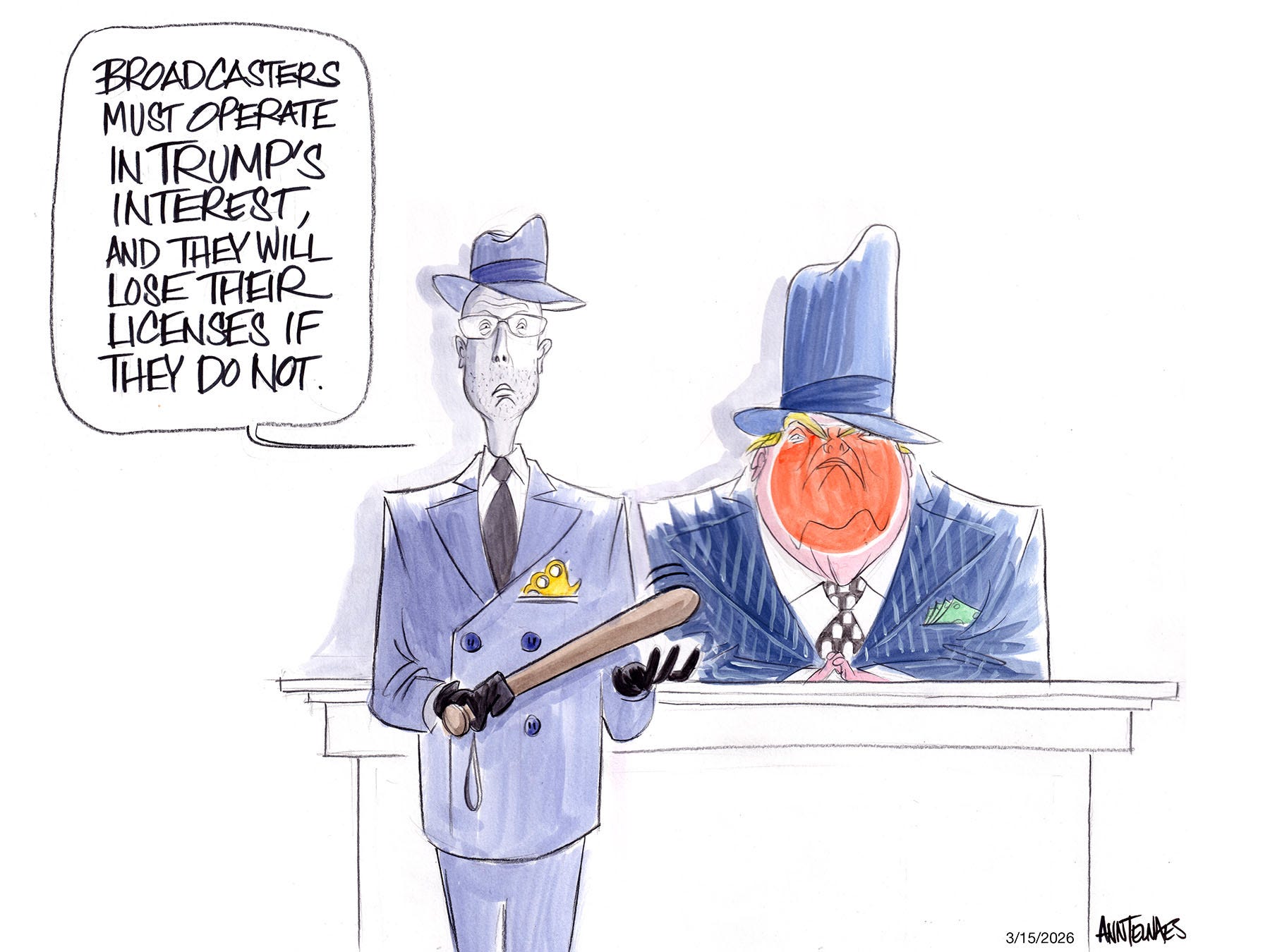
Steve Benen of MS NOW wrote about the censorship of Stephen Colbert’s show by CBS. Since CBS was purchased by the Ellison family, who support Trump, the network is careful to screen out criticism of Trump. Since Talarico is running against Jasmine Crockett, the calculation must have been to undermine him, assuming that Republicans want Crockett as the nominee, not Talarico.

Colbert was already fired by CBS. He’s thus free to say whatever he wants. His last show airs in May.

Benen wrote:

With just a couple of weeks remaining before Texas’ closely watched Democratic U.S. Senate primary, there’s considerable interest in state Rep. James Talarico, one of the leading contenders. With this in mind, the candidate was scheduled to be on CBS’ “The Late Show” on Monday for an interview with Stephen Colbert, which likely would have been interesting and newsworthy.

Except those tuning in to see the interview were left wanting. Colbert told his audience, referring to Talarico, “He was supposed to be here, but we were told in no uncertain terms by our network’s lawyers, who called us directly, that we could not have him on the broadcast.”

The host went on to note that the network that employs him suggested he wasn’t supposed to talk about the apparent fact that it told him not to have Talarico on the show — which, naturally, led Colbert to talk about it at some length and in considerable detail.

The host, whose award-winning show will end in May, told viewers about the Federal Communications Commission and its newfound interest in an old policy called the “equal-time rule,” which has never applied to news interviews and talk-show programs.

As MS NOW reported about a month ago, however, FCC Chairman Brendan Carr suggested a shift in the policy, declaring that shows hosting political candidates will not automatically qualify as “bona fide news” programs, which are exempt from the equal-time requirements.

And so, Colbert lowered the boom:

Let’s just call this what it is: Donald Trump’s administration wants to silence anyone who says anything bad about Trump on TV, because all Trump does is watch TV, OK? He’s like a toddler with too much screen time. He gets cranky and then drops a load in his diaper.

MS NOW has reached out to CBS and the FCC for comment. This post will be updated if they respond.

It’s worth emphasizing that Colbert did, in fact, interview Talarico — it just wasn’t aired on “The Late Show” as planned. Instead, the program posted the entirety of the appearance on its YouTube channel. (Ironically, the broader controversy likely generated additional interest in the interview beyond the audience it was probably going to receive in the first place, offering a fresh example of the Streisand effect.)

The latest clash between Colbert and CBS comes against a backdrop of allegations that the network is moving to the right under its new corporate ownership, but the comedian’s comments about the incumbent president were of particular interest because of the broader pattern.

Indeed, Trump has positioned himself as the nation’s most enthusiastic critic of late-night hosts in recent months, with the Republican repeatedly taking aim at Colbert, ABC’s Jimmy Kimmel, NBC’s Jimmy Fallon, Comedy Central’s Jon Stewart, NBC’s Seth Meyers and Trevor Noah. A few days ago, the president added HBO’s Bill Maher to the list.

As recently as November, Trump insisted that late-night hosts who mock him are engaged in “probably illegal” misconduct, the First Amendment be damned. Two months later, Carr issued a new declaration related to the equal-time policy, and the month after that, Colbert wasn’t allowed to show viewers of his television show an interview with a Democratic Senate candidate

President Trump claims to be deeply concerned about anti-Semitism and discrimination against whites, both here and abroad. But he is persistently indifferent to racism directed towards people of color. He is keen to aid whites who suffer because of government programs intended to help people of color (DEI), but blind to historic and persistent racism directed at people who are Black and brown.

Trump’s racism showed when he nominated a man named Jeffrey Carl to be assistant secretary of state for international organization affairs, Carl had served as a deputy assistant secretary of the interior in the first Trump administration. He has sterling academic credentials. But even some Republicans are unnerved by his views about race.

Carl is committed to the importance of protecting white identity. At his senate confirmation hearings, he explained his concerns about “white erasure.”

The New York Times reported, “After nervously rambling about white food and Black food, white music and Black music and white worship styles, Mr. Carl told the Senate Foreign Relations Committee that a loss of a dominant white culture is weakening the country. That notion has become an intellectual framework animating much of what has been described as the New Right.

Carl is “a proponent of ‘national conservatism,’ a movement that holds that American society lost its moorings when it drifted from a core power structure centered on the Christian white men who founded the nation and instead embraced diversity, multiculturalism and feminism…”

Mr. Carl has argued that white people should organize as a group to protect their rights.

White Americans are increasingly second-class citizens in a country their ancestors founded and in which, until recently, they were the overwhelming majority of the population,” he writes in his 2024 book, “The Unprotected Class: How Anti-White Racism Is Tearing America Apart…

Mr. Carl has also espoused the Great Replacement Theory, the notion that Western elites, sometimes manipulated by Jews, want to “replace” white Americans with nonwhite immigrants.

Carl openly espouses views that are far out of the mainstream, although his confirmation might redefine the “mainstream.”

Civil rights organizations oppose Carl’s nomination. At the close of the Senate hearings, Republican Senator John Curtis of Utah said that he would not support Carl’s nomination.

We will keep an eye on this nomination to gauge the Republican party’s stance on the issues that Carl raises.

Jared Polis, governor of Colorado, decided to join Trump’s voucher plan, which subsidizes private school choice with public money. Please note that Colorado voters recently rejected an amendment to the State Constitution to fund school choice.

Governor Polis’s sunny description of his decision is a triumph of hope over experience. After nearly three decades of experience with charters and vouchers, it is clear that they are not necessarily better than public schools, that they foster discrimination, that they have not spurred innovation, that many rely on uncertified teachers, etc.

Jenny Brunson of Colorado Public Radio has the story.

Colorado will participate in a first-of-its-kind federal tax credit voucher program that could help fund private education.

Gov. Jared Polis made the announcement at a gathering of private and religious school choice advocates Thursday, as he simultaneously lobbies the federal government for stricter oversight to prevent the program from devolving into “fraud, waste, and abuse.”

The program, established under the federal “One Big Beautiful Bill,” offers a 100 percent federal tax credit — up to $1,700 annually — for donations made to Scholarship Granting Organizations, or SGOs. Families could then take advantage of the scholarships.

While religious and other school-choice advocates applauded the announcement, a coalition of public-school advocates in Colorado have voiced strong opposition to participating in the program. And Polis’ written comments to the IRS reveal a deep-seated concern that the federal government’s draft rules may strip states of their ability to regulate the program.

The Treasury Department is currently writing rules for the program, which will start in 2027.

At Thursday’s event, Polis framed participating in the program as a pragmatic win for students that will provide additional resources for tuition, tutoring to address learning loss, special needs services, or education technology, among other uses.

“Really, it’s only our own creativity that can hold us back,” he said. “Anything we can envision, this is a very powerful funding mechanism…”

Critics warn program could ‘dismantle’ public education

On Wednesday, a coalition of public education advocates held a separate national press conference to urge governors to reject what they termed a “Trump school voucher tax scheme” that would divert public dollars to private schools and undermine public education nationwide.

Dawn Fritz, representing the Colorado PTA, said voucher-style tax credit programs often don’t protect students’ rights.

“Voucher systems usually lack accountability,” said Fritz. “They deprive students of the rights and protections they would receive in public schools, and they fail in providing adequate services for students most in need, including students with disabilities, low-income students, and students who are English language learners.”

Colorado voters have rejected previous private school choice proposals three times.

“We have defeated them at the ballot box,” she said. “We have defeated them at the state legislature. We need our governor to stand with us to defeat vouchers once again.”

Oversight concerns

After conversations with U.S. Treasury staff about the rules, others share the governor’s concerns that the current draft rules would leave states powerless to protect students or taxpayers.

“It seems very likely that the regulations will preclude individual states from engaging in any kind of regulation or oversight — either over the Scholarship Giving Organizations or the organizations receiving the voucher funding,” said Lisa Weil, executive director of Great Education Colorado. “Unfortunately, this is tax policy, not education policy.”

Governors may be limited to passing on a list of SGOs that meet basic requirements, according to the IRS’s initial interpretation of the law.

“The opportunities for discrimination and fraud are rife,” Weil said.

At Wednesday’s national press conference, Damaris Allen, with Families for Strong Public Schools and a parent of Florida public school students, spoke of millions of dollars in unaccountable spending in Florida’s program, vouchers being used at “unaccredited private schools,” and students with disabilities waiving federal protections.

An auditor’s report found that the program paid for 30,000 students that the state can’t accurately track, and showed widespread instances where students were simultaneously enrolled in public schools while their families received private scholarship funds

“Our homeschool students have used taxpayer-funded vouchers to purchase lavish vacations, do crazy things like use taxpayer dollars to have an RV, drive across this country, and take trips, buy paddle boards, Disney tickets, TVs, and even patio furniture.”

At least 30 states have decided to opt into the program.

Well, that was fast!

The internet lit up over the past 48 hours about Jeffrey Epstein’s Zorro Ranch.

News broke that the FBI had scoured Epstein’s properties in Palm Beach, New York, and Little St. James Island, but had not given any attention to Epstein’s sprawling ranch in New Mexico.

Yesterday, the New Mexico legislature announced an investigation of the ranch.

Reuters reported:

SANTA FE, Feb 16 (Reuters) – New Mexico lawmakers on Monday passed legislation to launch what they said was the first full investigation into what happened at Zorro Ranch, where the late U.S. sex offender Jeffrey Epstein is accused of trafficking and sexually assaulting girls and women.

A bipartisan committee will seek testimony from survivors of alleged sexual abuse at the ranch, located about 30 miles south of Santa Fe, the state capital. Legislators are also urging local residents to testify…

The so-called truth commission, comprising four lawmakers, seeks to identify ranch guests and state officials who may have known what was going on at the 7,600-acre property, or taken part in alleged sexual abuse in its hacienda-style mansion and guest houses.

The Democratic-led investigation adds to political pressure to uncover Epstein’s crimes that has become a major challenge for President Donald Trump, weeks after the Justice Department released millions of Epstein-related files that shed new light on activities at the ranch.

The files reveal ties between Epstein and two former Democratic governors and an attorney general of New Mexico.

The legislation, which passed New Mexico’s House of Representatives by a unanimous vote, could pose risks to any additional politicians linked to Epstein in the Democratic-run state, as well as scientists, investors and other high-profile individuals who visited the ranch.

The $2.5 million investigation, which has subpoena power, aims to close gaps in New Mexico law that may have allowed Epstein to operate in the state. The committee starts work on Tuesday, and will deliver interim findings in July and a final report by year-end.

The article goes on from here to discuss Epstein’s ranch.

Here is a conundrum: Policymakers and pundits insist that public school students and teachers must be held accountable or they won’t make any progress. Students must regularly tested to make sure they are learning prescribed curriculum.

So-called “education reformers” are all in favor of standards, tests, and accountability. Such a strategy, they insist, drives higher test scores.

But when it comes to voucher students, the “reformers” fall silent. Voucher students don’t need accountability, don’t need testing, don’t need state standards.

Why the double standards? Why should voucher students get public money and be exempt from state testing?

New Hampshire just concluded that debate. Democrats proposed that voucher students take the same tests as public school students. Republicans opposed the bill.

It was defeated.

Garry Rayno of IndepthNH.org described the face-off:

CONCORD — The House defeated a proposal to require Education Freedom Account students evaluation results be reported to the Department of Education.

House Bill 1716 would require the results of national standardized and state assessment testing for EFA students to be reported to the department, along with an assessment of a student’s portfolio by a certified teacher.

The bill would also require the department to develop guidelines for assessing the portfolios and what information is needed in order to progress to the next grade level.

The department would review all the data to determine academic proficiency rates for EFA students based on graduation rate, grade level, gender, race, and differentiated aid categories.

The prime sponsor of the bill Rep. Tracy Bricchi, D-Concord, told the House as a former educator for 35 years she does not agree with those who say public education is bad for the country and communities.

“You hear public education is failing and throwing money at it will not improve the outcome,” she said, while the state has spent millions of dollars on the EFA program with no consistent data to support claims it is widely successful.

This bill would provide the data needed to support those claims, Bricchi said, using the three assessment paths in the statute.

It would also tighten the portfolio requirements to ensure clear documentation of student progress, she said.

“If you spend taxpayer funds,” Bricchi said, “you owe it to taxpayers and people to produce clear data to ensure the money is spent (effectively).”

But Rep. Margaret Drye, R-Plainfield, argued state assessment testing is done for students in grades three through eight and one year of high school, while the bill would require testing of every grade level, every year for EFA students.

And she said in public schools parents may opt their child out of assessment testing, but there is no such provision in the HB 1716 for EFA students.

She said a very successful evaluation process has been in place for 40 years for homeschooled students, but is not available in the bill.

The legislation places a burden on 10,000 EFA students that is not on 160,000 public school students, Drye maintained.

But Peggy Balboni, D-Rye, said the success of public schools is determined by the statewide assessment scores, but EFA students do not have to provide that information or other assessments to the Department of Education.

This bill would allow the same public reporting of the results for EFA students, she said.

“All students who are taxpayer funded should be held to the same evaluation reporting standards,” Balboni said. “This will allow the reporting of EFA students’ academic data to determine if indeed the EFA program is widely successful.”
The bill was killed on a 194-166 vote.

A blogger who calls himself “This Will Hold” wrote a startling post about Jeffrey Epstein’s Zorro Ranch in New Mexico. The sprawling ranch was bought by a Trump ally. Unlike Epstein’s other properties, Zorro Ranch was never searched by the FBI. Why not?

The blogger wrote:

In 2023, four years after Jeffrey Epstein suspiciously died in federal custody, one of the most controversial properties in modern criminal history quietly changed hands.

Zorro Ranch, Epstein’s sprawling New Mexico estate in southern Santa Fe County, was sold to San Rafael Ranch LLC, a limited liability company created just one month before the purchase. The final sale price has not been publicly disclosed. The property was originally listed for $27.5 million before the price was reduced to $18 million.

Public records have revealed that San Rafael Ranch LLC is tied to the family of Don Huffines, a Trump-aligned former Texas state senator and current candidate for Texas Comptroller. Tax protest filings obtained through a public records request list Huffines’ wife as an owner of the ranch and son Colin Huffines, as manager.

According to the Santa Fe New Mexican, in those filings the family sought to reduce the property’s taxable valuation to approximately $13.4 million, citing the “notoriety” of the estate as a factor affecting its value.

There is also a direct line into Trump’s current political ecosystem: Russell Huffines, Don Huffines’ son, serves as Associate Director of Agency Outreach in the Trump administration.

Those facts are documented.

What remains less clear is why Zorro Ranch—unlike Epstein’s other properties—was never subjected to a federal search.

The Allegations That Should Have Triggered an Excavation

In November 2019, months after Epstein’s arrest and death, the U.S. Department of Justice documented an email that, if credible, should have required immediate forensic action.

The email, included in newly released DOJ files, was sent from an encrypted ProtonMail account by someone identifying themselves as “a former staff at the Zorro.” The sender attached six videos of sexual abuse by Jeffrey Epstein and alleged that “two foreign girls were buried on orders of Jeffrey and Madam G” in the hills outside Zorro Ranch.

The email claimed the girls “died by strangulation during rough, fetish sex.”

“Madam G” is widely understood to refer to Ghislaine Maxwell, who is currently serving a 20-year federal sentence for sex trafficking. It’s noted that one of the videos is a suicide attempt confession from a girl in the Bay Area.

A note on another of the videos: 7 mins 31 secs underage girl (Matthew Mellon video). 

Matthew Mellon, yet another billionaire in the Epstein class, dined with Donald Trump in March of 2018 before flying to Mexico in April to check into a rehabilitation clinic. But the 54-year-old banking heir never made it to the treatment facility—according to one report, Mellon was experimenting with ayahuasca, a hallucinogenic drink, and died from a heart attack after taking it.

Matthew Mellon isn’t the first member of the Mellon family to appear in the Epstein files. As we previously reported, Paul Mellon showed up on Epstein’s flight logs—and Timothy Mellon, his son, donated $126 million to Trump’s 2024 campaign. Perhaps to protect the family name?

The allegations in the email—involving sex crimes against minors and claims that girls were buried on the property—remain unsubstantiated, which is not surprising given that the ranch was never subjected to a forensic search.

How Thoroughly the Other Properties Were Searched

The absence becomes more striking when compared to the aggressive and highly visible searches conducted elsewhere.

The contrast is stark.

Across nearly two decades—from the original Palm Beach investigation through the 2019 federal case—Epstein’s other properties were searched extensively.

Palm Beach Mansion 

Epstein’s waterfront Palm Beach estate was the epicenter of the original criminal investigation that began in 2005.

Palm Beach Police conducted a months-long investigation that included:

  • Execution of search warrants
  • Collection of massage tables and physical evidence
  • Statements of multiple survivors
  • Review of phone records and financial documents
  • Noted that computers were missing and that he was “tipped off”

The investigation ultimately led to Epstein’s controversial 2008 plea agreement.

Manhattan Townhouse

In July 2019, shortly after Epstein’s arrest, federal agents executed a sweeping search warrant at his Upper East Side brownstone.

According to court filings and contemporaneous reporting, agents:

  • Seized hard drives, computers, CDs, and other digital storage devices
  • Collected binders containing labeled photographs of young women
  • Removed large quantities of cash
  • Catalogued thousands of pieces of evidence
  • Sawed into the safe and searched multiple floors room by room

The Manhattan search was methodical and exhaustive, forming the backbone of the federal prosecution.

Little St. James, U.S. Virgin Islands

On Epstein’s private island, Little St. James, federal authorities also conducted a search.

Aerial footage and court records show:

  • Forensic teams on site
  • Structures photographed and documented
  • Computer equipment and records seized
  • Controlled access to the island during evidence collection
  • Excavation equipment brought in to examine areas of interest

The island became a focal point of the trafficking investigation.

Paris Apartment and Associated Business

French authorities executed search warrants at Epstein’s Paris apartment and the offices of MC2 Model Management—the modeling agency operated by Jean-Luc Brunel, a longtime Epstein associate later charged with rape and procuring minors before his death in custody.

Computers and records were seized as part of international cooperation efforts. The federal investigative net extended across state lines and international borders.

And stopped at the state lines of New Mexico.

The Property at the Center of the Silence

The estate spans nearly 8,000 acres of high desert terrain, plus an additional 1,200 acres leased from the State of New Mexico. It includes:

  • A private airstrip
  • Multiple residences and guest houses
  • Remote hills and open desert land
  • Secure entry structures

DOJ files include photographs labeled “Zorro Aug 2002,” showing unidentified young women with their faces redacted at the ranch. Flight logs show hundreds of trips to the ranch over two decades and survivor testimony places abuse there.

In August 2019, multiple survivors addressed the court during a hearing against Jeffrey Epstein before the case was dismissed following his death.

Chauntae Davies testified that she was flown to Zorro Ranch both on a commercial flight and on Epstein’s private plane on at least two occasions. She stated that she was raped both times.

Virginia Roberts Giuffre alleged in a lawsuit—later settled—that she was trafficked to the ranch as a minor. In her memoir, she recalled that Epstein brought in “foreign girls who couldn’t communicate in English,” and that “Epstein laughed about the fact they couldn’t really communicate, saying that they are the ‘easiest’ girls to get along with.”

As scrutiny of Epstein intensified, the ranch itself drew attention. In August 2018, Zorro Ranch was burglarized. A gun safe reportedly containing 30–40 firearms was removed.

According to reports at the time, the perimeter fence had been cut, and the intruders appeared to know the precise location of the safe. In addition to the weapons, a small number of antique lamps were also taken.

Several structures can be seen in aerial photo and video of the property, including what appears to be an industrial-grade landfill. In 2019 an FBI tip from a retired New Mexico State Police officer who lived near the ranch reported a newly constructed “suspicious barn” with what appeared to be a “sally port” (double-door entry system used in prisons) and a chimney. 

He was “concerned the property could potentially have an incinerator concealed within the barn.”

A crematorium?

Individually, each detail might have explanation—but collectively, they form a series of investigative leads.

None resulted in a forensic search.

Political Proximity

Epstein purchased Zorro Ranch in 1993 from former New Mexico Governor Bruce King. His son, Gary King, later served as New Mexico’s Attorney General.

The late Governor Bill Richardson appears on Epstein flight logs, in victim depositions, and in DOJ communications referencing the ranch. And internal DOJ emails show Epstein’s continued communication with Richardson following his 2008 Florida conviction.

Virginia Giuffre, who sued Maxwell for defamation, provided photos of herself at the ranch in a 2015 court document. Giuffre said that Epstein trafficked her to powerful men at the ranch, including the late Bill Richardson, who served as New Mexico governor from 2003 to 2011.

After his 2008 conviction, Epstein was not required to register as a sex offender in New Mexico and the state continued leasing him public land attached to the ranch.

These are documented facts.

Does Epstein’s proximity to political elites explain the absence of a federal search?

When federal authorities brought excavation equipment to Little St. James and catalogued evidence floor by floor in Manhattan, why was nearly 8,000 acres of New Mexico desert left untouched?

If nothing is there, a search would settle it.

If something is there, the land holds the answer.

For now, Zorro Ranch remains the only major Epstein property tied to survivor testimony that has never been publicly examined with the same rigor.

And that distinction continues to raise questions.

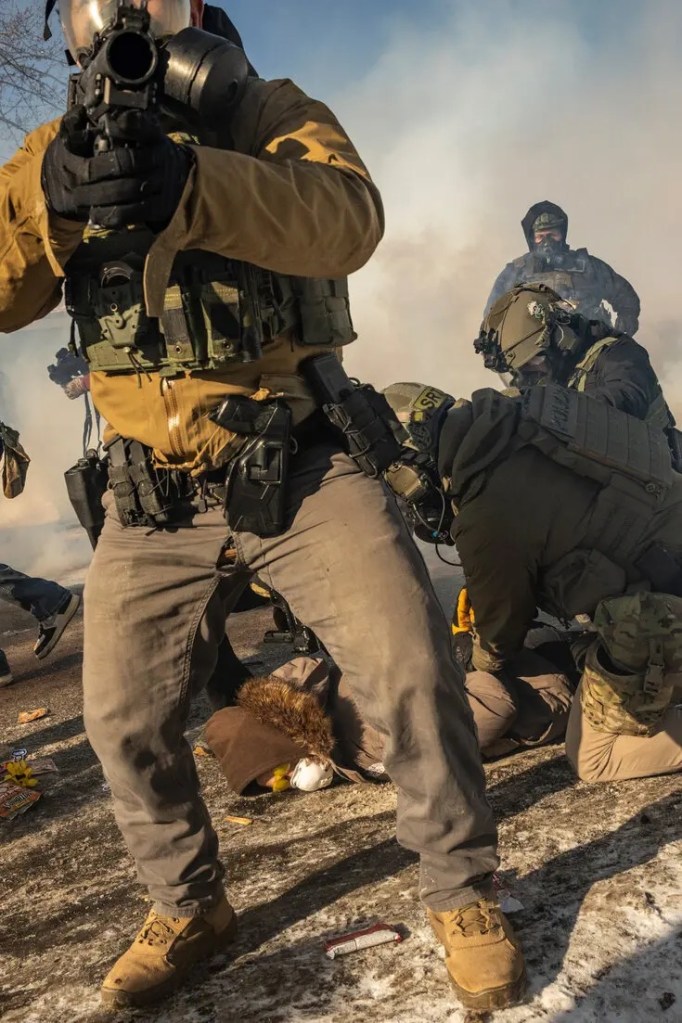
Trump is determined to punish states and cities that didn’t vote for him. So he sent large numbers of masked ICE agents to bully, beat, harass, and intimidate people in blue places, while recklessly killing two protestors.

He unleashed his fury on Minneapolis, sending in 3,000 ICE agents. They must have been trained to act like Brown Shirts because they do. They don’t just arrest people. They grab them, throw them to the ground, punch them, kick them, ziptie them, toss them into a van, picking up people who “look like” immigrants, and disappear them.

The people of Minneapolis resisted. They resisted with such determination that they forced Trump to back down. DHS announced that it will pull its occupying force out of Minneapolis. Everyone is waiting to see if ICE is really leaving. They will believe it when they see it.

Other cities and communities can learn from Minneapolis. The ICE bullies may soon be sent to your city, your community.

The resistance began immediately. People set up an alarm system, letting others know where ICE was operating. People protected their neighborhoods and communities. They turned out to blow whistles, to film ICE actions on their cell phones, and peacefully protest by their presence

Wherever ICE went, volunteers documented what they did. These videos proved to be powerful evidence of ICE brutality and lies.

Renee Good was murdered at one such protest. The White House and Department of Homeland Security called her a domestic terrorist and said she tried to run over an ICE agent, but multiple videos proved that they were lying.

Alex Pretti was murdered when he tried to help a fellow protestor who had been knocked on her back by ICE goons. He was filming with his cellphone. They called him a terrorist and an assassin, but again they were lying.

The people of Minneapolis treated each other as friends and neighbors and organized a powerful resistance. Volunteers organized to deliver food to people afraid to leave home. They drove people who were afraid to take public transit.

Schools protected their students as best they could. Many children from immigrant families were afraid to leave home. The schools went online to keep them learning. Schools stockpiled food for students and their families; volunteers delivered it. Teachers made home visits to check on students.

Columbia Academy, a middle school in Columbia Heights, a Minneapolis suburb, became “a food bank, a counseling hotline, a missing persons task force, an immigration resource center and a refuge.”

Leslee Sheri, the principal of the school in Columbia Heights, a five-school district, said:

“We are the first call,” said Sherk, a first-year principal who has worked in the district for two decades. “They don’t call the police. They don’t even sometimes call their neighbors or different organizations. They call the school.”

Neighbors helped neighbors. Neighbors helped strangers. The people of Minneapolis reacted with surprising solidarity in opposition to the aggressive militarization of their city.

They stood up, often in bitter cold, spoke out, protected the vulnerable, and demonstrated what democracy, courage l, and compassion looks like.

They won.