When Trump allowed his buddy Elon Musk to run a so-called Department of Governmental Efficiency, Musk sent his mentees into every department with a license to terrorize civil servants and destroy their work. Agencies were literally ransacked, employees with deep experience were peremptorily fired by young men in their late teens and early 20s. Foreign aid programs were shuttered, and their employees given orders to return home.
The only certain result of the DOGE incursion was that the kids vacuumed up the personal data of every person, purpose unknown.
One casualty of DOGE in those early days was the Institute of Peace. The Institute was established by Congress and signed into law by President Reagan in 1984. Its goal was to train peacemakers and be the equivalent of military academies. It had a bipartisan board. It trained thousands of professionals in conflict resolution.
In February 2025, Trump signed an executive order to begin dissolving the IP. He fired most of its Board of Directors. The brazen DOGE pests forced their way into the building and took it over. The IP went to court to fight for survival.
The issue is still in court but Trump realized he had a use for the attractive building that previously housed the IP. He invited representatives of Rwanda and the Congo to come to Washington to accept a peace agreement for their decades-long war. This was intended to add luster to Trump’s ongoing campaign for a Nobel Peace Prize. President Obama got one, and that really bothers Trump, who is obsessively jealous of both Obama and Biden.
Days before the big meeting, workmen attached Trump’s name to two sides of the building. It is now officially the Donald J. Trump Institute of Peace. The words “Institute of Peace” are chiselled into the stone. The Trump name was attached in large silver letters. When he’s gone, they can easily be removed.
Foreign leaders now understand well that the key to Trump’s heart is his ego. So they compete to give him a gold crown, a solid bar of gold, and whatever extravagant symbols of royalty they can dream up.
FIFA, the governing body of world soccer, awarded its first gold “peace prize” to Trump to compensate for his loss of the Nobel peace prize. Trump said, “This is truly one of the great honors of my life.” The event was held at the Kennedy Center for the Performing Arts, where Trump fired the entire board, packed the board with his lackeys, and named himself president of the board. He has been thinking of naming the concert hall of the Kennedy Center for Melania. Don’t be surprised if sometime in the next four years, the facility is renamed the Trump Center for the Performing Arts.
And why shouldn’t the Washington Monument be retitled the Trump Monument?
Nothing is too small to be overlooked. Until now, visitors to national parks got free entry on Martin Luther King Jr. Day and Juneteenth, both of which are national holidays. However, the Trump administration has removed those two days. The only free day will be the birthday of Donald J. Trump. Will it soon be declared a national holiday?
Republicans have discussed placing his name and face on a coin–nickel, dime, or quarter–but they better act quickly before the 2026 midterm elections.
The Secretary of Defense Pete Hegseth invited certain members of Congress to view the video in which U.S. military fired a missile at a boat with 11 men on board, allegedly carrying illegal drugs in international waters. After the first strike, surveillance showed that there were two survivors holding on to the remains of disabled boat and trying to climb on to it. Some of those who saw the video said the two survivors waved at the U.S. aircraft. A second strike killed the two men.
Democrats who saw the video said the two men were unarmed, had no communications devices, and were likely seeking to surrender or asking for help.
Republicans who saw the video said the two men were seeking to flip the boat and continue their mission. Hegseth says the second strike was justified because the men still posed a threat.
Was the second strike necessary or was it a war crime or murder?
George Stephanopoulos interviewed Rep. Adam Smith, ranking Democrat on the House Armed Services Committee.
The American public should have the opportunity to view the video that members of Congress saw.
If Congressman Smith is right, whoever gave the order to kill the survivors is guilty of a war crime or murder.
If Hegseth and Republicans who saw the video are right, it was necessary to kill the two survivors to prevent them from summoning another boat to rescue them.
Release the video!
If they refuse to show it to the public, they are purposely keeping us in the dark. None of has an informed opinion unless we see the video that was showed to some members of Congress.
I assume that the boat was no longer navigable after sustaining a missile hit. But I may be wrong.
Release the video and let us have an informed discussion.
Before he was named Secretary of Health and Human Services, Robert F. Kennedy Jr. was best known for his extremist views about vaccines. He has said repeatedly that vaccines are unsafe, that the vaccines cause the disease they are supposed to prevent; and that vaccines cause autism.
His views are so extreme that he was asked at his confirmation hearings by Republican Senator Bill Cassidy, who is a doctor, whether he would change the vaccine policies of the Centers for Disease Control and Prevention. Kennedy insisted that he would not.
Today, it became clear that he is trashing the vaccine policies that he said under oath he would not change.
RFK Jr..’s fired every member of the CDC’s Advisory Committee on Immunization Practices (ACIP) and replaced them with his allies.
Today, that hand-picked panel voted to stop recommending that all newborns receive a vaccine against Hepatitis B.
Senator Cassidy posted this reaction on Twitter:
As a liver doctor who has treated patients with hepatitis B for decades, this change to the vaccine schedule is a mistake. The hepatitis B vaccine is safe and effective. The birth dose is a recommendation, NOT a mandate.
Before the birth dose was recommended, 20,000 newborns a year were infected with hepatitis B. Now, it’s fewer than 20. Ending the recommendation for newborns makes it more likely the number of cases will begin to increase again. This makes America sicker.
Acting CDC Director O’Neill should not sign these new recommendations and instead retain the current, evidence-based approach.
Senator Kennedy’s outrage was echoed by numerous medical leaders and organizations. Children will die because of this decision.
For many public health experts, the vote also marked the end of trust in the C.D.C. and its vaccine advisers.
“Today is a defining moment for our country,” Michael Osterholm, a public health expert at the University of Minnesota, said. “We can no longer trust federal health authorities when it comes to vaccines.”
In a statement, Dr. Richard Besser, president and chief executive of the Robert Wood Johnson Foundation and a former acting director of the agency, said “policymakers, physicians, and families must turn to reputable medical and public health groups for guidance, and health insurers should do the same for informing what vaccines they will cover.”
The votes on hepatitis B were originally scheduled for the September meeting but deferred twice because some members said there was insufficient data to make a decision. The committee attempted the vote again on Thursday, but postponed it after some panelists questioned whether a change was warranted.
Some panelists noted that the practice had helped to nearly eliminate cases among newborns in the United States, and that there was no evidence of harm from the shots at any age.
“We know it’s safe, and we know it’s very effective,” Dr. Cody Meissner, a professor of pediatrics at Dartmouth Geisel School of Medicine, said on Friday, and he warned that if the vote passed, “we will see more children and adolescents and adults infected with hepatitis B….”
RFK Jr. has used his power over the vast agency to fire or force out many well-respected scientists, who were replaced by people who share Kennedy’s extremist hatred of vaccines.
Vinay Prasad, director of the Center for Biologics Evaluation and Research (CBER) and the chief medical and scientific officer at the US Food and Drug Administration, is strongly anti-vaxx, despite his sterling credentials. He recently stated that “at least” 10 children had died after taking the COVID vaccine shot, but he provided no evidence showing the causes of their deaths or how they were related to the vaccine.
Dr. Prasad said that the number of deaths might be more than 10.
Florida Education Commissioner Anastasios Kamoutsas told school board members and superintendents from around the state on Thursday to get over their complaints about Schools of Hope seeking to co-locate in underused district buildings.
Then he suggested the state could look at shutting down “failing” school districts.
That’s when the boos started flying.
Kamoutsas’ lunchtime remarks riled attendees of the Florida School Boards Association’s winter conference in Tampa, the latest escalation of tension between the state’s top education official and local district leaders.
Kamoutsas — who had been invited to the conference but not confirmed as a speaker until Thursday — touted the strong student results of New York-based Success Academy, Florida’s latest Schools of Hope-approved charter school operator, and argued that local districts should want the same kind of outcome.
“That proven success is why Florida has committed to expanding the Schools of Hope model,” Kamoutsas said. “Let’s not forget Schools of Hope are subject to the same assessment program and grading system as the traditional public school. But these schools operate under a performance-based agreement with their sponsor, so if they fail to meet standards, they will be closed.”
Then came the boo line: “There’s not a school district in this state that could be shut down for failing to meet performance standards, though maybe we can talk about that with the Legislature this session.”
The crowd — who had previously heard the commissioner say some of them lacked leadership and conviction — erupted in anger, leaving the commissioner to repeatedly ask them to let him finish. A couple of attendees walked out of the Grand Hyatt Tampa Bay ballroom where the meal was taking place.
After about 20 seconds, the group quieted down. Then Kamoutsas doubled down, telling them that he was not asking, but rather expecting them to innovate in any way possible to make the model succeed. Florida’s students don’t deserve failing public schools, he said.
“This is not the moment to protect the way things work,” Kamoutsas said. “This is the moment to put students first. We have a responsibility, a moral obligation to ensure that every child in Florida has access to a world-class education, not someday, not when it’s convenient, not after the funding gets negotiated. Now.”
I was interviewed by Brian Lehrer of WNYC, public radio about my latest book, probably my last. He is a great interviewer. He asks good questions, followed by people who called in to disagree with me.
It’s an excellent interview.
I apologize if I’m browbeating you with stuff about my book, but the book is really good; I worked on it for two years; the mainstream media has ignored it; and I think you will enjoy reading it.
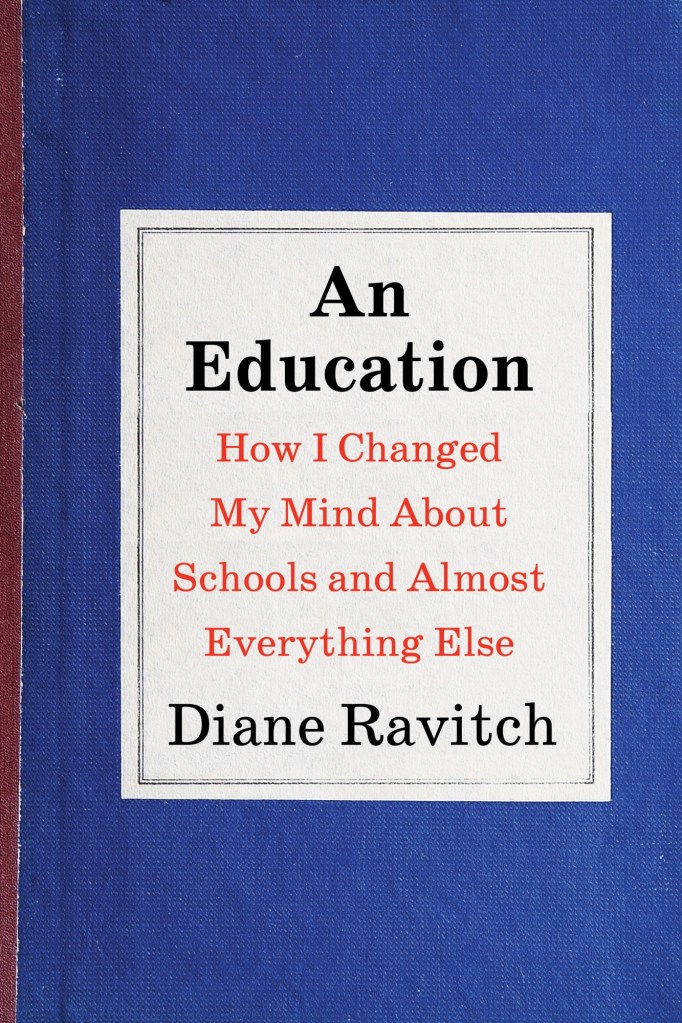
In case you haven’t noticed, the title is:
An Education: How I Changed My Mind About Schools And Almost Everything Else (Columbia University Press). You can buy it from Columbia University Press, your local independent bookstore, or Amazon.
On the bad side, the U.S. Supreme Court overruled a lower court, which had paused Texas’s disgusting gerrymander of the state’s Congressional districts. The party that wins the Presidency usually loses seats in the midterm election. To avoid that happening, Trump asked red state governors to redraw their districts, something that usually happens every ten years, after the latest census.
Texas Governor Greg Abbott was quick to respond to Trump’s request. The MAGA legislature drew a racially gerrymandered map intended to produce five new Republican seats by sacrificing districts that are currently represented by Black or Hispanic members of Congress.
A lawsuit to block the gerrymander lost in the District Court, won in the Appeals Court, which saw the ploy for what it was: a racial gerrymander. Yesterday the U.S. Supreme Court overruled the Appeals Court, finding nothing wrong with a racially gerrymandered redistricting, produced only five years after the last census.
The high court proved once again that it is an extension of Trump-MAGA, lacking in any principles or in fidelity to the Constitution or prior decisions.
We wait to see what they do to California’s gerrymander–not racially motivated–but produced to nullify Texas’ gerrymander.
There is also good news.
As is well known, Trump directed his Attorney General Pam Bondi to prosecute his political enemies–starting with James Comey, Letitia James (Attorney General of New York), and Senator Adam Schiff.
The first indictment of Comey and James was thrown out because the U.S. Attorney, Lindsey Halligan, was unqualified.
Charges were promptly refiled against James, claiming that she committed mortgage fraud, by saying that a home she purchased in Virginia was her first home, when it was really a second home, enabling her to pocket $18,000 because of a lower borrowing rate. Coming from an administration whose leaders have pocketed billions, this is funny.
The first prosecutor thought the case was so flimsy that he refused to bring charges. Trump installed Lindsey Halligan, one of his many personal attorneys, as U.S. Attorney. Galligan got a grand jury to indict James, but a judge threw out the indictment because Halligan was unqualified and made many errors.
When the charges against Tish James were brought to another grand jury, they refused yesterday to indict James.
Trump will no doubt continue to harass his enemies, but he’s running low on personal attorneys.
The mainstream media typically ignores charter school scandals, but CBS picked up on this one. Erika Donalds is building a for-profit charter school chain. She is the wife of Byron Donalds, who is running for Governor of Florida with Donald Trump’s blessing.
Byron Donalds has been a staunch supporter of Trump. Donalds is African American. Frankly, I don’t understand how he can be part of a political movement that seeks to eliminate Black history, dismantle studies of race and gender, and disparage any efforts to rectify historic racial injustices. I hope reporters ask him about these questions on the campaign trail.
Peter Greene saw the segment on CBS and posted the video. In his piece, he refers to Erika Donalds as “Florida’s leading school choice grifter.”
CBS reporters wrote:
Kathleen Cetola believed she had found the perfect fit for her 9-year-old grandson Landon when Optima Classical Academy broke ground in 2023 near her home in Fort Myers, Florida. As the primary caregiver for Landon, Cetola was drawn to the smaller class sizes and more traditional curriculum, which she felt would be “less woke” than the public school he was currently attending.
“Regarding gender and race, I want him to be able to make up his own mind,” Cetola told CBS News. “They were selling the fact that they were focused on the education and the classical type of teaching. I thought that was going to be a great opportunity for Landon.”
The Optima school in Fort Myers was founded by Erika Donalds, a leading voice in the school choice movement and the wife of Congressman Byron Donalds, the Republican frontrunner in next year’s Florida governor’s race. It was poised to be Erika Donalds’ fifth classical charter school and part of a flourishing trend.
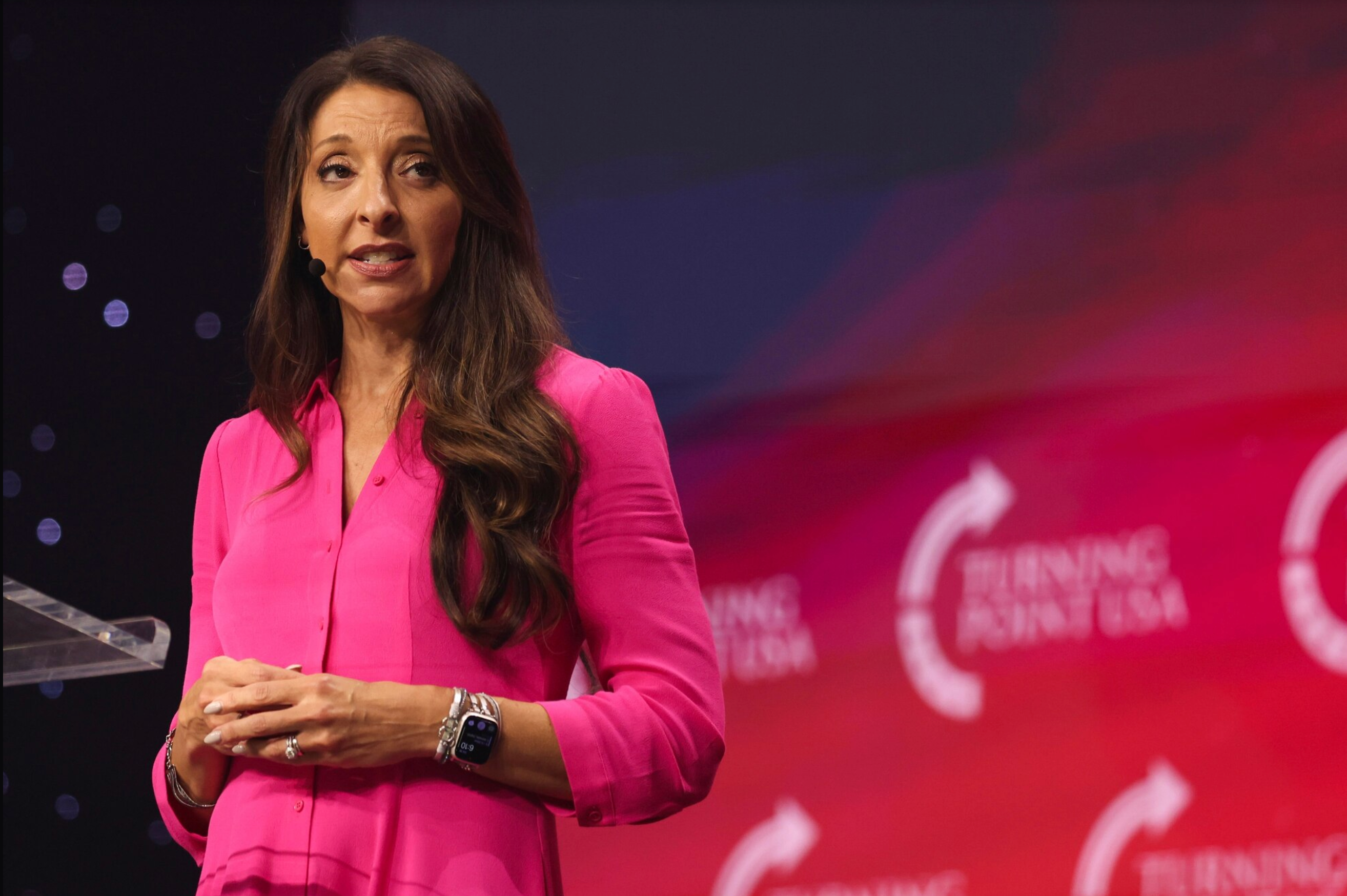
Erika Donalds speaks on stage during day one of the Turning Point USA Student Action Summit on Friday, July 11, 2025, in Tampa. Luis Santana / Tampa Bay Times via AP
Classical charter schools offer a curriculum with a Eurocentric focus that stresses traditional values and introduces primary source documents like the U.S. Constitution at an early age. In the last five years, more than 250 classical schools have opened across the country. Many conservative politicians argue these schools are needed to reject what they see as a pervasive woke agenda in American public education.
Donalds has been a face of the classical charter movement, touring the country to tout their value. In an October speech to a group of conservative college women, she spoke about her decision to start her own schools. She said it was born out of her own experience trying to educate her children.
“I knew there were so many families out there that were desperate for this option,” she said.
Yet, after enrolling hundreds of students and hiring teachers, the Fort Myers school failed to open, leaving parents scrambling to find a school for their children.
“I feel cheated,” said Cetola, who was one of a half dozen parents who told CBS News they had signed up their kids to attend. “These kids were cheated, and it’s heartbreaking….”
The confusion the parents faced, according to experts, is not unique within a charter school industry that often operates with less transparency than traditional public schools.
Donalds declined to be interviewed for this story. In a statement, her spokesperson said she is “an accomplished businesswoman with a strong record of starting successful charter schools and providing thousands of students with an excellent education.”
Taxpayer-funded charter schools paid outside firms
Classical schools are one slice of a charter industry that GOP leaders have tapped to remake America’s public education system. Recent moves by both the federal government and local officials in Florida have freed up hundreds of millions of dollars in new funding. In September, the Trump administration announced it was investing half a billion dollars in grant programs that support charter schools.
The announcement came as Florida passed a law — at the urging of hedge fund manager and Republican megadonor Ken Griffin — to allow charter schools to operate inside traditional public school buildings.
CBS News reviewed state education data, financial documents, independent audits and faculty comments at four schools Donalds had helped launch. State data shows when it came to academic performance, one of the schools quickly excelled. But the records also raise questions about how public money was being spent by the schools.
Tax filings reviewed by CBS News show, between 2020 and 2023, the schools spent roughly 30% of the government funding they received — totaling about $35 million — on outside firms with ties to Erika Donalds. A source familiar with these arrangements said they landed the schools a good price on payroll expenses, IT and other back-office services.
In August, Byron Donalds filed an amended House financial disclosure for 2023, reporting that Erika Donalds held a stake in two of those firms each worth between $1 million and $5 million. His most recent disclosure, for 2024, again listed her stakes in those companies.
The amended disclosure was first reported by the Florida Bulldog…
Of course, parents in Fort Meyers who signed up for Donalds’ school were disappointed when it didn’t open as promised.
They had been promised that the school would open in the fall of 2024. Erika Donalds told them that financial challenges and the lingering effects of Hurricane Ian required her to delay the opening. Parents eagerly anticipated the opening in the fall of 2025, but it was again announced that the opening would be delayed, this time to 2026.
Prior to the school in Fort Myers, Donalds helped launch four other classical charter schools operated by Optima across Florida: two in Jacksonville, one in Stuart and one in Naples.https://datawrapper.dwcdn.net/y9D5j/
Baker, the charter school expert at the University of Miami, said the practice reflected in Optima’s tax filings — of non-profit schools paying money to for-profit companies with overlapping stakeholders — occurs across the charter school industry. He said in the absence of meaningful governmental regulation, accountability comes from “how well they do for students.”
On that measure, students at those four Optima schools performed below average, according to Baker, who looked at math and reading test scores.
“Florida’s charter sector is not strong, and Optima schools, at least the four schools that seem to be in that affiliated mix, perform even less well,” Baker said.
The learning curve when it comes to implementing the classical curriculum can be steep, according to Janine Swearingin, who served as Treasure Coast Classical’s first principal from 2019 to 2022 and would later go on to work directly with Donalds at Optima. She praised Donalds and the company’s role in launching the school, which she said consistently earned top marks from the state when it came to academic performance when she was there.
In January 2023, after Swearingin left the school, the board of Treasure Coast Classical Academy commissioned an independent “performance audit” which was intended to draw attention to areas of concern. The resulting report said that while there were “commendable” aspects of the school’s performance, it also raised questions. Class sizes were so large, it said, that they appeared to violate state law and it noted a lack of structure in the classroom, all findings that Optima disputed.
The auditor praised Treasure Coast Classical’s “outstanding” financial health. But, some faculty complained Optima operated more like a “franchising corporation” and was “dedicated to profit sometimes to the detriment of the school itself.”
“It’s quite an undertaking since teachers don’t generally receive an education in teaching a classical curriculum,” said Swearingin, who noted that in a classical curriculum, first graders are studying the American Revolution at a time when their public school counterparts are learning about community helpers and basic geography. “The training is vastly different.”
As part of its response, Optima said it was working with the auditor “to build trust, address remaining concerns, and correct misinformation or misunderstandings.” A month later, the school’s board moved to terminate its contract with Optima. Treasure Coast Classical later sued Optima, alleging numerous instances of breach of its contract with the school. A county judge dismissed the lawsuit ruling because it had been filed in the wrong venue, and Treasure Coast Classical has appealed.
According to meeting minutes of the schools’ boards as well as county officials and school administrators contacted by CBS News, all four schools that had opened have since cut ties with Optima. The schools still offer a classical curriculum, but under different management. A source close to Donalds told CBS News that Optima’s plan all along was to assist with the start-up and then move on, once the schools reached “full stability.”
Donalds’ spokesperson noted that the schools’ academic performance eventually improved. “These schools show how a supportive environment, committed teachers, and high expectations can help children thrive,” she said.
The school in Fort Myers that had planned to open as Optima Academy is no longer associated with Donalds or her company. According to county records obtained by CBS News, Donalds in August sought to transfer ownership of the building to another charter operator. In October, the county school board approved the transfer and the new operator plans to open the school next fall.
“They just dropped the ball and ran,” Cetola said. “How can you do something like this and sell this to parents who really want to stay involved with their children and then just walk away?”
This story has been updated.
Credits
Reporting by Michael Kaplan, Mark Strassman and Emma Nicholson. Production by Michael Kaplan, Emma Nicholson and Alyssa Spady. Photos and videography by Ryan Jackson. Video editing by Greg Hotsenpiller. Graphics, design and development by Taylor Johnston. Editing by Ellen Uchimiya and Matthew Mosk.
Republicans opposed the creation of the U.S. Department of Education. In 1979, President Jimmy Carter promised the NEA that he would push it through. Republicans fought it but he had the votes, and it was created. While NEA wanted the Department, Albert Shanker of the AFT was against it. He feared that the federal government would exert too much control over schools and that education might be politicized, with each party pushing its agenda. He preferred a department of education, labor, and social services.
Now, the Trump administration is dismantling the U.S. Department of Education. They have not sought Congressional approval, which is necessary to eliminate an authorized Department. Instead, they are eliminating it by layoffs and shifting programs to other departments. There may be a “Departnent of Education,” but the building will be empty. No one will be enforcing laws protecting the rights of children with disabilities. The Office of Civil Rights will likely go to the Justice Departnent, where it will not enforce the civil rights of women and racial minorities, but will make sure that schools stamp out DEI and deny any protections to transgender students.
The continued dismantling of the federal Department of Education is both a con and a lie, one more piece of a quilt of patchwork policies all built around a simple idea– some people are better than others, and the uppity lessers really ought to learn their place. And the rhetoric being used to sell the dismantling is a lie.
The over-simplified version of the department’s origin comes in two parts. First, Congress created some major funding streams meant to level the playing field for students and families, and with those funding streams, some civil rights laws to make sure states leveled their own playing fields for schooling and education. Second, Jimmy Carter, who had promised a cabinet-level ed department (and who wanted to be re-elected) proposed the department as a way to collect, organize, and administer the various policies.
The department’s job was never supposed to be to determine what an excellent education should be. It was supposed to make sure that whatever a good education was presumed to be in your state, everybody got one. So even if a child was presumed to be a poor Lesser, a future meat widget, a child whose special needs made them harder to educate– no matter what, the district and state were supposed to have the resources to meet the challenge. The quality of a child’s education was not supposed to depend on their zip code.
This does not fit well with the current regime’s conception of civil rights, a conception rooted in the notion that the only oppressed group in this country is white guys, or their conception of democracy, a conception rooted in the notion that some people really are better than others and therefor deserve more power and privilege. (Nor does the regime love the idea of loaning people money for college and not collecting it).
So they’ve undone the second step of the department’s creation, and parceled out a bunch of programs to other departments, a move that philosophically advances the idea that education has no point or purpose in and of itself, but exists only to serve other interests.
For example, as Jennifer Berkshire points out, now that the Department of Labor exists to serve the interests of bosses, its interest in education centers on producing more compliant meat widgets to serve boss’s interests. Meanwhile, the ed programs now farmed over to the Department of Health and Human Services can be reorganized around RFK Jr.’s interest in eugenics and identifying those lessers whose proper place in society is, apparently, on a slab.
That unbundling of education programs from the department only undoes the second phase of the department’s origin. But Secretary Linda McMahon’s assertion that these interagency agreement will “cut through layers of red tape” or “return education to the states” is thinly sliced baloney. It’s a lie.
“Instead of dealing with this government department, you will deal with this other government department” does not even remotely equal “You will now have less red tape.” In fact, given that you may have to track down the correct department and then deal with people who don’t have actual expertise and knowledge in education may spell even more red tape.
“We moved this from one government department to another government department” is definitely not the same as “we sent this back to the states.”
Some programs may be sent back to the states in the sense that the feds would like to zero out the budget entirely which means the states that want to continue those programs will have to create and fund the programns on their own. If you tell your kids, “I’m not making you supper tonight,” I guess that’s kind of like saying “I’m sending the supper program to you.”
But the big ticket items, like IDEA and Title I will still be operating out of DC until such day as Congress decides to rewrite them. And given Dear Leader’s shrinking political capitol, I’m not sure that gutting IDEA is high on his To Do list right now.
Matt Barnum suggests that gutting the department is largely symbolic and that actual schools won’t feel that much of a difference. On the one hand, that’s true-ish. “What is less clear,” Barnum writes, “is the Trump administration’s longer-term ambitions.” I’m not sure that’s all that mysterious. The far right’s goal, often in tandem with the modernn ed reform movement, is to get government entirely out of the education business while turning education into a get-it-yourself commodity. If government is involved in education at all, it would be 1) to provide a school-shaped holding tank for the difficult students that private schools don’t want and 2) to provide taxpayer funding for schools that deliver the “correct” ideological indoctrination.
The parcelling-out of the department may only be a small step in that direction, but its long-seething right wing critics can see it as a means of shushing those annoying voices that keep bringing up rules and civil rights and stuff.
The best hope at this point is for a chance to build a new version of the department under a new administration (in an imaginary world in which the Democrats don’t face plant in 2028). But one of the worst things about the department has been the irresistable urge to use those massive grants to force DC-based education ideas on states, and this attack on the department doesn’t really address that problem at all.
What this latest move clearly does not do is send education back to the states, which is, after all, where education responsibility already rested. The regime may be trying to hamstring and privatize education, but they aren’t sending it anywhere. It’s an unserious lie from unserious people. Stay tuned.
Gary Rubinstein is a teacher of mathematics at Stuyvesant High School in NYC and a prominent critic of corporate reform. He started his career as one of the first corps members of Teach for America. After many years inside the reform world, he saw its flaws and became an apostate. Like me. With his superb mathematical skills, he has debunked charter school “miracles,” TFA data, the Tennessee Achievement School District, which did a lot of boasting but failed.
His review is a delight to read.
He writes:
Fifty years after the publication of her first book, ‘The Great School Wars’, author and historian Diane Ravitch has released her long awaited memoirs. In ‘An Education: How I Changed My Mind About Schools and Almost Everything Else’ Ravitch takes us through her life from her childhood in Houston through the ups and downs of a long and productive life driven by truth and integrity.
What makes this book a ‘must read’ is that it has the three elements that a great autobiography should. First, her life story is interesting on an objective level. Anyone picking up the book and reading over the book jacket will know that Ravtich is someone who achieved fame and notoriety through the unlikely passion of the history of Education in America. But in this book we learn about the sorrow she had to endure between her great triumphs. So her story, even if it weren’t so well written, would make a very good book. A second component of a great autobiography is the author’s ability to reflect on 80 plus years of life and find the pivotal moments that changed the course of her life. But for an autobiography to be ‘great’ it must be infused and brought to life with excellent precise writing. As ‘An Education’ has all three aspects, this is a book you are going to want to read and then keep to re-read over the years when you are in need of inspiration.
If you have read any of Ravitch’s education books, you know that she is a master of absorbing decades of events and processing them and creating an insightful, and incredibly efficient, thesis which she develops over the course of a book. As she explains in this book, she learned her craft while writing as a journalist for The Wellesley News and then for The New Leader magazine. In all her books she exhibits this efficient technique that would make Strunk and White beam. But, by design, Ravtich’s books on Education are stripped of emotional language. Those books educate you through a series of well chosen facts that lead you to understand the implications and big moments without having to spell out every detail. The big question, which this new book answers with an emphatic ‘Yes’ is whether or not her kind of writing can be used to evoke the joy and the sorrow she experienced through her full 87 years of living.
When I started reading this book, I would bookmark interesting passages that show her talent for memoir. Eventually I realized that I was bookmarking almost every page. So after the first 50 of so pages, I had to slow down on the bookmarking. Here are some of my favorite moments (I will try not to give away too much).
Since Ravitch can write a full tale in the span of five or six lines, there are so many interesting stories in this book. As a writer she reminds me of one of those painters, I don’t know so much about painting to know what this is called – maybe impressionistic? – who, rather than producing a full photographic quality image, instead just does the minimal with the paint and brush to convey the emotion and ideas. This is something that is very difficult to do yet she makes it look easy.
A few pages later, Ravitch relays an amusing story about how as a teen she found a pearl in an oyster and ended up in the newspaper for it and also got food poisoning from eating the oyster: “The next day, after the newspaper appeared with a photograph of me in short shorts, identified by name, strange men began calling the house, asking for me and saying impudent things. That went on for days, along with the vomiting. My mother was not amused.” This is so efficient, not a word wasted and it does convey the absurdity and the humor with a minimal delivery reminiscent of maybe Bob Newhart.
Here’s one I liked: “The only Sunday school teacher I remember was a strapping guy who discussed Bible stories and the Jewish religion with us. He told us that when he was our age he had run away with the circus.” Ah, see how great this is? In the first sentence she sets up the scene. And then in just a few words tells us the perfect thing to understand this guy. No more is needed and no more is said.
Throughout the book, Ravitch takes stories and moments that could easily fill several pages and finds a way to convey them in a few words. For the reader, this has the effect of injecting all the humor and sometimes the sorrow of these moments directly into our brains without it having to be processed and translated in our minds.
Though these two examples are fun and convey the innocence of childhood, Ravitch is similarly terse in her telling of some of the deepest tragic moments of her life. When these happen in the book, the descriptions are so efficiently written that, like sometimes when bad things happen in life unexpectedly, we find ourselves pausing and wondering if that really just happened. The matter of fact telling of memorable moments of life, both big and small, happy and tragic, has a powerful effect on the reader.
The book really gets rolling when Ravitch enters college in 1956 at Wellesley. In one sense she is a fish out of water and then she eventually completely at home with the lifelong friends she made there. This was a really fun chapter to read as Ravitch has the first of her many brushes with fame, like her friend Maddy – eventually Madeleine Albright. Just as always, Ravitch perfectly sets up the matter of fact description of her friend’s background and then, in an instant it is revealed who she became known as. The Madeleine Albright story was less than one page long.
One of my favorite parts was the description about a satirical musical Ravitch and her friends wrote for the Wellesley Junior Show. It was hilarious. I kind of want to see the full script but her description of it, as all her descriptions, gave us just enough that we feel like we saw the whole show but forgot some of the missing details.
After college, Ravitch starts domestic life but isn’t quite content. She then goes on a lifelong quest for love and for purpose. As she goes through different eras in her life, she meets a new cast of colorful characters, some famous, some not, but always relevant to her story.
In this book we learn how she went from being the wife of an influential New York City figure to the influential Dr. Ravitch the Education guru of this country. As she rises in the ranks, she finds herself in the company of so many famous people — even several presidents, yet she conveys in her telling of these encounters that, to her, it wasn’t such a big deal. They are all just people. Anyone who has gotten the chance to meet her in person and see her interact with so many people who are not famous will see that she treats non famous people like they are special and is always asking them questions rather than talking about herself.
One of the funniest anecdotes in the book is when she inadvertently got Isaac Asimov angry with her over small talk related to word processors. Again, this is only a few lines, but another interesting adventure in Ravitch’s full life that put her often in the room with all kinds of famous people.
While married to her husband, Diane unexpectedly meets her soulmate who happens to be a woman. In the chapter about the genesis and growth of her relationship, they have now been together for almost 40 years, she is able to convey what it means to finally experience the joy of true love.
In the last chapters of the book we learn about the Washington years in the Department of Education and how that came about and what she tried to accomplish there. We also learn about what it took to renounce much of her work and to follow the evidence into a more evolved system of beliefs about what can improve education in this country. She lost a lot of friends and titles in the process but she kept her personal integrity and commitment to the truth.
Throughout the book, the theme is that Ravitch is never just one thing or the other. Is she a education conservative or an education liberal? Is she straight or gay? Is she a southerner or a north easterner? Is she an introvert or an extrovert? Is she a socialite or a homebody? And throughout her life she is sometimes one and sometimes the other. She is someone who defies categorization. And though in the subtitle she says she ‘changed her mind about schools and almost everything else’ she never changed her core belief that you don’t just stay in the same place just because you are comfortable there.
And like with her, this book is a lot of different things. On one level it is an amusing and interesting read about someone whose choices led her on an unlikely adventure ending with her being, in some circles, a huge celebrity. But it is also an inspirational tale of how having values and staying true to them can help you overcome some of the unfortunate obstacles you have to deal with in life. And though I doubt it was intended to accomplish something else, I think that for many readers they will want to write down their own memoirs after reading this. Ravitch makes it look so easy to analyze your life, find the key moments in it and write some succinct prose – though of course it isn’t so easy but still a worthwhile task.
After finishing this book, I had an experience that only a few people were also able to have. In the acknowledgements in the ‘friends’ section, among sixteen other names, there was my own. I got a chill seeing this, never expecting it. But this made me think something else, also a lesson, though maybe unintended from this great book. This book reminds us of the importance of relationships. Everyone you know has a story to tell. Some people’s lives may not have the highs and lows of Diane Ravitch’s but for each person, their joys and sorrows are meaningful to them. And even if they don’t have the capability to write the way Ravitch can, if they could, you might find yourselves in the acknowledgement page for that friend or family member. So enjoy the relationships you have while you can and remember that you are an important person in many people’s lives.
So pick up a copy today and take a ride through the ups and downs of a well lived life. Though she has made a career of writing about education and teaching, through this book she educates and teaches us that if you keep an open mind and are committed to learning and following the facts, you might end up in a comfortable home a long way from where you started.
For the past few months, the U.S. Navy has been blowing up small speed boats in the Caribbean and even in the Pacific. The orders to do this come from the President and the Secretary of Defense. They say they are blowing up boats that are transporting drugs to the U.S. They must do this, say Trump and Hegseth, to protect the American people from the scourge of drugs. They say the boats originate in Venezuela, and Trump has threatened to bomb that country.
How do they know that the boats they destroy are carrying drugs? How do they know that the 80 or so people they killed are drug runners? Where’s the evidence? They won’t say.
An even bigger controversy arose when The Washington Postreported that the first boat to be blown up required two separate strikes, because after the smoke cleared, it was apparent that two men survived the explosion and were clinging to the remains of the smouldering boat. According to the Post, Hegseth had give oral orders to “kill them all.” So the planes came back and killed the two survivors.
The story appalled members of both parties. Trump said he knew nothing about it, Hegseth said the Admiral in charge gave the order, and Hegseth called him a hero.
Congressional hearings might get to the truth. Will the Admiral admit to a war crime to save Hegseth’s skin? According to the laws of war, killing a defenseless survivor who poses no threat is a war crime.
Trump’s press secretary Karoline Leavitt defended the second strike because the President is determined to keep drugs out of the U.S.
But by an unfortunate coincidence, the news about the second strike coincided with Trump’s decision to pardon Juan Orlando Hernandez, the former President of Honduras, who had been sentenced to 45 years in prison for his role in bringing 500 tons of cocaine into the U.S. Trump said he was a victim of Biden’s overzealous and unfair prosecution.
He once boasted that he would “stuff the drugs up the gringos’ noses.” He accepted a $1 million bribe from El Chapo to allow cocaine shipments to pass through Honduras. A man was killed in prison to protect him.
At the federal trial of Juan Orlando Hernández in New York, testimony and evidence showed how the former president maintained Honduras as a bastion of the global drug trade. He orchestrated a vast trafficking conspiracy that prosecutors said raked in millions for cartels while keeping Honduras one of Central America’s poorest, most violent and most corrupt countries.
Last year, Mr. Hernández was convicted on drug trafficking and weapons charges and sentenced to 45 years in prison. It was one of the most sweeping drug-trafficking cases to come before a U.S. court since the trial of the Panamanian strongman Gen. Manuel Noriega three decades before.
Last year, Mr. Hernández was convicted on drug trafficking and weapons charges and sentenced to 45 years in prison. It was one of the most sweeping drug-trafficking cases to come before a U.S. court since the trial of the Panamanian strongman Gen. Manuel Noriega three decades before.
But on Friday, President Trump announced that he would pardon Mr. Hernandez, 57, who he said was a victim of political persecution, though Mr. Trump offered no evidence to support that claim. It would be a head-spinning resolution to a case that for prosecutors was a pinnacle, striking at the heart of a narcostate.
But on Friday, President Trump announced that he would pardon Mr. Hernandez, 57, who he said was a victim of political persecution, though Mr. Trump offered no evidence to support that claim. It would be a head-spinning resolution to a case that for prosecutors was a pinnacle, striking at the heart of a narcostate.
Prosecutors said Mr. Hernández was key to a scheme that lasted more than 20 years and brought more than 500 tons of cocaine into the United States.
What’s the logic? Kill the drug runners who, if they are drug runners, are paid $500 a day. Let the kingpin go free.
Trump is not serious about stopping the flow of drugs into the U.S.


 Diane Ravitch's blog