Scott Maxwell of the Orlando Sentinel explains the power dynamics behind DeSantis’ fight with Disney. DeSantis just hired four law firms, at the taxpayer expense, of course, to fight Disney’s secret coup to retain control of its property.

Maxwell writes:

If you look at Mickey Mouse’s hands, you’ll notice he doesn’t have a middle finger. But if he did, he most surely flipped it at Ron DeSantis this past week.

Florida’s governor had told the world that he’d taken on Disney and won. But while DeSantis was busy tweeting, Disney operatives were busy working, quietly rewriting legal papers in an attempt to ensure the governor’s tough talk never amounted to anything more.

Basically, Disney was playing 4-D chess while the governor’s legal team was fumbling with a bag of checkers. And by the time Team DeSantis figured out what had happened Wednesday, its members could do little more than fume and pout.

DeSantis is so used to picking on easy targets — drag queens and transgender teenagers — that he wasn’t prepared to do battle with someone with the power to fight back.

It’s easy for DeSantis critics to laugh and scoff. Donald Trump certainly did, mocking his former protégé for getting bested by a cartoon mouse.

But the reality is that this whole situation stinks.

Ron DeSantis and GOP lawmakers are trying to use bully power and petty politics to punish a private company for expressing opinions they dislike — in this case, Disney’s opinion that LGBTQ families should be treated like human beings….

Still, Disney doesn’t deserve to run its own government. Many of us have argued as much for years. Unfortunately, lawmakers in this state have been happy to do Disney special favors for decades — as long as Disney cut them checks.

Just two years ago, DeSantis signed a law exempting Disney from a crackdown on social media companies after the company gave his political committee $50,000.

The ludicrous bill, which was invalidated by a federal judge who noted the special-interest favoritism, included a carve-out that exempted any company that “owns and operates a theme park.” DeSantis signed the bill less than two months after cashing Disney’s check and after records show his staffers swapped emails about the language Disney lobbyists wanted in the law.

DeSantis clearly did a favor for a corporate donor, blowing a castle-sized hole in the tough-on-corporations narrative he tries to peddle. In fact, a big part of why corporate America likes DeSantis is that they know he plays ball….

DeSantis had vowed to make Disney “follow the same laws every other company follows in the state of Florida.” I actually like that plan. That’s how it should’ve been all along. But that’s not what he did.

Instead, he put a group of hand-picked political appointees in charge of the private company. No other company in America works like that. DeSantis didn’t put Disney on the same footing as everyone else. He tried to put Disney under his own personal thumb. And Disney seems to have found a way to at least temporarily thwart him.

If these guys actually had a desire to do the right thing — before Disney cut them off financially — they wouldn’t have tried to twice ram through poorly thought-out laws. They would’ve asked a team of smart government-law experts to devise a way to sunset Disney’s special status in a logical, legal matter.

But logic has taken a beating in Tallahassee over the last two years as book-banning, pronoun-legislating and drag-queen-bashing have become the rage.

I don’t begrudge anyone who laughed at DeSantis last week for getting out-brained by a mouse. It was cringe-inducingly amusing to watch his campaign team stage a meltdown on Twitter, claiming that the governor’s clear loss was really a big win because (just you wait) the governor is always thinking “10 steps ahead….”

So sure, laugh at DeSantis. But I’m still not rooting for Disney.

While the company has done some great philanthropic things in this community, it has also used money, power and even free park tickets to warp public policy in this state for decades. Everything from secret text messages with county commissioners to try to deny sick time for local workers to back-channel messaging with the governor’s staff to request special favors.

I’m not cheering for the powerful corporation or the pandering politicians. I’m rooting for good government that doesn’t cater to special interests — the one thing neither side seems to want.
smaxwell@orlandosentinel.com

ProPublica revealed that Justice Clarence Thomas had accepted luxury vacations from Harlan Crow, a Texas billionaire, for the past two decades and never acknowledged these gifts on his financial disclosure form. Justice Thomas said in a statement that he thought these lavish trips on a private jet and a super-yacht fell under the category of “personal hospitality,” like having dinner at a friend’s home. ProPublica estimated that a recent trip to Asia, involving both the jet and the yacht, was worth about $500,000.

ProPublica consulted seven ethics experts, and all agreed that his defense was unreasonable. For one who claims to take the letter of the law literally, his failure to report the multiple gifts of free luxury travel is nonsense.

Will there be any accountability?

Are Supreme Court Justices outside the law?

I am thrilled to announce that Dr. Leslie T. Fenwick will speak at Wellesley College in the annual lecture series that I endowed. Admission to the lecture is free and open to the public. If you live within driving distance, be there.

The lecture will be held in the auditorium of Jewett Arts Center. Be there!

For a real treat, watch Dr. Fenwick’s lecture “Looking Behind the Veil of Education Reform.”

The Diane Silvers Ravitch ’60 Lecture

Living with Histories That We Do Not Know with Leslie Fenwick

Tuesday, April 11, 4 p.m. ET
Dr. Fenwick will draw on her sustained contribution to education policy research and groundbreaking findings from her recently published award-winning and bestselling book, Jim Crow’s Pink Slip. Dr. Fenwick’s research upends what we know and understand about Brown vs. Board of Education and details why the newly excavated history she shares is important to the nation’s racial justice and educational equity goals.

Livestreamed at www.wellesley.edu/live.

Dr. Leslie T. Fenwick, PhD, is a nationally-known education policy and leadership studies scholar who served as Dean of the Howard University School of Education for nearly a decade. A former Visiting Scholar and Visiting Fellow at Harvard University, Fenwick holds an invited appointment as a MCLC Senior Fellow at the U.S. Military Academy at West Point where she occasionally lectures about character leadership and ethics. Additionally, Fenwick served as an appointed member of the National Academy of Sciences committee that produced the first study about mayoral control of Washington DC Public Schools. Fenwick (who is a former urban school teacher and adminstrator) is regularly called upon to testify about educational equity and college access to the U.S. Senate, National Conference of State Legislatures (NCSL), U.S. Conference of Mayors, National Urban League, Congressional Black Caucus (CBC), American Federation of Teachers (AFT), Education Writers Association (EWA), National Education Association (NEA), National Association for Equal Opportunity in Higher Education (NAFEO), Hispanic Association of Colleges and Universities (HACU), and the National Alliance of Black School Educators (NABSE). Additionally, she has been an invited speaker at the National Press Club, the Washington Lawyers’ Committee on Civil Rights and Urban Affairs and the Washington Policy Seminar.

Rachel M. Cohen writes for VOX about national issues. In this post, she explains the Texas decision banning the sale of anti-abortion pills by mail or any other way. The judge said the pill is unsafe, despite its approval by the FDA and careful review of its use for 23 years. This decision conflicts with one in Washington State, which ruled that the FDA must not restrict access to the same drug. Cohen provides a valuable and concise overview of the issue.

Please open the link and read on.

For her Easter post, Mercedes Schneider wrote about the hypocrisy of those who loudly proclaim their love of Jesus, but also pass laws to put adolescents to work in dangerous low-wage jobs.

She writes:

The corporate world is short on workers, sooo, let’s see what states will pass legislation to loosen restrictions on child labor.

This drive reminds me of the blindside on K12 education that is Common Core– the justification (and assumption) being that the chief purpose K12 education is to “prepare students for 21st century jobs.”

Well, its the 21st century, and it seems that business is short on bodies, and any warm body will do.

So, on this Easter as I think of Jesus, who brought to the attention of his male-centric culture the importance of considering children as people valuable in their own right, I also think of the primarily-Republican push to feed children to the god of business and industry.

On March 14, 2023, journalist Jacob Knudsen published a piece in Axios, stunningly entitled, “Lawmakers Target Child Labor Laws to Ease Worker Shortage.”

Forget childhood. We must appease the god of business and industry.

Knudsen writes, in part,

Legislators in multiple states are invoking a widespread labor shortage to push bills that would weaken long-standing child labor laws.

Why it matters: Some bills go beyond expanding eligibility or working hours for run-of-the-mill teen jobs. They’d make it easier for kids to fill physically demanding roles at potentially hazardous work sites. …

Driving the news: A new Arkansas law signed by Gov. Sarah Huckabee Sanders (R) last week makes it easier for teens as young as 14 to work without obtaining a permit.

Between the lines: The laws and proposals have largely been introduced by Republicans but received support from some Democrats in Ohio and New Jersey. …

Zoom in: Iowa lawmakers are considering Republican legislation that would allow 14- and 15-year-olds to work in industrial laundry services and freezers at meatpacking plants. It’d also prevent many of them from receiving worker’s compensation if they are sickened, injured or killed on the job.

The Iowa law specifically excludes businesses who hire teens from any civil liability in the event they suffer harm or even death in the workplace.

Mercedes concludes:

This exploitation (make no mistake that this loosening of child labor laws in numerous states is exactly that) has at its center a lack of planning combined with the desire for a lower bottom line (and greater profits). Many of my teenaged students already drag themselves to school, only to fall asleep in class with the apology that “I had to close last night.” Therefore, making it easier for employers to squeeze even more out of school-aged employees even as society expects of them (and their schools) stellar academic results (dog whistle: test scores) is indeed speaking out of both ends of a hypocritical, corporate-adulating mouth.

Jesus loves the little children, sooo let’s exploit their labor potential, even for dangerous jobs, as we simultaneously absolve ourselves of any responsibility– even death.

Peter Greene has written several columns about the U.S. Supreme Court’s step-by-step effort to tear down the wall of separation between church and state. With its June 21: 2022, decision called Carson v. Makin, the High Court ordered the state of Maine to pay the tuition for students at two religious schools. Under Maine law, districts that do not have a public high school must pay tuition for high school students to attend a private non-religious school. A majority of the justices ruled that Maine violated the students’ free exercise of religion rights by denying them the same benefits as those who go to private schools at the public’s expense.

The decision was 6-3. The majority were all appointed by Republican presidents (Roberts, Alito, Thomas, Gorsuch, Kavanaugh, and Barrett). The minority were appointed by Democratic presidents (Breyer, Sotomayor, Kagan). All six of the Justices in the majority were born Catholic; Gorsuch graduated from Georgetown Preparatory Academy, a Jesuit school (Brett Kavanaugh was two years behind him.) Gorsuch and his family now attend an Episcopal church. The minority bloc consists of two Jews and a Catholic (Sotomayer).

Before the case was decided, Peter Greene expressed concern that the two religious schools openly discriminated against student, families, and staff by refusing to accept into the school’s community.

He wrote six months before the decision was released:

Bangor Christian Schools require adherence to a code of conduct; trans or gay students will be expelled, even if celibate. Their religious indoctrination is inseparable from their academic instruction. A fifth grade social studies objective is to “recognize God as Creator of the world,” while a ninth grade objective is to “refute the teachings of the Islamic religion with the truth of God’s word.” Teachers at BCS must certify that they are born again Christians.

Temple Academy is an extension of the Centerpoint Community Church. TA is unlikely to admit students that do not come from a Christian family; that family must sign a Family Covenant saying they agree with TA’s views on abortion, marriage, and homosexuality. Again, only born again Christians may be hired to teach; teachers also sign an employment agreement acknowledging that the Bible says that God considers “homosexuals and other deviants as perverted.”

The issue, he wrote, was not about freedom of religion or free exercise of religion, but about whether taxpayers should pay for schools that discriminated against defined groups of people.

For several years, fans of school choice have been pushing the argument that a religious school is not free to exercise its religious faith if it does not get to share in taxpayer dollars. The wall between church and state has thus been characterized as discrimination against religion. Turns out you can’t be really free without taxpayer funding.

A few weeks ago, Peter returned to the subject and reviewed some of the Justices’ arguments. Quite simply, he wrote, the Supreme Court was ordering the state of Maine to pay tuition at schools that engage in discrimination.

Justice Breyer asked:

What happens once “may” becomes “must”? Does that transformation mean that a school district that pays for public schools must pay equivalent funds to parents who wish to send their children to religious schools?

Justice Sotomayor said:

In 2017, I feared that the Court was “lead[ing] us . . . to a place where separation of church and state is a constitutional slogan, not a constitutional commitment.” Today, the Court leads us to a place where separation of church and state becomes a constitutional violation.

But the case goes on, because Maine passed a law stating that it would not fund schools that discriminate. The Bangor Christian Academy sued the state and asserted its right to discriminate.

Bangor Christian Schools is now suing the state of Maine, asking first for an injunction against the Maine Human Rights Act (MHRA) restriction that bars them from receiving state money as long as they continue to discriminate. Their assertion is that the “poison pill” of human rights law in Maine violates their religious liberty, that they cannot exercise that liberty unless they can both receive state funds and continue to discriminate against students and prospective faculty that don’t meet their religious requirements.

The state of Maine insists that it will not fund schools that discriminate:

Attorney General Aaron Frey said that “all Mainers deserve to be treated with dignity and respect, whether it be in their workplace, their housing, or in their classrooms. The Maine Human Rights Act is in place to protect Mainers from discrimination and the Office of the Attorney General is steadfast in upholding the law. If abiding by this state law is unacceptable to the plaintiffs, they are free to forego taxpayer funding.”

Peter continued his dissection of the decision in a third post, wherein he debated the libertarian Neil McCluskey of the CATO Institute. McCluskey asserts that secular schools are hostile to religion, and the only way to secure true freedom of religion is to fund all choices, all religions.

Peter writes:

First, I don’t accept the premise that “secular” requires hostility to religion. If you play in the percussion section, you aren’t hostile to melody–it’s just not your job to handle it. A secular education system doesn’t try to fulfill any religious functions, for a variety of reasons we’ll get into.

There’s another issue in that first point, which is the newly revived idea among some folks that they cannot fully and freely practice their religion unless they are free to discriminate against people of whom they disapprove, like the Mom who objects to having her child taught empathy because she believes there are some people her child should not feel empathy for. This is a whole other post, but my short answer is this–there is no placating these people as long as circumstances find them in a pluralistic society.

But where I really disagree with McCluskey is in his central notion that by allowing everyone to retreat to their own personal bubbles, we can end all the various battles over culture and religion…

The whole choice thesis is that by not using taxpayer funds to support private religious choice, the government is discriminating against religious folks (with the newest legal test of this theory coming to a courtroom in Maine). Again, this reasoning goes, I am not fully free to exercise my religion if the taxpayers aren’t subsidizing my choice.

I should get to practice in my little bubble, and the taxpayers should help pay for the bubble.

That’s how this vision of choice leads to religious discrimination on an unprecedented scale and takes us all the way back to the question of separate but equal.

Peter demonstrates a variety of scenarios that show how thorny this issue is.

A variety of secular schools realize that if they re-configure themselves as religious schools, the “free exercise” clause is a ticket to the Land of Do As You Please and they can start discriminating against students and faculty in pretty much any way they wish as long as they claim that it’s an essential part of their religion. This will force taxpayers to fund all sorts of things that they (and not just liberal especially) object to, from aryan supremacists to gender theory schools. One worst case scenario will be a government agency given the task of figuring out which religious schools are “real” religious schools and which are just playing games. The other worst case scenario will be states figuring out how to regulate these schools so that they can’t discriminate in ways that would be illegal for anyone else. Or maybe we’ll just have a government office of educational equality that makes sure that every religion gets an equal shake in the school funding/free exercise department. No way that could end badly. None of these “solutions” will be popular.

Now that we’re establishing that I can’t have freedom to exercise my religion without enough of a taxpayer subsidy, who is going to decide how much subsidy is enough?…

I can imagine taxpayers rejecting bond unissued because they don’t to subsidize all those religious schools.

Peter concludes:

I can imagine plenty of awful scenarios. What I can’t imagine is how vouchers + religious schools results in a free and adequate education for every child or greater harmony and cohesions for our pluralistic nation. Yes, yes, I understand we haven’t exactly mastered either of those things currently, but I don’t see how vouchers + religious schools does anything except make matters worse.

Peter Greene has moved his wonderful blog Curmudgucation to Substack. Here is his first Substack submission. It describes the importance of Congressman Jamaal Bowman’s proposal to end the federal testing mandate, which was enacted 22 years ago. The tests have proved to be useless (the results come in after the students has moved to a different teacher); the ratings on the test are based on NAEP achievement levels, which is confusing and inaccurate. Most people think that most students should rank “proficient,” but NAEP Proficient is equivalent to an A. Most students are never at A performance unless standards are dumbed down.

Greene writes:

Rex Nelson is a lifelong Republican and an opinion writer for the Arkansas Democrat-Gazette. He remembers when the state had moderate, pragmatic governors, both Republican and Democrat.

Sarah Huckabee Sanders is not one of them. Instead of surrounding herself with knowledgeable locals, she has imported leftovers from the Trump administration, with no connection to Arkansas.

Her tweets and comments are nasty, just like Trump’s. She lashes out at enemies, some imaginary, and insults them. She learned at Trump’s feet.

He writes:

Though my expectations were low based on the hyper-partisan, angry, shallow campaign run last year by Sarah Sanders, I held off writing this column in the hope that our governor–who had never held elected office and never had a job in the private sector outside of political consulting–would mature once in office.

I’m a conservative. I spent 15 years working for Republican candidates and officeholders. I remember a time in the early 1980s when there were so few of us in Arkansas who identified as Republicans that we all knew each other on a first-name basis. In fact, the people who seem the saddest about the tragedy that is the Sanders administration are those Arkansas Republicans I met four decades ago. They no longer recognize their party.

“I just want to cry,” one of them told me after calling my house on a Sunday afternoon.

I can’t help but think back to 1996 when Mike Huckabee was thrust into the governor’s office following Tucker’s resignation. Huckabee dropped out of a U.S. Senate race he was going to win, choosing Arkansas over the lure of national politics. He surrounded himself with experienced Arkansans. His senior management team included highly respected former legislators such as Dick Barclay, Jim von Gremp and Joe Yates.

Huckabee also brought to his administration a string of strong women, all native Arkansans with long years of service to the state. There was former legislator Carolyn Pollan of Fort Smith and Judge Betty Dickey of Pine Bluff. Huckabee’s chief of staff his entire time in office was Brenda Turner of Texarkana. Turner worked behind the scenes and kept a low profile, but she was a force of nature.

Sanders has surrounded herself with political journeymen who have no concern about the people of Arkansas or this state’s future. It’s all about the boss’ national political standing. These aides will simply move on to other states when they’re done here, leaving the rest of us to deal with the damage.

Sanders and her top aides seem intent on bringing the chaos and divisiveness of the comical Trump administration to state government–rushing through a major education overhaul in order to avoid needed debate, avoiding the Arkansas media, relying on national far-right outlets, and putting out mindless tweets about national politics that have nothing to do with Arkansas.

Rex Nelson refers to Sanders and her team of inexperienced staff as “the Trumpettes.”

Open the link and read the entire article.

YOU ARE INVITED TO A “DAY OF ACTION” AT THE STATEHOUSE

Pastors for Indiana Children is a nonpartisan, independent ministry, not beholden to any special interest group, political party, or church office. We believe in local democracy, cooperation across lines of difference, and organizing to support public education opportunities for Indiana children.

WHO: Any Pastor, Community Leader, Parent, Student, Advocate who wants to keep public schools public, fully funded, and equitably meet the needs of ALL students. Pastor Charles Johnson, Executive Director of Pastors for Texas Children is planning to join us.

WHAT: Pastors for Indiana Children is hosting an Day of Action. We will be speaking with State Legislators directly about HB 1001, HB 1002 and HB 1591. These bills threaten the further destroy public education.

WHEN: Thursday, April 13th, 2023 from 10 a.m. to 12:30 p.m. Press Conference to follow at 12:30PM

WHERE: Indiana State Capitol Building
200 W Washington St, Indianapolis, IN 46204

WHY SHOULD PASTORS STAND UP FOR PUBLIC EDUCATION:

There are several reasons why pastors should stand up for public education:

  1. Public education is a common good: Public education is a fundamental pillar of a healthy and just society. It provides all children, regardless of their background, with the opportunity to learn and develop the skills they need to succeed in life.
  2. Equity and access: Public education is essential for promoting equity and access for all students. It provides a level playing field for students of different socio-economic backgrounds, and helps to reduce disparities in educational opportunities.
  3. Moral imperative: As leaders in our/your communities, Pastors have a moral obligation to support the common good and to advocate for justice and equality. Standing up for public education is one way to fulfill this obligation.
  4. Community engagement: Public schools are often the hub of their communities, serving not just as places of learning, but also as gathering places for community events and activities. Pastors can help to strengthen their communities by supporting public schools and advocating for their improvement.
  5. Shared values: Public education is consistent with many of the values that Pastors hold dear, such as the value of education, the importance of social justice, and the idea that we are all called to work for the common good.

By standing up for public education, Pastors can help to promote equity, justice, and the common good, while also strengthening our communities and living out our values.

Pastors, Ministers and Congregants please take the opportunity to share with other Pastors who may not know what is going on. Although, I have listed 3 bills that are a problem, there are many bills floating through and being passed in our statehouse. We must stand together to push back on this attack of public education and in specific the most vulnerable, OUR CHILDREN.

See you at the State House on April 13, 2023!

Sincerely,


Dr. Ramon L. Batts
State Director
Pastors for Indiana Children
www.PastorsForIndianaChildren.org

Fred Klonsky is a retired teacher who blogs regularly about Chicago, Illinois, the nation, politics, and culture. In this post, he draws an interesting comparison between the recent expulsion of two Black legislators in Tennessee and events concurrent with the end of the Reconstruction era and the reign of Jim Crow. There is this difference: The two ousted members are very likely to be restored to their seats in the legislature by their local elected officials. The Tennessee Three are now national figures revealing the fascist hand in the iron glove of the Republican Party when it has the majority.

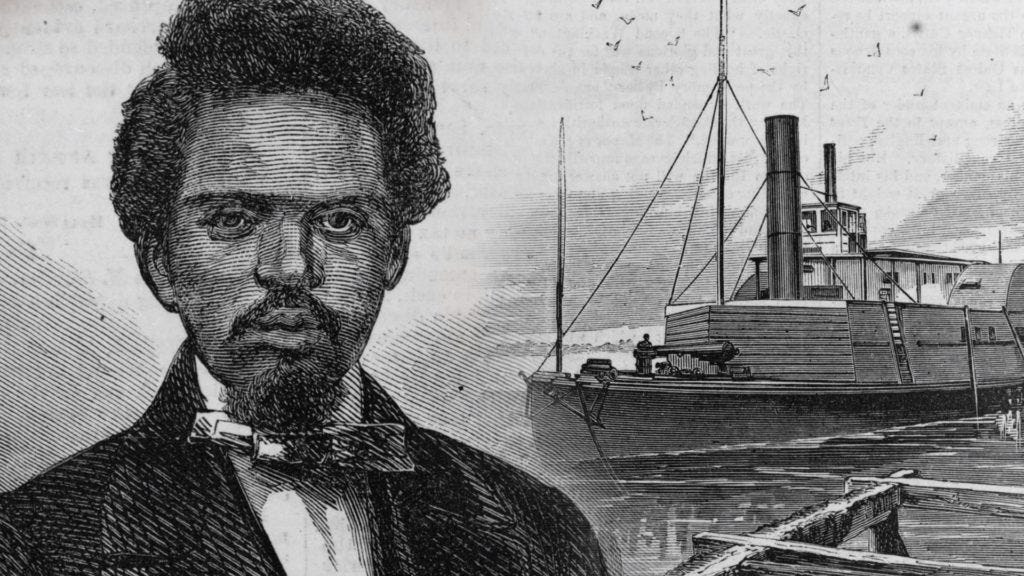
Robert Smalls, Congressman during Reconstruction.

The expulsion of Rep. Justin Jones and Rep. Justin Pearson from the Tennessee legislature has a direct historical link to the overthrow of real democracy and Reconstruction following the Civil War.

On May 13, 1862 an enslaved man named Robert Smalls, who labored on a Confederate steamer in South Carolina’s Charleston harbor, set into motion a daring plan.

As his great-great-grandson Michael Boulware Moore explained, “He saw that the Confederate crew had left, and he knew that oftentimes they left for the evening, not to come back until the next day.”

For Smalls and six other enslaved people and their families, the stakes couldn’t have been higher. “They knew that if they got caught, that they would be, not just killed, but probably tortured in a particularly egregious and public manner,” said Moore.

Disguising himself in the straw hat and long overcoat of the ship’s white captain, Smalls piloted the ship past Fort Sumter towards the Union blockade, and freedom.

After serving on a Union Naval vessel during the Civil War, Smalls returned home to Beaufort, S.C., and was elected to the U.S. House of Representatives – one of more than a dozen African Americans to serve in Congress during the period known as Reconstruction, when the formerly-rebel states were reabsorbed into the Union, and four million newly-freed African Americans were made citizens.

South Carolina, and throughout the former Confederacy, the era of Reconstruction saw the rise of Black political power and representation in both the U.S. Congress and Southern state legislatures.

During the 1870s, more than a dozen African American men, many of whom had been born into slavery, were elected to the U.S. Congress. 

It was a great democratic movement that ended all too quickly.

Former Southern insurrectionists, aided by the rise of the Ku Klux Klan, violently organized an anti-democratic counterrevolution.

Born in South Carolina, Aaron A. Bradley was a shoemaker in Augusta Georgia. Sometime around 1834 he ran away to the North, where he became a lawyer. 

In 1865 he returned to Georgia. He was the most outspoken member of the Black delegation to the constitutional convention. 

In 1868 he was elected state senator from the First District. Bradley rallied plantation workers around Savanah with his insistence that the formerly enslaved people be given land.

But Black political power and Reconstruction was short lived.

One quarter of the Black legislators in Georgia were killed, threatened, beaten, or jailed. In the December 1870 elections the Democrats won an overwhelming victory in overthrowing democracy and Reconstruction.

In 1906 W. H. Rogers from McIntosh County was the last Black legislator to be elected before Black voters were legally disenfranchised in 1908.

The actions by white Republican members of the Tennessee legislature to expel two elected Black members has all the stench of the overthrow of Reconstruction and the establishment of Jim Crow.