Thom Hartmann is releasing his new book The Hidden History of Monopolies on his blog, one chapter at a time. This one is fascinating. Big business has always opposed labor unions. They drive up wages, meaning less profits.

Thom explains:

When people consider monopolies, or even highly concentrated markets like airlines or pharmaceuticals, generally the only thing they think of is the ability of companies in concentrated markets to set prices wherever they’d like. But there are fully three primary benefits to monopoly or oligopoly, from the monopolists’ point of view.

In addition to setting prices by restricting competition, monopolies can (and typically do) drive down wages so that they end up with a steady supply of cheap labor, and—both by market (selling) control and labor market (workers) control—they send vastly more money flowing to stockholders and senior management than can companies in truly competitive marketplaces.

At its core, though, virtually every aspect of the movement that embraced monopoly (Bork actually wrote about all the “lost” inventions, innovations, and profits that were caused by a lack of monopoly!) boiled down to cheap labor. 

Joe Lyles, writing as Conceptual Guerilla, put up a brilliant analysis of this more than a decade ago titled “Defeat the Right in Three Minutes,” suggesting that quite literally everything we call “conservative” was really about driving down wages. While racial hatred and misogyny also play big roles these days in the “conservative” movement, there’s still a lot of truth to Lyles’s analysis.50

Cheap-labor conservatives don’t want a national health care system, because they want workers to be dependent on their employers and thus willing to accept lower wages.

Cheap-labor conservatives hate the minimum wage and unions because both support wage floors and, over time, raise wages for working people.

Cheap-labor conservatives want women relatively powerless (particularly over their own reproductive functions) so that, as in the era before the 1970s, they’ll work for far less than today’s $.78 to a man’s dollar.

Cheap-labor conservatives go on and on about, as Lyles notes, “morality, virtue, respect for authority, hard work and other ‘values’” so that when workers can’t climb the ladder, society will blame it on the individuals instead of a system rigged to maintain cheap labor.

Cheap-labor conservatives encourage bigotry, fear, and hatred to prevent working people from seeing their commonality of human and economic interests, regardless of race, gender identity, or the urban/rural divide.

America has a long history with the cheap-labor crowd: slavery was the ultimate expression of this “conservative” value system, and under the 13th Amendment, it continues to be legally practiced in the United States in our for-profit prison systems.

The 13th Amendment didn’t actually end slavery in the United States; it merely turned it over to prisons, be they state-run or for-profit corporations. It reads: “Neither slavery nor involuntary servitude, except as a punishment for crime whereof the party shall have been duly convicted, shall exist within the United States.” As a result, the pressure on Congress and state legislatures from for-profit prison corporations to increase criminal penalties to give them more literal slave labor has exploded.

Cheap-labor conservatives, it turns out, are also huge fans of monopoly and oligopoly, in large part because these systems keep wages low. 

There’s a marketplace for labor, just like for everything else, and when a small number of corporations control a large number of employment venues, they can simply keep wages low through that market power. Check out the pay of fast-food workers or flight attendants or nurses back in the 1960s compared with today; every industry that concentrates or consolidates sees wages go down….

Please open the link to finish reading.

Geoff Duncan, a former Lieutenant Governor of Georgia and a lifelong Republican, explained in the Atlanta Journal-Constitution why he could not vote for Donald Trump:

It’s disappointing to watch an increasing number of Republicans fall in line behind former president Donald Trump. This includes some of his fiercest detractors, such as U.S. Senate Minority Leader Mitch McConnell, New Hampshire Gov. Chris Sununu and former U.S. Attorney General Bill Barr, who raised eyebrows during a recent interview by vowing to support the “Republican ticket.”

This mentality is dead wrong.

Yes, elections are a binary choice. Yes, serious questions linger about President Biden’s ability to serve until the age of 86. His progressive policies aren’t to conservatives’ liking.

But the GOP will never rebuild until we move on from the Trump era, leaving conservative (but not angry) Republicans like me no choice but to pull the lever for Biden. At the same time, we should work to elect GOP congressional majorities to block his second-term legislative agenda and provide a check and balance.

The alternative is another term of Trump, a man who has disqualified himself through his conduct and his character. The headlines are ablaze with his hush-money trial over allegations of improper record-keeping for payments to conceal an affair with an adult-film star.

Most important, Trump fanned the flames of unfounded conspiracy theories that led to the horrific events of Jan. 6, 2021. He refuses to admit he lost the last election and has hinted he might do so again after the next one….

The healing of the Republican Party cannot begin with Trump as president (and that’s aside from the untold damage that potentially awaits our country). A forthcoming Time magazine cover story lays out in stark terms “the outlines of an imperial presidency that would reshape America and its role in the world.”

Unlike Trump, I’ve belonged to the GOP my entire life. This November, I am voting for a decent person I disagree with on policy over a criminal defendant without a moral compass.

Really, you must remember that billionaires have feelings too. So how’s about some sympathy for Bill Gates? Yahoo News reports that he’s slipping down the list of the world’s biggest billionaires, and two of his yachts may be up for sale.

Bill Gates, the co-founder of Microsoft Corp. and a renowned philanthropist, has been slipping down the ranks of the world’s billionaires.

Despite boasting a net worth of nearly $128 billion, Gates is at No. 9 on the Forbes Billionaire Index, a significant drop from his previous position at No. 7 a month ago. This marks his lowest ranking since 1990 when he ranked 16th.

Gates has been recognized not only for his immense wealth but also for his environmental advocacy, which makes his ownership of superyachts somewhat controversial. In 2021, he paid about $25 million for his first superyacht — the Wayfinder, a 224-foot catamaran built by Astilleros Armon. The yacht is designed as a shadow vessel, typically accompanying a larger mothership, which until recently, was not disclosed to the public.

The mothership, referred to as Project 821, is under construction at Feadship. It will be one of the largest and most luxurious yachts the shipyard has built. Slated for delivery in 2024, Project 821 stretches 390 feet with an internal volume exceeding 7,000 gross tonnage (GT).

Details about the yacht have been kept under wraps, but recent leaks reveal that it is on the market for 600 million euros ($642 million). The price tag is significantly higher than previous builds by Feadship, possibly because its unfinished state offers potential buyers a chance to customize the yacht.

Alongside Project 821, the Wayfinder is also listed for sale and was spotted on the charter market earlier this year, suggesting a shift in Gates’s approach to his assets.

The reasons behind the sales are not stated, leading to speculation about his motivations. Some suggest the maintenance and operational costs of the extravagant vessels are impractical, while others speculate that Gates is intensifying his commitment to environmental causes. His past statements have highlighted his awareness of his large carbon footprint, primarily from private flights, and his ongoing efforts to mitigate his environmental impact.

“Although I don’t care where I rank on the list of the world’s richest people, I do know that as I succeed in giving, I will drop down and eventually off the list altogether,” Gates wrote in a 2022 Gates Notes blog post reinforcing his commitment to philanthropy.

This aligns with his long-standing goal of donating most of his wealth to the Bill & Melinda Gates Foundation.

These moves could signify a deeper alignment of Gates’s lifestyle with his public advocacy for sustainability and reduced consumption. Selling the yachts might be seen as Gates setting an example of reducing luxury consumption to lessen his environmental impact, reinforcing his credibility as a climate activist amid growing global concern over climate change.

What a grand role model for other billionaires! I wonder how many yachts he owns. Last I heard, Betsy DeVos owns 10. How I wish she would go into environmental activism.

But don’t feel too bad for Bill. He has a fleet of private jets and Porsches.

Given Bill’s newly modest lifestyle, I hope he devotes all his energy and philanthropy to environmental causes and public health. And recognizes the failure of his forays into education policy.

Dana Milbank wrote recently about the latest foibles of Trump: his endless verbal gaffes; his inability to stay awake at his trial in New York City; his endless lies about everything.

But the main point of his article is that the students protesting against Israel and calling Biden “Genocide Joe” are helping to elect Trump.

Trump will be far harsher towards student protestors than Biden and far closer to Netanyahu. Trump promises to use the National Guard to crack down on student protestors and to ban Muslims from entering the U.S.

He wrote that Trump:

….said he would change the law to reverse “a bias against White” people: “I think there is a definite anti-White feeling in this country and that can’t be allowed.” He walked away from his previous support for a Palestinian state, saying “I’m not sure a two-state solution anymore is going to work.” And he said he wouldn’t hesitate to use the National Guard against pro-Palestinian protesters while also leaving open the possibility of using the broader U.S. military against them.

Those last Trump positions — the restoration of white power, the rejection of a Palestinian homeland, the willingness to mobilize troops against peaceful demonstrators — show how deeply misguided those on the far left are as they protest Biden’s policies on Gaza. Their frustration with the president’s support for Israel is understandable. But in making Biden the enemy, including with chants of “Genocide Joe,” the plans to trash the Democratic National Convention in Chicago and the proliferation of vows of the “uncommitted” never to vote for Biden, they are in effect working to elect Trump. This isn’t principled protest; it’s nihilism.

They are working to help return to office an authoritarian who just last week said the neo-Nazi violence in Charlottesville was “like a peanut compared to the riots and the anti-Israel protests that are happening all over our country.” In recent months, Trump said Israel should be allowed to “finish the job” in Gaza and boasted about cutting off aid to Palestinians. And he has vowed, if elected, to reimpose his travel ban on predominantly Muslim countries and “expand it even further.”

For those student protesters too young to remember, this is the guy who led the anti-Muslim “birther” campaign against President Barack Obama; who claimed thousands of Muslims in New Jersey cheered the 9/11 terrorist attacks; who said “Islam hates us” and employed several anti-Muslim bigots in his administration; who wanted to have police surveillance of U.S. mosques; who called for a “complete and total shutdown of Muslims entering the United States”; who retweeted anti-Muslim propaganda videos by a white supremacist; and who told figures such as Palestinian American Rep. Rashida Tlaib (D-Mich.) and Somali American Rep. Ilhan Omar (D-Minn.) to “go back” to the “totally broken and crime infested places from which they came.”

So it’s entirely consistent that, in Wisconsin on Wednesday, he said that he’s “restoring the travel ban, suspending refugee admissions and keeping terrorists the hell out of our country.” He went on: “We’ve seen what happened when Europe opened their doors to jihad. Look at Paris, Look at London. They’re no longer recognizable.”
Trump, on Hannity’s show this week, called the demonstrators at Columbia “paid agitators” and “brainwashed.” At his Wisconsin rally, he condemned the “raging lunatics and Hamas sympathizers at Columbia and other colleges.” He called for authorities to “vanquish the radicals,” many of whom “come from foreign countries.”

None of this should be surprising, either, for this is the same guy who called thousands of National Guard troops to Washington and federal police to Oregon to combat racial-justice demonstrators after the George Floyd killing; who held a Bible-wielding photo op in Lafayette Square after authorities cleared a peaceful demonstration with tear gas; who, according to his own former defense secretary, suggested to military leaders that they shoot demonstrators; who calls the free press the “enemy of the American people”; who defended the “very fine people” among the Nazis in Charlottesville and who called those convicted of attacking the Capitol “hostages.”

Yet the pro-Palestinian activists, through their actions, would return the author of this ugliness to the White House. They must have been doing for the last eight years what Trump has been doing in court the last three weeks: napping.

Thank you to the best of our citizens, the immigrants who come to seek the American Dream, as our parents, grandparents, and ancestors did.

Six citizens died in the tragic collapse of the Francis Scott Key Bridge in Baltimore. All were immigrants. They were working on the bridge in the middle of the night, repairing potholes, when the bridge was hit by a massive tanker that had lost power. Think of them the next time someone starts spouting off about immigrants as criminals. Immigrants actually have a lower crime rate than native-born Americans.

Campbell Robertson of The New York Times wrote:

The body of the sixth and final victim who died in the collapse of the Francis Scott Key Bridge in Baltimore was found on Tuesday, officials said, bringing to a close a difficult salvage mission after the country’s deadliest bridge collapse in more than a decade.

The victim, José Mynor López, 37, was a member of a work crew that had been filling potholes on the bridge when it was struck on March 26 by the Dali, a container ship on its way to Sri Lanka that apparently lost power after leaving the Port of Baltimore.

Five of his co-workers also died in the collapse, though it took six weeks to find all of the bodies, a daunting task that required divers to sift through mangled steel and crumbled concrete amid swift currents in murky water. Two other workers were rescued from the waters in the hours after the collapse.

All of the men who died were immigrants, from El Salvador, Guatemala, Honduras and Mexico. Mr. López was from Guatemala and had come to Baltimore for a better life, his brother, Jovani López, told The New York Times. He was married with two young children, a boy and girl, Jovani López said.

Educators and policymakers need unbiased analyses of the effects of privatization of education, and that is what the National Center on the Study of Privatizatuon in Education at Teachers College, Columbia University has provided since it was founded by noted economist Henry Levin in 2000. In 2015, Levin stepped down and was succeeded by Samuel Abrams, who wrote a superb study of The Edison Project called Education and the Commercial Mindset. For the best nine years, Abrams has run NCSPE with integrity. Privatization is rapidly spreading around the globe, and the public needs a reliable source to keep watch on it. I hope that TC can find someone as able and thoughtful to succeed him.

Samuel Abrams wrote this letter about his decision and the next chapter in his career:

After nine years as the director of NCPSE, I’m writing to share that I’m stepping down to become the director of the International Partnership for the Study of Educational Privatization (IPSEP).

IPSEP will be anchored at the National Education Policy Center (NEPC) at the University of Colorado, Boulder. Partner institutions will include, to start, the Department of Economics at Stockholm University in Sweden; and the Turku University of Applied Sciences as well as the School of Education at the University of Turku in Finland. To receive IPSEP publications, please sign up here to join the NEPC mailing list (in case you’re not already a subscriber).

The idea for IPSEP derived from my time last year as a Fulbright visiting professor at the University of Turku, where I studied the role of public-private partnerships central to apprenticeship programs at vocational secondary schools. Nearly 50 percent of secondary students in Finland attend vocational schools (in comparison to about 5 percent in the U.S.). Such public-private partnerships make such robust participation in vocational education possible and pave the way to impressive job training and placement.

The private sector has nevertheless failed to distinguish itself in other educational domains in Finland. For example, commercial firms are playing a growing role in managing preschools and running teacher professional development. In both cases, significant questions have been raised about quality. In addition, school districts have allowed tech companies to play a growing role in determining curricula, with iPads and tablets replacing books, which may explain to a significant degree the plunge in reading proficiency among Finnish youth. The mean score for reading for the Finns on PISA dropped from 520 in 2018 to 490 in 2022, which amounts to nearly a year of learning, generating alarmist headlines in newspapers across Finland. A country known since the publication of the first PISA results in 2001 as an education mecca for policymakers seeking pedagogical solutions had lost its shine.

The realm of preschools may be most telling. A company called Pilke is now running 227 preschools across Finland, up from 19 in 2013. Pilke, in turn, was acquired in 2020 by a Norwegian preschool operator called Læringsverkstedet. Both Pilke and Læringsverkstedet now operate as subsidiaries of a parent company called Dibber, which counts over 600 preschools in its portfolio across several countries, from Norway, Sweden, and Finland to Latvia, Poland, Germany, South Africa, the UAE, India, and Hong Kong. In the spring of 2023, workers at Pilke went on strike twice to protest low pay and poor working conditions.

Such outsourcing in Finland echoes what’s happening in its Nordic neighbors as well as countries around the world. Across the Gulf of Bothnia, after all, Sweden went much further in introducing vouchers in 1992, allowing parents to send their children to private schools with public funds and permitting commercial firms to run such schools. Three decades later, about 15 percent of students at the primary and lower-secondary level and 30 percent of students at the upper-secondary level employ vouchers to attend private schools, about 75 percent of which are managed by commercial firms. On top of substantial documentation of corner-cutting by such commercial firms in the name of profits, segregation, grade inflation, and poor academic outcomes overall have been attributed to this dramatic transformation of the Swedish system.

With educational privatization clearly now a multifaceted global phenomenon, there is a need for an international multi-institutional version of NCSPE involving scholars abroad to conduct comparative research and disseminate findings. The outsourcing of management of preschools as well as teacher professional development, the prominence of vouchers in countries like Sweden as well as Chile, and the encroachment of ed tech on classrooms represent merely a slice of this story. Educational privatization has taken many other forms around the world: low-fee private schooling has proliferated across Sub-Saharan Africa, India, and Pakistan; “free schools” and “academies” in England (functioning much like charter schools in the U.S.) now enroll more than 50 percent of the nation’s primary and secondary students; and “shadow education” in the mold of after-school tutoring to aid students prepping for exams for admission to secondary schools as well as universities dominates the lives and strains the budgets of many families in many countries.

With NCSPE, Henry Levin laid the foundation for how a research center can address such issues in a dispassionate, rigorous way. While a professor at Stanford serving on an advisory board to assess the implementation of school vouchers in Cleveland in the mid-90s, Levin concluded that a glaring absence of reliable information on educational privatization precluded informed debate. To fill that void, Levin set to work on creating a research center that would provide impartial documentation, publish working papers, conduct research, and hold conferences. Lured in 1999 to Teachers College by then-President Arthur Levine to assume an endowed professorship and establish this center on Morningside Heights, Levin launched NCSPE the following year and ran it until 2015, when he asked me to take over.

It has been an honor to serve as the director of NCSPE. Following 18 years as a high school history teacher, I joined NCSPE as a visiting scholar in 2008 to work on a book on educational privatization. That book became Education and the Commercial Mindset (Harvard University Press, 2016), an exploration of the impact of market forces on public education in the U.S. and abroad. The last two chapters concern educational reform in Sweden and Finland, respectively. In doing the research for those two chapters, which involved school visits and interviews in Denmark and Norway as well as Finland and Sweden, I quickly learned the immense value of comparative analysis. To know one’s home, one must leave it.

In running NCSPE, I have had the privilege of collaborating with a range of gifted scholars in editing their working papers and contextualizing them in my announcements to the listserv. I have also had the privilege of getting to know a parade of visiting scholars from numerous countries and of working with a group of talented research associates who wrote book reviews and news commentaries for the NCSPE site. To all, I express my profound gratitude for all they have taught me. Finally, to Henry Levin, I am indebted for his faith in me to run this center and for his example of erudition, diligence, and openness. Levin has indeed been a role model for scholars everywhere and in all fields.

Going forward, I would like to thank Faith Boninger, Alex Molnar, and Kevin Welner, professors of education at the University of Colorado, Boulder, and experts on privatization, for their warm welcome to NEPC. In addition, for making this partnership international, I would like to thank Jonas Vlachos, a professor of economics at Stockholm University and an expert on privatization; Vesa Taatila, the rector of the Turku University of Applied Sciences and an expert on public-private partnerships; and Mirjamaija Mikkilä-Erdmann and Anu Warinowski, professors of education at the University of Turku and experts on teacher education. A board of advisors for IPSEP will be posted on the NEPC site in due time.

NCSPE is slated to remain operating at Teachers College. An update about the center’s status should appear on this site before long.

As I have continued to serve as a visiting scholar at the University of Turku, you may reach me with any questions at samuel.abrams@utu.fi.

Samuel E. Abrams
NCSPE Director
May 6, 2024

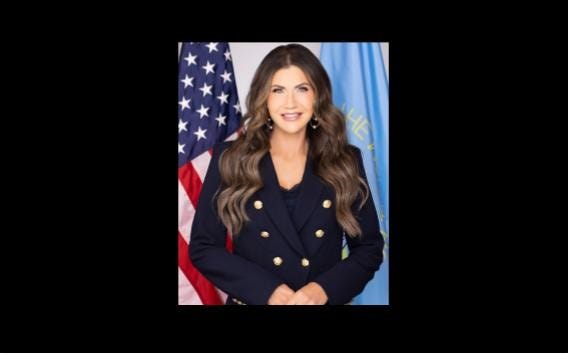
Carl J. Petersen is a parent in Los Angeles who writes here about a politician who is mean enough and dumb enough to kill a 14-month dog. Cricket didn’t obey her orders so she took him to the bottom of a gravel pit and shot him in the head. Governor Kristi Noem of South Dakota justly earned national scorn for her act of animal cruelty.

Next to holding a baby at a campaign rally, nothing does more to humanize a political candidate than a video of them frolicking with the family dog. The love of man’s best friend is bipartisan with dog owners “just as likely to come from either side of the political spectrum.” A Pew Research Center survey found that 97% of pet owners consider their pets part of their family.

Like everything else that has changed since Trump descended his golden escalator to announce his first candidacy, a dog’s status on the campaign trail is now threatened. As part of her campaign to become Trump’s running mate, Kristi Noem, the governor of one of the Dakotas, is set to release an autobiography where she brags about killing two of her family’s pets.

Governor Kristi Noem (CC BY 4.0)

As a dog lover, I have made the wrenching decision to help faithful companions cross the rainbow bridge. It is always difficult, but we owe it to our pets to allow ourselves to let go rather than let them suffer. I held each of them as the doctor injected the fatal shot, making sure that they left us knowing the answer to “Who is a good dog?”

Noem provided no such comfort to her dog. According to her account, Cricket was dragged to a gravel pit and shot dead in front of a startled construction crew. Like a serial killer discovering pleasure in taking a life, she then set her sites on one of the family’s goats. The goat did not fare as well as Cricket and did not die with the first shot. Noem had to “run back to her truck for more ammo to finish off the wounded animal….

According to Trump’s first wife, Ivana (the one he cheated on with his second wife Marla), “Donald was not a dog fan” and was hostile to her poodle, Chappy. Like most Americans, she was perplexed by this hostility; “How can you not love a dog that acts like he’s won the lottery for life just because he sees you walk through the door?

The Trumps were the first modern First Family not to have any pets when they were in the White House. James K. Polk and Andrew Johnson were the only other Presidents without pets while they were in office. Many people are saying that this is an example of Trump’s narcissism. It is hard to have unconditional love for another creature when you are too busy admiring the greatness of the man in the mirror.

Now here is a wonderful protest. Russians and Ukrainians marched across the Brooklyn Bridge in a protest against Putin’s war in Ukraine.

They joined together to denounce the war, to oppose fascism in Russia, and to counter Russian propaganda. They mocked Putin as a modern-day Hitler. The two allied groups live in harmony in Brooklyn.

John Thompson, historian and retired teacher, reports on the cruelty of Oklahoma’s new crackdown on test scores.

He writes:

I wonder how most teachers responded to Nuria Martinez-Keel’s Tulsa Public Schools Ups the Intensity to Prepare for High Stakes Testing. I’m confident that few educators would be surprised by the language used by those who are implementing Oklahoma State Superintendent Ryan Walters’ teach-to-the-test program.  But, how many would believe that fellow educators really believe it will work? 

Martinez-Keel reports that “Angie Teas, a Tulsa Public Schools (TPS) instructional leadership director spoke positively about “a renewed focus on both academic standards and preparing students to take the standardized exams.” I was struck, however, by Teas’ words, “state tests are ‘part of our lives’ every year in public schools, but this testing season is ‘important for its own outside reasons.’” 

It seems likely that the “outside reasons” she cites are Superintendent Walters’ threats to takeover the TPS, as well as his order to immediately “elevate 12 of its schools off of the ‘F’ list.” In response to this seemingly impossible target, “the district provided high-dosage tutoring to 470 fourth and fifth graders, launched a campaign to combat chronic absenteeism and focused on credit-deficient seniors at struggling high schools to boost graduation rates, among other initiatives district leaders highlighted.” (A total of 1,125 elementary students will be served in a district with more than 33,000 enrollees.) 

I suspect that most educators would be supportive of efforts to assist small numbers of students if those policies were disconnected from test results, and they did not have the potential to undermine meaningful teaching and learning in the district as a whole. I find it hard to believe that teachers  who saw the harm inflicted by No Child Left Behind (NCLB) and Race to the Top (RttT) on students would not recognize why this new, stress-driven approach is also doomed to fail.

The narrative of educators in the story about upping the intensity of high-stakes testing is interesting, and it reminds me of the scripts my administrators would use as my colleagues repeatedly shouted back when ordered to do what virtually everyone saw as educational malpractice.  As Martinez-Keel reported:

Burroughs Elementary is one of the schools identified for improvement. Principal Dee Tisdale said the school has added academic rigor, focused on testing data and added extra resources, and it “all ties back” to individualized, small-group instruction between students and their teacher.

With state testing only days away, the mentality at Burroughs is “now it’s showtime.”

“I think in terms of the big championship game,” Tisdale said. “We’re just preparing, and we’re hoping that all of our practices will give us the trophy in June or July when the results come back.”

And as the TPS instructional leadership director Angie Teas said:

It’s nerve-wracking to feel the pressure of, ‘Oh my God, it feels like the world is watching,’ yeah,” … “But it’s also exciting to recognize that we’ve had an opportunity, like with OTEP (Oklahoma Teacher Empowerment Program) to be more all-parts-equal to the entire whole. We all see our part in the district that in a way I don’t think we have in a really long time.”

Martinez-Keel also cited an elementary teacher:

She felt ‘a little bit of pressure’ to make academic gains in only six small-group sessions. [Charity] Hargrave teaches fourth grade at Skelly but, through the OTEP program, was assigned 27 fifth graders at her school for extra instruction.

She said she had a ‘very short period of time’ to review benchmark test scores for each student, group them based on their performance level and plan lessons for each session.

But the experience has been positive, she said, and she hopes it will continue in the future.

Similarly, Asriel Teegarden said “Sometimes, there’s a little bit of fear about the unknown.” After a “30-minute lesson – featuring a space-themed reading comprehension exercise,” she asks her students “how did they feel about the ‘big test’ next week?” Then, “Teegarden said there’s a ‘different intensity level’ ahead of the most important testing period of her career.” But then she concluded: 

Usually, I would be nervous for these children, but I’ve gone about it like, ‘I’m excited you’re going to take this because you’re going to all do great,’… ‘Everything has got to be positive, giving them a lot of positive feedback. I think they’re going to do excellent.’

Of course, that sounds like wishful thinking to me. But I used to engage in a forced optimism in order to remain in the classroom and serve my students. Being an award-winning, veteran teacher who was successfully engaged in meaningful, challenging instruction, I was able to negotiate compromises with my principals who knew I would not participate in teach-to-the-test. I even agreed to an experiment in teaching a class in a way that would raise test scores without undermining my students’ meaningful learning. We produced the school’s highest History test results, but despite our best efforts, the stress overtook both my students and me. I swore to never again let testing influence our lessons.

Holistic instruction became more difficult over the years when my students from the poorest elementary schools volunteered that they had been “completely robbed of an education” by test prep.

Then, I came back from retirement to teach at an alternative charter school that was like my first school which served students with felony convictions. But then the top administrator ordered the principal to order me to focus solely on the few who had a chance to pass the Common Core high stakes tests. My principal asked me to briefly comply while she tried to persuade the district administration to cancel that plan. She said that they didn’t understand that this year’s end-of-instruction-exam was just a pilot, and thus wasn’t a graduation requirement. She was confident she could persuade them to withdraw the order to just assign most students worksheets, and focus solely on 3, 4, or 5 students per class.

Of course, my students were horrified by the new system, but they trusted me to not follow those rules except for a brief time.  However, when my principal apologized and said that the new system had to become permanent, she knew I’d resign, and I did.

So, I won’t criticize the 45 teachers who are each trying to help 25 or so students in the hope that they will benefit. I also appreciate journalists who are reporting on the stress being inflicted on teachers, and whether the data-driven, rushed interventions will somehow produce more good than harm. But I hope students will be their new priority as they review the research and the history of the failure of these sorts of mandates. And above all, I hope we will listen to our kids as the stress of test-prep is added to the stress of poverty, and attending high-poverty schools that are under attack by Ryan Walters.   

Benjamin Netanyahu has warned the people of Rafah in the Gaza Strip to evacuate, signaling that he intends to invade that city. Such military action would be a disaster for the people who are sheltering there and for Israel as well, whose military aggression has turned it into a pariah state.

Netanyahu’s initial response to the atrocities of October 7 was justifiable under the principle that a nation has the right to defend itself. The war has continued for seven months, with tens of thousands of civilian casualties.

Meanwhile, the Israeli hostages continue to die, many killed by Israeli bombs.

Nothing that I write here will affect what happens in the Middle East. Nor do campus protests affect what happens.

I have condemned both Netanyahu and Hamas for failing to stop the killing. Both remain intransigent. Both find reasons not to sign a peace agreement.

The culture of death and destruction must end.

I hope, I wish, I pray that Netanyahu steps back from the brink and pursues peace as tirelessly as he has pursued war and death.