Happy Thanksgiving!
Today is a day when we pause and give thanks to whatever deity we worship (or not) for the blessings we enjoy: our freedom, our family, our friends, and our good fortune to live in a democracy where we are all responsible for making it better for our brothers and sisters.
I want to share with you a profound speech delivered by our good friend Rev. Dr. Charles Foster Johnson about religious liberty and the public schools and the future of our democracy.
Charlie Johnson is the founder and leader of Pastors for Texas Children. PTC has led the fight against vouchers in Texas and has helped like-minded religious leaders in other states form their own organizations to support religious liberty and public schools. I never expected, at this late chapter in my life, to discover that I have a dear friend who is a Baptist minister in my home state of Texas. I admire his courage, his intellect, and his passion for the common good. Needless to say, he is on the honor roll of this blog, and I name him as a hero of the Resistance in my forthcoming book Slaying Goliath. I can’t think of a better way for you to spend a few free minutes on this day than to read this wonderful speech.
This is the only post you will receive today. Enjoy the day. Read this speech.
J.M. Dawson Lecture on Religious Liberty
“Religious Liberty, the Public School, and the Soul of America”
Baylor University
October 7, 2019
I am deeply honored to deliver the J.M. Dawson Lecture on the Separation of Church and State, and I am humbled to offer a few remarks in the name and legacy of this remarkable Baptist leader and great American on the bedrock principle of religious liberty and its practical corollary, the separation of the church and the state in public affairs.
When I spoke recently with my oldest granddaughter Corley, who is age 10, she asked me what I was doing. I told her I was preparing a sermon for my friends at Baylor University on “Religious Liberty, the Public School, and the Soul of America.” She said, “Papa Charlie, you always use the biggest words… what does all that mean?”
I learned a long time ago that if the preacher can’t explain a concept to a child, then he or she doesn’t quite get it either. So, I drew a breath and said something like this, “Sweetie, God made us free people. No one can make you love God. No one can prevent you from loving God. It is our choice. All faith in God is voluntary. It is your decision. No one can make that decision for you. Not your parents, not your friends, not the president or the police or the law or the government. Only you.”
Then this granddaughter of two Baptist preachers on her mama and her daddy’s side (she doesn’t have a chance) said, “I know, Papa Charlie! We talked about that at church. And, we talked about that at school too.”
Religious Liberty
Throughout our lives, we have had a sustained theological critique of the Enlightenment and its emphasis on the individual. This project of correction, as I understand it, notes that the philosophical framework through which the modern sensibility has been shaped places undue importance on the autonomy of the individual and gives inadequate attention to the influence of community. There has been something of a robust debate about this dialectic between the individual and the community, about the historically baptist and catholic understandings of authority and epistemology, and the cultural, moral, and theological implications of these respective worldviews. This university has been a key participant in this debate. Some of you here today have contributed significantly to it.
It certainly makes sense to me. As a pastor for over 40 years, I have abundantly observed folks who believe all reality begins and ends with themselves, and who exercise little submission to anyone or anything but themselves. We have this psychological and spiritual dysfunction on vivid display in our highest leaders today. We have certainly paid a high price for this narcissism. We like the immortal figure of Greek mythology, fixate on ourselves, and die in the process.
But, we do not have to fall for the myth of autonomous individualism to affirm the irreducible and inviolate freedom of the human conscience. In this day of mass society, where corporate conglomerates monitor our every thought, news networks disseminate state propaganda, media machines determine our daily consumption, and pastors become mouthpieces for Caesar, that we need a recovery of individual freedom. Isn’t it the day and time for us to reaffirm the power and freedom of the individual, and to call for a new assertion of individual rights and responsibilities, and to inculcate all over again in our students and congregants an individual and personal decision-making power?
Forgive the patriarchal references, but I remember Will Campbell saying at Mississippi College in 1978 something to this effect: “I am less free than my daddy, my daddy was less free than my granddaddy, and my granddaddy was less free than my great-granddaddy.” I had no clue then what on earth he meant by such a cryptic remark. But I do now. And so do you.
We today are like the Grand Inquisitor of Dostoevsky’s famous story who has Christ arrested for cursing humanity with freedom. The Inquisitor concluded that Christ made a strategic error in not turning stones to bread, not casting himself off the pinnacle of the Temple, not ruling over the kingdoms of this world, for these things would have sealed his leadership and people would have followed him. But instead, Christ remained free, and gave us the burden of freedom. The Grand Inquisitor says, “anyone who can appease a man’s conscience can take his freedom away from him.” No kidding. We see it every day.
God has created human freedom as a reflection of God’s own freedom, God’s own non-contingency, as the theologians would put it. The individual liberty accorded every person is a work of God in Creation, and an integral feature of human worth and dignity.
A core component of this freedom is at work in the realm of religion. Religious liberty and is the right and choice of the human—the “inalienable” right, as Jefferson immortally put it—to worship God according to the compulsion of his or her own individual conscience, or not to worship God at all.
To say the term “religious freedom” is to speak a paradox of immense power and implication. The very impulse of religion is submission to a power outside oneself, to cast oneself in categorical terms upon God in a posture of what Schleiermacher called “absolute dependence.” The project of any religious concern is the relinquishment of one’s own autonomy to the hegemony of God.
In a sinful world, full of idols that vie for our submission, the individual made in the image of God is the only entity competent to make this decision. Christ quoted the Psalmist in his reply to Satan in the temptation in the wilderness, “You shall worship the Lord your God, and him only shall you serve.” This is the great baptist understanding. There is no other legitimate and competent authority other than the individual to make a religious decision. This is what we mean when we speak of “soul competency,” as E.Y. Mullins put it:
“Religious liberty excludes the imposition of religious creeds by ecclesiastical authority. Confessions of faith by individuals or groups of men [and woman], voluntarily framed and set forth as containing the essentials of what men [or women] believe to be the Gospel are all right. They are merely one way of witnessing to the truth. But when they are laid upon men’s [or women’s] consciences by ecclesiastical command, or by a form of human authority, they become a shadow between the soul and God, an intolerable yoke, impertinence, and a tyranny.” (“The Baptist Conception of Religious Liberty,” 1923)
Therefore, all religious activity must be strictly voluntary on the part of the individual. There can be no coercion in these matters, and certainly no collusion with the state in them. In fact, no institution whether the church or the state, possesses any competency to make any religious decision on behalf of an individual. Virginia baptist preacher John Leland put it this way:
“Let every man speak freely without fear, maintain the principles that he believes, worship according to his own faith, either on God, three Gods, no God, or twenty Gods; and let government protect him in so doing, i.e., see that he meets with no personal abuse, or loss of property, from his religious opinions.”
The corollary to this God-given religious liberty is the principle of the strict separation of the church from the state. In our work in Pastors for Texas Children, we refer to religious liberty as a gift from God to all people, and note that James Madison did not make it up. God did. Madison took an eternal spiritual truth that God authored and wrote it down in an extraordinary sentence that comprises the First Amendment to the Constitution of the United States: “Congress shall make no law respecting an establishment of religion, or prohibiting the free exercise thereof.”
Leland’s influence over James Madison is well-known by everyone in this room today. When Madison learned that Leland might challenge him for his seat in the House of Representatives, Madison forged a compromise with Leland that resulted in the popular baptist preacher standing down from his electoral challenge in exchange for Madison’s championing of the principle of church/state separation. And the rest, as we say, is history.
It is not an overstatement to say that religious liberty is the principle upon which our nation was founded. A free church in a free state. And long before America came along the first pastor of the church told his congregation at Galatia, “For freedom Christ has set us free. Stand fast, therefore, and do not submit to a yoke of slavery.”
Corley, my ten year old granddaughter, knows this. She learned it at church. And she learned it at school.
The Public School
The public school is the building block of American democracy. It is the cornerstone of our national life. It was determined at the outset of our Republic that the American experiment might have a chance of succeeding if we educated all our children in a public trust—not just those fortunate enough by reason of their class and station to receive an education.
In 1785 John Adams said,
“The whole people must take upon themselves the education of the whole people and be willing to bear the expenses of it. There should not be a district of one mile square without a school in it, not founded by a charitable individual, but maintained at the public expense of the people themselves.”
Clearly, this founding father of our Republic saw public education as central to our social contract and fundamental to the provision of the common good.
Universal education is a moral mandate rooted in the faith tradition. In the creation story itself, God brought all of creation to the human to see what the human would name it. This “naming” impulse is education. It is central to the first charge God gives to the human, “to be fruitful and multiply, replenish the earth, and subdue it.”
The first schools in America were founded by faith communities. Shortly thereafter, at the dawn of our Republic, people of faith realized that an educated populace was essential for the preservation of democracy and self-governance. Therefore, public education for all children in America was birthed out of a moral sensibility. That conviction was encoded in constitutions of the respective states as our nation expanded westward. Virtually every state constitution has a mandate for public education. Our own Texas State Constitution in Article 7, Section 1, says this:
“A general diffusion of knowledge being essential to the preservation of the liberties and rights of the people, it shall be the duty of the Legislature of the State to establish and make suitable provision for the support and maintenance of an efficient system of public free schools.”
For these reasons of profound moral and religious motivation, public school educators often are faith leaders themselves. They serve as pastors, ministers, elders, deacons, Sunday school teachers, youth and children’s leaders, committee chairpersons, mission and music directors, accompanists, and many other ministry positions in the life of the church.
It is axiomatic among congregational pastors that the persons we turn to for religious instruction of our children are our public school teachers. Furthermore, it is common for a local church pastor’s spouse to teach in the nearby public school. This has been a time-honored clergy couple vocational package for decades. Our sons and daughters are employed in the public schools as coaches, bus drivers, cafeteria workers, and custodians.
Public schools are filled with many people of faith. These teachers, principals, and school staff bow their heads in our houses of worship with us, serve and fellowship alongside us, and model their faith in schools and classrooms, following the spirit of 1 Peter 4:10, “Each of you should use whatever gift you have received to serve others, as faithful stewards of God’s grace in its various forms.”
This is why an affirmation of universal and public education can be found in the denominational documents of all faiths. It is a universal human right accorded every child be virtue of being on God’s planet.
Schools and churches remain inextricably bound together in every community. 90% of our children in our churches attend public schools. The rest attend all the other models of education, whether private, online, and home schools. We appropriately affirm all these models of education. Indeed, our congregations are comprised of leaders in all these diverse school models.
We see the local public school and its classroom as a center of God’s love. Education is a gift from Almighty God accorded to every human being regardless of race, religion, economic status, and special need. The public school, unlike the private school, receives and accepts every single child that shows up on its steps, and meets that child’s needs as sensitively and lovingly as possible.
Our loved ones and fellow church members do not leave God at the door of the school house as they go about their daily duties. They carry the love and grace of God with them every hour of every day. Indeed, they show love, unconditional acceptance, and physical assistance to children who have special needs, come from emotionally deprived circumstances, and suffer the ill-effects of crushing poverty. It’s what a teacher does. It’s a calling before God.
My own daughter-in-law, who is a public school educator, did not get the memo that God has been taken out of our schools. She takes the longsuffering love that she showers on our grandchildren into the classroom with her, and pours it out on children from the community all day long. Corley is not the only recipient of it. All the children in her classroom receive it.
Our neighborhood and community public schools are the primary vehicles for perpetuating civil society, promoting human equality, strengthening our economy, and ensuring continued democratic reform in our nation and world.
The public school is the proving ground for religious liberty and the principle of church/state separation. Here our children witness firsthand that their own religious experience is not given preference over anyone else’s. Here they see early on the tremendous power of voluntary and personal faith, that faith is something expressed and brokered by them—not by some official institutional leader. To use a familiar term, they discover their own individual priesthood.
Public education advances moral and civic values through early investments to give every student a fair shot and the tools needed to pursue a more prosperous, self-sufficient future. These investments reap significant long-term economic dividends and savings generated from fewer societal problems, benefiting all of us.
By investing in public education, we invest in the future of 50 million American schoolchildren. This basic investment is the key to a child’s future economic mobility, the financial stability of families, and our long-term economic prosperity. We know, because it is well-documented, the direct correlation between education achievement and economic viability.
As we have noted, our spouses and church members routinely teach in our public schools. Often in our towns, the public school district is the chief employer and economic generator of our communities. As goes the financial health of our public schools, goes the financial health of our churches. The school is the center of vitality and meaningful, life-enriching activity for our people. One only need look at the importance of Friday Night Football for folks to see this.
It is the public schools that serve all children. Not just those of economic means, or whose parents are engaged, or who are from stable homes, or who perform well academically. But, all.
Over 60 percent of Texas schoolchildren are economically disadvantaged. Public schools cannot be expected to overcome the challenges created by rising poverty, and especially when they are educating more students with less money. The last thing these poor neighborhoods need is to be stripped of their remaining vitality.
Texas ranks near the bottom in per-pupil spending nationwide. Bear with a brief history of Texas education policy. In 2011, devastating funding cuts forced school districts to lay off teachers, increase class sizes, and reduce pre-kindergarten programs. In 2013, Texas legislators restored only a portion of the cuts — about 60 percent —leaving a gaping deficit in education funding. In 2015, schools also had to accommodate for student growth, totaling 300,000 more students than in 2011. In 2017, House Education Chairman Jimmie Don Aycock’s proposal to infuse $3 billion new dollars into the public education system was pulled from the floor by that good man because he didn’t have the votes to pass it. Only in this year’s session did we finally get $6.5 billion new dollars for our children’s public education—and only after Texas voters retired some key legislators who oppose public education in the 2018 elections.
These are profound moral, Biblical, constitutional, and economic reasons for universal education paid for by the public. The case for quality public education is overwhelming.
So, we wonder what the real agenda is in our legislative assault on public schools? We have witnessed firsthand the cruel attack on our public education system as a “monstrosity.” We are more than a little outraged to hear from some of our elected officials that our public schools are “Godless.” We have heard with our own ears loose talk of our schools as “failed” and our teachers as “incompetent.” Then, when our own Texas legislature began churning out bills designed specifically to demoralize teachers—vouchers, unlimited charter school expansion, opportunity school districts, tuition tax credits, A-F school rating, parent trigger—our good faith pastoral nature to give benefit of the doubt began to cave to the unpleasant conclusion of something more insidious unfolding before our eyes: the intentional dismantling of the Constitutionally mandated public trust of universal education.
The privatization of the public trust of universal education is a thinly veiled disguise to turn the local public school into a profit center for the personal financial gain of a few. State legislatures all over our country are being pressured by rich interests to divert already stretched dollars from our public schools to fund private and charter schools. We know that the private schools are not asking for this support; they do not want government interference and intrusion into their private assemblies. That is the reason they established the private school in the first place.
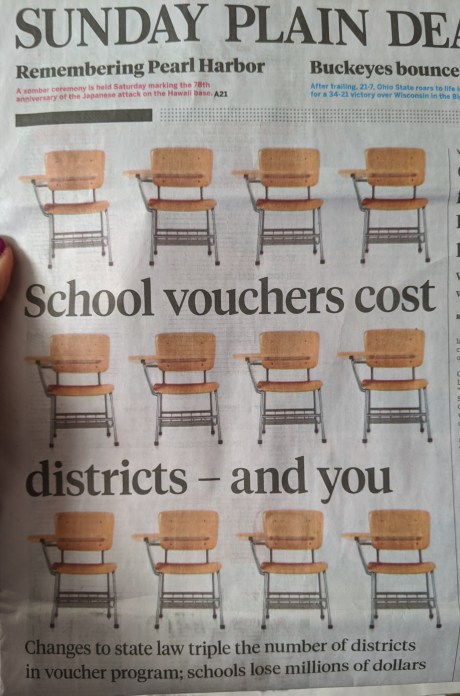
We are deeply troubled by the government expansion and entitlement programs undergirding privatization policies. Private school vouchers and so-called “school choice” initiatives are nothing but government giveaway programs with no accountability or oversight. Absent are the myriad stewardship measures the public schools must submit to give account for how state dollars are being spent. We hear about these overwrought accountability rules from our family and church members all the time.
We decry the expansion of unlimited charter schools as a replacement for our traditional community and neighborhood public schools, the avalanche of burdensome assessment measures our teachers and students are subjected to, and the de-professionalization of teaching through low wages and bad conditions.
We must prioritize the adequate funding of our institutions of public education for the benefit of all Texans. Up until the 86th Legislative session, the previous Texas legislatures have seen contentious fights over public education policy and the dramatic cuts to public school funding. This must stop now.
The Soul of America
There are two competing visions for the soul of our nation: one weakens the public and one strengthens it. On one side, there is a drive to de-fund public education, de-professionalize teaching, misuse test scores to declare schools as failing, and institute paths to privatize schools in the name of school reform. These privatization schemes take the form of private school vouchers, for-profit virtual schools, and corporate chain charter schools that do not serve all students equally.
The other vision is to provide adequate funding for all schools, implement high quality and full day pre-kindergarten instructional programs that start our youngest learners on their path to educational success, raise the bar with higher standards and more respect for the teaching profession, focus on a rich instructional program instead of a narrow overemphasis on testing, and engage community partners in support for neighborhood schools and the children and families they serve.
Those advocating the privatization of public schools have attacked the public education system and falsely labeled neighborhood schools as failures. This arbitrary judgment has been exposed as a cynical strategy to divert public education monies for private purposes, and has brought advocates like Pastors for Children to the fight against privatization and in support of initiatives that tell the true story about the value of our public schools.
The “choice” that corporate chain charters claim to offer parents and students is illusory. It is really these private operators who exercise their own freedom to choose which students they will recruit and retain and which students they will exclude or filter out. And the latter group disproportionately includes Hispanics, African-Americans, English Language Learners, students with disabilities, and students who are at risk because of disciplinary or academic difficulties. These children are our neighbors too.
The private school voucher, regardless of the euphemism by which it is falsely named, will not begin to cover the cost of a private education that even approximates the quality of the education that poor child receives in the traditional public school. Quality private education costs far more than what the voucher covers. Furthermore, there is no transportation allotment attached to the voucher. One surely notices that private schools are not located in poor neighborhoods. How would the poor child get to the private school even with a voucher?
As we have said, the poorest children among us attend public schools. They are the places these children are taught, fed, affirmed, and loved. 62% of the 5.4 million schoolchildren in Texas attend public schools. Private schools do not exist to care for poor children in this way, nor do they intend to accept the influx of poor children into their schools through vouchers. That is the very reason private schools are private in the first place. It is as morally wrong for the State of Texas to divert already stretched public dollars for underwriting the religious mission of private church and parochial schools, as it is for the state to require intrusive accountability measures for the private schools that receive that public money. Let private schools remain private, public schools remain public.
The chief objection we have to vouchers is the inherent religious liberty violations of them. The Bill of Rights of the Constitution of the State of Texas, Article 1, Section 6 and 7 states this: “No man shall be compelled to attend, erect or support any place of worship, or to maintain any ministry against his consent. No money shall be appropriated, or drawn from the Treasury for the benefit of any sect, or religious society, theological or religious seminary; nor shall property belonging to the State be appropriated for any such purposes.” Clearly, using tax dollars for religious private schools violates this principle.
Do Texas Christians really want their tax money to fund Muslim private schools? By last count, we have eleven madrassas in the state of Texas. Do Muslim folks want their money underwriting Baptist church schools? Do Texas Baptists really want their tax money to fund Roman Catholic schools that teach the infallibility of the Pope? Do Texas Catholics really want their tax money funding Baptist schools that teach children the priesthood of all believers?
Let us rededicate ourselves to these children in our public education system. Rather than again fixating on controversial, unproven policies that further impair our public schools, let us reclaim our collective will to pursue proposals that give our schools the support they need to prepare our children for the economy they will inherit, and create.
Pastors for Children are mobilizing congregational leaders to do precisely this. We have three objectives in our work: 1) Get the congregation involved in assistance ministries in your local neighborhood school, always under the authority of the school principal and in deference to God’s gift of church/state separation; 2.) Get congregational leaders engaged in public education advocacy by bringing your influence to bear on state legislators who shape education policy for our children; and 3.) Engage in electoral races not to endorse candidates, but to endorse the justice provision of quality public education for all children.
We are now in six states: Texas, Oklahoma, Kentucky, Tennessee, Mississippi, and Florida. We have held meetings and conversations with faith leaders in a dozen other states where we will soon plant our work.
Let’s provide our children the education that our community provided us. Their future, and ours, depends on it. Let us rededicate ourselves to these children in our public education system. We have an absolute and total obligation to our children. Not just the few. Not just the privileged. Not just our own. All children.
The great equalizer in American life is the neighborhood public school. It is the laboratory for our democracy. It is the teller of our national history and story. It is the training ground for citizenship in this great land. It is the discovery zone where our children uncover their own God-given talent, realize their own significance, understand the power of their own individuality, and locate their own place within the larger world of their community. It is the social and communal context where the values of our faith are incarnated. It is the meeting place for the widening diversity of our American life. The public school is the shared space where we nurture civic virtue, cultivate mutual respect, practice tolerance across racial, class, gender, political, and religious lines, and preserve and protect God’s Common Good.

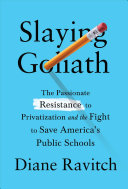
 In this incisive, meticulously researched book, Ravitch (education, New York Univ.; The Death and Life of the Great American School) argues persuasively that the U.S. school privatization movement has resulted in poor test scores, the closure of public schools, and attacks on the teaching profession. Ravitch blames the so-called school reformers, whom she renames the disruptors, such as Bill Gates, Alice Walton, Michelle Rhee, Mark Zuckerberg, and Eli Broad, who spend millions to replace public schools with charter schools and private institutions that are run like businesses. Though disruptors view themselves as opposing the status quo, Ravitch contends that they are doing everything they can to maintain it. She devotes most of her book to the resisters, or the teachers, parents, and union leaders who have taken on the disruptors and are working to keep their local public schools open. Through this lens, Ravitch discusses the Common Core teaching standards, standardized testing, the Obama administration’s Race to the Top grant program, and Teach for America.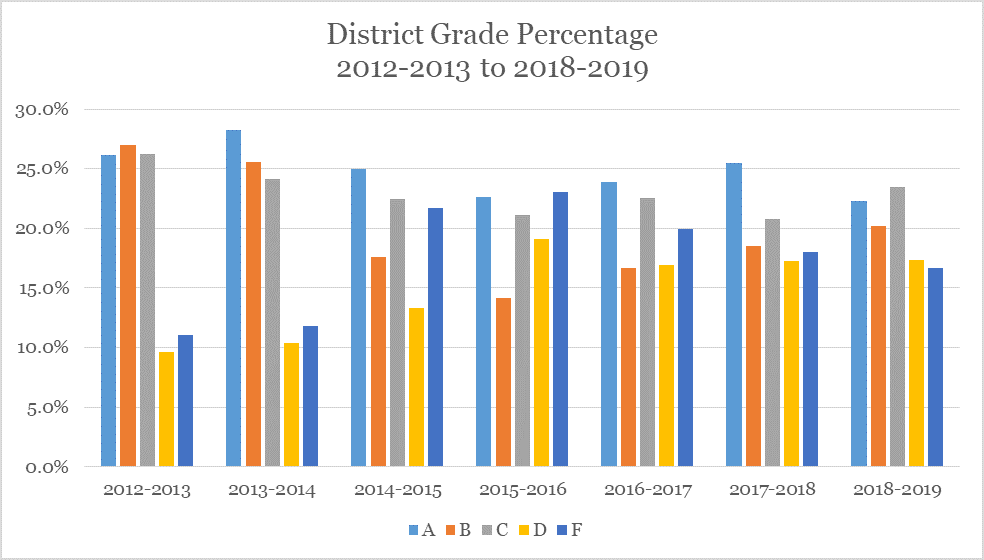

 Diane Ravitch's blog