Archives for category: Vouchers

Chris Tomlinson, a columnist for The Houston Chronicle, writes here about the audacious, mendacious plan of Lt. Governor Dan Patrick to destroy public schools. Patrick was a talk-show host like Rush Limbaugh before he entered politics. In Texas, the Lt. Governor has more power than the Governor, so his actions must be closely scrutinized.

Dan Patrick hates public schools. He wants to abolish them and replace them with vouchers.

Tomlinson explains Dan Patrick’s malevolent plan:

Lt. Gov. Dan Patrick’s fantasy of abolishing property taxes would set the state up for financial failure and end public education as we know it by placing a greater burden on low- and medium-income Texans.

The most powerful man in Texas politics wants you to believe he’s looking out for homeowners, but there’s always an unacknowledged goal for significant initiatives like this one. You need only look at who deposited $3 million in Patrick’s campaign account and who gave the record $6 million donation to Gov. Greg Abbott to boost private religious schools.

As lieutenant governor, Patrick appoints the leaders of Senate committees, sets their agendas and decides whether a piece of legislation gets a vote. Patrick also rewards senators who appease him and punishes those who don’t with his fat campaign war chest.

Last week, the lite guv ordered the Senate Finance Committee to “determine the effect on other state programs if general revenue were used to fully replace school property taxes, particularly during economic downturns.”

Rising property taxes are directly correlated to the growing cost of housing in Texas. When home or apartment values go up, so do taxes, and the two combined create a crisis across the country.

Median property taxes in Texas rose 26% between 2019 and 2023, according to data from real estate research firm CoreLogic, and first reported by Axios, an online news agency. In four years, the median payment rose to $4,916 from $3,900 as property values nationwide grew 40%.

Texas has crazy property taxes due to a convoluted system that protects the wealthy and pushes the burden of paying for government services onto low- and middle-income families.

To understand how and why, Texans must remember that we pay for schools through property taxes levied by school districts. The state is forbidden from collecting a property tax, so the Legislature depends primarily on sales taxes and severance taxes levied on oil and gas production.

The Texas Constitution also forbids an income tax, perpetuating the myth Texas is a low-tax state. The wealthy, who spend less of their income on retail purchases and real estate, get off easier than in other states. But the half of Texans who struggle to make ends meet pay a higher proportion of their income in sales and property taxes.

Most states rely on the proverbial three-legged stool of income, property and sales taxes to fairly charge families and businesses based on their ability to pay. Texas relies on only two legs, and Patrick is talking about kicking away one of them.

Patrick’s command comes less than a year after the Legislature took $18 billion from sales taxes and oil and gas severance taxes to pay down school taxes. Most of that money came from high crude oil and natural gas prices and a roaring economy that generated huge sales tax returns. The move marked the first tax reduction paid by most property owners in decades.

Ending property taxes is part of the Republican Party of Texas platform, but it would require collecting $73.5 billion from the remaining leg of the stool, the sales tax.

The state sales rate is 6.25%, while local authorities can collect up to 2% more. The Texas Taxpayers and Research Association in 2018 calculated the sales taxes would need to reach 25% to replace property taxes.

Right-wing fantasists will point at Texas’ colossal budget surplus last year as proof that lawmakers will only need to raise sales taxes a tiny bit. However, anyone who’s lived in Texas for a decade or more knows the fossil fuel business goes through boom-and-bust cycles.

During a bust in 2011, Texas lawmakers slashed school funding by $4 billion. When the money runs out, the Republicans who control every lever of power in Texas do not hesitate to sacrifice public education to avoid raising taxes. Even with last year’s windfall, they refused to give teachers a raise.

This is where school vouchers and property taxes collide. The billionaires backing Abbott and Patrick believe public schools are Marxist, woke indoctrination factories. They want to give parents vouchers to choose Christian nationalist indoctrination factories exempted from state or federal oversight.

The vouchers, though, are insufficient to cover private school tuition, so families must pay the difference. The GOP hopes to create a system in which the state pays a defined amount and normalizes parents’ paying the rest.

Don’t be fooled by promises of lower taxes; this is about killing public schools by underfunding them and shifting more of the burden onto young families and off the wealthy.

This malicious proposal could be politically palatable. There are some five million public school students in Texas. There are more than six million privately owned homes. The population of Texas is majority-minority, like the public school students. The Republican-dominated legislature is overwhelmingly white. Do the math. The people with the power, the people who pay the most property taxes, are white. Do they want to pay property taxes for other people’s children?

Award-winning opinion writer Chris Tomlinson writes commentary about money, politics and life in Texas. Sign up for his “Tomlinson’s Take” newsletter at houstonhchronicle.com/tomlinsonnewsletter or expressnews.com/tomlinsonnewsletter.
I was invited by KPFT, a Pacifica station in Houston, to discuss the state takeover of the Houston Independent School District.

This is a better link.

The host of the show is Paul Castro, who has taught in HISD and in an open enrollment charter school.

It was a good exchange. We talked about The state-appointed superintendent Mike Miles, about charter schools, and about Governor Abbott’s determination to get a voucher bill passed by the next legislature. I explained what a voucher program would mean and what has been learned from the experience of other states.

You have to search the website to find the program. It aired April 26 at 9 am.

“Amplified Houston” Friday

Host:Paul Castro

Guest:Diane Ravitch 

Topic

Public school reform and HISD Takeover

Amplified Houston for Fri., April 26, 2024, focuses on public school reform and the HISD takeover. Dr Diane Ravitch, Founder and President of the Network for Public Education (NPE) will guest. NPE is the single largest organization of parents and teachers and other citizens working to stop the privatization of public education and the misuse of standardized testing.Diane Ravitch’s Blog is dianeravitch.net. Her two most recent books are EdSpeak and DoubleTalk:A Glossary to Decipher Hypocrisy and Save Public Schooling and The Death and Life of the Great American School System.

Friday, April 26, 2024 9:00 am30:07

Indiana has plunged headlong into privatization of its-once-beloved public schools.

Fortunately, there is a knowledgeable candidate for Governor who has promised to stop the destruction of public education.

Jennifer McCormick is a career educator who began as a special education teacher, then became a language arts teacher, a principal and a district superintendent.

She was elected Indiana State Superintendent of Public Instruction in 2016; she ran as a Republican. She served out her four-year term and switched parties in 2021.

McCormick wrote on Twitter:

Indiana GOP’s school privatization efforts have diverted 1.6B of tax dollars away from public schools, and the majority of communities do not have families and/or private schools participating. As governor, I will champion for Indiana to pause funding school privatization.

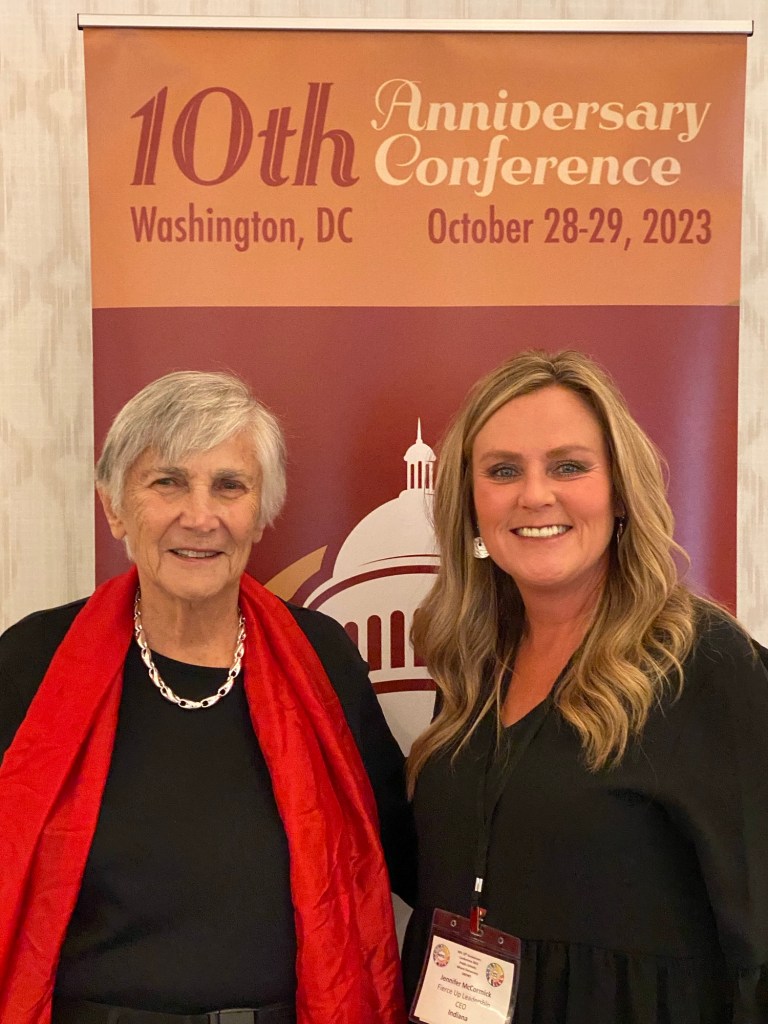
At the NPE conference in D.C. in 2023, JenniferMcCormick and me.

Governor Bill Lee of Tennessee made school vouchers his top priority but the issue died in the Legislature despite its Republican supermajority. He will bring the issue back next year. He’s hoping for universal vouchers, where every student in the state is eligible for a voucher but opponents call his plan a subsidy for the wealthy who already are attending private schools.

In eastern Tennessee, and very likely across the entire state, parents and educators heaved a huge sigh of relief.

Dustin Park is a parent of kids who go to school in Maryville. He’s opposed to the universal school voucher plan because he said it excludes students with disabilities.

“The only thing that protects kids with disabilities is that federal law,” Parks said. “A bedrock of our public schools is that they accept everybody.”

The school district he sends his children to supports his stance. 

“We continue to maintain our belief that public funds should not be diverted to private entities, and taxpayers should not be required to subsidize private schools that are not held to the same standards of accountability and inclusivity as public schools,” said Mike Winstead, Director of Maryville City Schools. “If the Education Freedom Scholarship Act passed, it would have been harmful to the very students and vulnerable populations it maintained to assist.”

Dave Gorman is a teacher at Knox County Schools and also said he’s not sure lawmakers will listen to their constituents.

“We also have seen enough dirty dealings,” Gorman said. “We’ll never forget when Jason Zachary was the deciding vote to bring vouchers to a couple of cities in the state a few years ago — when it looked like it was about to die and he changed his vote.”

Knox County Schools provided the following statement about the proposal failing.

“As we have stated before, our attention has and will continue to stay focused on our students and providing them with a high-quality education. We are confident that our families will continue to choose KCS regardless of what happens at the state level.” 

Several school districts across East Tennessee also said they also are pleased a school voucher plan would not pass this session…

Kelly Johnson, Director of Clinton City Schools

“Elected officials are responsible for listening to their constituents, not answering to outside special interest groups. We know Governor Lee plans to bring it back next year. It is my hope that the citizens of TN remain vigilant in celebrating the many successes of public schools.”

The billionaire funded outside special interest groups will be back next year. Parents and educators should vote to replace those who want to undermine public schools.

Iowa was once respected for the quality of its public schools. Now the Republican elected officials are tearing down the state’s public schools. They launched a voucher program, and they are now expanding it, at the expense of public schools.

There are some things we know for sure about voucher programs after three decades of experience. First, the actual cost always outstrips the projected cost. Two, whatever the eligibility requirements are in the first year, they will be stripped away so that eventually all students will be eligible for vouchers. Third, vouchers may be initially targeted to needy groups, like students with disabilities, but there is no assurance that these children will be admitted to voucher schools. Fourth, most students who apply for and use vouchers are already enrolled in private and religious schools. Fifth, students who transfer from public schools to voucher schools will fall behind academically. Sixth, many voucher schools will discriminate on any grounds—keeping out children because of their religion or because they are LGBT or because they are simply “not what the school wants.”

In voucher schools, schools choose, not families or students.

Ty Harding of Iowa Starting Line reports on the growing program in Iowa.

Iowa has committed nearly $180 million in taxpayer funds to support private school tuition in the 2024-25 school year, which is almost $50 million more than the initial Iowa Legislative Service Agency (LSA) projections.

Initially, the LSA projected Iowa would spend $106.9 million in the first year of Gov. Kim Reynolds’ private school voucher program—called Students First Education Savings Accounts—and $132.3 million in the second year.

However, the first year of the program cost Iowa taxpayers nearly $128 million. The Iowa Legislature allocated $179.2 million to the program for the upcoming fiscal year, according to the state’s recently approved general fund.

These amounts are only expected to increase as restrictions on who can participate in the program are rolled back.

The first year restricted access to students with a household income at or below 300% of the federal poverty guideline, but that restriction will be raised to 400% ($124,800 for a family of four) in the 2024-25 school year, before being phased out entirely in the 2025-26 school year.

Each voucher recipient will receive $7,826 in taxpayer funds to help cover private school tuition in the 2024-25 school year (the amount changes each year based on the state’s per-pupil funding). Predicated on this year’s budgeted amount, the state expects at least 22,897 students to receive a voucher. 

Another big change for the upcoming 2024-25 year is that public school districts will directly lose money due to voucher program. 

State funding for public schools is primarily based on enrollment weighting and state cost per pupil. Before the voucher law, districts still received those funds from the state even for students who lived in the district but did not attend a public school. Going forward, districts will no longer receive those dollars.

Please open the link to finish reading.

This article in the Gazette shows the negative effects of vouchers on Iowa City, a school district with some 14,400 students. Property taxes are going up, the teaching staff will shrink by attrition, and an elementary school will be closed. The vast majority of students will be harmed by a program that subsidizes the few.

Tim Slekar is a fearless warrior for public schools, teachers, and students. I will be talking to him about Slaying Goliath and the struggle to protect public schools from the depredations of billionaires and zealots.

This Thursday on Civic Media: Dive Back into “Slaying Goliath” with Diane Ravitch

Grab your pencils—BustEDpencils is gearing up for a no-holds-barred revival of Diane Ravitch’s game-changing book, *Slaying Goliath*, live this Thursday on Civic Media. 

Launched into a world on the brink of a pandemic, *Slaying Goliath* hit the shelves with a mission: to arm the defenders of public education against the Goliaths of privatization. But then, COVID-19 overshadowed everything. Despite that, the battles Diane described haven’t paused—they’ve intensified. And this Thursday, we’re bringing these crucial discussions back to the forefront with Diane herself.

This Thursday at 7pm EST on BustEDpencils, we’re not just revisiting a book; we’re reigniting a movement. Diane will dissect the current threats to public education and highlight how *Slaying Goliath* still maps the path to victory for our schools. This isn’t just about reflection—it’s about action.

**It’s time to get real. It’s time to get loud. It’s time to tune in this Thursday at 7 PM EST on Civic Media.**

If you believe that without a robust public education system our democracy is in jeopardy, then join us. Listen in, call in (855-752-4842), and let’s get fired up. We’ve got a fight to win, and Diane Ravitch is leading the charge.

Mark your calendars and fire up Civic Media this Thursday at 7pm Central. 

Despite the best efforts of the billionaire voucher lobby, the Tennessee legislature rejected vouchers!

Vouchers are dead for this session, although they were Governor Lee’s top priority. Republicans have a supermajority in both houses of the Legislature. But some Republicans listened to their constituents, not the out-of-state money.

Democrats have long opposed the program, likening the voucher program to “coupons” for wealthy families who already send their children to private school, and warned it could endanger funding for public schools.

Dozens of school boards — many in conservative parts of the state — and other local officials, along with major teachers groups, opposed the bill.

Despite Republican leaders frequently signaling optimism for the negotiations, the bill was constantly delayed in committees. For months, there has been little public indication that any significant progress was made toward a compromise.

Parents, teachers and other citizens won the day!

Public Schools First in North Carolina finds it strange that the legislature can’t find the money to raise teachers’ salaries but easily finds money to fund vouchers for the rich.

Its latest notice says:

This week House majority leader Tim Moore announced that a legislative short session priority would be to increase funding for vouchers for the coming year by around $300 million to ensure that the state could fund vouchers for all families who applied. More than half of the applications came from families with incomes too high to have been eligible last year. Our March 9 newsletterdescribed the applicant pool breakdown and pointed out that increased demand this year was likely due to the state spending $1,000,000 to market the program and droves of existing high-income private school families seeking a taxpayer-funded discount coupon for their tuition bill.

From 2018-19 through 2022-23, the percentage of new applicants who actually accepted vouchers ranged from 44% to 51%. If historical patterns hold, the current voucher budget would more than pay for Tier 1 and Tier 2 families, cover the cost for returning voucher recipients (typically 80%) and be left with $50 million extra. In other words, more voucher funding is only needed to pay for vouchers for the upper-income families.

To put Moore’s priorities in sharp relief, his announcement came one week after the State Board of Education heard from DPI staff that last year’s teacher attrition rate was higher than it had been in decades. It hit 11.5%, which represents a whopping increase of 42% over last year’s attrition numbers.

The attrition rates were driven by especially high attrition for teachers with fewer than five or more than 26 years of experience. The highest rate, 26%, was the same for first-year teachers and veteran teachers with 35+ years of experience.

When asked about teacher salaries, Moore did say he thinks there may be room in the budget for teacher raises, and that the short session would address the looming crisis in early childhood care funding.

But North Carolina has some serious catching up to do when it comes to bringing teacher salaries to a level where they will attract and retain teachers. North Carolina lags behind all surrounding states in state-funded salaries. Our beginning teachers start out lower and our veteran teachers remain at the bottom. (See our fact sheetfor links to salary schedules.)

In 2023-24, North Carolina’s state minimum beginning teacher salary was $39,000. While it is scheduled to increase to $41,000 in 2024-25, it will still lag behind the beginning salary in neighboring states. And young people looking at teaching as a possible profession will be put off by the relatively poor earnings trajectory.

Strong support for bolstering salaries also came from North Carolina’s Fiscal Research Division’s recent analysis of state-funded salaries that found only deputy clerks of court had lower starting salaries than teachers. After the 7th year, deputy clerks made more. Only state highway patrol officers had lower maximum salaries than teachers. 

Many local communities are working to make up for state neglect by offering teacher salary supplements, but this remedy simply exacerbates existing inequities. In 2023-24 teacher salary supplements ranged from $10,650 in Chapel Hill/Carrboro School District to $0 in Caswell County, Graham County, and Weldon City Schools.

Teacher salary increases barely scratch the surface of what the NCGA could do to improve conditions for public school educators, students, families, and communities. Funding for instructional assistants, school psychologists, counselors, nurses, and social workers is desperately needed. The looming child care crisiswill require fast action to prevent child care centers across the state from closing.

According to Moore, North Carolina has ample funds in reserve to pay the private school tuition vouchers for wealthy families. Perhaps those tax dollars should be redirected toward programs that serve the taxpaying public at large. 

Nebraska voucher advocates are trying to head off a referendum because they know they will lose. Senator Lou Ann Linehan has introduced a bill intended to fund vouchers and block a referendum, thus preventing Nebraskans from voting on whether they want vouchers.

Senator Linehan is working with Betsy DeVos’s advocacy group American Federation for Children.

Of course, they don’t want to let the public decide! Vouchers will lose!

In every state referendum on school vouchers, they have always been defeated. The public wants public tax dollars to go to public schools! The public does not want to subsidize the tuition of students who attend private and religious schools. In every state that has vouchers, most are claimed by students who already attend non-public schools. Worse, as Michigan State’s Josh Cowen has demonstrated, students who leave public schools with vouchers fall far behind their public school peers.

And of course, vouchers drain funding from public schools, attended by the vast majority of children.

From: Brooke @ Stand For Schools<info@standforschools.org>
Date: Mon, Apr 15, 2024 at 5:05 PM
Subject: The Fight Continues: LB 1402

Dear Friend,

 LB 1402, Senator Linehan’s private school voucher bill, passed through general and select file debate last week. With that, LB 1402 could become the first bill in Nebraska’s legislative history to overturn a law with a referendum on the ballot for November, bypassing your right to vote. 

We urge you to please contact your Senatorand tell them NO to LB 1402 and to let Nebraskans vote on public funds to private schools in November!  

Contact Your Senator!

Instead of sending public dollars to private schools, which are under no obligation to serve all children, tell your Senator you support the public schools that 9 out of 10 Nebraska students attend, and so should they.

Contact your Senatorand tell them NO LB 1402 and that you support public education!

Contact Your Senator

Thank you for your continued support of Stand For Schools and Nebraska public education! 

 The Stand For Schools Team  

Facebook
Twitter
Instagram
TikTok
LinkedIn

Follow us on social media for legislative updates, Nebraska public education stories, and more!

Donate

Stand For Schools
211 N 14th Street
Lincoln, NE 68508
United States

New Hampshire reporter Garry Rayno says that the state legislature has its priorities upside down. Writing at IndepthNH.org, Rayno describes a Republican state government led by “moderate” Governor Chris Sununu that’s determined to destroy public schools while expanding vouchers eventually to cover all students’ private school tuition, including the children of the richest residents. Sununu appointed a homeschooling parent, Frank Edelblut, as the State Commissioner of Education. Edelblut is hostile to public schools and eager to divert funding from them.

The Republican legislature refused to renew a program to feed hungry children. As Rayno notes, they are “pro-life,” but don’t care much about living children.

Rayno writes:

From the new proposed rules for education minimum standards to alternative education opportunities, the state legislature and the executive branch appear to have their priorities upside down.

Call it culture wars, call it the war on public education or whatever you want, but much more attention is being paid to about 3 or 4 percent of the state’s school-age students — mostly in private and religious schools or home-schooled — while about 24 percent of public school students with food insecurity do not receive the same attention.

While there is ample evidence a hungry student is not a student fully focused on his or her studies, and is less likely to succeed academically than those who aren’t hungry when they come to school, the House last week by the slimmest of margins, said the food insecure kids could go hungry in this, one of the wealthiest per-capita states in the country.

House Bill 1212 supporters were willing to trim the cost by reducing the income cap from 350 percent of the federal poverty level to 250 percent or about $17 million annually from the Education Trust Fund instead of $50 million.

But that failed to induce enough Republican support to take the bill off the table where a near party line vote had put it, effectively killing it for this year.

The Republican majority also did not want to spend $150,000 of federal pandemic money to hire a coordinator to help about 1,500 homeless students who do not qualify for state homeless services because they do not live with their parents.

Many of the 1,500 students are in the LGBTQIA+ community.

Many of the same people who did not want to spend state or federal money to feed the hungry and help the homeless children and youths favor greater restrictions on abortions or are “pro-life.”

What they are saying with their votes, is we want you to have babies whether you want them or not or whether you can afford them or not, but once they are born, you’re responsible for taking care of them with no help from us.

Pro-life may not be the best term for anti-abortion proponents who voted not to feed the hungry children nor help find them a place to live…

Yet this week two public hearings will be held on bills to expand the eligibility for the Education Freedom Account program now in its third year, and every year well over its budgeted appropriation.

The bill would increase the income cap for the program from 350 percent of the federal poverty level to 500 percent which is $156,000 for a family of four and $102,000 for a parent and child household based on federal 2024 figures.

The current rate would limit family income to $109,200 for a family of four and $71,540 for a family of two.

The cost of the program since its inception has steadily increased from $8.1 million the first year, to $15 million the second and $25 million for the current school year.

The bill barely passed the House and the House Finance Committee chair waived fiscal review of the increase although many more students would be eligible — well above 50 percent of the families in New Hampshire and greatly increasing the cost, but bill proponents did not want to give Democrats another shot at killing the bill.

The money for the program comes from the Education Trust Fund which also provides the adequacy grants to public schools and the larger grants to charter schools, along with special education, building aid and other educational activities…

The bill will increase the income threshold from 350 percent to 400 percent with the threshold for a family of two $81,760 and a family of four at $124,800.

Reaching Higher Education estimates this increase will bring the cost for next school year to $53.4 million.

That is about a quarter of the current surplus in the Education Trust Fund.

The ultimate goal for supporters of the EFA program is universal eligibility or having no income cap so every family in the state would be eligible which would cost $90 million to $100 million if all the students in private or religious schools and homeschool programs sought and received some grants.

About 10 states have universal or near universal voucher programs, but the two states that have attracted the most attention because of their impact on state budgets have been Arizona and Ohio and both have gone well over estimated costs as they have here in New Hampshire.

The program is bankrupting Arizona and the Democratic governor is trying to limit its reach, but the Republican-controlled legislature has refused to go along.

Ohio faces a lawsuit over its program claiming it is hurting public schools while the vast majority of the new participants are students already in private or religious schools or homeschooling programs.  

Sound familiar.

As one Texas state senator said when Gov. Greg Abbott was pushing for school vouchers, “it is nothing but a subsidy for the wealthy.”

And there are the new rules for the state’s minimum standards for public schools.

Two public hearings were held in the past two weeks and the proposed rules were universally trashed by almost everyone testifying causing state Board of Education chair Drew Cline to chastise those focusing on the rules presented to the board in February while a newer, updated version will come before the board soon, although that updated proposal is not available to the public.

The rules are aimed at clarifying and adding details to the state’s competency-based education model, but they also have been criticized for lowering the existing minimum standards, removing limits on class size, making many standards optional and not mandatory, and no longer requiring certified teachers and professionals.

Other concerns were the proposal would do away with local control, a hallmark for public education in the state, and move toward privatizing education and away from what one person called the great equalizer “public education.”

Education Commissioner Frank Edelblut proposed bills in the last few sessions that would have eliminated many current standards to focus only on the core areas of English, math and science, but without much success with the legislature.

Many saw the plan as a way to lower the state’s share of the cost of education and to make public school alternatives more attractive to students and parents.

Say what you will about Edelblut and his opinions about public education, he is tenacious.

The state is at a crossroads that will determine what public education will be for the next decade and on whether or not the state is willing to take care of its most vulnerable so they can fully participate in that education.

The end of the 2024 session and ultimately the next election should provide a vision of the future for New Hampshire and its children.

Garry Rayno may be reached at garry.rayno@yahoo.com.