Archives for category: Vouchers

Back in February, long before President Biden stepped back and Vice-President Kamala Harris became the Democratic nominee for President, two red-state Governors spoke out against vouchers. Both are Democrats who understand the importance of public schools for their communities. They are Governor Roy Cooper of North Carolina, whose gerrymandered legislature has a Republican supermajority, and Governor Andy Beshear of Kentucky, whose legislature is controlled by Republicans. When Beshear ran, he picked a teacher as Lieutenant Governor.

The two Governers wrote this article in USA Today:

In North Carolina and Kentucky, public schools are the center of our communities. We’re proud public school graduates ourselves – and we know the critical role our schools play in teaching our students, strengthening our workforces and growing our economies.

We’ve seen record-high graduation rates of almost 90% in our public schools. North Carolina and Kentucky rank in the top 10 for National Board-certified teachers, one of the highest recognition teachers can earn.

In Kentucky, we’ve seen significant improvement in elementary school reading, even with setbacks from the pandemic like many states experienced. In North Carolina last year, public school students completed a record 325,000 workforce credentials in areas like information technology and construction. The bottom line? Our public schools are critical to our success and an overwhelming number of parents are choosing them for their children.

That’s why we’re so alarmed that legislators want to loot our public schools to fund their private school voucher scheme. These vouchers, instituted in the 1950s and 1960s by Southern governors to thwart mandatory school desegregation, are rising again thanks to a coordinated plan by lobbyists, private schools and right-wing legislators.

Voucher programs chip away at the public education our kids deserve

This is their strategy: Start the programs modestly, offering vouchers only to low-income families or children with disabilities. But then expand the giveaway by taking money from public schools and allowing the wealthiest among us who already have children in private schools to pick up a government check.

In North Carolina, the Republican legislature passed a voucher program with no income limit, no accountability and no requirement that children can’t already go to a private school. This radical plan will cost the state $4 billion over the next 10 years, money that could be going to fully fund our public schools. In Kentucky, legislators are trying to amend our constitution to enshrine their efforts to take taxpayer money from public schools and use it for private schools.

Both of our constitutions guarantee our children a right to public education. But both legislatures are trying to chip away at that right, leaving North Carolina and Kentucky ranked near the bottom in per-pupil spending and teacher pay.

Public schools are crucial to our local economies. In North Carolina, public schools are a top-five employer in all 100 counties. In many rural counties, there are no private schools for kids to go to – meaning that those taxpayer dollars are torn out of the county and put right into the pockets of wealthier people in more populated areas.
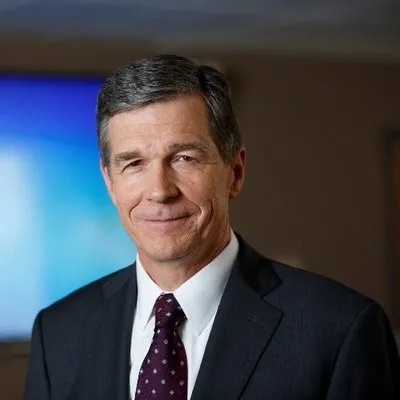
Governor Roy Cooper, North Carolina

In fact, in Kentucky, 60% of counties don’t even have a certified private school. This has caused rural Republicans in red states like Texas and Georgia to vote against voucher schemes that would starve their rural schools.
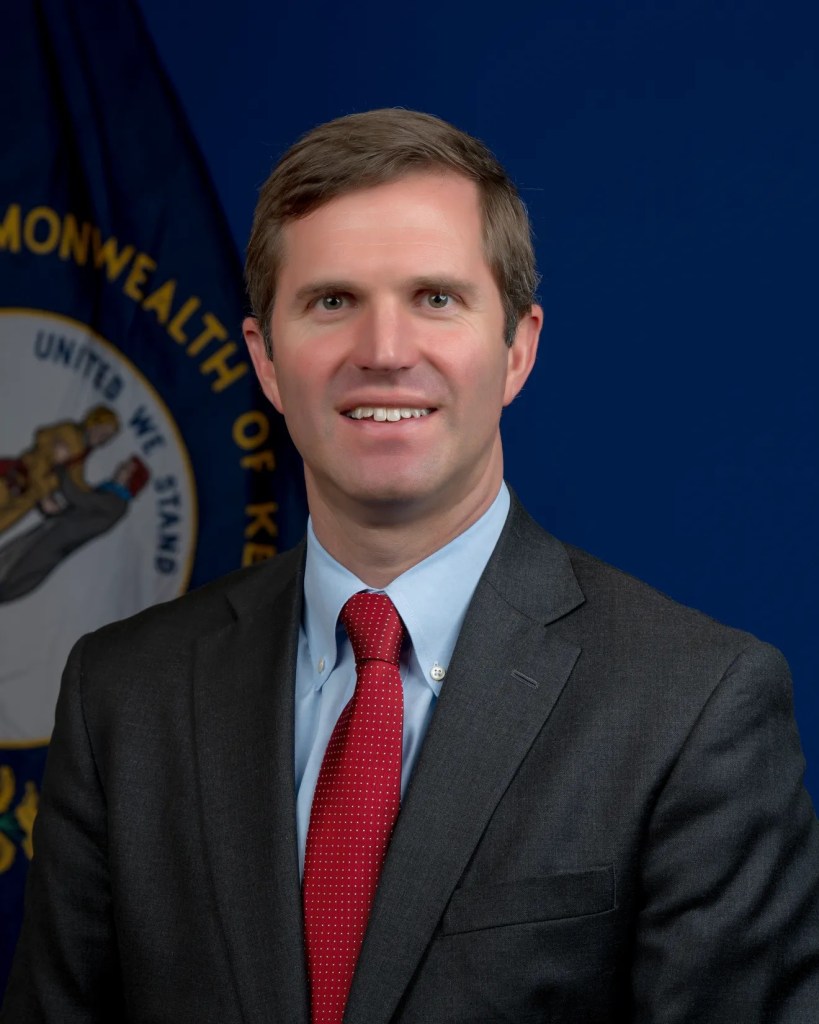
Governor Andy Beshear, Kentucky

Private schools get taxpayer dollars with no real accountability

As governors, we’ve proposed fully funding our public schools, teacher pay raises to treat our educators like the professionals they are and expanded early childhood education. We know that strong public schools mean strong communities. Families in Kentucky and North Carolina know that too. In North Carolina, nearly 8 in 10 children go to public schools.

Our public schools serve all children. They provide transportation and meals and educate students with disabilities. And they’re accountable to taxpayers with public assessments showing how students and schools are doing and where they need to improve.

But private schools that get this taxpayer money have little to no accountability. They aren’t even required to hire licensed teachers, provide meals, transportation or services for disabled students. They don’t even have to tell the taxpayers what they teach or how their students perform. North Carolina’s voucher system has been described as “the least regulated private school voucher program in the country.”

Studies of student performance under school voucher programs not only showed that they don’t help them, but that they could actually have harmful effects. Results from a 2016 study of Louisiana’s voucher program found “strong and consistent evidence that students using an LSP scholarship performed significantly worse in math after using their scholarship to attend private schools.” In Indiana, results also showed “significant losses” in math. A third study of a voucher program in Ohio reported that “students who use vouchers to attend private schools have fared worse academically compared to their closely matched peers attending public schools.”

We aren’t against private schools. But we are against taxpayer money going to private schools at the expense of public schools.

The future of our nation goes to class in public schools, and all Americans must be on guard for lobbyists and extremist politicians bringing similar plans to their states. Our segregationist predecessors were on the wrong side of history, and we don’t need to go back.

We are going to keep standing up for our public school students to ensure that they have the funding they need, and that teachers are paid like the professionals they are. It’s what’s best for our children, our economy and our future.

Roy Cooper is the governor of North Carolina. Andy Beshear is the governor of Kentucky.

Former President Trump recently discovered that members of his administration had produced a set of plans for his next term. They did this under the guidance of the Heritage Foundation, the Republican Party’s ideological center. If you believed that Trump knew nothing about this 900-page guidebook, I know of a bridge in Brooklyn to sell you.

Project 2025 is a handbook of extremism. It represents the far-right Republicans’ desire to eliminate many federal programs and, as right winger Grover Norquist one memorably said, “Shrink it so it can be drowned in a bathtub.”

North Carolina public school advocates Patty Williams and David Zonderman are public school graduates and parents. They wrote the following about Project 2025:

In the Spring of 2023, the Heritage Foundation released Mandate for Leadership: The Conservative Promise, aka Project 2025. Now, more than a year later, it is finally getting the serious attention that it demands. In its early pages, the Foundation claims to “have gone back to the future—and then some.” We are warned that, “The federal government is a behemoth, weaponized against American citizens and conservative values, with freedom and liberty under siege as never before.” To fight this supposed incubus sucking the life out of the republic, a growing number of conservative organizations have joined the Heritage Foundation in supporting this project and intend to assemble an army to march on Washington to “deconstruct the Administrative State.”


Project 2025 is both breathtaking and scary in its scope. It envisions a far-right rewriting of government missions, policies, and procedures, ranging from the White House, through all Cabinet-level departments, to the Federal Reserve and other independent regulatory agencies.  Tens of thousands of federal employees could be fired or subject to politically-inspired loyalty tests, gutting almost 150 years of civil service reform, and erasing institutional memory, knowledge, and expertise. Whole federal departments—including the Department of Education—and the funding that goes with them could be left on the cutting room floor, with disastrous consequences for the least among us.


This far-right “Playbook” is a frontal assault on honest and competent government, and the underpinnings of our 248-year-old democracy. Project 2025 flips the script on our nation’s foundation of liberty, prosperity, and the rule of law by inverting and perverting fact and data about how government actually functions to protect the environment, ensure safe workplaces, and provide some safety net for those in poverty. 


Project 2025 may appear to come from the right-wing fever swamp, which conjures up something out of science fiction. Indeed, it does remind us of a legendary Rod Serling Twilight Zone episode, first televised in March of 1962. In “To Serve Man,” earth is visited by the Kanamits. Enormously tall aliens, they appear frightening at first, but are eventually welcomed by humans. The Kanamits help end famine, eliminate war, and provide unlimited energy supplies for the betterment of the planet. 


Seemingly altruistic in their efforts, the Kanamits leave a book behind at the United Nations, which a decoding expert, Hero Chambers and his able assistant, Pat, begin to translate. Meanwhile, the Kanamits invite enthusiastic Earthlings to visit their planet, and flight reservations fill up quickly. Only when Pat races up to a space ship about to lift off does she reveal to Chambers that the title of the book—To Serve Man—is a cookbook. A recipe for disaster.


Project 2025 also proclaims to serve man, perhaps not literally on a silver platter like the Kanamits; but it may also cannibalize our government, our nation, and our democracy. Unlike the hapless denizens of earth in the Twilight Zone, we don’t need a decoding expert to see through the myths and deceptions that seek to dismantle our enduring republic and its Constitutional rights.


Let’s not wait until it’s too late and our collective goose is cooked. It’s time to stir the pot. Encourage your friends and family to vote as though their democracy depends on it—because it does.


The following letter was sent to Vice President Kamala Harris by advocates for public schools from across the nation. They pointed out that public schools, attended by 50 million students, are being harmed by privatization programs, which force public schools to cut budgets, lay off teachers, and eliminate courses and activities. Voucher schools are allowed to discriminate against. Students they don’t want: students with disabilities, students with low test scores, LGBT, and students of a different religion. For the past decade, research concurs that vouchers actually harm poor kids, who lose academic ground. Most vouchers are amused by students who already attend private and religious schools.

They urged VP Harris to reject Pennnsylvania Governor Josh Shapiro because of his support for vouchers. They urged her to support someone with a strong record of opposing privatization, like Governor Roy Cooper of North Carolina, Governor Andy Beshear of Kentucky or Governor Tim Walz of Minnesota

Please read.

Real Democrats support real public schools.

I wa despairing because no prominent candidate has mentioned education. Kamala Harris spoke about public schools and teachers when she addressed the AFT yesterday in Houston. I expected that. She went to public schools and has always supported them, and that’s what a candidate says to a nation Union of teachers.

But on Jen Psaki’s show on MSNBC, Governor Tim Walz of Minnesota denounced vouchers and book bans. I had never seen him speak. He was excellent! Please watch.

Dear Kamala,

You are an exciting candidate, and I am thrilled to help in any way I can to see you become President of the United States. I admired President Biden and his courage in selecting you to be his Vice-President.

Now I see you in the campaign trail, happy and spreading joy. Quite a contrast to Trump, who is always scowling, angry, and promising to wreak vengeance on his enemies.

I have one piece of advice: Please do not choose Josh Shapiro as your Vice President. I know he is popular in Pennsylvania, and you need Pennsylvania.

But Josh Shapiro is a supporter of vouchers. Vouchers are a hoax. Their boosters are right-wing foundations who oppose abortion, gun control, and climate action. Vouchers hurt public schools. Vouchers are the pet project of Betsy DeVos, Charles Koch, the Bradley Foundation, the Olin Foundation, and Texas evangelical billionaires Wilks and Tim Dunn. Another huge voucher supporter is multibillionaire Jeff Yass, the richest man in Pennsylvania, who has spread money to other states to promote vouchers and is rumored to have encouraged Shapiro to push vouchers.

Vouchers are bad not only because of their supporters but because they fail to help poor kids. In fact, the evidence from evaluations in Louisiana, Ohio, Indiana, and D.C. demonstrate that vouchers damage the academic outcomes of poor kids.

Most students who use vouchers are already enrolled in private schools. Why should the state subsidize families who don’t need the money but would be happy to have it as a gift from the state?

I know you don’t have a lot of time for reading these days, but I urge you to read anything that voucher researcher Josh Cowen has written since 2022. In that year, he declared that vouchers had failed and were hurting the kids they were supposed to help. His new book, The Privateers: How Billionaires Created a Culture War and Sold School Vouchers, lucidly describes the origins of vouchers in the fight against desegregation in the 1950s and their utter failure to help “poor kids escape from failing schools.”

You have a great list of potential VPs. Governor Josh Shapiro of Pennsylvania should not be on that list.

Thank you,

Diane Ravitch

In a short period of time, friends of public schools in Nebraska collected enough signatures to get on the November ballot. That is, if a hostile state official doesn’t kick off enough names to render their petition invalid, as happened in Arkansas. Voucher pushers are terrified of referenda; vouchers always lose—by big margins.

Public school supporters surpass signature goal to put repeal of LB1402 voucher scheme on the November ballot


LINCOLN – They had only 67 days – the shortest timeline for a petition drive in the state’s history – and Nebraska public school supporters rose to the occasion, again.


The Support Our Schools Nebraska coalition needed to collect 61,621 signatures to let voters repeal or retain a bill that spends millions of public tax dollars to pay for private schools. Today, the coalition submitted more than 86,000
signatures to the Nebraska Secretary of State to ensure the issue will appear on the November ballot. The group also exceeded the 38-county requirement with 5% of voters signing the petition in more than 60 of the state’s 93 counties.


“Since last summer we’ve collected more than 200,000 signatures from Nebraskans who believe voters should decide whether public funds should be used to pay for private schools,” said Jenni Benson, Support Our Schools Nebraska
sponsor and president of the Nebraska State Education Association. “The incredibly short timeline was a huge challenge, but Nebraskans wanted to sign this petition – many were appalled that LB1402 was passed to block citizens from voting on the issue and to impose a costly new voucher scheme on taxpayers.”

This is the second time Support Our Schools Nebraska has collected enough signatures to ensure voters have a say on a legislative bill that diverts public tax dollars to pay for private schools.


Last summer, the group gathered 117,415 signatures in 85 days to put the repeal of a previous voucher bill, LB753, on
the November 2024 ballot. Even after the Secretary of State certified that the LB753 petition met all statutory and
constitutional requirements to put the issue on the ballot for voters to decide, the bill’s sponsor, Sen. Lou Ann Linehan tried to have the Secretary of State take it off the ballot. When her attempt failed, she introduced LB1402, a bill that
denied Nebraskans their right to vote on LB753’s voucher scheme while imposing a new costly voucher plan on Nebraska taxpayers.


“Despite attempts by a few politicians and some wealthy special interests to ignore the will of the people, Nebraskans have once again affirmed their support for public schools. This direct democracy effort is a testament to the resolve of
the people of Nebraska and highlights the immense importance of public schools in our communities,” said Brad Christian-Sallis, Director of Power Building, Nebraska Table.


“Our Nebraska neighbors have made two things very clear: they expect that the state of Nebraska will make responsible investments with their tax dollars, and they love their public schools. That’s why they have turned out once again to have the chance to vote to repeal this legislation in November,” said Dr. Rebecca Firestone, Executive Director of OpenSky Policy Institute. “They have seen costs for similar programs balloon across the nation, like in Iowa, where the
cost of the program is expected to triple, reaching $345 million in just two years, or Arizona, where the cost of its universal voucher program has exceeded budget projections by 1,346%.”


“The underestimated anger among voters about being denied their earlier chance to vote is palpable. I heard this sentiment frequently, often unsolicited, as voters lined up to sign the petition,” said Cynthia Peterson, president of the
League of Women Voters of Lincoln-Lancaster County and representing the League of Women Voters of Nebraska.


“Nebraskans deserve the opportunity to vote on school vouchers—yes or no. Recently, even a nun signed our petition, jokingly acknowledging potential consequences but steadfast in her belief that voters should have the final say. Every
Nebraska voter has a voice in our system of government. This referendum petition all boils down to letting the people decide.”


“Today, the people of Nebraska have once again exercised their constitutionally protected right to referendum, ensuring that their voices will always be heard. This moment stands as a testament to the deep and unwavering love Nebraskans have for their public schools, which remain the heart and soul of our communities. In this defining moment, we celebrate the power of democracy and the enduring spirit of our great state,” said Dunixi Guereca, Executive Director of
Stand for Schools.


“PTA’s mission is to make every child’s potential a reality by engaging and empowering families and communities to advocate for all children. We value collaboration, commitment, diversity, respect, and accountability. Nebraska PTA is
proud to stand with the Support Our Schools Nebraska Coalition. We align with the National PTA in advocating for the improvement of public education for all children and to guarantee that public funds are not diverted to any private
school choice proposal and/or voucher systems,” said Christine Clerc, Executive Committee of the Nebraska PTA. “Public dollars must remain invested in public schools for the benefit of all students and the future of our nation. We are
so grateful for all the individuals who have signed the petition and collected signatures so that we might continue the Nebraska tradition of strong public schools in every corner of our state.”


“Public Education is the great equalizer in ensuring that all children regardless of geographical or social location have
access to learning, growing, achieving and giving back in service,” said Rev. Dr. Karla Cooper, LPS Foundation Board of Directors.


“The overwhelming success of the Support Our Schools campaign falls in line with what the majority of Nebraskans believe and support. According to the Institute’s 2023 public opinion poll, 64 percent of Nebraskans said they oppose
using public dollars to subsidize private, religious, or charter schools. Simply put, state lawmakers should respect the will
of the people and support our public education system, instead of undermining our community’s interests and priorities,” said Hadley Richters, CEO of the Holland Children’s Movement.


“Nebraskans have wisely rejected public funding of private institutions at the ballot box three times previously and we need to do so again,” said Tim Royers, a sponsor of Support Our Schools Nebraska and president of the Millard
Education Association. “All we have to do is look at states with similar voucher programs. Those states and their taxpayers are struggling with the skyrocketing cost of these programs, as well as with the lack of transparency and
accountability. Arizona’s voucher program is a fiasco with the governor there saying it will likely bankrupt the state, that it does not save taxpayers money, and it does not provide a better education for students. Our neighboring state of Iowa passed a voucher program last year. It led to a huge spike in private school tuition while the cost to state taxpayers far exceeds the initial estimates, growing to nearly $180 million for this coming year. We can avoid those problems by
voting to repeal LB1402’s voucher scheme at the ballot box this November.”


This year’s sprint to collect signatures was a grassroots effort from a broad base of nonprofits supporting public schools.

The effort included more than 2,800 volunteers who circulated petitions and coordinated more than 800 signing events. More than 1,300 individuals have donated to the effort with an average donation of $42.


The Secretary of State will forward the petitions to local election officials, who have 40 days to verify the petitions and the signers’ information. Once all petitions have been reviewed and requirements met, the Secretary of State will certify the measure for the November 2024 General Election ballot.


For more information on the effort to repeal LB1402’s voucher scheme, please visit:


Website: https://supportourschoolsnebraska.org/
Facebook: https://www.facebook.com/SOSNebraska
Twitter: https://twitter.com/SOSNebraska
Instagram: https://www.instagram.com/sosnebraska/


Contact: Karen Kilgarin at 402-432-7776 or Kelsey Foley at 308-643-7268

Matthew Stone of Education Week described the plans for K-12 education in a second Trump term, as they appear in Project 2025, a document written by hundreds of former Trump officials. The 44-page education section emphasizes eliminating the U.S. Department of Education, distributing its functions to other agencies, converting categorical funds (like Title I for low-income children) into block grants, and rooting out “critical race theory” and any recognition of the existence of LGBT students. The document emphasizes the primacy of parental rights.

Trump has distanced himself from the document, because its recommendations are so radical, but it was prepared under the watchful eye of Kevin Roberts, president of the ultra-rightwing Heritage Foundation. Roberts is a close associate of Trump’s.

Stone wrote:

What would Donald Trump do in the realm of K-12 if voters return the former president to the White House?

He and his campaign haven’t outlined many specifics, but a recently published document that details conservative plans to completely remake the executive branch offers some possibilities. Among them: 

  • Title I, the $18 billion federal fund that supports low-income students, would disappear in a decade. 
  • Federal special education funds would flow to school districts as block grants with no strings attached, or even to savings accounts for parents to use on private school or other education expenses.
  • The U.S. Department of Education would be eliminated.
  • The federal government’s ability to enforce civil rights laws in schools would be scaled back.

The proposals are contained in a comprehensive policy agenda that’s part of a Heritage Foundation-led initiative called Project 2025: Presidential Transition Project, which includes nearly 900 pages of detailed plans for virtually every corner of the federal government and a database of potential staffers for a conservative administration. It will also feature a playbook for the first 180 days of a new term.

The agenda is designed to be ready for a conservative president to implement at the start of a new administration next year, depending on the outcome of November’s election.

Project 2025 involves former Trump administration officials and other allies of the former president, as well as dozens of aligned advocacy organizations. One of those is Moms for Liberty, the Florida-based group that rose to national prominence fighting school boards over COVID-19 safety protocols and has endorsed conservative school board candidates across the country in recent years.

On the campaign trail, Trump has said that parents should elect school principals, called for merit pay for teachers and the abolition of teacher tenure, promised to cut federal funding to schools pushing progressive social ideas, and pledged to establish universal school choice.

But because he’s released little in the way of detailed plans, Project 2025’s 44-page agenda for the U.S. Department of Education offers the clearest picture yet of the education priorities Trump could pursue in a second term, and how a second Trump administration could use the federal government to advance conservative policies like private school choice and parents’ rights that have taken root in many Republican-led states.

Trump is trying to distance himself from Project 2025 because it is so radical. But no one takes his protestations seriously.

The editorial board of the Capitol Broadcasting Company wonders why voucher schools in North Carolina are exempt from the same accountability as public schools. The answer is simple: They don’t want the public to know. They don’t want them to know that most kids who use vouchers never attended public schools. They don’t want them to know that the few public school kids who sought vouchers are falling behind their peers in public schools.

The editorial boldly chastises the North Carolina General Assembly:

It is not an unrealistic expectation that North Carolinians hold elected officials – whether executive, legislative or judicial – accountable for how tax dollars are spent.

When legislators dole out — say more than half-a-billion dollars – to private schools it should go without mention there would be clear provisions for taxpayers to know how much money goes where, whether the money is being spent for the purpose intended and whether that purpose is being achieved.

Accountability isn’t simply to the parents of students. Achievement isn’t merely a matter of the parents’ happiness.

All North Carolinians – particularly every taxpayer who is paying the tab – have a right to know how their money is being spent and whether it is in the hands of competent and qualified people to deliver the services intended – educating school children.

When it comes to private school vouchers, the leaders of the General Assembly want to pump as much as $632 million into them so that even wealthy families can gain taxpayer subsidies for their kids’ tuition. Nearly 20% of the likely beneficiaries are families with annual household incomes exceeding $259,000 (representing the top 7% of families in the state).

Accountability is overlooked. More than overlooked, it seems legislative leaders are actually blocking the kinds of routine accountability that other recipients of taxpayer money must adhere to.

A recent examination of 200 private schools that receive the greatest share of taxpayer-funded vouchers by the Public School Forum of North Carolina revealed little oversight and few of the basic requirements that are in place for public schools, so taxpayers can see if their schools are properly staffed and kids are learning.

It is the law that students in public schools be taught by state-certified teachers. Voucher-supported private schools have no teacher-certification requirements. Only 2% of private schools require teachers have state certification.

Public schools must operate at least 185 days for classroom instruction. There’s no requirement of any minimum on instruction for voucher-supported private schools.

Public schools – including charter schools – must administer state end of grade tests. Voucher private schools can administer a nationally-normed standardized test of their choice to students.  They must pay if they choose to  use the state’s end of grade tests (see clarification below).

Current funding schemes for private school vouchers – even if funding for students from low- and modest-income families – needs to be accountable.

And there’s certainly no urgency to act on the unwise expansion of private school vouchers. The reality is that none of the families who might be awaiting word on the availability of the subsidies, is dependent upon them to send their kids to ANY school of their choice – public or private.

There are certainly some circumstances when the education needs of students cannot be met in public schools. Having a taxpayer-financed option for those students who need it – and need financial assistance – is appropriate.

But every taxpayer should be able to know – by transparency and accountability set out in state law – that their dollars are being spent as intended by competent teachers and there’s a demonstrable way to determine the effectiveness of the instruction.

Schools that discriminate in admissions or hiring, schools that don’t require basic teacher certification, classroom attendance, schools that don’t show student achievement through the same end-of-grade testing used in public schools and schools that don’t make that information available as public schools do, should not be subsidized with taxpayer dollars.

That’s just basic accountability our legislators should demand and schools willingly provide.

CLARIFICATION: An earlier version of this editorial stated that North Carolina private schools receiving taxpayer-financed vouchers were prohibited from using state end of grade tests. Private schools, including those receiving vouchers, are not prohibited from participating in the state’s end of grade and/or end of course tests, according to the state Department of Public Instruction.  If the private schools pay they can participate and some do, according to the department.

Leaders of the pro-public school organization called Public Schools First in North Carolina discovered that many public school parents and advocates are unaware that the state’s General Assembly has passed a budget that gives vouchers to the rich. They are distributing the following opinion piece from the Greensboro News to inform the public:

Our Opinion: Five words for GOP candidates: ‘And you’re OK with That?’

“And you’re OK with that?”

As Republican candidates for the state legislature begin to the make the rounds this fall, they should be hearing those five words over and over from constituents of all political stripes.

At every stop, on every stump, they should be pressed to give straight answers to that simple question on three issues:

Private-school vouchers

Even as they’ve increased taxpayer funding for private school tuition, adding wealthy families to the dole, many local public districts, including our own in Guilford and Forsyth counties, complain that they are seriously underfunded.

To be more specific, your party plans to plow hundreds of additional millions in taxpayer money into private school tuition assistance. Although 40% of that money ($96 million) would go to middle-class and working-class families earning between $57,721 to $115,440 a year (for a family of four), 44% (or $107 million) would go families earning $115,441 to $259,740.

And 16% (or $39 million) would go to those who need it the very least: wealthy families earning more than $259,741 annually.

One Democratic lawmaker likened it to asking low- and moderate-income taxpayers to help pay for a wealthy kid’s Porsche.

How do you square that with your rhetoric against “the welfare state” and profligate spending of other people’s money?

How do you square it with public school funding gaps throughout the state?

And how do you tell public schools no, that’s all we have to spend and then turn around and tell rich families y’all come. Who do we make the check out to?

Keeping secrets

Your party also slipped a provision into the state budget bill last fall that allows state lawmakers to decide for themselves whether they will make any of their documents accessible to the public. 

By law, they also get to choose whether to destroy or sell documents. They’re the decider. Which means they’re creating their own deep state right here and now on Tobacco Road.

What are they trying to hide and why?

And what gives them the right to membership in this exclusive club, but not others (the governor, the lieutenant governor, the attorney general and other North Carolina officials who are elected statewide need not apply)?

Easy money

Then there’s the provision the Republican-controlled legislature embedded within an (unnecessary) anti-masking bill that allows more “dark money” donations to political candidates in North Carolina.

As the current law stands, candidates must disclose the names of donors to their campaigns. They also are prohibited from taking donations from corporations, and contributions from individuals and political groups may not exceed $6,400.

This bill would change all that by making it legal for political parties in the state to take money from “Super PACs,” which are allowed to keep their donors secret and may receive unlimited amounts of money.

Those Super PACs would be able to collect the money and pass it on to the political parties, which could then funnel it to candidates, no questions asked.

At least your party has made no secret of the fact that it designed this new rule specifically with the GOP gubernatorial candidate in mind. Mark Robinson substantially trails his Democratic opponent, Josh Stein, in fundraising.

To recap, are you OK with:

Channeling taxpayer money to rich people as public schools go wanting?

Keeping documents and correspondence a secret from the public … unless you decide to share it?

And allowing anonymous cash to flow unfettered to candidates of both parties?

If the answer is yes, please explain how any of this benefits most North Carolinians and why we should vote for you anyway.

And how this in any way resembles government for, by and of the people.

Lisa Haver is a former Philadelphia teacher. She is co-founder and coordinator of the Alliance for Philadelphia Public Schools. She warns about the absurdity of defunding the state’s public schools while expanding vouchers to subsidize students currently in private and religious schools. This article appeared in the Philadelphia Hall Monitor.

Lisa Haver writes:

Musician and entrepreneur Jay-Z last month joined the ranks of out-of-town billionaires lobbying to expand voucher programs in Pennsylvania. Representatives from his Roc Nation came to Philadelphia to push for passage of PASS (Pennsylvania Award for Student Success), legislation that would divert more tax dollars from the state’s education budget to private schools. Roc Nation representatives repeated claims by voucher supporters, including Governor Josh Shapiro and suburban billionaire Jeffrey Yass, that PASS would give the students an alternative to the city’s “failing schools.” Jay-Z’s spokespersons told reporters that after seeing students “struggling in the public education system, within the lowest performing schools, we wanted to do something to help the community.” 

Not being from around here, Jay-Z and his representatives, apparently, are not up on the history of underfunding and privatization in the city and the state and the many schemes over the years that have failed to deliver on promises for a better education and stronger communities.  They seemed unaware of how vehemently Philadelphians oppose the idea of diverting even more money from underfunded public schools to affluent private schools.

The proposed expanded voucher legislation allows for even less accountability than the state’s existing programs. Since their passage in 2001, the Education Improvement Tax Credit (EITC) and the Opportunity Scholarship Tax Credit (OSTC) have sent over $2 billion in taxpayer funds to private schools. Education Voters PA estimates that 78% of EITC and OSTC funds go to religious schools that do not have to be accredited or adhere to the same curriculum standards that public schools do. This means public money going to schools that teach creationism or that slavery wasn’t really that bad and to schools that can and do discriminate against LGBTQ students and those with special needs. School choice has always meant the schools’ choice. And a feature, not a bug, of EITC and OTSC is the absence of data. Ed Voters PA points out that Act 46, passed in 2005, “explicitly prohibits the state from collecting data about voucher programs or students” who participate in them. 

There is already conflicting information about how PASS would work, who would be eligible, and the size of the scholarships, which range from $2500 to $15,000 depending on grade and level of need. But even the maximum allowance wouldn’t cover the tuition of the exclusive private schools whose tuition ranges from $25,000 to almost $50,000. The reality is that most of the voucher money goes to families with students already in private schools, not to students transferring from public schools.  

Republican legislators and pro-school choice lobbyists maintain that distributing public funds to privately managed schools with a minimum of public oversight will help the city’s children get a better education. Where have we heard that before? 

In 1997, the state legislature passed the Pennsylvania Charter Law. Privatizing public schools, they assured us, would rescue the children trapped in failing public schools. The reality? Yearly assessments–using the framework formulated by charter operators themselves–show that Philadelphia charters rarely outperform district schools in academics. The district has spent millions in years-long legal proceedings to close substandard schools. Other charters have closed due to financial malfeasance of the schools administrators, or in the recent case of Math Science Civics, the whims of the charter CEO. The state charter law allows substandard charters to operate for years while they appeal non-renewal actions. 

Parents who had hoped to find better schools in charters are returning to their neighborhood schools, with over half of the city’s charters now under-enrolled. Since the passage of No Child Left Behind, which enabled the privatization of public schools, students have been subjected to learn-to-the-test scripted curricula, with test prep classes replacing interesting and challenging electives. Their schools have been branded as failures, and many of their neighborhoods have lost the schools that served as community anchors.

Does Jay-Z really believe that the children of Philadelphia will win in a “hunger games” approach to education? 

Last year, school districts in Pennsylvania won a significant victory when the Commonwealth Court ruled that the state must provide, as mandated in the state constitution,  a “thorough and efficient system of public education to serve the needs of the Commonwealth.” Jay-Z should join the parents, students, educators and community members urging the state legislature to pass a budget that will fund smaller class size, school libraries, and healthy school buildings–in every school in every Philadelphia neighborhood.