Archives for category: Texas

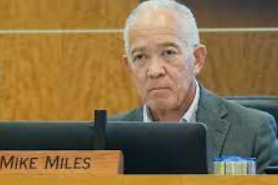
School started in the Houston Independent School District, and many teachers were stunned by the extent to which their actions were constrained by a script. The new superintendent Mike Miles has be never been a teacher but he thinks he knows everything about teaching. He laid down strict rules, and teachers must comply without hesitation. Miles is the kind of leader who, if put in charge of a hospital, would tell surgeons how to conduct surgeries. This story appeared in the Houston Chronicle and was written by staff writer Anna Bauman.

As she prepared for the start of a new school year in Houston ISD, a fifth-grade reading teacher stripped much of the colorful personality from her classroom, including motivational posters, student art projects, several bins of books and a social-emotional learning nook with comfy furniture.

She wiped away tears and, earlier this week, started teaching at a school under the New Education System, a wholesale reform model introduced by Superintendent Mike Miles, who was appointed in June by the Texas Education Agency to run the largest school system in Texas.

HISD teacher Sarah Rivlin participates in a rally hosted by The Greater Houston Justice Coalition and other community groups to speak against the state takeover of HISD Friday, March 31, 2023, at Cesar Chavez High School in Houston.

While parents and students may have noticed few of the changes, educators from a wide swath of schools in HISD say they feel micromanaged and stressed in their first week under new district leaders, who are reportedly enforcing strict guidelines and conducting frequent classroom observations that have sparked frustration, fear and low morale among teachers at both NES and non-NES schools.

“I feel like they are not allowing me to do what’s in the best interest of the children,” said the reading teacher. “Every day I go to work, I’m crying. Every day I leave from work, I’m crying.”

The superintendent, meanwhile, said he has been pleased with what he has seen while collecting a “baseline” at NES schools in the first week.

“I was very impressed with their progress, even in one day, but also their preparation for the beginning of the school year,” Miles said. “Teachers were teaching well, they were following the instructional model, and it was pretty good. It shows that the schools and the teachers have been preparing hard for the first day, second day of school.”

The district is laying the groundwork for a pay-for-performance evaluation system geared toward measuring the quality of a teacher’s instruction, although a Harris County judge has temporarily blocked HISD from implementing the system.

“The high-quality instruction, there’s a clear rubric for that, there’s a clear spot observation form, because we have to train teachers,” Miles said. “We can’t just do what we’ve always done, which is go into a classroom every three weeks or three months and think we’re going to see something that is effective teaching, and just rely on, ‘Oh, I’ll know it when I see it.’”

This year, all principals will be evaluated under a new system that requires them to give instructional feedback and spend significant time coaching teachers in classrooms. Principals will be graded in part based on the quality of instruction at their school. Meanwhile, teachers will also be measured with a new evaluation system this year, although those who do not work in the schools targeted for reform may ask for a waiver.

District leaders trained teachers in recent weeks on the evaluation system and new classroom expectations. For example, one slideshow presented during teacher training listed some “common practices that we want to generally avoid,” including stream of consciousness writing, rooms with dim lighting and worksheets that are not purposeful. The training materials also discouraged teachers from showing entire films, letting kids “earn” free time and allowing “poor readers” to read aloud during class.

The slideshow instructed teachers to post a “lesson objective” on the board before the start of each class, avoid wasting time on transitions between activities, teach “bell to bell,” teach grade-level content to “every student every day” and use a timer to guide pacing of the lesson. Teachers should use a “multiple response strategy,” an activity that engages and checks the understanding of all students, every four minutes, according to a sample spot observation form.

On the first day, teachers said they were expected to skip introductions and get-to-know-you games, instead jumping right away into instructional material.

“I don’t even know who my kids are because we haven’t been able to get to know them,” said the fifth-grade reading teacher. “They still call me ‘teacher’ because they can’t remember my name.”

She has struggled to stay on pace with the timed lessons and was scolded for bringing in additional materials to help students, many of whom are Spanish speakers who cannot read on grade level. When she raised concerns about the fast pace, a district official told a campus administrator that the teacher was “moving too slow.”

“We’re not allowed to give them work on a level they understand. Most of the time, they sit there confused,” the teacher said. “I’ve had students crying since day two, saying they’re overwhelmed.”

Meanwhile, Jessica Waligorski, a special education support teacher at Isaacs Elementary School, said she appreciates the rigor, high expectations and organization of the NES model. Administrators are supportive and easily accessible at her NES campus, she said. Teachers lift each other up when doubts creep in and students have taken to the new model “like sponges,” she said.

“Everyone is holding each other to a standard and we’re not wavering,” she said. “We have set the tone, we have set expectations, we have set goals … and our kids have been engaged, learning. They don’t have a minute to misbehave because there’s so many things they’re learning.”

Miles has said there is no directive from the district mandating that teachers at non-NES schools teach with a specific curriculum or follow a certain instructional model. In reality, however, many of the new rules and expectations seem forced on campuses across the district, including high-performing schools that do not fall under NES.

Some of the rules seem to have been taken to an extreme. One teacher said she asked for an accommodation to use lamps instead of florescent lights in her classroom due to a serious medical condition. District officials denied her request and suggested another option: Wear sunglasses.

The teacher has already started getting headaches from the bright lights.

“I have all my lights on,” she said. “I’m trying to get through the day.”

In addition to turning on lights, the teacher, who works at a non-NES middle school, has made several other changes this year, including removing bean bag chairs from her classroom, keeping the classroom door open and following the new instructional techniques outlined on the evaluation rubric.

District staff have been observing classrooms almost every day this week, she said. The teacher said she was nervous to sit down while taking attendance or interrupt a lesson to tell a funny story during class.

“We all feel afraid to step out of line,” she said.

One teacher at a non-NES campus said she was observed by appraisers three times on Monday, creating a climate of fear and nerves even at a top-ranked campus. She loves having visitors in her classroom — “I’m a really good teacher and I’m proud of what I do” — but it feels different when “someone’s sitting there, ticking boxes,” especially on the first day of class.

“People are having trouble sleeping because they’re on edge,” she said. “It’s the constant anxiety that we’re going to be caught and that we’re going to be dinged. … I think you’re going to see a mass exodus of teachers at the end of this year, if this continues.”

One teacher at a different non-NES campus said he and other educators were chastised for spending the first day on introductions, logistics and relationship building with students rather than teaching content.

The teacher stayed three hours late that night to adjust his lesson plans for the second day, and his principal checked in first thing the next morning to make sure that he was prepared to teach a full-blown lesson, as expected by the appraiser in his classroom.

The new expectations and frequent classroom observations from district administrators this week has created a sense of frustration and anxiety on campus, according to the teacher, who said he was ready to quit even though he feels “called” to the profession.

“There’s no grace, there’s no empathy, there’s no treating people as people,” he said. “We are not encouraged to move forward — we’re pushed off the cliff and told to fly. And if you don’t fly, you fail.”

Many of the teachers at his top-rated campus have decades of experience, he said.

“I work at a really special school. … We should not be the target,” he said. “We were hoping that we’d be so far under the radar that we’d be left alone, but that’s not the case.”

With only one exception, I have never before posted two articles by the same person on one day. The exception occurred several years back, when I discovered the brilliant teacher-blogger Peter Greene and devoted an entire day to his insightful, humorous writings. Heather Cox Richardson stands alone as a historian who posts a timely commentary almost every day. Consider subscribing to her blog. You will be glad you did.

Heather Cox Richardson wrote this post to recognize the historical roots that link contrasting visions of slavery and labor. We live in a society now that has no slavery yet has crippled organized labor and tolerates horrible working conditions. Some states, notably Arkansas and Iowa, have weakened child labor laws, so young teens are permitted to toil in dangerous jobs. Parental rights, you know. Texas legislators recently declined to pass a law requiring employers to provide 15 minutes for water breaks for employees working outdoors in a historic heat wave.

On March 4, 1858, South Carolina senator James Henry Hammond rose to his feet to explain to the Senate how society worked. “In all social systems,” he said, “there must be a class to do the menial duties, to perform the drudgery of life.” That class, he said, needed little intellect and little skill, but it should be strong, docile, and loyal.

“Such a class you must have, or you would not have that other class which leads progress, civilization and refinement,” Hammond said. His workers were the “mud-sill” on which society rested, the same way that a stately house rested on wooden sills driven into the mud.

He told his northern colleagues that the South had perfected this system by enslavement based on race, while northerners pretended that they had abolished slavery. “Aye, the name, but not the thing,” he said. “[Y]our whole hireling class of manual laborers and ‘operatives,’ as you call them, are essentially slaves.”

While southern leaders had made sure to keep their enslaved people from political power, Hammond said, he warned that northerners had made the terrible mistake of giving their “slaves” the vote. As the majority, they could, if they only realized it, control society. Then “where would you be?” he asked. “Your society would be reconstructed, your government overthrown, your property divided, not…with arms…but by the quiet process of the ballot-box.”

He warned that it was only a matter of time before workers took over northern cities and began slaughtering men of property.

Hammond’s vision was of a world divided between the haves and the have-nots, where men of means commandeered the production of workers and justified that theft with the argument that such a concentration of wealth would allow superior men to move society forward. It was a vision that spoke for the South’s wealthy planter class—enslavers who held more than 50 of their Black neighbors in bondage and made up about 1% of the population—but such a vision didn’t even speak for the majority of white southerners, most of whom were much poorer than such a vision suggested.

And it certainly didn’t speak for northerners, to whom Hammond’s vision of a society divided between dim drudges and the rich and powerful was both troubling and deeply insulting.

On September 30, 1859, at the Wisconsin State Agricultural Fair, rising politician Abraham Lincoln answered Hammond’s vision of a society dominated by a few wealthy men. While the South Carolina enslaver argued that labor depended on capital to spur men to work, either by hiring them or enslaving them, Lincoln said there was an entirely different way to see the world.

Representing an economy in which most people worked directly on the land or water to pull wheat into wagons and fish into barrels, Lincoln believed that “[l]abor is prior to, and independent of, capital; that, in fact, capital is the fruit of labor, and could never have existed if labor had not first existed—that labor can exist without capital, but that capital could never have existed without labor. Hence they hold that labor is the superior—greatly the superior of capital.”

A man who had, himself, worked his way up from poverty to prominence (while Hammond had married into money), Lincoln went on: “[T]he opponents of the ‘mud-sill’ theory insist that there is not…any such things as the free hired laborer being fixed to that condition for life.”

And then Lincoln articulated what would become the ideology of the fledgling Republican Party:

“The prudent, penniless beginner in the world, labors for wages awhile, saves a surplus with which to buy tools or land, for himself; then labors on his own account for another while, and at length hires another new beginner to help him. This, say its advocates, is free labor—the just and generous, and prosperous system, which opens the way for all—gives hope to all, and energy and progress, and improvement of condition to all.”

In such a worldview, everyone shared a harmony of interest. What was good for the individual worker was, ultimately, good for everyone. There was no conflict between labor and capital; capital was simply “pre-exerted labor.” Except for a few unproductive financiers and those who wasted their wealth on luxuries, everyone was part of the same harmonious system.

The protection of property was crucial to this system, but so was opposition to great accumulations of wealth. Levelers who wanted to confiscate property would upset this harmony, as Hammond warned, but so would rich men who sought to monopolize land, money, or the means of production. If a few people took over most of a country’s money or resources, rising laborers would be forced to work for them forever or, at best, would have to pay exorbitant prices for the land or equipment they needed to become independent.

A lot of water has gone under the bridge since Lincoln’s day, but on this Labor Day weekend, it strikes me that the worldviews of men like Hammond and Lincoln are still fundamental to our society: Should our government protect people of property as they exploit the majority so they can accumulate wealth and move society forward as they wish? Or should we protect the right of ordinary Americans to build their own lives, making sure that no one can monopolize the country’s money and resources, with the expectation that their efforts will build society from the ground up?

Mike Miles doesn’t think children need recess. As a military man, he thinks recess is a waste of time. But he backed down to parent pressure to allow recess. Great to have an authoritarian superintent who makes all decisions (not). Satisfying to see that at least once, he listened to parents.

Houston ISD Superintendent Mike Miles announced on Tuesday that he is changing the recess schedule at schools under the New Education System to allow for more unstructured play time for kids in response to a push from parents.

All students in pre-K through fifth grade classrooms in the 85 NES and NES-aligned schools will now have a single 30-minute recess period each day, according to the district, an increase compared to a former schedule that included two shorter breaks for the lower grades and no recess in fifth grade.

LATEST NEWS: HISD superintendent dissolves autism support team under special education restructuring plan

“Teachers shared that they believe these modifications will limit lost learning time and maximize high-quality instruction, and we’ve heard from many families that they value unstructured free play time for their students,” Miles said in a statement. “We were able to make these changes without sacrificing high-quality instruction time and we believe this will enhance the environment in our schools and support student achievement.”

The change marks a big win for an HISD parent advocacy group called Free Play Houston, whose members have written letters, met with administrators and orchestrated an email campaign in recent weeks in an effort to push for more recess time for NES students, pointing out that shortening recess time may stand in violation of state law and HISD board policies.

“We are overjoyed that a child’s right to play will be respected and valued this school year,” the organization said in a statement on Tuesday, thanking those who emailed HISD leadership about the issue. “Houstonians have long known that all children need an unstructured play time during their school day. Decades of research shows that recess not only promotes social and emotional skills that become fundamental learning tools, but that recess also benefits students by improving their memory, attention, and concentration.”

Before these changes, the latest version of the NES master schedule allowed for one 15-minute recess in the morning and one 15-minute break in the afternoon for kindergarden through fourth grade students, with no additional time built in for getting students to and from the playground, according to Brooke Longoria, co-founder of Free Play Houston and an HISD parent.

Additionally, the former schedule included no recess for fifth grade students, with district administrators saying their physical movement needs would be met through Dyad programming like martial arts, dance and spin bikes, along with PE class.

SCHOOL SAFETY: Houston-area schools struggle to comply with new law requiring armed officer at every campus

The modification appears to be the first time the new state-appointed superintendent has responded to community pushback by changing course.

Mercedes Schneider summarizes the checkered career of Mike Miles, who was put in charge of the Houston Independent School District by State Commissioner Mike Morath, who was appointed by hard-right Republican Governor Greg Abbott. Abbott wants to punish Houston for not voting for him. What better punishment than to install Mike Miles as superintendent?

Schneider writes:

In June 2023, the Houston Independent School District (HISD) became the latest major school district to experience a top-down, ed-reform tactic that largely ignores community investment and fail to deliver on promised academic gains: the state takeover of a school district.

On June 01, 2023, the Texas Education Agency (TEA) appointed Mike Miles as the new HISD superintendent.

Miles is the golden-child product of market-based, ed-reform leadership. As reported in his LinkedIn bio, Miles holds no college degrees in teaching (engineering; slavic languages and literature; international affairs and policy). He has never been a classroom teacher, never a site-based administrator, yet he was a district superintendent in Colorado for six years (2006-11) and superintendent of Dallas ISD for three.

Though he does not mention it in his LinkedIn bio, Miles was a member of the Class of 2011 at the Broad Superintendents Academy A 2011 EdWeek article on Broad superintendents includes the criticism that they “use corporate-management techniques to consolidate power, weaken teachers’ job protections, cut parents out of decisionmaking, and introduce unproven reform measures.”

Indeed.

In 2015, Miles abruptly resigned from Dallas ISD amid being, as WFAA.com states, “at the center of controversy since he took the position nearly three years ago,” which apparently included questions about misdirecting funding intended for at-risk students and the subsequent exit of the Dallas ISD budget director. (Also calling Miles “a lightening rod for controversy,” WFAA.com offers this timeline of Miles’ unsettling tenure in Dallas.)

Despite all of his Dallas ISD controversy, TEA– which is no stranger to stepping into its own controversy— chose to hire Miles to lead its newly-state-snatched HISD.

Following his Dallas ISD exit, in 2016, he founded a charter school chain, Third Future Schools, which has locations in Colorado, Texas, and Louisiana. For two years (2017-19), Miles was a senior associate in an education consulting firm, FourPoint Education Partners.

And according to his LinkedIn bio, Miles is/was on a number of ed-reform organization boards, including Teach for America (TFA) Colorado (2017-20); National Council on Teacher Quality (NCTQ) (2013-present), and Chiefs for Change (2015-present).

Please open the link to finish reading the post.

Steffen E. Polko is a retired professor of education at TCU in Texas. He wrote the following commentary for the Fort Worth Star-Telegram. Vouchers, he says, will doom community rituals, like Friday night football. Dividing students up by religion and other grounds will divide our communities and our country even more than at present.

He writes:

There appears to be some confusion regarding rural Texans’ opposition to school choice and vouchers. I think I may know why.

Gov. Greg Abbott’s espoused principal reason for promoting vouchers is to protect Texas children from the “woke” propaganda being disseminated by public school teachers. Let me assure the governor that teachers in upstanding, God-fearing communities such as Mineral Wells and Hico are not subjecting their students to “woke” ideology. In these communities, “woke” still means not asleep. This is not something that’s broken in small-town Texas, so it doesn’t need fixing.

Now, onto the most important reason. Vouchers pose a threat to high school football and could turn out Friday Night Lights. An education savings account program will reduce funding levels for public schools as students leave. The first thing to be hit will be athletic budgets.

Proponents note that there are few private school options in rural Texas. So, where will these students go? There are no options yet, but this will change with vouchers. Many churches face declining attendance and financial difficulty. If $8,000 per year vouchers are available a minister with 20 or more school-age children in the congregation will find it rational and financially prudent to start a school.

Let’s say I have 40 such children. If the state sends me $320,000 per year and I can keep expenses at $160,000, I will net $160,000 for my church. How do I keep my expenses so low? The key is technology. High-quality learning systems produced by nationally recognized educational providers such as Pearson are readily available over the Internet. The cost of learning management systems currently averages around $5 per student per month.

The state will require me to have two “teachers” for 40 students. No problem; this can be anyone in my congregation with a college degree and some time on their hands. Getting alternative certification from the state is relatively easy. My teachers need not be education experts because the learning management system does the heavy lifting. It provides instruction and creates and grades the homework and tests. The latest systems even use artificial intelligence to answer student questions.

The only job for the “teachers” would be to manage classroom behavior and help students use the software. A student leaving the public schools will probably get a fairly good Christian education. The public school will lose funding for athletic programs and perhaps a potential star quarterback. Ouch! For-profit schools will emerge employing a similar model. Using a hybrid instructional model and current costs, I calculate that a 200-student high school would bring cashflow of about $800,000 a year. Start 10 of

those and you have a nice chain of businesses. Could this be the real driving force behind vouchers? To recruit students, such schools could promise to teach artificial intelligence and the Python programming language to prepare students for a promising future in technology — or use some other clever hook. Texas has about 8,000 schools. The Texas Education Agency employs 1,000 people and spends around $2 billion per year to monitor the schools and hold them accountable.

I predict that vouchers will increase the number of schools in Texas four-fold. Will the Legislature increase funding by a factor of four to monitor this many schools? I think not. It will be a long time before state officials figure out if for-profit schools are delivering on their promise, and the owners will be very rich before they do. Good luck getting them and their money back from Barbados. Not only would church and for-profit schools poach rural athletes, but specialized voucher- and donor-funded sports academies could emerge. Let’s say someone starts a Dallas Football Academy. It could use an entrance exam similar to the NFL combine to assure it got the best athletes. The best coaches, fitness trainers, and other staff would be recruited.

These schools would have a direct connection to universities to give their athletes the best shot at a top-level scholarship. Such schools would dominate small-town teams and end the reign of, for example, the Aledo Bearcats. The state championship game would probably feature the Dallas and Houston football academies.

Rural Texas is our best bet to keep the state from making a huge mistake that is little more than a political stunt to get votes. Small communities have nothing to gain from vouchers and a lot to potentially lose, as does the rest of the state.

Steffen E. Palko is a retired associate professor of education at TCU. He lives in Fort Worth.

Read more at: https://www.star-telegram.com/opinion/opn-columns-blogs/other-voices/article277689198.html#storylink=cpy

In true Broadie style, Houston Superintendent Mike Miles removed two elementary principals only days before the start of school. He started his job of “reforming” the Houston public schools in June, so he obviously did not observe either of them. This is disruption to the max. Teachers and parents learned about this abrupt action through an automated phone call.

Erin Trent (left), principal at Stevens Elementary School, and Linda Bellard, principal at Garcia Elementary School, were both removed from their positions Aug. 23, 2023. 

Erin Trent (left), principal at Stevens Elementary School, and Linda Bellard, principal at Garcia Elementary School, were both removed from their positions Aug. 23, 2023. Houston ISD

Parents and teachers at Stevens say they were “blindsided” by the announcement, which was made via an automated phone call.

“This unexpected and impersonal communication from the district caused immediate anxiety, confusion and fear, not just for me personally but among hundreds of parents,” said Adam Chaney, the parliamentarian for Stevens’ Parent Teacher Community Organization.

“Our community deserves clarification immediately. We are two days away from ‘Meet the Teacher,’ the whole campus is going to be present, and then Monday morning is the start of school,” Chaney said. “It’s become increasingly difficult to avoid interpreting this chaotic situation through the lens of this controversial takeover.”

HISD officials declined to comment further or provide a reason for the reassignments, saying that the district cannot comment on ongoing personnel matters. The call Stevens parents received Wednesday acknowledged that “the change may feel abrupt,” but that it had “become clear that this change is necessary to ensure Stevens Elementary students start the year off well with access to high-quality instruction on day one that meets their needs and supports increased academic outcomes on the campus…”

Trent’s abrupt removal has led members of the Stevens community to speculate that she was reassigned because she did not opt in to Superintendent Mike Miles’ New Education System earlier this summer.

One teacher, who asked to remain anonymous for fear of retaliation, said Trent resisted pushes from the HISD central office to become an NES-aligned school, which would have seen many of Miles’ most sweeping and controversial reforms implemented at Stevens.

Miles also disbanded the HISD team of autism specialists who served schools throughout the district.

Something weird has happened to the Republican Party. It used to favor local control. Not any more. Now Republicans think it okay to seize control of school districts instead of helping them with resources, as happened in Michigan, Ohio and Texas. And Texas just passed a law called “the Death Star” that allows the state to cancel local laws. No more local control in Texas!

Why have Republicans doubled down on suppressing the vote, gerrymandering legislatures to crush opposition, and undermining democracy whenever possible?

Gus Bova of The Texas Observer has the story here:

On November 3, 2020, as America watched the first results of a fateful presidential contest roll in, voters in a North Texas suburb struck a blow for workers’ rights. Euless residents approved a proposition limiting some large companies’ ability to force employees to work overtime if they didn’t want to.

The “fair workweek” initiative, comparable to measures passed recently in a handful of other cities, was led in Euless by employees of LSG Sky Chefs, an airline catering giant and meal-supplier for American Airlines. These workers, unionized with Unite Here, said they were being overwhelmed with mandatory overtime hours, often announced at the last minute, as American Airlines, headquartered near the sprawling Dallas-Fort Worth airport, sought to dramatically increase flight volume.

“You can have a wife and children, and yet every day you are forced to stay at work, and you have no time to even go back and sit and relax and play and take care of children,” said Samuel Tandankwa, a Sky Chefs driver and Unite Here member, recalling the conditions in 2019 and leading up to the COVID pandemic.

Despite getting voters’ approval, the initiative faced legal troubles from the first. Some city officials doubted it could be enforced. Sky Chefs told the Texas Observer it didn’t apply to them since they maintain a national contract with Unite Here. And Texas Attorney General Ken Paxton had already written a letter stating the policy would violate a state law that bans cities from setting minimum wages. Nevertheless, Tandankwa told the Observer in July that since the campaign, the company actually has turned away from using mandatory overtime, freeing up workers to meet family obligations, and neither he nor local worker advocates want to lose the ordinance.

But Euless’ overtime measure is among the local ordinances that will be vaporized by Texas’ House Bill 2127, dubbed the “Death Star” bill by critics, which was signed by GOP Governor Greg Abbott last month and takes effect in September. It’s causing uproar around the state, as city officials, workers, and others try to figure out what parts of municipal law and regulation the bill will nullify.

The bill’s sweeping, alleged purpose is stated in its opening sections: “returning sovereign regulatory powers to the state where those powers belong.” However, closer examination suggests that the legislation’s real intent is both narrower and potentially more profound than just upending city ordinance-making powers. First, it is a laser beam aimed at a small group of progressive ordinances improving worker and tenant protections—local victories won through hard-fought campaigns over the course of more than a decade. Second, and more importantly, it’s a bid to permanently hamstring municipal democracy in Texas, especially in its big blue cities. Cities are where most Texans live; they are increasingly liberal, their populations often majority nonwhite, and they are the level of government most responsive to ordinary citizens. In essence, the Legislature decided there was too much Democracy afoot in Texas, so it did something about it.

“To me, that’s the will of the people being taken away,” said Tevita Uhatafe, a Euless resident who works for American Airlines and is also a vice president of the Texas AFL-CIO. “We voted for it … and here we are, we’re going to get it taken away because people who claim to hate big government are acting just like [it].”

“There is no precedent for what they did this time,” said Rick Levy, president of the Texas AFL-CIO. “It was not a measured response to a given policy that corporate interests didn’t like; it was a wholesale transfer of power from cities to politicians in Austin.”

Please open the link and keep reading.

The State Secretary of Education in Oklahoma Ryan Walters has been threatening to take control of the Tulsa public schools, replace the elected school board and fire the district superintendent. State takeovers have a long history of failure. Tulsa Mayor G.T. Bynum wrote a strongly worded letter to the Oklahoma State Board of Education and told its members in no uncertain terms, “hands off our public schools and our elected board!”

It’s a terrific letter. Open the link and read it. If only every city had leadership who stood up for their public schools like Mayor Bynum did!

Of course, Houston’s Mayor opposed the state takeover of HISD but Governor Abbott and his state Commissioner Mike Morath were determined to destroy democracy in Houston because the people there vote Democratic.

Speaking of Houston, the state-imposed Superintendent Mike Miles celebrated his arrival with a splashy musical performance, while teachers sat obediently in their seats at the NRG Arena.

The Texas Observer reported:

Hundreds of Houston’s teachers gathered at the NRG Center early morning Wednesday, where they were directed to wear school colors, wave school banners, and shake sparkly pom poms. Facilitators started the Harlem Shuffle dance in the aisles. And then, as the teachers were motioned back into their seats, the room turned dark and silence fell.

A single spotlight shined on a student performer in an aisle belting the lyrics to West Side Story’s “Something’s Coming”:

Something’s comin’, something good
If I can wait!
Something’s comin’, I don’t know what it is
But it is
Gonna be great!

The stage lit up to reveal a 1950s diner with red and white checkered tablecloth tables and red rubber stools. In walked new district superintendent Mike Miles, playing “Mr. Duke,” owner of the joint who doubles as a counselor who listens to the teachers’ and students’ grievances.

Since March, when the Texas Education Agency seized control of the Houston Independent School District (HISD), citing the failure to meet state standards at one high school, Houston’s teachers and parents have seen the battle with the state-appointed school board and superintendent play out in community meetings and in the press. Now, during a week of district-mandated conferences at the NRG Center, teachers were watching the takeover play out on stage. Miles directed the script—an hour-long musical that took six weeks to prepare, depicting how the new superintendent will rekindle the extinguished spirits of burnt-out teachers, give hope to hopeless students, and bestow a visionary plan to save public education.

“We are lost as a profession,” a teacher said on stage.

“My dreams are getting smaller and smaller,” a student later echoed.

“Well, maybe that new guy—you know, super … super …”

“You mean Superintendent Miles?”

“Maybe Superintendent Miles will make things better for us.”

Maybe.

But teachers who spoke to the Texas Observer said Miles’ performance wasted the district’s time and money and mocked their professional experience and concerns.

“For him to turn our concerns into satire is really insulting,” HISD teacher Melissa Yarborough said. “It reeks of propaganda.”

“He wasted our time when we could be in our classrooms preparing our lesson plans before school starts,” said Chris, an elementary school teacher who asked only to be identified by his first name.

Jessica, who has been teaching for 24 years, told the Observer Miles’ musical “was very condescending. The message was that we don’t know what we’re doing. And he’s coming in to show us how to do it right.”

The Houston Chronicle also reviewed Miles’ musical event.

A few fine arts teachers who spoke to the Chronicle said Miles is hypocritical for spreading his message through a musical theater production even after disrespecting fine arts teachers, who at NES schools will be paid far less than their peers teaching reading, math or science.

“He claims reading and math are the forefront and he wants to get rid of fine arts. Yet he used fine arts to promote his ideologies,” said one fine arts teacher, who called the production a “slap in the face.”

Another fine arts teacher said it was “the very definition of irony.”

“The fact he used HISD fine arts teachers and students in his presentation, the day after saying in his evaluation sessions that we are not as essential … creates a sense of rage and despair I cannot even describe,” said the teacher, who was told they could be fired for making negative public statements about the district.

Only staff from NES campuses attended the live event at NRG, while educators from other schools watched convocation remotely from their own campuses following a last-minute scheduling change.

Funnily enough, Miles also staged a splashy musical with him as the star when he began his tenure in Dallas in 2012. All of the district’s 18,000 teachers were summoned to watch. The video has been removed from the internet. But The Texas Observer ran a great story about the event, with a photo of him dancing with students. At that performance, he laid out his vision for making DISD the best urban district in the nation by 2020 using ideas he learned at the Broad Superintendents Academy. He was, he said, a believer in disruptive change, like Arne Duncan. “Miles epitomizes today’s school reform movement, convinced that anything worth doing in a classroom can be measured.” But three years later, he was gone.

Bethany Erickson wrote in D Magazine about the revolution in Dallas. The superintendent, Stephanie Elidzalde, declared that test prep is dead. She is determined to make school joyful. Imagine that! I have been waiting a long time for a superintendent with the brains and guts to do what she’s doing. The teacher shortage in Dallas has shrunk dramatically. Not surprising. What wonderful news.

Erickson writes:

School started at Dallas ISD today, and parents of students attending school at any of the 230 campuses may notice something different this year.

During her state of the district address last May, superintendent Stephanie Elizalde said the district would soon eschew the numerous tests designed to find out whether students were ready for the STAAR in favor of, as she put it, more “joy” in the classroom.

In last year’s address, she declared teaching to the test was “officially dead,” and added that some schools were testing as frequently as every few weeks in preparation for the STAAR test, and doing classwork in between those assessments that also practiced STAAR strategy.

“How about we put them all together and we have a huge bonfire?” she said.

That doesn’t mean that there won’t be occasional checks to make sure a student is understanding concepts learned in the classroom. But it does mean that Elizalde recognizes something many parents have been saying for years—the frequent testing only amps up anxiety about the test.

“Do kids need to know what the tests look like? Yes,” Elizalde said in May. “But do we need to be doing that once every six weeks, once every nine weeks? No we don’t. … Because we worry so much about the test, we have added pressure in a way that actually is hindering the success of how students do.”

And while there wasn’t an actual bonfire, Elizalde reiterated that stance last week in a note to students and parents.

 “As I said in my State of the District speech, test scores will take care of themselves if joy – and on-grade-level materials – are in the classroom,” she said. “We do not need to drill and kill to prepare for the state assessment.”

Elizalde said the amount of testing and preparation for testing had “gotten completely out of control.” The district tallied up all the time teachers were spending preparing for tests and testing, which equated to roughly 18 school days. 

The district is providing a full curriculum to teachers with lesson plans that will allow them more time to teach, Elizalde says. The aim at uniformity will also help a district where students often switch schools during the school year.

During her state of the district address, Elizalde said the goal was to provide a consistent framework, not to have teachers reciting lessons by rote.

ADVERTISEMENT

null

Anecdotally it appears that mileage varies on teacher experiences with the lesson plans. Some teachers have said they didn’t have all the materials their lesson plans required. But others said they felt they had a great deal of freedom to teach beyond the lesson plan, so long as they met their specific goals and taught the required skills. 

The other lynchpin in Elizalde’s joy ride is making sure every student has a teacher in their classroom on the first day of school. Earlier this month, she told teachers at the Dallas ISD’s New Teacher Academy held at the Winspear Opera House that the district had fewer than 140 open positions out of its 10,000 total teaching jobs. (Last year, that number was 220.)

She also reiterated to those new hires that they would not be teaching to the test. “This whole movement is going to allow teachers to truly feel both the science and the art that is teaching,” she said.

It will be interesting to see which provides the district with a path to success. As a parent of a student, I’m rooting for the joy plan, especially if we can also figure out a way to pay teachers what they’re worth, and the state legislature can come out of the next special session robustly funding public education.

Steven Yoder writes in the Hechinger Report about the state takeover of the Houston Independent School District and the dismal record of state takeovers.

Houstonians see the takeover as the vengeful punishment of a Democratic district by a mean-spirited Republican governor. Takeovers typically don’t improve academic performance. They stifle the democratic voices of Black and brown citizens. Given the research, it’s the silencing of democracy that is the purpose of takeovers.

Yoder writes:

On June 1, the TEA took over Houston’s school district, removing the superintendent and elected board. Critics say it’s an effort by a Republican governor to impose his preferred policies, including more charter schools, on the state’s largest city, whose mayor is a Democrat and whose population is two-thirds Black or Hispanic. In other districts where state-appointed boards have taken over, academic outcomes haven’t improved. Now red-state governors increasingly use the takeovers to undermine the political power of cities, particularly those governed by Black and Hispanic leaders, according to some education experts.

The state took over HISD because one school—Wheatley High School—had been failing for years. But before the takeover, Wheatley improved its test scores, and no school in HISD was failing. But the state took control of the state’s largest district anyway.

At least three studies have found that takeovers don’t increase academic achievement. The latest, a May 2021 working paper by researchers from Brown University and the University of Virginia, looked at all 35 state takeovers between 2011 and 2016. “On average, we find no evidence that takeover generates academic benefits,” the researchers concluded.

Takeovers are premised in part on the idea that improving school board governance improves test scores. But the 2021 paper concluded that may be wrong: “These results do not provide support for the theory that school board governance is the primary cause of low academic performance in struggling school districts,” the researchers wrote.

Why did Governor Abbott and State Commissioner insist on taking control of HISD? Because they could. Because they are vengeful and arrogant. Because they know nothing about research. Because it’s amusing for a hard-right conservative like Abbott to grind down a district that didn’t vote for him. Because Mike Morath was never an educator and knows nothing about how to improve schools.