As an educator for 30 years, I’ve watched teachers work very hard at helping all students regardless of background or the help they receive from parents. It is an insult to teachers to say that in an under performing school is the teachers’ fault and therefore we’re going to let the private and parochial schools do the job. It won’t happen. Those schools will cherry pick the best students and will not be able to serve those who have disabilities both mental and physical. They simply do not have the resources.
You can support the religion of your choice by giving to that particular religious school as a donation, but don’t ask others, a.k.a. taxpayers, to support that particular religion when it is contrary to their beliefs. We have a little document called the Constitution which guarantees the government will not establish a religion.
You want your children to go to private or parochial school and that’s your choice and you pay for it. Our system of public education is the backbone of the future of this nation and not fully supporting it with our time, resources, and money will fall back on a nation with too many ignorant people. It would be nice to believe that a public or parochial school can do the job better but in truth and in fact and statistically relevant, they do no better job than our great public schools.
I have been puzzling over this question since the Democratic National Convention.
Like most people, I didn’t know much about Kamala Harris when she became Vice President. Now that I have seen her speak, now that I saw her debate Trump, I feel very energized to support her campaign for the Presidency.
She is smart, well informed, experienced, committed to the U.S. Constitution and the rule of law. She is thoughtful and composed. She laughs, she smiles, she seems like a kind and thoughtful person. She is well prepared for the presidency, having won election as the District Attorney of San Francisco, as Attorney General of the State of California, as U.S. Senator from California, and as Vice-President of the United States since Joe Biden and she were elected in 2020.
Her opponent is a bundle of equal parts narcissism and hatred. He likes men. He likes white men. He likes to play tough guy. He looks on women as sex objects and feather heads. He doesn’t respect women.
He is crude, vulgar, without a shred of the dignity we expect from a president. The language he uses to ridicule and insult others is vile.
He is a racist, a misogynist, a xenophobe, and a Christian nationalist (without being a practicing Christian).
He is a sexual predator. He is known for not paying people to whom he owes money for services rendered. He has gone through six bankruptcies.
He is ignorant. His former aides say he has never read the Constitution. He is driven by his massive ego. He wants everyone to say he’s the best, the greatest, and there’s never been anyone as great as him.
He is a convicted felon, convicted on 34 counts of business fraud in New York. He was found guilty by a jury in New York of defaming E. Jean Carroll, who accused him of sexually assaulting her many years ago. He was ordered to pay her more than $90 million for continuing to defame her. That judgment is on appeal.
Other trials are pending.
When he lost the 2020 election, he refused to accept his defeat. He schemed to overturn the election by various ploys. He summoned a mob of his fans to Washington on January 6, 2021, the day that Congress gathered for the ceremonial certification of the election. Trump encouraged them to march on the U.S. Capitol, “peaceably….(but) fight like hell.” They did fight like hell. They battered their way into the Capitol, smashing windows and doors, beating law officers, vandalizing the building and its offices, while hunting for Vice President Mike Pence and Speaker Nancy Pelosi. The outnumbered law officers held them off to protect the members of Congress. Many of them were brutally beaten. Some later died. What if the mob had reached the members of Congress? What if they had captured Pence and Pelosi?
It was the most shameful day of our national history. A President encouraging a mob to sack the Capitol and overturn the Constitution.
Ever since that disgraceful day, Trump has reiterated that the election was stolen from him, even though it wasn’t close. He has undermined faith in the electoral process, faith in the judiciary, faith in the law.
These are the two candidates: Kamala Harris and Donald Trump.
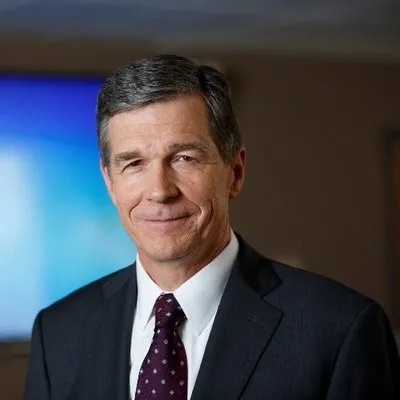
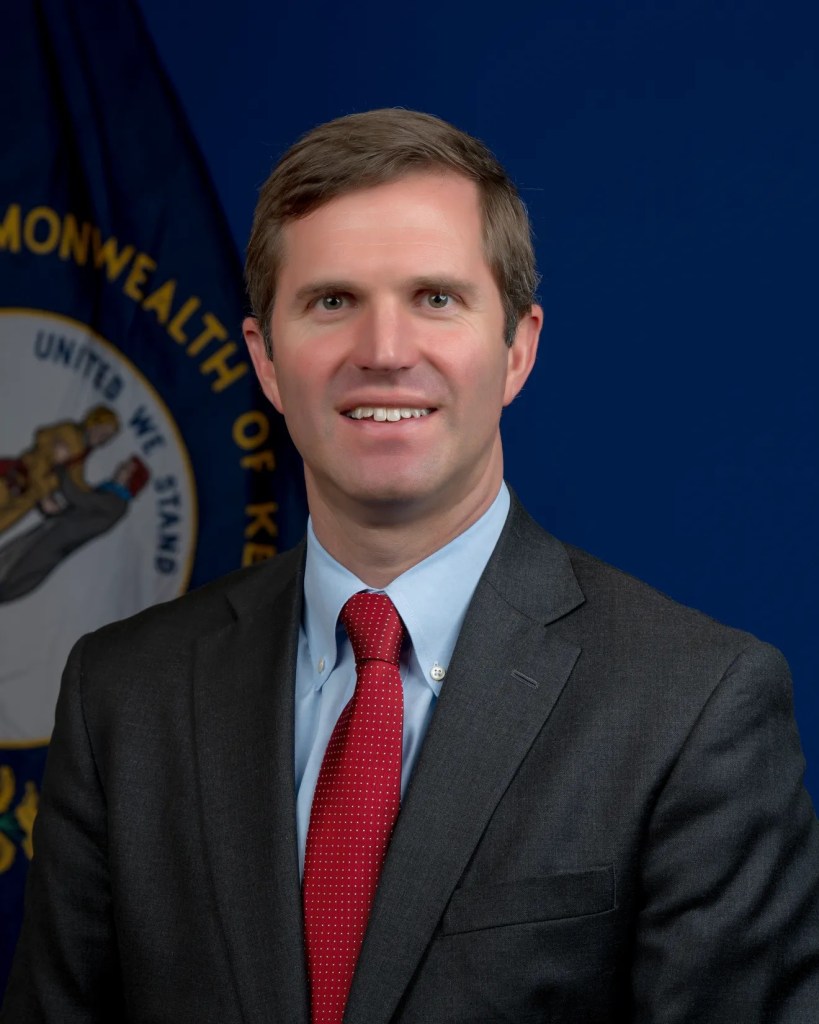
Back in February, long before President Biden stepped back and Vice-President Kamala Harris became the Democratic nominee for President, two red-state Governors spoke out against vouchers. Both are Democrats who understand the importance of public schools for their communities. They are Governor Roy Cooper of North Carolina, whose gerrymandered legislature has a Republican supermajority, and Governor Andy Beshear of Kentucky, whose legislature is controlled by Republicans. When Beshear ran, he picked a teacher as Lieutenant Governor.
In North Carolina and Kentucky, public schools are the center of our communities. We’re proud public school graduates ourselves – and we know the critical role our schools play in teaching our students, strengthening our workforces and growing our economies.
In Kentucky, we’ve seen significant improvement in elementary school reading, even with setbacks from the pandemic like many states experienced. In North Carolina last year, public school students completed a record 325,000 workforce credentials in areas like information technology and construction. The bottom line? Our public schools are critical to our success and an overwhelming number of parents are choosing them for their children.
That’s why we’re so alarmed that legislators want to loot our public schools to fund their private school voucher scheme. These vouchers, instituted in the 1950s and 1960s by Southern governors to thwart mandatory school desegregation, are rising again thanks to a coordinated plan by lobbyists, private schools and right-wing legislators.
Voucher programs chip away at the public education our kids deserve
This is their strategy: Start the programs modestly, offering vouchers only to low-income families or children with disabilities. But then expand the giveaway by taking money from public schools and allowing the wealthiest among us who already have children in private schools to pick up a government check.
In North Carolina, the Republican legislature passed a voucher program with no income limit, no accountability and no requirement that children can’t already go to a private school. This radical plan will cost the state $4 billion over the next 10 years, money that could be going to fully fund our public schools. In Kentucky, legislators are trying to amend our constitution to enshrine their efforts to take taxpayer money from public schools and use it for private schools.
Both of our constitutions guarantee our children a right to public education. But both legislatures are trying to chip away at that right, leaving North Carolina and Kentucky ranked near the bottom in per-pupil spending and teacher pay.
Public schools are crucial to our local economies. In North Carolina, public schools are a top-five employer in all 100 counties. In many rural counties, there are no private schools for kids to go to – meaning that those taxpayer dollars are torn out of the county and put right into the pockets of wealthier people in more populated areas.
Private schools get taxpayer dollars with no real accountability
As governors, we’ve proposed fully funding our public schools, teacher pay raises to treat our educators like the professionals they are and expanded early childhood education. We know that strong public schools mean strong communities. Families in Kentucky and North Carolina know that too. In North Carolina, nearly 8 in 10 children go to public schools.
Our public schools serve all children. They provide transportation and meals and educate students with disabilities. And they’re accountable to taxpayers with public assessments showing how students and schools are doing and where they need to improve.
But private schools that get this taxpayer money have little to no accountability. They aren’t even required to hire licensed teachers, provide meals, transportation or services for disabled students. They don’t even have to tell the taxpayers what they teach or how their students perform. North Carolina’s voucher system has been described as “the least regulated private school voucher program in the country.”
Studies of student performance under school voucher programs not only showed that they don’t help them, but that they could actually have harmful effects. Results from a 2016 study of Louisiana’s voucher program found “strong and consistent evidence that students using an LSP scholarship performed significantly worse in math after using their scholarship to attend private schools.” In Indiana, results also showed “significant losses” in math. A third study of a voucher program in Ohio reported that “students who use vouchers to attend private schools have fared worse academically compared to their closely matched peers attending public schools.”
We aren’t against private schools. But we are against taxpayer money going to private schools at the expense of public schools.
The future of our nation goes to class in public schools, and all Americans must be on guard for lobbyists and extremist politicians bringing similar plans to their states. Our segregationist predecessors were on the wrong side of history, and we don’t need to go back.
We are going to keep standing up for our public school students to ensure that they have the funding they need, and that teachers are paid like the professionals they are. It’s what’s best for our children, our economy and our future.
Roy Cooper is the governor of North Carolina. Andy Beshear is the governor of Kentucky.
State Senator Tina Bojanowski, teacher and legislator (@TinaforKentucky), tweeted:
KY House passes HB2, a bill to change our Constitution to allow vouchers and charters by creating an amendment that allows future legislation to disregard SEVEN sections of our Constitution. @kyhousedems
A judge in Kentucky ruled that the law funding charter schools violated the state constitution, holding that the state cannot send public dollars to privately-operated schools. In effect, he ruled that charter schools are not public schools.
Franklin Circuit Judge Phillip Shepherd issued an order Monday finding that House Bill 9, which set up a funding mechanism for charter schools in the state, violated the Kentucky Constitution.
Charter schools – schools that are publicly funded but operated by independent groups with fewer regulations than most public schools – are technically legal in Kentucky, but HB 9 would have created a mechanism for funding them with public dollars.
Shepherd said that while there is vigorous debate on the merits of charter schools, the bill violated the plain language of the constitution, which includes a requirement for “an efficient system of common schools” and that tax dollars can’t be used to support non-public education.
“The central question in this constitutional analysis is whether the privately owned and operated ‘charter schools,’ which are established by this legislation, should be considered ‘common schools’ or ‘public schools’ within the meaning of Sections 183, 184 and 186 of the Kentucky Constitution? A review of the case law, and the plain language of the Kentucky Constitution itself, yields the inescapable conclusion that ‘charter schools’ are not ‘public schools’ or ‘common schools’ within the meaning of our state’s 1891 Constitution,” Shepherd wrote.
The bill also would have mandated the creation of two pilot charter schools, one in Louisville and another in Northern Kentucky…
The ruling comes as statehouse Republicans are mulling a constitutional amendment, which would need to be passed by the legislature and then approved by Kentucky voters on the ballot, to allow for tax dollars to be used to support non-public education. The Kentucky Supreme Court earlier this year affirmed a Franklin Circuit Court ruling against a “school choice” law setting up a tax credit-funded scholarship system for students to attend private schools.
Shepherd referenced the conclusion of that case in his order against House Bill 9.
“There is no way to uphold the expenditure of tax dollars for charter schools under the provisions of HB 9 without doing violence to this recent ruling of the Kentucky Supreme Court. HB 9 erects an elaborate structure of mandated public authorization for schools with private ownership and control, and little meaningful public oversight… The substance of what this statute does is to establish taxpayer funded private schools that are exempt from the laws and regulations of the system of common schools established by our Ky. Constitution and laws,” Shepherd wrote.
The suit against the law was led by Council for Better Education, a pro-public education group in Kentucky.
Kentucky is usually a red state, but Governor Beshear is a popular Democrat. While the Republican-dominated legislature has passed bills that are anti-gay, Governor Beshear boldly selected House, an openly gay man, for the prestigious honor. Republicans are furious because House, a highly regarded author, insulted them with a tweet.
Baker-Jordan writes:
After Kentucky Governor Andy Beshear announced Silas House as the new poet laureate of Kentucky, there has been a significant backlash against his appointment from Republicans who claim that House “hates” Kentucky.
The Republican Governors Association called him a “radical” who thinks most Kentuckians are “bigots.” Meanwhile, a gay Republican activist wrote in the Louisville Courier-Journal that he has “no respect for Mr. House, nor should Republican Kentuckians,” arguing that it was Mr. House (as opposed to his own party, which recently passed a slate of anti-LGBTQ laws) which is standing in the way of LGBTQ rights. That’s because House once dared to tell Trump voters to “kiss [his] gay country ass” in a tweet.
I can understand Silas House’s sentiment. Sometimes, to paraphrase my friend and fellow Appalachian Neema Avashia, it is very hard to love a place that does not always love you back. Just like me, Silas House is from Leslie County, Kentucky. He loves his home state, but his home state does not always love him back.
On the one hand, Kentucky truly is the “land of milk and honey” early white settlers described: Verdant forests atop rugged mountains giving way to rolling hills of the richest soil that in turn become the most beautiful wetlands as the muddy waters of the Ohio meander ever closer to the Mississippi. There is hardly an inch of that commonwealth, a name which doubles as a promise, I haven’t tread upon.
Kentucky’s hollows raised me. Its rivers saved me. Its backroads take me home, for better or for worse.
For there is another side to Kentucky. As the only openly gay student in my high school at the dawn of the 21st century, I suffered what I have often described as “a daily crucible of homophobia.” Slurs were hurled, threats were made, and hellfire was preached – all before the morning bell had tolled.
You might be tempted to tell someone to kiss your gay country ass, too. Indeed, if that is the worst thing you say to them, no less than Job would be impressed.
As you drive into Leslie County, you see signs bragging about the accomplished individuals who have called that hidden corner of southeastern Kentucky home: Tim Couch, who played in the NFL; the Osborne Brothers, legendary bluegrass performers; a Miss Basketball from the last century; and, of course, Mary Breckinridge, who revolutionized nurse-midwifery. I often joke that they will never put up a sign claiming me as one of their own. It’s just that – a joke – but it is tinged with a painful truth: no matter how much I accomplish, Leslie County will never claim me.
I know this because they do not claim Silas House. There is no sign proudly proclaiming the county as home of the acclaimed award-winning novelist, even though he has based at least one of his books in a fictionalized version of the county. House is one of the most accomplished sons of Leslie County, but because he does not fit the narrow definition of acceptability, he goes unacknowledged. His name is verboten. Other names, though, are immortalized on a green highway sign.
Perhaps this will change now that he is the commonwealth’s poet laureate. I hope so. House reminds me of the best of Kentucky, of all the reasons why despite the pain it has caused me, I long to move back. He reminds me of Johnny Cummings, who as the first openly gay mayor of Vicco, Kentucky, ushered through a fairness ordinance to protect LGBTQ people from discrimination. He reminds me of Georgia Davis Powers, who defied racism and misogyny to become the first Black woman in the state senate. He reminds me of Loretta Lynn, who clawed her way from poverty to the top of the music charts. He reminds me of all of the countless kindhearted and decent people I have met in every corner of the commonwealth who do believe that I belong, who understand that “y’all” means all, and who work every single day to make sure the rest of the commonwealth understands that too.
Please open the link and read the rest of the article.
Then go to Amazon and look for books by Silas House. You might be tempted to buy one.
I haven’t been to the Metropolitan Opera in years, due to the pandemic. In the past, I went once or twice a year. It’s a great treat.
In early January, Mary and I took our 16-year-old grandson to see Aida. He had never seen an opera. What a thrill for him and us.
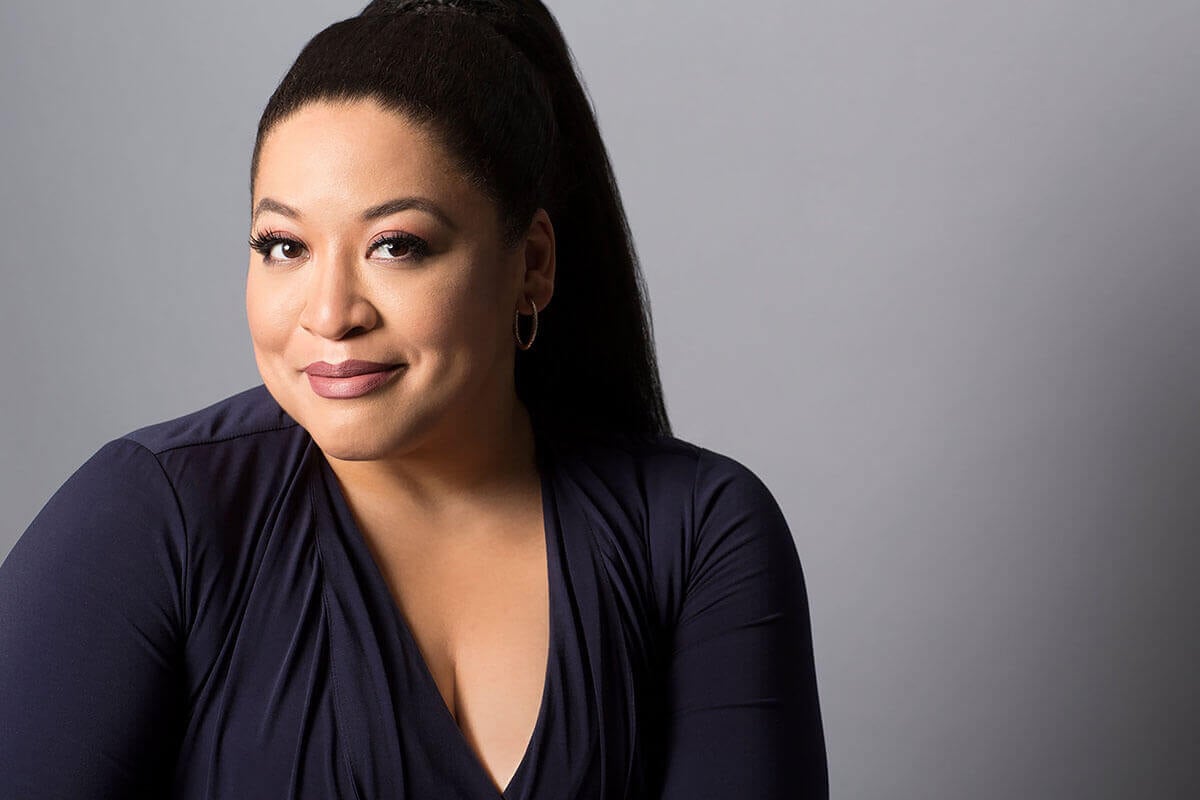
The role of Aida was performed by Michelle Bradley. She is a newcomer but is already a huge star on the international opera circuit. She is African American. She was born in Versailles, Kentucky, a town of 10,000 or fewer people. She graduated from Woodford County High School, then graduated from Kentucky State University, then studied vocal performance at Bowling Green State University.
The town of Versailles, small as it is, used to have three high schools. One of them was for Blacks only, even though the town’s Black population is tiny, about 6%. After the Brown decision, the three merged, and the Woodford County High School opened in 1963.
At school, she was the girl with the crooked teeth, the one the other kids teased and taunted. To spare herself the bullying, she kept her mouth shut.
“I didn’t talk at all until I got home,” soprano Michelle Bradley explains. “I was getting picked on a lot at school. And so I just stopped talking. Until I could get braces, I just didn’t talk in public.”
But in the afternoons, before her parents returned from work, Bradley would retreat into her sanctuary: her bedroom’s walk-in closet. There, with the door closed, Bradley would sing, without fear that anyone would hear her or judge her.
One day, though, her singing would no longer be a secret. One day, it would grace stages around the world, making her one of today’s most buzzed-about up-and-coming opera stars.
Growing up in Versailles, Kentucky, Bradley remembers her mother received free CDs in the mail, with songs from Aretha Franklin, Diana Ross, and The Clark Sisters, a gospel group from Detroit. Bradley loved them all. But there was one singer who inspired her the most: superstar Whitney Houston.
“She was my idol. That’s who I was trying to be as a little girl,” Bradley says.
In those early years, she would tally the ways she and Houston were alike—they shared a birth month, a Zodiac sign—just to feel a little closer to the superstar. And when the movie The Bodyguard came out, with Houston in the starring role, Bradley watched it over and over.
But trying to sing big, powerful ballads like Houston did in a closet made discretion difficult. Bradley had three brothers, two older and one younger. And like many a pesky sibling, Bradley’s younger brother was all too eager to spill the beans on his sister’s secret hobby.
“Mom, Dad, Tammy likes to sing in the closet! Tammy likes to sing in the closet,” she remembers him shouting, using the name she’s called at home.
Even with her parents, Bradley only spoke when spoken to. She was shy. Her parents could hardly believe she had a secret pastime singing. They called her into the living room and asked her to perform something. Naturally, Bradley chose a Houston song: “I Love the Lord” from The Preacher’s Wife.
“After that, my parents had me up singing at church services and everything else,” Bradley says. “It just started from there.”
Bradley had shown musical talent even from a young age. At Kmart, while her mother did the shopping, an 8-year-old Bradley would park herself in the aisle with all the musical equipment: “That was back when they had all the keyboards sitting out and had them all plugged up. Ooh, that was fun!”
She had no problem finding the keys to play the theme songs for kids’ shows like Sesame Street and Fraggle Rock. “I really don’t know how I did it,” Bradley says. “I loved my little cartoons, and so I would hear that and then I could sing it or play it. I just needed to hear it, and I had it.”
Neither of Bradley’s parents had studied music, but both loved to sing. They had met during the civil rights movement in the 1960s, two of the first Black students to integrate their Kentucky high school. Bradley’s father passed her mother a note that read, “I want to be your man.” They sang together in church choirs ever since they started dating.
It was with their help that Bradley started to overcome her shyness. Her father, a police officer, was a deacon at Polk Memorial Baptist Church. Her mother continued to sing in the church choir. Bradley started by learning to play services with the church pianist. By high school, she could carry a whole service.
And when, at age 14 or 15, she started singing in public, Bradley’s parents were always there, cheering her on. “Honestly, that’s who I would focus on when I was singing. I would look at them if I got nervous. So that helped me a lot. They helped me a lot.”
Soon, Bradley had the confidence to sing at school pep rallies and Christmas parties. “When I started doing that, when I started singing at school, people stopped picking on me. I was going from, ‘Hey, a crooked-tooth girl’ to ‘Hey, can you come sing for us?’”
It was the start of something great. Bradley would go on to graduate from the Metropolitan Opera’s prestigious Lindemann Young Artist Development Program. Her voice won her awards galore—from the Leonie Rysanek Award to the grand prize at the Marilyn Horne Song Competition—and she toured Europe, performing in great opera houses from Berlin to Vienna to Paris and beyond.
Now, she’s taking the U.S. by storm. This past fall, she starred as the heroine Liù in the Metropolitan Opera’s Turandot, and in March, she makes her debut with the Lyric Opera of Chicago as the title character in Tosca. Then, she joins San Francisco Opera for its Centennial Season, making her inaugural appearance in the company’s Dialogues of the Carmelites.
Bradley frequently visits Houston, because that’s where her voice teacher, Lois Alba, lives. When the pandemic closed down everything, including opera, she stayed with her family in Versailles for eight or nine months. She practiced at Kentucky State and the local church.
During that time, she got requests to sing virtually. She found that the best acoustics in the house was in the bathroom. So she would get dressed up in her regalia and sing at an angle that didn’t show the toilet.
When she was in high school, she thought she might one day be a music teacher or choir director. But in her freshman year at Kentucky State, her voice teacher, AndrewSmith, told her she had the voice to sing opera and encouraged her. She “just fell in love with it.” He showed her Turandot on a VHS, the first opera ever for her and she was immediately transfixed. Mr. Smith also gave her a CD of Leontyne Price, and Michelle was star struck.
It was like when I was a little girl listening to Whitney Houston, except this was an opera singer. I heard that voice and I don’t know what inside me said, “That’s me. I can do that.” But hearing one of the greatest voices of our time, I said, “I can do that too.” I still, to this day, don’t know where that came from. Or maybe I do know where it came from. But that was really my first thought: that I can do this. I can sound like that. It’s like I found a home.
From Versailles, Kentucky, to the Metropolitan Opera!
What a remarkable story, and what a wonderful voice!
Andy Beshear was elected Governor of Kentucky in 2019 against Matt Bevin, a hard-right Republican who supported charters and vouchers and fought to reorganize teachers’ pension fund. Beshear, who was State Attorney General, successfully blocked Bevin’s efforts to harm teachers’ pensions.
Andy Beshear is the son of a Kentucky Governor, Steve Beshear (Governor from 2007-2015), and a graduate of Henry Clay High School in Lexington. Andy ran on a program championing public schools. He chose a teacher, Jacqueline Coleman, as his running mate.
Beshear narrowly beat Bevin, and he and Coleman are the only elected Democrats at the state level (remember, Mitch McConnell and Rand Paul are Kentucky’s Senators).
He is running for re-election this year. He leads the polls over all his GOP competitors. His favorability rating is about 60%.
Last year, the legislature passed a bill to authorize charter schools. Governor Beshear vetoed it.
This is how Democrats win election. By speaking to the 85-90% of people whose children are in public schools and to the 90% who graduated public schools. They want better schools. They like their schools and their teachers. Andy Beshear knows it.
When Republican Matt Bevin was Governor of Kentucky, the state legislature passed a bill in 2017 authorizing charter schools. The law mandated that Louisville open a charter school. When it came time to set up a funding mechanism for charters, Democratic Governor Andy Beshear vetoed it.
When it came time to open a charter school, no one applied. The usual chains were not interested in opening a charter without funding.
Last year, Kentucky lawmakers demanded that school district leaders in Louisville seek and approve at least one application for a charter school in 2023.
Just one problem: No one applied.
Jefferson County Public Schools’ charter school information portal shows just one group formally notified the district of their intent to apply. The group, however, did not end up actually doing that.
Kentucky Department of Education spokesperson Toni Konz Tatman similarly confirmed Thursday no one applied to open a charter school in Northern Kentucky – the second location mandated to have a charter. District leaders in that region get until July 1, 2024 under state law.
A Kentucky Supreme Court judge struck down the state’s so-called school choice program Thursday.
The state’s highest court unanimously ruled House Bill 563, officially called the Education Opportunity Account Act, as unconstitutional.
The legislation creates an almost dollar-for-dollar tax credit for Kentuckians who donate to scholarship-granting educational nonprofit organizations.
The measure sparked controversy last year and narrowly passed the Kentucky General Assembly with a 48-47 vote in the House. Kentucky Gov. Andy Beshear (D) vetoed the bill, but both the state House and Senate overrode the veto.
Opponents of the bill argued the measure would divert tax money from Kentucky public schools, while supporters said the measure would help open up new educational opportunities for families.
In the ruling, judges agreed with the bill’s critics, stating that the substance of the bill was “obvious.”
“The Commonwealth may not be sending tax revenues directly to fund nonpublic schools’ tuition (or other nonpublic school costs) but it most assuredly is raising a ‘sum… for education other than in common schools,” the ruling states.
Eddie Campbell, president of the Kentucky Education Association, a labor group that represents thousands of educators in the state, applauded the court’s decision, calling the ruling a “victory” for the state’s public schools and public school students.
“It’s always been clear to the plaintiffs and their supporters that the Kentucky Constitution prohibits any attempt to divert tax dollars from our public schools and students without putting the question to voters,” Campbell said in a statement.
“We simply can’t afford to support two different education systems — one private and one public — on the taxpayers’ dime, and this ruling supports that concern. This decision is proof that the courts continue to serve as an important check against legislative overreach,” he added.