Archives for category: Florida

Jeff Bryant, a veteran education journalist, dissects he plan to destroy public schools. Governor Ron DeSantis and the Legislature has unleashed the for-profit vultures to pick the bonds and funds of the state’s public schools. Not because the charges are better schools, but because the rightwingers have close ties to members of the legislature. Want to open a charter school? Want the state to pay all your expenses? Come on down to the Sunshine State!

This article was produced by Our Schools. Jeff Bryant is a writing fellow and chief correspondent for Our Schools. He is a communications consultant, freelance writer, advocacy journalist, and director of the Education Opportunity Network, a strategy and messaging center for progressive education policy. His award-winning commentary and reporting routinely appear in prominent online news outlets, and he speaks frequently at national events about public education policy. Follow him on Bluesky@jeffbinnc.

The letters started coming in October 2025. In the first wave, according to the Florida Policy Institute (FPI), “at least 22 school districts in Florida” got letters alerting them that charter school operators, including a for-profit charter school management company based in Miami, intended to use a state law recently enacted to open new charter schools on the campuses of existing public schools beginning August 2027.

In Broward County, a South Florida district that includes Fort Lauderdale, the Mater Academy charter school chain, operated by for-profit charter management company Academicaclaimed space in 27 public schools. Mater Academy claimed space in nearly 30 schools in Hillsborough County, home to Tampa Bay, “along with more than a dozen [schools] in Pinellas [County] and six in Pasco [County],” Tampa Bay Times reported. In Sarasota County, Mater claimed space in three public school campuses.

At least two more charter chains—New York-based Success Academy and New Jersey-based KIPP NJhave joined in the campaign.

“So far, 480 schools in 22 counties have received 690 ‘letters of intent’ from charter school organizations expressing their intent to occupy space in public school buildings,” FPI’s Norin Dollard told Our Schools in late November. When schools receive letters from multiple charter organizations, it’s first come, first served, she explained, and the timeline for schools to respond is incredibly short—just 20 days.

Once the charter occupies part of the public school, Dollard explained, it operates rent free, and the public school district becomes responsible for much of the charter’s costs, including those for services charters don’t customarily provide, such as bus transportation and food service, as well as costs for school support services like janitorial, security, library, nursing, and counseling. Even any construction costs the charters might incur have to be covered by the public school.

This new law will force some public schools to convert to charter schools, said Damaris Allen, “and that’s intentional.” Allen is the executive director of Families for Strong Public Schools, a public schools advocacy organization that is rallying opposition to the law.

The letters have caught the attention of national news outlets, including the Washington Post, which reported, “The Florida law is an expansion of a state program called ‘Schools of Hope,’ which was set up to allow certain charters to operate in areas with low-performing local public schools. The new law allows ‘Schools of Hope’ operators to take over space at any public school that’s under capacity, regardless of whether it is high- or low-performing.”

“The expansion of the Schools of Hope idea has been on a slippery slope,” Dollard explained, “much like school vouchers have been in the state.” Originally, in 2017, schools identified for Schools of Hope transition from public governance to charter management were very narrowly defined as persistently underperforming schools. That changed in 2019 when the legislature altered the definition of low-performing to target more schools and added schools in so-called opportunity zones—government-designated areas selected for economic development—as open territory for charters. Now, the new law allows charter schools to take over “underused, vacant, or surplus” space in traditional public schools and operate free of charge.

As the reach of the Schools of Hope idea morphed, so did its rationale. According to a 2025 op-ed by former Florida Governor Jeb Bush, the program was originally conceived as an “initiative that incentivizes high-quality charter operators to open schools for students trapped in failing ones.” The aim now, according to Bush, is to solve the “problem” of underutilized space in existing public schools.

With school enrollments in steep decline in nearly every district in the state, fear of a potential mass charter school industry takeover of public school spaces—along with the costs local districts will incur—looms over district leaders across the state and strikes them as a clear existential threat.

Other consequences of colocating more charters in public schools have not been well-thought-out, according to Allen. For instance, on the issue of school safety, public schools have undertaken a number of measures to protect against school shootings, such as converting buildings to single-point entry. Charter schools don’t have to do that. So what happens when a charter operation moves into a building and doesn’t comply with the single-point entry? Also, the state legislature created new rulesfor public school libraries in 2022. Charters don’t have to follow those rules. How is that going to work in a colocation?

Allen fears the daunting challenges of charter colocations will cause some school boards and communities to sell school buildings or convert them to district-operated charters rather than give in to charter schools run by outside, for-profit companies.

And while proponents of Florida’s Schools of Hope program see it as a way to expand education options for students and families, critics point to evidence that Florida charter schools, which one expert called “a shitstorm,” need stricter oversight rather than a free rein. And, regardless of the outcomes, they warn that the idea is sure to get promoted as an “education innovation” that other Republican-dominated states will likely adopt.

A warning sign, not a model

When Nancy Lawther, a retired college professor of French, got involved in public schools advocacy, she became very skeptical about the oft-told narrative about the need for more education options because “too many poor children are trapped in failing public schools.” After all, in Dade County, Miami, where she lives, the public system has an A rating by the state despite having a challenging student population that is overwhelmingly Hispanic, with many living in households earning less than the state’s median income.

Her skepticism only increased when she first heard about expanding the Schools of Hope program to more schools, especially when she saw the results from the first schools taken over.

The original “Schools of Hope” weren’t individual schools; it was a whole district. In 2017, the Jefferson County school board voted in favor of participating in a pilot project for the new Schools of Hope initiative. The board’s approval to join the pilot meant that the district was required to turn over the management of their schools to a “high-performing” charter management company, which, in this case, happened to be Somerset Academy, another charter chain managed by the for-profit Academica management company.

But the results of the pilot would be a warning sign about the abilities of charter management firms to improve the education outcomes of public schools. As a 2025 op-ed for the Orlando Sentinel recounted, “[T]axpayers saw higher costs, stagnant results, and constant staff churn. By 2022, the takeover collapsed. Local leaders called it ‘an absolute disaster.’ The state had to step in with a $5 million bailout just to get the district running again.”

A 2024 account of the pilot in the Tallahassee Democrat reported, “[F]rom 2017 to 2022,… [Jefferson County] remained troubled by students’ lagging academic performance and mounting disciplinary issues, like fighting that in one case led to the arrest of 15 students. … [And] the school district was still getting a D grade” from the state.

Nevertheless, after Florida lawmakers expanded the Schools of Hope program in 2019, which has cost more than $300 million as of 2025, “There are only about a dozen Schools of Hope in Florida. In 2024, eight of them got C or D grades,” pointed out the Bradenton Times.”

‘All about market share’

Given its track record of failure, Lawther suspects that expanding Schools of Hope has nothing to do with improving education outcomes or making better use of publicly funded school buildings.

Indeed, Sarasota County, one of the districts targeted for charter colocations, has been an A-rated system since the state created the grading system in 2004, according to the district website.

Also, in districts where there are enrollment slides, there are few signs that demand for charters will soak up excess building capacity. According to a 2025 analysis of Sarasota County by Suncoast Searchlight, “The number of charter schools has grown in recent years, but the share of students at charters has not shifted much.” And building utilization rates of the different sectors are nearly identical—82 percent for public schools and 84 percent for charters, WUSF stated. “Some of the lowest-performing charters are barely a third full.”

Mater Academy, the charter operator using the Schools of Hope law to claim space in Sarasota public schools, does not currently operate a school in the district.

“This is all about market share,” Lawther said. “It’s about getting an advantage over charter operators that are not Schools of Hope providers, and independent charters that can’t compete in a market geared to the large chains,” like those operated by Academica.

Further, while enrollments in Florida charter schools continued to grow, it has shown signs of slowing down—from 3.7 percent in 2024 to 2.6 percent in 2025—and the number of charter schools decreased, from 739 in 2023-2024 to 732 in 2024-2025.

Also, the charter industry in the state faces many more privately-operated competitors. “Expansions of voucher programs are creating a more competitive market for charter schools,” Lawther noted, “and private schools, microschools, and homeschooling are growing forms of school choice.”

Indeed, charter schools no longer appear to be the fastest-growing form of school choice in the state.

After the Republican-led Florida legislature passed a bill in 2023 that did away with income requirements for families to receive state-sponsored school vouchers, the share of state funding diverted from the public system—which, technically, includes charters—to private schools and homeschooling doubled from 12 percent in 2021 to 24 percent in 2025, WUSF reported. In the school year 2023-2024, the number of vouchers, often called “scholarships,” given out to help families pay for private school tuition and homeschooling increased by approximately 142,000 students, according to Next Steps, a school choice advocacy group.

Florida has also experienced a 46 percent increase in homeschooling over the past five years, WEAR statedin 2025. And the state has freed up 50,000 new community facilities to serve as microschools, according to the Center for American Progress.

It would seem that in this increasingly competitive education landscape, the Florida charter school industry could use a new competitive angle like the one offered by Schools of Hope. “Officially, charter school advocates say Schools of Hope is an amazing opportunity to expand parent choice,” Dollard said, “but unofficially, this is an incredibly lucrative business opportunity.”

An industry in decline?

The charter school industry’s desire for new business strategies that enable charter operators to seize public school classrooms—or even whole buildings—is not confined to Florida.

In Indiana, for years, public school districts have been required to notify the state, within 10 days, when one of their buildings becomes vacant and to make the building available to lease to a charter school for $1 per year or sell the building to a charter operator outright for $1.

In Ohio’s 2025 approved budget, a new provision allows the state to force school districts to close some public school buildings and sell those properties to charter or private schools “at below market value,” Ideastream Public Media reported.

Arkansas is also likely to adopt a Schools of Hope-like measure, Allen speculated, because its state secretary of education Jacob Oliva served in Florida. Oliva was Florida’s state education chancellor during the failed Schools of Hope pilot in Jefferson County.

One market condition that’s likely behind these increasingly aggressive charter school industry is land grab, as revealed in a 2025 analysis by the National Center for Charter School Accountability (NCCSA). According to the report, charter school closings have been accelerating nationwide, while the pace of new charter openings has slowed significantly during the same time.

“[T]he 2023-24 school year saw just 12 more open charter schools than during the previous year,” the report found. This is “a dramatic departure” from the heydays of industry growth when “[t]he number of charter schools increased by 421” between 2010 and 2011.

Charter school enrollment growth has also stalled, according to the report, increasing by 0.1 percentage point—from 7.5 percent to 7.6 percent of total charter enrollment—between 2020 and 2023.

In the most recent school years, based on official data from 2022-2023 and 2023-2024, NCCSA found, “Most states experienced declines or stagnation [in charter school market share], and preliminary indicators suggest that, once the 2024 data is finalized, the trend will likely worsen.”

North Carolina offers a clarifying example of the significant headwinds that the charter school industry now faces.

In the Tar Heel state, charter schools have enjoyed widespread support among state lawmakers and private investors. The state legislature has made dramatic changes to state laws regarding charters, including loosening regulations and fast-tracking approval of new schools. And a 2024 analysis by the Charlotte Observer found “at least $279 million in private equity investments in North Carolina charter schools since 2013.”

Despite this support, the number of charter schools in North Carolina declined in 2024-2025, from 211 to 208 in 2023-2024, according to an industry spokesperson. And many of the newest charter schools to open in the state have not fared well. “State data show that only about 26 percent of new charter schools in the past five years met or exceeded their enrollment projections,” NC Newsline reported, “and more than half of those that missed the mark are now closed or never opened.”

The report’s findings revealed that although charters tend to locate in low-income neighborhoods, they serve far fewer children from low-income families, fewer children who are English learners, and fewer children with disabilities, resulting in leaving traditional public schools with elevated needs and higher costs.

Critics of the Schools of Hope law noted that these industry shifts, as well as a historical tendency for education policies enacted in Florida to get picked up in other Republican-dominated states, will spur other states to adopt similar policies, regardless of any evidence that they might harm public schools.

“More generally,” Baker added, “Florida charter schools are a shitstorm, both underserving higher need populations and underperforming with those they do serve.”

‘A shitstorm’

Among the critics of Florida’s Schools of Hope legislation is Bruce Baker, a professor and chair of the department of teaching and learning at the University of Miami and an expert on charter schools and public school finances.

“I’m, of course, deeply concerned with granting preferential access to any charter operator, at the expense of a fiscally strapped school district,” Baker wrote in an email. “I’m more concerned when it may present a slippery slope regarding control over land and buildings that should—by the [state] constitution, which supersedes this regulatory change—be solely under the authority of the local boards of education elected by the taxpayers who financed those facilities and continue to maintain them. It becomes even more problematic if this eventually creates an avenue to transfer ownership. That would be a particularly egregious violation of local board authority and private taking of public assets. We aren’t there yet, but it’s a concern.”

Baker’s assessment of charter schools in the Sunshine State is evident in his 2025 report, which looks at the impacts of the industry on school funding adequacy, equity, and student academic outcomes across the state, and, more specifically, in the Miami-Dade district.

Also, charters, despite having an advantage of educating less challenging and less costly student populations, underperform public schools on state assessments while “serving otherwise similar student populations.” This finding holds statewide and in Miami-Dade.

The report concludes that Florida charters are “compromising equity, eroding efficiency, and producing poor educational outcomes for those it serves.”

Given these findings, the report recommends that state lawmakers “[i]mpose a moratorium on charter school expansion, including the Schools of Hope Program.” It also calls for “new regulations for evaluating existing charter operators,” stronger vetting of new charter operators, and stricter enforcement of regulations about charter school student outcomes.

Schools of nope

Several district school superintendents across Florida have urged their communities to oppose the state’s Schools of Hope charter school expansion in public school buildings. When the state’s current education commissioner defended the Schools of Hope law in his address at a 2025 conference for school board members and district leaders and suggested it could be used to shut down whole districts, the audience roundly booed him.

Grassroots groups such as Families for Strong Public Schools have held events to educate the public about the negative impacts of charter colocations. A coalition that includes the United Teachers of Dade, NAACP Miami-Dade Branch, the Miami-Dade County Council of PTA/PTSA, and others has formed to protest charter colocations. And a senator in the state legislature has introduced a bill to repeal the Schools of Hope expansion.

Much of the opposition has rallied under the banner of “Schools of Nope” and is organizing call-ins and an email campaign targeting state legislators.

Opposition organizers like Damaris Allen see this as a do-or-die moment in the state. “Either we win this fight, or it’s the death of public schools in Florida,” she said.

Jason Garcia, a veteran investigative reporter in Florida, reports on the ongoing scandals in the Sunshine State. In this post, he describes a new law that would offer generous bounties to anyone who helped to prevent an abortion arranged in other states. The law hasn’t passed yet, but its purpose is to stop women from accessing abortion drugs via telehealth.

He wrote:

Florida’s Republican-controlled Legislature may turn husbands, fathers and brothers into bounty hunters who can block women from ending unwanted pregnancies.

A new bill filed in the Florida House of Representatives would dangle $100,000 prizes in front of private citizens who are willing to sue in order to stop a pregnant family member from obtaining abortion pills through the mail.

More specifically, House Bill 663 would allow a pregnant woman’s spouse, parents or siblings to sue anyone who tries to send her abortion medication — including doctors who prescribe the pills, drug companies that make them, shipping companies that transport them, even friends or other family members who help arrange delivery.

A successful lawsuit would come with a $100,000 payout — plus extra cash to pay lawyers and legal fees.

The Florida legislation is similar to a first-of-its-kind state law that just took effect in Texas. Right-wing groups have billed the Texas measure as a model for other anti-abortion states — like Florida, which bans most after just six weeks of pregnancy — that now want to stop women from accessing abortion services remotely from states where it is still permitted through telehealth and in-home medication.

Many abortion-supportive states around the country have in recent years enacted what are known as“shield laws.” These are laws that protect patients, doctors and others involved in reproductive healthcare from criminal prosecutions and civil lawsuits brought under laws passed in anti-abortion states — just like the kind envisioned in House Bill 663. 

But the new Florida bill tries to weaken other states’ shield laws, too.

Shield laws often contain “clawback” provisions that enable someone who provides legal abortion care in their home state — but is then criminally charged or held civilly liable under the laws of another state — to sue in order to recover damages and recoup any costs they incurred in their legal defense.

House Bill 663 would forbid state courts from recognizing or enforcing any judgement issued under another state’s clawback law. What’s more, it would enable someone in Florida who is sued under an out-of-state clawback provision to then countersue in this state. 

House Bill 663 wouldn’t enable a father to sue his daughter or a brother to sue his sister; the legislation specifically prohibits lawsuits against a woman trying to obtain abortion medication for herself.

But women are still the true target here. The ultimate goal of legislation like this is to scare providers out of sending abortion pills to women who want them.

As the executive director of the Texas Alliance for Life — one of the anti-abortion groups that supported the new bounty hunter law in Texas — wrote in a recent column, “The ‘chilling effect’ is precisely the point.”

The editorial boards of the Orlando Sentinel and the Sun-Sentinel wrote a joint editorial questioning the wisdom of setting aside a day to honor Charlie Kirk, who was assassinated earlier this year. They titled it “A Badly Misguided Honor for Charlie Kirk.”

Their editorial courage is a tribute to freedom of the press, which Charlie would have applauded.

In a society that treasures and protects free speech, it’s important to focus a spotlight on people who were hunted down because their ideas were too dangerous or offended too many people.

These names are threaded through the history of this nation, and of Florida as well. Teaching schoolchildren and reminding everyone of their importance is a worthy endeavor. But such efforts should be comprehensive. Unfortunately, Florida’s latest attempt at recognition is not.

A bill predictably likely to pass the Florida Legislature calls for every October 14, Charlie Kirk’s birthday, to be a statewide “Day of Remembrance” — forever. A Senate committee already passed it on a party-line 5 to 2 vote, with only Sen. LaVon Bracy Davis, D-Orlando (herself the daughter of civil-rights activists) and Tina Polsky, D-Boca Raton, voting no.

They meant no offense — nor do we — to the humanity of Kirk, who was shot during a speech to university students in Utah three months ago. And it’s important to note that, while most people associated with the concept of civil rights won that recognition for defending and uplifting freedom, many of Kirk’s positions called for the curtailment of rights and the erasure of personal liberty.

Kirk, the 31-year-old founder of Turning Point USA, inspired many people with his conservative activism, but he alienated many others with his pointed attacks.

He denounced the assassinated Rev. Dr. Martin Luther King Jr. as “awful,” and “not a good person.” He called the Civil Rights Act of 1964 a “huge mistake.” He said the pop star Taylor Swift should change her name if she marries her fiancé Travis Kelce, as a sign of submission to him. He said gun murders were an acceptable price to pay for the right to own them. And on and on.

Whatever his views, Kirk had every right to express them to anyone willing to listen. That’s the American way. But the Legislature should be mindful of how hurtful some of his views were.

It goes without saying that his murder was a crime to be deplored by everyone, not just his conservative admirers. But elevating him with an officially recognized annual commemoration while ignoring other heroes with legitimate ties to Florida makes no sense.

One obvious, and tragically overlooked, example comes from Central Florida. Harry T. Moore, a Florida civil rights pioneer, was murdered when a Ku Klux Klan bomb planted under his bedroom blew up his home in Mims on Christmas night 1951. His wife, Harriette, died of her injuries a few days later. As an NAACP field secretary, Moore campaigned successfully for Black teachers to be paid the same as whites and to register more Black voters in Florida than any other Southern state.

He initiated the long and ultimately successful movement to vindicate four Black men unjustly accused in the infamous 1949 Groveland rape case.

No one was ever convicted of the bombing, although a KKK member committed suicide after being questioned by the FBI. A federal indictment against others was dismissed for lack of jurisdiction.

The Moores are included in Florida social-studies curriculum, but too often go in unmentioned in the roll call of civil rights martyrs. They were left off the martyr’s memorial in Montgomery, Ala., because of an arbitrary definition of the Civil Rights Era as having begun with the Brown v. Board of Education decision in 1954. But they died for the cause just as certainly as anyone else did.

And if Florida wants to commemorate Kirk, who lacked significant ties to Florida, our nation’s history is replete with other examples of courage.

Andrew Goodman, James Earl Chaney and Michael Schwerner were the young civil rights volunteers kidnapped and murdered by the KKK in Mississippi in 1964 for trying to register Black voters. Eight men eventually got relatively light federal sentences for the killings. Forty-one years later, Mississippi convicted a chief perpetrator. He died in prison.

Medgar Evers was the Mississippi civil rights activist shot to death outside his home in 1963. It took until 1994 to convict his killer, who died in prison.

Harvey Milk, elected to San Francisco government on a platform that included human rights for same-sex couples, was assassinated on Nov. 27, 1978.

Those are only a few of many private citizens who paid with their lives for speaking out for what they believed.

Others include the abolitionist publisher Elijah Lovejoy and Joseph Smith, founder of the Church of Jesus Christ of Latter-Day Saints, who died at the hands of mobs in Illinois a century ago.
To commemorate only one such victim, as Senate Bill 194 and HB 125 do, is not appropriate. But at least it’s less inappropriate than legislation that aims to rename streets for Kirk at every Florida state college and university.

A Day of Remembrance should honor not one martyr, but many, and right-wing political views should not be a prerequisite.


The Orlando Sentinel Editorial Board includes Executive Editor Roger Simmons, Opinion Editor Krys Fluker and Viewpoints Editor Jay Reddick. The Sun Sentinel Editorial Board consists of Executive Editor Gretchen Day-Bryant, Editorial Page Editor Steve Bousquet, Deputy Editorial Page Editor Dan Sweeney and editorial writers Pat Beall and Martin Dyckman. Send letters to insight@orlandosentinel.com.
© 2025 Orlando Sentinel

https://www.sun-sentinel.com/2025/12/04/florida-education-commissioner-booed-at-tampa-school-board-conference/

Florida Education Commissioner Anastasios Kamoutsas told school board members and superintendents from around the state on Thursday to get over their complaints about Schools of Hope seeking to co-locate in underused district buildings.

Then he suggested the state could look at shutting down “failing” school districts.

That’s when the boos started flying.

Kamoutsas’ lunchtime remarks riled attendees of the Florida School Boards Association’s winter conference in Tampa, the latest escalation of tension between the state’s top education official and local district leaders.

Kamoutsas — who had been invited to the conference but not confirmed as a speaker until Thursday — touted the strong student results of New York-based Success Academy, Florida’s latest Schools of Hope-approved charter school operator, and argued that local districts should want the same kind of outcome.

“That proven success is why Florida has committed to expanding the Schools of Hope model,” Kamoutsas said. “Let’s not forget Schools of Hope are subject to the same assessment program and grading system as the traditional public school. But these schools operate under a performance-based agreement with their sponsor, so if they fail to meet standards, they will be closed.”

Then came the boo line: “There’s not a school district in this state that could be shut down for failing to meet performance standards, though maybe we can talk about that with the Legislature this session.”

The crowd — who had previously heard the commissioner say some of them lacked leadership and conviction — erupted in anger, leaving the commissioner to repeatedly ask them to let him finish. A couple of attendees walked out of the Grand Hyatt Tampa Bay ballroom where the meal was taking place.

After about 20 seconds, the group quieted down. Then Kamoutsas doubled down, telling them that he was not asking, but rather expecting them to innovate in any way possible to make the model succeed. Florida’s students don’t deserve failing public schools, he said.

“This is not the moment to protect the way things work,” Kamoutsas said. “This is the moment to put students first. We have a responsibility, a moral obligation to ensure that every child in Florida has access to a world-class education, not someday, not when it’s convenient, not after the funding gets negotiated. Now.”

The mainstream media typically ignores charter school scandals, but CBS picked up on this one. Erika Donalds is building a for-profit charter school chain. She is the wife of Byron Donalds, who is running for Governor of Florida with Donald Trump’s blessing.

Byron Donalds has been a staunch supporter of Trump. Donalds is African American. Frankly, I don’t understand how he can be part of a political movement that seeks to eliminate Black history, dismantle studies of race and gender, and disparage any efforts to rectify historic racial injustices. I hope reporters ask him about these questions on the campaign trail.

Peter Greene saw the segment on CBS and posted the video. In his piece, he refers to Erika Donalds as “Florida’s leading school choice grifter.”

CBS reporters wrote:

Kathleen Cetola believed she had found the perfect fit for her 9-year-old grandson Landon when Optima Classical Academy broke ground in 2023 near her home in Fort Myers, Florida. As the primary caregiver for Landon, Cetola was drawn to the smaller class sizes and more traditional curriculum, which she felt would be “less woke” than the public school he was currently attending.

“Regarding gender and race, I want him to be able to make up his own mind,” Cetola told CBS News. “They were selling the fact that they were focused on the education and the classical type of teaching. I thought that was going to be a great opportunity for Landon.”

The Optima school in Fort Myers was founded by Erika Donalds, a leading voice in the school choice movement and the wife of Congressman Byron Donalds, the Republican frontrunner in next year’s Florida governor’s race. It was poised to be Erika Donalds’ fifth classical charter school and part of a flourishing trend.

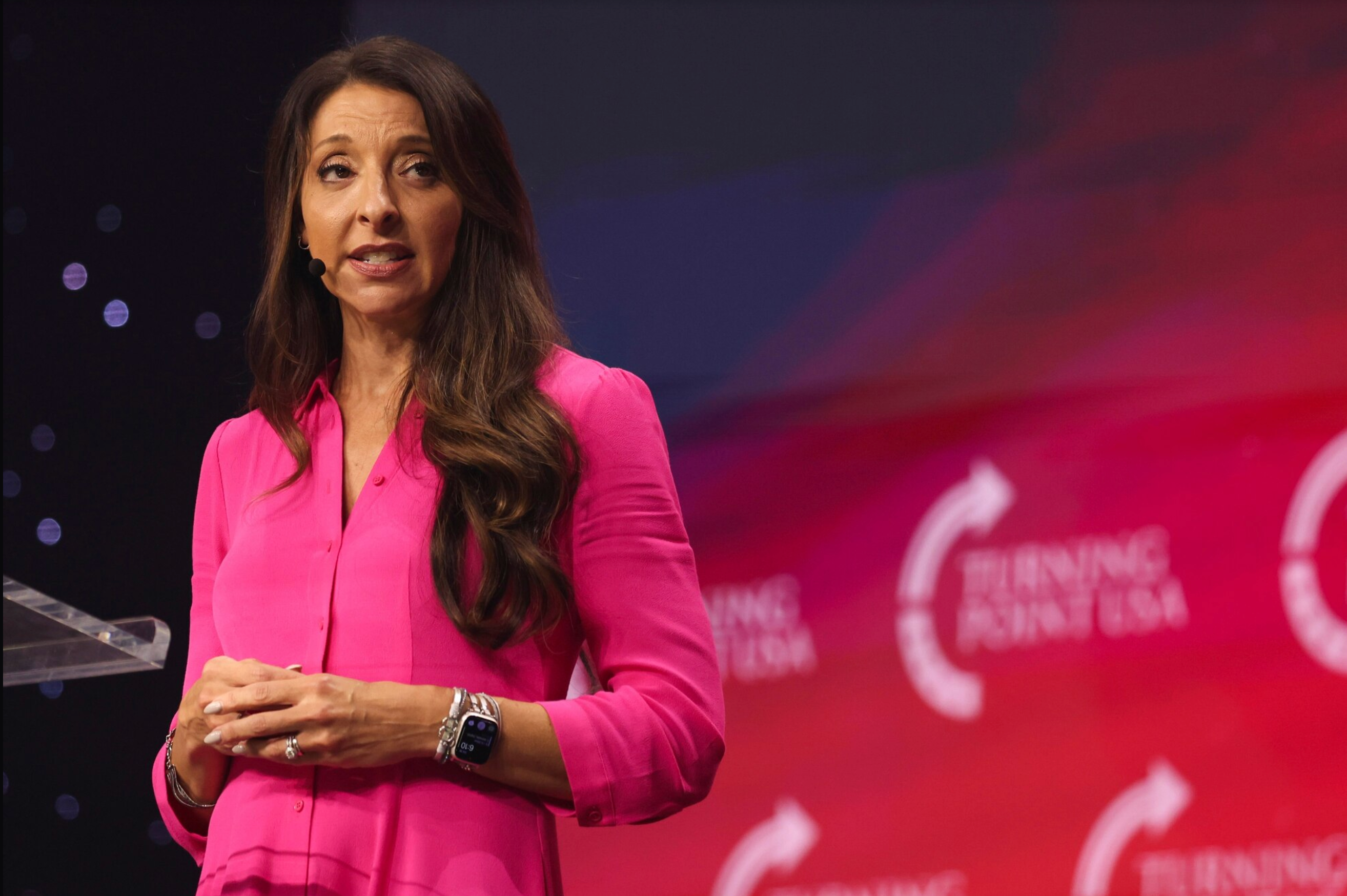
Photo of Erika Donalds.
Erika Donalds speaks on stage during day one of the Turning Point USA Student Action Summit on Friday, July 11, 2025, in Tampa. Luis Santana / Tampa Bay Times via AP

Classical charter schools offer a curriculum with a Eurocentric focus that stresses traditional values and introduces primary source documents like the U.S. Constitution at an early age. In the last five years, more than 250 classical schools have opened across the country. Many conservative politicians argue these schools are needed to reject what they see as a pervasive woke agenda in American public education.

Donalds has been a face of the classical charter movement, touring the country to tout their value. In an October speech to a group of conservative college women, she spoke about her decision to start her own schools. She said it was born out of her own experience trying to educate her children.

“I knew there were so many families out there that were desperate for this option,” she said.

Yet, after enrolling hundreds of students and hiring teachers, the Fort Myers school failed to open, leaving parents scrambling to find a school for their children.

“I feel cheated,” said Cetola, who was one of a half dozen parents who told CBS News they had signed up their kids to attend. “These kids were cheated, and it’s heartbreaking….”

The confusion the parents faced, according to experts, is not unique within a charter school industry that often operates with less transparency than traditional public schools.

Donalds declined to be interviewed for this story. In a statement, her spokesperson said she is “an accomplished businesswoman with a strong record of starting successful charter schools and providing thousands of students with an excellent education.”

Taxpayer-funded charter schools paid outside firms

Classical schools are one slice of a charter industry that GOP leaders have tapped to remake America’s public education system. Recent moves by both the federal government and local officials in Florida have freed up hundreds of millions of dollars in new funding. In September, the Trump administration announced it was investing half a billion dollars in grant programs that support charter schools.

The announcement came as Florida passed a law — at the urging of hedge fund manager and Republican megadonor Ken Griffin — to allow charter schools to operate inside traditional public school buildings.

CBS News reviewed state education data, financial documents, independent audits and faculty comments at four schools Donalds had helped launch. State data shows when it came to academic performance, one of the schools quickly excelled. But the records also raise questions about how public money was being spent by the schools.

Tax filings reviewed by CBS News show, between 2020 and 2023, the schools spent roughly 30% of the government funding they received — totaling about $35 million — on outside firms with ties to Erika Donalds. A source familiar with these arrangements said they landed the schools a good price on payroll expenses, IT and other back-office services.

In August, Byron Donalds filed an amended House financial disclosure for 2023, reporting that Erika Donalds held a stake in two of those firms each worth between $1 million and $5 million. His most recent disclosure, for 2024, again listed her stakes in those companies.

The amended disclosure was first reported by the Florida Bulldog

Of course, parents in Fort Meyers who signed up for Donalds’ school were disappointed when it didn’t open as promised.

They had been promised that the school would open in the fall of 2024. Erika Donalds told them that financial challenges and the lingering effects of Hurricane Ian required her to delay the opening. Parents eagerly anticipated the opening in the fall of 2025, but it was again announced that the opening would be delayed, this time to 2026.

Prior to the school in Fort Myers, Donalds helped launch four other classical charter schools operated by Optima across Florida: two in Jacksonville, one in Stuart and one in Naples.https://datawrapper.dwcdn.net/y9D5j/

Baker, the charter school expert at the University of Miami, said the practice reflected in Optima’s tax filings — of non-profit schools paying money to for-profit companies with overlapping stakeholders — occurs across the charter school industry. He said in the absence of meaningful governmental regulation, accountability comes from “how well they do for students.”

On that measure, students at those four Optima schools performed below average, according to Baker, who looked at math and reading test scores.

“Florida’s charter sector is not strong, and Optima schools, at least the four schools that seem to be in that affiliated mix, perform even less well,” Baker said.

The learning curve when it comes to implementing the classical curriculum can be steep, according to Janine Swearingin, who served as Treasure Coast Classical’s first principal from 2019 to 2022 and would later go on to work directly with Donalds at Optima. She praised Donalds and the company’s role in launching the school, which she said consistently earned top marks from the state when it came to academic performance when she was there.

In January 2023, after Swearingin left the school, the board of Treasure Coast Classical Academy commissioned an independent “performance audit” which was intended to draw attention to areas of concern. The resulting report said that while there were “commendable” aspects of the school’s performance, it also raised questions. Class sizes were so large, it said, that they appeared to violate state law and it noted a lack of structure in the classroom, all findings that Optima disputed.

The auditor praised Treasure Coast Classical’s “outstanding” financial health. But, some faculty complained Optima operated more like a “franchising corporation” and was “dedicated to profit sometimes to the detriment of the school itself.”

“It’s quite an undertaking since teachers don’t generally receive an education in teaching a classical curriculum,” said Swearingin, who noted that in a classical curriculum, first graders are studying the American Revolution at a time when their public school counterparts are learning about community helpers and basic geography. “The training is vastly different.”

As part of its response, Optima said it was working with the auditor “to build trust, address remaining concerns, and correct misinformation or misunderstandings.” A month later, the school’s board moved to terminate its contract with Optima. Treasure Coast Classical later sued Optima, alleging numerous instances of breach of its contract with the school. A county judge dismissed the lawsuit ruling because it had been filed in the wrong venue, and Treasure Coast Classical has appealed.

According to meeting minutes of the schools’ boards as well as county officials and school administrators contacted by CBS News, all four schools that had opened have since cut ties with Optima. The schools still offer a classical curriculum, but under different management. A source close to Donalds told CBS News that Optima’s plan all along was to assist with the start-up and then move on, once the schools reached “full stability.”

Donalds’ spokesperson noted that the schools’ academic performance eventually improved. “These schools show how a supportive environment, committed teachers, and high expectations can help children thrive,” she said.

The school in Fort Myers that had planned to open as Optima Academy is no longer associated with Donalds or her company. According to county records obtained by CBS News, Donalds in August sought to transfer ownership of the building to another charter operator. In October, the county school board approved the transfer and the new operator plans to open the school next fall.

“They just dropped the ball and ran,” Cetola said. “How can you do something like this and sell this to parents who really want to stay involved with their children and then just walk away?”

This story has been updated.

Credits

Reporting by Michael KaplanMark Strassman and Emma Nicholson. Production by Michael KaplanEmma Nicholson and Alyssa Spady. Photos and videography by Ryan Jackson. Video editing by Greg Hotsenpiller. Graphics, design and development by Taylor Johnston. Editing by Ellen Uchimiya and Matthew Mosk.

Andy Spears is a veteran education journalist with a Ph.D. in education policy and a specialization in school finance. He lives in Nashville, but covers the national scene.

Spears writes:

In this post, he reports on an ominous development in Tennessee. A new organization in Tennessee has declared its intention to lure nearly 500,000 students out of public schools and into charter schools and voucher schools. The collapse in funding for public schools is likely to end public schools altogether.

Spears writes:

While state leaders consider expanding the state’s private school coupon program, a new nonprofit takes a bolder approach. A group calling itself Tennessee Leads registered with the Secretary of State as a 501(c)(4) issue advocacy organization with the goal of effectively ending public education in Tennessee by 2031.

The group was registered on October 14th and lists a business address of 95 White Bridge Road in Nashville. This is a nondescript business building in West Nashville.

The Registered Agent for Tennessee Leads is listed as “Tennessee Leads.” The group’s website says an IRS nonprofit application is pending.
In short, it is not yet clear who is backing this movement.

However, the group is not shy about its goals.

We support legislation to significantly increase the availability of Education Freedom scholarships, aiming to provide 200,000 scholarships annually by 2031. This initiative is designed to empower parents with more choices for their children’s education.

And:

Our efforts include advocating for the expansion of public charter schools, with a goal to increase student enrollment from 45,000 to 250,000. This initiative seeks to offer diverse educational opportunities and foster innovation in teaching.

If achieved, these two goals combined would take nearly half of all K-12 students in the state out of traditional public schools.

The group doesn’t really say the current model isn’t working – they just say they like “choice.”
The state’s current private school coupon scheme (ESA vouchers) has 20,000 students.

Moving that to 200,000 would cost at least $1.5 billion per year and take significant funds from local public schools.

Other states that rapidly expanded school vouchers saw huge budget hits to both state and local government.

[See Andy Spears’ post about Arizona’s universal school vouchers, which he refers to as “private school coupons for rich families.”]

[See his post on Indiana vouchers, where the costs rose neatly tenfold in less than a decade. The Indiana voucher is also a coupon for the rich to cash in at private schools. He predicts that Tennessee will be shelling out $1.4 billion a year for well-off kids to attend private schools by 2035.]

He writes that vouchers are a mess in Florida, because thousands of students are “double-dipping,” collecting voucher money while attending public schools.

[See his article on double-dipping and the voucher mess in Florida.]

He continues:

Florida relies on two official student counts each year — one in October and another in February — to allocate funding to school districts through the Florida Education Finance Program (FEFP). But after the October 2024 Count, major red flags appeared. Nearly 30,000 students (at an estimated cost of almost $250 million) were identified as both receiving a voucher and attending a public school. In some districts, almost all (more than all in one district) of their state funding had been absorbed by voucher payouts.

So, the Tennessee Leads plan would lead to a rapid decrease in state funds available for public schools – or, a significant increase in local property taxes – possibly, both.

It’s also not clear how Tennessee Leads plans to build charter school capacity to house an additional 200,000 students. Unless the plan is to just hand existing public schools over to charter operators – you know, like the failed Achievement School District model.

Oh, and there’s something else.

Tennessee Leads wants all schools to use Direct Instruction at all times for all students.

We advocate for the implementation of Direct Instruction methodologies across all public schools, ensuring that teaching practices are grounded in research and proven to be effective in enhancing student achievement.

Except studies on Direct Instruction suggest the opposite – that it does not improve student learning – in fact, it may be harmful to student academic and social growth.
Here’s more from a dissertation submitted by an ETSU student:

No statistically significant results (p = .05) were found between the year before implementation and the year after implementation with the exception of one grade level. Furthermore, no significant differences were found at any grade level between students participating in Corrective Reading and students not participating in Corrective Reading on the 2003-2004 TCAP Terra Nova test.

To be clear, Direct Instruction is highly-scripted learning – down to the pacing, word choice, and more – the “sage on the stage” delivers rote learning models and students are told exactly how to “do” certain things – the “one best way” approach with little room for student discovery.

More on this:

A remarkable body of research over many years has demonstrated that the sort of teaching in which students are provided with answers or shown the correct way to do something — where they’re basically seen as empty receptacles to be filled with facts or skills — tends to be much less effective than some variant of student-centered learning that involves inquiry or discovery, in which students play an active role in constructing meaning for themselves and with one another.

That is: Scripted learning/Direct Instruction is not evidence-based if the evidence you’re looking for is what actually improves student learning.

It holds true not only in STEM subjects, which account for a disproportionate share of the relevant research, but also in reading instruction, where, as one group of investigators reported, “The more a teacher was coded as telling children information, the less [they] grew in reading achievement.”

It holds true when judged by how long students retain knowledge,7 and the effect is even clearer with more ambitious and important educational goals. The more emphasis one places on long-term outcomes, on deep understanding, on the ability to transfer ideas to new situations, or on fostering and maintaining students’ interest in learning, the more direct instruction (DI) comes up short.8

One wonders who, exactly, wants to advance an extreme privatization agenda while also mandating that those students remaining in traditional public schools are subjected to a learning model proven not only not to work, but also shown as likely harmful in many cases.
Eventually, an IRS determination letter will be issued, or the Registered Agent will be updated on the Secretary of State’s site. Or, perhaps, the “about us” section will offer some insight into the actors who would end public schools in our state.

On the day after this post appeared, Spears learned that a well-known political consulting firm was behind the proposal for Tennessee Leads. The firm had previously worked for the Tennessee Republican Party and for Governor Bill Lee. He wrote a new post.

It’s not at all clear why Governor Lee and his fellow Republicans are so enamored of charters and vouchers. Tennessee was the first state to win Race to the Top funding from the Obama administration. It collected a grand prize of $500 million. With that big infusion of new funding for “reform,” the public schools should be reformed by now. But obviously they are not.

Worse, Tennessee put $100 million into a bold experiment that was supposed to demonstrate the success of charter schools. The state created the Educational Achievement Authority, hired a star of the charter movement to run it, and gathered the state’s lowest-performing public school into a non-contiguous all-charter district. The EAA promised that these low-scoring schools would join the state’s top schools within five years. Five years passed, and the targeted schools remained at the bottom of the state’s rankings.

In time, the legislature gave up and closed the EAA.

Similarly, the evidence is in in vouchers. In every state that had offered them to all students, the vast majority are scooped up by affluent families whose kids never attended public schools. When public school students took vouchers, they fell far behind their public school peers.

Are Republican leaders immune to reading evidence?

The owner of the Newpoint Charter School chain in Florida was convicted of racketeering and fraud in 2018, involving six different school districts. He pocketed millions of dollars that should have been spent on students and teachers. Ordered to pay back his ill-gotten gains, he now claims he can’t make the payments because his wife took most of his assets when they divorced.

Florida spends billions of dollars on charter schools and vouchers, with minimal oversight. Crooked charter operators and inadequate voucher schools are having great pay days.

The Pensacola News-Journal reported:

Escambia County’s Clerk of Court is taking Newpoint Charter School owner and convicted felon Marcus May back to court over claims he can’t afford to make the same monthly payments to repay nearly $7 million he owes in fines, interest and court costs.

May, 63, was convicted in 2018 in Pensacola for committing racketeering and fraud at six different school districts around Florida.

State prosecutors say he created shell companies to sell school property at outrageous markups and pocketed millions of dollars.

May has filed motions with the state saying his financial situation has changed due to his settlement agreement with his ex-wife, and he wants to cut back significantly on the monthly payments he makes.

“We’re going on seven years after the verdict, we’re still pursuing collections,” General Counsel at Escambia County Clerk of Court and Comptroller Cody Leigh said. “Justice extends beyond the verdict and that includes the clerk’s collection duties and obligations under the statute.”

May has been paying about $7,700 a month to the Escambia County Clerk of Court’s Office as part of his restitution payment plan, but he wants to drop that amount to about $1,500 a month.

To date, the clerk’s office says he has paid a total of about $270,000.

After his conviction in Pensacola in 2018,  the businessman was ordered to pay $5.5 million in fines and restitution as part of his sentencing, but that amount has ballooned to around $7 million due to interest charges.

May has been in a legal fight with the clerk’s office since April of 2020 over collection of payment, and he filed for bankruptcy in May 2021.

The county spent another six months in bankruptcy court with May until a payment plan was confirmed.

At that time, it was determined May was earning about $13,000 a month, in large part income from real estate rentals he owns across the state, among other assets.

Now May is telling his creditors, including Escambia County, that his wife is getting those real estate assets under their amended marital divorce settlement agreement and he only has $3,000 a month to divide between several creditors, leaving the county with a monthly payment of about $1,500.

“In July of this year, we got a letter from Marcus May’s attorneys that said the planned payments would be substantially reduced because his disposable income went down substantially,” Leigh said.

Unconvinced of his reasons for cutting his payments to the county by five grand a month, the clerk and legal staff pushed to have May’s federal bankruptcy case reopened to take a closer look at what has become of his assets, including the real estate he now says belongs to his ex-wife.

“We filed a motion to reopen the bankruptcy case claiming that that was an impermissible plan modification,” Leigh said, “and that’s a discretionary call by the judge. She doesn’t have to reopen it, but she did. That is the first win of round two of reopening the bankruptcy and figuring out what was sold.”

Escambia County Clerk and Comptroller Pam Childers believes the judge’s decision is a win for taxpayers and county residents who have a right to collect what the court ruled was owed due to fraud, even if it means a years long legal fight.

“It’s just amazing how they will continue to connive and protect those assets as if they are theirs when they just use the school money, the children’s money, for their benefit,” Childers said. “They just feel entitled. I mean, even sitting in prison, there’s no remorse.”

Keep your eye on Byron and Erika Donalds in Florida. Byron is running for the governor’s job as the MAGA candidate, while his wife is making a bundle as the queen of charter schools. As prescient pols figured out long ago, the school choice biz can be very lucrative.

Peter Greene has the story here:

Erika Donalds has long been a leading face of school choice in Florida, even as her husband Byron has risen through the GOP to become a major political player. Now a new story dug up by Will Bredderman at Florida Bulldog shows how Donalds is a model of how folks in the charter school world can make a bundle.

The couple got together while Byron was still with his first wife (a public school teacher who still seems a bit grumpy about the whole business). He hooked up with the Tea Party, and Erika became an investment banker. Her school choice origin story is that in 2013, her second child had some sort of run-in with a teacher at school, and Donalds, unsatisfied with administrative response, put the child in a private school and transformed into an advocate for school choice.

Donalds has had a hand in the founding of a multitude of groups. She helped start Parents ROCK (Rights of Choice For Kids). When Ron DeSantis took office in 2019, Donalds helped launch School Choice Movement, a group that pushed for policies that would cut the throat of public education, including one that said charters must be approved by the state, not a local district; the group has since gone silent.

Back in 2015, while she was still serving as a school board member, she helped launch the Florida Coalition of School Board Members, meant to be a conservative alternative to the Florida School Boards Association. They started with four members– Donalds, Jeff Bergosh, frequent collaborator Shawn Frost, and Bridget Ziegler, future co-founder of Moms for Liberty, who called Donalds the face of charter schools in Florida. Tina Descovitch, another M4L co-founder, would later join FCSBM and was the president when they folded in May 2020, just a few months before the founding of M4L.

Donalds served on the Florida Constitution Revision Committee (along with Jeb Bush edu-pal Patricia Levesque), the group that tried to sell Amendment 8, yet another attempt to kneecap public schools. Fortunately, the Amendment was such a deceptive con job, a judge threw it off the ballot.

And she’s the CEO of Optima Ed, a private ed biz that offers school management and works with a variety of partners, including Step Up For Students, the outfit that manages the money fueling school vouchers–and that outfit is chaired by John Kirtley, who reportedly runs DeVos-funded PACS (included American Federation for Children) and who allegedly provided support for the FCSBM. Optima Ed also operates a chain of Hillsdale-powered charter schools.

Optima has raked in a ton of taxpayer money for its various charter school operations. But recent reporting from Will Bredderman at Florida Bulldog shows another wrinkle. 

In 2021, for the first and only time in all records to date, the Optima Foundation reported payingErika Donalds a salary of $183,326. However, her husband did not report this income in his disclosures to the U.S. House Ethics Committee in either 2021 or 2022, despite filing an amended report the latter year.

But the congressman did report his wife earned more than half a million dollars in total salary between 2020 and 2022 from a firm called “Educator Solutions.” The Optima Foundation-run charter schools’ reports to the Internal Revenue Service show that they paid Educator Solutions $6,930,584 during those same years, while the foundation itself paid the company $2,783,216, all for “payroll services.”

State filings reveal that “Educator Solutions” is in fact a fictitious business name registered to ESI Technical Inc., a company founded by State Rep. John Snyder (R-Stuart), whose father William Snyder was the longtime Martin County sheriff until earlier this year. Snyder’s financial disclosures show he has earned nearly $700,000 from ESI Technical since 2020, the year he was elected, and he has consistently identified the Optima-linked charter schools as ESI’s biggest customers. Snyder has come under fire for promoting policies favorable to charter schools while profiting from their operations, but no outlet has previously reported his company’s financial relationship with Erika Donalds.

Bredderman also notes that in 2023, three of Optima’s flagship schools fired the Donalds firm, apparently due to “deficiencies” in accounting.

Open the link to finish reading. One would have to be an accountant to decipher the many overlapping organizations in the Ed-reform-school choice business. School choice in Florida is a multi-billion dollar industry.

Florida, under Ron DeSantis, is determined to defund its public schools.

The first charter law in Florida was passed in 1996, when Democrat Lawton Chiles was governor. The 1996 law said there could be no more than two charter schools in each district, and only local school boards could authorize them. When Chiles left office, the state had 17 charter schools.

From 1999-2007, Republican Governor Jeb Bush removed the caps on charters and encouraged their growth. By the end of his tenure, there were more than 300 charter schools.

Republican Charlie Crist vetoed aggressive charter legislation, but charters increased to more than 300 during his tenure in office (2007-2011).

Republican Rick Scott (2011-2019) strongly promoted school choice, reduced regulation, and the number of charters increased to about 650.

Far-right DeSantis is a cheerleader for charters and vouchers. Elected in 2019, DeSantis has aggressively expanded charters as well as vouchers, while reducing accountability.

Half of Florida’s charter schools operate for-profit. Over the years, nearly 500 charter schools have closed, due to maladministration, low enrollment, finances, or scandal.

Today, Florida has about 730 charter schools, which enroll 13.8% of the state’s students, about 400,000. The cost of charters is about $2.5-4 billion annually that should have gone to public schools.

The state’s Republican-controlled governor and legislature are dedicated to expanding private alternatives to public schools. In 2023, it removed income limits from vouchers, so that all private school students are now eligible to get a state subsidy. The number of students receiving vouchers doubled, from 250,000 to 524,000.

Before and since the voucher expansion of 2023, 70% of the voucher recipients were already enrolled in voucher schools. so Florida offers a subsidy to all students enrolled in private and religious schools regardless of family income.

Florida spends about $4 billion on vouchers each year, subsidizing mostly families who can pay for schooling without state aid.

Thus, between charters and vouchers, Florida is spending at least $6 billion annually on school choice.

Now, Florida has given charter operators another boon, allowing them to co-locate inside public schools. This alleviates their need for facilities funding.

Many Republican legislators have financial ties to the charter industry.

Kate Payne of the Associated Press wrote this story, which appeared in the Orlando Sentinel.

TALLAHASSEE (AP) — Florida’s board of education signed off Wednesday on a major expansion of charter schools in the state, clearing the way for the privately run schools to “co-locate” inside traditional public schools.

It’s the latest push by Florida officials to expand school choice in a state that has long been a national model for conservative education policy.

The move comes as some public schools are closing their doors as they grapple with declining enrollments, aging facilities and post-pandemic student struggles.The new regulations approved by the state board build on a bill signed into law by Republican Gov. Ron DeSantis this year to allow operators to open more “schools of hope,” charter schools that are meant to serve students from persistently low-performing schools.

Lawmakers created the schools of hope program in 2017 to encourage more publicly funded, privately run schools to open in areas where traditional public schools had been failing for years, giving students and families in those neighborhoods a way to bail out of a struggling school.

This year’s law loosens restrictions on where schools of hope can operate, allowing them to set up operations within the walls of a public school — even a high-performing one — if the campus has underused or vacant facilities.

The board’s new regulations require public school districts to provide the same facilities-related services to the charter schools as they do their own campuses, including custodial work, maintenance, school safety, food service, nursing and student transportation — “without limitation.

”School districts must allow schools of hope to use “all or part of an educational facility at no cost”, including classrooms and administrative offices, the rules read.

“All common indoor and outdoor space at a facility such as cafeterias, gymnasiums, recreation areas, parking lots, storage spaces and auditoriums, without limitation, must be shared proportionately based on total full-time equivalent student enrollment,” the rules continue.

Public school advocates urged the board to vote down the proposal at Wednesday’s meeting. One such advocate, India Miller, argued that schools of hope are designed to be “parasitic” to public schools.

“To me, it would be like asking Home Depot to give Lowe’s space in their store and pay all of their infrastructure costs. It just does not make sense to me,” Miller said.

Board members, who are appointed by DeSantis, defended the new rules and dismissed concerns that the charter expansion could pull critical funding away from traditional public schools.

“Schools of hope wouldn’t be necessary if our public school system had done its job along the way,” said board Vice Chair Esther Byrd.

Associated Press writer Kimberlee Kruesi contributed reporting from Providence, Rhode Island. Payne is a corps member for The Associated Press/Report for America Statehouse News Initiative. Report for America is a nonprofit national service program that places journalists in local newsrooms to report on undercovered issues.

Scott Maxwell is my favorite opinion writer at The Orlando Sentinel. He always makes sense, in a state led by a Governor and Leguslature that make no sense at all.

In this column, he asks a straightforward question: Why is there no accountability for school vouchers? Why are taxpayers shelling out money for substandard schools? Why is money diverted from public schools to pay for schools where the curriculum is based on the Bible, not facts?

Maxwell writes:

Florida recently joined about a dozen states in passing new rules that say participants in the Supplemental Nutrition Assistance Program, formerly known as food stamps, can’t use their vouchers on junk food.

I think that makes sense to most people. This program, after all, is supposed to provide “nutrition” to people in need, most of whom are children, elderly or people with disabilities.
Basically, if taxpayers are providing $330 a month for basic food needs, that money shouldn’t be used on Red Bull and Oreos.

So now let’s take that a step further.

Taxpayer money also shouldn’t be used to send students to the junk-food equivalent of school — places that hire “teachers” without degrees, use factually flawed curriculum or that hand out A’s to every kid, regardless of what they actually learn, just to make their parents feel better.

Just like with food stamps, taxpayers have a right to know that the money they’re providing for schools is actually funding a quality education.

Yet in Florida that is not the case. Here, the voucher-school system is the Wild West with a lack of accountability and scary things funded with your tax dollars.

The Orlando Sentinel has documented this mess for years through its “Schools without Rules” investigation that found taxpayer-funded voucher schools where:


• “Teachers” lacked degrees or any kind of basic teaching certification
• Finances were so disastrous that schools actually shut down in the middle of the school year, stranding families and students
• Science classes taught students that dinosaurs roamed the earth alongside man, and history lessons claimed slavery and segregation weren’t really all that bad

• Administrators refused to admit students with disabilities or who had gay parents
• Parents filed complaints that included “Cleaning lady substituting for teacher,” “They don’t provide lunch and they don’t even have a place to eat” and “I don’t see any evidence of academics”

I don’t care how pro-school choice you are, tax dollars shouldn’t fund that kind of nonsense.

Some of these fly-by-night schools set up in strip malls seem to thrive because they tell parents what they want to hear — that their kids who were struggling in public schools magically became straight-A students at voucher schools with little to no standards or legitimate measures of success.

Well, that’s the educational equivalent of junk food. And taxpayers wouldn’t fund that kind of nonsense if the state enacted basic accountability measures.

Namely, all voucher-eligible schools should be required to:

• Publish graduation rates and nationally accepted test scores
• Hire teachers who are certified or at least have a college degree
• Disclose all the curriculum being taught
• Ban discrimination

Most good schools already do this. Think about it: what kind of reputable school wouldn’t agree to hire qualified teachers? Or wouldn’t want the public to see what kind of test scores their students produce?

If you want to send your kid to a school that’s unwilling to clear those ground-level hurdles, you shouldn’t expect taxpayers to fund it.
Similarly, if you want to run a school that refuses to serve kids in wheelchairs or who are gay, you shouldn’t fund your discrimination with money that belongs to the people against whom you’re discriminating.

In Florida, some of the worst voucher schools are faith-based. But so are some of the best. Parents and taxpayers deserve to see the difference — the test scores that show whether students are actually learning.

Many faith-based schools embrace science and history. But some try to replace proven facts with their own beliefs or opinions, using “biology” books that claim evolution data is false and “history” books that try to put sunny spins on slavery and segregation.

The people who defend — and profit off — Florida’s unregulated voucher system usually cite “freedom” and “parental rights” as a justification for unfettered choice. But you know good and well that virtually every other taxpayer-funded system has sensible guardrails.

You can’t take Medicaid money to a witch doctor or a psychic “healer.” And just like we don’t give parents the “choice” to use SNAP vouchers to buy their kids Snicker bars, they don’t deserve the “freedom” to take money meant to provide a quality education to a school that can prove it’s providing one.


Basic transparency and accountability measures are needed for any program to be effective. So whenever you hear anyone protesting them, you have to wonder what it is they don’t want you to see.