Archives for category: Fake

Audrey Watters is a veteran blogger who has written about Ed-tech for many years, including a book about the history of Ed-tech, Teaching Machines: A History of Personalized Learning. Ed-tech concerns all of us so you might consider following her blog.

This entry describes an upcoming conference where ASU and Global Silicon Valley bring together Ed-tech entrepreneurs to coo over the lucrative markets just around the corner.

She begins:

The Secretary of Education Linda McMahon will speak at the ASU+GSV Summit next month.

The conference makes no mention in its blurb promoting the Secretary’s appearance of what happened last week: President Trump’s executive order to dismantle her department. There’s no mention of any of the other actions that this administration has taken since January to undermine public education: defunding federal programs, firing federal employees, suing colleges, withholding funding, undermining civil rights initiatives, slashing university research, targeting trans students and athletes, arresting and deporting foreign students and professors. No mention at all of any controversy or crisis. Just this: “Guided by our North Star of unity, the ASU+GSV Summit brings together leaders shaping the future of learning and work—because when all voices are heard, innovation thrives to improve education and access for ALL.”

And that, my friends, is some bullshit.

The ASU+GSV Summit, held every year since 2010, is one of the go-to events of the year for entrepreneurs and investors, a gathering place for those seeking to reform (read: privatize) education. The only “unity” I’ve witnessed at the event – both in person and from afar – has been in the conformity of its attendees to a neoliberal vision for a technological future of individualized achievement…

Indeed, it’s quite telling that many who work in and with education technology seem awfully amped about what’s going on – the cooing about the possibility of more technology now that the Department of Education is being gutted, not to mention, of course, the non-stop narratives about the inevitability, the promise of AI in schools – impossible not read as a threat alongside DOGE’s plans to “unleash AI” across the public sphere. All this should underscore that education technology is an industry, a field that appears quite comfortable with its complicity in this autocratic move away from democracy and towards fascism.

“Not me!” perhaps you’re spluttering. “That’s not what I think.” “That’s not how I use technology.” “That’s not what my school is doing.” “That’s not the product we’re building.” But I’m not sure how long people can keep saying this when ideology, when evidence, when procurement not just points but pushes in another direction. 

It’s akin to Eduardo Bonilla-Silva’s description of the enigma of “racism without racists“: funny how we have woken up in techno-fascism without anyone being techno-fascist.

See, ASU+GSV isn’t some weird outlier. It is ed-tech. And the most powerful voices in ed-tech have, for some time now, called for the end of public education, the end of teachers’ unions, the end of local school boards, the end of democracy. 

This isn’t some recent or radical takeover of ed-tech either – folks, the fascist phone-call is coming from inside the building. It’s been ringing off the hook for decades now.

In the second portion of this post, Watters describes two new Ed-tech startups inspired by Elon Musk. She relates the new Ed-tech ventures and AI enthusiasm to the rebirth of eugenics and the resurgence of white supremacy and racism. Some of the Ed-tech gurus reject democracy altogether.

You should read the piece in its entirety. I found it on the web, read it for free, then subscribed.

Josephine Lee of The Texas Observer covered the public hearings in the House of Representatives about Governor Abbott’s controversial voucher bill. The State Senate has already passed a voucher bill. Pennsylvania billionaire Jeff Yass gave Governor Abbott $6 million to oust anti-voucher Republicans who killed previous voucher bills.

Proponents of vouchers lied shamelessly about the alleged virtues of vouchers. Critics said that students with disabilities would be turned away from voucher schools, that the main beneficiaries would be wealthy families whose children never attended public schools, and that vouchers were a raid on the state treasury.

State Representative Brad Buckley, Republican House public education committee chair and author of the chamber’s voucher proposal, opened the hearing on House Bill 3 Tuesday morning, stating: “My intent is to provide families with the opportunity to choose the best possible educational setting for their child, and I believe House Bill 3 provides this choice while prioritizing Texas’ most high needs and vulnerable students.” 

After hearing testimony over the next 23 hours—more than 300 registered to speak—the committee left the bill pending without an immediate vote. The bill’s numerous opponents who testified often echoed Democratic Representative James Talarico’s statement, that “There is a disconnect between the rhetoric and what the bill actually says.” 

HB 3 is a universal voucher program that would provide an estimated $10,330 to students (and more for those with disabilities) who attend private schools and $2,000 for homeschooled students in the program. The amount for private school students is set at 85 percent of the average local and state funding public schools receive per student statewide; it is estimated to grow to $10,889 by 2030 in the bill’s fiscal note. Lawmakers have initially set aside $1 billion for the program for 2027, while the Legislative Budget Board estimates the program’s net cost at nearly $4 billion by 2030. 

Proponents of the bill touted that HB 3 prioritizes low-income students and students with disabilities. If applicants exceed capacity, the bill lays out a priority order favoring kids with disabilities and in households at or below 200 or 500 percent of the federal poverty line. Despite that language, critics argue there are barriers for such families. 

“Prioritization in a lot of states is window dressing because what matters is who actually gets the funds; who actually gets admitted; or who’s already been admitted,” Talarico said. 

Democratic Representative Harold Dutton argued high tuition rates made private schools cost-prohibitive for low-income students, citing an average private school tuition of around $27,000 in the Houston area. “If you get $10,000, you’re still $17,000 short. And for most of these families that are poor families, that creates, you know, a mirage that they can now access it.”

Representatives of the Texas Private Schools Association and the Texas Catholic Conference of Bishops spoke of financial assistance that private schools could offer to some families.

Talarico called for a hard cap on income for eligible families and a provision that would give current public school students priority over current private school students to be added to the bill. “What we’re talking about is we are sending our limited, precious taxpayer dollars to the wealthiest families in the state who are already sending their kids to private school. And if you say that’s not the purpose, then put it in your bill.”

Democratic Representative Diego Bernal recommended adding a mandate for private schools to waive the difference between the tuition and the voucher amount for low-income applicants. 

“That would be an inappropriate regulation into the private school and an inappropriate intervention into that process with the parent,” responded Jennifer Allmon, executive director of the Texas Catholic Conference of Bishops. 

Matthew Ladner, a senior policy adviser with the right-wing Heritage Foundation, testified that “private schools wouldn’t participate” if that mandate was included in the proposal. 

Voucher opponents expressed concerns that it would mostly be current private school students who would ultimately take advantage of the program. Josh Cowen, a professor of education policy at Michigan State University, testified that only a quarter of voucher program participants nationwide came from public schools. The bill’s fiscal note estimates that of 350,000 students currently attending private schools statewide, “50 percent would apply to participate in the program in the first year, increasing 5 percent each subsequent year.” 

HB 3’s per-student funding formula, along with details of its student prioritization and some provisions related to kids with disabilities, distinguish it from its counterpart Senate Bill 2, which the Texas Senate has already passed.

Under HB 3, students with disabilities in private school could receive up to $30,000 a year—but private schools do not have to offer special education services, as public schools are required to under federal special education laws, said Steven Aleman, a policy specialist with Disability Rights Texas. “There is no state law or federal law for that matter that requires an IEP [Individualized Education Program for students with disabilities] be developed by a private school for a student with a disability. The rights that a student gets pursuant to IDEA [the Individuals with Disabilities Education Act], you forgo those rights when you go to a private school.”

Laura Colangelo, executive director of the Texas Private Schools Association testified that 19 percent of private school students currently enrolled have “special needs” and that services students can receive are dependent on the student’s contract with the private school. 

Others testified that private schools did not admit or accommodate the needs of students with disabilities. “My name is Felicita, sixth grade, and I use a power walker because I have cerebral palsy,” a student testified. “My mom has tried and looked at private schools for me, but they turned me away because I’m in a wheelchair.”

Liz Piñon, a mother of kids with disabilities and education associate with the pro-public ed Intercultural Development Research Association, testified, “We’ve explored the possibility of private schools all over DFW, but the outcome was always the same. As soon as they learned about our children’s disabilities, the doors were closed.”

“If we truly want to support students with disabilities, we must strengthen, not abandon, our public schools instead of draining money from our public schools. Why not fix our system, fully fund our special ed schools, reduce those class sizes, hire and train more special ed teachers, and expand access to transition programs to prepare students for life after high school?” Piñon said. 

Criticism of the bill came from both sides of the political aisle, with conservatives denouncing the program’s high cost to taxpayers. “I’m coming to you as a Texas retired teacher and as a conservative from Harris County. I’m a Republican precinct lead, and I wanted to remind you to please represent your Texas constituents. … My input for you today is to kill this bill,” Mary Ann Jackson said.

Mary Lowe, who testified as a member of the conservative public education group Families Engaged, said the debate around vouchers was “ripping the party apart.” She added, “This bill has an open-ended check for the taxpayer.”

Last week, the education committee heard testimony on House Bill 2, what Buckley has called “a historic school funding bill.” While applauding the bill’s investment in special education funding, school district leaders and teachers criticized the bill for insufficient increases to the state’s basic allotmentand to teacher pay.

JOSEPHINE LEE is a staff writer at the Texas Observer. She has previously worked as an educator and community organizer. Her reporting on labor, environment, politics, and education has been featured in SalonThe Daily BeastTruthout, and other outlets. She was raised in and lives in Houston.
FOX (Faux) News reported that a new group of “education reformers” aspires to become the NRA of education. Since the NRA has actively blocked common sense gun control and has indirectly (or directly) contributed to the murder of children and teachers, you can imagine how helpful this group will be.

EXCLUSIVE – An organization that wants to reform school boards across the country is launching what they call “the new NRA for education.”

“The 1776 Project PAC … was extremely successful over the last, I guess, four years now, electing over 250 conservatives to school boards across the country,” Ryan James Girdusky, founder of the 1776 Project PAC, told Fox News Digital. “We’ve seen that after they were elected, a lot of them wanted further help and outreach to sit there and talk about policy.” 

Girdusky added that “The 1776 Project Foundation is going to meet that role and fill that void that is desperately needed as far as public policy goes when it comes to public schools and school boards.”  

Founded in 2021, the 1776 Project PAC, says their mission is “Reigniting the spark and spirit of that revolution by reforming school boards across America.”

An embargoed press release from the 1776 Project PAC says the new foundation, “is an off-shoot of the 1776 Project PAC.”

“Since 2020, the 1776 Project PAC has led the conservative fight to win conservative school board seats and own the education issue, from ending remote learning to championing a return to classical education,” the release reads. “Over 250 of their endorsed candidates won elections. They have a majority of small donors and are currently #22 on Win Red….” 

Aiden Buzzetti, president of the 1776 Project Foundation, told Fox News Digital that they want to be the “intellectual backbone” of education reform.

“There are so many school board members in the United States, there’s over 80 to 100,000 individual board members,” Buzzetti said.  “And that is very important that those with an eye towards education reform are organized and are able to get the resources they need to implement the right policies or even review the policies that the current board has already put in place.” 

This is a fascinating article about an “academic” organization with shallow roots but a prestigious name. It was created in 2022. It confers awards on award-worthy recipients and on fringe academics. Its purpose seems to be to add luster to the latter.

Take the recent Trump nominee to lead the National Institutes of Health:

On October 24, an organization called the American Academy of Sciences and Letters (AASL) honored Stanford University Professor and health economist Dr. Jay Bhattacharya with its Robert J. Zimmer Medal for Intellectual Freedom. 

Announcing the award, the group praised the professor for “resolutely” resisting “enormous pressure to compromise his scientific findings” and risking “his own personal and professional self-interest, repeatedly, without hesitation, to take a stand for the public’s right to unrestricted scientific discussion and debate.” A few days later, The New York Post picked up the story, running it with the headline, “Scientist who battled for COVID common sense over media and government censors wins top award.” 

“Few in the media seemed eager to attend a ceremony last week in Washington, D.C., where the prestigious American Academy of Sciences and Letters was awarding its top intellectual freedom award,” the article began. “The problem may have been the recipient: Stanford Professor Dr. Jay Bhattacharya.”

It is true that Bhattacharya is a controversial figure for his contrarian stance on the COVID-19 pandemic. He first burst onto the national scene in 2020 as the co-author of an inaccurate and bias-prone, but influential, seroprevalence study that significantly underestimated the dangers of the SARS-CoV-2 virus. Later, he was one of three authors of The Great Barrington Declaration, awidely rebuked document that outlined the failed pandemic herd immunity strategy embraced by the Trump administration. Since then, the professor has been a go-to expert for Republican politicians and right-wing groups working to politicize public health and government efforts to control COVID. He has taken to claiming that he was censored by the federal government for his views and even unsuccessfully sued the Biden administration over his claims.

Bhattacharya has also cultivated alliances with anti-vaxxers. Last month, a health policy symposium he organized at Stanford came under fire for featuring a number of them along with minimizers and lab leak enthusiasts. He spoke at the Robert Kennedy Jr. campaign’s vice presidential announcement, has been proposedby RFK Jr. for a leadership role in CDC, and is currently listed on Kennedy’s Make America Healthy Again website as a potential pick for director of the National Institutes of Health.

But Bhattacharya’s reputation is not the only explanation for the lack of media attention given to the award ceremony, which took place in the vaunted Library of Congress. Another is the fact that the AASL is largely unknown. The group only emerged in 2022, fueled by the private family foundation of an investment fund CEO. A closer look at AASL and its origins and activities provides a disturbing window into how wealthy business interests are working to reshape academia in support of their agenda.

You should read the rest of the article. Can money buy prestige? Read on.

AASL borrows prestige by honoring well-known figures in the arts, sciences, and letters, then confers prestige on rightwing academics who have been scorned by the mainstream.

I realize this is a dangerous question to raise but I can’t help but raise it. I expect I’ll be swamped with vicious comments by Trumpers. I can live with that.

Did Putin rig the election??

I don’t have a smoking gun. I don’t have evidence.

I have questions and concerns. For now, I still have free speech.

Yesterday the New York Times published an article about Russia’s interference in the election to help Trump, and it said that they don’t bother anymore to cover their tracks. Putin “joked” that he endorsed Kamala but he was all in for his good friend Trump.

In the final days before Tuesday’s vote, Russia abandoned any pretense that it was not trying to interfere in the American presidential election.

The Kremlin’s information warriors not only produced a late wave of fabricated videos that targeted the electoral process and the Democratic presidential ticket but also no longer bothered to hide their role in producing them.

Writing in The Intercept, James Risen warned that Putin would pull out all the stops in his efforts to help elect Trump. Putin wants to rebuild the Soviet Empire, and Trump won’t stand in his way. Risen wrote a few days before the election:

Putin’s ambitions require that he makes certain that the United States doesn’t try to stop him from rebuilding his empire. So he has sought to aid Trump, who has created damaging political chaos in America and who opposes U.S. involvement in NATO and Ukraine and who has proven to be easily manipulated by the Russian dictator.

Leading Russian ideologues have crowed about “their” victory, according to the Washington Post:

“We have won,” said Alexander Dugin, the Russian ideologue who has long pushed an imperialist agenda for Russia and supported disinformation efforts against Kamala Harris’s campaign. “ … The world will be never ever like before. Globalists have lost their final combat,” he wrote on X.

Trump warned repeatedly that the election would be rigged.

Was it?

We know that Putin wanted Trump to win.

We know that Russia was helping Trump before the election.

We know that Putin had more riding on the outcome of this election than anyone in the world, including Trump.

We know that Putin is ruthless.

We know that Putin’s biggest headache is Ukraine.

We know that Trump has promised to abandon Ukraine.

We can expect that Trump will lift the economic sanctions on Russia.

We know that Russia has highly advanced technological capacity.

Does it make sense that Trump’s rabid base is now a majority of voters?

Does it make sense that Kamala Harris received 10-15 million fewer votes than Biden?

Does it make sense that the gender gap shrank this year, post-Dobbs?

Does 2+2=4?

Intelligence officials say that Russian hackers are again trying to elect Trump by smearing Harris and Walz. The latest instance are videos purporting to show that Walz abused his students when he was a teacher. The videos are fake and have been viewed by millions of people.

The Washington Post reports:

U.S. intelligence officials on Tuesday said Russians seeking to disrupt the U.S. elections created a faked video and other material smearing Democratic vice-presidential nominee Tim Walz with abuse allegations and are considering fomenting violence during and after the vote.

The faked content accused Walz of inappropriate interactions with students while a teacher and coach. The posts drew millions of views on social media, tarring the Minnesota governor ahead of Nov. 5.

The officials said the Russian videos were part of the most active attempt by another country to tilt the 2024 election. They added that Russian government agencies and contractors, which generally seek to boost Republican former president Donald Trump’s campaign, are considering trying to instigate physical violence in the fraught period after voters cast their ballots.

“Some of these influence efforts are aimed at inciting violence and calling into question the validity of democracy as a political system, regardless of who wins,” a senior intelligence official told reporters in the latest of a series of background election-threat briefings. Russia is “potentially seeking to stoke threats towards poll workers, as well as amplifying protests and potentially encouraging protests to be violent,” the official added….

The officials offered no estimation of what impact the faked content has had but said they expected further such initiatives from Russia. The State Department on Friday announced a reward of up to $10 million for information about the identities and location of employees at Russian media operation Rybar, which was founded by late Kremlin-backed mercenary leader Yevgeniy Prigozhin. The department said the operation ran social media campaigns on X with the hashtags #StandwithTexas and #HoldtheLine, as well as the channel #TEXASvsUSA.

As for the effort aimed at Walz, one official said, “Based on newly available intelligence, the intelligence community assesses that Russian influence actors created and amplified content alleging inappropriate activity committed by the Democratic vice-presidential candidate earlier in his career.” The officials all spoke on the condition of anonymity to discuss sensitive intelligence matters.

Intelligence officials said analysts examined materials associated with the fake content about Walz over the weekend and concluded that the content was consistent with a pattern of Russian disinformation aimed at undermining the Democratic ticket.

The senior official said Russian operatives have sought to use videos in which people speak directly into a camera and make them go viral on social media.

“This type of tactic is consistent with Russian efforts we have previously noted,” the official said.

In one video, a man who identifies himself as “Matthew Metro” and claims to have been a student of Walz decades ago at a Minnesota high school speaks into the camera with fabricated allegations of abuse, officials said. Millions of people have viewed the video on X, formerly known as Twitter.

Some of the details matched the biography of the real Matthew Metro, who now lives in Hawaii and said he was not the person in the video, The Washington Post reported this week. Metro, who did attend the high school where Walz was employed, said that Walz never taught him and that the allegations in the video were false.

This is good news. The misuse of AI threatens the integrity of our elections and our ability to trust anything that is communicated to us other than in person. Justice was served!

The man responsible for a political robocalling hoax aimed at New Hampshire voters has been fined $6 million by the Federal Communications Commission.

Steve Kramer, the New Orleans-based political consultant who has admitted his involvement in the hoax, must pay the fine for violating the federal Truth in Caller ID Act, which makes it illegal to make automated telephone calls with intent to defraud or cause harm. The FCC says that it will hand the matter to the US Justice Department if Kramer doesn’t pay up in 30 days.

The hoax occurred in January, when New Hampshire voters received robocalls in the runup to the state’s primary elections. The calls, which featured a computer-generated voice that mimicked the voice of President Joe Biden, urged voters not to cast ballots in the primary.

Kramer hired New Orleans magician Paul Carpenter to create the recording with help from ElevenLabs, a company that uses artificial intelligence to generate highly realistic simulations of individuals’ voices. Carpenter has said that he didn’t know Kramer’s plans for the AI recording. Kramer has claimed that he did it to demonstrate the dangers posed by computer-generated “deepfakes.”

Lingo Telecom, the Missouri phone company that sent out the robocalls, agreed to pay a $1 million fine last month for its involvement in the hoax.

In addition to the FCC fine, Kramer faces 13 felony counts of attempted voter suppression in the New Hampshire courts, as well as 13 misdemeanor counts of impersonating a candidate.

The world of education is continually susceptible to hoaxes, frauds, and panaceas. The media pounces on miracle schools, miraculous teachers, and methods that turn every student into a genius.

Tom Ultican, retired teacher of physics and advanced math in California, cannot tolerate scams and overblown claims.

His latest commentary is about “the science of learning,” which comes with the usual fanfare.

He writes:

On September 24, The 74 headline read“What Happens When a 48K-Student District Commits to the ‘Science of Learning’ – In Frederick County, Maryland, test scores rose, achievement gaps shrank and even veteran educators slowly embraced the decidedly not-faddish fix.” This statement is mostly baloney used to sell the “science of learning.”

The article opens with a new first grade teacher discussing her next day’s math lesson with the school’s principal, Tracy Poquette. The third paragraph says,

“Poquette recommended the whiteboards. ‘You’re going to ask them to hold them up,’ Poquette coached Able, miming holding a whiteboard in the air. Then you can see their answers, and how they got to that. Every student is responding.”’

This seems fine but it is hardly innovative. This technique comes from the 20th century or maybe even the 19th century. The next paragraph states, “The sessions are meant to accelerate student learning and take some of the guesswork out of becoming an effective teacher, part of a larger district plan to incorporate research from the fields of neuroscience, educational psychology and cognitive science — often referred together broadly as the ‘science of learning.’”

They are selling baseless malarkey. Neuroscience and cognitive science still do not provide much usable insight into how students learn or what the best teaching methods are.

The claim of rising test scores is deliberately misleading. The scores may have risen a little but this is a case in which the cause is pretty clear. In statistics, the r-value correlation has a value between o and 1 for determining the effects of different inputs on education testing results. An r = 0 means there in no relationship and an r = 1 means the input is 100% determinative. Inputs like teacher, curriculum design, class size, etc. can be evaluated. The only input ever found with more than o.3 r-value is family wealth at a 0.9 r-value. Between 2021 and 2022, Frederick County, Maryland had “the largest net positive change in total income in the state.” As indicated by statistical analysis, of course test scores raised some.

These fraudulent claims about the “science of learning” are being financed by wealthy people wanting to implement competency based education (CBE). With its concentration on developing mastery of small discrete information bites, CBE makes kids learning at screens more possible. Since 2010, the annual GSV+ASU conference, which is a big deal with tech billionaires, has been striving toward this goal. At their 2023 conference in San Diego, Carnegie and ETS announced a new partnership to create functional testing for competency based education (CBE).

GSV appears to have convinced Tim Knowles and the Carnegie Foundation to abandon the Carnegie Unit to open the way for CBE based testing and badges.

The Claims and Propaganda

Trish Jha, a research fellow at the Center for Independent Studies in Australia, just published a more than 15,000 word essay explaining why the “science of learning” is needed. She claims:

The proponents of the “science of learning” claim that Pestalozzi, Herbart and Dewey, the fathers of progressive education, were wrong. They tell us that “problem based education” is counterproductive and that discovery approaches are harming children. They claim that direct instruction and drilling small bits of information to mastery are what children need.

“Australian education needs to position the science of learning as the foundation for policy and practice.”

“Unfortunately, key pillars of Australian education policy do not reflect the science of learning, due to the far-reaching impacts of progressive educational beliefs dating back to the 18th century.

These beliefs include that:

  • Students learn best when they themselves guide their learning and it aligns with their interest;
  • Rote learning is harmful;
  • Learning should be based on projects or experiences, and that doing this will result in critical and creative thinkers.

But these beliefs are contradicted by the science of learning.”

Ms. Jha asserts, “The teaching approach best supported by the evidence is explicit instruction of a well-sequenced, knowledge-focused curriculum.” She sites E. D. Hirsh as one of her experts supporting this thinking.

It is part of a worldwide effort by wealthy people to digitized education under the cover of “science of learning”. In 2018, the Center for American Progress (CAP) wrote:

“This brief builds on the growing momentum for both the science of learning and school redesign. Last month, for instance, the XQ Institute released a policy guide for states on how best to redesign their schools. The document argued, among other things, that students should be able to learn at their own pace, progressing as they demonstrate mastery of key concepts.

And CAP went on to quote XQ:

“[Competency-based education] isn’t about replacing what goes on in the classroom with less-demanding experiences outside of it. This is about integrating innovative approaches to teaching in the classroom with opportunities for students to develop practical, concrete skills in real world settings. And it’s about awarding credit for learning—demonstrated learning—no matter where or when the learning takes place.”

The XQ institute is the creation of noted anti-public school and teacher-disparaging billionaire, Laurene Powell Jobs.

For 50 years, mastery-based education now called CBE has been a major flop. Established on the mind-numbing drill and skill approach, CBE undermines authentic learning. It has never worked.

Deans for Impact a Billionaire Created Example

The Deans for Impact Supporters Page

Teach for America (TFA) is viewed by many people as the billionaires’ army for school privatization and the New Schools Venture Fund (NSVF) is the Swiss army knife of public school privatization. Deans for Impact (DFI) was created in 2015 with personnel from TFA and NSVF.

DFI founder, Benjamin Riley, was a policy director at NSVF. Riley stepped down as executive director of DFI in August 2022 and was replaced by another NSVF alumnus, Valarie Sakimura. Francesca Forzani, the current board president, spent 4 years as a TFA teacher in Greenville, Mississippi. The list of people from public school privatization promoting organizations who have served on the DFI board of directors is extensive:

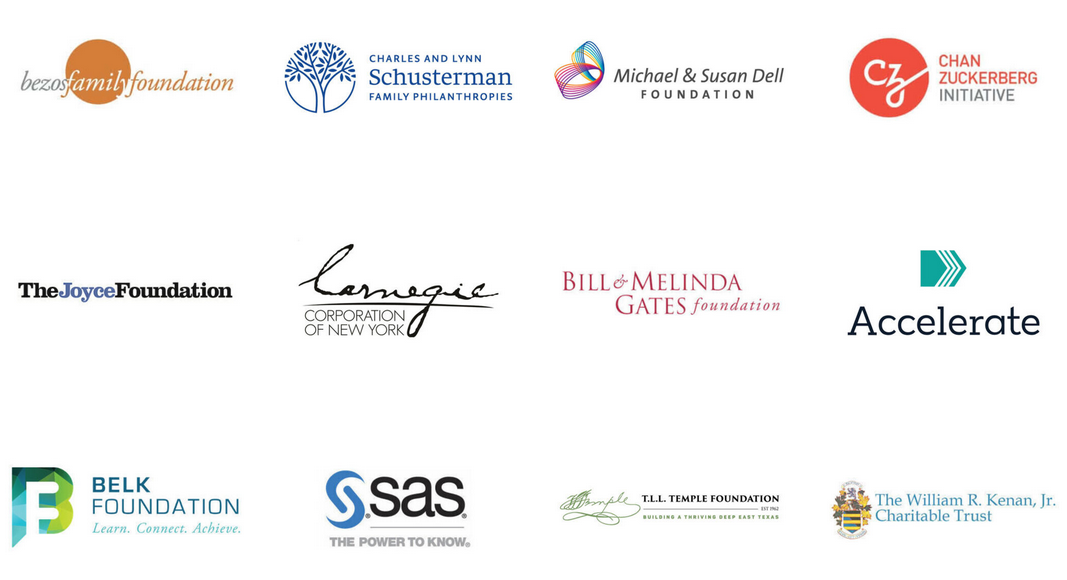
Supporters of DFI have been very generous since the founding in 2015. The last year for which tax records are available was 2022. Federal tax forms 990-PF show:

  • Bill and Melinda Gates Foundation (TIN: 56-2618866)  $3,482,504
  • Charles and Lynn Schusterman Family Foundation (TIN: 73-1312965)  $2,135,000
  • Michael & Susan Dell Foundation (TIN: 36-4336415)  $2,375,000
  • The Joyce Foundation (TIN: 36-6079185)  $2,400,000
  • Carnegie Corporation of New York (TIN: 13-1628151) $875,000

These are huge sums of money but not for billionaires. 

The Carnegie Corporation did not contribute to DFI until Timothy Knowles became president of the Carnegie Foundation for the Advancement of Teaching in 2021; probably not a coincidence.

Deans for Impact states:

“DFI believes all teacher-candidates should know the cognitive-science principles explored in The Science of Learning. And all educators, including new teachers, should be able to connect those principles to their practical implications for the classroom.”

Of course cognitive scientists do not agree on these principles and the neuroscience pitch is fantasy, but DFI is coming through with its deliverables.

Deans for Impact is just one small example of the many organizations billionaires have created to do their bidding.

Please open the link to read Tom Ultican’s conclusion.

Despite the debunking of the story about Haitian immigrants eating cats and dogs, despite the story becoming a national joke, JD Vance continues to peddle it. Vance is a senator from Ohio, meaning that he is hurling insults at people he supposedly represents.

Jamelle Bouie is a regular columnist for the New York Times.

If Senator JD Vance of Ohio had a moral compass, a shred of decency or a belief in anything other than his own ambition and will-to-power, he would resign his Senate seat effective immediately, leave the presidential race and retire from public life, following a mournful apology for his ethical transgressions.

As it stands, Vance has done none of the above, which is why he is still, as of today, using his position in the United States Senate and on the Republican Party presidential ticket to spread lies and smears against his own constituents in Springfield — Haitian immigrants who have settled there to make a new life for themselves.

The main impact of those lies and smears — which began Monday when Vance told his followers on X that “reports now show that people have had their pets abducted and eaten by people who shouldn’t be in this country,” and continued Tuesday when Donald Trump told an audience of 67 million people that “they’re eating the dogs, the people that came in, they’re eating the cats” — has been to terrorize the entire Springfield community.

On Thursday, bomb threats led to the evacuation of two elementary schools, city hall and the state motor vehicle agency’s local facility. The mayor has received threats to his office, and local families fear for the safety of their children. Several Springfield residents, including Nathan Clark — father of Aiden Clark, the 11-year-old killed when his school bus was struck by a minivan driven by a Haitian immigrant — have pleaded with Trump and Vance to end their attacks and leave the community in peace.

“My son was not murdered. He was accidentally killed by an immigrant from Haiti,” said Clark, rebutting a claim made by Vance. “This tragedy is felt all over this community, the state and even the nation, but don’t spin this towards hate,” he continued. “Using Aiden as a political tool is, to say the least, reprehensible for any political purpose.”

This direct rebuke from a grieving father has stopped neither Vance nor Trump from spreading anti-immigrant — and specifically anti-Haitian — lies and fanning the flames of hatred. “Don’t let biased media shame you into not discussing this slow moving humanitarian crisis in a small Ohio town,” Vance said on Friday. “We should talk about it every day.”

The “humanitarian crisis,” it should be said, is the revitalization of Springfield after years of decline. Haitian immigrants have filled jobs, bought homes and filled city coffers with property and sales taxes. And while there are growing pains from the sudden influx of new residents, the charge that Haitian immigrants have, in Vance’s words, brought a “massive rise in communicable diseases, rent prices, car insurance rates and crime” is false. He is lying about people, the very people he swore an oath to represent, in ways that will inspire additional threats of violence and may well bring physical harm to the community.

Michael A. Cohen (NOT the ex-Trump lawyer) writes that this debate might change the views of independent, uncommitted voters. Trump’s behavior and Harris’s cool were a stark contrast. Republicans are complaining that the moderators fact-checked Trump but not Harris, and were biased. But a few of Trump’s many lies were so egregious that the moderators were compelled to correct him, such as his debunked claim that Haitian immigrants in Springfield, Ohio, were stealing and eating pets, and his claim that Democrats support “post-birth” abortion. The moderators pointed out that the pet story was a hoax and that no state allows murdering a baby after birth.

Cohen writes:

Presidential debates usually don’t matter. A trove of political science literature suggests that most debate watchers have already decided whom they are supporting. While a winning candidate might get a temporary boost from a strong performance, the polling bump often fades. 

However, last night’s showdown between Kamala Harris and Donald Trump could be the exception to the rule. Why? Because never before in American presidential politics has there been a debate as one-sided as what we saw Tuesday night in Philadelphia. 

If this had been a heavyweight fight, a towel would have flown across the ring and the referee would have stopped the bout. This was such a rout that even conservative pundits bemoaned Trump’s disastrous performance. Over and over, Harris threw fresh chum into the water. In practically every one of her answers, she included at least one line that she knew would firmly lodge itself under Trump’s infamously thin skin. 

She needled Trump about his boring political rallies and pointed out that his alma mater, the Wharton School of Business, had thrown cold water on his economic plans. She listed his litany of criminal indictments and prosecutions. She repeatedly called him a disgrace and an easy mark for foreign leaders.

And each and every time, without fail, Trump took the bait. The result was a series of angry, disjointed and incoherent rants at ever-increasing decibel levels. He claimed without evidence that “many of those [Wharton] professors … think my plan is a brilliant plan.” He defended his political grievance fests by claiming they are the “most incredible rallies in the history of politics.” And in the debate’s most bizarre moment, he falsely claimed that immigrants in Ohio are stealing and killing pet animals. The contrast between sullen, angry Trump and polished, even-keeled Harris couldn’t have been starker. While much of the analysis from last night will focus on Trump’s lunacy, Harris’ performance may have been more decisive.

By and large, voters know what they think about Trump. Nine years in the political spotlight will have that effect. But Harris has been a 2024 presidential candidate for just seven weeks. If recent polling is to be believed, going into last night many voters saidthey want to know more about her. In a New York Times poll released Sunday, 28 percent of voters “said they felt they needed to know more about Ms. Harris, while only 9 percent said they needed to know more about Mr. Trump.” The number is close to half among the small segment of undecided voters. Along with last month’s Democratic convention, Tuesday’s debate was one of Harris’ best opportunities to introduce herself to the public. Did last night seal the deal? CNN’s instant poll taken immediately after the debate showed Harris trouncing Trump 63-37. That’s almost a mirror image of its poll after the Biden-Trump debate earlier this year. It’s similar to the margins for Joe Biden, Hillary Clinton and Mitt Romney in the first debates of the last three presidential elections — each of which led to a bump in the polls.

But a strong debate performance is no guarantee of victory. In 2004, John Kerry trounced George W. Bush in all three presidential debates. The same was true for Clinton against Trump in 2016. In 2012, Romney wiped the floor in his first debate with a listless Barack Obama. None of those three ended up in the Oval Office. 

Still, the differences between Harris and Trump were so significant — and considering the potential boost to a candidate not as well known as her opponent — it’s hard to imagine last night’s debate will not have at least some effect on voter opinion. At the very least, she might have given the sliver of the electorate still unsure about Harris enough information to win their vote in November.In the near term, the debate should generate days of coverage about the former president’s mental state. Perhaps it will also move the news media away from continuing to claim that Harris has not explained herself and her plans to the American people.

But ultimately, the question for Democrats is: Did Harris swing enough voters in her direction to ensure she wins the White House? Even if her poll numbers improve in the next week, will those gains remain in place until Election Day?

Time will tell. But if Trump remains a high-floor, low-ceiling candidate, with a strong base of support and a limited ability to bring in new voters, even a small move of undecided voters to Harris could be decisive. And it’s hard to imagine any presidential candidate having a better night than Harris did on Tuesday. Democrats can’t ask for much more than that from their new standard bearer.

Michael A. Cohen