The person who is elected President usually says on election night that he will govern on behalf of the American people. He makes a point of obligation to be respectful for all Governors, to send FEMA to any state that has suffered from natural disasters, regardless of whether they vote for him or his rival.
Trump has said frankly that he hates his enemies. He sometimes doesn’t pretend to care about states that did not vote for him.
Aaron Parnas of the Parnas Perspective points outthat the Trump administrative made decisions about environmental grants based solely on whether the states supported him in the 2024 elections. This involved billions of dollars in grants.
Parnas wrote:
A major constitutional violation, confirmed in court. The Trump administration admitted in court filings this month that it canceled 284 Biden era clean energy grants worth billions of dollars based solely on whether the recipient state voted for Kamala Harris in 2024 and had two Democratic senators. A lawyer for the Energy Department conceded that none of the terminations were based on any programmatic, statutory, cost reduction, or performance related factor, directly contradicting Energy Secretary Chris Wright’s June congressional testimony that no decisions were made on politics. The Energy Department disputes any contradiction, saying Wright was distinguishing between the review process and the timing of the cancellations, but hundreds of additional grants the department had itself recommended for cancellation were left untouched simply because they sat in states that backed Trump.
Real projects and real money were caught in the fallout. The politically targeted cancellations halted funding for hundreds of energy projects, including electrical grid upgrades in California and Oregon, methane leak reduction efforts in Colorado, and clean hydrogen fuel hubs in California and the Pacific Northwest. The cuts came in October alongside a broader White House push to pressure Democratic lawmakers during a government funding standoff, with Trump publicly threatening to slash what he called Democrat agencies. Some grant recipients have since sued to try to recover their funding, and this is not the first time the Energy Department has admitted politics played a role, since a federal judge already ruled in two earlier cases that more than a dozen grants were improperly canceled for political reasons, though this latest admission is far broader and more detailed.
Democrats say it exposes a dangerous pattern with more to come. Senator Patty Murray and Representative Marcy Kaptur called the cancellations an outright un-American weaponization of government and accused the administration of corruptly abusing its power to punish states over how they voted. The controversy lands as the administration finalizes new rules, expected by October, that would give Trump’s political appointees direct control to review, block, or revoke federal grants across the entire government, worth more than a trillion dollars annually. Budget office director Russell Vought has defended the changes as necessary to ensure democratic control of spending, but critics, including antipoverty groups, scientists, and city leaders, have flooded the government with comments warning the rules would let the administration extend this kind of political targeting far beyond energy grants. Center on Budget and Policy Priorities fellow Devin O’Connor said the willingness to be this blatant in court should be taken as a serious warning about what the new framework could enable nationwide.
You may recall that the annual White House Correspondents Dinner was interrupted last April 25, then cancelled, after a lone gunman tried to break through security and was stopped.
The event is a venerable tradition. The April dinner was designed for 2,500 guests. The rescheduled dinner was held last night. It was slimmed down to 700 people, which included prominent figures in the media, especially those journalists who cover the White House.
The speech took place at the same time that the Trump Justice Department claims the authority to issue subpoenas to reporters for writing stories that Trump treats as leaks.
Trump did what he does best: he insulted the journalists who cover him, and he ridiculed politicians who are his enemies.
The Washington Post reported:
He said that he had once mixed up CNN reporter Kaitlan Collins, whom he said “never smiles,” with a transgender social media personality, Dylan Mulvaney, after he called the 34-year-old cable news star a “young, attractive woman.” He said he planned to host twice-weekly fights at the White House.
“We will have sloppy Chris Christie, one of the sloppiest human beings, fighting,” Trump said to silence. “I could mention the governor of Chicago, but I’m going to mention instead Jerry Nadler. Oh my God! They’re fighting for a big piece of cheesecake, big fat piece of cheesecake.” Then he told a joke about Sen. Adam Schiff (D-California).
“I hate some people,” he said to groans. “He’s a liar, and I called him watermelon head because he has the largest head I’ve ever seen with the smallest neck, pencil neck. How does that make a fat, ugly head on a little pencil neck?”
Trump’s entourage laughed at his vitriolic barbs, but the journalists sat in “stunned silence” as Trump attacked the journalists who cover him.
Trump proved to all who heard him that he has low regard for a free press. But he is a master of insults and disparagement.
For more than a year, Trump has pestered the Smithsonian Museum to remove exhibits that shine attention on despicable episodes and phenomena in American history. Trump wants a patriotic version of American history.
The Smithsonian has rejected his bullying, so Trump ordered the National Park Service to place signs around the Smithsonian museums warning visitors about their bias in favor of accurate history.
Donald Trump on Friday ordered the interior department to display signs in front of the Smithsonian National Museum of American History that accuse the institution of inaccuracy.
The order escalates the Trump’s attacks against the Smithsonian, which he and his allies accuse of politicizing the institution by focusing too much on injustices in American history, instead of more triumphant moments such as the signing of the Declaration of Independence.
The order directs interior secretary Doug Burgum to huddle with the National Park Service and assistant to the president for domestic policy Vince Haley to come up with some temporary signs to install along the National Parks Service-maintained sidewalks and walkways leading into the museum.
Advertisement
The White House did not immediately respond to a request for more details about what these signs would say.
The order says the signs “shall notify visitors that the museum exhibits should be renovated consistent with the findings in the report”. The signs should direct the public to other places where they can get better American history information, the order says.
The same group will also have to produce signs for the public criticizing the Smithsonian for not commemorating sufficiently the Declaration of Independence during the 250th anniversary of its adoption.
The American Historical Association, a group composed of professional historians, praised the Smithsonian Institution’s “commitment to scholarship and accuracy” in a statement earlier this month.
“Historians practice our craft with scholarly integrity according to established standards of evidence, historical inquiry, and professional practice,” the AHA statement reads. “Political interference in professional museum work threatens the accuracy of historical interpretation and erodes public trust in one of our nation’s most important institutions.”
The National Museum of American History declined to comment.
It is a well-established fact that the school choice movement was created in the South in the 1950s to protect segregation. After the Brown decision of 1954, whites resisted desegregation with e Rey strategy they could dream of. One such was to offer vouchers to every student to attend the school of their choice. The predictable result was to protect segregated schools.
In this century, voucher promoters sell them as parental choice, “saving poor kids from failing public schools,” etc.
But unless an effort is made to enrcuage racial integration, choice will lead to segregation.
Halley Potter of The Century Foundationwrote this report. I urge you to open the link and read it in full.
Potter wrote:
In rural Northampton, North Carolina, a private Christian school called Northeast Academy is 99 percent White in a county that’s 40 percent White. It receives about half of its tuition from taxpayers, through the state’s private school voucher program. Northeast is one of a number of private schools known as “segregation academies,” because they were founded during desegregation so that White parents could avoid having their children educated in an integrated setting.
Segregation academies ought to be a thing of the past, but they could experience a resurgence—paid for with taxpayer dollars—under the new federal private school voucher scheme enacted as part of the One Big Beautiful Bill Act (OBBA). Bringing back segregation academies using taxpayer dollars is part of the Trump administration’s radical two-pronged approach to undermine public education. The first tactic in the Trump administration’s plan to undercut public school systems is to dramatically reduce the federal role in education by dismantling federal programs, reducing oversight, attempting to cut federal funding for K–12 schools, and working to close the U.S. Department of Education. The second tactic is actively working toward privatization through an unprecedented federal private school voucher program.
How the Voucher Plan Would Work . . .
In July 2025, OBBA established a new federal tax credit—known as the Education Freedom Tax Credit—that, in effect, serves as a private school voucher program. The program allows individuals, beginning January 1, 2027, to contribute up to $1,700 per year toward private entities known as scholarship granting organizations (SGOs) and receive a dollar-for-dollar return of their money in the form of a federal tax credit. SGOs then would then be able to decide how to distribute the funds as scholarships to applicant students for them to spend on education. There is no cap on the size of such scholarships, and no limit on the number of individuals that can claim the tax credit. While recipient students may be able to use scholarship funds to pay for some things like tutoring or activity fees at public schools, because public schools are essentially free, it is anticipated that the vast majority of these funds will go toward private school enrollment.
There are very few requirements of SGOs in the statute, and it appears that any organization in a participating state that meets the criteria will be allowed to participate. SGOs must give scholarships to ten or more students who do not all attend the same school, must spend at least 90 percent of the income on scholarships, must give priority to students who received scholarships the previous year and to siblings, cannot earmark funds for a particular student, and must ensure that students come from families earning no more than 300 percent of the area median gross income. Essentially everything else will likely be up to the SGO, as the program’s regulations are not expected to add additional guardrails. It appears an SGO could, for example, be set up to fund scholarships to Christian schools only. Because private schools are not subject to all of the same civil rights laws as public schools, SGOs could also likely discriminate against students based on disability or sexual orientation.
While starting the process with individual donations gives the program the veneer of a charity operation, this is a ruse. All this does is mask who is truly bearing the cost of the program. In actuality, the donors to SGOs bear no cost, as they are later fully reimbursed by the federal government through the dollar-for-dollar tax credit. The federal government—using taxpayer dollars sent to the supposed donors—bears the entire cost of the program. Estimates of the cost to taxpayers range from around $4 billion to over $50 billion annually.
Moreover, the U.S. Department of the Treasury’s language regarding the tax credit program is very misleading. Their fact sheet states: “A recent report estimates that the Education Freedom Tax Credit will generate an additional $24 billion in education funding annually.” That makes it sound like this is a revenue-creating program rather than one that bears a huge federal cost.
States and the District of Columbia have to decide annually whether or not to opt out of or into the voucher program. As of July 6, 2026, twenty-nine states had indicated that they plan to opt in for the first year of the program. However, federal regulations guiding the program are not expected until September. Further complicating matters, at least eighteen states will have new governors and the District of Columbia will have a new mayor when the program launches in 2027 because of term limits, and that number could be as high as thirty-six after this fall’s elections.
. . . To Increase Segregation and Undermine Public Education
Diverse learning environments that bring students of different racial and socioeconomic backgrounds together are one of the most powerful educational tools we have. Integrated schools help encourage critical thinking, boost academic achievement, and build the skills for working across lines of difference that are essential for our democracy. The growth of private school voucher programs threatens to roll back progress on integration, limit educational opportunity, and further fracture the educational landscape by race and class.
As state leaders and advocates weigh whether or not to opt into the federal voucher program, they should consider the evidence on how the program could deepen inequality and further racial and socioeconomic divides. New analysis in this piece shows that in some metro areas in states that are still deciding whether to opt out of or into the federal voucher program, private schools already drive more than 40 percent of the racial segregation in schools.
The Segregationist History of Private School Vouchers
Private school enrollment nationwide is disproportionately White and wealthy. As of 2021, 9 percent of American schoolchildren attended private schools. Sixty-five percent of private school students are White, compared to 45 percent of public school students. Private school students are about twice as likely as public school students to come from higher-income households, and private school attendance is concentrated among the highest earners.
Private school voucher programs were started by segregationists across the South in the 1950s and 1960s as part of efforts by Southern leaders engaged in “massive resistance” to avoid integrating their schools in the wake of the 1954 Brown v. Board of Education ruling. Many communities opened all-White private schools, which became known as segregation academies. Local governments slashed public school funding and instead created public subsidies for these private schools—including voucher programs to reimburse tuition as well as tax credits.
The courts eventually struck down many of those voucher programs tied to segregation academies, but current voucher programs still show troubling patterns of segregation. Roughly 300 private schoolsthat were founded as segregation academies still receive money from publicly funded voucher programs. Most voucher money goes to students who are already attending private schools, and data has shown that private schools tend to raise their tuition after the introduction of voucher programs. For example, when Iowa started a new voucher program in 2023–24, two-thirds of vouchers went to students who were already attending private schools. By 2026, tuition at some of the state’s largest private high schools had grown by as much as 50 percent. It is important to note that vouchers typically do not cover the full cost of tuition, making private schools still out of reach for most low-income families, and so the voucher programs tend to function mostly as cost-reducing schemes for wealthier families sending their children to private schools. In Arizona, for example, half of all voucher recipients come from the wealthiest quartile of zip codes.
There are some private school voucher programs that target low- to middle-income students and enroll mostly students of color, such as the Milwaukee Parental Choice Program, the oldest operating school voucher program in the United States. However, research shows that even students in these programs, which arguably have the highest potential for integration, by and large did not give students greater access to integrated schools.
Furthermore, some voucher programs that started out serving mostly students of color have now seen an increase in White students in recent years. When North Carolina’s private school voucher program launched in 2014, for example, a majority of students receiving vouchers were Black, and just 27 percent were White; however, as the program expanded incrementally from one serving only low-income students to one with no income limits, the percentage of vouchers going to White students grew to 73 percent, in a state where only 51 percent of school-aged children are White. A 2024 investigation by ProPublica into North Carolina’s private school voucher program found thirty-nine schools that fit the profile of segregation academies that were receiving public money through voucher programs.
The new federal private school voucher program specifies that participation is open to families earning up to 300 percent of area median gross income, which means it would be open to roughly 90 percent of students nationwide. With near universal eligibility, the federal program could easily be susceptible to similar patterns of segregation, disproportionately benefiting White students and furthering segregation between public and private schools.
The biggest lie about American school kids is that most are “below grade level.” This lie is repeated so often by prominent figures that it is widely believed. But it’s not true. Those who believe it are wrong. Those who repeat it, knowing it’s not true, are liars.
The source of the lie and the confusion is clear: the achievement levels in which NAEP scores are reported. The levels are “advanced,” “proficient,” “basic,” and “below basic.” When the media write about the latest release of NAEP scores, they frequently treat “proficient” as “grade level.”
But “proficient” is NOT “grade level.” It represents solid achievement, a rigorous aspirational goal. “Proficient” is equivalent to a solid A.
Every NAEP report on test scores says clearly in a footnote that “proficiency” is not the same as grade level. For example: “NAEP Proficient does not signify meeting grade-level expectations.” Yet the media and prominent commentators who should know better repeat the lie that most students are below grade level. The fact is that most students will never reach the high bar of “proficient.”
In 2023, as Bruce Lesley points out, Biden’s Secretary of Education–Miguel Cardona–testified to a Congressional committee that only one-third of American students were reading “at grade level.” I was flabbergasted. I couldn’t believe he said something so outrageous. I called Dr. Peggy Carr, who at that time was the Commissioner of Education Statistics. She was as surprised as I was that Secretary Cardona repeated the erroneous statistic. I asked Dr. Carr whether she had ever briefed him on understanding NAEP results; she had not.
I gave her an idea. Propose a change in name for “proficiency.” Change the name to “mastery.” No one would claim that “mastery” was the same as “grade level.” She liked the idea and promised to take it to the board. Whether she did, I don’t know. But nothing changed.
Bruce Lesley wrote this open letter to the National Assessment Governing Board, which oversees NAEP testing. Lesley is president of First Focus on Children and its partner organization First Focus Campaign for Children, bipartisan advocacy organizations dedicated to making children a priority in federal, state, and international policy. He has led both organizations since 2006 and 2009, respectively, building them into recognized national voices on child health, education, early childhood, economic security, budget and tax policy, immigration, children’s rights, and more recently, international child policy.
He wrote:
To the National Assessment Governing Board, the National Center for Education Statistics, and the leadership of the National Assessment of Educational Progress:
Every institution whose work affects children should begin with one question: “Is this good for children?”
By that standard, the National Assessment of Educational Progress (NAEP) has some important issues that deserve to be resolved. First and foremost, your achievement-level labels — “Basic,” “Proficient,” and “Advanced” — are being weaponized against the very children NAEP exists to serve, and you know it, because your own staff has been saying so for twenty-five years.
To be clear, this open letter is not a claim that NAEP’s underlying data is necessarily wrong, and it is not an argument against NAEP. The argument and request is narrower: you have a real and critically important ethical responsibility to correct the public misuse of your own data. NAEP should defend its credibility against those currently diminishing it.
This Week’s House Mark-Up Provides Another Example
On July 15, 2026, the House Education and Workforce Committee marked up a ten-bill package to facilitate the dismantling of the U.S. Department of Education.
In his opening statement, Chairman Tim Walberg (R-MI) argued that “too many children can’t read or do math at grade level,” and used that claim as a central justification for several of the bills. That claim is false.
Chairman Walberg was drawing on NAEP data — the statistic that roughly two-thirds of American fourth-graders do not score “Proficient” in reading, which is wrongly cited as evidence of failing to meet grade-level reading levels. For some, this is done out of confusion and, for others, to promote a political agenda to undermine public schools. In reality, NAEP proficient is aspirational and reflects a standard that is well above grade level.
Unfortunately, during the markup, multiple members of Congress repeated the same error. But again, NAEP Proficient is not grade level. It has never been grade level.
When the public, the press, the administration, and Congress repeatedly miscite this fact, the National Assessment Governing Board (NAGB) must do much more to clarify and correct misstatements about what it means.
The problem is two fold. One part of the problem is that “proficient” is used on many state and local assessments to mean “at grade level,” or what once upon a time would have been called a gentleman’s C; this leads to some honest confusion for some folks. The other part of the problem is folks who are invested in the narrative that public schools are failing and who benefit from the confusion surrounding the term.
Greene adds:
And every time NAEP scores are released, education journalists write piece after piece explaining “proficient” all over again, usually in the wake of some prominent person decrying the large number of students not “at grade level.”
That confusion is NAGB’s responsibility to address, and it has deserved attention for years, but all the more NOW.
This Is Not a Partisan Problem
Chairman Walberg and his colleagues’ misstatements are only the most recent officials to make this mistake (whether unintentionally out of confusion or internationally), and the pattern runs through both political parties.
Secretary Miguel Cardona, testifying before Congress in April 2023 under the Biden Administration, told lawmakers directly that only one-third of students were reading “on Grade level,” treating a NAEP proficiency figure as if it were a grade-level statistic, in nearly identical language.
And Secretary Linda McMahon, in the current Trump Administration, has used more careful wording — noting that nearly 70% of eighth graders are “not proficient” in reading — but has paired that technically accurate phrase with language implying total system failure. A Snopes piece by Rae Deng described this claim as lacking its own level of reading comprehension because, again, it completely mischaracterizes what NAEP’s “proficient” standard means.
Outside advocacy groups have been considerably less careful than any of them.
Corey DeAngelis, a leading advocate for school privatization, vouchers, and against public education, has cited NAEP proficiency figures directly, without qualification, as evidence that public schools are a system-wide “disgrace.”
Greene captures these types of political misuse of NAEP data in this Substack post.
This confusion is intentional by people arguing for both the dismantling of public education and federal investments in children.
Unfortunately, NAGB’s silence has allowed that rhetorical usefulness to go unchecked under Republican and Democratic administrations alike, and it is being used right now, this week, on Capitol Hill to justify eliminating the very agency that funds and safeguards the data NAGB produces.
NAGB’s Own Experts Have Been Saying This for Years
In 2001, Mary Lynne Bourque and Susan Loomis — a staff member and a board member of the National Assessment Governing Board itself — wrote plainly that the Proficient achievement level “does not refer to ‘at grade’ performance,” and that performance at Proficient is not the same as being “proficient” in a subject as any ordinary person would use that word.
Chester “Checker” Finn, Jr., who chaired the panel that adopted the achievement levels in 1992, has been candid that the levels were designed to be aspirational — a description of where students should ideally arrive, not a diagnosis of where most currently stand.
NCES itself has attached a caution to NAEP score reports for years: the Proficient level “does not represent grade level proficiency as determined by other assessment standards.”
If NAEP’s own architects and NAGB’s own website already say this, it is past time to be diligent in correcting the record when people misuse and misstate what it means. It is also on NAGB to stop publishing results in a format that predictably, foreseeably, and repeatedly gets misread as a verdict on grade-level performance, especially when you can see exactly how that misreading gets used again and again.
The clearest confirmation of all of this comes from NCES’s own data. Researchers Gina Cervetti and Kathleen Hinchman mapped every state’s definition of fourth-grade “grade-level” reading proficiency directly onto the NAEP scale and found that, as of the most recent analysis, nearly every state’s own standard for grade-level reading lines up with NAEP’s Basic level, not NAEP’s Proficient level. That means the honest translation of the data runs the opposite direction from how Chairman Walberg and others use it: by the states’ own definitions of grade level, roughly two-thirds of American fourth graders are reading at or above grade level, not below it.
Cervetti and Hinchman are also blunt about what actually is a crisis in the data: not a reading crisis, but an equity crisis. In 2022, only 48% of students eligible for free or reduced-price lunch scored at or above NAEP Basic, compared with 76% of students who were not eligible — a 28-point gap that has persisted, largely unchanged, for decades.
That is a story about generational wealth and unequal access to housing, healthcare, and school resources, not a story about failing classrooms, and NAEP’s own framing continues to let people tell the wrong story with your numbers.
What Education Writers and Researchers Have Been Saying
Diane Ravitch, who served seven years on the National Assessment Governing Board under President Clinton, has called out the confusion between NAEP Proficient and grade level as one of the most damaging and persistent falsehoods in American education discourse, noting that NAEP itself explicitly warns against the equivalence you continue to permit others to make.
Greene has argued that cut scores like “Proficient” function as scaled, curved judgments dressed up as fixed standards — noting that if every child scored above a cut, the establishment reaction would be to declare the cut too easy, not to celebrate the achievement. That is not how a genuine, fixed criterion is supposed to behave, and it is worth NAGB’s honest reckoning.
Mark Weber, a New Jersey teacher and education researcher, has done careful public work mapping state proficiency standards onto the NAEP scale, and his conclusion undercuts a favorite talking point of your critics-turned-allies in this fight: there is no empirical evidence that closing the so-called “honesty gap” between state and NAEP proficiency rates does anything to improve student achievement. If setting state cut scores to match yours were actually the lever for better outcomes, we would expect to see it in the data. We do not. That matters because it means the standard is being imported into state accountability systems on faith, not evidence — exactly the kind of unsupported claim NAGB should be correcting rather than allowing to spread.
The Brookings Institution’s Brown Center on Education Policy has been making this same case for nearly two decades. Tom Loveless, the Brown Center’s longtime director, authored a 2007 report concluding bluntly that NAEP’s cut scores were set too high.
His 2016 Brookings piece, “The NAEP Proficiency Myth,” went further, noting that the achievement levels came under critical review from the U.S. Government Accountability Office, the National Academy of Sciences, and the National Academy of Education shortly after they were adopted — with the National Academy of Sciences review concluding the achievement levels were fundamentally flawed.
Loveless adds:
Advocates of the NAEP proficient standard want it to be for all students. That is ridiculous. Another way to think about it: proficient for today’s eighth graders reflects approximately what the average twelfth grader knew in mathematics in 1990. Someday the average eighth grader may be able to do that level of mathematics. But it won’t be soon, and it won’t be every student.
That is not a stray outside critique. That is respectable experts in the field, writing for decades, about the very categories NASB is still using today without correction.
One Point Should Not Separate “Failing” from “Successful”
NAGB also owes the public an honest accounting of what a cut score actually is. A cut score is a single point on a continuous scale, chosen somewhat arbitrarily by a panel, above which a child is declared “Proficient” and below which the same child, one point lower, is declared “Basic,” which is actually grade level.
Two children who are functionally indistinguishable in what they know and can do are sorted into entirely different public categories — one used as evidence that a school, a state, or a federal agency is failing, the other treated as evidence of success — because of a single point set by a committee, not because of any meaningful difference in the children themselves.
That is not a rounding error. It is the mechanism by which your data gets converted into political ammunition.
If NAGB cannot explain, in terms parents can understand, why the child who scores one point below the line is a different kind of learner than the child one point above it, then the line is doing rhetorical work the data was never built to support.
As the psychiatrist and educator William Glasser warned schools decades ago, chasing a point or two of movement on a test score is precisely the wrong institutional goal — and yet that is the goal NAEP’s cut scores hand every state, district, and school in the country by default.
Researcher Andrew Ho makes a similar point. He has identified proficiency cut scores as arbitrary markers, set through what he calls an “overwrought, judgmental, and ultimately political process,” not derived from any fixed line in human learning.
Ho has also documented a specific illusion that follows from that arbitrariness: because a large cluster of students always sits near the middle of the score distribution, a cut score placed close to that cluster will make small, ordinary shifts in performance look like dramatic gains or losses, purely as an artifact of how many students happen to sit right at the line — not because anything real changed in how much they learned. A researcher with no stake in the politics of this issue is describing the identical mechanism that turns your data into a rhetorical weapon: the closer the line sits to where children actually cluster, the more your data will appear to swing wildly for reasons that have nothing to do with children’s learning.
Criterion-Referenced in Name, Arbitrary in Practice
NAEP describes itself as a criterion-referenced assessment, distinct from norm-referenced tests like the SAT that simply rank students against one another. That distinction matters, and I want to represent it accurately rather than overstate it — NAEP does not “grade on a curve” in the way the SAT’s percentile scoring does.
However, the practical effect on families is not so different as the label suggests. NAEP’s cut scores were set by hand-picked panels making judgment calls about what students “should” know, not derived from an external, agreed-upon standard of competence, and independent evaluators — including a National Academies review in 2017 — have called for stronger evidence connecting NAEP performance levels to any real-world outcome at all.
A test that is criterion-referenced in name but whose criteria were set arbitrarily, and whose results still track family income and race as tightly as any norm-referenced test on the market, produces the same practical harm as the norming bias critics have long raised: it tells us more about a child’s zip code than about a fixed, meaningful standard of what that child knows.
Notably, NAGB has conceded the point this year. The 2026 NAEP reading framework — administered to students for the first time this spring — now explicitly disaggregates racial and ethnic subgroup results by socioeconomic status, on the premise, well documented for decades, that apparent racial differences in test scores largely track socioeconomic differences. That is a welcome and overdue acknowledgment.
But it is also, in effect, NAGB admitting in 2026 what critics have argued for years: that the results have been measuring wealth and family circumstance as much as they measure “proficiency,” all along. If that acknowledgment is real, it should extend backward, to how NAGB talks about every score ever published, not just forward, to a single new breakdown in the data tables.
The Test Itself Is Not Neutral
Even setting the cut scores aside, the content of the test carries its own bias, and NAEP’s own commissioned reviewers have said so. The NAEP Validity Studies Panel — a technical review body NCES itself created and funds — published an analysis by Gerunda Hughes in 2023 documenting that the statistical methods used to build NAEP-style test items can systematically disadvantage the very students the test is supposed to serve fairly.
When an item is answered correctly by nearly every student, it gets treated as a poor “discriminator” between high and low performers and is typically cut from the test in favor of harder items, even though that easy item may represent exactly the content that should be mastered.
In his book, Au cites researchers Kidder and Rosner, who examined more than 300,000 SAT test-takers and the pool of trial questions used to build future exams and found that some trial questions were answered correctly by Black students, or by Latino students, more often than by White students. Those questions were then discarded — not because they were poor measures of the content, but because they failed to reproduce the racial score gap the rest of the test already produced. A question only “counted” as valid if high-scoring test-takers, who are disproportionately White, tended to get it right in pretesting.
My mother has verified the same process when she was asked to be on a panel to evaluate whether the item questions were “fair”. The publishers of the Texas State assessment at the time ran through the questions and kept throwing out questions as biased toward Black or Hispanic children if they scored the same or close to the scores of White children.
In contrast, questions in which there was a substantial gap in favor of White students were not flagged – thus, “norming” the disparity in test score outcomes into subsequent tests. Although my mother repeatedly objected, she was overruled throughout the day and, not surprisingly, never asked back to be a reviewer.
The result, as Au describes it, is a self-reinforcing loop: item selection is calibrated to match existing racial score gaps, which locks those same gaps into every future version of the test, all without anyone ever explicitly considering race in the selection criteria.
NAEP is a different test administered by a different organization, and I am not asserting that NAEP’s item-selection process has been documented to work in the same way. But NAEP uses the same category of item statistics that made this outcome possible on the SAT, and NAGB’s own validity panel has already flagged the risk. Given what is now documented on a test as consequential as the SAT, NAGB owes the public a direct, public answer to a direct question: has anyone checked whether NAEP’s item-selection process does the same thing?
There is also cultural and geographic bias. As the son of an English teacher and a math teacher, it should be no surprise that I did fairly well on standardized tests throughout my life. But I vividly recall a reading passage from the PSAT that focused on nautical issues and the definition of a “flotilla.”
Having grown up in El Paso, Texas, a city located hundreds of miles from any coastline, the passage and vocabulary word were unfamiliar to any of us taking the test in the desert borderlands. On the other hand, we would crush a passage referring to “tortillas.” NAEP’s own reviewers have a name for this: cultural validity, the idea that a test cannot cleanly separate what a child knows from what a child has been exposed to.
Research that NAEP’s own validity panel cites has found that when students are allowed to choose among reading passages on different topics, rather than being assigned a single passage that may be unfamiliar or uninteresting to them, some groups of students — including Black eighth graders and Hispanic twelfth graders in the panel’s own cited study — score much higher. That is evidence that some of what NAEP currently measures is exposure and familiarity, not just reading ability, and it argues for reform in how passages and vocabulary are chosen, not just in how results are labeled.
Again, the validity panel’s report contains proof that this is a design choice, not a fact of nature. In 1972, the psychologist Robert Williams built a test called the Black Intelligence Test of Cultural Hegemony, using vocabulary and content drawn from Black American culture instead of the dominant culture’s frame of reference. When Black and White teenagers took it, Black students substantially outscored White students by substantial margins.
Nothing about the underlying children changed between that test and the SAT. What changed was whose knowledge and cultural fluency the test happened to be built around.
That single fact should end, permanently, any claim that a test’s outcomes reveal some fixed truth about which children “can” or “cannot” read, think, or reason. What these tests reliably measure is often which cultural and economic frame of reference a child was raised in, and how well that frame matches the one test-makers chose to build around — which is another way of describing accumulated wealth, school funding, and generational inequity, not a verdict on a child’s mind.
That is real, and policies that address school finance inequity, child poverty, childhood hunger, and adverse childhood experiences (ACEs) deserve real policy attention. These issues would undoubtedly do more to improve educational outcomes in this country rather than privatization of public schools or the elimination of the Department of Education.
Claims that two-thirds of American children cannot read at grade level are simply false, and their interpretation by policymakers and advocates is harming children. There is an old warning that was popularized by author Mark Twain but attributable to British Prime Minister Benjamin Disraeli about three kinds of falsehood — “lies, damned lies, and statistics.”
In this case, even a true number, presented without its context, can mislead more effectively than an outright fabrication. NAEP’s “proficiency” level is an aspirational one, but the grade-level story built on top of it is doing real harm. NAGB is a position to explain the difference, and the public is not, until you tell them.
The Damage Is Not Abstract: What Gets Tested Is What Gets Taught
This is not a technical quibble.
Every time “below Proficient” gets reported to the public as “can’t read” or “can’t do math,” it becomes ammunition for defunding public schools and for portraying millions of children — disproportionately low-income children and children of color — as failures because of a label your board itself has said should not be read that way.
It also reshapes what happens inside the classroom. When reading and math scores on tests built around NAEP cut points become the metric by which schools, teachers, and even state superintendents are judged, instructional time follows the incentive:
Short, decontextualized passages crowd out real books — my children were taught how to write a brief constructive response (BCR) before they were even taught what a paragraph was.
Science, government, history, the arts, and physical education are pushed to the margins of the elementary school day because they are not tested and therefore not rewarded.
Children end up narrower, not better educated, in the very subjects that make them informed citizens — and NAEP’s own cut-score architecture is a direct contributor to that narrowing, whether or not that was your intent.
NAGB tried a partial fix in 2018, adding the word “NAEP” before each level — “NAEP Proficient” rather than “Proficient” — so people would stop equating your terms with generic ones.
James Harvey, executive director of the National Superintendents Roundtable, was right to call that gesture insufficient at the time. Harvey said:
…the American people should understand that the misleading term “proficient” sets a performance benchmark beyond the reach of most students in the world.
Harvey argued “proficient” should be changed to something like “high” to avoid being “fooled.”
His point has been proven many times, including this week when a sitting congressional committee chairman, citing NAEP-adjacent data to justify eliminating a federal agency, still used the word “grade level” as if it meant what NAEP’s Proficient level does not mean.
The Perverse Incentive NAEP Has Inspired: Grade Retention As Score Manipulation
The clearest evidence that NAEP’s cut scores create perverse incentives and “manufactured” crises, rather than honest information, is what states have started doing in response to them: holding back third-graders who miss an early-literacy cut score, in order to produce a fourth-grade NAEP cohort that looks better on paper.
Education professor and researcher Paul Thomas has documented this closely in states such as Mississippi, where fourth-grade reading gains celebrated as a “Mississippi miracle” tracked closely with a mandatory third-grade retention policy.
A child who is nine years old competing against classmates who are eight will predictably score higher on a test built around the same content; that is a fact about test administration, not about literacy. Furthermore, those same “gains” have been shown to fade by eighth grade, once the retained cohort catches up in age to its peers without having genuinely caught up in learning.
This is worth NAGB’s own honest reckoning, not because the research on retention is unanimous — reasonable analysts, including some closely tied to NAEP’s own governing board, dispute how much of Mississippi’s gain is genuine instructional improvement versus retention’s effect on cohort composition — but because NAEP’s achievement levels are the mechanism creating the incentive either way.
States are not retaining eight-year-olds because it is good for those children. They are retaining them because a single cut score on a single test has been elevated to a measure of whether a state’s education policy is working. The cost of that incentive falls on children: retained students who show a short-term score bump can, over time, experience the opposite of what was intended — greater disengagement, higher rates of dropping out before graduation, and the well-documented psychological toll of being told, at eight or nine years old, that they failed.
William Glasser spent much of his career, in Schools Without Failure, and later in The Quality School, explaining exactly why this backfires. He argued that standardized testing reduces learning to disconnected, memorized facts at the expense of critical thinking and real application — and that the “right answer, wrong answer” format of a multiple-choice test teaches children that education is a hunt for a single predetermined answer rather than a process of genuine understanding.
In the schools Glasser held up as models, closed-book tests were replaced with open-book, collaborative assessments that actually resembled the problems students would face outside school. His deeper claim, grounded in what he called Choice Theory, is that people — including children — are driven by needs for freedom, power, and simple enjoyment in their work, and that using test scores to rank, shame, or coerce students destroys the very motivation that produces quality work in the first place.
Labels matter. When children repeatedly hear that two-thirds of them “cannot read at grade level,” many internalize failure that is not supported by the evidence. Parents lose confidence in neighborhood schools. Teachers become demoralized. Policymakers propose increasingly radical structural changes to fix a crisis that has been inaccurately described.
Glasser also warned explicitly against making small, arbitrary numerical gains — his example was raising a test score by a point or two — the primary institutional goal of a school, insisting instead on building a genuine culture of quality. That is precisely the trap a single-point NAEP cut score sets for states, and it is the trap third-grade retention policies walk students directly into.
That is the opposite of what an assessment meant to serve children should produce, and it deserves your acknowledgment, not your silence.
What We Are Asking You To Do, Now
Issue a direct, public correction each time a federal official misstates NAEP Proficient as “grade level,” the way you would correct any other material misuse of your data. Silence is not neutrality; it is acquiescence in the misuse.
Publish, prominently and alongside every score release, the state-by-state mapping showing that “grade level” as states themselves define it corresponds to NAEP Basic, not NAEP Proficient — the analysis your own data already supports and that outside researchers have had to do on your behalf.
Publish a plain-language document — “What NAEP Proficient Does, and Does Not, Mean” — and require it alongside every score release, every webpage, every press briefing, and every congressional testimony that cites NAEP data. Most of this letter’s argument could be prevented by a single page NAGB.
Stop using “Basic,” “Proficient,” and “Advanced” as headline labels without their NAEP qualifier in every release, chart, and public statement — not as a footnote, but as a mandatory part of the label itself, displayed with the same prominence as the number.
Retire “Basic,” “Proficient,” and “Advanced” altogether in favor of terms that do not already carry a plain-English meaning your data does not support. If the words themselves are the problem, changing a modifier in front of them has not been enough.
Extend the honesty of the 2026 reading framework’s socioeconomic disaggregation backward, not just forward. If you now accept that racial gaps in your data are substantially explained by family socioeconomic status, say so plainly every time a racial achievement gap is reported, and stop letting that gap be cited as evidence of school failure without that context.
Commission and publish the external validity evidence the National Academies asked for in 2017 — a transparent accounting of what your cut scores do and do not predict, so the public can evaluate the standard rather than take your word for its meaning.
Publicly acknowledge the perverse incentive your cut scores have created for third-grade retention policies, and commission independent, longitudinal research — tracking students well past eighth grade, through high school graduation — before any state is permitted to point to NAEP gains as proof that retaining eight-year-olds is good policy.
Act on your own validity panel’s 2023 findings, and answer the question the SAT evidence now raises. Publicly disclose whether NAEP’s item-selection process has ever been audited for the same self-reinforcing bias documented on the SAT — where trial questions that marginalized students answered correctly were discarded for failing to reproduce the existing score gap — and commit to an independent audit if it has not. Explain how tests are “normed” from one year to the next and made comparable in a manner that is understandable to the public.
Kids can’t wait for another year of this same correction being offered and ignored, or for another cohort of eight-year-olds to be held back so a state’s chart can look better. NAGB has the power to end the confusion your own board identified more than two decades ago. Please do so. Kids deserve it.
Nobel-Prize winning economist Paul Krugman wrote about the public awakening to the menace of billionaires who hoard wealth and buy power. Not all billionaires are bad. McKenzie Scott, ex-wife of Jeff Bezos, has given away billions to worthy causes. But she is not typical. Others are using their money, like Larry Ellison, to destroy our independent media, or to buy elections, usually for reactionaries who promise them lower taxes.
Krugman’s post:
Suddenly it’s OK to sound the alarm about the political power of billionaires. And I do mean suddenly. The chart above, from political scientist Andrew Hall, examines fundraising emails to track the extent to which politicians say negative things about the hyper-wealthy. Not surprisingly, almost all mentions are negative. Until 2025 there were remarkably few such mentions – that is, until the cavalcade of fawning tech bros at the Trump inauguration abruptly made criticism of billionaires and their influence mainstream.
Hall calls this “billionaire bashing.” Tyler Cowencalls it “billionaire derangement syndrome,” as if it were unreasonable to worry about the political power of a handful of incredibly wealthy menwho are bestowing tens of millions in favors to the Trump administration and the Trump family, as well as spending vast sums to influence elections and Supreme Court nominations. The real puzzle is why it didn’t happen sooner.
You don’t need statistics to realize that there has been an explosion of wealth at the very top of the scale. From their titanic yachts to their life extension treatments, the hyper-wealthy are flaunting their billions almost everywhere one looks. For example, a few days ago the Wall Street Journal published a report on a new trend: “landmaxxing,” as in, the hyper-wealthy are increasingly buying giant estates:
And the statistics bear out the impressionistic evidence: there has been an explosion of wealth at the very top. In last Sunday’s primer I noted that in 1982, the first year Forbes compiled its list of the 400 richest Americans, the combined wealth of the 400 was only $92 billion. In 2025 it was $6.6 trillion. Even adjusting for inflation, the growth of wealth at the top has dwarfed gains in income and wealth for the average American:
So why should the rest of us care about how the other 0.0002% live? One important reason is that wealth at the top is, to a significant extent, coming at the expense of American workers. As a recent report from the New York Feddocuments, the share of national income going to workers is at an 80-year low:
Source: Liberty Street Economics
A second, even more important reason is the fact that the hyper-wealthy aren’t just landmaxxing — they’re powermaxxing.They are seriously undermining American democracy as well as lowering the living standards of ordinary Americans.
The Journal article about mega-estates name-checked Larry Ellison, who is America’s 2ndrichest man, and Ken Griffin, who is only the 21strichest, with a mere $50 billion in net worth. In addition to buying huge compounds, both men are very much buying political influence. Ellison’s family has taken control of CBS, which it is rapidly corrupting into a right-wing mouthpiece, and is trying to take over CNN too. And the day after the report on landmaxxing, the Journal published this:
Again, statistical data bear out the impressionistic evidence. As recently as the 2000s, the hyper-wealthy played little direct role in campaign finance, although influence campaigns by the likes of the Koch brothers and Richard Mellon Scaife were already having a major effect on the politics of taxation, climate and more. Since then the combination of soaring billionaire wealth and the Citizens United decision by the Roberts Supreme Court — a court whose Trump-enabling, anti-democraticslant was itself largely engineered by the Kochs — have opened the floodgates. Billionaires accounted for almost 20 percent of campaign spending in 2024, and that surely understates their influence:
Massive political spending has given billionaires massive political power. True, some of what the Trump administration does reflects Trump’s personal whims, obsessions and vanity — which is why the Iran debacle happened and is turning into a quagmire. But a large part of federal policy now is government of the billionaires, by the billionaires, for the billionaires.
What do billionaires want and get? Money isn’t their only object. Some of them genuinely believe in causes beyond their own further enrichment. Unfortunately, these causes are on average loathsome. Elon Musk, to take the most prominent example, appears to be personally committed to white supremacy and right-wing extremism. Peter Thiel, who bought JD Vance his Ohio Senate seat, appears to be genuinely crazy: he’s called for a return to monarchy and is now ranting about the antichrist. As Henry Farrellargues, we shouldn’t be talking about billionaire derangement syndrome, we should be talking about deranged billionaire syndrome.
Obligatory disclaimer: not all billionaires are deranged, and some are public-spirited figures who try to use their wealth and power to help others. However, the Citizens United decision, along with the Trump administration’s raw corruption, opened the door for the all too numerous predatory billionaires to acquire more political power in order to further rig a system that is already greatly tilted in their favor. Want to pollute air and water? Want your anti-competitive merger approved? Want a big tax cut that benefits the billionaire class while stripping ordering people of their healthcare? Want to eliminate financial regulation so that you can play games with and siphon off other people’s money? No problem on all those counts.
Above all, the billionaires want low taxes for themselves. A recent paper by Balkir et alestimates that because we tax income from wealth at much lower rates than income from wages, the wealthiest 400 people in American pay an average tax rate of 24%, compared with 30% for the population at large and 45% for high-income Americans who derive their income from earnings rather than ownership of assets.
As I noted Sunday, low taxes on the hyper-wealthy feed a downward spiral of oligarchy in which low taxes make it easier for huge fortunes to grow even larger, and in which the power of vast wealth keeps increasing, leading to even more favorable policies for the few.
This downward spiral has been taking place for decades. As I said, the real question about the backlash against billionaires is why it didn’t happen sooner.
Greg Olear is a gifted journalist and thinker who has a terrific blog. He writes about politics, literature and whatever he wants.
This is his obituary for Mitch McConnell, who has been a toxic force in our nation’s politics. Mitch is probably not dead yet but we should remember his toxic legacy.
Olear writes:
What with Donald Trump losing wars to Iran, using the Justice Department and the FBI as his vendetta agencies, sic’ing his murderous ICE Gestapo on innocent residents, building concentration camps, hawking presidential pardons, fucking up the global economy, destroying our institutions, bulldozing the White House, bankrupting farmers, plundering on a galactic scale, withholding the money he owes to the woman he raped, fluffing Putin and Netanyahu, spewing crazy shit, and behaving every day like a complete and total asshole…
…and with the erstwhile Senate Majority Leader off the grid for a full month with some undisclosed medical issue and presumed dead…
…and with the media focusing its attention on the Renfieldian Lindsey Graham, who we know for sure bought the farm…
…with all of that, it’s easy to forget just how much demonstrable harm Mitch McConnell has done did to the people of the United States and to American democracy.
Since his funeral appears to be imminent, it’s only right that we give the Turtle his (dead) flowers.
When Donald Trump put his short orange fingers on Lincoln’s Bible in January of 2017, Mitch McConnell was already one of the worst Americans to ever draw breath. As of that date, no individual in my lifetime—not Nixon, not Kissinger, not even Ronald Reagan—had done more damage to the United States than the malevolent Gentleman from Kentucky.
I wrote a short piece about it on my now-defunct online magazine in July of 2017, under the title “Worst Americans: Mitch McConnell.” It read:
Rather than participating in the governance of the country through the time-honored tradition of compromise, he spent eight years as a living, breathing roadblock. The current Senatorial system of obstructionism has his fingerprints all over it.
He engaged in a SCOTUS staring contest with Obama concerning the Merrick Garland nomination and did not blink until Neil Gorsuch, a pro-corporation-anti-human conservative of the worst kind, was sworn in. This will have malefic impact on our country for the rest of my natural life.
When debriefed on the extent to which malignant Russian intelligence forces were compromising the presidential campaigns and the election, he threatened to accuse Obama of playing partisan politics if he went public with the bombshell. Once again, Obama acquiesced. With the election over, and no Constitutional clause for an invalidation of the result, he is in a position to make noise about this act of war by an enemy power. He has done nothing.
His wife, Elaine Chao, is the daughter of the Taiwanese shipping magnate James S.C. Chao, who is responsible for both personally enriching his son-in-law and for contributing to his campaigns, which would be fine if not for the big cocaine bust nobody paid any attention to. Elaine Chao serves in Trump’s cabinet, because of course.
He censured Elizabeth Warren for attempting to read a letter by Coretta Scott King at the confirmation hearing of inveterate racist and Putinist collaborator Jeff Sessions.
He is the prime mover in the Senate of the campaign to repeal Obamacare. The toxic healthcare bill he’s floated would throw 23 million people off insurance and lead to thousands of deaths and bankruptcies. It would also have a deleterious effect on the economy, as many thousands of jobs would vanish if the ACA were repealed. He doesn’t care. At all.
The story of his recovery from polio being financed by the government is bogus, but he did suffer from the disease as a child, and he did recover thanks to a program put in place by FDR. That he is actively seeking to deny medical care to so many sick children (that’s who’s on Medicaid, mostly: children) speaks volumes about his loathsome character.
He’s sympathetic to the Confederacy.
Worst of all, and quite unlike almost every Republican involved with Trump, he’s astonishingly good at his job. He wants us to die and go bankrupt and be ruled by the laws of the Christian right and continue to have our elections stolen by the Kremlin. And he’s savvy enough to make it happen. As GOP strategist Rick Wilson said, “Washington is littered with the bodies of people who underestimate Mitch McConnell.”
He’s the worst person in America. And arguably the most dangerous.
That’s hardly an exhaustive list. And it was written far too early to cite the second impeachment, which McConnell handled even more abominably than he did the first.
[O]ur system of government gave the Senate a specific task. The Constitution gives us a particular role. This body is not invited to act as the nation’s overarching moral tribunal. We’re not free to work backward from whether the accused party might personally deserve some kind of punishment….
[F]ormer President Trump is constitutionally not eligible for conviction….But after intense reflection, I believe the best constitutional reading shows that Article II, Section Four, exhausts the set of persons who can legitimately be impeached, tried, or convicted. It’s the president, it’s the vice-president and civil officers. We have no power to convict and disqualify a former office holder who is now a private citizen.
Thus did McConnell concoct a technicality that allowed Trump to run for office again in 2024—even though, as Mitch well knows, under Section 3 of the Fourteenth Amendment, Trump is ineligible to serve.
In December of 2019, in “Obstruction is the New Secession,” one of the first pieces at PREVAIL, I expounded upon McConnell’s role as sand in the gears of democracy:
DEMOCRACY IS NOT, and was never intended to be, a zero-sum game. The winners are not supposed to take everything. Change comes slowly and incrementally—often frustratingly so, for progressives. But the flip side is that the United States has worked pretty damned well for a quarter millennium, becoming arguably the greatest nation the world has ever known, because of the willingness of its political parties to compromise.
In the run-up to the Civil War, Congress bent over backwards brokering one compromise after another, in a valiant attempt to preserve the union. These compromises infuriated Northern abolitionists (“This word compromise, when applied to human rights and constitutional rights, I abhor,” trumpeted Thaddeus Stephens in 1850), just as they vexed the Southern slaveholders. Ultimately, the peace did not hold—the differences between slave and free were irreconcilable—but the point is that, in an era when members of Congress sometimes kicked the shit out of each other, politicians still went to great lengths to compromise.
Compromise only works when both political parties are willing to budge. If one of those parties abdicates its responsibility to represent the American people, if it exists simply to obstruct the work of the other—if it flat-out refuses to compromise, ever, about anything—the US system of government, always a fragile thing, breaks down.
After the election of 1860, the Southern states said, “Fuck it. We’re not working with Abraham Lincoln no mater what,” and they seceded from the Union. After the election of 2008, Mitch McConnell and the Republicans said, “Fuck it. We’re not working with Barack Obama no matter what,” and proceeded to obstruct every single thing he tried to do, large or small, national security be damned. To avoid compromise, the South chose Civil War. To avoid compromise, McConnell allowed Moscow to sabotage the 2016 election. Both acts are tantamount to treason. (That the Party of Lincoln slowly morphed into the Party of Obstruction is a sad irony).
Obama, after spending most of his first year in office coaxing the recalcitrant Republicans to work with him, eventually gave up, and, like Lincoln, used the vast powers of the office to take action without the rival party’s input. This worked, sure, but it was not without consequences. As I wrote in “Obama the Terrible” in February of 2014, after the story broke about the president’s drone strikes on suspected terrorists:
If a terrorist can be blown to smithereens at the whim of a single individual, then so can I, and so can you. If a terrorist can be held indefinitely without trial, then so can I, and so can you….
Today, the man with his finger on the button is the genial Barack Obama, a man I voted for, a man I like and admire, a man whose judgment I trust. The president strikes me as grounded, guarded, pragmatic, and smart. Whatever some may believe, Obama is not Hitler. But the next guy might be. And therein lies the terror. Not recognizing this clear and present danger is Obama’s greatest failing as president.
While he has not yet gone to these terrifying lengths, the despotic Donald Trump has certainly exploited the “executive order” precedents set by the frustrated Obama. The GOP refusal to compromise—to so much as allow a vote on Supreme Court nominees and House bills!—begat both Obama’s executive power grab and the “sweeping and systematic” Russian interference in the 2016 election (in Mueller’s words), which McConnell through his cynical inaction aided and abetted. The result is Donald Trump—corrupt, venal, vain, petty, criminal, installed and controlled by Vladimir Putin—presiding over the most powerful executive branch in recent memory.
Many factors contributed to this outcome, yes. But the root of the problem is the Republicans’ refusal to compromise. The GOP are not small-d democrats any longer. Mitch McConnell and his confederates are the modern heirs of Christopher Memminger, Robert E. Lee, and Jefferson Davis. Which should come as no surprise:
Fortunately, the Confederate States of America did not have a state TV network spewing pro-slavery propaganda to North and South. There was no Fox & Friends to normalize the brutal war crimes of Nathan Bedford Forrest. Sean Hannity was not there to fawn over James Henry Hammond and extol the virtues of the Mudsill Theory. Nor did Jeff Davis have a Rudy Giuliani scurrying around Transylvania, calling into question Robert Lincoln’s ties with the Pullman Palace Car Company. If so, the Civil War might have played out quite differently.
The GOP does not want to Make America Great Again; it wants to make America white again—and, especially, to keep the White House white. This is a tall order. Like the antebellum South, the demographics do not favor the GOP. The country is becoming more diverse each year. White people will soon be a minority in the United States. The demographic shift could well turn Texas blue—which would be the death knell for the Republican Party. A blue Texas plus blue California, New York, Illinois, and New Jersey mean a Democrat POTUS for the foreseeable future.
McConnell surely understands this. He knows he’s running on borrowed time. If he can’t control the executive branch, or Congress, he has to infiltrate the judiciary—the only one of the three branches whose members, conveniently, serve for life. So far, this objective has succeeded beyond his wildest dreams. Obstruction has seen to that.
When it became clear that McConnell would never allow the Senate to vote to confirm Merrick Garland, President Obama should have gotten creative. FDR would have ordered Garland to take the seat after a waiting period of 60 days—something, anything to ensure not only that Garland took his rightful place on SCOTUS, but that the politics of obstruction failed spectacularly. Instead, Obama avoided a fight, assuming that Hillary Clinton would win and it would all be moot. This colossal error, an obvious blunder even at the time, guarantees a conservative judiciary—and perhaps, depending on the fragile health of Ruth Bader Ginsberg, an extremely conservative one—for decades.
The lesson is this: If the new president finds herself with a blue House and a blue Senate, she needs to be relentless. She needs to move quickly, decisively, and fearlessly. Yes, she should attempt to engage the GOP. But at the first whiff of obstruction, she should ignore them completely going forward. It is not her responsibility to beg them to do their fucking jobs. Let the Republicans go to Canossa if they want a seat at the table—and once they are at the table, let them do more than refuse to play along. The politics of obstruction must be eradicated, just as the Confederacy was. Traitors should have no voice in the government of the people, by the people, and for the people.
The irony is, since I wrote that six and a half years ago, Donald Trump has eradicated the politics of obstruction. Ruling by executive order, by decree, by lawfare and intimidation, he has plowed through the feeble roadblocks set up by the opposition. By controlling the executive and judicial branches, he has made Congress moot.
The other irony is, even in semi-death, McConnell continues his life’s work of obstruction.
Yes, Trump has eclipsed Mitch McConnell as the worst American of my lifetime. So have other monsters Donald has empowered: Elon Musk, Peter Thiel, Stephen Miller, etc.
But without Addison Mitchell McConnell III, there would be no Donald Trump. Remember this: Mitch fed the cancer. He nurtured the tumor. He prevented the oncologists and surgeons from administering treatment. And knowing he possessed the singular cure, he chose to sit on his hands as the terminal disease ate away at our democracy.
That is the sum of his life’s work. That is his ignominious legacy.
When Elon Musk started his Department of Governmental Efficiency (DOGE), one of his first targets was USAID, the U.S. Agency for International Development, the agency that sent food, medicine and health workers to the world’s neediest nations.
Musk and his DOGE shut down USAID. On February 3, 2025, Musk boasted on Twitter:
We spent the weekend feeding USAID into the wood chipper. Could [have] gone to some great parties. Did that instead.
Clearly, Musk was very proud of what he did. American farmers complained that they lost $2 billion in sales that had previously been purchased by USAID to ship abroad to needy people.
Immediately, there were dire predictions that people would die without the food and medicine provided by the U.S.
Musk at first ignored the critics, but eventually insisted that no child had died as a result of closing down USAID.
Elon Musk is newly minted as humanity’s first trillionaire, but the world’s richest man seems grumpy. And he definitely is not a fan of mine.
“Kristof is lying through his teeth,” he announced on social media this week.
I got on his nerves for pushing back at his claims that his demolition of the United States Agency for International Development last year did not cost lives. The fracas began after Representative Ro Khanna, a California Democrat, said that Musk had “possibly sentenced to death” a large number of children, and Musk retorted that it was “time to sue this liar.”
“There is not even a single dead child!” Musk protested on social media. I noted that I had met many families of children who had died — and that’s when he concluded that I was lying.
Musk’s assertion that not a single child died is absurd, yet he doubled down: “They cannot cite a single name of someone who died out of the ‘millions’ they falsely claim have died. Not a single name!”
On X, I began to give Musk some names. Let me elaborate:
Jibia was a 10-year-old girl, ranking third out of 58 students in her fourth-grade class in Rwamwanja, Uganda. Aid cuts meant that the local clinic ran out of $2 bed nets to protect from mosquitoes, as well as anti-malaria medicines. Jibia died of malaria last July, her mother told me outside the family home. Medical records confirmed that, and health workers told me that she would have been fine without the aid cuts: Replacing her tattered bed net with a new one could have prevented malaria, and in any case drugs would have helped her to recover promptly.
Yamah Freeman hemorrhaged while pregnant with her third child in her village in Liberia. The United States had provided ambulances to the local hospital, but the aid cuts under Musk and President Trump meant that the ambulances had no fuel. The strongest young men in the village placed her on their shoulders and raced down the path toward town, shouting encouragement to her as they ran, but she bled to death along the way. Her parents and sister told me about this, and I visited her grave.
Achol Deng, 8, had been infected with H.I.V. at birth in South Sudan but had been kept alive by American-provided medicines costing just 12 cents a day. The dismantling of U.S.A.I.D. and the resulting chaos meant that she lost her caseworker and access to medicines, and soon died of an opportunistic infection, health workers told me.
I could keep going. A Boston University researcher estimated that the aid cuts have cost more than 750,000 lives worldwide. A study published in The Lancet, the British medical journal, forecast that at present rates, the aid defunding will cost 9.4 million lives by 2030.
These figures may not be accurate; we just don’t have solid mortality data, and the aid cuts have also reduced data collection. What I can say after visiting numerous impoverished villages is that aid cuts are unquestionably costing the lives of many children.
Some prominent conservatives leaped to the defense of Musk, saying in effect: Why is it our job to save the lives of children in South Sudan? Why don’t rich liberals write checks? Why don’t other countries do more?
Those are fair questions. But if any of us came across an ambulance that had run out of gas with a hemorrhaging woman inside, surely we would happily hand over a $10 bill to save her life.
Until Trump’s second term, American aid cost just 23 cents for every $100 of gross national income and saved a life approximately once every 10 seconds. Seems like a bargain to me. Certainly it appears wiser than spending billions of dollars on a war with Iran.
I say “wiser” because all this is not just about compassion but also about self-interest. Aid money serves national security and protects us from diseases. I’ve noted that the current Ebola outbreak in Africa may have gotten out of control precisely because we cut aid spending in the region.
Yes, other countries should do more, impoverished countries should be less corrupt, and our own aid can be allocated more wisely. But note that some countries in Europe are significantly more generous than America, spending up to 10 times as much on aid as a share of national income as we do.
Should liberals donate more to humanitarian causes? Sure. But compassion isn’t a liberal impulse — it’s a human one. It was evangelicals and Republicans who in 2003 started the single best aid program ever, the President’s Emergency Plan for AIDS Relief, or PEPFAR; it has saved more than 26 million lives so far. Some of the most heroic aid workers I’ve met in dangerous locations have been Christian missionaries, from nuns to doctors; they would dispute the idea that empathy is woke.
It’s reasonable to ask how much we should spend or how we should reform the system. But why would anyone begrudge $2 bed nets or $4 malaria vaccines to save children’s lives?
So let me offer a challenge to Musk: Come with me on a reporting trip to South Sudan or Somalia or Mozambique. Meet starving children whose lives can be easily saved. Hold them. Look into their eyes. Talk to their terrified moms.
You’ll understand that these kids are just like ours, except that they didn’t do as well in the lottery of birth — and that just because we can’t save every child’s life doesn’t mean we should save none of them.
Back in the late 1960s, opponents of the war in Vietnam used to torment President Lyndon B. Johnson by shouting at him,
Hey, hey, LBJ,
How many kids did you kill today?
I can’t think of a word that rhymes with “Musk.” Can you?
Dan Froomkin writes a blog called “Press Watch,” where he keeps tabs on journalism.
In today’s post, he chastises the media for reporting uncritically Trump’s claim that he would impose a 20% toll on ships passing through the Strait of Hormuz.
Both JD Vance and Marco Rubio had previously said that any attempt to put tolls on an international waterway was a violation of international law.
The headline, Froomkin wrote, should have been: “Trump Makes Crackpot Iran Announcement.”
Trump’s claim was ridiculous from the start, but everyone reported it as fact. True, he made the claim, but what he claimed would never happen.
So once again, TACO: Trump Chickened Out!
He wrote:
Well, it’s moot now, with Donald Trump this morning suddenly reversing his big announcement yesterday morning that the U.S. military would be taking over the Strait of Hormuz and demanding a 20 percent toll from ships that pass through it.
As it happens, I was just finishing up a post about how credulous the first-day coverage of his crackpot plan was. And now that I’ve been proven right, I still feel there’s some value in sharing what I found.
In a nutshell, my argument was that everyone – including American political journalists — knew that Trump’s “plan” was never going to happen.
It was a bluff from a mentally unstable man desperate to put the war he started behind him. It was completely unworkable and illegal. It would have put American servicemembers in harm’s way. No one would ever pay it.
It’s wasn’t going anywhere.
But you wouldn’t have known that from the coverage it got from our major news organizations. They treated it like a serious proposal. They gave it big headlines. They engaged in a lot of stenography.
Many news organizations paired the toll threat with Trump’s announcement ordering the resumption of the U.S. blockade of Iranian ports – an actual command that Centcom quickly acknowledged. (Centcom, notably, hasn’t said a peep about any further orders – because there aren’t any.)
One was real, the other was fantasy.
Now that said, if you pored through a number of different news sources yesterday, you could see hints of the real story. That’s because the reporters aren’t stupid. They knew the toll plan was bullshit, they were just too cowardly or lazy to tell you straight up.
If you add them all up, as I will below, you will see how clear it was that the plan was doomed – even though none of the stories, individually, reached that conclusion.
“How would a U.S. toll work?” she asked. “This isn’t exactly clear,” she wrote. “Mr. Trump did not elaborate on how the 20 percent fee would be calculated or how it would be collected.”
In fact, there was no evidence that anyone else in his administration knew anything about it.
“How would a toll affect shipping and markets?” she asked.
For a large tanker carrying two million barrels of oil, for example, the fee could add over $30 million in costs. Consumers would likely face higher prices as a result.
Because of the high cost, some analysts said they doubted whether the fee would come into force.
In a CNN explainer, Elisabeth Buchwald also asked and answered question about the plan, including “Who would foot the bill?”
She spoke to John McCown, a senior fellow at the Center for Maritime Strategy, who told her that the fee will likely be high enough that no party is willing to pay it:
As a general rule of thumb, shippers pay carriers 2%-3% of the value of their goods in fees, according to McCown, former CEO of shipping logistics company Trailer Bridge. A fee around 10 times the size would likely be entirely unaffordable to shippers, he said.
The Associated Press article by Ben Finley, Farnoush Amier, and Konstantin Toropin headlined “Why it’s so difficult for the US to fully reopen the Strait of Hormuz” described a number of serious problems with the plan. Notably, the authors wrote that “restoring oil tanker traffic in the vital Middle East shipping corridor to prewar flows likely will require a much bigger armada of U.S. warships if not tens of thousands of American troops on Iranian soil, experts say.”
Jason H. Campbell, a senior fellow at the Middle East Institute and a former Pentagon official, told the reporters: “It’s very difficult to envision any scenario where you could satisfactorily secure the Strait of Hormuz absent ground forces.” Campbell said that would require tens of thousands of troops who would likely face insurgent attacks.
Relying on warships instead would require “a very large chunk of the U.S. fleet being dedicated to this on an open-ended basis,” Michael Eisenstadt, a former U.S. military analyst, told them.
In fact, Trump abandoned an earlier promise to protect the strait, Clayton Seigle, a nonresident scholar in energy security at the Center for Strategic and International Studies, told them. “Those naval escorts, U.S. warships, larger commitments like boots on the ground never came because I think that the rhetoric got a little ahead of our risk tolerance,” he said. “And when push came to shove, the United States was not ready to deploy its Navy, to deploy its other military forces in the capacity that would be needed to even have a shot at neutralizing those threats.”
Buried in a Wall Street Journal story that was mostly about the blockade being reinstated, Benoit Faucon, Rebecca Feng, and Jared Malsinnoted the Iranian resistance to U.S. control of the strait. They quoted a spokesman for Iran’s armed forces, who said, “We will under no circumstances allow the United States to interfere in the management of the Strait of Hormuz.” The journalists conveyed “the likelihood of a continued standoff over control of the strait.”
Like I said, it’s all moot now. It took Trump all of 25 hours to chicken out — to go from posting this….
The U.S.A. will be, from this point forward, known as “THE GUARDIAN OF THE HORMUZ STRAIT,” but as such, and as a matter of FAIRNESS, will be reimbursed, at the rate of 20% on all cargo shipped, for any and all costs necessary to do the job of providing safety and security to this very volatile section of the World. The process and formation will begin immediately
Based on highly productive conversations with Middle East leadership, I have decided to replace the 20% United States Reimbursement Fee with Trade and Investment Deals that the various Gulf States will be making into the United States.
American journalists would have done everyone a favor – including their own news organizations – if they had said what they knew to be true instead of quoting Trump saying things they knew to be bullshit.
But because of their cowardice and laziness, we had another insane 24-hour news cycle of everyone chasing after whatever Trump said last, no matter how absurd it was. As I wrote in June they should “Stop putting whatever Trump says about Iran in the headlines.”
Will they ever learn?
In the meantime, I urge the journalists who wrote about this yesterday to write something for tomorrow about how Trump cooked up this ridiculous idea and blurted it out, and why, and why he changed his mind so quickly.
They should use this sequence of events to tell the American public the other thing they all know to be true, but are too cowardly and lazy to write about: That Trump is deranged; that he is mentally unfit for duty.
As for why he changed his mind, presumably, someone he trusts told him his plan was crazy and unworkable. Too bad journalists hadn’t done the same.
Two faculty groups filed a federal lawsuit Wednesday to block the Texas Tech University System from implementing its policies on how professors can discuss race, gender and sexual orientation in the classroom.
The suit, which marks a major legal challenge against a Texas university system over increased restrictions on what can be taught, focuses on two memos issued by Texas Tech Chancellor Brandon Creighton in the last academic year.
One memo, sent in December, banned content that advocates for one race or sex as “inherently superior to another” and prohibited faculty from teaching that there are more than two sexes. The second memo, sent in April, ordered universities to cut all academic degrees “centered on” sexual orientation and gender identity.
The two groups, the national American Association of University Professors and its Texas chapter, argue Creighton’s policies violate their First and Fourteenth Amendment rights.
Who is named
The lawsuit names Creighton, a former Republican lawmaker, as a defendant, as well as the nine members of the system’s Board of Regents. Representatives from the Texas Tech University System did not immediately respond to a request for comment.
“This case presents an extraordinary system of censorship in higher education,” the suit reads, “in which professors in the Texas Tech University System are prohibited from teaching the most basic scholarship, while at the same time not fully comprehending the contours of prohibitions that place them under threat of losing their employment and livelihood.”
The groups in the lawsuit say the system’s policies “suppress” professors’ constitutionally protected speech and “obscure documented history, facts and theories.”
In one instance, a law professor was blocked from teaching information about race related to the landmark Supreme Court case Dred Scott v. Sandford, which ruled that Black people were not U.S. citizens, according to the filing. The lawsuit against Texas Tech also says that medical faculty have been instructed to remove content about treating transgender patients and racial minorities. Professors are not named in the filing.
Allegations
The lawsuit argues that Creighton’s policies violate professors’ Fourteenth Amendment rights to due process because its language is “so vague and ambiguous” that they are “unable to discern what is, and is not, permissible.” That ambiguity, the filing says, has led to a chilling of speech.
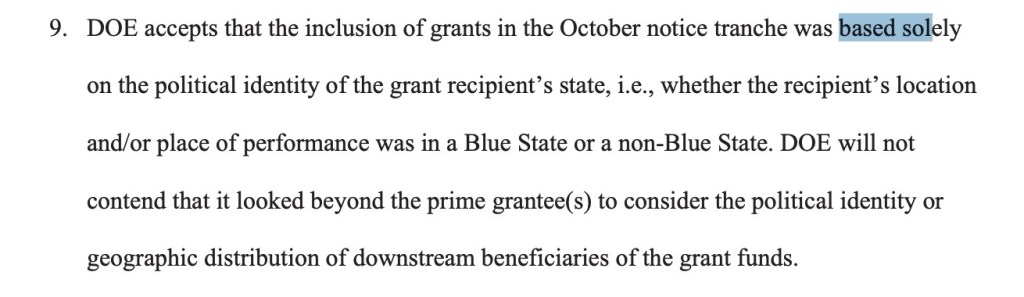

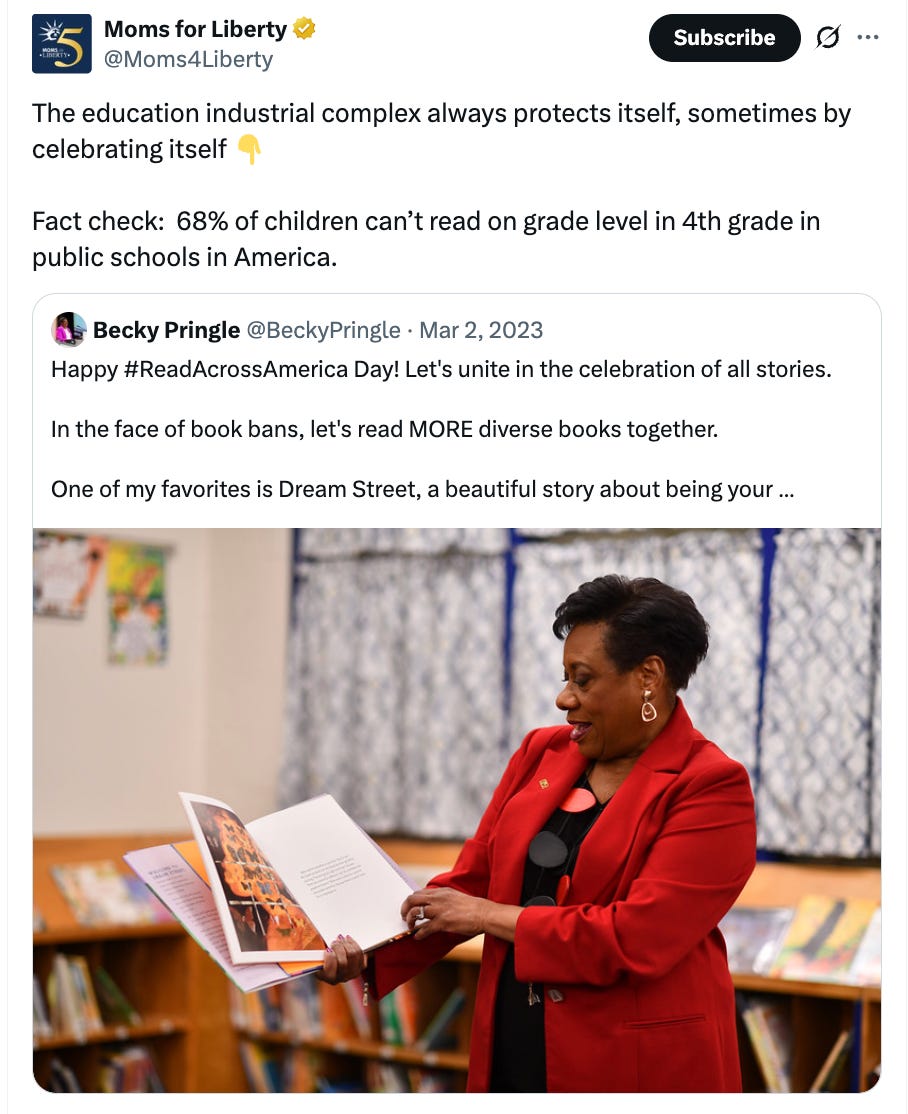
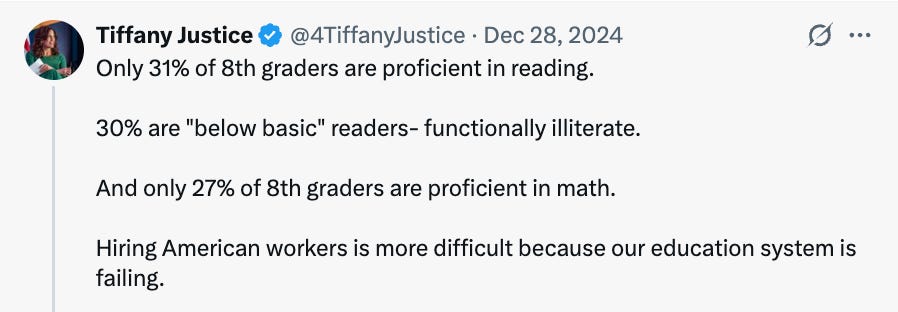
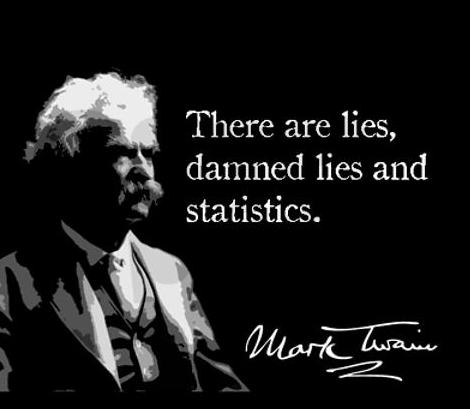
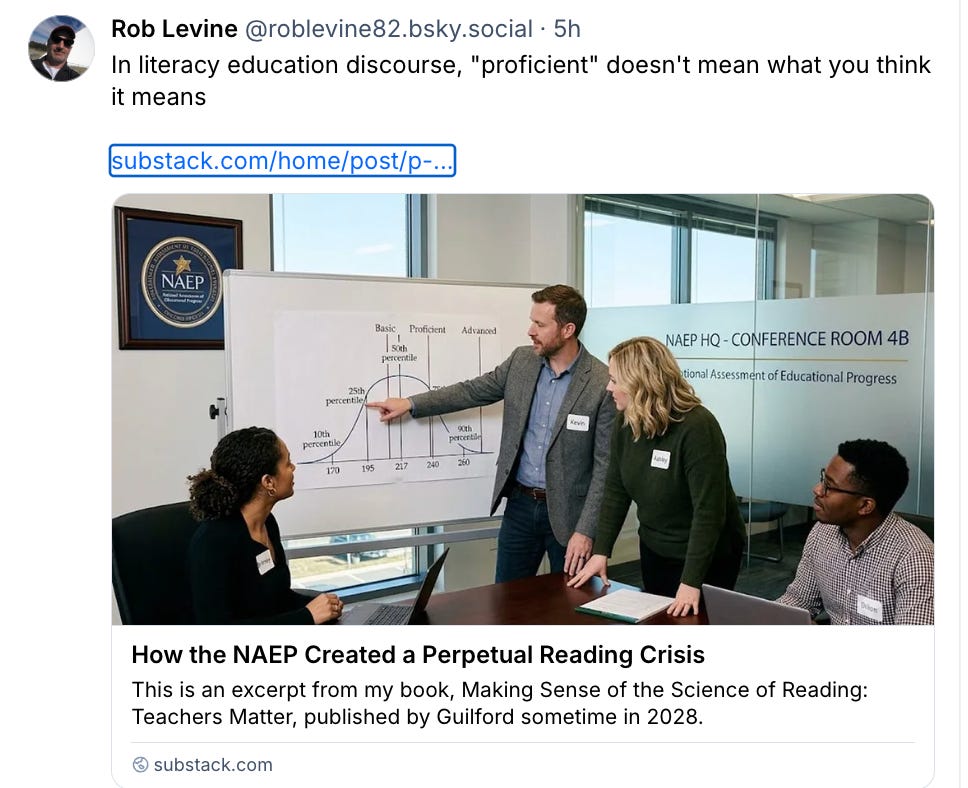
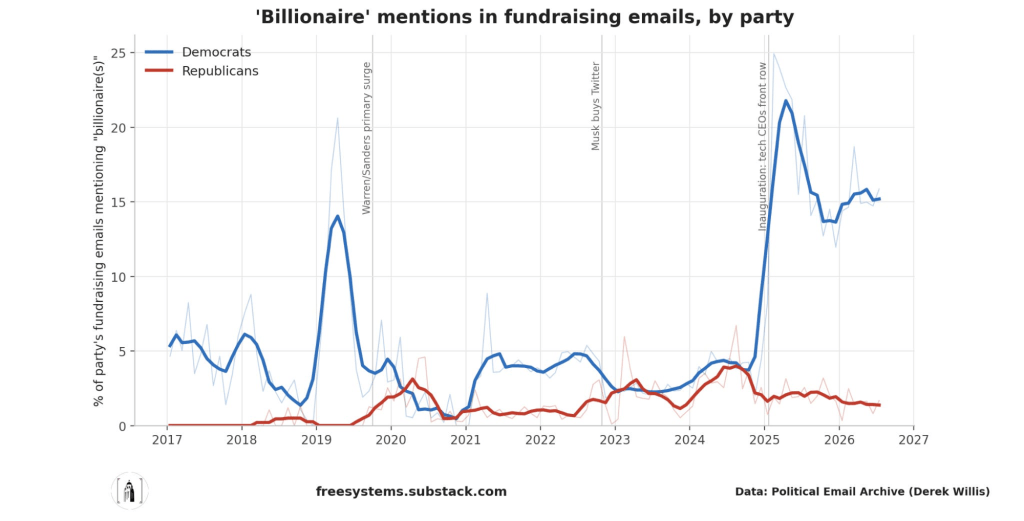


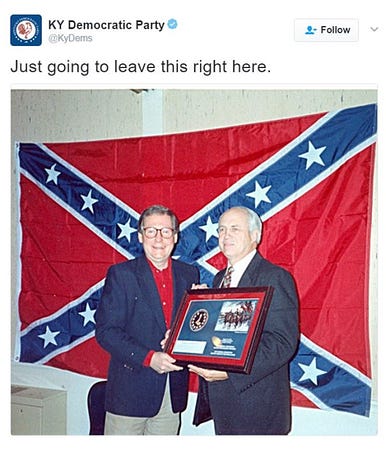

 Diane Ravitch's blog