Archives for category: Extremism

Something weird has happened to the Republican Party. It used to favor local control. Not any more. Now Republicans think it okay to seize control of school districts instead of helping them with resources, as happened in Michigan, Ohio and Texas. And Texas just passed a law called “the Death Star” that allows the state to cancel local laws. No more local control in Texas!

Why have Republicans doubled down on suppressing the vote, gerrymandering legislatures to crush opposition, and undermining democracy whenever possible?

Gus Bova of The Texas Observer has the story here:

On November 3, 2020, as America watched the first results of a fateful presidential contest roll in, voters in a North Texas suburb struck a blow for workers’ rights. Euless residents approved a proposition limiting some large companies’ ability to force employees to work overtime if they didn’t want to.

The “fair workweek” initiative, comparable to measures passed recently in a handful of other cities, was led in Euless by employees of LSG Sky Chefs, an airline catering giant and meal-supplier for American Airlines. These workers, unionized with Unite Here, said they were being overwhelmed with mandatory overtime hours, often announced at the last minute, as American Airlines, headquartered near the sprawling Dallas-Fort Worth airport, sought to dramatically increase flight volume.

“You can have a wife and children, and yet every day you are forced to stay at work, and you have no time to even go back and sit and relax and play and take care of children,” said Samuel Tandankwa, a Sky Chefs driver and Unite Here member, recalling the conditions in 2019 and leading up to the COVID pandemic.

Despite getting voters’ approval, the initiative faced legal troubles from the first. Some city officials doubted it could be enforced. Sky Chefs told the Texas Observer it didn’t apply to them since they maintain a national contract with Unite Here. And Texas Attorney General Ken Paxton had already written a letter stating the policy would violate a state law that bans cities from setting minimum wages. Nevertheless, Tandankwa told the Observer in July that since the campaign, the company actually has turned away from using mandatory overtime, freeing up workers to meet family obligations, and neither he nor local worker advocates want to lose the ordinance.

But Euless’ overtime measure is among the local ordinances that will be vaporized by Texas’ House Bill 2127, dubbed the “Death Star” bill by critics, which was signed by GOP Governor Greg Abbott last month and takes effect in September. It’s causing uproar around the state, as city officials, workers, and others try to figure out what parts of municipal law and regulation the bill will nullify.

The bill’s sweeping, alleged purpose is stated in its opening sections: “returning sovereign regulatory powers to the state where those powers belong.” However, closer examination suggests that the legislation’s real intent is both narrower and potentially more profound than just upending city ordinance-making powers. First, it is a laser beam aimed at a small group of progressive ordinances improving worker and tenant protections—local victories won through hard-fought campaigns over the course of more than a decade. Second, and more importantly, it’s a bid to permanently hamstring municipal democracy in Texas, especially in its big blue cities. Cities are where most Texans live; they are increasingly liberal, their populations often majority nonwhite, and they are the level of government most responsive to ordinary citizens. In essence, the Legislature decided there was too much Democracy afoot in Texas, so it did something about it.

“To me, that’s the will of the people being taken away,” said Tevita Uhatafe, a Euless resident who works for American Airlines and is also a vice president of the Texas AFL-CIO. “We voted for it … and here we are, we’re going to get it taken away because people who claim to hate big government are acting just like [it].”

“There is no precedent for what they did this time,” said Rick Levy, president of the Texas AFL-CIO. “It was not a measured response to a given policy that corporate interests didn’t like; it was a wholesale transfer of power from cities to politicians in Austin.”

Please open the link and keep reading.

On August 20, the New York Times published a story about how Ron DeSantis joined the “ruling class” but now campaigns against it. His story is shot through with hypocrisy. He paints himself as the public school kid from middle-class Dunedin, Florida, surrounded by snobs from private schools who looked down on him. Yet now as governor, he treats public schools and their teachers with contempt and expanded vouchers to pay billions of taxpayer dollars for kids to go to private schools, including high-income families.

Why is he, the public school kid, subsidizing private and religious schools? Why is he so hostile to public schools? He complains that public schools indoctrinate their students yet he’s willing to send kids to religious schools whose purpose is indoctrination. Why does he subsidize the tuition of rich kids who go to private schools? Aren’t those the kind of kids who treated him with condescension?

Early last year, Gov. Ron DeSantis nestled into his chair onstage in Naples, Fla., to explain to an audience of the would-be conservative elite his journey through the reigning liberal one they hoped to destroy. His host was Larry P. Arnn, the president of Hillsdale College, a small Christian school in southern Michigan that has become an academic hub of the Trump-era right. His subject was Yale University, where Mr. DeSantis was educated and where, as he tells it, he first met the enemy.

The story begins:

“I’m a public school kid,” Mr. DeSantis told the audience, unspooling a story that he has shared in recent years with aides, friendly interviewers, donors, voters and readers of his memoir, “The Courage to Be Free.” “My mom was a nurse, my dad worked for a TV ratings company, installing the metering devices back then. And I show up in jean shorts and a T-shirt.” The outfit “did not go over well with the Andover and Groton kids” — sometimes it is Andover and Groton, sometimes it is Andover and Exeter, sometimes all three — who mocked his lack of polish.

Worse than Yale’s snobbery was its politics: College was “the first time that I saw unadulterated leftism,” he told the Republican Jewish Coalition this March. “We’re basically being told the Soviet Union was the victim in the Cold War.” Teachers and students alike “rejected God, and they hated our country,” he assured the audience in Naples. “When I get people that submit résumés,” he said, “quite frankly, if I got one from Yale I would be negatively disposed.”

Then there are the parts of the story he doesn’t tell: How his new baseball teammates at Yale — mostly fellow athletic recruits from the South and West who likewise viewed themselves as Yale outsiders — were among those who teased him about his clothes, and how he would nevertheless adopt their insular culture as his own. How he joined one of Yale’s storied “secret societies,” those breeding grounds of future senators and presidents, but left other members with the impression that he would have preferred to be tapped by a more prestigious one. How he shared with friends his dream of going to Harvard Law School — not law school, Harvard Law School — and successfully applied there, stacking one elite credential neatly onto another, and co-founded a tutoring firm that touted “the only LSAT prep courses designed exclusively by Harvard Law School graduates.” How his Yale connections helped him out-raise rivals as a first-time candidate for Congress, and how he featured his Ivy credentials — “a political scarlet letter as far as a G.O.P. primary went,” Mr. DeSantis likes to say — on his campaign websites, sometimes down to the precise degree of honors earned. And how that C.V. helped sell him to an Ivy-obsessed President Donald J. Trump, whose 2018 endorsement helped propel Mr. DeSantis to the governor’s office in Florida, where his Yale baseball jersey is displayed prominently on the wall next to his desk…

For Mr. DeSantis and his allies, the culture wars are the central struggle of American public life, and schools are the most important battleground where they will be fought. “Education is our sword,” Mr. DeSantis’s then education commissioner, Richard Corcoran, explained to a Hillsdale audience in 2021. And Mr. DeSantis is the man to wield it — a self-made striver who was “given nothing,” as he told the audience attending his campaign kickoff in Iowa in May. “These elites are not enacting an agenda to represent us. They’re imposing their agenda on us, via the federal government, via corporate America and via our own education system.”

DeSantis has aggressively taken political control of Florida’s schools and universities, passing laws that limit or eliminate what may be taught about gender and race. He has encouraged parent vigilantes to scour classrooms and libraries for books on controversial topics and ban them. His ally, radical conservative Chris Rufo, is quoted in the article:

“The goal of the university is not free inquiry,” Christopher Rufo, a conservative activist and one of the new trustees [of New College], said during a recent appearance in California. Instead, he argued, conservatives need to deploy state power to retake public institutions wherever they can.

“The universities are not overly politicized. The universities are overly ideologized and insufficiently politicized,” Mr. Rufo said. “We should repoliticize the universities and understand that education is at heart a political question.”

At Yale, DeSantis joined Delta Kappa Epsilon (Dekes), which was known for its vicious hazing of pledges. As an upper-class member, DeSantis was known for bullying pledges and forcing them to engage in pranks like dropping their pants and exposing their genitals, while the older members mocked their private parts.

The story says that DeSantis took a course on the Cold War taught by the esteemed scholar John Lewis Gaddis, who was an outspoken critic of the Soviet Union. In other words, DeSantis lied about being exposed to pro-Soviet views of the Cold War.

DeSantis portrayed Harvard Law School, where he studied, as a bastion of left wing thought. But the Dean of the law school when DeSantis arrived belonged to the conservative Federalist Society. And he was not the only member of that group on the faculty.

A 2005 survey of The Harvard Law Review, published in the Federalist Society’s flagship publication, The Harvard Journal of Law & Public Policy, found that staff members “identifying themselves as left-of-center did not comprise even a majority.”

DeSantis neglects to mention that he was an active member of the Harvard Law School’s Federalist Society. He prefers to play the victim.

When he ran for Congress and then for governor, he tapped his Yale and Harvard networks to raise money.

But then he discovered there was even more political advantage for him if he played the role of the enemy of the ruling class.

How better to attack the ruling class than to destroy the public schools that enabled him to enter Yale? If this makes no sense, neither does DeSantis’ fable about being victimized at Yale and Harvard.

Katherine Stewart has written several important books about the insidious Right and their radical, racist views. In this article in The New Republic, she looks at an influential reactionary organization, the Claremont Institute, and traces its ideological forebears. From crackpots to intellectual gurus, she traces the Right’s fascination with manliness, racism, anti-Semitism, and its longing for a world led by a new Caesar, a strong man who will protect other men from rapacious women and immigrants.

It’s a long read but worth your time. Stewart looks at the Fascist underbelly of conservatism, and it’s repulsive.

Oklahoman John Thompson writes about the conflict enveloping the Tulsa public schools: Ryan Walters, the extremist Secretary of Education, wants to take over Tulsa’s public schools. Opposition to Walters’ plans by Tulsa’s parents and political leaders is growing. State takeovers if school districts have historically failed but Walters doesn’t appear to know it.

Thompson writes:

Oklahoma Secretary of Education Ryan Walters has a history of threatening the accreditation of the Tulsa Public schools, promising to fire its superintendent, Deborah Gist, and driving “Diversity, Equity, and Inclusion” (DEI) out of the classes, as well as mandating his ideology-driven curriculums. Walters’ attacks grew dramatically as he responded to the news in June that he might be in danger because his department’s “administration of federal GEER funds is being investigated by FBI agents and the Oklahoma Attorney General’s Office, according to people with direct knowledge of the inquiry.”

For instance, Walters said at a Moms for Liberty event, “Tulsa Public Schools is getting money from the Chinese communist government,” He said, “They funneled it through a nonprofit — I mean, money-laundered it through a nonprofit in Texas.”

But then Walters said he “had been in regular communication with Houston [HISD] about their school takeover.” According to HTUL news, he has said “there’s currently a standards team and textbook committee to gather information on possible vendors like Hillsdale College and PragerU.”

Immediately afterwards, journalists, educators, and public school supporters studied the history of Broad Foundation takeovers in Dallas and the HISD. Even better, they spoke out in ways I had never seen in Oklahoma’s edu-politics. For example, TPS board member, Jennettie Marshall, “said during the board’s 90-minute discussion of the district’s accreditation status. ‘We are under attack. If you’re not keeping up with Houston, … if we continue the course we’re on, that’s where we’re headed. That shouldn’t be.’”

Just as important, the Tulsa World balanced its excellent reporting with editorials and publishing letters to the editors. The following 13 headlines were cited in just one day, August 18, 2023, of the paper’s E-Edition:

Letter: Many good things, successes happening in Tulsa Public Schools

Letter: State School Board needs to show support for Tulsa community, stop antics of top official

Letter: Tulsa Mayor G.T. Bynum must be more forceful defending Tulsa schools

Letter: Tulsa Superintendent Deborah Gist deserves credit for leading through times of crisis

Letter: State Education Department ought to help improve schools, not tear down

Letter: State superintendent has no specific plans for Tulsa schools, only insults


Letter: State superintendent’s attack on Tulsa schools harms students across the state

Letter: Tulsa clergy leaders urge state to build bridges with TPS, not hurl rocks

Letter: Oklahoma education crisis comes from state superintendent pushing a personal agenda

Editorial: Silence is no way to improve schools or defend representative democracy

Editorial: Losing control of Tulsa schools to state bureaucrats bad for city and students

Ginnie Graham: Manufactured crisis in schools takes time away for big-picture discussions

Opinion: Set aside political rhetoric, provide Tulsa schools help to keep good teachers

The first thing that stands out stands out about the World’s coverage is its excellent journalism, and its fact-checking of Walters. The first thing that stands out from the World’s opinion pieces and letters to the editor is the strong wording when opposing Walters’ threat to the Tulsa Public Schools. The letters opposed Walters’ “antics;” his “personal agenda;” his “political rhetoric;” how he “has no specific plans for Tulsa schools, only insults;” and how he “harms students across the state; as well as how he should “help improve schools, not tear down;” and how the mayor “must be more forceful defending Tulsa schools.”

The editorials criticize the “silence” of political leaders, who belatedly pushed back against Walters, saying the “TPS needs partners, champions and advocates to improve — not political firebombs and quiet bystanders.” Another argued that Walters’ “political rhetoric” hurts the retention of good teachers; and that it hurts the city. Ginnie Graham described the chaos that she witnessed when enrolling her child in school, and explained:

The TPS administrators are completely overwhelmed by the firehose of misinformation, distortions and lies coming at them. Their time is monopolized by people seemingly hell-bent on tearing down the district, rather than offering a helping hand or even sitting down for an informative discussion.

And TPS School Board Chair Stacey Woolley closes her editorial with:

Your TPS Board of Education has a plan. Walters does, too, but not one that works on behalf of Tulsans.

I didn’t sign up for this takeover and neither did you. As a community, we must stop it: www.protecttps.com

Moreover, the World reported on powerful philanthropists, like the Schusterman and the Kaiser foundations, who have publicly opposed Walters takeover threats. Then, Mayor G.T. Bynum came out against the takeover. The resistance has even reached the point where the World editorialized, “conservative lawmakers must speak up.” And now, Gov. Kevin Stitt has distanced himself from the extremist (Walters) who he appointed and then repeatedly supported. The World reported, Stitt said he “believes the State Board of Education will not overreact when considering accreditation for Tulsa Public Schools.” Stitt now says, “I don’t know what takeover is, what they are talking about. I believe in local control. I think the local board needs to address that.”

When I first learned about Walters’ new threats, I worried, “If we don’t recognize the extent of the threats of a HISD-style takeover, he might unite the worst of the corporate reform privatizers, with his Moms for Liberty extremism, and impose irreparable damage on the TPS and other school systems.” But, “If we unite, the damage that Walters is promising to inflict on the TPS, and the Tulsa metropolitan area as a whole, could undermine his extremist campaigns.”

It looks to me, that Tulsans and other Oklahomans are pushing back, making it more likely that Walters will lose this fight

Laura K. Field writes about John Eastman, once a prominent lawyer, who advised Trump and his team about how to overturn the 2020 election. Her post appears at The Bulwark, a place created by Republican Never Trumpers. Eastman is involved in disbarment proceedings for his role in the failed coup.

FOR NEARLY TWO YEARS NOW, since he was revealed in September 2021 to be the author of the notorious “coup memos,” John Eastman has been walking a bizarre legal and political tightrope.

On the one hand, we have the man who filed a legal claim on behalf of President Donald Trump in Texas in December 2020 seeking to invalidate millions of votes. The man who was invited to join Trump’s unofficial legal team later that month, where he wrote the two elaborate memos delineating various paths that Trump and Vice President Mike Pence could take to delay or overturn the election count. Who tried in person to persuade Pence that, at the very least, he had the authority to delay the vote count; who spoke at Trump’s “Save America” rally on January 6th, repeating conspiratorial lies about election fraud; whose emails that same day reveal that during the siege of the Capitol that he blamed Pence for not acting as he had advised; who was caught on video (by an undercover activist) boastingabout working to overturn the election; who lost his academic appointments in the aftermath of these events; whom a federal judge concluded had “more likely than not” broken the law; who may soon be disbarred in the state of California; and who is so worried about being indicted by Special Counsel Jack Smith that he has requested a postponement of those disbarment proceedings.

On the other hand we have a man who has tried to distance himself from his own memos, at one point calling himself “the white knight here, talking [Trump] down from the more aggressive position” in advance of January 6th. This other Eastman has consistently maintained that his recommendations to Pence and Trump were narrow, sensible, and moderate. That he had merely recommended “hitting pause” on the vote count on January 6th, so that the relevant election controversies could be adjudicated by the states. That to follow the other paths articulated in his memos would have been reckless.

The gulf between these two Eastmans—the eager-to-act conspiratorial Eastman and the reticent lawyerly one—shrunk a bit last week, with the release of the third and final installment of an Eastman interview with the Claremont Institute’s main financial backer, chairman of the board, and gonzo anti-woke warrior, Thomas D. Klingenstein. In this interview, Eastman comes close to saying that his own electoral shenanigans and legal wrangling have been a sideshow. In sentiments reminiscent of Michael Anton’s “The Flight 93 Election” essay and subsequent writing, Eastman makes it clear—without fully dropping his lawyerly persona—that for him, the deeper reason for standing by Trump through his January 6th saga was that he thinks Democrats are destroying the country.


LAST WEEK, I WROTE about the first and second parts of Eastman’s interview with Klingenstein. In the first, they trot through a long list of disproven allegations of 2020 election fraud. The second is about January 6th and the question of Pence’s legal authority to delay or overturn the election.

Now comes the concluding installment, which begins by focusing on the question of prudence: Given all the complex considerations involved in the 2020 election, was it prudent for Eastman and Trump to pursue the course of action that they did?

The interview is full of odd claims and intriguing revelations. For example, at one point Eastman says that in his considerations of prudence he did not take into account the possibility of mob violence, because he was working in “a different department,” that “Trump himself had authorized the call-up of 20,000 members of the National Guard for January 6th” (not true), and that Eastman just assumed that “those things were handled.”

Eastman also suggests in this segment that he believed there was a “fair prospect” that he would have been able to win “a majority of the [Supreme] Court” in support of Pence’s right “merely to delay,” or at least to get the Court not to touch the issue as nonjusticiable.

But the interview really gets disturbing in its last ten or so minutes, when it turns to the question of Eastman’s deepest motives. Why was it so important to Eastman to see Trump re-elected? Klingenstein suggests that the “biggest” factor motivating Eastman “is the current circumstances in the country, the political and social condition.”

Eastman agrees. After some discussion about how the legal situation surrounding the 2020 election was different from the legal situation in two other close elections, those of 1960 and 2000, Eastman makes clear that the more important distinction he sees among those three elections is that “the stakes” in 2020 were higher—that they were literally life or death:

Certainly not in 1960, but also not in 2000, were the stakes about the very existential threat that the country is under as great as they are.

We’re not talking about, you know, handing over to John Kennedy, instead of Richard Nixon, who’s gonna deal with the Cold War. We’re talking about whether we are going to, as a nation, completely repudiate every one of our founding principles, which is what the modern left wing which is in control of the Democrat party believes—that we are the root of all evil in the world and we have to be eradicated.

This is an existential threat to the very survivability, not just of our nation, but of the example that our nation, properly understood, provides to the world. That’s the stakes.

Obviously, when the stakes are this high, you do whatever you can to fight back. As Anton put it about the 2016 election, you “charge the cockpit or you die.” So when the opportunity came along to be part of a challenge to the normal election processes, Eastman was eager to join the fight.

The interview does not, it seems to me, involve a moment where Eastman fully “comes clean” about trying to overthrow a legitimate election (as Josh Marshall has suggested). Rather, what Eastman does is zoom in and out between what we might call the deeper cause of his actions—his belief, entirely consonant with Anton’s original “Flight 93 Election” bullshit, that liberals and the left pose an existential threat to the country and are traitors to the country’s founding principles—and the immediate rationale or pretext for his behavior, which is the premise of the stolen election.

In the very next part of the interview, Eastman zooms out:

Trump seems to understand that [i.e., the stakes] in a way a lot of Republican establishment types in Washington don’t, and it’s a reason he gets so much support in the hinterland and the ‘flyover country.’ People are fed up with folks, you know, get-along-go-along while the country is being destroyed.

And then Eastman zooms back in to argue that these high stakes justified his involvement in Trump’s post-election machinations:

And so I think the stakes are much bigger, and that means a stolen election that thwarts the will of the people trying to correct course, and get back on a path that understands the significance and the nobility of America and the American experiment is really at stake and we ought to fight for it.

Eastman and Klingenstein seem almost to suggest that stolen elections are a dime a dozen in American history, but only in this instance was it worth the fight.

At this point in the interview, Eastman all but drops the façade, and zooms out all the way. When asked by Klingenstein once again whether he maybe would have made a different prudential calculation in 1960 or 2020, Eastman says yes, “I may have come to a different conclusion.” Then he proceeds to explain:

Look, our founders lay this case out. The prudential judgment they make in the Declaration of Independence is the same one. There’s actually a provision in the Declaration of Independence that says, you know, a people will suffer abuses while they remain sufferable—or tolerable, while they remain tolerable—but at some point the abuses have become so intolerable that it is not only their right but their duty to alter or abolish the existing government.

So that’s the question. Have the abuses and the threat of abuses become so intolerable that we have to be willing to push back.

This is an extraordinary thing to admit. For one thing, by the time you’re appealing to the Declaration of Independence in that way you are in effect admitting that you were trying to overthrow your government.

It may be obvious but it’s worth saying this out loud: Violence is implicit in this line of argument. Lincoln understood this when he spoke of Americans’ “revolutionary right to dismember or overthrow” their own government. The men and women who charged the Capitol understood this. Eastman and Klingenstein, sitting in their suits and ties in an elegant study lined with books, may deny having violent intentions, may even abjure the use of force, but implicit in their rhetoric in this interview and elsewhere (Klingenstein’s website: “The essential thing is for Republicans to understand we are in a war and then act accordingly”) is a justification for violence.


AS THE INTERVIEW CONCLUDES, Eastman goes on to maintain, again, that supposed Democratic election-stealing played a part in his prudential calculation. But he says plainly enough throughout that the more fundamental motive concerned the basic state of the country and his political and philosophical disagreements with Democrats. A few minutes after his appeal to the Declaration, Eastman will claim that Democratic efforts to destroy the country have accelerated rapidly—“it’s been an exponential increase in the last few years”—and as an example he quotes the culture wars: “You’re gonna let 50-year-old-men naked into teenage girls’ showers at public pools, or drag queens doing story hours to 6-year-olds.”

Of course. The trans people and drag queens left Eastman no choice. The Democrats made him do it.

The Klingenstein-Eastman interview is, in the main, situated squarely in the muck of conspiracy theories about the 2020 election and obtuse speculative reasoning about the vice president’s proper role in the congressional counting of Electoral College votes. In this third installment, however, as Eastman goes on about Democratic bogeymen and the higher “stakes” of the 2020 election, it becomes quite clear that, at some point, for these men and in this fight, anything goes. Pretexts and premises be damned.

Given the overall sham quality of Eastman and Trump’s political and legal arguments to date, it seems quite likely that they both reached that point a long time ago. At this point the two men have gone all in. Nothing’s going to stop them now.

Except, maybe, in Eastman’s case at least, the American courts and rule of law.

Dan Rather and Elliot Kirschner wrote in their blog Steady about the importance of saving public education from the forces trying to destroy and privatize it. They remind us and the general public that public schools unite us; privatization is inherently divisive. It is ironic that the red states are implementing voucher plans as the evidence about the failure of vouchers and the null effects of charter schools grows stronger. (The boldfacing of passages in their essay was added by me).

It is back to school. Students of all ages flock to campuses and classrooms. Fleeting memories of summer are quickly replaced by tests and textbooks.


Getting into the swing of a new semester has always included an adjustment period, but this is a particularly difficult time for many of our nation’s students and their parents, guardians, teachers, and others entrusted with the education of young minds.


The pandemic wreaked havoc with the emotional, intellectual, and social development of America’s youth. Dismal test scores provide depressing data of yawning learning deficits. Talk to anyone in or around schools and you hear stories of setbacks and struggle — heaps of qualitative data suggesting a staggering scale of generational loss.
As usual, those who were already the most marginalized have paid the heaviest price. The pandemic exacerbated existing disruptions and placed greater strain on finances and time, particularly in large urban districts and small rural ones tasked with educating children from families struggling economically.


We like to tell ourselves that the United States is a great meritocracy, but wealth and levels of family education continue to play outsized roles in dictating a child’s likelihood of academic success long before she learns her ABCs. The simple truth is that kids come to school from widely different circumstances, and these influence their ability to thrive, independent of whatever innate intelligence or drive they may possess. The pandemic made these differences more acute.


The United States does possess a system (or more accurately, a collection of thousands of systems) that, if nurtured and respected, could foster greater equality of opportunity. And it is exactly the institution that is now struggling the most: public education. America’s public schools were once the envy of the world as engines of opportunity and upward mobility. If the nation had the will, they could return to that status once again.


Our public schools certainly weren’t perfect in the past, especially during legal racial segregation, when the lie of “separate but equal” (separate is never equal) helped enshrine white supremacy. The segregated schools of the Jim Crow Deep South were a shameful injustice and a stain on our national identity. They were inconsistent with our founding documents, which spoke eloquently about equality among people. Of course there was (and remains, to some extent) de facto segregation throughout America based on who lives in what neighborhoods. Well-financed suburban schools were often part of the draw of “white flight” from urban districts.


The very ethos of public education should be one of inclusion for America’s diverse population. It should be a place where children of different backgrounds come together to learn both from teachers and from each other. Our schools should be places that allow students to wrestle with what it means to be part of this great country, including understanding America’s uneven and often bloody road to greater equality.


Sadly, in recent years, we have seen a grave regression from these noble goals. Our schools and school districts have become fiercely contested frontlines in an era of stepped-up culture wars. As reactionary political forces target what we teach our children, it is no accident that truth, empathy, and our democratic values have become casualties.

A chief concern is how and what we teach about our history, particularly the Black experience, and race and ethnicity more generally. We have written here before about the shameful whitewashing of racial violence and injustice, including slavery, by Florida Governor Ron DeSantis. But this effort is not limited to him or that state. There is a national movement to not tell the full — and unfortunately tragic — reality of race in American history and how it continues to shape the nation.


Another serious concern is the othering of LGBTQ+ students and teachers. After years of progress, we see a wave of intolerance spread across America, including in our schools.


Few institutions in American life are as essential to the continuation of our democracy as the public schools. In a time of ascendent autocracy, attacks on our schools — how they are run, what they teach, what books they have in their libraries — are among the most pernicious, pathetic, and painful assaults on the health of our nation.

Several months back, Texas Monthly ran a striking piece of journalism with the headline, “The Campaign to Sabotage Texas’s Public Schools.” It tells a story that extends beyond the raucous school board meetings and book banning campaigns that have gotten the most attention. There is a movement afoot, and not just in Texas, to destroy public schools more generally, to privatize education through vouchers and other means.


In this context, the various culture fights become battles in a larger war over the very future and viability of public education:

Taken individually, any of these incidents may seem like a grassroots skirmish. But they are, more often than not, part of a well-organized and well-funded campaign executed by out-of-town political operatives and funded by billionaires in Texas and elsewhere. “In various parts of Texas right now, there are meetings taking place in small and large communities led by individuals who are literally providing tutorials—here’s what you say, here’s what you do,” said H. D. Chambers, the recently retired superintendent of Alief ISD, in southwest Harris County. “This divisiveness has been created that is basically telling parents they can’t trust public schools. It’s a systematic erosion of the confidence that people have in their schools.

The ideal of quality, integrated public schools for all children in the United States epitomizes the promise of our country’s founding as a place of equality and opportunity for all. It thus makes sense that would-be autocrats and protectors of privilege would seek to undermine our public schools by whatever means necessary. We must see this as what it is: as much a threat to the nation as was the violent storming of our Capitol.

The future of the United States depends on an educated and empathetic citizenry. It requires us to share a sense of common purpose and recognize our common humanity. It requires an environment that allows every child to thrive and see themselves included in the American story. It requires quality public education. Full stop.

A historic battle to save this institution and the very idea of good public schools has been underway for some time. It is now intensifying. Attention must be paid.

Peter Greene writes with outrage about the firing of a teacher in Georgia whose crime was to read a book to her fifth-grade students. One parent objected to the book.

He writes:

The story of  Katherine Rinderle has dragged out over the summer and has now come to a predictable and yet unjustifiable conclusion. This is just wrong.

The short version of the story is that Rinderle read Scott Stuart’s “My Shadow Is Purple” to her fifth graders, after they selected it for their March book. A parent complained. The Cobb County School District suspended her and the superintendent announced a recommendation to terminate her. A tribunal appointed by the board recommended that she not be fired. The board just fired her anyway.  

This is a bullshit decision.

Was this one of those graphic books with blatant displays of sex stuff? No. This is the most bland damn thing you could hand a kid. I would read it to my six year olds without hesitation. 

A child plays with action figures and dolls, likes dancing and sports and ponies and planes and trains and glitter, and, in the climactic event, wants to go to the school dance in an outfit that has a suit-ish top and a skirt-ish bottom. Discouraged by the insistence that they must choose either blue or pink at the dance, the purple-shadowed child decidesd to leave, but then an assortment of friends declare their shadows are a wide variety of colors, and a happy ending ensues. “No color’s stronger and no color’s weak.”

That’s it. That’s the book. (I’ve attached a read-aloud video at the bottom so you can see for yourself.) There’s nothing about sex, barely a mention of gender, and the message is simply that there are other ways to be beyond stereotypical male or female roles. 

That’s the book that this woman lost her job over. 

Georgia has, of course, a “divisive concepts” law with appropriately vague language so that teachers can live in fear that they could lose their jobs over anything that some parent thinks is divisive and disturbing. Meanwhile, the boardwas trying to argue its bullshit decision, by hinting that Rinderle is a big old troublemaker:

Without getting into specifics of the personnel investigation, the District is confident that this action is appropriate considering the entirety of the teacher’s behavior and history. However, as this matter is ongoing, further comment is unavailable. The District remains committed to strictly enforcing all Board policy, and the law.

Sure. So Georgia’s teachers have been sent a clear message about staying in line and not bringing up anything remotel;y controversial ever.

And now the children of Cobb County in particular and Georgia in general have been sent an important message– if you’re different, that’s not okay, and if someone suggests that it’s okay, well, that’s illegal. Shame on Cobb County’s school board. Shame on the state of Georgia. And if you’re so sure that these kind of reading restrictions are only about protecting children from graphic pornography, take a look at this and think again.

Open the link to see the read-aloud video.

Charlie Sykes was a conservative pundit until Trump came along. He’s now an outspoken Never Trumper who writes at The Bulwark.

He wrote this morning about the leak of Ron DeSantis’ debate prep materials.

I had hoped today to write about anything except the Florida Governor’s flatulent, failing, fumbling campaign. That sad nag has been pummeled to death.

But you really can’t avert your eyes from this can you?

Let’s take a moment to consider the position Ron DeSantis finds himself in: He’s trailing Donald Trump by 39 points, shedding donors and voters alike. He’s reset his campaign, fired staff, and had to undergo the indignity of flying commercial. His attempts at simulating a normal human being have flopped and he’s being mercilessly trolled by Trump.

Next week’s debate in Milwaukee may be his last chance to turn this around.

As chance would have it, the debate will take place the same week that his main rival for the GOP nomination will be arrested, fingerprinted, and had his mugshot taken — after his fourth criminal indictment.

His strategy?

Defend Donald Trump.

Real Man of Political Genius.¹

On Thursday, the NYT reported on a cache of memos posted online by DeSantis’s SuperPac that are chock full of the sort of brilliant insights that helped inspire his shambolic campaign launch with Elon Musk.

As they began, so, apparently, they intend to continue.

The trove of documents provides an extraordinary glimpse into the thinking of the DeSantis operation about a debate the candidate’s advisers see as crucial.

“There are four basic must-dos,” one of the memos urges Mr. DeSantis, whom the document refers to as “GRD.”

“1. Attack Joe Biden and the media 3-5 times. 2. State GRD’s positive vision 2-3 times. 3. Hammer Vivek Ramaswamy in a response. 4. Defend Donald Trump in absentia in response to a Chris Christie attack.”

The memo advises DeSantis to say something like: “Trump isn’t here, so let’s just leave him alone. He’s too weak to defend himself here. We’re all running against him. I don’t think we want to join forces with someone on this stage who’s auditioning for a show on MSNBC.”

It also urges Desantis to deploy Trump-like nicknames like “Fake Vivek” or “Vivek the Fake.”

Really, this should go well, especially the part about telegraphing his plan to go after Christie (the most formidable debater on the stage) and the Hindu guy.

Via the Wapo:

There are two additional memos about Ramaswamy, including one outlining his positions on marijuana legalization, mask-wearing during the covid-19 pandemic and transgender people in the military. One highlights Ramaswamy’s past statements suggesting support for a “very high” inheritance tax. And it singles out his faith and his family’s roots in India.

“Ramaswamy — a Hindu who grew up visiting relatives in India and was very much ingrained in India’s caste system — supports this as a mechanism to preserve a meritocracy in America and ensure everyone starts on a level playing field,” the memo says.

**

The meta-theory behind the memo? The subject line is “RE: Orchestra pit,” which refers to the Roger Ailes’s theory “that making mistakes and choreographing attacks are more likely to garner media coverage than articulating policy positions during a televised debate.”

“You have two guys onstage and one guy says, ‘I have a solution to the Middle East problem,’ and the other guy falls in the orchestra pit,” Ailes once said. “Who do you think is going to be on the evening news?”

So, if things aren’t going well for Florida Man, don’t be surprised if he tries to throw himself into a mosh pit of supporters. Or something.

**

My Colleague Tim Miller quite reasonably calls this “One of the most WTF leaks in memory. Makes your candidate seem like a pathetic baby and neutralizes potential attacks. Baffling.”

“This is not normal,” he says. “The whole thing just wreaks of desperation.” (Trust me, we’re going to be talking about it on today’s Bulwark podcast.)

National Review’s Noah Rothman is also baffled: “I don’t understand why DeSantis is in the race at this point if he thinks he can win the nomination by playing blocking tackle for the frontrunner. Just stop wasting everyone’s time and money.”

And I regret to tell you that even as blind squirrels eventually find the nut, the thoroughly deplorable Elise Stefanik had a good point,when she called the memo “absolute malpractice.”

“As a former debate prepper, the first and most obvious rule of debate prep is don’t leak the debate prep memo,” Stefanik wrote while sharing the story from the New York Times….

**

Exit take: Trump’s not showing up in Milwaukee next week. Last night he bleated:

.

PEN America is very busy trying to keep abreast of the states banning books. Thanks to reactionary Governor Kim Reynolds, Iowa has taken the lead in banning classics as well as books about sexuality and race.

Earlier this week, the Urbandale, Iowa, school district ordered its educators to remove a list of nearly 400 titles if found in district schools and classrooms. After public pressure including an open letter from PEN America, the district dropped its objections to many of the titles and released a new list of 65 books it identified in its libraries that it said violate state law, according to documents obtained by the Iowa anti-censorship group Annie’s Foundation.

Those books include Margaret Atwood’s The Handmaid’s Tale, John Green’s The Fault in Our Stars, Zora Neale Hurston’s Their Eyes Were Watching God, Aldous Huxley’s Brave New World, James Joyce’s Ulysses and dozens of others. This is still a jaw-dropping number of titles to be ordered removed from schools, with serious questions about how these titles were chosen and evaluated.

See the list of 65 books from the Urbandale, Iowa, school district.

The original PEN America article:

PEN America has sent an open letter to an Iowa school district calling on district leaders to reverse an order to remove a list of nearly 400 titles if found in district schools and classrooms.

Urbandale Community School District releaseda list of nearly 400 titles deemed to be in potential violation of newly enacted state legislation, Senate File 496. The list includes classics like The Catcher in the Rye by J.D. Salinger, Catch-22 by Joseph Heller, and The Bluest Eye by Toni Morrison; children’s books like Mayor Pete, an illustrated biography of Pete Buttigieg by Rob Sanders; several YA novels like The Hate U Give by Angie Thomas and Looking for Alaska by John Green; and other texts from authors as celebrated and as far-ranging as James Baldwin, James Joyce, and Albert Camus.

While not every book on the list is necessarily currently available in Urbandale schools, those that are must be removed, and, seemingly, cannot be assigned or purchased.

WHICH BOOKS WERE BANNED FROM SCHOOLS IN URBANDALE, IOWA?

According to a report in the Des Moines Register, nearly 400 books have been identified for removal from Urbandale schools. The list includes:

  • Literary classics like The Catcher in the Ryeby J.D. Salinger, Ulysses by James Joyce, I Know Why the Caged Bird Sings by Maya Angelou, As I Lay Dying by William Faulkner,Maus by Art Spiegelman, Are You There God?, It’s Me Margaret by Judy Blume, The Handmaid’s Tale by Margaret Atwood,Madame Bovary by Gustave Flaubert, 1984by George Orwell, Brave New World by Aldous Huxley, A Farewell to Arms by Ernest Hemingway, and Catch 22 by Joseph Heller.
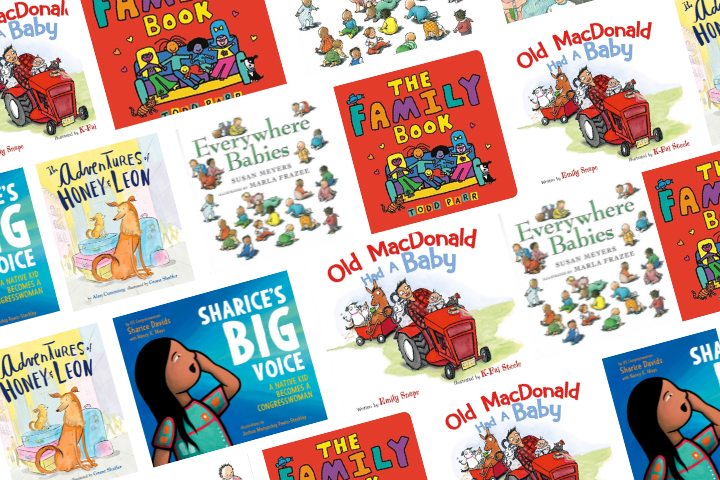
  • Children’s picture books like Mayor Pete, about the U.S. Secretary of Transportation Pete Buttigieg, Sharice’s Big Voice, about U.S. Rep. Sharice Davids, The Adventures of Honey & Leon, about actor Alan Cumming’s two dogs and books about families likeEverywhere Babies by Susan Meyers, The Family Book by Todd Parr, and Old MacDonald Had A Baby by Emily Snape.
  • Contemporary young adult books by award-winning authors such as The Hate U Give by Angie Thomas, I Am Not Your Perfect Mexican Daughter by Erika Sánchez, The Sun and Her Flowers by Rupi Kaur, Looking for Alaska, The Fault in Our Stars, and Paper Towns by John Green, Last Night at The Telegraph Club by Malinda Lo, All Boys Aren’t Blue by George Johnson, and Gender Queer by Maia Kobabe.
  • Works by renowned authors James Baldwin, Charles Baudelaire, Albert Camus, Nikki Giovanni, Toni Morrison, Henry Miller, Robert Cormier, Neil Gaiman, Roxane Gay, Zora Neale Hurston, Khaled Hosseini, Alice Walker, and Tony Kushner.

See the full list of books flagged for removal from Urbandale, Iowa, school libraries under the new law.

WHAT IS IOWA’S SENATE FILE 496?

Iowa Gov. Kim Reynolds signed Senate File 496into law in May 2023. The law has numerous provisions, based on a requirement that schools adopt what it calls an “age appropriate, multicultural and gender-fair approach” by schools and school districts.

The law includes:

  • A “Don’t Say Gay” provision, modeled on legislation passed in Florida in 2022, that applies to Kindergarten to 6th grade: “A school district shall not provide any program, curriculum, test, survey, questionnaire, promotion, or instruction relating to gender identity or sexual orientation to students in kindergarten through grade six.”
  • A directive to include “age appropriate” materials in classrooms and libraries. The law defines “age-appropriate” as “topics, messages, and teaching methods suitable to particular ages or age groups of children and adolescents, based on developing cognitive, emotional, and behavioral capacity typical for the age or age group.” The law also states that “’Age-appropriate’ does not include any material with descriptions or visual depictions of a sex act as defined in section 702.17.” This is a reference to Iowa criminal code, including a definition of sex acts and sexual activity that was not originally written to apply to written or visual materials.
  • A mandate for districts to develop policies for parents/guardians to to review all instructional materials, to file objections to challenge these materials, and a public listing of all books in school district libraries
  • A prohibition on students from serving on review committees that “determine, or provide recommendations related to, whether a material in a school library should be removed” after it has been challenged. Additionally, parents and guardians who challenge a book or library material are guaranteed confidentiality.
  • The potential for disciplinary action against educators found in violation of its provisions, particularly concerning “age appropriate” materials in school libraries, including the possibility of losing their licenses.

WHY WERE BOOKS BANNED FROM SCHOOLS IN URBANDALE, IOWA?

In the absence of state guidance on how to implement the new law, the Urbandale Community School has taken what it calls thebroadest possible interpretation of the law, in order to protect educators from disciplinary action. But in doing so, they have threatened the freedom to read for the district’s 4,000+ students.

Per the district’s statement, the list of books was curated from “a review of quarantined books from other states who had passed similar laws.” The district noted that the list is not “all-inclusive” nor represents books available in the district’s schools and classrooms.

One senior at Urbandale High Schooldescribed to a local NBC affiliate that the bans would impact her ability to complete her coursework. “I’m involved in a lot of AP and college-level courses and so for me, I was in AP Lit[erature] last year and so I read some amazing books…going forward [I’m] taking Advanced Comp[osition] this year. And so I won’t be able to study 1984 or The Color Purple and a lot of those books that are so important and so critical for those curriculums.”

The list, and the law that prompted it, comes amid a national wave of book bans andeducational gag orders that limit what can be said in the classroom, especially about race and LGBTQ+ topics.

WHAT CAN BE DONE?

PEN America invites the public to send its letter to school district officials, calling on them to reverse the policy, and to retain all reading materials so students can begin the school year with full access to literature in their classrooms.

The letter is also intended to signal to other school districts, parents, educators, librarians, and students that the government overreach stemming from Gov. Reynolds’ legislation is an affront to students’ bedrock rights.

Send the PEN America letter to Urbandale school officials

At the urging of Governor DeSantis, Florida’s legislature rubber stamped his proposal to expand vouchers to all students in the state without income restrictions. As Leslie Postal reported in The Orlando Sentinel, demand for vouchers in the state surged by 44%. Many of the applicants are already enrolled in private and religious schools. In other states where vouchers were made universal, most of the vouchers were claimed by students who never attended public schools. Thus, instead of “saving poor kids from failing public schools,” vouchers have become a subsidy for affluent families.

Postal writes:

The number of Florida students awarded school vouchers jumped by more than 117,500 this year, mostly due to a new state law that made all students eligible for scholarship programs once targeted to low-income children.

By Aug. 11, more than 382,000 students had received vouchers for the 2023-24 school year, giving them access to money for private school tuition, homeschooling services or therapies for children with disabilities, according to Step Up For Students, the private group that administers most of Florida’s scholarship programs.

That represents a 44% increase from a year ago when about 264,400 scholarships were awarded by the same date….

The scholarships are worth an average of about $7,800 a year, though actual amounts vary by student’s grade level and by county. The voucher programs are still required to prioritize giving awards to children whose families earn no more than 185% of the federal poverty limit, or a family of four earning $55,000 a year or less. But everyone, whether middle class or very rich, is now eligible to apply….

The hike in scholarships was expected after Gov. Ron DeSantis in March signed the new law, which he called a “major game changer” that would boost educational options for families. The law was celebrated by GOP leaders, school choice advocates and parents already paying for private school who are now eligible for state assistance.

They argued families who never opted for free public schools still pay school taxes and so it makes sense to provide them school vouchers to help offset private school costs.

This week, the Archdiocese of Miami credited the new law with boosting enrollment at its Catholic schools and creating waitlists at some campuses. “Step Up Blew Up,” it wrote on its website, like many, using Step Up as shorthand for Florida’s school scholarship programs.

The archdiocese noted that at one Catholic school in Coral Gables, with about 900 students, the number of families receiving state scholarships leapt from 160 last year to more than 560 this year.

But the new law also faces fierce critics. They worry its price tag — one estimate says it will cost the state $4 billion in its first years — will devastate public school budgets and dislike that private schools that take vouchers face little regulation from the state.

“The public dollars that they have given to private schools, those are our public school dollars that they are now giving to people to go to a private school,” Castor Dentel said. “Those are public school dollars they are now handling over to unaccountable private schools where you don’t have to have a qualified teacher.”

Private schools that take state vouchers are mostly religious schools, and they make their own decisions as far as teacher qualifications, curriculum and facilities. Some have hired teachers without college degrees and employees with criminal convictions, set up in rundown buildings and offered curriculum outside mainstream academics, the Orlando Sentinel has reported.

Providing scholarships to families whose children already were in private school or were being homeschooled “is absolutely taking away from public school dollars,” said Norin Dollard, a senior policy analyst with the Florida Policy Institute, a progressive think tank that warned back in February that the new law would cost the state billions of dollars.

Dollard said the state earmarked about $3.3 billion for all its scholarship programs this school year and likely will run through that by the end of October, given the number of awards announced so far.