Archives for category: Education Reform

I am a proud alumna of Wellesley College, class of 1960. Wellesley literally changed my life. My best friends today are classmates; we meet monthly on Zoom to compare notes. We confess our deepest hopes and fears and stand by one another. I have returned for Reunion every five years since graduation. I love the campus and the memories.

I have supported an annual lecture series at Wellesley that has brought terrific thinkers to the campus.

Not long ago, my sons endowed a Professorship in my name, the first endowed chair in the education department. It is called The Diane Silvers Ravitch ’60 Chair in Public Education and the Common Good. The first person to hold the chair is a brilliant young scholar named Soo Hong.

Last night, after midnight, one of my dear classmates sent this review, just published. It made me very happy.

About-Face

Books and media by the Wellesley community

Image credit: Agata Nowicka

AUTHOR Catherine O’Neill Grace

PUBLISHED ON February 24, 2026

ISSUE WINTER 2026

“I was wrong” is one of the most difficult things for a human being to say. Imagine saying it when you have been a conservative public intellectual and expert on public education for decades. Yet that is exactly what Diane Silvers Ravitch ’60 does in her engaging new memoir, An Education: How I Changed My Mind About Schools and Almost Everything Else.

The author of numerous books about the history of American education and education policy, Ravitch turns to the personal in this volume, describing in depth her childhood in Houston, her experience at a segregated public high school, and her journey to Wellesley College in the fall of 1956.

At Wellesley, Ravitch learned not what to think, but how. She arrived on campus feeling, by her own account, like a “fish out of water.” But the College provided her with brilliant peers, gifted teachers, lively debate, and enriching friendships—including with “Maddy,” Madeleine Korbel Albright ’59. She recounts the hilarity of writing the junior show, Call It Red, and the excitement of seeing Fidel Castro speak at Harvard while she was working as a reporter for the Wellesley News.

A political science major at Wellesley, Ravitch went on to earn a Ph.D. in history from Columbia. As her memoir unfolds, she writes openly of loss—the anguish of the death of her 2-year-old son from leukemia, the painful dissolution of her first marriage. And she writes of love—at an education conference in 1984, she met teacher Mary Butz, who became her wife.

She also writes about intellectual transformation. As an education reformer, Ravitch believed deeply in standards, accountability, high-stakes testing, and school choice. Woven through the book is an account of her transition from outspoken supporter of conservative, market-driven policies in public education to one of their most forceful critics. Like many policymakers of the late 20th century, she saw competition, data, and pressure as levers that could fix public education. Serving in senior government roles, including assistant secretary of education during the George H. W. Bush administration, she helped advance reforms rooted in these assumptions, convinced they would raise achievement and close gaps.

But watching these policies unfold in real schools forced her to confront their consequences. High-stakes testing narrowed curricula and hamstrung teachers. Charter expansion and privatization failed to deliver promised gains while draining critical resources from public systems. Most troubling, education reformers increasingly blamed educators for failures that Ravitch now sees as driven by poverty and inequality. Children—especially poor children—were being left behind.

By the end of An Education, Ravitch emerges as a committed advocate for public schools, professional teachers, and democratic accountability. She followed the facts where they led and changed her mind. In this open-hearted, expansive memoir, she explains why.

A former classroom teacher, Grace is senior associate editor of this magazine

Diane Silvers Ravitch ’60
An Education: How I Changed My Mind About Schools and Almost Everything Else
Columbia University Press, 248 pages, $24.95


President Trump sends out statenff ed bts on Truth Social, his personal social media site, that are sometimes odd. Someone in the White House should fact-check them before he posts and embarrasses himself.

Over the weekend, he posted this:

Donald J. Trump
@realDonaldTrump
Working with the fantastic Governor of Louisiana, Jeff Landry, we are going to send a great hospital boat to Greenland to take care of the many people who are sick, and not being taken care of there. It’s on the way!!!

President DJT

Trump’s tweet (or whatever it’s called on Truth Social) led to head-scratching on both sides of the Atlantic.

The Washington Post reported the response from Greenland:

Officials on the island, a semiautonomous territory of Denmark, did not ask for such a ship, and Greenland’s prime minister said it will not be welcoming it, as its citizens are guaranteed free health care.

“It’s a no thank you from here,” Greenland’s prime minister, Jens-Frederik Nielsen, said in a statement Sunday.

“President Trump’s idea of sending an American hospital ship here to Greenland has been noted. But we have a public healthcare system where treatment is free for citizens. That is a deliberate choice — and a fundamental part of our society. That is not how it works in the USA.”

Trump’s announcement came shortly after news that a member of the crew on an American submarine had a medical emergency and was airlifted by a Danish helicopter to Nuuk.

Trump’s promise to send a hospital ship to Greenland was equally bizarre because both of the Navy’s hospital ships are in dry dock undergoing repairs.

I first learned about this imaginary crisis this morning when I read Jeff Tiedrich’s hilarious post. I considered reposting it here because it was both newsworthy and hilarious, but decided against doing so because it is so scatological.

Consider the title:

batshit fuckwit vows to fix imaginary Greenland health crisis

perfectly normal stuff

JEFF TIEDRICH

folks, it is a bad thing when the president of the United States is so utterly detached from reality that when he announces a great humanitarian relief effort, no one has any fucking clue what he’s gibbering about?

And that’s just the beginning!

The U.S. Supreme Court ruled today, by a vote of 6-3, to overturn Trump’s unilateral tariffs on other nations. Three Republican-appointed justices–Chief Justice John Roberts, Justice Neil Gorsuch, and Justice Amy Coney Barrett–voted with the Court’s three liberal justices.

Trump responded with fury. He believed that his appointees owed him their loyalty and their votes. He accused them of a lack of patriotism and even insinuated that they were advancing the interests of a foreign power.

He wrote on his social media site Truth Social that the decision was wrong, and he insulted those Republican justices who voted against his tariffs. He must have been especially angry at Justice Gorsuch and Justice Barret, whom he appointed.

Trump made clear that he intended to circumvent the Court’s decision by relying on other laws. As Trump often says, “Trump was right about everthing.”

He wrote:

The Supreme Court’s Ruling on TARIFFS is deeply disappointing! I am ashamed of certain Members of the Court for not having the Courage to do what is right for our Country. I would like to thank and congratulate Justices Thomas, Alito, and Kavanaugh for your Strength, Wisdom, and Love of our Country, which is right now very proud of you. When you read the dissenting opinions, there is no way that anyone can argue against them. Foreign Countries that have been ripping us off for years are ecstatic, and dancing in the streets — But they won’t be dancing for long! The Democrats on the Court are thrilled, but they will automatically vote “NO” against ANYTHING that makes America Strong and Healthy Again. They, also, are a Disgrace to our Nation. Others think they’re being “politically correct,” which has happened before, far too often, with certain Members of this Court when, in fact, they’re just FOOLS and “LAPDOGS” for the RINOS and Radical Left Democrats and, not that this should have anything to do with it, very unpatriotic, and disloyal to the Constitution. It is my opinion that the Court has been swayed by Foreign Interests, and a Political Movement that is far smaller than people would think — But obnoxious, ignorant, and loud!

This was an important case to me, more as a symbol of Economic and National Security, than anything else. The Good News is that there are methods, practices, Statutes, and other Authorities, as recognized by the entire Court and Congress, that are even stronger than the IEEPA TARIFFS, available to me as President of the United States of America and, in actuality, I was very modest in my “ask” of other Countries and Businesses because I wanted to do nothing that could sway the decision that has been rendered by the Court.

I have very effectively utilized TARIFFS over the past year to, MAKE AMERICA GREAT AGAIN. Our Stock Market has just recently broken the 50,000 mark on the DOW and, simultaneously, 7,000 on the S&P, two numbers that everybody thought, upon our Landslide Election Victory, could not be attained until the very end of my Administration — Four years! TARIFFS have, likewise, been used to end five of the eight Wars that I settled, have given us Great National Security and, together with our Strong Border, reduced Fentanyl coming into our Country by 30%, when I use them as a penalty against Countries illegally sending this poison to us. All of those TARIFFS remain, but other alternatives will now be used to replace the ones that the Court incorrectly rejected.

To show you how ridiculous the opinion is, the Court said that I’m not allowed to charge even $1 DOLLAR to any Country under IEEPA, I assume to protect other Countries, not the United States which they should be interested in protecting — But I am allowed to cut off any and all Trade or Business with that same Country, even imposing a Foreign Country destroying embargo, and do anything else I want to do to them — How nonsensical is that? They are saying that I have the absolute right to license, but not the right to charge a license fee. What license has ever been issued without the right to charge a fee? But now the Court has given me the unquestioned right to ban all sorts of things from coming into our Country, a much more powerful Right than many people thought we had.

Our Country is the “HOTTEST” anywhere in the World, but now, I am going in a different direction, which is even stronger than our original choice. As Justice Kavanaugh wrote in his Dissent:

“Although I firmly disagree with the Court’s holding today, the decision might not substantially constrain a President’s ability to order tariffs going forward. That is because numerous other federal statutes authorize the President to impose tariffs and might justify most (if not all) of the tariffs issued in this case…Those statutes include, for example, the Trade Expansion Act of 1962 (Section 232); the Trade Act of 1974 (Sections 122, 201, and 301); and the Tariff Act of 1930 (Section 338).”

Thank you Justice Kavanaugh!

In actuality, while I am sure they did not mean to do so, the Supreme Court’s decision today made a President’s ability to both regulate Trade, and impose TARIFFS, more powerful and crystal clear, rather than less. There will no longer be any doubt, and the Income coming in, and the protection of our Companies and Country, will actually increase because of this decision. Based on longstanding Law and Hundreds of Victories to the contrary, the Supreme Court did not overrule TARIFFS, they merely overruled a particular use of IEEPA TARIFFS. The ability to block, embargo, restrict, license, or impose any other condition on a Foreign Country’s ability to conduct Trade with the United States under IEEPA, has been fully confirmed by this decision. In order to protect our Country, a President can actually charge more TARIFFS than I was charging in the past under the various other TARIFF authorities, which have also been confirmed, and fully allowed.

Therefore, effective immediately, all National Security TARIFFS, Section 232 and existing Section 301 TARIFFS, remain in place, and in full force and effect. Today I will sign an Order to impose a 10% GLOBAL TARIFF, under Section 122, over and above our normal TARIFFS already being charged, and we are also initiating several Section 301 and other Investigations to protect our Country from unfair Trading practices. Thank you for your attention to this matter. MAKE AMERICA GREAT AGAIN!

PRESIDENT DONALD J. TRUMP

Mercedes Schneider is an amazing person, a keen-eyed researcher, and a gifted writer. She has a Ph.D. in applied statistics and research. She could have been a college professor, but she preferred to be a high school teacher. She understands the work, and she understands the students. That’s way different from journalists, who write best-selling books about schools based on their cursory experience, or scholars, who write their books based on data, not the lives of teachers or students.

I met Mercedes in the early days of the corporate reform movement, the one led by billionaires. With her sharp intellect, she saw through the hoax immediately. She saw what happened in New Orleans; she observed the influx of TFA teachers to staff the new charter schools. She was never taken in by the grandiose rhetoric of the reformers. She understood that the real goal of the so-called movement was not to improve public schools but to privatize public funding of schools.

In a remarkable burst of energy, she wrote three books in three years:

A Chronicle of Echoes: Who’s Who in the Implosion of American Public Education (2014).

Common Core Dilemma: Who Owns Our Schools (2015).

School Choice: The End of Public Education? (2016).

And she is still in the classroom.

I am now honored that Mercedes has reviewed my memoir. As you would expect, the review is insightful. She understood what I was trying to do: to pull away whatever artifice or cover there might be, and to lay my life bare. It’s not easy to do. She understood.

I urge you to open the link and read her perceptive review. It’s vintage Mercedes.

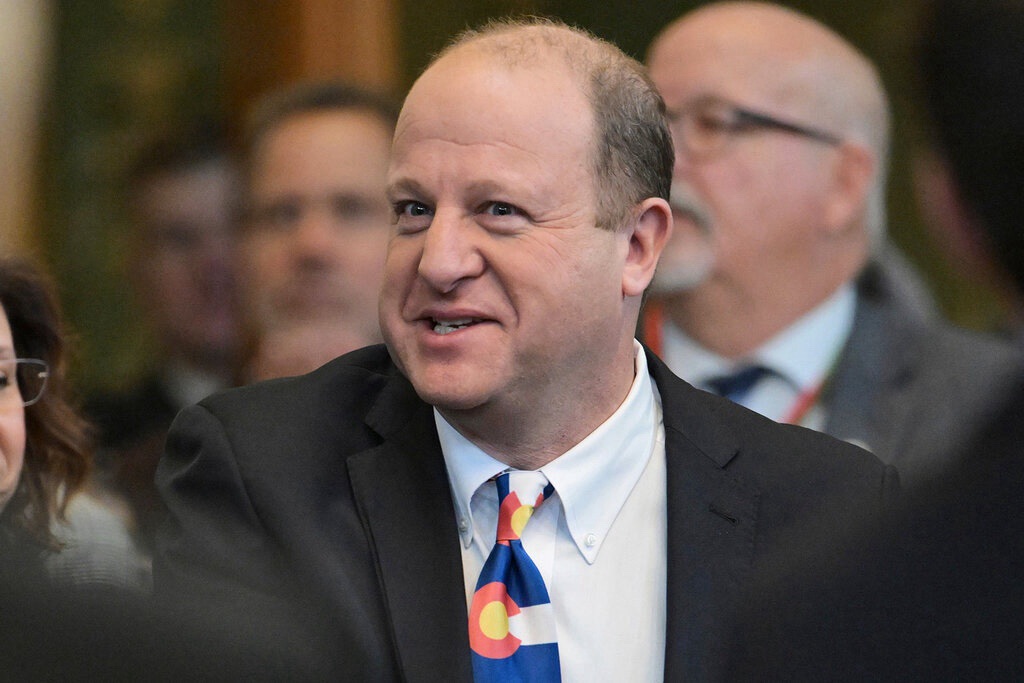
Jared Polis, governor of Colorado, decided to join Trump’s voucher plan, which subsidizes private school choice with public money. Please note that Colorado voters recently rejected an amendment to the State Constitution to fund school choice.

Governor Polis’s sunny description of his decision is a triumph of hope over experience. After nearly three decades of experience with charters and vouchers, it is clear that they are not necessarily better than public schools, that they foster discrimination, that they have not spurred innovation, that many rely on uncertified teachers, etc.

Jenny Brunson of Colorado Public Radio has the story.

Colorado will participate in a first-of-its-kind federal tax credit voucher program that could help fund private education.

Gov. Jared Polis made the announcement at a gathering of private and religious school choice advocates Thursday, as he simultaneously lobbies the federal government for stricter oversight to prevent the program from devolving into “fraud, waste, and abuse.”

The program, established under the federal “One Big Beautiful Bill,” offers a 100 percent federal tax credit — up to $1,700 annually — for donations made to Scholarship Granting Organizations, or SGOs. Families could then take advantage of the scholarships.

While religious and other school-choice advocates applauded the announcement, a coalition of public-school advocates in Colorado have voiced strong opposition to participating in the program. And Polis’ written comments to the IRS reveal a deep-seated concern that the federal government’s draft rules may strip states of their ability to regulate the program.

The Treasury Department is currently writing rules for the program, which will start in 2027.

At Thursday’s event, Polis framed participating in the program as a pragmatic win for students that will provide additional resources for tuition, tutoring to address learning loss, special needs services, or education technology, among other uses.

“Really, it’s only our own creativity that can hold us back,” he said. “Anything we can envision, this is a very powerful funding mechanism…”

Critics warn program could ‘dismantle’ public education

On Wednesday, a coalition of public education advocates held a separate national press conference to urge governors to reject what they termed a “Trump school voucher tax scheme” that would divert public dollars to private schools and undermine public education nationwide.

Dawn Fritz, representing the Colorado PTA, said voucher-style tax credit programs often don’t protect students’ rights.

“Voucher systems usually lack accountability,” said Fritz. “They deprive students of the rights and protections they would receive in public schools, and they fail in providing adequate services for students most in need, including students with disabilities, low-income students, and students who are English language learners.”

Colorado voters have rejected previous private school choice proposals three times.

“We have defeated them at the ballot box,” she said. “We have defeated them at the state legislature. We need our governor to stand with us to defeat vouchers once again.”

Oversight concerns

After conversations with U.S. Treasury staff about the rules, others share the governor’s concerns that the current draft rules would leave states powerless to protect students or taxpayers.

“It seems very likely that the regulations will preclude individual states from engaging in any kind of regulation or oversight — either over the Scholarship Giving Organizations or the organizations receiving the voucher funding,” said Lisa Weil, executive director of Great Education Colorado. “Unfortunately, this is tax policy, not education policy.”

Governors may be limited to passing on a list of SGOs that meet basic requirements, according to the IRS’s initial interpretation of the law.

“The opportunities for discrimination and fraud are rife,” Weil said.

At Wednesday’s national press conference, Damaris Allen, with Families for Strong Public Schools and a parent of Florida public school students, spoke of millions of dollars in unaccountable spending in Florida’s program, vouchers being used at “unaccredited private schools,” and students with disabilities waiving federal protections.

An auditor’s report found that the program paid for 30,000 students that the state can’t accurately track, and showed widespread instances where students were simultaneously enrolled in public schools while their families received private scholarship funds

“Our homeschool students have used taxpayer-funded vouchers to purchase lavish vacations, do crazy things like use taxpayer dollars to have an RV, drive across this country, and take trips, buy paddle boards, Disney tickets, TVs, and even patio furniture.”

At least 30 states have decided to opt into the program.

Well, that was fast!

The internet lit up over the past 48 hours about Jeffrey Epstein’s Zorro Ranch.

News broke that the FBI had scoured Epstein’s properties in Palm Beach, New York, and Little St. James Island, but had not given any attention to Epstein’s sprawling ranch in New Mexico.

Yesterday, the New Mexico legislature announced an investigation of the ranch.

Reuters reported:

SANTA FE, Feb 16 (Reuters) – New Mexico lawmakers on Monday passed legislation to launch what they said was the first full investigation into what happened at Zorro Ranch, where the late U.S. sex offender Jeffrey Epstein is accused of trafficking and sexually assaulting girls and women.

A bipartisan committee will seek testimony from survivors of alleged sexual abuse at the ranch, located about 30 miles south of Santa Fe, the state capital. Legislators are also urging local residents to testify…

The so-called truth commission, comprising four lawmakers, seeks to identify ranch guests and state officials who may have known what was going on at the 7,600-acre property, or taken part in alleged sexual abuse in its hacienda-style mansion and guest houses.

The Democratic-led investigation adds to political pressure to uncover Epstein’s crimes that has become a major challenge for President Donald Trump, weeks after the Justice Department released millions of Epstein-related files that shed new light on activities at the ranch.

The files reveal ties between Epstein and two former Democratic governors and an attorney general of New Mexico.

The legislation, which passed New Mexico’s House of Representatives by a unanimous vote, could pose risks to any additional politicians linked to Epstein in the Democratic-run state, as well as scientists, investors and other high-profile individuals who visited the ranch.

The $2.5 million investigation, which has subpoena power, aims to close gaps in New Mexico law that may have allowed Epstein to operate in the state. The committee starts work on Tuesday, and will deliver interim findings in July and a final report by year-end.

The article goes on from here to discuss Epstein’s ranch.

Pam Bondi, Trump’s Attorney General, testified before the House Judiciary Committee yesterday, and she was rude and insulting when responding to Democrats’ questions. She refused to answer questions, instead praising Trump and citing the booming stock market.

They, in turn, gave her a hard time for destroying the integrity of the Department of Justice and turning it into Trump’s instrument of revenge.

Here are amazing excerpts:

Jimmy Kimmel shows some of Pam Bondi’s fieriest moments.

Watch Bondi’s non-response to Raskin.

Congressman Jamie Raskin lectured Bondi on her dereliction of duty.

Congresswoman Jasmine Crockett, realizing that Bondi would not answer any questions, used her time to grill Bondi.

Once in a while, I make a big technical error while writing and/or posting on this blog. I made one yesterday. I wrote the first part of the blog, then accidentally posted it before it was finished.

So I’m going to summarize yesterday’s post and finish it here, although I recommend that you read part 1.

Yesterday’s post began by quoting from Rick Hanauer’s 2019 article in The Atlantic, titled “Better Schools Won’t Fix America.

Rick, a wealthy venture capitalist who palled around with Bill Gates, realized that charter schools were not going to be the salvation of America, as so many of his friends believed.

He saw the light. The big problem that is ruining our society, he discovered, was not the schools, but economic inequality. Build a thriving middle class, he urged, and the schools will also thrive.

My reaction to his article was this: What do we need more of? Efforts to reduce poverty and to meet the needs of children and families. Understanding that test scores generate rewards for the wealthiest students and discouragement for the neediest. Awareness that “the achievement gap” between rich and poor never closes because standardized tests are normed on a bell curve; the bell curve, by its nature, is designed never to close.

What do we need less of? The misuse of standardized testing to rank children, teachers, and schools. The diversion of public funds from public schools to charter schools, homeschooling, cyber schools, and vouchers for nonpublic schools.

[This is where I pick up from yesterday’s unfinished post.]

With each book I wrote about privatization, I insisted that schools are vital institutions in educating children, but they can’t do it alone. In Reign of Error, I spelled out what I considered a life-course approach to improving the chances of giving children the education they need and deserve.

In the competition between public schools and charter schools, the only measure that outsiders consider is test scores. But that is not right. For many young people whose family lives are marred by deep poverty, it’s miraculous when they manage to show up for school. They choose to go to school, not to babysit a younger sibling, not to take a part-time job delivering to customers, not to hang out in the local park.

What kind of a school is that? The closest approximation of the school that I imagined is a community school.

What are community schools?

There is no standard model, but the overall goal is to serve the urgent needs of students and their families, be they health, nutrition, academics, social, or economic. Schools can’t cure poverty, but they can directly help those in poverty to lead a better life. We don’t measure health and nutrition by their effect on test scores, but we know they are crucial.

Community schools provide wraparound services to students and their parents. Those wraparound services include medical check-ups, dental examinations, screening for eyeglasses.

Community schools typically have a food pantry. They also maintain a closet with warm coats and clothing.

They have social workers who connect parents with resources they need: where to find jobs, how to find housing, how to access government programs designed for them, English language classes, and other services that help them.

Annie Lowery wrote a compelling article in The Atlantic about the importance of community schools. It is titled “The Program That’s Turning Schools Around.” The subtitle, which is misleading is “The key to closing the achievement gap may lie outside the classroom.” As I said before, the achievement gap may narrow, but it never closes, because bell curves never close. And this is not the purpose of community schools. Their purpose is to meet the needs of students and families. Being well-nourished and healthy is important and necessary, regardless of its relationship to test scores.

She opens:

On a chilly day before Christmas, Teresa Rivas helped a tween boy pick out a new winter coat. “Get the bigger one, the one with the waterproof layer, mijo,” she said, before helping him pull it onto his string-bean frame. Rivas provides guidance counseling at Owen Goodnight Middle School in San Marcos, Texas. She talks with students about their goals and helps if they’re struggling in class. She’s also a trained navigator placed there by a nonprofit called Communities in Schools.

The idea behind CIS and other “community school” programs is that students can’t succeed academically if they’re struggling at home. “Between kindergarten and 12th grade, kids spend only 20 percent of their time” in a classroom, Rob Watson, the executive director of the EdRedesign Lab at the Harvard Graduate School of Education, told me. If America wants kids to thrive, he said, it has to consider the 80 percent. Educators and school administrators in San Marcos, a low-income community south of Austin, agreed. “Tests and academics are very important,” Joe Mitchell, the principal of Goodnight Middle School, told me. “But they are secondary sometimes, given what these kids’ lives are like away from here.”

Along with mediating conflicts and doing test prep, Rivas helps kids’ families sign up for public benefits. She arranges for the nonprofit to cover rent payments. She sets up medical appointments, and keeps refrigerators and gas tanks full.

Lowery points out that the Trump administration is cutting the federal programs that support community schools:

But the country is veering in the other direction. The White House has slashed hundreds of millions of dollars from a free-school-meal initiative, ended a $1 billion grant covering mental-health counseling, and revoked $170 million from the federal community-schools program, which helps cover the salaries of hundreds of workers like Rivas. Other whole-child initiatives might lose financing if they are found to fall under the Trump administration’s DEI rubric. At the same time, the White House is reducing financial support for low-income families, cutting more than $1 trillion from SNAP and Medicaid.

The United States wants schools to act as a “great equalizer,” yet socioeconomic differences among students remain the central drivers of student outcomes. Community schools can’t prevent homelessness, pay for health insurance, or stop parents from getting deported; they cannot construct a strong safety net. Still, they can help to close the gap.

Lowery writes about one long-lived program called Communities in Schools, which has been active for half a century and serves 2 million students in 26 states. she notes that CIS is three times the size of Headstart.

The nonprofit has a few unusual qualities. For one, it doesn’t apply rigid criteria or means tests in determining who gets help, and doesn’t provide a set menu of benefits to students and families. The model is adaptable.

In some districts, navigators focus on violence prevention or absenteeism. In San Marcos, they focus on behavioral health. Inside schools, CIS staff members created lamp-lit, womblike rooms, stocked with fidget toys and snacks, where kids can calm down and talk about their feelings. Some middle-school girls told me that Rivas helped them with “drama and stuff”—meaning “girls fighting over boys.” One boy who was having trouble sleeping and had a 69 average in math told me that Rivas was helping get his eyes shut and his grades up. “You only need one more point!” she said, beaming…

CIS workers help families navigate existing public programs. “The traditional economist view would have been, Just give people cash. They’ll figure out what to do with it,” Goldman told me. But decades of studies have found that families in crisis don’t know that help is out there, possess limited capacity to research complex social-safety-net initiatives, and are averse to signing up for benefits, given the stigma. Community schools take paperwork away from stressed-out families and put it on trained employees.

Jeff Bryant has been writing about community schools for years. Jeff is chief correspondent for Our Schools, a project of the Independent Media Institute and director of the Education Opportunity Network, a messaging center for progressive education policy.

Jeff recently published an important article about Trump’s draconian cuts to programs that support community schools.

Jeff spoke to educators at Curie High School in Chicago, who complained about the cuts and their effects on students.

Chicago schoolteacher Claudia Morales may have been reflecting the feelings of most Americans about life under the Trump presidential administration when she told Our Schools, “Every day, there’s yet another abuse. It’s scary. And it’s coming from our own government.” In her work as a bilingual program teacher and bilingual coordinator at Curie High Schoolin Chicago Public Schools (CPS), she’s been witness to one trauma after another.

“First, there were the funding cuts the Trump administration made,” said Morales, referring to the federal government’s decision to withhold more than $4 billion in funds for public education at the start of the 2025-2026 school year. CPS was particularly hit hard by the cuts, with the district losing millions it had counted on to pay for staffing positions and programs.

“Then we had ICE invade,” Morales recounted, noting that the Archer Heights neighborhood, where most of her students come from, was one of the communities targeted by the federal government’s immigration crackdown. The Trump administration’s decision to rescind the protected status that prohibited immigration raids at schools and student gathering places, like bus stops and playgrounds, made her school’s largely Hispanic student population—many of whom are recent immigrants—especially vulnerable.

“And now this,” she concluded. “This” is the December 2025 announcement from Trump’s U.S. Department of Education, signed by Secretary of Education Linda McMahon, to withhold some $380 million in federal funding that was previously granted to schools from the department’s full-service community schools (FSCS) program. The initiative provides support for the planning, implementation, and operation of the community school approach to school improvement. The community school approachtransitions traditional schools from being strictly academic institutions into community hubs that provide student and family support services based on resources and voices of the surrounding community. The strategy is showing promise in improving student outcomes nationwide, but that seems irrelevant to current federal officials.

As a result of the funding cut-off to Chicago schools, according to Morales, Curie will lose money it needs to pay for tutors, after-school programs, parent education courses, and academic support for students who struggle with learning. These are programs and services parents specifically asked the school to provide, said Morales.

The loss of funding for in-school and after-school tutors will be especially damaging to the students’ academic achievement, according to educators at Curie.

When it comes to the most vulnerable students and their families, the Trump administration seems determined to make their lives harder and to cut the federal programs in which they rely.

Some years back–actually it was 2019–I read an article that gladdened my heart. It was written in The Atlantic by gazillionaire Nick Hanauer. It was titled “Better Schools Won’t Fix America.”

Nick is an interesting guy. He is an entrepreneur in Seattle. He works alongside other successful venture capitalists, and for a time, partnered with Bill Gates to persuade the Washington legislature to endorse charter schools as a remedy to replace “failing” public schools.

But somewhere along the way, he had a change of mind and heart. He realized that the basic problem in the U.S. was income inequality, not “failing schools.”

He began his 2019 article:

Long ago, I was captivated by a seductively intuitive idea, one many of my wealthy friends still subscribe to: that both poverty and rising inequality are largely consequences of America’s failing education system. Fix that, I believed, and we could cure much of what ails America.

This belief system, which I have come to think of as “educationism,” is grounded in a familiar story about cause and effect: Once upon a time, America created a public-education system that was the envy of the modern world. No nation produced more or better-educated high-school and college graduates, and thus the great American middle class was built. But then, sometime around the 1970s, America lost its way. We allowed our schools to crumble, and our test scores and graduation rates to fall. School systems that once churned out well-paid factory workers failed to keep pace with the rising educational demands of the new knowledge economy. As America’s public-school systems foundered, so did the earning power of the American middle class. And as inequality increased, so did political polarization, cynicism, and anger, threatening to undermine American democracy itself.Great public schools are the product of a thriving middle class, not the other way around.

Taken with this story line, I embraced education as both a philanthropic cause and a civic mission. I co-founded the League of Education Voters, a nonprofit dedicated to improving public education. I joined Bill Gates, Alice Walton, and Paul Allen in giving more than $1 million eachto an effort to pass a ballot measure that established Washington State’s first charter schools. All told, I have devoted countless hours and millions of dollars to the simple idea that if we improved our schools—if we modernized our curricula and our teaching methods, substantially increased school funding, rooted out bad teachers, and opened enough charter schools—American children, especially those in low-income and working-class communities, would start learning again. Graduation rates and wages would increase, poverty and inequality would decrease, and public commitment to democracy would be restored.

But after decades of organizing and giving, I have come to the uncomfortable conclusion that I was wrong. And I hate being wrong.

What I’ve realized, decades late, is that educationism is tragically misguided. American workers are struggling in large part because they are underpaid—and they are underpaid because 40 years of trickle-down policies have rigged the economy in favor of wealthy people like me. Americans are more highly educated than ever before, but despite that, and despite nearly record-low unemployment, most American workers—at all levels of educational attainment—have seen little if any wage growth since 2000.

To be clear: We should do everything we can to improve our public schools. But our education system can’t compensate for the ways our economic system is failing Americans. Even the most thoughtful and well-intentioned school-reform program can’t improve educational outcomes if it ignores the single greatest driver of student achievement: household income.

Hanauer recognized that the hollowing out of the middle class was harming our entire society:

In short, great public schools are the product of a thriving middle class, not the other way around. Pay people enough to afford dignified middle-class lives, and high-quality public schools will follow. But allow economic inequality to grow, and educational inequality will inevitably grow with it.

Hanauer’s turnaround resonated with me. He was boldly breaking ranks with his peers. I doubt he suffered ostracism, because many of the elites toy with education; it is not a vital interest to them. In my limited experience, watching the uber-rich participate on behalf of charter schools, it appeared that many were going along with the crowd, while some thought that privatization was a miracle cure.

Hanauer understood that children need a good start in life and they need a stable, secure home life to do their best in school. He understood that economic inequality undermined many children’s interest in school, which was less important than survival or a warm winter coat or medical care. He even understood that the decades-long efforts to stamp out unions contributed to economic inequality.

We spoke on the phone. I did a podcast with him. I was impressed by his keen intellect and independence of mind.

With each book I wrote about privatization, I insisted that schools are vital institutions in educating children, but they can’t do it alone. In Reign of Error, I spelled out what I considered a life-course approach to improving the chances of giving children the education they need and deserve.

In the competition between public schools and charter schools, the only measure that outsiders considered was test scores. But I knew that was not right. For many young people, it’s miraculous when they manage to show up for school. They chose to go to school, not to babysit a younger sibling, not to take a part-time job delivering to customers, not to hang out in the local park.

What kind of a school was that? I came to understand that the closest approximation of a school that I imagined was a community school. Community schools provide wraparound services to students and their parents.

Stephen Dyer, former legislator and current public school advocate in Ohio, is outraged that legislators are considering a bill to punish public school districts that joined to oppose vouchers.

In his Substack blog called “Tenth Period,” Dyer rails against the legislators who want to defund public schools.

Dyer writes:

Ohio’s Public School Districts need to be pissed. Like REALLY pissed. 

That’s because Jamie Callender — long a champion of failing Charter Schools — just introduced legislative blackmail.

House Bill 671 would withhold billions of dollars of state aid to the 330+ school districts that are suing the state over its unconstitutional private school tuition subsidies

Nothing like holding the futures of hundreds of thousands of Ohio’s public school students hostage to score cheap political points. 

Think of it this way: Callender would rather shut school down for hundreds of thousands of Ohio Public School students than argue for his pet program in court. Sounds like someone who thinks they’re about to lose. Bigly.

And why? So rich adults can have you, the taxpayer, subsidize their private school tuition? 

That’s one helluva hill to die on, Jamie. 

One helluva hill.

This bill is especially rich coming from Callender — a guy who stood up for ECOT and David Brennan for years while they ripped off taxpayers for hundreds of millions of dollars and failed their students. 

Obviously, if this bill passes, it will be litigated. And Callender will lose. 

What this bill truly reveals is this: Ohio Republican fear. They know their tuition subsidy program is a legal loser. They know people hate the fact that Les Wexner can get a private school tuition subsidy courtesy of Bob and Betty Buckeye. So their only hope is to cow school districts into dropping the suit.

But I know these people. And they won’t give up. In fact, this will drive more districts into the arms of Vouchers Hurt Ohio. 

Because the only way to deal with legislative extortionists is to call their bluff. 

Then beat the living shit out of them in court. 

Then beat the living shit out of them in the court of public opinion.

Then beat the living shit out of them politically. 

I have a simple message for the leaders of Ohio’s Public Education system: Are you going to let this extortionist hold your students’ futures hostage?

Our state’s 1.5 million public school students need you to fight. Not cave. 

My friends, War has been declared. 

Battle must be joined. 

To arms.