Archives for category: Education Industry

Chris Tomlinson is an award-winning columnist for the Houston Chronicle. He uses his space to combat bigotry, stupidity, and lies. He is not a “both sides” kind of journalist.

He writes here about the infamous oil billionaires who use their money to spread their religious views, attack public schools, and encourage indoctrination.

He writes:

Texas oilman H.L. Hunt may have been the first to spend millions to promote right-wing media and extremist ideas, but he was far from the last.

Most Texans, let alone Americans, had never heard of Farris and Dan Wilks or Tim Dunn before this year. But journalists have revealed them as key supporters of some of the most controversial figures in Texas politics and bankrollers of political action committees staffed by Christian nationalists and antisemites.

The reclusive billionaires and their allies rarely respond to requests for comment from mainstream media and did not respond to my messages.

Farris Wilks, fracking billionaire and pastor of the Assembly of Yahweh (7th Day) Church, preaches that the Bible is “true and correct in every scientific and historical detail” and that abortion, homosexuality and drunkenness are serious crimes, according to the church’s doctrinal statement, the Reuters news agency reported.

Dan Wilks attends church with his brother, with whom he co-founded Frac Tech, a company they sold for $3.5 billion. They have since become some of the largest donors in Texas GOP politics, giving $15 million in 2016 to a political action committee backing Sen. Ted Cruz.

Like Hunt, who broadcast his extremist commentary on radio stations nationwide, the Wilks brothers have also invested in media, supporting conservative mouthpieces like The Daily Wire and Prager University. Their PAC bought ads disguised as articles in the Metric Media news network, which includes 59 pseudo-local news sites in Texas, the Columbia Journalism Review reported.

The Wilks brothers have enjoyed their greatest success by joining Dunn to move the Republican Party of Texas as far right as possible through Empower Texans, one of the most influential dark-money political action committees.

Empower Texans shuttered in 2020 after spinning off operations into Texans for Fiscal Responsibility and Texas Scorecard, which rank politicians by their adherence to the group’s ideology. Dunn and the Wilks brothers have provided most of the financing and set the agenda for conservative activist Michael Quinn Sullivan, who has led all three organizations.

In 2016, the groups opposed Texas House Speaker Joe Straus, whom they considered too moderate. They also ran ultra-conservative candidates against Republicans who ranked poorly on their scorecard. When Straus, who is Jewish, invited Dunn for a breakfast meeting, he reportedly said only Christians should have leadership positions, Texas Monthly reported in 2018. This is a sentiment he’d previously expressed in a 2016 Christian radio interview.

Republicans have long struggled with antisemitism. In 2010, State Republican Executive Chairman John Cooke wrote an email proclaiming, “We elected a house with Christian, conservative values. We now want a true Christian, conservative running it,” the Texas Observer reported.

Dunn and the Wilkses also finance special interest PACs. In 2017, Empower Texans supported and advised Texans for Vaccine Choice, an early anti-vaccination movement, former state Rep. Jonathan Stickland told the Washington Post.

Stickland left elected office to start Pale Horse Strategies, a political consulting firm that ran a new Dunn and Wilks PAC, Defend Texas Liberty. The PAC defended Attorney General Ken Paxton against corruption allegations and provided $3 million to Lt. Gov. Dan Patrick weeks before he presided over Paxton’s impeachment trial, where he was acquitted.

Fresh from that victory, a Texas Tribune reporter observed Stickland, Republican Party of Texas chair Matt Rinaldi, prominent white supremacist Nick Fuentes and Black Lives Matter shooter Kyle Rittenhouse enter the Pale Horse Strategies office in Fort Worth on Oct. 6.

Fuentes was driven to the meeting by Chris Russo, who used Dunn and Wilks money to found Texans For Strong Borders PAC. Russo has past ties to Fuentes, the Tribune reported.

When current GOP House Speaker Dade Phelan demanded Patrick give away the $3 million donation, Patrick said Dunn had called him to apologize.

Dunn “is certain that Mr. Stickland and all PAC personnel will not have any future contact with Mr. Fuentes,” Patrick explained.

Yet, when the Tribune’s Robert Downen kept digging, he found that Pale Horse’s social media manager, Elle Maulding, had called Fuentes the “greatest civil rights leader in history” and shared photos of them together. Shelby Griesinger, Defend Texas Liberty’s treasurer, has said Jews worship a false god and depicted them as the enemy on social media.

Dunn and the Wilks brothers have spent $100 million on ultra-conservative candidates, political action committees in Texas, and radical nonprofits. They finance a movement staffed by publicly antisemitic foot soldiers.

Conservatives considered H.L. Hunt a crackpot in his day. But this new generation has the GOP falling into a goose step.

New College in Sarasota is the state college that used to be progressive. Then Governor DeSantis filled its board with rightwing cronies with the goal of turning it into the Hillsdale of the South. To change the culture, the politician who became its president has been recruiting athletes. They are not the type to want to major in gender studies.

Now, Orlando Sentinel columnist Scott Maxwell reports, New College wants $400 million to grow. That’s a lot of money for a small college. The Florida press will have to keep watch on where the money goes.

Maxwell writes:

Today we’re catching up on controversy at New College, revisiting one of Central Florida’s stranger environmental debates and bidding adieu to one of Florida’s funniest novelists.

We start with what increasingly looks like the biggest public money-grab in Florida — the orgy of incestuous spending at New College of Florida.

Gov. Ron DeSantis’ trustees at this school already generated national controversy when they hired former House Speaker Richard Corcoran, a guy with no higher ed experience, as the school’s president and hiked his compensation package to up to $1.3 million a year — all to run a school that says it has fewer students (698) than many elementary schools. (Seriously, Apopka Elementary has more than 800.)

But now New College wants more money — a lot more.

The Sarasota Herald Tribune recently reported that its tiny hometown college has requested a “minimum” of $400 million in additional public money to spend over the next five years and increase enrollment by a few hundred students.

Even if the school grew to 1,200 students, you’d be talking about $333,000 per student. For that price, we could practically buy every student their own school. Or at least a classroom.

If only Florida’s political policymakers were as eager to fund public education when their buddies aren’t involved.

Given the cronyism at play — New College also hired a former senate president as its general counsel and the wife of a former GOP party chair as a fundraiser — there will be a lot of people watching to see who gets the contracts dished out when the new largesse is spent.

Then there’s the lawyer

Speaking of New College’s general counsel, that’s former Senate President Bill Galvano, who generously offered to serve the school and President Corcoran “at a reduced rate of $500 per hour.”

Well, keen Orlando Sentinel readers noticed that Galvano’s name also popped up in other stories the Sentinel has written about a lawsuit filed by a GOP Senate candidate from Lake County who claims former party officials conspired to sabotage her campaign in favor of another Republican candidate.

Corcoran has been subpoenaed in that case. And Galvano is representing him — meaning the school’s president is now using the school’s attorney for personal legal needs. How convenient.

Galvano said in an email last week that Corcoran is paying his legal fees but wouldn’t say if Corcoran is getting a discounted rate or answer questions about whether the school’s trustees approved the overlapping representation, saying he considered those details “confidential attorney/client information that I do not disclose.”

Theoretically, it’s up to the trustees to ask probing questions about all that and share the details with taxpayers to instill public confidence. Also theoretically, I could enter and win a bikini pageant.

The National Education Policy Center published this valuable analysis of the difference between “education savings accounts” and vouchers.

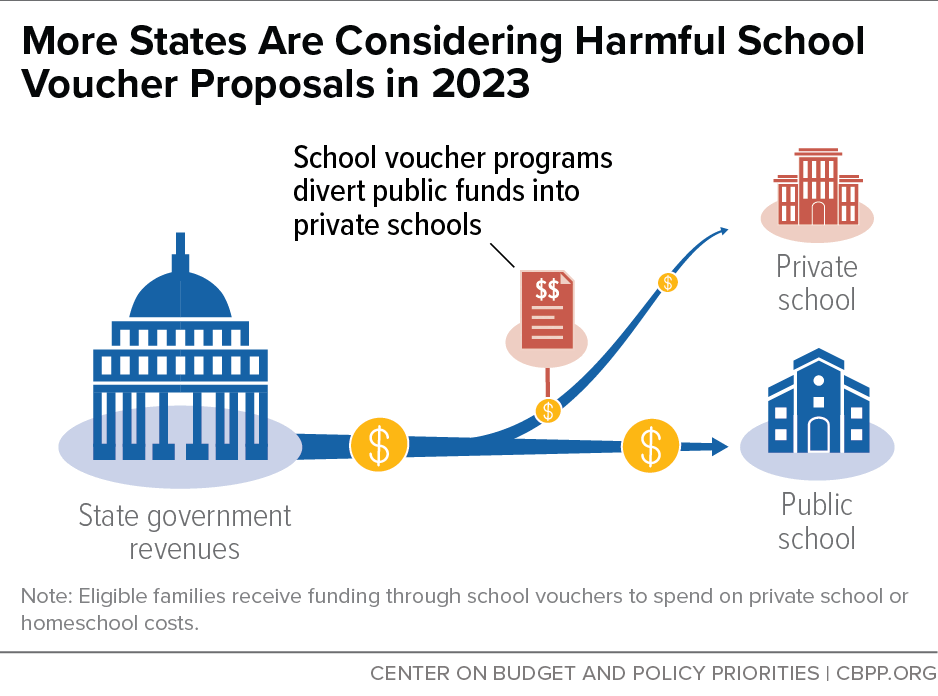
Termed “education savings accounts” (ESAs) these vouchers on steroids were the subject of 79 percent of the 111 voucher-related bills introduced in state legislatures in 2023. Five states enacted new ESAs (AR, IA, MT, SC, and UT). In addition, four states expanded existing ESA programs (FL,IN, NH,TN).

In most ways, ESAs are similar to traditional vouchers that parents have used for decades to pay for private schools at public expense. It’s just that they go a step farther, permitting parents to use the funds not just for private school tuition but for other education-related expenses such as school uniforms, homeschool curricula, and gym memberships.

In a recent article in the Brown Center Chalkboard, a publication of The Brookings Institution, a Washington, DC-based think tank, NEPC fellow Joshua Cowen of Michigan State University writes that he already sees signs that ESAs are following in the footsteps of traditional vouchers, which studies suggest lead to a flood of new providers, many of which quickly close, as well as tuition hikes at existing voucher schools.

“Unfortunately, the voucher research literature suggests that even with new schools opening, there simply are not enough effective private schools to go around,” he writes. “This might explain the dismal academic results over the last decade—and suggests a very real risk in today’s ESA initiatives if they produce large increases in private school enrollment.”

Drawing upon past research on traditional vouchers, Cowen predicts that ESAs will lead to lower student achievement. Evidence on traditional vouchers’ impact on rates of high school graduation and college enrollment is more mixed—but when positive effects were found, they were associated with students spending all four years of high school in a private school. However, private high schools that accept vouchers often experience high rates of churn. In Milwaukee, which Cowen has studied, 20 percent of voucher students left private schools annually. Academic improvements occurred once students returned to public schools.

Voucher advocates disappointed with academic results have blamed over-regulation for the poor outcomes.

Yet Cowen writes that “the only empirical evidence of the effects of accountability on a voucher program found that once voucher schools were required to use the same testing and reporting requirements as their public counterparts, voucher performance improved substantially.”

He added: “The lack of accountability is already raising problems in newer programs. In Arizona, for example, families had a number of questionable expenses approved, and in North Carolina, some private schools are claiming more vouchers than students actually enrolled.”

Unlike earlier traditional voucher programs, today’s vouchers are more likely to be universally available rather than to be offered to certain populations-such as students from low-income families.

“How these new, expanded programs will function is perhaps the key open question for research moving forward,” Cowen writes.

Data from traditional voucher programs has indicated that the larger the program, the worse the results tend to be. In the best case, that’s because there are too few effective private schools to serve expanded voucher programs; in the worst case, there are inherent limits to the choices parents can make when vouchers allow private schools to choose their students as well.

For example, private schools that accept vouchers may implement admissions criteria that screen out students with disabilities, students with low test scores, or emerging bilinguals.

Voucher-accepting schools are also permitted to refuse to accept LGBTQ+ students or families, and to fire or refuse to hire LGBTQ+ staff.

“[I]t remains to be seen how the new expansion of private school choice programs will ultimately affect educational opportunity,” Cowen writes. “But research on traditional vouchers suggests extreme caution when expecting new, favorable results simply because parents of children outside of public school can now spend public dollars on costs beyond tuition.”

The Network for Public Education is the largest organization of volunteers and a tiny staff working every day to stop privatization of our public schools. The following is a message from our executive director, Carol Burris. Unlike the billionaire-funded advocacy groups for charters and vouchers, we need you! Contributions of any size are welcome!

What keeps NPE going are donors like you–friends of public education who are willing to make a one-time or monthly donation to invest in the continuance of our public schools.

We operate on a shoestring. But our reports, action alerts, advocacy, conferences, and webinars with Diane put us at the forefront of saving public education. Behind the scenes in fighting vouchers in Texas or making the case for Charter School Programs reform, NPE is the organization with a tiny budget but a mighty voice.

So please give to NPE this holiday season. You can make an online donation here, or, if you prefer to send a check, our address is:

The Network for Public Education, PO BOX 227, New York City, NY 10156.

Confidential documents were leaked to the media in Tennessee revealing collaboration among out-of-state interests to buy seats in the legislature for anti-public school candidates. As you would expect, the funders included Koch and DeVos. The goal is to privatize school funding.

NASHVILLE, Tenn. (WTVF) — Confidential documents reveal that a group of school privatization groups, each claiming to be separate entities with separate agendas, actually work together to try to buy seats in the Tennessee legislature for candidates who are willing to vote against traditional public schools.

The documents, leaked to NewsChannel 5 Investigates, show how those groups — working as part of what they call the “Tennessee Coalition for Students” — sometimes try to convince voters that politicians who support traditional public schools are just bad people.

Most of those in the “Tennessee Coalition for Students” do not live in Tennessee. Not Betsy DeVos. Not Charles Koch.

Arkansas Governor Sarah Huckabee Sanders has wasted no time in pushing her evangelical, fundamentalist Christian views and diverting public money to religious schools that teach her views. Sanders, who was Trump’s press secretary, is the daughter of fundamentalist pastor Mike Huckabee, who also was governor of Arkansas.

Sanders pushed through a voucher law, and now the state will pay tuition for students at private and religious schools. As in other states, the overwhelming majority of vouchers were claimed by students already enrolled in nonpublic schools.

The state education department went a step beyond making vouchers available. It’s now using taxpayer money to advertise on behalf of a fundamentalist school that does not admit LGBT students, and is certainly not likely to enroll students who are Jewish, Muslim, Catholic, or modern Protestants.

David Ramsay of the Arkansas Times wrote:

Last week, we noted that the Arkansas Department of Education had released a video promoting Cornerstone Christian Academy, a K-12 private school in the southeast Arkansas town of Tillar.

It’s not unusual for a state agency to promote a new law or policy initiative, which this video does by highlighting the voucher program available under Arkansas LEARNS, the state’s new education overhaul. But what is unusual is for the state’s education department to use public resources to create such an explicit advertisement for a private school. As Josh Cowen, a professor at Michigan State University and a nationally prominent expert on education policy, told us: “[U]sually they pretend it’s about parental choice more broadly. What’s less common — what I’ve yet to see, in fact — is a state agency leaning this heavily into promotion of private education. And Christian education at that.”

The publicly funded promo for a private school is made even more awkward given the religious affiliation: Cornerstone uses a Bob Jones University curriculum known for teaching “young-Earth creationism,” the belief that the planet and universe are only a few thousand years old. It requires students to take a Christian studies class and attend chapel. The application asks parents about church affiliation and about their child’s “personal experience and faith in Jesus Christ.”

The application also asks about whether a student has ever been involved with “sexual immorality” and requires that parents agree to “maintain the basic principles of biblical morality in my home.”

I left a message with the school’s administrator to find out whether its admissions policies explicitly discriminated against LGBT students. I never heard back, but after a little further digging on their website, I found a student handbook that directly states LGBT students are not allowed to attend the school:

The significance the Bible places on the severity of sexual immorality, and our commitment to a “Christ-centered” environment demands certain standards for admittance to CCA. Therefore, students will NOT be permitted to attend CCA who professes any sort of sexually immoral lifestyle or an openly sinful lifestyle including but not limited to: promiscuity, homosexuality, transgenderism, etc.

This sort of policy is not uncommon at some Christian private schools, but it raises some thorny questions about the state’s voucher program. LEARNS vouchers are  funneling somewhere in the neighborhood of $419,000 in public funds to Cornerstone this school year, part of $32.5 million projected to be spent on private school vouchers across the state. It remains unclear whether the Cornerstone promo video was made directly or funded by the education department, which has not responded to questions.

The video sells vouchers as a vehicle of parental choice, but ultimately it’s the schools themselves that decide who can — or cannot — attend. The only obligation these schools face in terms of admission is that they cannot discriminate based on race, color or national origin, which would violate federal law. But unlike traditional public schools, they are under no obligation to take all comers. 

They are free to discriminate against LGBT students. They are free to impose religious requirements. They do not have to admit students who struggle academically or have behavior problems. They do not have to offer necessary services for disabled students. We have no way of knowing how many students might be rejected from applying to a school, or what the reasons were. There is no transparency and there are almost no rules. To receive a publicly funded voucher under Arkansas LEARNS, a student must gain admission to a private school — but the entire admission process is an unregulated Wild West. 

Kicking a student out of a private school likewise leaves wide latitude to the schools. To expel a voucher student, a private school must follow clear, pre-established disciplinary procedures. But so long as they don’t discriminate based on race, color or national origin, schools are free to follow their own policies.

Among the 94 private schools participating in the voucher program, many are Christian. It’s likely that a significant number, like Cornerstone, close their doors to LGBT students. That has been found to be the the case in voucher programs in Wisconsin and Indiana. The vouchers are publicly funded, but not all schools are open to the public: The vaunted principle of school choice is, in fact, the school’schoice, and some families may find themselves shut out.

The Houston Chronicle editorial board advised Governor Abbott to abandon his determined fight for vouchers. Fund the public schools instead. Abbott tried and failed to pass vouchers in the regular session. He then called four special sessions and failed every time to pass vouchers, despite threats and bribes. Abbott refused any increase for public school funding or teachers’ salaries. The Educatuon of the more than 5 million children in public schools meant far less to him than the chance to subsidize the tuition of the tens of thousands of children already enrolled in private and religious schools.

The Chronicle wrote:

If at first (and second, and third, and so on) you don’t succeed, try strong-arming and threats.

That was Gov. Greg Abbott’s strategy to try to pass school vouchers in the fourth special session so far. He’ll need to find another trick.

Tucked inside an omnibus school spending bill in the House, vouchers made it the farthest yet this year: all the way to a floor debate Friday. Once again, however, a bipartisan alliance stood in Abbott’s way, passing an amendment 84-63 that removed vouchers from the bill.

In the first full House discussion on the issue in decades, voucher advocates repeatedly appealed to the needs of the most disadvantaged students who they claimed would be most impacted by such a program: low-income students, bullied kids, sexual assault victims and students with special education needs. House Bill 1 author Rep. Brad Buckley, R-Killeen, promised the bill would prioritize “the most vulnerable,” including those with learning challenges.

We’ve seen the failures of such promiseselsewhere. But consider the numbers here in Texas.

While most private schools say they serve students with some sort of special education need, only 63 across the entire state actually cater to those students, according to testimony from Andrea Chevalier, director of government relations with the Texas Council of Administrators of Special Education.

Those 63 schools, identified by the online database Private School Review, serve approximately 4,510 students in Texas. That’s compared to 700,000 students in the public school system currently enrolled in special education services.

Those private schools are mostly in urban centers, have an average tuition of more than $19,000 and can, of course, reject anyone they want based on their own screening criteria.

“Do you think even 5% of special ed kids that we’re proposing to do the most for would qualify or that there would be a place in a private setting for them?” asked state Rep. Ken King, R-Canadian, during a committee hearing on the bill.

Special education experts know vouchers won’t help the neediest. By now, lawmakers should know better too.

Still, it gets worse. The governor has also held hostage desperately needed increases to public special education budgets until he gets what he wants. As part of an omnibus bill, vouchers were mixed with badly needed boosts to public education funding — fine arts dollars, more per-student funding, new teacher stipends and raises and more.

King asked several witnesses how much sugar might be enough for them to swallow his poison pill?

“There is no dollar amount for us that would justify the long-term damage,” said Chevalier.

In the proposed program’s first wave, some 40,000 students would get $10,500 each at an estimated cost of $461.8 million in fiscal year 2025. But the costs balloon, especially, as many fear will happen, if the Legislature looks to expand the program after getting a foot in the door. Importantly, students currently attending private schools would be eligible for those dollars, betraying the promise made repeatedly Friday that vouchers offered a lifeline to low-income families stuck in their failing zoned school.

We’ve complained — as Abbott has given us ample opportunity to do — about the financial ramifications of vouchers, the lack of accountability and clear, persuasive data showing achievement boosts. But we also oppose vouchers because of the absolute disservice they would do to many students with special needs, students who, even if accepted to a pricey private school, surrender their federal protections against discrimination when they leave public schools.

Friday, Buckley told heart-rending stories of hard-working families struggling on behalf of their special needs students. The government does offer those families not well served by public schools an option: they can challenge their school district in a due process hearing before a state education official, seeking to either force the district to provide appropriate accommodations or to pay for the cost of private schooling. For too many parents, that rare option is still out of reach and requires time and legal savvy to be successful. We’d rather see access to that process strengthened than a sham of a private-school handout.

If Buckley and others really want to help our special education students, they should fully fund our public school system. No poison pill required.

Jeff Bryant writes frequently about education issues. He is based in North Carolina but writes about controversies across the nation. Jeff Bryant is the chief correspondent for Our Schools, a project of the Independent Media Institute. In this post, he explains how universal school vouchers—vouchers for all students, regardless of family income—is wrecking state budgets. The marquee example of vouchers’ fiscal impact is Arizona, where the voucher program is now nearly $2 billion a year.

He wrote:

In 2023, Republican state governors went to unprecedented lengths to enact universal school voucher programs in legislative sessions across the country and made support for these programs into rigid party ideology. Republican Texas Governor Greg Abbott, for instance, went so far as to recall the state’s legislature for a fourth special session, a historically unprecedented action in the Texas Legislature’s 176-year history, according to a November 7 article in the Texas Tribune. According to the report, “[t]he biggest point of contention” is a universal school voucher bill that House Republicans have repeatedly rejected. Previously, Abbott warned any Republican holdouts that they would be challengedfrom within the party in the 2024 primary elections if they didn’t get in line and extend their support for vouchers.

Abbott calls his voucher plan “education freedom,” echoing a term favored by former President Donald Trump’s Secretary of Education Betsy DeVos, who used her office to push for a federally funded nationwide school voucher program.

School vouchers can take on many forms, including tax credit programs—which give tax credits to anyone who donates to nonprofits that provide school vouchers—and so-called education savings accounts (ESAs), which allow parents to withdraw their children from public schools and receive a deposit of public funds into an account that they can tap for education expenses. Abbott is attempting to push through an ESA in Texas.

When voucher programs were initially enacted in early adopting states, such as Florida and Arizona, eligibility was limited to low-income families or to children with special needs or circumstances.

When voucher programs were initially enacted in early adopting states, such as Florida and Arizona, eligibility was limited to low-income families or to children with special needs or circumstances. But the trend over the last few years has been to make these programs open to all or nearly all families. What Abbott is proposing, in fact, would allow all families to apply for vouchers.

Nine states have enacted universal school vouchers as of November 2023, including Arizona, Arkansas, Iowa, Florida, North Carolina, Ohio, Oklahoma, Utah, and West Virginia, according to State Policy Network, a school choice advocacy group. Indiana’s voucher program is “near universal,” as 97 percent of families are eligible under the scheme.

Republicans who oppose universal school vouchers, in Texas and elsewhere, have expressed concerns about diverting tax dollars from public schools, especially in rural communities, to private education providers that have little or no accountability for how they spend the money. They’ve also questioned the constitutionality of giving parents public funds to spend on private religious schools.

But Republican state lawmakers who claim to be strict watchdogs on government purse strings should also be concerned about another consequence of enacting these programs—their potential to quickly run through estimated costs and produce sizable deficits.

According to multiple reports detailed below, states that have been among the earliest to adopt universal voucher programs are finding that their costs are far exceeding estimates primarily due to the high numbers of families taking advantage of the programs. These families mostly never had their children enrolled in public schools.

In state after state, the number of families using vouchers to “escape” so-called failed public schools—an original argument for vouchers—is dwarfed by a larger population of families who already had their children enrolled in private schools and are using voucher money to subsidize their private school tuition costs.

Another large percentage of voucher users are parents who homeschool their children and use voucher funds to cover expenses they would previously have been shouldering themselves. Vouchers also appear to be incentivizing parents with rising kindergartners to choose private schools instead of their local public schools.

Other reports have raised concerns about the financial wisdom of giving parents free sway over how they use voucher money, citing evidence that parents have used the funding to make extravagant purchases or buy products and services that have dubious educational value.

In the meantime, policy leaders and experts alike warn that universal voucher programs are sending states, which are constitutionally obligated to balance their budgets, into uncharted financial waters.

‘It Depends on the State and Is Hard to Know’

Where will funding to cover cost overruns of voucher programs come from?

“It depends on the funding mechanism in the voucher law,” according to Jessica Levin, an attorney and director of Public Funds Public Schools, an organization that opposes efforts to redirect public funds for education to private entities.

“For programs that divert funds earmarked for public schools… the voucher funding would dip further into public school funds and/or appropriations,” Levin explained in an email to Our Schools. “For vouchers that are funded with general revenue funds, more money would come out of the state general fund.”

Funding for Abbott’s proposed voucher plan, for example, draws from the state’s general revenue rather than the main source of funding for K-12 education.

Levin added that there could be other mechanisms to prevent cost overruns, including spending caps written into the voucher law and separate appropriations laws that could limit the total funding.

But in terms of what a state might cut to balance out the impact of voucher costs, Levin said, “It depends on the state and is hard to know.”

So far, Republican lawmakers have either denied the existence of these cost overruns, or they’ve been unclear about where money to cover the deficits will come from.

“I haven’t seen coverage of that question,” said Joshua Cowen, a professor of education policy at Michigan State University, who replied to a query from Our Schools.

Cowen has been an outspoken critic of voucher programs primarily because of their tendency to have a negative impact on student achievement.

Cowen has also expressed concerns about the potential financial impacts of these programs, noting in an April 2023 interview, that “[T]he real issue is that you’re getting the state standing up new budgetary obligations to prop up private school tuition where otherwise [those costs] have been borne by the private sector.”

And he has warned of the dangers of vouchers to incentivize a market for “sub-prime” private schools that would quickly open to get the money but then prove to be unsustainable and just as quickly close.

On the issue of voucher program cost overruns, Cowen told Our Schools, “I assume states have different rules about what amounts to deficit spending. But I’m not sure. Arizona is obviously the massive one.”

‘Arizona… the Massive One’

In Arizona, the first state to pass a universal school voucher program, according to the New York Times, Democratic Governor Katie Hobbs has raised an alarm about the enormous cost overruns coming from ESAs, according to KTAR News.

In a memo issued from her office, Hobbs declared that the voucher program “may cost taxpayers up to $943,795,600 annually, resulting in a potential $319,795,600 general fund shortfall in FY 2024.”

It would appear that these cost overruns would have to eventually be covered by the state’s general fund. According to Common Sense Institute Arizona, an organization that advocates for school vouchers, “The ESA program is fully funded by the state’s general fund.”

For that reason, Hobbs maintained that the impact of these costs will go beyond funding for public schools, KTAR reported. “Public safety, all the big budget priorities are going to be impacted if [the cost overrun] continues to grow at this pace,” she said.

In May 2023, Andrés Cano, who was then the Democratic state representative and House Minority Leader, seemed to agree with Hobbs and told ABC15 Arizona, “We’ll either have to tap into the rainy day fund, or we’ll have to cut core state priorities.”

Despite these unplanned costs, “Republicans who have the majority in the state legislature refused any attempt to cap or cut ESAs,” ABC15 Arizona reported. Arizona’s universal voucher program was created by the state’s former Governor Doug Ducey who called it the “gold standard of educational freedom,” according to the Washington Examiner.

Please open the link to finish this important article.

Back in the day, Republicans believed in deregulating business and keeping them free of government pressures, demands, and mandates.

Not so in Florida, where Governor Ron DeSantis wreaked his vengeance on Disney by ousting the board that controlled Disney’s self-governing district and putting his own hand-picked team in charge. About 10% of employees have quit, complaining of low morale. The hand-picked pal of DeSantis, Glen Gilzean, who runs the Governor’s board, claims that morale has never been higher. Gilzean was formerly CEO of the Central Florida Urban League. He’s paid $400,000 a year to run the district board.

DeSantis controls the Legislature, the state’s Supreme Court, the State Board of Education, the state board of higher education, the state board of K-12 education, and now the Disney district. He has unilaterally removed elected district prosecutors whom he thought were too liberal. He has intervened into local school board elections and backed his preferred candidates.

Fortune magazine took a close look at the Disney empire in Florida, now controlled by an angry little Governor.

Fortune wrote:

Disney on Tuesday released a study showing its economic impact in Florida at $40.3 billion as it battles Florida Gov. Ron DeSantis and his appointees over their takeover of the district that governs the entertainment company’s massive resort in central Florida.

Disney accounted for 263,000 jobs in Florida, more than three times the actual workforce at Walt Disney World, according to the study conducted by Oxford Economics and commissioned by Disney, covering fiscal year 2022. Besides direct employment and spending, the study attributed the company’s multibillion-dollar impact to indirect influences, such as supply chain and employees’ spending.

The jobs include Disney employees as well as jobs supported by visitor spending off Disney World property. In central Florida, Disney directly accounts for one in 8 jobs, and for every direct job at Disney World, another 1.7 jobs are supported across Florida, Oxford Economics said.

The time period in the study is before the takeover earlier this year of Disney World’s governing district by DeSantis and his appointees after Disney publicly opposed a state law banning classroom lessons on sexual orientation and gender identity in early grades. The law was championed by DeSantis, who is running for the 2024 GOP presidential nomination.

Disney officials in the past year have said the company plans to invest an additional $17 billion over the next decade in central Florida, including potentially adding another 13,000 jobs. However, the company has shown a willingness to pull back investing in the Sunshine State. Earlier this year, Disney scrapped plans to relocate 2,000 employees from Southern California to work in digital technology, finance and product development, an investment estimated at $1 billion.

Disney World already has four theme parks, more than 25 hotels, two water parks and a shopping and dining district on 25,000 acres (10,117 hectares) outside Orlando, Florida.

Disney is battling DeSantis and his appointees in federal and state courts over the takeover of what was formally called the Reedy Creek Improvement District but was renamed the Central Florida Tourism Oversight District after DeSantis appointees gained control. The district was created by the Florida Legislature in 1967 to handle municipal services like firefighting, road repairs and waste hauling, and it was controlled by Disney supporters until earlier this year.

Before control of the district changed hands from Disney allies to DeSantis appointees, the Disney supporters on its board signed agreements with Disney shifting control over design and construction at Disney World to the company. The new DeSantis appointees said the “eleventh-hour deals” neutered their powers, and the district sued the company in state court in Orlando to have the contracts voided. Disney has filed counterclaims, which include asking the state court to declare the agreements valid and enforceable.

Disney also has sued DeSantis, a state agency and DeSantis appointees on the district’s board in federal court in Tallahassee, saying the company’s free speech rights were violated when the governor and Republican lawmakers targeted it for expressing opposition to the law dubbed “Don’t Say Gay” by its critics.

What kind of Governor goes to war with the biggest employer in his state? What kind of Governor takes control of that employer’s domain? Is DeSantis a socialist?

Drew Darby is an elected state legislator who represents 10 rural counties in Texas. On most legislation, he’s a garden-variety Republican. On education, he breaks from the Republican majority. He is a friend of public schools and an opponent of vouchers. He was one of the most outspoken of the 21 rural Republicans who bucked Governor Greg Abbott and Lt. Governor Dan Patrick.

Darby explains in this article why he voted to reject vouchers.

“Editor’s Introduction: On Friday, Nov. 17, 2023, the Texas House voted to remove private school funding vouchers from the public education funding bill known as House Bill 1 against the wishes of the majority in the Texas Senate and Gov. Greg Abbott. The House voted 84-63 in favor of the amendment introduced by John Raney of College Station that removed the vouchers provision. Digging further, this means there were 21 Republicans and 63 Democrats in the House of 150 representatives (though one seat is currently vacant) who voted against vouchers.

State Rep. Drew Darby, who represents San Angelo and Big Spring in HD 72, was among those Republican representatives who voted against the implementation of school vouchers.

“This is a very important issue because it has many implications for funding for public school districts from now and into the future years as well as how our government in Texas will live up to the Texas Constitution, Article 7, Section 1, that reads:

  • A general diffusion of knowledge being essential to the preservation of the liberties and rights of the people, it shall be the duty of the Legislature of the State to establish and make suitable provision for the support and maintenance of an efficient system of public free schools.

Here are Darby’s own words as to why he voted against vouchers:

Since you elected me as your state representative, I have sworn a duty to the Constitution and House District 72 to protect public education, the separation of public and private institutions, and the millions of rural West Texas students, parents, and educators who want our communities to succeed. Today, I continue to uphold those same principles by voting to separate the discussion on Education Savings Accounts or vouchers from that of funding our public education system.

The structure proposed in House Bill 1 would have allowed a private institution to discriminate against students with special needs; reject eligible students based on their economic status, race, or religion; and balloon to a $2 billion expense to taxpayers in just two years. In states that have passed a voucher, almost 75% go to those already in private schools, leaving our rural communities to foot the bill.

In the coming weeks and months, various special interest groups and donors, some of whom you may believe you can trust, will flood your mailboxes and airwaves, attempting to argue that I do not support parental rights or school choice. The reality could not be further from the truth. I proudly support our private, public, charter, and homeschool options across West Texas and the Concho Valley. We are truly blessed to have tremendous educational opportunities, which parents already exercise their ability to choose from. Thousands of parents have already decided to send their kids to various schools in our communities, the schools that best suit their needs. I oppose, and have always fought, the taking of taxpayer dollars to be funneled toward institutions with no accountability, no requirement to accept all students, and no requirement to provide for our special education students.

Let me be clear: our teachers need raises, and our schools need more funding. I voted for both of those during the regular session. Now, they are being held hostage in an attempt to force through an unproven voucher program.

Throughout my tenure, my opposition to these programs has been a consistent effort to support a free public education system and uphold the values enshrined in the Texas Constitution. I have become a thorn in the side of the wealthy special interest groups, and I expect a solid attempt from them to install a puppet wholly beholden to the rich and out-of-touch with the needs of our rural communities.

I believe West Texas and the Concho Valley are worth more than 30 pieces of silver.

I am proud to advocate for our rural communities consistently and to have never switched my position or sold out our communities to gain votes, money, or win elected office. I shall happily take the fight to any Judas lurking in our communities and defend my record for as long as it takes against out-of-state interests seeking to buy my vote and distort my record.

I stand with students, parents, and teachers, and I stand against any attempts to rob our communities of our local schools and values.