Archives for category: Education Industry

Back in 2010, Secretary of Education Arne Duncan rolled out his Race to the Top program to reform American education. The U.S. Department of Education offered a total of $5 billion to states. To be eligible to compete for a part of the huge prize money, states had to agree to authorize charter schools, to adopt the Common Core (not yet finished), and to evaluate teachers based on the test scores of their students.

The requirement to change teacher evaluation was heated. Duncan scoffed at critics, saying they were trying to protect bad teachers and didn’t want to know the truth.

Debate over this methodology was heated.

I was part of a group of education scholars who denounced this method of evaluating teachers in 2010.

In 2012, three noted scholars claimed that teachers who raised test scores raised students’ lifetime incomes; President Obama cited this study, led by Harvard economist Raj Chetty, in his State of the Union address. It seemed to be settled wisdom that teachers who raised test scores were great, and teachers who did not should be ousted.

In 2014, the American Statistical Association warned about the danger of evaluating teachers by the test scores of their students. The ASA statement said that most studies of this method find that teachers account for 1-14% of the variation in test scores. The greatest opportunity for improvement, they said, was to be found in system-level changes.

The Gates Foundation poured hundreds of millions of dollars into districts willing to test value-added methodology, and eventually gave up. Teachers were demoralized, teachers avoided teaching in low-income districts. Overall improvements were hard to find.

Arne Duncan was a true believer, as was his successor, John King, and they never were willing to admit failure.

Teachers never liked VAM. They knew that it encouraged teaching to the test. They knew that teachers in affluent districts would get higher scores than those in less fortunate districts. Sometimes they sued and won. But in most states, teachers continued to be evaluated in part by their students’ scores.

But in New York state, the era of VAM is finished. Dr. Betty Rosa, the chancellor of the New York State Board of Regents, reached an agreement with Melinda Person, president of New York State United Teachers, to draft a new way of evaluating teachers that moves away from students’ standardized test scores.

New York state education leaders and the teachers’ union have announced an agreement to change how New York school teachers and principals are evaluated, and move away from the mandated reliance on standardized test scores.

State Education Department Commissioner Betty Rosa and New York State United Teachers President Melinda Person hand-delivered their drafted legislation Wednesday to lawmakers to create a new system that doesn’t use students’ test performance to penalize educators. The state teacher evaluation system, known as the Annual Professional Performance Review, or APPR, was modified in the 2015 budget to place a greater importance on scores.

“It’s connecting research to practice and developing strategies to ensure that teachers have the best tools and principals to make sure our young people are getting the best quality education,” Rosa told reporters Wednesday in the Legislative Office Building.

When NYSUT elected president Person last year, she said her first task was to change the teacher evaluation system, and state lawmakers said with confidence Wednesday it will happen this session.

The proposed law, which has not officially been introduced in the Legislature, would remove the requirement to base evaluations on high-stakes tests. School districts would have eight years to transition, but could make the changes faster than the required deadline.

Person argued it will support new teachers who are often burdened by the required paperwork under the current model.

“This would be a fair and a just system that would support them in becoming better educators, which is ultimately what they want to do anyway,” Person said.

The proposal was negotiated in agreement with state superintendents, principals, school boards, the PTA, Conference of Big 5 School Districts and other stakeholders. The issue has been contentious for union and education leaders for years, and both state Education Committee chairs in the Legislature said they’re thrilled with the agreement. 

“That’s such a nice thing in Albany,” said Senate Education chair Shelley Mayer, a Democrat from Yonkers. “Who can do that? Who gets agreement? It’s very hard around here.

“It takes a woman to do it,” Assembly Education chair Michael Benedetto replied with a smile.

Benedetto, a Bronx Democrat, was a classroom teacher for decades and recalled how feedback helps educators develop when done in the proper way.

“It’s like anything else — we want stability in our lives, we want to know where we’re going, how we’re going to be rated and what we’re going to be rated on, as a teacher, as a professional,” the assemblyman said.

Lawmakers will review the proposal and draft legislation in the coming weeks.

Remembering how strident were the supporters of VAM, it’s kind of wonderful to hear the collective sigh of relief in Albany as it fades away.

Maurice Cunningham is a retired professor of political science at the University of Massachusetts. He became expert on the subject of Dark Money in education while covering a state referendum on charter school expansion in Massachusetts in 2016. He noted at the time that the funding on behalf of authorizing more charter schools came from billionaires, many of them out of state. He noticed that while the charter expansion was overwhelmingly opposed by PTAs and local school boards, one parent organization, the “National Parents Union,” supported it. He checked into the NPU’s financials and discovered it had received large grants from the Walton Foundation. Walton is one of the biggest funders of charters in the nation. The referendum went down to a decisive defeat. But NPU carries on, advancing the cause of privatization.

Cunningham is the author of Dark Money and the Politics of School Privatization.

NPU will hold its national conference starting April 9 in D.C. Maurice hopes that reporters will ask the following questions:

National Parents Union’s “#ParentPower2024.”

Some Questions for Journalists.

National Parents Union (NPU), a Koch and Walton funded phony “parents” groups, will hold its #ParentPower2024 meeting this week. For any journalists covering the meeting, here are some questions you should ask. 

1. A “union?” Can National Parents Union (NPU) name another “union” that accepts millions of dollars in donations from such notorious anti-union billionaires as the Walton family ($4,466,000 to affiliated Massachusetts Parents United (MPU) and NPU), John Arnold (his City Fund gave $1,028,500 in 2021-2022), and Charles Koch ($350,000 through a joint venture with the Waltons called the Vela Education Fund)?

2. All in the Family. Across NPU and the allied Massachusetts Parents United, Rodrigues and her husband Tim Langan compensated themselves $661,775 in 2022. What justifies paying them 22 percent of 2022 total revenues?

3. Organizing? NPU’s 2022 tax return lists $31,616 in expenditures for “community Organizing EV.” Why is so little spent on community organizing?

4. Sinking Financials. NPU and MPU went from $5,307,190 combined contributions in 2021 to $3,015,449 in 2022. What explains the steep decline in donations?

5. Rising Salaries. At NPU, despite contributions dropping in 2022 from 2021 levels, salaries rose from $1,729,503 to $2,035,201. Why?

6. Gravy Train Leaving the Station. NPU’s financial position is deteriorating while leadership compensation remains high. Why? 

7. Dueling Boards of Directors? NPU lists one set of board of directors on its website and an almost entirely different board as part of its annual report to the Massachusetts Secretary of State’s Corporations division. Which is the real board? 

8. I Came to Say I Cannot Stay, I Really Must Be Going. Since NPU was founded in 2020 at least twenty-twodifferent individuals have been listed as board members, some with tenures as short as a few months. Why does the board turn over so much? 

9. Three Card Monte. In 2020, MPU made a grant to NPU of $170,000 for “contributions held for National Parents Union, Inc.” In 2021, MPU made a grant to NPU of $959,837 for “contributions held for National Parents Union, Inc.” In 2022, MPU made a grant to NPU of $167,622 for “contributions held for National Parents Union, Inc.” Why are such large sums being funneled through MPU? Is MPU concealing NPU’s donors?

10. Ghost members. Recently Rodrigues tweeted that NPU has “1600 affiliated organizations” but there is no proof of that and NPU has never provided a public accounting of affiliates. The only independent study of NPU’s claims in 2020 showed members were in the charter school industry. Why has NPU never released a list of its “affiliated organizations?

11. Bonus Round. Rodrigues and co-founder Alma Marquez were “elected” as president and treasurer in January 2020 for three year terms. Those terms have ended, why has there been no election of new officers? Marquez disappeared in just a few months and was replaced with Rodrigues’s husband, Tim Langan. What happened to Marquez?

Thom Hartmann warns that we will install a fascist regime if Trump should be re-elected.

Every one of us must do what we can to prevent this from happening.

Our democracy has many defects and it sorely needs fundamental change, but it needs change for the better, not change for the worse. We need a government that will roll back the rule of the oligarchy, we need more equality of wealth and income, we need fewer billionaires, we need Medicare for all, we need to reverse Citizens United. We need many changes. But we don’t need fascism.

Hartmann writes:

Fascism doesn’t typically take over countries by military means (WWII’s temporary order notwithstanding); instead, it relies on rhetoric. 

Words. Speeches. News conferences. Rallies. Media. Money. And they all point in one direction: violence in service of the fascist leader.

The rhetorical embrace and appreciation of violence is one of the cardinal characteristics of fascism, and a big step was taken this week in a New York City courtroom to push back against the current fascist campaign being waged by Donald Trump against our American form of government.

Noting that Trump’s “statements were threatening, inflammatory, [and] denigrating” Judge Juan Merchan imposed a gag order on the orange fraudster and rapist, forbidding him from further attacks against the court’s staff, the DA’s staff, witnesses, and jurors. 

Why? Because all were concerned about becoming the victims of Trump’s fascist army.

Because the judge omitted himself from the list, as its his job to try send bad guys to prison, Trump got slick and attacked the judge’s daughter (who’s also not on the list). Now she’sgetting death threats. 

This isn’t the first time. Whenever Trump finds himself in trouble, fraud or violence follow, as has already been determined by a court in New York this month and we saw in the pattern of his presidency….

Analysts of fascism from Umberto Eco to Hannah Arendt to Timothy Snyder and Ruth Ben-Ghiat generally agree on a core set of characteristics of a fascist movement. It includes:

— A romantic idealization of a fictional past (“Make America Great Again”)
— Clear definition of an enemy within that is not quite human but an “other” (“vermin,” “rats,” “animals,” all phrases Trump has used just in past weeks to describe immigrants and employees of our criminal justice system)
— Vilification of the media (“fake news” or lugenpresse)
— Repeated attacks on minorities and immigrants as a rallying point for followers (shared hatred often binds people together)
— Disparagement of elections and the rule of law (because neither favors the fascist movement)
— Glorification of political violence and martyrdom (the January 6th “patriots” and Ashley Babbitt)
— Hostility to academia and science leading to the elevation of Joe Sixpack’s ability to “do his own research” (simple answers to complex questions or issues)
— Embrace of fundamentalist religion and the moral codes associated with it
— Rejection of the rights of women and members of the queer community as part of the celebration of toxic masculinity
— Constant lies, even about seemingly inconsequential matters (Hannah Arendt noted in 1978: “If everybody always lies to you, the consequence is not that you believe the lies, but rather that nobody believes anything any longer.”)
— Performative patriotism that replaces the true obligations of citizenship (like voting and staying informed) with jingoistic slogans, logos, and mass events: faux populism
— Collaboration with oligarchs while claiming to celebrate the average person

Donald Trump and his MAGA movement check every single box.

So did the American Confederacy and the Democratic Party it seized in the 1860s. And the American fascist movements of the 1920s and 1930s (albeit, they were much smaller). And the white supremacy movement of the mid-20th century, from the KKK to the White Citizens’ Councils (ditto).

This is not our first encounter with fascism, as I detail in The Hidden History of American Oligarchy. Nor will it be our last: fascism has a long history and an enduring appeal for insecure, angry psychopaths who want to seize political power and the great wealth or opportunity that’re usually associated with it…

Preventing a fascist takeover is not particularly complex, and there are encouraging signs that America is beginning to move in this direction. It involves a few simple steps:

— Recognize and call out the fascists and their movement as fascists

With Trump and his fascist MAGA movement, this is happening with greater and greater frequency. Yesterday, for example, the Financial Times’ highly worldwide-respected columnist Martin Wolf published an article titled Fascism has Changed, but it is Not Dead.

“[W]hat we are now seeing,” Wolf writes, “is not just authoritarianism. It is authoritarianism with fascistic characteristics.” He concludes his op-ed with: “History does not repeat itself. But it rhymes. It is rhyming now. Do not be complacent. It is dangerous to take a ride on fascism.”

For a top columnist in one of the world’s senior financial publications to call a candidate for US president and his movement fascists would have been unthinkable at any other time in modern American history. And it’s happening with greater and greater frequency across all aspects of American media.

— Debunk and ridicule extremism while ostracizing fascists from “polite company”

Increasingly, Trump’s fascist movement and those aligned with it are becoming caricatures of themselves. Book-banners and disruptors of public education are reaching the end of their fad-like existence. Moms for Liberty is a sad joke founded by some of the country’s more bizarre examples of hypocrisy; the former head of the RNC was fired from NBC for her participation in Trump’s fascist attempt to overthrow our government; and CPAC has shriveled into a hardcore rump (pun intended) faction of the conservative movement.  

Political cartoonists lampoon Trump followers as toothless rubes and obese, gun-obsessed men; so many women are rejecting Republicans as dating partners that both sociologists and media have noticed; and the GOP is looking at a possible bloodbath (to use Trump’s favorite term) this November, regardless of how many billions in dark money their billionaires throw into the races. We saw the first indicator of that this week in Alabama.

— Support democratic institutions and politicians who promote democracy

The media landscape of America has become centralized, with a handful of massive and mostly conservative corporations and billionaires owning the majority of our newspapers, radio and TV stations, and online publications.

Nonetheless, there are many great online publications beating the drum for democracy, and many allow subscriptions or donations. My list includes Raw StoryAlternetDaily KosCommon DreamsSalonTalking Points MemoThe New RepublicMother JonesThe NationThe GuardianDemocratic UndergroundJacobinOpEdNewsSlate, and Free Speech TV. In addition, there are dozens of worthwhile publications that share this Substack platform with Hartmann Report: you can find my recommendations here. And I’m live daily on SirusXM Channel 127 (Progress) and on Free Speech TV, as are many of my progressive colleagues. Read, use, listen, share, and support them.

There are also multiple organizations dedicated to promoting democracy and democratic values in America. They range from your local Democratic Party to IndivisibleProgressive Democrats of AmericaMove to AmendMoveOn.orgRoots ActionProgressive Change Campaign Committee (PCCC)EMILY’s ListRun for SomethingNextGen AmericaAdvancement ProjectLeague of Women VotersDemocracy InitiativeCommon Cause, and Citizens for Responsibility and Ethics in Washington (CREW).

Other democratic institutions we should be supporting by joining, donating, or participating in their governance include public schools, libraries, city councils, county government groups, etc. When MAGA fascists show up to disrupt these institutions and intimidate their members, we should be there to defend them.

President Biden, speaking last fall at an event honoring John McCain, laid it on the line and challenged all of us:

“As I’ve said before, we’re at an inflection point in our history — one of those moments that only happens once every few generations. Where the decisions we make today will determine the course of this country — and the world — for decades to come.

“So, you, me, and every American who is committed to preserving our democracy carry a special responsibility. We have to stand up for America’s values embodied in our Declaration of Independence because we know MAGA extremists have already proven they won’t. We have to stand up for our Constitution and the institutions of democracy because MAGA extremists have made clear they won’t.

“History is watching. The world is watching. Most important, our children and grandchildren are watching.”

John Thompson, historian and retired teacher, sees some hopeful signs in Oklahoma. Maybe the public is tiring of the irresponsible people it elected, given their erratic leadership.

He writes:

Good news! It’s time to once again check into the tidal wave of Oklahoma politicians’ alleged crimes and rightwing antics!

Seriously this overview (assisted by Oklahoma education advocate Greg Jennings) encourages more hope than the despair that accompanied previous bursts of local and national headlines. Even so, the magnitude of these March controversies can be overwhelming.

Oklahoma has a long history of extreme corruption. But State Auditor Cindy Byrd previously testified to the Senate budget committee that, “The investigative audit of Epic Charter Schools revealed the largest abuse of taxpayer funds in the history of the state. Yet for 11 years, Epic’s annual school audits showed no reportable findings, no abuse of funds, no missing funds and no misappropriations.” Byrd estimated that around $30 million was mishandled. 

Also, an audit by the U.S. Department of Education’s Office of Inspector General found questionable expenditures and processes surrounding $31 million in the Governor’s Education Emergency Relief (GEER) funds. 

Moreover, KFOR News now reports that “A U.S. Department of Education spokesperson told News 4 the agency’s Office of Special Education will reach out to OSDE’s Office of Special Education to discuss the use of IDEA funds to pay substitute teachers.” Despite the denial of the reporting by the OSDE, the Oklahoman confirmed, “Sixteen employees from the Oklahoma State Department of Education are, indeed, serving as substitute teachers in the Tulsa Public Schools district.”

And, given the last headline-grabbing event this post will discuss, it must be remembered that Gov. Stitt turned down federal funding for summer school lunch programs.

Now, Attorney General Gentner Drummond has charged Epic co-founders David Chaney and Ben Harris with “fifteen felonies, including embezzlement, money laundering, computer crimes and conspiracy to defraud the state.” Preliminary hearings have begun, and on the third day, a forensic auditor, “Chaney, Harris and their private company EYS had not reported the $144 million in student Learning Funds she said had been deposited into EYS bank accounts as income on their individual or business tax returns.” 

Meanwhile, the chaos created by State Superintendent Ryan Walters has grown worse. In December of 2023, “a survey conducted by the Cooperative Council for Oklahoma School Administration shows over 100 school districts have yet to receive final approval from the State Department of Education on federal program funding.”

Since then, the Oklahoma State Department of Education (OSDE) Chief of Staff, the OSDE’s Chief Legal Counsel, it’s Associate Legal Counsel and Executive Director of Accreditation have resigned. And the Oklahoman’s Murray Evans reported on the latest Board of Education meeting, explaining:

The Oklahoma State Department of Education’s team of attorneys apparently has no one left, which left the State Board of Education in a unique situation for its monthly meeting on Thursday.

[This seems to confirm] rumblings that the state Education Department’s three other known attorneys — deputy general counsel Andy Ferguson and assistant general counsels Erin Smith and Nathan Downey — also have left the agency. As of Thursday, there were no attorneys listed on the agency’s website on its “Office of Legal Services” page, a highly unusual situation for a major state agency.

The meeting’s other headline-making story, as reported by the Tulsa World, was Walters saying he “was ‘heartbroken’ for the loss (of a nonbinary student who was bullied and knocked unconscious before, apparently, committing suicide) and would be praying for those impacted by the death, but he did not say Nex Benedict’s name. He also said a ‘woke, left-wing mob’ used the teenager’s death to make outrageous claims.’” Walters also said, “I will never back down to a left wing mob,” … drawing derisive laughter from meeting attendees. “I will never lie to our students or allow a radical agenda to be forced on them.”

Moreover, Rep. Mark McBride, Rep. Rhonda Baker, and Speaker of the House Charles McCall, all Republicans, have “signed off on a subpoena on behalf of the Oklahoma House of Representatives to Supt. Walters” in order to investigate the mishandling of teacher bonus payments and the contradictory numbers submitted by the OSDE.

Walters has a history of spending state money on his travel to political functions, and for an anti-union video; he has also appointed “Chaya Raichik, the far-right social media influencer behind Libs of TikTok to a library advisory committee.” Now, Oklahoma Watchreports that the OSDE used state money on Vought Strategies to “write speeches and op-eds and book Walters on at least 10 national TV and radio appearances per month.” Oklahoma Watch then explains:

That has some people questioning whether Walters is boosting his national profile at the public’s expense — something Mary Vought, president and founder of the firm, made clear she is working to do.

“I will work with my network of stakeholders to obtain attendance at national events and conferences in order to increase the national exposure of the client,” she wrote in her bid for the contract, public records show.

Similarly, Fox News adds that the OSDE hiredPrecision Outreach, a Texas-based company, and “Oklahomans are also paying $50k to a Texas company to create videos that some describe as ‘propaganda.’” On another topic, Fox reporter Wendy Suares tweeted:

Some Covid-era federal funding (ESSR) ends June 30, forcing OKCPS to cut some much-needed staff at all schools. And schools in some neighborhoods with the most need will be hit hardest. A principal tells me one SW OKC elem school will lose *11* positions.

Also this week, the OSDE ramped up its resistance to citizens opposing his policies who are seeking to attend its meetings. Because the Walters administration has limited access to the office, protesters have arrived as early as 5:00 AM to get in line. Then it unexpectedly closed off the Department of Education doorway with cables, and the Highway Patrol imposed a curfew from 11:00 PM to 6:00 AM.  It claimed “that the Capitol Complex grounds are considered a state park that has a curfew.” However, Oklahoma Watchexplained that the “State Capitol Park is not among the 38 state parks listed on the state’s website. Those parks that list hours other than office hours indicate they are open 24 hours per day.”

News of the closing immediately attracted a larger crowd, legal observers, and Sean Cummins, who has been receiving national coverage for both – resisting rightwing campaigns and the cruelty which led to the death of Nex Benedict – while Cummins was mourning the death of his wife and fellow activist, Cathy Cummins.

And that leads to the best, recent news about Ryan Walters. Nondoc reported on Republican and Democratic Party polls on Walters. They found:

In a pair of polls regarding Republican House district primaries, Walters’ favorability scored 15 percent and 22 percent lower than GOP Gov. Kevin Stitt’s. Walters’ support lagged among women and younger age groups most likely to have students in Oklahoma public schools.

Separate data from a statewide survey of Republicans — which was presented to the House Republican Caucus earlier this year — show his favorability at 38.5 percent and his unfavorable score at 28.6 percent.

Nondoc then reported on an online questionnaire by a national firm hired by the Human Rights Campaign, which “featured 665 responses split among 51 percent registered Republicans, 22 percent registered Democrats and 27 percent registered independents.” Although these sorts of polls have a large margin of error, it found that “respondents largely disapproved of Walters’ job performance (55 percent) and said he is not a good role model for kids (61 percent).”

Nondoc then explained:

{Republican] Pollsters added their own summaries to the feedback they found:

Voters consider him “abrasive,” “crass,” and as coming across as too “direct” and “hard.” (…) They also think he doesn’t “respect” teachers and he does not “listen” to them. Essentially, they think he does care not one twit what anyone in the education field thinks. The way he is interacting with teachers is likely taking a toll on his image.

Nondoc then reported, “An open-ended question in the same statewide GOP poll asked respondents, “How do you feel about Ryan Walters, and why?” Those responses painted an even more negative perception of Walters, and only 0.6 percent of responses registered as “approve” or “positive.” And, “All told, the open-ended question seeking description of Walters in “as many or as few words as you’d like” yielded 72.2 percent negative opinions from the Oklahoma Republicans surveyed.”

While these poll results provide reasons for hope, because of Oklahomans’ attitudes towards primaries, they lead to questions about the all-important 2026 race for governor which will probably pit Walters against the moderate Attorney General Gentner Drummond, and Speaker of the House Charles McCall. How many Republicans will vote in their primary based on the values cited in the poll’s open-ended questions or, as has become the norm, out of loyalty to MAGA-ism?

Fortunately, another day in the life of Sean Cummins provides hope. Getting back to the sudden closure of the OSDE office the night before the Board of Education meeting, he arrived at the ODOE at 4:45 AM in order to claim a place in line for addressing the Board. Cummins couldn’t speak at that meeting because he was scheduled to deliver a check freeing students in Tuttle from their debt.  He has been leading a campaign that has freed students in 21 schools and districts of lunch debt. When writing a check to the school to clear their students debt, Cummins was filmed for a national ABC News report.

In other words, it’s great that local and national news, prosecutors, and more politicians are confronting the cruelty and corruption that has put Oklahoma on “the cutting edge of crazy.” The best reason for hope, however, is the growing resistance to Walters, school privatizers, and MAGAs. 

Jennifer Palmer of Oklahoma Watch lays out the details of Oklahoma’s biggest charter scandal. The owners of the for-profit online charter school Epic have been charged with embezzling millions of taxpayer dollars.

The size of the scandal alleged at the state’s largest online school befits the school’s name: epic. 

Investigators say two men at the helm of Epic Charter Schools defrauded taxpayers out of tens of millions of dollars over a decade. Details of the scheme, which the state auditor called the largest abuse of taxpayer dollars in Oklahoma history, will be unveiled in court this week. 

A hearing in the embezzlement case against David Chaney and Ben Harris begins Monday. Oklahoma County District Special Judge Jason Glidewell allotted five days for the preliminary hearing, which is like a mini-trial, with witnesses and evidence and cross-examination. The purpose is for the judge to determine whether there’s enough probable cause to proceed to trial.

Chaney and Harris are each charged with fifteen felonies, including embezzlement, money laundering, computer crimes and conspiracy to defraud the state. They have denied wrongdoing.

Epic’s former chief financial officer, Josh Brock, faces the same felony charges but waived his preliminary hearing. He is expected to be one of several witnesses this week and will likely take a plea deal…

Prosecutors’ review of Epic Youth Services’ bank accounts revealed the company collected more than $69.3 million in management fees between 2013 and 2021, court records show. Of that, the trio split $55 million: Harris received $25 million, Chaney received $23 million and Brock received more than $7 million.  

New Hampshire is under siege by Koch-funded libertarians who want to eliminate public services, government and democracy.

Former State Senator Jeanne Dietsch issues a warning about this invasion. New Hampshire already has a “Free State Movement” that promotes anti-government sentiment and elects representatives to the Legislature to oppose any government services.

Now comes Koch money and ALEC plans to advance the movement of selfish individualism.

Log on to Granite State Matters to watch a 17-minute video about the siege of New Hampshire.

In her newsletter, she reports:

“Wake Up NH” News Update

Teams are powering up! Will we alert enough people in time?

More people are waking up to the millions pouring into New Hampshire to buy our elections. Seats were full at all the “Wake Up” presentations in key swing districts. In its first two weeks, the Wake Up video has had hundreds of views. Over 500 copies of “NH: Battleground in the Fight to Dismantle Democracy” have already been distributed for reading and passing along. Five percent are in Spanish. Even as I am writing this, someone called asking for more books.

Many New Hampshire residents do not even know who the Free Staters are. Or they think they are just gentle, harmless hippies who want to smoke weed and shoot guns. They do not realize that FSP “movers” are urged to run for town office shortly after they arrive. As they move into positions of power in towns, they defund police, libraries and other town services. At the county level, they privatize nursing homes. Residents reliant only on Medicare or Medicaid are forced to leave. At the state level, they use tax funds for vouchers and deny taxpayers the right to audit or quality-control the recipients. All in the name of “Liberty.”

State Representative candidates used to spend less than $1000 on an average campaign even five years ago. Now, in swing districts, Young Americans for Liberty pays students to canvass, telephone and postcard for their priorities and their candidates; 25,825 doors, 118,800 phone calls and 21,755 mailers in 2022. One Democratic candidate reported that he raised $30,000, but his “liberty” opponent was given $70,000 in campaign funds.

Who are the ‘Liberty’ promoters?

The number of Free Staters and Liberty Alliance members in New Hampshire is small. At the annual NH Liberty Forum, fewer than 300 people attended, and some of those were from out-of-state. But the desire to turn New Hampshire into their model “Libertarian Homeland” is intense.

Walking into the Forum felt a little like walking into the Red Sox bleachers with a Yankees cap on. But almost everyone was very polite. The most common complaint was “Why didn’t you put me on your extremist list?” The ones already on the list sported yellow buttons proudly announcing the fact. I explained that they can apply through the signup button. A few have. They seem to believe that announcing they want to end democracy in our state will increase their popularity. The message is reinforced in their social media and clubs.

I found that FSPers love to discuss the reasons they detest majority rule by democracy. They seem unconcerned about the consequences of removing environmental regulations. They did not expect billionaires’ 10,000:1 spending advantage over the median American would be a problem.Turning NH into the ‘Wild West’

When asked to name an example of a Libertarian Utopia, Free Staters often cite the “Wild West.” Before becoming states, these territories had little formal law and even less enforcement. Survival of the fittest, or the best armed, ruled.

What they never mention, however, is settlers’ encroachment upon native people. These original residents were pushed out or moved onto reservations so settlers could have their “liberty.”

In Prospera, a flagship libertarian project in Honduras, poor, native Hondurans are being bought out. Peter Thiel and other VCs have bought a third of the island, now privately governed. A newly elected Honduran government is trying to get rid of them, but the billionaires have taken the nation to World Bank arbitration. 

Libertarians in New Hampshire want to push current residents out…

Everyone can do something to stop libertarians 

[Jeanne recommends actions here.]


We currently have 94 YAL members in the NH legislature. Whether you are housebound, shy or broke, you can still help wake up your friends, neighbors, communities and networks…

Still time for May 14 town meeting & ballot candidate filing

  • Ballot April 9 Towns Deliberative session & candidate filing past
  • Town Meeting May 14 Candidate filing, Mar 27-Apr 5
  • Ballot May 14 Towns Deliberative Mar 30 – Apr 6; Candidate filing Mar 27- Apr 5

May 14 meeting and ballot towns still have a chance to make sure you have trustworthy pro-democracy candidates for every seat. Even openings for Cemetery Trustee and Planning Board are important. Anti-democracy candidates are coached to start in innocuous positions to build name recognition before running for higher office. Preparing for State Elections

Candidates for state office register June 5-14. Now is the time to ensure that your districts have good options for electable pro-democracy candidates. Remind House candidates that if they have a majority, they can vote the first day of session to allow remote attendance at hearings. This can make a huge difference in the burden of serving. How to Identify Anti-democracy Candidates

How can voters identify those trying to thwart democracy? Watch for a candidate who wants to:

  • DEFUND, CLOSE, OR TOTALLY DEREGULATE what they’re elected to run. For instance, a zoning board candidate might point out a harmful zoning law and then conclude that all zoning regulations should be repealed.
  • HARASS OR THREATEN those managing the town, county, or other employees. For instance, they may demand extra reviews, audits, copies, meetings, or forms.
  • PROMOTE anti-intellectual and anti-scientific attitudes and policies, for instance, encouraging the legalization of inappropriate medications.
  • HIDE FROM TAXPAYER SCRUTINY the use or outcomes from taxpayer spending, such as educational vouchers.
  • MAKE ELECTIONS & VOTING MORE DIFFICULT by requiring hand counts, unusual documentation, complicating absentee voting and so on.

If you identify new candidates who meet these crtieria, please let us know so we can add them to the watch list.

*******************

News about Concord
Muzzle-the-people bill goes down in flames! 

A bipartisan majority of the NH House voted 211-129 to “indefinitely postpone” HB 1479. This was an ALEC look-alike bill being pushed across the nation to muzzle any state or local official from testifying. It would have barred any advocate from a membership organization, like NH Municipal Association, from testifying for or against laws that affected towns. It would have barred staff of any nonprofit that took a state grant from testifying on behalf of children, or mentally ill or whomever they represent.
     Sean Themea came to NH last week to speak at the NH Liberty Forum. Themea is COO of the Texas-based, Koch-funded Young 

Americans for Liberty, Texas resident Themea asked the NH audience to support HB 1479. He stated that the bill would keep lobbyists funded by NH DOT from asking to increase gas taxes. NH road maintenance funding has been flat over 12 years. But higher gas taxes eat into petroleum demand and profits.
  The bill’s impacts would have far exceeded petro profits. HB 1479 would have muzzled the voices of NH teachers, town officials, and activists not funded by plutocrats.
    This was not “Liberty” legislation. It was a pay-to-have-your-say bill. And the NH House defeated it, soundly, bipartisanly! The following people voted “Nay”, meaning they supported this look-alike bill put forward by plutocrats to muzzle those who oppose their interests:

Alexander, Joe, Hills. 29
Ammon, Keith, Hills. 42
Ankarberg, Aidan, Straf. 7
Aron, Judy, Sull. 4
Aures, Cyril, Merr. 13
Avellani, Lino, Carr. 4
Aylward, Deborah, Merr. 5
Bailey, Glenn, Straf. 2
Ball, Lorie, Rock. 25
Bean, Harry, Belk. 6
Belcher, Mike, Carr. 4
Berezhny, Lex, Graf. 11
Berry, Ross, Hills. 39
Bickford, David, Straf. 3
Boyd, Stephen, Merr. 10
Brown, Richard, Carr. 3
Burnham, Claudine, Straf. 2
Coker, Matthew, Belk. 2
Comtois, Barbara, Belk. 7
Connor, James, Straf. 19
Corcoran, Travis, Hills. 44
Cordelli, Glenn, Carr. 7
Costable, Michael, Carr. 8
Davis, Arnold, Coos 2
DeSimone, Debra, Rock. 18
Dolan, Tom, Rock. 16
Doucette, Fred, Rock. 25
Drago, Mike, Rock. 4
Dumais, Russell, Belk. 6
Dunn, Ron, Rock. 16
Erf, Keith, Hills. 28
Ford, Oliver, Rock. 3
Gagne, Larry, Hills. 16
Gorski, Ted, Hills. 2
Gould, Linda, Hills. 2
Granger, Michael, Straf. 2
Greeson, Jeffrey, Graf. 6
Griffin, Gerald, Hills. 42
Harrington, Michael, Straf. 18
Harvey-Bolia, Juliet, Belk. 3
Hill, Gregory, Merr. 2
Hoell, J.R., Merr. 27
Janigian, John, Rock. 25
Janvrin, Jason, Rock. 40
Kaczynski, Thomas, Straf. 5
Kelley, Diane, Hills. 32
Kennedy, Stephen, Hills. 13
Kenny, Catherine, Hills. 13
Khan, Aboul, Rock. 30
King, Seth, Coos 4
Kofalt, Jim, Hills. 32
Kuttab, Katelyn, Rock. 17
Ladd, Rick, Graf. 5
Lascelles, Richard, Hills. 14
Layon, Erica, Rock. 13
Leavitt, John, Merr. 10
Lekas, Alicia, Hills. 38
Lekas, Tony, Hills. 38
Lewicke, John, Hills. 36
Love, David, Rock. 13
Lynn, Bob, Rock. 17
Mannion, Dennis, Rock. 25
Mannion, Tom, Hills. 1
Mazur, Lisa, Hills. 44

McConkey, Mark, Carr. 8
McGough, Tim, Hills. 12
McGuire, Carol, Merr. 27
McGuire, Dan, Merr. 14
McLean, Mark, Hills. 15
Moffett, Michael, Merr. 4
Nagel, David, Belk. 6
Newton, Clifford, Straf. 6
Noble, Kristin, Hills. 2
Notter, Jeanine, Hills. 12
Nutting, Zachary, Ches. 11
Osborne, Jason, Rock. 2
Ouellet, Mike, Coos 3
Pauer, Diane, Hills. 36
Pearson, Mark, Rock. 34
Pearson, Stephen, Rock. 13
Perez, Kristine, Rock. 16
Peternel, Katy, Carr. 6
Phillips, Emily, Rock. 7
Phinney, Brandon, Straf. 9
Ploszaj, Tom, Belk. 1
Polozov, Yury, Merr. 10
Popovici-Muller, Daniel, Rock. 17
Porcelli, Susan, Rock. 19
Post, Lisa, Hills. 42
Potenza, Kelley, Straf. 19
Potucek, John, Rock. 13
Pratt, Kevin, Rock. 4
Prudhomme-O’Brien, Katherine, Rock. 13
Qualey, James, Ches. 18
Quaratiello, Arlene, Rock. 18
Reid, Karen, Hills. 27
Rhodes, Jennifer, Ches. 17
Roy, Terry, Rock. 31
Santonastaso, Matthew, Ches. 18
Seaworth, Brian, Merr. 12
See, Alvin, Merr. 26
Seidel, Sheila, Hills. 29
Sellers, John, Graf. 18
Sheehan, Vanessa, Hills. 43
Simon, Matthew, Graf. 1
Sirois, Shane, Hills. 32
Smart, Lisa, Belk. 2
Smith, Jonathan, Carr. 5
Smith, Steven, Sull. 3
Soti, Julius, Rock. 35
Spillane, James, Rock. 2
Spilsbury, Walter, Sull. 3
Stapleton, Walter, Sull. 6
Stone, Jonathan, Sull. 8
Summers, James, Rock. 20
Tenczar, Jeffrey, Hills. 1
Terry, Paul, Belk. 7
Thomas, Douglas, Rock. 16
True, Chris, Rock. 9
Tudor, Paul, Rock. 1
Turcotte, Len, Straf. 4
Ulery, Jordan, Hills. 13
Verville, Kevin, Rock. 2
Vose, Michael, Rock. 5
Wallace, Scott, Rock. 8
Walsh, Thomas, Merr. 10
Wherry, Robert, Hills. 13
Wood, Clayton, Merr. 13
Yokela, Josh, Rock. 32

Subscribe to this monthly newsletter

Share

Tweet

Forward

Share


Your questions and comments are always appreciated at admin@granitestatematters.org
Copyright © 2024 Granite State Matters, All rights reserved.

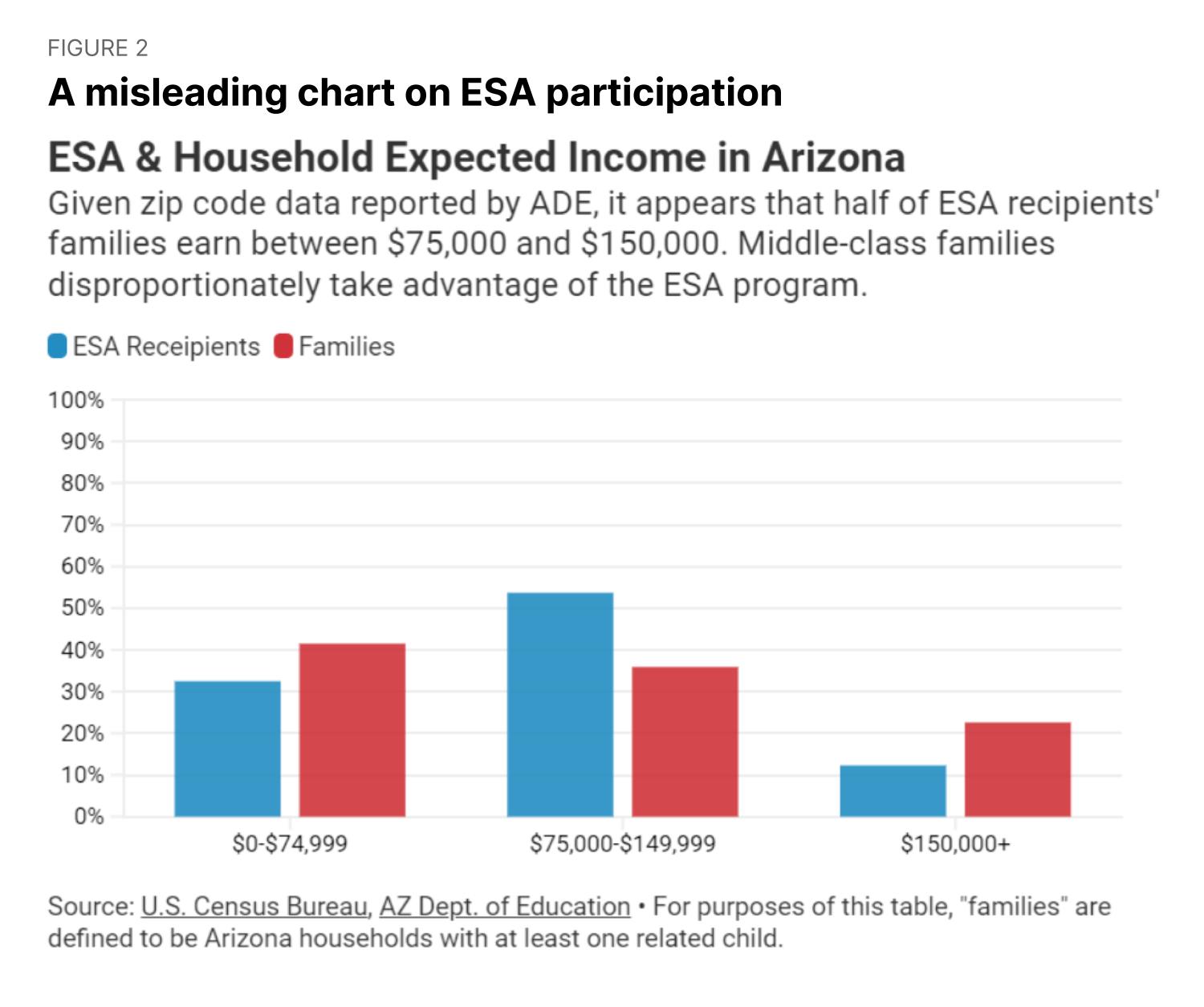
Josh Cowen of Michigan State University is a veteran voucher scholar. He has been doing voucher research for nearly two decades. For years, he was hopeful about the outcomes for students. He recently realized that the results were appalling. Students who took vouchers and left their public school actually lost ground academically. The real benefits of vouchers went to students who were already enrolled in private schools; their family, which could afford the tuition, won a subsidy from the state. In some states, even wealthy parents won a state subsidy for their children. vouchers do not help poor students; instead, they are harmed.

Josh Cowen has a new book coming out in September: The Privateers: How Billionaires Created a Culture War and Sold School Vouchers.

Cowen wrote in The Philadelphia Inquirer:

If you’ve ever run a small business or talked to a business owner, you might have heard the phrase “under promise, over deliver” as a strategy for customer service.

Unfortunately, when it comes to school voucher plans like those being considered by Pennsylvania lawmakers this spring, what happens is the opposite of a sound investment: a lot of overpromising ahead of woeful under-delivery.

As an expert on school vouchers, I think about the idea of what’s promised in the rhetoric vs. what actually happens when the realcost sets in. To hear voucher lobbyists tell it — usually working for billionaires like Betsy DeVos, or Pennsylvania’s own Jeff Yass — all that’s needed to move American education forward is a fully privatized market of school choice, where parents are customers and education is the product.

As I testified to Pennsylvania lawmakers last fall, however, vouchers are the education equivalent of predatory lending.

One promise that never holds up is the idea that states can afford to create voucher systems that underwrite private tuition for some children, while still keeping public school spending strong.

Other states that have passed or expanded voucher systems have rarely been able to sustain new investments in public schools. Even when those voucher bills also came with initial increases in public education funding. Six out of the last seven states to pass such bills have failed to keep up with just the national average in public school investment.

But for children and families — especially those who have been traditionally underserved by schools at different points in U.S. history — the cost of school vouchers goes beyond the price for taxpayers.

Although most voucher users in other states (about 70%) were, in fact, in private schools first, the academic results for the kids who transfer are disastrous. Statewide vouchers have led to some of the largest academic declines in the history of education research — drops in performance that were on par with how COVID-19 or Hurricane Katrina affected student learning.

Although school vouchers have enjoyed fits and starts of bipartisan support from time to time, today’s push for universal voucher systems across the country is almost entirely the product of conservative politics. All 12 states that created or expanded some form of a voucher system in 2023 voted for Donald Trump in 2020. Of those that passed voucher laws since the COVID-19 pandemic hit in 2020, only two (Arizona and New Hampshire) voted for Joe Biden that election year.

In states like Arkansas and Iowa, voucher laws either immediately followed or immediately preceded extreme new restrictions on reproductive care, a weakening of child labor laws, and other conservative policy priorities.

And this isn’t just about electoral politics. The right-wing origins of school vouchers have real day-to-day implications for who gets to use them and who is left out. We know from states like Florida, Indiana, and Wisconsin that the latest voucher bills allow schools to discriminate against certain children if schools can claim they do so for religious reasons.

Who pays that particular price? Examples include students with disabilities and children and parents from LGBTQ families, who may be asked to leave or not even admitted at all. And that’s because when it comes to vouchers, it’s not really school choice at all. Families don’t get their choice of schools; instead, schools get their choice of which families to admit.

And the price tag for all of this usually comes in wildly over budget anyway. The big culprit for those cost overruns goes back to who actually gets a voucher. Because most voucher users were in private schools first— paid by the private sector before — voucher costs are actually new expenditures taxpayers have to make. In the worst-case scenario, Arizona, vouchers cost more than 1,000% beyond what their advocates first promised.

Despite claims some supporters make that vouchers are part of an efficient education market, the result is really the opposite of any strategy a successful business would recognize.

To put it plainly: The promises rarely pan out, and eventually, the check comes due.

Chalkbeat Tennessee reported on the Legislature’s recognition that the “Achievement School District” is a failure.

The ASD was launched by the Obama-Duncan Race to the Top on the theory that charter schools were a magic solution to low test scores. Duncan awarded $500 million to Tennessee, one of the first RTTT winners; $100 million was allocated to the ASD.

The ASD gathered the lowest-performing public schools in the state and clustered them into a new, all-charter district. Chris Barbic, leader of YES Prep charter schools in Houston, was selected to lead the ASD. He boldly predicted that within five years, the ASD schools would rank among the top 25% in the state. ASD started with six schools and eventually expanded to 33..

Blogger Gary Rubinstein has followed ASD over the years, with growing disillusionment. None of the ASD schools ever broke into the top 25%.

The state has spent more than $1 billion to help the ASD.

Chalkbeat wrote a few weeks ago that the Legislature is ready to throw in the towel:

After a decade of painful takeovers of neighborhood schools, contentious handoffs to charter networks, and mostly abysmal student performance, Tennessee’s Achievement School District appears to be on its way out.

Several of the GOP-controlled legislature’s top Republicans are acknowledging that the state’s most ambitious and aggressive school turnaround model has failed — and should be replaced eventually with a more effective approach.

Meanwhile, Democrats continue to push for legislation designed to end the so-called ASD, created under a 2010 state law aimed, in part, at transforming low-performing schools.

“I expect we will move in a different direction,” Sen. Bo Watson, the powerful chairman of his chamber’s finance committee, recently told reporters.

The Hixson Republican called the charter-centric school turnaround model an “innovative” idea that fell flat, at least in Tennessee. It would be foolish, Watson added, to keep spending money on an initiative that isn’t working and already has cost the state more than $1 billion — a sentiment echoed by Lt. Gov. Randy McNally and House Speaker Cameron Sexton.

But if the legislature decides to shutter the ASD and Gov. Bill Lee signs off, important questions remain about how Tennessee will support thousands of students in its lowest-performing schools.

There are currently 4,600 students enrolled in ASD schools, 12 in Memphis and one in Nashville.

Initially, the ASD attracted some of the nation’s biggest charter chains.

Evaluations showed that students in ASD schools gained no more in tested subjects than students in schools that received no interventions at all.

Now Tennessee must revise its contract with the federal government to revise its plans to help the lowest performing students.

Chalk up another loss for the “Disruption Doctrine” imposed by Bo Child Left Behind and Race to the Top. One can only imagine the difference that might have been made if the same sums were invested in full-service community schools and reduced class sizes.

Since the state put Mike Mikes (ex-military, Broadie, briefly Superintendent of Dallas ISD) in charge of the Houston Independent School District, Miles has cemented his reputation as a leader who issues orders and doesn’t listen to critics. It’s his way or Mr get out. Many teachers and principals have left rather than comply with his scripted curriculum and mandates.

But, says the Houston Chronicle editorial board, he actually listened and put on hold his intention to fire dozens of principals, including some from Houston’s best schools. It’s worth pausing to remember that the state took control of the entire district because one high school (disproportionately enrolling students with disabilities, ELLs, and high needs) posted low test scores for several consecutive years. Rather than focus on helping that school, the state placed the entire district under the thumb of an autocrat and know-it-all.

Miles is testing out the proposition that the way to “fix” education is by standardization, mandates, data, rigid worship of test scores, and one-man control.

The editorial says:

Late this week, the state-appointed superintendent of Houston ISD did something many thought impossible: he listened.

It took several protests, community outcry and some three hours of overwhelmingly negative public comment during Thursday’s school board meeting, but Mike Miles seems to have heard the message.

The uproar began with the leaked release of a list of 117 principals the district said weren’t performing well enough yet to secure their spot for next year. Several of the principals at top-rated schools were on the list. Parents and students from those campuses showed up in force. Early Friday morning, with the meeting still plodding along, Miles announced that he and the board of managers changed course and said they wouldn’t make any adverse employment decisions this year based off of these proficiency screenings, which broadly measure student achievement with a variety of test data, quality of instruction gathered during spot observations and professionalism judged by a rubric that includes how well principals reinforce “district culture and philosophy.” But, he made clear, he would still use the more comprehensive principal evaluation system approved last fall to make those decisions at the end of the school year.

Miles told us the next day he’d already gotten some emails from anxious community members “saying thank you” for the decision late last week.

“I’m proud of the board who worked so hard to listen,” Miles added.

We’re glad to see Miles pay attention to optics for once. No matter how good his intentions, his reforms won’t succeed long-term without community buy-in. That said, we’re struggling to see how Miles changed his overarching approach on principal evaluations.

Miles never planned to can those 117 principals — in fact, he expected the overwhelming majority of them would return — based on the proficiency screenings but the handful who were already deemed unsatisfactory don’t seem to suddenly be in a different position as best we can tell. Miles insisted those few failing principals not getting asked back didn’t just fail the proficiency screening and that the decision to let them go was based on other input.

“We were looking at all the data for them,” he told us.

And the principals who were told they need to improve, aren’t really in a different position either.

In practice, then, very little seems to have changed for the campus leaders who will still be judged on some of the same metrics, including spot reviews by the district’s so-called independent review teams. Instead, he said the decision was meant to allay some community confusion and ease some anxiety about principal turnover, something he’d been trying to combat since the leaked list was published by the Chronicle ahead of spring break on March 8.

“People have made it a bigger deal than it is,” Miles insisted when he met with the editorial board Wednesday ahead of the school board meeting. “You keep your job if you’re an effective principal,” he said, adding that he expects the majority, at least 80 percent, of the principals to return next year.

What Miles didn’t seem to grasp until he heard from a whole new set of angry parents — not the “usual suspects” who have protested the state takeover from the outset — was how nonsensical his list appeared.

Some of the schools aren’t just top-ranked in the district but in the country. Carnegie. HSPVA. T.H. Rogers. If people had doubts before about Miles’ priorities and evaluation criteria, the inclusion of these high-achieving campuses heightened them. It’s possible a high-performing school can still have a weak leader, just as it’s possible that a low-performing school can have a great one. But the list begged the question.

“You start to wonder what he is evaluating,” a parent with a student at Carnegie told us outside the State of the District event Thursday. She said the school’s principal, long-time veteran Ramon Moss, is an integral piece of the school’s success. 

“He’ll be the first to tell you that the success of the school is due to the teachers and students and community even though his leadership is a big reason why the community is there,” she said.  

Miles has declined to talk about specific campuses and what landed them on the list. So while this decision might relieve some momentary angst, it doesn’t address the lingering doubts about whether the district’s measures of quality instruction and effectiveness are so narrow they fail to recognize the best educators, a concern that extends well beyond the star campuses.

This principal evaluation chaos is just the latest example of a breakdown of communication and trust.

We don’t disagree with the idea of evaluations or consistent standards across the district. It’s entirely possible that an overall A rating at a campus masks concerning disparities. Or that high-achieving campuses don’t show a ton of growth on standardized tests over the course of a school year.

What concerns us about the entire saga of the principal list is how, whether it’s intentional or not, Miles contributes to fear and uncertainty. He hasn’t effectively communicated his vision to the public or to the people tasked with carrying it out, despite his copious slideshows and sincere efforts to clear up the confusion over principals with follow-up press conferences, statements and even interviews with this board.

Last week, Miles and team showed greater sensitivity to the environment. It’s a good start. But they should make more effort to respond to the substance of the criticisms and not just the volume of them.

It has always been a goal of the billionaires who fund privatization to block accountability and democracy. Eli Broad once memorably said that he prefers to invest in districts under mayoral control so he doesn’t have to deal with the public. The public asks questions and wants to know who is making decisions about their children’s education. So much simpler to have one person to handle problems.

The charter school lobby has persistently fought public oversight and accountability. They are more than willing, even eager, to take public money. But they don’t like public officials asking questions about how the money was spent.

The big battle over public oversight is happening right now in Colorado. All the major right wing groups—the Koch machine, ALEC, Philip Anschutz (producer of “Waiting for Superman”) are there, battling against public schools.

On March 7, three Colorado legislators introduced a charter school accountability bill to establish improved guidelines for authorizing and renewing charter schools by local school districts. The bill would strengthen the authority that elected school boards have regarding their governance of charter schools, and it also provides citizens with expanded information about the operations of charter schools in their districts. 

According to its backers and public education advocacy groups, this is the first major legislation to prescribe more charter school accountability since the first Charter Schools Act was passed in 1993. Current state legislation often limits local control over the charter school approval process, funding requirements, and waivers from state legislation. Given that nearly two-thirds of the state’s 64 counties experienced an “absolute decline in the under-18 population over the last decade,” the charter school accountability bill would empower local school boards to address the overall enrollment needs of the district. While charter schools primarily utilize taxpayer dollars for their funding, many charter schools allow private interests to invest in their growth and development, which can create potential conflicts of interest.

Pro-charter school organizations don’t agree with this legislative effort to increase accountability as they believe this bill would “kill” charter schools. Republicans have been especially vocal in their opposition to this bill, even though the bill promotes increased local control over charter schools. The pro-charter organizations hired over 30 lobbyists to oppose the bill. Lobbying can be expensive, but the organizations opposing the bill have connections to several billionaire-funded foundations. 

The largest lobbying team hired to oppose the bill works for Americans for Prosperity, a conservative organization funded by the Koch network, whose goal is  to “destabilize and abolish public education.”American for Prosperity has been active in Colorado for years promoting vouchers and education savings accounts for families to use for any school of their choice. Last January, AFP joined with the American Legislative Exchange Council and the Heritage Foundation to form the Education Freedom Alliance, an organization that ALEC initiated to promote parents’ rights to use public money to attend a private, charter, home or public school of their choice. Funded with nearly $80 million primarily from the Koch Industries, the Americans for Prosperity political action group has also supported far-right candidates for decades.

American for Prosperity and Advance Colorado issued a press release on X stating the bill would “mark the beginning of the end of charter schools in Colorado,” and together, the two groups “would work overtime to make sure the bill was soundly defeated.” According to the Colorado Times Recorder, Advance Colorado is a conservative dark money group said to be funded by billionaire Phil Anschutz. Formerly known as Unite Colorado, Advance Colorado has “given over $17 million to support major Republican political groups and efforts in Colorado.” Colorado Dawnanother dark money group headed by State Board of Education member Steve Durham and Colorado state Sen. Paul Lundeen,  gave millions to Ready Colorado, which also has lobbyists opposing this bill.

Besides Americans for Prosperity and Ready Colorado,  these organizations have enlisted their lobbyists to defeat the billColorado Succeeds, the Colorado Children’s Campaign, Transform Education Now, Colorado League of Charter Schools ActionEducation Alliance of Colorado, and Education Reform Now Advocacy. Several of these organizations have access to deep pockets of money, and often the donors are not known. 

Colorado Succeeds, the Colorado League of Charter Schools, and Transform Education Now have received over $20 million from the Walton Family Foundation, which has given over $400 million to charter schools for decadesEducation Reform Now Advocacy is closely connected to Democrats for Education Reform, “which was started by Wall Street hedge fund managers,” according to Ballotpedia. Colorado Politics stated that “various reports say Education Reform Now has taken in millions from Rupert Murdoch and the Walton Family Foundation.” The Education Reform Now money also benefited the campaign coffers of 14 Democratic legislators, which may create a hurdle for the charter bill’s passage unless these legislators decide the bill’s merits warrant their support. 

The upcoming lobbying effort in Colorado’s legislature is not unique, as similar high-paid lobbying efforts occur wherever there is significant charter school legislation. In Nashville, a local news reporter exposed who 67 pro-charter lobbyists worked for during legislative hearings on several charter bills in 2022. In the video that accompanied his report, Phil Williams highlighted the direct connections that the pro-charter lobbyists have with billionaires. His investigative report documented that “Americans for Prosperity is linked to billionaire Charles Koch,” and they also “received funding from billionaire Bill Gates and the Walton family of Walmart fame.”  

As in Tennessee, the Colorado lobbyists will meet frequently with legislators to convince them this bill is not necessary. The legislators will need to weigh the benefits of the bill with the concerns of those who participate in a massive letter-writing campaign initiated by the lobbying organizations to oppose the legislation. The bill’s backers hope this will be the legislators’ opportunity to update 30-year-old legislation and begin to ensure increased local control and accountability for the millions of taxpayer dollars that fund the charter schools educating 15% of the state’s K-12 student population.