Archives for category: Disruption

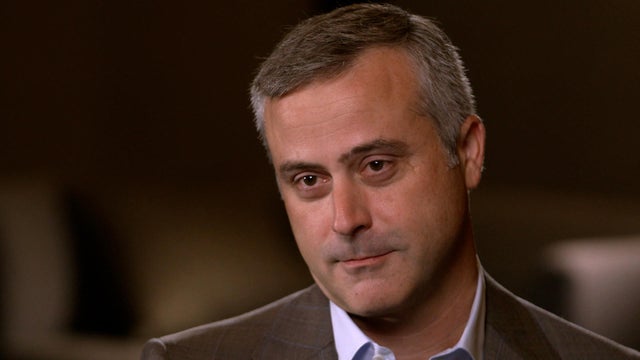
Anderson Cooper interviewed John Poulos, the CEO of Dominion Voting Systems on 60 Minutes about the attacks on the integrity of his company’s voting machines by 2020 election deniers.

Despite a rash of unsubstantiated claims lobbed against his company, the CEO of Dominion Voting Systems, John Poulos, has remained largely silent. That changed Sunday night on 60 Minutes when Poulos sat down with Anderson Cooper, saying irreparable damage has been done to his company and his employees.

“People have been put into danger. Their families have been put into danger. Their lives have been upended and all because of lies,” Poulos said. “It was a very clear calculation that they knew they were lies. And they were repeating them and endorsing them.”

“It’s important to you people admit what they said was wrong?” Cooper asked.

“It’s important to me. It’s important to all the people whose families have been impacted by this. Anderson, my kids still are not allowed to get any package from the front door until we verify that it’s actually from a trusted sender,” Poulos said.

Days after the 2020 presidential election, lawyers supporting then-President Donald Trump, including Sidney Powell and Rudy Giuliani, began spreading unsubstantiated claims that Dominion Voting Systems, an American company, had rigged the election. They said Dominion was backed by Venezuela and that its machines and software switched millions of votes from Donald Trump to Joe Biden.

They never showed any evidence, but that didn’t stop pro-Trump attorneys from making baseless claims, or conservative news networks from giving them plenty of airtime.

Poulos went through a number of their claims with Cooper, dismissing each one…

President Trump first mentioned Dominion in a tweet on November 12, 2020, and recorded a video a few weeks later, posted on Facebook, in which he said: “We have a company that’s very suspect. Its name is Dominion. With the turn of a dial or the change of a chip, you could press a button for Trump and the vote goes to Biden. What kind of a system is this? We have to go to paper. Maybe it takes longer. But the only secure system is paper.”

“We do have paper ballots,” Poulos said. “What the machines do is they count those paper ballots– in a way that makes it very easy for people to verify after the fact through the means of audits and recounts.”

dominionscreengrabs02.jpg
  John Poulos

Dominion makes two types of machines. One is called a ballot marker. It’s a touch screen device that a voter can use to mark their choices and then print the ballot. The second machine is a scanner that reads that paper ballot, counts the vote and immediately stores the ballot securely.

Poulos demonstrated on air how the voting machines work. He explained that his company has no relationship to Venezuela. He has sued various lawyers and FOX News for more than $10 billion. Judges have thus far refused to dismiss the lawsuits.

I hope that those who spread these lies and undermined faith in the integrity of our elections are fined for their deceit and unethical behavior, hopefully to the same extent as the other Big-time liar, Alex Jones.

Apparently Trump lawyers are already planning to claim that the 2022 elections were rigged, if their candidates lose.

Nancy Flanagan taught music for many years in Michigan. She draws on her deep experience in this post to set the record straight about what parents really want from their schools.

Extremist groups funded by rightwing autocrats claim to speak for parents, but they use their platform to spread propaganda and lies. They say they speak for “parental rights,” but they spread fear, distrust and lies.

John Gibbs, the Republican candidate for Congress in western Michigan, said that:

Folks, did you ever think that one day in America, we’d have to worry about schools putting obscene books in their libraries? This is simply insane–we must stop the madness. Voters overwhelmingly oppose sexually explicit books in public school libraries.

Flanagan answers Gibbs:

Well—folks. I’m not worried about obscene or sexually explicit books in public school libraries. Because there is no madness, no insanity, no pornography in school libraries.

Teachers and school leaders also overwhelmingly oppose sexually explicit books in school libraries. The word we use is ‘inappropriate’—materials are selected by trained school media specialists, who know inappropriate when they see it.

The entire slate of MI Republicans running for statewide or national office, not just Gibbs, is hell-bent on insisting that schools have become (in the past two years) hotbeds of sexual orientation and gender identity transformation, not to mention racial tension and guilt-inducement. They are led in this effort by the Republican candidate for Governor, Tudor Dixon.

Gibbs goes on to say, on behalf of Republican candidate for Governor in Michigan, Tudor Dixon:

What Tudor wants to accomplish is very simple and common sense. She wants to get radical sex and gender theory out of our schools, remove classroom instruction of sexual orientation and gender identity for grades K-3, make sure gender specific sports remain gender specific given biological differences in boys vs. girls and post all curriculum online for parents to see and be involved in their child’s education. Every child deserves a world class education and parents should be in charge of it.

Flanagan answers:

So let’s break this down.

Radical sex and gender theory? (Not a part of the curriculum in any school I’ve been in.)

Classroom instruction on sexual orientation or gender identity for the littles? (Likewise—nope, nope.)

Gender specific sports? (The Michigan High School Athletic Association has a policy adopted in 2012 that determines post-season tournament eligibility for transgender athletes on a case-by-case basis. The group received and approved 10 applications in the past five years—so this is hardly a burning statewide issue.)

Post all curriculum online? (Sure. Most districts post their standards framework—what gets taught, when– and public high schools in Michigan have adapted the Michigan Merit Curriculum.)

Every child deserves a world class education and parents should be in charge of it. (Right out of the Glenn Youngkin playbook, a statement like this, which is mostly true, really resonates.)

But here’s the truth (from 32 years of classroom experience): What bubbles up in classroom discussions and playgrounds is what’s on the minds of the kids in that classroom. This starts early, in Tudor Dixon’s forbidden zone, grades K-3—like this story about the boy who chose a ‘Frozen’ backpack.

Kids are curious and they’re paying attention to what their parents and their screens (and their friends, and their older siblings) are telling them. I taught music and math, two subjects you’d think were pretty straightforward and controversy-free, but can testify that anytime you get a cluster of kids together, provocative issues emerge.

Please open the link and read the rest of this common sense, informed commentary. Parents are not fooled by this fear mingering. They know their children’s teachers, and they trust them.

Don’t be fooled by “Moms for Liberty,” writes political scientist Maurice Cunningham. They may appear to be a garden-variety group of rightwing extremists, but they are more than that. Keep your eye on the Dark Money that funds them.

He writes:

The group, which claims to be about “parent rights,” has ties to the January 6 insurrection and is expected to provide “foot soldiers” for Florida Governor Ron DeSantis.

Moms for Liberty (M4L) claims the organization was started by moms.

[Insert uproarious laughter.]

But it is hard to believe that three mothers in Florida could start up a grassroots group on January 1, 2021, and then, within a matter of weeks and months, wind up on Rush Limbaugh, Tucker Carlson’s show, Glenn Beck, and Fox News. However, there is a shadowy network of money and influence in right-wing political circles that could arrange that easily.

Among M4L’s financial supporters and profile boosters are some of the most influential organizations, media operations, and wealthy donors in the vast theater of the right-wing propaganda machine.

And it would be a mistake to believe M4L’s agenda is exclusively about maternal concerns over what children learn in schools. Instead, most of the organization’s purported success seems to be in helping to advance a much broader right-wing political agenda through electoral politics. In its short history, M4L has already been credited with helping to engineer a “massive victory,” according to Salon, and ensuring a string of wins for a number of Republican candidates in school board elections across Florida.

Looking ahead at the upcoming elections, M4L is expected to provide the “foot soldiers” for the reelection bid of Florida Governor Ron DeSantis, and many also expect to see the M4L soldiering for DeSantis in the 2024 presidential race.

The Rise of Moms for Liberty…

M4L was born into a full-scale right-wing media rollout. As Olivia Little of Media Matters reported in July 2022, M4L debuted on The Rush Limbaugh Show in January 2021—right out of the cradle. M4L representatives have since appeared “on Fox News at least 16 times and Steve Bannon’s War Room at least 14 times,” according to Little. As her reporting and my own investigation in April 2021indicated, M4L initially had practically no members or state infrastructure. But appearances on Fox and fawning treatment in right-wing outlets like Breitbart News and Glenn Beck propelled its growth.

By June 11, 2021, M4L threw a fundraisercalled “Fearless: An Evening with Megyn Kelly,” the former Fox News celebrity. The highest-priced ticket of $20,000 for the “presenting sponsor” included 20 tickets to a meet-and-greet along with a photo with Megyn Kelly and came with many other benefits. There were other offers that included lesser benefits for donors making contributions of $15,000 or $10,000 and the general admission was $50….

M4L’s grandest event thus far has been its national summit, which took place between July 14 and 17, 2022 in Tampa, Florida. The national summit featured speeches by DeSantis, Florida First Lady Casey DeSantis, Carson, former Florida Governor and current U.S. Senator Rick Scott, and Trump’s former Secretary of Education Betsy DeVos, who advocated for the abolition of the department she had led, according to Florida Phoenix….

When asked, the leaders of M4L say they raise a lot of money from T-shirt sales. [Cue loud laughter.]

But Cunningham knows that’s not the main source of their funding.

Open the link to learn who turned this “parent-led” group into a Dark Money political powerhouse.

Steven Singer is a teacher in Pennsylvania and a blogger. In this post, he contends with the argument that some charter schools are really very good and not at all like those charters mired in scandal, unaccountable, inequitable, greedy, and a drain on public school resources.

Singer writes:

Not MY charter school!

That’s the usual reaction from charter school fansto any criticism of the industry.

I say many of these institutions lack accountabilityabout how tax dollars are spent…

Not MY charter school!

I say they waste millions of taxpayer dollars to duplicate services already in existence….

Not MY charter school!

I talk about frequent scandals where unscrupulous charter school operators use copious loopholes in state law to enrich themselves without providing services to parents, students and the community…

Not MY charter school!

I mention charter school lotteries, cherry-picking students, not providing adequate special education services, zero tolerance discipline policies, teaching to standardized tests, targeting black and brown kids for profit and feeding the school to prison pipeline….

Not MY charter school! Not MY charter school! Not MY…

Really!?

If the industry is subject to this much malfeasance and corruption, doesn’t that reflect badly on the entire educational model – even the examples that avoid the worst of it?

One model has daily scandals. The other – authentic public schools – is far from perfect but relatively tame by comparison. You can’t blame people for generalizing.

Not My….

Okay. We get it!

But sadly this defensiveness against any criticism hides an enormous ignorance of exactly what charter schools are and how they operate at the most basic level.

Yes, there is a difference between how the best and worst charter schools act.

Yes, there are some charter schools that are run much better, more humanely and responsibly than others.

But that doesn’t mean the very concept of a charter school isn’t rotten to the core.

It’s like colonialism.

Yes, there were colonies where the invaders treated the conquered with more respect and dignity than others.

But not a single colony was a good thing. Not a single colonial enterprise avoided subjugating people who should have been free to determine their own destinies.

The same goes with charter schools.

When I discuss the industry, it’s surprising how many people – especially supporters of the enterprise – don’t understand what charter schools really are.

Let’s start with a simple definition.

A charter school is a school with a charter.

Get it?

And a charter is a contract – a special agreement with the state or some other governmental entity that this school can exist.

Why is that necessary?

Because there are rules laid out by each state in their school codes detailing what schools must do in order to qualify for taxpayer funding.

For example, under normal circumstances they must have an elected school board made up of members from the community where the school is located.

All authentic public schools must follow these rules. But not Charter schools.

Instead, they get to follow whatever rules are set down in their charter.

So without even examining exactly which special rules are stipulated in that charter, these schools are founded on the very concept of privilege.

They get to abide by their own rules tailor-made just for them.

Why does that matter? Because they get public funding.

And, yes, ALL charter schools are publicly funded – they get at least part of their money from taxpayers, usually all or the majority of their funding.

That opens a huge divide in accountability between types of schools….

OPEN THE LINK AND READ ON.

David DeMatthews and David S. Knight wrote in the San Antonio Express-News that Governor Greg Abbott’s voucher plan is “a terrible idea,” and they explain why. (Since I don’t have a subscription to the San Antonio Express-News, I am copying their tweet.)

David DeMatthews is an associate professor of educational leadership and policy at The University of Texas at Austin.

David S. Knight is the associate director of the Center for Education Research and Policy Studies and an assistant professor of educational leadership at The University of Texas at El Paso.

To summarize:

1. The vouchers don’t cover the cost of most private schools.

2. The money spent on vouchers will hurt public schools, which most students attend.

3. Budget cuts will force public schools to cut popular programs, like dual language education, STEM programs, and vocational training. These cuts will hit low-income districts the hardest.

4. Private schools that get vouchers are not held to the same standards of accountability as public schools, nor do they provide the same services to students with disabilities.

5. Studies of various voucher programs have consistently shown that they are no better than public schools and often worse.

6. Many voucher programs subsidize affluent students already attending private schools.

7. Texas already has one of the worst funded school systems in the nation, especially for children with disabilities. Vouchers will make it worse.

8. In rural communities, public schools are the hub of the community. They will be harmed by vouchers.

9. Vouchers are a terrible idea for Texas. The state needs well-funded schools staffed by high-quality teachers. Vouchers will undercut that goal.

In a stunning turn of events, the charter schools affiliated with ultra-conservative Hillsdale College withdrew their applications in three counties. The counties rejected them, but the state charter commission had the power to override the local school boards. The charters stirred controversy in the rural counties, and the president of Hillsdale College made matters worse by insulting teachers.

American Classical Education — a group set up to create a network of charter schools affiliated with Hillsdale College across Tennessee — has withdrawn its applications to open schools in Madison, Montgomery and Rutherford counties.

This follows months of controversy since Gov. Bill Lee announced a “partnership” with the ultraconservative Michigan college during his State of the State Address in January.

ACE’s application had been rejected in all three counties, and they faced a contentious appeal next week before the Tennessee Public Charter School Commission, which could have overruled the local school boards.

“We made this decision because of the limited time to resolve the concerns raised by the commission staff and our concerns that the meeting structure and timing on Oct. 5 will not allow commissioners to hear directly from the community members whose interests lie at the heart of the commission’s work,” board chair Dolores Gresham wrote in a letter delivered Thursday to the commission….

Lee had praised Hillsdale’s “patriotic” approach to education and asked Hillsdale president Larry Arnn to open as many as 100 of the taxpayer-funded schools across the state.

But a NewsChannel 5 investigation had highlighted issues with Hillsdale’s curriculum, including a rewriting of the history of the civil rights movement.

Hidden-camera video also revealed Arnn making derogatory comments about public school teachers coming from “the dumbest parts of the dumbest colleges.”

More recently, NewsChannel 5 Investigateshad uncovered video of a Hillsdale College professor, who teaches part of an online course about the civil rights movement, questioning the achievements of famous Black Americans.

Early on, Governor Lee asked Hillsdale to open 100 charters in Tennessee, and Hillsdale College scaled the number back to 50. At the moment, Hillsdale has none. Governor Lee underestimated the close ties between rural communities and their public schools. The people of Tennessee were unwilling to toss aside the teachers they know and the schools that are the hub of their communities.

Please open the link to read the rest of the story. Hillsdale might try again.

C

The U.S. Department of Education’s Office of the Inspector General conducted an in-depth audit of the federal Charter Schools Program, which was initiated in 1994 with a few million dollars by the Clinton administration. Thanks to astute lobbying by the charter industry, the modest program grew to $440 million a year with little or no accountability. Betsy DeVos pushed it aggressively to large charter chains, including for-profit chains.

You will be interested in this account of the audit, written by Valerie Strauss on her blog “The Answer Sheet” in the Washington Post, introducing an analysis by Carol Burris, executive director of the Network for Public Education.

This audit demonstrates the power and persistence of the Network for Public Education, a small but smart advocate for public schools. NPE operates with one full-time employee and a small number of part-time employees. Our work is motivated not by greed but by idealism and a passionate commitment to the common good. We believe in well-funded schools with experienced teachers for all children.

The introduction by by Strauss and the analysis by Burris has many links, but none transferred when I copied it. I copied some, but not all of them. I urge you to open the original and find the links.

Strauss begins:

The U.S. Education Department’s Office of Inspector General has released a new audit of the federal Charter School Program that found some alarming results about how charter school networks have used millions of dollars in funding. Among other things, the audit found that charter school networks and for-profit charter management organizations did not open anywhere near the number of charters they promised to open with federal funding. This piece looks at the new audit and what it tells us.


The reason this is not surprising is that investigations into the Charter School Programs by the Network for Public Education, an advocacy group that opposes the growth of charter schools, found that same problem, as well as others and reported it a few years ago. You can read my stories about their “Asleep at the Wheel” here and here. (The second report noted that the state with the most charter schools that never opened was Michigan, home to former education secretary Betsy DeVos, who has pushed to expand charter schools for decades.)


Charter schools are publicly funded but privately managed. The federal charter program, which began in 1994 with the aim of expanding high-quality charters, had bipartisan support for years, but many Democrats have pulled back from the movement, citing the fiscal impact on school districts and repeated scandals in the sector. The Biden administration is making some changes to the program in an effort to stop waste and fraud and provide more transparency to the operation of charters.


This piece was written by Carol Burris, executive director of the Network for Public Education and a former award-winning principal in New York. She has been chronicling the charter school movement and the standardized-test-based accountability movement on this blog for years. The Network for Public Education is an alliance of organizations that advocates for the improvement of public education and sees charter schools as part of a movement to privatize public education.


By Carol Burris


A new report issued by the Office of the Inspector General (OIG) entitled “The Effectiveness of Charter School Programs in Increasing the Number of Charter Schools” documents how states, charter management organizations, and charter developers often make wildly exaggerated claims regarding the number of charter schools they will open or expand to secure large grants.

The OIG, an independent watchdog of the U.S. Department of Education (the Department), found that for grants issued between 2013 and 2016, only 51 percent of the schools promised by Charter School Programs (CSP) recipients opened or expanded.


The OIG audit also exposed the sloppy record keeping and weak oversight that characterize CSP operations. Since 2006, the department has paid a private corporation, WestEd, millions of dollars to compile, check and update CSP records. WestEd’s present CSP contract exceeds $12 million. In total, WestEd has active contracts with the U.S. Department of Education worth more than $27.6 million. Yet an alarming number of grant records could not be found when requested by the OIG auditors. And while the Biden administration is attempting to clean up and reform the CSP, according to the independent OIG, more work needs to be done.


What did the Office of the Inspector General audit?
The audit had three goals. The first was to describe how the department’s Office of Elementary and Secondary Education tracked and reported the number of charter schools that opened and expanded using Charter School Program funds. A second goal was to determine whether CSP grant recipients actually delivered the number of charter schools they promised when they applied for their often multimillion dollar awards. Finally, the audit sought to determine how many schools were still open two years after CSP funding ended.


As its title stated, the audit was an attempt to measure the program’s effectiveness in fulfilling its mission. To conduct the audit, the OIG examined 2013 through 2016 CSP grant records. During that period, the department awarded 103 CSP grants to states, charter management organizations, or individual charter developers. Ninety-four were closely investigated by the OIG. The likely reason these years were chosen was that most grants are for five years. The auditors also found that the department often extends them further when grantees have not spent all of their money. Therefore, more recent grants were excluded because records were likely to be incomplete.

Incomplete and inaccurate records

The auditors noted that while the department, through WestEd, tracked spending and schools while grants were open, the tracking stopped as soon as the grant was complete. Therefore, the department had no way of knowing whether schools remained open beyond the years federal funds propped them up. This speaks to the purpose of the program — to open and expand high-quality charter schools.


When auditors asked the department to define the term high-quality, the department responded that the “CSP office does not determine whether a charter school is high-quality because state rules for determining high quality vary.”


“Additionally,” it said, “the determination of whether a charter school is a high quality is often the responsibility of charter school authorizers.” The department also told auditors that tracking a school’s existence after all money was doled out was not its job.


Even if the department wanted to do a quality check of schools as they were funding and expanding, the OIG found that there was no accurate base of information that they could rely on to determine whether they should continue what was often a multimillion-dollar grant. From the audit:


Although the CSP office created processes for tracking and reporting on charter schools that opened and expanded and charter schools that remained open through the grant performance period end date, those processes did not result in CSP grant recipients reporting precise, reliable, and timely information in their FPRs [final performance reports], APRs [annual performance reports], and data collection forms. The processes also did not result in the CSP office receiving all the necessary information to assess grant recipients’ performance or evaluate the overall effectiveness of the CSP.


Specifically, the department could not produce 13 percent of the required final reports from grantees and 43 percent of the required final data collection sheets. Auditors noted that grantees would report different numbers of schools opened or expanded among required collection forms and final reports. The accuracy of the final documents prepared by WestEd for the department was beyond the scope of the audit.

During our research for our second “Asleep at the Wheel” report, we found that the data collection sheets produced by WestEd and published in 2019 by then Education Secretary Betsy De Vos were replete with errors. Schools that had closed or never opened were reported as open or future. We also noted inaccuracies in recently submitted sheets we received from a Freedom of Information Act request, especially relating to the for-profit management status of the awardee.


But the OIG discovered a far worse problem yet. More than half of the schools that grantees committed to opening or expanding did not open or expand at all.

CSP grantees failed to meet commitments
Grant applicants asked for and received millions of dollars based on their promises to open and expand charter schools. However, when the auditors examined 94 grantee applications, they found that many grantees fell far short of their commitments.

The OIG determined that based on the commitments made in the 94 applications, state education agencies, CMOs, and developers promised to open or expand 1,570 charter schools using CSP funds.


As of July 2021, approximately 75 percent of the grant funding had been spent, yet grantees had only opened or expanded 51 percent of the charters they had promised.


This begs the question, where did millions of tax dollars go? I identified grantees by matching applications on the department website along with numbers in the data set with grant codes in the OIG report.


In its 2016 CSP application, the Florida Department of Education put forth what it called a “bold and ambitious plan to … develop a high-impact system to dramatically improve the opportunities of educationally disadvantaged students. The department said that it would use the grant to “support the creation of 200 new high-quality charter schools over the next five years.”

Florida received $70.7 million to achieve its “bold and ambitious” plan. According to the OIG report, it had only opened 33 percent — or 66 — of the schools it promised to open as of July 2021, although it had spent over 51 percent of the CSP funds.


Colorado’s 2015 application promised that it would open 72 charter schools with its over 24.2 million dollar grant. In the end, it opened fewer than half — just 33 — and expanded three schools. Nevertheless, it spent 87.5 percent of its funds.

Tennessee ambitiously promised to open 114 charter schools. It opened just 16, though it managed to spend 63 percent of its grant. These states are not outliers. The report shows a pattern.

And CMOs also failed to deliver. The KIPP charter network promised 65 schools for its jumbo $48,750,000 grant, one that well exceeded most states. It delivered 34 schools and expanded one.

Finally, there are grants to developers that the department directly provides. The Innovation Development Corporation received a $405,730 CSP grant to open The Delaware Met. It was open for just a few months before it was shut down. It also received and spent $72,000 to open DE Stem. That school was shut down before it even opened. Willow Public School, a Washington charter school, took and spent a $602,875 grant, opened, ran into trouble, changed its name, and then shut down.


The department and the National Alliance for Public Charter Schools attribute the problem to authorizer reluctance and state caps on the number of schools that can open. Really? Every state that got a grant has a state board that can override local rejections of applications. State applicants and the department are also well aware of caps. Take the case of the 2018 $78,888,888 CSP grant to the New York State Department of Education, which was outside the scope of the OIG audit.

In the New York State application review, which you can find here, raters acknowledge that New York State had not even used up its previous grant which was open beyond its terms and that charter expansion would be limited by the state cap on the number of charters. Yet they gave the application high scores, and it was approved. Where did that 2018 money go? Over $10 million went to provide staff development in technology for charter schools.

Jumbo grants

Why do states and charter management organizations ask for jumbo grants knowing they cannot deliver? Because they want the money to fund their charter school operations.


States and charter management organizations get to keep 10 percent of the cut for grant administration and technical assistance to charter schools. The bigger the grant, the bigger the cut.

Therefore, KIPP was allowed to keep nearly $5 million for its charter management organization, even though it fell way short of its commitment. The Florida Department of Education secured over $7 million for administrative services on its grant.
Second, there are no guidelines about how much an individual charter school can get. We have seen grants as low as $250,000 and grants to schools of $1.5 million. When a state realizes it cannot or will not meet its commitment, it just doles out larger amounts.


Third, until President Biden, no prior administration did anything about it over the Charter School Program’s existence. Therefore, states, CMOs, and individual schools realized pretty quickly that they could create grandiose applications, sometimes including falsehoods, and there would be no real consequences if commitments were never met.

The present department has taken a terrible beating for creating modest CSP reform regulations which are still being fought by the charter trade organizations and their proxies, including the Thomas B. Fordham Institute, a charter school authorizer. Challenges include both a lawsuit and a Republican-sponsored bill to overturn the new rules.

But as the OIG audit shows, reforms are desperately needed.

.
Kathryn Joyce of Salon has written one dynamite article after another about the movement to destroy public education. In this post, she writes that Florida was ranked # 1 in “educational freedom” by the far-right Heritage Foundation, which wants to privatize all schools. This is a brilliant, must-read article!

Arizona, which has pushed hard to expand charters and vouchers, came in a close second.

That claim, along with the fact that the list’s top 20 states are mostly deep “red” and its bottom 10 are almost all dark “blue,” might come as a surprise to education watchers who are familiar with more traditional assessments of education performance. But in the Heritage Foundation’s inaugural “Education Freedom Report Card,” the think tank is grading according to a different metric entirely: not things like average student funding, teacher salary or classroom size, but how easily state legislatures enable students to leave public schools; how lightly private schools and homeschooling are regulated; how active and welcome conservative parent-advocacy groups are; and how frequently or loudly those groups claim that schools are indoctrinating students….

In the category of education choice, Heritage’s primary focus is on education savings accounts(ESAs), a form of school voucher that allows parents to opt out of public schools and use a set amount of state funding (sometimes delivered via debit card) on almost any educational expenses they see fit. ESAs can be used towards charter schools, private schools, parochial schools and low-cost (and typically low-quality) “voucher schools,” as well as online schools, homeschooling expenses, unregulated “microschools” (where a group of parents pool resources to hire a private teacher) or tutoring. The report’s methodology also notes that the percentage of children in a state who attend these alternatives to public schools figures into its rankings, implying that families who choose traditional public schools are not considered examples of educational “freedom.” The “choice” category also awards points based on how non-public schools are regulated, docking states that require accreditation or the same level of testing mandated for public schools.

States can lose points if they have credentialed teachers and gain points if they let anyone without any credentials teach. They also lose points if they have good pension plans and unions. They gain points by having strong bans on “critical race theory” and gain points for teaching patriotic history.

What’s especially noteworthy about this report — which Heritage says it will release on an annual basis — is how closely most of its ranking criteria track with the right’s broader education agenda. Over the last few months, almost all the issues addressed in this report have been highlighted as key action items for conservative education reformers, from the promotion of ESAs, as a preferred pathway to universal school vouchers, to alternative teacher credentialing to the expansion of the anti-CRT movement, which now encompasses anything related to “diversity, equity and inclusion…”

Framing the report by invoking the libertarian economist [Milton] Friedman — who, over the course of his controversial career, proposed eliminating Social Security, the Food and Drug Administration, the licensing of doctors and more — is a telling choice. In a foundational 1955 essay, as Heritage notes, Friedman famously argued that “government-administered schooling” was incompatible with a freedom-loving society, and that public funding of education should be severed from public administration of it — which would end public education as the country had known it for generations…

“Friedman may have been an accomplished number-cruncher, but when it came to social issues, he was a crackpot,” said Carol Corbett Burris, executive director of the Network for Public Education. He claimed that “vouchers ‘would solve all of the critical problems’ faced by schools,” from discipline, to busing to segregation, Burris continued. “He presented no evidence, just claims based on his disdain for any government regulation….”

By 1980, Friedman was declaring that vouchers were merely a useful waypoint on the road to true education freedom, which would include revoking compulsory education laws. In 2006, shortly before his death, Friedman told an ALEC audience that it would be “ideal” to “abolish the public school system and eliminate all the taxes that pay for it.”

For Heritage to use Friedman as its ideological lodestar, public education advocates observe, makes clear what the report values most in the state education systems it’s ranking….

“The fact that the Heritage Foundation ranks Arizona second in the country, when our schools are funded nearly last in the nation, only underscores the depraved lens with which they view the world,” said Beth Lewis, director of the advocacy group Save Our Schools Arizona, which is currently leading a citizen ballot referendumagainst the state’s new universal ESA law. “Heritage boasting about realizing Milton Friedman’s dream reveals the agenda — to abolish public schools and put every child on a voucher in segregated schools….”

“With this report,” added Burris, “the Heritage Foundation puts its values front and forward — that schooling should be a free-for-all marketplace where states spend the least possible on educating the future generation of Americans, with no regulations to preserve quality.” It’s no accident, Burris added, that Heritage’s top two states, Florida and Arizona, were ranked as the worst on the Network for Public Education’s own report card this year.

Our reasonable and sensible friend Jan Resseger writes here about the efforts by the Heritage Foundatuon and its allies to saddle Ohio with vouchers. This is especially bizarre because researchers have consistently found that kids in public schools learn more than those in religious schools. Their goal: diminish or eliminate public schools.

She writes:

When you notice a particular educational trend moving across state legislatures, it is useful to investigate who’s behind the policy and who is making it so difficult to mount effective opposition. On Tuesday, this blog covered some of the far-right advocacy groups pressuring Ohio’s supermajority Republican legislature to pass House Bill 290, the Backpack Bill, which would bring a universal Education Savings Account (ESA) school voucher program to the state. Kathryn Joyce’s research for SALON demonstrates that the effort to pass a wave of universal ESA voucher bills is much broader than the particular groups working in Ohio.

Profiling a strategic effort by the Heritage Foundation to drive ESA vouchers through a number of state legislatures, Joyce describes the Heritage Foundation’s new Education Freedom Report Cardwhich rates the states in four categories: “In the category of education choice, Heritage’s primary focus is on education savings accounts (ESAs), a form of school voucher that allows parents to opt out of public schools and use a set amount of state funding (sometimes delivered via debit card) on almost any educational expenses they see fit. ESAs can be used towards charter schools, private schools, parochial schools and low-cost (and typically low-quality) ‘voucher schools,’ as well as online schools, homeschooling expenses, unregulated ‘microschools’ (where a group of parents pool resources to hire a private teacher) or tutoring.”

“In terms of regulatory freedom, Heritage weighs whether states enforce ‘overburdensome’ regulations… The chief concern here appears to be (weakening) teacher certification credentials…. In the third category, transparency, the report rewards states that have ‘strong anti-critical race theory’ laws, high rates of engagement by groups like Parents Defending Education… and laws requiring school districts to provide exhaustive public access to any student curricula or educational materials… Lastly, in terms of spending, the report compares per-pupil (public school) spending not just to learning outcomes but also to matters like the future tax burden created by teacher pensions.”

In states whose legislatures are considering universal Education Savings Account bills like Ohio’s HB 290 Backpack Bill, legislators are receiving lots of help from far-right organizations pumping out “model legislation” that can be adapted to the needs of any state legislature. Joyce points out that the Heritage Foundation’s new report includes “a section containing model legislation written by the Goldwater Institute, the libertarian law firm, Institute for Justice, and (from) the Heritage Foundation itself, covering more ‘anti-CRT’ proposals, more requirements for schools to publicize their training materials for students and staff, and more or bigger ESA voucher programs.” You will remember that Tuesday’s blog post on Ohio quoted the Ohio Capital Journal’s Zurie Pope reporting that Ohio legislators sponsoring the Ohio House Bill 290, have received guidance from the Ohio Center for Christian Virtue, the American Legislative Exchange Council (ALEC), EdChoice (the former Friedman Foundation for EdChoice), and Heritage Action.

The top scorers on the Heritage Foundation’s Education Freedom Report Card are Florida with the top ranking and Arizona coming in second. Kathryn Joyce publishes comments from public education supporters in both states. In Florida, Andrew Spar, president of the Florida Education Association notes that Florida ranks 45th in the United states in average per-student public school funding. He comments: “In their report, it seems like the states that fund their (public school) students at a higher level have a worse ranking than those who invest less in their children… the Heritage Foundation celebrating the rankings of how well you underfund public schools, how well you dismantle public schools.”

In Arizona, Beth Lewis, director of Save Our Schools Arizona, “which is currently leading a citizen ballot referendum against the state’s new universal ESA Law,” said “The fact that the Heritage Foundation ranks Arizona second in the country, when our (public) schools are funded nearly last in the nation, only underscores the depraved lens with which they view the world… Heritage boasting about realizing Milton Friedman’s dream reveals the agenda—to abolish public schools and put every child on a voucher….”

Ohio is not the only state where politicians are currently being pressed by far right advocates to adopt one of the model ESA bills that are available to anyone who wants one.

States whose legislatures have enacted Education Savings Account vouchers to date include Florida, Arizona, North Carolina, Mississippi, Tennessee, West Virginia, New Hampshire, Indiana, and Missouri. ESA programs were passed but later found unconstitutional in Nevadaand Kentucky under the provisions of their state constitutions.

For example, for the Wisconsin Examiner, Ruth Conniff reports that education policy has become a huge issue of contention between “Republican candidate Tim Michels, Donald Trump’s choice for governor of Wisconsin, who is challenging incumbent Democratic Gov. Tony Evers, the former state schools superintendent, this fall.” Evers has managed to hold off the school privatizers in both houses of Wisconsin’s Republican-dominated state legislature for the past four years. Last week, Conniff explained: “A group of heavy hitters in Wisconsin politics announced Thursday that they are forming a coalition to push for universal school choice and ‘parents’ rights.’ The group, which calls itself the Wisconsin Coalition for Education Freedom, includes Wisconsin Manufacturers and Commerce, Americans for Prosperity, the American Federation for Children, School Choice Wisconsin, and the Wisconsin Institute for Law and Liberty… Michels and Evers are far apart on a lot of issues, from abortion to immigration to how the state runs elections, but one of the most profound impacts of the Wisconsin governor’s race will be the way it shapes the future of education. Michels’ education blueprint calls for an immediate, statewide expansion of Wisconsin’s school choice program… Michels said, ‘I will introduce universal school choice in my first budget in 2023… Among the other goals of the Wisconsin Coalition for Education Freedom is a ‘Parents’ Bill of Rights’ which would encourage lawsuits against school districts that don’t take direction from parents on these issues.”

Conniff concludes: “But beyond these flashy culture-war issues is a steady march toward a privatized education system that is on its way to bankrupting Wisconsin’s once-great public schools.”

Jan Resseger is a careful researcher and thoughtful political analyst who lives in Ohio. In this post, she has compiled a list of the far-right groups who influence the Ohio legislature as it wreaks havoc on the public schools that most children attend.

She writes:

Ohio is overrun with far-right advocates pushing the privatization of public education through the expansion of both vouchers and charter schools and with people spreading alarm about public school teaching of divisive subjects. This should not be surprising in our notoriously gerrymandered Republican state legislature. Here are some of the extremist organizations whose lobbyists counsel our legislators, help them draft legislation, and make political donations.

The Buckeye Institute

Sourcewatch describes this Ohio organization: “The Buckeye Institute… is a right-wing advocacy group based in Ohio. It is a member of the $120 million-a-year State Policy Network (SPN), a web of state pressure groups that denote themselves as “think tanks” and drive a right-wing agenda in statehouses nationwide.” Sourcewatch further describes the State Policy Network: “SPN groups operate as the policy, communications, and litigation arm of the American Legislative Exchange Council (ALEC), giving the cookie-cutter ALEC agenda a sheen of academic legitimacy and state-based support.”

On Tuesday of last week, The Buckeye Institute released a new report outlining its strategy for helping students “regain lost learning” during the pandemic: “In its new policy report… The Buckeye Institute outlines how empowering parents, funding students first, and enhancing school choice can counteract the ill effects the pandemic had on learning loss for Ohio’s K-12 students.” While The Buckeye Institute claims to focus on individual students in its response to the past two years of COVID disruption, the new report doesn’t mention students at all. There is nothing about giving students extra attention in smaller classes or more enrichments and activities to make school exciting or more counselors and mental health support. Instead the report addresses the more abstract issues of school ownership and governance. In essence universal marketplace school choice via vouchers is the solution: “The report offers four commonsense policy solutions that will improve the K-12 academic experience:

  • “Broad-Based Education Savings Accounts: Create a broad-based ESA initiative to reform Ohio’s education system and its long-standing government-run education monopoly…
  • “Universal Open Enrollment: Make it easier for all families to send students to their school of choice by requiring all Ohio public schools to participate in inter-district open enrollment.
  • “Expanded Tax Credit Scholarships: Increase the maximum tax credit from its current $750 limit to $2,500 to make it easier for grant organizations to offer larger scholarships (vouchers) to more students in need.
  • “Enhanced Spending Transparency: Require all public school districts to operate more transparently by sharing their spending data with parents in Ohio Checkbook.”

The Center for Christian Virtue

The Center for Christian Virtue recently purchased an office building across the street from the Statehouse in Columbus to bring the organization right into the center of power in Ohio. One of the Center for Christian Virtue’s new initiatives is to help locate private religious schools in churches—schools that qualify for tax-funded EdChoice vouchers. For the Statehouse News Bureau, Jo Ingles reports: “A new, private school has been commissioned in Columbus, but it’s not like many others… Inside the walls of the Memorial Baptist Church on the west side of Columbus, classrooms normally used for Sunday church services are being readied for kindergarten through second grade students who have been going to local public schools. That’s according to Aaron Baer, president of the Center for Christian Virtue, a conservative Christian organization. He said seven churches came together to create this new model school. This is a pilot project for the Center for Christian Virtue. And the group said it’s just the first of many that will use church facilities for a private Christian school.” “Children who enroll in the school this year can use state money through Ohio’s EdChoice Scholarship Program to pay for their tuition because they will fit the income or school attendance area guidelines… Other Christian-based schools are now receiving money from the EdChoice Scholarship program.”

Ingles adds that, “Baer’s organization is leading the charge for majority Republicans state lawmakers to adopt a bill, commonly called the “backpack” bill, that would expand the Ed Choice Scholarship even more to allow any student, regardless of income or where they live, to use public money for private schools. ”

For the Ohio Capital Journal, Zurie Pope reports that the Center for Christian Virtue has gone farther than merely supporting HB 290, the Backpack Bill. Members of the Center for Christian Virtue’s staff helped write the language of the bill: “(D)ocuments obtained by the Ohio Capital Journal through a public records request reveal CCV’s involvement in HB 290 has been more extensive than previously known, and included the advice and promotion of outside groups like Heritage Action and the American Legislative Exchange Council (ALEC). This past February, a legislative aide for McClain (one of the bill’s sponsors) emailed a draft of the bill to CCV legislative liaison Nilani Jawahar and CCV lobbyist and Ohio Christian Education Network Assistant Director Corine Vidales.” The Ohio Capital Journal‘s report also names so-called academic research the drafters of the Backpack Bill considered as they were drafting the bill: “Both studies were created by EdChoice, an Indiana-based think tank that advocates for school choice. Ohio’s private school voucher program is also called EdChoice.” Finally, explains Zurie Pope, of the Ohio Capital Journal, the executive director of the Ohio Christian Education Network, Troy McIntosh, “sent a draft of the bill to Stephanie Kruez, a regional director for Heritage Action, the policy arm of the right-wing think tank, The Heritage Foundation.”

The Thomas Fordham Institute

The Ohio Capital Journal‘s Susan Tebben reports that the Thomas Fordham Institute has joined a lawsuit pushing to overturn reasonable and sensible new rules recently imposed by the U.S. Department of Education to improve oversight of the federal Charter Schools Program. The Fordham Institute functions not only as an Ohio think tank, but also as an approved sponsor of its own Ohio charter schools. Tebben explains: “An Ohio group that supports charter schools has joined in a lawsuit fighting against what they say is ‘hostility’ in rule-making by the U.S. Department of Education. The D.C. and Ohio-based Thomas Fordham Institute, a conservative education policy think tank, spoke as a ‘charter school sponsor’ for the state of Ohio, arguing that rules regulating enrollment and use of charter schools… will ‘disadvantage some or all of the charter schools sponsored by Fordham’… The part of the rule that charter school advocates have a problem with states charter schools would need to prove public schools are over-enrolled, and encourage but don’t require ‘community collaboration’ with fellow school districts.” The lawsuit Fordham joined claims: “The most successful charter schools are those that provide educational alternatives to under-enrolled schools, not those that simply house excess numbers of students.” Ohio’s Fordham Institute is supporting the idea that charter schools should operate in competition, not collaboration, with the public school districts in which they are located. Neither does Fordham worry about the areas in Ohio where too many low quality charter schools with fancy advertising are sucking essential dollars from the public schools that serve the majority of the community’s students.

The Fordham Institute’s Aaron Churchill recently published a detailed set of priorities the Fordham Institute will be advocating this winter when the legislature begins to debate Ohio’s FY 2024-2025 biennial state budget. Churchill explains that Fordham will lobby to expand the charter school funding formula, expand special targeted assistance for charter schools, raise the facilities alliance to cover building costs, and support a credit enhancement to make building restoration and construction more affordable for charter schools. Fordham will also lobby to make EdChoice vouchers available for all students living in families with income up to 400 percent of the federal poverty level and allow brand new private schools to receive publicly funded vouchers from students even in a private school’s first year of operation. To its credit, Fordham will push to make the academic quality of private schools accepting vouchers more transparent by requiring, for the first time, private schools to release standardized test scores. Fordham will also lobby to make interdistrict public school choice universal across all the districts in the state, removing discretion for local school boards to decide whether to participate.

Hillsdale College Barney Charter School Initiative

In the first of an important three-part expose for SALON last spring, Kathryn Joyce outlined the fast-growing initiative of Michigan’s conservative Christian Hillsdale College to disseminate its Classical Academy curriculum—which is Christian as well as classical—nationwide by encouraging charter schools to incorporate its model curriculum: “Hillsdale is not just a central player, but a ready-made solution for conservatives who seek to reclaim an educational system they believe was ceded decades ago to liberal interests. The college has become a leading force in promoting a conservative and overtly Christian reading of American history and the U.S. Constitution. It opposes progressive education reforms in general and contemporary scholarship on inequality in particular… Across the nation, conservative officials from state leaders to insurgent school board embers are clamoring to implement Hillsdale’s proudly anti-woke lesson plans, including the ‘patriotic education’ premises of its recently released 1776 Curriculum, or add to its growing network of affiliated classical charter schools.”

The NY Times‘ Stephanie Saul explains the Hillsdale College Barney Charter School Initiative’s name: “Hillsdale’s charter school operation… began in 2010 with a grant from the Chicago-based Barney Family Foundation, endowed by Stephen M. Barney, a financial industry executive.  Saul continues: “The Hillsdale charter schools are neither owned nor managed by Hillsdale. Instead, the schools enter agreements to use the Hillsdale curriculum and the college provides training for faculty and staff, as well as other assistance—all free of charge.”

The number of Hillsdale Classical Charter Schools is growing in Ohio.  I currently count four either in operation already or getting set to open: the Cincinnati Classical Academy; the Northwest Ohio Classical Academy in Toledo; the Heart of Ohio Classical Academy in Columbus; and the Southeast Ohio Classical Academy in Athens.  Another Hillsdale Classical Academy is a private school, the Columbus Classical Academy, which, I’m sure, accepts vouchers which have been permitted for religious schools since 2002 under the U.S. Supreme Court’s decision in Zelman v. Simmons Harris.

Four of these schools, however, are charter schools—which Ohio considers public schools. As schools with an explicitly Christian curriculum, these charter schools, deemed public by Ohio law, raise obvious questions about church-state separation. After the recent U.S. Supreme Court decision in Carson v. Makin, a Maine school voucher decision which affirmed the constitutionality of publicly funding schools that explicitly teach religion, perhaps these Ohio Hillsdale charter schools will ultimately be tested with further litigation.