Archives for category: Democracy

William S. Becker is a former U.S. Department of Energy central regional director who administered energy efficiency and renewable energy technologies programs. He is executive director of the Presidential Climate Action Project, a nonpartisan initiative founded in 2007 to develop action plans for facing the climate crisis.

In this post, he proposes ways to restore the integrity of the U.S. Supreme Court.

The U.S. Supreme Court is the ultimate authority on the Constitution and the nation’s laws. But who judges the justices when they violate the public trust? 

It’s not a hypothetical question. In recent decisions and revelations, the current court has shown it is co-opted by right-wing ideology and corrupted by a certain ex-president trying to escape justice on more than 90 felony charges

So, who ultimately judges the justices?  

As usual, the answer is voters. Our Supreme Court must abide by higher standards for objectivity and fairness than any other government institution. Yet public respect for the court has been declining for years.  

Earlier this month, a Politico poll found that a big majority of Americans want Donald Trump to stand trial before the November election. A third said his conviction would make a difference in how they vote, but 75 percent don’t fully trust the Supreme Court to be fair and nonpartisan.   

Unfortunately, voters have no direct authority to restore the court’s integrity. The people’s recourse is to elect a Congress willing to force the court to reform. The next opportunity is Nov. 5. 

So, what are the several ways the Roberts Court has undermined public trust?  

Until recently, it refused to subscribe to the ethics standards set for other members of the federal judiciary. Even after the news media found at least two members engaged in apparent conflicts of interest, the justices hesitated for months before adopting an ethics code. It turned out to be neither binding nor enforceable

Second, the court has abandoned the standard of judging without fear or favor. Its conservative majority has bent over backward to protect Trump from accountability for his role in the Jan. 6, 2021, insurrection. The justices even agreed to hear Trump’s specious claim that he enjoys total immunity for his alleged crimes. It delayed oral arguments until next April, making it unlikely Trump’s trial will occur before the election

In another case, the justices decided to protect Trump by rewriting the Constitution rather than enforcing it.  

The 14th Amendment disqualifies people from public office if they swear to support the Constitution, then aid an insurrection. It says oath-swearing insurrectionists can escape disqualification only with a two-thirds vote of the House and Senate. The court’s conservatives gave Congress a new role, saying no insurrectionist can be sanctioned unless Congress says so, apparently on a case-by-case basis. So, a highly partisan body, rather than the Constitution, will make these decisions. 

Third, the justices disregard “settled laws” decided by and repeatedly affirmed by previous courts. The most egregious example was its reversal of Roe v. Wade. Now, state politicians decide whether women have the right to make their own reproductive decisions. The court also gutted the landmark Voting Rights Act of 1965, reasoning, perhaps naively, that racism is no longer a problem in the South. 

Fourth, the court opened the floodgates for corporations to make unlimited anonymous monetary contributions to political campaigns. The majority reasoned unrealistically that campaign contributions don’t influence how members of Congress vote. It also stretched credulity by ruling that money is speech and corporations are people. As a result, corporations and wealthy Americans gained even more power to shape the nation’s laws to their benefit

So, Supreme Court reform should be a top objective for voters this year. That requires a Congress committed to the goal. In a previous article, I pointed out that Congress has the necessary powers. Democrats (ideally joined by moderate Republicans and independents) should promise to use them if voters give them a trifecta: control of the White House, House, and Senate.  

Congress could: 

  • Allow President Biden to create better ideological balance on the court by adding four new justicesduring his second term; 
  • Establish by rule that the Senate’s duty in confirming Supreme Court nominees includes maintaining ideological balance on the court. The rule also should require that the Senate act on presidential appointments to the court regardless of their proximity to elections
  • Require the Judicial Conference of the United States to create and enforce a strict code of ethics for justices, including mandatory disclosure of potential and apparent conflicts of interest. The code should require justices to recuse themselves from cases where real or apparent conflicts exist; 
  • Establish term limits of 18 years for justices and require them to retire at or before age 70. This would bring the Supreme Court in line with the District of Columbia and 32 states that have set mandatory retirement ages for appellate court judges; 
  • Send President Biden legislation to restore Roe v. Wade and a strong Voting Rights Act as the laws of the land; 
  • Pass legislation to strengthen the Federal Elections Commission, end gerrymandering and voter suppression, and eliminate unlimited and anonymous campaign contributions.  
  • By statute or proposed constitutional amendment, clarify that the president of the United States a) does not have absolute immunity for violating laws, b) can be prosecuted while in office, and c) can be permanently disqualified from public office under Section 3 of the 14th Amendment without an act of Congress. 
  • Under Article III of the Constitution, strip federal appellate courts including the Supreme Court of jurisdiction over certain classes of cases, including those involving women’s reproductive rights and the obligation of governments to protect “public trust assets” for current and future generations. 
  • Discourage growing abuses of the First Amendment by racists, militants, domestic terrorists, accelerationists and other extremists by compelling the court to define unprotected speech by contemporary standards. For example, pass a law that clarifies when predictions of civil violence and “blood baths” cross the line into true threats; when hate speech becomes discriminatory harassment; and when threats of violence or death constitute unprotected “true threats.” 

These and other commitments for reforming the Supreme Court should be part of the next Congress’s Contract with America. 

Thom Hartmann writes here about Republican efforts to rig the vote in 2024.

He wrote recently:

Other than last Sunday’s revelation that Saudi Arabia and Russia have begun manipulating oil availability to create high gas prices to kneecap Biden this fall, the most under-reported story of the week was also posted to The New York Times the same day.

Alexandra Berzon and Nick Corasaniti wrote for last Sunday’s Times:

“A network of right-wing activists and allies of Donald J. Trump is quietly challenging thousands of voter registrations in critical presidential battleground states, an all-but-unnoticed effort that could have an impact in a close or contentious election.”

Noting that there’s virtually no evidence of voter fraud in any of the states targeted by this new group, which is run by “former Trump lawyer, Cleta Mitchell, and True the Vote, a vote-monitoring group with a long history of spreading misinformation,” the Times article notes that their targets are quite specific. 

In Michigan, for example, they have:

“[T]urned up large numbers of supposedly questionable voters in dense areas of Detroit and in student housing in Ann Arbor, both overwhelmingly Democratic cities.”

Using arcane laws and loopholes, Republican-affiliated groups are challenging the right to vote of thousands of mostly democratic voters across the states most likely to determine the outcome of the 2024 election.

While the Times report makes it seem like this is a new tactic, it’s been a major part of Republican electoral strategy since the 1960s. They’re just getting more sophisticated these days.

William Rehnquist, for example, was a 40-year-old Arizona lawyer and Republican activist in 1964, when his idol, Barry Goldwater, was running against Lyndon Johnson for president. Rehnquist helped organize a program titled Operation Eagle Eye in his state to aggressively challenge the vote of every Hispanic and Black voter and to dramatically slow down the voting lines in communities of color to discourage people who had to get back to work from waiting hours to vote.

As Democratic poll watcher Lito Pena observed at the time, Rehnquist showed up at a southern Phoenix polling place to do his part in Operation Eagle Eye:

“He knew the law and applied it with the precision of a swordsman,” Pena told a reporter. “He sat at the table at the Bethune School, a polling place brimming with black citizens, and quizzed voters ad nauseam about where they were from, how long they’d lived there—every question in the book. A passage of the Constitution was read and people who spoke broken English were ordered to interpret it to prove they had the language skills to vote.”

Rehnquist was richly rewarded for his activism; he quickly rose through the GOP ranks to being appointed by President Nixon, in 1972, to the Supreme Court and then elevated in 1986 by President Reagan to chief justice, a position he used to help stop the vote recount in 2000 and hand the election that year to George W. Bush in the case of Bush v. Gore.

(Interestingly, three GOP-employed attorneys who worked with the Bush legal team to argue that case before Rehnquist included then-little-known lawyers John Roberts, Amy Coney Barrett, and Brett Kavanaugh. Bush rewarded Roberts by appointing him not just to the Court but directly to the chief justice position when Rehnquist died. Roberts was also a tie-breaking vote to allow Ohio to continue its voter purges in 2017, and he wrote the 5–4 decision that gutted the Voting Rights Act in Shelby County v. Holder in 2013.)

But ever since Kathrine Harris and Jeb Bush got away with stealing the 2000 election from Al Gore, Republicans have redoubled their efforts. When they suffered virtually no blowback or media exposure (beyond Greg Palast’s BBC reports) for the open theft of the presidency, that election became a major turning point for amping up Republican election fraud across the nation.

Months before the election, Florida Governor Jeb Bush had his Secretary of State, Kathryn Harris, throw around 90,000 African Americans off the voting rolls and then, just for good measure, invented a new category of ballots for the 2000 election: “Spoiled.”

“Spoiled ballots” were ballots mostly coming from Black neighborhoods where Bush’s and Harris’ people had installed old, defective, and unreliable punch-card voting card devices. When people weren’t sure all the right holes had been punched (because some hadn’t worked right), they’d often write in “Al Gore” in the “write in” space along with punching the Gore hole in the ballot.

This, according to Bush and Harris, “spoiled” the ballots so they didn’t need to be counted, although there is no state or federal law that would back up that claim and require those ballots to be ignored.

As The New York Times reported a year after the 2000 election when the consortium of newspapers they were part of finally recounted all the votes and discovered tens of thousands of uncounted ballots:

“While 35,176 voters wrote in Bush’s name after punching the hole for him, 80,775 wrote in Gore’s name while punching the hole for Gore. [Florida Secretary of State] Katherine Harris decided that these were all ‘spoiled’ ballots because they were both punched and written upon and ordered that none of them should be counted.”

The result was that 45,599 Florida ballots that were clearly intended to be cast for Al Gore were not counted. As the Times noted:

“Many were from African American districts, where older and often broken machines were distributed, causing voters to write onto their ballots so their intent would be unambiguous.”

George W. Bush “won” the election by 537 votes in Florida, because the statewide recount ordered by the Florida Supreme Court — which would have revealed and counted the “spoiled” ballots, handing the election to Gore (who’d won the popular vote by over a half-million) — was stopped when GHW Bush appointee Clarence Thomas became the deciding vote on the Supreme Court to block the recount order from the Florida Supreme Court.

Since then, Republican voter purge efforts have gone on steroids. More recently, a shocking 2023 study from Demos lays out the dimensions of this voter purge crisis of democracy brought to us by an increasingly desperate GOP.

Republicans are doing this because they know that their policies are unpopular: most Americans aren’t fans of tax cuts for billionaires, more pollution, deregulation, high-priced drugs, privatizing Medicare, ending Social Security, criminalizing abortion and birth control, student debt, hating on Black and queer people, and the GOP’s war on unions and working people.

So, the GOP does everything they can to make voting difficult or even impossible, particularly for people in heavily Democratic neighborhoods (which are usually college towns, big cities, and Black neighborhoods).

When Republicans run elections in such areas (typically Blue cities in Red states), they’ll close or change polling places at the last minute to sow confusion and cause people to give up when they show up at their normal polling place and find it closed.

For example, in last fall’s election in Ohio the state changed polling places for voters in heavily Black Cuyahoga and Summit counties just five days before the election, as Newsweek noted in an article titled “Ohio GOP Changing Polling Locations Days Before Election Raises Questions.”

Ohio voters were outraged, and that outrage spread across X (formerly Twitter) with comments like this:

“The Ohio GOP is playing ‘Your polling place has moved’ with 47,000 voters in the largest African American voting county in Ohio—just five days before the election. Making it harder to vote—in the crucial August 8th special election (deciding if a majority of voters still can amend Ohio’s state constitution)—is wrong.”

Another X user noted:

“Ohio Republicans are so damn shady! … This stinks to high heaven. At the last minute, before Ohio’s special election, polling locations were changed in Cuyahoga and Summit counties. More than 47,000 voters are affected by changes to 50 voting precincts.”

The fact that this little trick in Ohio last fall got virtually no national press coverage guarantees Red states will be doing more of it in the upcoming 2023 and 2024 elections.

But that’s just the beginning.

Knowing that working-class people are less likely to vote Republican than white upper-class suburbanites, Republicans also engineer polling situations so people paid by the hour will have to wait for hours in line to vote, losing out on income. 

Every year, we’re treated to pictures and videos of hours-long lines to vote in Blue cities in Red states, while lines in white suburbs in those same states typically run less than 10 to 15 minutes.

Similarly, many Red states have imposed draconian penalties on people conducting voter registration drives for making even the smallest mistakes, or for failing to “properly register” themselves with the state. This has shut down many voter registration programs, including some from long-term organizations like the League of Women’s Voters.

As The Kansas Reflector newspaper noted, the penalty for even a minor, inadvertent error is now 17 months in the state prison and a $100,000 fine:

“The League of Women Voters of Kansas and other nonprofits are suspending voter registration drives for fear of criminal prosecution under a new state law.”

The League has sued FloridaTennessee, and Texas for their criminalization of voter registration drives as well.

But purging voters — by the tens of millions every election cycle — is where Republicans find their best result. As the Demos report notes:

“Between the close of registration for the 2020 general election and the close of registration for the 2022 general election, states reported removing 19,260,000 records from their voter registration rolls. This was equal to 8.5% of the total number of voters who were registered in the United States as of the close of registration for the 2022 general election.”

Additionally, 17 million voters were purged in the two years leading up to the 2018 election, fully ten percent of America’s voting population, according to the Brennan Center.

Given that the most radical purges took place among Black and youth voters in Republican-controlled Red states, those 8.5 percent and 10 percent “national averages” could well be two or three times that percentage in the states where these purges were concentrated.

They added, most of the purge activity was taking place in former Confederate Red states that — before five Republicans on the Supreme Court gutted the Voting Rights Act in their 2013 Shelby County decision — had to have purges pre-cleared by the federal government:

“The median purge rate over the 2016–2018 period in jurisdictions previously subject to preclearance [Red states] was 40 percent higher than the purge rate in jurisdictions that were not covered by Section 5 of the Voting Rights Act [Blue states].”

More than a quarter of those purged during this period from 2016-2022 were removed from the rolls either because they failed to vote in the previous election or because they failed to return a postcard mailed out by a Republican secretary of state (that is usually designed to look like junk mail).

This is called “caging” and used to be illegal, but Sam Alito broke the tie and wrote the 5-4 decision in the 2018 Husted v A Phillip Randolph Institute decision when the five Republicans then on the Court ruled that Ohio Republican Secretary of State Husted could continue his practice of mailing the postcards into Ohio cities with the largest Black populations.

In his dissent, Justice Stephen Breyer pointed out that only around 4 percent of Americans move out of their county every year. Yet, he wrote:

“The record shows that in 2012 Ohio identified about 1.5 million registered voters—nearly 20% of its 8 million registered voters—as ineligible to remain on the federal voter roll because [Republican Secretary of State Husted said that] they changed their residences.”

The Brennan Center found that just between 2014 and 2016, in the two years leading up to the Hillary/Trump presidential election, over 14 million people were purged from voter rolls, largely in Republican-controlled states. Then-Secretary of State Brian Kemp purged over a million voters in Georgia alone in 2018, leading up to his 50,000-vote win that year against Stacey Abrams.

Calling the findings “disturbing,” the Brennan Center noted

“Almost 4 million more names were purged from the rolls between 2014 and 2016 [just after the Supreme Court legalized large-scale no-oversight voter purges in 2013] than between 2006 and 2008. This growth in the number of removed voters represented an increase of 33 percent—far outstripping growth in both total registered voters (18 percent) and total population (6 percent).”

Another strategy that the GOP has rolled out in a big way to suppress the vote in Blue areas of Red states is “strict signature matching.” They primarily use this against voters who’ve succeeded in obtaining vote-by-mail ballots, which are authenticated by comparing the signature on the envelope with the voter’s registration card.

Because signatures change over time and often vary a lot when people are in a hurry, this is low-hanging fruit for the GOP.  Last year they started a program to field an “army” of 50,000 “poll watchers,” including interviewing candidates from among white supremacist militia groups, for the 2024 election.

While some of these poll watchers will be on hand to try to intimidate or challenge Black and young voters (a practice that’s legal in most Red states), many will be overseeing the counting of mail-in ballots, which are generally more Democratic than Republican.

All they have to do is claim that, in their opinion, a signature doesn’t match and the ballot goes into the “provisional” pile and won’t be counted until or unless the voter shows up in person at the county elections office. Most people never even know their ballot was challenged and not counted.

Meanwhile, the GOP in Texas is quietly recruiting 10,000 white volunteers “courageous” enough to go into Black and Hispanic polling places and confront people trying to vote.  

As Jessica Corbett reported for Common Dreams:

“Common Cause Texas on Thursday shared a leaked video of a Harris County GOP official discussing plans to ‘build an army’ of 10,000 election workers and poll watchers, including some who ‘will have the confidence and courage’ to go into Black and Brown communities to address alleged voter fraud that analyses show does not actually exist.”

Which brings us back to last weekend’s report about the aggressive voter roll purges detailed in The New York Times. Not only are they trying to strip people of their right to vote, but they’re also laying the groundwork to challenge Democratic winners after the election.

The Times reporters found that even when Republican efforts to get clerks to remove Democratic voters from the rolls fail, the registration purgers consider that a victory because they will then use the initial allegation that those voters were “fraudulent” as the basis to contest the election after the fact — as Trump tried to do in 2020 — by claiming they should have been stripped from the rolls.

As Joanna Lydgate, the chief executive of the nonpartisan States United Democracy Center, told the Times, in some cases:

“It really is aimed at being able to cast doubt on the results after the fact.”

Voting in Red states has become difficult, and registering voters is now treacherous since five Republicans on the Supreme Court legalized all these tricks and strategies to purge or discourage Democratic voters.

If you live in a Blue area of a Red state, or one of the swing states that will decide the next president, get ready: the GOP is pulling out all the stops for this fall’s election.

Double-check your voter registration every month or two at Vote.org, and be sure to double-check it in the weeks just before the deadline for registration, as Republican Secretaries of State prefer to purge people in this window so by the time people discovered they’re purged it’s too late to re-register. And let your friends, relatives, co-workers, and neighbors know that they need to do the same.

Forewarned is forearmed. Pass it on.

It may be a federal crime to threaten the life of the president of the United States. Who would know this better than a former President?

Yet Trump posted an image of President Biden, kidnapped and bound with rope lying in the back of a truck.

Olga Lautman posted this on her blog, Trump Tyranny Tracker.

Earlier today, Trump exhibited his alarming inclination towards violence by sharing a video on Truth Social depicting President Joe Biden bound in the back of a pickup truck. This disturbing act is just the latest instance of Trump injecting political violence into our national discourse. The recollection of Ambassador Yovanovitch’s ordeal stands as a stark reminder of Trump’s perilous nature and the threats he poses to democracy.

The Meidas Touch blog has similar images. Apparently Trump saw these Trump trucks while visiting on Long Island and liked them so much he posted them on “Truth Social.”

Some MAGA Republicans have been displaying this graphic depicting President Joe Biden bound with rope and laying in the bed of a pickup truck apparently kidnapped. Trump is now encouraging such imagery.

The bound Biden graphic on another pickup truck

This is loathsome. It also might be criminal. The Secret Service and FBI should investigate those who encourage violence against the President.

New Hampshire is under siege by Koch-funded libertarians who want to eliminate public services, government and democracy.

Former State Senator Jeanne Dietsch issues a warning about this invasion. New Hampshire already has a “Free State Movement” that promotes anti-government sentiment and elects representatives to the Legislature to oppose any government services.

Now comes Koch money and ALEC plans to advance the movement of selfish individualism.

Log on to Granite State Matters to watch a 17-minute video about the siege of New Hampshire.

In her newsletter, she reports:

“Wake Up NH” News Update

Teams are powering up! Will we alert enough people in time?

More people are waking up to the millions pouring into New Hampshire to buy our elections. Seats were full at all the “Wake Up” presentations in key swing districts. In its first two weeks, the Wake Up video has had hundreds of views. Over 500 copies of “NH: Battleground in the Fight to Dismantle Democracy” have already been distributed for reading and passing along. Five percent are in Spanish. Even as I am writing this, someone called asking for more books.

Many New Hampshire residents do not even know who the Free Staters are. Or they think they are just gentle, harmless hippies who want to smoke weed and shoot guns. They do not realize that FSP “movers” are urged to run for town office shortly after they arrive. As they move into positions of power in towns, they defund police, libraries and other town services. At the county level, they privatize nursing homes. Residents reliant only on Medicare or Medicaid are forced to leave. At the state level, they use tax funds for vouchers and deny taxpayers the right to audit or quality-control the recipients. All in the name of “Liberty.”

State Representative candidates used to spend less than $1000 on an average campaign even five years ago. Now, in swing districts, Young Americans for Liberty pays students to canvass, telephone and postcard for their priorities and their candidates; 25,825 doors, 118,800 phone calls and 21,755 mailers in 2022. One Democratic candidate reported that he raised $30,000, but his “liberty” opponent was given $70,000 in campaign funds.

Who are the ‘Liberty’ promoters?

The number of Free Staters and Liberty Alliance members in New Hampshire is small. At the annual NH Liberty Forum, fewer than 300 people attended, and some of those were from out-of-state. But the desire to turn New Hampshire into their model “Libertarian Homeland” is intense.

Walking into the Forum felt a little like walking into the Red Sox bleachers with a Yankees cap on. But almost everyone was very polite. The most common complaint was “Why didn’t you put me on your extremist list?” The ones already on the list sported yellow buttons proudly announcing the fact. I explained that they can apply through the signup button. A few have. They seem to believe that announcing they want to end democracy in our state will increase their popularity. The message is reinforced in their social media and clubs.

I found that FSPers love to discuss the reasons they detest majority rule by democracy. They seem unconcerned about the consequences of removing environmental regulations. They did not expect billionaires’ 10,000:1 spending advantage over the median American would be a problem.Turning NH into the ‘Wild West’

When asked to name an example of a Libertarian Utopia, Free Staters often cite the “Wild West.” Before becoming states, these territories had little formal law and even less enforcement. Survival of the fittest, or the best armed, ruled.

What they never mention, however, is settlers’ encroachment upon native people. These original residents were pushed out or moved onto reservations so settlers could have their “liberty.”

In Prospera, a flagship libertarian project in Honduras, poor, native Hondurans are being bought out. Peter Thiel and other VCs have bought a third of the island, now privately governed. A newly elected Honduran government is trying to get rid of them, but the billionaires have taken the nation to World Bank arbitration. 

Libertarians in New Hampshire want to push current residents out…

Everyone can do something to stop libertarians 

[Jeanne recommends actions here.]


We currently have 94 YAL members in the NH legislature. Whether you are housebound, shy or broke, you can still help wake up your friends, neighbors, communities and networks…

Still time for May 14 town meeting & ballot candidate filing

  • Ballot April 9 Towns Deliberative session & candidate filing past
  • Town Meeting May 14 Candidate filing, Mar 27-Apr 5
  • Ballot May 14 Towns Deliberative Mar 30 – Apr 6; Candidate filing Mar 27- Apr 5

May 14 meeting and ballot towns still have a chance to make sure you have trustworthy pro-democracy candidates for every seat. Even openings for Cemetery Trustee and Planning Board are important. Anti-democracy candidates are coached to start in innocuous positions to build name recognition before running for higher office. Preparing for State Elections

Candidates for state office register June 5-14. Now is the time to ensure that your districts have good options for electable pro-democracy candidates. Remind House candidates that if they have a majority, they can vote the first day of session to allow remote attendance at hearings. This can make a huge difference in the burden of serving. How to Identify Anti-democracy Candidates

How can voters identify those trying to thwart democracy? Watch for a candidate who wants to:

  • DEFUND, CLOSE, OR TOTALLY DEREGULATE what they’re elected to run. For instance, a zoning board candidate might point out a harmful zoning law and then conclude that all zoning regulations should be repealed.
  • HARASS OR THREATEN those managing the town, county, or other employees. For instance, they may demand extra reviews, audits, copies, meetings, or forms.
  • PROMOTE anti-intellectual and anti-scientific attitudes and policies, for instance, encouraging the legalization of inappropriate medications.
  • HIDE FROM TAXPAYER SCRUTINY the use or outcomes from taxpayer spending, such as educational vouchers.
  • MAKE ELECTIONS & VOTING MORE DIFFICULT by requiring hand counts, unusual documentation, complicating absentee voting and so on.

If you identify new candidates who meet these crtieria, please let us know so we can add them to the watch list.

*******************

News about Concord
Muzzle-the-people bill goes down in flames! 

A bipartisan majority of the NH House voted 211-129 to “indefinitely postpone” HB 1479. This was an ALEC look-alike bill being pushed across the nation to muzzle any state or local official from testifying. It would have barred any advocate from a membership organization, like NH Municipal Association, from testifying for or against laws that affected towns. It would have barred staff of any nonprofit that took a state grant from testifying on behalf of children, or mentally ill or whomever they represent.
     Sean Themea came to NH last week to speak at the NH Liberty Forum. Themea is COO of the Texas-based, Koch-funded Young 

Americans for Liberty, Texas resident Themea asked the NH audience to support HB 1479. He stated that the bill would keep lobbyists funded by NH DOT from asking to increase gas taxes. NH road maintenance funding has been flat over 12 years. But higher gas taxes eat into petroleum demand and profits.
  The bill’s impacts would have far exceeded petro profits. HB 1479 would have muzzled the voices of NH teachers, town officials, and activists not funded by plutocrats.
    This was not “Liberty” legislation. It was a pay-to-have-your-say bill. And the NH House defeated it, soundly, bipartisanly! The following people voted “Nay”, meaning they supported this look-alike bill put forward by plutocrats to muzzle those who oppose their interests:

Alexander, Joe, Hills. 29
Ammon, Keith, Hills. 42
Ankarberg, Aidan, Straf. 7
Aron, Judy, Sull. 4
Aures, Cyril, Merr. 13
Avellani, Lino, Carr. 4
Aylward, Deborah, Merr. 5
Bailey, Glenn, Straf. 2
Ball, Lorie, Rock. 25
Bean, Harry, Belk. 6
Belcher, Mike, Carr. 4
Berezhny, Lex, Graf. 11
Berry, Ross, Hills. 39
Bickford, David, Straf. 3
Boyd, Stephen, Merr. 10
Brown, Richard, Carr. 3
Burnham, Claudine, Straf. 2
Coker, Matthew, Belk. 2
Comtois, Barbara, Belk. 7
Connor, James, Straf. 19
Corcoran, Travis, Hills. 44
Cordelli, Glenn, Carr. 7
Costable, Michael, Carr. 8
Davis, Arnold, Coos 2
DeSimone, Debra, Rock. 18
Dolan, Tom, Rock. 16
Doucette, Fred, Rock. 25
Drago, Mike, Rock. 4
Dumais, Russell, Belk. 6
Dunn, Ron, Rock. 16
Erf, Keith, Hills. 28
Ford, Oliver, Rock. 3
Gagne, Larry, Hills. 16
Gorski, Ted, Hills. 2
Gould, Linda, Hills. 2
Granger, Michael, Straf. 2
Greeson, Jeffrey, Graf. 6
Griffin, Gerald, Hills. 42
Harrington, Michael, Straf. 18
Harvey-Bolia, Juliet, Belk. 3
Hill, Gregory, Merr. 2
Hoell, J.R., Merr. 27
Janigian, John, Rock. 25
Janvrin, Jason, Rock. 40
Kaczynski, Thomas, Straf. 5
Kelley, Diane, Hills. 32
Kennedy, Stephen, Hills. 13
Kenny, Catherine, Hills. 13
Khan, Aboul, Rock. 30
King, Seth, Coos 4
Kofalt, Jim, Hills. 32
Kuttab, Katelyn, Rock. 17
Ladd, Rick, Graf. 5
Lascelles, Richard, Hills. 14
Layon, Erica, Rock. 13
Leavitt, John, Merr. 10
Lekas, Alicia, Hills. 38
Lekas, Tony, Hills. 38
Lewicke, John, Hills. 36
Love, David, Rock. 13
Lynn, Bob, Rock. 17
Mannion, Dennis, Rock. 25
Mannion, Tom, Hills. 1
Mazur, Lisa, Hills. 44

McConkey, Mark, Carr. 8
McGough, Tim, Hills. 12
McGuire, Carol, Merr. 27
McGuire, Dan, Merr. 14
McLean, Mark, Hills. 15
Moffett, Michael, Merr. 4
Nagel, David, Belk. 6
Newton, Clifford, Straf. 6
Noble, Kristin, Hills. 2
Notter, Jeanine, Hills. 12
Nutting, Zachary, Ches. 11
Osborne, Jason, Rock. 2
Ouellet, Mike, Coos 3
Pauer, Diane, Hills. 36
Pearson, Mark, Rock. 34
Pearson, Stephen, Rock. 13
Perez, Kristine, Rock. 16
Peternel, Katy, Carr. 6
Phillips, Emily, Rock. 7
Phinney, Brandon, Straf. 9
Ploszaj, Tom, Belk. 1
Polozov, Yury, Merr. 10
Popovici-Muller, Daniel, Rock. 17
Porcelli, Susan, Rock. 19
Post, Lisa, Hills. 42
Potenza, Kelley, Straf. 19
Potucek, John, Rock. 13
Pratt, Kevin, Rock. 4
Prudhomme-O’Brien, Katherine, Rock. 13
Qualey, James, Ches. 18
Quaratiello, Arlene, Rock. 18
Reid, Karen, Hills. 27
Rhodes, Jennifer, Ches. 17
Roy, Terry, Rock. 31
Santonastaso, Matthew, Ches. 18
Seaworth, Brian, Merr. 12
See, Alvin, Merr. 26
Seidel, Sheila, Hills. 29
Sellers, John, Graf. 18
Sheehan, Vanessa, Hills. 43
Simon, Matthew, Graf. 1
Sirois, Shane, Hills. 32
Smart, Lisa, Belk. 2
Smith, Jonathan, Carr. 5
Smith, Steven, Sull. 3
Soti, Julius, Rock. 35
Spillane, James, Rock. 2
Spilsbury, Walter, Sull. 3
Stapleton, Walter, Sull. 6
Stone, Jonathan, Sull. 8
Summers, James, Rock. 20
Tenczar, Jeffrey, Hills. 1
Terry, Paul, Belk. 7
Thomas, Douglas, Rock. 16
True, Chris, Rock. 9
Tudor, Paul, Rock. 1
Turcotte, Len, Straf. 4
Ulery, Jordan, Hills. 13
Verville, Kevin, Rock. 2
Vose, Michael, Rock. 5
Wallace, Scott, Rock. 8
Walsh, Thomas, Merr. 10
Wherry, Robert, Hills. 13
Wood, Clayton, Merr. 13
Yokela, Josh, Rock. 32

Subscribe to this monthly newsletter

Share

Tweet

Forward

Share


Your questions and comments are always appreciated at admin@granitestatematters.org
Copyright © 2024 Granite State Matters, All rights reserved.

John Merrow was the PBS correspondent on education for many years. Since he stepped down from this important role, I have discovered that he is quite a wonderful person. I didn’t think so when he burnished Michelle Rhee’s reputation, but he redeemed himself when his last hour-long segment on her delved into the cheating scandal that consumed her final year as chancellor of the DC schools.

But now I know John as a generous friend. When I was suffering in the aftermath of knee surgery, he printed out “Dr. Merrow’s Advice.” Every year, he is committed to riding the same number of miles as his age and thus far he has kept his pledge. He very kindly recommends organizations to receive donations in support of his bike ride, and NPE has been among them. We were very gratified by his recognition and support.

And now he has created an award he calls “TAMPU”—Towards a More Perfect Union. I love the award because its first recipient is Peter Greene, who is one of the best educational thinkers and writers of our time.

He writes at his blog, The Merrow Report:

I’ve always loved the elegant, aspirational phrase, “Toward a More Perfect Union,” found in the opening sentence of our Constitution.  It was our Founding Fathers’ first priority, ahead of establishing justice, ensuring domestic tranquility, providing for the common defense, promoting the general welfare, and securing the blessings of liberty to ourselves and our posterity.

I think it’s time to do more to honor those who in their daily lives attempt to move us “Toward a More Perfect Union.” To that end, and only slightly with tongue in cheek, I suggest we create an award–call it the TAMPU Prize–acknowledging those who are attempting to push the envelope forward.  

While someone else works out the rules and timing, I am jumping the gun and awarding the TAMPU Prize to three remarkable people who are on my mind this week.  Please read on, and please add your own names.

The first TAMPU recipient is from the world of education, Peter Greene. Mr. Greene, whom I do not know, spent 39 years teaching English and now devotes his time to turning over rocks to expose wrong-doing in public education, to celebrate accomplishments, and to make us think.  You can find a lot of his well-researched columns here on Forbes Magazine, but he also blogs regularly at ‘Curmudgucation,’ a word I assume he made up.  

Here’s how Mr. Greene describes himself:  I started out life in New Hampshire and finished growing up in Northwest Pennsylvania. I attended a non-traditional education program that no longer exists at Allegheny College, a small liberal arts college, student taught in Cleveland Heights, and landed my first job in Lorain, Ohio. The year started with a strike and ended with a large workforce layoff, so I came back home, bought a mobile home, and lived in a trailer court while I subbed in three districts.

After a year, I started landing year-long sub jobs with the same school district I had graduated from in the mid-seventies. It was not the plan, but there was a woman… After thirty-some years in that district, I’ve taught pretty much every brand of English we have here, 7-12. But high school is my home; middle schoolers are, as I said back when I taught them, the emotional equivalent of having someone scream in your ears all day. God bless, MS teachers. And now, after thirty-nine total years in the classroom, I’ve retired.

My second recipient is Jessica Craven, a veritable ‘Energizer Bunny’ who’s working to help our democracy survive extremism of all sorts, but particularly MAGA.  She blogs almost every day, with a newsletter she calls “Chop Wood, Carry Water,” a title that carries a message: This is what you do when the chips are down–Get to work!

Click here to begin the “Chop Wood, Carry Water” experience.  Here’s how she introduces herself and her newsletter: 

What goes on here? Well, this newsletter is dedicated to saving democracy, addressing the climate crisis, preserving our freedoms, electing better lawmakers, and, in general, creating a better country—one simple action at a time. As the author, I’m essentially a bundler. Not of donations, but of easy things each of us can do to make a difference. I do these things, too—because I want my kid to grow up in a democracy AND because doing them makes me feel less anxious. My motto? Hope is an action.

I have no idea where Ms Craven lives with her husband, child, cat, and dog. Ms Craven publishes at least six times a week and always tells readers how to get involved.  She makes activism easy, no small feat.   “Chop Wood, Carry Water” is free, but I hope you will do as I do and subscribe ($60 per year). 

My final TAMPU recipient (this time around) is National Book Award recipient Jonathan Kozol, whose new book, “An End to Inequality,” is the 12th in his illustrious career. Now 87, Jonathan burst on the scene in 1967 with “Death at an Early Age,” which I can remember devouring.  His new book–which he says will be his last–is a passionate call for racial justice in education and the larger society.  Never one to call for compromise, he rejects all forms of tokenism.  “There is no such thing as perfectible apartheid. It’s all a grand delusion,” he writes. “Apartheid education isn’t something you can ‘fix.’ It needs to be dismantled.”  For more, see Dana Goldstein’s recent profile of Jonathan in the New York Times.

(Digression: I’ve known Jonathan for a long time, and he kindly wrote a glowing preface to a book of mine, “Choosing Excellence,” back in 2001. Unfortunately, my (inept) publisher misspelled his first name. Jonathon!  When they sent me an advance copy, I saw the error and immediately called the publisher.  “Sorry,” they said, “But the initial printing is only 5,000 copies. We will correct it on the next printing.” 

I explained very calmly that I would sue their asses if they released that printing, and I suggested that they shred those 5,000 copies and reprint it.  Instead, they hired people to paste over the error with a small sticker that spelled his name correctly. Somewhere I have the uncorrected version and a pasted-over version, as well as a clean copy from the second printing.)

So those three, Jessica Craven, Peter Greene, and Jonathan Kozol, are pushing and pulling us toward A More Perfect Union.  Who else deserves our attention?  Make your suggestions here.  

Thanks, 

John

Michelle Davis writes a blog called TurnLeftTexas. Texas used to elect Democrats. Texas used to elect Democrats like Lyndon B. Johnson, Ralph Yarborough, and Ann Richards. Now the state is ruby red. What happened?

Michelle Davis writes:

I’ve often said Texas Democrats are a whole other breed. We have to be, after the decades of abuse we’ve suffered from the opposing party. For those who watch the legislative sessions and follow our lawmakers on social media, we know that Texas Democrats have been David, staring down Goliath. 

They say that Texas is the right-wing sandbox, the place where far-right institutions spend millions to test their fascist-aligned ideas. Radical legislation like the abortion ban, the DEI ban, or the ban on gender-affirming care are all being rolled out in Texas as testing grounds so that right-wing institutions can take these radical policies nationwide.

Texas Democrats never get enough credit for the work they put in while in Austin. Texas Democratic Lawmakers are literally on the front lines of democracy, fighting to block awful GOP policies and keep Texans from harm. Whether calling points of order, filibustering, or breaking quorum, Texans know that we can rely on most Texas Democrats to stand tall with a heart and a spine. 

With so much at stake in this election cycle, you must ask yourself, “Is it enough?”

Of course, it isn’t “all Democrats.” Too often, from too many districts in all corners of the states, people are saying that they live in blue areas, have a Democrat as representation, and are telling people that their elected official isn’t showing up.

Some elected Democrats are doing great; they show up and have a high turnout for elections. Again, this isn’t “all Democrats,” but the occurrences of Democrats not showing up in Texas are widespread. 

It shouldn’t surprise you that people talk. Precinct chairs talk to grassroots organizers, political clubs talk to the city council, and commissioners’ court talks to various political candidates. If you aren’t showing up to your local Democratic events, engaging with your local grassroots organizers, and communicating with your local precinct chairs, you’re not doing enough. 

The political chatter from South Texas to North Texas, from East to West, is that not enough elected Democrats are doing enough to turn out the vote when they are in safe blue districts. And they aren’t doing enough to help other Democrats get elected.

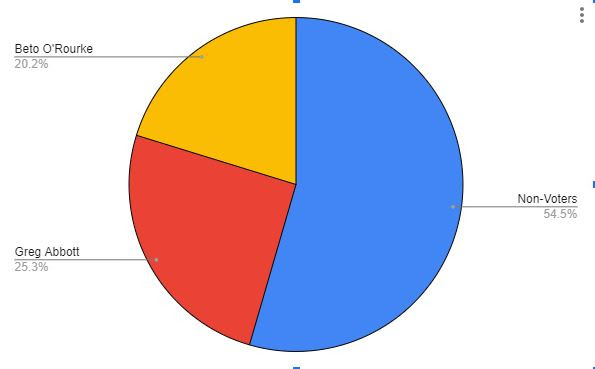
Why is there voter apathy in Texas?

This is an important question that many intelligent people are spending a lot of money on trying to change. I think it’s a complex issue that includes generations of voter oppression, lack of infrastructure, and lack of engagement, among other things. 

One thing Beto O’Rourke always used to say was, “There’s no one coming in to save us.”

He was right. Texas is royally screwed as long as Republicans are leading the charge. No one is going to save us from that other than ourselves. We are the ones we’ve been waiting for. We have the numbers on our side and must convince them of them. 

You know who I mean when I say “them.”

It will take all of us, and if you have already been elected in a safe blue district and you have no opponent, it will take you, too. It will take helping your neighboring districts and getting your own voters to show up.

Of all people, Texas Democrats know how far-right the Republicans have moved in recent years. You know the threats we face. 

Too much is at stake. 

If Democrats in Texas do not make gains this year, the first thing Texans may lose is our right to vote. We already saw several of the ALEC-backed authoritative legislation that came through the 88th Legislature and how Republicans have already tested the waters on stripping Texans of their rights to vote. Banning specific poll locations, like on college campuses, or massive data purges on the voting rolls are all real possibilities if Republicans can’t be stopped. 

What about our rights to freedom of expression and privacy? The GOP has already banned certain forms of art in Texas. Why do you think they’ll stop there?

Republicans passed a bill to give protesters at least 10 years if they are protesting a pipeline. The rights to freedom of assembly are at risk. 

We already have an abortion ban and travel restrictions on women; IVF and birth control are next. 

The civil rights of all marginalized groups are at risk. 

We change this by changing the culture of not voting. 

We need to do many things to change the culture of not voting. Still, as Democrats who have already been elected, you serve as a leader in your community. It would be best to actively work to foster a culture of engagement, participation, and voting within your communities. Your role isn’t just legislating but inspiring, educating, and actively participating in the democratic process. 

Your presence in the community should be a constant, not just during election cycles. Attend local events, hold town halls, and visit schools and community centers to discuss the issues that matter most to your constituents. Your visibility and accessibility can bridge the gap between the electorate and the political process, making democracy feel more tangible and immediate to the people you serve.

Knowledge is power, and too many people feel disconnected from the political process because they don’t understand how it affects their daily lives. Lead educational initiatives that demystify the legislative process, explain the importance of local elections, and highlight the impact of specific policies on the community. Work with schools, universities, and community groups to develop programs that engage young people and first-time voters early.

Grassroots movements and community organizations are the lifeblood of democratic engagement. Support these groups with endorsements by actively participating in their events, sharing their successes, and facilitating connections that can amplify their impact. Empower these organizations with resources and platforms to reach a wider audience.

As an elected Democrat, you have a unique opportunity and responsibility to lead the charge in changing the culture around voting and civic engagement.

By being accessible, engaging in education, and supporting grassroots movements, you can inspire a wave of active, informed participation that strengthens the foundations of our democracy. Remember, leadership is not just about holding a position; it’s about the action you take and the example you set for others to follow.

To change Texas, it’s going to take all of us. We believe in you and need your help.

Josh Cowen of Michigan State University is a veteran voucher scholar. He has been doing voucher research for nearly two decades. For years, he was hopeful about the outcomes for students. He recently realized that the results were appalling. Students who took vouchers and left their public school actually lost ground academically. The real benefits of vouchers went to students who were already enrolled in private schools; their family, which could afford the tuition, won a subsidy from the state. In some states, even wealthy parents won a state subsidy for their children. vouchers do not help poor students; instead, they are harmed.

Josh Cowen has a new book coming out in September: The Privateers: How Billionaires Created a Culture War and Sold School Vouchers.

Cowen wrote in The Philadelphia Inquirer:

If you’ve ever run a small business or talked to a business owner, you might have heard the phrase “under promise, over deliver” as a strategy for customer service.

Unfortunately, when it comes to school voucher plans like those being considered by Pennsylvania lawmakers this spring, what happens is the opposite of a sound investment: a lot of overpromising ahead of woeful under-delivery.

As an expert on school vouchers, I think about the idea of what’s promised in the rhetoric vs. what actually happens when the realcost sets in. To hear voucher lobbyists tell it — usually working for billionaires like Betsy DeVos, or Pennsylvania’s own Jeff Yass — all that’s needed to move American education forward is a fully privatized market of school choice, where parents are customers and education is the product.

As I testified to Pennsylvania lawmakers last fall, however, vouchers are the education equivalent of predatory lending.

One promise that never holds up is the idea that states can afford to create voucher systems that underwrite private tuition for some children, while still keeping public school spending strong.

Other states that have passed or expanded voucher systems have rarely been able to sustain new investments in public schools. Even when those voucher bills also came with initial increases in public education funding. Six out of the last seven states to pass such bills have failed to keep up with just the national average in public school investment.

But for children and families — especially those who have been traditionally underserved by schools at different points in U.S. history — the cost of school vouchers goes beyond the price for taxpayers.

Although most voucher users in other states (about 70%) were, in fact, in private schools first, the academic results for the kids who transfer are disastrous. Statewide vouchers have led to some of the largest academic declines in the history of education research — drops in performance that were on par with how COVID-19 or Hurricane Katrina affected student learning.

Although school vouchers have enjoyed fits and starts of bipartisan support from time to time, today’s push for universal voucher systems across the country is almost entirely the product of conservative politics. All 12 states that created or expanded some form of a voucher system in 2023 voted for Donald Trump in 2020. Of those that passed voucher laws since the COVID-19 pandemic hit in 2020, only two (Arizona and New Hampshire) voted for Joe Biden that election year.

In states like Arkansas and Iowa, voucher laws either immediately followed or immediately preceded extreme new restrictions on reproductive care, a weakening of child labor laws, and other conservative policy priorities.

And this isn’t just about electoral politics. The right-wing origins of school vouchers have real day-to-day implications for who gets to use them and who is left out. We know from states like Florida, Indiana, and Wisconsin that the latest voucher bills allow schools to discriminate against certain children if schools can claim they do so for religious reasons.

Who pays that particular price? Examples include students with disabilities and children and parents from LGBTQ families, who may be asked to leave or not even admitted at all. And that’s because when it comes to vouchers, it’s not really school choice at all. Families don’t get their choice of schools; instead, schools get their choice of which families to admit.

And the price tag for all of this usually comes in wildly over budget anyway. The big culprit for those cost overruns goes back to who actually gets a voucher. Because most voucher users were in private schools first— paid by the private sector before — voucher costs are actually new expenditures taxpayers have to make. In the worst-case scenario, Arizona, vouchers cost more than 1,000% beyond what their advocates first promised.

Despite claims some supporters make that vouchers are part of an efficient education market, the result is really the opposite of any strategy a successful business would recognize.

To put it plainly: The promises rarely pan out, and eventually, the check comes due.

The commentators at NBC and MSNBC are furious that NBC top brass hired Ronna Romney McDaniel as a paid commentator for the network. Presumably, the executives thought it would broaden their audience to bring on someone who had led the Republican National Committee for the past eight years.

They now face an internal rebellion. As Dan Rather explains on his blog Steady, prominent newscasters at NBC were apoplectic. The commentators at MSNBC—where Trump is despised—were assured that they did not have to invite her onto their programs.

Last night, I watched MSNBC, and every commentator lashed out against the hire. Joy Reid, Jen Psaki, Rachel Maddow, and Laurence O’Donnell expressed their outrage. They did not care that she was a Republican. They did not care that she was a conservative. They cared that she was an election denier and a liar. She did whatever Trump wanted, and he booted her anyway. She was actively involved in the fake electors scheme in Michigan. She even dropped her middle name (Romney) to please Trump. She lacks integrity. She insulted the media, as Trump did. As Jen Psaki said, she is not honest.

Dan Rather shared their views:

Journalism Lesson #1 for 2024:

The mainstream media should not normalize Donald Trump’s behavior, nor should they give a platform to his lies or those of his sycophants, who for years have spread disastrous untruths that may have irreparably damaged our nation.

But in one fell swoop, NBC News has managed to do both. By hiring former Republican National Committee chief Ronna McDaniel, NBC has given credence and legitimacy to a Republican who has been in lockstep with the lies, helping spread plenty of the former president’s falsehoods. Allowing McDaniel to be in the same area code as NBC News is a huge mistake and will only further shred the small amount of trust Americans still have in the mainstream media. I don’t blame journalists at NBC. They have long been some of the finest in the business. But one wonders what the hell executives at the network were thinking.

Before she sold her soul, Ronna McDaniel was considered Republican royalty. She’s the granddaughter of George Romney, former GOP governor of Michigan, and niece of Senator Mitt Romney, former Republican presidential nominee and former governor of Massachusetts. She has been the chair of the RNC since the day Donald Trump took office in 2017. And she has been loyal to him at all costs, especially the truth.

During her tenure, she was a prolific fundraiser yet oversaw the net losses of Republican governorships and congressional seats. But her biggest claim to fame during her seven years on the job is that she was a Trump supporter, loyalist, and apologist above all else.

One could argue that this is the role of the head of a political party: to support the highest-ranking member of said party. Yes, that is typically true. But McDaniel spent years repeating Trump’s disinformation, making cases for his lies and paying his legal bills. Here are just a few of her misdeeds:

  • Told CNN’s Chris Wallace of Joe Biden’s election win, “I don’t think he won it fair.”
  • Characterized the January 6 insurrection as “legitimate political discourse.”
  • Orchestrated the censure of Representatives Liz Cheney and Adam Kinzinger, the two Republican January 6 Committee members.
  • Encouraged Michigan canvassers not to certify the 2020 election results, promising them lawyers.
  • Took part in Trump’s scheme to assemble fake electors.
  • Refused to condemn QAnon to George Stephanopoulos on ABC News.
  • Mocked Senator John Fetterman and President Biden for speech impediments.
  • Warned that those Republicans who didn’t embrace Trump’s policies “will be making a mistake.”

McDaniel made her NBC News debut on this Sunday’s “Meet the Press.” At the top of the broadcast, host Kristen Welker disclosed McDaniel’s new role. She said, “This interview was scheduled weeks before it was announced that McDaniel would become a paid NBC News contributor. This will be a news interview, and I was not involved in her hiring.”

During the interview, McDaniel defended her time as chair with what may be the quote of the year. “When you’re the RNC chair, you kind of take one for the whole team. Now I get to be a little bit more myself, right?”

No, Ms. McDaniel, you don’t get to have it both ways. The truth does not change depending on who signs your paycheck. Whom are we supposed to believe, your RNC or NBC self?

McDaniel walked back some of her more outrageous statements, sort of. As of yesterday, she now admits that Joe Biden won the election “fair and square.” However, she continued to insist there were issues with the election. When pushed, she mentioned the huge increase in mail-in ballots in Pennsylvania and suggested voter fraud. Reminder: No significant fraud of any kind was found in any state in the 2020 election.

In defending their hire, NBC News’s Carrie Budoff Brown, senior vice president of politics, said, “It couldn’t be a more important moment to have a voice like Ronna’s on the team.”

Many on the NBC team vehemently disagreed. “We weren’t asked our opinion of the hiring, but, if we were, we would have strongly objected to it for several reasons,” Joe Scarborough, the “Morning Joe” co-host, said at the top of the broadcast Monday. Mika Brzezinski added, “We hope NBC will reconsider its decision. It goes without saying that she will not be a guest on ‘Morning Joe’ in her capacity as a paid contributor.”

Chuck Todd, NBC’s chief political analyst, could barely contain his anger and disbelief on “Meet the Press.”. “She [McDaniel] wants us to believe that she was speaking for the RNC when the RNC was paying for it. So she has — she has credibility issues that she still has to deal with. Is she speaking for herself or is she speaking on behalf of who’s paying her?”

He continued, “There’s a reason why there’s a lot of journalists at NBC News who are uncomfortable with this because many of our professional dealings with the RNC over the last six years have been met with gaslighting, have been met with character assassination.”

Now we come to the why. Why would NBC News hire someone as controversial as Ronna McDaniel? 

News gathering is a business, as unfortunate as that is. As a business, it needs to make money. In television news, more viewers equals more money. So news organizations feel they need to appeal to the broadest spectrum of viewers possible. We will exempt Fox, which calls itself a news organization but is more of a propaganda outfit for the GOP.  

The mainstream middle is a much more crowded field that is bombarded by accusations of bias and liberalism. So they feel the need to show their Republican bona fides by hiring conservative voices.

But that is the crux of the problem. Which Republicans? Trump loyalists who are election deniers and January 6 apologists? Never-Trumpers who are as likely to appeal to many Republican viewers as progressives? How do they represent the political right without alienating their loyal viewers and their correspondents? These are the new political realities ushered in by Donald Trump. And another reason independent journalism is essential right now, essential to provide unvarnished coverage in one of the most important elections in American history and to hold the mainstream media accountable.

It has always been a goal of the billionaires who fund privatization to block accountability and democracy. Eli Broad once memorably said that he prefers to invest in districts under mayoral control so he doesn’t have to deal with the public. The public asks questions and wants to know who is making decisions about their children’s education. So much simpler to have one person to handle problems.

The charter school lobby has persistently fought public oversight and accountability. They are more than willing, even eager, to take public money. But they don’t like public officials asking questions about how the money was spent.

The big battle over public oversight is happening right now in Colorado. All the major right wing groups—the Koch machine, ALEC, Philip Anschutz (producer of “Waiting for Superman”) are there, battling against public schools.

On March 7, three Colorado legislators introduced a charter school accountability bill to establish improved guidelines for authorizing and renewing charter schools by local school districts. The bill would strengthen the authority that elected school boards have regarding their governance of charter schools, and it also provides citizens with expanded information about the operations of charter schools in their districts. 

According to its backers and public education advocacy groups, this is the first major legislation to prescribe more charter school accountability since the first Charter Schools Act was passed in 1993. Current state legislation often limits local control over the charter school approval process, funding requirements, and waivers from state legislation. Given that nearly two-thirds of the state’s 64 counties experienced an “absolute decline in the under-18 population over the last decade,” the charter school accountability bill would empower local school boards to address the overall enrollment needs of the district. While charter schools primarily utilize taxpayer dollars for their funding, many charter schools allow private interests to invest in their growth and development, which can create potential conflicts of interest.

Pro-charter school organizations don’t agree with this legislative effort to increase accountability as they believe this bill would “kill” charter schools. Republicans have been especially vocal in their opposition to this bill, even though the bill promotes increased local control over charter schools. The pro-charter organizations hired over 30 lobbyists to oppose the bill. Lobbying can be expensive, but the organizations opposing the bill have connections to several billionaire-funded foundations. 

The largest lobbying team hired to oppose the bill works for Americans for Prosperity, a conservative organization funded by the Koch network, whose goal is  to “destabilize and abolish public education.”American for Prosperity has been active in Colorado for years promoting vouchers and education savings accounts for families to use for any school of their choice. Last January, AFP joined with the American Legislative Exchange Council and the Heritage Foundation to form the Education Freedom Alliance, an organization that ALEC initiated to promote parents’ rights to use public money to attend a private, charter, home or public school of their choice. Funded with nearly $80 million primarily from the Koch Industries, the Americans for Prosperity political action group has also supported far-right candidates for decades.

American for Prosperity and Advance Colorado issued a press release on X stating the bill would “mark the beginning of the end of charter schools in Colorado,” and together, the two groups “would work overtime to make sure the bill was soundly defeated.” According to the Colorado Times Recorder, Advance Colorado is a conservative dark money group said to be funded by billionaire Phil Anschutz. Formerly known as Unite Colorado, Advance Colorado has “given over $17 million to support major Republican political groups and efforts in Colorado.” Colorado Dawnanother dark money group headed by State Board of Education member Steve Durham and Colorado state Sen. Paul Lundeen,  gave millions to Ready Colorado, which also has lobbyists opposing this bill.

Besides Americans for Prosperity and Ready Colorado,  these organizations have enlisted their lobbyists to defeat the billColorado Succeeds, the Colorado Children’s Campaign, Transform Education Now, Colorado League of Charter Schools ActionEducation Alliance of Colorado, and Education Reform Now Advocacy. Several of these organizations have access to deep pockets of money, and often the donors are not known. 

Colorado Succeeds, the Colorado League of Charter Schools, and Transform Education Now have received over $20 million from the Walton Family Foundation, which has given over $400 million to charter schools for decadesEducation Reform Now Advocacy is closely connected to Democrats for Education Reform, “which was started by Wall Street hedge fund managers,” according to Ballotpedia. Colorado Politics stated that “various reports say Education Reform Now has taken in millions from Rupert Murdoch and the Walton Family Foundation.” The Education Reform Now money also benefited the campaign coffers of 14 Democratic legislators, which may create a hurdle for the charter bill’s passage unless these legislators decide the bill’s merits warrant their support. 

The upcoming lobbying effort in Colorado’s legislature is not unique, as similar high-paid lobbying efforts occur wherever there is significant charter school legislation. In Nashville, a local news reporter exposed who 67 pro-charter lobbyists worked for during legislative hearings on several charter bills in 2022. In the video that accompanied his report, Phil Williams highlighted the direct connections that the pro-charter lobbyists have with billionaires. His investigative report documented that “Americans for Prosperity is linked to billionaire Charles Koch,” and they also “received funding from billionaire Bill Gates and the Walton family of Walmart fame.”  

As in Tennessee, the Colorado lobbyists will meet frequently with legislators to convince them this bill is not necessary. The legislators will need to weigh the benefits of the bill with the concerns of those who participate in a massive letter-writing campaign initiated by the lobbying organizations to oppose the legislation. The bill’s backers hope this will be the legislators’ opportunity to update 30-year-old legislation and begin to ensure increased local control and accountability for the millions of taxpayer dollars that fund the charter schools educating 15% of the state’s K-12 student population.

Laurence H. Tribe, the eminent professor of constitutional law at Harvard Law School (Democrat), and Judge Michael Luttig, a retired federal judge (Republican), co-authored a lengthy article in The Atlantic, condemning the U.S. Supreme Court’s decision to overrule the Colorado Supreme Court, which removed Trump from the 2024 ballot.

It seemed, after the Court’s decision, that Section 3 of the Fourteenth Amendnent had been excised from the Constitution. But just yesterday the Supreme Court rejected an appeal by a New Mexico man who was convicted for taking part in the January 6 insurrection.

Couy Griffin was convicted for his role as a member of the mob that stormed the U.S. Capitol. Because he previously served as a member of the Otero County board of commissioners, the courts in New Mexico said he was ineligible to hold office ever again. Griffin was a founder of Cowboys for Trump and an outspoken purveyor of lies about election fraud.

The Supreme Court concluded that states could disqualify persons from attempting to hold state offices, but Congress had to enact legislation to implement the disqualification of federal officials.

Since Congress is unlikely to muster a majority of both Houses—or 60 votes in the Senate to avoid a filibuster—oath-breaking insurrectionists will not be barred from seeking or holding federal offices.

One good thing: the Griffin decision implicitly agreed that the mob action of January 6 was an insurrection.

Last week, before the Griffin decision, Tribe and Littig wrote in The Atlantic:

The Supreme Court of the United States did a grave disservice to both the Constitution and the nation in Trump v. Anderson.

In a stunning disfigurement of the Fourteenth Amendment, the Court impressed upon it an ahistorical misinterpretation that defies both its plain text and its original meaning. Despite disagreement within the Court that led to a 5–4 split among the justices over momentous but tangential issues that it had no need to reach in order to resolve the controversy before it, the Court was disappointingly unanimous in permitting oath-breaking insurrectionists, including former President Donald Trump, to return to power. In doing so, all nine justices denied “We the People” the very power that those who wrote and ratified the Fourteenth Amendment presciently secured to us to save the republic from future insurrectionists—reflecting a lesson hard-learned from the devastation wrought by the Civil War.

For a century and a half before the Court’s decision, Section 3 of the Fourteenth Amendment was the Constitution’s safety net for America’s democracy, promising to automatically disqualify from public office all oath-breaking insurrectionists against the Constitution, deeming them too dangerous to entrust with power unless supermajorities of both houses of Congress formally remove their disability. This provision has been mistakenly described by some as “undemocratic” because it limits who may be elected to particular positions of power. But disqualification is not what is antidemocratic; rather, it is the insurrection that is antidemocratic, as the Constitution emphatically tells us.

In any event, all qualifications for office set by the Constitution limit who may be elected to particular positions of power. And no other of these disqualifications requires congressional legislation to become operative, as the Court now insists this one does. To be sure, the other qualifications—age, residence, natural-born citizenship—appear outside the Fourteenth Amendment, whose fifth section specifically makes congressional action to enforce its provisions available. But no such action is needed to enforce the rights secured to individuals by Section 1 of the same amendment, so deeming congressional action necessary to enforce Section 3 creates a constitutional anomaly in this case that the majority could not and did not explain. For that matter, no other provision of the other two Reconstruction amendments requires congressional enforcement either. As the concurring justices explained, the majority “simply [created] a special rule for the insurrection disability in Section 3.”

To read the rest of this brilliant article, open the link or subscribe to The Atlantic.