Archives for category: Democracy

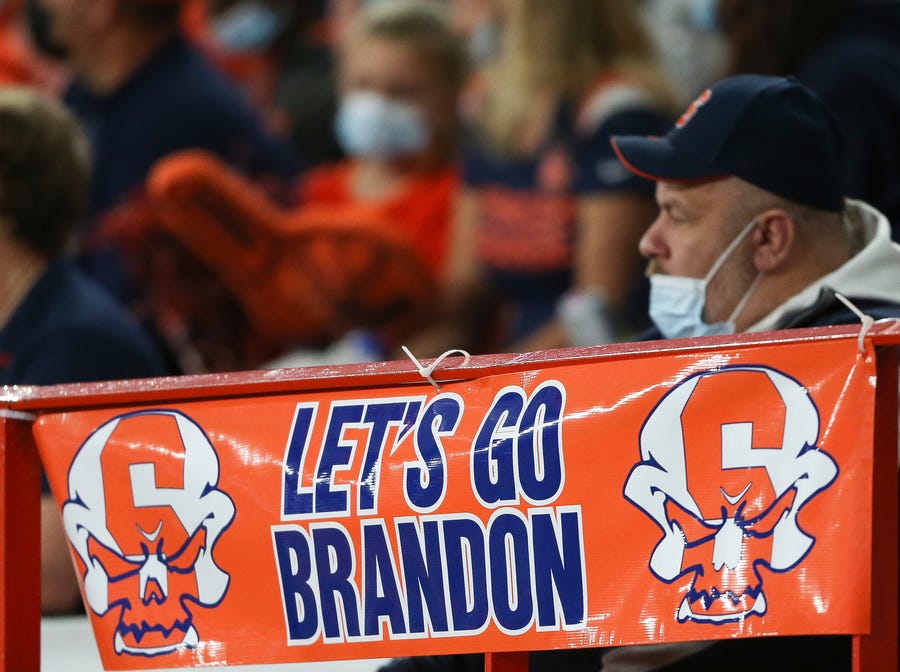
Jeremy Mohler of the nonpartisan, anti-privatization organization called “In the Public Interest,” opposes ridiculing anti-maskers and anti-vaxxers. He thinks that those who support science should try to dispel their suspicion of government. Do we want to turn vital public services—like police, firefighters, the military, national parks, beaches, highways, protection of the air and water, and many other public services—to private entities? Ask them if they plan to refuse Social Security and Medicare.

Watch The Daily Show interview he refers to. It is horrifying.

Mohler writes:

You have to watch this Daily Show clip of anti-maskers at a school board meeting in North Carolina (despite the host, Jordan Klepper, self-righteously making fun of them, which doesn’t sit right with me).

It’s like an anthropological study of tactics that right-wing leaders use to divide us so that the wealthy few can maintain and expand their political and economic power.

“I’m against all mandates, whether it’s masks or vaccinations. I’m against it all,” said one protestor.

“[We’re here to] save the kids from all that’s going on with Critical Race Theory,” said another.

What really stood out was a phrase printed on t-shirts and written on protests signs throughout the clip: “I don’t co-parent with the government.” By which, I guess, protestors meant that democratically elected school boards shouldn’t be deciding how to make public schools safe for students and teachers.

This isn’t surprising. For decades, attacking government—perhaps more than any other idea or issue—has united right-wing forces, from white supremacists to the religious right. As political historian Nancy MacLean documents in her book Democracy in Chains, “The idea [is] to get voters to direct their ire at [public] institutions and divert their attention away from increasing income and wealth inequality.

Journalist Jeff Bryant nailed it when he tweeted, “The confluence of anti-masking with efforts to rid schools of teaching the truth about structural racism is where American libertarianism meets white supremacy.”

This is why we need to be loud and clear that public problems—inequity in public education, climate change, Covid-19—require public solutions.

We must defend our public institutions, make them more democratic, make sure they’re adequately funded, and wholeheartedly articulate the value of public things. (BTW, you can sign up for our Executive Director Donald Cohen’s new email newsletter—called Public Things—here.)

To be sure, it’s not that everything the government does is automatically great. I hate getting parking tickets. I get angry every time I go to the DMV. I’ve been waiting for a city-issued trash can for more than a year now.

But the answer isn’t to cut taxes on corporations and the wealthy few even more. Or get rid of the DMV. Or privatize the sanitation department. Or—in the case of public schools—hand them over to privately managed, unaccountable charter school management organizations.

It’s to defend, fund, and improve the public institutions we rely on every day. And it’s to call out the obvious attempts by right-wing leaders to divide us against each other.

Billy Townsend zeroes in on Lakeland, Florida’s mayoral campaign to illustrate how far off the rails the Republican Party has gone. The Republican candidate is promoting an extremist agenda that shows no concern for people who don’t agree with her. She is a Trumper through and through. Townsend sees her as symbolic of the loss of citizenship as a unifying principle.

She is running to represent people who agree with her. She reflects the bitter partisanship that is tearing the country apart.

He writes:

Saga Stevin will not represent the people who don’t believe the same way she does. She can’t — or won’t — even see them. They exist outside her frame of citizenship.

In a debate with the incumbent mayor, Stevin states bluntly:

“I don’t believe in equity,” she says to start the answer and then she ends it like this: “Lakeland’s a lovely mix of people. And I think we’re people who have American values that want a traditional family kind of lifestyle, conservative views…”

Shrinking Lakeland’s frame of citizenship to conform to her frame is the entire reason she’s running. Not representing the people who think and believe differently is the entire point of her campaign.

When you read Townsend’s post, you will worry about the fate of our democracy.

The organization called “UnKoch My Campus” does a great job of tracking and exposing the influence of billionaire Charles Koch in schools and higher education. Join with them in calling attention to Koch’s Dark Money:

Essential Information C/O UnKoch My Campus (EIN 52-1299631)

Each year in October, UnKoch My Campus coordinates a National Day of Action that focuses on building public awareness of the impact of the Koch network within institutions of education and our broader democracy. This year, we will take collective action and reach out to Secretary of Education Miguel Cardona, requesting that he address the issue of dark money in education, all the way from Kindergarten through college. Our K-12 and Critical Race Theory reports have shown us the role dark money’s influence has in destabilizing our democracy, advancing climate denial, and prioritizing private profits over people and our planet.

Join us October 28th and 29th! We want to make sure Secretary Cardona knows about the impact of the Koch network and how they are leveraging our institutions of education to spread climate disinformation and destabilize our democracy.

Click the link below and we’ll do the work for you. Simply enter your information and we’ll add your name and return address to the postcard. SIGN UP FOR A POSTCARD BEFORE OCTOBER 15th.

In Solidarity,

Jasmine Banks, Executive Director SEND A POSTCARD

Professor Ibram X. Kendi spoke about dismantling racism at a virtual summit hosted by the Boston Globe. His books are being censored in red states but he was free to speak out in Massachusetts.

While the civil unrest of 2020 may have ignited necessary conversations about racial injustice and inequalities, it hasn’t yet sparked the big, bold changes needed to dismantle racism, professor and best-selling author Ibram X. Kendi said in a virtual session presented Thursday by the Boston Globe Summit.

The sweeping discussion with Amber Payne, co-editor in chief of The Emancipator, touched on structural racism, critical race theory, and the abolition movement as a model for reimagining an antiracist society.

“It’s a pretty massive step from awareness to action,” said Kendi, founding director of the Boston University Center for Antiracist Research…

Kendi won the National Book Award for his 2016 release “Stamped from the Beginning: The Definitive History of Racist Ideas in America.” His widely read “How to be an Antiracist” offers a blueprint for antiracist activism. He was included in Time Magazine’s 100 Most Influential People of 2020…

To dismantle structural racism, you’ve got to understand its symptoms, including racial violence, racial inequities, racial injustices, and the ways in which people are demeaned, Kendi said.

“It’s harder to see the policies behind those inequities, and that’s where the research comes in,” Kendi said of the work done at the Center for Antiracist Research.

The center’s researchers are trying to assess the myriad factors leading to disparities and create evidence-based policies to replace the ones that are proven to be racist and unjust, he said.

It’s not enough for people to say or believe that they’re not racist, Kendi said; they must be loud and radical about it, and actively involved in building a more equitable society.

“To allow anything to persist is to be complicit in its persistence,” Kendi said.

Abolitionism is a perfect model for imagining an antiracist future, Payne said.

Kendi agreed. Abolitionists, he added, were loud, radical, and persistent.

“Enslavers were extremely upset about Boston abolitionists because they wanted them to just shut up and do nothing,” he said, adding that enslavers knew the slave trade would persist and grow if the abolitionists didn’t interfere.

But the abolitionists believed it was up to them to dismantle slavery, because if they didn’t, no one else would, Kendi said.

That’s a mindset that needs to take hold today, he said.

I am posting this notice after the press conference described here, but the details are important nevertheless. A group called Oakland Not For Sale formed to fight privatization and just won a major settlement. For many years, the Oakland public schools have been a plaything for billionaire privatizers and a succession of Broadie superintendents.

MEDIA ADVISORY FOR: September 23, 2021, 3:30 PM PT

CONTACT: Melissa Korber, 510-541-9669 or Amanda Cooper, 917-930-7552

Parents, Teachers, Atty Dan Siegel Announce Settlement with OUSD Over Police Brutality at 2019 School Board Meeting,

Plans to Donate Funds to Fight Public School Closures & Privatization

Parent and Teacher Members of Oakland Not For Sale (ONFS) Will Hold Press Conference With OUSD School Board Member Mike Hutchinson To Address Settlement, Donation Plans and Update in Kaiser School Fight

Oakland, CA — On Thursday, Sept. 23, at 3:30 pm PT, Oakland Not for Sale (ONFS) will host a press conference for parent and teacher plaintiffs and their attorney Dan Siegel to announce a six-figure legal settlement with the Oakland Unified School District as well as plans to donate toward the fight against school closures and public school-supporting Board candidates in the 2022 election. OUSD School Board Member Mike Hutchinson will also be present.

“We have reached a settlement of our dispute regarding the school board’s October 2019 meeting. We reached an agreement for a total amount of $337,500 in damages,” said Saru Jayaraman, plaintiff in the litigation Jayaraman v. OUSD. “We’re thrilled to be announcing not only this settlement with the District, but our ability to now give a six-figure donation to our fight to stop public school closures and support candidates who will fight the privatization of the Oakland Unified School District. We’re also thrilled that in the same moment, we can declare victory in that Kaiser Elementary, which we fought to keep public, will indeed remain a public facility — and we will build on these victories with resources to continue to fight all future public school closures.”

The settlement resolves litigation filed by the parents and teachers, many of whom are members of ONFS, over police brutality at an October 2019 school board meeting protesting the proposed closure of Kaiser Elementary School. At the press conference on Thursday, parents and teachers will announce that they plan to make a six-figure donation to continue the fight against further public school closures and privatization. They will also discuss their victory in keeping Kaiser Elementary a public facility.

“While it isn’t exactly what we would have hoped, we’re happy Kaiser is being used as a public facility for students and that we were able to resolve the litigation,” said Amy Haruyama, OUSD teacher who is a plaintiff in the lawsuit, taught at Kaiser Elementary, and now teaches at Sankofa United Elementary School.

These actions come in the context of a long history of OUSD School Board decisions to close 17 public schools, mostly majority Black and brown schools, almost all of which have been replaced with charter schools. OUSD’s history of closing schools and allowing them to be replaced by charters has been driven by both the state of California, which retains trusteeship over OUSD, and by outside billionaire charter school advocates like Michael Bloomberg and Eli Broad.

ONFS was formed after the announcement that Kaiser Elementary School would become the latest in a long line of school closures that was intended for replacement by charter or private schools. After protracted peaceful public protest by parents, teachers, and students, and despite police brutality as a response to this protest, the School Board recently agreed to a public use for Kaiser Elementary. The school will house public early education .

The union movement built the middle class. For most of the past century, big business and plutocrats have waged war on unions and have largely succeeded. As the following analysis by the Economic Policy Institute shows, the high point of the labor movement was in the in the late 1940s and early 1950s. As the strength of unions waned, inequality grew.

The EPI study begins:

Unions improve wages and benefits for all workers, not just union members. They help reduce income inequality by making sure all Americans, and not just the wealthy elite, share in the benefits of their labor.

Unions also reduce racial disparities in wages and raise women’s wages, helping to counteract disparate labor market outcomes by race and gender that result from occupational segregation, discrimination, and other labor market inequities related to structural racism and sexism.

Finally, unions help win progressive policies at the federal, state, and local levels that benefit all workers. And conversely, where unions are weak, wealthy corporations and their allies are more successful at pushing through policies and legislation that hurt working people. A strong labor movement protects workers, reduces disparities, and strengthens our democracy.

NPE ACTION’S NEW PROJECT TO BRING TALES FROM THE FRONTLINES OF PUBLIC SCHOOL ADVOCACY

Public schools remain incredibly popular among Americans across the political spectrum, even under the strains of a global pandemic and a divisive political culture being inflamed by opportunists seeking to push radical, unpopular agendas. Parents, students, volunteers, and communities who rely on and cherish their public schools deserve to be heard now more than ever. Public Voices for Public Schools, a community project of the Network for Public Education Action, launches today with tales from the frontlines of public school advocacy.

Unfortunately, public education in America has been under systematic attack for decades by an axis of right-wing political radicals, self-appointed reformers, opportunists, segregationists, and wealthy special interests, all working together to dismantle and privatize our treasured public schools. Their efforts have done lasting harm to students and their communities, and it is time those communities have a platform where their stories can be shared.

“After my two sons enrolled in a private school thanks to vouchers, I began to understand that school is about more than academics,” said Dountonia Batts, a former voucher parent. “As charter schools and vouchers expanded, the school system in Indianapolis was falling apart. All of the high schools in our neighborhood had been shut down, even as charter high schools were popping up. I realized I could no longer accept school vouchers for my children because it was unethical.”

People like Batts rarely get a chance to be heard, especially by policymakers who are often targeted for pressure by pro-privatization groups with access to campaign donations and full-time public relations machinery. That’s why Public Voices for Public Schools is so important, as it is a place to elevate the regular people in our community and help them have access to the tools to engage their elected representatives directly.

“Once I understood that our funders wanted us to help them burn down the entire public school system, I realized I had very different intentions than the school reform movement,” said Gloria Evans Nolan, a former Missouri education reformer. “I could see for myself the toll that education “reform” was having on my city. The result was that our sense of community was dropping away. We were also losing our history. Every school I attended is now closed.”

Public Voices for Public Schools will regularly bring you stories from parents like Batts and Nolan, students, academics researching the effects of privatization, along with many others. Visit us at pv4ps.org where you can join our shared community and always be kept up to date. You will learn what you can do to preserve a pillar of our democracy, our neighborhood public schools.
*************

Senator Robert Byrd spoke eloquently against invading Iraq as a response to 9/11. He spoke against the war on March 19, 2003. The speech is prescient and wise. In 1991, I published a collection of speeches, essays, and poems called The American Reader. If I had a chance to revise it, I would add this speech. H/T Joe Jersey. When Congress voted to authorize the war in October 2002, there were 50 Democratic Senators the vote was taken on President George W. Bush’s resolution. Senator Byrd was one of 21 Democratic Senators who voted against the resolution. Only one of 49 Republican Senators voted against the war: Senator Lincoln Chafee of Rhode Island. The Senate’s only independent—Senator Jim Jeffords of Vermont—voted against the war.

Robert Byrd: ‘I weep for my country’, Speech against Iraq invasion – 2003

19 March 2003, US Senate, Washington DC, USA

I believe in this beautiful country. I have studied its roots and gloried in the wisdom of its magnificent Constitution. I have marveled at the wisdom of its founders and framers. Generation after generation of Americans has understood the lofty ideals that underlie our great Republic. I have been inspired by the story of their sacrifice and their strength.

But, today I weep for my country. I have watched the events of recent months with a heavy, heavy heart. No more is the image of America one of strong, yet benevolent peacekeeper. The image of America has changed. Around the globe, our friends mistrust us, our word is disputed, our intentions are questioned.

Instead of reasoning with those with whom we disagree, we demand obedience or threaten recrimination. Instead of isolating Saddam Hussein, we seem to have isolated ourselves. We proclaim a new doctrine of preemption which is understood by few and feared by many. We say that the United States has the right to turn its firepower on any corner of the globe which might be suspect in the war on terrorism. We assert that right without the sanction of any international body. As a result, the world has become a much more dangerous place.

We flaunt our superpower status with arrogance. We treat U.N. Security Council members like ingrates who offend our princely dignity by lifting their heads from the carpet. Valuable alliances are split. After war has ended, the United States will have to rebuild much more than the country of Iraq. We will have to rebuild America’s image around the globe.

The case this Administration tries to make to justify its fixation with war is tainted by charges of falsified documents and circumstantial evidence. We cannot convince the world of the necessity of this war for one simple reason. This is a war of choice.

There is no credible information to connect Saddam Hussein to 9/11. The twin towers fell because a world-wide terrorist group, al-Qaida, with cells in over 60 nations, struck at our wealth and our influence by turning our own planes into missiles, one of which would likely have slammed into the dome of this beautiful Capitol except for the brave sacrifice of the passengers on board.

The brutality seen on September 11th and in other terrorist attacks we have witnessed around the globe are the violent and desperate efforts by extremists to stop the daily encroachment of western values upon their cultures. That is what we fight. It is a force not confined to borders. It is a shadowy entity with many faces, many names, and many addresses.

But, this Administration has directed all of the anger, fear, and grief which emerged from the ashes of the twin towers and the twisted metal of the Pentagon towards a tangible villain, one we can see and hate and attack. And villain he is. But, he is the wrong villain. And this is the wrong war. If we attack Saddam Hussein, we will probably drive him from power. But, the zeal of our friends to assist our global war on terrorism may have already taken flight.

The general unease surrounding this war is not just due to “orange alert.” There is a pervasive sense of rush and risk and too many questions unanswered. How long will we be in Iraq? What will be the cost? What is the ultimate mission? How great is the danger at home? A pall has fallen over the Senate Chamber. We avoid our solemn duty to debate the one topic on the minds of all Americans, even while scores of thousands of our sons and daughters faithfully do their duty in Iraq.

What is happening to this country? When did we become a nation which ignores and berates our friends? When did we decide to risk undermining international order by adopting a radical and doctrinaire approach to using our awesome military might? How can we abandon diplomatic efforts when the turmoil in the world cries out for diplomacy?

Why can this President not seem to see that America’s true power lies not in its will to intimidate, but in its ability to inspire?

War appears inevitable. But, I continue to hope that the cloud will lift. Perhaps Saddam will yet turn tail and run. Perhaps reason will somehow still prevail. I along with millions of Americans will pray for the safety of our troops, for the innocent civilians in Iraq, and for the security of our homeland. May God continue to bless the United States of America in the troubled days ahead, and may we somehow recapture the vision which for the present eludes us.

Source: http://www.salon.com/2008/03/19/byrd/

The Washington Post published a remorseful article about the negative effects of 20 years of was in Iraq and Afghanistan. Hindsight is sometimes useful. Many books will be written about “lessons learned” from these past 20 years of warfare.

There’s a scene in the 2014 film “American Sniper” that sums up the country’s post-9/11 war lust. Chris Kyle, the late U.S. Navy SEAL played by Bradley Cooper, watches a newscast of the twin towers crumbling before his eyes. The camera fixes on Kyle’s steely yet stunned face as he holds his shaken wife, before cutting to an image of him in full military gear, glaring through the scope of his sniper rifle in the middle of an Iraqi town. (He goes on to gun down a woman aiding Iraqi insurgents.)

The film, which some critics panned as proto-fascist agitprop, spends no time interrogating this implied connection between the events of 9/11 and the American decision to “preemptively” invade Iraq less than two years later to topple the regime of Iraqi dictator Saddam Hussein. Neither did much of the American public or political establishment that got swept up in the George W. Bush administration’s rush to punish “evil-doers.” A Washington Post poll in September 2003 found that close to 7 in 10 Americans believed that it was at least “likely” that Hussein was directly involved in the Sept. 11, 2001, attacks.

That, of course, proved to be preposterous, as was much of the case Bush and his allies made about the imminent threat posed by the Iraqi regime’s phantom weapons of mass destruction. Animated by a neoconservative zeal to oust enemy regimes and wield American might to make right — and unhindered by the bulk of the Washington press corps — the Bush administration plunged the United States and its coalition partners into a war and eventual occupation that would reshape the political map of the Middle East, distract from America’s parallel intervention in Afghanistan and provoke new cycles of chaos and violence.

The first couple of years after 9/11 marked “an era where the United States made major strategic errors,” Vali Nasr, a professor of international affairs at Johns Hopkins University’s School of Advanced International Studies, told Today’s WorldView. “Its vision was clouded by anger and revenge.”

But what if the United States had opted against invading Iraq? The decision to oust Hussein, even more so than the invasion of Afghanistan in the immediate aftermath of 9/11, was an unprovoked war of choice that, on one hand, sealed off a range of other policy options available to Washington’s strategists and, on the other, set in motion events that fundamentally altered the region. It’s impossible to unwind what the Bush administration unleashed, but indulge us at Today’s WorldView as we puzzle through just a few elements of this counterfactual proposition.


First and foremost, there’s the Iraqi death toll. The Watson Institute at Brown University calculates that 184,382 to 207,156 Iraqi civilians were directly killed in war-related violence between the start of the American invasion in March 2003 through October 2019. But the researchers suggest the real figure may well be several times higher.


Even considering Hussein’s own long record of brutality, it is difficult to envision a future of greater suffering for the Iraqi people had the United States not swept him from power, argued Sinan Antoon, a New York-based Iraqi poet and author.

“No matter what — and I say this as someone who was opposed to Saddam’s regime since childhood and wrote his first novel about life under dictatorship — had the regime remained in power, tens of thousands of Iraqis would still be alive today, and children in Fallujah would not be born with congenital defects every day,” Antoon told Today’s WorldView, alluding to the impact of U.S. forces allegedly using rounds of depleted uranium in their battles across Iraq.

Antoon added that we also would not have seen the rise of the Islamic State had the United States not invaded — a conviction shared by former president Barack Obama and echoed by myriad experts. “In the near term, the Iraqi political order probably would not have collapsed and created a void that nonstate or quasi-state actors could fill,” wrote international relations scholars Hal Brands and Peter Feaver in a 2017 study.

“The Sunni-Shia cleavage that has made Iraq so difficult to govern still would have been present,” they continued, “but without the violence, political chaos and Sunni marginalization of the post-invasion period, that cleavage would have remained in a less combustible state, and terrorist groups such as [al-Qaeda in Iraq] and [the Islamic State] would not have found such fertile ground for recruiting.”

Other paths were possible. In 2002, Shibley Telhami, a veteran pollster affiliated with the Brookings Institution and a professor at the University of Maryland, was part of a group of Middle East scholars based in the United States who opposed the Bush administration’s drumbeat to war in Iraq.

“Bush had a chance to build global coalitions, strengthen international norms and institutions, focus on the threat from al-Qaeda, reshape relations in the Gulf region and use domestic and international support to end the Palestinian-Israeli conflict, which, before 9/11, was the central grievance against the United States in the Middle East,” Telhami told Today’s WorldView.

Instead, he added, “Bush chose a policy of unilateralism,” pursuing a war that ravaged the Middle Eastern country, stoked sectarian violence and extremist militancy and “ended the balance of power between Iran and Iraq.” Iran’s gain from seeing its longtime foe fall in Baghdad, in turn, would reset the geopolitical calculations of Gulf Arab states, which became “so insecure that they embarked on destabilizing policies of their own, including the Yemen war,” said Telhami.

In 2003, the Iraqi regime still faced asphyxiating international sanctions. Had those eventually weakened — various countries apart from the United States were eager to bring Iraq out from the cold — the country’s youths would have been better linked to the world and an entrenched regime could have faced its own Arab Spring uprising.

Rasha al-Aqeedi of the Newlines Institute for Strategy and Policy, a Washington think tank, suggests an “Iraqi spring” would still have been brutally put down by the country’s Baathist government. “Saddam would have passed away and [his son] Qusay would have become president — an Iraqi version of [Syrian President Bashar] al-Assad, basically,” she told Today’s WorldView, imagining a milder end for the Iraqi dictator who was hanged in 2006. The status quo in Baghdad would have been “as stable as an authoritarian Baathist state can be.”

Alternatively, there could have been a steady internal unraveling, with the United States in a stronger position to support democratic and economic development, Amy Hawthorne, research director at the Project on Middle East Democracy, told Today’s WorldView. “Iraq, under punishing international sanctions and totalitarian rule for another decade, would have become a failed state, with parts of the south and Iraqi Kurdistan falling outside Saddam’s control.”

Instead, by 2007, the United States was compelled to deploy a “surge” of its troops to combat an Iraqi insurgency it would never quite quell. For multiple reasons, from feckless leadership to sectarian enmities, the government that the United States helped prop up in Baghdad would make a catalogue of its own mistakes. The occupation swiftly became a parable for American blundering and hubris.
“The U.S. was barely keeping its head above water during the surge,” Nasr said. “The aura of its power was gone.”

Ishaan Tharoor is a columnist on the foreign desk of The Washington Post, where he authors the Today’s WorldView newsletter and column. He previously was a senior editor and correspondent at Time magazine, based first in Hong Kong and later in New York.

I recently learned of a rightwing website collecting complaints about school boards, presumably to encourage dissension and hostility at school board meetings.

The School Board Watchlist (SBWL) is America’s only national grassroots initiative dedicated to protecting our children by exposing radical and false ideologies endorsed by school boards and pushed in the classroom. SBWL finds and exposes school board leadership that supports anti-American, radical, hateful, immoral, and racist teachings in their districts, such as Critical Race Theory, the 1619 Project, sexual/gender ideology, and more. SBWL also provides information on how parents and students can get involved in their local school board and put an end to the racialization of the classroom.

This group wants vigilantes to report their school board if students learn about sexism, racism, and other realities of our past and present. This is McCarthyism revisited.

On the “About Us” page, the group identifies itself as a project of the radical rightwing Turning Points USA. SourceWatch reports on the funders and ideology of Turning Points USA.

Evidently, these people don’t understand that state standards authorize the teaching that they find reprehensible.