Archives for category: Accountability

Gary RubInstein explains how Success Academy figured out how to game the high school ranking system of US News so that it’s high school would land on the list as one of the best high schools in New York City.

Gary begins:

In the latest U.S. News & World Report Best High School Ranking 2023-2024, the Success Academy High School was ranked the 102nd best high school in the country and the 12th best high school in New York State.

This is strange, he notes, because its graduation rate is one of the lowest in the state and the nation.

For all the schools in the top 80 in New York state, the second lowest graduation rate was 92%. The first lowest was Success Academy with a 75% graduation rate.

On this graduation rate statistic, Success Academy is actually in the bottom 10% in the state and also in the bottom 10% in the country. Nationally it is number 16,468 out of 17,680.

How is it possible that a high school with such a low graduation rate is ranked as 12th best in the state?

Open the link, and read Gary’s explanation.

In what has to be the worst, most unbalanced article about education in all of 2023, Politico urged Democrats to act like Republicans and promote school choice.

Politico’s education writer, Juan Perez Jr., interviewed Democrats who are well known as advocates for charter schools as proof that Democrats must support choice policies.

He begins:

MINNEAPOLIS — President Joe Biden’s education chief believes public schools are facing a “make or break moment.” The rescue plan coming from some Democrats, however, rings of policies that have already landed wins for conservatives.

Political skirmishes over classrooms have left Democrats underwater, or dead even, with Republicans among voters in a clutch of battleground states. And as they worried their party has not honed a strategy to reverse declining test scores, enrollment and trust in public schools, liberals watched Republican governors sign historic private school choice laws this year.

The GOP wins and a generational crisis in schooling has convinced some Democrats that the Biden administration needs to promote a liberal version of public school choice in the 2024 campaign, or risk losing votes.

“We’ve lost our advantage on education because I think that we’ve failed to fully acknowledge that choice resonates deeply with families and with voters,” said Jorge Elorza, the CEO of Democrats for Education Reform and its affiliate Education Reform Now think tank.

Please open the link. It doesn’t get any better. Not only does he quote DFER, the hedge managers group that does not support public schools, he also quotes Kerri Rodrigues of the “National Parents Union,” funded by the billionaire Waltons as a leader of the 2016 failed campaign to increase charters in Massachusetts.

Not exactly typical Democrats. More like charter advocates.

I sent Mr. Perez the following email:

Dear Mr. Perez,

I am writing to express my strong disagreement with your article today about Democrats and schools. Democrats will not improve their popularity by acting more like Republicans.

Republicans are on a mission to transfer public funds to nonpublic schools. Whenever vouchers have been put to a state referendum, they are defeated by large margins, as they were in Florida, Arizona, and Utah. The Republicans leaders of those states ignored the will of the voters and authorized vouchers.

In every state with vouchers, 70-80% are claimed by students who never attended public schools. Vouchers are a giveaway to families who already put their kids in private and religious schools.

Nearly 90% of the parents in this country send their children to public schools.

The most recent Gallup Poll showed that the overwhelming majority of parents are happy with their public schools.

For decades, Republicans have promoted school choice by attacking public schools.

The way forward for the Democratic Party is not to embrace GOP policies but to support the adequate and equitable funding of public schools and to stand against the privatization of public schools.

Volumes of research show that charter schools on average do no better than public schools, even though they admit whom they want and oust whoever has low scores or is disruptive. The Network for Public Education, in which I am involved, reports frequently on the high rates of closings by charter schools, as well as the scandals that occur almost daily due to embezzlement and other financial misdeeds.

Voucher students do not take state tests. Their schools are not accountable. Their teachers need not be certified. They may discriminate against students and families on grounds of religion, LGBT, or any other reason. They are not required to accept students with disabilities. Students who leave public schools for voucher schools typically fall behind their public school peers, and many drop out and return to public school.

Why in the world should Democrats support schools that are free to discriminate, free to hire uncertified and unqualified staff, managed by for-profit entities, and are not as successful as public schools?

That is bad political advice, which you got by interviewing people whose organizations advocate for charter schools (DFER and the so-called “National Parents Union”). The only pro-public school voices in your article were Randi Weingarten and Miguel Cardona, a union leader and the Secretary of Education.

Why didn’t you interview parents engaged in the fight to keep public education public? They are in every state, fighting billionaire-funded organizations like DFER and Moms for Liberty.

Carol Burris, executive director of the Network for Public Education, could introduce you to them. Why don’t you come to our 10th annual national conference, which will be held at the Capitol Hilton in DC on October 28-29. You would meet parents from every state who are working to preserve their public schools and keep them safe from entrepreneurs, grifters, corporate chains, and religious interests.

Diane Ravitch

You too can write him at jperez@politico.com.

Gary Rayno of InsideNH writes about the expansion of the state voucher plan by Republicans in New Hampshire, who control both houses of the legislature and the governorship. Income requirements were raised. Enrollment increased. 75% of last year’s students never attended a public school. The biggest beneficiary is religious schools. When the voucher program was first proposed, public opposition was overwhelming. Governor Sununu and the legislators didn’t care.

Open the link to read it all.

Rayno writes:

The war over public education was on full display last week in the battle over PragerU’s financial literacy course and the State Board of Education’s 5-0 decision to approve it.

Despite opposition from the vast majority of speakers and letter writers, the board — stacked with school choice advocates by Gov. Chris Sununu — voted 5-0, with board chair Drew Cline abstaining.

While the controversial organization’s foot in the door was lamented by many after the vote, the on-line financial literacy course will not “cost” the state anything, which cannot be said about the biggest battleground in the education war, the Education Freedom Accounts program.

Last week, Kate Baker Demers, the executive director of the Children’s Scholarship Fund NH, which administers the program, told the freedom account oversight committee about 1,600 new students joined the program for this school year bringing the total number of students to around 4,200, but noted those were rough figures and the Department of Education should be posting the exact figures soon.

While the program is growing, only one major change was made the last legislative session, which increased the financial threshold from 300 percent of poverty to 350 percent.

That increases the threshold for the current school year from $59,160 for a family of two, to $69,020, and for a family of four from $90,000 to $105,000 annually.

Once a family qualifies for the program there are no future financial limits on earnings.

Demers told the oversight committee 200 plus students’ families qualified under the higher income threshold than would have under the former limit.

Last school year, the Department of Education data indicates 3,196 students participated in the program with the average grant per student $4,860 with a total cost of more than $15.5 million without administrative expenses.

The program for the first two years was about $24 million over budget as the department’s estimates of student participation was much lower than reality.

For this school year, there are about 1,000 more total students participating, Baker Demers said about 600 students left the program to either return to public schools, who graduated (111), moved away or for some other reason.

Along with the 1,000 increase in students, lawmakers increased the state’s basic adequacy grant from $3,787 per student to $4,100, and also increased the amount of additional aid for students in low-income families, and with special education needs.

That is likely to make the new average per pupil cost go over $5,200 per student.

That would increase the total costs not counting administrative costs from the scholarship fund organization — to about $22 million this year, an increase of about $7 million.

The state budget contains $30 million in each year of the biennium for the program, so total costs are likely to bump against the $60 million if there is much growth in the program next year.

Most programs with increases like this would be curtailed and limited with talk about halting runaway growth, but that does not appear to be a big concern of the majority party, which has pushed the program along with Education Commissioner Frank Edelblut and Sununu.

Democrats are the ones seeking to put guardrails around the program that draws its money from the Education Trust Fund, the source of all state education aid that is not the Statewide Education Property Tax….

The program was sold as an opportunity for low-income families to send their child to a program more appropriate for their learning skills than a public school.

But that has not been the biggest driver and represents a small percentage of the students enrolled.

About 75 percent of the participants in the past were enrolled in private schools — either religious or secular — and in home school programs.

Whether that figure remains in similar proportion is not something anyone will know until the Department of Education shares its data on its website.

Ken Paxton is a Trump acolyte who sued on behalf of other Republican State Attorneys General to overturn the 2020 election. His case went to the U.S. Supreme Court, which rejected it because Paxton and his allies offered no evidence of fraud.

Despite his sterling credentials as a reactionary Republican, Paxton was impeached by the Republican-controlled House on multiple charges of corruption. 70% of the House voted for impeachment. The case then went to the Republican-controlled Senate, which acquitted Paxton despite mounds of evidence against him.

The Texas Tribune explained the amply documented case against Ken Paxton. No matter, because MAGA types sent out the word that anyone who voted to convict Paxton would face a primary challenger who would call them a socialist Communist Marxist traitor. As state senators looked around and counted votes, they realized that Paxton would not be convicted and made sure they were on the winning team.

Several whistleblowers in his office reported his misdeeds. No matter. Among the many troubling charges were his actions to protect a valued friend and real estate investor named Nat Paul. Paxton admitted a few years back that he had engaged in an extramarital affair; it was over, he said. He would sin no more.. That usually is a bad omen for public officials who claim to be good Christians fighting to uphold family values. (His wife is a state Senator but she recused herself from the vote.)

But after Paxton confessed his sins, he didn’t end the affair. Instead his friend Nat Paul gave Paxton’s paramour a job so she could live in Austin to be close to him. Paxton not only continued the affair but protected Nat Paul when others thought he broke the law.

The dramatic votes capped a two-week trial where a parade of witnesses, including former senior officials under Paxton, testified that the attorney general had repeatedly abused his office by helping his friend, struggling Austin real estate investor Nate Paul, investigate and harass his enemies, delay foreclosure sales of his properties and obtain confidential records on the police investigating him. In return, House impeachment managers said Paul paid to renovate Paxton’s Austin home and helped him carry out ­and cover up an extramarital affair with a former Senate aide.

Whatever Paxton did was irrelevant in the end. That’s Texas Republican politics.

After the Senate acquitted Paxton, Dade Phelan, Republican Speaker of the House, released the following statement:

FOR IMMEDIATE RELEASE


September 16, 2023


CONTACT


Cassi. Pollock@speaker texas. gov


Statement from Speaker Dade Phelan on Impeachment Verdict

AUSTIN, Texas – Texas Speaker of the House Dade Phelan today released the following statement regarding the Texas Senate’s verdict on the impeachment of Attorney General
Ken Paxton: “Over the last two weeks, the Texas House Board of Managers provided the Texas Senate and the people of Texas extensive evidence of Ken Paxton’s corruption, deception and self- dealing. It is extremely unfortunate that after hearing and evaluating this evidence, the Texas Senate chose not to remove him from office.

Moreover, I find it deeply concerning that after weeks of claiming he would preside over this trial in an impartial and honest manner, Lt. Governor Patrick would conclude by confessing his bias and placing his contempt for the people’s House on full display. To be clear, Patrick attacked the House for standing up against corruption. His tirade disrespects the Constitutional impeachment process afforded to us by the founders of this great state. The inescapable conclusion is that today’s outcome appears to have been orchestrated from the start, cheating the people of Texas of justice.

“This impeachment was set in motion because Ken Paxton requested millions of taxpayer dollars to settle a lawsuit brought by conservative, senior employees who Paxton himself recruited to his office. These brave individuals were willing to sacrifice their reputations and careers to fight against the misconduct they witnessed, which included abuse of power, corruption, allegations of bribery, and allowing Nate Paul to act as the de facto Attorney General of Texas.

“The House General Investigating Committee’s subsequent investigation into the merits of the settlement produced more than enough damning evidence to warrant impeachment. The impeachment process exists not to punish the offender, but to determine whether they have abused their power so egregiously that they are unfit for office and their removal is in the best interest of the state.

It is unfortunate that the outcome of this process will ultimately relinquish control of the state’s top law enforcement agency to an individual who, I believe, clearly abused his power, compromised his agency and its employees, and moved mountains to protect and benefit himself.

“The Senate’s refusal to remove Ken Paxton from office is, however, not the end of this matter. Ken Paxton is the subject of multiple other lawsuits, indictments and investigations. If new facts continue to come out, those who allowed him to keep his office will have much to answer for.

“I extend my utmost thanks to the House Board of Managers and their legal team for their diligent work on this matter, and to each of the 121 House Members who bravely acted in the best interest of this state by voting to advance the articles of impeachment. It was a difficult vote to take, but not a difficult decision. And unlike others, they chose principles over politics. I stand with them in full support of their decision and recognize the sacrifices they made in the name of doing what is right. Because of them, Texans had the ability to
hear the evidence in a public trial, as the founders of this great state intended.”

Peter Green learned that New Hampshire Governor Chris Sununu awarded $6 million to a for-profit organization called Prenda, to establish microschools in the Granite State. It’s not as if Prenda has a track record of success.

He writes:

New Hampshire Governor Chris Sununu just gave Prenda a whopping $6 million cut of the granite state’s pandemic school relief. It’s a relatively small slice (the full pile of money is $156 million), but it’s notably a larger per-pupil amount than the state gives in normal “adequate aid.” So who is Prenda, and what is the money for, exactly?

Prenda is a company riding the new microschools wave. Microschools are the next evolutionary strep in homeschooling. Says the Micro Schools Network website, “Imagine the old one-room schoolhouse. Now bring it into the modern era.” Or imagine you’re homeschooling, and a couple of neighbors ask if you’d take on their children as well. Or to look at it another way, imagine back to the beginning of a public system, only this time, your system would only include the students and families you wanted to include.

Microschools like to emphasize their modern awesomeness. From the Micro Schools Network site: While no two micro schools are identical, most share several common traits: a small student population, an innovative curriculum, place-based and experiential learning, the use of cutting-edge technology, and an emphasis on mastering or understanding material. The education that micro schools provide is highly personalized.”

The microschools movement seems marked by a lot of educational amateur columbussing–the breathless announcement of “discoveries” plenty of people already knew. Again, from the network’s website:

Teachers typically guide students’ curiosity rather than lecture at them. Instead of utilizing a fixed curriculum, they integrate subjects that students are passionate about into daily lesson plans and account for each student’s unique strengths, learning style, and existing knowledge.

Because nobody who works professionally in education ever thought of any of those things. Or you can check out a video from Prenda founder/CEO Kelly Smith in which he may tell you ecitedly about how cool it was running his own microschool and seeing students become lively and excited about something they had learned. The microschool movement seems to be very much excited about its discovery of the wheel….

Needless to say, Prenda CEO Kelly Smith is not an educator.

Prenda has said it wants to be the Uber of education, but that really only makes sense if Uber were a service where the state paid the company and then you drove (or “guided”) yourself to your destination. Prenda does exist in a grey area that allows it to escape virtually all oversight. In Arizona, they don’t need a charter, don’t have to get their curriculum approved, and are not subject to any kind of oversight or audits.

There’s no explanation out there of why Sununu decided to spend $6 million on Prenda of all things. Their administration claimed that the microschools “are particularly helpful to students who have experienced learning loss and will thrive with more individualized attention,” but when the individual attention comes from a guide with no educational training (but lots of caring) and a computer program, it’s unclear how helpful it will be. Last fall they had 400 pods of roughly ten each in action; there’s virtually no information about how well these things actually work.

And yet, New Hampshire is handing over a sweet $6 mill in federal dollars. Said Rep Mel Myler (D), member of the House Committee on Education:

Chris Sununu’s decision to use federal funds to advance his anti-public school agenda and help a shady for-profit organization, rather than providing public schools the resources they need to prepare for the next phase of the pandemic, could have serious consequences for our teachers and students.

Good luck to the children of New Hampshire.

And good luck to New Hampshire’s taxpayers, who usually expect recipients of public dollars to have some accountability.

Open the link to see who’s funding this latest “innnovation.”

Justin Parmenter, an NBCT-certified teacher in North Carolina, has been posting interesting facts on Twitter (X) about religious schools in North Carolina that accept voucher students. That is, the public is paying most or all of their tuition.

Here is the latest:

NC requires public school teachers to hold a license.

Durham, NC’s Mt. Zion Christian Acad receives public $ for vouchers. They require their teachers to demonstrate their relationship w/the Holy Spirit by speaking in tongues.

A license is optional. #nced #ncpol #ncga

@justinparmenter

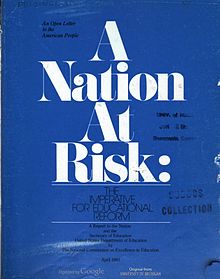
Nancy Bailey criticizes the ongoing campaign to raise academic expectations and academic pressure on children in kindergarten. She traces the origins of this misguided effort on the Reagan-era publication “A Nation at Risk” in 1983.

Although the gloomy claims of that influential document have been repeatedly challenged, even debunked*, it continues to control educational discourse with its assertion that American schools are failing. “A Nation at Risk” led to increased testing, to the passage of George W. Bush’s No Child Left Behind in 2002, to the creation of Barack Obama’s Race to the Top in 2009, to the release of the Common Core standards in 2010.

Despite nearly a quarter century of focus on standards and testing, policymakers refuse to admit that these policies have failed.

And nowhere have they been more destructive than in the early grades, where testing has replaced play. Kindergarten became the new first grade.

But says Bailey, the current Secretary of Education wants to ratchet up the pressure on little kids.

She writes:

In What Happened to Recess and Why are our Children Struggling in Kindergarten, Susan Ohanian writes about a kindergartner in a New York Times article who tells the reporter they would like to sit on the grass and look for ladybugs. Ohanian writes, the child’s school was built very deliberately without a playgroundLollygagging over ladybugs is not permitted for children being trained for the global economy (2002, p.2).   

America recently marked forty years since the Reagan administration’s A Nation at Risk: The Imperative for Educational Reform which blamed schools as being eroded by a rising tide of mediocrity that threatens our very future as a Nation and a people.

Berliner and Biddle dispute this in The Manufactured Crisis: Myths, Fraud, and the Attack on America’s Public Schools. They state that most of these claims were said to reflect “evidence,” although the “evidence” in question either was not presented or appeared in the form of simplistic, misleading generalizations (1995, p. 3)

Still, the report’s premise, that public schools failed, leading us down the workforce path of doom, continues to be perpetuated. When students fail tests, teachers and public schools are blamed, yet few care to examine the obscene expectations placed on the backs of children since A Nation at Risk.

Education Secretary Cardona recently went on a bus tour with the message to Raise the Bar in schools. Raising the bar is defined as setting a high standard, to raise expectations, to set higher goals.

He announced a new U.S. Department of Education program, Kindergarten Sturdy Bridge Learning Community.

This is through New America, whose funders include the Bill and Melinda Gates Foundation, the Waltons, and others who want to privatize public education. Here’s the video, Kindergarten as a “Sturdy Bridge”: Place-Based Investments, describing the plan focusing on PreK to 3rd grade. This involves Reading by 3rd and the Campaign for Grade Level Reading.

Cardona says in the announcement:

Getting kindergarten right has to be top of mind for all of us, because what happens there sets the stage for how a child learns and develops well into their elementary years and beyond. 

Ensuring that kindergarten is a sturdy bridge between the early years and early grades is central to our efforts both to Raise the Bar for academic excellence and to provide all students with a more equitable foundation for educational success. The kindergarten year presents an opportunity to meet the strengths and needs of young learners so they can continue to flourish in the years to come.

Raise the bar? Kindergarten is already the new first grade. What will it be now? Second? Third? Fourth? What’s the rush? How is this developmentally sound? One thing is for sure: there will still be no idle time for children to search for ladybugs.

Few bear the brunt of A Nation at Risk,as do early learners whose schools have been invaded by corporate schemes to force reading and advanced learning earlier than ever expected in the past.

If kindergartners aren’t doing well after all these years of toughness, higher expectations, and an excruciating number of assessments, wouldn’t it seem time to back off, instead of raising the bar higher?

Editor’s note:

*James Harvey and I will discuss the distortions contained in the “Nation at Risk” report at the Network for Public Education conference on Oct. 28-29 in Washington, D.C. James Harvey was a high-level member of the staff that wrote the report. He has written about how the Reagan-era Commissuon in Excellence in Education “cooked the books” to paint a bleak—but false—picture of American public schools. Please register and join us!

While looking over my site, I came across this post written in 2014.

It is as timely now as it was then. Reformers worked with communications specialists to develop language that conceals its true meaning.

For example, reformers today don’t want to improve public schools. They want to defund them. Some want to destroy them. They think that public money should go to anyone, any organization that claims they are educating young people. They are fine with funding religious schools. No doubt, they would have no objection to funding Satanic schools, for fairness sake.

These reformers believe in tight accountability for public schools, their principal, their teachers, their students.

They believe in zero accountability for anyone taking public money for nonpublic schools. In most states with vouchers, voucher schools do not require students to take state tests. Students can’t be judged by test scores as public school students are; their teachers can’t be evaluated by test scores. Their schools can’t be closed because of test scores. There are no test scores.

Teachers in public schools must be college graduates who have studied education and who are certified. Teachers in voucher schools do not need to be college graduates or have certification.

Hundreds of millions, maybe billions, now fund homeschooling. With well-educated parents, home schooling may be okay, although the children do miss the positive aspects of meeting children from different backgrounds, working in teams, and learning how to get along with others. But let’s face it: not all home schoolers are well-educated. Poorly educated parents will teach their children misinformation and limit them to what they know, and no more.

Then there is the blessing that the US Supreme Court gave to public funding for religious schools. The purpose of most religious schools is to teach their religion. The long word for that is indoctrination. We have a long history of not funding religious schools. But now all of us are expected to foot the bill for children to learn the prayers and rituals of every religion. I don’t want to pay taxes for someone else’s religion to be inculcated. I also don’t want to pay taxes to inculcate my own religion.

But the Supreme Court has step by step moved us to a point where the government’s refusal to pay for Catholic schools, Muslim schools, Jewish schools, and evangelical schools—with no regulation, no accountability, and no oversight—violates freedom of religion. That’s where we are going.

Ninety percent of the people in this country graduated from public schols. Those who sent their children to private or religious school paid their own tuition. That arrangement worked. Over time, we became the leading nation on earth in many fields of endeavor. Our education system surely had something to do with our national success.

I believe that people should have choices. Most public schools offer more curricular choices than charter schools, private schools, or religious schools. Anyone may choose to leave the public school to attend a nonpublic school, but they should not ask the taxpayers to underwrite their private choice.

The public pays for a police force, but it does not pay for private security guards. The public pays for firefighters, highways, beaches, parks, and many other public services. Why should the public pay for your decision to choose a private service?

Saddest of all, the current trend toward school choice will lower the overall quality of education. The children of the affluent who attend elite private schools will get a great education, although they will not get exposed to real life on their $60,000 a year campus. None of those campuses will get poor voucher kids because all they bring is a pittance.

We are now learning that most public schools are superior to most of the voucher schools. Many charter schools are low-performing.

On average, school choice will dumb down our rising generation. It will deepen social and religious divisions. It will not produce better education or a better-educated society. It will widen pre-existing inequalities.

Books have been and will be written about this fateful time, when we abandoned one of our most important, most democratic institutions. Libertarians and religious zealots have worked for years, decades, on this project. By convincing leaders of both parties to follow them, they have betrayed the rest of us. They have lost sight of the common good.

Those two words are key. The “common good.” With them, we as a society can conquer any goal, realize any ideal. Without them, we are reduced to squabbling tribes, cliques, factions. We are becoming what the Founding Fathers warned about.

If it’s not too late, that is the banner behind which we should rally: the common good. An understanding that we are all in the same boat, and we must take care of others.

Democrats in Wisconsin celebrated the election last spring of a liberal judge to the State Supreme Court. Her election was decisive—she won by 11 points. Her election shifted the balance on the court to 4-3 favoring liberals. Justice Janet Protasiewicz made clear as she campaigned that she would support abortion rights and oppose partisan gerrymandering. Republicans claim that her campaign statements demonstrate she is prejudiced, which is grounds for impeachment. The legislature is overwhelmingly Republican, which is evidence of partisan gerrymandering of legislative districts in a state with a Democratic governor.

MADISON, Wis. (AP) — Wisconsin’s Republican-controlled Legislature is talking about impeaching a newly elected liberal state Supreme Court justice even before she has heard a case.

The unprecedented attempt to impeach and remove Justice Janet Protasiewicz from office comes as the court is being asked to throw out legislative electoral maps drawn by the Republican-controlled Legislature in 2011 that cemented the party’s majorities, which now stand at 65-34 in the Assembly and a 22-11 supermajority in the Senate.

Here is a closer look at where things stand:

Protasiewicz won election in April to a 10-year term on the Wisconsin Supreme Court beginning Aug. 1. Her 11-point victory gave liberals a 4-3 majority, ending a 15-year run with conservatives in control.

During her first week in office, two lawsuits were filed by Democratic-friendly groups and law firms seeking to overturn Republican-drawn legislative maps.

WHY IS THERE TALK OF IMPEACHMENT?

Republican lawmakers who have talked about the possibility, most notably Assembly Speaker Robin Vos, allege Protasiewicz has prejudged redistricting cases pending before the Supreme Court because of comments she made during her campaign. They also argue her acceptance of nearly $10 million from the Wisconsin Democratic Party disqualifies her.

The state Democratic Party is not part of either redistricting lawsuit, but supports the efforts.

The court has yet to say whether it will hear the redistricting challenges. Protasiewicz also has yet to say whether she will step aside in the cases, including the decision on whether to hear them.

If she does step aside, the court would be divided 3-3 between liberal and conservative justices. However, conservative Justice Brian Hagedorn has sided with liberals on major cases in the past, angering Republicans.

WHAT EXACTLY DID PROTASIEWICZ SAY?

Protasiewicz frequently spoke about redistricting during the campaign, calling the current Republican-friendly maps “unfair” and “rigged.”

“Let’s be clear here,” she said at a January forum. “The maps are rigged here, bottom line.”

“They do not reflect people in this state,” Protasiewicz said at the same forum. “I don’t think you could sell any reasonable person that the maps are fair. I can’t tell you what I would do on a particular case, but I can tell you my values, and the maps are wrong.”

She never promised to rule one way or another.

WHAT DOES THE LAW SAY ABOUT RECUSAL AND IMPEACHMENT?

On recusal, the U.S. Constitution’s due process clause says a judge must recuse if they have a financial interest in the case, or if there is a strong possibility of bias.

There are also state rules laying out when a judge must step aside from a case. Those generally include any time their impartiality on a case can be called into question, such as having a personal bias toward one of those suing, having a financial interest or making statements as a candidate that “commits, or appears to commit” the judge to ruling one way or another.

On impeachment, the Wisconsin Constitution limits the reasons to impeach a sitting officeholder to corrupt conduct in office or the commission or a crime or misdemeanor.

HAS A WISCONSIN SUPREME COURT JUSTICE EVER BEEN IMPEACHED?

The Wisconsin Legislature has voted only once to impeach a state judge who was alleged to have accepted bribes and heard cases in which he had financial interests. It happened in 1853, just five years after statehood, and the state Senate did not convict.

HOW WOULD SHE BE IMPEACHED?

It takes a majority vote in the Assembly to impeach and a two-thirds majority, or 22 votes, in the Senate to convict. Republicans have enough votes in both chambers to impeach and convict Protasiewicz.

If the Assembly impeached her, Protasiewicz would be barred from any duties as a justice until the Senate acted. That could effectively stop her from voting on redistricting without removing her from office and creating a vacancy that Democratic Gov. Tony Evers would fill.

Vos, the Assembly speaker, has said he is still researching impeachment and has not committed to moving ahead.

The day after Protasiewicz was elected, Wisconsin Senate Majority Leader Devin LeMahieu seemed to cast doubt on the Senate proceeding with impeachment.

“To impeach someone, they would need to do something very serious,” LeMahieu told WISN-TV. “We are not looking to start the impeachment process as a regular occurring event in Wisconsin.”

WHEN COULD THIS GET CLEARED UP?

The court is under no deadline to decide whether it will hear the redistricting challenges. Likewise, Protasiewicz doesn’t have a deadline for deciding whether she will recuse herself. Both decisions could come at any point.

If the court decides to hear the challenges, it would then set a timeline for arguments. It is unclear when, if Protasiewicz remains on the case, the Legislature might proceed with impeachment proceedings.

Why would the Republicans move to impeach the Justice? Power. They have successfully gerrymandered their state and don’t want to lose their super-majorities in both houses, where they can veto anything that Democratic Governor Tony Evers proposes.

Thom Hartmann writes here about how George W. Bush and Dick Cheney cynically used the attacks of 9/11 to get us into America’s longest war. They wanted to go to war. I can’t help but think that if 537 votes in Florida had gone a different way, the world would be a different place today. It was those 537 votes that made Bush the President, not Al Gore. Remember that: Every vote counts.

Hartmann writes:

America has been lied into too many wars. It’s cost us too much in money, credibility, and blood. We must remember the lies, and tell our children about them so that memory isn’t lost…

Today is 9/11, the event that first brought America together and then was cynically exploited by George W. Bush and Dick Cheney to have a war against Iraq, followed by their illegal invasion of Afghanistan just a bit more than a year earlier.

Yet the media today (so far, anyway) is curiously silent about Bush and Cheney’s lies.

Given the costs of both these wars — and the current possibility of our being drawn deeper into conflict in both Ukraine and Taiwan — it’s an important moment to discuss our history of wars, both illegal and unnecessary, and those that are arguably essential to the survival of democracy in the world.

To be clear, I support US involvement — and even an expanded US involvement — in the defense of the Ukrainian democracy against Putin’s Hitler-grabs-Poland-like attack and mass slaughter of Ukrainian civilians. Had the world mobilized to stop Hitler when he invaded Poland in 1939 there almost certainly wouldn’t have been either the Holocaust or WWII, which is why Europe is so united in this effort.

If Putin succeeds in taking Ukraine, his administration has already suggested that both Poland and Moldova are next, with the Baltic states (Latvia, Lithuania, Estonia) also on the menu. That would almost certainly lead to war in Europe.

And China is watching: a Putin victory in Ukraine will encourage Xi to try to take Taiwan. Between the two — war in both Europe and the Pacific — we could find ourselves in the middle of World War III if Putin isn’t stopped now.

That said, essentially defensive military involvement like with Ukraine or in World War II have been the exception rather than the rule in American history. We’ve been far more likely to have presidents lie us into wars for their own personal and political gain than to defend ourselves or other democracies.

For example, after 9/11 in 2001 the Taliban that then ran Afghanistan offered to arrest Bin Laden, but Bush turned them down because he wanted to be a “wartime president” to have a “successful presidency.”

The Washington Post headline weeks after 9/11 put it succinctly: “Bush Rejects Taliban Offer On Bin Laden.” With that decision not to arrest and try Bin Laden for his crime but instead to go to war, George W. Bush set the US and Afghanistan on a direct path to disaster (but simultaneously set himself up for re-election in 2004 as a “wartime president”).

To further complicate things for Bush and Cheney, the 9/11 attacks were not planned, hatched, developed, practiced, expanded, worked out, or otherwise devised in Afghanistan or by even one single citizen of Afghanistan.

That country and its leadership in 2001, in fact, had nothing whatsoever to do with 9/11, as I detailed in depth here on August 15th of last year. The actual planning and management of the operation was done out of Pakistan and Germany, mostly by Khalid Sheik Mohammed.

The Taliban were bad guys, trashing the rights of women and running a tinpot dictatorship, but they represented no threat whatsoever to America or our allies.

Almost two decades later, though, then-President Trump and Mike Pompeo gave the Taliban everything they wanted — power, legitimacy, shutting down 9 of the 10 US air bases in that country to screw incoming President Joe Biden, and the release of 5000 of Afghanistan’s worst Taliban war criminals — all over the strong objections of the democratically elected Afghan government in 2019.

Trump did this so could falsely claim, heading into the 2020 election, that he’d “negotiated peace” in Afghanistan, when in fact he’d set up the debacle that happened around President Biden’s withdrawal from that country.

”The relationship I have with the Mullah is very good,” Trump proclaimed — after ordering the mullah who then named himself President of Afghanistan — freed from prison over the furious objection of Afghan’s government, which Trump had cut out of the negotiations.

Following that betrayal of both Afghanistan and America, Trump and the GOP scrubbed the record of their embrace of the Taliban from their websites, as noted here and here.

And the conservative Boris Johnson administration in the UK came right out and said that Trump’s “rushed” deal with the Taliban — without involvement of the Afghan government or the international community — set up the difficulties Biden faced.

“The die was cast,” Defense Minister Ben Wallace told the BBC, “when the deal was done by Donald Trump, if you want my observation.”

So, Republican George W. Bush lied us into both the Afghanistan and Iraq wars, and then Donald Trump tried to lie us out of at least one of them.

But this was far from the first time a president has lied us into a war.

— Vietnam wasn’t the first time an American president and his buddies in the media lied us into a war when Defense Secretary Robert McNamara falsely claimed that an American warship had come under attack in the Gulf of Tonkin and LBJ went along with the lie.

— Neither was President William McKinley lying us into the Spanish-American war in 1898 by falsely claiming that the USS Maine had been blown up in Havana harbor (it caught fire all by itself).

— The first time we were lied into a major war by a president was probably the Mexican-American war of 1846 when President James Polk lied that we’d been invaded by Mexico. Even Abraham Lincoln, then a congressman from Illinois, called him out on that lie.

— You could also argue that when President Andrew Jackson signed the Indian Removal Act in 1830 leading to the Trail of Tears slaughter and forced relocation of the Cherokee under President Buchanan (among other atrocities) it was all based on a series of lies.

Bush’s lies that took us into Afghanistan and, a bit over a year later into Iraq, are particularly egregious, however, given his and Cheney’s reasons for those lies.

In 1999, when George W. Bush decided he was going to run for president in the 2000 election, his family hired Mickey Herskowitz to write the first draft of Bush’s autobiography, A Charge To Keep.

Although Bush had gone AWOL for about a year during the Vietnam war and was thus apparently no fan of combat, he’d concluded (from watching his father’s “little 3- day war” with Iraq) that being a “wartime president” was the most consistently surefire way to get reelected (if you did it right) and have a two-term presidency.

“I’ll tell you, he was thinking about invading Iraq in 1999,” Herskowitz told reporter Russ Baker in 2004.

“One of the things [Bush] said to me,” Herskowitz said, “is: ‘One of the keys to being seen as a great leader is to be seen as a commander-in-chief. My father had all this political capital built up when he drove the Iraqis out of (Kuwait) and he wasted it.

“[Bush] said, ‘If I have a chance to invade Iraq, if I had that much capital, I’m not going to waste it. I’m going to get everything passed I want to get passed and I’m going to have a successful presidency.’”

The attack on 9/11 gave Bush his first chance to “be seen as a commander-in-chief” when our guy Osama Bin Laden, who the Reagan/Bush administration had spent $3 billion building up in Afghanistan, engineered an attack on New York and DC.

The crime was planned in Germany and Florida and on 9/11 Bin Laden was, according to CBS News, not even in Afghanistan:

“CBS Evening News has been told that the night before the Sept. 11 terrorists attack, Osama bin Laden was in Pakistan. He was getting medical treatment with the support of the very military that days later pledged its backing for the U.S. war on terror in Afghanistan.”

When the Obama administration finally caught and killed Bin Laden, he was back in Pakistan, the home base for the Taliban.

But attacking our ally Pakistan in 2001 would have been impossible for Bush, and, besides, nearby Afghanistan was an easier target, being at that time the second-poorest country in the world with an average annual per-capita income of $700 a year. Bin Laden had run terrorist training camps there — unrelated to 9/11 — but they made a fine excuse for Bush’s first chance to “be seen as a commander-in-chief” and get some leadership cred.

Cheney, meanwhile, was in a world of trouble because of a huge bet he’d made as CEO of Halliburton in 1998. Dresser Industries was big into asbestos and about to fall into bankruptcy because of asbestos lawsuits that the company was fighting through the court system.

Cheney bet Dresser would ultimately win the suits and had Halliburton buy the company on the cheap, but a year later, in 1999, Dresser got turned down by the courts and Haliburton’s stock went into freefall, crashing 68 percent in a matter of months.

Bush had asked Cheney — who’d worked in his father’s White House as Secretary of Defense — to help him find a suitable candidate for VP.

Cheney, as his company was collapsing, recommended himself for the job. In July of 2000, Cheney walked away with $30 million from the troubled company and the year after that, as VP, Halliburton subsidiary KBR received one of the first no-bid no-ceiling (no accountability and no limit on how much they could receive) multi-billion-dollar military contracts.

Bush and Cheney both had good reason to want to invade Afghanistan in October 2001. Bush was seen as an illegitimate president at the time because his father’s corrupt appointee on the Supreme Court, Clarence Thomas, had cast the deciding vote in the Bush v Gore lawsuit that made him president; a war that gave him legitimacy and the aura of leadership.

Cheney’s company was in a crisis, and Afghanistan War no-bid contracts helped turn around Halliburton from the edge of bankruptcy into one of the world’s largest defense contractors today.

Even Trump had to get into the “let’s lie about Afghanistan” game, in his case to have bragging rights that he’d “ended the war in Afghanistan.”

In 2019, Trump went around the Afghan government (to their outrage: he even invited the Taliban to Camp David in a move that disgusted the world) to cut a so-called “peace deal” that sent thousands of newly-empowered Taliban fighters back into the field, and then drew down our troops to the point where today’s chaos in that country was absolutely predictable.

Trump’s deal was the signal to the 300,000+ Afghan army recruits we’d put together and paid that America no longer had their back and if the Taliban showed up they should just run away. Which, of course, is what happened on Trump’s watch. As Susannah George of The Washington Post noted:

“The Taliban capitalized on the uncertainty caused by the [Trump] February 2020 agreement reached in Doha, Qatar, between the militant group and the United States calling for a full American withdrawal from Afghanistan. Some Afghan forces realized they would soon no longer be able to count on American air power and other crucial battlefield support and grew receptive to the Taliban’s approaches.”

Jon Perr’s article at Daily Kos did a great summary, with the title: “Trump put 5,000 Taliban fighters back in battle and tied Biden’s hands in Afghanistan.”

Trump schemed and lied to help his own reelection efforts, and the people who worked with our military and the US-backed Afghan government paid a terrible price for it.

As President Biden told America:

“When I came to office, I inherited a deal cut by my predecessor—which he invited the Taliban to discuss at Camp David on the eve of 9/11 of 2019—that left the Taliban in the strongest position militarily since 2001 and imposed a May 1, 2021 deadline on U.S. Forces. Shortly before he left office, he also drew U.S. Forces down to a bare minimum of 2,500.

“Therefore, when I became President, I faced a choice—follow through on the deal, with a brief extension to get our Forces and our allies’ Forces out safely, or ramp up our presence and send more American troops to fight once again in another country’s civil conflict. I was the fourth President to preside over an American troop presence in Afghanistan—two Republicans, two Democrats. I would not, and will not, pass this war onto a fifth.”

America has been lied into too many wars. It’s cost us too much in money, credibility, and blood. We must remember the lies, and tell our children about them so that memory isn’t lost.

When President Ford withdrew US forces from Vietnam (I remember it well), there was barely a mention of McNamara’s and LBJ’s lies that got us into that war.

Similarly, today’s reporting on the chaos in Afghanistan and the war to seize the Iraqi oil fields almost never mention Bush’s and Cheney’s lies and ulterior motives in getting us into those wars in the first place.

George Santayana famously noted, “Those who cannot remember the past are condemned to repeat it.”

We can’t afford to let these lies go down the memory hole, like we have the other wars we were lied into that I mentioned earlier. Sadly, it’s clear now that neither Bush nor Cheney will be held accountable for their lies or for the American, Afghan, and Iraqi blood and treasure they cost.

But both should be subject to a clear and public airing of the crimes they committed in office and required — at the very least — to apologize to the thousands of American families destroyed by the loss of their soldier children, parents, and spouses, as well as to the people of both Afghanistan and Iraq.

If the media refuses to mention the Bush/Cheney lies on this anniversary of 9/11, it’s all the more important that the rest of us use this opportunity to do so. Pass it on.