Archives for category: Accountability

The Texas Monthly contacted 100 Republican office holders to get their view of Trump’s plans for deporting millions of immigrants. Only two responded. In Texas, one in 20 residents is an undocumented immigrant. Their absence will have a big economic impact, as will the visuals of rounding up and detaining large numbers of people.

Michael Hardy wrote:

Shortly after he is sworn into office, on January 20, President-elect Donald Trump plans to launch a massive deportation operation targeting the estimated 11.5 million immigrants living illegally in the United States. Texas, with its 1,254-mile southern border and pro-Trump leaders, will play a central role in any such deportations. Stephen Miller, the chief architect of Trump’s immigration policies, has vowed that the administration will build “vast holding facilities that would function as staging centers,” likely on “open land in Texas near the border.” State land commissioner Dawn Buckingham recently offered the administration 1,400 acres in Starr County about 35 miles west of McAllen to build “deportation facilities.” 

In their eagerness to help Trump conduct sweeping roundups of undocumented Texas workers and their families, state leaders who vociferously supported Trump’s candidacy have mostly avoided reckoning with the likely economic consequences of such roundups—including the impact on inflation, a major issue in the presidential campaign. 

Earlier this month, Governor Greg Abbott said he expected the president-elect to begin by deporting immigrants who have committed crimes in the United States, but he would not say who he thinks should be expelled next under the far-reaching plan. “President Trump has made perfectly clear that this is a process and you have to have a priority list,” he said. “You begin with . . . the criminals.” 

But Texas is home to some 1.6 million undocumented immigrants—around one in every twenty residents—and the vast majority are not criminals. In fact, undocumented immigrants in our state commit crimes at a significantly lower rate than legal residents, according to a National Institute of Justice analysis of Texas Department of Public Safety data. Many among these 1.6 million power the state’s construction, farming, and meatpacking industries and work as housekeepers, landscape gardeners, and restaurant workers. 

Deporting every immigrant who is in the U.S. illegally—or even half of them—would cripple the economy. And Texas would be hit harder than most states. A recent report by the left-leaning American Immigration Council estimated that a mass-deportation campaign would reduce the national GDP by 4.2 percent to 6.8 percent—a similar hit to the one the nation took during the Great Recession. The price of groceries would skyrocket. A gallon of milk, for instance, would cost twice as much without immigrant labor, according to a 2015 estimate from Texas A&M University’s AgriLife Extension Service. Mass deportations would also punch a hole in the state budget, because undocumented Texans pay an estimated $4.9 billion in sales and payroll taxes every year, including for retirement benefits they are ineligible to collect. 

Trump has argued that deporting undocumented immigrants would open up jobs for American citizens. But the percentage of citizens willing to work in industries such as landscaping and construction has declined, and economic studies suggest that immigration, both legal and illegal, is a net benefit to the economy. Reducing illegal immigration likely would, over time, result in higher wages for legal workers in industries such as construction, assuming the supply of labor were to fall faster than demand. But suddenly removing a significant percentage of undocumented workers (one recent estimate found that 23 percent of construction workers nationally don’t have legal documents) would likely cause hundreds of building projects to stall, crops to go unharvested, and cattle to stack up in feedlots.

Trump’s program would also impose social costs on communities across Texas. According to the Pew Research Center, around 70 percent of undocumented immigrants in the country live in mixed-status households with at least one family member who is here legally. Expelling these migrants would separate families and decimate communities across the state. “The social, family, and economic impact would be very deep,” said Rice University political scientist Tony Payan. “It doesn’t make sense from any perspective. It would be madness for the U.S. to do that.” 

Some Texas officials, including Senator Ted Cruz, have long supported mass deportation as a campaign platform while remaining vague about how such an operation would be executed and what the consequences might be for the Texas economy. In an attempt to get more specifics, Texas Monthly reached out to top Texas officials and every Republican state legislator to ask about the incoming president’s mass-deportation plan. We posed four questions:

  • Do you support President Trump’s plan to deport all immigrants in the country illegally?
  • How would you like the deportations to be carried out?
  • Are you concerned about the potential economic damage to the Texas construction, farming, and restaurant industries from deporting undocumented immigrants? If so, how would you remedy that damage?
  • Are you concerned about the family separations that will occur if all undocumented Texas are deported?

Two legislators responded. Ninety-eight did not.

A loud silence.

After Trump fired FBI Director James Comey in 2017, he choose respected FBI veteran Christopher Wray to replace Comey. The FBI Director is appointed for a ten-year term, to insulate the Director from partisan influence.

Senator Chuck Grassley is the ranking Republican on the Senate Committee on the Budget.

In this letter, directed to Director Wray, Grassley says he is finished and it’s time to pack his bag. He explains why. The heart of the matter is that he failed to investigate Republican claims that Biden was corrupt, but approved a search of Trump’s home for classified documents.

Next up is the odious Kash Patel, nominated by Trump to be FBI Director. Patel is a MAGA ideologue who has said that if appointed, on day one, he would close the FBI Headquarters and re-open it as a “museum of the deep state.”

Let’s see what Senator Grassley says about the unqualified Patel.

In Houston, Lisa Gray of the Houston Chronicle interviewed Dr. Peter Hotez, a respected practitioner, about the Trump agenda for public health. This is part two of a two-part post.

Gray writes:

Recently, after outlining five terrifying infectious diseases and potential pandemics looming on the world horizon, vaccine researcher Peter Hotez said that he doesn’t believe that the incoming Trump administration is taking those threats seriously enough.

That alarmed me. I’ve been interviewing Hotez since early 2020, right after COVID infections showed up in the United States. As he’s the dean of the National School of Tropical Medicine at Baylor College of Medicine, he follows emerging disease threats closely. And with his team at Texas Children’s Hospital Center for Vaccine Development, he develops low-cost vaccines for low-income nations. During the pandemic, he became one of the most recognized medical experts on COVID — and a local hero here in Houston. 

Videographer Sharon Steinmann and I spoke with Hotez in his office at Baylor. This Q&A has been edited for length and clarity.

Q: Why are you worried that the incoming Trump administration may not be ready for public-health threats on Day 1? Is that based on the people Donald Trump has named to health positions?

A: 
I’m concerned that the Trump administration is picking individuals based on their ideologies rather than either their subject-matter expertise or their ability to get things done in government.

Q: You’ve been acquainted for years with RFK Jr. — Robert F. Kennedy, Jr., who Trump has nominated to be secretary of the U.S. Department of Health and Human Services. How did you meet him?

A: 
I used to call him “Bobby.” I got to know him because in 2017 he indicated that he was going to head a vaccine commission for the new incoming Trump administration.

I was in my office, here where we’re speaking now, and my assistant said, “Hey, Dr. Hotez, I have Dr. Anthony Fauci and Dr. Francis Collins on the phone. Can you talk to them?”

Q: Whoa! Those are two big names in your field.

A: 
[Grins.] I said, “Yeah, I guess I’ll take the call.”

They said, “Peter, we’ve got a job for you. If anyone can explain to Kennedy why vaccines don’t cause autism, it’s you.”

They asked because I was a scientist and a pediatrician, and most importantly, I’d written a book, “Vaccines Did Not Cause Rachel’s Autism,” explaining how I can be sure that my daughter’s autism is not linked to vaccines. 

Tim Shriver, a terrific guy who heads the Special Olympics, brokered a meeting for us with RFK Jr. And for months after that, I had a number of long, long phone conversations with Bobby. Sometimes that would be while my wife Ann and I were out for a long walk through Montrose, and she’d listen in.

Q: How did that go? 

A: 
Our conversations weren’t very productive. It was an exercise in frustration, probably for both of us. He was pretty dug in. Either he didn’t understand the science or he didn’t have a lot of interest in it.

For instance, I would point out to Bobby that autism is a neurodevelopmental condition that starts early in pregnancy. We know this from multiple neurodevelopmental studies. So autism is well in motion before kids ever even see their first vaccine.

In addition to that, the Broad Institute, at Harvard and the Massachusetts Institute of Technology, had also identified at least a hundred autism genes. Many of them are a type of gene called the neuronal cytoskeleton gene, which is involved in neuronal connections. (My wife Ann and I actually did a whole-genome sequencing on Rachel. We found that Rachel’s autism gene is different from the ones published by the Broad Institute, but it’s similar — it’s a neuronal cytoskeleton gene.)

Sergiu Pasca and his associates at Stanford University Medical School have also looked at what they call brain organoids. They can put neurons together in a petri dish and basically assemble them as mini-brains. This has been done now with neurons that have autism genes, and so the aberrant neuronal patterns really tell the complete story now.

It was frustrating to me that Bobby didn’t pay attention to the science and instead spouted dogma.

A: I got to know her during the COVID pandemic. She was a Fox News talking head, and I was going on Fox News pretty regularly in the evenings until I wouldn’t go along with the hydroxychloroquinine nonsense.

At the time, we talking heads on the various news channels would talk to each other. That was helpful because we were learning from each other. We all brought different expertise to the table.

Dr. Nesheiwat had a lot of humility. She wanted to know my opinion on COVID vaccines, how they worked and what were the different technologies. She was inquisitive and delightful to talk with. So I’m excited about her role as surgeon general. That’s at least one silver lining.

Q: Are there other silver linings?

A: Yeah. The other person that I got to know during the pandemic was Mehmet Oz, Dr. Oz, because he had a show with wide reach. I would go on his show and talk about COVID vaccines.

I liked being on his show. He was respectful and thoughtful. He asked good questions and gave me an opportunity to talk to daytime audiences — people I wouldn’t ordinarily reach. I was grateful for that opportunity.

I think that both Dr. Nesheiwat and Dr. Oz are effective communicators. I think President-elect Trump wants to bring on good communicators.

Dr. Oz is heading a very bureaucratic organization, the Centers for Medicare and Medicaid Services. I don’t think that’s a perfect fit for him — he’d have been better off as something like surgeon general — but we’ll see.

Lisa Gray is the op-ed editor and a member of the Houston Chronicle editorial board. During the pandemic, she was the Chronicle’s lead COVID reporter.

Lisa Gray, an editor at the Houston Chronicle, interviewed Dr. Peter Hotez, a vaccine scientist and specialist in infectious diseases, about the major public health challenges facing the incoming Trump administration. Dr. Hotez shares the story of his effort to persuade Robert F. Kennedy Jr. of the importance of vaccines. This post is the first of two.

Gray wrote:

During the COVID pandemic, Americans came to rely on bow-tied vaccine scientist Peter Hotez for calm, scientific assessments of the virus and the vaccines being developed to fight it. With his team at Texas Children’s Hospital Center for Vaccine Development, Hotez develops low-cost vaccines for low-income nations. He’s also the dean of the National School of Tropical Medicine at Baylor College of Medicine — and is arguably Houston’s most beloved doctor.

He still monitors the public-health landscape closely. To find out what public-health threats await the Donald Trump administration, Houston Chronicle videographer Sharon Steinmann and I interviewed him at his office at Baylor.

Our conversation has been edited for length and clarity.

Q: What are the public health challenges that the Trump administration will face on Day 1? Are you monitoring any major health threats?

A: We’ve got some big-ticket concerns regarding infectious disease and pandemic threats. The new administration is not going to have the luxury of time to organize and think about it. They’re going to be confronted with this from the very beginning.

One of the big threats I’m following is H5N1, an avian influenza. The virus is widespread now in migratory birds that fly from the north to the south.

It’s spilling over into domestic birds and poultry. We’re now seeing a big increase in infections of domestic birds and poultry in California and elsewhere in the western part of the United States, as well as across the northern part of the country. 

An H5N1 strain has also crossed over from birds into cattle. It’s gotten into our herds, including in Texas, as well as in the Great Plains and other parts of the United States.

I’m concerned that, eventually, this virus could spill over to people as well. We’re starting to see human cases. In the last few weeks, we’ve had six human cases. I think eventually H5N1 could become a major human public-health threat.

It’s not there yet. We’re not seeing human-to-human transmission yet. But monitoring it and being prepared for it has got to be a big priority for the new incoming administration. 

Q: Oof. Is that all that’s on the horizon?

A: Guess what? That’s just the beginning.

The other thing that’s happening is, we still have COVID with us. Our COVID-19 numbers are low again, but I expect them to rise. You can protect yourself from that, of course, by keeping your immunizations up to date. If you got a dose of the vaccine in September, like I did, you’ll be due again around January.

But here’s the thing: COVID-19 isn’t the only COVID threat. There are other coronaviruses.

Remember that the name for the virus that causes COVID is the SARS-2 coronavirus. There was a SARS-1, the Severe Acute Respiratory Syndrome that came out of southern China in 2002. We had Middle East Respiratory Syndrome, also caused by a coronavirus, in 2012. And of course, we had SARS-2 cause COVID, the largest pandemic of them all, starting in 2019.

We should expect SARS-3 to come in the next few years.

Q: Why are we seeing these new coronaviruses in people?

A: Because these viruses are widespread in bats. Across China and East Asia, they’re jumping regularly to people. In some cases that’s through intermediate animal hosts. In some cases it’s directly from bats to people.

By some estimates, these new SARS coronaviruses are jumping from bats to people on the order of 66,000 times a year. Every now and then, one catches fire and ignites a pandemic.

So that needs to occupy the attention of the Trump administration. What kind of surveillance are we doing for SARS-3, which is brewing as we speak among bats in Asia?

Q: That’s a lot to take care of.

A: That’s not all we have to worry about. A third big-ticket item is the fact that we’ve seen a significant uptick in the number of virus infections transmitted by mosquitoes or other biting arthropods. We all know about the West Nile virus. Last year was a pretty bad year for infections in the United States, including Texas. But that’s just the beginning.

With these mosquito-transmitted viruses, which we call arboviruses, we know what to expect in the U.S. because we usually see it first in Brazil. In the Western Hemisphere, Brazil is the arbovirus epicenter.  And right now, dengueOropouche, Zika and even yellow fever are all expanding in Brazil. They’re even extending beyond the Amazon rainforest, where we typically see them, because of climate change and possibly because of deforestation. 

And unfortunately, what starts in Brazil doesn’t stay in Brazil. It will eventually make its way to the Gulf Coast of the United States, including Texas.  So for next summer, I’m worried about dengue. I’m worried about Chikungunya, and even the possibility of yellow fever. I wrote about the possibility of a yellow fever outbreak in the New England Journal of Medicine; it would be catastrophic. The virus affects pregnant women and could be transmitted to the fetus, causing horrible birth defects. And besides yellow fever, Oropouche virus [pronounced “o-ro-push”] is going to be yet another big-ticket item. It’s spreading fast in Brazil. 

Q: So we’ve got four big-ticket concerns.

A: Wait, wait: We’re not done yet. Anti-vaccine activism accelerated during COVID; we’ve spoken about it many times. Now it’s spilling over to childhood immunizations. We’re seeing unprecedented levels of vaccine hesitancy and of parents refusing to have their kids vaccinated. So guess what?

From 2023 to 2024, we had a nearly sixfold increase in pertussis, or whooping cough, cases. We went from four measles outbreaks in 2023 to 16 in 2024. We’ve even seen polio in the wastewater of New York state.

I’m expecting a big rise in illnesses that are preventable with childhood vaccines.

Q: And the Trump administration has to be ready for all five of these major threats?

A: All of that is going to come crashing down on them. It’s going to be important that they take all those threats seriously.

It’s not just public health that could be affected. We’ve learned that pandemics have all sorts of other aspects. There’s an economic impact. There’s the impact on our security. And if we have a serious epidemic here in the U.S., it could block our travel from the U.S. to other countries.

I don’t have the sense that these big-ticket infectious disease threats are being taken with the seriousness that they need to be.

Q: Is that based on the people Donald Trump has named to health positions?

A: I’m concerned that the Trump administration is picking individuals based on their ideologies rather than either their subject-matter expertise or their ability to get things done in government.

Lisa Gray is the op-ed editor and a member of the Houston Chronicle editorial board. During the pandemic, she was the Chronicle’s lead COVID reporter.

David Armiak of the Center for Media and Democracy reviewed the recent defeat of vouchers in three states: Colorado, Kentucky, and Nebraska. He points out that vouchers have never won a state referendum. Voters have always said “No” to sending public money to private and religious schools.

Who pays for the state campaigns on behalf of vouchers?

Billionaires.

The two most reliable funders of voucher proposals are billionaires Betsy DeVos and Charles Koch.

The billionaires keep pushing vouchers even though we now know that they are subsidies for families whose children are already enrolled in private schools. And we now know that vouchers don’t help public school students who use them. And we now know that vouchers are a huge drain on state budgets and always cost more than predicted.

DeVos and Koch like to fund failure. Their goal is not to improve education but to destroy public schools.

Armiak writes:

The dark money group Advance Colorado Action (ACA, formerly Unite for Colorado) qualified the ballot measure, but most of the identifiable money spent pushing its passage came from a related advocacy group, Colorado Dawn.

Unite for Colorado was founded in 2019 by Dustin Zvonek, the former vice president for strategy and innovation and state director for Charles Koch’s astroturf operation Americans for Prosperity. As of 2022, Unite for Colorado provided Colorado Dawn with almost half of its revenue ($2.7 million out of $5.9 million).

Both groups have been hit with multiple campaign finance complaints in recent years, including one last month against Colorado Dawn for sending misleading text messages and spending money to influence a ballot measure without registering as an issue committee.

Colorado Dawn reported spending nearly $1.9 million as of October 23 to back Amendment 80, The Colorado Sun reported.

In Kentucky, voters in every county rejected Amendment 2 by a margin of almost two to one (65%).

If it had passed, the state constitution would have been amended to allow public funding to go to private schools.

A record-breaking $14 million was spent by groups in favor and against the amendment, Kentucky Public Radio reported. The Protect Freedom PAC pulled in $5 million from school privatization billionaire Jeff Yassand spent $4 million on ads supporting the measure.

Other groups spending in favor of the amendment included Kentucky Students First ($2.5 million); Empower Kentucky Parents ($1.25 million); Empower Kentucky Parents PAC ($800,000); and the state chapter of Koch’s Americans for Prosperity ($328,000).

Empower Kentucky Parents received $1 million from American Federation for Children, a group organized and funded by the billionaire DeVos family. Betsy DeVos served as secretary of education during Trump’s first term in office and now supports his plans to eliminate the department.

In Nebraska, 57% of voters supported a ballot measure (Referendum 435) to repeal a new state law that would have provided parents with $10 million in public funds per year in the form of vouchers for their children to attend private K–12 schools.

The Nebraska Examiner reported that Keep Kids First spent just $111,000 as of November 4 to prevent the repeal of the referendum in the Cornhusker state. The American Federation for Children is also the largest known donor so far to Keep Kids First, giving $561,500 in 2023–24.

This is a sickening article that appeared in The Irish Times about a meeting on Capitol Hill between Congressional leaders and Elon Musk and Vivek Ramaswamy.

Why is it sickening? It shows our elected Congressional leaders preening and groveling in the presence of the world’s richest man and a man who is only very rich.

Our Leaders? Who elected Elon and Vivek?

Why an article from The Irish Times? My good friend and executive director of the Network for Public Education Carol Burris is spending the holidays there and sent it to me.

As you read the article, you can feel the obsequiousness that these elected officials are expressing as they wait for the phony Department of Government Efficiency to tell them what to cut.

“Elon and Vivek talked about having a naughty list and a nice list for members of Congress and senators and how we vote,” reported Georgia congresswoman Marjorie Taylor Greene who offered a beaming smile that suggested she knew which list she’d be making. “And how we’re spending American people’s money. I think that would be fantastic.”

One wonders what Ted Kennedy or Henry Clay or Lyndon Johnson, during their Senate years, would have made of two billionaires with zero political experience or authority, breezing into the Capitol and explaining to them they had a chance to make the nice list.

Speaker Johnson promised that Thursday’s meetings will be the first of many visits by Musk and Ramaswamy. “We believe it’s a historic moment for the country and these two gentlemen are going to help us navigate through this exciting day. Elon and Vivek don’t need much of an introduction here in Congress for certain and I think most of the public know what they are capable of and have achieved.

“They are innovators and forward thinkers and that’s what we need right now. We are laying the new ground rules for the new Congress in the new year, and we are going to see a lot of change here in Washington of the way things are run. That is what this whole Doge effort is about.”

Should they cut Social Security? Medicare? Veterans’ Healthcare? Grants for higher education? Title 1? Headstart?

Everything is on their chopping block.

How many civil servants will they seek to terminate?

Musk cut 80% of the staff at Twitter. Will he aim to lay off a huge percentage of the people who keep government running?

Musk tweeted a few days ago that government “should be rule by democracy, not rule by bureaucracy.”

How is it democratic to allow two unelected oligarchs to decide which programs should be eliminated? Why do Elon and Vivek–who will never need Medicare or Social Security–get to decide whether the rest of us can keep the programs that we rely on? If they get their way, there will be more people dying of health conditions that could been treated, more seniors eating cat food for dinner.

The politicians eagerly await their marching orders.

Sickening.

President-elect Trump appointed a man who has actively sabotaged global health to be in charge of our nation’s public health system. Robert F. Kennedy Jr. is a dangerous quack, whose conspiracy theories put millions of lives at risk.

Why did Trump choose a man to lead HHS whose ideology subverts public health? Well, he promised RFK Jr. the job in exchange for his endorsement. Why does Trump fill key positions at HHS with others whose views or experience are derided by mainstream scientists? Clearly, he is being advised by RFK Jr., so he can surround himself with like-minded people.

The effect of these appointments on the career scientists and physicians at HHS will be devastating. There is sure to be a brain drain. Trump could cripple our nation’s public health system for years to come.

The New York Times reported:

Robert F. Kennedy Jr., who is in line to lead the Department of Health and Human Services in the next Trump administration, is well-known for promoting conspiracy theories and vaccine skepticism in the United States.

But Mr. Kennedy, an environmental lawyer, has also spent years working abroad to undermine policies that have been pillars of global health policy for a half-century, records show.

He has done this by lending his celebrity, and the name of his nonprofit group, Children’s Health Defense, to a network of overseas chapters that sow distrust in vaccine safety and spread misinformation far and wide.

He, his organizations and their officials have interfered with vaccination efforts, undermined sex education campaigns meant to stem the spread of AIDS in Africa, and railed against global organizations like the World Health Organization that are in charge of health initiatives.

Along the way, Mr. Kennedy has partnered with, financed or promoted fringe figures — people who claim that 5G cellphone towers cause cancer, that homosexuality and contraceptive education are part of a global conspiracy to reduce African fertility and that the World Health Organization is trying to steal countries’ sovereignty.

One of his group’s advisers, in Uganda, suggested using “supernatural insight” and a man she calls Prophet Elvis to guide policymaking. “We do well to embrace ethereal means to get ahead as a nation,” she wrote on a Ugandan news site this year.

These people, more than leading scientists and experienced public health professionals, have existed in Mr. Kennedy’s orbit for years. The ideas spread by him and his associates abroad highlight the unorthodox, sometimes conspiratorial nature of the world occupied by a man who stands to lead America’s health department, its 80,000 employees and its $1.8 trillion budget.

Please open the link to continue reading.

John Thompson, historian and retired teacher in Oklahoma, wonders if the days of authentic teaching and learning will ever return. After a quarter-century of NCLB mandates, are there still teachers who remember what it was like in the pre-NCLB days. John does.

He writes:

Our public schools are facing unbelievable threats. We need to unite and fight for culturally meaningful, holistic, teaching and learning. To do so, I believe educators must remember the divisions that took off after the No Child Left Behind Act of 2001 (NCLB), which mandated test-driven, competition-driven instruction. So, I believe we need cross-generational discussions about both – the weaknesses and strengths of urban districts before the NCLB.

Corporate school reformers used top-down, accountability mandates to rapidly transform schools serving our poorest children of color, but in my experience, those were the students who were most damaged by their output-driven reforms that forced teachers to be “on the same page” when teaching the same lessons.

However, thirty-plus years ago when I started teaching in the Oklahoma City Public Schools, teachers’ autonomy was respected. Teachers in our 80% Black John Marshall High School were urged to build on students’ strengths, not just remediation. Many teachers failed to use that freedom, but we were encouraged to frontload the semester with lessons the students would love in order to turn them onto “learning how to learn.”

On the first day of school in the mid-1990s, I held up a copy of the old Oklahoma history textbook, Panorama of Oklahoma.. The book wasn’t as bad as the curriculum and the video that State Superintendent Ryan Walters is now mandating. But it pushed “inspiring” passages about our state. According to the curriculum guide, the book could be used to explore themes such as “The Spirit of Oklahoma” and “Oklahoma as the Heartland.” One suggested lesson was watching the video Oklahoma by the Department of Tourism.

When the laughter subsided, I showed my students the newly approved book we would use, The Story of Oklahoma, by the late Danney Goble and James Scales.  My job was to help the students “read the authors’ minds” and understand the most important information and concepts that they sought to communicate. I explained Goble’s sales pitch to the OKCPS where he admitted that his book was written on a higher level than other texts, but he demonstrated how students would be able to follow a lesson if it were told as a compelling story.

Goble chose the Tulsa Race Riot of 1921 (as it was called back then) as one of the pivotal moments in the book. This massacre happened during the post-World War I panic known as “the Red Scare,” when immigrants and people of color were often seen as threats to America’s way of life, and when up to 300 died as a white mob burned the section of town known as “Black Wall Street.”  The text included a photograph of the burning of Mount Zion Baptist.

The lesson concluded with Goble’s closing words on Mount Zion:

All that was left was a shattered hull, an ugly hole – and an $84,000 mortgage that would have to be repaid … In a remarkable display of courage, tenacity, and will, Mount Zion’s congregation proceeded to rebuild the church.  Not only did they rebuild the church structure but they also paid off the original mortgage. …”

Goble concluded:

“Let that serve as our point. Those anonymous black Oklahomans endured and triumphed over momentous times.  Like others – nameless roustabouts, oil millionaires, tired housewives, …, even Tulsa’s white rioters – their lives were the stuff of which history was made.”

The end-of-class bell rang. Nobody moved or made a sound. Will, a baritone in his church choir, stood solemnly and said, “Please tell your friend, Dr. Goble, that we appreciate what he is doing.” The rest of the class remained seated, watching Will clasp my hand as if I were a preacher after a Sunday sermon and, then, the entire class lined up and shook my hand as each filed out of our room.

Similarly, our curriculum director encouraged me to start classes with the 20th century to get the kids hooked on history, and then double back to the first years covered in the classes. In World History, that meant we started with a scene from Cry Freedom with Denzel Washington, playing the role of the South African hero Stephen Biko, explaining imperialism.

As required, I would put each day’s learning standards on the blackboard, in addition to the day’s “History in the News.”  That meant that students would come in early to see what  contemporary topic would be discussed, and make suggestions for other topics, as well as report on conversations they had had at lunch about yesterday’s lessons. This was doubly meaningful when seniors visited when younger students were coming to class and got sucked into these higher level conversations.

One day, the older students previewed scenes in Marc Levin’s award-winning movie, Slam. It portrayed a Black rapper who used poetry to defuse conflict in the inner city. Before the start of the first-hour class, a crowd gathered to watch a gripping scene where the rapper used free verse to extract himself from a jailhouse situation.  As older students crowded around the television, the freshmen had to squeeze in closer to see.

Mike, a tall, impressive senior, was a perfect role model. His first-hour teacher knew he would quickly catch up on whatever he might miss in class, and freed him to guest-teach a lesson on Slam.  He gave a motivational lecture on the power of satire and metaphors.  He closed, as usual, by citing a line from Dalton Trumbo’s Spartacus, “I’d rather be here, a free man among brothers, facing a long march and a hard fight, than to be the richest citizen of Rome.”

We should remember the lessons learned by listening to students, and together building a culture where they share insights about topics ranging from Keynesian economics to Ralph Ellison’s childhood in Oklahoma City’s “Deep Deuce,” to Clara Luper leading the 1969 Oklahoma City Sanitation Strike march. They saw those lessons as a sign of respect. For example, a militant Black Nationalist and I got caught up in an after-school discussion of a New York Review of Books article on the history of Black families. When we realized that more than two hours had passed, he said, “You are the coolest white man I’ve ever known. You respect my brain.”

Again, I want us to move beyond the last two decades of teach-to-the-test, which almost all of my students saw as a sign of disrespect, treating them like a test score. We all need to participate in cross-generational conversations on how we can do both  – defeat the attempts by Ryan Walters to impose rightwing ideologies on our students, and build on their strengths and moral compass in order to prepare our kids for the 21stcentury.    

This is a first, to my knowledge. Parents in Massachusetts filed a class action lawsuit seeking damages from Lucy Calkins and others who installed the “Whole Language” reading curriculum in their public schools. The parents claim that Calkins and others purposely sold a defective product that ignored “the science of reading” and caused their children to need tutors and other assistance in learning to read.

For the record, I don’t approve of this lawsuit. As far as I’m concerned, it’s far too early to reach a definitive judgment about the efficacy of either Whole Language or the “science of reading.” The phonics-based approach was tried more than two decades ago in a federal program called Reading First. RF was created by No Child Left Behind and cost $6 billion. The program was tainted with scandal, and the evaluations were unimpressive.

I was never a fan of Whole Language but I do not believe that its adherents intended to deceive. I knew many of its advocates, and they sincerely believed that Whole Language was the best way to learn to read.

Furthermore, I do not think that this issue should be resolved in a court of law. Nor do I think that the issue of access to medical care by a pregnant woman or the parents of transgender youth should be decided by courts. But my opinion doesn’t count. We will see if this lawsuit goes anywhere.

The Boston Globe reported:

In what appears to be a first-of-its-kind consumer protection lawsuit, two Massachusetts families are suing famed literacy specialists Lucy CalkinsIrene Fountas, and Gay Su Pinnell, their companies, and their publishers, alleging the former teachers used “deceptive and fraudulent” marketing practices to sell curriculums that ignored the scientific consensus about the importance of phonics to early reading.

The lawsuit, filed Wednesday in Suffolk Superior Court, alleges three minors, identified in the complaint by their initials, suffered developmental and emotional injuries, while their parents, identified as Karrie Conley of Boxborough and Michele Hudak of Ashland, suffered financial losses, having paid for tutoring and private school tuition to compensate for the flawed reading curriculums used by their children’s public schools.

“I trusted that when I was sending my children off to school, they were getting instruction that had been tested and proven effective,” Conley said during a virtual press conference Wednesday morning. “… This isn’t some luxury we’re asking for. This is reading.”

The lawsuit, shared with the Globe in advance, alleges the defendants ignored a plethora of research demonstrating the importance of phonics, or the relationship between letters and sounds, in creating, marketing, and selling their early literacy products and services. The omission of phonics from their curriculums was intentional, despite widely known evidence of its importance, the complaint alleges.

“Defendants denigrated phonics at worst and paid mere lip service to phonics at best,” the lawsuit reads.

A 2023 Globe investigation found more than one-third of all Massachusetts districts, including Amherst, Brookline, and Cambridge, were using the defendants’ curriculums in their elementary schools. 

A lawsuit represents only one side of a complaint. Representatives for the defendants did not return an immediate request for comment, though Calkins, Fountas, and Pinnell have in the past denied any wrongdoing.

The Massachusetts lawsuit represents a new step in the early literacy advocacy movement and could spur new complaints like it nationwide. It follows several years of heightened debate surrounding the “science of reading,” a broad body of research demonstrating how the brain learns to read and which shows a firm grasp on phonics to be key to early reading success.

At issue in the complaint is whether the literacy authors knowingly ignored scientific research and purposely sold “defective and deficient” curriculums to school districts across Massachusetts. The lawsuit argues the authors and their publishers did and in doing so broke a state consumer protection law.

“Defendants knew or should have known they were committing unfair and deceptive acts,” the complaint reads.

Rather than emphasizing phonics, or the sounding out of words, Fountas and Pinnell, longtime publishing partners, and Calkins have come under increasing scrutiny for their curriculums’ cueing directions, which instruct children to, for example, look at a picture for context in helping determine an unknown word. In Calkins’s curriculum, Units of Study, this skill has been called “picture power.”

The Massachusetts Department of Elementary and Secondary Education, which considers the defendants’ curriculums to be low quality, has doled out millions of dollars in grant money to help local school districts purchase new materials grounded in reading science. A 2023 Globe investigation found nearly half of all school districts in the state were using a low-quality curriculum in their elementary schools, and, of those, nearly 3 in 4 were using either Calkins’s or Fountas and Pinnell’s materials.

In addition to the authors, the lawsuit, which seeks class action status, names as defendants Calkins‘s company, The Reading & Writing Project at Mossflower; the board of trustees of Teachers College at Columbia University, which used to house Calkins‘s curriculum work; Fountas and Pinnell LLC; New Hampshire-based Heinemann Publishing; and HMH Education Co., a Boston-based publisher.

Trump is continuing to ignore the fact that some appointees serve for a set term, to insulate them from politics. Trump does not want his appointees to be insulated from his control. The current IRS commissioner’s term expires in 2027 but Trump announced his replacement today.

The same thing happened with the FBI. The incumbent, Christopher Wray, was appointed by Trump in 2017 to replace James Comey, who was fired by Trump. Wray is supposed to serve ten years but Trump has announced his choice, which suggests that he intends to fire Wray.

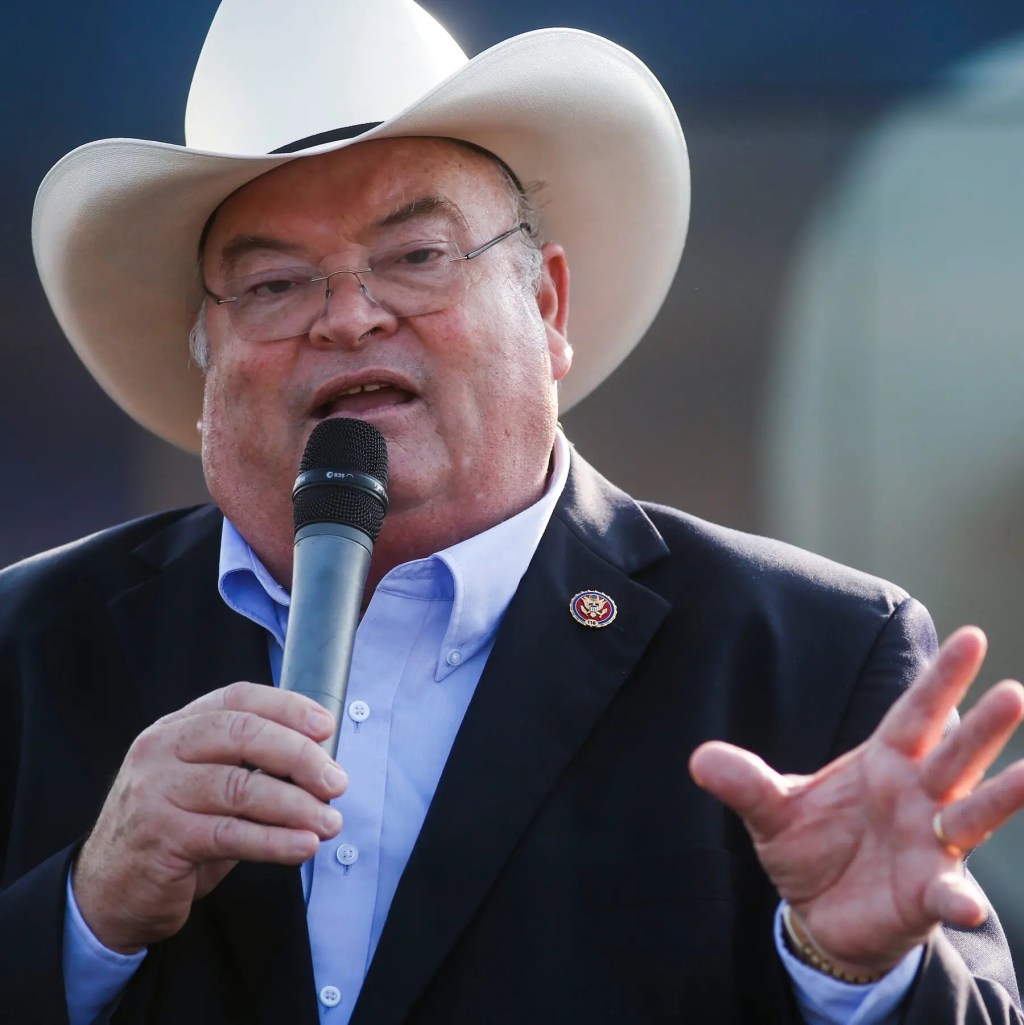
Trump’s choice for IRS Commissioner is Billy Long, a former Congressman from Missouri who never served on the tax-writing committee.

The New York Times reported:

President-elect Donald J. Trump said on Wednesday that he would nominate Billy Long, formerly a Republican congressman representing Missouri, to lead the Internal Revenue Service, effectively pledging to fire the tax collector’s current leader, a Biden appointee.

Mr. Trump’s choice, announced on his social media website, would shake up the I.R.S. at a pivotal moment. The Biden administration has poured billions of dollars into modernizing the agency and beefing up its tax collection efforts in an effort to improve customer service and crack down on tax cheats.

In 2022, President Biden chose Daniel Werfel, a former management consultant and civil servant who had worked in both Democratic and Republican administrations, to lead the overhaul of the I.R.S. His term was set to last until 2027.

Republicans have deeply opposed the Biden administration’s vision for the tax agency, which included providing roughly $80 billion in supplemental funding to the I.R.S. over a decade. G.O.P. lawmakers successfully pushed to cancel $20 billion of that money, and are eyeing further cuts. The I.R.S. is unpopular with the public, and Republicans have long attacked it as invasive and inept.

Additional funding for the I.R.S. helps raise the money for the government by more effectively enforcing tax laws and requiring Americans to pay the taxes they owe, according to budget experts.

Mr. Long, a former auctioneer, did not serve on the House tax-writing committee during his time in Congress. But he did put his auctioneering skills to use while in Washington….

Presidents do not typically select new I.R.S. commissioners when they come into office, and the Senate will have to confirm Mr. Long. President Biden waited for the term of Mr. Trump’s first choice to lead the tax agency, Charles P. Rettig, to end before selecting Mr. Werfel.