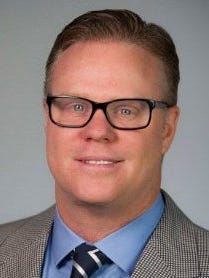
President-Elect announced that Bruce Reed will be his Deputy Chief of Staff. This is alarming news, though not surprising. Reed previously served as Biden’s chief of staff when he was vice president. The toxic Broad Foundation gave grants to some of Betsy DeVos’s favorite causes.
This report from TYT (The Young Turks) describes why we should keep a close watch on Reed. He is not a friend of public schools. The Broad Foundation has spent many millions of dollars underwriting charter schools and funding campaigns for candidates who oppose public schools. Eli Broad has tried to buy control of LAUSD to replace more public schools with charters.
Reed has been an outspoken proponent of charter schools for decades, championing their rise inside the Clinton White House, where he led the Domestic Policy Council. But although Reed has publicly drawn the line at for-profit charter schools and vouchers, the Broad Foundation funded organizations that support both.
Reed also frowned on community, or “mom-and-pop” charter schools, telling the Los Angeles Times in 2014, “There are high-quality charter management organizations that do extraordinary work.” He said, “School districts have made the mistake of thinking they know best.”
Pressed about Eli Broad’s controversial donations to pro-charter candidates for Los Angeles school boards, Reed said, “My general experience with political elected bodies is that the odds of them being thoughtful and well informed are never very good.”
It’s not clear how involved Reed was in directing the foundation’s funds, but in his L.A. Times interview, Reed named some of his allies. “We’re looking to partner with other like-minded foundations — Bloomberg, Gates, Walton, the Emerson Collective,” he said. (The Emerson Collective is a project of Laurene Powell Jobs.)
Reed did not name Dick and Betsy DeVos, but they had spent years building alliances with Democrats interested in education reform. Eli Broad, a Democrat, had sat alongside Dick DeVos on the Children’s Scholarship Fund advisory board co-chaired by John Walton. And although Broad in 2017 publicly opposed DeVos’s nomination to lead the Dept. of Education under Trump, he and Reed were backing her groups just a couple years before.
DeVos Connections
The Broad Foundation had already been funding groups tied to the DeVos family when Reed came on board in November 2013.
The Alliance for School Choice, for instance, was an early proponent of charter schools, including for-profits. A partner of Betsy DeVos’s American Federation for Children, the Alliance’s founding board included both her and Walton.
Soon after the Alliance launched, the DeVoses reached out to Sen. Cory Booker (D-NJ), who was then a Newark City Council member. Booker joined the group and found common cause with the DeVoses. The board has also included Carrie Walton Penner, the Walton Family Foundation chair who was reportedly close to Hillary Clinton.
John Thompson, historian and retired teacher, writes often about what is happening in Oklahoma. It is often not good for public schools and teachers because of the state’s awful legislature, controlled by oil-and-gas billionaire Harold Hamm, and its Republican Governor Kevin Stitt. The best education leader in the state is state Commissioner Joy Hofmeister, who continues to protect students and teachers from political shenanigans.
Here is the latest from Thompson:
As the COVID pandemic began in Oklahoma City, before Trumpian-style pressure to reopen bars, in-person restaurants and large gatherings, and before the resistance to masks and other public health tools sparked a super-spread, it looked like the public and nonprofit sectors were uniting in a team effort to protect public health. Clearly, online charter schools had advantages over traditional public schools in providing virtual and hybrid instruction, but there was reason to hope that the corporate reform wars could be put behind us (at least in terms of local charter leaders.)
The for-profit EPIC Charter Schools wasn’t likely to change its financial and political misbehavior, but its years of experience in delivering online instruction gave it a head start in providing virtual learning during the shutdown. Sure enough, its enrollment soared to around 30,000.
On the other hand, due to years of financial shenanigans, it was inevitable that multiple investigations would prompt penalties, headlines, and other bad news for EPIC, and it seemed certain that it would continue to fight back bitterly, as opposed to making a good faith effort to improve instruction. And there was no chance that its allies – state, and national corporate reformers and politicians committed to uncontrolled competition – would slow their privatization campaigns.
And the initial good news overshadowed a new set of problems for EPIC. A five-month investigation by Oklahoma Watch and Frontline revealed that many EPIC graduates’ are unprepared for college. The investigation found that students “described a system that made it easy to speed through classes and little or no structured counseling.” (The data was released at the beginning of the pandemic, but it describes a dynamic that could become more crucial to EPIC’s effort to retain its new influx of online students.)
In 2015, the 35% of Epic students met all four of ACT’s college readiness benchmarks – in English, math, reading and science. As enrollment increased, just 4% of 2019 students met the benchmarks, compared to 15% statewide. Perhaps prophetically, EPIC’s graduating class’ average ACT score dropped from 20.5 in 2018 to 16.5 in 2019.
Similarly, Oklahoma Watch and The Frontier have reported more bad news for competition-driven reformers. For instance, the Oklahoma City Public Schools had twice rejected Sovereign Charter School’s charter, but in 2018 it was sponsored by Rose State community college. Rose State is also reported to be considering the charter sponsorships of Santa Fe South charter schools, and W.K. Jackson Leadership Academy, now a private religious school.
By the summer of 2020, Sovereign was down to 40 students after Oklahoma City Public Schools rejected it twice. Sovereign took out a $700,000 loan, but its enrollment didn’t increase enough. So, the State Department of Education put it on probation.
Then, what State Superintendent Joy Hofmeister characterized as a “rickety structure” was proposed. Sovereign would merge with Santa Fe South, which would assume its facility’s lease, as well as its debt. Ironically, that building complex had been the home of the once-influential Seeworth Academy charter school which was taken over after a financial scandal.
The campaign to immediately reopen urban schools is clearly an anti-union, anti-public school tactic. But it may be undercut by the fact that almost allOklahoma City chartersclosed their in-person instruction around the time the November super-spread forced the OKCPS to limit itself to virtual instruction.
A recent survey of teachers by the Oklahoma Education Association found that teachers are “stressed,” “overwhelmed,” and “scared.” About 12% of respondents had contracted COVID-19, the teachers’ estimated average stress level was 7.7 on a scale of 10.
When charters reopen, are their teachers likely to be less scared?
But maybe the rightwing won’t need to invest so much political capital in attacking teachers and unions. After all, Gov. Stitt may have found a new way to stimulate the economy. He made “a direct pitch to boost tourism in the state. Stitt stars in a 30-second promotional video encouraging those in neighboring states to visit Oklahoma. The video conveys a message that Oklahoma is open for business, and underscores the business friendly approach Stitt has taken to the COVID-19 pandemic.”
I think you will find this book review interesting. I reviewed Katherine Stewart, The Power Worshippers: Inside the Dangerous Rise of Religious Nationalism; Steve Suitts, Overturning Brown: The Segregationist Legacy of the Modern School Choice Movement; and Derek W. Black, Schoolhouse Burning: Public Education and the Assault on American Democracy.
The review is titled “The Dark History of School Choice.” It appears in the New York Review of Books, which is the most prestigious literary journal in the U.S.
You can read the opening paragraphs, then it goes behind a paywall. However, you can request to read review in full for free.
I recently received a letter from a teacher in Chester-Upland, Pennsylvania. I have written about this district many times, as a large charter company owned by a Philadelphia lawyer is draining it of resources and students for his low-performing charter school. The district is like a lamb led to slaughter, with rapacious wolves ready to gobble it up. See here and here and here and here. See Carol Burris on the takeover of the district here. See Peter Greene on the evisceration of the Chester-Upland schools here (also posted on the blog here).
In case you think that Chester Community Charter School is “helping save poor students from failing public schools,” consider that only 7% of the charter’s students were proficient in math, compared to a state average of 45%, and only 17% of its students were proficient in reading/language arts, compared to a state average of 63%.
Why would state and county officials permit a failing for-profit charter school to take over an entire public school district? Is it because the district is overwhelmingly low-income and black and no one cares?
The teacher asked to remain anonymous for obvious reasons.
He wrote:
My name is XXXXXXXXXX, and I’m a teacher in the Chester Upland School District, which is located in Chester, Pa. Chester is a predominately black, low income, high crime area. We have had 3 students murdered this year, and several others shot. Even though it is a dangerous area, I wouldn’t want to work anywhere else because I love the kids, and I want them to succeed. But our leaders are greedy, and our district is going to be sold off to charter schools if we don’t receive some sort of help.
Here is an overview of what has been taking place:
It seems that the entire district is going to be run by one or several different charter schools which would dissolve all public schools in the city. Besides New Orleans, this is almost unheard of in our country.
A few months ago, the district hired a new superintendent with a checkered past. She was recently fired from her position in New Haven, Conn., which you can read about here:
It seems that it is quite a coincidence that Dr. Birks is also a supporter of charter schools. She also became one of the highest paid superintendents in the state which is surprising considering her history and the financial state of the district.
Our school board is being paid by charter schools; there doesn’t seem to be any other explanation. One school board member put out a flyer last December, recruiting community members to come to the courthouse to support the charter schools. Those community members that agreed to show up were provided dinner afterwards, and had their names put into a raffle to receive free TV’s and other devices. It’s hard to see this as anything other than a conflict of interest.
On January 14th, 2021 RFP’s (Request for Proposals) will be held for charter schools to show why they should take over schools in the district. Unfortunately the review board for the RFs is filled with charter school supporters. The community hasn’t had any input about this process. Here are the board members:
Anthony Johnson the board president, receiver Dr. Juan Baughn, Fred Green (who is a board member that rarely attend meetings, and charter advocate for CCCS), Lamont Popley (during the board meeting on December 17th, Baughn said Mr. Lamont Popley was a member of the review board, he’s the principal at Toby Farms. His staff members asked him about this and he said this was the first he heard about being on the review board. He said he hadn’t spoken to Baughn since the spring), 2 other board members, plus Leroy Nunery (former consultant for the school district of Philadelphia’s charter school office), and Jack Pund (he sits on the board of several charter schools, including Agora.)
This would not happen in a white school district. This is racially motivated. This poor community is being taken advantage of, and being sold to the highest bidder, and no one cares. If this community wasn’t poor, and black, people would be outraged with what is going on. But no one is helping. We need help.
Not many people outside Connecticut are familiar with President-Elect Biden’s choice for Secretary of Education. He went to public schools. He has worked in public schools his entire career. His children go to public schools in Meriden, where he lives. He is not aligned with DFER or Chiefs for Change or any billionaire-funded “reform” group.
Politico points out two stances that Dr. Cardona has taken that will concern many parents and teachers. In his own state, he has pushed to resume annual testing this spring, despite the pandemic. Also, he has prioritized reopening schools, which will please some but anger others.
For those of us who question the value of annual testing, a policy not found in any high-performing nation, the resumption of high-stakes testing will be a mistake when so many children have had unequal opportunity to learn. DeVos offered blanket waivers in the spring of 2020 but said she would not do it again in 2021. Students and teachers should not be required to take tests that are sure to demonstrate what we already know: Students in affluent districts will get higher test scores than students who are in impoverished districts. The gaps between them will be larger do to unequal access to education during the pandemic. There! I just told you what we will learn if we give tens or hundreds of millions to the testing industry in March.
Decisions about reopening schools should be made by local officials, not the federal Department of Education. Such decisions should take into account the availability of resources and the local conditions. We are in the midst of a once-in-a-century pandemic. Conditions vary, and so should responses.
Brian Stelter has an always interesting show on CNN on Sunday mornings, where he discusses the media. He is not a “both sides” commentator.
Watch this powerful analysis of the “mass “”radicalization” promoted by Trump and his baseless conspiracy theories. Trump allies talk about martial law, overturning the election, seizing voting machines.
Bottom line: Our democracy was known for years as highly stable. No more. We are in trouble.
Manu Raju, senior Congressional correspondent, for CNN, reported on Twitter that the parties are now battling over how much money to send to private schools.
@mkraju
Two sides are still going back-and-forth over a handful of issues, including how private schools should be treated in the more than $80B in aid for education. GOP had been pushing for $5B for private schools — but Dems had tried to cut that to be about $2.5 billion, per sources
This is both absurd and unfair.
In the CARES Act, nearly 100,000 public schools (and charter schools) received $13.2 billion, while thousands of charters and private and religious schools collected more than $6 billion. Charter schools were allowed to double-dip from both funds. Some of the wealthiest private schools in the nation collected hundreds of thousands or more, while the average public school got only $134,500. More than 85% of students are enrolled in public schools.
The federal CARES Act included the Paycheck Protection Program to help struggling small businesses and nonprofits survive the pandemic. Lobbyists for the charter industry slipped in a provision enabling charter schools to apply for PPP funding, even though they experienced no financial losses. Charter schools got a share of the $13.2 billion allotted to the nation’s early 100,000 public schools. The average public school received about $135,000 to meet the expenses of the pandemic. On the advice of their lobbyists, some 1200 charters also sought and won PPP funding. Thus charters drew funding from two sources; public schools were not eligible for PPP funding. Charters that applied for PPP funding won six times as much federal money as public schools.
Primavera online charter school, like many businesses this spring, sought help from the federal Paycheck Protection Program to weather the economic disruption of the COVID-19 pandemic.
The Chandler-based school received a PPP loan of nearly $2.2 million, the largest forgivable loan among the 132 Arizona charter schools that obtained them.
But Primavera’s loan appears to have been more of a bonus than a lifeline.
The school, which like all Arizona public schools didn’t lose state funding because of the pandemic, ended its fiscal year on June 30 with $8.8 million in the bank — almost double the annual payroll costs for its 85 teachers, records show.
The school also shipped $10 million to its lone shareholder: StrongMind, an affiliated company owned by Primavera’s founder and former CEO Damian Creamer.
The school’s annual audit indicates Creamer controls both Primavera and StrongMind, noting he has “the ability to influence the school’s operations for the benefit of StrongMind.” Primavera paid StrongMind nearly $23 million this past fiscal year for software and curriculum services, records show.
Creamer declined to comment.
An Arizona Republic review of more than 100 charter school financial records, audits and federal Small Business Administration documents found the overwhelming majority of the Arizona charter schools that obtained PPP loans didn’t need the money.
John Todd, a longtime auditor of Arizona charter schools, said there are numerous problems with fully funded charter schools getting PPP loans intended to help struggling businesses.
“The PPP loans are taxpayer dollars intended to help the needy, not the greedy,” Todd said.
A few charters, including Legacy Traditional Schools, repaid several million dollars worth of PPP loans after The Republic reported in August that Legacy and other operators had millions of dollars in the bank when they received loans.
Most charters that got loans didn’t need them
The Republic found that most of the charter schools getting PPP funds padded their cash balances (savings accounts), and a few for-profit charter operations, like Primavera, gave money away to shareholders that matched or exceeded their PPP loan amounts.
Further, The Republic found that PPP loans didn’t significantly enhance teacher pay at schools that received them. The 132 Arizona charter school loan recipients, on average, paid their teachers several thousands dollars less than the statewide average.The 132 charter schools receiving PPP loans increased teacher pay by an average of 5% — an amount similar to all 555 charter operations and 263 school districts.
Arizona public schools saw no major job losses or layoffs this year because the state Legislature fully funded schools and gave them additional money to raise teacher pay.
Creamer is among the prominent figures who’ve made millions of dollars operating Arizona charter schools. His online alternative school boasts more than 20,000 full- and part-time students. Primavera paid Creamer $10.1 million in 2017 and 2018.
A spokesman for StrongMind declined to say how much the company paid Creamer.
Ian Kidd, superintendent of Pima Prevention Partnership, said financially strong charter schools that took PPP loans open themselves to criticism and scrutiny.
“I don’t subscribe to making money off of students. It’s not appropriate,” Kidd said.
Kidd said he obtained PPP loans for his three charter schools, but the money was used to cover social and behavioral services for low-income, at-risk kids. His three charters had a combined negative $7,031 in cash balances, even after getting PPP loans.
The SBA, under pressure from news outlets, recently released specific figures for all PPP loan recipients. Previously, it released only the names of the borrowers and loan ranges above $150,000.
The earlier SBA records had indicated about 100 Arizona charter schools had received up to $100 million in PPP loans. The new data shows about 30 more charter schools got loans.
Several watchdog groups, including Accountable.Us, have panned the loan program for enriching companies that didn’t need the money while shutting out many minority- and women-owned businesses.
Kyle Herrig, president of Accountable.Us, which compiled a database of all PPP recipients, said there has been widespread fraud and abuse of the program, including celebrities and wealthy companies getting loans.
“The Trump administration’s faulty design and mismanagement of the Paycheck Protection Program let thousands of mom-and-pop businesses slip through the cracks without adequate aid while charter schools cashed in,” Herrig said…
Arizona Schools Superintendent Kathy Hoffman, who also is a member of the Charter Board, said she was astonished by The Republic’s findings.
“It saddens me those dollars are not going to students,” she said. “It’s very excessive. These dollars should be going where they are needed most, and that’s the students and instructional needs.”
Hoffman, a Democrat, said Republican Gov. Doug Ducey and the GOP-controlled Legislature should consider reducing state funding for full-time virtual charter schools like Primavera, which receives nearly the same per-student funding as brick-and-mortar schools that have more costs.
Ducey, at a news conference Wednesday, declined to answer questions regarding Hoffman’s proposal. He also declined to answer whether charter schools that received the PPP loans should return the money or have their state funding reduced by an amount equal to the loans.
Ducey said the PPP loans were a federal issue, but added: “I want to make sure all public schools have available funding.”
Creamer has been a major political donor to Ducey, records show.
Creamer spent at least $137,650 during the past two elections to mostly help conservative Republicans retain control of the Legislature. Among his political giving was $50,000 in December 2019 to the Republican Legislative Victory Fund, state campaign finance records show.
There has been no significant effort by Republicans in the Legislature to change the funding formula for online charter schools. A few of those lawmakers have financial interests in charter schools…
Paying shareholders, boosting reserves
In addition to Primavera, at least three other charter school operators that received PPP loans paid distributions to shareholders. Most of the rest put large sums in savings.
• The year-end cash balance for the 132 Arizona charter schools that received $51.8 million in PPP loans in April and May, increased by $62.6 million. Individually, cash balances increased for 87% of the loan recipients.
• Twenty-one charter schools that received PPP loans increased their cash reserves by at least $1 million, with Primavera seeing a $3.3 million increase.
Educational Options Foundation of Peoria, which got a $278,292 loan, saw its cash balance increase by $2 million to $13.7 million. The school has enough money to operate for four years without additional money. The state Charter Board only requires schools to have one month of cash liquidity. A call to the school was not returned.
• For-profit charters Humanities and Sciences Academy in Tempe and Accelerated Learning Center in Phoenix made shareholder distributions of $388,770 and $230,000 this past fiscal year, respectively. Both amounts exceed the charters’ PPP loans.
The Montessori Schoolhouse of Tucson gave a shareholder distribution of $92,372, equal to about 72% of its PPP loan.
Calls to the three schools were not returned.
Jim Hall, a former public school administrator who runs Arizonans for Charter School Accountability, compiled financial records from charter schools that received PPP loans and said he concluded that they didn’t need the money.
Hall said those loans should have gone to small businesses that have struggled to make payroll or mortgage payments. He said several of the charter operators engaged in “unmitigated greed.”
At last look on the Bloomberg Billionaires Index, Bezos was the richest person in the world, with $189 billion, which is growing rapidly as more consumers rely on Amazon for purchases during the pandemic.
While Bezos has promised nearly billions to combat climate change, Amazon workers continue to complain of low wages and long working hours in a tedious job.
Chuck Collins, director of the Charity Reform Initiative at the Institute for Policy Studies, told The New York Times that Scott is “disrupting” the norms of billionaire philanthropy.
“You think of all these tech fortunes, they’re the great disrupters, but she’s disrupting the norms around billionaire philanthropy by moving quickly, not creating a private foundation for her great-grandchildren to give the money away,” Collins said...
Bezos saw his net worth grow by nearly 60 percent over the course of 2020, or by about $58 billion. Bloomberg estimates Bezos’ current net worth at $183 billion [it is now $189 billion and growing]. Over the year, the nation’s four richest individuals—Bezos, Gates, Facebook founder Mark Zuckerbergand Tesla CEO Elon Musk—saw their combined fortunes grow by nearly $230 billion.
During the same period, Feeding America believes some 50 million Americans—up from about 35 million in 2019—will have experienced food insecurity this year. That number includes some 17 million children. Unemployment has jumped dramatically during the pandemic, as lockdown measures have forced thousands of businesses to close, and millions of Americans are estimated to be on the verge of eviction...
During the pandemic, Amazon workers became vital to providing Americans with necessities, and their working conditions and compensation drew national attention. While Bezos, their boss, grew wealthier and wealthier, they continued to work long hours for low wages in what many described as risky job conditions. Attempts to strike and organize were met with strong pushback and, in some cases, retribution from Amazon’s management.
In March, as the pandemic began to surge and some Amazon workers in New York attempted to organize in protest of their working conditions, the company decided to fire assistant manager Chris Smalls. The organizer learned that he’d been fired as he and dozens of other Amazon employees protested their company’s response to COVID-19. The Amazon workers were demanding what many saw as basic needs—personal protective gear and hazard pay—as they carried out their essential work.
Although Amazon briefly gave temporary wage increases and double overtime pay during the early months of the pandemic, those measures ended in June. The company has also invested heavily in personal protective equipment for workers and other measures in an effort to protect them. In November, Amazon gave front-line workers a one-time $300 holiday bonus, and in June they received $500. Regardless of these measures, employees have continued to express frustration.
In February, Bezos did announce that he would give $10 billion to fight climate change. This money will be transferred through an Earth Fund vehicle he set up. Thus far, that fund has announced doling out $791 million to 16 organizations including the Nature Conservancy, the Natural Resources Defense Council, the Environmental Defense Fund, the World Resources Institute and the World Wildlife Fund.
The Amazon source pointed to an April donation of $100 million from Bezos to Feeding America. Bezos additionally pledged to contribute up to $25 million to All in WA—a coalition of Washington state philanthropic, business and community leaders—back in May. The billionaire also pledged over $1 million to more than 40 homeless organizations this year.
But many believe there is a need for a systematic change at Amazon and in how billionaires like Bezos are allowed to accumulate wealth.
“Bezos has accumulated so much added wealth over the last nine months that he could give every Amazon employee $105,000 and still be as rich as he was before the pandemic,” Robert Reich, who was secretary of labor in the Clinton administration, wrote in a Sunday column for The Guardian.
“So you’d think he’d be able to afford safer workplaces. Yet as of October, more than 20,000 U.S.-based Amazon employees had been infected by the coronavirus,” Reich wrote.
Washington State, where Amazon and the Gates Foundation (and family) are located, has no corporate or personal income taxes. Is that coincidental?
Dr. Carol Burris is the executive director of the Network for Public Education, a nonpartisan nonprofit organization that works to strengthen and improve public schools. Nearly 400,000 people in every state support its activities. Burris was a teacher and an award-winning principal in New York State.
This summer, the Network for Public Education reported that charter schools had received between one and two billion dollars in Paycheck Protection Program (PPP) Small Business Administration loans. In most cases, these low-interest loans will not have to be paid back, resulting in a windfall for recipients.
PPP amounts were initially reported in ranges and excluded any grantees that received below $150,000. Thanks to reporters’ persistence, however, we now know the exact amount and the smaller grantees who received PPP.
We matched the amounts with our previously identified group of charter schools and charter chain recipients. In total, those charters received an astounding $1,279,455,958. You can find a complete list of the charter schools and what they got here.
In addition to schools, charter support and advocacy organizations got PPP. You can find that list here. It includes the National Alliance of Public Charter Schools, which bragged that it made sure charter schools were included in PPP. NAPCS took $672,800, while the billionaire-funded California Charter Schools Association cashed in at $1,028,200.
We also scanned the new lists of small grants for charter school entries. Because there were so many entries, we did a simple search on the words “charter school.” This resulted in the identification (see here) of an additional $7 million going to charter schools. There is no doubt that a full search would uncover at least four times that amount.
How did the charter sector do? When you add the pieces together, it adds up to nearly $1.3 billion.
Here are some highlights.
The largest amount ($8,377,100.00) given to a charter school went to Granada Hills High School, once a highly-regarded public school in an affluent area outside of Los Angeles that converted to a charter school.
The second-largest amount went to Antelope Valley High School, which is “powered by” Learn4Life. Learn4Life is a charter school chain that operates by giving at-risk students worksheets they complete and return to Learn4Life centers often located in strip malls and shopping plazas. Learn4Life is now led by Caprice Young, who previously led the California Charter Schools Association and Magnolia charter schools, connected to the Gulen school chain. The entire Learn4Life chain received over $32 million.
Finally, schools and nonprofits managed by the for-profit Academica chain received over $28.6 million in PPP.
Charter schools claim to be public schools. They received public school funding via the CARES Act. Unlike the small businesses that shut down during the pandemic, thus losing their revenue stream, charter schools moved to remote learning, and their public tax dollar income stream continued.
It appears a new round of CARES Act funding is imminent. We will be watching to see if charter schools use their “private” status to cash in again.