Archives For author

Jess Piper explains why rural people answer the call of the military far more often than their urban counterparts. For kids who have grown up on the farm or in a small town, the military gives them a chance to see the world, to get an education, to change their destiny.

She watched the ceremony to bring home the bodies of the six service members who died in Kuwait. She observed that Trump was wearing one of his baseball caps. He didn’t have the sense or the decency to remove his hat. He predicted, rather too nonchalantly, that more coffins would come home. It’s hard to hear this from a 5x draft dodger.

She wrote:

On 9/11/2001, I stood in front of my television watching the Twin Towers fall while holding my heavily pregnant belly. I cried watching the smoke roll out of the Pentagon while my son kicked my ribs. I felt a wave of nausea when I heard the news of the plane going down in a Pennsylvania field.

My son was born 90 days after the attacks. I brought him home to our Arkansas farm.

I sobbed, knowing my youngest son was entering a different world than his older brother. The post 9/11 world was coming into focus, and this baby would live a different reality. He would never know the safety we felt prior to the attacks. 

He would never know a world without the threat of planes used as weapons of mass destruction.

That baby boy grew up to be a soldier. An officer in the Army National Guard. He also has a wife and a sweet baby of his own now.

I am incredibly scared for him under this regime.

Officer Graduation Ceremony, South Dakota.

We are a military family, but it’s not because we are any more patriotic than any other family. It’s because the military offers folks in lower tax brackets a way up. A way out. 

Poverty makes basic training look easy and attractive…three hot meals and a bed and structure and stability and maybe even an education.

Pew Research states, “There are more than 18 million living veterans in the United States, representing about 6% of the country’s adult population. A very small percentage of the overall population. 

But even more fascinating, the Armed Services are disproportionately staffed from rural spaces. Rural people make up anywhere from 14% to 20% of the country’s population, but some reports have cited that up to 44% of new enlistees in certain years came from rural areas.

Why?

Family farms are nearly a thing of the past, and rural spaces lack job opportunities. Rural people are more likely to live in poverty, and fewer rural students attend college than their urban counterparts.

Military recruiters often visit our rural public schools, and the idea of joining the military is planted into our children’s heads very early.

My grandpa left his Arkansas farm because he was going to be drafted into the Korean War. He joined the Navy as a medic. After the war, he was able to attend college and ended up in Kansas City working in a medical science lab downtown. 

A very good job for a farm boy.

Three of my uncles were also drafted into the Korean War. They all left the farm and went into professional fields following the war. My mom still has uniforms hanging in an old closet.

My dad was only 18 when he found out my mom was pregnant with me. Daddy needed a job and signed up for the Navy. He became a Seabee. That service gave him the experience he needed to work in construction fields the rest of his life. 

My youngest son joined because he needed a way to pay for college. I was a teacher. My husband was a teacher. We had no money to put back for college for our kids. Of our two kids who have already completed college, one had his body beaten and broken for five years playing college football for his tuition, and the other carries a rifle for the US Army. 

It’s not the worst way to earn a college degree or a life skill, but it does come with inherent danger, and that’s just the way it goes for folks like us. At the end of the day, I’m not sure a college education or job prep should cost your life…

My dad’s Naval graduation picture, 1975.

I am thinking about this new Trump war hourly. I can’t stop thinking about this war and the inept and inadequate Trump appointees we have in charge at every level of the regime. 

I am terrified of the consequences of a draft-dodging grifter starting another forever war. 

Trump is immoral and transactional…a sociopath. He thinks in terms of money and access. He will do anything to gain both, including bombing a school for girls and starting a war that has already killed at least six American soldiers.

On American deaths, I watched Trump speak last Sunday and state: “We have three, but we expect casualties, but in the end it’s going to be a great deal for the world.”

A great deal for the world…

The Secretary of “War” may have had an even worse take on our dead soldiers. Pete Hegseth complained, “When a few drones get through or tragic things happen, it’s front-page news. I get it. The press only wants to make the president look bad.”

The drones “got through” and killed American troops, and Pete’s claim that the press only wants to make Trump look bad by reporting on American deaths nearly took my breath away in its callousness. He is incapable of meeting the moment. He doesn’t care about service members or their families. They are props in an unconstitutional war.

But the most horrific scene was set yesterday when the bodies of the fallen men and women were returned to US soil in Dover Air Force Base in Delaware. As the flag-draped coffins were received in a ceremony called The Dignified Transfer, Trump brought his hand to his head in a salute, while wearing a white baseball cap that is for sale on his MAGA website, The Trump Store.

The ritual that returns the remains of U.S. service members killed in action is considered one of the most somber duties of any Commander in Chief, and Trump wore his own merchandise. Trump promoted sales of his hat while overseeing the transfer of the bodies of American soldiers who died in his illegal war.

Trump’s stunt received so much backlash, that as of this morning, Fox News is running old footage of a previous dignified transfer to save face.

Several of the soldiers killed in Kuwait were from small towns in Iowa and Nebraska and Minnesota. They are my people. They are from the farms and the cornfields and of the Midwest. 

They should be alive. 

We should not be in another forever war because the Trump regime needs a war to stay in power. The young people from the farms and fields shouldn’t be cannon fodder for a demented grifter. A senile fool. A warmonger.

No human life should be currency for a regime. No soldier should be sent to fight for profit and power. 

It’s the same old song — the poor sent to a war started by the wealthy. The rural folks to the front of the line. The fortunate sons in power to preside over the not-so-fortunate from the farms and fields. 

Rinse. Repeat.

Some folks are born made to wave the flag
Ooh, they’re red, white and blue
And when the band plays “Hail to the Chief”
Ooh, they point the cannon at you, Lord.

~Jess

In memory of the fallen:

Capt. Cody A. Khork, 35, of Winter Haven, Florida 

Sgt. 1st Class Noah L. Tietjens, 42, of Bellevue, Nebraska 

Sgt. 1st Class Nicole M. Amor, 39, of White Bear Lake, Minnesota 

Sgt. Declan J. Coady, 20, of West Des Moines, Iowa

Maj. Jeffrey R. O’Brien, 45, of Indianola, Iowa 

Chief Warrant Officer 3 Robert Marzan, 54, of Sacramento, California
The Republican majority in the Texas legislature, funded by white Christian nationalists, persists in trying to turn the state’s public schools into Christian indoctrination centers. They have passed laws to post the Ten Commandments in every classroom, to teach lessons from the Bible as part of literacy instruction, and to demolish any line between church and state.

Meanwhile the 5.5 million children in the public schools of Texas come from every imaginable religion, as well as none at all. Public school is not the place to teach religion. That’s the job of parents and religious institutions.

A diverse coalition of faith leaders and defenders of civil liberty joined to support separation of church and state.

The joint statement reads:

March 10, 2026, Austin, TX – A statewide coalition of diverse organizations and Texans across the state successfully empowered Texas families to defend the religious freedom of millions of Texas public school students from Senate Bill 11, the state-organized prayer in school law. Passed in the 2025 legislative session, S.B. 11 required school districts to vote on whether to adopt periods of state-organized prayer and religious study during the school day. The deadline to vote was March 1.

The coalition, comprising both religious and secular voices, empowered community leaders and school boards to reaffirm the value of religious diversity and the essential separation of religion and government in our democracy. Parents, students, teachers, clergy, and more spoke up in districts across the state. As the Texas Tribune reports, nearly all of Texas’s 1,200 school districts rejected S.B. 11. This includes many who adopted a coalition-supported alternative resolution emphasizing religious freedoms already present in public schools. As a result, millions of students in Texas are protected from coercive, divisive, and overbroad state-sponsored expressions of religion in schools.

This effort was organized in partnership between RAC-TXBaptist Joint Committee for Religious Liberty (BJC)Christians Against Christian NationalismAmerican Civil Liberties Union of TexasAmerican Federation of Teachers-TexasAmericans United for Separation of Church and StateStudents Engaged in Advancing Texas (SEAT)National Council of Jewish Women DallasTexas Freedom NetworkTexas ImpactPastors for Texas ChildrenFaith Commons, and Freedom From Religion Foundation.

“S.B. 11 is part of an ongoing effort to undermine public institutions, especially our schools, in favor of Christian nationalist policies that govern based on a distorted version of one religion’s teachings,” said RAC Texas Field Organizer Blake Ziegler (he/him). “Reform Jews in Texas proudly stood alongside our interfaith and secular friends against this violation of religious freedom. S.B. 11 would hurt our Jewish students, excluding them from their peers instead of promoting the religious pluralism essential to our democracy.”

“The people of Texas aren’t buying what SB11 was selling,” said Rabbi David Segal, Policy Counsel at Baptist Joint Committee for Religious Liberty (BJC). “This massive rejection of state-organized prayer proves that Texans value the separation of church and state. Student led prayer is already allowed in our public schools, it just shouldn’t be a government-run program. We are proud to see districts across the state stand up for the religious freedom of every student, regardless of their faith tradition.”

“This is what democracy looks like,” said Carisa Lopez, deputy executive director of the Texas Freedom Network. “Across Texas, people of every faith – and no faith – came together to protect our shared right to practice religion freely, without the government telling our children when, how, and what to believe. SB 11 handed the state the power to organize prayer in public schools and put teachers in the impossible position of refereeing religious participation. Worst of all, it asked families to sign away their constitutional rights just to opt out. We are grateful to every school board member, parent, and coalition partner who showed up to protect our public school students and their religious freedom. Together we’ll continue fighting for the Texas we all deserve.”

From Texas Impact: “Texas Impact has always fought for religious freedom, and in the case of Senate Bill 11, that meant preventing Christianity from being pushed into public schools. Every student in Texas has the right to pray on their own time in any public school. Senate Bill 11 attempts to overstep by inserting prayer into our schools, per the advice of our Attorney General Paxton. We should let Texan families and faith communities lead religious education, not our elected officials.”

“Texas public schools serve all children from every conceivable faith tradition, and no faith tradition. They are public institutions that must not favor, advance, or establish any religion. Religion is for the congregation, home, and individual. When it becomes a tool of the state, both get corrupted. Every single time,” said Rev. Charles Foster Johnson, Executive Director at Pastors for Texas Children.

“School districts across the state overwhelmingly rejected S.B. 11 because inviting state-organized prayer into public schools would cause division, pressure students to conform, and distract schools from their core educational mission,” said Caro Achar (she/her), engagement coordinator for free speech and pluralism at the ACLU of Texas. “Texas students already have robust rights to pray and read religious texts on their own during the school day. This law didn’t address a real problem. Instead, it threatened to create new problems by blurring the line between church and state – putting students’ and families’ constitutional rights at risk.”

“SB 11 is just another in a long line of culture war bills meant to drive a wedge between us to keep people distracted from the bigger picture,” said Texas AFT President Zeph Capo. “School districts are just affirming what we know to be true: our students already enjoy religious freedom and SB 11’s prayer period imposes a specific agenda that would alienate students and educators alike. The brave organizers and students on the ground that advocated against SB 11 at school boards across the state deserve special recognition and Texas AFT is in this fight with them.”

“The resistance to implementing S.B. 11’s state-organized prayer periods in Texas public schools should send a message to state legislators that Texans don’t support the Christian Nationalist agenda of imposing one set of religious views on all public school children,” said Rachel Laser (she/her), president and CEO of Americans United for Separation of Church and State. “Our Constitution’s promise of church-state separation means that students and their families – not politicians – get to decide if, when and how public school children engage with religion.”

“SB 11 is a transparent attempt to erode the constitutional separation between church and state by promoting religious activity in public schools,” said Freedom From Religion Foundation Co-President Annie Laurie Gaylor (she/her). “Our classrooms must remain secular spaces that respect students of all beliefs and none.”

“I want my granddaughter to be able to go to school and be herself. I want her to not feel left out, or ‘othered,’ when she doesn’t participate in a state-organized prayer time, ” said Robyn C., NCJW Dallas Advocacy Committee member. “I want every child to feel included, regardless of their faith or lack thereof.”

“Students across Texas showed up to speak for themselves and their classmates. In places like El Paso, Bastrop, Katy, and many others, we saw students testify and share how important it is that public schools remain welcoming to people of every faith and those not observing a particular religion. The decisions by these districts to reject state-organized prayer periods reaffirm that religious freedom means everyone has a seat at the table. Our schools should be spaces where diversity is respected and no student feels pressured to participate in someone else’s religious practice,” said SEAT Senior Policy Associate Azeemah Sadiq, a high school student in Alief ISD.

###

About the Religious Action Center of Reform Judaism

For more than six decades, the Religious Action Center of Reform Judaism (the RAC) has worked to educate, inspire, and mobilize the Reform Jewish community to advocate for social justice. We mobilize around federal, state, provincial, and local legislation on more than 70 pressing socioeconomic issues, including gun violence prevention, immigration, reproductive rights, and criminal justice reform.

As a joint instrumentality of the Union for Reform Judaism and the Central Conference of American Rabbis, we represent the values of the largest and most diverse Jewish Movement in North America to governments at all levels.

About Baptist Joint Committee (BJC) & Christians Against Christian Nationalism

BJC (Baptist Joint Committee for Religious Liberty) is an 90-year-old religiously based organization working to defend faith freedom for all and protect the institutional separation of church and state in the historic Baptist tradition. BJC is the home of the Christians Against Christian Nationalism campaign.

About Texas Freedom Network

The Texas Freedom Network is a grassroots organization of religious and community leaders and young Texans building an informed and effective movement for equality and social justice.

About Texas Impact

Texas Impact equips faith leaders and their congregations with the information, opportunities, and outreach tools to educate their communities and engage with lawmakers on pressing public policy issues. They help people live out their faith in the public square, moving the faith community from charity to justice.

About Pastors for Texas Children

Pastors For Texas Children mobilizes the faith community for public education support and advocacy.

About the American Civil Liberties Union of Texas

The ACLU of Texas works with communities, at the State Capitol, and in the courts to protect and advance civil rights and civil liberties for every Texan, no exceptions. Established in 1938, the ACLU of Texas is an independent affiliate of the national ACLU.

About American Federation of Teachers-Texas

Texas AFT is a statewide union with 66,000 members, including K-12 educators and support staff, community college and university faculty, and retirees. We believe that education is the path to a just and democratic society. We also believe the only way to give students a quality education is through the dedicated work of empowered public educators.

About Americans United for Separation of Church and State

Americans United for Separation of Church and State is a religious freedom advocacy organization based in Washington, D.C. Founded in 1947, AU educates Americans about the importance of church-state separation in safeguarding religious freedom.

Faith Commons

Faith Commons mission is to lift up faith voices in the public square for the common good. They do that by cultivating unexpected relationships through educational programs that inspire more people to participate in public life with mutual respect, hospitality, and generosity.

About the Freedom From Religion Foundation

The Freedom From Religion Foundation is a U.S.-based nonprofit dedicated to defending the constitutional principle of separation between state and church and educating the public on matters relating to nontheism.

About National Council of Jewish Women Dallas

National Council of Jewish Women (NCJW) Dallas is a grassroots organization of volunteers and advocates who turn progressive ideals into action. Inspired by Jewish values, NCJW strives for social justice by improving the quality of life for women, children, and families and by safeguarding individual rights and freedoms.

About Students Engaged in Advancing Texas

SEAT is a movement of young people developing transferable skills and demonstrating youth visibility in policymaking. Advocating for a seat at the table, SEAT is normalizing the presence of students in educational policymaking - nothing about us, without us.

Media Contact

Steve Feldman

Director of Strategic Communications

(732) 915-9676

smfeldman@urj.org

Additional Media Contacts

Karlee Marshall
BJC & Christians Against Christian Nationalism
kmarshall@bjconline.org
(580) 224-1817

Imelda Mejia
Texas Freedom Network
media@tfn.org 

Bee Moorhead
Texas Impact
bee@texasimpact.org 

Rev. Charles Foster Johnson
Pastors for Texas Children
johnson.cfj@gmail.com
(210) 379-1066

Kristi Gross
ACLU of Texas
media@aclutx.org 

Marco Guajardo
American Federations of Teachers-Texas
mguajardo@texasaft.org 

Moisés Serrano
Americans United
media@au.org

Amit Pal
Freedom From Religion Foundation
apal@ffrf.org 

Shannon Morse
National Council of Jewish Women (NCJW) Dallas
execdirector@ncjwdallas.org 

Cameron Samuels
Students Engaged in Advancing Texas (SEAT)
press@studentsengaged.org 

The Boston Globe reported that a federal judge in Boston blocked Robert F. Kennedy Jr.”s plan to reduce the number of vaccines required for children.

MAHA indeed!

Some people still believe in science.

A federal judge in Boston has temporarily blocked federal health officials from cutting the number of vaccines recommended for every child, and says US Health Secretary Robert F. Kennedy Jr. likely violated federal procedures in revamping a key vaccine advisory committee.

The decision Monday halts an order by Kennedy — announced in January — to end broad recommendations for all children to be vaccinated against flu, rotavirus, hepatitis A, hepatitis B, some forms of meningitis and RSV.

Leading medical groups voiced alarm at the changes. The American Academy of Pediatrics and some other groups amended a lawsuit filed in July, asking the judge to stop the government from scaling back the nation’s childhood vaccination schedule.

The judge also says Kennedy’s reconstitution of the vaccine advisory panel likely violated federal law. He ordered the appointments — and all decisions made by the reformed committee — put on hold.

After decades of bashing public schools and advocating for privatization, charters, and vouchers, grumpy education reformers should familiarize themselves with the grand successes of Sahli Negassi.

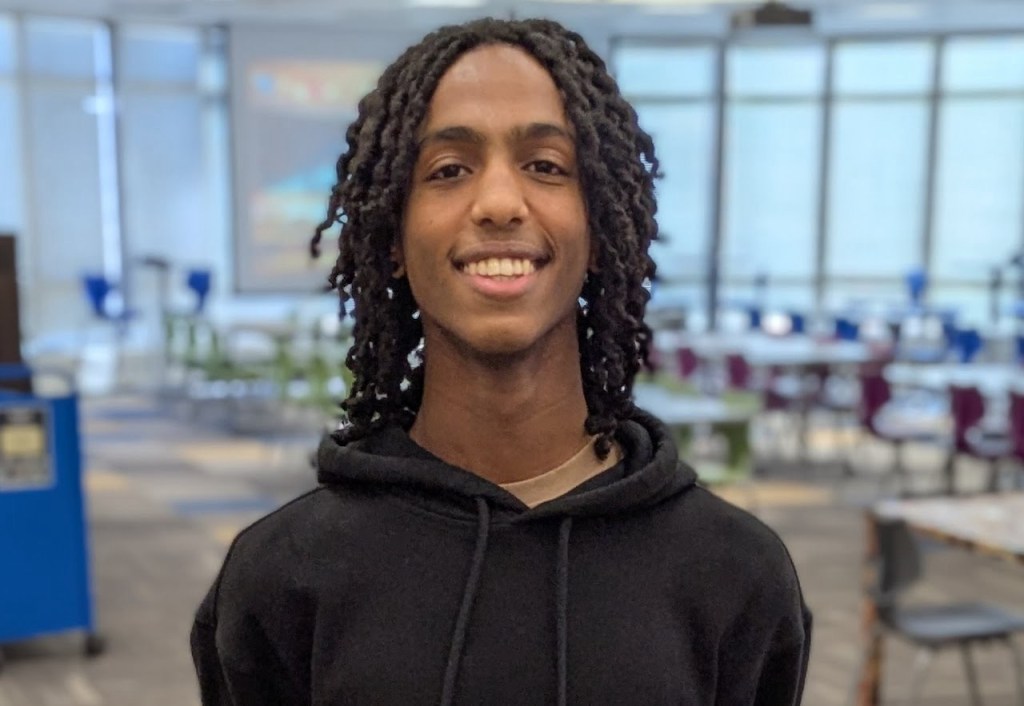
Sahli is a remarkable young man who recently learned that he scored a perfect 1600 on the SAT in reading and math.

He is a senior at West Orange High School in West Orange, New Jersey.

He didn’t go to a charter school or a fancy private school or a religious school, nor was he homeschooled. He went to public schools in West Orange.

Sahli was born in the U.S. to a family of Eritrean immigrants.

Nyah Marshall reported at NJ.com:

During his four years at West Orange High School, Sahli Negassi balanced two sports, served as president of two clubs and excelled in multiple Advanced Placement classes.

And as if that weren’t impressive enough, he recently achieved another milestone — one that fewer than a 1,000 students nationwide reach each year.

He received a perfect score on both the reading and math sections of the SAT. He hopes to be admitted to Harvard and eventually become a lawyer.

Negassi earned a near-perfect score on his first attempt, one that most would be happy with. But, he then took the test again and answered every question correctly, earning a 1600.

“I came into class and I was like, ‘I can do better,’” Negassi said.

Between classes and extracurriculars, he somehow found time to prepare for the test on his own, using free online resources….

His strategy, Negassi said, was all about preparation. Through practice questions, he learned that the SAT isn’t a test of intelligence — it’s about pattern recognition, memorization and time management, Negassi said.

“Preparation for the test fell on me, it was no tutor … it was me and whatever website I could find,” he said Thursday. “I was comfortable applying the skills I had trained and when the time came, it was no pressure.”

Negassi was born in New York City and raised in West Orange. 

He credits his father, who taught him to read before he even entered grade school, with laying the foundation for his success. It was the love and sacrifice of his parents that instilled in him the unwavering determination he carries today, Negassi said.

Negassi was involved in many school activities.

A local West Orange newspaper wrote:

Beyond academics, Negassi is deeply involved in extracurricular activities at West Orange High School. He has been a dedicated member of the cross-country and track teamssince seventh grade and spent two seasons on the color guard. He is also the president of the math team, chapter president of the National Honor Society, a varsity chess team member and part of the Royal Strings ensemble. His involvement in multiple honor societies speaks to his well-rounded excellence.

Sahli played in the String Quartet of the West Orange Music Departnent and was inducted into its honor society two years ago. At the induction ceremony, The String Quartet (Theo Brinkerhoff, Andrew Chan, Alexa Dias, Maya Kirton, Sahli Negassi, Henry Pfeifer) performed “Air” from “The Water Music Suite” by Handel.

I would like to know more about his family, but little is said about them in the coverage. Nothing has been reported about when they immigrated to the U.S. or their occupations.

One of the key features of the “Mississippi Miracle” is the retention of third-graders who do not score well enough to enter fourth grade. Third-graders with low reading scores are held back for an extra year.

Critics of the “Miracle” say that holding back the lowest scoring third-graders inflates the fourth grade scores.

But what about the effects of retention in the students who are held back?

Matt Barnum of Chalkbeat reports on a new study that found negative, long-term effects of third-grade retention.

It’s an age-old debate with an emerging conventional wisdom: Third graders should not move on to the next grade if they are still struggling to read.

There’s both logic and evidence behind this policy. Studies have found that students have higher test scores after they’re held back. This practice may also have played a role in helping Mississippi make remarkable improvements in recent years. A chorus of policymakers and journalists have insisted with growing confidence that others should replicate the state’s model.

But a new study offers a warning about the downside risks of retention. Third graders who had to repeat a grade in Texas were far less likely to graduate from high school or earn a good living as young adults, nearly two decades later. The harmful effects were quite large and came despite initial improvements in test scores.

“Retaining low-achieving students in third grade further deepens educational and income inequalities,” writes Jiee Zhong, an economics professor at Miami University. 

The findings are hardly the last word on this topic. But they complicate the evidence base for retention at a time when more states — like Arkansas, Indiana, and West Virginia — are adopting this policy.

The paper, set to be published in an economics journal, examines an early 2000s Texas policy to hold back struggling readers. Students had three chances to pass the state exam. 

Zhong, the researcher, looked at those who just barely missed the passing score versus those who just reached it. These students were essentially identical — the only difference was a few questions right or wrong on the test. Yet those handful of questions changed the trajectory of many students’ lives by determining whether they would be held back. This also created a natural experiment that allowed Zhong to compare the two groups of students, thus isolating the effect of retention.

Failing the exam wasn’t a guarantee that students would repeat the grade — parents could seek exemptions — but it dramatically increased their chances. Relative to the overall student population, the retained students were more likely to be low-income, Black or Hispanic, and still learning English.

In the short term, the results were promising. By the time retained students finished fourth grade, their test scores were much higher. But there were warning signs. Students missed more school after they were held back. As the years went on, the test score gains, relative to non-retained students, started to fade. In middle school, the students who had been held back were more likely to exhibit violent behavior (although this remained rare).

By the end of high school, retained students were 9 percentage points less likely to graduate, compared to similar students who weren’t forced to repeat third grade. This is a very large effect. Even those students who graduated typically did so a year later, reflecting the extra year from being held back.

At the age of 26, the previously retained students, now young adults, earned less money than if they hadn’t been held back. Again, the effect was substantial: nearly $3,500, a decline of 19%.

To finish reading the article, please open the link.

The “Mississippi Miracle” seems to be too good to be true. The scores of Mississippi fourth-graders have risen sharply on NAEP (the National Assessment of Educational Progress. Supporters of the Miracle attribute the dramatic increase to the state’s adoption of the “science of reading” curriculum, teacher training in the “science of reading,” and holding back third-grade students who aren’t reading well enough.

This formula is especially appealing to Republicans because nothing need be done to reduce the children’s poverty or improve their living conditions. Conservative states have hailed the “Mississippi Miracle” because it relieves them of any responsibility to create jobs or change the conditions in which the poor live. It’s a low-cost cure: Just raise reading scores and prosperity will follow.

The story of the Mississippi Miracle also appeals to blue states because they are convinced there is a quick and easy way to end the perennial “reading crisis.” So they too have passed legislation to require all reading teachers to adopt the “science of reading.”

Critics of the “Miracle” say that the practice of holding back low-performing third-graders artificially inflates the fourth grade scores. They also point to eighth grade scores to say that there was no miracle. Eighth grade scores are more important that fourth grade scores because they show longer-term effects of reading instruction.

Paul Thomas is a critic of the “Miracle.”

He begins a recent post with a quote from scholar Bruce Baker:

On NAEP Grade 8 Scores: “a better indicator of the cumulative effects of a system on student learning than 4th grade assessments.” Bruce Baker, February 11, 2026

He writes:

The media, political leaders, and education reformers are making a mistake about reading reform well explained in the parable of the blind men and the elephant.

In this case, many are rushing to make over-stated claims about reading reform in Mississippi by hyper-focusing on limited and distorted data—grade 4 NAEP scores on reading.

First, research details that states implementing reading reform have achieved some short-term test score increases in grade 4; however, those gains disappear by grade 8. And more damning, the determining factor in successful reform is exclusively grade retention policies (not teacher training, reading programs, direct instruction, etc.).

Next, grade retention in Mississippi has been analyzed revealing that retention distorts those scores, resulting in a statistical manipulation of the data and not higher student achievement. In short:

Yet, a new story has emerged claiming that Black students in MS are outperforming Black students in other states, notably California:

This sort of state comparison is grounded in political/ideological bickering that is challenged when grade 8 NAEP reading scores are analyzed instead of grade 4:

Suggesting that Black students are being better served in MS than CA is at least misleading. In fact, Black students in CA, GA, LA, MA, and notably the Department of Defense (DoDEA) schools outperform Black students in MS at grade 8.

Key here is that grade 8 NAEP scores are better data because of the distorting impact of grade retention (usually grade 3) on grade 4 data.

But an even better story is that student achievement among Black and Hispanic students is very complicated, especially when you consider that states have dramatically different percentages of these populations of students.

Further, if we return to the parable from the opening, even better data at grade 8 is not the full picture.

In MS and throughout the US, Black students are still suffering the consequences of the persistent race gap in achievement (most states have the same gap as 1998, including MS).

And Black Americans remain trapped in the burden of racial inequity both in schools and in their communities.

The misleading stories about MS using grade 4 NAEP data are designed to promote a “beating the odds” story—one that isn’t true—but all students in the US would be better served if we chose not to seek those who beat the odds, but to change the odds so that no one—especially children—would have to overcome those inequities in the first place.

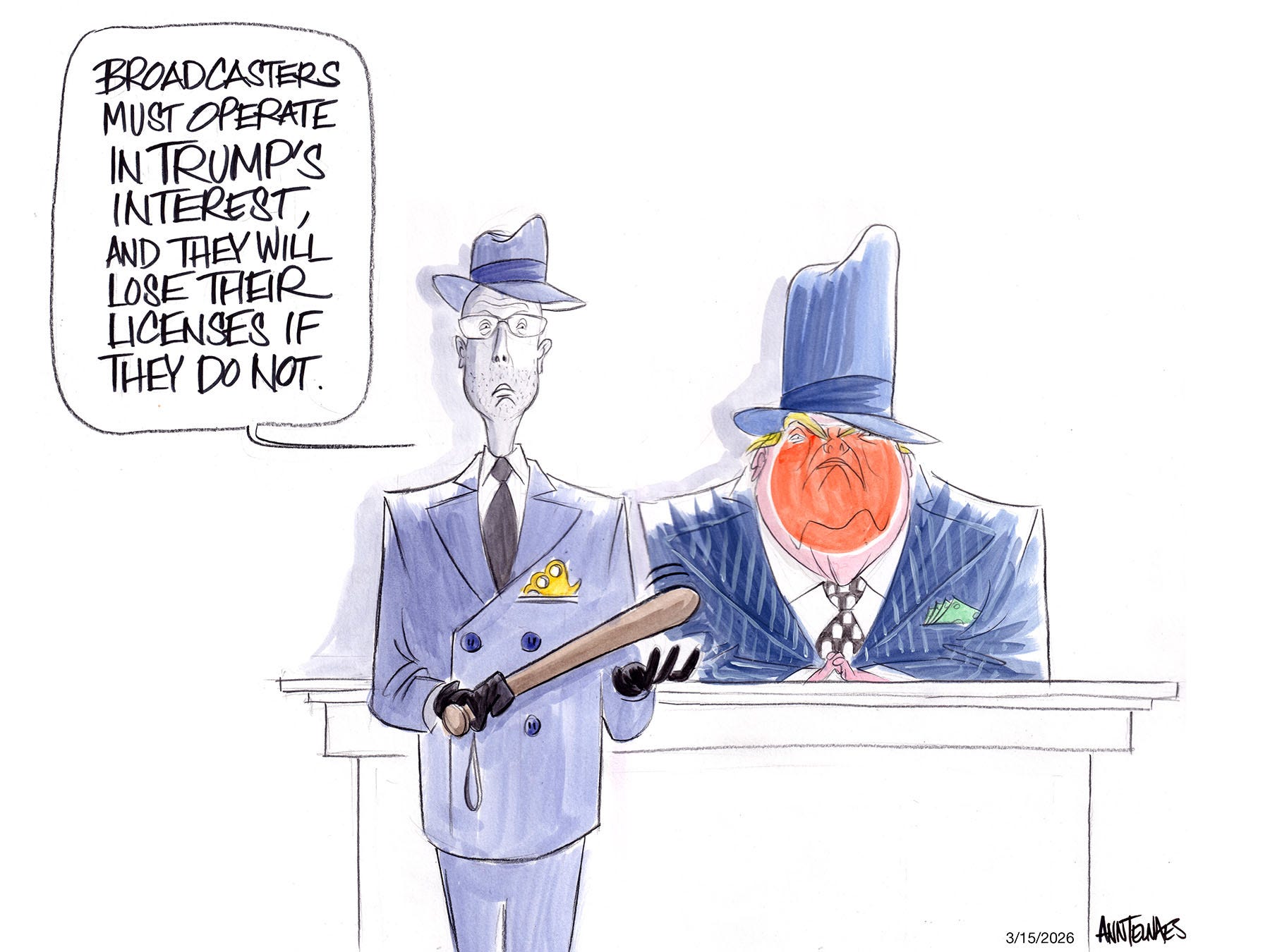
Brendan Carr, selected as chairman of the Federal Communications Conmission, threatened to revoke the licenses of stations that were too negative in their coverage of the war in Iran.

Ann Telnaes was an editorial cartoonist for The Washington Post. She drew a cartoon showing billionaires bowing down to Trump. One of them was Jeff Bezos, owner of the Post. Her editor wouldn’t publish her cartoon. She resigned.

She now has her own blog on Substack where she is never censored.

It’s not the public interest Carr cares about

The FCC Chairman wants to make the boss happy

ANN TELNAES

Trump wants propaganda, not news coverage of his war and FCC Chairman Brendan Carr is making threats to get it. 

In a startling attack on freedom of the press, Brendan Carr–chairman of the Federal Communications Commission–threatened to revoke the licenses of broadcasters whose coverage of the war on Iran is negative. With Trump ally, the billionaire Ellison family, buying control of CBS and CNN, Carr’s threat is ominous. One of the first steps of fascist leaders is to gain control of or silence the media.

The job of the media in a democracy is to inform the public, not to serve as a propaganda arm of the government.

Clarissa-Jan Lim of MS NOW reported:

President Donald Trump’s Federal Communications Commission chairman is threatening to revoke the licenses of news broadcasters over their coverage of the Iran war.

Brendan Carr, the head of the agency, warned broadcast news organizations on Saturday to “correct course,” following the president’s rants over news coverage of his war with Iran, including stories about U.S. aircraft tankers sustaining damage in a strike.

“Broadcasters that are running hoaxes and news distortions – also known as the fake news – have a chance now to correct course before their license renewals come up,” Carr said in a post on X, without naming any media outlets. “The law is clear. Broadcasters must operate in the public interest, and they will lose their licenses if they do not.”

The FCC did not immediately respond to MS NOW’s request for comment.

Carr referenced a Truth Social post from Trump Saturday morning denying reports that five U.S. Air Force refueling planes were struck at a military base in Saudi Arabia. Trump directed his screed at the The Wall Street Journal, which first reported the news, The New York Times and “other Lowlife ‘Papers’ and Media,” claiming they “actually want us to lose the War.”

In his own social media post later in the day, Carr pointed to Trump’s 2024 election win as an example of the lack of trust in the media from the American people.

“When a political candidate is able to win a landslide election victory after in the face of hoaxes and distortions, there is something very wrong,” the FCC chairman said. [Editor’s note: Trump did not win a landslide victory in 2024. Trump won 49.8% of the popular vote, while Harris won 48.3%.]

Carr’s threat was met with immediate blowback from free speech advocates and political figures. 

California Gov. Gavin Newsom called the threat “flagrantly unconstitutional.” Former Rep. Adam Kinzinger, a frequent Trump critic on the right, condemned it as “unacceptable and unamerican.”

The Foundation for Individual Rights and Expression, a First Amendment advocacy group, called Carr’s statement an “authoritarian warning,” adding, “Again and again, Carr’s tenure as FCC chairman has been marked by his shameless willingness to bully and threaten our free press. But even by Carr’s standards, today’s hypocrisy is shocking — and dangerous….”

Carr, an author of Project 2025 whom Trump hand-picked to run the FCC, has sought to use his powerful position to bend media outlets — and late-night talk show hosts — to the Trump administration’s will. Under his watch, the FCC has opened investigations into multiple news outlets and threatened to strip the licenses of broadcasting companies deemed to have covered the administration and the president unfavorably.

But his latest missive took the administration’s assault on what the president routinely calls the “fake news” a step further. Sen. Brian Schatz, D-Hawaii, said in an X post, “This is a clear directive to provide positive war coverage or else licenses may not be renewed. This is worse than the comedian stuff, and by a lot. The stakes here are much higher. He’s not talking about late night shows, he’s talking about how a war is covered.”

Trump and members of his administration have repeatedly bemoaned the media coverage of the war. Earlier this month, Defense Secretary Pete Hegseth accused the press of being too focused on American troops’ deaths than the military’s successes.

But when a few drones get through or tragic things happen, it’s front-page news,” Hegseth said. “I get it; the press only wants to make the president look bad. But try for once to report the reality.”

He again criticized the press on Friday for reporting on the economic fallout of the war.

“Some in this crew, in the press, just can’t stop,” he said.

Late on Friday night, Trump railed against coverage of the war, saying on Truth Social: “The Fake News Media hates to report how well the United States Military has done against Iran.”

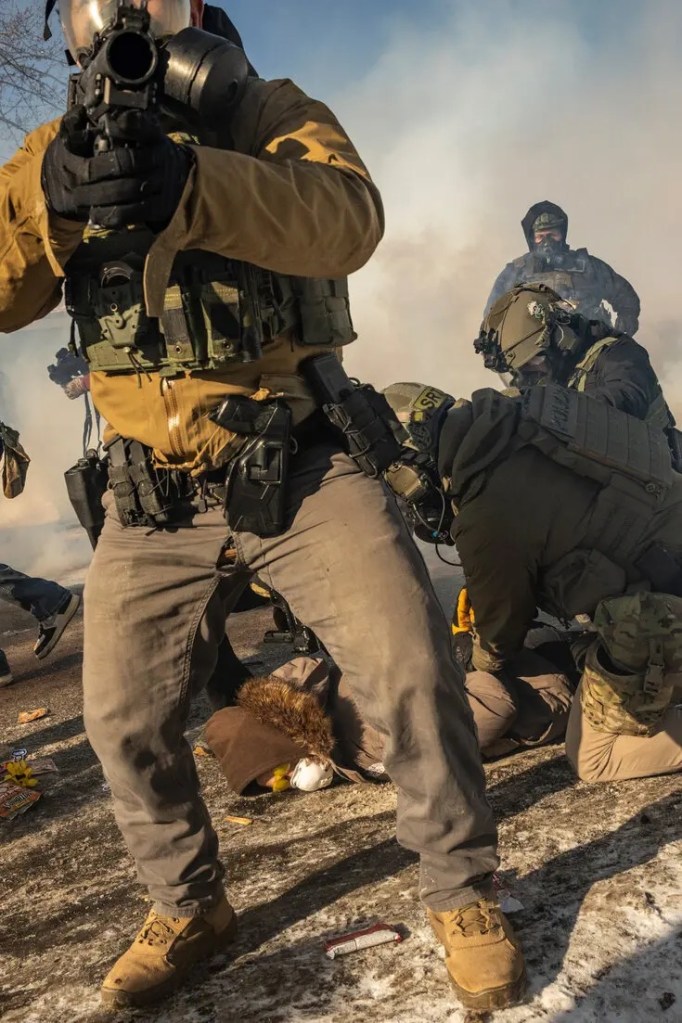
I saw this photograph in The New York Times.

It’s an ICE agent in Minneapolis, looking fearsome. His gun appears to be pointed at the photographer’s head or just over his right shoulder.

He is standing guard as other federal agents are cuffing a person who is face-down on the ground. This is a common tactic. Instead of cuffing a suspect as they stand, the armed ones throw them to the ground, face down, and three or four immobilize him or her, then cuff them.

I immediately noticed that this aggressive guy was wearing combat pants that had a large hole in them.

He doesn’t seem to wear underpants.

Do you see what I see?

What a dork!