Archives for the month of: November, 2015

Since Eva Moskowitz explained in the Wall Street Journal that the iron discipline at her school was devised by a veteran teacher named Paul Fucaloro, I decided to google him.


The first thing that popped up was this reference to him in an article about the high test scores of Success Academy charter schools:


Because the state’s exams are predictable, they’re deemed easy to game with test prep. But in contrast to their drill-and-kill competition, Moskowitz says her teachers prepped their third-graders a mere ten minutes per day … plus some added time over winter break, she confides upon reflection, when the children had but two days off: Christmas and New Year’s. But the holiday push wasn’t the only extra step that Success took to succeed last year. After some red-flag internal assessments, Paul Fucaloro kept “the bottom 25 percent” an hour past their normal 4:30 p.m. dismissal—four days a week, six weeks before each test. “The real slow ones,” he says, stayed an additional 30 minutes, till six o’clock: a ten-hour-plus day for 8- and 9-year-olds. Meanwhile, much of the class convened on Saturday mornings from September on. Fourth-grader Ashley Wilder thought this “terrible” at first: “I missed Flapjack on the Cartoon Network. But education is more important than sitting back and eating junk food all day.” By working the children off-hours, Moskowitz could boost her numbers without impinging on curricular “specials” like Ashley’s beloved art class.


The day before the scheduled math test, the city got socked with eight inches of snow. Of 1,499 schools in the city, 1,498 were closed. But at Harlem Success Academy 1, 50-odd third-graders trudged through 35-mile-per-hour gusts for a four-hour session over Subway sandwiches. As Moskowitz told the Times, “I was ready to come in this morning and crank the heating boilers myself if I had to.”


“We have a gap to close, so I want the kids on edge, constantly,” Fucaloro adds. “By the time test day came, they were like little test-taking machines.”


Then came Juan Gonzalez’s article in 2014 describing Eva’s move from Central Harlem to Wall Street offices, where the rent will be $31 million over a 15-year period. We learn too that Paul’s salary as director of pedagogy jumped from $100,000 to $246,000.


Then I read an article about the “miraculous” transformation of an elementary school in Queens, financed by Wall Street hedge fund manager Joel Greenblatt, working with the same Paul Fucaloro; the key to the dramatic rise in test scores was adoption of the scripted Success for All curriculum. That was in 2002. I searched some more and found that on the latest state tests, the same school did not do very well. Despite the hype, it was ranked 20th among 36 schools in the same district in New York City. Virtually 100% of the children are eligible for free or reduced-price lunch. The school is struggling. Greenblatt and Fucaloro have moved on to Success Academy charters.


(The original name of the chain, which is a category on the blog, was Harlem Success Academies; the word “Harlem” was dropped as the chain moved into other neighborhoods across the city, like Cobble Hill in Brooklyn, a solid middle-class community.)

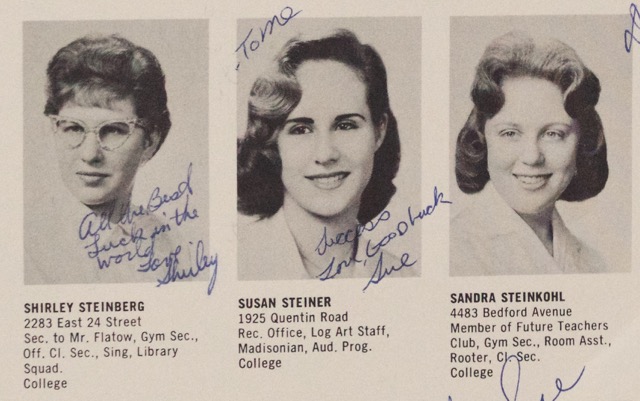
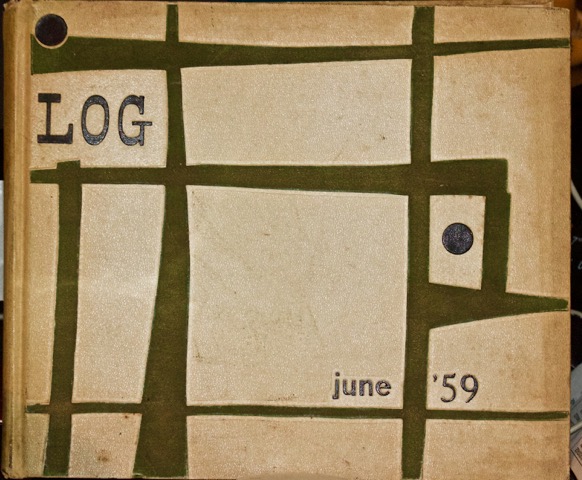
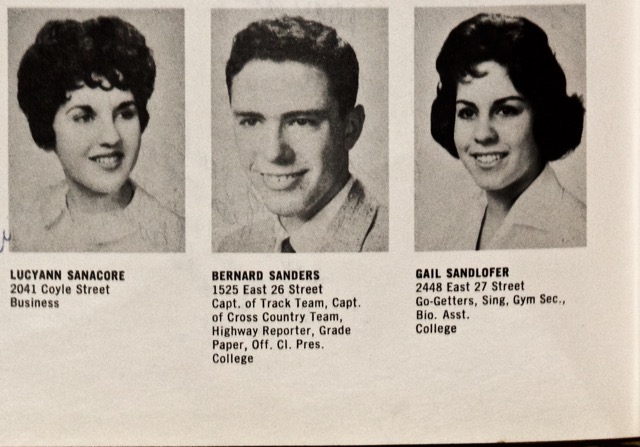
Our regular reader and frequent commenter Susan Schwartz (maiden name, Steiner) attended James Madison High School in Brooklyn, New York, with Senator Bernie Sanders. They were both in the graduating class of 1959. Bernie was the class president.
Susan added this note: “Our James Madison class president should become our next President of the U.S.”
bernie_yearbook1
bernie_yearbook2
bernie_yearbook3

Eva Moskowitz, founder of the Success Academy charter schools, the uber-“No Excuses” chain, explained in the Wall Street Journal why her schools do not tolerate daydreaming in class.


Even five-year-olds must learn to sit quietly, “track” the teacher, pay strict attention to the teacher at all times, and follow every rule. We learned from John Merrow’s recent report on PBS that children of five or six may be suspended from school repeatedly for breaking the rules of strict order and obedience.


She also makes the claim, off-handedly, that the attrition rates in her schools are lower than those of district schools, but this is doubtful.

When Indiana Governor Mikr Oence was asked about the sharp drop in state test scores, he responded, “Dont take it personally.”

Donna Roof of the Northeast Indiana Friends of Public Education sent her reply to Governor Pence in this post.

It begins:

“So, Governor Pence, you recently told a teacher not to take the ISTEP results personally.

“Well, actually, Governor…

“When I see developmentally inappropriate education curriculum, I take it personally.

“When I see students suffer from anxiety and other health issues due to pressure to pass high stakes tests, I take it personally.

“When I see students subjected to an abundance of test prep, I take it personally.

“When I see recess being cut to allow for more test prep time, I take it personally.

“When I see children fearing they’ll be held back if they don’t pass a high stakes test, I take it personally.

“When I see neighborhood schools being closed, I take it personally.

“When I see fine arts classes and programs being cut to allow more time for test prep, I take it personally.

“When I see students walking great distances on unsafe roads because there are no busses due to transportation cuts, I take it personally.

“When I see no joy in learning and teaching due to the demands of tests, tests, and more tests, I take it personally.

“When I see teachers with 40+ students in their classes, I take it personally.

“When I see teachers without sufficient resources for their classroom, I take it personally.

“When I see less funding for public schools, I take it personally.

“When I see the outrageous amount of money being wasted on high stakes testing, I take it personally….”

And it ends:

“When you see that I am doing all that I can to ensure you are not re-elected, don’t take it personally.”

Nancy Carlsson-Paige, professor emerita at Lesley College and eminent defender of childhood, recently was honored with the Deborah Meier award by Fairtest. She is a founding member of Defending the Early Years, which commissions research about early childhood education and advocates for sane, kind, loving policies for young children.


It may be superfluous, but I would like to take this opportunity to name Nancy as a hero of American education for her fearlessness, integrity, and deep understanding of children.


Nancy was honored along with Lani Guinier, professor if law at Harvard Law School.


This is Nancy’s speech, accepting the award:


“Thank you FairTest for this Deborah Meier Hero in Education Award. FairTest does such great advocacy and education around fair and just testing practices. This award carries the name of one of my heroes in education, Deborah Meier—she’s a force for justice and democracy in education. I hope that every time this award is given, it will allow us to once again pay tribute to Deb. Also, I feel privileged to be accepting this honor alongside Lani Guinier.


“When I was invited to be here tonight, I thought about the many people who work for justice and equity in education who could also be standing here. So I am thinking of all of them now and I accept this award on their behalf—all the educators dedicated to children and what’s fair and best for them.


“It’s wonderful to see all of you here—so many family and friends, comrades in this struggle to reclaim excellent public education for all– not just some–of our children.


“I have loved my life’s work– teaching teachers about how young children think, how they learn, how they develop socially, emotionally, morally. I’ve been fascinated with the theories and science of my field and seeing it expressed in the actions and the play of children.


“So never in my wildest dreams could I have foreseen the situation we find ourselves in today.


“Where education policies that do not reflect what we know about how young children learn could be mandated and followed. We have decades of research in child development and neuroscience that tell us that young children learn actively—they have to move, use their senses, get their hands on things, interact with other kids and teachers, create, invent. But in this twisted time, young children starting public Pre-K at the age of four are expected to learn through “rigorous instruction.”


“And never in my wildest dreams could I have imagined that we would have to defend children’s right to play.


“Play is the primary engine of human growth; it’s universal–as much as walking and talking. Play is the way children build ideas and how they make sense of their experience and feel safe. Just look at all the math concepts at work in the intricate buildings of kindergartners. Or watch a 4-year old put on a cape and pretend to be a superhero after witnessing some scary event.


“But play is disappearing from classrooms. Even though we know play is learning for young kids, we are seeing it shoved aside to make room for academic instruction and “rigor.”


“I could not have foreseen in my wildest dreams that we would have to fight for classrooms for young kids that are developmentally appropriate. Instead of active, hands-on learning, children now sit in chairs for far too much time getting drilled on letters and numbers. Stress levels are up among young kids. Parents and teachers tell me: children worry that they don’t know the right answers; they have nightmares, they pull out their eyelashes, they cry because they don’t want to go to school. Some people call this child abuse and I can’t disagree.


“I could not have foreseen in my wildest dreams that we would be up against pressure to test and assess young kids throughout the year often in great excess—often administering multiple tests to children in kindergarten and even Pre-K. Now, when young children start school, they often spend their first days not getting to know their classroom and making friends. They spend their first days getting tested. Here are words from one mother as this school year began:


“My daughter’s first day of kindergarten — her very first introduction to elementary school — consisted almost entirely of assessment. She was due at school at 9:30, and I picked her up at 11:45. In between, she was assessed by five different teachers, each a stranger, asking her to perform some task.


“By the time I picked her up, she did not want to talk about what she had done in school, but she did say that she did not want to go back. She did not know the teachers’ names. She did not make any friends. Later that afternoon, as she played with her animals in her room, I overheard her drilling them on their numbers and letters.


“The most important competencies in young children can’t be tested—we all know this. Naming letters and numbers is superficial and almost irrelevant in relation to the capacities we want to help children develop: self-regulation, problem solving ability, social and emotional competence, imagination, initiative, curiosity, original thinking—these capacities make or break success in school and life and they can’t be reduced to numbers.


“Yet these days, all the money and resources, the time dedicated to professional development, they go to tooling teachers up to use the required assessments. Somehow the data gleaned from these tests is supposed to be more valid than a teacher’s own ability to observe children and understand their skills in the context of their whole development in the classroom.


“The first time I saw for myself what was becoming of many of the nation’s early childhood classrooms was when I visited a program in a low income community in north Miami. Most of the children were on free and reduced lunch.


“There were ten classrooms–kindergarten and Pre-K. The program’s funding depended on test scores, so—no surprise—teachers taught to the test. Kids who got low scores, I was told, got extra drills in reading and math and didn’t get to go to art. They used a computer program to teach 4 and 5 year olds how to Bubble. One teacher complained to me that some children go outside the lines.


“In one of the kindergartens I visited, the walls were barren and so was the whole room. The teacher was testing one little boy at a computer at the side of the room. There was no classroom aide. The other children were sitting at tables copying words from the chalk board. The words were: “No talking. Sit in your seat. Hands to Yourself.”


“The teacher kept shouting at them from her testing corner: Be quiet! No talking!


“Most of the children looked scared or disengaged, and one little boy was sitting alone. He was quietly crying. I will never forget how these children looked or how it felt to watch them, I would say, suffering in this context that was such a profound mismatch with their needs.


“It’s in low-income, under-resourced communities like this one where children are most subjected to heavy doses of teacher-led drills and tests. Not like in wealthier suburbs where kids have the opportunity to go to early childhood programs that have play, the arts, and project-based learning. It’s poverty—the elephant in the room—that is the root cause of this disparity.


“A few months ago, I was alarmed to read a report from the Department of Education Office for Civil Rights showing that more than 8,000 children from public preschools across the country were suspended at least once in a school year, many more than once. First of all, who suspends a preschooler? Why and for what? The very concept is bizarre and awful. But 8,000? And then to keep reading the report to see that a disproportionate number of those suspended preschoolers were low income, black boys.


“There is a connection, I know, between these suspensions and ed reform policies: Children in low income communities are enduring play deficient classrooms where they get heavy doses of direct teaching and testing. They have to sit still, be quiet in their seats and comply. Many young children can’t do this and none should have to.


“I came home from that visit to the classrooms in North Miami in despair. But fortunately, the despair turned quickly to organizing. With other educators we started our nonprofit Defending the Early Years. We have terrific early childhood leaders with us (some are here tonight: Deb Meier, Geralyn McLaughlin, Diane Levin and Ayla Gavins). We speak in a unified voice for young children.


“We publish reports, write op eds, make videos and send them out on YouTube, we speak and do interviews every chance we get.


“We’ve done it all on a shoestring. It’s almost comical: The Gates Foundation has spent more than $200 million dollars just to promote the Common Core. Our budget at Defending the Early Years is .006% of that.


“We collaborate with other organizations. FairTest has been so helpful to us. And we also collaborate with –Network for Public Education, United Opt Out, many parent groups, Citizens for Public Schools, Bad Ass Teachers, Busted Pencils Radio, Save Our Schools, Alliance for Childhood and ECE PolicyWorks —There’s a powerful network out there– of educators, parents and students—and we see the difference we are making.


“We all share a common vision: Education is a human right and every child deserves one. An excellent, free education where learning is meaningful– with arts, play, engaging projects, and the chance to learn citizenship skills so that children can one day participate—actively and consciously–in this increasingly fragile democracy.
 

The superintendents association of Nassau County (Long Island), Néw York, have called on the state to stop evaluating teachers by test scores. Nassau County has some of the state’s most successful schools.

“They wrote that they understand the need for a system that ensures highly effective instruction, but said “the exaggerated use of student test data” undermines that goal. The letter cited position papers by the American Educational Research Association and the American Statistical Association that question such use of student test data.

“Equally flawed, they said, has been the attempt to devise a rating system for the vast majority of educators who teach subjects or grade levels not associated with the state exams in English language arts and math given to students in grades three through eight.”

The full text of the document is included in the link.

Written by our blog poet, SomeDam Poet:


“An Island in Restormy Sea”


Long Island is a rock
That stands against the wave
Of school restormer flock
And never will it cave

This is one of the best parodies ever, using an all-purpose clip that has served many parodists in the past.

I have seen this clip used at least half a dozen times to ridicule education scams and frauds.

In this case, the clip parodies the New York State Education Department, determined to shove Common Core standards and tests down the throats of the state’s children and furious that parents are opting out.

This will give you a good laugh!

Ras Baraka, Mayor of Newark, was a teacher and principal at Central High School. Few elected officials in the nation understand education and students as he does.

In this article in The Hechinger Report, Baraka describes the daunting challenges that Newark’s children face. And he shows how schools can succeed in overcoming those challenges for large numbers of students.

In the nation, nearly a quarter of children live in poverty. In Newark, it is an appalling 44%.

Baraka shows how schools are building on the framework of a plan called the Newark Global Village School Zone. The framework was designed by NYU Prifessor Pedro Noguera, working with parents and communities in Newark.

Baraka writes:

“Creating successful schools is not a mystical process. It is grounded in research on best practices and is based on empirical data. Quitman Street School in Newark is an example of how aligning school improvement efforts with investments in health, social services, student supports, and community engagement equip schools with the level of school and community capacity required for success. All schools have challenges. Quitman Street School is no exception.

“However, Quitman’s steady progress toward transformation is linked to its strategic focus on weaving together resources from inside and outside the school and using those resources to build a responsive culture, integrate student supports and drive a focus on learning. In the spring of 2014, the school, led by Principal Erskine Glover, saw the highest reading gains in the district and the fourth highest in mathematics.”

“Prior to its designation as a Renew School in 2012, Quitman Street School was part of another school reform initiative called the Newark Global Village School Zone. Global Village was a reform strategy based upon an expanded conception of education that addresses the importance of academic skills and knowledge, as well as the development of the whole child. The Village brought social service agencies, community-based organizations, business, universities, and families together to build partnerships that supported the instructional and educational goals of schools in the Global Village network.

“Quitman Street School and Central High School, where I was principal, along with five other schools in Newark’s Central Ward, collaborated with New York University to develop the Global Village strategy from 2009 until the Renew strategy was implemented in 2012. Community partnerships, school-based professional development and collaboration, academic enrichment, extended learning time, and integration of student supports were core to our improvement plans. Developing these systems in the Global Village shifted the paradigm for school reform in our schools and established comprehensive and cohesive systems to help students bypass barriers and create opportunities for learning so they could thrive. Of course, the implementation of the Global strategy varied school by school. It is, however, safe to say that Quitman Street School embraced being part of the Global Village wholeheartedly so that by the time it became a Renew School a solid foundation on which to accelerate the school’s transformation had been established.”

Collaboration with parents and social service organizations; teamwork; respect for parents and students and teachers. Start there.

Puerto Rico confronts massive public debt and must somehow dig its economy out of a deep crisis.


Unfortunately, as Julian Vasquez Heilig shows, a bill has been proposed to the legislature to save money by privatizing public education.


Heilig writes:


“Politicians in Puerto Rico are seeking to solve decades of fiscal mismanagement by adopting the same education reforms that are hurting children and starving school districts in the mainland United States. The disaster capitalism coming to the azure waters of Puerto Rico is very similar to the school privatization and private-control education reform causing an uproar in Chicago and Detroit….


“In October, Senator Eduardo Bhatia fast-tracked Project 1456 in the Puerto Rican Senate. School closure requirements in 1456 are the first notable parallel with the Detroit and Chicago school privatization playbook. In Chicago, 50 schools (primarily in African-American neighborhoods) were recently closed under the pretext that they were under-enrolled. A University of Chicago study showed that after neighborhood school closure, students were shuffled to a new set of low-performing schools— often charter schools…


Since 2014, the Puerto Rican government has closed 135 schools— about 10% of the schools on the island. The results of these school closings are class sizes as large as 40 students. The new law requires the closure of 400 more public schools—30% of the remaining public schools on the island. Additionally, Project 1456 requires that the government turn at least 15% of schools into Lider (charter schools) every three years under the auspices of private control and the education authority….


“While many in the mainland United States argue that charter schools are public schools— this bill makes it clear that Lider schools are public schools in name only. The bill amends Puerto Rico’s 1951 pension law by explicitly stating that charter school teachers are not public employees. As a result, they will not have access to the public pension retirement system….


“The privatization of Puerto Rico’s schools is a way to address the tens of billions of dollars in debt that Puerto Rican politicians have accrued over the past several decades. Will Puerto Rico satiate their addiction to debt on the backs of impoverished children? The answer hinges on the passage of 1456.”


– See more at: http://www.progressive.org/news/2015/11/188428/puerto-ricos-school-crisis#.dpuf