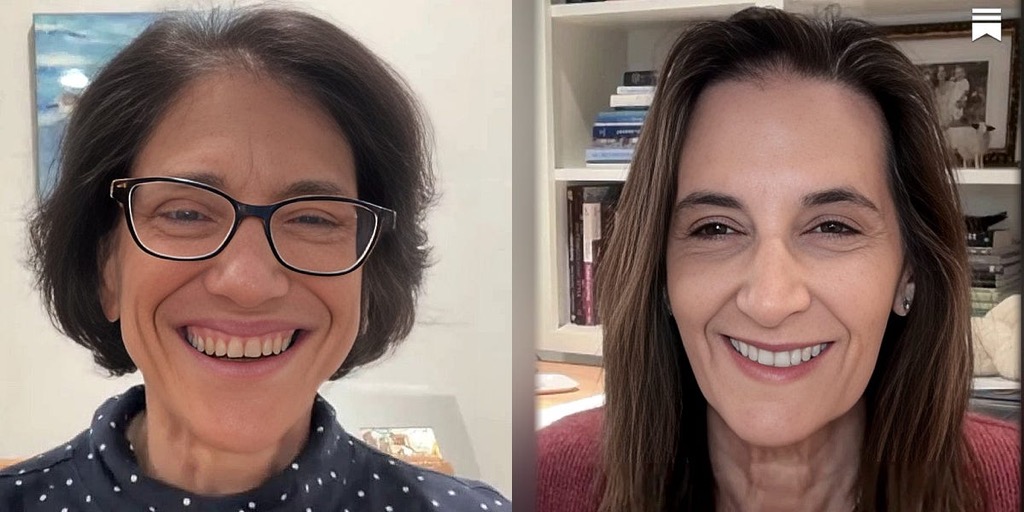
The mainstream media typically ignores charter school scandals, but CBS picked up on this one. Erika Donalds is building a for-profit charter school chain. She is the wife of Byron Donalds, who is running for Governor of Florida with Donald Trump’s blessing.

Byron Donalds has been a staunch supporter of Trump. Donalds is African American. Frankly, I don’t understand how he can be part of a political movement that seeks to eliminate Black history, dismantle studies of race and gender, and disparage any efforts to rectify historic racial injustices. I hope reporters ask him about these questions on the campaign trail.

Peter Greene saw the segment on CBS and posted the video. In his piece, he refers to Erika Donalds as “Florida’s leading school choice grifter.”

CBS reporters wrote:

Kathleen Cetola believed she had found the perfect fit for her 9-year-old grandson Landon when Optima Classical Academy broke ground in 2023 near her home in Fort Myers, Florida. As the primary caregiver for Landon, Cetola was drawn to the smaller class sizes and more traditional curriculum, which she felt would be “less woke” than the public school he was currently attending.

“Regarding gender and race, I want him to be able to make up his own mind,” Cetola told CBS News. “They were selling the fact that they were focused on the education and the classical type of teaching. I thought that was going to be a great opportunity for Landon.”

The Optima school in Fort Myers was founded by Erika Donalds, a leading voice in the school choice movement and the wife of Congressman Byron Donalds, the Republican frontrunner in next year’s Florida governor’s race. It was poised to be Erika Donalds’ fifth classical charter school and part of a flourishing trend.

Photo of Erika Donalds.
Erika Donalds speaks on stage during day one of the Turning Point USA Student Action Summit on Friday, July 11, 2025, in Tampa. Luis Santana / Tampa Bay Times via AP

Classical charter schools offer a curriculum with a Eurocentric focus that stresses traditional values and introduces primary source documents like the U.S. Constitution at an early age. In the last five years, more than 250 classical schools have opened across the country. Many conservative politicians argue these schools are needed to reject what they see as a pervasive woke agenda in American public education.

Donalds has been a face of the classical charter movement, touring the country to tout their value. In an October speech to a group of conservative college women, she spoke about her decision to start her own schools. She said it was born out of her own experience trying to educate her children.

“I knew there were so many families out there that were desperate for this option,” she said.

Yet, after enrolling hundreds of students and hiring teachers, the Fort Myers school failed to open, leaving parents scrambling to find a school for their children.

“I feel cheated,” said Cetola, who was one of a half dozen parents who told CBS News they had signed up their kids to attend. “These kids were cheated, and it’s heartbreaking….”

The confusion the parents faced, according to experts, is not unique within a charter school industry that often operates with less transparency than traditional public schools.

Donalds declined to be interviewed for this story. In a statement, her spokesperson said she is “an accomplished businesswoman with a strong record of starting successful charter schools and providing thousands of students with an excellent education.”

Taxpayer-funded charter schools paid outside firms

Classical schools are one slice of a charter industry that GOP leaders have tapped to remake America’s public education system. Recent moves by both the federal government and local officials in Florida have freed up hundreds of millions of dollars in new funding. In September, the Trump administration announced it was investing half a billion dollars in grant programs that support charter schools.

The announcement came as Florida passed a law — at the urging of hedge fund manager and Republican megadonor Ken Griffin — to allow charter schools to operate inside traditional public school buildings.

CBS News reviewed state education data, financial documents, independent audits and faculty comments at four schools Donalds had helped launch. State data shows when it came to academic performance, one of the schools quickly excelled. But the records also raise questions about how public money was being spent by the schools.

Tax filings reviewed by CBS News show, between 2020 and 2023, the schools spent roughly 30% of the government funding they received — totaling about $35 million — on outside firms with ties to Erika Donalds. A source familiar with these arrangements said they landed the schools a good price on payroll expenses, IT and other back-office services.

In August, Byron Donalds filed an amended House financial disclosure for 2023, reporting that Erika Donalds held a stake in two of those firms each worth between $1 million and $5 million. His most recent disclosure, for 2024, again listed her stakes in those companies.

The amended disclosure was first reported by the Florida Bulldog

Of course, parents in Fort Meyers who signed up for Donalds’ school were disappointed when it didn’t open as promised.

They had been promised that the school would open in the fall of 2024. Erika Donalds told them that financial challenges and the lingering effects of Hurricane Ian required her to delay the opening. Parents eagerly anticipated the opening in the fall of 2025, but it was again announced that the opening would be delayed, this time to 2026.

Prior to the school in Fort Myers, Donalds helped launch four other classical charter schools operated by Optima across Florida: two in Jacksonville, one in Stuart and one in Naples.https://datawrapper.dwcdn.net/y9D5j/

Baker, the charter school expert at the University of Miami, said the practice reflected in Optima’s tax filings — of non-profit schools paying money to for-profit companies with overlapping stakeholders — occurs across the charter school industry. He said in the absence of meaningful governmental regulation, accountability comes from “how well they do for students.”

On that measure, students at those four Optima schools performed below average, according to Baker, who looked at math and reading test scores.

“Florida’s charter sector is not strong, and Optima schools, at least the four schools that seem to be in that affiliated mix, perform even less well,” Baker said.

The learning curve when it comes to implementing the classical curriculum can be steep, according to Janine Swearingin, who served as Treasure Coast Classical’s first principal from 2019 to 2022 and would later go on to work directly with Donalds at Optima. She praised Donalds and the company’s role in launching the school, which she said consistently earned top marks from the state when it came to academic performance when she was there.

In January 2023, after Swearingin left the school, the board of Treasure Coast Classical Academy commissioned an independent “performance audit” which was intended to draw attention to areas of concern. The resulting report said that while there were “commendable” aspects of the school’s performance, it also raised questions. Class sizes were so large, it said, that they appeared to violate state law and it noted a lack of structure in the classroom, all findings that Optima disputed.

The auditor praised Treasure Coast Classical’s “outstanding” financial health. But, some faculty complained Optima operated more like a “franchising corporation” and was “dedicated to profit sometimes to the detriment of the school itself.”

“It’s quite an undertaking since teachers don’t generally receive an education in teaching a classical curriculum,” said Swearingin, who noted that in a classical curriculum, first graders are studying the American Revolution at a time when their public school counterparts are learning about community helpers and basic geography. “The training is vastly different.”

As part of its response, Optima said it was working with the auditor “to build trust, address remaining concerns, and correct misinformation or misunderstandings.” A month later, the school’s board moved to terminate its contract with Optima. Treasure Coast Classical later sued Optima, alleging numerous instances of breach of its contract with the school. A county judge dismissed the lawsuit ruling because it had been filed in the wrong venue, and Treasure Coast Classical has appealed.

According to meeting minutes of the schools’ boards as well as county officials and school administrators contacted by CBS News, all four schools that had opened have since cut ties with Optima. The schools still offer a classical curriculum, but under different management. A source close to Donalds told CBS News that Optima’s plan all along was to assist with the start-up and then move on, once the schools reached “full stability.”

Donalds’ spokesperson noted that the schools’ academic performance eventually improved. “These schools show how a supportive environment, committed teachers, and high expectations can help children thrive,” she said.

The school in Fort Myers that had planned to open as Optima Academy is no longer associated with Donalds or her company. According to county records obtained by CBS News, Donalds in August sought to transfer ownership of the building to another charter operator. In October, the county school board approved the transfer and the new operator plans to open the school next fall.

“They just dropped the ball and ran,” Cetola said. “How can you do something like this and sell this to parents who really want to stay involved with their children and then just walk away?”

This story has been updated.

Credits

Reporting by Michael KaplanMark Strassman and Emma Nicholson. Production by Michael KaplanEmma Nicholson and Alyssa Spady. Photos and videography by Ryan Jackson. Video editing by Greg Hotsenpiller. Graphics, design and development by Taylor Johnston. Editing by Ellen Uchimiya and Matthew Mosk.

Republicans opposed the creation of the U.S. Department of Education. In 1979, President Jimmy Carter promised the NEA that he would push it through. Republicans fought it but he had the votes, and it was created. While NEA wanted the Department, Albert Shanker of the AFT was against it. He feared that the federal government would exert too much control over schools and that education might be politicized, with each party pushing its agenda. He preferred a department of education, labor, and social services.

Now, the Trump administration is dismantling the U.S. Department of Education. They have not sought Congressional approval, which is necessary to eliminate an authorized Department. Instead, they are eliminating it by layoffs and shifting programs to other departments. There may be a “Departnent of Education,” but the building will be empty. No one will be enforcing laws protecting the rights of children with disabilities. The Office of Civil Rights will likely go to the Justice Departnent, where it will not enforce the civil rights of women and racial minorities, but will make sure that schools stamp out DEI and deny any protections to transgender students.

Peter Greene writes:

The continued dismantling of the federal Department of Education is both a con and a lie, one more piece of a quilt of patchwork policies all built around a simple idea– some people are better than others, and the uppity lessers really ought to learn their place. And the rhetoric being used to sell the dismantling is a lie.

The over-simplified version of the department’s origin comes in two parts. First, Congress created some major funding streams meant to level the playing field for students and families, and with those funding streams, some civil rights laws to make sure states leveled their own playing fields for schooling and education. Second, Jimmy Carter, who had promised a cabinet-level ed department (and who wanted to be re-elected) proposed the department as a way to collect, organize, and administer the various policies.

The department’s job was never supposed to be to determine what an excellent education should be. It was supposed to make sure that whatever a good education was presumed to be in your state, everybody got one. So even if a child was presumed to be a poor Lesser, a future meat widget, a child whose special needs made them harder to educate– no matter what, the district and state were supposed to have the resources to meet the challenge. The quality of a child’s education was not supposed to depend on their zip code. 

This does not fit well with the current regime’s conception of civil rights, a conception rooted in the notion that the only oppressed group in this country is white guys, or their conception of democracy, a conception rooted in the notion that some people really are better than others and therefor deserve more power and privilege. (Nor does the regime love the idea of loaning people money for college and not collecting it).

So they’ve undone the second step of the department’s creation, and parceled out a bunch of programs to other departments, a move that philosophically advances the idea that education has no point or purpose in and of itself, but exists only to serve other interests.

For example, as Jennifer Berkshire points out, now that the Department of Labor exists to serve the interests of bosses, its interest in education centers on producing more compliant meat widgets to serve boss’s interests. Meanwhile, the ed programs now farmed over to the Department of Health and Human Services can be reorganized around RFK Jr.’s interest in eugenics and identifying those lessers whose proper place in society is, apparently, on a slab. 

That unbundling of education programs from the department only undoes the second phase of the department’s origin. But Secretary Linda McMahon’s assertion that these interagency agreement will “cut through layers of red tape” or “return education to the states” is thinly sliced baloney. It’s a lie.

“Instead of dealing with this government department, you will deal with this other government department” does not even remotely equal “You will now have less red tape.” In fact, given that you may have to track down the correct department and then deal with people who don’t have actual expertise and knowledge in education may spell even more red tape.

“We moved this from one government department to another government department” is definitely not the same as “we sent this back to the states.” 

Some programs may be sent back to the states in the sense that the feds would like to zero out the budget entirely which means the states that want to continue those programs will have to create and fund the programns on their own. If you tell your kids, “I’m not making you supper tonight,” I guess that’s kind of like saying “I’m sending the supper program to you.”

But the big ticket items, like IDEA and Title I will still be operating out of DC until such day as Congress decides to rewrite them. And given Dear Leader’s shrinking political capitol, I’m not sure that gutting IDEA is high on his To Do list right now. 

Matt Barnum suggests that gutting the department is largely symbolic and that actual schools won’t feel that much of a difference. On the one hand, that’s true-ish. “What is less clear,” Barnum writes, “is the Trump administration’s longer-term ambitions.” I’m not sure that’s all that mysterious. The far right’s goal, often in tandem with the modernn ed reform movement, is to get government entirely out of the education business while turning education into a get-it-yourself commodity. If government is involved in education at all, it would be 1) to provide a school-shaped holding tank for the difficult students that private schools don’t want and 2) to provide taxpayer funding for schools that deliver the “correct” ideological indoctrination. 

The parcelling-out of the department may only be a small step in that direction, but its long-seething right wing critics can see it as a means of shushing those annoying voices that keep bringing up rules and civil rights and stuff.

The best hope at this point is for a chance to build a new version of the department under a new administration (in an imaginary world in which the Democrats don’t face plant in 2028). But one of the worst things about the department has been the irresistable urge to use those massive grants to force DC-based education ideas on states, and this attack on the department doesn’t really address that problem at all. 

What this latest move clearly does not do is send education back to the states, which is, after all, where education responsibility already rested. The regime may be trying to hamstring and privatize education, but they aren’t sending it anywhere. It’s an unserious lie from unserious people. Stay tuned. 

Gary Rubinstein is a teacher of mathematics at Stuyvesant High School in NYC and a prominent critic of corporate reform. He started his career as one of the first corps members of Teach for America. After many years inside the reform world, he saw its flaws and became an apostate. Like me. With his superb mathematical skills, he has debunked charter school “miracles,” TFA data, the Tennessee Achievement School District, which did a lot of boasting but failed.

His review is a delight to read.

He writes:

Fifty years after the publication of her first book, ‘The Great School Wars’, author and historian Diane Ravitch has released her long awaited memoirs.  In ‘An Education: How I Changed My Mind About Schools and Almost Everything Else’ Ravitch takes us through her life from her childhood in Houston through the ups and downs of a long and productive life driven by truth and integrity.

What makes this book a ‘must read’ is that it has the three elements that a great autobiography should.  First, her life story is interesting on an objective level.  Anyone picking up the book and reading over the book jacket will know that Ravtich is someone who achieved fame and notoriety through the unlikely passion of the history of Education in America.  But in this book we learn about the sorrow she had to endure between her great triumphs.  So her story, even if it weren’t so well written, would make a very good book.  A second component of a great autobiography is the author’s ability to reflect on 80 plus years of life and find the pivotal moments that changed the course of her life.  But for an autobiography to be ‘great’ it must be infused and brought to life with excellent precise writing.  As ‘An Education’ has all three aspects, this is a book you are going to want to read and then keep to re-read over the years when you are in need of inspiration.

If you have read any of Ravitch’s education books, you know that she is a master of absorbing decades of events and processing them and creating an insightful, and incredibly efficient, thesis which she develops over the course of a book.  As she explains in this book, she learned her craft while writing as a journalist for The Wellesley News and then for The New Leader magazine.  In all her books she exhibits this efficient technique that would make Strunk and White beam.  But, by design, Ravtich’s books on Education are stripped of emotional language.  Those books educate you through a series of well chosen facts that lead you to understand the implications and big moments without having to spell out every detail.  The big question, which this new book answers with an emphatic ‘Yes’ is whether or not her kind of writing can be used to evoke the joy and the sorrow she experienced through her full 87 years of living.

When I started reading this book, I would bookmark interesting passages that show her talent for memoir.  Eventually I realized that I was bookmarking almost every page.  So after the first 50 of so pages, I had to slow down on the bookmarking.  Here are some of my favorite moments (I will try not to give away too much).

Since Ravitch can write a full tale in the span of five or six lines, there are so many interesting stories in this book.  As a writer she reminds me of one of those painters, I don’t know so much about painting to know what this is called – maybe impressionistic? – who, rather than producing a full photographic quality image, instead just does the minimal with the paint and brush to convey the emotion and ideas.  This is something that is very difficult to do yet she makes it look easy.

A few pages later, Ravitch relays an amusing story about how as a teen she found a pearl in an oyster and ended up in the newspaper for it and also got food poisoning from eating the oyster:  “The next day, after the newspaper appeared with a  photograph of me in short shorts, identified by name, strange men began calling the house, asking for me and saying impudent things.  That went on for days, along with the vomiting.  My mother was not amused.”  This is so efficient, not a word wasted and it does convey the absurdity and the humor with a minimal delivery reminiscent of maybe Bob Newhart.

Here’s one I liked:  “The only Sunday school teacher I remember was a strapping guy who discussed Bible stories and the Jewish religion with us.  He told us that when he was our age he had run away with the circus.”  Ah, see how great this is?  In the first sentence she sets up the scene.  And then in just a few words tells us the perfect thing to understand this guy.  No more is needed and no more is said.

Throughout the book, Ravitch takes stories and moments that could easily fill several pages and finds a way to convey them in a few words.  For the reader, this has the effect of injecting all the humor and sometimes the sorrow of these moments directly into our brains without it having to be processed and translated in our minds.

Though these two examples are fun and convey the innocence of childhood, Ravitch is similarly terse in her telling of some of the deepest tragic moments of her life.  When these happen in the book, the descriptions are so efficiently written that, like sometimes when bad things happen in life unexpectedly, we find ourselves pausing and wondering if that really just happened.  The matter of fact telling of memorable moments of life, both big and small, happy and tragic, has a powerful effect on the reader.

The book really gets rolling when Ravitch enters college in 1956 at Wellesley.  In one sense she is a fish out of water and then she eventually completely at home with the lifelong friends she made there.  This was a really fun chapter to read as Ravitch has the first of her many brushes with fame, like her friend Maddy – eventually Madeleine Albright.  Just as always, Ravitch perfectly sets up the matter of fact description of her friend’s background and then, in an instant it is revealed who she became known as. The Madeleine Albright story was less than one page long.

One of my favorite parts was the description about a satirical musical Ravitch and her friends wrote for the Wellesley Junior Show.  It was hilarious.  I kind of want to see the full script but her description of it, as all her descriptions, gave us just enough that we feel like we saw the whole show but forgot some of the missing details.

After college, Ravitch starts domestic life but isn’t quite content.  She then goes on a lifelong quest for love and for purpose.  As she goes through different eras in her life, she meets a new cast of colorful characters, some famous, some not, but always relevant to her story.

In this book we learn how she went from being the wife of an influential New York City figure to the influential Dr. Ravitch the Education guru of this country.  As she rises in the ranks, she finds herself in the company of so many famous people — even several presidents, yet she conveys in her telling of these encounters that, to her, it wasn’t such a big deal.  They are all just people.  Anyone who has gotten the chance to meet her in person and see her interact with so many people who are not famous will see that she treats non famous people like they are special and is always asking them questions rather than talking about herself.

One of the funniest anecdotes in the book is when she inadvertently got Isaac Asimov angry with her over small talk related to word processors.  Again, this is only a few lines, but another interesting adventure in Ravitch’s full life that put her often in the room with all kinds of famous people.

While married to her husband, Diane unexpectedly meets her soulmate who happens to be a woman. In the chapter about the genesis and growth of her relationship, they have now been together for almost 40 years, she is able to convey what it means to finally experience the joy of true love.

In the last chapters of the book we learn about the Washington years in the Department of Education and how that came about and what she tried to accomplish there.  We also learn about what it took to renounce much of her work and to follow the evidence into a more evolved system of beliefs about what can improve education in this country.  She lost a lot of friends and titles in the process but she kept her personal integrity and commitment to the truth.

Throughout the book, the theme is that Ravitch is never just one thing or the other.  Is she a education conservative or an education liberal?  Is she straight or gay?  Is she a southerner or a north easterner?  Is she an introvert or an extrovert?  Is she a socialite or a homebody?  And throughout her life she is sometimes one and sometimes the other.  She is someone who defies categorization.  And though in the subtitle she says she ‘changed her mind about schools and almost everything else’ she never changed her core belief that you don’t just stay in the same place just because you are comfortable there.

And like with her, this book is a lot of different things.  On one level it is an amusing and interesting read about someone whose choices led her on an unlikely adventure ending with her being, in some circles, a huge celebrity.  But it is also an inspirational tale of how having values and staying true to them can help you overcome some of the unfortunate obstacles you have to deal with in life.  And though I doubt it was intended to accomplish something else, I think that for many readers they will want to write down their own memoirs after reading this.  Ravitch makes it look so easy to analyze your life, find the key moments in it and write some succinct prose – though of course it isn’t so easy but still a worthwhile task.

After finishing this book, I had an experience that only a few people were also able to have.  In the acknowledgements in the ‘friends’ section, among sixteen other names, there was my own.  I got a chill seeing this, never expecting it.  But this made me think something else, also a lesson, though maybe unintended from this great book.  This book reminds us of the importance of relationships.  Everyone you know has a story to tell.  Some people’s lives may not have the highs and lows of Diane Ravitch’s but for each person, their joys and sorrows are meaningful to them.  And even if they don’t have the capability to write the way Ravitch can, if they could, you might find yourselves in the acknowledgement page for that friend or family member.  So enjoy the relationships you have while you can and remember that you are an important person in many people’s lives.

So pick up a copy today and take a ride through the ups and downs of a well lived life.  Though she has made a career of writing about education and teaching, through this book she educates and teaches us that if you keep an open mind and are committed to learning and following the facts, you might end up in a comfortable home a long way from where you started.

For the past few months, the U.S. Navy has been blowing up small speed boats in the Caribbean and even in the Pacific. The orders to do this come from the President and the Secretary of Defense. They say they are blowing up boats that are transporting drugs to the U.S. They must do this, say Trump and Hegseth, to protect the American people from the scourge of drugs. They say the boats originate in Venezuela, and Trump has threatened to bomb that country.

How do they know that the boats they destroy are carrying drugs? How do they know that the 80 or so people they killed are drug runners? Where’s the evidence? They won’t say.

An even bigger controversy arose when The Washington Post reported that the first boat to be blown up required two separate strikes, because after the smoke cleared, it was apparent that two men survived the explosion and were clinging to the remains of the smouldering boat. According to the Post, Hegseth had give oral orders to “kill them all.” So the planes came back and killed the two survivors.

The story appalled members of both parties. Trump said he knew nothing about it, Hegseth said the Admiral in charge gave the order, and Hegseth called him a hero.

Congressional hearings might get to the truth. Will the Admiral admit to a war crime to save Hegseth’s skin? According to the laws of war, killing a defenseless survivor who poses no threat is a war crime.

Watch Adam Kinzinger, a military veteran and former member of Congress, explain why this action was a heinous war crime.

Trump’s press secretary Karoline Leavitt defended the second strike because the President is determined to keep drugs out of the U.S.

But by an unfortunate coincidence, the news about the second strike coincided with Trump’s decision to pardon Juan Orlando Hernandez, the former President of Honduras, who had been sentenced to 45 years in prison for his role in bringing 500 tons of cocaine into the U.S. Trump said he was a victim of Biden’s overzealous and unfair prosecution.

But here is how The New York Times described him, in a story written by Santul NerkarAnnie Correal and .

He once boasted that he would “stuff the drugs up the gringos’ noses.” He accepted a $1 million bribe from El Chapo to allow cocaine shipments to pass through Honduras. A man was killed in prison to protect him.

At the federal trial of Juan Orlando Hernández in New York, testimony and evidence showed how the former president maintained Honduras as a bastion of the global drug trade. He orchestrated a vast trafficking conspiracy that prosecutors said raked in millions for cartels while keeping Honduras one of Central America’s poorest, most violent and most corrupt countries.

Last year, Mr. Hernández was convicted on drug trafficking and weapons charges and sentenced to 45 years in prison. It was one of the most sweeping drug-trafficking cases to come before a U.S. court since the trial of the Panamanian strongman Gen. Manuel Noriega three decades before.

Last year, Mr. Hernández was convicted on drug trafficking and weapons charges and sentenced to 45 years in prison. It was one of the most sweeping drug-trafficking cases to come before a U.S. court since the trial of the Panamanian strongman Gen. Manuel Noriega three decades before.

But on Friday, President Trump announced that he would pardon Mr. Hernandez, 57, who he said was a victim of political persecution, though Mr. Trump offered no evidence to support that claim. It would be a head-spinning resolution to a case that for prosecutors was a pinnacle, striking at the heart of a narcostate.

But on Friday, President Trump announced that he would pardon Mr. Hernandez, 57, who he said was a victim of political persecution, though Mr. Trump offered no evidence to support that claim. It would be a head-spinning resolution to a case that for prosecutors was a pinnacle, striking at the heart of a narcostate.

Prosecutors said Mr. Hernández was key to a scheme that lasted more than 20 years and brought more than 500 tons of cocaine into the United States.

What’s the logic? Kill the drug runners who, if they are drug runners, are paid $500 a day. Let the kingpin go free.

Trump is not serious about stopping the flow of drugs into the U.S.

When Harry S Truman was President, he had a sign on his desk: “The buck stops here.” It meant that he took responsibility for all decisions and their consequences. With Trump, he accepts “bucks” (money) from many directions, but never takes responsibility when anything goes wrong. His desk plaque should read: “The buck stops somewhere else.”

Jennifer Rubin, the journalist who quit The Washington Post and started a blog called The Contrarian, asserts that Trump bears ultimate responsibility for the vicious attack on two members of the National Guard in DC. They never should have been sent to patrol the city’s streets, a mission for which they were not trained. Now they are patrolling alongside DC police, who are pulled away from their jobs to protect the National Guard.

She writes:

The killing of one national guardsman and severe wounding of another in D.C. was a tragedy and an outrage. The killer, of course, should be punished to the full extent of the law. But to ignore Trump’s egregious decision-making that brought us to this point of reckless political violence is to invite further tragedies and condone grievous incompetence.

No matter how furiously Trump and his minions try to spin the narrative, Biden cannot be blamed for this one. Trump’s crew granted asylum to the suspected killer this April. Most importantly, Trump and MAGA governors who comply with the president’s whims and who send national guardsmen around the country willy-nilly for tasks they are not trained to perform are responsible for their safety. The guardsmen who were attacked should never have been there….

After the shooting, Trump and Hegseth added 500 guardsmen to the D.C. deployment, thereby increasing the risk to them. Trump predictably scapegoated all Afghan refugees.

As the New York Times reported, guardsmen had warned about just such a calamity months ago. “According to internal directives distributed to National Guard troops in Washington, D.C., in August, commanders warned that troops were in a ‘heightened threat environment’ and that ‘nefarious threat actors engaging in grievance based violence, and those inspired by foreign terrorist organizations’ might view the mission ‘as a target of opportunity.’”

In belated recognition that the national guard are sitting ducks, the Trump regime now has D.C. police patrolling with guardsmenSo, who is getting protection?

Surely, Americans would be safer if guardsmen stayed home to perform normal duties and D.C. police were assigned to do their crime-fighting jobs. “Diverting local police to accompany Guard members would … [mean] siphoning them from other tasks in D.C. neighborhoods,” The Washington Post reports.

Trump (again in the name of immigration enforcement), has pulled federal personnel away from critical tasks including anti-terrorism. In September, the Cato Institute, a libertarian think tank, found over 28,000 federal law enforcement officials had been diverted from critical tasks. “This diversion has significantly curtailed the government’s capacity to address criminal activity in the United States,” the report found. The personnel (mis)directed to immigration included 1 in 5 U.S. marshals, 1 in 5 FBI agents, half of all Drug Enforcement Agency agents, and two thirds of the Bureau of Alcohol, Tobacco, Firearms, and Explosives workforce. How many crimes could have been prevented and how many dangerous characters could have been arrested had this horde of federal agents not been dragooned for counterproductive, violent, and (in many instances) illegal invasions of cities?

In November, the New York Times reported on this phenomenon:

Homeland security agents investigating sexual crimes against children, for instance, have been redeployed to the immigrant crackdown for weeks at a time, hampering their pursuit of child predators.

A national security probe into the black market for Iranian oil sold to finance terrorism has been slowed down for months because of the shift to immigration work, allowing tanker ships and money to disappear.

And federal efforts to combat human smuggling and sex trafficking have languished with investigators reassigned to help staff deportation efforts.

The vast majority of those seized during immigration raids are not criminals, let alone violent. Only about 8 percent of those alleged undocumented immigrants seized had a conviction for a violent crime; 60 percent had no criminal record at all.

Trump insists he is responsible for…none of the consequences of his own decisions. But the misuse of national guard, as we found out in D.C. last week, can have disastrous results. Beyond this tragedy, Trump’s actions have killed or put at risk hundreds of thousands more.  The elimination of USAID has resulted in over 600,000 deaths; his $1 trillion cut in Medicare is likely to lead to an avoidable 51,000 deaths per year; and his idiotic cuts in NIH grants will result in untold number of deaths from discontinuing potentially life-saving medical trials.

Forget “buck stopping” in Trump’s regime. It’s an outmoded concept for a president who will not shoulder responsibility for his own directives. (Perhaps he could direct us to the person who is in charge.)

Americans surely know that Trump and his inert lackeys in Congress are responsible for innumerable errors and colossal misdeeds over the last 11 months. If they won’t take blame, then we need people in the executive and legislative branches willing to say the buck stops with them. That, after all, is the essence of democracy—and of adult leadership.

Dr. Edward Johnson is a brilliant systems analyst in Atlanta. He has been a close observer of the Atlanta public schools and their misgovernment as the Board of Education has latched onto the latest reform fad.

He points out that the public school system of the past no longer exists. Some people think that’s a food thing. He does not.

He wrote this observation.

By leading with his “One District …” slogan, and with Atlanta Board of Education meekly following along, APS Superintendent Dr. Johnson contends it is in the best interests of APS to be fragmented, to lack full transparency, to lack efficient and effective accountability, and to disparage the democratic principle that public education should be a public good.


In Georgia, we often hear the terms “school district” and “school system” used interchangeably.


But in the age of charter schools, this linguistic shortcut obscures a deeper truth: the public school system as a public good is no longer a unified system at all.


Before the proliferation of charter schools, an entity like Atlanta Public Schools (APS) governed all public-serving schools within its geographic boundaries.  The terms “APS district” and “APS system” used interchangeably made sense—each described the same coherent, interrelated network of schools sharing the same governance, policy, administration, and purpose.  Today, that coherence does not exist—it has been fragmented.


For example, by choice of Atlanta Board of Education, APS is now a “Charter System,” operating under a performance contract with the state that explicitly excludes independent charter schools.  These schools, though publicly funded, are governed separately and are not subject to APS’s policies, leadership, administration, or community-based governance structures.  They are public in funding, but private in autonomy.


This shift has compressed the expanse of APS as a public school system and as a public good.  APS no longer encompasses all public-serving schools in Atlanta.  And yet, we continue to refer to APS as both a “district” and a “system,” as if nothing has changed.  Well, something has changed.


A system, by definition, implies interrelated parts.  For public school systems, it implies shared accountability, common purpose, and public stewardship.  When schools within a geographic area operate independently—without shared governance or policy—they are not part of the same system.  They may be public-serving, but they are not part of the public school system.


This distinction matters. It matters for transparency, for accountability, and for the democratic principle that public education should be a public good—not a fragmented marketplace of loosely affiliated or wholly independent entities.


Yet, by going along with APS Superintendent Dr. Bryan Johnson’s “One District, with One Goal, for All Students,” board members violate the Oath of Office each of them swore—”In all things pertaining to my said office, I will be governed by the public good and the interests of said [APS] school system.”


By leading with his “One District …” slogan, and with Atlanta Board of Education meekly following along, APS Superintendent Dr. Johnson contends it is in the best interests of APS to be fragmented, to lack full transparency, to lack efficient and effective accountability, and to disparage the democratic principle that public education should be a public good.


Certainly, clearly, it is reasonable to recognize it is not in APS’s best interests that Dr. Bryan Johnson should be its Superintendent.


The Superintendent’s Comprehensive Long Range Facilities Master Plan, given the glossy name APS Forward 2040, Reshaping the Future of Education, will, short-range, compress the expanse of APS even more so, from its current 68 percent being a public school system to about 60 percent.


Then, compounding that long-range, the Superintendent’s Strategic Plan will efficiently and effectively turn APS into a workforce development entity to the exclusion of virtually all possibilities of APS ever becoming a high-quality public school system, where high-quality teaching and learning that readies children for professions and careers from A to Z happens, especially for “Black” children.


Georgia’s legal framework treats each local- and state-authorized charter school as its own “school system.” This semantic sleight of hand allows policymakers to claim that public education is expanding, even as its coherence erodes. But the public deserves clarity. We must stop conflating geographic proximity with systemic unity.


If we are to preserve the integrity of public education, we must reclaim the meaning of “system.” A public school system should be more than a collection of facilities—it should be a community of schools, governed together, accountable together, and committed together to the public good.


Ed Johnson

Advocate for Quality in Public Education

Atlanta GA | (404) 505-8176 | edwjohnson@aol.com


Can you tell the difference between truth and lies? How do you know what is true and what is false? Politicians have always boasted about their successes, but how can you tell whether they are exaggerating? That’s the job of fact-checkers, and not many newspapers have them on staff.

Glenn Kessler is a professional fact-checker. That was his job at The Washington Post for many years, where he applied the same rigorous standards to all politicians and elected officials, regardless of party.

He was recently invited to delivered the keynote address at the 2025 #SweFactCheck conference in Stockholm, hosted by the FOJO Media Institute at Linnaeus University.

Kessler posted his speech on his Substack blog. I think it’s a very important piece about our age of disinformation.

Good morning. For nearly fifteen years, I ran The Fact Checker column at The Washington Post. That gave me a front-row seat to the extraordinary rise — and more recently, the uneasy retreat — of fact-checking around the world.

When I began in 2011, political fact-checking felt like a growth industry. At first, there were only a handful of dedicated organizations; a few years later, there were more than four hundred, spanning over a hundred countries — across Europe, Latin America, Africa, and Asia. Many operate where press freedom is fragile. As a member of the advisory board of the International Fact-Checking Network, I helped draft the IFCN’s code of principles — a commitment to check all sides fairly and remain transparent about funding and methodology.

Many of you might have observed the expansion of that movement. You know the energy that drove it: the belief that shining light on falsehoods could raise the cost of lying and strengthen the public square.

During the pandemic, for instance, IFCN members created the Coronavirus Facts Alliance, pooling more than 12,000 fact checks in 40 languages. It allowed researchers to trace how identical myths — from miracle cures to lab conspiracies — jumped continents within days.

I should note that fact-checking is not about scoring points or humiliating politicians. It’s about equipping citizens to make informed choices — to look under the hood before buying what a politician is selling.

But growth in fact-checking has not meant victory over lies. The more fact-checking expanded, the more sophisticated the falsehoods became. It is an arms race between truth and lies, and so far, truth is losing ground.

When several hundred people gathered in Rio de Janeiro earlier this year for the annual IFCN conference, the atmosphere was tense. After a decade of expansion, fact-checking was under fire. Funding was drying up. The political headwinds were stronger. And even as we grew in numbers, so did the wave of misinformation swamping the world.

Consider what has happened in just the past year.

Meta, which after 2016 invested more than $100 million to fund a hundred fact-checking organizations, ended its partnership with U.S. outlets, though it appears Meta will still support non-U.S. fact-checkers through 2026. Google announced it would phase out its ClaimReview program — a system I helped foster — that gave verified fact checks prominence in search results.

The Trump administration dismantled the U.S. Agency for International Development, eliminating grants that supported emerging fact-checkers in Eastern Europe, Africa, Latin America, and Asia.

In the United States, there is no federal government regulation of social platforms. But even nascent regulatory efforts in Europe may falter. The European Union’s Digital Services Act was designed to hold platforms accountable for misinformation. Yet European fact-checkers worry that enforcement could be weakened during trade talks with the current U.S. administration, which opposes such regulation.

Fact checking has even become a dirty word, an epithet scorned by opponents. There have been efforts to rebrand it, though I’m not sure a name change will mean much. The purveyors of falsehoods will still attack anyone who tries to correct the record.

There are many reasons for this global shift, but two stand out.

First, social media allows falsehoods to travel faster than truth can catch up. By the time a claim is debunked, millions may have seen the original post — and few will ever see the correction. We witnessed this during the war between Israel and Hamas, fought both on the ground and across digital networks, where competing narratives raced ahead of verification.

Second, more politicians now feel emboldened to lie with impunity. Autocrats always did, but now elected leaders in democracies deploy the same tactics to energize supporters and delegitimize opponents.

When I started to helm “The Fact Checker,” I focused on statements by politicians and interest groups — claims about jobs, health care, or taxes. But over time I found myself tracing a meme that originated on a fringe website and was recycled into mainstream discourse.

Take the false story that athletes were “dropping dead” from COVID vaccines. It began on obscure Austrian sites linked to a far-right party, written by anonymous authors who did not exist. Those posts were amplified by U.S. outlets, until an American senator repeated the claim on national television. As is typical, there was a kernel of truth — rare cases of heart inflammation — that purveyors of disinformation exaggerated into a global myth.

That example captures our new reality: online falsehoods can leap borders, mutate, and re-emerge in parliaments and news conferences.

My column used a simple device — the Pinocchio scale — to signal degrees of falsehood. One Pinocchio for selective truth-telling, up to four Pinocchios for outright whoppers. It became a kind of reverse restaurant review.

In the early years, the ratings were evenly distributed. Barack Obama, Hillary Clinton, Mitt Romney, Jeb Bush — they all earned Four Pinocchios about fifteen percent of the time.

Politicians might exaggerate, but they generally stayed tethered to facts. When confronted with a bad rating, most dropped the talking point. Campaigns even used fact-checks internally to keep themselves honest.

There were occasional outliers. Representative Michele Bachmann of Minnesota was a frequent visitor to the Four-Pinocchio club, and Joe Biden had his share of numerical stumbles. But these were exceptions. Even in the 2012 campaign, both Obama and Romney took fact-checking seriously. Obama’s team once protested that our Pinocchios were undermining their message — but they changed statistics that caused problems. Romney’s campaign often did the same.

That was the culture of truth a decade ago: politicians disliked being caught in a falsehood and wanted to avoid the embarrassment of being publicly corrected. Fact-checking mattered because credibility mattered.

Back then, the energy was palpable. Fact-checkers were springing up in Argentina, South Africa, India, and South Korea. Chequeado in Buenos Aires inspired others across Latin America. Full Fact in London held news outlets to account. StopFake in Ukraine battled Russian propaganda. It felt like a new frontier for journalism — a global “factcheckathon.”

Then came Donald Trump.

I had never encountered a politician so unconcerned with factual accuracy. During his first campaign in 2016 he earned Four Pinocchios roughly sixty-five percent of the time. In his first term, the pace only accelerated. He claimed that millions of undocumented immigrants voted, that Barack Obama wiretapped him, that he had passed the biggest tax cut in U.S. history. None of it was true.

He repeated falsehoods relentlessly — hundreds of times. At The Washington Post, we tracked them all. By the end of his first term we had catalogued 30,573 false or misleading claims — an average of 21 a day. By his final year, he was averaging 39 a day.

What was most striking was how the nation adjusted to it. Repetition dulled the shock. Lies became expected, even normalized. By his second term, there was little point in counting; people had stopped caring.

Trump rose at the same time social media reached critical mass. The Fact Checker launched in 2007, when Facebook had 50 million users. By 2015, it had 1.6 billion. Twitter gave Trump a direct channel to millions, bypassing traditional gatekeepers. His proposed Muslim ban was the most-shared campaign moment on Facebook that year.

Social media amplified falsehoods faster than fact-checkers could respond. Russian operatives exploited that dynamic in 2016, flooding feeds with fabricated stories. Tech companies eventually enlisted fact-checkers to label misinformation — but the political backlash was fierce. Leaders who benefited from the chaos framed it as censorship.

And now, many of those same platforms are retreating from the fight, often because of pressure from the current American administration.

Trump’s rhetoric that mainstream news organizations are “enemy of the people” and his constant attacks on “fake news” echoed far beyond the United States. Leaders in Hungary, Turkey, the Philippines, and Brazil — under former president Bolsonaro — borrowed that language to delegitimize journalists and sow distrust.

The January 6, 2021 attack on the U.S. Capitol was live-streamed and dissected worldwide. One year later, a near-carbon copy unfolded in Brasília. False claims about Brazil’s election, amplified by some of the same American figures who questioned Trump’s loss, spread through WhatsApp and Telegram groups and inspired the violence that day.

Bolsonaro was recently convicted for his role in the attempted coup. The current Brazilian government insists it will not bow to pressure from Trump to soften oversight of social-media platforms such as X. One Brazilian justice put it succinctly: “Your freedom does not mean being free to go the wrong way and crash into another car.” Self-regulation, she said, has proven a failure.

In Europe, debates about regulating platforms are entangled with trans-Atlantic politics. Officials fear being accused of censorship if they act too forcefully — and of negligence if they don’t. Meanwhile, conspiracy movements that began in one country migrate effortlessly to another, translated overnight into new languages and contexts.

Some European officials have acknowledged the potential danger posed by social media networks controlled by non-Europeans. French President Macron said last month: “We have been incredibly naive in entrusting our democratic space to social networks that are controlled either by large American entrepreneurs or large Chinese companies, whose interests are not at all the survival or proper functioning of our democracies.”

Another threat is the rise of generative AI. Google AI Overview and information chat bots are killing traffic to established news websites like The Washington Post, eroding an economic foundation that was built on search clicks. Few people click to read the sources on which AI builds its summary answers.

The statistics are astonishing. Ten years ago, every two Google searches would result in one click on a website; by the start of this year, it took six Google searches to get one click. With Google’s AI Overview, it now takes 18 searches for one click. It’s even worse with ChatGPT, where it takes almost 400 queries to result in one click.

As a result, organic traffic has plummeted from more than 2.3 billion visits in mid-2024 to fewer than 1.7 billion in mid-2025, with some news organizations suffering double-digit declines in traffic in just a few months. That has led to layoffs and buyouts at many news organizations.
I saw the internal numbers when I still worked at The Post. The so-called Trump bump that the newspaper received in his first term had become a slump in his second term, even though his administration was generating more news than ever.

The danger is that AI based on large language models relies on accurate information to produce its answers — and if it can’t find anything, it hallucinates answers because it must always provide an answer. There’s a possibility of a vicious circle — if news organizations wither, the quality of AI will degenerate too.

Foreign actors also exploit AI. Russia has created an effort called the Pravda Network — a collection of 150 websites that targets 49 countries in dozens of languages. A NewsGuard report this year found the ten largest AI tools on average spread Russian false claims one-third of the time when prompted by the network. That’s because the Russian program infects the AI models with so many false stories that the AI models then rely on and repeat as true.

A few weeks ago, for instance, a Republican member of Congress repeated Russian disinformation claiming Ukrainian president Zelensky was stashing $20 million month in a Middle East bank account. She’d read it in a Bing AI summary. And then of course Russian newspapers were able to report that an American lawmaker had stated this so-called fact.

Since I left The Post, I have been working with an organization called Sourcebase.ai which only relies on verified sources, such as official documents, news organization archives or fact checks produced by verified fact-checking organizations. So there are no hallucinations. The hope is that we can offer an alternative to LLMs — and possibly a way to monetize that information.

The disinformation ecosystem is global. But so, thankfully, is the resistance to it.

All this makes the core mission of fact-checking — establishing an agreed set of facts — far harder. Human psychology compounds the problem.

Studies show that people are receptive to information that confirms their pre-existing views. One experiment gave participants identical sets of numbers — one about a skin-cream study, another about gun control, the third about climate change. When the topic was neutral, both liberals and conservatives interpreted the math correctly. When it was political, accuracy collapsed; people simply made the numbers fit their side of the argument.

Another study found that two-thirds of Americans were uninterested in hearing opposing views, even when offered money to do so. A 2018 experiment discovered that exposure to tweets from political opponents for just a month made participants more polarized, not less.

In fact, in the United States, party identification has become a basic, essential sign of character. In 1960, a survey found that only 4 percent of Democrats or Republicans said they would be disappointed if their child married someone from the opposite political party. Six decades later, a survey found 45 percent of Democrats and 35 percent of Republicans said they would be unhappy if their son or daughter married someone from the other party. Strikingly, a child’s decision to marry someone from a different race, ethnicity or religion raised far less concern.

I’ve seen this firsthand. Criticize Bernie Sanders’s facts and the left attacks. Fact check a Republican and the right piles on. Increasingly, those attacks are personal — aimed not at the argument but at the journalist.

We also see a shift in public values. A decade ago, large majorities of Americans — Republicans, Democrats, and independents — said honesty was essential in a president. By 2018, that share among Republicans had fallen more than twenty points. Many decided dishonesty was acceptable if it served a higher purpose.

When truth becomes optional, democracy becomes negotiable.

In recent years, governments have turned their fire on fact-checkers themselves. In the Philippines, Rappler fought costly legal battles to survive. In Mexico, the government created its own “fact-checking” unit — not to correct falsehoods but to attack reporters.

Even once-respected institutions have joined the fray. The U.S. State Department recently claimed that “thousands” of Europeans had been convicted merely for criticizing their governments — a statement unsupported by evidence. The Homeland Security Department now routinely releases viral — and misleading — videos on immigration, with dramatic footage of alleged failures and violence that happened under Biden. But some of the film was recorded during Trump’s first term — or shows events from other cities. The errors were identified by reporters — but the administration did not remove or correct the videos.

As official bodies repeat distortions once confined to the fringe, the ground beneath us shifts.

At the start of my career forty years ago, reporters could still assume a shared factual baseline. Now every claim — no matter how well-sourced — is instantly questioned by someone quoting a meme.

I’ve seen the growth and contraction of funding for fact-checking. I’ve helped build international standards only to watch them dismissed as “politically biased.” I’ve tracked 30,000 falsehoods from one U.S. president and seen millions celebrate him for it.

And yet I’ve also seen the bravery of colleagues around the world who keep checking facts under threats far greater than a Twitter pile-on. They remind me that truth is not an abstraction; it’s a public service, sometimes even an act of courage.

One reason misinformation spreads so easily is that its authors have no standards. Fact-checkers do. We document sources, explain reasoning, and publish corrections. The other side can fabricate freely. And when we make a rare mistake, that single lapse is weaponized to discredit the entire field.

Not long ago, a partisan website falsely claimed fact-checkers had made political donations — a violation of our ethics code. The allegation was baseless but was retweeted by Elon Musk to millions of followers. It’s a perfect illustration of the asymmetry: accountability for one side, none for the other.

Still, our transparency is our strength. The antidote to cynicism is openness. Explain what you checked, how you checked it, and what you found — again and again, even when you’re tired of repeating it.

Technology has brought enormous benefits. Information is democratized as never before. But it has also shattered the shared public square. Newspapers and evening newscasts once gave citizens a common set of facts. Now we curate our own realities — our own feeds, our own algorithms, our own truths.

We seem richer in information, but poorer in understanding. Sometimes it feels as if the more data we have, the less we agree on what any of it means.

I always urge people to diversify what you read and follow. If you’re a liberal, read some conservatives. If you’re a conservative, read liberals. Seek out voices that challenge your assumptions. It’s the only antidote to the intellectual isolation that algorithms create.

In my nearly three decades at The Washington Post, I wrote or edited some 3,000 fact-checks. I’ve seen the best and worst of public discourse. I’ve seen how a single fact check can change a debate — and how a dozen fact checks can still be drowned out by a lie that confirms what people want to believe.

The fight for truth has never been easy, and it will not get easier. Our goal should not to try to eliminate falsehoods — that’s impossible — but to make truth visible, persistent, and credible enough to matter.

Fact-checking may feel like pushing a rock up a hill, but every verified claim, every contextual note, every correction is a brick in the foundation of civic trust. We are not just checking facts; we are defending the conditions that make democracy possible.

This is the war on truth. It’s not a war we chose, but it’s one we cannot afford to lose.

Tom Ultican had a successful career in the private sector when he made a decision that changed his life: He became a teacher of physics and advanced mathematics in California. After he retired, he became blogging about education. He became one of the most perceptive investigators of the powerful people and dark money behind the organized attacks on public schools.

I am delighted to present his review of my just-published memoir, titled AN EDUCATION: HOW I CHANGED MY MIND ABOUT SCHOOLS AND ALMOST EVERYTHING ELSE (Columbia University Press).

I am posting a portion of his review here. I encourage you to open the link and finish his fine commentary.

He wrote:

An Education; How I Changed My Mind About Schools and Almost Everything Else, is highly recommended especially for the thousands of us who consider her a friend. Diane is a very generous person with both her time and resources. I first met Diane through her blog in 2014, then in person at the 2015 NPE conference in Chicago. It was in this time period that she started posting some of my articles on her blog while simultaneously informing me about who was working to destroy public education. At the time, I did not realize what a privilege this was. Her latest book is an intimate memoir that introduces us to Diane Rose Silverstein of Houston, Texas born July 1, 1938. It tells the story of a Jewish Texan from of large struggling family becoming politically influential and a national treasure.

On a page following the dedication page, she quotes Ralph Waldo Emerson:

“Foolish consistency is the hobgoblin of little minds, adored by little statesmen and philosophers and devines.”

I knew that Diane had made a big change and reversed herself on test based accountability and other school reform agendas driven by conservatives and neoliberals. However, the courage this change took and the depth of her reversal were profoundly illuminated by reading this book.

Although growing up in a Roosevelt supporting family and being a registered Democrat, she became deeply conservative. Diane served on the board of the Thomas B. Fordham foundation, contributed to the Manhattan Institute and was a member of the Koret Task Force with the likes of Eric Hanushek and E. D. Hirsch Jr. Her best friends personally and politically all supported the ideas she abandoned. By reversing herself, she walked away from professional security and long held personal friendships. It was courageously principled but must have been a personally daunting move.

Me and Diane

The best part of “An Education” for me was Diane’s recounting growing up in Houston and going to a segregated public school. Her experience was just so relatable. She liked all the music my oldest sister liked. Cheating was rampant in her school just like mine and like her; I let my classmates copy my work. My rural Idaho school was kind of segregated but that was because only white people and a few Mexican families lived in the community. The Mexican kids were very popular in our school. I never met a Black person until I was a senior in high school and had only seen a few through a car window when vacationing in Kansas City. It was wonderful to find some commonalities.

I had studied engineering, worked in Silicon Valley and pretty much ignored education. But I did hear from Diane and her friends about what a failure public education had become. By 1999, I became tired of hearing about people becoming rich off their stock options, working on the next greatest hard drive or dealing with the atrocious San Jose traffic. I decided to return to San Diego and do something to help public education by enlisting in a master of education program at the University of California San Diego (UCSD).

The UCSD program was oriented toward constructivist education which I really liked. I read books by Alfie Kohn and papers by Lisa Delpit and was ready to revolutionize public education. Then I got to my first job at Bell Jr. High School and discovered that the teachers there were well informed pros with lots of experience. By comparison, I was not nearly as competent as most of them.

It was then that I started to see that I had been bamboozled about how bad public schools were and started looking for like minded people. Two books, David Berliner’s and Eugene Glass’s “50 Myths and Lies that Threaten America’s Public Schools” and Diane Ravitch’s “The Death and Life of the Great American School System” were like water for the thirsty. Soon after that, I found Diane’s blog and joined the Network for Public Education (NPE) along with many other public school advocates.

I saw Diane at the 2015 NPE conference in Chicago’s Drake Hotel. It was an absolutely inspiring event with a keynote by the amazing Yong Zhao. Although we started communicating a little by email, I did not meet Diane personally until NPE 2016 in Raleigh, North Carolina. It was there that the Reverend William Barber gave a truly inspiring speech.

Tom Ultican and Diane Ravitch in Raleigh (by Ultican)

Please open the link and keep reading this excellent review!

Parents in New Hampshire are outraged by the state’s new voucher law. It is siphoning money from public schools, which are attended by 90% of the state’s students, and 95% of those with disabilities. When the state legislature debated vouchers, parents overwhelmingly opposed them. But the legislature ignored the public and parent opposition and approved a modest voucher plan. The original plan was based on the claim that vouchers would “save poor kids from failing schools,”

That plan has since expanded dramatically; no longer modest, it now supplies vouchers to any student, regardless of family income. Currently, 80% of the vouchers are claimed by kids who never attended public schools. Now that the legislature has lifted income limits for those who seek vouchers, the program has become a subsidy for families that can afford to pay the tuition.

Garry Rayno of InDepthNH has the story:

CONCORD — Public education advocates said the state’s universal voucher program is putting students, taxpayers and education professionals at risk as more and more taxpayer money is diverted to the unaccountable program.

At a press conference celebrating American Education Week, Megan Tuttle, president NEA — NH, said the program takes money away from public schools as the state now funds two school systems, one public and the other private.

“As we celebrate American Education Week, let’s recommit to strengthening, not destabilizing public schools,” Tuttle said. “Public dollars belong in public schools. Our students deserve fully funded public schools, not policies that erode them. And our state’s future depends on getting this right.”

She noted private schools do not have to follow the same guidelines as public schools who have to accept all children no matter how expensive their education or their educational needs.

Nor are private schools bound by federal civil rights provisions, she said, such as the Disabilities Education Act, the Americans with Disabilities Act and the Every Student Succeeds Act.

“The only choice in a voucher system,” Tuttle said, “is that private and religious schools get to pick their students, not the other way around.”

The state voucher program, Education Freedom Account, was initially sold as providing opportunities to low-income parents to find the best educational environment for their students if they do not do well in the public school environment.

Initially the program was limited to students whose parents earned 300 percent of the federal poverty level or less, but earlier this year the program was opened to any parent whose child is eligible to attend public school in the state regardless of earnings.

The change doubled the number of students in the program from 5,204 last school year to 10,510 this school year and the cost increased from $28 million to $52 million this year to date.

While the program was sold as an alternative to public education, more than 80 percent of the students to date were in religious or private schools, or homeschooled when they joined the EFA program as is the case in other states with universal vouchers.

Public schools in New Hampshire educate 90 percent of the state’s students and 95 percent of those with disabilities.

Rep. Hope Damon, D-Croydon, who is the deputy ranking member of the House Education Funding Committee, said her party is fighting every day to ensure every child regardless of income or zip code has access to a high quality education, while the governor and Republican lawmakers have doubled down on their reckless school voucher scheme.

“A few years ago, we were promised that vouchers, these so-called EFAs, would serve families in need,” Damon said,  “but it’s clear that was just a ploy for Republican lawmakers in Concord to open up the floodgates and push through an over-budget, universal school voucher program.” 

Now some of the wealthiest families receive taxpayer-funded handouts that pay for private schools, she said, while just 19 percent of the students in the EFA program are from low-income families.

“Our most vulnerable families are being left behind,” Damon said. “Our public schools are already punching above their weight, scoring very well nationally despite extremely limited resources from the state. Vouchers just make their job harder.”

She said the program strains taxpayer dollars and increases property taxes, while it is already $12.3 million over budget at a time when the Republican controlled legislature voted to significantly cut funding for University of New Hampshire.

“This universal voucher scheme is expensive. It flies in the face of fiscal responsibility,” she said. “There’s very little accountability and oversight on how vouchers are used.”

New Hampshire’s future depends on its students having a high quality public education, she said.

Republicans have long argued parents should decide how best to educate their children and are in the best position to determine whether their child is receiving an adequate education.

Longtime school choice advocate, former Rep. Glenn Cordelli, R-Tuftonboro, argued repeatedly that if parents do not like the education their child receives in one EFA educational setting, they are free to move their child to a new one.

“Education freedom is not theory. It is accountability that begins at the kitchen table, where a mother or father can say this is not working and choose what does,” Cordelli said after he received an award earlier this year from the Children’s Fund of NH, the organization that administers the program for the state. 

During the press conference David Trumble of Weare, a business owner, educator and former State Senate candidate, said the state has to invest more in its students just as a business has to invest to grow. 

Republicans focus their efforts on diverting tens of millions of taxpayer dollars to fund private school education, he said, expanding the voucher program to cover wealthy families who can use these funds to pay for tuition or skiing lessons.

“The Republican voucher scheme is dangerous because public schools continue to go underfunded and students lose out on the resources they need to ensure long-term success,” Trumble said. “The state is long overdue in living up to its constitutional mandate to fund the public schools.”
He noted the current situation in Claremont where the school district faces a $5 million deficit building up over the past three school years due to fiscal mismanagement at the Supervisory Administrative Unit level.

He said the city would probably not be in this situation if the state had been meeting its constitutional obligation to fund public education.

Earlier this week, the Senate Education Committee approved a revolving loan program for the city to meet its cash flow needs this school year and into the future by allowing early borrowing from the state adequacy grants it will receive in the future.

That plan included a provision allowing the parents of students to apply for EFA grants mid year to remove their children from the school district, due to the uncertainty.

The plan also requires the city to place a school budget cap warrant article on its next annual school district meeting, both pet projects of GOP lawmakers.

“Claremont’s the canary in the coal mine,” Damon said. “It is not the only district that is in significant financial distress, but attaching even more unlimited vouchers to that bill is a further way to defund public schools. It’s a very, I think, inappropriate attachment.”

When asked what lawmakers could do to bring more transparency, accountability and fiscal constraints to the program, Damon said “the Free State-influenced Republican Party does not want vouchers to be diminished at all, but we’re not going to stop trying.”

Tuttle suggested voters make a change in the composition of the legislature. 

“We know the majority of voters in New Hampshire, they believe public funds belong in public schools,” Tuttle said. “And looking ahead to 2026, we need to be electing leaders in the state of New Hampshire who are going to . . . put in some new policies.” 

Garry Rayno may be reached at garry.rayno@yahoo.com.

The New York Times Sunday Magazine published an article titled “America’s Children Are Unwell. Are Schools Part of the Problem?” It was written by staff member Jia Lynn Yang.

I anticipated that the article would be another lament about test scores, of which there have been many recently. But it wasn’t!

Instead, Yang described the explosion of mental health issues among the nation’s children. And she attributed it largely to the unending pressure to compete for ever higher test scores. EXACTLY!

Yang knows that the changes in school are not the only cause of declining mental health. There are many more culprits, including social media and the pressures of contemporary life. And there is also the possibility that children are being misdiagnosed and overdiagnosed. I can’t help but recall a story from 1994 about an elite private school that received a private $2 million grant to screen children for learning disabilities. Overrun by experts, the program “got out of hand.” Nearly half the children were diagnosed with disabilities, and the program was cancelled.

We live in a stressful world. Children are pressured to succeed, to comply, to compete, to win the approval of their peers, to dress the “right” way, to be and do things by which they will be judged by their peers, by their parents, by the world they inhabit. Some children succeed, many don’t.

Schools these days are doing things to children that add to their stress. They have been doing harmful things to children by federal mandate since 2002.

Besieged by expectations, demands, and pressures, many children are breaking. It’s our fault.

She writes:

One of the more bewildering aspects of the already high-stress endeavor of 21st-century American parenting is that at some point your child is likely to be identified with a psychiatric diagnosis of one kind or another. Many exist in a gray zone that previous generations of parents never encountered.

A diagnosis of attention deficit hyperactivity disorder is practically a rite of passage in American boyhood, with nearly one in four 17-year-old boys bearing the diagnosis. The numbers have only gone up, and vertiginously: One million more children were diagnosed with A.D.H.D. in 2022 than in 2016.

The numbers on autism are so shocking that they are worth repeating. In the early 1980s, one in 2,500 children had an autism diagnosis. That figure is now one in 31.

Nearly 32 percent of adolescents have been diagnosed at some point with anxiety; the median age of “onset” is 6 years old. More than one in 10 adolescents have experienced a major depressive disorder, according to some estimates. New categories materialize. There is now oppositional defiant disorder, in addition to pathological demand avoidance…

The experience of school has changed rapidly in recent generations. Starting in the 1980s, a metrics-obsessed regime took over American education and profoundly altered the expectations placed on children, up and down the class ladder. In fact, it has altered the experience of childhood itself.

This era of policymaking has largely ebbed, with disappointing results. Math and reading levels are at their lowest in decades. The rules put in place by both political parties were well-meaning, but in trying to make more children successful, they also circumscribed more tightly who could be served by school at all.

“What’s happening is, instead of saying, ‘We need to fix the schools,’ the message is, ‘We need to fix the kids,’” said Peter Gray, a research professor at Boston College and the author of “Free to Learn: Why Unleashing the Instinct to Play Will Make Our Children Happier, More Self-Reliant, and Better Students for Life….”

Other books have echoed this critique. I think offhand of the book by Pasi Sahlberg and William Doyle: Let the Children Play: How More Play Will Save Our Schools and Help Children Thrive. This is how they summarize their argument:

“Play is how children explore, discover, fail, succeed, socialize, and flourish. It is a fundamental element of the human condition. It’s the key to giving schoolchildren skills they need to succeed–skills like creativity, innovation, teamwork, focus, resilience, expressiveness, empathy, concentration, and executive function. Expert organizations such as the American Academy of Pediatrics, the National Academy of Sciences, and the Centers for Disease Control agree that play and physical activity are critical foundations of childhood, academics, and future skills–yet politicians are destroying play in childhood education and replacing it with standardization, stress, and forcible physical restraint, which are damaging to learning and corrosive to society.”

There is an organization–Defending the Early Years–that fights for the rights of childhood, that tries to keep academic pressures out of the classrooms of very young children.

But who defends the children in grades 1-12? There are groups of parents in almost every state who oppose the pressures of high-stakes testing, oppose the efforts by tech companies to replace actual experiences with machines and technologies, oppose the interference of politicians to standardize teaching.

One group fights off the tech companies that use personal student data to market their products: The Parent Coalition for Studebt Privacy.

Corporate America now looks to the schools as a source of profit. The schools and students need to be protected from rapacious capitalism, which wants to privatize schools for profit and sell products that monetize instruction.

Yang describes the transformation of the school from the 1980s to the present:

School was not always so central to American childhood. In 1950, less than half of all children attended kindergarten. Only about 50 percent graduated from high school, and without much professional penalty. A person spent fewer years of their life in school, and fewer hours in the day furiously trying to learn. However bored a child might become sitting behind a desk, freedom awaited after the final bell rang, with hours after school to play without the direction of adults.

But as the country’s economy shifted from factories and farms to offices, being a student became a more serious matter. The outcome of your life could depend on it.

During an era of global competition, the country’s leaders also began to see school as a potential venue for national glory, or shame. In 1983, a commission created by Ronald Reagan’s secretary of education, Terrel H. Bell, released a dire report on the state of American schools called “A Nation at Risk.” It warned that “if an unfriendly foreign power had attempted to impose on America the mediocre educational performance that exists today, we might well have viewed it as an act of war.”

Over the next decade, Democratic and Republican governors such as Bill Clinton in Arkansas and Lamar Alexander in Tennessee began molding their states’ schools with new standards of testing and accountability. Schools were treated more like publicly traded companies, with test scores as proxies for profits. Before long, schools had public ratings, so ubiquitous they now appear on real estate listings.

The pressure kept rising. By 2001, 30 states had laws that imposed a system of punishments and rewards for schools based on their test scores. The next year, President George W. Bush’s signature education reform law, No Child Left Behind, made the effort national.

With school funding now on the line, there were unmistakable incentives for children to be diagnosed. Starting in the 1990s, students with autism or A.D.H.D. become newly eligible for added support in the classroom. Getting a child treated, potentially with medication, could help an entire classroom achieve higher scores, especially if the child’s behavior was disruptive to others. And in some parts of the country, children with disabilities were not counted toward a school’s overall marks, a carve-out that could boost scores.

The added metrics may well have compelled more children to receive the support they needed. Either way, educational policymaking yielded a change in diagnoses. In states that added new accountability standards, researchers found a clear rise in A.D.H.D. According to one analysis, the rate of A.D.H.D. diagnoses among children ages 8 to 13 in low-income homes went from 10 percent to 15 percent after the arrival of No Child Left Behind.

The impact of the law on autism diagnoses has been less documented. But there is a great deal of overlap among these disorders. Anywhere from 30 to 80 percent of children diagnosed with autism also have A.D.H.D. Experts have also pointed out that the rise in autism has largely taken place on the more subtle end of the spectrum, where psychiatrists expanded the diagnosis. Students with this profile often need educators who can be eminently flexible in their approach, a tough task when an entire classroom has to focus on narrowly mastering certain testable skills.

The demands on performance in higher grades trickled down into younger and younger ages. In 2009, the Obama administration offered greater funding to schools that adopted new national learning standards called the Common Core. These included an emphasis on reading by the end of kindergarten, even though many early childhood experts believe that not all children are developmentally ready to read at that age.

With each new wave of reforms, the tenor of kindergarten changed. Rote lessons in math and reading crept into classrooms, even though experts say young children learn best through play. Researchers discovered that in the span of about a decade, kindergarten had suddenly become more like first grade.

Preschool was not far behind, as even toddlers were expected to stay still for longer stretches of time to imbibe academic lessons. This again defied the consensus among early childhood experts. Children, parents and teachers struggle through this mismatch daily. In 2005, a study showed that preschoolers were frequently being expelled for misbehavior, and at rates more than three times that of school-age children.

“We’re not aligning the developmental needs of kids with the policies and practices that go on daily with schools,” said Denise Pope, senior lecturer at Stanford University and co-founder of Challenge Success, a nonprofit group that works with schools to improve student well-being.

The pressure to learn more led to a restructuring of the school day itself. Before the 1980s, American children usually had recess breaks throughout the day. By 2016, only eight states required daily recess in elementary schools. And when researchers studied what had become of lunchtime, they learned that children often had just 20 minutes to not only eat but stop to use the bathroom after class, walk to the cafeteria and wait in line for food.

I think about my own time in the public elementary public schools in Houston. We had recess every day. I don’t think it was a matter of state law. Educators then knew that children needed time to play. It was common sense. Today, parent groups organize to persuade legislatures to mandate recess. If they don’t, parents fear, every minute will be spent preparing for tests and taking tests.

They are right. The so-called “reforms” of the past quarter century–No Child Left Behind, high-stakes testing, competition, Race to the Top, punishing or rewarding teachers for their students’ test scores, closing schools and firing staff because of low test scores, the Common Core standards–have made test scores and standardization the heart of schooling.

In a continuing campaign to raise test scores, there are winners and losers. Typically, the winners are children from affluent families, and the losers are the children of not-affluent families. The winners are celebrated, the losers are stigmatized. The social class divide among children is hardened by these practices.

Worse, the pressure on students has caused an increase in anxiety, depression, and boredom. In response, parents seek diagnoses of autism or some other learning disorder so that their children will get more time or attention.

Some parents blame the public schools for the pressure and competition imposed on them by elected officials. They seek alternatives to the public schools, which are obsessed with standardization, testing, and accountability.

Yang points out:

This discontent helps empower the conservative effort to defund the public school system and let parents pick their own schools, with taxpayers covering the tuition. Each child who no longer seems to fit into the country’s education system — and more often than not they are boys — potentially expands the constituency for these ideas. And trust erodes further in the progressive project of a democracy built on giving everyone a free and equal education.

The Democratic Party is unable or unwilling to see the problems they helped create. The Republican Party is quite happy to see the public search for alternatives like charter schools and vouchers, and it has enabled the movement to have taxpayers foot the bill for private and religious schools.

By turning childhood into a thing that can be measured, adults have managed to impose their greatest fears of failure onto the youngest among us. Each child who strays from our standards becomes a potential medical mystery to be solved, with more tests to take, more metrics to assess. The only thing that seems to consistently evade the detectives is the world around that child — the one made by the grown-ups.

Who made that world? Both political parties. Governors. Legislatures. Think tanks. The wealthiest, who believe their financial success proves their superiority. Editorial boards.

Here is the most significant lesson that our elected officials refuse to learn. Their elaborate schemes for testing and measuring children have hurt children and undermined the joy of learning. They have raised the anxiety level of children while corrupting education itself.

Education is not what gets measured on standardized tests. Education is exploration, investigation, insight, observation, wanting to know more, learning to love learning.

Our politicians, prodded by so-called “reformers,” have managed to pollute education while demoralizing teachers and destroying public commitment to public schools.

Our public schools need to be freed from the failed ideas that hurt children. We need a rebirth of sturdy ideas that