The Network for Public Education urges you to sign a petition opposing the appointment of Linda McMahon as Secretary of Education. McMahon is committed to privatization of our neighborhood schools. Her background in the wrestling industry does not qualify her to lead the federal role in education.
Last week, the House of Representatives passed a dangerous bill–HR 9495– that would allow the Treasury Department to shut down nonprofit organizations that it believes are funding terrorism. Initially, it had strong bipartisan support, but after Trump won the election, most Democrats turned against the bill, realizing that Trump could use it to silence his critics. In a recent vote, 15 Democrats voted for it.
Trump could use this authority to shut down the ACLU or any other organization that criticizes him.
Please contact your Senators and urge them to oppose this horrible bill!
A BILL THAT would give President-elect Donald Trump broad powers to target his political foes has passed a major hurdle toward becoming law.
The House of Representatives on Thursday passed the Stop Terror-Financing and Tax Penalties on American Hostages Act in a 219-184 vote largely along party lines, with 15 Democrats joining the Republican majority.
The bill, also known as H.R. 9495, would empower the Treasury secretary to unilaterally designate any nonprofit as a “terrorist supporting organization” and revoke its tax-exempt status, effectively killing the group. Critics say the proposal would give presidential administrations a tool to crack down on organizations for political ends.
The provision previously enjoyed bipartisan backing but steadily lost Democratic support in the aftermath of Trump’s election earlier this month. On Thursday, a stream of Democrats stood up to argue against the bill in a heated debate with its Republican supporters.
“Authoritarianism is not born overnight — it creeps in,” Rep. Lloyd Doggett, D-Texas, said Thursday on the House floor. “A tyrant tightens his grip not just by seizing power, but when he demands new powers and when those who can stop him willingly cede and bend to his will….”
A previous bill with the provision was initially introduced in November 2023, in the early days of Israel’s U.S.-funded devastation of Gaza, with the ostensible goal of blocking U.S.-based nonprofits from supporting terrorist groups like Hamas. Rep. Claudia Tenney, R-N.Y., and other supporters of the bill touted it as a tool to crack down on pro-Palestine groups they claim exploit tax laws to bolster Hamas and fuel antisemitism…
It is already illegal for nonprofits or anyone else in the U.S. to provide material support to terrorist groups, and the federal government has means to enforce it, including prosecution and sanctions. Tenney’s bill, however, would sidestep due process.
The bill includes some guardrails to ensure due process, but much of the language is vague on specifics, and critics fear that even if a group were to successfully appeal their designation, few nonprofit organizations would survive the legal costs and the black mark on their reputation.
Democratic Flips
While a previous version of the bill enjoyed broad bipartisan support and passed 382-11 in a House vote in April, many Democrats have withdrawn their support, citing a fear that the incoming Trump administration could weaponize the bill.
“The road to fascism is paved with a million little votes that slowly erode our democracy and make it easier to go after anyone who disagrees with the government,” said Rep. Jim McGovern, D-Mass., on the House floor Tuesday. “Donald Trump says you’re a terrorist, so you’re a terrorist. My friends on the other side of the aisle know it’s nuts, even if they don’t want to admit it.”
The GOP majority in the House made an initial attempt to pass the bill last week under a suspension of the rules, a parliamentary procedure that requires a two-thirds supermajority to pass. That effort foundered on November 12, when 144 Democrats and one Republican came out against the bill, just barely meeting the threshold to block it…
Despite a majority of Democrats coming out against it in last week’s vote, the bill still received the support of 52 Democrats on November 12. On Thursday, that number dwindledto 15,as Democrats flipped in opposition, including Reps. Angie Craig, D-Minn., and Gabe Vasquez, D-N.M., both of whom cited Trump’s increasingly unhinged cabinet selections in their statements prior to the vote.
The day after the election, I opened an account at social media site BlueSky. I intend to abandon my Twitter account in a few weeks. I had over 140,000 followers on Twitter, but I don’t know how many are bots. On BlueSky, I have picked up 2,000 followers and expect to see the number rise. I know that every one of them is a real person.
I’m not the only one. According to the New York Times, one million people joined BlueSky since the election. Twitter claims 50 million in the U.S., over 500 million worldwide. BlueSky, founded by Jack Dorsey, the Twitter pioneer, has 14.7 million.
BlueSky is growing now at the rate of 1 million new accounts daily.
The numbers go up every hour, as people seek a site that moderates content.
Elon Musk has changed Twitter for the worse. It’s overloaded with ads for Trump merch. His own tweets are ads for Trump. He has restored the accounts of Nazis, anti-vaxxers, and haters. Misinformation is rampant, especially since he fired all the content moderation group. “Let hatred and lies prevail” seems to be the Twitter motto.
I am now posting at BlueSky.
BlueSky is a welcoming community. The tone is friendly. Commenters are not angry. No nazis, racists, or misogynists. There are lots of historians, journalists, academics, familiar names.
People offer advice about how to navigate the site.
It has good vibes.
I don’t want to be part of Elon Musk’s world. I had to leave.
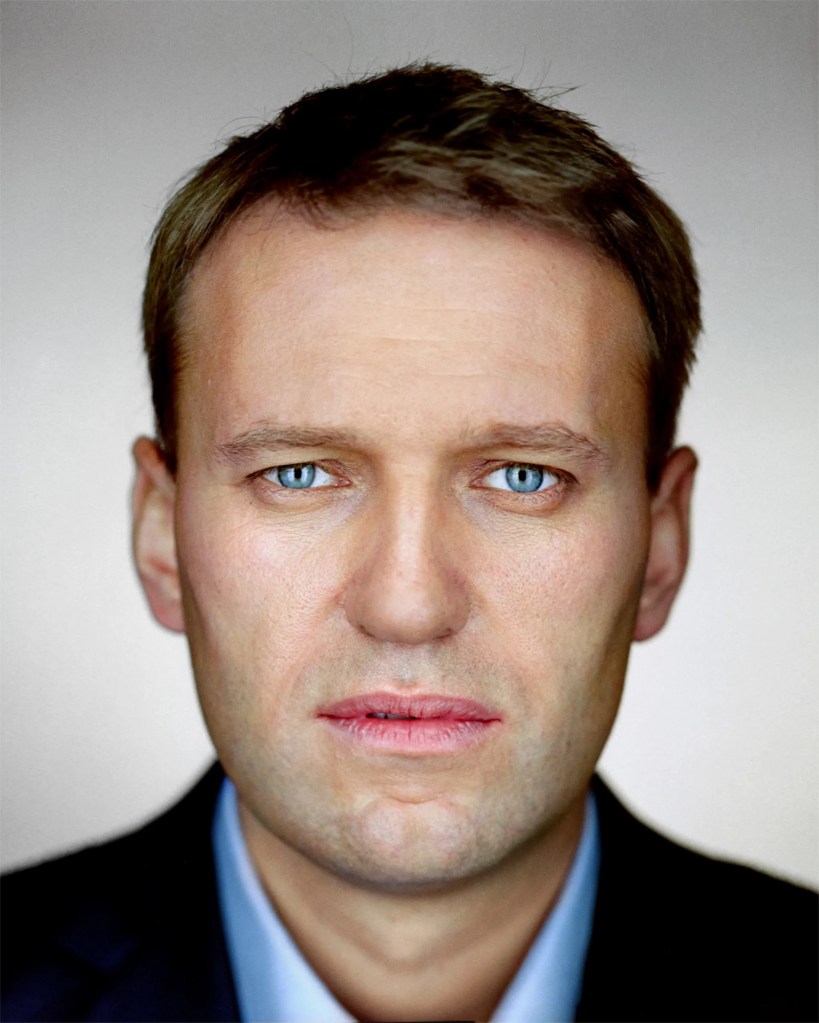
Alexei Navalny stood up to Putin. He did so with humor and joy. His documentary about Putin’s wealth and lavish lifestyle infuriated the dictator. After having been poisoned by Putin’s secret police, he was air-lifted to Germany, where doctors saved his life. He could have stayed in the West, but he insisted on returning to Russia, where he knew he would be arrested as soon as he exited his flight. He never lost his equanimity or his sense of humor. He refused to be depressed or show anger. His writings from prison were just published in a book titled Patriot. The New Yorker printed excerpts from the book. They are powerful.
Alexei Navalny
n August 20, 2020, during a flight from the Siberian city of Tomsk to Moscow, the Russian opposition leader and anticorruption campaigner Alexei Navalny thought he was dying––he was disoriented, and felt his body shutting down. The plane made an emergency landing in Omsk, and Navalny was hospitalized. Two days later, thanks to the persistence of his wife, Yulia Navalnaya, and international pressure, the Russian authorities allowed a German plane to take him to Berlin for treatment.
Navalny emerged from a coma on September 7th. A week later, he announced his intention to return soon to Russia, despite the obvious danger. Doctors concluded that Navalny had been poisoned with a deadly nerve agent called Novichok. While recovering in the German countryside, he began writing his memoir, “Patriot,” and investigating the attempt on his life. He had no doubt that it had been the decision of Vladimir Putin and the work of the F.S.B., the Russian security services, but he was determined to uncover the details. During an unforgettable telephone call, which was filmed for a documentary about his life, Navalny duped an F.S.B. agent into describing how agents had broken into his hotel room in Tomsk and dosed his clothing with the poison.
On January 17, 2021, Alexei and Yulia flew back to Moscow. Navalny was arrested at the airport. Despite international protests on his behalf, Navalny immediately entered a netherworld of trumped-up criminal charges (embezzlement, fraud, “extremism,” etc.), prison cells, and solitary confinement. By the end of 2023, he landed in the “special regime” colony known as Polar Wolf, north of the Arctic Circle. In captivity, he managed to keep a diary and even had his team post some entries on social media. In one Facebook post, he explained why he refused to live out his life in the safety of exile: “I have my country and my convictions. I don’t want to give up my country or betray it. If your convictions mean something, you must be prepared to stand up for them and make sacrifices if necessary.”
2022
January 17th
Exactly one year ago today I came home, to Russia.
I didn’t manage to take a single step on the soil of my country as a free man: I was arrested even before border control.
The hero of one of my favorite books, “Resurrection,” by Leo Tolstoy, says, “Yes, the only suitable place for an honest man in Russia at the present time is prison.”
It sounds fine, but it was wrong then, and it’s even more wrong now.
There are a lot of honest people in Russia—tens of millions. There are far more than is commonly believed.
The authorities, however, who were repugnant then and are even more so now, are afraid not of honest people but of those who are not afraid of them. Or let me be more precise: those who may be afraid but overcome their fear….
Having spent my first year in prison, I want to tell everyone exactly the same thing I shouted to those who gathered outside the court when the guards were taking me off to the police truck: Don’t be afraid of anything. This is our country and it’s the only one we have.
The only thing we should fear is that we will surrender our homeland to be plundered by a gang of liars, thieves, and hypocrites. That we will surrender without a fight, voluntarily, our own future and the future of our children….
I knew from the outset that I would be imprisoned for life—either for the rest of my life or until the end of the life of this regime…
I’m forty-five. I have a family and children. I’ve had a life to live, worked on some interesting things, done some things that were useful. But there’s a war on right now. Suppose a nineteen-year-old is riding in an armored vehicle, he gets a piece of shrapnel in his head, and that’s it. He has had no family, no children, no life. Right now, dead civilians are lying in the streets in Mariupol, their bodies gnawed at by dogs, and many of them will be lucky if they end up in even a mass grave—through no fault of their own. I made my choices, but these people were just living their lives. They had jobs. They were family breadwinners. Then, one fine evening, a vengeful runt on television, the President of a neighboring country, announces that you are all “Nazis” and have to die because Ukraine was invented by Lenin. The next day, a shell comes flying in your window and you no longer have a wife, a husband, or children—and maybe you yourself are also no longer alive….
I said it two years ago, and I will say it again: Russia is my country. I was born and raised here, my parents are here, and I made a family here; I found someone I loved and had kids with her. I am a full-fledged citizen, and I have the right to unite with like-minded people and be politically active. There are plenty of us, certainly more than corrupt judges, lying propagandists, and Kremlin crooks.
I’m not going to surrender my country to them, and I believe that the darkness will eventually yield. But as long as it persists I will do all I can, try to do what is right, and urge everyone not to abandon hope.
Russia will be happy!…
And now they’re trying me in a closed trial in a maximum-security penal colony.
In a sense, this is the new sincerity. They now say openly, We are afraid of you. We are afraid of what you will say. We are afraid of the truth.
This is an important confession. And it makes practical sense for all of us. We must do what they fear—tell the truth, spread the truth. This is the most powerful weapon against this regime of liars, thieves, and hypocrites. Everyone has this weapon. So make use of it….
I have my country and my convictions. I don’t want to give up my country or betray it. If your convictions mean something, you must be prepared to stand up for them and make sacrifices if necessary.
And, if you’re not prepared to do that, you have no convictions. You just think you do. But those are not convictions and principles; they’re only thoughts in your head.
Of course, this doesn’t mean that everyone who’s not currently in prison lacks convictions. Everyone pays their price. For many people, the price is high even without being imprisoned.
I took part in elections and vied for leadership positions. The call for me is different. I travelled the length and breadth of the country, declaring everywhere from the stage, “I promise that I won’t let you down, I won’t deceive you, and I won’t abandon you.” By coming back to Russia, I fulfilled my promise to the voters. There need to be some people in Russia who don’t lie to them.
It turned out that, in Russia, to defend the right to have and not to hide your beliefs, you have to pay by sitting in a solitary cell. Of course, I don’t like being there. But I will not give up either my ideas or my homeland.
My convictions are not exotic, sectarian, or radical. On the contrary, everything I believe in is based on science and historical experience.
Those in power should change. The best way to elect leaders is through honest and free elections. Everyone needs a fair legal system. Corruption destroys the state. There should be no censorship.
The future lies in these principles.
But, for the present, sectarians and marginals are in power. They have absolutely no ideas. Their only goal is to cling to power. Total hypocrisy allows them to wrap themselves in any cover. So polygamists have become conservatives. Members of the Communist Party of the Soviet Union have become Orthodox. Owners of “golden passports” and offshore accounts are aggressive patriots.
Lies, and nothing but lies.
It will crumble and collapse. The Putinist state is not sustainable.
One day, we will look at it, and it won’t be there. Victory is inevitable.
But for now, we must not give up, and we must stand by our beliefs.
I ordered the book. I can’t believe that I lived on the earth at the same time as a man like Navalny. Putin is a sadistic criminal
Rep. Nancy Mace of South Carolina is outraged at the prospect of a transgender woman using the women’s bathroom in the House of Representatives. Her anger is in response to the election of Sarah McBride, a transgender woman, who was elected to Congress by voters in Delaware. Rep. Mace proposed to require anyone who uses a public bathroom to use the one that corresponds to the gender on his/her birth certificate. Trans men (women who became male) would use the ladies’ room; trans women (like Sarah McBride) would use the men’s bathroom.
After some initial uncertainty, Speaker of the House Mike Johnson supported Mace’s proposal.
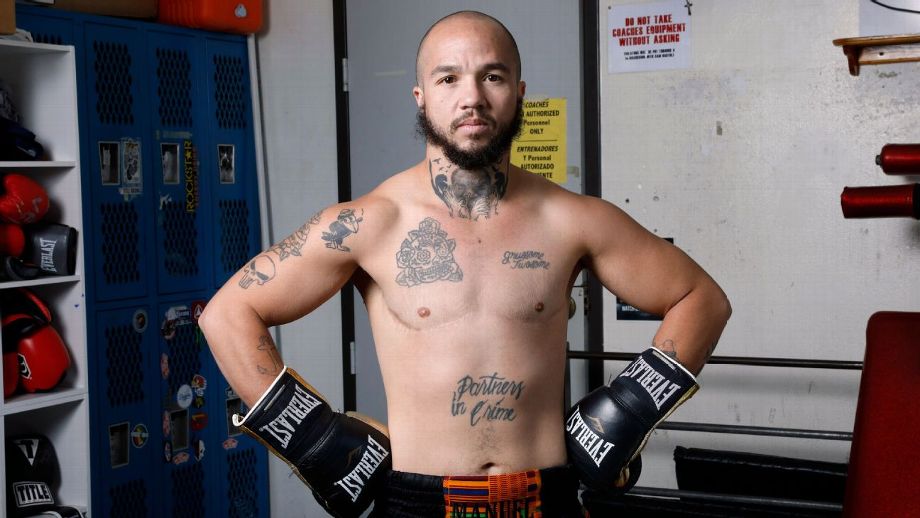
A reader who calls himself Teaching Economist posted this question and photo on this blog:
Would you feel comfortable with this trans male obeying the policy and using the women’s restroom?
This is Patricio Manuel, professional boxer, born in Santa Monica, CA, 39 years old. Born female, now a transgender man.
At present, there are no trans men in Congress. When the day comes that there is a trans man, this will be a problem for Nancy Mace, Marjorie Taylor Greene, and other culture warriors.
How will they feel about having trans men like Patricio Manuel in their bathrooms?
Yale University, one of the nation’s most elite institutions, has dropped its policy of no-test scores for admissions. Instead, it will require students to submit one of four standardized tests when they apply. The elite universities were flooded with applicants last year, and some were able to accept only 3-5% of applicants. Last year, 57,465 students applied for admission; only 3.7% were accepted.
My guess is that the re-introduction of standardized test scores will discourage some from applying and will immediately disqualify those with very low scores.
The Yale Daily News reported:
After four years of a test-optional policy allowing applicants to decide whether to submit test scores, applicants to Yale’s class of 2029 must submit standardized test scores.
Under Yale’s text-flexible admissions policy, applicants may select one or more types of tests from a list of four options — SAT, ACT, Advanced Placement and International Baccalaureate. Those who choose to send AP or IB scores are required to include results from all subject exams that they have taken…
Among peer institutions, Yale stands out for its test-flexible admissions policy for the class of 2029. Of the other seven Ivy League institutions, Harvard, Brown and Dartmouth require the SAT or ACT. Princeton, Columbia, the University of Pennsylvania and Cornell are still test-optional for the current admissions cycle…
John Yi ’13, associate director of the Office of Undergraduate Admissions, believes the test-flexible policy helps the University communicate that “academic preparation is a core component of our admissions process, but that there is not a one-size-fits-all exam that communicates that strength.” Whichever tests applicants choose to send, they are only part of a “much broader puzzle” among other components of applications….
Yale College received 6,754 early applications to the class of 2029, a 14 percent decrease from early applications from the previous year. This group of applicants will be the first to be evaluated under Yale’s test-flexible policy. ..
Yi wrote to the News that under test-optional admissions, Yale saw a “large increase” in applications from students without test scores whose other application elements — transcript, recommendations and personal essays — also “lacked evidence” that they were prepared to succeed at Yale.
On the other hand, he emphasized that the test-required policy prompted applicants to view testing as the “single most important factor” because everyone had to submit the same tests, discouraging applicants with lower test scores who would be great Yale students. With a test-optional policy, it is “easy” for applicants to imagine that test scores are “completely extraneous” to the review, he wrote.
“I would reassure students that the standardized testing piece is far less interesting to us than all the other components of the application,” Yi wrote. “Each student’s context is unique, and the test-flexible policy is designed to help them shine their brightest in the admissions process — not to trick or trap them.”
Governor DeSantis hired Dr. Joseph Ladapo as Florida’s Surgeon General because he wanted a doctor who took a contrarian view on COVID: to support those who were anti-vaccine, anti-mask, and unwilling to follow public health guidelines. In other words, in the world of people who care about science, a quack.
Now, Dr. Ladapo is calling for the end of fluoridating the drinking water of Florida. He’s taking cues from the nation’s leading medical crackpot, Robert F. Kennedy.
The top health official of the nation’s third-largest state called Friday for a halt to adding fluoride to Florida’s water, citing controversial studies that suggest the widely hailed public health practice poses a risk to developing brains.
Surgeon General Joseph A. Ladapo issued a recommendation citing “the neuropsychiatric risk associated with fluoride exposure, particularly in pregnant women and children,” and noting the availability of alternative sources of fluoride intoothpaste and mouthwash.
“It is clear more research is necessary to address safety and efficacy concerns regarding community water fluoridation,” Ladapo said in a statement.“The previously considered benefit of community water fluoridation does not outweigh the current known risks, especially for special populations like pregnant women and children.”
Ladapo’s announcement comes three weeks after Robert F. Kennedy Jr., who is President-elect Donald Trump’s choice to lead the Department of Health and Human Services, said the Trump administration plans to issue a similar recommendation nationwide next year. Kennedy’s remarks drew rebukes from public health experts who say that the practice has helped protect Americans’ teeth, particularly in vulnerable communities where children might not regularly brush their teeth.
“It’s madness,” said Kurt Ferré, a retired Portland, Oregon, dentist and longtime pro-fluoridation activist. He said Florida’s seniors especially benefit from fluoride because of the oral health issues that come with age and medical care for older adults.
The Centers for Disease Control and Prevention has long recommended putting fluoride in Americans’ drinking water, hailing it as one of the 10 great public health achievements of the 20th century and citing data that the practice reduces cavities by about 25 percent in children and adults. The water systems of more than 200 million Americans are fluoridated, according to CDC data.
Fluoridation has been a key public health strategy for decades, and proponents have pointed to studies showing oral health problems declining in cities that added the mineral and rising in communities that removed it.
Is it an accident? Trump made a good choice for Secretary of Labor. The NEA said good things about her. Let’s hope he doesn’t notice.
The NEA issued this press release:
National Education Association President Becky Pringle released the following statement reacting to the selection of Lori Chavez-DeRemer as Labor Secretary:
“Across America, most of us want the same things – strong public schools to help every student grow into their full brilliance and good jobs where workers earn living wages to provide for their families.
“During her time in Congress, Lori Chavez-DeRemer voted against gutting the Department of Education, against school vouchers, and against cuts to education funding. She cosponsored the Public Service Freedom to Negotiate Act, the PRO Act, and other pro-student, pro-public school, pro-worker legislation.
“This record stands in stark contrast to Donald Trump’s anti-worker, anti-union record, and his extreme Project 2025 agenda that would gut workplace protections, make it harder for workers to unionize, and diminish the voice of working people.
“During his first term, Trump appointed anti-worker, anti-union National Labor Relations Board members. Now he is threatening to take the unprecedented action of removing current pro-worker NLRB members in the middle of their term, replacing them with his corporate friends. And he is promising to appoint judges and justices who are hostile to workers and unions.
“Educators and working families across the nation will be watching Lori Chavez-DeRemer as she moves through the confirmation process and hope to hear a pledge from her to continue to stand up for workers and students as her record suggests, not blind loyalty to the Project 2025 agenda.”
-###-
The National Education Association is the nation’s largest professional employee organization, representing more than 3 million elementary and secondary teachers, higher education faculty, education support professionals, school administrators, retired educators, students preparing to become teachers, healthcare workers, and public employees. Learn more at www.nea.org
Snopes, the fact-checking service, confirmed that billionaire Elon Musk said that Jeff Bezos’ ex-wife, MacKenzie Scott, was a “reason why Western Civilization died.”
Why? Because since her divorce, Scott has given away billions of dollars to charitable organizations that help women and racial minorities.
Snopes provided this context:
Musk wrote in response to a post on X that, “‘Super rich ex-wives who hate their former spouse'” should be listed among “‘Reasons that Western Civilization died.'” That post said of Scott’s philanthropic efforts that “over half of the orgs to which she’s donated so far deal with issues of race and/or gender.” Musk later deleted his post.
Questions:
Does Elon Musk make charitable gifts? If so, where does he give? There are tax breaks for giving to charity. What are Elon’s charities?
Trump announced the appointment of Dr. David Weldon, a former Congressman from Florida, as director of the Centers for Disease Control. He has unorthodox views, to say the least. But we can always count on the Secretary of Health and Human Services, to maintain the integrity of our premier public health agency.
Oh, wait, Trump’s nominee for Secretary is the noted conspiracy theorist Robert F. Kennedy, Jr.
Is Trump trying to gut our public health agencies? How many career physicians who are noted authorities in their field will quit rather than work for know-nothings?
President-elect Donald J. Trump chose Dr. David Weldon, a former congressman, on Friday to serve as the director of the Centers for Disease Control and Prevention.
Dr. Weldon, 71, is a native of Long Island and earned a medical degree in New York before moving to Florida to practice. Starting in 1995, he served seven terms in Congress, representing the 15th District of Florida, before forgoing re-election and returning to his medical practice.
As a member of Congress, Dr. Weldon pushed the false notion that thimerosal, a preservative compound in some vaccines, had caused an explosion of autism — a hypothesis that experts say has no evidence. He also introduced a “vaccine safety bill” that aimed to relocate most vaccine safety research from the C.D.C. — which he said had an “inherent conflict of interest” — to a separate agency within the Department of Health and Human Services.
Mr. Trump’s choice signals yet again his commitment to reforming the role of federal health agencies in radical ways. Though Dr. Weldon is an internist, his skepticism of vaccine safety and concern about C.D.C. overreach echo those of other nominees, including Robert F. Kennedy Jr.
“In addition to being a Medical Doctor for 40 years, and an Army Veteran, Dave has been a respected conservative leader on fiscal and social issues,” Mr. Trump wrote in a statement released Friday night, saying that Dr. Weldon would “restore the CDC to its true purpose.”
“Americans have lost trust in the CDC and in our Federal Health Authorities, who have engaged in censorship, data manipulation, and misinformation. Given the current Chronic Health Crisis in our Country, the CDC must step up and correct past errors to focus on the Prevention of Disease.”
As a member of congress, Dr. Weldon also authored the so-called Weldon Amendment, which barred the Department of Health and Human Services from funding federal or state programs that “discriminated” against health insurance plans that did not cover abortions.
He unsuccessfully sought a Senate seat in 2012 and a Florida House seat in 2024.Dr. Weldon also served as president of the Alliance of Health Care Sharing Ministries, a trade group for Christian organizations that offered an alternative to traditional health insurance.
The groups have come under scrutiny for potentially misleading people into thinking the groups had some legal obligation to pay their medical claims. Dr. Weldon has said that the members of his association were clear that they were not offering insurance, which is subject to strict regulations.
For the first time, the incoming C.D.C. director will need Senate confirmation. If Dr. Weldon is successful, he will sit at the helm of an agency with a budget of more than $15 billion, which has historically been used to track and respond to infectious disease outbreaks.
But Mr. Trump’s choice to lead its parent agency, the Department of Health and Human Services, is Mr. Kennedy, who has been outspoken about his plans to deprioritize communicable disease research in favor of preventive medicine.
If Mr. Kennedy, too, is confirmed by the Senate, the mission and focus of the C.D.C.’s work may change.

 Diane Ravitch's blog