Oliver Darcy was senior media critic for CNN, when he left to start his own Substack, called Status. There he reports on the latest buzz.
Here he writes about the moral collapse of the mainstream media in the Second Coming of the Convicted Felon. Despite the many admonitions by scholars of authoritarianism not to “obey in advance,” the media is normalizing the new Trump regime. Yesterday Trump unleashed a blizzard of executive orders and rescissions of Biden policies. Just a few: Trump withdrew the US from the Paris Climate Accord (again) and from the World Health Organization. He declared that the Gulf of Mexico is now the Gulf of America. He rolled back Biden’s limit of $2,000 per year for the cost of prescription drugs for those on Medicare and Medicaid. He pardoned the J6 criminals, even those who violently assaulted police officers.
He wrote:
Four years ago, moments after Joe Biden was declared the winner of the 2020 election, Jake Tapper delivered a blistering sermon about Donald Trump’s legacy live on CNN. He looked into the camera and bluntly described Trump’s four years in office as a “time of cruelty,” a “time when truth and fact were treated with disdain,” and an “era of just plain meanness.”
“It must be said, to paraphrase President Ford: For tens of millions of our fellow Americans, their long national nightmare is over,” Tapper concluded, ending his unsparing mini-monologue.
That Jake Tapper was nowhere to be found on Monday as Trump was sworn back into office, becoming the 47th president of the United States. Instead, appearing on CNN was a Tapper incapable or unwilling to deliver the type of no-holds-barred commentary that sent his star soaring during Trump’s first administration.
As he narrated Monday’s proceedings, Tapper, CNN’s lead Washington anchor, glossed over how Trump was twice-impeached and a convicted felon. He made no mention about how the Capitol Rotunda was stuffed with right-wing extremists and conspiracy theorists. Instead, Tapper largely avoided delivering any commentary that might be perceived by the MAGA movement as inflammatory. Outside the physical body, the Tapper of 2025 shared little in common with the pugnacious Tapper of 2020.
To be fair to Tapper, he was not alone. In fact, Tapper embodies a larger trend gripping the news media, which has tamped down its once aggressive posture toward Trump. The appetite for hard-hitting reporting and stinging analysis has dissipated in the c-suites of several major news outlets, with executives wary of offending the new president and the muscular movement he leads.
That was all reflected in Monday’s inauguration coverage. Across the entire television news landscape, the reporting on Trump’s inauguration lacked firepower. The profession’s stable of news anchors and correspondents who branded themselves as truth-telling journalists willing to hold power to account were present on screen, but their fervid spirit had unmistakably evaporated. It was like the invasion of the body snatchers — familiar faces delivering the news, yet devoid of the passion and conviction that once defined them, as if their former selves had been hollowed out.
It’s not like there wasn’t plenty to discuss. Trump repeated lies about the January 6 insurrection, claimed the 2020 election was rigged, and falsely alleged the Democrats tried to rig the 2024 election, among other things. He welcomed conspiracy theorists to the inaugural ceremony, such as Tucker Carlson, Marjorie Taylor Greene, Vivek Ramaswamy, andRobert F. Kennedy Jr. And he put on display how he had bent the most powerful figures in Silicon Valley to his will.
In other words, it was a highly abnormal affair to watch. But the way in which television news outlets covered it — with the exception of MSNBC — was out of sync with that reality. Most of the commentary focused on the years-old traditions and ceremonies of Inauguration Day, which in turn framed the events as fairly ordinary.
A search of closed captioning revealed that most networks almost entirely avoided using terms like “twice-impeached” or “convicted felon” when discussing Trump during the hours and hours of special coverage offered to viewers. In fact, no one on the Mark Thompson-led CNN (which found time to interview an outside expert about Melania Trump’s outfit choice) used either of those terms a single time, according to the closed captions search that I conducted. Yes, really. That important context was somehow missing from broadcasts of Trump’s resurgence to power.
After years of sounding the alarm about the very real threats that Trump poses to America’s bedrock democratic principles, and after years of watching Trump and his allies wage a historic disinformation war on the country, the on-air coverage was muted and failed to meet the moment. Even Trump took notice, lauding the press for its coverage. “Maybe the fake news is changing,” Trump said.
The dose of coverage the country was treated to on Monday is likely a sign of what is to come. Billionaire owners like Jeff Bezos and corporate parents like Warner Bros. Discovery have signaled that they want their outlets to be less hostile to the MAGA movement. They do not wish to be the so-called #Resistance. They would much rather be allies of the president, particularly while they have high-wire business matters before the federal government.
Which means that at a time when Trump, by all accounts, poses more of a threat than ever, the news media is less willing than ever to treat him to the tough coverage the moment calls for. It’s a troubling shift that will have far-reaching consequences for the country. And, frankly, it’s just bad journalism.
This statement was released by the White House today after Trump’s swearing in. Be sure to read the last two pledges:
The first promises to restore the names of Confederate leaders to federal facilities like military bases where they had been changed. They were changed to acknowledge that Confederate leaders were traitors. Trump will once again recognize them as heroes. Time will tell if he intends to re-erect the Confederate statues that were removed. For those that were destroyed, he could commission replacements.
The second pledges to remove any recognition of transgender people. Under Trump, they no longer exist.
. MAKE AMERICA SAFE AGAIN
President Trump will take bold action to secure our border and protect American communities. This includes ending Biden’s catch-and-release policies, reinstating Remain in Mexico, building the wall, ending asylum for illegal border crossers, cracking down on criminal sanctuaries, and enhancing vetting and screening of aliens.
President Trump’s deportation operation will address the record border crossings of criminal aliens under the prior administration.
The President is suspending refugee resettlement, after communities were forced to house large and unsustainable populations of migrants, straining community safety and resources.
The Armed Forces, including the National Guard, will engage in border security, which is national security, and will be deployed to the border to assist existing law enforcement personnel.
President Trump will begin the process of designating cartels, including the dangerous Tren de Aragua, as foreign terrorist organizations and use the Alien Enemies Act to remove them.
The Department of Justice will seek the death penalty as the appropriate punishment for heinous crimes against humanity, including those who kill law enforcement officers and illegal migrants who maim and murder Americans.
MAKE AMERICA AFFORDABLE AND ENERGY DOMINANT AGAIN
The President will unleash American energy by ending Biden’s policies of climate extremism, streamlining permitting, and reviewing for rescission all regulations that impose undue burdens on energy production and use, including mining and processing of non-fuel minerals.
President Trump’s energy actions empower consumer choice in vehicles, showerheads, toilets, washing machines, lightbulbs and dishwashers.
President Trump will declare an energy emergency and use all necessary resources to build critical infrastructure.
President Trump’s energy policies will end leasing to massive wind farms that degrade our natural landscapes and fail to serve American energy consumers.
President Trump will withdraw from the Paris Climate Accord.
All agencies will take emergency measures to reduce the cost of living.
President Trump will announce the America First Trade Policy.
America will no longer be beholden to foreign organizations for our national tax policy, which punishes American businesses.
DRAIN THE SWAMP
The President will usher a Golden Age for America by reforming and improving the government bureaucracy to work for the American people. He will freeze bureaucrat hiring except in essential areas to end the onslaught of useless and overpaid DEI activists buried into the federal workforce. He will pause burdensome and radical regulations not yet in effect that Biden announced.
President Trump is announcing an unprecedented slate of executive orders for rescission.
President Trump is planning for improved accountability of government bureaucrats. The American people deserve the highest-quality service from people who love our country. The President will also return federal workers to work, as only 6% of employees currently work in person.
President Trump is taking swift action to end the weaponization of government against political rivals and ordering all document retention as required by law. President Trump is also ending the unconstitutional censorship by the federal government. No longer will government employees pick and require the erasure of entirely true speech.
On the President’s direction, the State Department will have an America-First foreign policy.
BRING BACK AMERICAN VALUES
The President will establish male and female as biological reality and protect women from radical gender ideology.
American landmarks will be named to appropriately honor our Nation’s history.
WASHINGTON (The Borowitz Report)—District of Columbia officials confirmed on Tuesday that they are constructing a fence around a federal government building to keep a sexual predator 500 feet away from the public.
With a Monday deadline for completion of the barrier fast approaching, the calls to “build the wall” have only grown louder.
“Once we got official word last week that the felon in question would not be going to prison, we immediately got to work on the fence,” D.C. spokesman Harland Dorrinson said. “We’re doing everything we can to keep people safe.”
D.C. residents praised the decision to build the fence, but warned that one is still needed around the Supreme Court.
Today is a day to celebrate a great man: Dr. Martin Luther King, Jr. No one spoke about the relevance of our founding ideals more eloquently than Dr. King. He called to account to live up to those ideals. Dr. King called on us to be the very best possible Americans.
We are not there yet but we must never stop trying.
Ann Telnaes created this editorial cartoon for the Washington Post in 2018. She resigned from the Post a few weeks ago after one of her cartoons was spiked. It showed the billionaires bringing bags of cash to Trump. One of them was Jeff Bezos, owner of the newspaper. We now know that it is not a good idea to criticize the guy who owns your newspaper. I described to Ann’s blog to express my support for her courage and integrity.
President-elect Donald J. Trump and his family on Friday started selling a cryptocurrency token featuring an image of Mr. Trump drawn from the July assassination attempt, a potentially lucrative new business that ethics experts assailed as a blatant effort to cash in on the office he is about to occupy again.
Disclosed just days before his second inauguration, the venture is the latest in a series of moves by Mr. Trump that blur the line between his government role and the continued effort by his family to profit from his power and global fame. It is yet another sign that the Trump family will be much less hesitant in this second term to bend or breach traditional ethical boundaries.
Mr. Trump himself announced the launch of his new business on Friday night on his social media platform, in between announcements about filling key federal government posts. He is calling the token $Trump, selling it with the slogan, “Join the Trump Community. This is History in the Making!”
The venture was organized by CIC Digital LLC, an affiliate of the Trump Organization, which already has been selling an array of other kinds of merchandise like Trump-branded sneakers, fragrances and even digital trading cards.
But this newest venture brings Mr. Trump and his family directly into the world of selling cryptocurrency, which is regulated by the Securities and Exchange Commission. Mr. Trump recently disclosed he intended to name a cryptocurrency advocate as S.E.C. chairman.
A disclosure on the website selling the tokens says that CIC Digital and its affiliates own 80 percent of the supply of the new Trump tokens that will be released gradually over the coming three years and that they will be paid “trading revenue” as the tokens are sold.
The move by Mr. Trump and his family was immediately condemned by ethics lawyers who said they could not recall a more explicit profiteering effort by an incoming president.
“It is literally cashing in on the presidency — creating a financial instrument so people can transfer money to the president’s family in connection with his office” said Adav Noti, executive director of Campaign Legal Center, a nonprofit ethics group. “It is beyond unprecedented.”
Trump’s greed cannot be restrained. And there are no boundaries because the U.S. Supreme Court has already ruled that he has “absolute immunity” while he is president.
Greg Olear is simply amazing. Read the post here and perhaps you will agree. He is wise, smart, learned, insightful, and inspiring. I know of no other writer who weaves together politics, literature, and history as seamlessly as Olear. He writes at Substack and charges no fee.
Dear Reader,
The great British historian Eric Hobsbawm wrote an indispensable series of books in which he divides the 20 decades after the French Revolution into historical “ages.” The period from the 1789 storming of the Bastille to the uprisings sweeping across Europe in 1848 he termed the Age of Revolution. Eighteen forty-eight until the end of the Great Boom circa 1875 is the Age of Capital. The Age of Empire spanned from the mid-1870s until the start of the Great War in 1914. And the “short twentieth century,” a term he coined, was dubbed the Age of Extremes, and ran from the assassination of the archduke until 1991.
Ever since I discovered his books in 2012, the year of his death, I’ve often wondered what Hobsbawm would have called the fifth historical “age”—the one that began in 1991. That was the year of the first Gulf War, and the banishment from Saudi Arabia of Osama bin Laden that kickstarted his Al Qaeda movement; the mysterious death of Robert Maxwell—friend to the British royal family, mentor to Jeffrey Epstein, business partner of the Russian mobster Semion Mogilevich, and Israeli spy—who fell off his yacht off the coast of the Canary Islands; the repeal of the apartheid laws in South Africa, where Errol Musk made his fortune; the rollout of the WorldWideWeb; and the breakup of the Soviet Union—on Christmas, no less, capitalism’s holiest of holy days.
Today, a mere 24 hours and change before we hand the federal government off to a hateful confederacy of Nazis, mobsters, Opus Dei weirdos, white Christian nationalists, and billionaire dorks, I think I know not only the name of the period after the Age of Extremes, but also its termination date. As I type this, we are living in the last few hours of the Age of Unreality. It ends tomorrow at noon.
Something else happened in 1991, you see—something that likely eluded Eric Hobsbawm. Producers at MTV were developing a TV show that would begin filming in February of 1992. It was called The Real World: New York. It was the first reality TV show—or, at least, the seminal reality TV show of the subsequent reality TV explosion. Riding the reality TV wave was a British producer named Mark Burnett, who would give us Survivor in 2000, and, four years later, what wound up being the most historically significant reality TV show of all time, The Apprentice.
Although I confess to having enjoyed a few seasons of The Surreal Life, back when our eldest son was a baby—Flavor Flav does not disappoint!—I have never liked reality TV shows, encouraging, as they often do, the very worst of human behavior. I don’t like meanness. I don’t like ruthlessness. I don’t like watching anyone being voted off the island. I don’t like when people are fired. I don’t like talentless humans. I don’t like Kardashians. Most of all, I don’t like the unscripted-but-very-much-scripted fluff that has replaced actual shows written by actual writers. By encouraging us to believe in a heavily-retouched fictional universe presented as the real world—or, I suppose, The Real World—reality TV has left us more susceptible to Russian disinformation, to deep fakes, to conspiracy theories, to manufactured media narratives, to tech-bro charlatans, to pseudo-scientific arguments against vaccines, and to mendacious politicians who have supercharged lying to a form of warfare.
I have often grumbled, half in jest, that reality TV would bring about the end of Western civilization. I did not think it would also bring about the end of Western democracy. To paraphrase Don DeLillo: Reality TV has given us Joe Rogan; that alone warrants its doom.
(Is this the real life? Is this just fantasy? Freddie Mercury died in—when else?—1991.)
One of the most significant, world-altering events in this Age of Unreality was, of course, 9/11. In response to the WTC attacks, the FBI shifted its focus from transnational organized crime, which was already operating in the United States and growing more powerful by the day—a genuine threat to our society—to Islamic extremist terrorism, which involved not very many crazy people mostly living in caves far, far away from New York. In response to 9/11, we have to subject ourselves to TSA search before boarding an airplane. In response to 9/11, Bush and Cheney launched a long and expensive war on Saddam Hussein, who had nothing whatsoever to do with the attacks, while simultaneously cutting taxes for their wealthy benefactors—two actions that, in tandem, starved the U.S. treasury and put the country so far into the red that it may never recover. In Britain, meanwhile, Tony Blair’s blind loyalty to Bush—a foreshadowing, perhaps, of Joe Biden’s blind loyalty to Bibi Netanyahu—paved the way for BREXIT and the series of hapless prime ministers that followed the disastrous decision to LEAVE.
Five days after 9/11, Anthony Lane, the New Yorker’s savagely witty film critic, published what remains one of the finest pieces of writing on the attacks, a short essay called “This Is Not a Movie.” I go back and revisit it every once in a while, when the mood strikes me. Reading it now, I see that Lane perfectly articulates the paradox of the Age of Unreality, the uneasy blur between fact and fiction, when he comments on “the degree to which people saw—literally saw, and are continuing to see, as it airs in unforgiving repeats—that day”—that is, September 11, 2001—“as a movie.” He notes that the elapsed time between the initial hijackings and the collapse of the north tower was “a little over two hours;” the length of a summer blockbuster disaster film.
Lane writes:
We are talking…of the indulgence that will always be extended to an epoch blessed with prosperity—one that has the leisure, and the cash, to indulge its fancies, not least the cheap thrill of pretending that the blessing could be wiped out. What happened on the morning of September 11th was that imaginations that had been schooled in the comedy of apocalypse were forced to reconsider the same evidence as tragic. It was hard to make the switch; the fireball of impact was so precisely as it should be, and the breaking waves of dust that barrelled down the avenues were so absurdly recognizable—we have tasted them so frequently in other forms, such as water, flame, and Godzilla’s foot—that only those close enough to breathe the foulness into their lungs could truly measure the darkening day for what it was.
There are echoes of this in the fires that have ravaged Los Angeles. Looking at those horrific images, it is impossible not to describe the fiery scenes as something from a movie—or, rather, a limited series, because, unlike with 9/11, the L.A. fires did not confine themselves to a movie-length running time. They began last Tuesday, almost two full weeks ago, and are still ongoing. If 9/11 was, as Lane suggests, a disaster film come to life, the fires are a combination of disaster film and horror movie: not just the fires themselves but the hundred-mile-an-hour winds and the dread of the fires spreading. Only those close enough to breathe the foulness into their lungs could truly measure the darkening days for what they are. My heart breaks for everyone in L.A., even as I know I can never fully understand their ordeal.
The fires are not a movie, just like 9/11 was not a movie. The fires are all too real.
As a country, we have not even begun to comprehend the extent of the damage, or its impact on all those hundreds of thousands if not millions of people in the Pacific Palisades and Altadena and beyond, much less the effect the fires will have nationally, culturally, societally—not least because the recovery will ultimately be overseen by an incoming administration not much known for its compassion, its competence, or its love for Hollywood.
The last paragraph of Lane’s essay is achingly, hauntingly beautiful. Many, many people wrote about 9/11 in the days that followed it, and it always struck me as both unlikely and somehow appropriate that a film critic would offer the purest take:
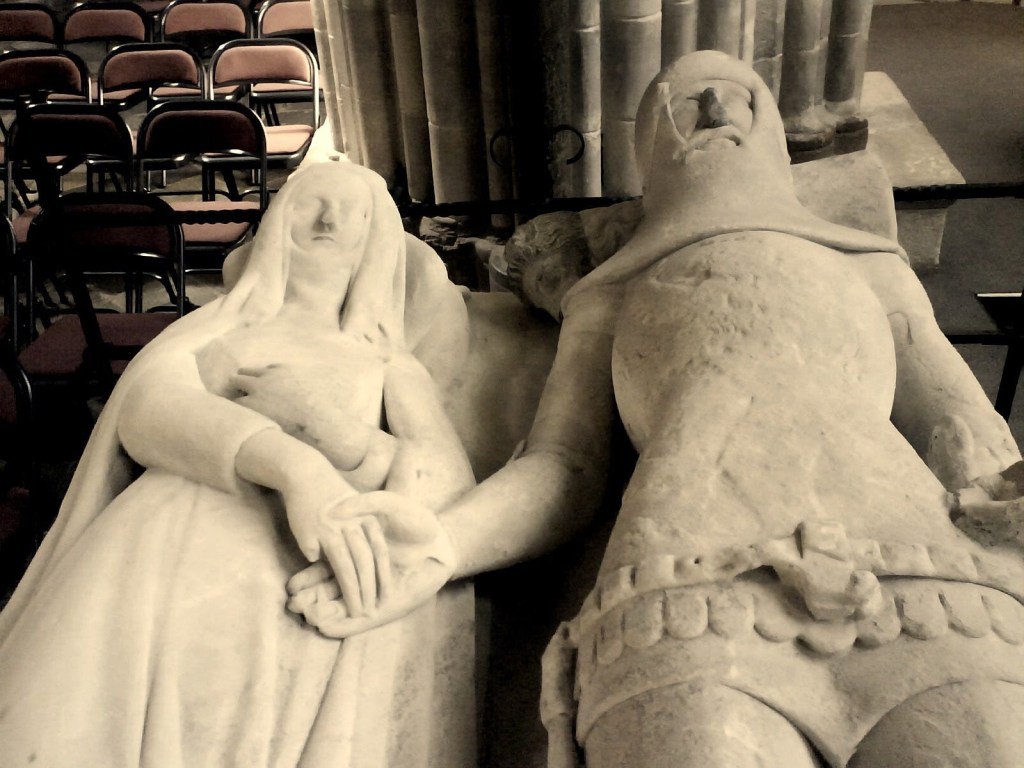
To be forced to disdain the ideal in favor of the actual is never a pleasant process. Even at its worst, however, it can deliver a bitter redemption. We gazed upward, or at our TV screens, and we couldn’t believe our eyes; but maybe our eyes had been lied to for long enough. Thousands died on September 11th, and they died for real; but thousands died together, and therefore something lived. The most important, if distressing, images to emerge from those hours are not of the raging towers, or of the vacuum where they once stood; it is the shots of people falling from the ledges, and, in particular, of two people jumping in tandem. It is impossible to tell, from the blur, what age or sex these two are, nor does that matter. What matters is the one thing we can see for sure: they are falling hand in hand. Think of Philip Larkin’s poem about the stone figures carved on an English tomb, and the “sharp tender shock” of noticing that they are holding hands. The final line of the poem has become a celebrated condolence, and last Tuesday—in uncounted ways, in final phone calls, in the joined hands of that couple, in circumstances that Hollywood should no longer try to match—it was proved true all over again, and, in so doing, it calmly conquered the loathing and rage in which the crime was conceived. “What will survive of us is love.”
Larkin, the poet who wrote that line—and who is, like Lane, British—was not at all a sentimental sort. His stuff is gloomy, sourpuss, almost defeatist. Throughout his poems we see a struggle between, on the one hand, recognizing the futility of life, and on the other, being paralyzed by the fear of death. It is his poem “This Be The Verse,” about how our parents “fuck us up,” that the pub owner quotes, somewhat incongruously, in Ted Lasso:
Man hands on misery to man. It deepens like a coastal shelf. Get out as early as you can, And don’t have any kids yourself.
Sunny stuff, right? Larkin’s entire worldview is neatly encapsulated in this line from “Aubade,” a title that indicates this is a poem about the dawn:
And so it stays just on the edge of vision, A small unfocused blur, a standing chill That slows each impulse down to indecision. Most things may never happen: this one will, And realisation of it rages out In furnace-fear when we are caught without People or drink. Courage is no good: It means not scaring others. Being brave Lets no one off the grave. Death is no different whined at than withstood.
The antecedent of the “it” in the first line is “death.” But we may just as well substitute “Trump,” and the lines work just as well: the standing chill, the furnace-fear and the rage, the necessity of other people and a good stiff drink, the futility of courage.
The poem that Lane quotes is called “An Arundel Tomb.” At Arundel, a medieval British town, is the tomb of Richard FitzAlan, the tenth Earl of Arundel, who died in 1371, and that of his second wife, Eleanor of Lancaster, who predeceased him by a few years. The tomb is capped by stone statues of the couple, who are, surprisingly, holding hands:
Side by side, their faces blurred, The earl and countess lie in stone,
Larkin, a dour librarian and bemoaner of the decline of civilization who seems not to have believed in love (even as he juggled three women for most of his adult life), calls bullshit on this romantic display:
They would not think to lie so long. Such faithfulness in effigy Was just a detail friends would see: A sculptor’s sweet commissioned grace
In other words, while the holding of stony hands has stood the test of time, the love it represents was probably a figment of the artist’s rosy imagination. (Note the double meaning of “lie.”)
How soon succeeding eyes begin To look, not read. Rigidly they
Persisted, linked, through lengths and breadths Of time. . .
Until,
Now, helpless in the hollow of An unarmorial age. . . Only an attitude remains:
Time has transfigured them into Untruth. The stone fidelity They hardly meant has come to be Their final blazon, and to prove Our almost-instinct almost true: What will survive of us is love.
Larkin is saying that what the statues represent isn’t real—that our “almost-instinct” is to believe in the much-ballyhooed power of love, and that the “stone fidelity” of the earl and his wife is so compelling as to make said love-power “almost true.” Almost true is not true; almost true is AI true—a lie we want badly to believe in. The entire poem is him expressing his deep, nasty cynicism. The oft-quoted last line is intended to be ironic—a fitting epitaph for our Age of Unreality.
Even so, what survives of Larkin is “What will survive of us is love.” And I like to think, as Lane does, that, whatever the poet’s intention, the Arundel sentiment is real.
The Age of Unreality began in 1991, when all the ingredients of the historical cocktail were thrown into the shaker: the fall of the Soviet Union, the rise of the Russian mafia, the ascendance of Jeffrey Epstein, the dawn of reality TV, the end of apartheid, and the last time that a coalition of Western democracies repulsed an attempt by a despot to invade a sovereign nation—thus upholding the tenets of the Westphalian order. Out of that cocktail shaker, cold as ice, was poured Jeffrey Epstein and Semion Mogilevich, Elon Musk and Peter Thiel, Vladimir Putin and Donald Trump.
Tomorrow, that mindfuck age draws to a close, and a new one begins. What it has in store for us is anyone’s guess. Will the last barriers between fantasy and reality be worn away, or, as Lane poetically puts it, have our eyes been lied to for long enough? Will democracy really die, as the fascism scholars have been warning us for years, or will the Trump power-grab finally wake up the American people and restore our love of liberty? Will generative AI destroy all art, or will a new analog artistry emerge? What will happen to our beloved Hollywood, to which Trump has named meathead Sylvester Stallone, rightwing wacko Jon Voigt, and radical Catholic weirdo Mel Gibson his MAGA “ambassadors?”
I take some small solace in knowing that we’ve been here before. As Hobsbawm notes in The Age of Capital, the United States in the late nineteenth century—the America Trump wants us to return to—was marked by
the total absence of any kind of control over business dealings, however ruthless and crooked, and the really spectacular possibilities of corruption both national and local—especially in the post-Civil War years. There was indeed little that could be called government by European standards in the United States, and the scope for the powerful and unscrupulous rich was virtually unlimited. In fact, the phrase ‘robber baron’ should carry its accent on the second rather than the first word, for, as in a weak medieval kingdom, men could not look to the law but only to their own strength—and who were stronger in a capitalist society than the rich? The United States, alone among the bourgeois world, was a country of private justice and armed forces….
Our current crop of robber barons is orders of magnitude worse than its forebears—but maybe the abject awfulness of these despicable people will make their reigns shorter, their fall more humiliating, and their historical impact less profound.
Even so, for all my optimistic tendencies, I fear tomorrow as surely as Larkin feared death, which he describes as
The sure extinction that we travel to And shall be lost in always. Not to be here, Not to be anywhere, And soon; nothing more terrible, nothing more true.
Death is permanent and absolute, but dictatorships are neither; moreover, Donald isn’t a dictator yet, and may well never be. Even as I have witnessed the poltroonish capitulation of our political leaders, our robber barons, our media figureheads, even our Snoop Doggs, I have faith that we will somehow find a better way, that we will repulse this ugly MAGA incursion, that the moral arc of the universe will bend towards justice, that the better angels of our nature will prevail. My faith will be tested, surely. But it will remain.
Nothing more true than this: What will survive of us is hope.
Heather Cox Richardson is wise not to put titles on her posts. They combine several topics. But this day’s posting has a common thread: the next four years will see a changed focus: from the public interest to private greed. Please read it all!
She writes:
Shortly before midnight last night, the Federal Trade Commission (FTC) published its initial findings from a study it undertook last July when it asked eight large companies to turn over information about the data they collect about consumers, product sales, and how the surveillance the companies used affected consumer prices. The FTC focused on the middlemen hired by retailers. Those middlemen use algorithms to tweak and target prices to different markets.
The initial findings of the FTC using data from six of the eight companies show that those prices are not static. Middlemen can target prices to individuals using their location, browsing patterns, shopping history, and even the way they move a mouse over a webpage. They can also use that information to show higher-priced products first in web searches. The FTC found that the intermediaries—the middlemen—worked with at least 250 retailers.
“Initial staff findings show that retailers frequently use people’s personal information to set targeted, tailored prices for goods and services—from a person’s location and demographics, down to their mouse movements on a webpage,” said FTC chair Lina Khan. “The FTC should continue to investigate surveillance pricing practices because Americans deserve to know how their private data is being used to set the prices they pay and whether firms are charging different people different prices for the same good or service.”
The FTC has asked for public comment on consumers’ experience with surveillance pricing.
FTC commissioner Andrew N. Ferguson, whom Trump has tapped to chair the commission in his incoming administration, dissented from the report.
Matt Stoller of the nonprofit American Economic Liberties Project, which is working “to address today’s crisis of concentrated economic power,” wrote that “[t]he antitrust enforcers (Lina Khan et al) went full Tony Montana on big business this week before Trump people took over.”
Stoller made a list. The FTC sued John Deere “for generating $6 billion by prohibiting farmers from being able to repair their own equipment,” released a report showing that pharmacy benefit managers had “inflated prices for specialty pharmaceuticals by more than $7 billion,” “sued corporate landlord Greystar, which owns 800,000 apartments, for misleading renters on junk fees,” and “forced health care private equity powerhouse Welsh Carson to stop monopolization of the anesthesia market.”
It sued Pepsi for conspiring to give Walmart exclusive discounts that made prices higher at smaller stores, “[l]eft a roadmap for parties who are worried about consolidation in AI by big tech by revealing a host of interlinked relationships among Google, Amazon and Microsoft and Anthropic and OpenAI,” said gig workers can’t be sued for antitrust violations when they try to organize, and forced game developer Cognosphere to pay a $20 million fine for marketing loot boxes to teens under 16 that hid the real costs and misled the teens.
The Consumer Financial Protection Bureau “sued Capital One for cheating consumers out of $2 billion by misleading consumers over savings accounts,” Stoller continued. It “forced Cash App purveyor Block…to give $120 million in refunds for fostering fraud on its platform and then refusing to offer customer support to affected consumers,” “sued Experian for refusing to give consumers a way to correct errors in credit reports,” ordered Equifax to pay $15 million to a victims’ fund for “failing to properly investigate errors on credit reports,” and ordered “Honda Finance to pay $12.8 million for reporting inaccurate information that smeared the credit reports of Honda and Acura drivers.”
The Antitrust Division of the Department of Justice sued “seven giant corporate landlords for rent-fixing, using the software and consulting firm RealPage,” Stoller went on. It “sued $600 billion private equity titan KKR for systemically misleading the government on more than a dozen acquisitions.”
“Honorary mention goes to [Secretary Pete Buttigieg] at the Department of Transportation for suing Southwest and fining Frontier for ‘chronically delayed flights,’” Stoller concluded. He added more results to the list in his newsletter BIG.
Meanwhile, last night, while the leaders in the cryptocurrency industry were at a ball in honor of President-elect Trump’s inauguration, Trump launched his own cryptocurrency. By morning he appeared to have made more than $25 billion, at least on paper. According to Eric Lipton at the New York Times, “ethics experts assailed [the business] as a blatant effort to cash in on the office he is about to occupy again.”
Adav Noti, executive director of the nonprofit Campaign Legal Center, told Lipton: “It is literally cashing in on the presidency—creating a financial instrument so people can transfer money to the president’s family in connection with his office. It is beyond unprecedented.” Cryptocurrency leaders worried that just as their industry seems on the verge of becoming mainstream, Trump’s obvious cashing-in would hurt its reputation. Venture capitalist Nick Tomaino posted: “Trump owning 80 percent and timing launch hours before inauguration is predatory and many will likely get hurt by it.”
Yesterday the European Commission, which is the executive arm of the European Union, asked X, the social media company owned by Trump-adjacent billionaire Elon Musk, to hand over internal documents about the company’s algorithms that give far-right posts and politicians more visibility than other political groups. The European Union has been investigating X since December 2023 out of concerns about how it deals with the spread of disinformation and illegal content. The European Union’s Digital Services Act regulates online platforms to prevent illegal and harmful activities, as well as the spread of disinformation.
Today in Washington, D.C., the National Mall was filled with thousands of people voicing their opposition to President-elect Trump and his policies. Online speculation has been rampant that Trump moved his inauguration indoors to avoid visual comparisons between today’s protesters and inaugural attendees. Brutally cold weather also descended on President Barack Obama’s 2009 inauguration, but a sea of attendees nonetheless filled the National Mall.
Trump has always understood the importance of visuals and has worked hard to project an image of an invincible leader. Moving the inauguration indoors takes away that image, though, and people who have spent thousands of dollars to travel to the capital to see his inauguration are now unhappy to discover they will be limited to watching his motorcade drive by them. On social media, one user posted: “MAGA doesn’t realize the symbolism of [Trump] moving the inauguration inside: The billionaires, millionaires and oligarchs will be at his side, while his loyal followers are left outside in the cold. Welcome to the next 4+ years.”
Trump is not as good at governing as he is at performance: his approach to crises is to blame Democrats for them. But he is about to take office with majorities in the House of Representatives and the Senate, putting responsibility for governance firmly into his hands.
Right off the bat, he has at least two major problems at hand.
Last night, Commissioner Tyler Harper of the Georgia Department of Agriculture suspended all “poultry exhibitions, shows, swaps, meets, and sales” until further notice after officials found Highly Pathogenic Avian Influenza, or bird flu, in a commercial flock. As birds die from the disease or are culled to prevent its spread, the cost of eggs is rising—just as Trump, who vowed to reduce grocery prices, takes office.
There have been 67 confirmed cases of the bird flu in the U.S. among humans who have caught the disease from birds. Most cases in humans are mild, but public health officials are watching the virus with concern because bird flu variants are unpredictable. On Friday, outgoing Health and Human Services secretary Xavier Becerra announced $590 million in funding to Moderna to help speed up production of a vaccine that covers the bird flu. Juliana Kim of NPR explained that this funding comes on top of $176 million that Health and Human Services awarded to Moderna last July.
The second major problem is financial. On Friday, Secretary of the Treasury Janet Yellen wrote to congressional leaders to warn them that the Treasury would hit the debt ceiling on January 21 and be forced to begin using extraordinary measures in order to pay outstanding obligations and prevent defaulting on the national debt. Those measures mean the Treasury will stop paying into certain federal retirement accounts as required by law, expecting to make up that difference later.
Yellen reminded congressional leaders: “The debt limit does not authorize new spending, but it creates a risk that the federal government might not be able to finance its existing legal obligations that Congresses and Presidents of both parties have made in the past.” She added, “I respectfully urge Congress to act promptly to protect the full faith and credit of the United States.”
Both the avian flu and the limits of the debt ceiling must be managed, and managed quickly, and solutions will require expertise and political skill.
Rather than offering their solutions to these problems, the Trump team leaked that it intended to begin mass deportations on Tuesday morning in Chicago, choosing that city because it has large numbers of immigrants and because Trump’s people have been fighting with Chicago mayor Brandon Johnson, a Democrat. Michelle Hackman, Joe Barrett, and Paul Kiernan of the Wall Street Journal, who broke the story, reported that Trump’s people had prepared to amplify their efforts with the help of right-wing media.
But once the news leaked of the plan and undermined the “shock and awe” the administration wanted, Trump’s “border czar” Tom Homan said the team was reconsidering it.
In the past, I have referred to Mr. Kennedy as a crackpot. I was wrong. He’s more than a crackpot. He’s a dangerous man, whose non-scientific ideology has the potential to kill thousands of people. He should not be confirmed as Secretary of Health and Human Services. His views are lethal. If a new form of COVID or some other contagious disease were to emerge, we would all be in danger.
Robert F. Kennedy Jr., President-elect Donald J. Trump’s choice to lead the nation’s health agencies, formally asked the Food and Drug Administration to revoke the authorization of all Covid vaccines during a deadly phase of the pandemic when thousands of Americans were still dying every week.
Mr. Kennedy filed a petition with the F.D.A. in May 2021 demanding that officials rescind authorization for the shots and refrain from approving any Covid vaccine in the future.
Just six months earlier, Mr. Trump had declared the Covid vaccines a miracle. At the time Mr. Kennedy filed the petition, half of American adults were receiving their shots. Schools were reopening and churches were filling.
Estimates had begun to show that the rapid rollout of Covid vaccines had already saved about 140,000 lives in the United States.
The petition was filed on behalf of the nonprofit that Mr. Kennedy founded and led, Children’s Health Defense. It claimed that the risks of the vaccines outweighed the benefits and that the vaccines weren’t necessary because good treatments were available, including ivermectin and hydroxychloroquine, which had already been deemedineffective against the virus.
Jan Resseger, who spent many years as an advocate for children and social justice, reviews the effects of Trump’s promise of mass deportations on the children of immigrants. Others look at the economic costs of his promise. Jan considers the human costs. Please open the link to read her post in full.
She writes:
On Tuesday, the NY Times’ Dana Goldstein rather blandly reported that the nation’s largest school district, the New York City Public Schools, has now sent guidance to school principals to prepare them for President-elect Trump’s threatened immigration raids:
“If immigration agents arrive on the doorstep of a New York City public school, principals have been told what to do. Ask the officers to wait outside, and call a school district lawyer. The school system has enrolled about 40,000 recent immigrant students since 2022. Now, as President-elect Donald J. Trump prepares to take office with promises to deport millions of undocumented immigrants, the district has shared with school staff a protocol to try to shield students who have a tenuous legal status. In a December letter to principals, Emma Vadehra, the district’s chief operating officer, wrote, ‘We hope using this protocol will never be necessary.’ Still, New York and some other school districts across the country are readying educators and immigrant families for a potential wave of deportations.”
Goldstein’s interest seems more centered on the challenges these students have presented for the school districts serving new immigrant families, however, than on the coming trauma if Trump’s threatened raids actually become a reality: “Public schools serving clusters of migrant children have already dealt with a dizzying set of challenges in recent years, as an influx of hundreds of thousands of migrants crossed the southern border. Some are educating students who speak Indigenous languages and may have never before been enrolled in formal education. Others are trying to prod teenagers to class, when they may face intense pressure to earn money. And many have assisted newly arrived families with finding shelter, food and winter clothes. Now, these schools are facing an additional challenge: convincing parents to send their children to class when some are so anxious about deportation that they are reluctant to separate from their children for even part of the day.”
Of course, public schools, no matter their location, are expected to provide appropriate services for all the children in the community, and most are prepared with qualified English as a Second Language teachers. While 40,000 new immigrant students would overwhelm most local school districts, the NYC public schools serve approximately a million students every day and were likely well prepared. One wonders if Goldstein remembers the chaos that schools faced during immigration raids back in 2019.
More realistically, Chalkbeat‘s Kalyn Belsha has explored some recent history to remind readers about what happens when a massive immigration raid at a local industry disrupts the community’s public schools and terrifies children and adolescents: “When immigration agents raided chicken processing plants in central Mississippi in 2019, they arrested nearly 700 undocumented workers—many of them parents of children enrolled in local schools. Teens got frantic texts to leave class and find their younger siblings. Unfamiliar faces whose names weren’t on the pick-up list showed up to take children home. School staff scrambled to make sure no child went home to an empty house, while the owner of a local gym threw together a temporary shelter for kids with nowhere else to go. In the Scott County School District, a quarter of the district’s Latino students, around 150 children, were absent from school the next day. When dozens of kids continued to miss school, staff packed onto school buses and went door to door with food, trying to reassure families that it was safe for their children to return. Academics were on hold for weeks, said Tony McGee, the district’s superintendent at the time. ‘We went into kind of a Mom and Dad mode and just cared for kids,’ McGee said. While some children bounced back quickly, others were shaken for months. ‘You could tell there was still some worry on kids’ hearts.’”
In an important December 18, 2024 update that considered President-elect Trump’s threatened immigration raids after he takes office in January, Belsha described the struggle school districts will possibly face: “For three decades, federal policy has limited immigration arrests at or near schools, treating the places where children learn as ‘sensitive’ or ‘protected’ areas. But President-elect Donald Trump likely will rescind that policy soon after his return to the White House, according to recent reporting from NBC News. That could open the door for immigration agents to more frequently stop parents as they drop their kids off at school, or for interactions with school police to lead to students and their parents being detained. Educators and advocates for immigrant children worry that would create an environment of fear that could deter families from bringing their children to school or participating in school events. That could, in turn, interrupt kids’ learning and make it harder for educators to build trusting relationships with immigrant families.”
In her December report, Belsha also provides important context for concern about Trump’ threatened immigration raids: “An estimated 4.4 million U.S.-born children have at least one undocumented parent, and an estimated 733,000 school aged kids are undocumented themselves. Other students may have authorization to live in the United States but hold temporary immigration statuses that Trump has threatened to revoke. Researchers estimate that half a million school-age children have arrived in the U.S. just in the last two years. Federal law generally overrides state and local statutes, and immigration agents have broad authority to detain people they suspect of being in the country illegally.” She adds, however, “Nevertheless, several large school districts already have mapped or expanded policies they crafted during the first Trump administration to reassure students and parents… Trump left the sensitive locations policy intact during his first term, but won re-election with a series of hardline immigration proposals, including a plan for mass deportations.”



 Diane Ravitch's blog