Archives for category: Trump

Reports at the hearings in a federal appeals court suggest that the three judges seemed skeptical of Trump’s claim that he is immune from prosecution for any action taken while he was president, unlesss he was impeached and convicted for that offense.

The New York Times reported:

Three federal appeals court judges expressed deep skepticism on Tuesday about former President Donald J. Trump’s central defense to an indictment accusing him of plotting to overturn the 2020 election: that he is immune to the charges because they arose from actions he took as president.

All of the judges on the three-member panel of the U.S. Court of Appeals for the District of Columbia Circuit — composed of two Democratic appointees and one Republican appointee — peppered a lawyer for Mr. Trump with tough questions about arguments he raised to support the immunity claims.

While the three judges also pressed James I. Pearce — a lawyer representing the special counsel, Jack Smith — their queries to him were not quite as aggressive. The panel adjourned the hearing after about an hour and 15 minutes and reserved judgment for another day.

The case is expected to eventually reach the Supreme Court. Its pace and outcome will be central in deciding when — or even whether — Mr. Trump will go to trial in the election interference case, which is unfolding in Federal District Court in Washington. It could also go a long way in determining the timing of the three other criminal trials that Mr. Trump is facing in the months ahead.

In one tough moment for Mr. Trump, who was present for the hearing but did not speak, Judge Karen L. Henderson, the sole Republican appointee on the panel, pushed back on an argument made by his lawyer, D. John Sauer, that for more than 200 years, American courts had never sat in judgment over official actions that a president had taken while in office.

Judge Henderson pointed out that until Mr. Trump was indicted, courts had never had to consider the criminal liability of former presidents for things they did in the White House.

Judge Henderson also seemed less than persuaded by Mr. Sauer’s argument that Mr. Trump was acting in his role as president and upholding his constitutional duty to preserve the integrity of the election when he sought to overturn his loss to President Biden.

“I think it’s paradoxical to say that his constitutional duty to ‘take care that the laws be faithfully executed’ allows him to violate criminal law,” Judge Henderson said.

At one point, Judge Florence I. Pan presented Mr. Sauer with an hypothetical situation, asking if a president could be criminally charged for ordering SEAL Team 6 — an elite commando unit — to assassinate a political rival. Mr. Sauer said that a prosecution would be possible in that situation only if the president had first been found guilty in an impeachment proceeding.

When Mr. Pearce addressed the court on behalf of the special counsel’s office, he seized on Judge Pan’s example. Mr. Pearce said it was a terrifying prospect that a president could use the military to murder a rival and then escape criminal liability by simply resigning before he could be impeached.

Mr. Pearce fended off a question by the judges asking if a ruling denying Mr. Trump immunity would trigger a flood of partisan charges against future presidents by arguing that Mr. Trump was a unique case as the only president in U.S. history to have ever been charged with a crime.

Because no former president has ever been prosecuted before, there are few definitive precedents to guide the appellate judges in deciding the question of immunity. While the Justice Department has long maintained a policy that sitting presidents cannot be indicted, Mr. Trump’s bid to claim total immunity from prosecution is a remarkable attempt to claim the protections of the presidency even though he is no longer in office.

Portrait of Jamelle Bouie
Jamelle Bouie

This post by Jamelle Bouie appeared in his newsletter, which I subscribe to. I left out his latest recipe and the list of articles he’s reading now. If you subscribe to the New York Times, you can subscribe to his newsletter for free.

He wrote:

…It’s for good reason that the results of the 2016 presidential race shocked, surprised and unsettled many millions of Americans, including the small class of people who write about and interpret politics for a living. There was a strong sense, in the immediate aftermath of the election, that journalists were woefully out of touch with the people at large. Otherwise, they would not have missed the groundswell of support for Trump.

One inadvertent consequence of this understandable bout of introspection was, I think, to validate Trump’s claim that he spoke for a silent majority of forgotten Americans. It was easy enough to look at the new president’s political coalition — disproportionately blue-collar and drawn almost entirely from the demographic majority of the country — and conclude that this was basically correct. And even if it wasn’t, the image of the blue-collar (although not necessarily working-class) white man or white woman has been, for as long as any of us have been alive, a synecdoche for the “ordinary American” or the “Middle American” or the “average American.”

You may remember the constant discussion, while Trump was in office, over the effect his chaos and corruption might have on voters. Would they care? Where this “they” often meant the blue-collar voters associated with Trump’s victory. And if they didn’t care, could we say with any confidence that the American people cared?

They did!

What’s been lost — or if not lost then obscured — in the constant attention to Trump’s voters, supporters and followers is that the overall American electorate is consistently anti-MAGA. Trump lost the popular vote in 2016. The MAGA-fied Republican Party lost the House of Representatives in 2018. Trump lost the White House and the Republican Party lost the Senate in 2020. In 2022, Trump-like or Trump-lite candidates lost competitive statewide elections in Georgia, Nevada, Arizona and Pennsylvania. Republicans vastly underperformed expectations in the House, winning back the chamber with a razor-thin margin, and Democrats secured governorships in Kansas, Michigan and Wisconsin, among other states. Democrats overperformed again the following year, in Kentucky and Virginia.

“Since 2016,” wrote Michael Podhorzer, a former political director for the A.F.L.-C.I.O., in a post for his newsletter last summer, “Republicans have lost 23 of the 27 elections in the five states everyone agrees Democratic hopes in the Electoral College and the Senate depend on.”

He continues:

When Trump was sworn in, Republicans held four of those five states’ governorships, and six of the ten Senate seats. Moreover, Republicans defied history by losing nearly across the board in those states last year, the only time anything like that has happened to a Party running against such an unpopular president in a midterm.

Too many commentators have spent too much time fretting over Trump’s voters — and how they might react to the effort to remove the former president from the ballot — and not enough time thinking about the tens of millions of voters who have said, again and again, that they do not want this man or his movement in American politics.

Because 2016 was not the only election that mattered. Trump’s voters are not the only ones who count. There’s been no shortage of critics of the disqualification effort who have asked us to consider the consequences for American democracy if Trump’s supporters believe he was cheated out of a chance to run for president a third time. It’s a fair point. But I think we should also consider the consequences for American democracy if the nation’s anti-MAGA majority comes to believe, with good reason, that the rules — and the Constitution — don’t apply to Trump.

Jamelle Bouie is one of the best opinion writers at the New York Times. In addition to reading his regular columns, I subscribe to the newsletter he writes, where he shares ideas, tells you what he is reading and what he is cooking.

In this post, he wrote persuasively about why Donald Trump is an insurrectionist and should not be allowed to run for the office he defiled.

Bouie wrote:

Last month the states of Colorado and Maine moved to disqualify Donald Trump as a candidate in the 2024 presidential election, citing Section 3 of the 14th Amendment. In response, Trump has asked the Supreme Court to intervene on his behalf in the Colorado case, and he has appealed Maine’s decision.

There is a real question of whether this attempt to protect American democracy — by removing a would-be authoritarian from the ballot — is itself a threat to American democracy. Will proponents and supporters of the 14th Amendment option effectively destroy the village in order to save it?

It may seem obvious, but we should remember that Trump is not an ordinary political figure. And try as some commentators might, there is no amount of smoke one could create — through strained counterfactuals, dire warnings of a slippery slope or outright dismissal of the events that make the Trump of 2024 a figure very different from the Trump of 2020 — that can obscure or occlude this basic fact.

In 2020, President Trump went to the voting public of the United States and asked for another four years in office. By 51 percent to 47 percent, the voting public of the United States said no. More important, Trump lost the Electoral College, 306 to 232, meaning there were enough of those voters in just the right states to deny him a second term.

The people decided. And Trump said, in so many words, that he didn’t care. What followed, according to the final report of the House select committee on Jan. 6, was an effort to overturn the result of the election.

Trump, the committee wrote, “unlawfully pressured state officials and legislators to change the results of the election in their states.” He “oversaw an effort to obtain and transmit false electoral certificates to Congress and the National Archives.” He “summoned tens of thousands of supporters to Washington for Jan. 6,” the day Congress was slated to certify the election results, and “instructed them to march to the Capitol” so that they could “‘take back’ their country.’” He even sent a message on Twitter attacking his vice president, Mike Pence, knowing full well that “a violent attack on the Capitol was underway.”

In the face of this violence, Trump “refused repeated requests over a multiple hour period that he instruct his violent supporters to disperse and leave the Capitol, and instead watched the violent attack unfold on television.” He did not deploy the National Guard, nor did he “instruct any federal law enforcement agency to assist.”

Trump sought and actively tried to subvert constitutional government and overturn the results of the presidential election. And what he could not do through the arcane rules and procedures of the Electoral College, he tried to do through the threat of brute force, carried out by an actual mob.

Looked at this way, the case for disqualifying Trump through the 14th Amendment is straightforward. Section 3 states that “No person shall … hold any office, civil or military, under the United States, or under any state, who, having previously taken an oath … to support the Constitution of the United States, shall have engaged in insurrection or rebellion against the same, or given aid or comfort to the enemies thereof.”

As the legal scholar Mark A. Graber writes in an amicus brief submitted to the Colorado Supreme Court, “American jurists understood an insurrection against the United States to be an attempt by two or more persons for public reasons to obstruct by force or intimidation the implementation of federal law.” There was also a legal consensus at the time of the amendment’s drafting and ratification that an individual “engaged in insurrection whenever they knowingly incited, assisted or otherwise participated in an insurrection.”

We also know that the framers of the 14th Amendment did not aim or intend to exclude the president of the United States from its terms. In 1870 the Republican-controlled Senate refused to seat Zebulon Vance, the former Confederate governor of North Carolina. It strains credulity to think that the same Republicans would have sat silent if the Democratic Party had, in 1872, nominated a former Confederate leader for the presidency.

Under a plain reading of Section 3 — and given the evidence uncovered by the Jan. 6 committee — Trump cannot stand for the presidency of the United States or any other federal office, for that matter.

The real issue with disqualifying Trump is less constitutional than political. Disqualification, goes the argument, would bring American democracy to the breaking point.

In this line of thinking, to deny Americans their choice of presidential candidate would destroy any remaining confidence in the American political system. It would also invite Trump’s allies in the Republican Party to do the same to Democrats, weaponizing Section 3 and disqualifying candidates for any number of reasons. Disqualification would also give far more power to the courts, when the only appropriate venue for the question of Trump is the voting booth.

But these objections rest on a poor foundation. They treat Trump as an ordinary candidate and Jan. 6 as a variation on ordinary politics. But as the House select committee established, Jan. 6 and the events leading up to it were nothing of the sort. And while many Americans still contest the meaning of the attack on the Capitol, many Americans also contested, in the wake of the Civil War, the meaning of secession and rebellion. That those Americans viewed Confederate military and political leaders as heroes did not somehow delegitimize the Republican effort to keep them, as much as possible, out of formal political life.

What unites Trump with the former secessionists under the disqualification clause is that like them, he refused to listen to the voice of the voting public. He rejected the bedrock principle of democratic life, the peaceful transfer of power.

The unspoken assumption behind the idea that Trump should be allowed on the ballot and that the public should have the chance to choose for or against him yet again is that he will respect the voice of the electorate. But we know this isn’t true. It wasn’t true after the 2016 presidential election — when, after winning the Electoral College, he sought to delegitimize the popular vote victory of his opponent as fraud — and it was put into stark relief after the 2020 presidential election.

Trump is not simply a candidate who does not believe in the norms, values and institutions we call American democracy — although that is troubling enough. Trump is all that and a former president who used the power of his office to try to overturn constitutional government in the United States.

Is it antidemocratic to disqualify Trump from office and deny him a place on the ballot? Does it violate the spirit of democratic life to deny voters the choice of a onetime officeholder who tried, under threat of violence, to deny them their right to choose? Does it threaten the constitutional order to use the clear text of the Constitution to hold a former constitutional officer accountable for his efforts to overturn that order?

The answer is no, of course not. There is no rule that says democracies must give endless and unlimited grace to those who used the public trust to conspire, for all the world to see, against them. Voters are free to choose a Republican candidate for president; they are free to choose a Republican with Trump’s politics. But if we take the Constitution seriously, then Trump, by dint of his own actions, should be off the board.

Not that he will be. The best odds are that the Supreme Court of the United States will punt the issue of Section 3 in a way that allows Trump to run on every ballot in every state. And while it will be tempting to attribute this outcome to the ideological composition of the court — as well as the fact that Trump appointed three of its nine members — I think it will, if it happens, have as much to do with the zone of exception that exists around the former president.

If Trump has a political superpower, it’s that other people believe he has political superpowers. They believe that any effort to hold him accountable will backfire. They believe that he will always ride a wave of backlash to victory. They believe that challenging him on anything other than his terms will leave him stronger than ever.

Most of this is false. But to the extent that it is true, it has less to do with the missed shots — to borrow an aphorism from professional sports — than it does with the ones not taken in the first place.

I wrote a few days ago that Trump should not be removed from the ballot even though he unequivocally plotted to overturn the election he lost and provoked an insurrection against the orderly transfer of power. I was wrong. For me, it was a close call: I wanted him to lose convincingly at the hands of the voters; I predicted he would lose by 10 million votes in 2024.

But it should not have been a close call. Trump should not be allowed to run again. He violated his oath of office. I was persuaded I was wrong by the many comments by readers on this blog, by reading the new insider books by Liz Cheney and Cassidy Hutchinson, and by continuing to read other opinions, like that of Jamelle Bouie, whose columns will follow this one today.

Trump was exactly the kind of office-holder described in Section 3 of the Fourteenth Amendment:

No person shall be a Senator or Representative in Congress, or elector of President and Vice-President, or hold any office, civil or military, under the United States, or under any State, who, having previously taken an oath, as a member of Congress, or as an officer of the United States, or as a member of any State legislature, or as an executive or judicial officer of any State, to support the Constitution of the United States, shall have engaged in insurrection or rebellion against the same, or given aid or comfort to the enemies thereof. But Congress may by a vote of two-thirds of each House, remove such disability.

In the lower federal court in Colorado, Judge Sarah B. Wallace ruled that Trump engaged in insurrection on January 6, 2021, but concluded that the President of the U.S. was not an “officer” as defined in the amendment. This was a bizarre conclusion, and the Supreme Court of Colorado ruled by a vote of 4-3 that Trump should not be allowed to run for President because he did take an oath to support the Constitution, he served as the highest officer of the nation, and he did engage in an insurrection against the Constitution to which he swore an oath. It’s no more complicated than that.

The Supreme Court will review that decision.

Trump continues to tell the Big Lie. Despite the fact that he lost 60 court decisions, including decisions by judges he appointed, including two decisions by the U.S. Supreme Court; despite the fact that his own Attorney General and his White House Counsel told him he lost, he continues to lie.

Trump continues to praise the insurrectionists. He has promised to pardon all of them who were convicted and sent to prison. He calls them “patriots” even though they defiled the U.S. Capitol, the seat of our government, and threatened the lives of Trump’s Vice President Mike Pence and the Speaker of the House Nancy Pelosi and violently attacked police officers.

The members of Congress escaped the chamber where they were counting the electoral vote only minutes before Trump’s devoted followers broke through the doors. Had they broken through only five minutes sooner, there might have been a bloodbath, a massacre of our elected representatives. Some “patriots”!

Judges should not reach a decision based on fear of Trump’s mob.

Either the Constitution means what it says or it means whatever a politically appointed group of justices decide it says in contravention of the words themselves.

Either “no man is above the law” or only one man—named Donald Trump—is above the law.

Trump betrayed Section 3 of the Fourteenth Amendment. He betrayed his oath of office. He incited, provoked, and engaged in an insurrection against the Constitution and the government that he swore to support.

Donald Trump should be removed from the ballot.

Mary L. Trump is Donald’s niece, the daughter of his older brother. She is the author of the best-selling tell-all about her family and her uncle: Too Much and Never Enough: How My Family Created the World’s Most Dangerous Man. She wrote this article after watching Elise Stefanik bulldoze Kristen Welner on “Meet the Press.”

Shameful… Today, Elise Stefanik used NBC’s Meet The Press as her MAGA bullhorn, and “journalist” Kristen Welker just let her get away with it. But we now have tools to fight back.Read on. 👇

Become Paying Supporter Now

I could only watch the clips in short bursts, because each was worse than the last… one of the most egregious (and dangerous) displays of journalistic incompetence I’ve ever seen.

Elise Stefanik Called Jan 6 Insurrections… What??

Elise Stefanik, an opportunistic traitor desperately angling to be Donald’s VP pick with every lie she spews, declared those convicted of January 6 crimes to be “hostages”.

”I have concerns about the treatment of January 6 hostages,” Stefanik stated.

Welker’s response? Crickets. 🦗 No demand for an explanation, e.g. Who is holding them hostage? How is holding people accountable for crimes a hostage situation?

At least Welker could have shown Stefanik this chart from the NY Times:

As former GOP Comms Director Tara Stetmayer (and guest of my latest Deep Dive) put it so eloquently, “No journalist should ever allow any of these MAGAs to call Jan 6th justly-prosecuted thugs, ‘hostages’. What an affront to our rule of law.”

Planning the Next Coup

Welker asked, “Will you certify the results of the 2024 election, no matter what they show?”

Stefanik responded with obfuscation and lies about the 2020 election, before admitting she will NOT certify the election, unless – in her eyes – “it’s constitutional. What we saw in 2020 was unconstitutional.”

Welker pushed back briefly, citing that even two firms hired by Donald said there was NO evidence of election fraud, and Donald’s own officials said it was the most secure election in history. Two points for sanity.

But then Welker allowed Stefanik to negate it all by simply saying, “The American people understand it was not a fair election.” 

And the response from Welker? No follow up. No pushback. Just the classic dreadful tactic used by incompetent journalists… basically, ”Let’s move on.”

No, Ms. Welker. Stefanik just admitted on live television she will attempt another coup after the election if Biden wins – and she will use a string of lies to create her own “facts” to justify her treason. 

Now is NOT the time to move on. Grill Stefanik and other Republicans who continue to lie, obfuscate, and gaslight the American people. Demand evidence. Call out the lies. Force them to disprove officials and independent firms that declared 2020 the most secure election in history. 

Show your audience that the person calling these this traitors “hostages” has zero integrity. Don’t just hand her a fucking bullhorn.

But Kristen Welker will continue to give MAGA the bullhorn.

Here’s why:

Corporate Media vs Substack

Stefanik and right-wing politicians choose to be interviewed by people like Kristen Welker and Chuck Todd for a reason. 

Truth seeking is not high on the priority list for most corporate journalists who see getting clicks as their goal. Corporate media only cares about ratings. 

Insanity sells; negativity sells; and LIES sell. The more viewers these MAGA guests bring, the more ad revenue comes in… enriching both media executives and their advertisers – all at the expense of facts, justice, and American democracy. 

But now, you have an alternative.

The Substack community only serves one person – you. 

From Joyce Vance, to Ruth Ben-Ghiat, to my work here – you have a place where MAGA is called out for their lies – with facts, analysis, and powerful tools that inform your friends & family during a critical election year. 

You can count on me, for one, to do ANYTHING to get out the truth, and thus help get lying traitors like Elise Stefanik and my uncle out of power… no weekends off.

Politico reports on a new European study of the efficacy of hydroxycholoroquine, a drug recommended to the public by President Trump at the height of the pandemic. Note: Neither he nor his family took that drug. Instead they received FDA-approved vaccinations. .

Politico EU reports:

Nearly 17,000 people may have died after taking hydroxycholoroquine during the first wave of Covid-19, according to a study by French researchers.

The anti-malaria drug was prescribed to some patients hospitalized with Covid-19 during the first wave of the pandemic, “despite the absence of evidence documenting its clinical benefits,” the researchers point out in their paper, published in the February issue of Biomedicine & Pharmacotherapy.

Now, researchers have estimated that some 16,990 people in six countries — France, Belgium, Italy, Spain, Turkey and the U.S. — may have died as a result.

That figure stems from a study published in the Nature scientific journal in 2021 which reported an 11 percent increase in the mortality rate, linked to its prescription against Covid-19, because of the potential adverse effects like heart rhythm disorders, and its use instead of other effective treatments.

Researchers from universities in Lyon, France, and Québec, Canada, used that figure to analyze hospitalization data for Covid in each of the six countries, exposure to hydroxychloroquine and the increase in the relative risk of death linked to the drug.

As President, Trump recommended the drug and said, “What do you have to lose? Take it.”

Donald Trump released a video portraying himself as a savior made by God to save the world. “God made Trump.”

If it weren’t so serious, it would be hilarious as he talks about how hard he works, from Dawn until past midnight. It was widely reported that he stayed in his residence until noon every day to watch FOX. That was known as “executive time.”

A resort in Kissimmee, Florida, was booked to host a book signing by Marjorie Taylor Greene. She was going to sell signed books for $45 and to offer a personal meeting for $1,000.

But the resort canceled the event when it discovered that it was also a celebration of the sacking of the U.S. Capitol on January 6, 2021.

The event organizers neglected to tell the resort owners that MJT planned to commemorate the siege of the Capitol.

A fundraiser and book signing at a sprawling Central Florida resort featuring U.S. Rep. Marjorie Taylor Greene has been canceled after the resort’s owners discovered the event was also a commemoration of the third anniversary of the Jan. 6 riot at the U.S. Capitol.

“Please be advised that Westgate was not made aware of the purpose of this event when we were approached to host a book signing,” Westgate Vacation Villas Resorts said. “This event has been canceled and is no longer taking place at our resort.”

Requests for further comment were not immediately answered.

First reported by NBC News, the event hosted by the Republican Party of Osceola County invited residents to meet Greene, a Republican from Georgia, Trump supporter and self-described “firebrand,” and get a signed copy of her memoir, “MTG” at the Westgate Convention Center in Kissimmee.

Two states, Colorado and Maine, have ruled that Donald Trump is disqualified to appear on their state ballot for President because of Section Three of the 14th Amendment.

That section, written after the Civil War, says:

Section 3 Disqualification from Holding Office

No person shall be a Senator or Representative in Congress, or elector of President and Vice-President, or hold any office, civil or military, under the United States, or under any State, who, having previously taken an oath, as a member of Congress, or as an officer of the United States, or as a member of any State legislature, or as an executive or judicial officer of any State, to support the Constitution of the United States, shall have engaged in insurrection or rebellion against the same, or given aid or comfort to the enemies thereof. But Congress may by a vote of two-thirds of each House, remove such disability.

Trump did take an oath “to support the Constitution of the United States” and he did incite and encourage a mob to invade the U.S. Capitol to disrupt the counting of the electoral votes and thereby “engaged in insurrection or rebellion” against the Constitution. In addition, he spent months trying to block the orderly transition of power from himself to Joseph Biden, who won the Presidential election of 2020.

His speech on January 6 was incendiary. Just as bad were his efforts to pressure state officials to change the results in their states and to create slates of fake electors. All of his actions were aimed at remaining in power despite the fact that he lost both the popular vote and the vote of the electoral college. Because he is a SORE LOSER, he summoned a mob to Washington, D.C. on January 6 and urged them to “fight like hell” to overturn the election and to march on the Capitol and prevent the peaceful transfer of power.

Nothing like this happened before in the history of the United States.

All of these facts, including the video footage of the horrific events of January 6, are evidence that he should be disqualified from the ballot.

The Supreme Court is dominated by conservative jurists who claim to be Originalists, who read the Constitution in light of its original intent. The original intent of Section Three of the 14th Amendment is unambiguous. Trump disqualified himself.

Somehow, I expect, the Court will find a way to avoid ruling against Trump. They might say that the case involves politics and is not in the judicial realm, as some state courts have ruled. That is an evasion, of course, but it may suffice to get them off the hook. How many judges want death threats, a frequent tactic of the Trump mob?

But I disagree. I want Trump on the ballot.

My reason for wanting Trump ON the ballot has nothing to do with the Constitution. I believe that his role in the insurrection is indisputable. The Biden campaign should run ads featuring the mob overrunning the Capitol and attacking police officers again and again. They should remind the public that Trump did nothing for three hours while the seat of our government was ransacked.

I want him to be defeated by vote of the American people. I believe he will lose in 2024. I can’t be certain. But if he is taken off the ballot, a significant part of the population will believe that he was removed for partisan reasons.

For the rest of his life, he will rail about the “rigged” election and how he was cheated.

I want him to be beaten fair and square as he was in 2020.

I do not believe that the American people will again vote into the presidency a man of no character, a man facing multiple indictments, a man whose motive for running is to pardon himself of federal crimes and to wreak vengeance on his critics, , a man who has no respect for the Constitution, a man who can’t be trusted to leave office ever.

He lost the popular vote by almost three million in 2016. He lost it by 7 million votes in 2024, along with a decisive defeat in the Electoral College. His behavior since he lost in 2020 has been undignified and loathsome. I predict he will lose by 10 million votes in 2024.

Let him run.

Timothy Snyder, professor of history at Yale University, explains why Trump cannot run for President. Doing so violates the clear language of the Constitution.

He writes:

If you pick up your copy of the Constitution, as I have just done, you can see that its plain language forbids Donald Trump from running for office. Section Three of the Fourteenth Amendment is as clear as can be on this point. Anyone who has taken an oath as an officer of government, and then taken part in an insurrection, may not hold any office thereafter.


I have been travelling in places where Trump has support, reading letters to the editor and editorials in local newspapers, and listening to what people have to say. The three arguments that I hear seem to be pretty much the same ones made by lawyers and in the broader media. I just can’t find any argument that would incline me to ignore what the Constitution clearly states.


The first move people make is to change the subject. It is not the Constitution. It is “the Democrats” who are just trying to keep Trump off the ballot.

The very best text I have read on the topic of Trump’s eligibility for office, the one that initiated this discussion at a level no one else has yet attained, was written by the legal scholars William Baude and Michael Stokes Paulsen. Though I do not know them, I will say with some confidence that these men are not registered Democrats.

This is only worthy of mention, though, because it affirms the hopeful proposition that people who hold various political views can agree about the fundamentals of the Constitution and about the desirability of constitutional rule.

We are all subject to the Constitution and we can all claim rights under it, regardless of those political commitments. To say that we can discard the Constitution because “the Democrats” or “the Republicans” or any other group appeal to it is to defy the document itself and to ignore what it means to have constitutional rule.

The second thing I hear is that in a democracy everyone can run for president.

Certainly one can have a debate about who should be able to run for office. In our constitutional system, however, a candidate for president must be a U.S. citizen, born in the United States, of a certain age, who has resided in the U.S. for a certain period, and who has not previously been an officer of government and taken part in an insurrection (directly or by giving aid and comfort).

Of those five limitations (citizenship, place of birth, age, residence, lack of insurrectionary past), surely the last is the least constricting. The citizenship requirement rules out more than 95% of the people in the world. Place of birth seems a bit unfair. It is not something that people choose. And it excludes people who have actually chosen America by becoming citizens. There are foreign-born citizens who want to run for president, and who would be strong candidates. Age might or might not be reasonable as a limitation — should we really exclude people under 35? And if we do, perhaps we should also exclude people over a certain age?

Compared to these limitations, the ban on insurrectionists seems the least debatable. It involves very few people, has to do with choices they themselves have made, and is motivated more clearly than the other limitations by the protection of constitutional rule as such.

The prior three paragraphs are me debating the merits of what the Constitution says. We can all do this. And perhaps the Constitution should be altered. What we all have to acknowledge, though, is that in our system, not everyone can run for the office of president.

The third point people make is that Trump is not an insurrectionist because he has not been convicted as such in court. I don’t think that this is an argument made in good faith. Trump himself does not contest the facts. Indeed, his purported campaign for president right now is based precisely on his participation in an insurrection, which he advertises in public appearances and in social media.

There are deeper points to be made, though. To read the Constitution in this way, as not executing itself, is to deny it of its basic dignity and purpose. There is also some political common sense to be applied here. When a high officer of the United States takes part in an insurrection, it would be expected that he (in this case it is “he”) would then try to alter lower-court decisions (as Trump in fact has).

In the specific case of section three of the Fourteenth Amendment, the insurrection clause that we are discussing here, it is quite clear that the purpose was to establish a qualification for running for office, not to define a criminal offense. An insurrectionist might or might not also be a convict at the time of an election; either way, he is not eligible to run.

If we believe in the Constitution and in constitutional rule, the issue is clear. Donald Trump cannot run for any federal or state office. We might have strong feelings about this; but the reason we have a Constitution in the first place (and the rule of law in general) is to avoid government by strong feelings.

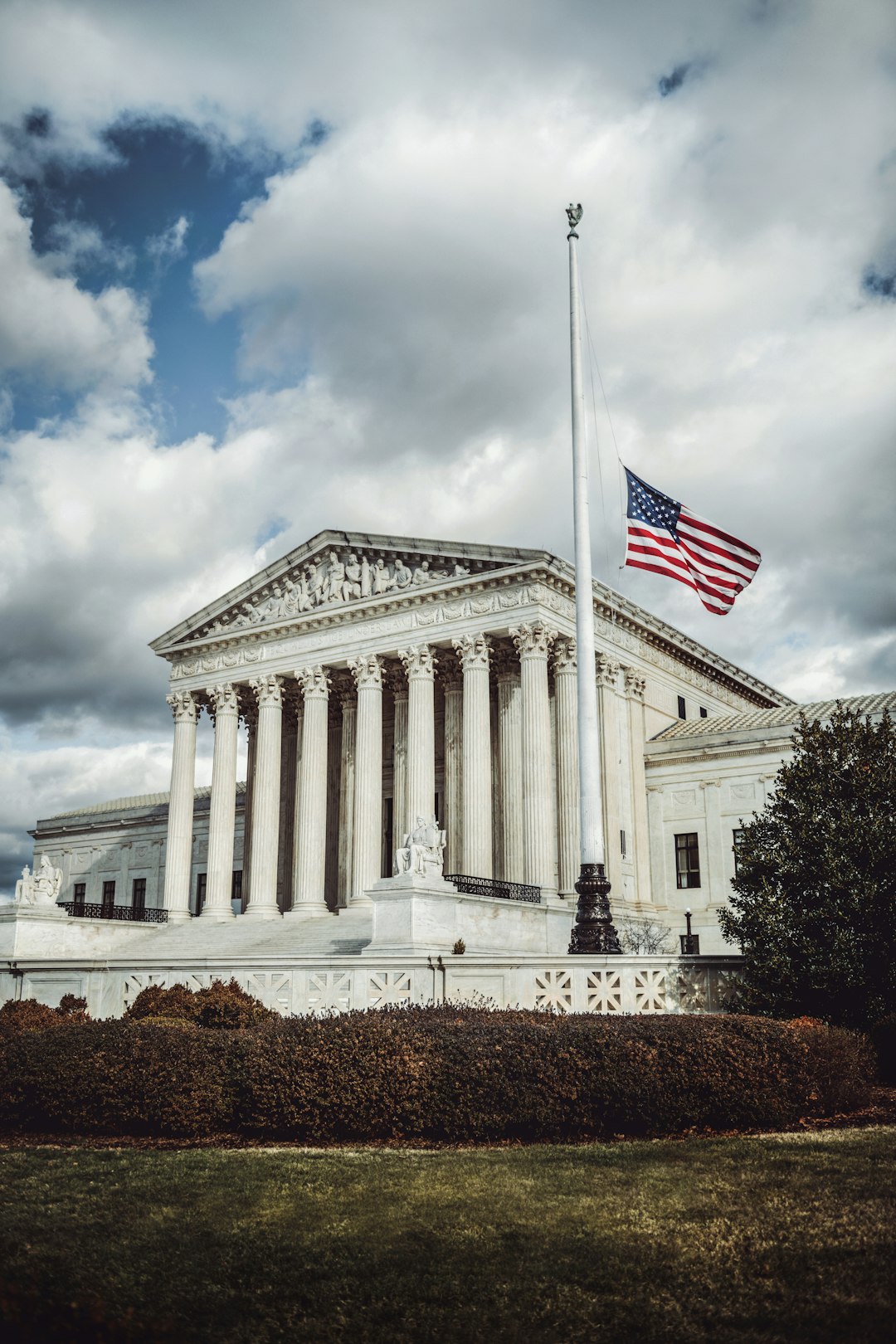
a large building with a flag on top of it

Our Supreme Court is dominated now by justices who claim to care about the plain reading of the Constitution, or the intent of the people who wrote its provisions. This should make this case particularly easy for them.

It is possible, of course, that these justices are simply politicians who espouse their textualism and originalism only when it suits them, in the service of supporting other politicians. Should this prove to be the case, their own office, and indeed the Constitution itself, would be in grave danger (a subject for another article).

We are about to find out.