Archives for category: Trump

Rick Hess is a senior fellow at the American Enterprise Institute, a conservative think tank in D.C. that is underwritten in part by the billionaire DeVos family. I have always had very pleasant and rewarding exchanges with Rick, who is a very amiable guy. He often tries to stake out a middle ground on controversial issues, as he does here. He argues that he doesn’t know what Trump will do on education, if re-elected, and neither does anyone else. But he concludes that Trump is unikely to do anything radical in the way of defunding education programs or dismantling the Department. So, don’t believe what he says and disregard Project 2025.

Somehow I’m not assuaged.

Hess writes in Education Next:

This summer, musing on the Republican National Convention, I noted that the GOP has been fundamentally remade since 2016—a point deemed self-evident by right-leaning pundits (MAGA and Never-Trump alike) but that seems insufficiently appreciated by a whole lot of other observers.

This has yielded a lot of certainty in education circles as to what would happen under a Trump 2.0, much of which I find pretty dubious. I’ve done interviews with reporters who seem to take it as given that Trump would slash Title I, IDEA, and Pell Grants. One write-up after another has emphatically declared that the Heritage Foundation’s Project 2025 playbook is the blueprint for Trump 2.0. There’s a remarkable confidence that Trump’s administration would embrace budget-cutting, small-government, Mike Pence–Betsy DeVos conservatism, only far more aggressively than the last go-round.

Now, might they be right? Sure. But it’s not the way to bet. I want to take a moment to explain why.

For starters, keep in mind that Trump has never been a conservative in any traditional sense. He’s a showman, reality TV star, and longtime Democrat who stumbled into the presidency. In 2016, as the newbie in a party dominated by Tea Party and Reaganite conservatives, he was obligated to name Mike Pence VP and issue a list of Federalist Society–vetted Supreme Court nominees. Today, Trump is no longer so constrained: he is the Republican Party. Traditional conservatives—from Dick Cheney to Mitt Romney to Paul Ryan—have been purged. Trump’s VP pick is now J.D. Vance, a former Never-Trumper who subsequently bent the knee. Trump has thrown the pro-life wing of the GOP coalition under the bus, torn up a half-century of Republican foreign policy, and dumped those who advised him on judges last time.

The shift is only partly about Trump being unfettered. It’s also about the remaking of the Republican coalition. Republicans have bled socially moderate, fiscally conservative college grads while gaining working-class voters who kind of like New Deal/Great Society-type spending. Pence was a Reaganite, a small-government conservative who wanted to cut programs and reduce spending. Vance is a NatCon, an economic populist who greeted the news that Liz Cheney would be voting for Harris by denouncing the former member of the House Republican leadership as someone who gets “rich when America’s sons and daughters go off to die.” Where Reaganite conservatives talked about the need to reform Social Security and Medicare, Trump has promised he won’t touch them. This is decidedly not the Romney-Ryan Republican Party.

So, while it seems to elude much of the education commentariat, it should be regarded as an open question as to whether Trump 2.0 would actually commit to much budget-cutting or shrinking of the bureaucracy when it comes to education. Indeed, when asked about child care, Trump recently offered a word salad suggesting that his proposed tariffs would help fund a major expansion of federal programs. Last year, he pitched a federally-funded “American Academy,” which would open new vistas for Washington’s role in providing higher education. Trump has obviously promised aggressive action on key cultural hot points—from defunding anti-Semitic colleges to busting the higher-ed accreditation cartel—and such moves, while obviously right-leaning, imply a need for a robust federal presence.

As National Review’s Andy McCarthy observed in his debate postmortem last week, “Because he’s an opportunist with some conservative leanings, rather than a conservative in search of opportunities to advance the cause, Trump often can’t decide whether to deride Harris’s cynical policy shifts or try to get to her left.” Even in Trump’s first term, when he had an experienced team of small-government true believers, there was little cutting and a whole lot of deficit spending. Recall that it was Trump who supported the first big tranche of unconditional pandemic aid for schools, initiated the hugely expensive student loan pause, and spent his first term watching spending climb on programs he’d promised to cut.

Now, some readers may protest: “Yeah, but Trump told Elon Musk we should abolish the Department of Education, and Heritage’s Project 2025 calls for cutting education spending!” Fair points. Trump has made a slew of contradictory promises, and neither the GOP platform nor his track record offer much clarity as to what should be believed. After all, even as Trump was saying he’d like to abolish the Department, he was emphatically denouncing Project 2025 (written by first-term staff who may not be welcome back in a Trump 2.0) and insisting he hasn’t read it.


What’s the bottom line? The truth is that no one really knows how a Trump 2.0 would go. I’ll keep this simple: anyone who claims to know . . . doesn’t. It’s not clear who is advising Trump on education, who (other than his kids) would inhabit his inner circle, how much sway Vance will have, or who would make key calls on staffing. That said, it seems to me that there are three scenarios for a Trump 2.0 when it comes to education. Here they are, from least likely to most likely.

Trump Drains the Swamp. Trump governs as a Beltway-draining, government-cutting conservative, even after aggressively disavowing Heritage’s Project 2025, promising not to touch entitlements, and failing to downsize the federal education footprint in his first term. He goes after Title I, IDEA, and Pell, and he leans on Congress to dismantle the Department of Education. It’s doubtful he could convince centrist GOP senators like Susan Collins or Lisa Murkowski to go along with it, though, meaning Republicans would need a stunningly good election night in the Senate contests to put any of this in play.

Trump Seeks Retribution. Trump devotes his energy to waging his war of “retribution” on his “enemies”—going after the press, Democrats, and any RINOs who’ve earned his ire. His White House spends its time seeking to pull the U.S. out of our international commitments and launching a federally organized deportation effort as part of an aggressive immigration strategy. Amidst the maelstrom, education gets left to the White House’s domestic policy team and whoever winds up staffing the Department of Education—but little happens because of the energy consumed by the tumult and its aftermath.

Trump Puts Trump First. Trump approaches education through the same Trump-first lens as most issues. Because Trump likes things that are popular, he’ll slam colleges, gesture towards school choice, and bark at wokeness but won’t put any meaningful effort into cutting education spending or downsizing the Department. In fact, I wouldn’t be at all surprised if he emulates Biden-Harris by treating education as a pandering piñata. Rather than tough-minded budget cuts, I think he’s more likely to endorse universalizing free school lunch, tripling federal spending on IDEA (for “our very beautiful children with special needs”), or making college loans interest-free à la Sen. Rubio’s new bill.

Look, I’ll be the first to concede I could well be wrong. Trump’s an impulsive creature and, should he win, it’s a guessing game who’d wind up calling the shots on education in Trump 2.0. But if I had to bet, given what we know today, I strongly suspect the feverish talk of defunding and dismantling federal education will prove little more than a fever dream.
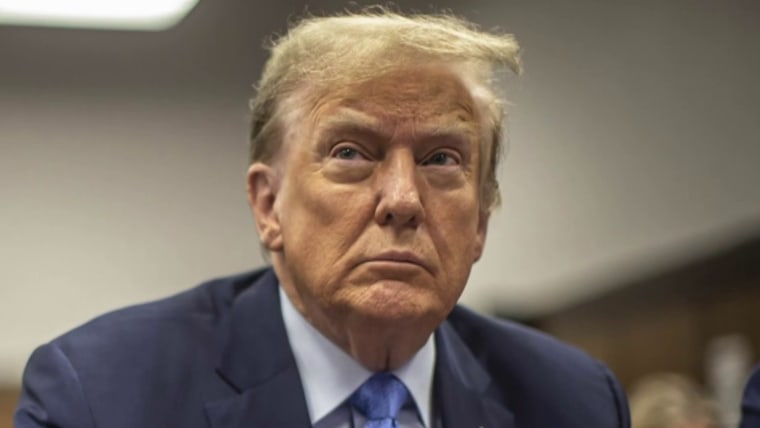
When Donald Trump appeared recently in Milwaukee, he described his plan for the future of the Department of Education. It’s not quite the same as the scenario in Project 2025, which envisions the total elimination of the U.S. Department of Education. Trump imagines it as a “department” with only two employees: A Cabinet Secretary and a secretary.

The severely shrunken Department would focus solely on the three Rs and would somehow mysteriously have the power and personnel to prevent public schools across the nation from teaching anything connected to “woke.” That is, anything related to race, gender, or social justice. How this fictional Department would impose bans on curriculum when federal law prohibits any federal interference in curriculum is not explained. Actually, it’s nonsense.

Ellie Quinlan Houghtaling writes in The New Republic about Trump’s vision for the federal role in education:

Donald Trump has fleshed out his Project 2025–inspired Department of Education plan, and it involves handing the reins and lofty responsibilities of public school administration over to a group of people with all the time in the world: parents.

“I figure we’ll have like one person plus a secretary,” the Republican presidential nominee told a crowd in Milwaukee Tuesday night. “You’ll have a secretary to a secretary. We’ll have one person plus a secretary, and all the person has to do is, ‘Are you teaching English? Are you teaching arithmetic? What are you doing? Reading, writing, and arithmetic. And are you not teaching woke?’

“Not teaching woke is a big factor,” Trump continued. “We’ll have a very small staff. We can occupy that staff right in this room, actually I think this room is too large. And all they’re going to do is they’re going to see that the basics are taken care of. You know, we don’t want someone to get crazy and start teaching a language that we don’t want them to teach.”

Not only do parents already have enough on their plates without trying to run the public school system, it’s likely that Trump has a specific group of parents in mind to direct education policy.

The goals he lays out are startlingly akin to the policy points of the far-right “parents’ rights” group Moms for Liberty, who hosted Trump as the keynote speaker at their annual conference in September. Moms for Liberty has recently ingratiated itself significantly into national politics and was listed as a member of Project 2025’s advisory board.

In the same speech, Trump also drew attention to the amount of real estate occupied in D.C. by Department of Education buildings, plotting that the dissolution of the federal agency would allow “somebody else to move in.”

“They’re run by the state, and run by the parents, because in Washington—you know half of the buildings, such a large number, every building you pass in Washington says Department of Education,” Trump said. “You’re gonna have a lot of vacant space. Now we can have maybe somebody else move in.” 

Trump’s proposal to dismantle the Department of Education wholesale is nearly identical to Project 2025, despite his campaign spending months trying to distance itself from the 920-page Christian nationalist manifesto.

Fact check: Trump exaggerated the size and physical space occupied by ED. The U.S. Department of Education is smaller than any other Cabinet department; it has 4,400 employees. It occupies a building at 400 Maryland Avenue, SW, Washington, DC. It rents space at 555 New Jersey Avenue, NW. it does not occupy all or most or many buildings in DC.

The first election in which I was fully aware of the candidates and their policies was in 1956, when Dwight D. Eisenhower ran for re-electionnagainst Adlai Stevenson. I was a freshman in college but I could not vote because the minimum voting age then was 21. My first vote was cast for John F. Kennedy against Richard Nixon. I was an active volunteer in that election, working in Kennedy headquarters in New York City. I have been active in every election since then.

I mention this background to point out that over a period of nearly 70 years I have never seen a candidate of either party lie as persistently, casually, and audaciously as does Donald Trump. His lying is not normal. In my lifetime, Presidential candidates strived to appear honest (even if they weren’t, they wanted to appear to be honest), thoughtful, and dignified. They did not insult or belittle their opponent. They did not curse when giving campaign speeches. Trump’s behavior is not normal. He demeans the office of the Presidency.

Heather Cox Richardson contends here that Trump’s incessant lying is not simply a sign of poor character or the defense mechanism of a spoiled man-child. As she shows, the lying has a political purpose.

She writes:

This morning began with a CNN headline story by fact checker Daniel Dale, titled “Six days of Trump lies about the Hurricane Helene response.” Dale noted that Republican nominee for president Donald Trump has been one of the chief sources of the disinformation that has badly hampered recovery efforts. 

Trump has claimed that the federal government is ignoring the storm’s victims, especially ones in Republican areas, and that the government is handing out only $750 in aid (in fact, the initial emergency payment for food and groceries is $750, but there are multiple grants available for home rebuilding up to a total of $42,500, the upper limit set by Congress). He has also claimed—falsely—that the Federal Emergency Management Agency is out of money to help because the administration spent all its money on Ukraine and undocumented immigrants.

Trump’s lies are not errors. They are part of a well-documented strategy to overturn democracy by using modern media to create a false political world. Voters begin to base their political decisions on that fake image, rather than on reality, and are manipulated into giving up control of their government to an authoritarian. 

Russian political theorists who were key to the rise of Russian president Vladimir Putin after the collapse of the Soviet Union called this manipulation “political technology.”

They developed a series of techniques to pervert democracy through this virtual political reality. They blackmailed opponents, abused state power to help favored candidates, sponsored “double” candidates with names similar to those of opponents in order to split the opposition vote and thus open the way for their own candidates, created false parties to further splinter the opposition, and, finally, created a false narrative around an election or other event that enabled them to control public debate.

Essentially, they perverted democracy, turning it from the concept of voters choosing their leaders into the concept of voters rubber-stamping the leaders they had been manipulated into backing.

This system made sense in former Soviet republics, where it enabled leaders to avoid the censorship that voters would recoil from by instead creating a firehose of news until people became overwhelmed by the task of trying to figure out what was real and simply tuned out. 

But it has also worked in the United States, where right-wing leaders have used it to divide the American people and spread disinformation. While “misinformation” is simply false information—which we all spread innocently and correct with accurate information—“disinformation” is a deliberate lie to convince people of things that are not true. 

Before the 2016 presidential election, Russian operatives working for Putin set out to tear the U.S. apart and thus undermine the North Atlantic Treaty Organization (NATO) they see as stopping the resurrection of Imperial Russia. They called for provoking “instability and separatism within the borders of the United States… encouraging all kinds of separatism and ethnic, social and racial conflicts,… [and] support[ing] isolationist tendencies in American politics.” 

But they were not the only ones operating in this disinformation sphere. In 2014, then–Breitbart chief executive Steve Bannon explained to a right-wing Catholic group meeting at the Vatican that he believed traditional western civilization was fighting a war for survival. To win, current western-style civilizations must be completely reconfigured to put a few wealthy white Christian male leaders in charge to direct and protect subordinates. 

In that year, Bannon set out to dismantle the administrative state that was leveling the playing field among Americans and push Christian nationalism. With the help of funding from Republican megadonors Robert and Rebecca Mercer, he launched Cambridge Analytica, a company designed to develop profiles of individuals that would enable advertisers to group them for targeted advertising. Before the 2016 election, the company captured information from the Facebook profiles of more than 50 million users without their permission or knowledge, enabling it to flood the platform with targeted disinformation. 

Bannon became the chief executive officer of Trump’s 2016 campaign. He then served as chief strategist and senior counselor for the first eight months of Trump’s term, during which he worked to put MAGAs in power across the administration and across the country.

“The Democrats don’t matter,” Bannon told a reporter in 2018. “The real opposition is the media. And the way to deal with them is to flood the zone with sh*t.” Keeping listeners constantly trying to defend what is real from what is not destroys their ability to make sense of the world. Many people turn to a strongman who promises to create order. Others will get so exhausted they simply give up. As scholar of totalitarianism Hannah Arendt noted, authoritarians use this technique to destabilize a population.

Trump’s administration began with a foundational lie about the size of the crowd at his inauguration. Recent challenges to that assertion from Vice President Kamala Harris and former president Barack Obama rankled as badly as they did for Trump because that lie allowed Trump to define the public conversation. Forcing his supporters to commit to a lie that was demonstrably untrue locked them into accepting others throughout his presidency, for backing away would become harder and harder with each lie they accepted. 

Challenging that lie, as Harris and Obama did, challenged all those that came afterward, including the lie that Trump had been the true winner of the 2020 presidential election. Thanks to the October 2 filing by special counsel Jack Smith, we know that Trump was in almost daily communication with Bannon as he pushed that lie. 

Scholars of authoritarianism call a lie of such magnitude a “Big Lie,” a key propaganda tool associated with Nazi Germany. It is a lie so huge that no one can believe it is false. If leaders repeat it enough times, refusing to admit that it is a lie, people come to think it is the truth because surely no one would make up anything so outrageous.

In his autobiography Mein Kampf, or “My Struggle,” Adolf Hitler wrote that people were more likely to believe a giant lie than a little one because they were willing to tell small lies in their own lives but “would be ashamed to resort to large-scale falsehoods.” Since they could not conceive of telling “colossal untruths…they would not believe that others could have the impudence to distort the truth so infamously.” He went on: “Even though the facts which prove this to be so may be brought clearly to their minds, they will still doubt and waver and will continue to think that there may be some other explanation.”

The U.S. Office of Strategic Services had picked up on Hitler’s manipulation of his followers when it described Hitler’s psychological profile. It said, “His primary rules were: never allow the public to cool off; never admit a fault or wrong; never concede that there may be some good in your enemy; never leave room for alternatives; never accept blame; concentrate on one enemy at a time and blame him for everything that goes wrong; people will believe a big lie sooner than a little one; and if you repeat it frequently enough people will sooner or later believe it.”

The MAGA movement is now based in the Big Lie. Its leaders refuse to admit that Trump lost the 2020 election. Trump’s running mate, Ohio senator J.D. Vance, two days ago actually said Trump won, and as media figures more frequently ask the question of MAGA lawmakers, they continue to dodge it, as Arkansas senator Tom Cotton did today on NBC’s Meet the Press, and as House speaker Mike Johnson did on ABC News’s “This Week.”

Now, though, their lies about the federal response to Hurricane Helene show that they are completely committed to disinformation. As Will Bunch noted today in the Philadelphia Inquirer, when Vance lied again at the vice presidential debate about the legal status of the Haitian migrants in Springfield, Ohio, and complained when moderator Margaret Brennan corrected him, he gave up the whole game. “Margaret,” Vance said, “the rules were that you guys weren’t going to fact-check.” He continued to argue until the moderators cut his microphone. 

Bunch points out that MAGA Republicans insist on the right to lie, considering any fact-checking “censorship,” a position to which Vance pivoted when Minnesota governor Tim Walz asked him if Trump won the 2020 election.   

Just as Russian political theorists advocated to overturn democracy, MAGA Republicans have created an alternative political reality, aided in large part by the disinformation spread on social media by X owner and Trump supporter Elon Musk. 

They continue to be aided by foreign operatives, as well. This morning, on CBS’s Face the Nation, Senate Intelligence Committee member Mark Kelly (D-AZ) warned, on the basis of information he has heard from the FBI, the Office of the Director of National Intelligence, and the National Security Agency, that Russia, Iran, and China are generating about 20% to 30% of the political content and comments on social media.

But the largest purveyors of disinformation are homegrown.

Perhaps, though, the very real, immediate damage MAGA’s disinformation about Hurricane Helene is causing might finally be a step too far. In what is at least a muted rebuke to Trump, Republican governors across the damaged area have stepped up to praise President Joe Biden and the federal response to the disaster. 

The New York Times was recently the target of a protest by a group protesting its “sanewashing” of Trump, that is, publishing stories that made his incoherent speeches sound normal when they were not. Critics have complained that the Times published many stories about Biden’s age and his gaffes and misstatements, but overlooked Trump’s gaffes and persistent lying.

With this story by Peter Baker and Dylan Freedman, with the assistance of two journalists who excerpted relevant videos, the Times may have mollified the critics. The story contains excellent video clips that show Trump making incoherent statements. Unfortunately, I was unable to copy them. Each of them shows Trump saying what is quoted in the article.

The story begins:

Former President Donald J. Trump vividly recounted how the audience at his climactic debate with Vice President Kamala Harris was on his side. Except that there was no audience. The debate was held in an empty hall. No one “went crazy,” as Mr. Trump put it, because no one was there.

Anyone can misremember, of course. But the debate had been just a week earlier and a fairly memorable moment. And it was hardly the only time Mr. Trump has seemed confused, forgetful, incoherent or disconnected from reality lately. In fact, it happens so often these days that it no longer even generates much attention.

He rambles, he repeats himself, he roams from thought to thought — some of them hard to understand, some of them unfinished, some of them factually fantastical. He voices outlandish claims that seem to be made up out of whole cloth. He digresses into bizarre tangents about golf, about sharks, about his own “beautiful” body. He relishes “a great day in Louisiana” after spending the day in Georgia. He expresses fear that North Korea is “trying to kill me” when he presumably means Iran. As late as last month, Mr. Trump was still speaking as if he were running against President Biden, five weeks after his withdrawal from the race.

With Mr. Biden out, Mr. Trump, at 78, is now the oldest major party nominee for president in history and would be the oldest president ever if he wins and finishes another term at 82. A review of Mr. Trump’s rallies, interviews, statements and social media posts finds signs of change since he first took the political stage in 2015. He has always been discursive and has often been untethered to truth, but with the passage of time his speeches have grown darker, harsher, longer, angrier, less focused, more profane and increasingly fixated on the past.

According to a computer analysis by The New York Times, Mr. Trump’s rally speeches now last an average of 82 minutes, compared with 45 minutes in 2016. Proportionately, he uses 13 percent more all-or-nothing terms like “always” and “never” than he did eight years ago, which some experts consider a sign of advancing age.

Similarly, he uses 32 percent more negative words than positive words now, compared with 21 percent in 2016, which can be another indicator of cognitive change. And he uses swearwords 69 percent more often than he did when he first ran, a trend that could reflect what experts call disinhibition. (A study by Stat, a health care news outlet, produced similar findings.)

Mr. Trump frequently reaches to the past for his frame of reference, often to the 1980s and 1990s, when he was in his tabloid-fueled heyday. He cites fictional characters from that era like Hannibal Lecter from “Silence of the Lip” (he meant “Silence of the Lambs”), asks “where’s Johnny Carson, bring back Johnny” (who died in 2005) and ruminates on how attractive Cary Grant was (“the most handsome man”). He asks supporters whether they remember the landing in New York of Charles Lindbergh, who actually landed in Paris and long before Mr. Trump was born.

He seems confused about modern technology, suggesting that “most people don’t have any idea what the hell a phone app is” in a country where 96 percent of people own a smartphone. If sometimes he seems stuck in the 1990s, there are moments when he pines for the 1890s, holding out that decade as the halcyon period of American history and William McKinley as his model president because of his support for tariffs.

And he heads off into rhetorical cul-de-sacs. “So we built a thing called the Panama Canal,” he told the conservative host Tucker Carlson last year. “We lost 35,000 people to the mosquito, you know, malaria. We lost 35,000 people building — we lost 35,000 people because of the mosquito. Vicious. They had to build under nets. It was one of the true great wonders of the world. As he said, ‘One of the nine wonders of the world.’ No, no, it was one of the seven. It just happened a little while ago. You know, he says, ‘Nine wonders of the world.’ You could make nine wonders. He would’ve been better off if he stuck with the nine and just said, ‘Yeah, I think it’s nine….’”

Mr. Trump dismisses any concerns and insists that he has passed cognitive tests. “I go for two hours without teleprompters, and if I say one word slightly out, they say, ‘He’s cognitively impaired,’” he complained at a recent rally. He calls his meandering style “the weave” and asserts that it is an intentional and “brilliant” communication strategy….

How much his rambling discourse — what some experts call tangentiality — can be attributed to age is the subject of some debate. Mr. Trump has always had a distinctive speaking style that entertained and captivated supporters even as critics called him detached from reality. Indeed, questions have been raised about Mr. Trump’s mental fitness for years.

John F. Kelly, his second White House chief of staff, was so convinced that Mr. Trump was psychologically unbalanced that he bought a book called “The Dangerous Case of Donald Trump,” written by 27 mental health professionals, to try to understand his boss better. As it was, Mr. Kelly came to refer to Mr. Trump’s White House as “Crazytown….”

He does not stick to a single train of thought for long. During one 10-minute stretch in Mosinee, Wis., last month, for instance, he ping-ponged from topic to topic: Ms. Harris’s record; the virtues of the merit system; Robert F. Kennedy Jr.’s endorsement; supposed corruption at the F.D.A., the C.D.C. and the W.H.O.; the Covid-19 pandemic; immigration; back to the W.H.O.; China; Mr. Biden’s age; Ms. Harris again; Mr. Biden again; chronic health problems and childhood diseases; back to Mr. Kennedy; the “Biden crime family”; the president’s State of the Union address; Franklin D. Roosevelt; the 25th Amendment; the “parasitic political class”; Election Day; back to immigration; Senator Tammy Baldwin; back to immigration; energy production; back to immigration; and Ms. Baldwin again.

Some of what he says is inexplicable except to those who listen to him regularly and understand the shorthand. And he throws out assertions without any apparent regard for whether they are true or not. Lately, he has claimed that crowds Ms. Harris has drawn were not real but the creation of artificial intelligence, never mind the reporters and cameras on hand to record them.

He mispronounces names and places with some regularity — “Charlottestown” instead of “Charlottesville,” “Minnianapolis” instead of “Minneapolis,” the website “Snoops”instead of “Snopes,” “Leon” Musk instead of “Elon.”

In Rome, Ga., he went on an extended riff about Mr. Biden in swim trunks on a beach. “Look, at 81 — do you remember Cary Grant? How good was Cary Grant, right? I don’t think Cary Grant, he was good. I don’t know what happened to movie stars today. We used to have Cary Grant and Clark Gable and all these people. Today we have — I won’t say names because I don’t need enemies. I don’t need enemies. I got enough enemies. But Cary Grant was like, Michael Jackson once told me, ‘The most handsome man, Trump, in the world.’ Who? ‘Cary Grant.’ Well, we don’t have that anymore. But Cary Grant at 81 or 82 — going on 100, this guy, he’s 81 going on 100 — Cary Grant wouldn’t look too good in a bathing suit either, and he was pretty good-looking, right?…”

He considers himself the master of nearly every subject. He said Venezuelan gangs were armed “with MK-47s,” evidently meaning AK-47s, and then added, “I know that gun very well” because “I’ve become an expert on guns.” He claims to have been named “man of the year” in Michigan, although no such prize exists.

He is easily distracted. He halted in the middle of another extended monologue when he noticed a buzzing insect. “Oh, there’s a fly,” he said. “Oh. I wonder where the fly came from. See? Two years ago, I wouldn’t have had a fly up here. You’re changing rapidly. But we can’t take it any longer.

But like some people approaching the end of their eighth decade, he is not open to correction. “Trump is never wrong,” he said recently in Wisconsin. “I am never, ever wrong.”

Glenn Kessler, professional fact-checker for The Washington Post, reviewed Trump’s claims about federal aid to states hit by Hurricane Helene. Trump tried to politicize the Hurricane, claiming that Biden had not acted. Trump lied.

Kessler writes:

“The Harris-Biden administration says they don’t have any money [for hurricane relief]. … They spent it all on illegal migrants. … They stole the FEMA money just like they stole it from a bank, so they could give it to their illegal immigrants that they want to have vote for them.”
— Former president Donald Trump, remarks at a campaign rally in Saginaw, Mich., Oct. 3

Trump has been trying to weaponize the Hurricane Helene relief efforts, accusing the Biden administration of failing to provide adequate assistance. As part of his critique, he claims there is no money available for hurricane relief because it was spent already to handle the surge of migrants at the southern border.

“They stole the FEMA money just like they stole it from a bank,” Trump charged, referring to the Federal Emergency Management Agency, adding in the additional falsehood that Vice President Kamala Harris wants illegal immigrants to vote for her. As we have explained many times before, this would be against the law and there is no evidence to support this claim.

Trump’s claims have been echoed by his supporters, such as billionaire Elon Musk. But Trump is completely wrong.

Even though Trump was once president, he still appears to have little clue about the appropriations process. What’s even richer is that when he was president, he did exactly what he claims Biden did — take money from FEMA’s disaster fund to fund migrant programs at the southern border.

The Facts

FEMA is part of the Department of Homeland Security. On Wednesday, DHS Secretary Alejandro Mayorkas told reporters: “We are meeting the immediate needs with the money that we have. We are expecting another hurricane hitting. FEMA does not have the funds to make it through the season.”

He emphasized there was plenty of money to deal with the current disaster. “We are meeting the moment,” he said, adding: “We have the immediate needs right now. On a continuing resolution, we have funds, but that is not a stable source of supply, if you will.”

Congress, as part of a short-term spending bill, recently provided $20 billion to the FEMA disaster relief fund. But Mayorkas noted: “That doesn’t speak about the future and the fact, as I mentioned earlier, that these extreme weather events are increasing in frequency and severity, and we have to be funded for the sake of the American people. This is not a political issue.”

In other words, Trump falsely claimed that there is no money left for Hurricane Helene survivors. That’s the opposite of what Mayorkas said.

“FEMA has what it needs for immediate response and recovery efforts,” FEMA spokeswoman Jaclyn Rothenberg said on X. “As [FEMA Administrator Deanne Criswell] said, she has the full authority to spend against the President’s budget, but we’re not out of hurricane season yet so we need to keep a close eye on it. We may need to go back into immediate needs funding and we will be watching it closely.”

So how does Trump link this to migrants? A Trump campaign spokesman pointed to FEMA’s Shelter and Services Program, which gives grants to local governments and nonprofits to take care of undocumented immigrants. Congress boosted the budget from $360 million in fiscal year 2023 to $650 million in fiscal year 2024. The program’s 2023 annual report says it provides shelter, such as hotel/motel services, food and transportation, including plane tickets up to $700 a person.

As we said, Congress appropriated this money, just as it did the disaster fund. There’s no evidence that any money from the disaster fund was used to help migrants.

“These claims are completely false,” DHS said in a statement Thursday night. “As Secretary Mayorkas said, FEMA has the necessary resources to meet the immediate needs associated with Hurricane Helene and other disasters. The Shelter and Services Program (SSP) is a completely separate, appropriated grant program that was authorized and funded by Congress and is not associated in any way with FEMA’s disaster-related authorities or funding streams.”

Trump has a habit of assuming other politicians act in the same way as he would. So we wondered why he would accuse Biden of raiding the FEMA disaster fund to handle undocumented migrants.

It turns out that’s because he did this. In 2019, the Trump administration, in the middle of hurricane season, told Congress that it was taking $271 million from DHS programs, including $155 million from the disaster fund, to pay for immigration detention space and temporary hearing locations for asylum seekers who had been forced to wait in Mexico. “The U.S. is facing a security and humanitarian crisis on the Southern border,” the administration said in its notice that it was redirecting the funds.

The monthly reports issued by the FEMA disaster fund show $38 million was plucked and given to Immigration and Customs Enforcement in August that year — just before the prime storm period of September and October.
The Trump campaign did not respond to questions about Trump’s actions in 2019.

The Pinocchio Test

Trump falsely claims FEMA has run out of disaster money — and then falsely says that’s because money instead was spent on migrants. There is no evidence the Biden administration spent FEMA disaster money on migrants. Rather, that’s what Trump did.

He earns Four Pinocchios.

Four Pinocchios

Heather Cox Richardson sums up the previous day’s lies from Trump and his campaign. His most recent blatant lie is that the Biden administration bankrupted FEMA by handing over all its funding to pay for the needs of illegal immigrants. Previously he said that Biden was not helping Georgia because it’s a red state; Governor Brian Kemp corrected Trump and said Biden gave him whatever he asked for (Trump was thinking of his own actions when he withheld emergency federal money from California because it went for Biden). Trump is obsessed with immigrants. He loathes them (they are “poisoning the blood of our country,” he said). He announced that after he is elected, he will strip away the protected status of the Haitians in Springfield, Ohio, and send them back to Haiti.

She wrote:

MAGA Republicans are now lying about the federal response to Hurricane Helene in much the same way they lied about Haitian migrants bringing chaos and disease to Springfield, Ohio. Both disinformation efforts are flat-out lies, and both are designed to demonize immigrants. Immigration was the issue Trump was so eager to run on that he demanded Republican lawmakers reject the strong border bill a bipartisan group of lawmakers had hammered out. 

The federal response to Hurricane Helene has drawn bipartisan praise, with Republican governor Henry McMaster of South Carolina thanking Biden by name for what McMaster called a “superb” response. 

But on Sunday, September 29, two days after the hurricane hit, the right-wing organization started by anti-immigrant Trump loyalist Stephen Miller posted: “Billions for Ukraine. Billions for illegal aliens. And what for the Americans? Reprogram every single dollar that FEMA has dedicated to support illegal aliens to go towards Americans who are facing unprecedented devastation!”

Yesterday, in Saginaw, Michigan, Trump echoed Miller, claiming that the Biden administration is botching the hurricane response because it has spent all the money appropriated for the Federal Emergency Management Agency (FEMA) on “illegal immigrants.” “They spent it all on illegal migrants.… They stole the FEMA money just like they stole it from a bank, so they could give it to their illegal immigrants that they want to have vote for them,” he said. Today, he claimed that “a billion dollars was stolen from FEMA to use it for illegal migrants, many of whom are criminals, to come into our country.” 

Early this morning, X owner Elon Musk posted to his more than 200 million followers: “Yes, they are literally using YOUR tax dollars to import voters and disenfranchise you! It is happening right in front of your eyes. And FEMA used up its budget ferrying illegals into the country instead of saving American lives. Treason.” On Wednesday, Dana Mattioli, Joe Palazzolo, and Khadeeja Safdar of the Wall Street Journal broke the story that Musk has been financing groups with ties to Miller since 2022. 

But of course, it is NOT happening in front of anyone’s eyes.

On Wednesday, Alejandro Mayorkas, the secretary of the Department of Homeland Security in which FEMA is housed, told reporters that FEMA’s disaster relief fund is adequately funded for current needs. But, he warned, “extreme weather events are increasing in frequency and severity,” and we are not yet out of hurricane season. If another emergency hits, FEMA’s disaster relief fund will be stretched thin. 

Congress also appropriated money for a different fund, the Shelter and Services Program (SSP), which is part of Customs and Border Protection but is administered by FEMA. Established under the Trump administration in 2019, SSP gives grants to states and local governments to provide shelter, food, and transportation to undocumented immigrants. After Trump’s accusation, the Department of Homeland Security said in a statement: “These claims are completely false. As Secretary Mayorkas said, FEMA has the necessary resources to meet the immediate needs associated with Hurricane Helene and other disasters. The Shelter and Services Program (SSP) is a completely separate, appropriated grant program that was authorized and funded by Congress and is not associated in any way with FEMA’s disaster-related authorities or funding streams.”

Glenn Kessler of the Washington Post did not leave the story there. “Trump has a habit of assuming other politicians act in the same way as he would,” Kessler wrote. So he looked into why Trump would have accused Biden “of raiding the FEMA disaster fund to handle undocumented migrants. It turns out that’s because he did this.”   

In the middle of hurricane season in 2019, Kessler explains, Trump took $155 million from the FEMA disaster fund and redirected it to pay for detention space and temporary hearing locations for immigrants seeking asylum. “No, Biden didn’t take FEMA relief money to use on migrants,” the article title reads, “but Trump did.”

As in Springfield, a bipartisan group of lawmakers are begging MAGAs to stop the disinformation, which is keeping people from accessing the help they need and gumming up relief efforts as workers and local and state governments, as well as FEMA, have to waste time combating lies. Scammers and political extremists are making things worse by spreading AI-generated images and claiming that the federal government is ignoring the people and emergencies the images depict.

MAGA Republicans launched another major disinformation campaign today when the Bureau of Labor Statistics released another blockbuster jobs report. It showed that the country added about 254,000 jobs in September, far higher than the 140,000 jobs economists expected. It also revised the job numbers for July and August upward. The unemployment rate dropped from 4.2% in August to 4.1%, and wages have outpaced inflation. 

Mark Zandi, chief economist for Moody’s Analytics, wrote that the jobs report “cements my view that the economy is about as good as it gets. The economy is creating lots of jobs across many industries, consistent with robust labor force growth, and thus low and stable unemployment. The economy is at full-employment, no more and no less. Wage growth is strong, and given big productivity gains, it is consistent with low and stable inflation. One couldn’t paint a prettier picture of the job market and broader economy.”

Yet MAGA Republicans deny that the economy is strong. Senator Marco Rubio (R-FL) openly called the jobs report fake. And when a reporter asked Trump, “Jobs are up, the stock market hit that all-time high. Do you acknowledge that the economy is improving?” he answered: “No it’s not.”

But, apparently stung, this afternoon Trump posted on his social media site what appeared to be an announcement. After an emoji of a flashing red light, a headline read, “New: Jamie Dimon, the CEO of JPMorgan Chase, has endorsed Trump for President.” A representative for Dimon instantly denied such an endorsement, saying it is false. According to a spokesperson for JP Morgan, Dimon has neither contributed money nor endorsed Trump, or anyone else, in the 2024 presidential race. But Trump has not taken the post down. 

Hugo Lowell of The Guardian notes that Trump has admired Dimon for a long time and likely craves his support. Trump has been unable to attract major endorsements, while celebrities throw their influence behind Harris and Minnesota governor Tim Walz almost daily. Yesterday, musician Bruce Springsteen endorsed Harris. Today, businessman and former Los Angeles Lakers basketball player Earvin “Magic” Johnson Jr. endorsed her.

The firehose of lies is designed to make it impossible for voters to figure out the truth. The technique is designed so that eventually voters give up trying to engage, conclude everyone is lying, throw up their hands, and stop voting. Holding on to facts combats the effects of the storm of lies.  

Finally, tonight, the X account of Trump’s team and the Republican National Committee—now run by the Trump family and loyalists—showed a clip of Biden unexpectedly entering the White House briefing room today, joking with reporters, and saying, “Welcome to the swimming pool.” Referring to “Biden (or whatever’s left of him),” the post suggested his “swimming pool” reference was a sign of mental incapacity.

In fact, the briefing room was indeed originally a swimming pool. President Franklin Delano Roosevelt added the pool to the White House in 1933 after he found swimming helped to keep him in shape after his 1921 bout with polio. Presidents Harry Truman, John F. Kennedy (who had a mural by Bernard Lamotte installed around it), and Lyndon B. Johnson used the pool frequently. Richard Nixon did not. In 1970, Nixon had the pool covered and the space converted into the White House Press Room.

Nixon ordered the change made in such a way that it could be easily undone in case he got pushback for covering up FDR’s pool, but his successor, Gerald Ford, who was an avid swimmer, largely ended the conversation when he added a new outdoor pool to the White House complex in 1975.

Biden’s reference to the press room as a swimming pool was a historical joke rather than a sign of mental incapacity. This lie deserves the same scrutiny as the other whoppers from today, though, because as Glenn Kessler accurately observed, Trump’s common pattern is projection.

Dan Rather always has a wise perspective on national politics. Here he warns that Trump is more dangerous than ever.

Dan Rather and his team at Steady write about the crisis that stares us in our faces.

He writes:

We need to be talking more, not less, about the threat Donald Trump poses to our democracy. The former president and his understudy, JD Vance, have been trying to convince voters, with no evidence and a head-spinning level of hypocrisy, that violence against the former president was caused by rhetoric from Democrats. 

Trump has upended the political script, saying, “[The Democrats’] rhetoric is causing me to be shot at, when I am the one who is going to save the country.” Followed closely by JD Vance’s incendiary quip: “The big difference between conservatives and liberals is that no one has tried to kill Kamala Harris in the last couple of months, and two people now have tried to kill Donald Trump in the last couple of months. I’d say that’s pretty strong evidence. The left needs to tone down the rhetoric. It needs to cut this crap out.”

And if you believe that, I’ve got a bridge to sell you.

Among the media and the campaigns, the “threat to democracy” line has apparently become old hat. When he was running for reelection, President Joe Biden often used it in an effort to differentiate himself. Unfortunately, this idea apparently doesn’t poll all that well. While it is true and terrifying, it is also a bit abstract — and for some, hard to believe. Lowering the price of milk is concrete and plausible.

So the Harris campaign hasn’t been talking about democracy much, instead concentrating on tangible policies to help the middle class. While this makes sense politically — and I hope it works — I’m here to say we cannot lose sight of the fact that a second Trump presidency would threaten our way of government and our way of life. 

Trump’s term as president was just a precursor to what we can expect the second time around, but it bears repeating to remind us what he is capable of. In case anyone has forgotten, here is a partial list of how he has jeopardized democracy:

  • Attempted to overturn a free and fair election, a number of times in a number of ways. 
  • Tried to block the peaceful transfer of power by inciting a mob to attack the United States Capitol. 
  • Undermined the independence of the Justice Department, while claiming our legal system was rigged. 
  • Botched the federal government’s response to the pandemic, resulting in a massive loss of life, because he doesn’t believe in inconvenient truths. 
  • Cozied up to dictators and autocrats, even asking one to investigate a baseless claim against his political rival. 
  • Selected Supreme Court justices who curtailed reproductive rights, to the point where women are being denied care and dying. 
  • Lied. All the time. The leader of the free world must be credible.
  • Is sowing seeds of doubt that the 2024 election will be legitimate.

There is every indication that a second Trump trip to the White House would be even more harmful than the first. 

This time around he is angrier and thirstier for vengeful retribution. He has said he will weaponize the Justice Department against his enemies. Full stop.

His loyal cronies have had more time to plan. We know they are vetting and training a legion of sycophants to displace career bureaucrats across the executive branch. The guardrails we had last time, whistleblowers and “adults in the room,” will be gone.

After nine years of Trump at the top of the Republican Party, his cult-like reach has created an army of MAGA-elected officials at the state and local levels who are more than happy to do his bidding, even if it’s illegal. 

He is more gullible than ever — wanting, needing to believe his own hype. Believing his own bluster has had dangerous consequences. See: January 6, 2021. He spends his time searching social media for confirmation of his over-inflated self-importance. He surrounds himself with yes-men and women falling all over themselves to prove their fealty. No one will tell him the truth, for fear of retribution. It is a modern spin on the children’s fable “The Emperor’s New Clothes” — only this horror story would be titled, “The Politician’s Stupefying Greatness.” 

The coup de grace is that Trump has carte blanche to do whatever he wants. That terrifying reality is brought to you by none other than the Supreme Court with its ruling in Trump v. United States. In a letter to the Senate Judiciary Committee following that decision, representatives from 75 legal organizations said it “poses a significant threat to our democracy by effectively providing the president with sweeping legal immunity for criminal acts.”

We tend to memorialize significant dates in our nation’s history. In my lifetime, there was Pearl Harbor, December 7, 1941. More recently, September 11, 2001, and January 6, 2021, have been etched into our psyche. But I would argue November 5, 2024, could be as or even more significant. It will test the strength of our country’s democratic infrastructure. That infrastructure and the American voter can save democracy by sending Kamala Harris to the Oval Office. 

Veteran journalist James Fallows put up a post today on his blog comparing the front page of the New York Times on October 29, 2016 to the front page of the same newspaper on October 3, 2024.

I recommend that you open the link and see what he was comparing.

For those of us who take the law seriously, Trump’s successful evasion of accountability for the failed coup on January 6, 2021, is outrageous. Trump has used delay as his primary strategy for avoiding accountability, as well as his partisan ties to federal judges like Aileen Cannon, whom he appointed, and the rightwing majority on the Supreme Court. Judge Cannon tossed out the documents case. The only viable case right now is Special Prosecutor Jack Smith’s indictment of Trump for launching the events of that day. That case will be heard by Judge Tanya Chutman, who was appointed by Obama. It’s a sad day when the ability to get justice depends on which judge is assigned to the case.

Jordan Rubin writes about Jack Smith’s latest filing here. Smith had to rewrite his brief to acknowledge the U.S. Supreme Court’s ruling that the President has absolute immunity for any “official acts.” Should planning to overthrow the Constitution, to subvert the election, and to send a mob to storm the Capitol be considered “official acts”?

Special counsel Jack Smith’s big immunity brief is here. The 165-page (somewhat redacted) motion lays out why, in the government’s view, the Supreme Court’s immunity ruling doesn’t stop Donald Trump from standing trial in his federal election interference case.

As an example of what the motion seeks to accomplish, consider the discussion of the alleged evidence related to former Vice President Mike Pence, whom Trump pressured to subvert the 2020 presidential election.

As an example of what the motion seeks to accomplish, consider the discussion of the alleged evidence related to former Vice President Mike Pence.

To understand the Pence analysis, recall that Chief Justice John Roberts’ July 1 ruling in Trump v. United States granted absolute immunity for “core” presidential acts, presumptive immunity for all other official acts, and no immunity for unofficial acts. While the high court’s Republican-appointed majority said that it’s up to U.S. District Judge Tanya Chutkan to perform the immunity analysis in the first instance, the justices gave the Washington judge a head start in some parts, including with Pence. They said that whenever Trump and Pence discussed “their official responsibilities” — namely regarding Pence’s certification of Electoral College votes on Jan. 6, 2021 — they had engaged in “official conduct.”

That means Trump would have presumptive immunity for those alleged actions, which Smith would need to rebut. Roberts’ opinion (rather vaguely) said that can be done by showing that the prosecution wouldn’t “pose any dangers of intrusion on the authority and functions of the Executive Branch.” So that’s why Smith wrote in the motion that because that branch “has no role in the certification proceeding — and indeed, the President was purposely excluded from it by design — prosecuting the defendant for his corrupt efforts regarding Pence poses no danger to the Executive Branch’s authority or functioning.” (The vice president is involved in certification via the office’s role as president of the Senate.)

Raskin on the Jack Smith brief: ‘American carnage is Trump’s legacy’

07:00

The special counsel further wrote that Trump “sought to encroach on powers specifically assigned by the Constitution to other branches, to advance his own self-interest and perpetuate himself in power, contrary to the will of the people.” Therefore, Smith wrote, prosecuting Trump wouldn’t “pose any danger of intrusion on the authority and functions of the Executive Branch; rather, it would advance the Constitution’s structural design to prevent one Branch from usurping or impairing the performance of the constitutional responsibilities of another Branch.”

Smith’s team also made clear in the filing that prosecutors intend to introduce more evidence at trial related to Pence, who is not accused of any wrongdoing. For instance, they want to introduce evidence of what they call unofficial communications that Trump had with Pence in their capacity as candidates (not as president and vice president), including when Pence “tried to encourage” Trump “as a friend” when news networks began to call the 2020 race for Joe Biden, and later when Pence suggested that Trump should recognize the process was over and run again in 2024. Even if those communications were deemed “official,” Smith wrote, the immunity presumption would be rebutted there too, he argued.

To be sure, the Pence evidence is only part of the case that Smith wants to bring against Trump, who has pleaded not guilty.

To be sure, the Pence evidence is only part of the case that Smith wants to bring against Trump, who has pleaded not guilty. And if the former president wins next month’s presidential election, he’ll be empowered to dismiss the case entirely.

But if Trump loses, then Chutkan would have a heavy task ahead in weighing the voluminous allegations and evidence Smith presents in the monster filing and deciding whether it passes the high court’s (again, rather vague) immunity test. Ultimately, whatever the judge rules will be subject to review again by the justices before any trial can go forward. That won’t happen before the election.

The case will either be killed soon by way of a Trump victory or will linger on for months, if not years, to first determine whether the Supreme Court will even let Trump stand trial over any of these allegations.

On the blog called “Public Notice,” Aaron Rupar and Noah Berlatsky wrote about Trump’s unhinged speech yesterday. He is angry and incoherent every time he speaks, so the media doesn’t find his rants to be newsworthy. As the authors point out, the media would jump all over Biden for the factual errors that Trump commits (yesterday, he confused the dictator of North Korea with the president of Iran); but Trump gets a pass because his errors, lies, and hatred are routine.

Rupar and Berlatsky write:

The vice presidential debate will be a main topic of political conversation today, but far more important (and disturbing) things happened before it took place.

This isn’t to say the debate wasn’t memorable. There were at least a couple exchanges that stood out. One came when JD Vance got upset about a moderator interjecting to fact-check racist lies he used to smear his own constituents….

But these moments pale in comparison to Donald Trump’s most troubling showing yet on the campaign trail. Across two campaign events in Wisconsin on Tuesday, the former and would-be president reiterated a truth that is much more important than who won the debate: namely, that he’s morally and intellectually unfit for office.

Both Trump events were packed with outrageous defamations and lies. His targets included troops wounded abroad while he was president, which would be unthinkable in anything resembling a normal era of politics.

Vicious as Trump’s attacks were, they also managed to be muddled in ways suggesting he isn’t up to the task of being president until he’s 82 years old. Vance’s slick lying and election denialism is even more ominous given the possibility that he may end up as the country’s leader in a second, nightmarish, Trump term.

Trump spews and spews some more

Trump’s public addresses are disjointed and disconnected from reality at the best of times. Yesterday, however, was a particularly wide-ranging journey through conspiracy theories, hatred, and nonsense.

His first speech of the day in the the Madison suburb of Waunakee featured racially coded attacks on Brittney Griner, a Black American basketball player who was held hostage in Russia. Trump also lied about opposing the Iraq War and said all sorts of strange stuff, such as accusing Democrats of supporting “water-free bathrooms.” 

The lowlight, however, came when Trump flat out defamed Kamala Harris for murder, saying of a murder victim, “She murdered him. In my opinion Kamala murdered him. Just like she had a gun in her hand.” (So much for Trump toning down the rhetoric and offering a message of unity — watch the clip below.)

Even lower depths were explored during Trump’s appearance later in the day in Milwaukee. Taking questions from the press, he told a reporter who asked him if he trusts the election process this time around that “I’ll let you know in 33 days” — the implication being that he would accept the results only if he wins. Riffing about immigration, he wandered off into a bizarre, woozy, blatantly racist rant about people in the Congo, a country that he boasted he did not know anything about. (“They come from the Congo in the Africa. Many people from the Congo. I don’t know what that is, but they come out of jails in the Congo.”) 

Then, in a moment that would’ve driven news cycles for days had Biden done it, Trump confused the dictator of North Korea, Kim Jong Un, with the president of Iran, Masoud Pezeshkian, and claimed his buddy Kim “is trying to kill me.” (Watch below.)

But all of this was just warning up to a scene during the Milwaukee event that would’ve ended anyone else’s presidential campaign.

🎤 Subscribe to Public Notice 🎤

Trump mocks troops injured in the line of duty

That debacle came when a reporter asked Trump if he should’ve been tougher in retaliation against Iran after they launched a 2020 missile attack on a US base in Iraq, which injured more than 100 US soldiers. The Iranian launch was in retaliation for a US drone strike which killed Iranian Major General Qasem Soleimani. More than 100 US soldiers suffered traumatic brain injuries.

Trump at the time lied about the incident, insisting that no soldiers were harmed and that he’d “heard that they had headaches.” The episode was mostly forgotten over the ensuing four years, but Trump reminded everyone about it during his news conference, peevishly responding to the reporter: “So first of all — injured. What does injured mean? Injured means — you mean because they had a headache? Because the bombs never hit the fort.” 

After Trump finished downplaying serious, life-changing injuries suffered by the troops, he then attacked the reporter for not being “truthful” while mixing up Iraq and Iran. (Watch below.)

Somehow, it got worse. Trump went on to characterize the Iranian attack as “a very nice thing” because Iran didn’t escalate further, which he suggested was the result of his toughness. Again, Trump praised Iran for a “nice” attack which seriously injured more than 100 US soldiers. (Walz highlighted these remarks from Trump during Tuesday’s debate, saying “when Iranian missiles did fall near US troops and they received traumatic brain injuries, Donald Trump wrote it off as headaches.”)

Trump’s self-aggrandizing, confused, pompous, cynical, cruel, insulting lies are not surprising. Again, he has even pushed this particular lie before. He’s also made misleading statements to erase or distract from the fact that soldiers died in Afghanistan during his presidency. He’s called soldiers who die in combat “suckers” and “losers.”

It’s manifestly clear that Trump thinks that soldiers killed or injured on his watch are an inconvenience. He mocks their sacrifice, mocks their injuries, and praises regimes that target them.

This post at Public Notice was followed by this one, written by Stephen Robinson. It sums up a vivid portrait of Trump as an addled old man.


Trump’s ignorance, callousness, and lies are not new. But what is novel is the way they all seem to have been slowed down these days so that he seems ever more adrift in his own fog of hate and ego. He mixes up world leaders, confuses countries, garbles pronouns, loses track of his nonsense talking points.
The remarks Trump gave in Milwaukee before he took questions from reporters were remarkably low energy by his standards. Check out the below clip of Trump praising his catastrophic covid response in a horse rasp, continually looking down to check his notes, repeating the same phrases of self-praise, getting stuck in a loop on pet words or slogans (“Wuhan … Wuhan … ”), telling subdued and meandering lies with no rhythm or applause lines. And indeed, there is no applause; the MAGA faithful are silent, wooed into a tedious fascist stupor.

It would be nice to think that such displays of grotesque ignorance, hatred, authoritarianism, and contempt for the country, for injured service members, and indeed for his own voters, would lead everyone to conclude, en masse, that Trump is disgustingly, massively, inarguably unfit to hold any office of public trust, much less president. But as we know, partisanship, racism, and institutional failures, from the media to the courts to the Justice Department, may allow Trump to win in November.

If he does, he will sit in the Oval Office. But his decrepit campaign performances suggest he will be even less capable of pretending to be anything other than a declining bigot than he was the first time around. And who’s likely to pick up the slack?

Well, as historian Kevin Kruse says, if Trump succumbs to ill health, or just sinks into his natural state of sloth and indifference, the president, de jure or de facto, would be JD Vance, “a deeply unpopular weirdo with virtually no experience, someone who won his first election less than two years ago and even then only because he’s the puppet of an insane billionaire.”

Yesterday was yet another reminder that the Republican ticket is a hideous and embarrassing blight on the American experiment and the American character. Yet, Trump continues to slump towards power, with Vance smirking and smugly lying alongside him. We’ve got about a month before we as a country either rebuke them or follow them into derp, hate, and despair.