Archives for category: Texas

This article by Tom Ultican tells the sordid story of rich elites who have cynically decided to destroy public education in San Antonio.

They have cumulatively raised at least $200 million to attract charter operators to San Antonio, a figure which includes funding by the U.S. Department of Education and local plutocrats. The lead figure is a very wealthy woman named Victoria Rico, who sits on the boards of multiple charter chains. Rico and her friends have decided to re-engineer and privatize public education in San Antonio. Rico is working closely with Dan Patrick, the State’s lieutenant governor, who loves vouchers, hates public schools, and was the Rush Limbaugh of Texas before winning election to the State Senate.

Was there a vote taken in San Antonio? No. Was the public asked whether they wanted to abandon public education? Of course not. The titans don’t believe in democracy. They know what’s best for other people’s children.

They have hired a superintendent, Pedro Martinez, who was “trained” by the unaccredited Broad Superintendents Academy, which encourages school closures, privatization, and top-down management. Martinez has worked in school districts but was never a teacher or a principal and apparently knows nothing about pedagogy. Martinez is a member of Jeb Bush’s Chiefs for Change, which promotes privatization and technology in the classroom. He is also a big fan of the faux Relay “Graduate School of Education,” which specializes in charter teachers training new teachers for charter schools and has no professors or research programs.

As a native Texan, this whole deal made me physically ill. It stinks to high heaven. Everyone facilitating this private takeover of public schools should be ashamed of themselves.

They are not “doing it for the children.” They are doing it for their own egos. There are more failing charter schools than failing public schools. What right do they have to destroy the public schools of San Antonio? Who elected them? They have won plaudits from Betsy DeVos, the Koch brothers, and ALEC. They should be held accountable for their assault on democracy. I noticed that the Texas philanthropist Charles Butt refused to participate in this unholy cabal; he prefers to invest his fortune in supporting public schools.

I take this opportunity to name Victoria Rico, Pedro Martinez, and all their rightwing enablers to the Wall of Shame.

I am a native Texan. I met Beto O’Rourke when he was not well known outside the state. I went to a small fund-raiser in a coffee shop on the lower east side of New York and was very impressed. He spoke as a liberal but avoided harsh political rhetoric. He talked about going to small towns that Democrats hadn’t visited in 30 years. He talked about bridging partisan rancor.

Now, much to my surprise, he was endorsed by my hometown newspaper.

It is a compelling editorial.

The Chronicle wrote:

The collective swoon that U.S. Senate candidate Beto O’Rourke has aroused among victory-starved Democrats nationwide recalls, even as it far exceeds, the fleeting infatuation that attached itself to another Texas politician not long ago. A Democratic gubernatorial candidate known for her 13-hour filibuster on the floor of the state Senate against stringent anti-abortion legislation, as well as for her watermelon-hued running shoes, she drew the same sort of clamorous attention that O’Rourke is getting this year.

As it turned out, of course, the Wendy Davis crush couldn’t survive another sort of crush – an ignominious 22-point loss to her 2014 Republican opponent, then-Attorney General Greg Abbott.

A similar fate may await O’Rourke in this still-fervid red state, despite the charismatic El Pasoan’s attention-getting and indefatigable campaign, the ubiquitous black-and-white “BETO” signs in yards across the state and an astounding fund-raising operation that has raised close to $40 million while eschewing money from political action committees. Impressive, yes, but Lone Star State Democrats have learned not to get starry-eyed during their nearly quarter-century sojourn in the political wilderness.

With eyes clear but certainly not starry, we enthusiastically endorse Beto O’Rourke for U.S. Senate. The West Texas congressman’s command of issues that matter to this state, his unaffected eloquence and his eagerness to reach out to all Texans make him one of the most impressive candidates this editorial board has encountered in many years. Despite the long odds he faces – pollster nonpareil Nate Silver gives O’Rourke a 20 percent chance of winning – a “Beto” victory would be good for Texas, not only because of his skills, both personal and political, but also because of the manifest inadequacies of the man he would replace.

Ted Cruz — a candidate the Chronicle endorsed in 2012, by the way — is the junior senator from Texas in name only. Exhibiting little interest in addressing the needs of his fellow Texans during his six years in office, he has kept his eyes on a higher prize. He’s been running for president since he took the oath of office — more likely since he picked up his class schedule as a 15-year-old ninth-grader at Houston’s Second Baptist High School more than three decades ago. For Cruz, public office is a private quest; the needs of his constituents are secondary.

It was the rookie Cruz, riding high after a double-digit win in 2012, who brazenly took the lead in a 2013 federal government shutdown, an exercise in self-aggrandizement that he hoped would lead to the repeal of the Affordable Care Act. Cruz, instead, undercut the economy, cost taxpayers an estimated $2 billion (and inflicted his reading of Dr. Seuss’s “Green Eggs and Ham” on an unamused nation). Maybe the senator succeeded in cementing in his obstructionist tea party bona fides, but we don’t recall Texans clamoring for such an ill-considered, self-serving stunt.

Cruz’s very first vote as senator was a “nay” on the Disaster Relief Appropriations Act, a bill authorizing $60 billion for relief agencies working to address the needs of Hurricane Sandy victims. More than a few of Cruz’s congressional colleagues reminded him of that vote when he came seeking support for Hurricane Harvey relief efforts. Cruz’s Texas cohort, U.S. Sen. John Cornyn, was effective in those efforts; the junior senator was not.

Voters don’t send representatives to Washington to win popularity contests, and yet the bipartisan disdain the Republican incumbent elicits from his colleagues, remarkable in its intensity, deserves noting. His repellent personality hamstrings his ability to do the job.

“Lucifer in the flesh,” is how Republican former House Speaker John Boehner described Cruz, adding: “I get along with almost everyone, but I have never worked with a more miserable son of a bitch in my life.”

Lindsey Graham, Republican senator from South Carolina, famously said: “If you killed Ted Cruz on the floor of the Senate, and the trial was in the Senate, nobody would convict you.”

Graham, of course, was being facetious — we think — and yet Cruz’s off-putting approach works to the detriment of his constituents. His colleagues know that Cruz works for Cruz, first and foremost.

Former U.S. Sen. Kay Bailey Hutchison, a Texas Republican who was adept at tending to Texan needs and who worked tirelessly on the state’s behalf, once reminded the Chronicle editorial board that Cruz would have to decide where his loyalties lay when he got to Washington: with fellow Texans or fellow obstructionist ideologues. Six years later, it’s obvious he’s decided.

Cruz’s challenger is running as an unapologetic progressive. He supports comprehensive immigration reform, including a solution to the Dreamer dilemma; health care for all; an end to the war on drugs (including legalizing marijuana); sensible (and constitutional) gun control, and other issues that place him in the Democratic mainstream this political season.

What sets O’Rourke apart, aside from the remarkable campaign he’s running, are policy positions in keeping with a candidate duly aware of the traditionally conservative Texas voter he would be representing in the U.S. Senate. Representing a congressional district that includes Fort Bliss and numerous military retirees, he has focused on improving the U.S. Department of Veterans Affairs, with special attention to mental health. He’s a strong believer in free trade and global markets, an economic position that should appeal to pragmatic Houston business interests.

As a lifelong border resident, O’Rourke supports our trade ties with Mexico and our need to sustain and encourage those ties (despite the anti-Mexican malice that emanates from the White House). In fact, he once partnered with Cornyn on a bill to improve those economically critical border crossings. He opposes Trump’s wall, not only because it’s an absurd and colossal waste, but also because he objects to the government’s use of eminent domain.

“While he may look like the second coming of Bobby Kennedy to D.C. pundits,” political scientist Jay Aiyer of Texas Southern University has written, “Texans can see that O’Rourke has more in common with the politics and approach of former Lt. Gov. Bill Hobby, who advocated for modernizing Texas through bipartisan cooperation during his time leading the Texas Senate.”

Aiyer also compares O’Rourke to Lloyd Bentsen, Ann Richards and Mark White – reform-minded Democrats all, “who recognized the need to expand opportunities systematically when leading a conservative state.”

There’s one more reason O’Rourke should represent Texas in the U.S. Senate: He would help to serve as a check on a president who is a danger to the republic. Cruz is unwilling to take on that responsibility. Indeed, the man who delighted in calling the Texas senator “Lyin’ Ted” all through the 2016 presidential campaign, who insulted Cruz’s wife and his father, is bringing his traveling campaign medicine show to Houston next week to buoy the Cruz campaign. The hyperbole, the hypocrisy and the rancorous hot air just might blow the roof off the Toyota Center.

While the bloviations emanate from the arena next week, imagine how refreshing it would be to have a U.S. senator who not only knows the issues but respects the opposition, who takes firm positions but reaches out to those who disagree, who expects to make government work for Texas and the nation. Beto O’Rourke, we believe, is that senator.

Tom Ultican, retired teacher of advanced math and physics, has been reporting on the aggressive plans and spectacular failures of the Destroy Public Education Movement.

In this post, he details the explosion of funding to increase privatization of public assets in Texas, most notably carried out by the IDEA charter chain.

He begins:

“First it was KIPP, then it was YES Prep and now IDEA has become the point of the destroy public education (DPE) spear in Texas. KIPP flourished because GAP founders Don and Doris Fisher gave them big money. YES Prep so excited Oprah that she presented them with a million dollar check during a TV interview. Now, John Arnold has given IDEA $10 million to expand into Houston and the El Paso based Council on Regional Economic Expansion and Educational Development has pledged another $10 million for IDEA to expand into El Paso.

“The oddest DPE inspired plan of all comes from Austin, Texas. In 2016, the Austin American Statesman reported that the relatively small KLE foundation is committing $16 million to IDEA. Odd because that represents more than half of the foundation’s assets and is 20 times greater than any previous grant. The Statesman article says, “The financial gift … will more than double IDEA Austin’s previous expansion plans by 2022, and the charter school says the donation will help it boost enrollment to 20,000 students, more than 12 times as many as it has now.”

“A recent article in the Santa Fe New Mexican says about the IDEA growth initiative, “Those plans include expanding to 173 pre-K, elementary, middle and high schools from Texas to Louisiana and Florida by 2022 — a goal of serving 100,000 students compared to 35,595 today.”

“YES Prep, KIPP and IDEA have many similarities. All three charter school systems were started by Teach for America (TFA) alums. None of the founders had more than three years experience teaching, nor did they have any education training other than a five week TFA summer course. It is perplexing when industry leaders like Walton, Fisher, Broad and Gates lavish inexperienced and untrained school founders with millions of dollars.”

The IDEA chain won $29 Million from Arne Duncan’s Race to the Top.

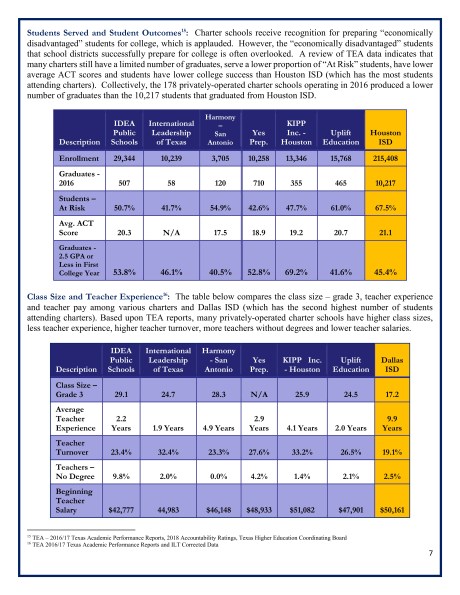
Ultican reviews the research about IDEA, which features boasting, high attrition rates, and careful selection of students.

He details the finances of the IDEA chain, which includes a bevy of high-paid executives and a staggering asset value.

He writes:

“At the end of 2016, IDEA’s asset value climbed to $680,172,540 and their year’s income was $332,775,059.”

This is big business. It has mastered the art of gaming the system. It is leading the march to Destroy Public Education in Texas.

If you live anywhere near Nashville, please turn out to hear theeloquest Dr. Charles Foster Johnson talk about the danger of vouchers and how they threaten religious liberty.


Pastors for Tennessee Children has been expanding but needs your help to reach more ministers and faith leaders (laypeople) prior to the January session of the General Assembly. Come find out why and listen to the dynamic Rev. Charles Foster Johnson advocate for public education as part of our moral duty.

Thursday, October 4, 11:30 AM – 1 PM CT

Nashville Event Featuring Rev. Charles Foster Johnson

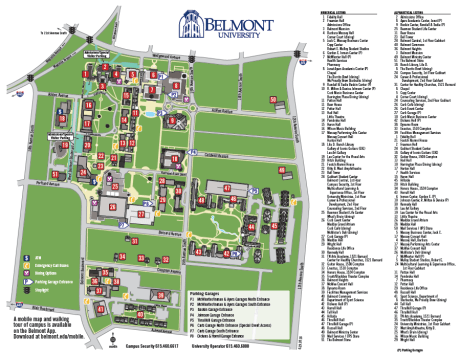
Belmont University, Curb Event Center, Vince Gill Room, 2000 Belmont Blvd

Building #26. Parking is available through the P7 entrance- visitors spaces are well marked. The Vince Gill Room is at the Belmont Blvd. side of the building, attached to the Arena. Signs will direct you there.
Lunch provided

To RSVP, contact diana.page@comcast.net

Rev. Johnson of Fort Worth is founder of Pastors for Texas Children and has inspired the Oklahoma, Kentucky and Tennessee groups He is also the promoter of similar groups in formation in ten other states. He has told us how his Texas group of more than 2,000 pastors and faith leaders has helped prevent the passage of private school vouchers in the Texas Legislature since its founding five years ago. Tennesseans hope to similarly convince our legislators to support our Tennessee schools and reject vouchers. We are starting by introducing pastors and faith leaders across the state with a speaking tour to present our positive public education message. You will hear how the voices of ministers, lay leaders, rabbis, imams, and their congregants are needed to support our public school children.

Also. please consider becoming a partner (member) of our network at http://www.pastorsfortennesseechildren.org/ (website).
Contact pastors4TNchildren@gmail.com for more information about the other four stops on Rev. Johnson’s Tennessee speaking tour: Chattanooga (lunch, Oct. 2), Knoxville (lunch, Oct. 3), Pleasant Hill (evening of Oct. 3), and Memphis (lunch, Oct. 5),

Screen Shot 2018-09-27 at 10.40.34 PM

Screen Shot 2018-09-27 at 11.01.03 PM

Linda McNeill is a professor at Rice University who writes about funding, testing, and other education policy issues.

In this post, she describes her reaction when she received a beautiful invitation to a dinner to raise money for charter schools in Houston. The invitation came from one of Houston’s existing very well-funded charter chains. (Coincidentally, IDEA just announced plans to expand in Houston, as well as a plan to saturate El Paso with 20 IDEA charters).

She writes, in part:

The thick envelope gave a hint of elegance inside. An invitation. Colorful graphics, fine card stock, strategically placed photographs, “bold face” names inside the folds of this multi-layered, professionally crafted solicitation. A separate card, two-sided on high quality card stock, lists in bold contrasting colors the details of the events. Also inside, a return envelope for the enclosed commitment card suggesting “underwriting opportunities” from a mere $500 to levels of $50,000 and $100,000.

An invitation to a museum gala or symphony fund-raiser? A call to join the restoration of our Harvey-flooded opera house? The funding categories would seem to so suggest.

No, this was an invitation to a fund-raiser for a corporate charter school chain. A private company that has added “public” to its name because it is one of the corporate entities that takes taxpayer dollars (the “public” part) to fund its schools.

My first inclination was curiosity: who are these people? I looked over the names of the funders already listed on the invitation: the usual anti-public school billionaires, some names of really good people who should know better, and some people I didn’t recognize who probably have been sold on the idea that only by contributing to these charter chains can they save the city’s poor, minority children.

My next reaction was anger. This invitation – fancy graphics, elegant card stock, thick white envelopes – was expensive! Each one must have cost several dollars, even accounting for a bulk order discount. I turned each piece over to try to find the printing company that produced it. No designer or graphics company attributed, but a line that caught my eye: contact the charter chain’s “manager of special events” for more information. Really??

Manager of Special Events! I know of no public school, no neighborhood school, that has a manager of special events – much less the budget to hire one. But they all could use that $100,000 for a long list of needs after years of underfunding.

Then I immediately knew the source of my anger: the inequity of it all. These charter chains are privately incorporated, but they not only take our tax dollars out of our public schools – the public’s schools, but they may be using our tax dollars to pay their special events managers and printers to advertise against our public schools! Our tax dollars enable their “marketing” in competition with the public’s own schools. I took the invitation to a high-quality stationery store to ask if they had produced it and what it might have cost. The woman said they hadn’t produced it but confirmed it was definitely expensive and each would have cost “several dollars” even if, as I had suspected, several hundred or thousand had been printed and mailed out (yes, add the mailing costs). And even if the printing had been donated by an individual or corporation, those dollars would still have been taken from our public schools as a tax-deductible, “charitable” contribution.

So the first inequity is that all of these “contributions,” from the modest $500 (mere seat at luncheon) to the ‘naming rights’ (I’m not making this up!) for donors giving $100,000, all of these dollars end up subtracted from the public treasury.

The second inequity: the costs of those invitations. I suddenly realized each one must cost more than many of our teachers have for school supplies and instructional materials on any given day. So I asked some teachers. A 7th-grade biology teacher new to her current school was hopeful: “They say I’ll have the supplies I need for labs and we’ve ready sent in the order for frogs for the kids to dissect, so we’ll see. So far, so good.”

The next answer was less optimistic: “I’m told I have to require every student to bring a ream of copier paper; when that runs out we won’t get any more, so I’m trying to be careful to plan ahead.” From a high school teacher: “No, we don’t get to buy paperbacks for our classrooms. We have some on hand but if we want to assign other titles, the kids have to buy their own. If they can’t afford it, I see if I have an extra copy at home or maybe I just buy it for them.”

This story appeared in the Washington Post, by Haben Girma, a disability rights lawyer, author and public speaker.


I am Deaf-blind, and I almost missed my first lesson about Helen Keller. In second-grade U.S. history, my teacher scheduled Helen Keller’s story after a lesson in square-dancing. I remember my heart racing as I danced a do-si-do with my not-so-secret crush. So when our teacher told us about Keller, I was not-so-secretly distracted.

But throughout my schooling, snippets of Keller’s story would come back to me. I would turn to the nearest computer wondering: How did she . . . ? In high school, I finally read her books and marveled that she excelled in college before the Americans With Disabilities Act, before digital Braille and before, of course, the Internet. She pioneered through the world’s unknowns in a way that inspired me as I carved a path for myself. If my school hadn’t taught us about Keller, I might have do-si-do’d a different direction entirely. When I tell people about the path I did take — law studies at Harvard University and work as a disability rights advocate — they think back to their own lessons on Keller. Learning her story sparks something students carry with them into adulthood.

Last week, the Texas Board of Education took a step to remove Keller from the state’s social studies curriculum. The board preliminarily voted to update the K-12 curriculum by eliminating several historical figures, including Keller. Proponents said dropping the Keller lesson would save teachers 40 minutes. The board will make a final decision in November.

Spending 40 minutes annually to teach children about Keller is not just worthwhile but also imperative. The story serves as a gateway to conversations about disability and virtue. It introduces students to Braille, a tactile reading method that blind people have used since 1824. Children also learn about American Sign Language, a visual language developed by the Deaf community. Keller held her hand over another person’s to feel each letter as it was signed, then finger-spelled or voiced her response. She spent her life teaching people about the abilities of people with disabilities. She also advocated for women’s rights, racial equality and workers’ advancement. Keller wanted to make the world better for all of us.

Keller’s story provides an irreplaceable lifelong lesson of optimism, hard work and community inclusion. She labored over her studies, learning to read and write in multiple languages. She set high expectations for herself, gaining admission to Radcliffe College, the sister school to Harvard. Her teachers and friends converted books from print to Braille. She developed a community of friends and colleagues who welcomed her, finger-spelling and all. Successful people with disabilities such as Keller foster these inclusive communities. Disability itself is often not a barrier; the biggest barriers exist in the social, physical and digital environments.

People are dying waiting for disability. What’s taking so long?

In the last two years, nearly 19,000 Americans died waiting for disability. The wait has soared from around 350 days in 2012 to nearly 600 in 2017. (Daron Taylor/The Washington Post)
The techniques a Deaf-blind person uses to navigate those barriers in a sighted-hearing world fascinate students. Whenever I do presentations at schools, students express boundless curiosity about Keller’s story. How could she climb a tree? How did she read if she couldn’t see?

If Texas removes Keller’s story from the curriculum, when will non-disabled children learn about disability? Her story is too often the only disability story. Deleting Keller from the curriculum can mean deleting disability from the curriculum.

Of course, relying on a single story to represent the disability community is in itself a problem. The disability community is diverse, full of rich stories of talented people improving their communities. Students need to learn more about disability, not less. It touches all of our lives. Our bodies change as we age. Anyone can develop a disability at any point or witness a family member or friend do so. More than 57 million Americans have a disability. We number 1.3 billion worldwide — the largest minority group.

Teaching students about disability through the stories of people such as Keller prepares them to be better citizens, better friends and better family members. Keller’s optimism, hard work and commitment to justice inspire them to the same virtues.

Texas will make a final decision in November. We have time to educate the state’s Board of Education on the importance of keeping Keller in the curriculum. Keller herself would urge people to stay optimistic: “Optimism is the faith that leads to achievement; nothing can be done without hope.”

Keller’s words have sparked movements in the past. Why not now?

The IDEA charter chain has plans to open 20 new charter schools in a part of Texas that doesn’t need them. We have plenty of evidence that charters do not outperform traditional district schools. Instead, they suck out resources and the students they want, weakening the district schools like a parasite.

David Knight and David deMatthews warn the people of El Paso that “choice” is not all that it is cracked up to be.

You will not be surprised to learn that IDEA is funded by the usual billionaire “philanthropists,” who want to disrupt public education and privatize it.

The IDEA charter chain is known for having a high graduation rate, but also known for the large number of its graduates who flunk out of college.

Knight and deMatthews write:

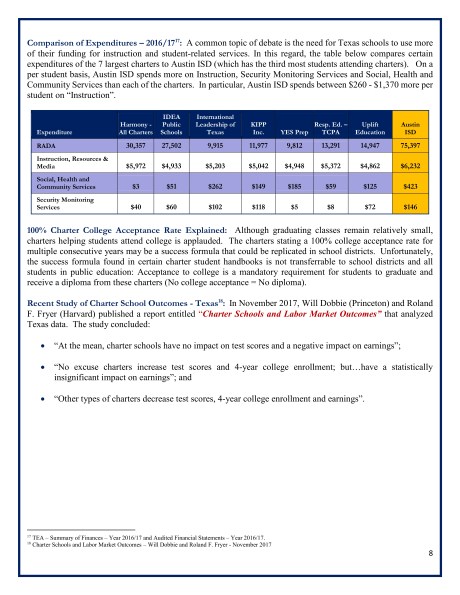
The development of 20 new schools represents a major shift in how educational resources will be distributed across the region. Currently, together the Canutillo Independent School District and the Clint ISD have only 24 schools and the El Paso ISD, the region’s largest school district, has 91 schools.

Adding 20 schools through the region can create significant inefficiencies. Districts like El Paso ISD and Ysleta ISD are currently losing enrollment as most of the region’s population growth exists on the East and West sides of the city. As enrollments decline, school districts lose money and operating schools becomes more expensive. Consequently, superintendents are often compelled to close under-enrolled schools due to cost, despite public outcry.

At the same time, districts like Clint, Canutillo, and Socorro are experiencing continued growth in student enrollments. These districts invest millions to plan and build new facilities. If new charters open in close proximity to newly built facilities, districts may find their state-of-the-art campuses under-enrolled.

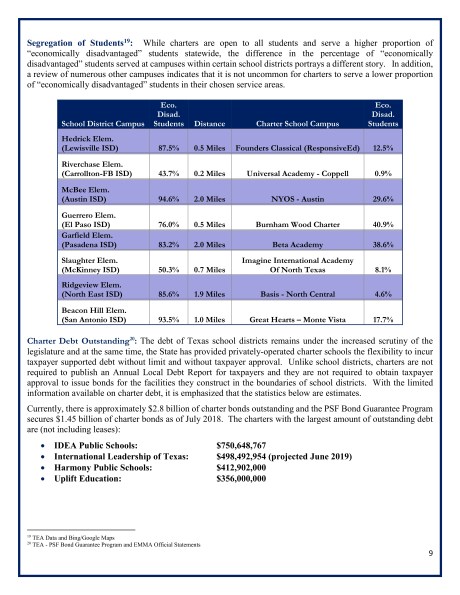
IDEA’s growth can also create an undue burden and disrupt natural proportions of students with disabilities enrolled in traditional public schools if they engage in what has been called “creaming” or “cherry-picking” students. According to 2016-17 publicly available data, all IDEA charter schools in Hidalgo, Texas, enroll only 4.8 percent of students with disabilities, while the state average is 8.8 percent.

Importantly, the Texas statewide average is already the lowest in the nation at 8.8 percent. The Texas Education Agency has been investigated by the U.S. Department of Education, which concluded that many Texas schools and districts engaged in practices that delayed and denied special education to eligible students. IDEA’s 4.8 percent identification rate should be especially concerning to all parents, but especially those of children with disabilities.

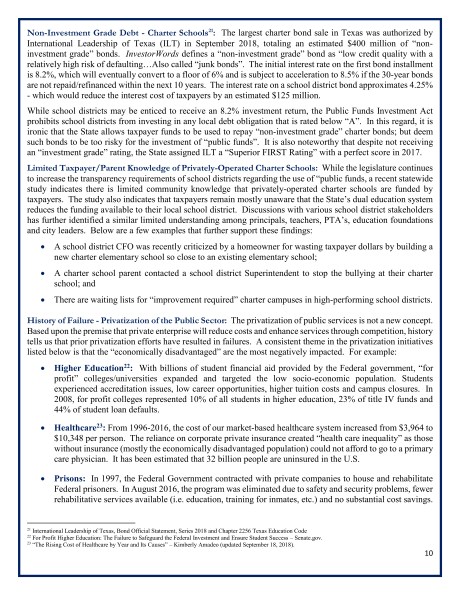
Both traditional public and charter schools are eligible to receive philanthropic donations. IDEA has received millions of dollars from the Michael and Susan Dell Foundation, the Walton Foundation, and the Bill and Melinda Gates Foundation. The El Paso based Council on Regional Economic Expansion and Educational Development has pledged $10 million.

Yeah, both are “eligible to receive philanthropic donations,” but somehow all those big bucks end up in the pockets of the charter operators, not the public schools. The Dells, the Waltons, and the Gates don’t believe in public education. They believe in the marketplace, disruption, and competition. Not for their children, of course.

The authors think that charter schools are “public schools.” No, they are not. They are privately managed corporate schools. Federal courts have ruled that charter schools are “not state actors.” The NLRB has ruled that charter schools are “not state actors.”

Public schools are state actors. Charter schools are not state actors. They are private contractors.

Charles Foster Johnson is a Baptist minister in Texas and founder of Pastors for Texas Children.

He wrote an op-ed in the Houston Chronicle about the threats that vouchers pose to religious liberty, and his specific concern that Brett Kavanaugh endangers religious liberty because of his hostility to the wall of separation, which protects the church from the intrusions of the state.

He writes, in part:

For nearly 150 years, our state Constitution has included a “no-aid” clause that protects the religious freedom of all Texans by ensuring that public funds are not used to support any private religious school or religious denomination. In fact, the Texas Constitution’s ironclad, explicit requirement for the Texas State Legislature to “make suitable provision for the operation and maintenance of an efficient system of public free schools” was in direct reaction against Texas settlers’ taxes having to underwrite religious schools at the founding of our state.

Our message and movement to protect and preserve religious liberty by opposing private-school vouchers has now spread to Oklahoma, Tennessee and Kentucky and will soon launch in a number of other southern and midwestern states, where voluntary religious faith is so central. Simply put, we want the government to stay out of this intensely personal arena of our lives.

If Kavanaugh joins the Supreme Court, I fear it will strike down this “no-aid” clause and similar clauses that exist in 37 other state constitutions. This reversal would allow state money to flow to religious schools. A flurry of state-funded voucher programs would soon follow, putting both religious freedom and our children in peril.

Sarah Becker, a parent in the Houston Independent School District, is thrilled with her child’s public school. It has exceeded her expectations. Yet the state claims it is failing. How can this be? Could it be that the ratings system is wrong? What do you think? Sarah says she will ignore the rating system but the state won’t. They might close her child’s school or even take over the entire school district for failing to do something dramatic to her school. Accountability hawks are no doubt eager to see Sarah’s school closed and handed off to a charter operator. Lt. Gov. Dan Patrick and Gov. Greg Abbott would be happy to see the school closed and hand out vouchers to the students to attend a religious school. Sarah Becker says they are wrong.

A couple of weeks ago the Texas Education Agency (TEA) released their ratings of schools and school districts. I am the mother of two children at a school in Houston Independent School District, the state’s largest school district and the seventh largest district in the country. How did my kids’ school fare in this year’s accountability system? The school failed, receiving an “Improvement Required” rating.

Does that give me pause about sending my kids there? Not one bit and I’ll tell you why.

This past year was the first one my children spent at their elementary school. From the moment they set foot on campus, my children were accepted and loved. The physical environment of the school is welcoming, and they have a nice, new building with lots of natural light. And in a time when public school budgets are incredibly austere, my kids’ elementary school found a way to hire a PE teacher, an art teacher, a music teacher, a nurse and a social worker last year. To have all of those is incredibly rare in HISD-in fact, this elementary school was the only one within driving range of our home to offer those. It has a rooftop garden and a makerspace. And finally most amazingly, my children learned AN ENTIRE SECOND LANGUAGE last year. We literally dropped them into new classes having had almost zero exposure to Spanish and they ended the year speaking, reading and writing two languages. The progression has been amazing to watch. Their worlds are bigger and more beautiful because of their new school.

So how did such a great school end up being on the “improvement required” list? The system used to identify “failing” schools is unsound and inaccurate. It is based solely on how certain students perform on a single standardized test on a single day.

You have probably seen the meme floating around social media with the following quote: “Everybody is a genius. But if you judge a fish by its ability to climb a tree, it will live its whole life believing that it is stupid.” As cliché as that quote is, I find much truth in it when applied to our “accountability” system. If you judge every school by the standards of the TEA, some very successful schools will receive failing ratings not because they fail to educate, but because the accountability system demands that fish ride bicycles by making children conform to tests.

Which brings us back to my family’s experiences-no part of my kids’ experience at our school last year was a part of any accountability data.

I think it’s important to acknowledge that our school is not perfect—there is always room to grow—but how long do Texas students and teachers have to wait for an accountability system that is fair and looks at something other than narrow, flawed test scores which seem aimed to punish school communities that serve students in poverty? And, in an environment where the state legislature seems hellbent on increasing the stakes around standardized testing (see: state takeover of democratically elected school boards), schools are being asked to sacrifice increasingly more each year in the name of raising said test scores.

Lest I be accused of glossing over real problems, I am not suggesting that all public schools are perfect or even that our district has served all communities well. Quite the opposite. But if we focus only on bringing up test scores, we miss addressing the very real issues that are in front of us because test scores take up all the space.

Until this system is overhauled, I will continue to pay no mind to it and pay attention to the very clear evidence in front of me: my kids are excited to show up to school every morning and love their school. Their teachers are caring professionals. That is enough accountability for me.

An editorial in the Houston Chronicle brings up to date the story of Texas’ failure to pay the cost of educating students with disabilities.

“Imagine being a teacher and told not to bother trying to help a child who is having difficulty learning. That was happening routinely in Texas public schools before the legislature was shamed into eliminating an 8.5 percent cap the state had placed on special education enrollment.

“The federal Department of Education in January told the Texas Education Agency that the “target” it first imposed in 2004 violated federal laws requiring schools to serve all students. The cap wasn’t just illegal, it was morally reprehensible and shortsighted.

“The cap limited the aspirations of students with learning disabilities who didn’t get the help they needed, and shortchanged the state’s future by inadequately educating thousands of its children.

“The cap’s impact was reported last year in the Chronicle’s investigative series “Denied,” which pointed out that Houston had imposed an even more draconian 8 percent target for special education enrollment. “It became a nightmare,” said Attucks Middle School teacher Thomas Iocca.

“It’s a nightmare that won’t end any time soon for students who lost precious years of federally mandated assistance and interventions that could have helped them learn.”

Meanwhile, lawmakers are left with a fiscal headache as they try to find an additional $3.2 billion to spend on special education over the next three years to serve students previously denied assistance. Removing the cap is expected to add 189,000 special education students to public school rolls statewide.

Maybe the state should tap the nearly $11 billion Rainy Day Fund it’s been sitting on. Other issues need more cash too, including unpaid bills from Hurricane Harvey, Medicaid and an underfunded employee pension fund. But special education must be a top priority.