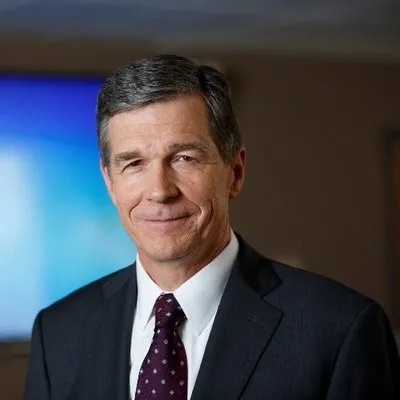
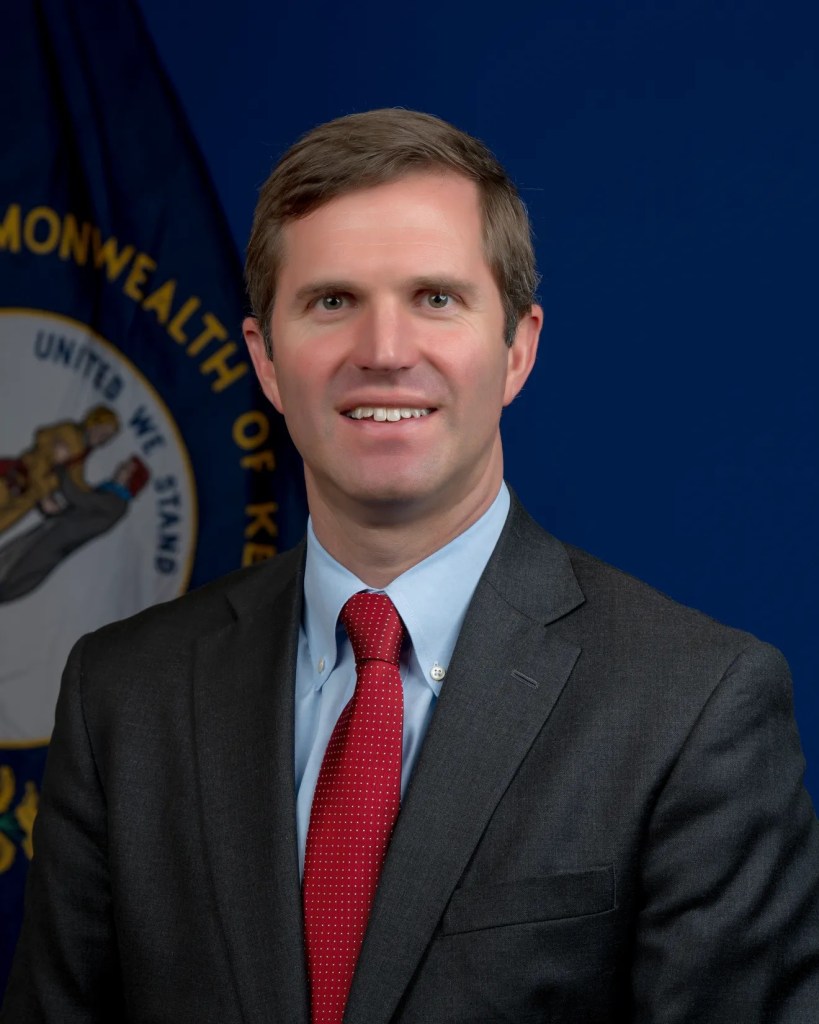
Back in February, long before President Biden stepped back and Vice-President Kamala Harris became the Democratic nominee for President, two red-state Governors spoke out against vouchers. Both are Democrats who understand the importance of public schools for their communities. They are Governor Roy Cooper of North Carolina, whose gerrymandered legislature has a Republican supermajority, and Governor Andy Beshear of Kentucky, whose legislature is controlled by Republicans. When Beshear ran, he picked a teacher as Lieutenant Governor.
In North Carolina and Kentucky, public schools are the center of our communities. We’re proud public school graduates ourselves – and we know the critical role our schools play in teaching our students, strengthening our workforces and growing our economies.
In Kentucky, we’ve seen significant improvement in elementary school reading, even with setbacks from the pandemic like many states experienced. In North Carolina last year, public school students completed a record 325,000 workforce credentials in areas like information technology and construction. The bottom line? Our public schools are critical to our success and an overwhelming number of parents are choosing them for their children.
That’s why we’re so alarmed that legislators want to loot our public schools to fund their private school voucher scheme. These vouchers, instituted in the 1950s and 1960s by Southern governors to thwart mandatory school desegregation, are rising again thanks to a coordinated plan by lobbyists, private schools and right-wing legislators.
Voucher programs chip away at the public education our kids deserve
This is their strategy: Start the programs modestly, offering vouchers only to low-income families or children with disabilities. But then expand the giveaway by taking money from public schools and allowing the wealthiest among us who already have children in private schools to pick up a government check.
In North Carolina, the Republican legislature passed a voucher program with no income limit, no accountability and no requirement that children can’t already go to a private school. This radical plan will cost the state $4 billion over the next 10 years, money that could be going to fully fund our public schools. In Kentucky, legislators are trying to amend our constitution to enshrine their efforts to take taxpayer money from public schools and use it for private schools.
Both of our constitutions guarantee our children a right to public education. But both legislatures are trying to chip away at that right, leaving North Carolina and Kentucky ranked near the bottom in per-pupil spending and teacher pay.
Public schools are crucial to our local economies. In North Carolina, public schools are a top-five employer in all 100 counties. In many rural counties, there are no private schools for kids to go to – meaning that those taxpayer dollars are torn out of the county and put right into the pockets of wealthier people in more populated areas.
Private schools get taxpayer dollars with no real accountability
As governors, we’ve proposed fully funding our public schools, teacher pay raises to treat our educators like the professionals they are and expanded early childhood education. We know that strong public schools mean strong communities. Families in Kentucky and North Carolina know that too. In North Carolina, nearly 8 in 10 children go to public schools.
Our public schools serve all children. They provide transportation and meals and educate students with disabilities. And they’re accountable to taxpayers with public assessments showing how students and schools are doing and where they need to improve.
But private schools that get this taxpayer money have little to no accountability. They aren’t even required to hire licensed teachers, provide meals, transportation or services for disabled students. They don’t even have to tell the taxpayers what they teach or how their students perform. North Carolina’s voucher system has been described as “the least regulated private school voucher program in the country.”
Studies of student performance under school voucher programs not only showed that they don’t help them, but that they could actually have harmful effects. Results from a 2016 study of Louisiana’s voucher program found “strong and consistent evidence that students using an LSP scholarship performed significantly worse in math after using their scholarship to attend private schools.” In Indiana, results also showed “significant losses” in math. A third study of a voucher program in Ohio reported that “students who use vouchers to attend private schools have fared worse academically compared to their closely matched peers attending public schools.”
We aren’t against private schools. But we are against taxpayer money going to private schools at the expense of public schools.
The future of our nation goes to class in public schools, and all Americans must be on guard for lobbyists and extremist politicians bringing similar plans to their states. Our segregationist predecessors were on the wrong side of history, and we don’t need to go back.
We are going to keep standing up for our public school students to ensure that they have the funding they need, and that teachers are paid like the professionals they are. It’s what’s best for our children, our economy and our future.
Roy Cooper is the governor of North Carolina. Andy Beshear is the governor of Kentucky.
Michelle Davis writes a blog called Lone Star Left, where she opines on the struggle to reverse the hold of fascists on the state of Texas. She previously reported on the state convention of the Texas GOP, which cherishes the “right to life” for fetuses but wants to impose the death penalty on women who seek or obtain an abortion. Women who want an abortion apparently have NO right to life.
In this post, Davis reports on the Texas Democratic Party platform, which is the polar opposite of the GOP. She loves it!
She writes:
Okay, we’re finally to it. The Texas Democratic Party Platform and the proposed changes went through the Platform Committee. The Texas Democratic Party (TDP) platform is a critical document that outlines the party’s values, principles, and policy goals. It serves as a roadmap for Democratic candidates and elected officials, providing a clear vision for the future of Texas. The platform reflects the collective voice of party members and sets the agenda for the party’s legislative priorities.
The platform also plays a significant role in mobilizing voters. It provides a comprehensive guide to what the Democratic Party stands for, making it easier for voters to understand its positions on critical issues. (Or at least that’s how it’s supposed to work.)
If you missed the previous articles about the TDP’s updated rules and resolutions:
Personally, I love the Texas Democratic Party Platform and have kept up with its evolution over the years. The previous platform is online, which you can see here:
Earlier this week, I was mindlessly scrolling on TikTok, and I came across some dipshit from Los Angeles who has several hundred thousand followers; her video was all about how “both parties are the same,” and she was discouraging people from voting. The privileged position of living in a blue state, right?
People like this piss me off because NO Democrats and Republicans are not the same.
While the Republican Party of Texas debated giving women who have abortions the death penalty, this week, the Texas Democratic Party added a platform plank that says, “Restore the right of all Texans to make personal and responsible decisions about reproductive health.”
Republicans want unfettered end-stage capitalism with no healthcare, no public education, no Social Security, no Medicaid, and vast wealth inequality. Democrats want universal healthcare, well-funded public education, robust social safety nets, and economic equality.
The Texas Democratic Party platform is a testament to our commitment to creating a fairer, more just society for all Texans. Seeing such misinformation spread online is frustrating, especially when it can lead to voter apathy. However, our platform represents a clear and progressive vision for the future.
It’s a comprehensive document outlining our priorities for a better Texas. We must continue to show these differences between the blue and the red to counteract the cynicism and misinformation that is prevalent today.
What are some of the positive highlights?
Education:
The platform changes maintained the emphasis on protecting and improving Texas public education. They also retained strong language prohibiting school choice scams, such as using vouchers, including special education vouchers, and opposed these programs. The platform kept the requirement that every class have a teacher certified to teach that subject. It clarified that teachers should not be expected to provide financial support through classroom supplies and other essentials at their own expense.
Offer dual credit and early college programs that draw at-risk students into vocational, technical, and collegiate careers.
Ensure all public school children are provided free school meals.
Higher education:
The TDP platform includes several favorable planks in higher education to make college more accessible and affordable. These include advocating for student loan debt relief, providing free college tuition for low-income qualified students, and offering paid internships and debt-free apprenticeship programs. Additionally, the platform supports eliminating standardized testing requirements like the SAT and ACT for college admissions.
Voting and elections:
The platform supports electronic voting systems that utilize paper backups and an auditable paper trail, ensuring election integrity. This particular plank led to some debate. While some supported it for ensuring election integrity, others were wary of potential vulnerabilities and preferred more traditional voting methods. Ultimately, it passed.
Another fundamental plank supported the establishment of a limit on campaign donations in Texas elections to ensure fairness and transparency. We badly need campaign finance reform in Texas. Democrats see this need and are taking it seriously.
They also supported establishing a code of judicial ethics for the Supreme Court of the United States and efforts to recalibrate the court by tying the number of justices to the number of federal circuit courts (13).
If you missed my previous article, the Texas Democratic Party Resolution supports universal healthcare. This has also been part of their platform for several years. Unfortunately, we’re still fighting for basic healthcare access in Texas, so it’s a part of the Texas Democratic Party platform that doesn’t get enough attention.
Here are some (not all) other interesting planks added this year:
Protect doctors and hospitals from politically motivated attacks that hinder them from providing the best care possible.
Legalize and expand access to harm reduction supports such as fentanyl testing strips, Narcan, and safe syringe programs.
Support policies that reduce pollution and protect clean air and water.
Ensure that veterans have access to high-quality mental health services and support for substance use disorders.
Reproductive healthcare:
We all know what the GOP is doing. Besides restoring the right of Texans to make personal and responsible decisions about reproductive health, other new TDP platform planks include:
Protect the right to access in vitro fertilization (IVF) treatment.
Uphold the right to travel to another state for legal medical services.
Offer comprehensive, age-appropriate sex education.
Hold medical providers accountable for withholding information about a pregnancy based on their presumption that the pregnancy would be terminated.
Safeguard reproductive health and gender-based care patient privacy, including protection from law enforcement.
The environment and climate.
Sometimes, I wonder if we spend enough time talking about this issue. It’s terrible right now, and the next several months could bring devastating weather.
The new planks, which add to the TDP’s previous commitments to clean energy, address many of these concerns. Including supporting policies that develop clean energy resources, promoting alternative fuel vehicles, promoting more energy-efficient buildings and appliances, streamlining the permitting process for building new electric transmission lines, and adding charging stations for electric cars at all state highway rest stops.
Dawn Buckingham, the Texas Land Commissioner, and oil and gas shill has promised to fight the federal administration from connecting offshore windmills to Texas. However, the TDP platform supports federal legislation to share offshore wind lease and production revenues with Texas and other states, incentivizing state and local governments to facilitate successful siting processes and funding coastal infrastructure and flood resiliency projects.
They also emphasized creating and enforcing stringent state and federal regulations on oil and gas operations, including methane release monitoring and enforcement without exceptions.
The TDP platform includes significant changes in the criminal justice reform plank, stressing a more humane approach to law enforcement. The platform proposes raising the minimum age of criminal responsibility from 10 to 13 years, ending the prosecution of juveniles in adult courts, and closing the remaining youth prison facilities while investing in community infrastructure to support children. Additionally, it aims to enforce the constitutional mandate against imprisoning individuals for debt, promote alternatives to incarceration for non-threatening offenses, and eliminate mandatory minimum sentences to allow for judicial discretion—notably, the platform advocates for abolishing the death penalty and instituting a moratorium on executions.
There is more. Open the link to finish her post.
What happens in Texas doesn’t stay in Texas. It spreads to other GOP extremists. Stay informed.
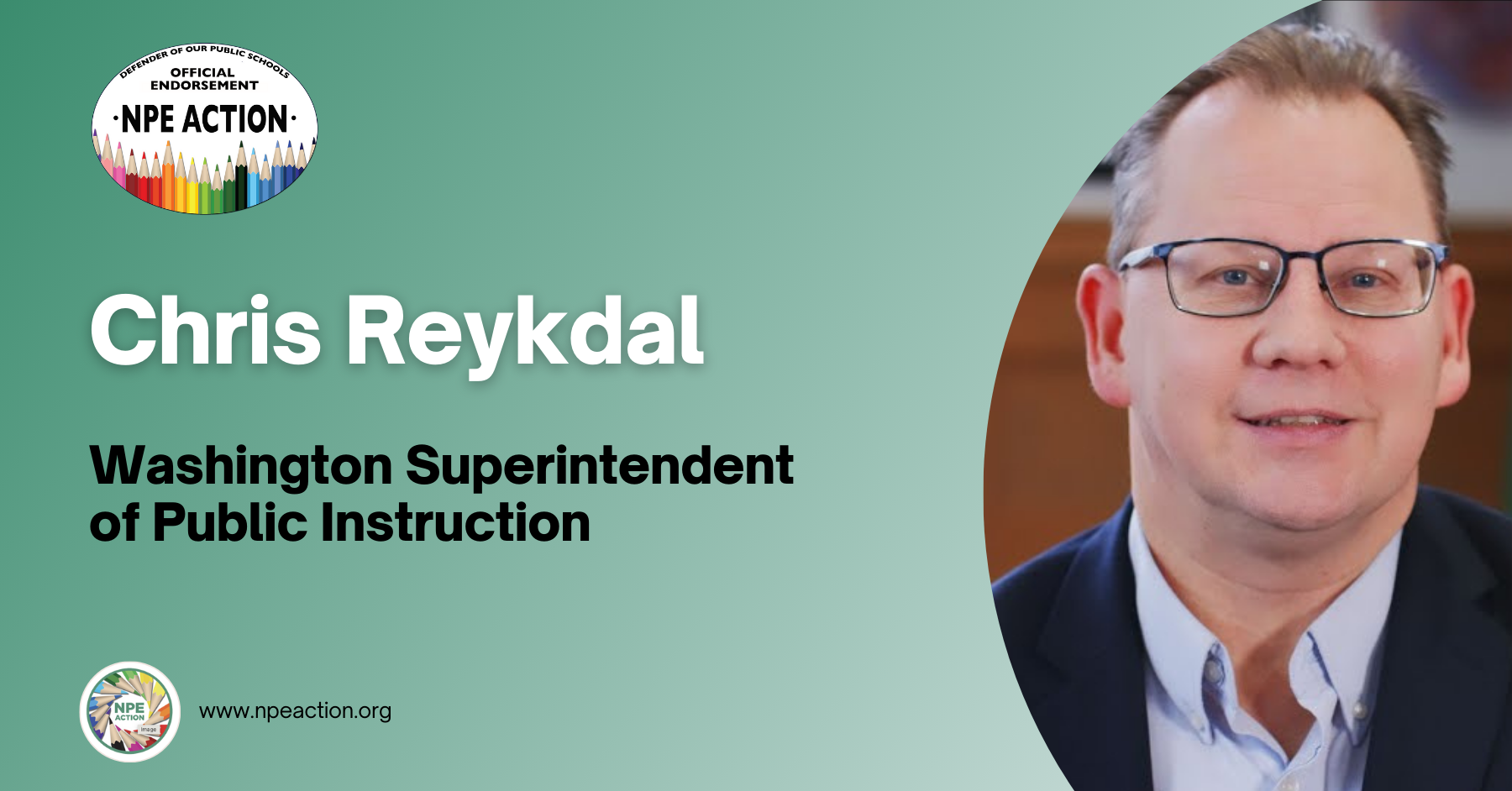
At last, a state superintendent who is a passionate advocate for public schools! Chris Reykdal is running for re-election, and he richly deserves it.
Chris is a graduate of public schools and wants every child in Washington to have the opportunities he had.
He has been an amazingly effective leader and advocate for the state’s public schools. While other states are squandering money on choice, which subsidizes religious schools and wealthy parents’ tuition payments, Washington has focused on improving its public schools, whose doors are open to all. You can read about the progress made in recent years in the endorsement of Chris by NPE Action.
I am happy to add my personal endorsement of Chris Reykdal. It’s thrilling to know that he is working every day to improve the public schools, which enroll 90% of the state’s children.
Chris is a leader with knowledge, experience, wisdom, and vision. Washington’s students and teachers need him.
NPE Action is proud to endorse Chris Reykdal for Washington Superintendent of Public Instruction. Chris began his professional career as a public school teacher. He served on a local school board, spent fourteen years as an executive in Washington’s public community and technical college system, served six years in the Legislature, and for the last seven years as Washington State School Superintendent. Chris has experienced education in Washington from nearly every perspective. Chris strongly believes that public education is the great equalizer. He will not yield to those who attack Washington’s public schools for their personal gain.
In the six years that Chris has been the Washington Superintendent for Public Instruction, the state has seen several major achievements. Graduation rates are at an all-time high and the state college remediation rates are at an all-time low. Chris has fought hard to make sure more children have free school meals and as a result free school meals are given to over 300,000 additional students. During his tenure, Washington has increased funding to support students with disabilities and Washington has the highest number of students with disabilities learning in general education classrooms.
Chris has goals for the next four years that are centered around children and he will ensure that Washington public schools remain public. Chris believes that there is no greater fight in Washington’s public education system than to ensure schools are publicly funded, publicly operated, and publicly accountable. Chris will lead the state to maintain focus in all policy and budget matters to focus on closing opportunity gaps.
Chris Reykdal is the benefactor of a state and a community that was committed to giving him opportunity, and he wants that for every child in Washington state. NPE Action urges public education supporters in Washington to get out the vote for Chris Reykdal in the primary election on August 6th.
Not authorized by any candidate or candidate committee. Authorized and paid for by Network for Public Education Action, PO Box 227. New York, NY 10156. 646-678-4477
Jitu Brown is running for the new school board in Chicago. Please join me for a virtual house party Monday, today, at 6 p.m.CST, 7 p.m. EST.
I have known and admired Jitu Brown for over a decade. Jitu has had a profound influence on my thinking. Jitu is one of my heroes and one of my teachers.
For years, Jitu has fought for great neighborhood public schools in Chicago, even putting his health on the line by engaging in a hunger strike to keep Dyett High School open when then-Chicago mayor Rahm Emmanuel attempted to shut it down.
Jitu is not only an extraordinary warrior for educational justice and equity in Chicago but also the leader of a national organization, Journey for Justice, that networks public school advocates in all of our major cities fighting for excellent and equitable public schools. For years, Jitu served as a member of the NPE Action Board.
One of Jitu’s causes, fighting to restore elected local control of Chicago’s public schools, has now been realized.
I am delighted that Jitu is running for a seat on the newly formed local school board, representing the 5thDistrict Seat on the West Side of Chicago. However, to gain that seat he will need our help.
I am asking that you join me in supporting Jitu’s campaign by attending a virtual house party for Jitu this Monday, May 13, beginning at 7:00 pm EST./6 pm CST. The link to this important event is below. I hope to see you there!
Virtual House Party for Jitu Brown (Chicago’s 1st Elected School Board!)
Time: Monday, May 13, 2024 06:00 PM Central Time (US and Canada) Join Zoom Meeting. 7 p.m. EST
A group of scholars at Indiana University led by Christopher Lubienski developed a methodology for ranking organizations and individuals in the field of education.
It was disheartening to see that nine of the ten most influential organizations advocate for school privatization, for charter schools and vouchers. It was also disheartening to see that these nine organizations have revenues in the millions of dollars each year. They are heavily funded by rightwing organizations and billionaires.
It was exciting, however, to see that #3 on the list of the 10 most influential organizations was the Network for Public Education!
It also was the organization with the smallest budget!
Wow! Standing up for public schools without billionaire $$$!
Tim Slekar is a fearless warrior for public schools, teachers, and students. I will be talking to him about Slaying Goliath and the struggle to protect public schools from the depredations of billionaires and zealots.
This Thursday on Civic Media: Dive Back into “Slaying Goliath” with Diane Ravitch
Grab your pencils—BustEDpencils is gearing up for a no-holds-barred revival of Diane Ravitch’s game-changing book, *Slaying Goliath*, live this Thursday on Civic Media.
Launched into a world on the brink of a pandemic, *Slaying Goliath* hit the shelves with a mission: to arm the defenders of public education against the Goliaths of privatization. But then, COVID-19 overshadowed everything. Despite that, the battles Diane described haven’t paused—they’ve intensified. And this Thursday, we’re bringing these crucial discussions back to the forefront with Diane herself.
This Thursday at 7pm EST on BustEDpencils, we’re not just revisiting a book; we’re reigniting a movement. Diane will dissect the current threats to public education and highlight how *Slaying Goliath* still maps the path to victory for our schools. This isn’t just about reflection—it’s about action.
**It’s time to get real. It’s time to get loud. It’s time to tune in this Thursday at 7 PM EST on Civic Media.**
If you believe that without a robust public education system our democracy is in jeopardy, then join us. Listen in, call in (855-752-4842), and let’s get fired up. We’ve got a fight to win, and Diane Ravitch is leading the charge.
Mark your calendars and fire up Civic Media this Thursday at 7pm Central.
Jan Resseger reports on dramatic changes in Chicago, which has been a Petri dish for corporate school reform for at least two decades. The last mayoral election pitted Paul Vallas, an Uber reformer against Brandon Johnson, a teacher and member of the Chicago Teachers Union. Johnson is now beginning to unravel the damage done by Arne Duncan, Rahm Emanuel, and the business leadership.
Chicago’s Board of Education has voted to implement an important first step in Mayor Brandon Johnson’s proposed school district overhaul: the elimination of student based budgeting.
Mayor Johnson seeks to restore equal opportunity across a school district that has become marked by magnet schools, charter schools, elite and selective public schools, struggling neighborhood schools, and neighborhoods without a a public high school or even a traditional public elementary school.
Johnson has prioritized major changes in the Chicago Public Schools, whose problems became especially obvious in June of 2013, when Mayor Rahm Emanuel closed 50 neighborhood public schools because, as he claimed, they were under-enrolled. Eve Ewing, a University of Chicago sociologist explains that, “80 percent of the students who would be affected were African American… and 87 percent of the schools to be closed were majority black.” (Ghosts in the Schoolyard, p. 54)
Chicago was an early experimenter with school reform. Brandon Johnson, the city’s elected mayor, leads Chicago’s schools as part of the 1994 mayoral governance plan imposed on the public schools by Mayor Richard M. Daley and the Illinois legislature. The Chicago Public Schools adopted universal, districtwide school choice, and the launch in 2004 of Renaissance 2010 (led by Arne Duncan) that involved the authorization of a mass of new charter schools and the subsequent closure of so-called failing neighborhood public chools. Chicago adopted a strategy called “portfolio school reform,” described in a National Education Policy Center brief: “The operational theory behind portfolio districts is based on a stock market metaphor—the stock portfolio under the control of a portfolio manager. If a stock is low-performing, the manager sells it. As a practical matter, this means either closing the school or turning it over to an charter school….”
Then in 2014, Mayor Emanuel added a districtwide funding plan called student based budgeting. In a 2019 report, Roosevelt University professor Stephanie Farmer explained: “Student Based Budgeting fundamentally remade the approach to funding public schools. Student Based Budgeting is akin to a business model of financing public schools because funds are based on student-consumer demand and travel with the student-consumer to the school of their choice. (The plan contrasts with)… the old public good approach to financing public schools that ensured a baseline of education professionals in each school.”
Because it is known that aggregate school test scores correlate primarily with poverty and wealth, it was predicable that student based budgeting would put schools in Chicago’s poorest neighborhoods on a race to the bottom, leading to schools with tragically limited programming for the city’s most vulnerable students and more school closures. Farmer concludes: “Our findings show that Chicago Public Schools’ putatively color-blind Student Based Budgeting reproduces racial inequality by concentrating low budget public schools almost exclusively in Chicago’s Black neighborhoods. The clustering of low budget schools in low-income Black neighborhoods adds another layer of hardship in neighborhoods experiencing distress from depopulation, low incomes, and unaffordable housing.”
In late March of this year, WBEZ’s Sarah Karp reported that the Board of Education voted to launch a new plan to determine how much each school has to spend on teachers and programming: “Chicago Public Schools is officially moving away from a school funding formula that pitted schools against each other as they competed for students… District officials… announced (on March 21, 2024) they are implementing a formula that targets resources for individual schools based on the needs of students, such as socioeconomic status and health. They will abandon student based budgeting—a formula unveiled a decade ago under former Mayor Rahm Emanuel that provided a foundational amount of money based on how many students were enrolled…. Under the needs-based formula, every school will get at least four foundation positions, including an assistant principal, plus core and ‘holistic teachers.’… Schools will then get additional funding based on the opportunity index, which looks at barriers to opportunity including race, socioeconomic status, education, health and community factors.”
While undoing a market-based scheme for school funding and operations is clearly a moral imperative, the challenges appear daunting. Karp continues: “This change was expected as Mayor Brandon Johnson and others have sharply criticized student based budgeting. However, it was unclear how it would play out, especially as the district faces a $391 million deficit for the next school year. The shortfall is the result of federal COVID relief funds running out… District officials offered no information at a Board of Education meeting… on how the district will fill the budget hole.”
In addition to the threat of a serious financial shortfall, another challenge is the outcry from parents who have over the past two decades become a constituency for charter schools, magnet schools and selective high schools. Mayor Johnson has tried to reassure parents: “(L)et me assure people that—whether its a selective enrollment school or magnet school—we will continue to invest in those goals… (A)ll I’m simply saying is that where education is working in particular at our selective enrollment schools and our magnet schools, my position is like any other parents in Chicago: that type of programming should work in all of our schools. And that has not been the case. Neighborhood schools have been attacked, they have been demonized, and they’ve been disinvested in, and Black and brown parents overwhelmingly send their children to those schools. So it’s not just demonizing and disinvesting in Black and brown schools, it’s demonizing and disinvesting in Black and brown people—and not under my administration.”
Although school choice plans like Chicago’s were originally premised on the idea of providing more choices for those who have few, in her profound book, Ghosts in the Schoolyard, Eve Ewing explains that families in Chicago do not have equal access in today’s school system based on school choice: “While choosing the best option from a menu of possibilities is appealing in theory, researchers have documented that in practice the ‘choice’ model often leaves black families at a disadvantage. Black parents’ ability to truly choose may be hindered by limited access to transportation, information, and time, leaving them on the losing end of a supposedly fair marketplace.” (Ghosts in the Schoolyard, p. 23) Families dealing with poverty and its challenges are more likely to select a neighborhood school within walking distance of their home.
Mayor Johnson and his school board are facing a fraught political battle in the midst of severe budget challenges. Chicago school reform has exacerbated inequality. The families whose children remain in traditional neighborhood schools that have been undermined by school choice and student based budgeting have watched their their schools lose staff and programs their children need. At the same time, families who have benefited from charter schools, magnet schools and selective-enrollment high schools have now become strong supporters of the programs they have come to take for granted.
Mayor Johnson has been very clear, however, about what the past two decades of portfolio school reform, school choice and student based budgeting have meant for Chicago: “What has happened in the city of Chicago is selective enrollment schools go after students who perform academically on paper. It’s a very narrow view of education. Let’s also ensure that other areas of need are also highlighted and lifted up. That’s arts, our humanities, technology, trades… It’s not like we’re asking for anything radical. We’re talking about social workers, counselors, class sizes that are manageable. We’re talking about full wraparound services for treatment for families who are experiencing the degree of trauma that exists in this city.”
Tim Slekar is an energetic, unstoppable fighter for public schools. In addition to serving as Dean at different colleges of education, he is a blogger and a broadcaster, always focused on defending the commons, the spaces that belong to all of us.
Tim wants you to join him on his show “BUSTED PENCILS.”
It’s time to amplify our voices and take our fight for public education to the next level. We’re calling on all passionate advocates, educators, parents, grandparents, students, researchers, and anyone who believes in the power of public schools to join us on the airwaves of BustEDpencils Radio!
We’re on a mission to make BustEDpencils the go-to platform for unapologetic, no-holds-barred conversations about public education. But we can’t do it without YOU. We want to hear YOUR stories, YOUR struggles, and YOUR triumphs in the fight to protect and transform our public schools into true incubators of democracy and critical thought.
Teachers, we know you’re on the front lines, and your insights are invaluable. We want to hear your voices loud and clear, sharing the realities of the classroom, the challenges you face, and the victories you’ve won.
Parents and Grandparents, you’re the backbone of our school communities. Your perspective on what’s happening in our schools and how it’s affecting our kids is crucial. We want you to share your experiences and your unwavering support for public education.
Students, you’re the reason we’re all here. Your experiences, ideas, and dreams matter. We want to hear your voice, your perspective on education, and your vision for the future of our schools.
University and College Researchers, your expertise sheds light on the policies and practices shaping our schools. We need you to break down the research and help us understand what’s at stake and what we can do about it.
And here’s where it gets even more exciting – we’re also looking for volunteers to host BustEDpencils Listening Parties! Let’s boost our ratings, spread the word, and create a movement that the mainstream media can’t ignore. It’s time to make public education a national priority, and with your help, we can make it happen.
This is our moment, folks. It’s time to rally together, share our stories, and make our voices heard. If you’re ready to join the fight and be a part of something big, email me at timslekar@gmail.com to volunteer. Let’s take BustEDpencils mainstream and show the world that when it comes to public education, we mean business.
Together, we can save and transform our public schools. Let’s Give it All!




 Diane Ravitch's blog