Archives for category: Separation of church and state

Hey, Yeshivas and Muslim religious schools. Stop struggling to raise money. Rename yourself and get a charter from the State University of New York Charter Committee. Then the public will pay for your religious activities. True, the state constitution bans public money for religious schools, but so what?

The SUNY charter board (appointed by Governor Cuomo) awarded charters to the Brilla Network, which teaches Catholic virtues and values. They call themselves “virtue-based” charter schoools. They are moving into the vacuum created by the closure of Catholic schools.

Here is the mission statement of Seton Partners:

Here is the charter chain they run. They plan to grow.

SETON EDUCATION PARTNERS is committed to expanding opportunities for underserved children in America to receive an academically excellent and vibrantly Catholic education. As a national non-profit and an instrument of the Church, Seton partners with (arch)dioceses and others across the country to implement innovative and sustainable new models that bridge the best of Catholic education’s rich tradition with new possibilities. Seton was born of the belief that a tremendous opportunity exists to revitalize urban Catholic schools in America and strengthen the education they provide. The challenges are significant, to be sure, but with an entrepreneurial and innovative spirit, much can and should be done, not only to preserve this national treasure but also to build on its foundation for the benefit of thousands of children in America’s most underserved neighborhoods.

Step right up and charter your religious school!

I have posted several times about the disaster that is happening in Florida, which elected a governor who is a mini-me of Betsy DeVos and Jeb Bush. His name is Ron DeSantis. He did not talk much about education during the campaign, but now that he is governor-elect, he has chosen the F-team to carry out the wishes of ALEC, the Waltons, the Koch brothers, DeVos and every other malefactor of public education.

Peter Greene describes the members of the DeSantis team, every one of them seeking to divert public money to charter schools, religious schools, or for-profit scams. If you are the kind of person who likes to see train wrecks up close, please read this post.

The Sun-Sentinel of Florida explains why Richard Corcoran is a disastrous choice for Florida’s public schools as Commissioner of Education. He is unqualified. He has no education experience. He is hostile to public schools and their teachers. He has done everything he could think of to shift local tax monies from public schools to charter schools. During his campaign for governor, Ron DeSantis never visited a public school, although 90% of Florida’s children attend them.

Put succinctly: “Richard Corcoran for state education commissioner? Sure. Why not make Tallahassee’s hostility to public education even more apparent?…

In Corcoran, DeSantis has an education soulmate. Last year, Corcoran leveraged his power as speaker to push through legislation that for the first time gave charter schools — which use public money but may be privately operated — some of the property tax revenue that school districts use for construction and maintenance. When Florida allowed charter schools in the mid-1990s, operators said they never would need such money.

“House Bill 7069, which legislators hardly got to read, did much more. It gave charter companies $200 million to build “schools of hope” near low-performing public schools but with no guarantee that the charters would take all the students. The bill made it harder for school districts to use federal money designed to help those same struggling students.

“Former Palm Beach County Superintendent Robert Avossa called Corcoran’s creation “the single largest piece of legislation to dismantle public education that I’ve ever seen.” True, but HB 7069 simply extended the attack on public education by Republicans since they took control in Tallahassee two decades ago.”

Elections have consequences. Floridians who value their public schools will have to fight for them, or see more of their tax dollars diverted to for-profit charter entrepreneurs and religious schools that teach creationism and racism.

Despite opposition from the politically powerful bloc of Orthodox Jews in New York state, the state and the city of New York will begin investigations of yeshivas. Graduates of the yeshivas have complained that they did not get an education that prepared them to live in the modern world. Defenders of the yeshivas claim that these investigations violate the separation of church and state. It is an interesting paradox, because the same schools would be delighted to get tax credits for tuition, and Governor Cuomo has tried in the past to court their votes by offering tax credits. Until the last election, one representative of the Orthodox Jewish community held the decisive vote in the State Senate, blocking all efforts to monitor the quality of education offered there. It is likely that states with vouchers and voucher-like programs will face the same scrutiny if their critics ever regain political office.

In parts of New York City, there are students who can barely read and write in English and have not been taught that dinosaurs once roamed Earth or that the Civil War occurred.

Some of them are in their last year of high school.

That is the claim made by a group of graduates from ultra-Orthodox Jewish private schools called yeshivas, and they say that startling situation has been commonplace for decades.

Over three years ago, Mayor Bill de Blasio’s administration opened an investigation into a lack of secular education at yeshivas that serve about 57,000 students in the city, but the probe essentially stalled almost as soon as it began. The reason, advocates say, is the city’s politicians, including the mayor, are fearful of angering the Orthodox Jewish community that represents a crucial voting bloc in major elections.

Then the state stepped in with the most significant action yet in the probe. MaryEllen Elia, the state education commissioner, released updated rules on Nov. 20 dictating how nonpublic schools like yeshivas are regulated and what students in those schools should learn, with consequences for schools that do not comply.

The guidance could force yeshivas to change how they operate and what they teach. It will also hold Mr. de Blasio’s feet to the fire, as his administration is forced to ramp up its investigation into the schools.

“There’s no time to waste,” said Naftuli Moster, the founder of Young Advocates for Fair Education, which pushes for more secular instruction in yeshivas. “New York City has already been dragging its feet for three years.”

The city’s yeshiva probe began in 2015, after Mr. Moster’s group filed a complaint claiming that scores of students — boys, in particular — graduate from ultra-Orthodox yeshivas unprepared for work or higher education, with little exposure to nonreligious classes like science and history. Instead, some yeshiva graduates say, students spend most school days studying Jewish texts. Younger boys sometimes attend about 90 minutes of nonreligious classes at the end of the day, a city report found.

A coalition of prominent ultra-Orthodox rabbis and community members have accused critics of yeshivas of attacking religious freedoms.

“This is a smear campaign against our community and what it stands for,” said David Niederman, a rabbi and the president of the United Jewish Organizations of Williamsburg. “If some people are not happy with what they are taught, it is up to them to take action.”

Avi Schick, a lawyer for Parents for Educational and Religious Liberty in Schools, a group formed after the 2015 investigation was opened, said, “The intrusive set of requirements imposed by the state demolishes the wall between church and state that politicians have hid behind for decades.”

This past summer, the organization, known as Pearls, handed out 10,000 posters and bumper stickers emblazoned with the hashtag #ProtectYeshivas to parents of children in Orthodox Jewish schools.
The state’s guidance places the burden of investigating the schools on Mr. de Blasio’s administration.

City officials are now required to visit all nonpublic schools by the end of 2021 — which will coincide with the end of Mr. de Blasio’s second term — and visit each school every five years after that. If officials find that the schools are not providing an education that is “substantially equivalent” to what public schools offer, the city can give schools more time and resources to add secular teaching. If that does not work, the city can withhold some funding it provides private schools…

Still, enormous obstacles remain for those who want the city to shine a spotlight on yeshivas.

Few if any politicians in Albany or downstate are willing to anger the Orthodox political establishment. Urgent problems in the city’s 1,800 public schools — including ballooning student homelessness and entrenched racial segregation — will take precedence over issues in religious schools that the city does not run.

Addendum: Yeshivas receive extensive public funding from the state and federal governments.

This from Leonie Haimson:

“These schools receive hundreds of millions of dollars in government funding, through federal programs like Title I and Head Start and state programs like Academic Intervention Services and universal pre-K. For New York City’s yeshivas, $120 million comes from the state-funded, city-run Child Care and Development Block Grant subsidy program: nearly a quarter of the allocation to the entire city.”

If you live anywhere near Nashville, please turn out to hear theeloquest Dr. Charles Foster Johnson talk about the danger of vouchers and how they threaten religious liberty.


Pastors for Tennessee Children has been expanding but needs your help to reach more ministers and faith leaders (laypeople) prior to the January session of the General Assembly. Come find out why and listen to the dynamic Rev. Charles Foster Johnson advocate for public education as part of our moral duty.

Thursday, October 4, 11:30 AM – 1 PM CT

Nashville Event Featuring Rev. Charles Foster Johnson

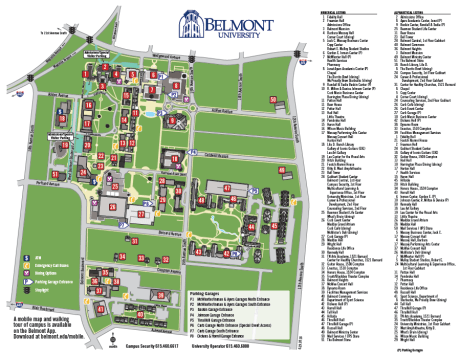
Belmont University, Curb Event Center, Vince Gill Room, 2000 Belmont Blvd

Building #26. Parking is available through the P7 entrance- visitors spaces are well marked. The Vince Gill Room is at the Belmont Blvd. side of the building, attached to the Arena. Signs will direct you there.
Lunch provided

To RSVP, contact diana.page@comcast.net

Rev. Johnson of Fort Worth is founder of Pastors for Texas Children and has inspired the Oklahoma, Kentucky and Tennessee groups He is also the promoter of similar groups in formation in ten other states. He has told us how his Texas group of more than 2,000 pastors and faith leaders has helped prevent the passage of private school vouchers in the Texas Legislature since its founding five years ago. Tennesseans hope to similarly convince our legislators to support our Tennessee schools and reject vouchers. We are starting by introducing pastors and faith leaders across the state with a speaking tour to present our positive public education message. You will hear how the voices of ministers, lay leaders, rabbis, imams, and their congregants are needed to support our public school children.

Also. please consider becoming a partner (member) of our network at http://www.pastorsfortennesseechildren.org/ (website).
Contact pastors4TNchildren@gmail.com for more information about the other four stops on Rev. Johnson’s Tennessee speaking tour: Chattanooga (lunch, Oct. 2), Knoxville (lunch, Oct. 3), Pleasant Hill (evening of Oct. 3), and Memphis (lunch, Oct. 5),

Screen Shot 2018-09-27 at 10.40.34 PM

Screen Shot 2018-09-27 at 11.01.03 PM

Charles Foster Johnson is a Baptist minister in Texas and founder of Pastors for Texas Children.

He wrote an op-ed in the Houston Chronicle about the threats that vouchers pose to religious liberty, and his specific concern that Brett Kavanaugh endangers religious liberty because of his hostility to the wall of separation, which protects the church from the intrusions of the state.

He writes, in part:

For nearly 150 years, our state Constitution has included a “no-aid” clause that protects the religious freedom of all Texans by ensuring that public funds are not used to support any private religious school or religious denomination. In fact, the Texas Constitution’s ironclad, explicit requirement for the Texas State Legislature to “make suitable provision for the operation and maintenance of an efficient system of public free schools” was in direct reaction against Texas settlers’ taxes having to underwrite religious schools at the founding of our state.

Our message and movement to protect and preserve religious liberty by opposing private-school vouchers has now spread to Oklahoma, Tennessee and Kentucky and will soon launch in a number of other southern and midwestern states, where voluntary religious faith is so central. Simply put, we want the government to stay out of this intensely personal arena of our lives.

If Kavanaugh joins the Supreme Court, I fear it will strike down this “no-aid” clause and similar clauses that exist in 37 other state constitutions. This reversal would allow state money to flow to religious schools. A flurry of state-funded voucher programs would soon follow, putting both religious freedom and our children in peril.

Politico reports that the rightwing effort to remove ANY separation between church and state has begun:

http://go.politicoemail.com/?qs=1e218dbca90f8f02dcba2209cccf9fd158c6970a41f3c161348b079a58054af40830f29b0272bdda7338314dd129aafc

NEW LAWSUITS SEEK TO BUILD OFF TRINITY LUTHERAN RULING: The Institute for Justice, a libertarian advocacy group that defends school choice programs in court, brought two new federal lawsuits aimed at unlocking public funding for religious schools — and building off momentum from the Supreme Court’s 2017 ruling in Trinity Lutheran Church v. Comer. That decision, written by Chief Justice John Roberts, held that Missouri wrongly denied a church a state grant “simply because of what it is — a church.”

— One of the lawsuits alleges that Maine unconstitutionally excludes religious schools from one of the nation’s oldest school choice programs . Under the program, the state covers costs for students to attend a school of their choice if they live in towns too small to maintain public secondary schools. But under state law, those schools must be nonsectarian. “Maine’s denial of a generally available public benefit — tuition payments for secondary education — to Plaintiffs because their children attend a sectarian school violates the principle that the government must not discriminate against, or impose legal difficulties on, religious individuals or institutions simply because they are religious,” the lawsuit says.

— The other lawsuit targets a so-called Blaine amendment in Washington state , which prohibits state money from supporting religious institutions. Because of the amendment to the state’s constitution, Washington’s work-study program only allows college students to make money working at non-religious organizations. “In sum, under the State Work-Study Program, a student may work for the government, a non-sectarian non-profit organization, or an international for-profit corporation (even in one of its international offices), but she may not feed the homeless at a church’s soup kitchen or tutor a child at a church-run school,” the lawsuit says.

— “Although the plaintiffs in these cases live at opposite ends of the country, they face similar discriminatory laws rooted in anti-religious animus,” attorneys for the Institute for Justice wrote in The Wall Street Journal this week, noting the lawsuits “seek to build on” the Trinity Lutheran ruling. “A victory in their cases could clear the way for states to adopt programs that empower parents — rather than government — to direct the education of their children.”

Trump’s nominee for the U.S. Supreme Court Brett Kavanaugh—like his first nominee Neil Gorsuch—is good news for voucher advocates. He is the linchpin to achieving Betsy DeVos’s dream of sending public money to religious and private schools, despite the fact that many teach creationism as science, exclude LGBT students and staff, and teach bizarre doctrines. When Democrats regain control of the institutions of government, they should be sure to establish strict government regulations that establish strict accountability for private and religious schools that take public money so that they are held to the same standards of curriculum, testing, teacher qualifications, and non-discrimination as public schools.

The New York Times reports on his record of challenging the “wall of separation” between church and state.

“Judge Brett M. Kavanaugh, in a speech last year, gave a strong hint at his views on taxpayer support for religious schools when he praised his “first judicial hero,” Justice William Rehnquist, for determining that the strict wall between church and state “was wrong as a matter of law and history.”
Mr. Rehnquist’s legacy on religious issues was most profound in “ensuring that religious schools and religious institutions could participate as equals in society and in state benefits programs,” Judge Kavanaugh, President Trump’s nominee to succeed Justice Anthony M. Kennedy on the Supreme Court, declared at the American Enterprise Institute, a conservative research organization.

“Words like that from a Supreme Court nominee are breathing new life into the debate over public funding for sectarian education. Educators see him as crucial to answering a question left by Justice Kennedy after the Supreme Court ruled it unconstitutional for the state of Missouri to exclude a church-based preschool from competing for public funding to upgrade its playground: Can a church-school playground pave the way for taxpayer funding to flow to private and parochial schools for almost any purpose?

“Over his decades-long legal career, Judge Kavanaugh has argued in favor of breaking down barriers between church and state. He has filed friend-of-the-court briefs in support of school prayer and the right of religious groups to gain access to public school facilities. He was part of the legal team that represented former Gov. Jeb Bush of Florida in 2000 when he defended a school voucher program that was later ruled unconstitutional. The program had used public funds to help pay the tuition of students leaving some of the state’s lowest-performing schools for private or religious schools.

“School voucher champions see Judge Kavanaugh as a critical vote in overturning longstanding constitutional prohibitions, often called Blaine Amendments, that outlaw government funding of religious institutions in more than three dozen states. The amendments have been used to challenge programs that allow taxpayer funding to follow children to private and parochial schools, and are seen as the last line of defense against widespread acceptance of school voucher programs.”

Jeff Bryant has studied Brett Kavanaugh’s writings and has concluded that, if confirmed for the Supreme Court, he will join the other conservative justices in knocking down the last remnants of the long-established tradition of separation of church and states. This will be a great victory for Betsy DeVos and others who have been working overtime to direct public funding to religious schools.

He writes:

“As the son of a public-school teacher and a volunteer tutor of students in Washington, DC, the Kavanaugh narrative may come across as friendly to public schools, but Kavanaugh was raised in elite private schools and has nothing in his record that would indicate a strong support for public education.

“His history of legally undermining the separation of church and state is a fact not in dispute. In his work with the Federalist Society – the rightwing project that has largely engineered today’s high court and compiled the list of potential nominees for Trump – Kavanaugh has led its “School Choice Practice Group” and “Religious Liberties Group.” These groups help the Federalist Society craft its legal arguments on the unconstitutionality of excluding religious options from school choice programs.

“Among the primary targets for these groups is to repeal amendments in 39 state constitutions that prohibit direct government aid to educational institutions that have a religious affiliation. This argument already has the Supreme Court’s partial consent, given its ruling last year that ordered a New Mexico Supreme Court to reconsider a decision barring religious schools from a state textbook lending program.

“Kavanaugh also has a history of supporting school vouchers that allow parents to use public taxdollars to pay tuition for private, religious schools. In 2000, he represented then Florida Governor Jeb Bush to push through the state’s first school voucher program, which was eventually struck down by the Florida Supreme Court in a 2006 decision.

“But just as Kavanaugh and his conservative colleagues were being stymied in state courts, they were blazing a legal pathway for federal support of school vouchers.

“Religious Is ‘Secular’

“In an appearance on CNN in 2000, Politico reports, Kavanaugh “predicted … that school vouchers would one day be upheld by the Court.””

As public money flows to unaccountable religious schools, which hire uncertified teachers, use textbooks that teach religious propaganda, or don’t teach any English, Republican lawmakers may come to regret the monster they created.

Thomas Jefferson urged his friend many years ago to preach “a crusade against ignorance.” It was Jefferson who first referred to a “wall of separation between church and state,” the better to protect both church and state.

He would be appalled to see that wall disappear.

Author Susan Jacoby published a thoughtful article in the New York Times about the Trump administration’s full-scale attack on the “wall of separation” between church and state. The Trump administration is ignorant of the Founders’ efforts to keep religion out of the public sphere, knowing the history of Europe’s religious wars.

Here are highlights.

“Many Americans were shocked when Attorney General Jeff Sessions turned to the Bible — specifically, Paul’s epistle to the Romans — to justify President Trump’s policy of separating migrant children from their parents. This scriptural justification for a political decision should not have surprised anyone, because Mr. Trump’s administration has consistently treated the separation of church and state as a form of heresy rather than a cherished American value.

“Attacks on the wall of separation established by the founders — which the religious right likes to call “a lie of the left” — are nothing new. What has changed under Mr. Trump is the disproportionate political debt he owes to extreme religious conservatives, whose views on church-state issues — ranging from the importance of secular public education to women’s and gay rights — are far removed from the American mainstream.

“The very meaning of the phrases “religious liberty” and “religious freedom”— traditionally understood as referring to the right of Americans to practice whatever faith they wish or no faith at all — is being altered to mean that government should foster a closer relationship with those who want to mix their Christian faith with taxpayer dollars. This usage can be found in numerous executive orders and speeches by Mr. Trump and his cabinet members. Changes in language have consequences, as the religious right’s successful substitution of “pro-life” for “anti-abortion” has long demonstrated.

“Religion-related issues, especially if buried in lengthy government documents, can often seem obscure, but they dominated the news at the end of June, when the Supreme Court upheld Mr. Trump’s travel ban targeting majority-Muslim countries and struck down a California requirement that anti-abortion, state-licensed pregnancy clinics provide notice to their clients that abortion is an option. These significant rulings were immediately overshadowed by the retirement from the court of the frequent swing voter Anthony M. Kennedy, which now gives Mr. Trump the opportunity to nominate a predictable religious conservative who would most likely support the overturning of Roe v. Wade.

“While it is impossible to overstate the long-term importance of the next court appointment, Mr. Sessions and many of his fellow cabinet members offer textbook examples of the everyday perils of entangling religion with politics. Mr. Sessions’s citation of the opening verse of Romans 13, which admonishes that every soul must be “subject unto the higher powers” and that there is “no power but of God,” inflamed an already bitter debate over immigration. the White House press secretary, Sarah Huckabee Sanders, followed up with a reminder that it was “very biblical” to enforce the law. Neither went on to quote Verse 10, which proclaims, “Love worketh no ill to his neighbor; therefore love is the fulfilling of the law.”

“Many pro-immigration religious leaders, including Catholics, Protestants, Jews and Muslims, took umbrage at the biblical justification for a policy that could hardly be described as loving. Their objections, however, were based mainly on the idea that Mr. Sessions had picked the wrong verse.

“It was left to secular organizations to identify all religious rationalizations as the fundamental problem. The Center for Inquiry, a secular think tank, and the Freedom From Religion Foundation, on whose honorary boards I serve, issued strong condemnations — as did the Americans United for Separation of Church and State. Rachel Laser, president of Americans United, put it succinctly: “The separation of church and state means that we don’t base public policy on the Bible or any religious book.”

“And yet Trump administration officials have used fundamentalist biblical interpretations to support everything from environmental deregulation to tax cuts.

“Scott Pruitt, who resigned from his post as the head of the Environmental Protection Agency on Thursday, once asserted in an interview with the Christian Broadcasting Network that Americans who want stricter environmental standards are contradicting the Bible. Mr. Pruitt, a former trustee of the Southern Baptist Theological Seminary, said, “The biblical worldview with respect to these issues is that we have a responsibility to manage and cultivate, harvest the natural resources that we’ve been blessed with to truly bless our fellow mankind.” The trenchant headline recounting the interview in Baptist News read: “God Wants Humans to Use Natural Gas and Oil, Not ‘Keep It in the Ground,’ says E.P.A. Chief.”

“Many evangelical Christians do not share such theocratic fantasies. These evangelicals, like former President Jimmy Carter, are spiritual descendants of Roger Williams, who was banished from the Puritan theocracy of the Massachusetts Bay Colony and founded the first Baptist congregation in colonial America. Williams is also credited as the first person to use the phrase “wall of separation,” in a 1644 response to the theocratic Puritan clergyman John Cotton. (There should be a “wall of separation between the garden of the church and the wilderness of the world,” he wrote.) Thomas Jefferson used the expression in a famous 1802 letter to a Baptist congregation in Danbury, Conn.

“Williams is an inconvenient figure for today’s religious right, which asserts that the only purpose of the “wall of separation” was to protect religion from government — not government from religion. That was true in early colonial America, but the other side of the equation was well understood by the time the Constitution — which never mentions God and explicitly bars all religious tests for public office — was written. Destructive religious wars in 17th-century Europe, among other factors, had led many Americans to the realization that governments could indeed be threatened by a close identification with religion…

“Ben Carson, the secretary of housing and urban development and a devout Seventh-day Adventist, has described commitment to the separation of church and state as “crap,” prompted by “political correctness.”

“At a December cabinet meeting, Dr. Carson, a retired neurosurgeon, was asked by Mr. Trump to say a prayer thanking God for the recently passed tax cut bill. Mr. Trump also took a jab at the press pool and said, “You need the prayer more than I do, I think.” Speaking to Dr. Carson, he added: “Maybe a good prayer and they’ll be honest, Ben.” Dr. Carson responded by thanking the Almighty for a “courageous” president…

“Last but not least is Education Secretary Betsy DeVos. Ms. DeVos, raised as a strict Calvinist, has devoted much of her life to promoting private and religious schools over public education. She is particularly proud that last year’s tax bill expanded the education savings accounts known as 529s so that they can now be used to pay for private schools, starting from kindergarten.

“In May, Ms. DeVos visited New York City, which has the largest public school system in the country. She did not inspect a single public school. Instead, she stopped by two Orthodox Jewish schools and spoke at a fund-raiser where she was introduced by Cardinal Timothy Michael Dolan. In her speech, she expressed support for tax credits to help pay tuition for private schools.

“While applauding state initiatives to aid these schools, Ms. DeVos opposes any federal program that would create a new bureaucracy. That is not enough for Cardinal Dolan, who wants federal money (presumably because he knows that New York is unlikely to divert more taxpayer dollars to private schools).

“Some states will need more prayers and more action than others to bring about needed changes,” Ms. DeVos acknowledged.

“As someone who believes that the separation of church and state provides equally needed protection for government from religion and for religion from government, I am grateful that laws speak louder than prayers — and take longer to craft on this earthly plane.”