Archives for category: Race

Jennifer Berkshire is on a roll. It seems she writes a great article every other day–or is it every day? She has a new article in The Nation about the New Hampshire school board elections. It is titled “How Progressives Won the School Culture War,” but I doubt that the people who won the school board races call themselves “progressives.” I would say they are sane, rational, intelligent citizens who did not want rightwing extremists in charge of their public schools.

She begins:


It wasn’t supposed to turn out this way. For months now, Republican Party leaders have trumpeted their intention to run hard on parent grievances en route to routing the Democrats in the midterms. According to this narrative—partially based on the 2021 elections in Virginia, then endlessly echoed by Democratic pundits—parents frustrated over school shutdowns, Covid restrictions and the focus on race and social justice in schools are the new swing voters, poised to flee the Democratic Party. 

But in New Hampshire, where bitter debates over school masks and “critical race theory” (CRT) have dominated local politics for more than a year, the season of parent rage ended in a stunning sweep of school board elections last week by progressive public school advocates. “It was a complete repudiation of the GOP’s attempt to drive a wedge between parents and schools,” says Zandra Rice Hawkins, executive director of Granite State Progress. Of 30 candidates designated by the group as “pro–public education,” 29 won their races—many in traditionally “red” regions of New Hampshire. Across the state, culture warriors and advocates of school privatization lost to candidates who pledged to protect and support public education.

Instead of resonating with voters, the right’s efforts to weaponize cultural grievances appears to have alienated them. With the GOP poised to make the education culture wars a central focus of its midterm appeal, New Hampshire offers some clear lessons for Democrats.

Michael Boucher chalks up his decision to run for the school board in the southern New Hampshire town of Atkinson to a single word: extremism. Last year, he watched as the debate over local schools grew steadily more rancorous, first over CRT, then masks. Boucher became a regular presence at board meetings, where he noticed that many of the loudest voices weren’t actually from the district. “Suddenly there were all of these groups coming in—the Government Integrity Project, Moms for Liberty, Americans for Prosperity. I realized that if I didn’t step up, one of their people would,” says Boucher.

Boucher, who works as a data analyst for a government contractor, says that he set a goal of talking to as many people in Atkinson as possible about the rising climate of extremism. He found a receptive audience. While the community has long leaned Republican, many voters remain what Boucher calls “classic” GOP. “They want to see tight budgets—but they also want to see opportunities for all kids and a welcoming culture in the schools. There are actually a lot of people who feel that way,” says Boucher. 

He campaigned on the need to teach history honestly against a candidate who ran on opposition to CRT. Boucher won resoundingly, claiming nearly three-quarters of the vote.

And Boucher wasn’t alone. Thirty miles north, in Bow, first-time candidate Angela Brennan, the subject of a Republican mailer calling her “anti-parent” and a “Biden-like progressive,” was the top vote getter in a five-person contest for two seats on the school board.

“All of these attacks on public education really backfired at the local level,” says Molly Cowen, a member of the select board in Exeter, which has also seen acrimonious debates over mask and vaccine mandates and school district diversity policies. In the lead-up to the election, a conservative parents’ PAC spent an estimated $20,000 on mailers making the case that the district’s focus on racial equity had led to a precipitous decline in academic achievement.

Voters in the district, which covers five towns, responded by booting two conservative members off the board and electing a number of pro–public education candidates.

Please open the link and learn how extremism was defeated in New Hampshire.

John Oliver explained the Republican hysteria over “critical race theory.” At bottom, as he shows, the GOP goal is to persuade parents to escape “CRT” by abandoning their local public schools and enrolling in charter schools or seeking vouchers. The leading anti-CRT crusader, Chris Rufo, made this linkage explicit, as Oliver demonstrates, as did Betsy DeVos. The big money supporting the anti-CRT campaign is coming from the same people funding school choice. And, as Oliver explains, “school choice” has its roots in the fight to block school desegregation in the 1950s.

The fight against CRT is being used to silence any teaching about racism today. Teachers are supposed to teach slavery and racism as a strange aberration from our founding principles and to pretend that it no longer exists.

But if it really were the terrifying problem that people like Rufo describe, why was there no uprising against it in the past 40 years? Why didn’t George W. Bush speak up about CRT? WhY was Trump silent about it until 2020? Why now? Is it mere coincidence that the anti-CRT madness took off after the murder of George Floyd and the nationwide protests against racism?

Kate McGee of the Texas Tribune writes that Lt. Governor Dan Patrick has threatened to kill tenure in Texas universities to compel compliance with his wish to stop any teaching about race or racism, which he calls “critical race theory.”

Dan Patrick is a phony Texan. He wears boots, but he was born and raised in Baltimore. His birth name was Dannie Scott Goeb. He was the little Rush Limbaugh of Texas until he entered politics. He has never abandoned the politics of hatred and division that have made him successful. He has advocated for teaching creationism in the schools and backed legislation last year to prevent public schools from requiring that students read writings by prominent civil rights figures, such as Susan B. Anthony, Cesar Chavez, and Martin Luther King Jr., when covering women’s suffrage and the civil rights movement in social studies classes.” He is a 21st century Know-Nothing.

McGee writes:

Lt. Gov. Dan Patrick said Friday that he will push to end professor tenure for all new hires at Texas public universities and colleges in an effort to combat faculty members who he says “indoctrinate” students with teachings about critical race theory.

“Go to a private school, let them raise their own funds to teach, but we’re not going to fund them,” said Patrick, who is running for reelection. “I’m not going to pay for that nonsense.”

Patrick, whose position overseeing the Senate allows him to drive the state’s legislative agenda, also proposed a change to state law that could make teaching critical race theory grounds for revoking tenure for professors who already have it. His announcement tees up the next major fight at the Texas Capitol over how college students learn about the history of race and racism in the United States.

Tenure is an indefinite appointment for university faculty that can only be terminated under extraordinary circumstances. Academics said Friday that tenure is intended to protect faculty and academic freedom from exactly the kind of politicization being waged by Patrick.

“This kind of attack is precisely why we have faculty tenure,” said Michael Harris, a professor at Southern Methodist University studying higher education, who likened tenure to lifetime appointments given to federal judges. “The political winds are going to blow at different times, and we want faculty to follow the best data and theory to try to understand what’s happening in our world.”

Patrick on Friday also proposed making tenure review an annual occurrence instead of something that takes place every six years. At the press conference, he said his proposals already have the support of state Sen. Brandon Creighton, R-Conroe, who chairs the Senate Higher Education Committee…

Patrick’s plan drew swift condemnation from the American Association of University Professors, the body that helped develop the 1940 Statement of Principles on Academic Freedom and Tenure that has been adopted by universities and colleges nationwide.

“There’s always been attempts to interfere in higher education, but I have never seen anything as egregious as this attack,” said Irene Mulvey, president of the AAUP. “This is an attempt to have government control of scholarship and teaching. That is a complete disaster. I’ve never seen anything this bad…”

Patrick said his latest priority is in response to the UT-Austin Faculty Council after it passed a nonbinding resolution Monday to reaffirm instructors’ academic freedom to teach on issues of racial justice and critical race theory.

“Legislative proposals and enactments seek to prohibit academic discussions of racism and related issues if the discussion would be ‘divisive’ or suggest ‘blame’ or cause ‘psychological distress,’” the resolution stated. “But fail to recognize that these criteria … chill the capacity of educators to exercise their academic freedom and use their expertise to make determinations regarding content and discussions that will serve educational purposes.”

One day after the resolution passed, Patrick signaled on Twitter that he would continue the fight against teaching the discipline in the next legislative session.

“I will not stand by and let looney Marxist UT professors poison the minds of young students with Critical Race Theory,” Patrick wrote on Twitter. “We banned it in publicly funded K-12 and we will ban it in publicly funded higher ed. That’s why we created the Liberty Institute at UT.…”

The proposal to end tenure would fundamentally change the way Texas universities operate in terms of hiring, teaching and research. Faculty members warn it’s likely to impose major challenges for Texas universities to recruit and retain researchers and scholars from across the country…

Harris said even the headlines to propose ending tenure could hurt Texas universities that are hiring faculty members for next year who might think twice about whether to take a job at a public university.

A few strategic phone calls from public university presidents to their alumni in the state legislature could shut down Dan Patrick mighty quick. He is an embarrassment to the state of Texas.

Dana Milbank, columnist at the Washington Post, has read several of the laws intended to remove “critical race theory” and “divisive concepts” from the teaching of American history in schools. Governors like Glenn Youngkin in Virginia and Ron DeSantis in Florida want to roll back the clock to a time when white children never heard anything that unsettled them about slavery, segregation, racism, and brutal attacks on people of color.

Milbank was able to obtain a copy of a history textbook used in Virginia’s schools from the 1950s to the 1970s. It contained a whitewashed version of slavery that would not make any white student uncomfortable but must certainly have been upsetting for black students. His column was titled “Glenn Youngkin’s No-Guilt History of Virginia for Fragile White People.”

He wrote:

So how would history sound denuded of anything potentially distressing for White kids? We don’t have to guess, because we’ve already been there. I have an actual 7th-grade textbook used in Virginia’s public schools from the 1950s through the 1970s — when Virginia began moving toward the current version of history: the truth.

I therefore present these verbatim excerpts from the textbook (“Virginia: History, Government, Geography” by Francis Butler Simkins and others), shared with me by Hamilton College historian Ty Seidule, author of “Robert E. Lee and Me: A Southerner’s Reckoning with the Myth of the Lost Cause.” Let’s call it “Glenn Youngkin’s No-Guilt History of Virginia for Fragile White People.”

A feeling of strong affection existed between masters and slaves in a majority of Virginia homes. … It was to [the master’s] own interest to keep his slaves contented and in good health. If he treated them well, he could win their loyalty and cooperation. … The intelligent master found it profitable to discover and develop the talents and abilities of each slave. … The more progressive planters tried to promote loyalty and love of work by gifts and awards.”

“Many Negroes were taught to read and write. Many of them were allowed to meet in groups for preaching, for funerals, and for singing and dancing. They went visiting at night and sometimes owned guns. … Most of them were treated with kindness.”

“The tasks of each [house slave] were light. … They learned much about the finer things of life. The house servants took a great deal of pride in their comfortable positions. …The field hands … were given a rest period at noon, usually from one to three hours. Those who were too old or too sick to work in the fields were not forced to do so. … The ‘task system’ … gave them free hours after they finished their daily tasks. … The planter often kept a close eye upon [the overseer] to see that the slaves were not overworked or badly treated.”

“Each slave was given a weekly ration consisting of three or four pounds of pork and plenty of corn meal and molasses. To this food were added the vegetables, fruits, hogs and chickens which the slaves were allowed to raise for themselves. … When a slave was sick, tempting food was often carried to him from the master’s table. … At [Christmas,] extra rations and presents were given the slaves.”

“Male field hands received each year two summer suits, two winter suits, a straw hat, a wool hat, and two pairs of shoes. … Often the members of the master’s family would hand down to their favorite slaves clothing which they no longer needed. … [The slaves] loved finery.

“Every effort was made to protect the health of the slaves. … It was the duty of all mistresses to give sick slaves the same care they gave their own children.”

“The house servants became almost as much a part of the planter’s family circle as its white members. … A strong tie existed between slave and master because each was dependent on the other. … The regard that master and slaves had for each other made plantation life happy and prosperous.”

“[The slaves] liked Virginia food, Virginia climate, and Virginia ways of living. Those Negroes who went to Liberia … were homesick. Many longed to get back to the plantations. … It must be remembered that Virginia was a home as much beloved by most of its Negroes as by its white people. Negroes did not wish to leave their old masters.”

“Life among the Negroes of Virginia in slavery times was generally happy. The Negroes went about in a cheerful manner making a living for themselves and for those for whom they worked. … They were not worried by the furious arguments going on between Northerners and Southerners over what should be done with them. … The negroes remained loyal to their white mistresses even after President Lincoln promised in his Emancipation Proclamation that the slaves would be freed.”

There you have it. Historically wrong and morally bankrupt — but for tender White minds, discomfort-free.

Kimberlé Williams Crenshaw is a professor of law at Columbia and UCLA and one of the leading figures in the field of critical race studies. She wrote the following article for the Los Angeles Times, where she demonstrates that the new laws banning the study of systemic racism simultaneously ban Dr. King’s views of America’s racial problems, which were not solved by passing civil rights laws. The furor over CRT shows that racism remains a powerful force today. Critics of CRT maintain illogically that teaching the history of racism is racist, that uncomfortable facts must not be taught at all, and that history must be scrubbed clean of divisive realities. As Crenshaw points out, King would have fought the current effort to cleanse U.S. history; his own words and works cannot be taught.

For the first time, we’re observing the Rev. Martin Luther King Jr. holiday under new laws in multiple states that ban the instruction of “divisive” interpretations of our racial past. The assaults have given new weapons to an enduring faction in American society that has long resisted the reckoning that his life’s work demanded.

In King’s day, this faction was known as the “Massive Resistance,” an effort to organize and frustrate the Supreme Court’s 1954 Brown vs. Board of Education ruling and efforts to build multiracial classrooms. Today, this faction is known as the “anti-CRT” effort, which seeks to proscribe race-related curricula, books or trainings that offer a discomforting view of our past and its current implications.

Teachers, public officials and students are in a particularly unsustainable bind. They’re charged with honoring King as a figure while disavowing the ideas that he lived and died to advance. They’re being asked not merely to defer King’s dream of racial equality but to decommission it altogether.

King would likely take bitter note of the all-too-familiar dynamics behind today’s backlash. After the 2020 global movement for racial justice in the United States and beyond in the wake of the savage police killing of George Floyd, legislatures in 32 states have relied on what is patently a lie — that antiracism is antiwhite — to fuel the antidemocratic crusade against what they call “critical race theory.”

For more than 30 years, scholars have employed critical race theory as an analytical tool. The right has rebranded it as the new racism, as wokeness run amok, as a threat to innocent schoolchildren and as a stalking-horse for the demise of “Western civilization” itself. The theory has become the target of coordinated efforts to stigmatize and erase generations of antiracist knowledge, advocacy and history. The objective is both to disappear antiracism’s history and to deny its contemporary salience.

King himself is a prime casualty in this effort. Apostles of the McCarthyite crackdown on critical race theory have exploited him as a mouthpiece for their cause, reducing him to a solitary, decontextualized line from the “I Have a Dream” speech about a future in which his four children were to be judged not “by the color of their skin, but by the content of their character.”

Some use King’s words to erase his deeds and those of millions more who rose up to “make good the promises” since Reconstruction. In Tennessee, for example, the Moms for Liberty sought to ban Frances E. Ruffin’s children’s book “Martin Luther King Jr. and the March on Washington” by framing its descriptions of segregation and the violence meted out against King and others as traumatizing and racist. The Moms argue that Ruffin’s portrayal of white racism against people of color “will sow the seeds of racial strife, neo-racism, neo-segregation, and is an affront” to King’s ideals. This reveals precisely what comes of a persistent and willful ignorance of King’s legacy.

The sheer power on display to turn King against himself — a process that has been underway since the first day this holiday was celebrated — is a grim reflection of the way opponents have long subjected antiracist thinking and activism to distortion, misappropriation and redefinition. The brazen casting of critical race theory as the contemporary villain following 2020’s racial reckoning is no surprise.

The King holiday and Black History Month are an excellent opportunity — perhaps the only opportunity — to course-correct, contest and redirect the misconceptions about King’s legacy and its interface with critical race theory. Recovering the real King begins by freeing his image from the clutches of those seeking to substitute truthful education with a saccharine narrative built on illusions, delusions and lies.

Dr. King was an “inconvenient truth teller.” His insistence on the urgency of racial justice put him at odds with moderate whites in the South, and his denunciation of imperialism put him at odds with allies more narrowly focused on the freedom struggle within U.S. borders.

For telling these truths, in life, King was often criticized rather than celebrated. At the time of his death, polls showed that most white people held an unfavorable view of him. The FBI, under J. Edgar Hoover, framed him as a national security threat. Some Black leaders were hardly convinced of his tactics — his civil disobedience was too radical for some, his nonviolence too accommodationist for others. But for King, the demands for racial justice were not to be won through a popularity contest or by painting a comforting picture of the U.S. social order. Nor was King’s an identity-obsessed demand for recognition. He offered a clear-eyed assessment of a would-be democracy in a state of disrepair. Confronting it at its source was the only way forward.

It’s no accident that the firestorm over critical race theory has singed King’s message: King was, in fact, a critical race theorist before there was a name for it. A core observation of the theory is the recognition that the promise of liberation extends beyond the elimination of formal segregation and individual-level prejudice. Critical race theory explores how racial inequality was historically structured into the fabric of the republic, reinforced by law, insulated by the founding Constitution and embedded into the infrastructure of American society. Similarly, King observed in 1967 that “the doctrine of white supremacy was embedded in every textbook and preached in practically every pulpit,” entrenched as “a structural part of the culture.”

Accordingly, King’s appeal in the March on Washington in 1963 was grounded in the assertion that the promise of a fully inclusive American democracy — one that lived up to its oft-stated ideals — required creative confrontation with a republic out of step with its promises. He rebuffed those who found fault in the tensions created by placing our norms and our realities in sharp relief.

King famously wrote a letter rejecting the counsel of white moderate allies who argued for a gradualist accommodation to the prioritized sensibilities of those who didn’t experience the sting of segregation. As a father, he conveyed the anguish of his own children, who couldn’t understand why they weren’t allowed into the Funtown amusement park, which barred Black visitors, while the joy of white children was privileged. He argued elsewhere that “justice for black people cannot be achieved without radical changes in the structure of our society.”

King centered the promise of equal access to the ballot — now under concerted assault — at the heart of his prophetic mission. He fought to win passage of both the Civil Rights Act and the Voting Rights Act, and he understood that the provisions of each law were part and parcel of the same struggle for true and lasting racial justice. While he hailed the landmark voting reform as “a great step forward in removing all of the remaining obstacles to the right to vote,” he also insisted that the vote be used to “rid the American body politic of racism.” King would instantly recognize the mutually reinforcing objectives of denying the ballot, an indispensable instrument of reform, while also silencing the substantive case for reform by whitewashing the country’s racial past.

Contrary to countless assertions from the right, King did not endorse colorblindness. It wasn’t the remedy for dismantling the ugly realities that white supremacy had produced. Like today’s critical race theorists, King understood that American racism was systemic and demanded systemic remedies. He was forthright in acknowledging that anti-Black racism “was not a consequence of superficial prejudice but was systemic.” Throughout his career, King set his sights on institutional-level change, calling for solutions built on the race-conscious analysis of inequalities across our society.

King invoked a “bank of justice” to be mobilized against the many structures of racial oppression to ultimately realize “the security of justice” for all Americans. This commitment explicitly extended to the mode of race-conscious practice that now goes by the name of affirmative action.

When questioned whether he would support such outlays, King bluntly replied, “I do indeed,” and went on to explain: “Can any fair-minded citizen deny that the Negro has been deprived? Few people reflect that for two centuries the Negro was enslaved and robbed of any wages — potential accrued wealth which would have been the legacy of his descendants. All of America’s wealth today could not adequately compensate its Negroes for his centuries of exploitation and humiliation.”

Much of King’s legacy may never be taught in public schools, if this manufactured panic that demands critical thinking about racism be expunged from curricula and libraries continues. In North Dakota, for example, King’s understanding of structural racism would contradict the state’s newly minted edict that racism cannot be taught as anything more than an individual’s prejudice and bias. His understanding of the historical debt created by centuries of uncompensated labor flies directly in the face of Oklahoma’s prohibition of material suggesting that current generations bear any responsibility for the actions of their ancestors.

Not only did King clearly recognize that antiracism must address built-in headwinds that unnecessarily disadvantage some groups over others, but so does, incidentally, the Supreme Court, as seen in its many rulings. Yet an instructor seeking to explain King’s expansive vision of justice or a professor highlighting legal cases about institutional discrimination will be in jeopardy if they teach these ideas in some states that have adopted such laws.

King’s ideas could also fall under efforts in states such as Oklahoma or Texas that forbid the use of classroom materials that might create guilt or discomfort in public school students. King’s description of a social order in need of repair would trigger complaints that current generations are made to feel responsible for the sins of our past. New Hampshire, meanwhile, has proposed legislation forbidding antiracist critiques of the nation’s founding and history.

Indeed, under most of these laws, King’s concrete work and documented analysis of racism’s enduring legacy in American society would be suspect. In his final speech, on the eve of his death, he said he might not get to the promised land with us. This prophecy would rest uneasily in curricula that sanction assumptions that we haven’t already become that society that King dreamed we would one day be.

This imposition of a fairy-tale account of America makes King’s sacrifice utterly illegible. It is a memory-holed vision of the past better suited to George Orwell’s dystopian reveries than to a nation seeking to redeem its promise of genuine, expansive and democratic self-rule.

Nationwide, lawmakers are legislating that our schools and workplaces turn away from King’s mandate to make good on the country’s broken promises, and wallow instead in the wages of this ignorance. It is an ignorance that grows out of an earlier effort to impose an approved orthodoxy about the American past. One of the enduring consequences of the United Daughters of the Confederacy’s textbook campaigns was the persistence of Confederate propaganda and Lost Cause mythology masquerading as the truth about the history of the Civil War and its aftermath. The United Daughters ensured that millions of children inherited a view of America’s past grossly warped by the whitewashing of slavery and the violent Redemption, when white Southerners called for a return to white supremacy, that followed Reconstruction. The democratic crisis we face today is an unrecognizable spasm from that past, illegible in part because our educational system and national myths have not overcome these past manipulations to embrace this history.

To truly honor King’s memory, then, we must defeat the faction that facilitated the U.S. Capitol riot, put democracy on life support, and continues to demand that critical interrogation of its past be censored by law. King implored that we put our bodies on the line to face the organized forces of white reaction in his day — and it’s clear that he’d be fighting in exactly the same way to preserve his prophetic legacy in our own day, when the right to equal education, to vote freely and to realize true cross-racial justice are once more under bitter attack.

Reclaiming his legacy is to realize that there is no daylight between a truly democratic society and a racially just one.

Stephen Dyer is a former state legislator in Ohio and an expert on school finance. In the latest post on his blog, 10th Period, he shows why the arguments for vouchers are a fraud. Vouchers are sold as a salvation for Black and Hispanic students, yet they mostly subsidize white children escaping desegregated schools. And while they are sold with the promise of improving student performance, the voucher schools are in fact inferior to public schools. They are not the schools that rich parents pay for; most voucher schools are low-quality religious schools with unqualified teachers.

Dyer begins:

Now that a group of 100 school districts have formally sued the state over the EdChoice Voucher program, it’s time for voucher proponents to trot out their favorite canard — vouchers give students of color opportunities they wouldn’t otherwise have. And to oppose vouchers is to oppose opportunities for students of color.

Total crock.

The reason this canard is so pernicious is simple: It’s not true, and in fact, the opposite is true. Vouchers are disproportionately distributed to white students, leading to greater overall segregation in public school districts and communities of color with substantially fewer state resources to educate students in those communities.

This is the stat that voucher proponents love to quote, and it’s what Greg Lawson (a guy I actually like personally, despite our profound policy differences on this and nearly every issue) from the Buckeye Institute articulated in the Dispatch story yesterday:

“Greg Lawson of the Buckeye Institute said the data on who takes vouchers varies from school to school, but overall more minority students use EdChoice. 

Ohio is about 82% white, according to data from the U.S. Census Bureau. But 50% of the students who take an EdChoice scholarship identify as white or non-Hispanic, according to the Ohio Department of Education. 

‘The choice is there for everybody regardless of what demographic box they check,’ Lawson said.”

What Greg and others “forget” is that EdChoice doesn’t apply to every school district in the state. In fact, according to data from last school year, only 164 of Ohio’s 613 school districts lost any state funding to the EdChoice Voucher transfer last year — a $164 million deduction from districts’ state aid. However, 95% of that funding came from just 38 school districts. Want to take a gander at the demographic makeup of those 38 districts? You guessed it. Overwhelmingly non-white. How overwhelmingly?

Try 68% non-white.

Sounds a whole lot different from the 82% white stat Greg mentioned, doesn’t it? In fact, of those 38 districts, only Wilmington was close to the 82% white stat.

Why would he try to repeat the 82% stat when only 1 district in the entire state that loses substantial state aid to EdChoice fits that description?

Because if only 50% of the voucher recipients are non-white, yet the communities from which the students come are almost 70% non-white, it kinda kills the whole “giving people of color an opportunity” argument.

Yeah….

Seems that for more than 20 years now, legislators have known that vouchers are disproportionately going to white students, yet they have done nothing to address this. 

Someone might want to ask them about that.

Oh yeah. One more thing. It was interesting to read that not even the outrageously histrionic Aaron Baer mentioned in the Dispatch the whole original argument for the voucher program to begin with: it provides better options for kids in “failing” public schools. 

That’s because we now know, thanks to more than a decade of comparative testing, that vouchers actually harm student achievement.

Even the Fordham Institute — an avowed voucher proponent — agreed in 2016 when it found that vouchers actually reduced student achievement. This was affirmed in 2020 when the Cincinnati Enquirer looked at test scores of voucher recipients and compared those scores with scores of students in the communities in which the private school resided. The paper found that 88% of the time, the public school students outperformed the private school students.

To voucher proponents now what matters now is the choice, not the outcomes from that choice apparently.

So let me bottom line this program: it leads to more racial segregation, deprives communities of color much needed state educational aid and provides less successful student outcomes. 

But hey, let’s throw hundreds of millions more of our tax dollars at this thing

Peter Greene describes his latest gambit. He is pressing for the adoption of his “Stop WOKE” act.

Florida Governor Ron DeSantis is doing his level best to wreck education in his state by politicizing every education policy. It’s a textbook illustration of fear-mongering and race-baiting. How low can he go without scraping his head on the ground?

Greene writes:

Florida owns the Number One spot on the Public Education Hostility Index, but Governor Ron DeSantis is not willing to rest on his laurels. You may have already heard about this, or you may have passed over the news because it’s Florida, but some bad news needs to be repeated, particularly when it comes from the state that launches so many of the bad trends in education.

DeSantis has borrowed from Texas, where a new abortion banhas come up with a clever way to circumvent rules about what a state can and cannot enforce. Now upheld by SCOTUS, the law makes every citizen a bounty hunter, with the right for “anyone to sue anyone” suspected of being in any way involved in an abortion (in a rare display to restraint, Texas exempts the woman getting the abortion from the civil liability). 

The idea of insulating the state is not new to education privatization efforts. Part of the reasoning behind education savings accounts is that it let’s the state say, “What? We didn’t give taxpayer dollars to a private religious institution. We just gave the money to a scholarship organization (and they gave it to the private religious school). Totally not a First Amendment violation.”

So here comes DeSantis with his “Stop WOKE Act” (as in “Wrongs to Our Kids and Employees”– some staffer was up late working on that one). This is legislation he’ll “push for” because of course a governor doesn’t propose legislation–he just orders it up from his party in the legislature. 

The proposal comes wrapped in lots of rhetoric about the evils of “critical race theory,” which DeSantis defines broadly and bluntly: Nobody wants this crap, OK? This is an elite-driven phenomenon being driven by bureaucratic elites, elites in universities and elites in corporate America and they’re trying to shove it down the throats of the American people. You’re not doing that in the state of Florida.

Along with vague rhetoric about learning to hate America, DeSantis brought in crt panic shill Christopher Rufo for his pep rally. And of course he trotted out some highly selective Martin Luther King Jr. quotage, because, hey, he’s totally not racist.

But the highlight here is creating a “private right of action” for parents, an actual alleged civil rights violation. Anyone who thinks their kid is being taught critical race theory can sue (and this will apply to workplace training as well). Parents who win even get to collect attorney’s fees, meaning they can float these damn lawsuits essentially for free– watch for Florida’s version of Edgar Snyder--attorneys advertising “there’s no charge unless we get money for you.”

Allowing parents to file lawsuits would have the effect of making the operating definition of crt even vaguer–it’s whatever Pat and Sam’s mom thinks it is. You can say that using a bad definition that loses the lawsuit would limit this vaguery, but that misses the point–the school would still have to defend itself in court, costing money and time…

Open the link and read the rest.

Greene predicts that teachers will not feel free to teach about America’s racist past. I agree with him.

A few nights ago, I watched a PBS documentary about the life of Marian Anderson, who was hailed in her lifetime as one of the greatest singers in the world. She toured the capitals of Europe to great acclaim. Yet for most of her life, she sang to racially segregated audiences in the United States. The documentary showed that Hitler admired America’s segregationist laws and practices and saw them as a model. Today, those who remember Anderson’s name know her as the black woman whom the DAR (Daughters of the Revolution) prohibited from performing in Constitution Hall in 1939, D.C.’s premier concert hall. D.C. was rigidly segregated. Instead she sang at the Lincoln Memorial to a crowd of 75,000 people. Her opening number was “My Country ‘Tis of Thee.”

I expect that no teacher in Florida would show that documentary in class. It may be factual, but some students’ parents would complain and sue the teacher for exposing their children to CRT.

Andre Perry, a senior fellow at the Brookings Institution, urges parents to speak out against fake conspiracy theories that are being cynically used to undermine public schools, their teachers, and freedom to teach and learn.

Perry writes:

Power-hungry politicians and bigots have always appealed to white supremacist values to achieve their political goals. In the 1950s, politicians latched onto white resistance to desegregation by turning busing into a trigger for white aggression. Children had been bused since the 1920s. But after the landmark Supreme Court decision in Brown v. Board of Education and the subsequent rulings to enforce it, busing became synonymous with a court-ordered invasion of white privilege. White women fought on the frontlines of the racist resistance to Black families integrating white schools. Politicians and right-wing activists amplified their fury and turned it into a movement.

School busing — not the fact that adults were attacking school buses with rocks and spitting on children — became the supposed threat to democracy. The practice of manufacturing fear around integration has been repeated ever since, with every advance in the Civil Rights Movement facing a racist backlash, including the current uproar over critical race theory, as inaccurately depicted, following the Black Lives Matter protests of the last two years.

Many of the mama bears coming out to protest now are direct political descendants of the white evangelicals who felt embittered about Supreme Court decisions and state policies around school desegregation, the teaching of evolution, the expansion of the curriculum to include multicultural voices, comprehensive sex ed, and the removal of compulsory, school sanctioned prayer. A recent article in the Christian Post lists the grievances for these parents: “We’re fed up with the pollution of our children’s minds with LGBT pedophilia and porn, racism, colorism, anti-capitalism, religious bigotry, anti-free speech, and other anti-American propaganda.”

Expanding civil rights isn’t anti-American. Discriminating against Black people, curtailing the pursuit of truth by Black students and scholars and maintaining a racial hierarchy are the actions that undermine our nation’s ideals — especially when these hateful acts are wrapped in democratic terms like “school choice” and “parent rights.”

Conservatives are currently using bans on critical race theory — a term they inaccurately define as any effort to teach about systemic racism or cultural sensitivity — as a pretext for eliminating from history lessons topics like slavery, Jim Crow racism, voter suppression, and housing and school segregation — all significant aspects of American history with long-lasting impact. In addition, conservatives are attempting to assuage or eliminate any feelings of guilt or accountability their white followers might have for this troubling past: White politicians seemingly don’t dare allow children to know that their ancestors and the U.S. government created these policies…

Stephen Sawchuk is a staff writer for Education Week. He wrote this article back in May, and I missed it. I think it’s one of the clearest, most balanced explanations of CRT that I have read.

Sawchuk writes:

Is “critical race theory” a way of understanding how American racism has shaped public policy, or a divisive discourse that pits people of color against white people? Liberals and conservatives are in sharp disagreement. 

The topic has exploded in the public arena this spring—especially in K-12, where numerous state legislatures are debating bills seeking to ban its use in the classroom. 

In truth, the divides are not nearly as neat as they may seem. The events of the last decade have increased public awareness about things like housing segregation, the impacts of criminal justice policy in the 1990s, and the legacy of enslavement on Black Americans. But there is much less consensus on what the government’s role should be in righting these past wrongs. Add children and schooling into the mix and the debate becomes especially volatile.

School boards, superintendents, even principals and teachers are already facing questions about critical race theory, and there are significant disagreements even among experts about its precise definition as well as how its tenets should inform K-12 policy and practice. This explainer is meant only as a starting point to help educators grasp core aspects of the current debate.

Just what is critical race theory anyway? 

Critical race theory is an academic concept that is more than 40 years old. The core idea is that race is a social construct, and that racism is not merely the product of individual bias or prejudice, but also something embedded in legal systems and policies.

The basic tenets of critical race theory, or CRT, emerged out of a framework for legal analysis in the late 1970s and early 1980s created by legal scholars Derrick Bell, Kimberlé Crenshaw, and Richard Delgado, among others.

A good example is when, in the 1930s, government officials literally drew lines around areas deemed poor financial risks, often explicitly due to the racial composition of inhabitants. Banks subsequently refused to offer mortgages to Black people in those areas.

Today, those same patterns of discrimination live on through facially race-blind policies, like single-family zoning that prevents the building of affordable housing in advantaged, majority-white neighborhoods and, thus, stymies racial desegregation efforts.

CRT also has ties to other intellectual currents, including the work of sociologists and literary theorists who studied links between political power, social organization, and language. And its ideas have since informed other fields, like the humanities, the social sciences, and teacher education.

This academic understanding of critical race theory differs from representation in recent popular books and, especially, from its portrayal by critics—often, though not exclusively, conservative Republicans. Critics charge that the theory leads to negative dynamics, such as a focus on group identity over universal, shared traits; divides people into “oppressed” and “oppressor” groups; and urges intolerance.

Thus, there is a good deal of confusion over what CRT means, as well as its relationship to other terms, like “anti-racism” and “social justice,” with which it is often conflated.

To an extent, the term “critical race theory” is now cited as the basis of all diversity and inclusion efforts regardless of how much it’s actually informed those programs. 

One conservative organization, the Heritage Foundation, recently attributed a whole host of issues to CRT, including the 2020 Black Lives Matter protests, LGBTQ clubs in schools, diversity training in federal agencies and organizations, California’s recent ethnic studies model curriculum, the free-speech debate on college campuses, and alternatives to exclusionary discipline—such as the Promise program in Broward County, Fla., that some parents blame for the Parkland school shootings. “When followed to its logical conclusion, CRT is destructive and rejects the fundamental ideas on which our constitutional republic is based,” the organization claimed.null

(A good parallel here is how popular ideas of the common core learning standards grew to encompass far more than what those standards said on paper.) 

Does critical race theory say all white people are racist? Isn’t that racist, too? 

The theory says that racism is part of everyday life, so people—white or nonwhite—who don’t intend to be racist can nevertheless make choices that fuel racism. 

Some critics claim that the theory advocates discriminating against white people in order to achieve equity. They mainly aim those accusations at theorists who advocate for policies that explicitly take race into account. (The writer Ibram X. Kendi, whose recent popular book How to Be An Antiracistsuggests that discrimination that creates equity can be considered anti-racist, is often cited in this context.)

Fundamentally, though, the disagreement springs from different conceptions of racism. CRT puts an emphasis on outcomes, not merely on individuals’ own beliefs, and it calls on these outcomes to be examined and rectified. Among lawyers, teachers, policymakers, and the general public, there are many disagreements about how precisely to do those things, and to what extent race should be explicitly appealed to or referred to in the process.

Here’s a helpful illustration to keep in mind in understanding this complex idea. In a 2007 U.S. Supreme Court school-assignment case on whether race could be a factor in maintaining diversity in K-12 schools, Chief Justice John Roberts’ opinion famously concluded: “The way to stop discrimination on the basis of race is to stop discriminating on the basis of race.” But during oral arguments, then-justice Ruth Bader Ginsburg said: “It’s very hard for me to see how you can have a racial objective but a nonracial means to get there.”

All these different ideas grow out of longstanding, tenacious intellectual debates. Critical race theory emerged out of postmodernist thought, which tends to be skeptical of the idea of universal values, objective knowledge, individual merit, Enlightenment rationalism, and liberalism—tenets that conservatives tend to hold dear.

What does any of this have to do with K-12 education?

Scholars who study critical race theory in education look at how policies and practices in K-12 education contribute to persistent racial inequalities in education, and advocate for ways to change them. Among the topics they’ve studied: racially segregated schools, the underfunding of majority-Black and Latino school districts, disproportionate disciplining of Black students, barriers to gifted programs and selective-admission high schools, and curricula that reinforce racist ideas. 

Critical race theory is not a synonym for culturally relevant teaching, which emerged in the 1990s. This teaching approach seeks to affirm students’ ethnic and racial backgrounds and is intellectually rigorous. But it’s related in that one of its aims is to help students identify and critique the causes of social inequality in their own lives.null

Many educators support, to one degree or another, culturally relevant teaching and other strategies to make schools feel safe and supportive for Black students and other underserved populations. (Students of color make up the majority of school-aged children.) But they don’t necessarily identify these activities as CRT-related.

As one teacher-educator put it: “The way we usually see any of this in a classroom is: ‘Have I thought about how my Black kids feel? And made a space for them, so that they can be successful?’ That is the level I think it stays at, for most teachers.” Like others interviewed for this explainer, the teacher-educator did not want to be named out of fear of online harassment. 

An emerging subtext among some critics is that curricular excellence can’t coexist alongside culturally responsive teaching or anti-racist work. Their argument goes that efforts to change grading practices or make the curriculum less Eurocentricwill ultimately harm Black students, or hold them to a less high standard. 

As with CRT in general, its popular representation in schools has been far less nuanced. A recent poll by the advocacy group Parents Defending Education claimed some schools were teaching that “white people are inherently privileged, while Black and other people of color are inherently oppressed and victimized”; that “achieving racial justice and equality between racial groups requires discriminating against people based on their whiteness”; and that “the United States was founded on racism.”

Thus much of the current debate appears to spring not from the academic texts, but from fear among critics that students—especially white students—will be exposed to supposedly damaging or self-demoralizing ideas.

While some district officials have issued mission statements, resolutions, or spoken about changes in their policies using some of the discourse of CRT, it’s not clear to what degree educators are explicitly teaching the concepts, or even using curriculum materials or other methods that implicitly draw on them. For one thing, scholars say, much scholarship on CRT is written in academic language or published in journals not easily accessible to K-12 teachers.

What is going on with these proposals to ban critical race theory in schools? 

As of mid-May, legislation purporting to outlaw CRT in schools has passed in Idaho, Iowa, Oklahoma, and Tennessee and have been proposed in various other statehouses.

The bills are so vaguely written that it’s unclear what they will affirmatively cover. Could a teacher who wants to talk about a factual instance of state-sponsored racism—like the establishment of Jim Crow, the series of laws that prevented Black Americans from voting or holding office and separated them from white people in public spaces—be considered in violation of these laws?It’s also unclear whether these new bills are constitutional, or whether they impermissibly restrict free speech.It would be extremely difficult, in any case, to police what goes on inside hundreds of thousands of classrooms. But social studies educators fear that such laws could have a chilling effect on teachers who might self-censor their own lessons out of concern for parent or administrator complaints.

As English teacher Mike Stein told Chalkbeat Tennessee about the new law: “History teachers can not adequately teach about the Trail of Tears, the Civil War, and the civil rights movement. English teachers will have to avoid teaching almost any text by an African American author because many of them mention racism to various extents.”

The laws could also become a tool to attack other pieces of the curriculum, including ethnic studies and “action civics”—an approach to civics education that asks students to research local civic problems and propose solutions.How is this related to other debates over what’s taught in the classroom amid K-12 culture wars?

The charge that schools are indoctrinating students in a harmful theory or political mindset is a longstanding one, historians note. CRT appears to be the latest salvo in this ongoing debate.

In the early and mid-20th century, the concern was about socialism or Marxism. The conservative American Legion, beginning in the 1930s, sought to rid schools of progressive-minded textbooks that encouraged students to consider economic inequality; two decades later the John Birch Society raised similar criticisms about school materials. As with CRT criticisms, the fear was that students would be somehow harmed by exposure to these ideas.

As the school-aged population became more diverse, these debates have been inflected through the lens of race and ethnic representation, including disagreements over multiculturalism and ethnic studies, the ongoing “canon wars” over which texts should make up the English curriculum, and the so-called “ebonics” debates over the status of Black vernacular English in schools.

In history, the debates have focused on the balance among patriotism and American exceptionalism, on one hand, and the country’s history of exclusion and violence towards Indigenous people and the enslavement of African Americans on the other—between its ideals and its practices. Those tensions led to the implosion of a 1994 attempt to set national history standards.

A current example that has fueled much of the recent round of CRT criticism is the New York Times’ 1619 Project, which sought to put the history and effects of enslavement—as well as Black Americans’ contributions to democratic reforms—at the center of American history.

The culture wars are always, at some level, battled out within schools, historians say.

“It’s because they’re nervous about broad social things, but they’re talking in the language of school and school curriculum,” said one historian of education. “That’s the vocabulary, but the actual grammar is anxiety about shifting social power relations.”
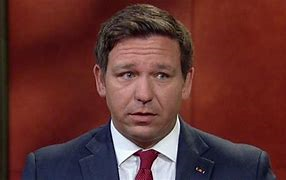
Chris Rufo has taken credit for creating the furor over “critical race theory,” leading about a dozen Republican-controlled states to pass laws banning it (whatever they think it is, mostly anything to do with racism). He is widely recognized for inventing the fear that public schools are teaching children to “hate” America or to be ashamed for being white. Despite lack of evidence that critical race theory is taught in K-12 schools, the issue has made many teachers fearful of teaching the history of racism.

Critical race theory originated among black law school professors, and it is in law school where students and faculty analyze the persistence of systemic racism in our laws and institutions.

To the extent that teachers talk about racism, it is because it has existed and does exist. It is literally impossible to teach American history without discussion of racism.

Chris Rufo loves attention, so he upped the stakes and increased his targets on Twitter, where he released this tweet. See @Realchrisrufo.

It’s time to clean house in America: remove the attorney general, lay siege to the universities, abolish the teachers unions, and overturn the school boards.

The comments below this tweet are worth reading.