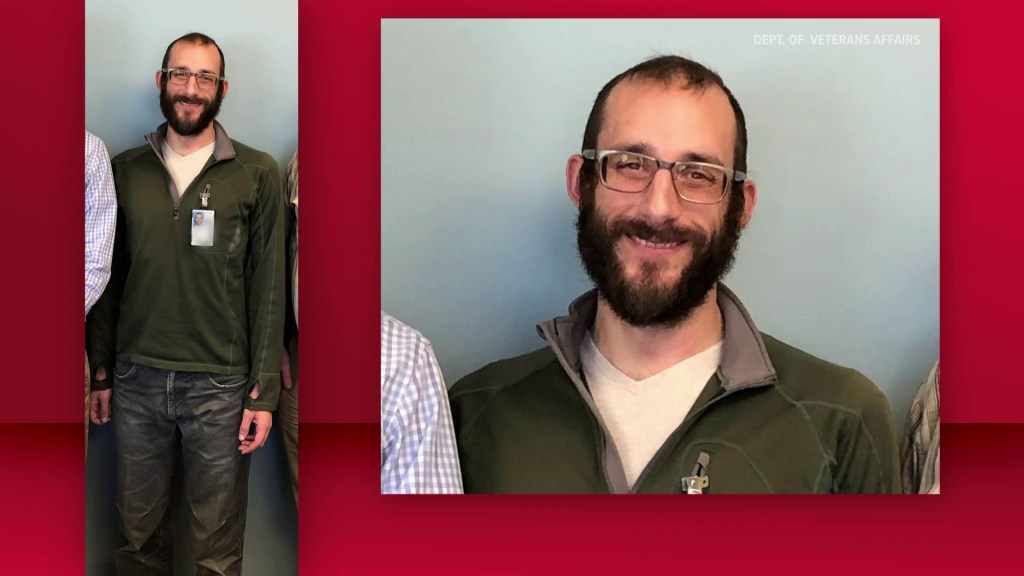
I’m sick at heart about the targeted assassinations in Minnesota. As everyone surely knows by now, a gunman dressed as a police officer entered the home of Melissa Hortman, a top Democratic legislator, and murdered her and her husband Mark. The same gunman attempted to kill State Senator John Hoffman and his wife Yvette, who are hospitalized.
Both legislators were leaders of their party, the Democratic-Farmer-Labor Party, which functions as the Democratic Party. Both houses of the legislature are almost evenly split between Democrats and Republicans. Both legislators championed humane, liberal policies.
Governor Tim Walz asked the people of the state not to attend “No Kings” demonstrations for fear that the gunman might attack them.
This is not normal. Sure, we have a history that includes lots of political violence, including the assassination of Presidents and Presidential candidates and outspoken activists like Dr. Martin Luther King, Jr., Medger Evers, and Malcolm X.
Every time something like this happens, we say “never again,” but then it happens again.
Our politics are hyper partisan, polarized, and inflamed. Almost all gun limits have been stricken down by the zealots on the Supreme Court. We have a President who encourages violence, who failed to call out the national Guard on January 6, 2021, who called the perpetrators of violence against law officers that day “patriots,” and who pardoned all of them, including those who brutally assaulted law officers. Trump has also speculated about pardoning the militia members in Michigan who planned to kidnap and murder Governor Whitmer.
This is one of those days when I fear for the future of our democratic experiment. I can’t think of a silver lining.
Trump’s poll ratings are dropping . The public doesn’t like what they see. #ChainsawElon is not popular. His glee at firing people turns most people off, except Trump’s faithful. Does Trump care about polls? We know he does. If his numbers continue to fall, some Republicans might find a spine.
Elon’s latest overreach caused a backlash. He sent an email to hundreds of thousands of federal workers, directing them to list five things they did last week or submit their resignations. Many Trump Cabinet members told their workers not to respond.
Trump and Musk have turned the corner—in a bad way. There is a great scene in the motion picture Broadcast News where Holly Hunter tells Albert Brooks that she has “crossed a line” because she is starting to “repel people I am trying to attract.”
At town hall meetings across the nation, Republican representatives are learning the hard way that Trump and Musk are not the anti-hero crusaders they imagine themselves to be. See NYTimes, Republicans Face Angry Voters at Town Halls, Hinting at Broader Backlash. (Behind a paywall; out of gift subscriptions; please post a shared link if you can.) Instead, Trump and Musk personify the “mean-boss” bullies who are born into privilege and spend their time offending and alienating people without a clue they are doing so.
Musk’s weekend email demanding that government workers prepare five “bullets” of their accomplishments in the prior week or face termination was about as “un-self-aware” as it gets. Most people in America hate Elon Musk so badly that he is accomplishing something that Trump’s eight-year run of criminality,
insurrection, and racism could not do: Musk is causing people to turn on Trump. Political gravity is real, and Elon Musk is a gravitational wave of karma that is finally pulling Trump back to political accountability.
I am surprised how often readers respond to my references to Trump’s negative poll numbers by saying, “Trump doesn’t care about polls.”
Assuming that’s true (and I don’t believe it is), that’s not my point. Trump has been able to force the GOP into mass capitulation because his favorability ratings remain stubbornly flat despite his crime sprees, civil findings of sexual abuse, revelations of extramarital relationships while married to the current First Lady, and open courting of white supremacists.
If Trump’s favorability declines, it means two things: (a) Trump is losing support among Independents (and Republicans lose) and (b) Republicans at the margin in Congress can take the risk of voting for the best interests of their constituents rather than the idiotic, self-destructive, revenge-driven agenda of Trump. It matters that people are beginning to see Elon Musk as the evil billionaire hellbent on controlling the world who is portrayed as the instantly unlikable bad guy in every science fiction and spy-thriller movie. Musk is easy to hate. As hundreds of thousands of federal workers fear for their financial security, Musk wielded a bejeweled chainsaw on stage at the CPAC convention while MAGA acolytes laughed at the now-unemployed working-class Americans who are lying awake at night wondering how they will pay their mortgages.
It doesn’t get any crueler or more clueless than that. Read the room, Elon.
None of this suggests that Trump or Musk will stop their offensive, hateful abuse of the American people. But it does suggest that we can build a firewall in Congress to join the courts in slowing down Trump’s revenge tour. And it should certainly give Democrats confidence that they can craft winning messages and coalitions in 2026 and 2028.
Musk’s email was so unpopular it ran into resistance within Trumpworld. Heads of various federal agencies, in including the FBI, Department of Defense, State Department, intelligence community, and judiciary told employees to ignore the email. See generally, The Hill, Agencies push back on Musk email, including FBI, Pentagon, State, Intel.
Two of the largest unions representing federal workers also advised employees to ignore the email and sent a response to the Office of Personnel Management stating that the request was “plainly unlawful.”
By overstepping in such a mean and petty way, Musk may have sparked a backlash that overturning the Constitution could not achieve.
Doug Vose was a student in Tim Walz’s classroom many years ago. He says he votes Republican more often than Democratic. The one thing he feels strongly about is the character and authenticity of Mr. Walz.
The idea that “all politics is local” has been more of a theory than a reality when it comes to presidential election cycles.
This idea, however, has taken on a new meaning for me and fellow former students of Tim Walz as news of his announcement as Kamala Harris’ vice presidential running mate led national news cycles last week.
Of particular interest for me — and I imagine for others who’ve sat in his classrooms over the years — has been the GOP’s strategy to paint Walz as an extreme coastal liberal who, if given his way, would love to pull the country into communism.
(Chuckle.)
As a 30-something who’s voted for the other guys more often than Walz’s party, I might have a unique POV on presidential candidate Donald Trump’s campaign painting Walz this way.
We all remember where we were on Sept. 11, 2001. I happened to be in U.S. history class at Mankato West High School when Walz poked his head in.
“They’ve just hit the Pentagon,” he said, turning to the TV in the corner of the classroom.
“Pay attention,” he told us. “You’re watching history, and your generation is going to remember this day forever.”
And of course, we did.
In the days and weeks that followed, Walz helped students of all kinds cope with their feelings about that horrible day. Students, faculty and friends gravitated to Walz to crystalize their feelings of fear, anger, hostility and sadness. After all, Mr. Walz was an Army National Guard officer, understood the minutiae of global geopolitics, but more than anything — he was a good man.
Tim and Gwen Walz were our faculty advisers for the Mankato West High School newspaper that fall, and in the wake of 9/11 the students on staff quickly pivoted to a big presentation outlining the pros and cons of retaliation in the Middle East for our next edition. A microcosm of our nation in those few weeks, the classroom was full of strong and often divided feelings. What would we say, and how would we say it?
Walz jumped in as he almost always did with student groups — from newspaper to yearbook to the burgeoning Gay-Straight Alliance that we’ve heard so much about in recent days. He challenged students to develop an informed point of view, to consider the value of empathy and to prescribe a path forward for our generation.
These were tough topics for everyone, and “Mr. Walz” served as our conscience.
In those days before his political career launched, it was very difficult for us to ascertain his political leanings. We knew he served at home and abroad in the Army National Guard. We knew he was a gun owner and perhaps the best shot of anyone we knew. We also knew that he was tremendously passionate about equal rights for everyone.
The idea that he’s a coastal liberal was as laughable then as it is now.
Since Walz has been in the governor’s office here in Minnesota, he has continued to stick to his principled approach.
He has been quite fairly criticized for Minnesota’s continued high state income taxes relative to our neighbors. Following widespread riots and looting in 2020, crime became a central issue for Minnesotans entering the 2022 gubernatorial election.
True to his history, though, Walz did not apologize for his convictions or his policies. He told Minnesotans if you don’t like sub-2% unemployment rates, if you don’t want to support a woman’s right to choose, and if you don’t like the way he commanded the National Guard during those fraught days in 2020, go ahead and vote for the other guy.
Walz won by almost 8 percentage points.
So, don’t be fooled by the easy smile and cheesy Dad jokes. When the chips are down and things get hard, this guy sticks to his convictions.
He doesn’t move his support to whichever group yells his name the loudest. He doesn’t take the politically easy route. He actually believes the things that are coming out of his mouth, whether you agree with him or not. When he’s not on TV talking, he is working to make his policies reality.
Walz digs in.
It’s the reason why for years students sought his counsel about hard things when he was a teacher at Mankato West; it’s why he was able to turn the First Congressional District blue for a decade, and it’s why he ran successfully to the right of a DFL-endorsed candidate to win the Democratic nomination for governor in 2018.
Memo to the Trump 2024 team from a dormant Republican and a Mr. Walz student:
Make the campaign about the Trump tax policy. Make it about China. Make it about the border.
Make it about anything other than leadership, decency and competency.
Because if you don’t, and this becomes a character debate, you’re way out of your league.
Doug Vose is a 2004 graduate of Mankato West High School and has been a software sales executive in the private sector for more than 15 years. He lives in Eden Prairie.
Laura Meckler and Hannah Natanson wrote about Governor Tim Walz’s record on education in Minnesota. In making decisions, Walz relied on his own knowledge as a veteran public school teacher and very likely on research, but The Washington Post misleadingly attributed his views to “the teachers’ union,” the bugbear of the far-right.
The article is saturated with bias against teachers unions and presents the pro-education Walz as a tool of the union, not as a veteran educator who knows the importance of public schools. Walz grew up and taught in small towns. They don’t want or need “choice.” They love their public schools, which are often the central public institution in their community.
The 2019 state budget negotiationsin Minnesota were tense, with a deadline looming, when the speaker of the House offered Gov. Tim Walz a suggestion for breaking the impasse.
They both knew that the Republicans’ top priority was to create a school voucher-type program that would direct tax dollars to help families pay for private schools. House Speaker Melissa Hortman, a Democrat, floated an idea: What if they offered the Republicans a pared-down version of the voucher plan, some sort of “fig leaf,” that could help them claim a symbolic victory in trade for big wins on the Democratic side? In the past, on other issues, Walz had been open to that kind of compromise, Hortman said.
This time, it was a “hard no.”
He used his position’s formidable sway over education to push for more funding for schools and backed positions taken by Education Minnesota, the state’s teachers union of which he was once a member. His record on education will probably excite Democrats but provide grist for Republicans who have in recent years gained political ground with complaints about how liberals have managed schools.
Teachers and their unions consistently supported Walz’s Minnesota campaigns with donations, records show. And in the first 24 hours after he was selected as Vice President Kamala Harris’s running mate, teachers were the most common profession in the flood of donations to the Democratic ticket, according to the campaign.
During the chaotic 2020-21 pandemic-rattled school year, Walz took a cautious approach toward school reopening that was largely in line with teachers, who were resisting a return to in-person learning, fearful of contracting covid.
Critics say that as a result, Minnesota schools stayed closed far too long — longer than the typical state — inflicting lasting academic and social emotional damage on students.
As a former teacher, Walz knew that teachers were reluctant to return to the classroom until safety protocols were in place.
Walz also advanced his own robust and liberal education agenda. He fought to increase K-12 education spending in 2019, when he won increases in negotiations with Republicans, and more dramatically in 2023, when he worked with the Democratic majority in the state House and Senate. He won funding to provide free meals to all schoolchildren, regardless of income, and free college tuition for students — including undocumented immigrants — whose families earn less than $80,000 per year. He also called out racial gaps in achievement and discipline in schools and tried to address them…
And as culture war debates raged across the country in recent years, Walz pushed Minnesota to adopt policies in support of LGBTQ+ rights…
In the 2022 elections, Walz was reelected, and Minnesota Democrats took control of the Senate. Democrats now had a “trifecta” — governor, House and Senate — and a $17.6 billion budget surplus.
After taking his oath of office in January 2023, Walz said Minnesota had a historic opportunity to become the best state in the nation for children and families. His proposals included a huge increase in K-12 education spending.
“Now is the time to be bold,” he said.
The final budget agreement in 2023increased education spending by nearly $2.3 billion, including a significant boost to the per-pupil funding formula that would be tied to inflation, ensuring growth in the coming years. Total formula funding for schools would climb from about $9.9 billion in 2023 to $11.4 billion in 2025, according to North Star Policy Action. The budget also included targeted money for special education, pre-K programs, mental health and community schools.
Walz also signed legislation providing free school meals for all students — a signature achievement — not just those in low-income families who are eligible under the federal program…
In his 2023 State of the State address, Walz drew a pointed contrast between the culture wars raging in states such as Florida and the situation in Minnesota.
“The forces of hatred and bigotry are on the march in states across this country and around the world,” Walz said. “But let me say this now and be very clear about this: That march stops at Minnesota’s borders.”
Through his tenure, he repeatedly took up the causes of LGBTQ+ rights and racial justice.
Ten days ago, a friend suggested that Tim Walz would be Kamala Harris’s best choice for her VP. My response was: “Tim who?” I looked him up on Google, and I was intrigued. He is Governor of Minnesota. He grew up in Nebraska. He taught public school for 20 years. He believes in community schools. He believes in public schools.
Then I saw Jen Psaki interview him on MSNBC, and I became a believer. Without being asked about education, he volunteered that vouchers were a terrible idea, and he was well informed about why. He had read the research.
With Kamala Harris abruptly taking Joe Biden’s place as the next Democratic nominee for president, speculation about who will be her running mate has naturally exploded. Some reporting has the choice being narrowed down to Pennsylvania Gov. Josh Shapiro, Sen. Mark Kelly of Arizona, Gov. Roy Cooper of North Carolina, and perhaps Secretary of Transportation Pete Buttigieg.
I am neither capable of nor interested in trying to predict which one she will pick. However, I do believe there is a better choice that fits all the apparent criteria: Minnesota Gov. Tim Walz.
First, the other contenders have some significant downsides. As David Klion writes at The New Republic, Shapiro is one of the worst Democrats in the country on the Gaza war. He supports legal prohibitions on the BDS movement, joined in the cynical Republican dogpile on University of Pennsylvania President Liz Magill, repeatedly implied that all the protesters against Israel’s war are antisemites, and in general supported Benjamin Netanyahu’s psychotic violence for the last nine months. To be fair, Shapiro had also said that Netanyahu is “one of the worst leaders of all time” who is leading Israel in the “wrong direction.”
Biden’s support for Israel’s war has badly split the Democratic Party, and alienated key youth and minority constituencies. It is vital for Harris to at least paper over this crack (and, one hopes, actually force an end to the war should she become president). She seems to realize this, and sources close to her are leaking stories to reporters about how she would likely take a different tack on Gaza.
Picking Shapiro would immediately reopen that wound in the party coalition. Many activists would immediately start attacking her vociferously, deflating the rare moment of party goodwill and optimism that has built up.
Sen. Kelly is not so incendiary as Shapiro, but he has one massive black mark on his record: Back in 2021, he refused to support the PRO Act, a sweeping overhaul of labor law that would make it easier to organize and add some actual punishments for companies that break the law. One of the reasons so many employers routinely infringe on their workers’ rights is that when they do, the typical punishments are tiny fines or being forced to put up a sign. Even Sen. Joe Manchin (I-WV) supported the PRO Act. Picking Kelly would also mean Dems have to win a special election in 2026 to keep his Senate seat, while he would otherwise not be up until 2028.
Unions are not only a core Democratic Party constituency and source of campaign cash and precinct walkers, as Hamilton Nolan argues in his recent book The Hammer, they are absolutely vital for rebuilding a source of institutional ballast in the party that isn’t a handful of ultra-rich donors, and, indeed, for protecting American democracy over the long term. Kelly reversed course and endorsed the PRO Act on Wednesday, but this belated conversion makes his sincerity somewhat questionable.
Buttigieg is great on TV, but he has also never held even statewide office, and his tenure at the Department of Transportation has been marred by severe problems in both the airline industry and at Boeing. That’s not really his fault, but also probably not something Americans want to be reminded of.
Of the named contenders, Roy Cooper is perhaps best on paper. He’s a white guy from a swing state, he’s term-limited out, he’s been elected repeatedly in this otherwise Republican state that some think could swing Democratic this year with him on the ticket, and best of all, he’s got an excellent surname. However, he’s also a bit old at 67, and doesn’t have a very inspiring record—mainly he has been trampled underfoot by feral Republicans in the state legislature, who have all but abolished democracy at the legislative level with extreme gerrymandering. That’s not his fault, but it also doesn’t give him much of a record to boast of.
So let’s consider Walz. Demographically, he’s just what the party apparently thinks it needs: a straight, white, cis man from the Midwest. He’ll also be term-limited out in 2026. Though he doesn’t exactly look it, he’s also on the younger side—almost exactly the same age as Harris, as it happens. He’s also quite a good attack dog on TV.
More importantly, he’s had the best record of any recent Democratic governor. (Some might argue for Michigan Gov. Gretchen Whitmer, but she’s taken herself out of the veepstakes.) By way of comparison, New York Gov. Kathy Hochul, blessed with an overwhelmingly Democratic legislature, recently canceled a congestion pricing scheme that had been in the works for decades, flushing perhaps a billion dollars down the toilet in the process. Meanwhile, Walz, with just a one-vote majority in the state Senate, has signed a legitimately sweeping set of reforms. As I detailed in a Prospect piece some time ago, these include a major expansion of labor rights (including a first-in-the-nation ban on employers compelling employees to attend anti-union meetings), a new paid family and medical leave system, protections for abortion and LGBT rights, legal recreational marijuana, restored voting rights to felons, universal free school breakfast and lunch, and more.
That reform package isn’t some kind of radical craziness far out of the Democratic mainstream. It amounts, more or less, to a state-level version of Biden’s Build Back Better agenda. Picking Walz would signal that Harris is serious about her plans to take another big policy swing, should Democrats win control of Congress, and likely inspire rank-and-file Dems to work even harder on her behalf.
The choice of running mate is often discussed in terms of campaign strategy—how the candidate might pander to certain regions or demographics, how the media might react, and so on. But as we are seeing right now, there is also the possibility it will be a very consequential decision. Just as Harris is taking Biden’s place in the campaign, her vice president might have to take over in turn. Tim Walz has shown he has what it takes.
The Securities and Exchange Commission announced charges against a Hmong woman who had made extravagant promises to investors, then defrauded them.
On April 13, 2022, the Securities and Exchange Commission (SEC) filed charges against Wisconsin resident, Kay Yang, for “conduct[ing] a fraudulent investment scheme targeting members of the Hmong-American communities in Wisconsin and Minnesota.”
Schneider goes into the details, and she points out that the same financial advisor counseled a Hmong charter school to invest the school’s endowment in a risky fund. Unfortunately, they took her advice, although the school leaders violated Minnesota law by making a risky investment with the school’s funds.
There is another twist in Yang’s story, one that the April 13, 2022, Twin Cities Pioneer Press captures as it alludes to Yang as “having ties to a St. Paul (MN) charter school board”:
Kay Yang has been described in a separate legal matter as a “close personal friend” of Christianna Hang, founder and former superintendent of Hmong College Prep Academy, one of Minnesota’s largest charter schools.
Hang was looking to invest some of the school’s money in May 2019 when Yang referred her to Woodstock Capital LLC, a hedge fund based in London.
That fall, Hang wired Woodstock $5 million in school funds, in violation of state statutes that limit what schools may invest in. Eighteen months later, just $700,000 remained.
Woodstock called the loss a matter of bad timing, saying the coronavirus pandemic made it “possibly the worst time in recent world history for investments such as those made by hedge funds in general.”
Hang and her husband, chief operating officer Pao Yang, resigned from the school at the end of last year with a combined $350,000 in separation payments.
No criminal or civil enforcement charges have been filed in the charter school matter.
The school gambled away its $5 million
Wow.
Through her foolishness, Hang lost $4.3Mof the $5M of HCPA’s money.
Rob Levine, charter skeptic, photographer, and charter critic, recently discovered that the Hmong College Prep Academy had hired one of its loudest critics.
He writes:
BY NOW MOST people who follow education in Minnesota are aware of the Hmong College Prep Academy’s illegal $5 million investment in a hedge fund that ended up losing $4.3 million, costing the power couple who run the segregated St. Paul-based charter school their jobs and casting doubt on the long term viability of the institution.
As the messy saga unfolded, an opaque school finance and consulting outfit called The Anton Group weighed in on the scandal with two blog posts, the first in June of 2021, and the second in late September. In a nutshell, Anton’s assessment was: This is fraud! The following month, something weird happened: Despite Anton’s very public criticisms of HCPA, the company landed a $100k contract to clean up the mess. A month after that, Anton’s Finance Officer became the Chief Financial Officer of the school itself. And sometime between that second blog post in September and the hiring of Anton in October those two blog posts were deleted.
As Levine puts it, “Charter school decided to feed the hand that bit it.”
Please note that Rob Levine asked me to correct the way I wrote the last line.
Minneapolis-based journalist Sarah Lahm writes about Minnesota as a pioneer in the school choice movement, but the state is now awash in choice and disruption. She sees hope in the growing community school movement, which fosters bonds between schools and families instead of competition among schools for scarce resources.
She writes:
In Minnesota, the Saint Paul Public Schools district has been left gasping for air as school choice schemes continue to wreak havoc on the district’s enrollment numbers and, subsequently, its finances.
This district is one of the largest and most diverse in the state, if not the nation, with approximately 35,000 students representing a wide array of racial and ethnic backgrounds. Two-thirds of the district’s students live in poverty, according to federal income guidelines, and almost 300 students in the district are listed as being homeless.
As a result of more school choice, in 2017, 14,000 school-age children living in the city were not enrolled in the Saint Paul Public Schools district. Instead, they either attended a charter school in or near the city or chose to open-enroll into a neighboring school district.
Just two years later, in 2019, the exodus of families had risen to more than 16,000. Today, more than one-third of all students living in Saint Paul do not attend Saint Paul Public Schools, leaving the district in a constant state of contraction.
The district’s lagging enrollment numbers can be attributed to shrinking birthrates and “a rise in school choice options,” according to a recent article by Star Tribune reporter Anthony Lonetree.
As a consequence of shrinking enrollments, district officials recently outlined a reorganization proposal that calls for the closure of eight schools by the fall of 2022 “under a consolidation plan,” in an attempt to offload expensive infrastructure costs and improve academic options for students.
Charter school options abound in and around Saint Paul, and many represent the worst effects that come with applying unregulated, market-based reforms to public education.
There’s the handful of white flight charter schools within the city limits, for example, that have long waiting lists and offer exclusive programming options, such as Great River School (a Montessori school), Nova Classical Academy, and the Twin Cities German Immersion School. On the flip side of this are racially and economically isolated Saint Paul charter schools such as Hmong College Prep Academy, where according to state data 98 percent of the students enrolled are Asian and nearly 80 percent live in poverty, according to federal income guidelines.
Hmong College Prep Academy has been in the news recently, thanks to a scandal that was dubbed a “hedge fund fiasco” by the Pioneer Press. The school is run by a husband-and-wife administrative team who invested $5 million of taxpayer money in a hedge fund, hoping it would provide a return that would help pay for the school’s expansion plans. Instead, the hedge fund investment apparently lost $4.3 million, leading to calls for the school’s superintendent, Christianna Hang, to be fired—something school officials refused to do. Hang finally submitted her resignation in late October.
In short, the market-based approach to education reform that Minnesota helped pioneer has caused a great deal of disruption, segregation and chaos. In a Hunger Games-type setting, districts and charter schools have been forced to compete for students with white, middle and upper class students and families largely coming out on top.
The end result, critics allege, is an increasingly segregated public education landscape across the state, with no widespread boost in student outcomes to show for it.
Thirty years after Minnesota’s charter school and open enrollment laws ushered in a mostly unregulated era of school choice, many states—including Minnesota—and federal officials may be turning their attention to the reform model offered by full-service community schools.
Full-service community schools offer a holistic approach to education that is about much more than students’ standardized test scores or the number of AP classes a school offers. Instead, this model seeks to reposition schools as community resource centers that also provide academic instruction to K-12, or even Pre-K-12, students.
In Minnesota, a handful of districts have adopted this model, often with impressive results.
The state’s longest running full-service community schools implementation is in Brooklyn Center, a very diverse suburb just north of Minneapolis. Since 2009, the city’s public school district has operated under the full-service model, providing such things as counseling and medical and dental services alongside the traditional academic offerings of the school system.
In recent months, Brooklyn Center’s community schools approach has been put to the test, due to both the ongoing pandemic and the unrest that erupted after George Floyd was murdered by former Minneapolis police officer Derek Chauvin in 2020. In April 2021, as Chauvin’s murder trial was underway a few miles away in downtown Minneapolis, a white Brooklyn Center police officer shot and killed a young Black man named Daunte Wright during a traffic stop.
This layering of trauma upon trauma might have broken the Brooklyn Center community apart, as large protests soon took place outside the city’s police headquarters and caused disruption among residents—many of whom are recent immigrants and refugees. During this turmoil, school district staffers, already familiar with the needs of their community, were able to quickly mobilize resources on behalf of Brooklyn Center students and families thanks to the existing full-service community schools model.
It’s not just urban districts like Brooklyn Center that have benefited from this approach. In rural Deer River, Minnesota—where more than two-thirds of the district’s K-12 students live in poverty, according to federal income guidelines, and 85 Deer River students are listed as being homeless—the school district adopted the full-service model in recent years, thanks to startup grants from state and federal funding sources. Staff in Deer River are reportedly very happy with the full-service model, which allowed them to pivot during the pandemic and provide food, transportation services and other community-specific needs. A local media outlet even noted that the community schools approach enabled school district employees to survey families during the COVID-19 shutdown and provide them with things such as fishing poles and bikes to help them get through this challenging time.
Several other districts across the United States, from Las Cruces, New Mexico, to Durham, North Carolina, have also adopted the full-service community schools approach, which is built around sharing power and uplifting communities rather than closing failing schools and shuttling students out of their neighborhoods through open-enrollment or charter school options.
Community Schools Approach Is on the Rise
Disrupting public education through the proliferation of school choice schemes, including charter schools, has long been the preferred education reform model for politicians and wealthy philanthropists in the United States, and while the charter school industry has been able to score billions in federal funding, the full-service community schools model has instead been relegated to the sidelines.
That’s starting to change.
In February 2021, a coalition of education advocacy groups, including the National Education Association and the American Federation of Teachers, wrote an open letter to congressional leaders asking that more federal dollars be spent on full-service community schools. Most recently, the letter notes, Congress allocated $30 million in funding for such schools nationwide, a number the coalition deemed far too low to meet the “need and demand for this strategy.”
Now, the Biden administration has proposed dramatically bumping this funding up to $443 million, based on the support this model has received from people such as the current U.S. Education Secretary, Miguel Cardona. While giving input to Congress on behalf of Biden’s proposed budget for the Department of Education, Cardona explained that full-service community schools honor the “role of schools as the centers of our communities and neighborhoods” and are designed to help students achieve academically by making sure their needs—for food, counseling, relationships, or a new pair of eyeglasses, and so on—are also being met.
After thirty years of devotion to “reform” (aka, deform or disruption), reform leaders in Minnesota are proposing a state constitutional amendment that will install more mischief into the state’s public schools. Rob Levine, an ardent critic of privatization, has written this account of their multiple failures and their plans to try yet again to impose their ideas on the state’s schools. He wrote this post at my request, after I saw his tweets about the travesty that “reformers” are promoting. Rob is a “follow the money” kind of person, which unsurprisingly removes the veil from bold promises that never come true. Minnesota is allowing big money to dictate the fate of its schools. Is there any accountability in the state for thirty years of failure? Why do “reformers” never learn from their failures?
He writes:
In the Fall of 2022 Minnesotans may be voting on a constitutional amendment that will fundamentally change state law around public education. How will this change public education? Surprisingly, even the authors profess not to know the answer to this question. The only thing certain about the proposed amendment is that it will empower courts and throw districts, parents and others into constant legal battles.
That’s because the amendment upends state law and tradition both in the language it removes and the language it adds. It doesn’t really say anything about how children should be educated, only that they will have a right to a ‘quality’ education as measured by standardized tests and as determined by the courts, with nothing in the amendment to guide them as to permissible remedies.
A lot of ink has been spilled in Minnesota over the proposed ‘Page’ amendment, but almost no one has investigatedeither the organizations and people behind the amendment, nor the subtext of it. The education discourse is same as it ever was, but in this case the education reformers – who have failed for 30 years to improve educational outcomes – want to open Pandora’s box.
The amendment is a half-baked, dangerous idea, as a number of scholars and experts recently wrote to Minnesota legislators. It would weaken protections against segregation while simultaneously enshrining invalid standardized test scores in the state constitution.
Who’s really behind this proposed amendment? The powerful philanthropies who for decades have meddled in Minnesota education, almost always to failure. They have been trying to privatize public education for decades. They favor a system where the public pays for things but public employees don’t provide the services.
For 30 years the Minneapolis Foundation has been meddling in the affairs of the Minneapolis Public School District, often actually telling it what to do while at the same time driving the privatization of public schools through ‘school choice.’ Since about 2008 the vehicle for the destruction is charter schools, a movement it both created and sustained in myriad ways. The result has been stagnant learning across the state for 20 years, increased segregation, and public school districts on the brink.
The Federal Reserve Bank in Minneapolis is also playing a role in advocating for the amendment: a creature of the federal government applying substantial resources and trying to influence and change Minnesota constitutional law.
The bad faith of these foundations and advocates started decades ago when the state considered the nation’s first charter school legislation. History shows that the prime mover behind this legislation was the Minneapolis Foundation, and its ideological guru Ted Kolderie, the charter whisperer. Most people have probably never heard of him, but there are more than a hundred references to him in former DFL legislator and author of the charter school legislation Ember Reichgott Junge’s book, Zero Chance of Passage: The Pioneering Charter School Story, that chronicled how that first charter school legislation came to be.
In a 1990 monograph titled “The states will have to withdraw the exclusive” that argued for competition in the education space, Kolderie told a bunch of whoppers, including that charter schools would increase teacher pay, allow them to control schools, and characterized students as “customers.” None of those predictions have come true. Minnesota now has about 170 charter schools. TWO of them are unionized, so, no, charter schools have not empowered teachers.
Then there’s the organization actually leading this constitutional amendment campaign, Our Children MN, an opaque non-profit incorporated just a year ago whose sole purpose seems to be passing the amendment. Our Children has not disclosed one penny of its funding.
The organizing leading the charge is Our Children, an opaque non-profit that has not disclosed one penny of its funding.
According to Our Children’s website, Michael Ciresi, Minnesota philanthropist and former DFL senate candidate sits on its board of directors. Ciresi hates the Minneapolis Public School District so much that he bought billboards across the street from district headquarters to spread racial disinformation.
Ciresi himself is no slouch when it comes to failing at education reform. His foundation has funded a number of now closed charter school entities, including Charter School Partners, MinnCAN, Harvest Prep charter school, and last but not least, Minnesota Comeback.
Ciresi’s foundation gave Comeback about a half million dollars over five years. Comeback was a project of the Minneapolis Foundation, which incubated it internally as the Education Transformation Initiative. Lots of other local foundations, including the Bush, John & Denise Graves, General Mills, and others contributed to the nascent effort.
When it opened in 2016 Comeback announced $30 million in commitments from funders and promised to create “30,000 rigorous and relevant charter school seats in Minneapolis.” Whatever that meant educationally it was really a death threat to the Minneapolis Public School District, which had about 35,000 students at the time.
Three years later Comeback disappeared into the night with no announcement or media reports after reporting less than $4 million in philanthropic contributions. But don’t fear for them – Comeback was merged into Great MN Schools, an organization it formerly owned, and which is now a “Page Partner.”
This kind of abject failure of philanthropic avatars in the field of education in Minnesota is more the rule than the exception. In 2009 the Bush Foundation, a philanthropy born of 3M money, started the largest project in its history – the 10 year, $50 million Teacher Effectiveness Initiative (TEI) (not to be confused with the Minneapolis Foundation’s failed Education Transformation Initiative).
The TEI postulated that the problem with education is teachers, and by the foundation’s strategic application of its largess so-called ‘achievement gaps’ would be ELIMINATED in three states and 50% more kids would be going to college. The foundation was also so confident of its success that it predicted the changes it would help implement would spread like wildfire nationwide. They also announced that not only would it perform this educational miracle, it would prove it with metrics!
This feat would be done by extending the so-called Value Added Model (VAM) to gauge the ‘effectiveness’ of teachers by analyzing the test scores of their students. The job, and a promise of millions of dollars in revenue, was awarded to a place called the Value Added Research Center at the University of Wisconsin.
Their task was to extend this discredited model originally invented to increase production of farm animals to apply to places where teachers are taught. The idea was to judge schools of education based on the standardized test scores of students taught by their graduates! One doesn’t need a PhD in social science or statistics to know that this is an insane, impossible and worthless goal.
Sure enough halfway through the project the Bush Foundation abandoned its quixotic VAM method and VARC had to be satisfied with only $2 million for its efforts. By the end of the 10 year project ‘achievement gaps’ were the same or worse, and in Minnesota instead of there being 50% more students in college, enrollment actually was down six percent. By any measure – including their own! – this project was a spectacular failure. Turns out teachers aren’t the problem! But that’s not how they saw it.
In an in-house magazine article titled “Goals for a decade revisited,” Jen Ford Reedy, president of the foundation, offered up a bold summary of the project: “We [the Bush Foundation] are proud of what we helped to make happen!”
Failure can also take different forms for the philanthropies. In 2013 the Minneapolis Foundation launched yet another huge education project called RESET Education. They even created a website for it and brought in John Legend to sing at the kickoff. Along with blaming teachers for poor test scores among some demographic groups, RESET was essentially a formula to turn Minnesota schools into testing factories. Sandra Vargas, the head of the foundation at the time, got an op-ed in the Star Tribune to tout the project, just as Our Children got one there a few weeks ago to tout the Page Amendment.
And of course the Minneapolis Foundation turned to MinnPost for coverage, as it often had, as it has been funding the organization to the tune of over $1 million since its inception. For the year of 2013 – the year of RESET – the Bush Foundation also gave MinnPost $82,000 for “Coverage and writings on K-12 education issues, best practices and overall reform efforts.”
At MinnPost reporter Beth Hawkins put the best possible face on the RESET program with gushing words about meeting celebrities and flogging the factually wrong assertions of the Minneapolis Foundation about education. That same year RESET faded into the ether just as Comeback, Charter School Partners, MinnCan and others have.
And as usual when Beth Hawkins wrote at MinnPost it was left to commenters to correct the record. It fell to Jim Barnhill, a former union leader and former Board of Teaching Member who currently works in high school administration, to get to the heart of the matter:
“How about exploring the real agenda of the Minneapolis Foundation? Why not ask the obvious question, ‘How does a business foundation posit themselves as experts in education?’”
The same question could be posed to the Federal Reserve Bank. And just what gives these foundations that have failed at education reform time and time again the right to continue intervening? A prescient person once said that “Insanity is doing the same thing, over and over again, but expecting different results.” A corollary might apply to self-appointed ‘experts’ with deep pockets who repeatedly fail and hurt society. It’s time for Alan Page, Mike Ciresi and the Minneapolis Foundation to grab some bench.
Our brilliant reader Laura Chapman, retired educator, decided to dig deep into the politics of education reform in Minnesota in response to a post about a dubious constitutional amendment sponsored by the Federal Reserve Bank.
Chapman, who lives in Ohio, writes:
I am not from Minnesota, but this post sent me deep into some policies there. The idea is to frame education as a fundamental right to “quality schools” as “measured against uniform achievement standards set forth by the state.”
No. This law is written as if the standard-setting process is a business-as usual-review of existing standards and benchmarks for learning, with periodic revisions. It is not.
Students Learning English (ELLs), are unlikely to pass the absurd requirements being proposed by the Federal Reserve (why bankers?) and as a constitutional amendment (why bankers?).
Minnesota has NO academic tests except those in English. According to a 2020 report from the Migration Policy Institute, and the 2015 American Community Survey, at least 193,600 Minnesota residents have children still learning English. All are in harm’s way. The largest foreign-born groups in Minnesota are from Mexico (67,300), Somalia (31,400), India (30,500), Laos including Hmong (23,300), Vietnam (20,200), China excluding Hong Kong and Taiwan (c), Ethiopia (19,300), and Thailand including Hmong (16,800). One of the fastest growing immigrant groups in Minnesota is the Karen people, an ethnic minority in conflict with the government in Myanmar. Most of the estimated 5,000 Karen in Minnesota came from refugee camps in Thailand. Ojibwe and Dakota are the indigenous languages of Minnesota.
Many of Minnesota’s charter schools are devoted to segregating and strengthening the identities of linguistic/ethnic groups. There are three dual language Spanish-English schools. Eight charter schools are devoted to immersion in these languages/cultures: Chinese, French, German, Korean, Mandarin Chinese, Russian, and Spanish. There are at least five Hmong immersion charter schools, and two for Ojibwe immersion. Two charter schools offer ELL education for East African families and one offers education using American Sign Language/English bilingual approach.
Recent reports also show how charter schools are racially segregated. In St Paul, one hundred percent of students at Higher Ground Academy are black or African-American. This percentage is about the same for Minneapolis’s Friendship Academy. In both cities the overall population of black or African-American residents is below twenty percent. By design, many charter schools in Minnesota are segregated schools. Will these schools be subjected to the wishes of the bankers or not?
In 2021, the Minnesota Federal Reserve, having no expertise in education, called in “experts” to make suggestions on a fix for so-called achievement gaps, meaning differences in scores on standardized tests. This “we-can-fix it” program was sponsored by all 12 of the nation’s District Banks in the Federal Reserve System. In other words, what happens in Minnesota may not be limited to Minnesota but extend to the orbit of District Banks in Atlanta, Boston, Chicago, Cleveland, Dallas, Kansas City, New York City, Philadelphia, Richmond (VA), San Francisco, and St Louis,
Among the highly visible “experts” called in for this multi-state program were Geoffrey Canada, president of the well-endowed Harlem Children’s Zone (endowment about $148 million, and sponsor of Promise Academy brand of K-12 charter schools), and CEO Salman Khan, founder of online Khan Academy, and Kahn Academy for Kids. The papers for this program also featured the post-Katrina takeover of New Orleans schools as if exemplary. https://www.minneapolisfed.org/article/2021/feds-racism-and-the-economy-series-explores-racial-inequity-in-the-education-system.
Bankers are clueless about education but they have an agenda certain to harm thousands of students in Minnesota, especially ELL students, and if applicable to charter schools, the many students ill prepared to take a test only available in English.
The last thing we need to have are the nation’s clueless bankers making permanent changes in education based on proposed Minnesota’s model of “quality.”