Archives for category: Love


Shortly after I read this very provocative post by David Kristofferson, I saw a story in Education Week that suicide rates among young Americans have recently soared.  

Quoting data from federal sources, it said:

Suicide rates for teens between the ages of 15 and 19 increased by 76 percent between 2007 and 2017.  And the suicide rate for 10- to 14-year-olds nearly tripled over that same time period, according to CDC’s data.

Kristofferson writes that something is clearly wrong with the way we raise our children. His own district in California surveyed high school students and reported that nearly a third of them describe themselves as”sad.” A sizable fraction have recently used drugs or alcohol.

He then goes on to contrast two parenting styles: the wholesome Dutch approach, which produces”the happiest children in the world” and the strict Tiger Mom approach, which establishes rigid standards of behavior: all work and no play, a phenomenon that captured media attention a few years ago.

As a grandmother who was once a very loving non-Tiger Mom, I think there is something terribly wrong with the absurd pressure we put on our children today. What they need most of all, after their basic needs are met, is unconditional love, the knowledge that someone is crazy about them. That’s a line I heard many years ago from a celebrated Yale child psychologist, Dr. Alfred Solnit: Every child needs to know that someone is crazy about her or him.


I recently watched the PBS special about the Jewish legacy on Broadway, and I enjoyed every minute.

It is online, and I share it now with you. 

I hope it is still online.

I have always loved Broadway musicals, and many are reprised in this special.

But in addition to the entertainment and the rich cultural history, we see a very contemporary story of immigrants coming to America and becoming quintessentially American. We see Irving Berlin arriving as a five-year-old from Russia, having survived a pogrom, then becoming the composer of “God Bless America,” “Easter Parade,” and “White Christmas,” among the thousands of songs he wrote. We see stories in which composers used their music to teach lessons about racism, intolerance, and bigotry, like “South Pacific,” and the song “You Got to Be Taught to Hate.” Often they told the stories through the experiences of other groups, like “Porgy and Bess” and “West Side Story.”

I hope you enjoy it as much as I did.

I am sending a gift to PBS for remaining a beacon of light in these dark times.

A Message from our friends in Texas:


 “Little children, let us love, not in word or speech, but in truth and action.”
-1 John 3:18

Our Texas community is still reeling from the news of the recent shooting in El Paso. As faith leaders across our state, we are devastated by the violence and loss of life that has affected so many. 

Instead of our usual update this week, we wanted to offer you encouragement. In the wake of this violence, we encourage you to embody love, “in truth and in action,” in your community. Live love through acts of kindness, solidarity, and compassion. Live love by reaching out to those at the margins, to those who are different than you. Live love in a way that transforms our world. 

Scripture asks us to “weep with those who weep” and reminds us us time and time again that community is the most powerful response to tragedy. So, most importantly, we encourage you to live love by being there for those who are deeply impacted by this tragedy. 

Prayer vigils have already been planned across the state. Please consider finding one, attending, and being with your community in this time of mourning.

Copyright © 2019 Pastors for Texas Children, All rights reserved.
Our mailing address is:

Pastors for Texas Children

.

Ann Cronin is an educator in Connecticut.

In this post, she explains what real achievement is, and it has nothing to do with test scores.

There are all kinds of suggestions for improving student achievement – privatize public schools, increase the number of standardized tests that students take, implement national standards, and enforce no-excuses classroom discipline. None of these practices, however, have made a bit of difference. That is for two reasons. One reason is that the underlying causes of poverty and racial injustice have gone unaddressed, and the other reason is that standardized test scores can never measure achievement and, instead, reliably indicate only one thing: the income of the parents of the test taker.

So the first step in increasing student achievement is to redefine what we mean by achievement.  I recently witnessed something that crystallized for me what real achievement is.

She recently attended a ceremony in her community where high school seniors and adults were honored for community service.

When it was time for the second adult recipient, Roseanne Sapula, to give her speech, she spoke about how honored she was to receive the award she regarded as prestigious and how she had tried to write a speech but gave up. It was clear that she gave up because her volunteer work with the Monday Night Social Group, a group comprised of 40 special needs individuals of high school age and older, was so close to her heart that it was hard for her to explain her interactions with those in the group in a short speech. She did tell the audience that thinking up new adventures for those young adults and new ways for them to be part of the larger community was her “calling”.

As Roseanne was talking, she looked out in the audience and spotted one of the members of the Monday Night Social Group, Jacob, Fialkoff, a 20 year-old whom I later learned has cerebral palsy and a seizure disorder. She called out to him and asked him a favor. She explained to the audience that Jacob is scheduled to sing the National Anthem at the opening of the Connecticut Special Olympics and that he has a beautiful voice. She asked Jacob if he would sing it right there for all of us.

Jacob hesitated, probably feeling unprepared and that it was too much of a challenge at that moment. Roseanne, aware of his hesitation, asked him again, telling him that she would not be at the opening ceremony of the Special Olympics and would love to hear him sing the National Anthem. He still hesitated. Roseanne then asked him if he could do it just for her. He softly said OK.

He sang beautifully.

Jacob’s singing the National Anthem, unrehearsed and on the spot out of love for the person who asked him, is what is missing in the conversation about increasing student achievement, which has been the illusive national goal since the passing of “No Child Left Behind” in 2001. We have tested and prepared kids for tests. And achievement doesn’t budge. We have declared that urban schools are “failing schools” and opened charter schools.  And achievement doesn’t budge. We have put in place Common Core standards.  And achievement doesn’t budge. We suspend and expel students at high rates, particularly in charter schools. And achievement doesn’t budge. That’s because we have been looking in the wrong places for achievement. We have been looking at standardized tests.

What a narrow definition of achievement has ruled our nation since 2001, and even earlier.

The Washington Post has a story today about America’s first gay first lady.

She was Grover Cleveland’s sister Rose, who acted as his first lady because he was elected without a wife.

In the summer of 1910, Evangeline Simpson Whipple told the caretaker of her home not to move anything in her absence. The wealthy widow was going on a trip, but would be back soon, she said.

She never returned. When she died in 1930, she was buried at her request in Italy next to the love of her life — a woman with whom she had a relationship that spanned nearly 30 years. That woman, Rose Cleveland, had served as first lady.

The letters, preserved by the caretaker at Evangeline’s Minnesota home, are collected in a new book, “Precious and Adored: The Love Letters of Rose Cleveland and Evangeline Simpson Whipple,” and make clear that they were more than just friends, according to its editors.

When Grover Cleveland took office in 1885, he was a 50-year-old bachelor, a fact that almost derailed his campaign when rumors spread that he had fathered a child out of wedlock. (He had.) Protocol for unmarried or widowed presidents called for a female relative to fill the role of first lady. In stepped his sister Rose.

She was seen as an important counterbalance to her brother’s scandalous baggage: She was respectable, well-educated, a former teacher at a women’s seminary and the author of serious books.

Her term as first lady, however, was a mixed bag, according to the National First Ladies’ Library. Her book of essays, “George Eliot’s Poetry,” became a bestseller based on her fame, but she was frustrated with public scrutiny of her necklines and a ban on her going to private dinners or public markets.

Fourteen months in, Rose was relieved of her duties when the president married his 21-year-old ward, Frances Folsom. Rose returned to her family estate, nicknamed “The Weeds,” in Upstate New York.

Rose met Evangeline Simpson in the winter of 1889-1890, less than a year after her brother left office for the first time. (Cleveland is the only two-term president not to have served his terms consecutively.) They probably met in Florida, where both spent the season making the rounds among the nation’s wealthier families. Rose was 43 and never married. Evangeline was probably 33 and had inherited a fortune from a late husband nearly five decades her senior.

The love letters begin in April 1890, once the two returned to their respective homes. (Evangeline lived in Massachusetts.)…

When the staff [at the Minnesota Historical Society] discovered the love letters, a memo warned that some of the letters “strongly suggest that a lesbian relationship existed between the two women” and should be hidden from the public.

That ban was lifted following complaints in 1978. Historians have mentioned the letters over the years, but a complete collection of the letters had never been published, until Ehrenhalt and Tilly Laskey’s book.

“There have been women loving other women for all periods of history,” Ehrenhalt said.

Rose Cleveland was not the only gay first lady. Eleanor Roosevelt, while first lady, had a long relationship with a journalist named Lorena Hickok (“Hick”), which was documented in biographies of Eleanor by Blanche Wiesen Cook and Susan Quinn.


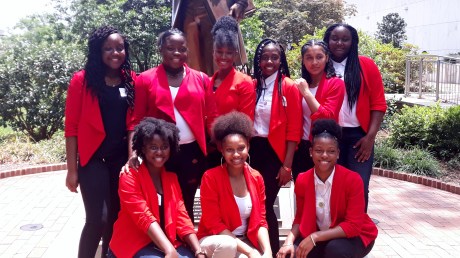
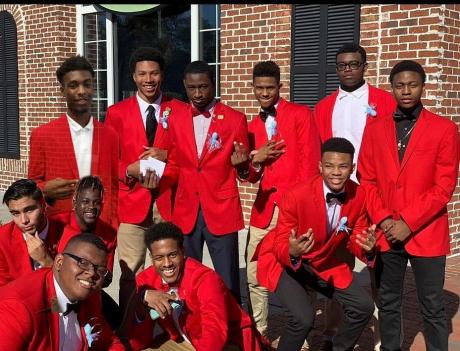
I have written before about Arnold and Carol Hillman. See here and here. They were educators in Pennsylvania who retired to South Carolina. Being educators, they couldn’t really retire; they got involved. They created an organization called the South Carolina Organization of Rural Schools, to raise awareness of the schools that are underfunded in impoverished rural areas (check out its Facebook page). They visited the public schools of Jasper County, met the students, and discovered their new purpose in life. Arnold created a club for boys called the Jasper Gentlemen. Carol created a club for girls called the Diamonds and Pearls. They raised money to pay for trips, experiences, blazers, pizza, and college visits. I hear from them from time to time. They are wild about these kids and want them to have good lives. They love them.

Here is their latest report:


Benefits of the ROSO (Reach One Save One) Program

By Carol and Arnold Hillman founders of SCORS (South Carolina Organization of Rural Schools)

Four Years Ago:

In 2015 Carol and Arnold Hillman approached Dr. Vashti Washington, then superintendent of the Jasper County Schools. They said, “We just moved from Pennsylvania to South Carolina and want to learn about public education in our new home. She directed them to Dr. L.R. Dinkins, who described his idea of the ROSO program (Reach One Save One). His vision was for a group of high school students to learn leadership, problem-solving and important life skills that would not only benefit them but teach them to mentor 5th graders who were in need of some special attention.

Diamonds and Pearls and the Jasper Gentlemen were born.

Today:

May 22, 2019, was an exciting and tiring day. We took Carol’s group, “Diamonds and Pearls,” to the University of South Carolina. The 10 girls, who are freshman and sophomores at the Ridgeland-Hardeeville High School in Jasper County, SC, spent a wonderful day learning about the University in particular and about higher education in general.

Dr. Pedersen, Dean of the College of Education at the University, is a member of the SCORS steering Committee and is frequently in touch with us and other members of the committee. Carol had been describing her work with the young ladies to Dr. Pedersen when he extended an invitation to them.

We were fortunate that the Jasper County school district, on rather short notice, arranged for a small bus which allowed us to wend our way two hours plus across route 95 and then route 26 to Columbia.

After what the girls felt was an “all too short” visit to one of the USC’s bookstores, they had opportunities to interact with many of the members of the USC College of Education. They took a tour of the campus and even meet Pierce McNair, who is the legislative aide to Chairperson Rep. Rita Allison, chairman of the SC House Education Committee.

The girls, who had never visited USC before, were thrilled. It was so reassuring to learn about the many programs that are in place to help minorities succeed on this big campus. We learned that African American women have the highest completion rate of any group attending the University and saw an exhibit about major events that struck our country in 1968- assassinations of MLK and Robert Kennedy. Perhaps most impressive were the stories members of the Education Dept. shared with us about their own backgrounds and the many different jobs they held as they made their way to their present positions.

The Associate Dean of Academic Affairs, Dr. Hodges, offered that he and his staff would be happy to come to Jasper County to speak to our students and staff.

Not only did our girls get to know the University, but the visit gave the Jasper County School District an opportunity to showcase some of their outstanding students.

The University is looking for good students, and our students are looking for good colleges. A visit such as the one we made is more meaningful that just completing on online application or reading that application.

You may have read an article posted on the scors.org website about how colleges, very frequently, do not mine rural students, either scholastically or athletically. We are hoping our visit opened new pathways and an understanding of our students, who are fair representatives of our part of rural South Carolina.

Diamonds and Pearls and the Jasper Gents have been at this work for four years, many of the senior boys have become so competent that this year, the elementary school gave the Gents an additional group of fifth grade boys who were very troubled. The seniors did a special job with those boys and from what we can tell, had some positive impact.

We are pleased to report that next year will be our fifth year working with these two groups. This year was especially gratifying because out of the seven senior Gents, six will be off to college and one will enter the Marine Corps.

20190522_133401IMG950821 copy

Let us pause and remember the men and women who lost their lives while serving in the military.

The older I get, the more I hate war.

I despise those who see war as a political tactic, those who stir up war talk to get votes.

Those who drop bombs and fire missiles to raise their poll numbers are contemptible.

There is evil in the world, for sure.

I saw it when I visited the “killing fields” in Cambodia last year.

There is a high school in Pnomh Penh that was turned into a torture camp by the Pol Pot forces.

The walls of the school are lined with photographs of hundreds and hundreds of men, women, and children, taken just before they were killed. Horrifying.

It is our challenge to be on the side of kindness, justice, charity, love, and forgiveness.

That may be hard. But in a time when so many nations have weapons of mass destruction, we have no choice.

“We must love one another or die.” (W.H. Auden).

He also wrote, in another version of the same poem, “We must love one another and die.”

Both statements are true.


Capital & Main interviewed Jackie Goldberg about her views, her vision, her hopes for the future. My heart sang and my brain hummed as I read her inspiring words.  

Reading Jackie’s words was like eating comfort food. I kept saying to myself, “Yes! Yes! Yes!”

Read the interview and you will see what I mean.

Jackie knows we are in the middle of a war to save public education. She knows that there is big money determined to kill it. She knows that the hope for the future of our democracy depends in having a well-funded public school system that provides genuine opportunity to all children.

And she is prepared to go to the mat, in Los Angeles and in Sacramento, to get the funding that public schools need and to get the financial accountability that charter schools need.

I am reminded of the first time I met Jackie. It was December 6, 2018. I had heard about her for years as an iconic figure but our paths had never crossed.

Over the past several years, the billionaires were buying seats on the LAUSD and things were looking bleak. I kept hearing about this dynamo Jackie Goldberg, the only one who could turn things around. She was the Cy Young pitcher in the bullpen, the one held in reserve until the ninth inning.

Last December, I went to Los Angeles to receive an award from a progressive group called LAANE (Los Angeles Alliance for a New Economy), which fights for fair wages for low-income workers, environmental protection, and a stronger public sector.

Jackie was there. We agreed to talk after the dinner. We sat in a crowded bar and talked for over an hour. I felt like I was talking to my mirror image yet our life experiences were very different. It was a joyous conversation.

When I returned to LA in February, I spoke at a fundraiser for her. Once again I was impressed by her knowledge, her experience, her passion for education and for children and for justice.

You could count me as her biggest fan but given the 72% win she just racked up, I’m guessing that there are many others in Los Angeles who have known her much longer and who love Jackie as much as I do.

It should go without saying that she is a hero of public education.

Cy Young just came in from the bullpen. Things are definitely looking up.


Karen Francisco, editorial page editor of the Fort Wayne Journal-Gazette, wrote a moving tribute to our dear friend Phyllis Bush. She called Phyllis “a lifelong teacher.” She taught for 32 years. When she retired, however, she never stopped teaching.

Francisco quotes some of Phyllis’s former students, who describe how Phyllis Bush changed their lives.

The editorial includes a photograph that catches the only moment when Phyllis was ever speechless. That moment occurred at the last annual conference of the Network for Public Education, held in Indianapolis, when the winner of the first annual Phyllis Bush Award for Grassroots Activism was announced. As one, the audience jumped to its feet and gave Phyllis a standing ovation.

That was a precious moment, filled with love, respect, and admiration for a woman who never stopped teaching and never lost her sparkling sense of humor.

This wonderful quote from Dr. Martin Luther King, Jr., was sent to me this morning by the Southern Poverty Law Center:

As the nation honors the life and legacy of Dr. Martin Luther King Jr., we should all ask ourselves what we are doing to help achieve King’s vision of a “Beloved Community.”

Community is what Congress had in mind in 1994 when it designated MLK Day as a national day of service.

Dr. King knew that all of us have something to contribute. He understood the power of community action – of many small acts pushing a society closer to its ideals.

“Everybody can be great, because everybody can serve,” he said. “You don’t have to have a college degree to serve. You don’t have to make your subject and your verb agree to serve. You don’t have to know about Plato and Aristotle to serve. … You only need a heart full of grace, a soul generated by love.”