Archives for category: Education Reform

David Gamberg recently retired as Superintendent of two contiguous school districts on the North Fork of Long Island: the Southold district and the Greenport district. He first was appointed in Southold, where he was beloved for his devotion to the students; he is a child-centered educator, who encouraged the arts, developed a student-run garden (whose produce was used in the school cafeteria), and strengthened the school’s theatre program. When the Greenport schools needed a new superintendent, they invited Gamberg to split his time between the two districts.

Gamberg writes his story:

When I was young I never fully knew what my father did for a living. Eventually learning that he was a truck driver did not dissuade me from following in his footsteps. I never did pursue that line of work. Nor did I ultimately learn about the industry that he worked in throughout his entire life. Therefore I am not one to opine on how the supply chain and the trucking industry’s role in our economy is a major feature of what we are now experiencing in our country and throughout the world.


I was fortunate to grow up in the America of my youth. My father was a truck driver who did not go to college. I consider myself so fortunate. My mom worked as an aide in a nursing home. They worked hard, but I was also the beneficiary of a system that recognized a need to level the playing field for those among us who may not have been born into a privileged position in society.


It never occurred to me that my K-12 public education was ineffective or insufficient to prepare me to lead a fulfilling life. I didn’t go to private school, and the racially diverse schools that I attended were of great benefit to my understanding of the world around me. I resent the attacks on public schools that are playing out today.


At 59 years old I can remember a time when the United States government helped me to get a leg up in life. I went to Head Start, a pre-kindergarten program for children set up for the common good, to give opportunities for young people like me who did not come from wealth, or status in society that paved the way forward. I don’t know where I would have traveled in life if not for this early support, and therefore I can’t imagine why good early childhood education is not something that every American of any political persuasion should support. This was not the only benefit I received as a young citizen of our country.


Yes, I went to college, a public state university, paid in part because of the benefits I derived from my father’s lifelong contributions to the Social Security system. He was of age to receive social security when I went to school in the early 1980s. As a result of the structure of the Social Security benefit program at the time, as long as I was in college I would receive some measure of support to offset the cost of going to school. This and other safety net benefits including state and federal grants afforded me the opportunity for a good education, without having vast amounts of student debt hanging over my head upon graduation.

I raise these issues in the context of my childhood view of work and school, and my growing awareness over the years about the role that good government programs and support played in my life. It is not a matter of government entitlements. Rather, it is about the public trust that we place in our government to support fellow citizens. It is about the importance of a civil society, and how our governing polity should work.

The opportunities that should be afforded to every young American to have the ability to go to post secondary school to pursue their purpose in life if they choose to do so, or to dream of a career and living a life to the fullest should be the norm, and a common reality for all. This should not be dependent upon your station in life, where you were born, or your family situation.
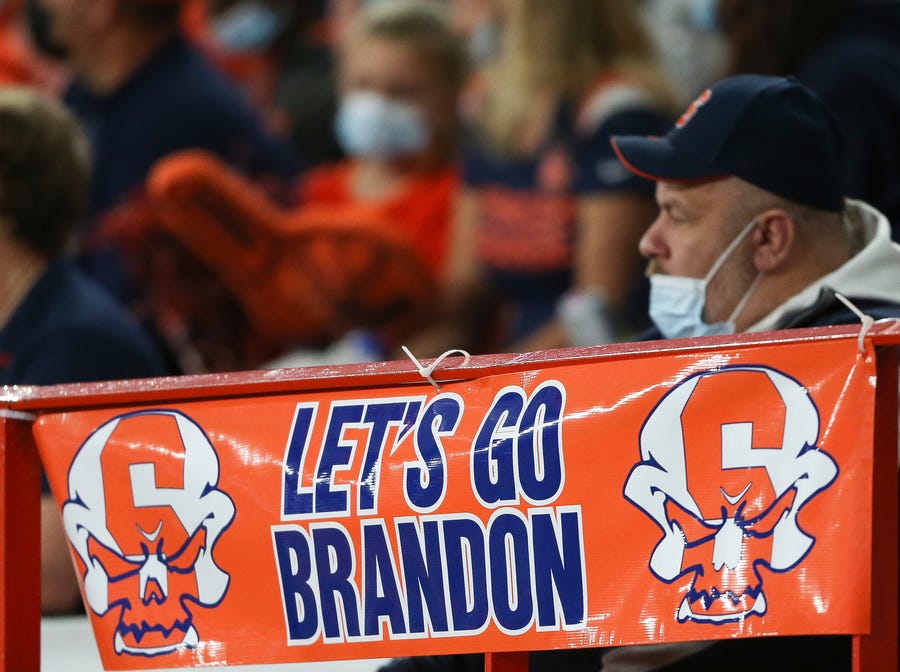
This article by Ed Montini in the Arizona Republic explains the childish behavior of Republican leaders, who engage in taunts instead of reasoned discourse about their agenda. They don’t want to expand Medicare. They don’t want universal pre-K. They don’t support efforts to combat climate change. They oppose paid family leave for families in need after surgery or childhood. They are against a federal guarantee of two years tuition-free community college. They oppose higher taxes on billionaires. They don’t care about voting rights. They don’t want to expand opportunity. They don’t want to reduce inequality. They don’t invest in the future.

What are they for? Tax breaks for the rich.

Since they have no agenda, their goal is to make sure Biden can’t succeed. After blocking everything he proposes (with the help of Senator Manchin of West Virginia and Senator Krysten Sinema), they have nothing to offer other than the schoolyard chant.

Ed Mancini was walking his dog early one morning, and he saw two other dog owners engage in conversation, a man and a woman. As they part ways, the man says to the woman, “Let’s go, Brandon!” then turning away.

The woman is puzzled and asks Montini if he knows what that phrase means.

So, first thing in the morning I am called upon to explain this recent cultural phenomenon to one of the few American grown-ups who has managed to remain a fully functioning adult, while most of the rest of us have been transformed by social media into crude, smart-alecky 8-year-olds.

There’s that Southwest Airlines pilot

This particular sign was a the Boston College-Syracuse football game Oct. 30. A fan’s juvenile jab at President Joe Biden.Joshua Bessex

For instance, the woman had not heard about the Southwest Airlines pilot who recently signed off on a flight, telling passengers, “Let’s go, Brandon.”

Or about how the whole thing began when a race car driver named Brandon Brown won a NASCAR race and, while being interviewed on TV, the crowd started chanting, “F–k Joe Biden.” The flummoxed interviewer suggested they might be saying, “Let’s go, Brandon.”

After that, the phrase became a way for grown-up 8-year-olds to say the f-word about Biden without actually using it.

Really.

Elected Republican politicians in Washington, D.C., started using the phrase.

Donald Trump began selling “Let’s go Brandon” T-shirts through his Save America PAC for $45, and grown-up 8-year-olds in America actually purchased them.

$45.

There are adults who channel their 8-year-old selves by bringing signs saying, “Let’s go, Brandon” to public events, as well as some who scribble the message in paint on the rear window of their automobiles….

How to answer someone who says such a thing

Of course, we all learned as children that infantile behavior tends to draw some type of backlash….

After I explain the whole “Let’s go, Brandon” thing to the woman who’d been walking her dog she says, “That seems incredibly childish. How are you supposed to answer someone who says such a thing?”

I tell her that, as a grown-up, she would be best served simply ignoring it.

As for the rest of us, suffering as we do from social-media-induced age regression, I’d respond, “I’m rubber and you’re glue …”

Reach Montini at ed.montini@arizonarepublic.com.

Problem viewing email? View in browser

Mercedes Schneider is an experienced high school teacher in Louisiana. She wants to help her students overcome what they may has lost during the pandemic.

She knows what it will take. How likely is it that the district or the state will give her what she needs?

https://deutsch29.wordpress.com/2021/11/07/what-it-would-take-for-me-to-seriously-confront-pandemic-learning-loss/

After the election, I posted an article from the Charlotte News-Observer/AP that suggested that attacks on critical race theory was not a decisive factor in many local school board races.

But since there are thousands of local school boards, no one knows for sure whether the issue changed minds and votes.

Axios reports that the anti-CRT crowd made many gains in their effort to win school board races.

Mike Allen writes:

A new PAC focused on electing conservative candidates to public school boards — by raising fears about how racism is taught — won three-fourths of its 58 races across seven states on Tuesday.

Why it matters: Those wins for the 1776 Project PAC, and Glenn Youngkin’s gubernatorial victory in Virginia, underscore the political potency of culture wars and COVID-related issues in schools this year — and how GOP candidates are seeking to ride the trend to new majorities.

  • Founder Ryan Girdusky told Axios: “My PAC is campaigning on behalf of everyday moms and dads who want to have better access to their children’s education.”

But, but, but: School officials are concerned there’s been intense hype and misinformation around the U.S. about what’s actually being taught in most schools.

  • They also worry politicization of school boards is sometimes translating to violence against teachers, and poorly informed decision-making.

By the numbers: Thirteen Pennsylvania school board candidates backed by the group won their races, along with 11 in Colorado, nine in Kansas, four in New Jersey, three in Virginia and two each in Ohio and Minnesota.

  • They’re not just winning in Republican areas; several candidates won in solid blue counties: Montgomery County, Pennsylvania; Passaic County, New Jersey; and Johnson County, Kansas.

Between the lines: Critical race theory is an academic movement focused on systemic racism, especially in U.S. law. It’s largely remained in graduate school settings as opposed to public secondary schools.

  • But “CRT” has become a potent political buzzword among conservative politicians and parents upset about schools introducing new lessons about racism and the history of slavery in the U.S.

What to watch: Expect more Republican candidates up and down the ballot to pick up CRT along with the rest of Youngkin’s political playbook.

  • The education issue “seems to be trending in our direction, whether it’s school lockdowns, curriculum or critical race theory,” one national GOP strategist told Axios.

If the attacks on CRT continue to stir animosity and spread lies about teaching history, this will cause teachers to self-censor whatever they teach about race and racism. This chilling effect will hamper efforts to think critically and honestly about some of the most important issues in American history. The attacks have also targeted any efforts to promote diversity, equity, and inclusion. The anti-CRT crusaders say they want to restore “patriotic education.” That is, an education built on lies.

The heated debate over “critical race theory,” “indoctrination” and “socialism” in the schools, and attacks on teachers for teaching books like Beloved has unleashed the native fascism that usually hides under a rock.

We saw it in Virginia, where the Republican winner in the election played on these issues in his campaign and vowed that he would pass a law to allow parents to opt their children out of reading stuff that made them “uncomfortable.”

A Texas legislator aims to be on the front lines of book banning. Rep. Matt Krause assembled a list of 850 books that he thinks should be removed from the schools. The books must go “because they might cause students to feel “discomfort.”The list is heavily weighted towards titles about gender, sexuality, racism, and other topics that he thinks should not be taught or read about in school. He probably would ban them for college too if he could.

My guess is that these books were chosen simply by their title, not because Rep. Krause read them.

Here is the list of 850 books that he wants to eliminate from the schools. Krause has no idea whether any of them are taught in the schools.

In the age of the Internet, when teens can see anything and everything mentioned in these books, this crude censorship is ridiculous.

I can’t tell whether the odor in the air is the burning of books or is the stench of McCarthyism.

What do you think?

Boston has had mayoral control of the schools since 1992. On November 2, the voters went to the polls and overwhelmingly supported the return of an elected school board. Mayoral control was sold as a “reform” panacea that would lead to higher achievement. It didn’t. Boston joins Chicago as cities where the public wants to abandon autocratic rule of the schools. The vote in Boston to restore an elected board went 4-1 in favor.

The newly elected mayor, Michelle Wu, said before the election that she would be open to a board in which a majority of members were elected, and some were appointed by the mayor.

The Boston Globe wrote:

The Question 3 ballot measure, which passed with 78.7 percent of the vote, was nonbinding, meaning it doesn’t carry legal weight. But councilors say it will prompt them to push for changes that will democratize school decision-making and empower communities of colorwho have long felt ignored by the appointed committee.

Bruce Lesley, child advocate, explains in this article in Medium why a democratic society needs public schools. It’s an excellent article and it reviews the current attacks on public schools and even their right to exist. Did you know that one candidate for U.S. Senate has called for the abolition of public schools; he thinks every child should attend a religious school. Does every parent want their child enrolled in a religious school? Are there enough religious schools to admit 50 million children? A generation ago, a proposal this absurd would have turned him into a laughing-stock.
But these days, ridiculous ideas are in the mainstream, polluting civic discourse.

Lesley’s article returns the discussion of education to reason, a rare quality in these troubled times.

Lesley explains why individual parents should not control what happens in school:

For example, imagine an elementary school of 450 students where 15 parents oppose the teaching of evolution, 19 parents believe the earth is flat, 28 are Holocaust deniers, 22 oppose white children learning about slavery, 7 believe in racial segregation, 21 believe in the concept of a school without walls, 49 demand the use of corporal punishment, 18 want to ban Harry Potter books from the school library, 26 want to ban any books that mention the Trail of Tears, 62 believe that parents should be allowed to overrule a physician’s decision that a child with a concussion should refrain from participating in sports, 87 oppose keeping their kids out of school when they have the flu, 9 believe that a child with cancer might be contagious, 29 believe that kids who are vaccinated should be the ones who quarantine, 72 support “tracking” in all subject areas, 32 believe students should not be taught how to spell the word “isolation” and “quarantine”because they are too “scary of words,” 104 don’t like the school neighborhood boundaries, 38 don’t like the bus routes, 71 parents want a vegan-only lunchroom, 4 demand same-sex classrooms, 5 oppose textbooks and want their children only reading from the Bible, and it can go on and on. The vast majority of parents do not agree with any of these things, and yet, parental rights extremists would insist schools must accommodate them, even if they are completely false, undermine the purpose of education, threaten the safety of children, or promote discrimination.

How can a school operate if every parent can decide every aspect of the education of their child, as some are demanding? It cannot.

The parents who want control of every aspect of their child’s education are homeschoolers.

Kevin Ohlandt is a blogger in Delaware. In a recent post on his blog ”Exceptional Delaware,” he reported on the testimony of a teacher who was nearing the brink of his endurance for teaching conditions.

Ohlandt wrote:

Last night, a teacher named Steve Fackenthall gave public comment to the Red Clay Consolidated School District’s Board of Education. It echoed what most American teachers are going through these days. Teachers are mentally drained and have been since Covid turned the world upside down in the early months of 2020. It is having a tremendous effect on the American teachers. Many teachers have left the profession due to severe burnout and not enough support from their district offices. 

This can only trickle down to the American students. Some want to say teachers are lazy, overpaid, get summers off, and only care about their union. Based on my experience with teachers this couldn’t be further from the truth. Most teachers deeply care about their students and want them to be successful. The sad truth is that a lot of pressure has been put on teachers to provide not only education to children, but also social-emotional supports. 

My name is Steven Fackenthall, music teacher at Richey Elementary and Vice-President of the Red Clay Education Association. Tonight I speak to you about the extraordinary high levels of teacher fatigue and stress that is being experienced by our educators.

It’s only October 20th, yet it feels like it should be June any time now. We. Are. Tired. Our educators are drowning. To give more insight, I’d like to share with you thoughts from our educators. I’m extremely disappointed that TEACHER MENTAL HEALTH HAS NOT BEEN MENTIONED BY DISTRICT LEADERS ONCE, other than a link to the Employee Assistance Program. There have been no check-ins to see how we are managing as we are also returning following and continue during a pandemic… along with the absence of support or concern for our well being, we are being told to accelerate learning while we know many students are way behind where even the lowest students are in a typical year. 

From an elementary school teacher. There is, even more than normal, a lack of understanding of what it’s like in the classroom right now. It’s one thing to read and talk about how COVID has affected our kids, but those working office jobs within the district need to take our word on more things or come visit classrooms more often to really understand what is happening. 

I have been a Red Clay employee for 15 years and I feel hopeless. I’m sad for our students and am completely discouraged as a teacher. The general consensus is that NOBODY cares. 

I need pacing guidelines relaxed as I have kids coming back from mandatory quarantines and need to catch up. ELA expects us to get through all 4 units this year, which we never have. 

I need the micromanaging from the district to stop and just have the ability to teach and give my kids what they need. I used to love teaching but after this past year, I am seriously considering leaving. Although I love my kids, everything else about teaching is driving me over the edge, why isn’t the district listening to us? We need more support, we need more time to plan, grade and help our students, I cannot keep up these 60-70 hours a week. 

I was in tears by 11 am and apparently I was the 3rd teacher of the day to do so. I was in the bathroom sobbing saying I can’t do this. I need a different job. This isn’t’ sustainable. These words are saddening. 

These words are heartbreaking. And only a fraction of the responses I received. Red Clay board, if we are truly to respect the tireless work educators put forward for their students, then we must think about the conditions we place on them and how to improve that experience. We. Must. Do. Better. Our working conditions are our students’ learning conditions.

Ohlandt added:

District administrators need to stop worrying about “learning loss” and concentrate on the well-being of teachers and students. Teachers need to teach and students need to learn. Let them do it. Let them do the job you hired them to do. Stop with the Department of Education mandates and pressure and let your school be a school, not a bureaucracy. 

At the end of the day, if you burn out your teachers, who will teach the children? Computers? We all know how that works. We learned that lesson last year. Nothing against teachers but we learned that teaching on a screen does not work for the majority of American students.

God bless Steve Fackenthall and all the teachers in America. They are the guardians of our kids for a significant period of time before they plunge into adulthood. They deserve our respect and our admiration.

Bob Shepherd wrote this essay about reading instruction in 2019. It has aged well. It is a long discussion about the futility of the “reading wars.” Shepherd explains how useless and counterproductive the current emphasis on “reading strategies” is. It is well worth your time to sit down and read it through.

When I was a child in Houston many, many moons ago, my public school had recess every day. It was unstructured play, and it was an integral part of the school day, like art, reading, writing, math, and music. We took tests that our teachers wrote and graded, but no standardized tests. That was long ago.

Twenty years ago, Congress passed the No Child Left Behind act based on the belief that standardized testing had produced a ”Texas miracle” that was raising test scores and closing achievement gaps. There actually was no Texas miracle, but the law was passed, requiring that every child must take tests in reading and math every year and promising that every child would score ”proficient” by 2014. Every child was tested every year, and every child continues to be tested every year, but universal proficiency is nowhere to be found. Sadly, failure has not daunted the belief systems of those who value standardized testing.

In the relentless drive for higher test scores, states invested billions of dollars in test prep, interim assessments, and data-driven accountability. Testing took up not only money but time. Some districts eliminated the arts. Many eliminated recess.

Now, it seems, it requires a state law to restore what should never have been taken away from children: the right to play.

Does your school have recess? In Illinois, parents activists pressed for a law guaranteeing The Right to Play. They won.

The state of Illinois passed The Right to Play act this year.

The law resulted from the strong advocacy work of Illinois Families for Public Schools.

THE RIGHT TO PLAY EVERY DAY: PUBLIC ACT 102-0357

“Play is often talked about as if it were a relief from serious learning. But for children play is serious learning. Play is really the work of childhood.” –Fred Rogers

With the passage of SB654, the Right to Play Every Day bill, an initiative of IL Families for Public Schools, all students in kindergarten through 5th grade in IL public schools must have 30 minutes of daily play time. Time must be in increments of at least 15 minutes and can’t be taken away for punishment.

Play is fundamental to the human experience. The Convention on the Rights of the Child, ratified by 190 nations, recognizes play as a basic right for children.

Play is a crucial component of education and development, enhancing a child’s social, physical and emotional health along with academic achievement and abilities. Play is learning.

MORE RESOURCES: WHY WE NEED PLAY IN SCHOOL

BOOKS

ARTICLES

PODCASTS

Pasi Sahlberg, William Doyle, and other researchers: Thank you for defending the rights of children!