Archives for category: Education Reform

Dr. Fiona Hill, the government’s top Russia expert, was born in England, the daughter of a coal miner. She said in introducing herself that if she had stayed in England, her accent would have marked her and her opportunities would have been limited. She didn’t mention it, but in the US, her British accent makes her sound upper-class, not a coal miner’s daughter.

Her testimony was, to me, the most crucial of the impeachment hearings. She has worked as the federal government’s top Russia expert for both Republicans and Democrats. Michael Flynn appointed her as the Trump administration’s person in charge of Russia, Europe, NATO, etc. When Flynn abruptly left, she remained under the succeeding National Security Council advisors, most recently John Bolton.

Dr. Hill made clear that Russia and its security services attacked our elections in 2016 and are doing so even now. She said that those who blame Ukraine for what Russia did have swallowed Russian propaganda and are repeating a “fictional narrative” that benefits Russia.


School closings in Oakland are accelerating. These closures disproportionately affect the lives and well-being of black and brown students. They need stability, not disruption and constant churn. Black communities across the nation have suffered disinvestment in their communities because of school closings.


Reply-To:
“Kwesi Chappin, Color Of Change” <info@colorofchange.org>

Tell Acting School Board President Jody London to stop Oakland’s school closures today  

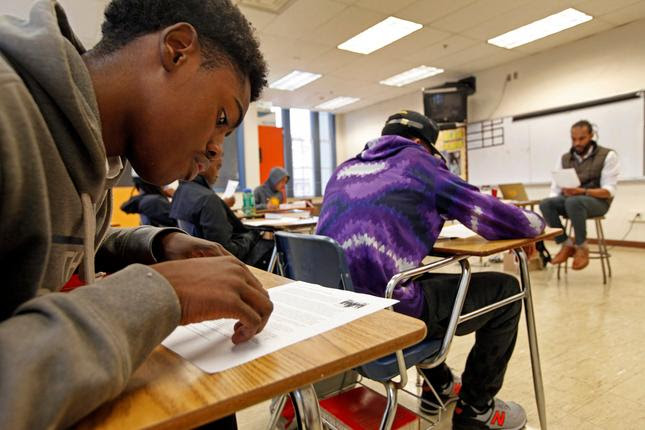
Black students in Oakland classroom

Black kids deserve stability in education.

TAKE ACTION


Last Wednesday, under Acting Oakland Unified School Board President Jody London’s watch, parents were physically barred from participating in a school board discussion that has the potential to completely change the trajectories of their children’s futures.1 In spite of escalating protests from teachers and parents, Oakland Unified School District is moving along plans to close up to 24 schools over the next three years.2 The vast majority of these schools, many of which are known for developing culturally competent curriculum and tight-knit relationships with the communities they serve, are located in predominantly Black and Brown neighborhoods in East and West Oakland.

The fight to protect our schools is the fight to protect our communities.

When schools leave our communities, the vital resources they provide our students and their families leave with them. The underinvestment in Black students’ education that Oakland’s school closures represent has been mirrored in nearly every major city in the country. If we do not take action now, the complete disregard Black students are being shown in California will undoubtedly continue to go unchecked across the nation. This is why we are demanding that Acting School Board President Jody London place a moratorium on all school closures in the Oakland Unified School District today.

Will you sign the petition and forward this email to make sure your voice is heard? Add your name here.

From Chicago to D.C. to Philadelphia, the rate of school closures in predominantly Black neighborhoods, especially those with rising rates of gentrification, has jumped dramatically in the past ten years3. Studies show that these closures hit Black students the hardest. While white students are “significantly more likely to transfer to high performing schools,” Black students who get displaced rarely benefit academically or otherwise from their new placements4, widening the achievement gap that the historic Brown v. Education decision to end racial segregation in education once sought to close. For so many of our communities, schools are one of the only institutions that still provide consistent support and resources to both Black children and their families5. Once those schools shut down, Black students get left behind, with no real plan in place to ensure that the new schools they attend have the appropriate resources to guarantee their success or their safety. What happens in the fight for both equity and equality in education in Oakland will set the stage for what’s possible for our communities across the country for years to come. We have to make it our business to support all Black students’ right to a stable education today.

Black kids deserve stability in education. Take action to demand Acting President Jody London place a moratorium on all school closures in the district NOW.  

Systems built without our input will not meet the needs of our communities. Our children should not have to be shuffled out of their own communities for the false promise of a quality education – our fight is for a deeper investment in the schools that they already attend. While the Oakland Unified School District continues to spend well over 6 million dollars a year on hiring police officers at schools who criminalize, traumatize, and harshly punish our children, they refuse to meaningfully invest in the teachers, counselors, and nurses who have been proven to support their growth and potential 6. That isn’t right! Take action today to let President Jody London know that she has a responsibility to invest in the solutions her constituents want, not to ignore their concerns and lock them out of this process. Sign now to demand that Acting President London and the board of directors put a moratorium on all school closures immediately.

Sign now to let Acting President Jody London know we want a moratorium placed on Oakland school closures now. 

Until justice is real,
—Kwesi, Arisha, Shannon, Chad, Dominique, Daniel, Corina, Imani, Quiana, Sadie, Ariana, and the rest of the Color Of Change team

References:

  1. “Oakland school board may close meeting to public after protests,” East Bay Times,November 12, 2019, https://act.colorofchange.org/go/195290?t=11&akid=39141%2E2472185%2EEuJQKB
  2. “Oakland school board’s vote to close schools draws ire from parents, teachers,” Mercury News, September 12, 2019, https://act.colorofchange.org/go/163219?t=13&akid=39141%2E2472185%2EEuJQKB
  3. “School Closings Are Shutting The Doors On Black And Hispanic Students,” ThinkProgress, May 14, 2014, https://act.colorofchange.org/go/163220?t=15&akid=39141%2E2472185%2EEuJQKB
  4. “School Closures Tend to Displace Black, Poor Students With Few Positive Outcomes,” Kinder Institute for Research, August 2, 2016, https://act.colorofchange.org/go/163220?t=17&akid=39141%2E2472185%2EEuJQKB
  5. “Gentrification, School Closings, and Displacement in Chicago,” The American Prospect, March 14, 2019, https://act.colorofchange.org/go/163220?t=19&akid=39141%2E2472185%2EEuJQKB
  6. “From Report Card to Criminal Record,” The Black Organizing Project, Public Counsel, and the ACLU Northern California, August 2013, https://act.colorofchange.org/go/163220?t=21&akid=39141%2E2472185%2EEuJQKB


Color Of Change is building a movement to elevate the voices of Black folks and our allies, and win real social and political change. Help keep our movement strong.


Both houses of the Massachusetts legislature unanimously passed a major funding bill for education, directing $1.5 billion mainly to the neediest districts.

Massachusetts has long had the most successful public schools in the nation. The state is poised to build on its record of success.

The majority of the $1.5 billion set aside in the bill will go to lower-performing and underfunded school districts, which means adding more teachers, bringing back art and music classes, and increasing funds for students from low-income households.

When voters were asked to pass a referendum to expand charter schools in 2016, they overwhelmingly said no. (I write about this epic battle in my forthcoming battle in my forthcoming book SLAYING GOLIATH).


Angie Sullivan regularly writes blast emails to every member of the state legislature and to the state’s journalists. Here is her latest:

CCEA members voted at a General Meeting yesterday to raise dues.  
Those teacher union dues will be used to campaign for a billion dollars.  
Yes, billion. 
Yes, dollars.  
We need to think big to win big.  
Teachers need those funds to fund class-size reduction.   We need additional teachers.   We need additional classrooms. 
Nevada teachers have the largest class-sizes in the nation.  
It is not reasonable to keep piling more and more students into small spaces.  
Our eye is on the 2021 Nevada Legislative Session.  We will get a billion dollars for kids.   
We demand political will to take care of kids.  
Here we come. 
#Fight4Kids #Billion4Kids
#NVed #NVTeach #Nevada #Vegas
The Teacher MotherJonesing,
Angie. 

In this post, Jan Resseger challenges Cory Booker’s newly rediscovered support for privately managed charter schools. She says “that school choice privileges the few at the expense of the many.” That’s not quite right. If the charter school is staffed with inexperienced, under qualified teachers, if the charter is operated by grifters intent on profit, if the charter exercises harsh disciplines and has high suspension and dropout rates, if the charter lacks the financial stability to keep its doors open, then the children who enroll in them are by no means “privileged.” Instead they are marks, dupes, collateral damage.

She writes:

The essential point to remember about school choice—whether it is a system of private school tuition vouchers or privately operated but publicly funded charter schools—is that school choice privileges the few at the expense of the many.

The scale of the provision of K-12 education across our nation can best be achieved by the systemic, public provision of education. Rewarding social entrepreneurship in the startup of one charter school at a time cannot possibly serve the needs of the mass of our children and adolescents. In a new, September 2019 enrollment summary, the National Center for Education Statistics reports: “Between around 2000 and 2016, traditional public school… enrollment increased to 47.3 million (1 percent increase), charter school enrollment grew to 3.0 million students (from 0.4 million), and the number of homeschooled students nearly doubled to 1.7 million. Private school enrollment fell 4 percent, to 5.8 million students.”

Booker argues for well-regulated and high-performing charter schools. The problem he fails to acknowledge is that charter schools were established beginning in the mid-1990s by state legislatures smitten with the idea of innovation and experimentation. None of these legislatures, to my knowledge, provided adequate oversight of the academic quality of the schools, and none imposed protections to guarantee the stewardship of public tax dollars.  Malfeasance, corruption, and poor performance plague charter schools across the states. Charter schools have now been established by state law across 45 states where stories of outrageous fiscal and academic scandals fill local newspapers. The Network for Public Education tracks the myriad examples of outrageous fraud and mismanagement by charter schools. Because advocates for school privatization and the entrepreneurs in the for-profit charter management companies regularly donate generously to the political coffers of state legislators—the very people responsible for passing laws to regulate this out-of-control sector—adequate oversight has proven impossible.


LeAnna Erls Delph is a veteran teacher of sixth grade students in social studies and language arts in Asheville, North Carolina. She is a member of the Governor’s Teachers Advisory Committee, is the North Carolina Association of Educators regional director for the far west, and is a member of the Red4EdNC advisory board.

She explains here why teachers owe it to their students, their communities, and their profession to become politically active.

On a recent Sunday morning, I woke up to see tremendous chatter on social media concerning the budget impasse in the North Carolina General Assembly. The discussion included the lack of educator raises, the failure to expand Medicaid, unacceptable working conditions, and a shortage of support staff. This discussion quickly evolved into the formation of a new social media group discussing the possibility of a large scale collective action or strike of North Carolina educators.

This kind of discussion is not new to me. I’ve been a sixth grade social studies and language arts teacher for 18 years, working my whole career in a diverse community confronted with significant economic struggle. I love my community, and they have always inspired me to advocate for my students and their families. Recently, I decided to take an Inquiry to Action class through the Western Region Education Service Alliance (WRESA) to earn continuing licensure credits and build my activist skills. Here, a small group of educators studied educator activism in both theory and practice.  Each week we discussed a different education-related activist tool, theory, and issue. The culminating project was to take our “inquiry” and put it into “action” in some way.

The group decided to focus on “making the invisible visible.” In other words, we seek to deepen critical consciousness — the notion that we go through life oblivious to the world around us on the largest scale. A famous example of this precept is the analogy of the fish in water. If you asked a fish what water is, the fish wouldn’t understand the question because it has a fish brain.

Joking aside, it is because the fish is completely immersed in the water and always has been. The fish just doesn’t notice because it is so “normal” and so ubiquitous. In human life, this would be like the systematic racism that we all live within. Or, it may be ideas that are simply taken as “common sense.” For educators, we may struggle to apprehend fundamental truths about our own environments. I believe that public educators swim in a sea of politics which is all too often invisible — so that is the concept I choose to render more visible. 

Most North Carolina local school boards have policies which hold that employees may not engage in political activities during the school day. However, because public schools are supported by public monies which are controlled by politicians, the very act of teaching, while not partisan, is an inherently political activity. In fact, North Carolina’s evaluation instrument for educators insists upon educators taking part in political activities. Standard 1 (Teachers Demonstrate Leadership) states, “Teachers advocate for schools and students. Teachers advocate for positive change in policies and practices affecting student learning.” What is advocating for policies if not political?  

Please open the post to see her wonderful infographics and finish learning her thoughts on teacher activism.

LeAnna is a member of the Resistance!


In her latest post, Nancy Bailey draws a contrast between a summit of fake education leaders and the summit that actual teachers reach when they teach their students and fight for their students and their schools.

Bailey describes the pseudo summit taking place in San Diego, where people who have never taught discuss how to reinvent education for fun and profit.

Read her list at the end of her post. It is a who’s who of the Disruption Industry, assembled in one place to celebrate themselves and the damage they have done to schools, students, and teachers across the nation.


Bailey writes:

Today’s National Summit On Education Reform meeting is a nightmare for teachers and parents. It involves those who want to replace democratic public schools with technology, ending schools and teaching as we know it. They will have children sitting in front of screens for instruction in warehouse charters, or at home all day.

Most of these self-acclaimed experts have not struggled to teach in gritty, overcrowded classes. They have not wiped runny noses or dealt with the trauma that some children bring to school. They never had to work towards unproven curriculum standards through Common Core. Nor have they had to face the reforms that, ironically, they and their ilk created.

They blame teachers for what goes wrong in schools due to their own back ass policies, but they’ll step up and take credit for anything that goes right!

You won’t find them on the streets of their cities fighting for the needs of children and a profession that nurtures those children. These individuals are above all that.

Florida Governor Jeb Bush leads the summit. As an American citizen Bush has every right to speak out about schools, but he doesn’t have the right to own them. Bush, whose educational background is in real estate and Latin studies, has leveled accusations against schools without doing due diligence to help students. His 3rd grade retention plan is a failed idea, but no one seems to have the power to end it, so children still are hurt by it.

Bush has been against schools and teachers every step of the way. When he had the chance to improve class sizes in the 90s, he hated the idea so much he was caught saying he had a “devious plan to end it.” Think what it would have meant if he’d studied the issue and been supportive of teachers, even negotiated.

What if he’d said, we can’t afford to lower all classes, so let’s lower class size in K-3rd grade when children are learning to read. But Bush didn’t want that. Look at life in Florida and the country now, a mix of underfunded public schools and unproven charters, and vouchers to questionable schools.

Please open the link and read it to the end.
Almost 90% of American students attend public schools, subject to democratic control. 6% of American students are enrolled in privately managed charter schools. Under the leadership of Betsy DeVos, it is obvious that the promotion of both charters and vouchers is central to the education policy of the Trump administration.

Two Democratic senators who are candidates for president, Bernie Sanders and Elizabeth Warren, have released education plans that recommend an end to federal support for charter schools (currently $440 million), which DeVos has handed out to corporate charter chains like IDEA and KIPP.

Senator Cory Booker, having equivocated during the campaign about his previous zealous support for charters, vouchers, and Betsy DeVos, surprisingly reversed course and wrote an article in the New York Times, once again stating his support for charters.

Since Senator Booker is polling at less than 2% in the primaries, he may be looking past the election to restore his relationship with his funders, who love charter schools and were disappointed by his apparent defection from their cause.

Leonie Haimson writes here about Senator Booker’s curious use of the word “boogeyman” to belittle critics of charter schools.

She notes that reporters at the New York Times have also used that term to belittle charter critics. Then she googled and found that the same word has been used by charter defenders thousands of times.

Haimson points out that charters in NYC divert more than $2 billion each year from the public school system. That money might have been spent to meet crucial capital needs and to reduce class sizes.

Also, Senator Booker did not mention that the national NAACP passed a resolution in 2016 calling for a moratorium on charters.

There are many reasons to be critical of charters, including their diversion of funding from public schools, their private governance, their long and well-documented record of waste, fraud, and abuse.

To dismiss all criticism of charters as a fear of a boogeyman is cynical, to say the least, and serves only the interests of the charter industry.


You won’t want to miss this one!

The “nation’s leaders in education reform” (aka Disruption) are meeting in San Diego starting today. 

Watch the leaders of the privatization movement at work and play!

They will perhaps ponder why NAEP scores have been flat for a decade. They might discuss why the Democratic party and progressives have turned against charter schools and privatization.

Maybe there will be a panel to discuss the Network for Public Education’s devastating report Asleep at the Wheel, which showed that one-third of federally funded charters had closed their doors or never opened, wasting $1 billion in federal funding. Maybe there won’t be any mention of that embarrassing report.

Will there by any mention of the biggest charter scandal in the three decades of charterdom, the $50 million plus theft by charter operators in California? There should be, since 11 leaders of the A3 scam were indicted just this past spring in San Diego, where the conference is meeting!

Perhaps there will be a special tribute to their leader, Secretary of Education Betsy DeVos, who is shoveling federal money as fast as she can from the $440 million Charter Schools Program to corporate charter chains like IDEA and KIPP.

See who is sponsoring their convention: The Walton Family Foundation. Pearson. The NewSchool Venture Fund. The College Board. Yes Every Kid (Koch). Microsoft.

And many more.

Koby Levin of Chalkbeat reports that a study of the state takeover of Detroit’s public schools–which lasted for 15 years–was “a costly mistake.”

The state was supposed to solve intractable problems that elected school officials in Detroit could not.

It made things worse, according to a newly released report on the 15 years during which the Detroit school district was largely controlled by state-appointed officials.

The study, which was commissioned by the current school board, found a pattern of “startling mismanagement” in academic and financial matters whose consequences continue to weigh on the district’s future.

While some had hoped that the report would eventually lead to a lawsuit against the state, that seems unlikely. Instead, it provides a 172-page confirmation of what many Detroiters have argued for years: that installing state officials in place of the elected school board wasn’t enough to make the district’s problems disappear.

“The legacy of emergency management coupled with the continuing effect of inequitable school funding, will inevitably cause the District to hit a ceiling and impede its current progress toward a complete turnaround of traditional public education in Detroit,” the seven board members wrote in a statement in response to the report.

As state officials closed dozens of schools, they failed to adequately maintain the properties — “a costly mistake,” the report found, “as many of the vacant buildings have been stripped and/or vandalized.”

Tom Watkins, who was state superintendent from 2001 to 2005, said there was little hope of improving the district’s financial situation simply through effective management — not without solving underlying issues with declining enrollmentand Michigan’s school funding structure.

“It’s like trying to bail out a sinking yacht with a thimble,” he said.

The state threw everything it could think of at the struggling district–emergency management, charters galore–but not the funding needed.