Archives for category: Education Reform

Defeated Republican Governor Matt Bevin was a huge fan of charter schools. The legislature passed a charter law but never funded it. Bevin appointed a new state board of education, and they appointed Wayne Lewis as state commissioner. Lewis loves charters.

A few weeks ago, Bevin was defeated by Democrat Andy Beshear, who ran on a strong pro-public education program. He chose an educator as his Lieutenant Governor. He said he would pick a new state board on day one and a new state commissioner on day two. Beshear made clear that  public education was a major priority for his administration.

Beshear has said he and Lt. Gov.-elect Jacqueline Coleman, an educator, will have no higher priority than Kentucky’s public education system and its teachers. Teacher Allison Slone, founder of a popular Facebook page called Kentucky Teachers in the Know, said she and her colleagues “are ready to move on and up from the negativity, lack of trust, and partisan politics” that they experienced under Bevin.

Not so fast, said Wayne Lewis. Beshear can’t replace the board members until their terms expire in 2020 and 2022. And Lewis has no plans to leave until the board changes.

Stay tuned.

Will Pinkston, who served on the elected school board of the Metro Nashville school district, writes here that school districts should not outsource their charter application process to the charter industry’s lobbyists.

The timing is right because the Koch Network has targeted four states for unlimited charter school proliferation: Florida, Tennessee, Texas, and West Virginia.

Up until now, many school districts are using the guidelines and standards developed by the National Association of Charter School Authorizers, which wants minimal oversight of charter schools.

But NACSA, Pinkston notes, is not a neutral arbiter, but an organization dedicated to the growth and expansion of the charter industry.

Asking NACSA for advice about how to grant charters is akin to asking the Tobacco Industry Association whether cigarettes are good or bad for your health.

Many districts, Pinkston notes, are having budget problems because of the expansion of charters.

He advises:

Strengthening public school districts’ charter application reviews is a logical first step toward disrupting the school privatization movement…

Charter application review practices vary greatly between states and local school districts — and charter operators over the years have capitalized on this confusion in the field to push into existence scores of unneeded and unwanted charters.

Many districts have fallen into the trap of letting the charter sector exert undue influence on their review process. The most egregious example: For more than a decade, an innocuously named Chicago-based nonprofit organization — the National Association of Charter School Authorizers (NACSA) — has led the national charter sector’s campaign to set ground rules for how K-12 public school districts should review charter applications…

In fact, NACSA is a thinly veiled charter advocacy group largely funded by the Walton Family Foundation and the Bill & Melinda Gates Foundation — the two biggest pro-charter philanthropies in the U.S. Moreover, NACSA’s board and staff is exclusively populated with charter school advocates. According to an Internal Revenue Service filing, NACSA’s mission is simple: “Promote establishment” of charter schools.

With a multi-million-dollar annual budget, NACSA carries out its mission through a range of activities, including: Hosting conferences and workshops to train public school district employees on implementing pro-charter review standards; awarding grants to sway districts’ opinions on charters; and lobbying state policymakers to advance a pro-charter agenda in legislatures and statehouses…

The carefully branded name of NACSA’s standards assumes that charter school “authorizing” will happen. But districts’ default position should be that authorizing may happen — or not.

NACSA describes its standards as “a rich base of knowledge built on deep experience, study, deliberation, and refinement that reflects collective insights on best practices among authorizers of all types and portfolio sizes across the country.” But a closer examination reveals that NACSA’s standards are just a finely manicured PR product devised by the charter sector, for the charter sector.

Pinkston urges districts to take control of the charter authorizing process and consider such factors as:

Audits (they should be conducted by independent auditors, not self-audits);

Class size (NACSA is silent on this but district authorizers should not be);

Facilities and transportation (Districts should require charter applicants to submit detailed transportation plans that mirror best practices among districts. Moreover, districts should require charter applicants to submit robust facility plans — including the address of the proposed charter location, development or redevelopment plans, letters of commitment by funders or financial institutions, and other documentation that would be expected before any district opens a new school);

Licensed teachers (NACSA is silent, but districts should not be);

Salaries and benefits (NACSA is silent, but districts should not be).

As Pinkston says, it is up to districts to decide whether to award charters and to set conditions. They should not ask the charter lobbyists how to do it.


Bob Shepherd is a teacher, an author, a curriculum developer, and many other things.

On Reading Poems

Two thoughts, tonight, about poetry

First, a theory of poetry and how it means:

Perhaps the most important lesson that I received, in college, about reading poetry occurred on a day when, in a class on nineteenth-century American poets, I commented that unlike just about everyone else, I wasn’t a fan of Edgar Allan Poe’s poetry—that it seemed to me phony through and through. The guy made significant innovations in the short story. He invented BOTH the detective story and the madness/supernatural ambiguity on which so much horror and science fiction rides, but his poetry, mostly, seems to me contrived and false. The professor said, “Hmm. That’s a problem, your not believing him, because you can’t read a poem well without being willing to take the author’s trip.” And then he shoved everything off his desk and lay back on it and closed his eyes and recited “Annabel Lee” from memory. I still hold to my opinion about Poe. But I’ve never forgotten that lesson.

One thing I tried to teach my students about reading in general and, in particular, about reading poetry, is that they have to enter into it—they have to go into that world of the poem in their imaginations, and then they have an experience there, and that experience has significance of some kind, and that’s what meaning means in poetry. It’s the significance to the reader of that experience that he or she had. That doesn’t mean that any reading will do. If the poem is well-constructed, that experience will be quite specific, and the reader will be led inexorably to have something very like the experience and to gain from it something very like the significance that the writer intended. The whole thing is an exercise in bridging an ontological gap–my mind and experiences and understandings over here, yours over there. Poetry is a form of communication that tries—sometimes successfully! —to do the impossible. It’s the heavy-duty artillery for doing that job.

This is why it’s so awful that some English teachers approach poems by reading them aloud and then asking, “What does this mean?” as though poets were these perverse people who hide their true meanings and as though the meaning of a poem is some blithering generality (the answer to that English teacher’s question: e.g., Life is transitory. It’s better to have loved and lost than never to have loved. Some such generalized bs).

There’s an old joke that asks, “How many Vietnam veterans does it take to change a lightbulb?” Answer: “You wouldn’t know because you weren’t there, man!” The reader who turns a poem into a blithering generality hasn’t taken the poet’s trip, hasn’t had that vicarious experience, hasn’t learned things from the experience that mattered, that had significance, that were meaningful in that sense.

So, a poem is the very opposite, at its core, of a vehicle for expression of a general principle, though one can glean general principles from good poems, as from life. A good poem is incredibly concrete and precise. Every added detail further delimits the precision, the particularity, of the world of the poem. To be specific about this, to say that Matthew Arnold’s “Dover Beach” is about anguish at the loss of faith is true enough, but if that’s it—if that’s its sole meaning to you—then you weren’t really there, man. The moment that Arnold describes so precisely, has to be experienced—that fellow, standing at the window, looking at the receding tide, which no longer speaks but is a freaking thing roaring mechanically, who tries to have this conversation with the woman in the room who isn’t really interested, whom he fears does not love him, is experiencing loss on so many levels—of faith, of hope, of belief in the progress of the world, of love. And if you’ve gone there, if you’ve inhabited him as you read the poem, and if you’ve experienced his PARTICULAR experience, then it’s not one that you’ll readily forget. It’s wrenching, and heart-breaking. And it will be quite meaningful to you.

Great poetic writing renders with a few incredibly deft strokes that entire world into which the reader enters. A few words are enough to bring it fully, hauntingly, breathtakingly into being in the mind of the reader. This is what Derek Walcott was talking about in the opening of his “Map of the New World: 1. Archipelagoes”:

At the end of this sentence, rain will begin.
At the rain’s edge, a sail.

Poof. Rain. A sail. A world. He’s talking about the freaking ancient MAGIC by which, via words, one brings a world into being. It’s what’s left for Homer to do now that Helen’s hair is a grey cloud and Troy is an ashpit in a drizzle.

So, poems mean in a way that treatises don’t. And this is why authenticity is so important in poetry—why that’s what separates the good from the bad, “Dover Beach” from the typical high-school versifying of adolescent angst and Valentines. If the poem doesn’t create an authentic world, you can’t go into it. There’s no coherent there to go into.

There has to be a there there. I have a young friend, Brooke Baker Belk, who is a very great poet. There’s a there there in her work, and this separates it from almost everything else being written now.

Second, the need for poetry to have something to say.

I love Shelley. And I think that he’s far more important than most people realize. He wrote in “A Defense of Poetry” that “poets are the unacknowledged legislators of the world,” and ironically, that’s true of him today. HE FREAKING INVENTED the language that we use to talk about our emotions, and every stupid pop song in the 20th and 21st century owes an enormous debt to the language he used. No Shelley, no “Sounds of Silence” or “Stairway to Heaven.” But the writers of those songs and the consumers of them typically did not and do not have a clue that this is so. And he did it so, so, so much better, ofc, than rock star lyricists typically do, Lord knows. By all the gods, he could use words well. And what a spirit he had! He was probably murdered, you know, by British intelligence because of his rabble-rousing for Irish independence (this was the proximate and determinative cause, but he was also loathed by conservatives for being an aristocrat who hated aristocracy, for espousing republicanism and the end of monarchy, for being a model to young people, they thought, of atheism and sexual license).

But there’s an aspect to his work that really troubles me: He had a lot of really bad ideas. Platonism, determinism. Stupid, wrong, dead-end ideas. Stuff from his time. He died young. Too young, d**n it, for he was brilliant. He wrote sooooo well, and he was brilliant. At the age of 24, he could read ancient Greek as you read Google News. Perhaps in time he would have developed some good ideas (aside from his political ones). Poetry, like other writing, is supposed to communicate. It renders significant experiences, and so they have an earned quality, like actual life. And in the greatest poetry, what is earned is intellectually, spiritually, morally, or in some other way significant. It matters. It’s fresh and new and insightful. And so, it helps, a lot, for anyone who wishes to write poetry to have something to say. The very best poems always do. “A Tree Telling of Orpheus.” “Dover Beach.” “Credences of Summer.” “Directive.” ‘Mr. Flood’s Party.” “Lucinda Matlock.” “Among School Children.” “Easter 1916.” Almost anything by Blake or Rumi. These poems provide deeply significant experiences that teach, about life, about other people. It’s worth taking their authors’ trips.
When Jan Resseger writes, she does so with authority and clarity.

In this essay, she explains why she will not vote for Michael Bloomberg, based on his record of disrespecting educators in New York City when he was mayor. Bloomberg as mayor employed all the same principles as No Child Left Behind: testing, accountability, school closings, charter schools, school choice, all based on “the business model.”

She writes:

Michael Bloomberg does have a long education record. Bloomberg served as New York City’s mayor from January of 2002 until December of 2013. In 2002, to accommodate his education agenda, Bloomberg got the state legislature to create mayoral governance of NYC’s public schools. In this role, Michael Bloomberg and his appointed schools chancellor, Joel Klein were among the fathers of what has become a national wave of corporate, accountability-based school reform. Bloomberg is a businessman, and Joel Klein was a very successful attorney. Neither had any experience as an educator. They took aggressive steps to run the NYC school district, with 1.1 million students, like a business. Their innovations included district-wide school choice, rapid expansion of charter schools, co-location of a bunch of small charter and traditional schools into what used to be comprehensive high schools, the phase out and closure of low-scoring schools, evaluation of schools by high stakes standardized test scores, the assignment of letter grades to schools based on their test scores, and a sort of merit pay bonus plan for teachers.

In her 2018 book, After the Education Wars, Andrea Gabor, the New York business journalist and journalism professor, comments on Bloomberg’s educational experiment: “The Bloomberg administration embraced the full panoply of education-reform remedies. It worshiped at the altar of standardized tests and all manner of quantitative analysis. The Bloomberg administration also had a penchant for reorganizations that seemed to create more disruption than continuous improvement among its 1.1 million students and 1,800 schools.” ( After the Education Wars, p. 75)

Gabor describes Bloomberg’s expansion of charter schools: “Harlem, in particular, has become the center of an unintentional educational experiment—one that has been replicated in neighborhoods and cities around the country.  During the Bloomberg years, when close to a quarter of students in the area were enrolled in charter schools, segregation increased, as did sizable across-the-board demographic disparities among the students who attended each type of school. An analysis of Bloomberg-era education department data revealed that public open-enrollment elementary and middle schools have double—and several have triple—the proportion of special needs kids of nearby charter schools. The children in New York’s traditional public schools are much poorer than their counterparts in charter schools. And public schools have far higher numbers of English language learners… In backing charter schools Bloomberg and other advocates pointed to one clear benefit: charters, it was widely accepted, would increase standardized test scores. However, years of studies showed little difference between the test-score performance of students in charter schools and those in public schools.” After the Education Wars, p. 95)

And there is more. Open the link and read it to understand why the “business model” did not work.

ProPublica and the Chicago Tribune collaborated to produce this shocking investigation of the mistreatment and abuse of students with special needs in Illinois.

This is a story of shameful cruelty to children. Read it and weep.

THE SPACES have gentle names: The reflection room. The cool-down room. The calming room. The quiet room.

But shut inside them, in public schools across the state, children as young as 5 wail for their parents, scream in anger and beg to be let out.

The students, most of them with disabilities, scratch the windows or tear at the padded walls. They throw their bodies against locked doors. They wet their pants. Some children spend hours inside these rooms, missing class time. Through it all, adults stay outside the door, writing down what happens.

In Illinois, it’s legal for school employees to seclude students in a separate space — to put them in “isolated timeout” — if the students pose a safety threat to themselves or others. Yet every school day, workers isolate children for reasons that violate the law, an investigation by the Chicago Tribune and ProPublica Illinois has found.

Children were sent to isolation after refusing to do classwork, for swearing, for spilling milk, for throwing Legos. School employees use isolated timeout for convenience, out of frustration or as punishment, sometimes referring to it as “serving time.”

For this investigation, ProPublica Illinois and the Tribune obtained and analyzed thousands of detailed records that state law requires schools to create whenever they use seclusion. The resulting database documents more than 20,000 incidents from the 2017-18 school year and through early December 2018.

Of those, about 12,000 included enough detail to determine what prompted the timeout. In more than a third of these incidents, school workers documented no safety reason for the seclusion…

No federal law regulates the use of seclusion, and Congress has debated off and on for years whether that should change. Last fall, a bill was introduced that would prohibit seclusion in public schools that receive federal funding. A U.S. House committee held a hearing on the issue in January, but there’s been no movement since.

Nineteen states prohibit secluding children in locked rooms; four of them ban any type of seclusion. But Illinois continues to rely on the practice. The last time the U.S. Department of Education calculated state-level seclusion totals, in 2013-14, Illinois ranked No. 1.

The story contains stories of children locked in small rooms, where they urinate on themselves, bang on the walls and doors and scratch them. Some of the children have serious mental or emotional disorders. Some are disobedient. None deserves to be treated with such inhumanity. Experts say that punitive “seclusion” is not only cruel but ineffective.

After reading this report, I asked ProPublica where seclusion has been banned.

This was the answer:

These four states ban any type of seclusion (Georgia, Hawaii, Nevada, Pennsylvania) and that these are the remaining 15 you’re looking for: Alabama, Arkansas, California, Kentucky, Maine, Maryland, Montana, Michigan, Mississippi, Missouri, New York, Ohio, Utah, Wisconsin, Wyoming (with varying levels of exceptions).

Thanks to ProPublica for shedding light on this horrible practice.


Maurice Cunningham, a political science professor at the University of Massachusetts, is a specialist in “follow the money.”

He writes in his latest post that the Waltons are targeting Elizabeth Warren not so much because of her stance on charter schools but because of her proposed wealth tax.

He writes:

If the Waltons hate anything so much as unions, it would be taxes. The family and WalMart are huge into tax dodging. And guess who has a plan for that? Elizabeth Warren. So yes the Waltons are big into charter schools but they are bigger into their own wealth. Disrupting Warren on any grounds is a good thing to them. Remember, dark money is never what it seems.

Here in Massachusetts the Waltons have their own political operation as I showed in The Walton Family’s Massachusetts Political Team, 2019.

And the beauty of these political operations the Walton Family Foundation backs in Massachusetts and around the country? They are mostly tax deductible at the top rate of thirty-seven percent. The Waltons pick up about sixty-three percent of this and you, the grateful taxpayer, pick up thirty-seven percent.

When the Waltons push charter schools, what they really mean is lower state and local taxes on Wal-Mart. When the Waltons try to shout down Elizabeth Warren, it’s about the wealth tax. The Waltons do all this with tax deductible political fronts. Taxes, taxes, taxes.

What happened in Georgia is that a taxpayer subsidized unit of the political front of one of America’s richest families attempted to shut down a political candidate. Expect more of this.

Money never sleeps. Follow the money.

At this very moment, Walmart is suing various states (even Arkansas) to lower their property taxes! That means less money available to support public schools and other public services! This is a family whose collective wealth is more than $160 billion, and they think their property taxes are too high!

Maurice Cunningham played an important role in the referendum about charter school expansion in Massachusetts in 2016 by revealing Dark Money and its sources; I write about him in my forthcoming book SLAYING GOLIATH. And the first page of the book quotes his memorable line: “Money never sleeps. Follow the money.”


Twitter lit up this morning with news of a disruption of an Elizabeth Warren rally by charter school “parents” in matching T-shirts. Hovering in the background was Howard Fuller, whose Black Alliance for Educational Options (BAEO) received millions during its lifetime of advocating for vouchers from billionaire foundations such as Bradley, Walton, and Gates.

Peter Greene has gathered the story of the funders of the “parent” disruption of the Warren rally. 

The usual billionaire-funded suspects. The disrupters came from Walton-funded organizations, representatives of DFER, and other pro-charter groups, whose purpose was to embarrass Warren for having the audacity to propose a massive increase in funding for poor kids and kids with disabilities and a cutoff of Betsy DeVos’s slush fund for corporate charters known as the federal Charter Schools Program (which currently spends $440 million annually).

He writes:

As [Ryan] Grim [of The Intercept] tweeted, “A group funded by some of the richest people in the world, the Waltons, just disrupted an @ewarren speech on the 1881 Atlanta washerwoman strike. Can’t make this stuff up.” It’s not a new game; charter advocates have often loaded up parents and students, made them some t-shirts, and deployed them as citizen lobbyists.

There’s a lot of money and power behind the charter school movement. Expect more of these shenanigans if Warren continues to lead the Democratic pack. The charter industry is not gong to let her go without a fight.


The original idea behind charter schools was that they would help the neediest, most disadvantaged students, including those who were disengaged or failing in their public schools. Some charters have been criticized for selecting the most compliant students.

One charter chain stands out for ignoring the neediest, the poorest, the most disadvantaged: Great Hearts. This charter chain was repeatedly rebuffed by the Metro Nashville school board because it insisted on locating in a neighborhood where the population was white and middle class, with no transportation for kids from out of area.

Great Hearts is proud to reach out to the advantaged students and use government money to do so. 

Unlike other charters that try to prove they are serving needy children, Great Hearts enrolls a relatively high-end demographic. In their case, cherry-picking is a feature, not a bug.

The Mind Trust is funded by billionaires to advocate for privatization of public funds and public schools.

Now it is going after parents.

Of course, the best person to make the case to parents is an education entrepreneur.

Dear Friends,

I deeply believe that those most impacted by systemic injustice are also the people who are best positioned to lead the fight to create a more just and equitable society. This is one of the many reasons why we are so excited about the work our Education Entrepreneur Fellow Ashley Virden is leading to empower Indianapolis parents to create the changes they deem necessary to dramatically improve our education system.

Read on for more about a recent event that Ashley hosted and how you can support her. You will also find information on our most recent Education Tour and a call for applications for our fourth cohort of Relay National Principals Academy Fellowships.

With gratitude,

Brandon Brown

CEO

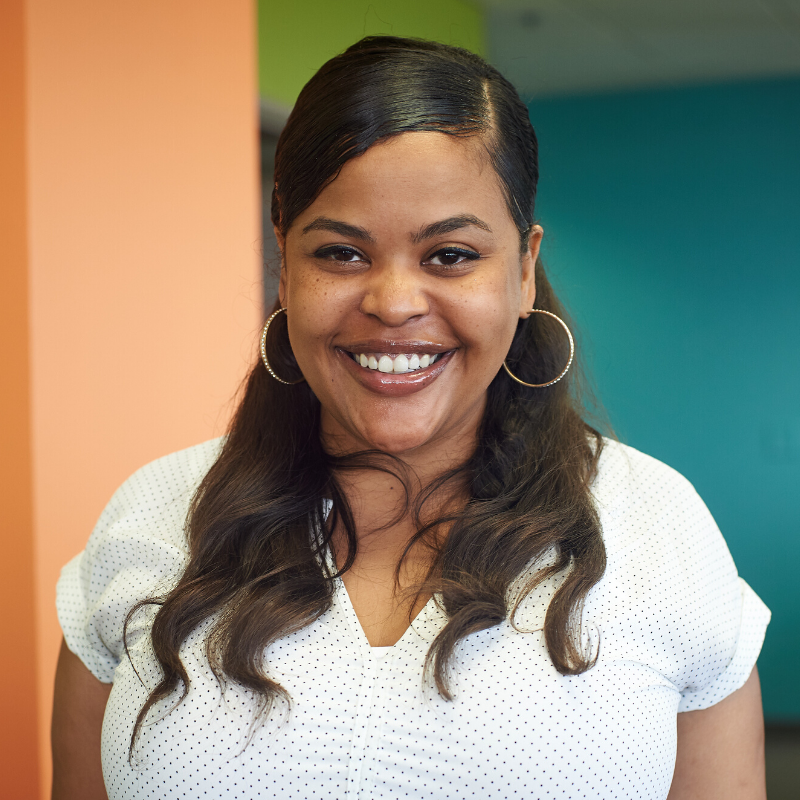
Education Entrepreneur Fellow Ashley Virden leads parent organizing meeting

On November 7, our Education Entrepreneur Fellow Ashley Virden led a community meeting for parents looking to become more involved in their children’s education. She is developing an independent parent advocacy nonprofit that will empower parents to create necessary change for children and communities across Indianapolis.

Virden is specifically searching for a group of parents who are interested in receiving training in leadership, community organizing, and advocacy. If you or someone you know might be interested in supporting the work she is doing to uplift the voices of Indianapolis parents, please reach out to her at avirden@themindtrust.org.

“Parents deserve to have a voice in our city’s education system and in the schools our kids attend. I am excited to start building a community of empowered parents who want to be advocates for all students in Indianapolis.”

Ashley Virden, Education Entrepreneur Fellow

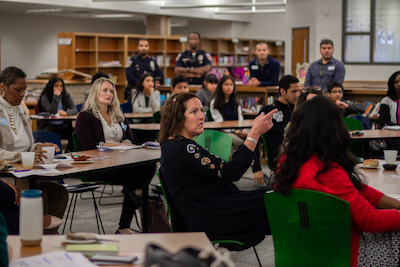
Education Tour series visits IPS Newcomer Program

On October 22, The Mind Trust hosted an Education Tour, formerly called Education Bus Tours, featuring IPS’ Newcomer Program. The Newcomer Program serves nearly 400 students in grades 3-9 who are new to the United States within the last year. Their students learn English alongside receiving core content instruction to prepare them for a successful transition to the school of their choice. In 2018-2019, the school served students from 33 countries, who spoke 22 different languages.

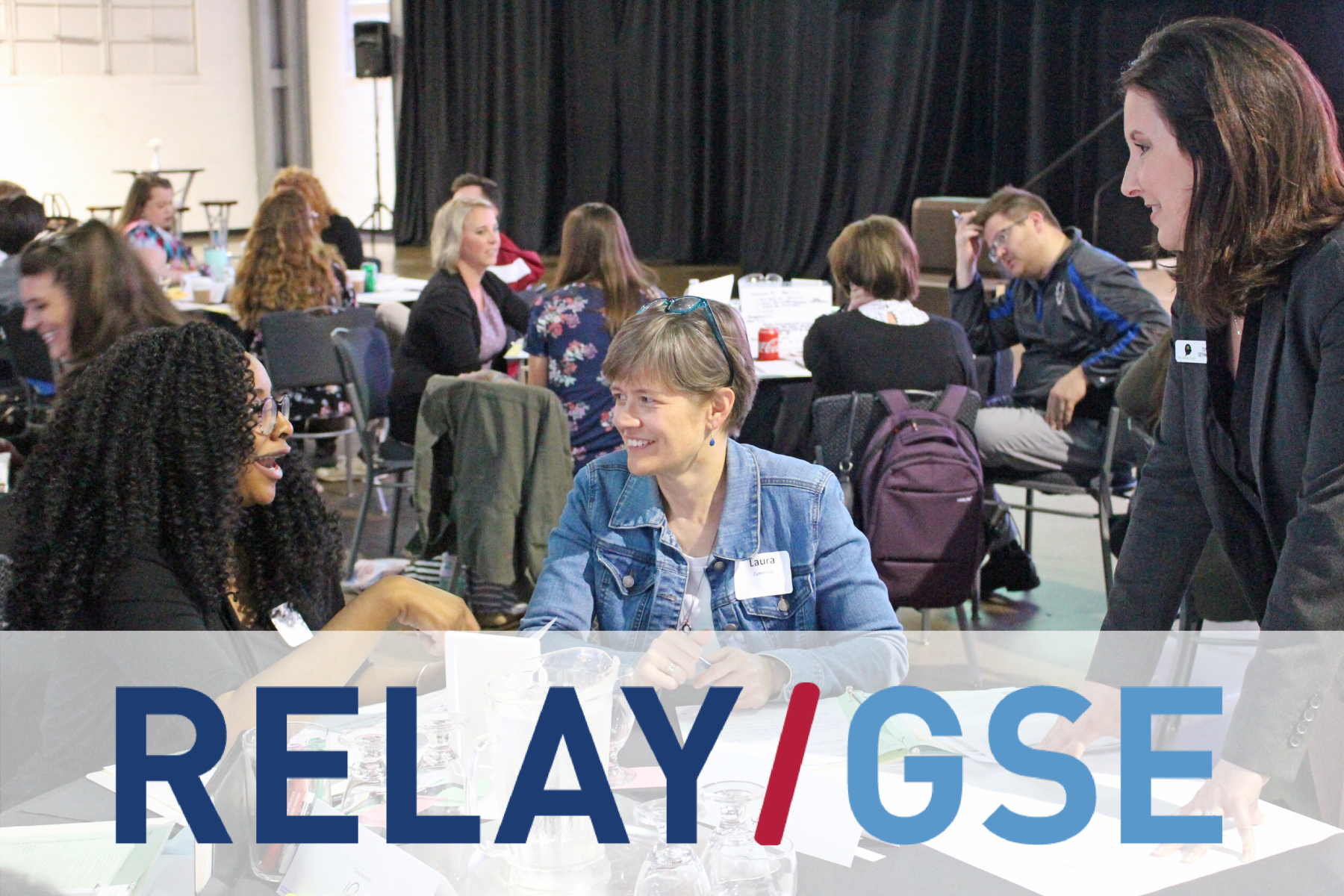
Now accepting applications for Relay’s National Principals Academy Fellowship

The Mind Trust is accepting applications for the fourth cohort of Indianapolis school leaders to participate in Relay Graduate School of Education’s National Principals Academy Fellowship, a nationally-recognized fellowship that provides school and school systems leaders with powerful instructional and cultural professional development. We are grateful to the Richard M. Fairbanks Foundation for a grant of $990,000 to help sponsor the next three cohorts fellows.

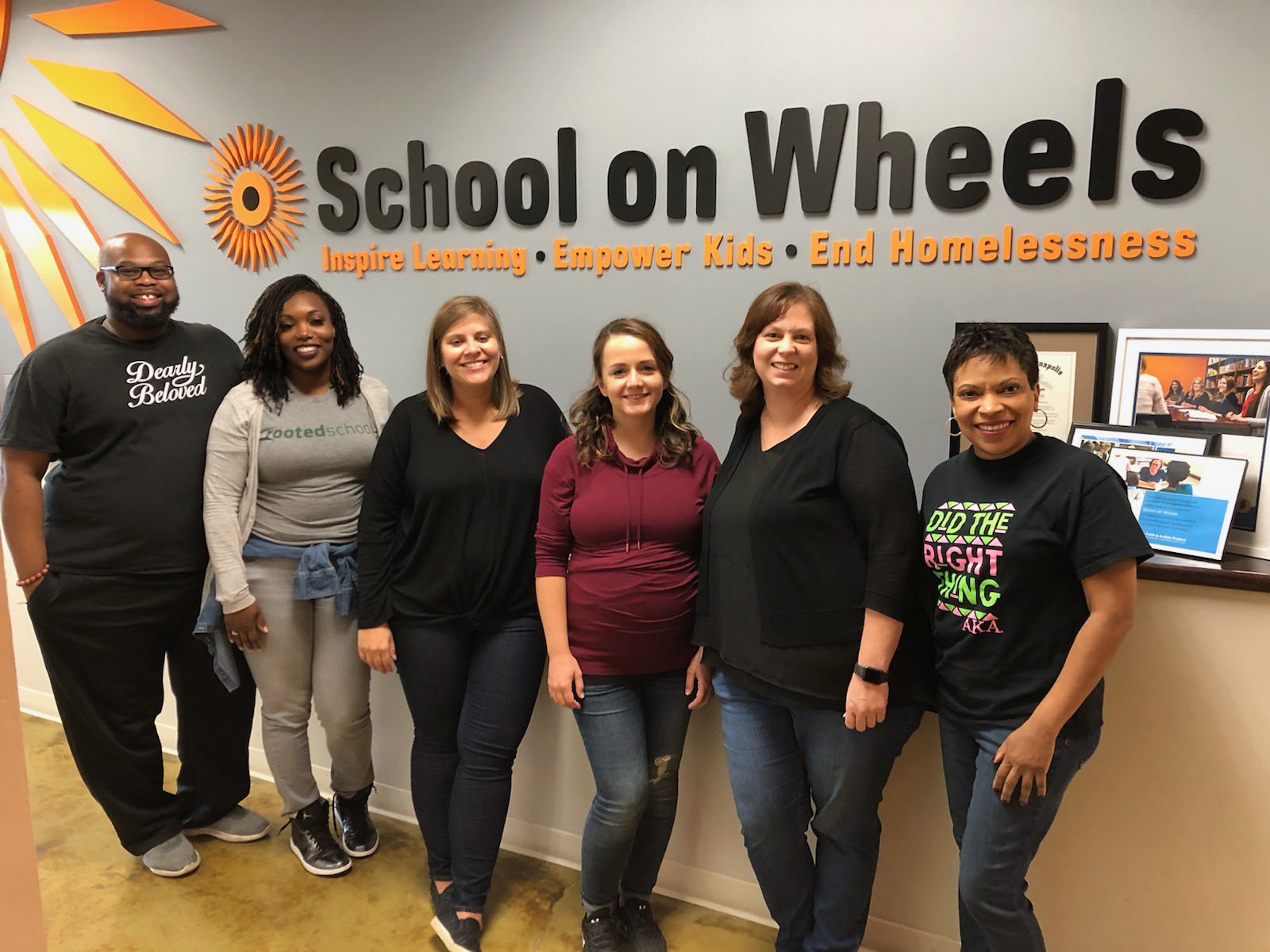
A few of our staff and Fellows volunteered at School on Wheels, filling backpacks with school supplies for students who utilize their programming. School on Wheels provides tutoring and wraparound academic support for hundreds of Indy children and families impacted by homelessness.
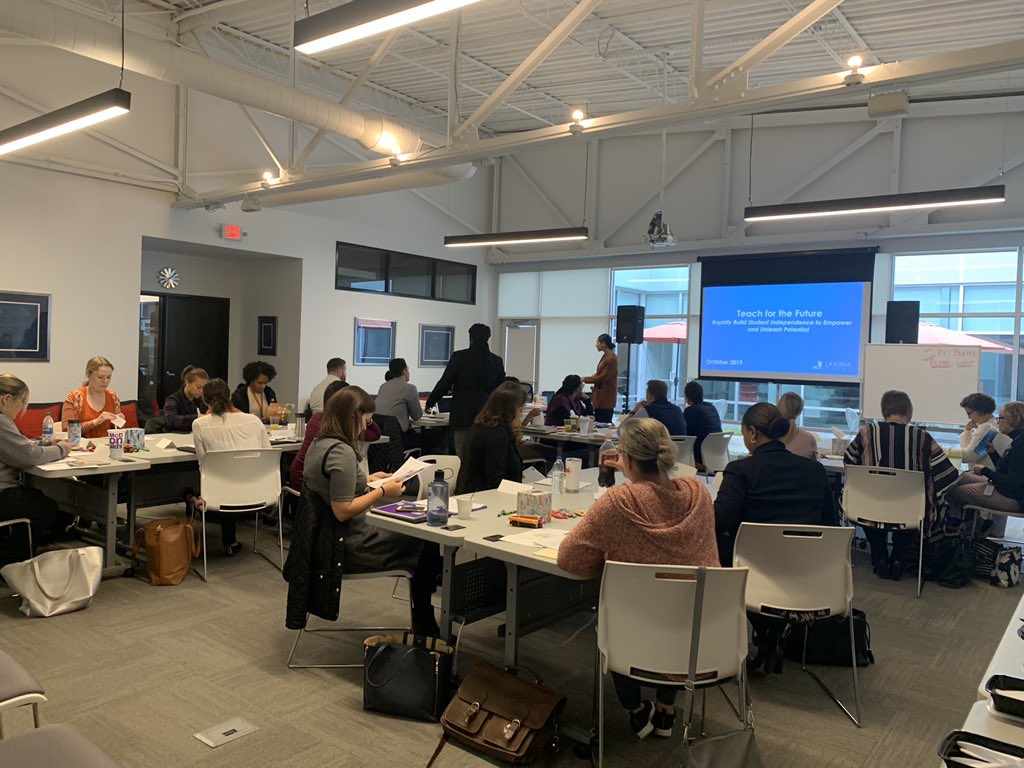
Our School Supports team partnered with the Lavinia Group to bring a literacy focused professional development to our Fellows and other Indianapolis school leaders. The training focused on building independence in reading to unleash student potential.

The Mind Trust In the News

10 new schools are seeking innovation partnership with IPS via Chalkbeat

Mind Trust Adds Lewis to Board via Inside Indiana Business

IPS Study Abroad Program To Relaunch As High School At Arlington via WFYI

New teacher residency program launches in Indy: ‘It will lead to a better retention’ via Fox 59

Church’s money management lessons lead to transformation in impoverished neighborhoodvia Faith & Leadership, Duke University

Schools were quick to downplay ILEARN results, but experts stand by the test. Here’s why.via Chalkbeat

The Mind Trust
1630 N. Meridian St., Suite 450  | Indianapolis, Indiana 46202
(317) 822-8102 | info@themindtrust.org

Follow Us on Social Media

This is good news for everyone who cares about the constant encroachment of Big Money and Dark Money into American education. The school choice movement has been an effort to substitute changes in school governance for equitable and adequate funding. Diverting funding from public schools to support charters and vouchers injures the vast majority of students, who are enrolled in public schools.


November 21, 2019
ELC WELCOMES PARTNERSHIP FOR EQUITY & EDUCATION RIGHTS
FOR IMMEDIATE RELEASE
Education Law Center (ELC) today announced a new collaboration with the Partnership for Equity & Education Rights(PEER). Established in 2017, PEER is an innovative network of state-focused advocates, community organizers and public interest lawyers working to ensure all children have access to an excellent public education.
PEER has partners in seven states, all of whom have made fair school funding their top advocacy priority in the network. PEER brings a new vision and energy to growing state-by-state effort to improve school funding, resource equity and student outcomes by connecting lawyers, advocates and organizers. Sharing resources, expertise and experience, they collaborate and support campaigns seeking greater state investment in the nation’s public schools.
PEER also provides a much-needed platform to enhance the capacities of network partners in their efforts to advance fair school funding. PEER’s capacity building includes identifying model policies, litigation opportunities and strategies, research, and organizing tactics for successful campaigns.
“We are thrilled to welcome PEER to the ELC family. PEER is a natural fit with our state-based work on fair school funding and other equity challenges,” said David Sciarra, ELC Executive Director. “We know collaboration is essential in addressing the tough challenge of ensuring every child in our nation has the educational opportunity they deserve and are entitled to.”
PEER members include: 482 Forward (MI), Brighton Park Neighborhood Council (IL), Georgia Appleseed and Gwinnett SToPP (GA), Legal Aid Justice Center (VA), New Mexico Center on Law & Poverty (NM), North Carolina Justice Center (NC) and Unite Oregon (OR).
“I’ve long admired ELC’s commitment to equity and education rights for all students,” said Jennifer Doeren, PEER Managing Director. “On behalf of all PEER members, we are honored that ELC has welcomed us with open arms. I’m more excited than ever about our potential to improve educational opportunities for American students.”
PEER is supported by funding from the W.K. Kellogg Foundation (WKKF). Thanks to WKKF support, PEER works to improve educational opportunities and outcomes for vulnerable children across the nation.
“The connection with ELC will strengthen all of our organizations and the PEER network,” said Wytrice Harris, Co-director of 482Forward. “We look forward to a robust collaboration to improve opportunity for public school children across Michigan and across the country.”
Founded in 1973, Education Law Center(ELC) has become one of the most effective advocates for equal educational opportunity and education justice in the United States. Widely recognized for groundbreaking court rulings on behalf of at-risk students, ELC also promotes educational equity through coalition building, litigation support, policy development, communications, and action-focused research. For more information, visit www.edlawcenter.org
The W.K. Kellogg Foundation (WKKF), founded in 1930 as an independent, private foundation by breakfast cereal innovator and entrepreneur Will Keith Kellogg, is among the largest philanthropic foundations in the United States. Guided by the belief that all children should have an equal opportunity to thrive, WKKF works with communities to create conditions for vulnerable children so they can realize their full potential in school, work and life.
The W.K. Kellogg Foundation is based in Battle Creek, Michigan, and works throughout the United States and internationally, as well as with sovereign tribes. Special attention is paid to priority places where there are high concentrations of poverty and where children face significant barriers to success. For more information, visit www.wkkf.org
Press Contact:
Jennifer Doeren