Archives for category: Civil Rights

President-Elect Joe Biden will soon announce his choice for Secretary of Education. He promised to choose a person with experience as a teacher. He said he wants a Secretary who is committed to public education. Here is my choice.

I can’t think of anyone better qualified to be Secretary of Education than Dr. Leslie T. Fenwick, other than Dr. Linda Darling-Hammond, who is chair of the Biden education transition team and has taken herself out of the running.


Dr. Leslie T. Fenwick is Dean Emeritus of the School of Education at Howard University.


She has been a teacher, a teacher educator, a scholar, and a dean. She taught middle school science in Toledo, her hometown. 


She understands the most important needs of American education: adequate and equitable funding; experienced teachers; and a commitment to equity and inclusion.


I have watched her lectures online, and I was blown away by her wisdom, her articulateness, and her deep understanding of the needs of children, teachers, and schools.


Leslie Fenwick is steeped in knowledge of teaching and learning, and she knows the details of federal policy. 


She is the perfect person to clean up the mess that Betsy DeVos created, to reverse four years of an administration that sought to demolish civil rights protections, to defund public schools
, to fund private and religious schools, and to impose financial burdens on college students who are deep in debt or were defrauded by for-profit institutions.

After twenty years of failed federal policies of high-stakes testing and punishment for schools and teachers, American education needs bold and forceful leadership, not incremental change.


Leslie Fenwick knows that public schools are an essential element of American democracy. They are community institutions that belong to the public, not to entrepreneurs or corporate chains. 

She will support schools instead of closing them. She will support teachers instead of threatening them.

She is a strong and clear-thinking leader.


She respects educators.


She is an inspiring speaker.

She would be the ideal Secretary of Education for the Biden administration. 

If you want to show your support for Dr. Fenwick, please sign the NPE Action petition and tweet your support:

Here is the petition: https://actionnetwork.org/petitions/dr-leslie-fenwick-for-us-secretary-of-education

For twitter: contact @joebiden @DrBiden @Transition46


After four years of Betsy DeVos and her antagonism toward public schools, civil rights protection, and students who were defrauded by for-profit colleges, the U.S. Department of Education needs a thorough makeover. A house-cleaning. A thorough disinfecting.

Larry Buhl of Capital &Main describes in this article what the Biden administration must do to de-DeVos the Department.

Is it possible to reverse the ways in which she attempted to destroy public schools, civil rights enforcement, and fair dealing with college students who have borrowed more than they can ever pay back?

That is the job facing the new Secretary of Education. Bring out the Lysol!

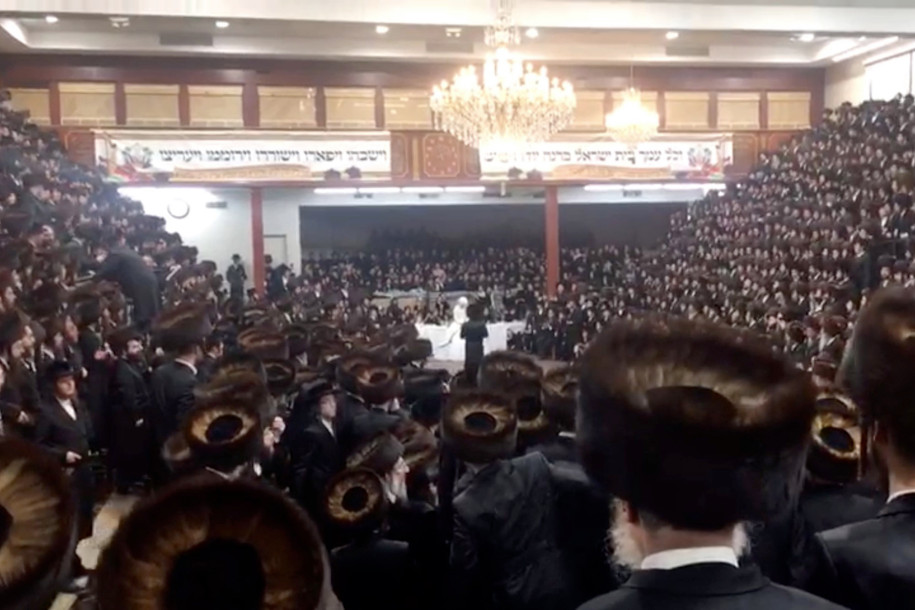
The Supreme Court has taken a dangerous rightwing turn since the addition of Trump’s three religious zealot. Poor Chief Justice John Roberts has lost control. He is no longer the deciding vote. In the latest decision, he joined with the Court’s three liberals in a vain effort to say that public health requires all of us to accept limits and restrictions, even houses of worship. Several people tweeted to tell me that their churches encouraged masks and social distancing. But many others do not. See the photograph in Mike Klonsky’s post of a Brooklyn synagogue where thousands of congregants were packed together, maskless.

Thousands of unmasked Hasidic sect members squeeze inside the Yetev Lev temple in Brooklyn for the wedding of a chief rabbi’s grandson. Similar weddings have been happening in Brooklyn for months in violation of city ordinances — with precautions such as covering windows with paper and guards at the doors in case an inspector shows up to keep them from being detected.

The Supreme Court’s 5-4 midnight ruling, which prevents New York city and state officials from imposing limits on the Roman Catholic Diocese or Brooklyn’s Hasidic sect during the pandemic, had little to do with the broad issue of religious freedom. Rather it was a signal to Trump’s MAGA death cult and his evangelical base that the extreme right-wing majority, led by DT’s newly-appointed religious cultist, Amy Coney Barrett, was on the job and will be for decades to come. 

The Court already ruled that a baker in Colorado did not have to bake a wedding cake for a gay couple. What will the Court rule when a shopkeeper refuses to serve women or blacks or Jews because of his religious beliefs? This Court is certain to say that religious beliefs “trump” civil rights law.

Jesse Jackson wrote in the Chicago Sun-Times that Black Americans will not fall for Trump’s absurd claims about the great things he claims to have done for them.

https://chicago.suntimes.com/columnists/2020/10/26/21535175/black-americans-vote-trump-civil-rights-jesse-jackson

He wrote:

If a lie is repeated often enough, the truth may never catch up. Donald Trump understands this better than anyone, as he showers Americans with lies — often the same ones repeated over and over — knowing that more voters will hear him than the fact-checkers. 

One of his favorite howlers is his oft-repeated claim that “I’ve done more for African Americans than anybody, except for the possible exception of Abraham Lincoln.” 

No one should fall for the con.

For example, Trump doesn’t come close to Harry Truman who desegregated the U.S. military, an act of simple justice that took immense courage. He’s done nothing as important as Dwight Eisenhower who dispatched troops to Little Rock, Arkansas, to overcome resistance to school integration. He can’t hold a candle to Lyndon Johnson, who, working with Dr. Martin Luther King and the civil rights movement, passed the Civil Rights Bill ending segregation in public facilities, the Voting Rights Act enforcing the right to vote, and the War on Poverty that reduced poverty to levels still not matched.

But comparing Trump to presidents who actually made things better is to fall into his trap, for Trump hasn’t done things for African Americans, he has done things to them. 

He’s embraced the Republican strategy of race-bait politics, only he’s replaced their dog whistles with a bullhorn. He celebrated the neo-Nazis and other extremists marching against civil rights protesters in Charlottesville. He’s scorned African countries and Haiti as “s…-holes,” suggesting the only immigrants he wanted were whites from countries like Norway. 

He sowed racial fears, painting the largely nonviolent Black Lives Matter demonstrators as “thugs,” and the demonstrations as “riots.” He’s tried to rouse support from suburbanites by charging that Biden’s support for affordable housing would “destroy your neighborhood and your American Dream.” He’s labeled cities with large minority populations like New York City as “anarchist jurisdictions” that should be stripped of federal support…

Trump’s Small Business Administration stiffed African Americans in dispensing loans through the Pay Protection Plan. More than 9 of 10 Black-owned small businesses that applied for loans were denied. That led directly to over 40% of Black-owned businesses shutting down in the pandemic. 

Trump measures the economy’s success not by the health of the people, but by the health of the stock market, but while 61% of whites participate in the stock market (although for most the holdings are meager), only one-third of blacks own stocks. Nearly one-half of Black women report that they are unable to pay for necessities like food and housing, even though most work. Over half have less than $200 in savings. Trump doesn’t help. He did nothing to raise the minimum wage and has been actively hostile to unions that help workers bargain a fair wage.

Essential workers are disproportionately African American. Blacks are disproportionately in low-wage jobs, often without employer-based health care. The pandemic has killed Black people at double the rate of Whites. African Americans have suffered the most from Trump’s mismanagement. Blacks have been more likely to be denied health care, and less likely to have paid sick days. 

And Trump has basically been AWOL as the Republican Senate blocked action on a relief plan as unemployment insurance was running out, and states and cities were facing massive cuts in services and jobs — disproportionately held by people of color — in the wake of the pandemic-caused fiscal crisis.

Trump touts the modest criminal justice reforms that he signed off on that will help reduce mass incarceration a bit, but he has actively undermined equal justice under the law. He encouraged police to rough up those that they arrest. He defended vigilantes shooting at those protesting the murder of George Floyd. He terminated the Obama Justice Department’s police department investigations and consent decrees that were reforming police practices. He boasts of arming police forces with military weaponry. He even terminated racial-sensitivity training in the federal government, mostly as a grandstand appeal to his base of angry White men. He’s appointed the most federal Appeals Court judges since Jimmy Carter; not one of them is Black. 

Trump not only has done nothing to revive the Voting Right Act, gutted by the right-wing gang of five on the Supreme Court, he and his party have actively worked to suppress Black voting — passing ID requirements, shutting down polling places, purging voter lists, making registration harder, limiting early voting, undermining vote by mail, gerrymandering districts and more — all designed with laser focus to reduce the Black vote.

In short, Trump has left African Americans in the deepest hole with the shortest rope. Not surprisingly, most won’t fall for Trump’s big con. African Americans — and particularly African-American women — will vote overwhelmingly for Joe Biden. The base for Trump and Republicans will continue to be those not repelled by his racially divisive rhetoric and policies. 

Periodically, however, it is useful to remind people that night is not day, that hate is not love. When Lincoln freed the slaves, they joined the Union armies in large numbers and helped save the Republic. Trump can’t be mentioned in the same breath as Lincoln, and African Americans aren’t about to save him.

David R. Taylor is a veteran teacher and blogger. He asks the important question of what to expect the consequences to be for public education if Trump is re-elected.

Very likely, it means four more years of Betsy DeVos and her crusade to destroy public education and shower federal money on charter schools, private schools, and religious schools.

Taylor reviews some of her worst actions, such as favoring predatory lenders and favoring for-profit colleges that rip off students. Such as, abandoning the kids who need her most by downplaying civil rights complaints and stripping transgender students of any protections. Such as, trying to starve her own department of funding.

Between the return of DeVos and a voucher-loving majority on the Supreme Court, public schools are in for a rough ride. We can’t change the composition of the Supreme Court (unless there is a genuine effort to expand it and add balance), but we can vote to make sure Betsy goes back to Michigan and her ten yachts.

Ruth Marcus, a writer for the Washington Post, writes that Amy Coney Barrett says she holds the same judicial philosophy as her mentor Justice Antonin Scalia. In this column, she explores Scalia’s legacy.

The best way to predict how Supreme Court nominee Amy Coney Barrett would behave as a justice is to listen to her — and take her words seriously. She hasn’t been mysterious about it: Speaking in the Rose Garden after President Trump announced his selection, Barrett invoked the “incalculable influence” of her “mentor,” Justice Antonin Scalia, adding: “His judicial philosophy is mine, too — a judge must apply the law as written.”


We can, and should, examine Barrett’s record, on the bench and in academia. So Barrett’s decision to sign a newspaper advertisement in 2006 that decried the “barbaric legacy” of Roe v. Wade is instructive — if any more were needed to deduce her inclinations on that case. “You don’t know her view on Roe v. Wade,” Trump lectured Democratic nominee Joe Biden at Tuesday’s debate. “You don’t know her view.”


Oh, please. This from someone who vowed, during a debate with Hillary Clinton four years ago, that overturning Roe “will happen automatically, in my opinion, because I am putting pro-life justices on the court.”


But let’s imagine there’s still some uncertainty here. One way to examine how a Justice Barrett will rule is to examine the jurisprudence of Scalia, for whom she clerked in 1998 and 1999. The late justice repeatedly — and scathingly — made clear that he did not believe in any constitutional protection for abortion rights, and that the court was being cowardly by refusing to fix its error.


In 1989, when Justice Sandra Day O’Connor argued that “a fundamental rule of judicial restraint” required the court to avoid reconsidering Roe, Scalia was dismissive: That position, he said, “cannot be taken seriously.” Three years later, in 1992’s Planned Parenthood v. Casey, when O’Connor and a court plurality reaffirmed the essence of Roe, Scalia said the issue “is not whether the power of a woman to abort her unborn child is a ‘liberty’ in the absolute sense; or even whether it is a liberty of great importance to many women. Of course, it is both. The issue is whether it is a liberty protected by the Constitution of the United States. I am sure it is not.”


It is fair, given Barrett’s comments, to ask the nominee: Would a Justice Barrett agree? Is she sure, too?


Barrett’s alignment with Scalia has implications far beyond Roe.


Start with gay rights. Scalia issued a ferocious dissent in Lawrence v. Texas in 2003, when the court overruled its 1986 holding that states could criminalize homosexual conduct. “The Texas statute undeniably seeks to further the belief of its citizens that certain forms of sexual behavior are immoral and unacceptable . . . the same interest furthered by criminal laws against fornication, bigamy, adultery, adult incest, bestiality, and obscenity,” Scalia wrote.

He lambasted the ruling as “the product of a Court, which is the product of a law-profession culture, that has largely signed on to the so-called homosexual agenda, by which I mean the agenda promoted by some homosexual activists directed at eliminating the moral opprobrium that has traditionally attached to homosexual conduct.”


A dozen years later, in Obergefell v. Hodges, when the court majority took the step that Scalia had forecast and ruled that the Constitution protects the rights of gays and lesbians to marry, Scalia was even more dismissive. “I write separately,” he observed, “to call attention to this court’s threat to American democracy.” He termed the ruling “a naked judicial claim to legislative — indeed, super-legislative — power; a claim fundamentally at odds with our system of government,” adding, “A system of government that makes the People subordinate to a committee of nine unelected lawyers does not deserve to be called a democracy.”


Would a Justice Barrett agree? Do states have an interest in making homosexual conduct criminal? Was Obergefell a threat to democracy?


Then there’s Scalia on gender discrimination. When the court in 1996 ruled that Virginia Military Institute’s male-only admission policy violated the constitutional guarantee of equal protection, Scalia was the sole dissenter from Ruth Bader Ginsburg’s opinion for the majority.
The court, Scalia wrote, “enshrines the notion that no substantial educational value is to be served by an all men’s military academy — so that the decision by the people of Virginia to maintain such an institution denies equal protection to women who cannot attend that institution but can attend others. Since it is entirely clear that the Constitution of the United States — the old one — takes no sides in this educational debate, I dissent.”


Would a Justice Barrett agree? Does the constitutional guarantee of equal protection not apply here?
Or Scalia on affirmative action in higher education. In 2003’s Grutter v. Bollinger, when the court narrowly upheld the University of Michigan Law School’s policy that used race as a factor in admissions, Scalia, dissenting, called the approach “a sham to cover a scheme of racially proportionate admissions” — one not permitted by the Constitution. In a 2014 case, he criticized the court’s “sorry line of race-based admissions decisions.”


Would a Justice Barrett agree? Is this impermissible race discrimination?
One thing that’s striking about all four of these areas is that Scalia was in dissent. One thing senators should explore — and that the public should weigh — is what could happen now, when the court’s conservative composition means that his former clerk could translate his angry dissents into controlling law.

If you are looking for a book that explains why public schools are foundational to democracy, Jan Resseger writes, read Derek Black’s Schoolhouse Burning: Public Education and the Assault on American Democracy.

Resseger writes:

On Monday, this blog examined Derek Black’s important new book, Schoolhouse Burning: Public Education and the Assault on American Democracy. Black, a professor of constitutional law at the University of South Carolina, threads together the history of an idea first articulated in the Northwest Ordinances of 1785 and 1787, threatened again and again throughout our nation’s history, but persistently revived: that our system of public schools, where all children are welcome and where their fundamental right to education is protected by law, is the one institution most essential for preserving our democratic society…

Derek Black names several problems at the heart of today’s threat to public education: the expansion of school privatization via charters and vouchers, massive fortunes invested by far-right libertarians to attack so-called ‘government schools,’ attacks on school teachers and their unions, and persistent tax cutting by state legislatures and the consequent ratcheting down of state funding for public education: “Before the recession of 2008, the trend in public school funding remained generally positive… Then the recession hit. Nearly every state in the country made large cuts to public education. Annual cuts of more than $1,000 per student were routine.” But the recession wasn’t the only cause of money troubles for public schools: “(I)n retrospect…. the recession offered a convenient excuse for states to redefine their commitment to public education… By 2012, state revenues rebounded to pre-recession levels, and a few years later, the economy was in the midst of its longest winning streak in history. Yet during this period of rising wealth, states refused to give back what they took from education. In 2014, for instance, more than thirty states still funded education at a lower level than they did before the recession—some funded education 20 percent to 30 percent below pre-recession levels.” (Schoolhouse Burning, pp. 31-33) Black cites research demonstrating that states have reneged on their public education promise particularly in areas where the public schools serve poor children: “(W)hen it comes to districts serving primarily middle-income students, most states provide those districts with the resources they need to achieve average outcomes… But only a couple states provide districts serving predominantly poor students what they need. The average state provides districts serving predominantly poor students $6,239 less per pupil than they need.” (Schoolhouse Burning, p. 241)..

All during the recent decade, the federal government’s education policy has also promoted school privatization. During the Trump administration, Betsy DeVos’s efforts to promote vouchers, her lifelong cause, have been well known. But the effort has been bipartisan: “Obama… tapped Arne Duncan… someone whose track record in Chicago involved substantially expanding charters… For the next several years, the federal government promoted and sometimes forced charter school expansion… The Obama administration basically condoned everything states were doing with school funding and made it a little worse. Federal funding for public schools remained flat while the federal budget for charter schools increased by nearly 20 percent between 2008 and 2013. President Obama called for another 50 percent increase for charters on top of that in 2016 (though he didn’t get it). The real surprise, though, is how much Duncan managed to accomplish through administrative action… His biggest coup was the process he set up for doling out innovation funds during the recession. As part of the economic recovery legislation, Congress had set aside a substantial chunk of money for education innovation but didn’t specify exactly what schools could spend it on. Duncan, however, told states that if they wanted access to the money, charter schools had to be part of the mix. States that ‘put artificial caps on the growth of charter schools,’ he said, ‘will jeopardize their grant applications.’… The overall result of these state and federal actions was stark—nearly 40 percent growth in the number of charter schools and 200 percent growth in their enrollment.” (Schoolhouse Burning, pp. 36-37)

Black reminds us that an attack on public schools is an attack on democracy.

Please sign up and join the discussion between Steve Suitts and me on Zoom on Wednesday September 16. We will be talking about Steve’s new book Overturning Brown: The Segregationist Legacy of the Modern School Choice Movement. You will be amazed to learn of the true history of school choice. It is definitely not the “civil rights issue of our time,” as Trump and DeVos claim.

Steve has been involved in civil rights work throughout his career. He was founding director of the Alabama Civil Liberties Union; executive director of the Southern Regional Council; and vice president of the Southern Education Foundation. He is also the author of a biography of Hugo Black, a member of the U.S. Supreme Court Justice who played a large role in history.

You can sign up here.

Steve and I will talk for an hour, and then we will open the floor for your questions.

In an effort to fire up his base, Trump identified three of the most extreme rightwing Senators as next in line for a Supreme Court appointment. One is Ted Cruz of Texas. During the 2016 campaign, Trump claimed that Ted Cruz was a key figure in the assassination of President John F. Kennedy.

Apparently he told author Bob Woodward that he placed the story in the National Enquirer, even picked the photo of Cruz to run on the first page. If Trump should win, that’s the end of abortion, federal support for health care, and gay rights, as well as public schools, environmental protection and every progressive accomplishment of the past 50 years. Expect universal vouchers for religious schools and an explosion of charter schools. Expect a dramatic contraction of federal protection for civil rights. We can’t let it happen. We can’t throw away nearly a century of modernism.

President Trump on Wednesday named Republican Sens. Tom Cotton (Ark.), Ted Cruz (Tex.) and Josh Hawley (Mo.) to his shortlist of potential nominees for the Supreme Court should he win a second term.

Trump’s announcement, aimed at firing up conservatives eight weeks before the election, reflects the degree to which he has supercharged the politicization of the judicial branch, plunging the court system more deeply into the partisan fray than at any time since five Supreme Court justices appointed by Republican presidents delivered the White House to George W. Bush in 2000.

All three senators have been plotting potential 2024 presidential campaigns of their own. Each man has been crystal clear that he would support overturning reproductive rights codified in Roe v. Wade, strike down the Affordable Care Act in its entirety and rule against LGBTQ rights if given the chance.

I was there with my husband Richard. Dick was a close friend of Bayard Rustin, one of the day’s organizers. We took the train To Washington. We met with Dick’s law school classmate, Clifford Alexander, who was Secretary of the Army in LBJ’s administration. (Cliff was the father of Michelle Alexander, who later became a celebrated writer.) I was eager to join the march. Dick and I left Cliff in his Office, and we went to the march, to mingle with the hundreds of thousands assembled peaceably on the Mall. It was a thrilling experience, organized by A. Philip Randolph and many labor unions, who supplied money, workers, buses, and organizers.

On this day in 1963, more than 200,000 people gathered in Washington, D.C., for the March on Washington for Jobs and Freedom, now known as the March on Washington. The march was the brainchild of civil rights activists A. Philip Randolph and Bayard Rustin, who once said, “We need, in every community, a group of angelic troublemakers.” They worked diligently for nearly two years, convincing members of the National Association for the Advancement of Colored People and the Southern Christian Leadership Conference to put aside their differences and participate.

The president of the United States, John F. Kennedy, needed support for the passage of his Civil Rights Act, and gave his approval, as long as there would be no violence. Two days of protests, speeches, and sit-ins were planned. On August 27, thousands of people began pouring into the city. They came by bus, train, and air from Milwaukee, St. Louis, Birmingham, California, with water jugs and picnic baskets and Bibles. Chicago and New York declared August 28 “Freedom Day” and gave workers the day off. The city of Washington, D.C., banned liquor sales for the first time since Prohibition, hospitals stocked blood plasma and canceled elective surgeries, and the Pentagon amassed 19,000 troops in the suburbs, just in case things got violent.

There was not one single arrest, and no violence. Marchers linked hands, they sang, and they chanted all the way from the Washington Monument to the Lincoln Memorial, where the 16th speaker of the day, the Reverend Martin Luther King Jr., began what would become one of the greatest speeches in history with, “I am happy to join with you today in what will go down in history as the greatest demonstration for freedom in the history of our nation.”

This past June, half a million protestors were in the streets in multiple cities on a single day in the wake of George Floyd’s murder by police.