Archives for the month of: February, 2021

Peter Greene notes the emergence of a new narrative among “reformers”: Whereas schools have long been failing kids, now the kids themselves are failures because of the epidemic of “learning loss.”

As usual, the disaster experts blame teachers, but now they say the kids are failures too.

But the other part of chicken littling about education is the constant declaration that Kids These Days suck. They can’t read or write. They aren’t ready to hold down a job. And like many other negative trends in education, this has only gotten worse during the pandemic. Now it’s not just that Kids These Days can’t read and write and math–numerous companies are telling anyone who will listen about the terrible threat of learning loss, and how all of America’s children are slowly backsliding, the “days of learning” dribbling out of their ears like meltwater sluicing off a snow-covered roof. They’re getting stupider and stupider by the day. They are a lost generation...

In the rush to indict the public school system, the teachers, the unions, some people have turned students into collateral damage, forcing them to live in a world of adults who are constantly broadcasting that Kids These Days are awful failures. And right now, as always, they are directing the worst of it at the students who already get the worst of it–Black, brown, poor. 

Today Chalkbeat is carrying a piece by teacher Selena Carrion that everyone should read– “Stop calling this generation ‘lost.’ It’s hurtful–and it’s wrong.” Carrion’s experience allows her to remember how to keep her eye on the ball:All this reminds me not to allow a deficit-oriented “lost generation” narrative to deny them their success. As educators, let’s think about their triumphs and how they are still finding joy and wonder amid chaos.

What would happen, I wonder, if the consultants from NWEA and McKinsey, rather than releasing white papers and “research” and talking to other folks in the education biz had to go stand in front of the actual young human beings and explain to those students that they are falling behind and getting dumber by the minute and are generally failing. What if they had to look into those students’ eyes while saying, in effect, “We do not believe in you.” 

Here is where market-based philosophy clashes with actual education. You market products by creating a compelling case for a desperate need. “Terrible things are happening,” a campaign screams, “and you need to hire us and buy our product if you want to survive, because without us you are not enough.” But you teach students by first believing in them, by assuring them that they are enough. You can’t have disaster capitalism without a disaster. You can’t teach students by telling them that they are a disaster.

It’s been a hard year for everyone: kids, teachers, parents. The kids need someone who believes in them, rather than looking at them as suffering from a social construct called ”learning loss.”

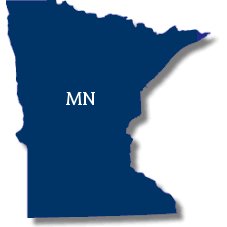
Our brilliant reader Laura Chapman, retired educator, decided to dig deep into the politics of education reform in Minnesota in response to a post about a dubious constitutional amendment sponsored by the Federal Reserve Bank.

Chapman, who lives in Ohio, writes:

I am not from Minnesota, but this post sent me deep into some policies there. The idea is to frame education as a fundamental right to “quality schools” as “measured against uniform achievement standards set forth by the state.”

No. This law is written as if the standard-setting process is a business-as usual-review of existing standards and benchmarks for learning, with periodic revisions. It is not.

Right now, there is a huge controversy over the social studies standards. The battle is about whose histories count and whether conservatives should settle for anything other than patriotism as the major purpose of teaching American history. https://patch.com/minnesota/across-mn/controversy-over-mn-s-social-studies-standards-explained

Students Learning English (ELLs), are unlikely to pass the absurd requirements being proposed by the Federal Reserve (why bankers?) and as a constitutional amendment (why bankers?).

Minnesota has NO academic tests except those in English. According to a 2020 report from the Migration Policy Institute, and the 2015 American Community Survey, at least 193,600 Minnesota residents have children still learning English. All are in harm’s way. The largest foreign-born groups in Minnesota are from Mexico (67,300), Somalia (31,400), India (30,500), Laos including Hmong (23,300), Vietnam (20,200), China excluding Hong Kong and Taiwan (c), Ethiopia (19,300), and Thailand including Hmong (16,800). One of the fastest growing immigrant groups in Minnesota is the Karen people, an ethnic minority in conflict with the government in Myanmar. Most of the estimated 5,000 Karen in Minnesota came from refugee camps in Thailand. Ojibwe and Dakota are the indigenous languages of Minnesota.

Many of Minnesota’s charter schools are devoted to segregating and strengthening the identities of linguistic/ethnic groups. There are three dual language Spanish-English schools. Eight charter schools are devoted to immersion in these languages/cultures: Chinese, French, German, Korean, Mandarin Chinese, Russian, and Spanish. There are at least five Hmong immersion charter schools, and two for Ojibwe immersion. Two charter schools offer ELL education for East African families and one offers education using American Sign Language/English bilingual approach.

Recent reports also show how charter schools are racially segregated. In St Paul, one hundred percent of students at Higher Ground Academy are black or African-American. This percentage is about the same for Minneapolis’s Friendship Academy. In both cities the overall population of black or African-American residents is below twenty percent. By design, many charter schools in Minnesota are segregated schools. Will these schools be subjected to the wishes of the bankers or not?

In 2021, the Minnesota Federal Reserve, having no expertise in education, called in “experts” to make suggestions on a fix for so-called achievement gaps, meaning differences in scores on standardized tests. This “we-can-fix it” program was sponsored by all 12 of the nation’s District Banks in the Federal Reserve System. In other words, what happens in Minnesota may not be limited to Minnesota but extend to the orbit of District Banks in Atlanta, Boston, Chicago, Cleveland, Dallas, Kansas City, New York City, Philadelphia, Richmond (VA), San Francisco, and St Louis,

Among the highly visible “experts” called in for this multi-state program were Geoffrey Canada, president of the well-endowed Harlem Children’s Zone (endowment about $148 million, and sponsor of Promise Academy brand of K-12 charter schools), and CEO Salman Khan, founder of online Khan Academy, and Kahn Academy for Kids. The papers for this program also featured the post-Katrina takeover of New Orleans schools as if exemplary. https://www.minneapolisfed.org/article/2021/feds-racism-and-the-economy-series-explores-racial-inequity-in-the-education-system.

Bankers are clueless about education but they have an agenda certain to harm thousands of students in Minnesota, especially ELL students, and if applicable to charter schools, the many students ill prepared to take a test only available in English.

The last thing we need to have are the nation’s clueless bankers making permanent changes in education based on proposed Minnesota’s model of “quality.”

As a result of strong opposition, Republicans who control the New Hampshire legislature decided to postpone consideration of their “number one priority,” school vouchers. Under consideration was the most sweeping voucher bill in the nation. Thousands of people signed up to testify against the legislation.

A bill to create a school voucher-like system in New Hampshire is poised to be kicked to 2022, after Republicans on the House Education Committee said that it needed more time.

In a 20-0 vote Thursday, the committee recommended that the bill be retained, a move that if approved by the full House next week would put off any decision-making until next year’s session.

House Bill 20, named the “Richard ‘Dick’ Hinch education freedom account program” after the late House speaker, was a top priority for House Republicans this year. The proposal would allow parents to withdraw their children from public school and take the per-pupil state money with them.

Under the bill, that state funding, which amounts to $3,700 to $8,000 per student depending on the school, could then be used by the parents for a number of alternative expenses, such as private school tuition, college preparatory courses, school supplies, or transportation.

But a deluge of opposition to the bill from public school advocates and Democrats had slowed down its progress, resulting in contentious hearings and deliberative sessions that stretched through the day. Opponents argue the bill would drain resources from public schools and prompt cutbacks and increased property taxes; proponents say that it would provide new opportunities to families whose public schools aren’t working for their children.

Despite numerous tweaks and amendments, the bill didn’t have the votes to pass out of the GOP-controlled committee.

It is unclear if the committee would have had the votes to pass the bill even if the amendments were drafted correctly. Last week, NHJournal reported James Allard (R-Pittsfield) was likely to vote against the measure.

House insiders tell NHJournal that had a vote on the bill been held, the best-case scenario would have been a 10-10 tie vote in the committee, sending the bill to the floor with no recommendation. That would have set up a heated floor battle.

Attempts to sway Allard and other concerned Republicans included adding income-caps to the EFA eligibility formula. The cap would limit participation to those earning less than 375 percent of the federal poverty limit — roughly $99,000 for a family of four. That proposed income-cap would cut the number of eligible students in half.

Democrats on the Education Committee were pleased with the outcome.”HB 20 contains no protection for students against discrimination, little oversight, and is ripe for fraud…and would act as a tax-dollar giveaway to wealthy families. There has never been as much vocal opposition to a piece of legislation in NH,” Democrat leader on the committee Mel Myler said in a press release Thursday morning.

There’s still an Education Freedom Account bill in the Senate, giving supporters hope the legislation can still be amended and passed this year. In 2017-2018, the Senate passed SB193 – an education savings account program. That bill died in the House, after being heavily amended. The Senate then scrapped a separate bill and reintroduced SB193, the original version. Again, the proposal failed in the House.Democrats and teachers unions argued EFAs would increase property taxes, defund local district schools, and wreak havoc on New Hampshire’s education system. They celebrated Thursday’s win.

It has been well documented that students who leave public schools for voucher schools lose ground academically. Vouchers will not only hurt the state’s poorly funded public schools, it will hurt the children who use vouchers. It is a lose-lose for everyone except the religious schools that win public funds.

This story has justifiably gotten a lot of national attention. Tim Boyd, the mayor of Colorado City, Texas, resigned after posting the following message on his Facebook page. He has a philosophy of sink or swim. That Government has no responsibility to help you when the power goes out and the temperature goes below freezing. Surviving is your problem.

That worldview sounds like it derives from the late Rush Limbaugh. It is certainly not consonant with the core values embedded in the Holy Bible. I’m guessing ex-Mayor Boyd considers himself a Christian. From what I know of the words of Jesus, he taught love and kindness for one’s neighbors, not indifference.

For non-Christians, there is another source for believing that government has an obligation to help its citizens: the United States Constitution, which begins: “We the People of the United States, in Order to form a more perfect Union, establish Justice, insure domestic Tranquility, provide for the common defense, promote the general Welfare, and secure the Blessings of Liberty to ourselves and our Posterity, do ordain and establish this Constitution for the United States of America.”

”Providing for the general welfare” is a commitment that society makes to its citizens.

And then there’s the basic fact that the government in most parts of this country does control the power grid and the water supply. Texans should rightly hold their state government responsible for the lack of both. Individuals and families can burn wood in their fireplaces, if they have one, and they can draw water from a well, but most people don’t have a well. People in civilized societies pay taxes so the government will protect them, build roads, supply electrical power and potable water, provide free public education, and do those things that individuals can’t do for themselves.

When their lives are at risk because of a natural disaster, they rightly turn to government for help. At times of overwhelming crisis, only government has the resources and personnel (think National Guard) to save lives.

This is what ex-Mayor Boyd wrote, along with his sort-of apology:

ORIGINAL FACEBOOK MESSAGE (since deleted):

Let me hurt some feelings while I have a minute!!

No one owes you are (sic) your family anything; nor is it the local government’s responsibility to support you during trying times like this! Sink or swim it’s your choice! The City and County, along with power providers or any other service owes you NOTHING! I’m sick and tired of people looking for a damn handout! If you don’t have electricity you step up and come up with a game plan to keep your family warm and safe. If you have no water you deal without and think outside of the box to survive and supply water to your family. If you are sitting at home in the cold because you have no power and are sitting there waiting for someone to come rescue you because your (sic) lazy is direct result of your raising! Only the strong will survive and the weak will parish (sic). Folks God has given us the tools to support ourselves in times like this. This is sadly a product of socialist government where they feed people to believe that the FEW will work and others will become dependent for handouts. Am I sorry that you have been dealing without electricity and water; yes! But I’ll be damned if I’m going to provide for anyone that is capable of doing it themselves! We have lost sight of those in need and those that take advantage of the system and meshed them in to one group!! Bottom line quit crying and looking for a handout! Get off your ass and take care of your own family!

Bottom line – DONT (sic) A PART OF PROBLEM, BE A PART OF THE SOLUTION!!

APOLOGY

All, I have set back and watched all this escalating and have tried to keep my mouth shut! I won’t deny for one minute what I said in my post this morning. Believe me when I say that many of the things I said were taken out of context and some of which were said without putting much thought in to it. I would never want to hurt the elderly or anyone that is in true need of help to be left to fend for themselves. I was only making the statement that those folks that are too lazy to get up and fend for themselves but are capable should not be dealt a handout. I apologize for the wording and some of the phrases that were used! I had already turned in my resignation and had not signed up to run for mayor again on the deadline that was February 12th! I spoke some of this out of the anger that the city and county was catching for situations which were out of their control. Please understand if I had it to do over again I would have just kept my words to myself and if I did say them I would have used better wording and been more descriptive.

The anger and harassment you have caused my wife and family is so undeserved….my wife was laid off of her job based off the association people gave to her and the business she worked for. She’s a very good person and was only defending me! But her to have to get fired from her job over things I said out of context is so horrible. I admit, there are things that are said all the time that I don’t agree with; but I would never harass you or your family to the point that they would lose there livelihood such as a form of income.

I ask that you each understand I never meant to speak for the city of Colorado City or Mitchell county! I was speaking as a citizen as I am NOT THE MAYOR anymore. I apologize for the wording and ask that you please not harass myself or my family anymore!

Threatening our lives with comments and messages is a horrible thing to have to wonder about. I won’t share any of those messages from those names as I feel they know who they are and hope after they see this they will retract the hateful things they have said!

Thank you

Tim Boyd(citizen)

Michael Fullan has written an excellent analysis of the best way to redesign school systems after the pandemic. This paper deserves the time it takes to read. Don’t read just the bullet points. Read it all.

Fullan recognizes that the pandemic has shaken up many assumptions about the status quo. He persuasively argues that the status quo in education is “driven” by failed ideas.

He writes:

The four new wrong drivers are not completely wrong. It is just that if left alone they take us in a negative direction. Let’s name them and give them nicknames (in parentheses).

  1. Academics Obsession (selfish)
  2. Machine Intelligence (careless)
  3. Austerity (ruthless), and
  4. Fragmentation (inertia).

    They have been operating for 40 years,
    and with ever-growing intensity. Together they are the ‘bloodless paradigm’, lacking care, empathy, and civic awareness – the things that make us humans. The new right drivers, by contrast, capture and propel the human spirit. Again these are offered with nicknames.

What does he propose instead?

  1. Wellbeing and Learning (essence)
  2. Social Intelligence (limitless)
  3. Equality Investments (dignity), and
  4. Systemness (wholeness).
    They are the human paradigm and presently constitute a work in progress. We have barely begun to tap their potential.

    ƒ
    Fullan’s provocative paper deserves your full attention. The path we have taken in education for the past four decades has exhausted whatever promise it might have had. After the past two decades of legislated testing, accountability, competition, and privatization, we see few of any signs of improvement. The more we stick with the status quo, the more rancid it is. It is time for fresh thinking. Here is a good place to begin to think anew.

Civil rights groups, led by the Southern Education Foundation, are opposing the voucher legislation proposed by Republicans in Georgia.

SEF leads opposition to education savings account bill introduced in Georgia legislature

One of the first pieces of legislation introduced in the Georgia legislature in 2021 was the Georgia Educational Scholarship Act (HB60), a bill that would divert taxpayer dollars to private schools. In February, SEF and nine other education and equity-focused organizations sent a letter to the Georgia House Committee on Education expressing concerns that HB60 would divert funds from public education at a time when schools can least afford to lose it, and further perpetuate inequities.

SEF prepared analysis of the bill and a backgrounder on academic outcomes and participation requirements for similar tax credit scholarship programs across the country.

SEF’s Legislative and Research Analyst also provided testimony to the Senate Education and Youth Committee on SB47, a proposed expansion of the state’s existing special needs voucher program.

The National Education Policy Center frequently engages researchers to review studies, reports, and evaluations. NEPC recently released a review of a RAND study that looks at online learning and whether it deserves federal funding. The title of the RAND report is “Remote Learning is Here to Stay,” but the body of the report does not support that conclusion, according to reviewer David R. Garcia of Arizona State University.

Garcia summarizes his review:

The RAND Corporation recently released a report based on a national survey of school district superintendents and charter management organization (CMO) directors (or their designees) about their experiences navigating the COVID-19 pandemic. The survey asks non-biased questions about how school districts and charter schools have responded to the pandemic and about their greatest educational needs. But some issues arise with the report’s reporting of results and with one of its two recommendations. The report is curiously titled, Remote Learning is Here to Stay, but that headline is surprisingly unsupported by the sur- vey responses. In fact, the respondents expressed much higher concerns about three other areas: (1) “addressing students’ Socio-Emotional Learning and mental health needs” (the area with the greatest need for additional resources), (2) “addressing disparities in student opportunities to learn that result from differences in supplemental supports provided by families” (the most anticipated challenge), and (3) inadequate funding (the top staffing chal- lenge). Relative to these concerns, remote learning is a minor consideration. The report’s first recommendation does follow from the respondents’ need for more funding to address inequities and socio-emotional learning. But the other recommendation, for more funding to support remote learning, does not appear to align with needs expressed by district lead- ers. Finally, the report combines two different types of local education agencies (school dis- tricts and CMOs). Thus, while the report suggests that its most important finding is that “about two in ten districts have already adopted, plan to adopt, or are considering adopting virtual schools as part of their district portfolio after the end of the COVID-19 pandemic,” it is unclear how much of this result is driven by CMOs rather than school districts. For these reasons, readers are encouraged to go beyond the title and read deeper to get a complete picture of the challenges, needs, and future of education from district leaders’ perspectives.

Kevin Kumashiro writes:

Dear Friends–I hope you’re well.  I wanted to be sure that you’re aware of three initiatives in which hundreds of educational scholars and leaders are pushing back on high-stakes standardized testing of students and teachers:


1)  Last week, the California Alliance of Researchers for Equity in Education (CARE-ED) sent a letter, endorsed by over 200 educational scholars in CA, and provided oral testimony to the CA Commission on Teacher Credentialing (at its 2/11 meeting) calling for an end — not merely a continuance of last year’s temporary suspension — of high-stakes standardized testing in teacher education.  Attached and available here: https://www.care-ed.org/


2)  This week, the national network, Education Deans for Justice and Equity (EDJE) sent a letter (dated 2/15), endorsed by over 200 deans and leaders across the country, to Secretary-Designate Miguel Cardona to urge waiving federal mandates for 2021 student testing.  Attached and available here: https://bit.ly/37oxIsC


3)  Next week, CARE-ED will present a letter, endorsed by over 400 educators across CA, to the CA State Board of Education (which meets on 2/24) to urge requesting a waiver of federal mandates for 2021 student testing as well as waiving additional state mandates and any consequences attached to such testing.  Attached and available here: https://www.care-ed.org/


Onward!

Kevin


***Kevin Kumashiro, Ph.D.https://www.kevinkumashiro.com

Movement building for equity and justice in education

The Education Law Center has developed an excellent presentation on the shortchanging of public education in the years since 20008. The great majority of states did not keep up with the costs of educating their children. Only a handful did: Wyoming, Alaska, Illinois, Connecticut. The rest saw a sharp drop in their effort to fund the education of their children.

The two absolutely worst states, as judged by their failed effort to fund their schools, were Arizona and Florida, followed by Michigan. It is not coincidence that these are states that have put their efforts into choice, as a substitute for funding.

The report from ELC begins:

In the decade following the Great Recession, students across the U.S. lost nearly $600 billion from the states’ disinvestment in their public schools. Data from 2008-2018 show that, if states had simply maintained their fiscal effort in PK-12 education at pre-Recession levels, public schools would have had over half a trillion dollars more in state and local revenue to provide teachers, support staff and other resources essential for student achievement. Further, that lost revenue could have significantly improved opportunity and outcomes for students, especially in the nation’s poorest districts.

The states dramatically reduced their investment in public education in response to the 2007 Great Recession. Yet as economies rebounded, states failed to restore those investments. As our analysis shows, while states’ economic activity — measured as Gross Domestic Product (GDP) — recovered, state and local revenues for public schools lagged far behind in many states.

This “lost decade” of state disinvestment has put public schools in an extremely vulnerable position as the nation confronts the coronavirus pandemic. Once again, state budgets are strained by declining revenues. And once again, school districts across the country are bracing for state aid cuts and the potential for reduced local support.

This report builds on our Making the Grade analysis of the condition of public school funding in the 50 states and the District of Columbia. Instead of a one-year snapshot, this report provides a longitudinal analysis of the effort made by states from 2008 to 2018 to fund their public education systems. We measure that effort using an index that calculates elementary and secondary education revenue as a percentage of each state’s economic activity or GDP.

A key goal of this report is to give advocates data and information to use in their efforts to press governors and state legislatures not to make another round of devastating “pandemic cuts” to already underfunded public schools.

Open the report to see where YOUR state ranks in its effort to educate its students.

Arizona and Florida are the two most shameful states in their neglect of the future of their children.

Imagine a state that adopts a state constitutional amendment that ties student rights to an education to their test scores. Would anyone be so dumb as to imagine that the test scores of students of different races would change because of a constitutional amendment? Remember that Minnesota was the first state to pass a charter law, promising to close the academic gaps. That was in 1992. Thirty years later, the state’s Big Thinkers are still grasping at straws.

.About


EDUCATION EXPERTS AND SCHOLARS: PROPOSED MINNESOTA CONSTITUTIONAL AMENDMENT THREATENS STUDENTS’ RIGHTSFOR IMMEDIATE RELEASE


Today, prominent experts on constitutional law and education sent a letter to Minnesota legislators voicing significant concerns that a proposal to amend the Minnesota Constitution would undermine and weaken students’ right to public education. 
In January 2020, the Minneapolis Federal Reserve proposed to eliminate the current guarantee of a free public education in the Minnesota State Constitution and replace it with language to make education “a fundamental right” to “quality schools” to be “measured against uniform achievement standards set forth by the state.” 


Proponents of the change contend that this new language would reduce gaps in achievement between Minnesota’s white students and students of color. A proposed bill to amend the constitution, H.F. 874, was introduced in the Minnesota House of Representatives on February 8.


In their letter, nationally known constitutional scholars and education law experts outline the negative effects the proposed amendment would have on Minnesota students’ right to public education. The letter explains that while “efforts to strengthen education rights” are welcomed, current Minnesota law already recognizes the rights contained in the amendment. 


The letter points out that the proposed amendment adds new language that may well undermine existing constitutional protections. Most notably, the amendment explicitly links the right to education to state achievement standards, a focus that “may encourage courts to measure rights through the narrow lens of tested academic achievement,” according to the scholars and experts.


In addition, the proposed amendment would eliminate core obligations imposed by the Minnesota Constitution on the state legislature to establish and maintain a statewide system of public schools. These include the requirement that the school system be “general and uniform” and “thorough and efficient.” The letter notes that, in 2018, the Minnesota Supreme Court interpreted this language as prohibiting schools segregated by race, a ruling that is considered “one of the most unqualified restrictions on school segregation that can be found in American law.” The scholars and experts underscore that the proposed amendment could endanger this crucial decision advancing racial justice. 


The letter concludes that “the Federal Reserve’s proposed amendment to the Minnesota education clause threatens to reduce, rather than increase, the rights of Minnesota students.”


Signatories include professors from Stanford, UC Berkeley, UC Irvine, Rutgers, the University of the District of Columbia, University of Colorado, University of North Carolina, University of South Carolina, Michigan State University, West Virginia University, Loyola University New Orleans, and the directors of several national civil rights organizations.


Press Contact:Sharon Krengel

Policy and Outreach Director
Education Law Center
60 Park Place,
Suite 300
Newark, NJ 07102
973-624-1815, ext. 24
skrengel@edlawcenter.org
Share on Twitter
Education Law Center | 60 Park Place, Suite 300Newark, NJ 07102Unsubscribe gardendr@gmail.comUpdate Profile | Customer Contact Data NoticeSent by elc@edlawcenter.org