Archives for category: Vouchers

Derek Black, a Law professor at the University of South Carolina, attended the Network for Public Education conference in Indianapolis and left convinced that the privatization movement is not going to survive.

Read it all. It is an uplifting take on the future.

He writes:

Why am I suddenly confident, rather than nervous, about charters and vouchers? I got the chance to meet and listen to teachers from across the country at the Network for Public Education’s annual conference in Indianapolis this past weekend. For the first time in my professional career, I had a firm sense of public education’s future. I have litigated and participated in several civil rights and school funding cases, dealt with lots of different advocates, and watched closely as the teacher protests unfolded this spring. In Indianapolis, I saw something special—something I had never seen before.

I saw a broad based education movement led not by elites, scholars, or politicians, but everyday people. Those everyday people were teachers who were not just from big cities, small cities, suburbs, or the countryside, but from all of those places and as diverse as America’s fifty states and ten thousand school districts. The teachers weren’t just young or old, white, black or brown, men or women, straight or gay. They were all of the above.

So what then binds them together? Their opponents would say they are radicals or self-interested. But these teachers weren’t that either. As I sat down across the table and listened, I was struck by just how “every day” many of these teachers were. They had hopped on planes and come from across the country, but they were not any different from my kids’ teachers back in South Carolina–who had not even hinted at the possibility of a strike.

These movement “leaders” in Indianapolis were reluctant leaders. Like my kids’ teachers, these teachers struck me as the type who put their heads down, follow the rules, teach what the state asks, and care most of all about their students. And while these teachers were obviously disappointed in their states and concerned about the future of public education, I wouldn’t even call them mad. They stepped out on a ledge because they felt they had to.

One teacher, whom I recognized from this past spring’s newspapers but won’t name, actually had a lot of good things to say about her teaching experience and school. She said her principal lets her teach how and what she wants and that her school is good place. If I did not know who she was, you could not have convinced me that she led thousands of teachers this past spring.

There is one stereotype, however, that fits these teachers well: studiousness. They read—a lot. They research—a lot. As a result, they know and keep track of stuff that normally only policy wonks and professors know. Details matter in education policy and these teachers were on top of them. If I were governor and starting a new watchdog agency—whether in education or some other area—these teachers are some of the first people I would hire.

Over time, I have come to realize that clients matter more than attorneys. Groups of committed individuals standing behind movement leaders are, as often as not, more important than leaders. Attorneys and leaders tend to be just vessels for something larger than themselves.

What makes this teacher movement special is that the leaders are also the followers. The leaders come from within the ranks, not urged on by outsiders, elites, or money. They are urged on by their own sense of right and wrong, by their heartfelt care for public education and the kids its serves. For those reasons, they won’t be going away, bought off, or fatigued any time soon.

Andrew Gillum is an exciting new face in the Democratic party. He has pledged to reverse the damage inflicted on Florida’s infrastructure and education if he is elected Governor.

I am happy to endorse Gillum!

Here are good reasons to change the leadership of the state:

1. The Republican party has inflicted pain on the public school system and its teachers. They have enacted very loose charter laws and voucher laws. Florida has three different voucher programs, despite the fact that vouchers are specifically banned in the State Constitution, and despite the fact that voters rejected an effort to change the State Constitution to allow vouchers in 2012. The legislature and the governor have given away hundreds of millions of dollars to private and religious and charter schools, which have minimal accountability. They have enacted laws to judge teachers by test scores, even though this method has been proven ineffective and harmful in Florida and everywhere else.

2. The Republicans have run the state like their private candy store, bestowing millions on charter chains owned by their family and friends and ignoring rampant corruption via real estate deals in the venal charter industry.

3. The Republican party is the party of climate change denial. The current governor, Rick Scott, now running for the Senate, is a prominent denier of climate change, even though Florida is ecologically fragile. See this article in Politico, which shows the green slime that is infiltrating the state’s waterways. Scott is notorious for ignoring the environmental damage caused by his policies.

Vote for Bill Nelson for Senator and Andrew Gillum for Governor.

Andrew Gillum is a good man with solid experience as Mayor of Tallahassee.

Florida has a chance to start fresh and break free of the grip of the greed hogs now running the state and destroying its education system and its environment.

Vote for Andrew Gillum!

Last year the Arizona legislature passed legislation to make vouchers available to all students in the state. Horrified parents and educators in Arizona—led by Save Our Schools Arizona—gathered over 100,000 signatures to put a referendum on the ballot. The Koch brothers sent in their legal team to try to block the referendum. They failed. The courts kept the referendum on the ballot. The referendum question is called Proposition 305. It asks voters whether they want universal vouchers.

To stop vouchers, vote NO.

To learn more about SOS Arizona, open this link.

ARIZONA: JUST SAY NO TO UNLIMITED SCHOOL VOUCHERS!

Arizona voters have the opportunity to show their state’s lawmakers – and the entire nation – that they support their public schools by voting NO on Proposition 305. Thanks to a successful and hard-fought grassroots campaign, the November ballot will include a question about expanding Arizona’s voucher program (currently targeted to special categories of children) to all 1.1 million students in the state.

A NO vote on the November referendum will keep public funds in the public schools, instead of diverting those resources to pay for vouchers for private and religious education. This is a particularly important vote in Arizona, where 95% of students attend public schools, while the state ranks 48th in the country in terms of public school funding level.

According to the “National Report Card: Is School Funding Fair?” published by the Rutgers University Graduate School of Education and Education Law Center, Arizona receives an “F” in the “Effort” category, meaning the state makes a lower than average effort to fund its public schools.

The grassroots group that spearheaded the voter referendum, Save Our Schools Arizona, is leading the campaign for the NO vote. The goal is to make sure there are no further cuts to public education, especially since a whopping $4.65 billion has already been cut since 2009. The organization notes that $160 million could be diverted from the state’s public schools – every year – if the expanded voucher program is implemented.

Arizona public school advocates know what many states, and even the federal government, have found to be true – voucher programs are highly unpopular and therefore extremely difficult to establish or expand. In November, Arizona voters will get the chance to save their schools and send a message that will be heard across the country: Just Say NO to Vouchers!

For more information about vouchers, visit Voucher Watch on the ELC website.

Education Law Center Press Contact:
Sharon Krengel
Policy and Outreach Director
skrengel@edlawcenter.org
973-624-1815, x 24

Politico’s Morning Education reports on the Network for Public Education campaign against tax deductions for vouchers:

VOUCHER ADVERSARIES SHOWER IRS WITH THANKS: Public education and anti-voucher advocates are inundating the IRS with thank yous for a proposed rule seeking to limit the federal deductibility of contributions to charitable organizations. The rare and profuse gratitude for the usually choice-friendly Trump administration comes as the public comment period on the rule is set to close Thursday.

— Many of the comments use language promoted by organizations like the Network for Public Education, thanking the IRS for proposing the end of a “tax shelter that allows taxpayers to turn a profit when they fund private schools through state tuition tax credit programs. … Please stay the course and make sure that tax accountants, private schools, and others can no longer exploit the federal charitable deduction to promote voucher tax credits.” Read the comments here.

— The background: Eighteen states have tax credit scholarship programs that award individuals or businesses a full or partial tax credit when they donate to organizations that grant private school scholarships. About a dozen of them issue full tax credits to donors and when combined with the federal deduction, the tax benefits can exceed the size of the donation. The proposed rule, aimed at preventing efforts by some blue states to get around a new limit on state and local tax deductions, would prevent donors who contribute to state tax credit scholarship programs from reaping such a benefit.

— School choice advocates have also flooded the IRS with comments, concerned the rule would make taxpayers less likely to donate to organizations that award private school scholarships because of the reduced tax benefit. Advocates say that would ultimately hurt students, many of whom come from low-income families.

— In the effort to counter those voices, the National Coalition for Public Education is urging its supporters to speak out, noting “the IRS is already facing extreme pressure by pro-privatization entities and members of Congress.”

Scott Maxwell of the Orlando Sentinel writes here about a voucher school that is a sham, but the state doesn’t care. Does anyone in Florida care about accountability for taxpayers’ money, or about the quality of education?

I urge you to subscribe to the Orlando Sentinel to follow its fearless coverage. I did.

And remember, when you read this story, that this is what Betsy DeVos describes as the “best” state because she wants everyone to follow Florida’s example of charters, vouchers, and no accountability for public dollars.

Maxwell writes:

Two years ago, the Beta Preparatory school in Orlando was being run — with your tax dollars — inside a commercial complex on South Orange Blossom Trail, alongside eight bail-bonds businesses and a drug-testing company.

With no outdoor space for recess — and fellow tenants such as “Drug Tests R Us” — it wasn’t most parents’ vision of an ideal learning environment.

Apparently Beta wasn’t an ideal tenant either. The private school that takes state vouchers was evicted for not paying its rent.

Yes, the entire taxpayer-subsidized school. (Class, the words of the day are: “Final notice.”)

So last year, Beta moved to a new locale — a church campus in Orlando, where it continued to take more of your tax dollars … until things went south there, too.

Teachers filed formal complaints about a “lack of basic school supplies,” academic “irregularities,” student safety, inadequate staffing and a “lack of professionalism.” Multiple teachers said the school stiffed them on salary. The church said the school stiffed it on rent.

Ultimately, the school shut down for good.

You might think that would be the final chapter in this sorry story.

But not in Florida.

As Sentinel reporter Annie Martin reported last weekend, the owner of the Beta school simply opened another school a few weeks ago with a new name; this time in Volusia County … once again with your tax dollars.

Court records show the school’s owner filed the application for the new school the same week a court ordered him to pay $18,793 for not paying a teacher at his last school.

Florida education officials and politicians didn’t seem to care. They seem content to send your money — and children’s futures — down a black hole.

They scream about “accountability” for public schools, but have few checks and balances on the private schools that take public money to supposedly better serve low-income and special-needs students.

In its “Schools Without Rules” series, Sentinel reporters found voucher (or “scholarship”) schools faking safety reports, hiring felons, hiring high-school dropouts as teachers and operating in second-rate strip malls. They discovered curricula full of falsehoods and subpar lesson plans.

If you confront defenders of this system, be they legislators or school operators, many start mumbling about the virtue of “choice”— as if funding a hot mess of a school is a swell thing, as long parents choose that mess.

Horse hockey. I choose accountability. And transparency. And standards.

And the estimable Mr. Maxwell goes on to write:

Florida legislators — such as House Speaker Richard Corcoran — claim to support all those things as well.

If a tourism bureau makes headlines about questionable activities, Corcoran issues subpoenas and screams that taxpayers have a right to know how “every penny” and “every dollar” is spent. (He’s right.)

When a university is accused of improperly spending $38 million on a construction project, he demands an “immediate investigation.” (He’s right there, too.)

But as nearly a billion dollars — a mix of tax dollars and corporate tax credits — are siphoned away to voucher schools, many with proven problems, Corcoran and his buddies look the other way, meekly mumbling: Um … choice.

Mr. Speaker, you should choose to do your job.

Instead, the Sentinel’s been doing it for you. Last year, our journalists personally inspected more voucher schools in six months than every state education official combined visited in a year. And we found problems galore.

Some voucher schools whine: You’re focusing on the bad apples.

You’re damn right we are. That’s what news organizations do. We focus on problems — whether it’s dangerous airlines, corrupt toll-road agencies or, yes, shoddy schools — so we can fix them.

We’ve done it for decades at public schools — exposing safety violations, unfit teachers, absentee school board members and failing schools. And in every case, elected leaders demanded fixes.

But when problems are found at voucher schools, defenders simply whine about being picked on.

Grow up. You sound like an airline exec asking news teams not to cover a crash.

Lawmakers should require all voucher schools to hire certified teachers, or at least college grads. Schools should be inspected every year. Curriculum plans should be filed with the state. Graduation rates and nationally accepted test scores should be publicly reported. And school operators who fail shouldn’t be allowed to re open.

If you want those standards — all basic, yet none of which are in place for voucher schools — demand them from your legislator. (Contact info at http://www.leg.state.fl.us)

No decent school should be afraid of standards. If you don’t want accountability, don’t take public money.

And if you’re an elected official who doesn’t care about accountability — for all schools — find a new line of work.

Charles Foster Johnson, founder of Pastors for Texas Children, barnstormed across Tennessee, Meeting with like-minded ministers who believe in separation of church and state.

Rev. Johnson organized 2,000 ministers in Texas, and PTC played a significant role in forging an alliance between rural Republicans and urban Democrats to stop vouchers.

“Johnson’s mission is starkly different from church leaders who want public funding available for religious and private schools. He is a fierce advocate of separation of church and state, as well as local control of schools and education funding.

“We want full funding of our public schools, and we are against privatization that diverts God’s common good money to underwrite private schools,” he said. “The public should stay public, and the private should stay private.”

“His advocacy model is being replicated in Oklahoma, Kentucky, Mississippi, and now Tennessee, where Johnson is rallying local pastors this week during stops in Knoxville, Nashville, and Pleasant Hill. He’ll close out his tour on Friday at First Baptist Church of Memphis, the city where some Tennessee lawmakers sought last year to create a pilot voucher program. That effort failed, but groups on both sides expect some type of voucher legislation will be introduced next January, when a newly elected General Assembly convenes under a new administration replacing outgoing Republican Gov. Bill Haslam.”

Pastors for Tennessee Children will be ready to fight against vouchers.

The support for vouchers comes from the American Federation for Children, an organization funded and founded by Betsy DeVos to promote vouchers. AFC spends hundreds of thousands of dollars in Tennessee at every election, to support voucher-friendly candidates.

If Stacy Abrams is elected Governor of Georgia, the school lobby is in big trouble. Not only would she be the first African-American Governor of Georgia, she would eliminate the state’s new voucher program. She might have help from rural Republicans, who are not thrilled to have vouchers in their communities where the public schools are the center of community life.

https://www.politico.com/newsletters/morning-education/2018/09/27/georgia-school-choice-backers-worry-about-governors-race-353635

By Caitlin Emma

With help from Mel Leonor and Kimberly Hefling

GEORGIA SCHOOL CHOICE BACKERS WORRY ABOUT GOVERNOR’S RACE: School choice hasn’t played prominently in the competitive Georgia governor’s race, but advocates are quietly growing concerned about the fate of the state’s tax credit scholarship program that provides nearly 14,000 students with private school scholarships. I have the story here.

— Georgia is one of 18 states with such a program, which awards individuals and corporations with a tax credit in exchange for a donation to an organization that awards the scholarships. Democrat Stacey Abrams has proposed eliminating it while her Republican opponent, Georgia Secretary of State Brian Kemp, has said he’ll preserve it.

— A poll earlier this month showed the two were virtually tied and an internal poll released by the Abrams campaign in the last week had her pulling ahead.

— Easier said than done? If Abrams wins, she’ll likely face a Republican-controlled state legislature that would block any effort to dismantle the program. But political analysts say that Abrams — a former state lawmaker who’s known as a skilled negotiator — could garner support from some Republicans who’ve raised concerns about school choice in the Peach State, making it a potential bargaining chip to push through her policy priorities. The Abrams campaign didn’t respond to follow-up questions about how she’d seek to eliminate the program.

— “There’s a general fear,” said Buzz Brockway, a former state legislator who’s now vice president of public policy for the Georgia Center for Opportunity, which advocates for school choice. “We’re hoping this is one of those things that’s said on the campaign trail and never materializes.”

— Republican support for Georgia’s school choice program isn’t universal. Rural Republicans in particular have questioned how it would benefit their constituents. “The fight always boils down to school officials feeling like it’s taking money out of their pocket,” Brockway said. He said he doesn’t believe that’s the case, but it’s “an argument that holds sway with a lot of Republicans, too.”

— The program just cleared a major hurdle last year after the state Supreme Court ruled that it doesn’t violate the state’s constitution. And state lawmakers, after a year of difficult negotiations, agreed in March to raise the cap on tax credits for donations from $58 million to $100 million in 2019. Kemp had originally proposed doubling the cap. Since the state legislature lifted the cap on tax credits to $100 million, his campaign said he’ll seek to preserve the cap.

If you live anywhere near Nashville, please turn out to hear theeloquest Dr. Charles Foster Johnson talk about the danger of vouchers and how they threaten religious liberty.


Pastors for Tennessee Children has been expanding but needs your help to reach more ministers and faith leaders (laypeople) prior to the January session of the General Assembly. Come find out why and listen to the dynamic Rev. Charles Foster Johnson advocate for public education as part of our moral duty.

Thursday, October 4, 11:30 AM – 1 PM CT

Nashville Event Featuring Rev. Charles Foster Johnson

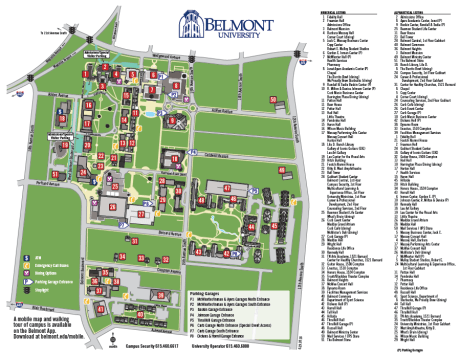
Belmont University, Curb Event Center, Vince Gill Room, 2000 Belmont Blvd

Building #26. Parking is available through the P7 entrance- visitors spaces are well marked. The Vince Gill Room is at the Belmont Blvd. side of the building, attached to the Arena. Signs will direct you there.
Lunch provided

To RSVP, contact diana.page@comcast.net

Rev. Johnson of Fort Worth is founder of Pastors for Texas Children and has inspired the Oklahoma, Kentucky and Tennessee groups He is also the promoter of similar groups in formation in ten other states. He has told us how his Texas group of more than 2,000 pastors and faith leaders has helped prevent the passage of private school vouchers in the Texas Legislature since its founding five years ago. Tennesseans hope to similarly convince our legislators to support our Tennessee schools and reject vouchers. We are starting by introducing pastors and faith leaders across the state with a speaking tour to present our positive public education message. You will hear how the voices of ministers, lay leaders, rabbis, imams, and their congregants are needed to support our public school children.

Also. please consider becoming a partner (member) of our network at http://www.pastorsfortennesseechildren.org/ (website).
Contact pastors4TNchildren@gmail.com for more information about the other four stops on Rev. Johnson’s Tennessee speaking tour: Chattanooga (lunch, Oct. 2), Knoxville (lunch, Oct. 3), Pleasant Hill (evening of Oct. 3), and Memphis (lunch, Oct. 5),

Screen Shot 2018-09-27 at 10.40.34 PM

Screen Shot 2018-09-27 at 11.01.03 PM

There will be many important elections this fall, with the future of our democracy in the balance.

One of the most notable elections will take place in Arizona, where parents and teachers–organized as SOS Arizona–are facing off against the Koch brothers and the DeVos combine.

The Guardian tells the story here.


Arizona has become the hotbed for an experiment rightwing activists hope will redefine America’s schools – an experiment that has pitched the conservative billionaires the Koch brothers and Donald Trump’s controversial education secretary, Betsy DeVos, against teachers’ unions, teachers and parents. Neither side is giving up without a fight.

With groups funded by the Koch brothers and DeVos nudging things along, Arizona lawmakers enacted the nation’s broadest school vouchers law, state-funded vouchers that are supposed to give parents more school choice and can be spent on private or religiously affiliated schools. For opponents, the system is not about choice but about further weakening the public school system. A half-dozen women who had battled for months against the legislation were angry as hell.

Convinced that the law would drain money from Arizona’s underfunded public schools, these women complained that Arizona’s lawmakers had ignored the public will and instead heeded the wishes of billionaires seeking to build up private schools at the expense of public schools.

“We walked outside the Capitol Building, and we looked at each other, and said, ‘What now?” said one of the women, Dawn Penich-Thacker, a mother of two boys in public school and a former army public information officer. “We had been fighting this for four months. We realized that there’s something we can do about it. It’s called a citizens’ referendum. We said, ‘Let’s do it.’”

Little did they know the challenges ahead. They would need 75,321 signatures to get their referendum on the ballot to overturn the law. They formed a group, Save Our Schools, and set out to collect the needed signatures. Opposing lobbyists sneered, saying no way could they do that.

The six women inspired a statewide movement and got hundreds of volunteers to brave Arizona’s torrid summer heat to collect signatures – in parks and parking lots, at baseball games and shopping malls. Their message was that billionaire outsiders were endangering public education by getting Arizona’s legislature – in part through campaign contributions – to create an expensive voucher program.

“We knew something was rotten in the state of Arizona,” said Beth Lewis, a fifth-grade teacher who is president of Save Our Schools. “We drew a line in the sand. We said, ‘We’re not going to let this happen.’” Lewis said Arizona’s schools are so underfunded that some classes have 40 students and her school needs to ask a private citizen to donate money when a teacher needs a set of books for her class.

One study found that Arizona, at $7,613, is the third-lowest state in public school spending per student, while another study found that from 2008 to 2015, school funding per pupil had plunged by 24% in Arizona, after adjusting for inflation – the second-biggest drop in the nation.

Upset that the vouchers law would funnel money toward private schools, Lewis said: “We can’t fund two different school systems. We can hardly afford one.”

Save our Schools submitted 111,540 signatures to the secretary of state in August 2017, but the Koch brothers’ political arm, Americans for Prosperity, sued to block the referendum. A judge dismissed the lawsuit and approved the referendum for 6 November – it’s called Proposition 305. The vote will be closely watched by people on both sides of the debate as the Kochs and DeVos hope to spread the voucher scheme and opponents look to Arizona for clues on how to stop them.

And that’s only the beginning of the story. Read it all. If you live in Arizona, please vote!

The Orlando Sentinel spent months investigating voucher schools in the state of Florida, and the results were alarming.

Even though the state constitution forbids any public money going to any religious school, whether directly or indirectly, the state has created multiple voucher programs and ignored the state constitution.

Even though voters refused to repeal or revise the section of the state constitution prohibiting public money being spent on religious schools, whether directly or indirectly, the state now spends $1 billion each year paying for private school tuition, mostly spent to pay for religious schools.

The voucher schools are completely unregulated.

They teach whatever they want, including racism and scientific nonsense.

They discriminate against students who are not “their kind.”

They do not have to take state tests.

They do not have to meet any academic standards.

They are allowed to hire not only uncertified teachers, but “teachers” who never finished college.

This series is so powerful that I urge you to subscribe to the Orlando Sentinel to read it.

I did.

A sample:

Unlike public schools, private schools, including those that accept the state scholarships, operate free from most state rules. Private school teachers and principals, for example, are not required to have state certification or even college degrees.

One Orlando school, which received $500,000 from the public programs last year, has a 24-year-old principal still studying at a community college.

Nor do private schools need to follow the state’s academic standards. One curriculum, called Accelerated Christian Education or ACE, is popular in some private schools and requires students to sit at partitioned desks and fill out worksheets on their own for most of the day, with little instruction from teachers or interaction with classmates.

And nearly anything goes in terms of where private school classes meet. The Sentinel found scholarship students in the same office building as Whozz Next Bail Bonds on South Orange Blossom Trail, in a Colonial Drive day-care center that reeked of dirty diapers and in a school near Winter Park that was facing eviction and had wires dangling from a gap in the office ceiling and a library with no books, computers or furniture.

This is one of the schools visited by the Sentinel reporters:

“We are able to really change these students’ lives, and I believe that would really be the highest standard of accountability that a school can have,” said Bryan Gonzalez, the 24-year-old principal of TDR Learning Academy in Orlando who is a student at Valencia College.

The school, founded by a pastor and housed in a shopping center on Curry Ford Road, relied on scholarships for most of the nearly 100 students enrolled last year.

Like many of the Christian schools that take state scholarships, TDR uses one of a handful of popular curricula that, as one administrator explained, teach “traditional” math and reading but Bible-based history and science, including creationism.

TDR uses ACE, which includes workbooks for every subject. Students are to complete up to 70 a year. Gonzalez, the pastor’s son-in-law, said students benefit from doing ACE workbooks at their own pace.

Gonzalez also said parents don’t seem to mind his young age or that he and some TDR teachers lack college degrees. TDR’s enrollment has grown since it opened five years ago.

At Harvest Baptist Academy in Orlando’s Parramore neighborhood, parents choose the 20-year-old school for its academics, Bible-based lessons and no-nonsense discipline that includes spanking children, said Harry Amos, recently retired principal.

“The scholarships are fantastic,” Amos said.

All two dozen students at the school used them to pay tuition last year.

Parents “just want a different environment,” he said. “Our leader is the Lord Jesus.”