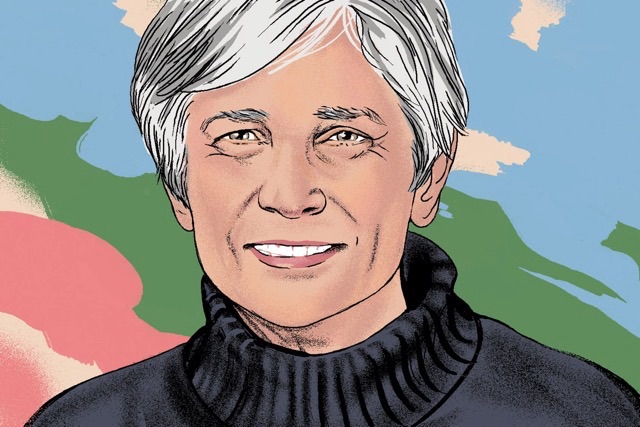
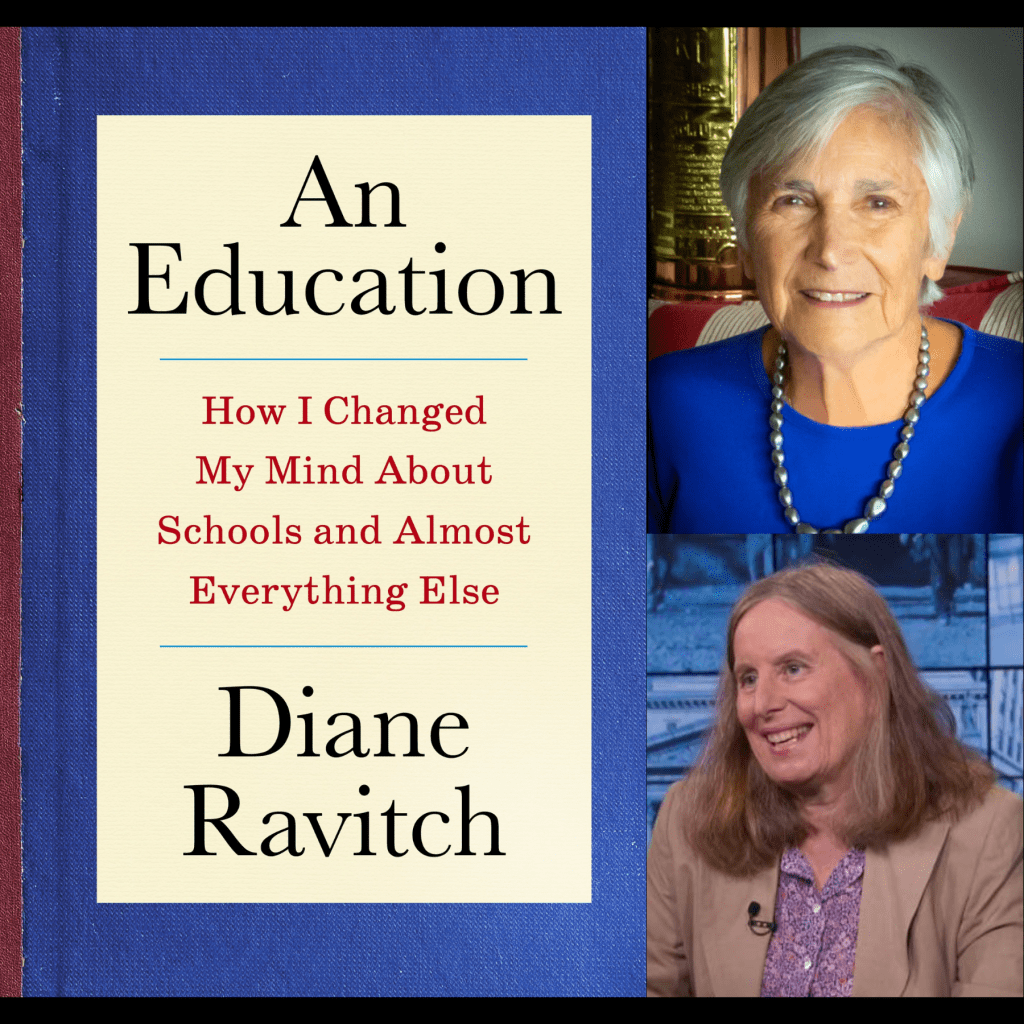
The Network for Public Education sponsored a conversation between me and Carol Burris about my new book: AN EDUCATION: HOW I CHANGED MY MIND ABOUT SCHOOLS AND ALMOST EVERYTHING ELSE.
I think you will enjoy it!
The Network for Public Education sponsored a conversation between me and Carol Burris about my new book: AN EDUCATION: HOW I CHANGED MY MIND ABOUT SCHOOLS AND ALMOST EVERYTHING ELSE.
I think you will enjoy it!
Tom Ultican had a successful career in the private sector when he made a decision that changed his life: He became a teacher of physics and advanced mathematics in California. After he retired, he became blogging about education. He became one of the most perceptive investigators of the powerful people and dark money behind the organized attacks on public schools.
I am delighted to present his review of my just-published memoir, titled AN EDUCATION: HOW I CHANGED MY MIND ABOUT SCHOOLS AND ALMOST EVERYTHING ELSE (Columbia University Press).
I am posting a portion of his review here. I encourage you to open the link and finish his fine commentary.
He wrote:
An Education; How I Changed My Mind About Schools and Almost Everything Else, is highly recommended especially for the thousands of us who consider her a friend. Diane is a very generous person with both her time and resources. I first met Diane through her blog in 2014, then in person at the 2015 NPE conference in Chicago. It was in this time period that she started posting some of my articles on her blog while simultaneously informing me about who was working to destroy public education. At the time, I did not realize what a privilege this was. Her latest book is an intimate memoir that introduces us to Diane Rose Silverstein of Houston, Texas born July 1, 1938. It tells the story of a Jewish Texan from of large struggling family becoming politically influential and a national treasure.
On a page following the dedication page, she quotes Ralph Waldo Emerson:
“Foolish consistency is the hobgoblin of little minds, adored by little statesmen and philosophers and devines.”
I knew that Diane had made a big change and reversed herself on test based accountability and other school reform agendas driven by conservatives and neoliberals. However, the courage this change took and the depth of her reversal were profoundly illuminated by reading this book.
Although growing up in a Roosevelt supporting family and being a registered Democrat, she became deeply conservative. Diane served on the board of the Thomas B. Fordham foundation, contributed to the Manhattan Institute and was a member of the Koret Task Force with the likes of Eric Hanushek and E. D. Hirsch Jr. Her best friends personally and politically all supported the ideas she abandoned. By reversing herself, she walked away from professional security and long held personal friendships. It was courageously principled but must have been a personally daunting move.
The best part of “An Education” for me was Diane’s recounting growing up in Houston and going to a segregated public school. Her experience was just so relatable. She liked all the music my oldest sister liked. Cheating was rampant in her school just like mine and like her; I let my classmates copy my work. My rural Idaho school was kind of segregated but that was because only white people and a few Mexican families lived in the community. The Mexican kids were very popular in our school. I never met a Black person until I was a senior in high school and had only seen a few through a car window when vacationing in Kansas City. It was wonderful to find some commonalities.
I had studied engineering, worked in Silicon Valley and pretty much ignored education. But I did hear from Diane and her friends about what a failure public education had become. By 1999, I became tired of hearing about people becoming rich off their stock options, working on the next greatest hard drive or dealing with the atrocious San Jose traffic. I decided to return to San Diego and do something to help public education by enlisting in a master of education program at the University of California San Diego (UCSD).
The UCSD program was oriented toward constructivist education which I really liked. I read books by Alfie Kohn and papers by Lisa Delpit and was ready to revolutionize public education. Then I got to my first job at Bell Jr. High School and discovered that the teachers there were well informed pros with lots of experience. By comparison, I was not nearly as competent as most of them.
It was then that I started to see that I had been bamboozled about how bad public schools were and started looking for like minded people. Two books, David Berliner’s and Eugene Glass’s “50 Myths and Lies that Threaten America’s Public Schools” and Diane Ravitch’s “The Death and Life of the Great American School System” were like water for the thirsty. Soon after that, I found Diane’s blog and joined the Network for Public Education (NPE) along with many other public school advocates.
I saw Diane at the 2015 NPE conference in Chicago’s Drake Hotel. It was an absolutely inspiring event with a keynote by the amazing Yong Zhao. Although we started communicating a little by email, I did not meet Diane personally until NPE 2016 in Raleigh, North Carolina. It was there that the Reverend William Barber gave a truly inspiring speech.

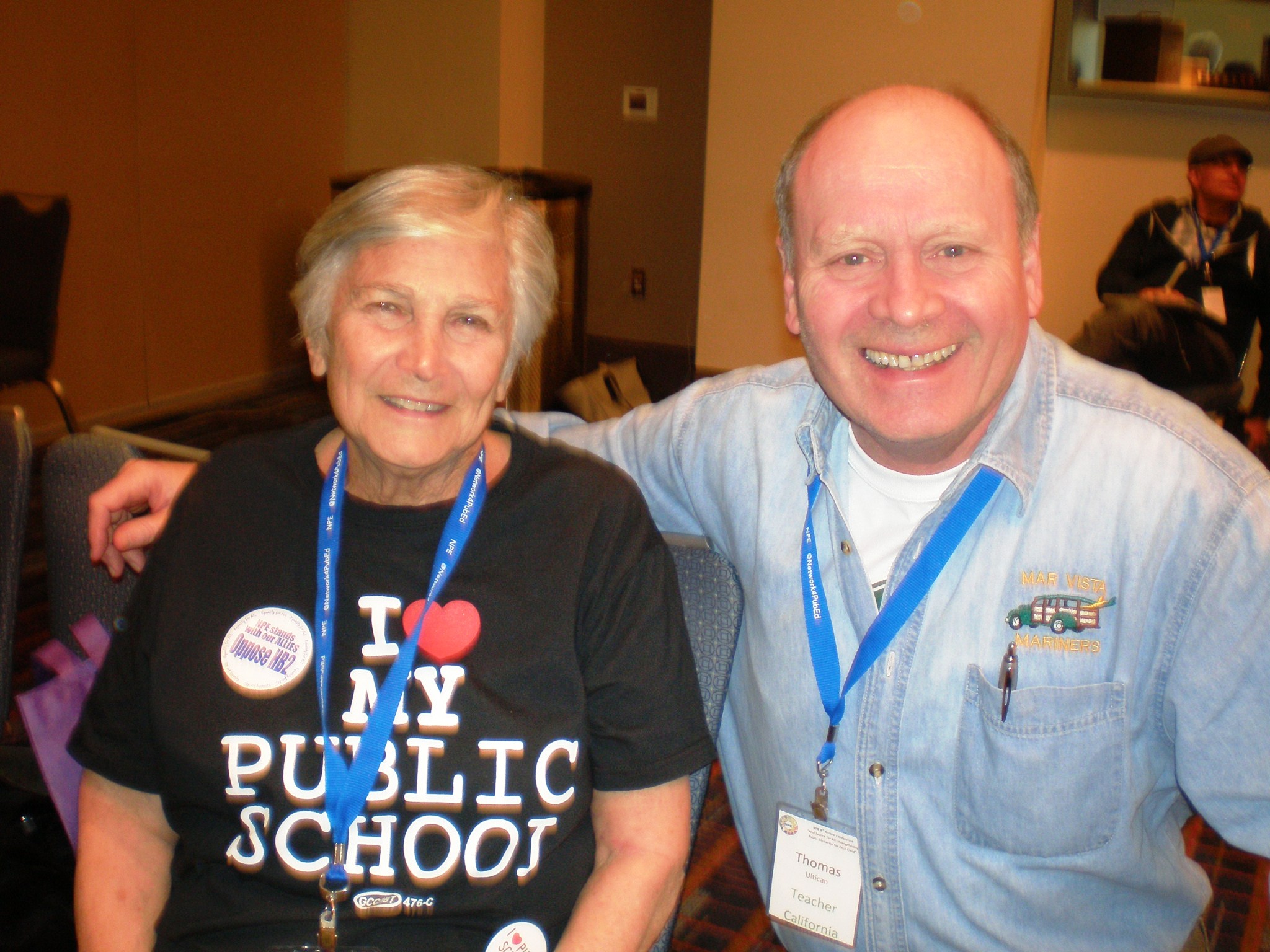
Tom Ultican and Diane Ravitch in Raleigh (by Ultican)
Please open the link and keep reading this excellent review!
Josh Cowen interviewed me by email about my life, after reading my book An Education: How I Changed My Mind About Schools and Almost Everything Else.
I think you will enjoy reading the interview.
He asks important questions about me and changes in my life.
Today is the official publication date of my memoirs. This evening, October 21, I will be in dialogue with Leonie Haimson at the Brooklyn Heights branch of the Brooklyn Public Library, at 286 Cadman Plaza.
I wrote stuff about my personal life that I have never shared with anyone. It seemed to be the right time; easier to write about than to say, even to my closest friends and relatives.
The Network for Public Education posted this information:
Diane’s new book, charter scandals, and more…

Diane Ravitch’s memoir is a moving chronicle of intellectual courage and deep care for public education. Once a leading conservative voice advocating testing, standards, charters, and vouchers, she had the humility to acknowledge when her beliefs failed in practice, recognizing that poverty—not “bad teachers” or “failing schools”—was the real crisis. With honesty and grace, Diane retraces her journey from her Houston childhood to her service in the government, including a stint in the conservative Department of Education, and her eventual transformation into one of our fiercest defenders of public schools. Blending personal reflection with a historian’s rigor, Diane explains how she came to embrace equity, professional teachers, and democratic public education, becoming an inspiring activist whose life’s work continues to uplift the promise of our public schools.
You can purchase An Education at your local independent bookstore, on Amazon, or directly from Columbia University Press.
My memoirs will be officially published on October 20! But the book is available now in stores and online!
The book is titled AN EDUCATION: HOW I CHANGED MY MIND ABOUT SCHOOLS AND EVERYTHING ELSE.
Please join me as I discuss the book with Leonie Haimson at the Brooklyn Heights branch of the Brooklyn Public Library.
Tue, Oct 21 2025
6:00 pm – 7:30 pm
Brooklyn Heights Library, Multipurpose Room
For many years, Diane Ravitch was among the country’s leading conservative thinkers on education. The cure for what ailed the school system was clear, she believed: high-stakes standardized testing, national standards, accountability, competition, charters, and vouchers. Then Ravitch saw what happened when these ideas were put into practice and recanted her long-held views. The problem was not bad teachers or failing schools, as conservatives claimed, but poverty. She denounced privatization as a hoax that did not help students and that harmed the public school system. She urged action to address the root causes of inequality.
In this intimate and timely memoir of her life’s work as a historian and advocate, Ravitch traces her ideological evolution. She recounts her personal and intellectual journey: her childhood in Houston, her years among the New York intelligentsia, her service in government, and her leftward turn. Ravitch shares how she came to hold conservative views and why she eventually abandoned them, exploring her switch from championing standards-based curriculum and standardized testing to arguing for greater investment in professional teachers and in public schools. Bringing together candid reflections with decades of research on education, Ravitch makes a powerful case for becoming, as she calls herself, “an activist on behalf of public schools.”
Books will be available for purchase from Greenlight Bookstore.
Diane Ravitch was a Research Professor of Education at New York University from 1995-2020 and is a historian of education. She worked on education policy in both George H. W. Bush’s and Bill Clinton’s administrations. She is the Founder and President of the Network for Public Education (NPE) and she is the author of two dozen books including Slaying Goliath: The Passionate Resistance to Privatization and the Fight to Save America’s Public Schools, The Troubled Crusade: American Education, 1945– 1980 (1983), Reign of Error: The Hoax of the Privatization Movement and the Danger to America’s Public Schools (2013). Ravitch posts regularly about American education policy on her widely read blog.
Leonie Haimson is the founder and Executive Director of Class Size Matters, a non-profit organization that advocates for smaller classes in NYC and the nation as a whole. In June 2022, in part because of the organization’s advocacy, NY State passed a law requiring that NYC schools phase-in smaller classes in all grades. She serves on the board of the Network for Public Education, is a member of the New York State Data Privacy Advisory Committee and was appointed to NYC Department of Education Working Groups on class size, student privacy and AI. She has appeared on CNN, Fox News, MSNBC, Good Day NY, CBS, WNBC News, NPR, and Democracy Now, has written op-eds for numerous publications, and co-hosts a weekly WBAI radio show and podcast called “Talk Out of School.”

286 Cadman Plaza WestBrooklyn, NY 11201
Veteran journalist Eleanor Bader published the very first review of my new book!
It’s a great review!
The official publication date is October 20, but books are now in print and available.
My first appearance to talk about the book will be in my home town: Brooklyn, New York, on October 21 at 6 pm at the Brooklyn Heights branch of the Brooklyn Public Library.
I will have a conversation with the brilliant Leonie Haimson, leader of Class Size Matters.
I’m not traveling to promote the book, but I am doing Zooms. I will be speaking to educators in North Carolina on October 22. To learn more about it, contact Yevonne Brannon of Public Schools First NC at ybrannon@gmail.com.

I have always been a patriotic American. I love the United States.
To me, this country has always represented the words of welcome–the poem by Emma Lazarus– attached to the statue of Liberty.
Not like the brazen giant of Greek fame,
With conquering limbs astride from land to land;
Here at our sea-washed, sunset gates shall stand
A mighty woman with a torch, whose flame
Is the imprisoned lightning, and her name
Mother of Exiles. From her beacon-hand
Glows world-wide welcome; her mild eyes command
The air-bridged harbor that twin cities frame.
“Keep, ancient lands, your storied pomp!” cries she
With silent lips. “Give me your tired, your poor,
Your huddled masses yearning to breathe free,
The wretched refuse of your teeming shore.
Send these, the homeless, tempest-tost to me,
I lift my lamp beside the golden door!”
The golden door is closed.
We no longer want those “huddled masses yearning to breathe free.”
We arrest and deport “the homeless, tempest-tost” to brutal countries where they know no one.
Trump promised to expel rapists, murderers, “the worst of the worst.” I was in agreement.
Instead, people with no criminal records are being arrested: in their homes, their workplaces, their schools, on the streets.
Mothers, fathers, children, students, hard-working people who committed no crime. Even tourists.
My father’s father immigrated from Poland to the U.S. in 1858. You read that right. He was a teenager. My father, his youngest child, was born in 1903. My grandfather, who arrived penniless, became a butcher in Savannah.
My mother fled from little Bessarabia at the end of World War 1, arriving on a large ship filled with home-going American troops. She, her mother, and her little sister did not speak English. They had just enough money to buy train tickets to Houston, where my grandfather worked as a tailor and saved up enough money to send for his family.
My mother was 9 years old when she arrived. She always loved this country passionately.
If my family had not left Europe, they would have all ended up in a concentration camp and been gassed, as were all their relatives who remained behind.
My family was raised in Houston with a deep sense of love and gratitude for America.
Do I want open borders? No.
I want a fair immigration system that is orderly and just. What is happening today is horrible. Frightening. Ugly. Disgusting.
I am embarrassed by the sight of masked men grabbing people off the streets, embarrassed that they beat people up, handcuff them, drag them away in unmarked cars. Embarrassed that such things could happen here. Not in America.
But that’s not all.
We have a President who is vulgar, coarse, ignorant of history, and admires the worst dictators in the world. Putin. Kim Jung Un. The thug in El Salvador.
He picks fights with our friends, neighbors, and allies. He threatens to seize Greenland and the Panama Canal. He threatens to leave NATO. He abandons Ukraine, which has bravely fought off the Russian war machine since 2022.
He insisted on a budget that will eventually kick millions of people off Medicare. He killed SNAP, which provided food assistance to people who need it. He defunded green energy. He defunded any federal programs intended to mitigate climate change.
He killed USAID, withdrawing food and medical care for millions of people. People will die of hunger and of preventable diseases.
Whatever he doesn’t like is “woke,” “Marxist,” “radical left.” Whatever requires kindness, compassion, and care for others is “leftwing” and “woke.” In his evil worldview, kindness and compassion are for suckers.
He claims to be a Christian and relies on his Christian nationalist base, the people who think America should be a “Christian nation.” If any of them had ever read history or even the Constitution, they would know that the Founders insisted upon religious freedom and opposed ANY establishment of religion. They most certainly did not want their new nation to have a religious character.
In short, we currently have a government that ignores the Constitution, that is animated by cruelty, and that revels in fomenting hatred of others.
That’s why I will not celebrate today.
But I pledge to work towards restoration of the America I love. So long as I have breath, so long as I can type, I will devote my days to reclaiming the dream.
When I see something I really enjoy, I like to share with you.
Number one is Mariska Hargitay’s brilliant documentary “My Mom Jayne.” Her mother was the Hollywood icon Jayne Mansfield. She died in a horrible automobile crash when she was only 34. Mariska and two of her siblings were asleep in the back seat of the car and escaped with minor injuries. Mariska was only 3 at the time of the accident. She has no memories of her mother.
Mariska, the star of the great series “Law and Order: Special Victims Unit,” wanted to learn about her mother. She was unhappy about her portrayal as a “dumb bimbo” with platinum blonde hairs and big boobs.
In her archival research through family storage units, she unearthed a very different Jayne, one who played classical music on the violin and on the piano. The men who ran the studio system wanted another Marilyn Monroe, and she was stuck in her stereotype.
Mariska interviews her siblings and her mother’s press agent. She discovers that the man she thought was her father–Mickey Hargitay, Mr. Universe–was not her biological father.
It’s a beautifully made movie about honesty and integrity and confronting the past. And I love Mariska Hargitay for modeling empathy, kindness, love, and the courage to open up her past.
Another movie that I enjoyed is “Queen of the Ring.” It’s the story of the life of a pioneering woman wrestler, Mildred Burke. At the time she started wrestling, most states didn’t allow women to wrestle. Her promoter had her wrestle men at carnivals; she won almost every match. It’s a fascinating story, and what I liked best was that the actress who played Mildred Burke–Emily Bett Rickards– did all her own wrestling. That was impressive! It’s not as powerful as Mariska’s documentary, but worth seeing.
I also recommend the streaming TV series “The Righteous Gemstones.” The first season is hilarious. It’s a portrayal of an evangelical family that has created a huge, profitable church that presents spectacles every Sunday. Their private lives are something else. Their language and behavior are vile. I saw all four seasons but liked the first one best.
I’m a wee bit embarrassed to admit that I never saw a “Mission Impossible” movie until afew weeks ago. Now I have seen the first three. I’m enjoying them, especially Tom Cruise’s daredevil stunts. I hope to see them all.
Bill Moyers died yesterday at the age of 91. He was a remarkable man, who served as President Lyndon B. Johnson’s closest advisor and his press secretary, until he quit in 1966. He was a highly accomplished journalist and television star, who dealt with the most controversial issues of the day.
I was privileged to appear on his program.
He was one of the great men of the past half-century: Truly moral, ethical, deeply committed to a just world.
I spent this past weekend at my sixty-fifth reunion at Wellesley College. Since I graduated in 1960, I have never missed one. Part of my faithfulness is grounded in nostalgia, in a chance to relive a wonderful part of my life. The four years at Wellesley were transformative, and today my closest friends are classmates.
The high point of the weekend is the parade of alumnae on the last day. The youngest cohort goes first, marching about 3/4 of a mile from one end of the campus to the center, called Alumnae Hall. As each group reaches its destination, it stops and lines the road. Then along comes the next group of graduates, five years older. Eventually the road is lined with alumnae from different cohorts, with the oldest ones marching last. That was my group, about 50 women in their mid-80s. The group behind us was the class of 1955, mostly 92 years old, riding in antique Fords, Model A.


Since we were the last grads standing, we marched past all the younger groups, and they cheered us vigorously, while we applauded them.
What was striking was to see the demographic changes over time. Our class was all white, though we did have a few Asian students. We did have one Puerto Rican in our class; her father was the governor of the island.
The classes of 1965 and 1970 had a few nonwhite faces.
Starting with the graduates of 1975, the numbers of African American, Hispanic, and Asian students noticeably increased. Every class from that point was markedly diverse.
I have to say it filled me with pride to see how my Alma Mater had changed.
An example: when I arrived at our lodgings, there were students to help us settle in. A beautiful and vibrant young woman brought my luggage to the room. I asked her where she was from. “Rwanda,” she said. “Do you like Wellesley?” She replied, “I love it!” She is majoring in biochemistry and plans to be a medical doctor and to return to Rwanda. Again, I was proud of how my college was changing the world for the better.
But there is another personal note that I wanted to share with you.
In late February, I went for my annual mammogram. The test spotted an anomaly. Several mammograms and a sonogram later, the doctor told me I had breast cancer. In April, I had surgery and the cancer was removed. But the surgeon reported that she didn’t get it all, so I had a second surgery. The pathologist decided that it was all out. None of it was painful.
But that’s not the end of the story. I start radiation on June 2, which will be five treatments in five days. Then a daily pill, all for the purpose of ensuring that the cancer doesn’t return.
I am not worried or frightened. I’m taking it all a day at a time, knowing that my case was caught early and that I have excellent doctors.
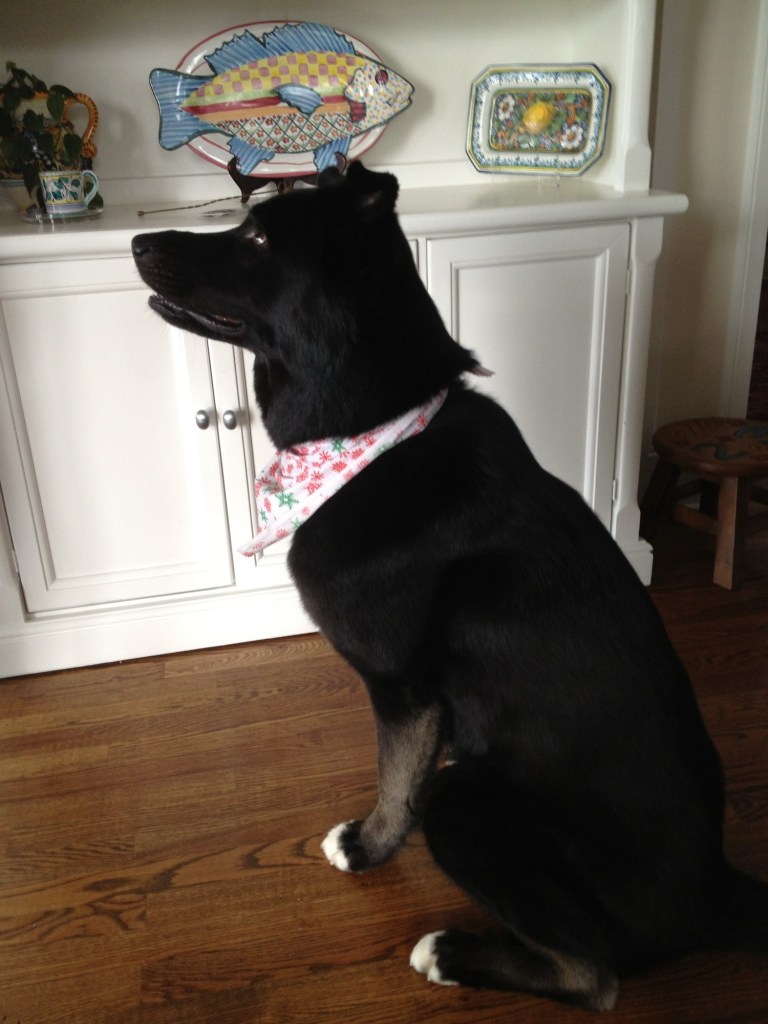
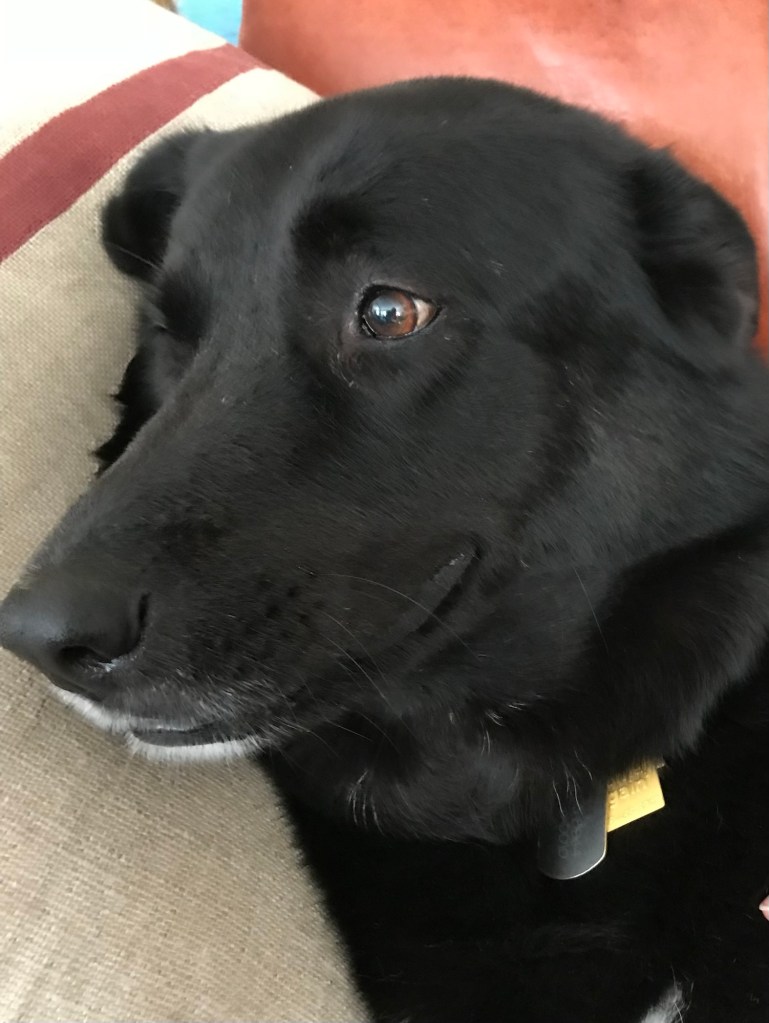
Frankly, I am truly worried about my beloved dog Mitzi. She was diagnosed with cancer in 2023, we took her to an oncologist, he put her on a drug that worked, and in June 2024, he declared her cancer-free. But a few weeks ago, we noticed that something bad was happening to her skull. The oncologist said she apparently has a trigeminal nerve sheath tumor. Her head, on the right side, is noticeably recessed. That is, it’s caved in above her eye.
I am much more worried about Mitzi than about myself. I will be fine. She won’t be. There is no treatment for her medical problem. So we intend to love her, spoil her, make every day a good day for her.